


 Скачать презентацию Sex Worker Health San Francisco Style The St
ca4a8bb6163abe9de1699c7e9b12fe6a.ppt
- Количество слайдов: 26
 Sex Worker Health, San Francisco Style: The St. James Infirmary Deborah Cohan, MD¹, Charles Cloniger, FNP², Johanna Breyer, MSW³, Cynthia Cobaugh³, Jeff Klausner, MD, MPH² ¹UCSF Department of Obstetrics & Gynecology ² San Francisco Department of Public Health ³St. James Infirmary
 What Is Sex Work? • “Provision of sexual services or performances by one person (prostitute or sex worker) for which a second person (client or observer) provides money or other markers of economic value” Priscilla Alexander, Sex Work and Health: A Question of Safety in the Workplace in JAMWA vol 53, no. 2.
 St. James Infirmary History • Call Off Your Old Tired Ethics “COYOTE“ • Exotic Dancers Alliance • San Francisco DPH STD Unit • University of California, San Francisco
 Clinic goals • Non-judgmental, peer-based health care • Comprehensive health care – HIV, STI, Hepatitis counseling and testing – Primary Care • • • Integration of medical and social services Health education to sex workers Community education about sex workers Community building Job training Research
 Services • • • Primary and urgent care HIV/Hepatitis/STI/TB counseling and screening STI treatment Immunizations Acupuncture Massage, Reiki therapy Peer Counseling Support Groups Art Therapy and Creative Writing workshop
 Other Services and Activities • Clothing • Food Bank • Career counseling and training – Lifeprint Career Services – HIV counseling & testing training for sex workers • Outreach to strip clubs, massage parlors, stroll districts, hotels • Community speakers bureau • Medical student elective
 Funding • San Francisco Department of Public Health, STD Prevention and Control Unit • UCSF Dept of Obstetrics/Gynecology • The California Endowment • The San Francisco Foundation • The Ford Foundation • UCSF AIDS Research Institute • American College of Traditional Chinese Medicine
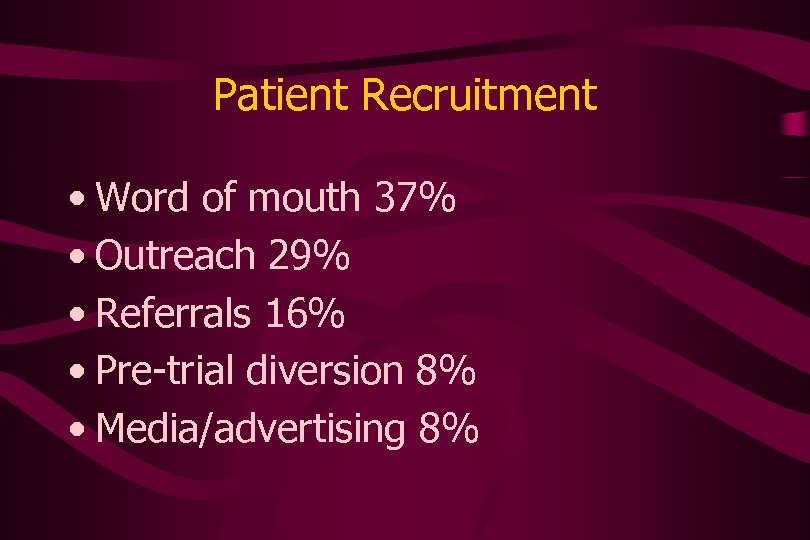 Patient Recruitment • Word of mouth 37% • Outreach 29% • Referrals 16% • Pre-trial diversion 8% • Media/advertising 8%
 Psychosocial Intake • • • 1059 total encounters June 1999 -June 2001 Intake started Sept 1999 231 current or former sex workers Peer Intake Counselors Demographics Work history Prior health-care access Drug Use History Domestic and Occupational Violence
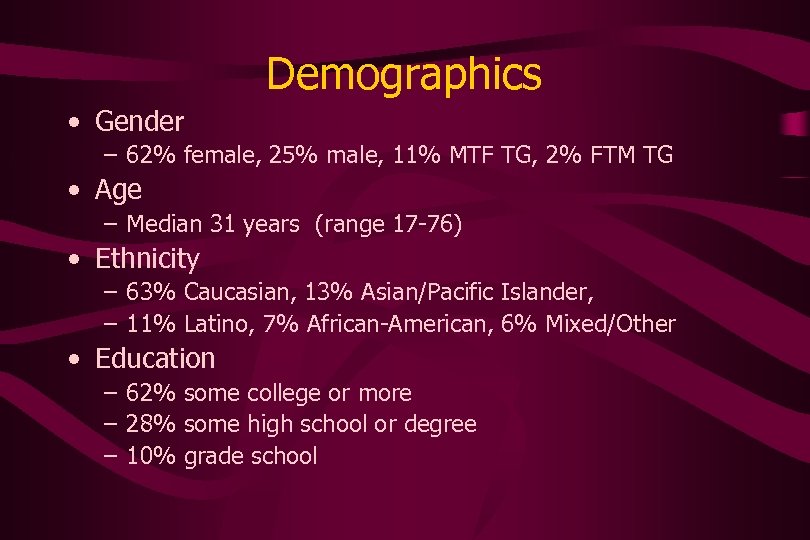 Demographics • Gender – 62% female, 25% male, 11% MTF TG, 2% FTM TG • Age – Median 31 years (range 17 -76) • Ethnicity – 63% Caucasian, 13% Asian/Pacific Islander, – 11% Latino, 7% African-American, 6% Mixed/Other • Education – 62% some college or more – 28% some high school or degree – 10% grade school
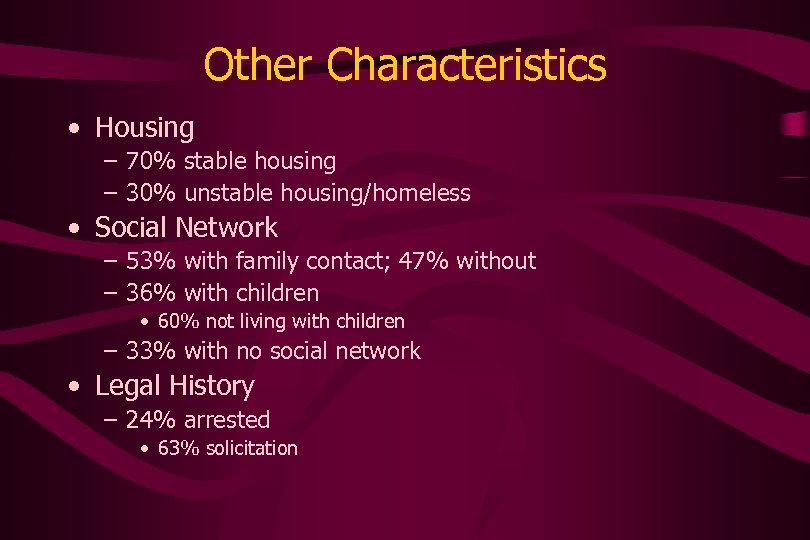 Other Characteristics • Housing – 70% stable housing – 30% unstable housing/homeless • Social Network – 53% with family contact; 47% without – 36% with children • 60% not living with children – 33% with no social network • Legal History – 24% arrested • 63% solicitation
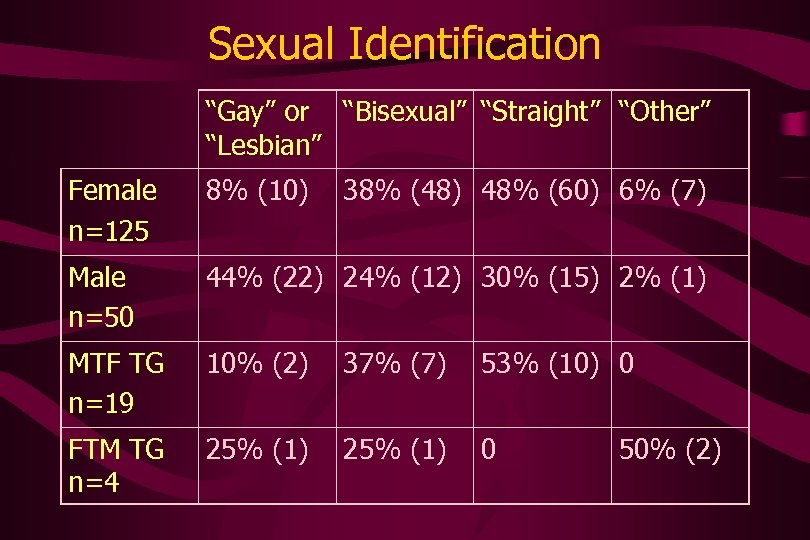 Sexual Identification “Gay” or “Bisexual” “Straight” “Other” “Lesbian” Female n=125 8% (10) 38% (48) 48% (60) 6% (7) Male n=50 44% (22) 24% (12) 30% (15) 2% (1) MTF TG n=19 10% (2) 37% (7) 53% (10) 0 FTM TG n=4 25% (1) 0 50% (2)
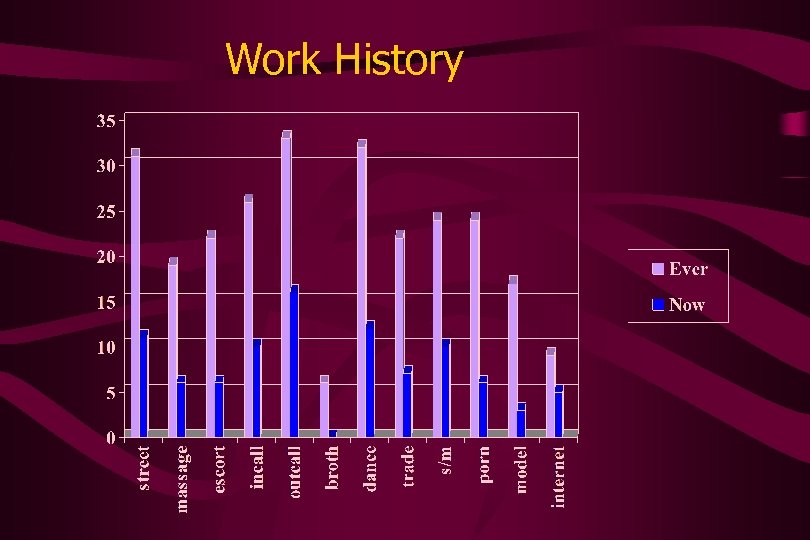 Work History
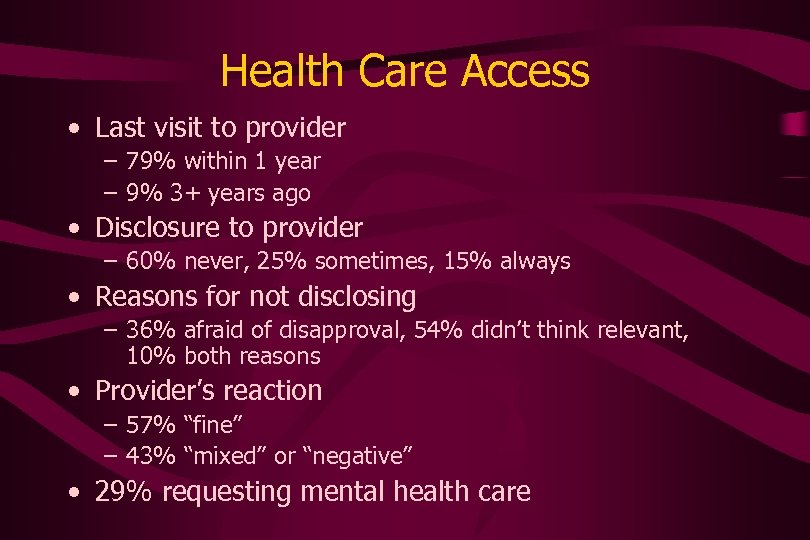 Health Care Access • Last visit to provider – 79% within 1 year – 9% 3+ years ago • Disclosure to provider – 60% never, 25% sometimes, 15% always • Reasons for not disclosing – 36% afraid of disapproval, 54% didn’t think relevant, 10% both reasons • Provider’s reaction – 57% “fine” – 43% “mixed” or “negative” • 29% requesting mental health care
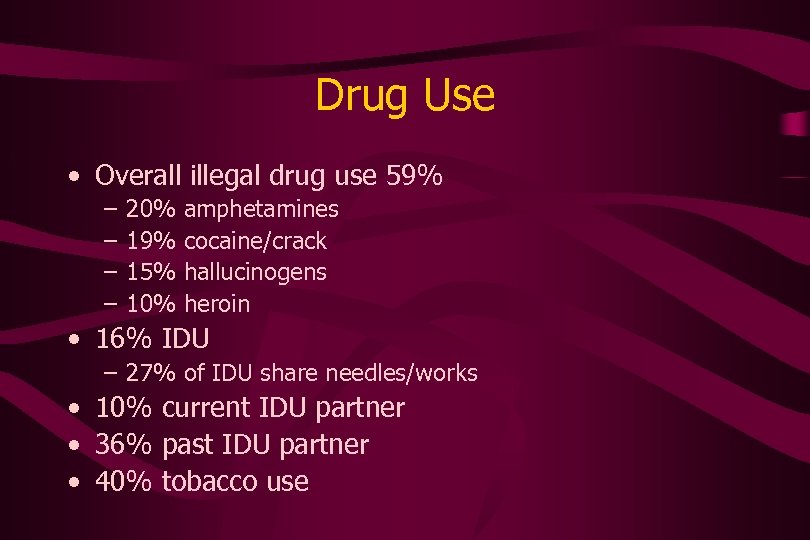 Drug Use • Overall illegal drug use 59% – – 20% 19% 15% 10% amphetamines cocaine/crack hallucinogens heroin • 16% IDU – 27% of IDU share needles/works • 10% current IDU partner • 36% past IDU partner • 40% tobacco use
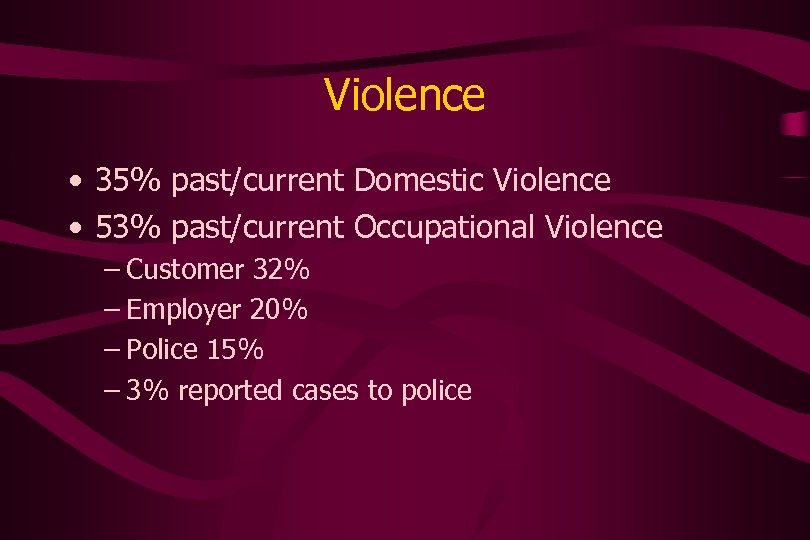 Violence • 35% past/current Domestic Violence • 53% past/current Occupational Violence – Customer 32% – Employer 20% – Police 15% – 3% reported cases to police
 Medical Intake • June 1999 -June 2001 • 699 clinical encounters – Mean visits per client = 2. 5 (range 1 -34) • Sexual history • HIV and STI results
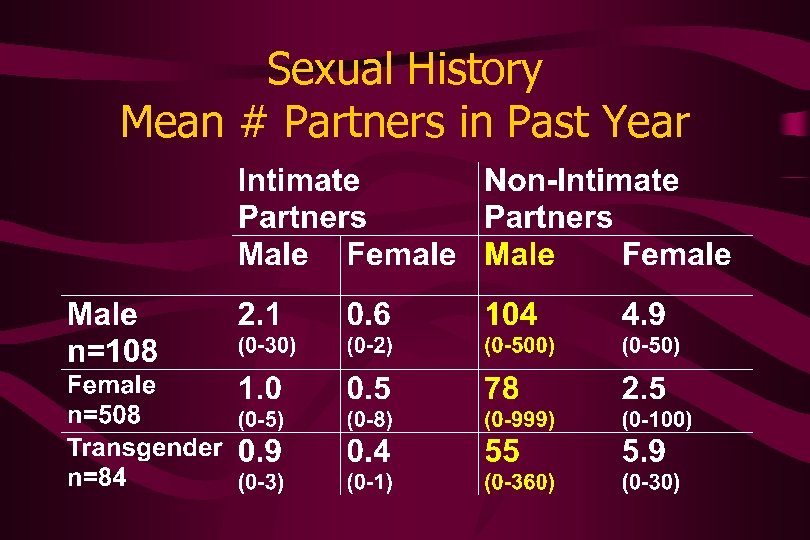 Sexual History Mean # Partners in Past Year
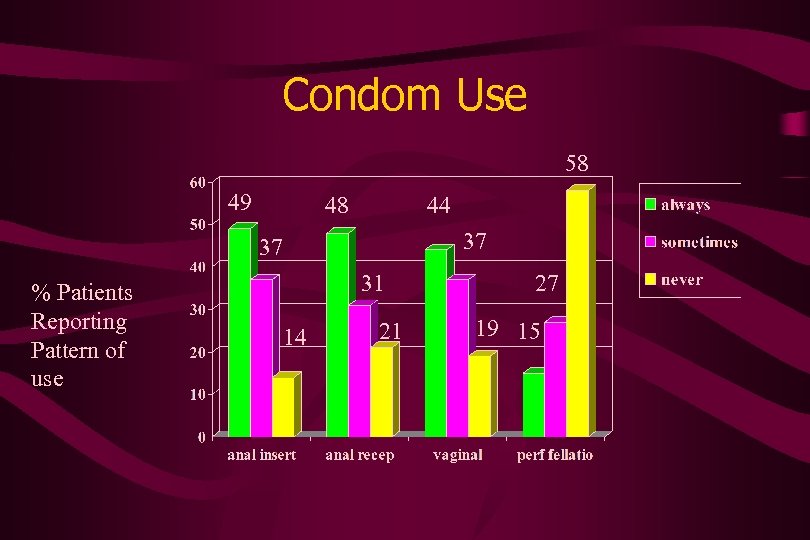 Condom Use 58 49 48 44 37 37 % Patients Reporting Pattern of use 31 14 21 27 19 15
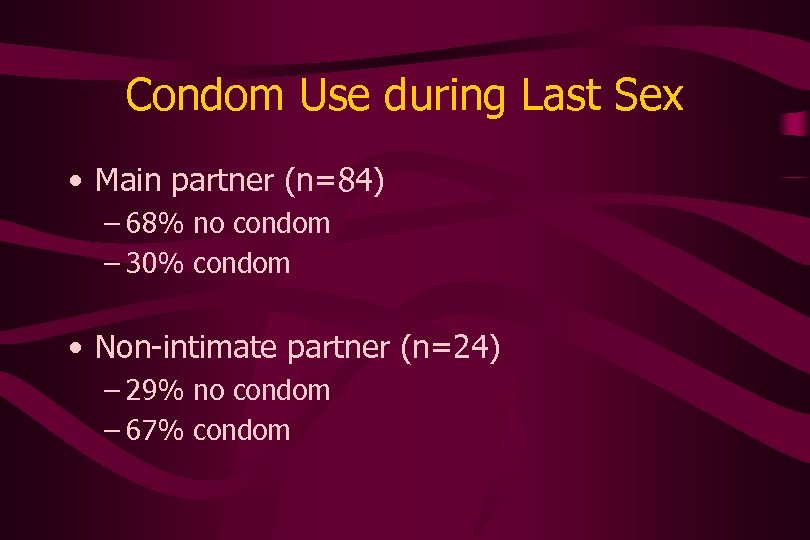 Condom Use during Last Sex • Main partner (n=84) – 68% no condom – 30% condom • Non-intimate partner (n=24) – 29% no condom – 67% condom
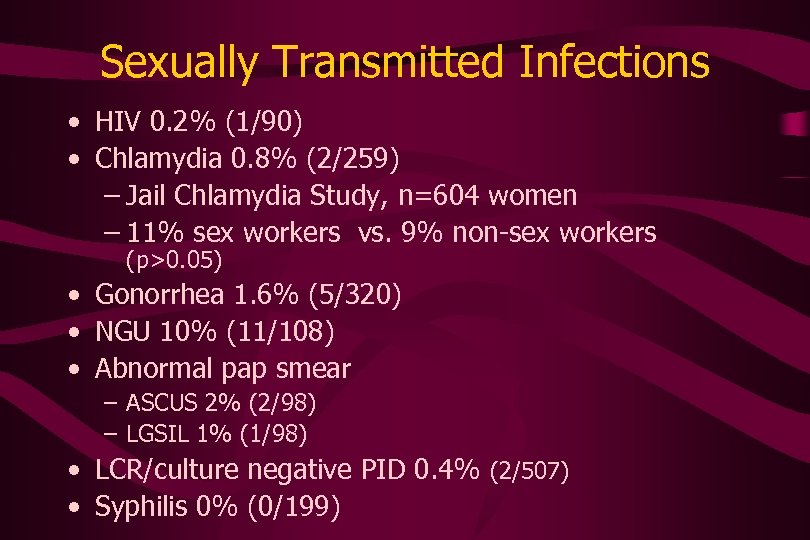 Sexually Transmitted Infections • HIV 0. 2% (1/90) • Chlamydia 0. 8% (2/259) – Jail Chlamydia Study, n=604 women – 11% sex workers vs. 9% non-sex workers (p>0. 05) • Gonorrhea 1. 6% (5/320) • NGU 10% (11/108) • Abnormal pap smear – ASCUS 2% (2/98) – LGSIL 1% (1/98) • LCR/culture negative PID 0. 4% (2/507) • Syphilis 0% (0/199)
 Challenges and Limitations • • Municipal STI clinic Limited staff/volunteer ethnic diversity Near Hall of Justice Medical intake not sex worker-specific Not generalizable Attrition of sex worker volunteers Stigma of sex work and funding options
 Conclusions • • Diversity in sex worker community High prevalence of workplace violence High prevalence of drug and tobacco use Risky behavior with intimate partners Health problems broader than just STI/HIV Importance of community involvement www. stjamesinfirmary. org
 Future Goals • • HIV testing service run by sex workers Mobile, van-based health care Massage parlor licensing run by DPH STI/HIV testing in strip clubs, porn sets, massage parlors, street corners and hotels • Independent location • Increase service hours • Conduct ethical, collaborative research on sex workers
 Remaining Questions • Political ramifications of scientific research? • Does criminalization discourage safe sex practices or facilitate violence? • Role of public health community in addressing these issues?
 Acknowledgements • • • St. James Infirmary staff and volunteers Johanna Breyer, Exotic Dancer’s Alliance Jeff Klausner Lyn Fischer Margo St. James, COYOTE Priscilla Alexander, FROST’D Bob Kohn STD Prevention and Control Division City Clinic staff