 Скачать презентацию SEX and women Back in the Day
7e972cf23152eda4ecacad22ed262199.ppt
- Количество слайдов: 22




SEX (and women)
Back in the Day • “Hysteria”—a woman’s medical problem, caused by a “wandering womb” • Treated, during the 1800 s (when women were believed not to be sexual creatures) by trips to the doctor. • Relief (by manual manipulation) was achieved from the woman’s “paroxysm. ”
Thomas Jefferson • We find amongs blacks “their own judgment in favour of the whites, declared by their preference of them, as uniformly as is the preference of the Oranootan for the black women over those of his own species. ” • “They seem to require less sleep. ” • “They are more ardent after their female”
“Notes on the State of Virginia” • When freed, he is to be removed beyond the reach of mixture.
To “wash the African stain from one’s blood” required… • 1796: John Stedman: 1/16 African, or three generations of whites, erased “blackness” • 1801: Julien-Joseph Virey: 1/32 still consituted “blackness” • Moreau de Saint-Mery (Santo Domingo): any more than 1/512 African blood constituted “blackness”
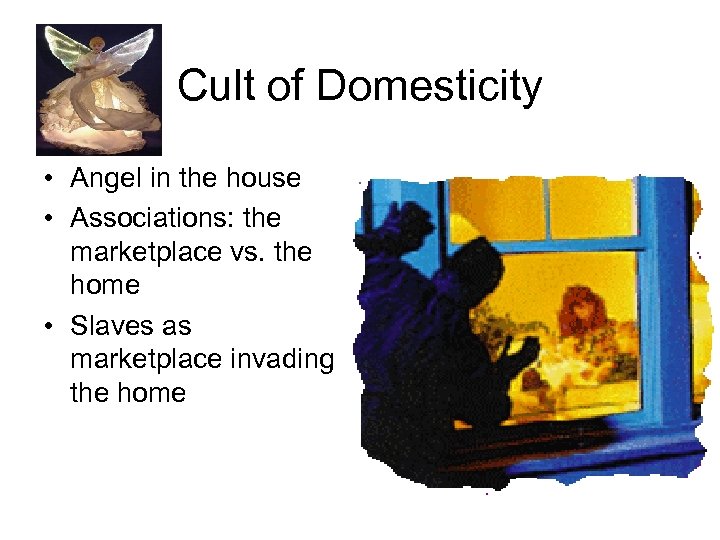
Cult of Domesticity • Angel in the house • Associations: the marketplace vs. the home • Slaves as marketplace invading the home
Uncle Tom’s Cabin, 1850: Little Eva, the ideal woman • “always dressed in white” • Never ”contracting spot or stain” • “long golden-brown hair that floated like a cloud” • A “deep spiritual gravity” • “violet blue eyes”
The Thirteenth Amendment • Freed slaves • 1865
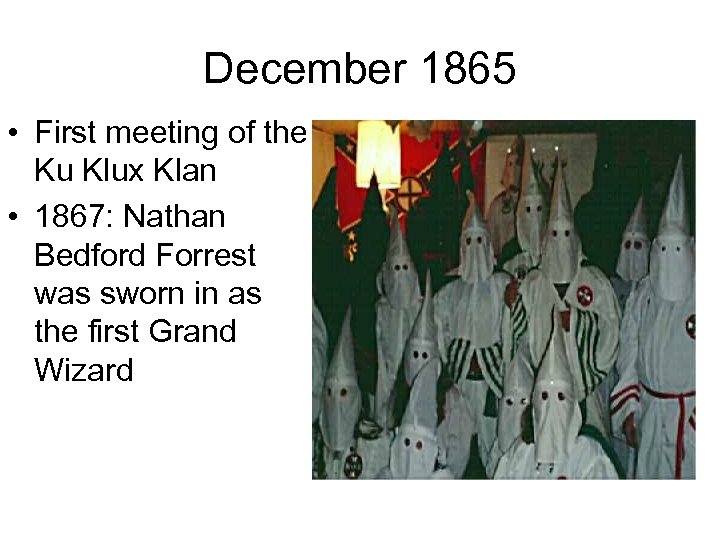
December 1865 • First meeting of the Ku Klux Klan • 1867: Nathan Bedford Forrest was sworn in as the first Grand Wizard
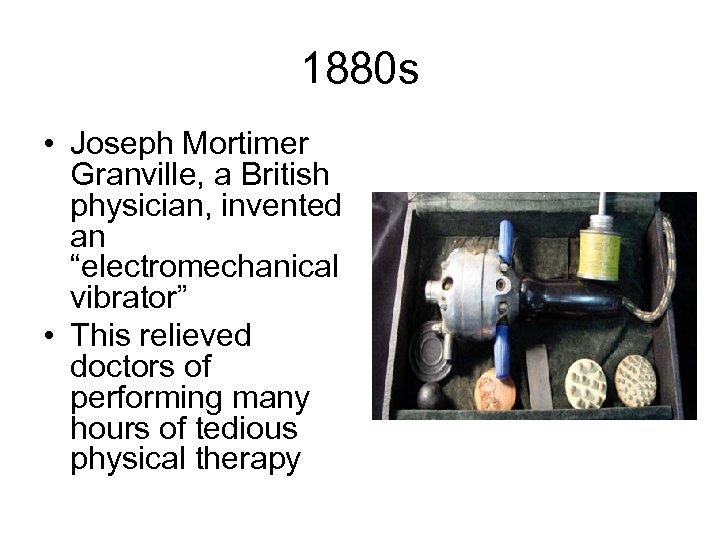
1880 s • Joseph Mortimer Granville, a British physician, invented an “electromechanical vibrator” • This relieved doctors of performing many hours of tedious physical therapy
1896 • Plessy v. Ferguson establishes legal segregation, declares constitutional the widespread “Jim Crow” laws
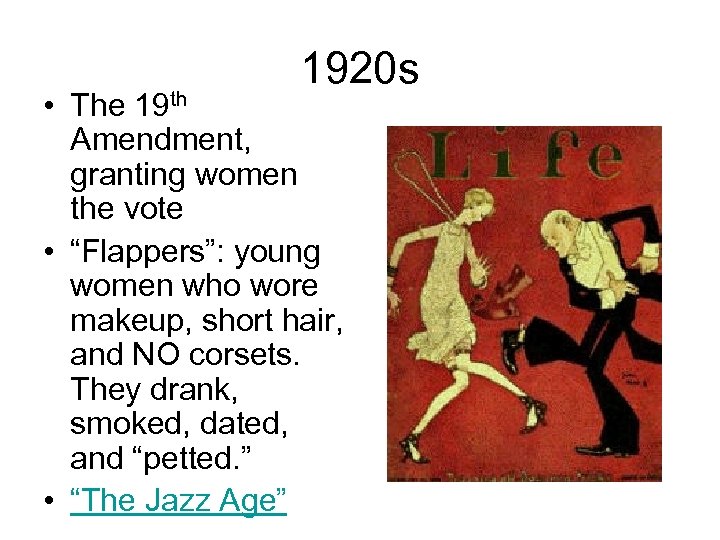
1920 s • The 19 th Amendment, granting women the vote • “Flappers”: young women who wore makeup, short hair, and NO corsets. They drank, smoked, dated, and “petted. ” • “The Jazz Age”
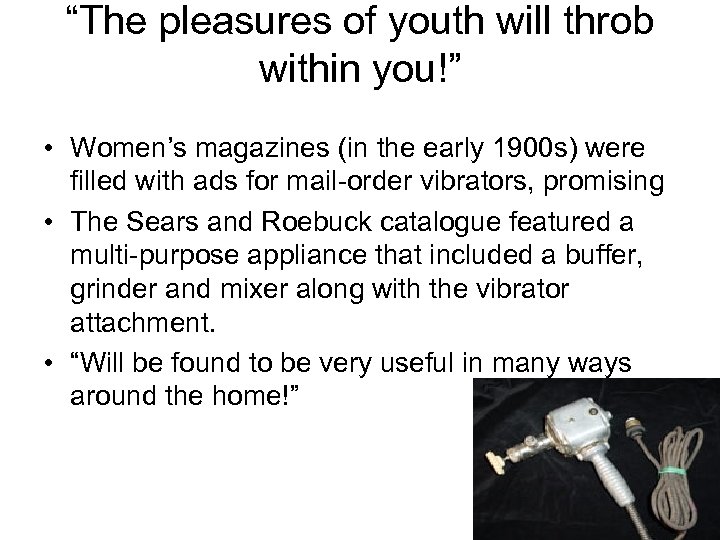
“The pleasures of youth will throb within you!” • Women’s magazines (in the early 1900 s) were filled with ads for mail-order vibrators, promising • The Sears and Roebuck catalogue featured a multi-purpose appliance that included a buffer, grinder and mixer along with the vibrator attachment. • “Will be found to be very useful in many ways around the home!”
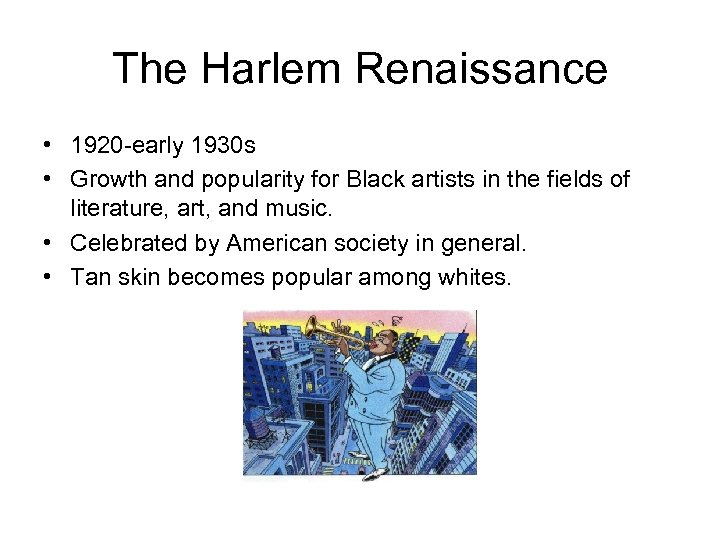
The Harlem Renaissance • 1920 -early 1930 s • Growth and popularity for Black artists in the fields of literature, art, and music. • Celebrated by American society in general. • Tan skin becomes popular among whites.
Technology in the 1920 s • The automobile (allowed people to live far from their jobs) • Electrified homes (lighting and appliances) • Indoor plumbing (new architecture) • The radio • The movies
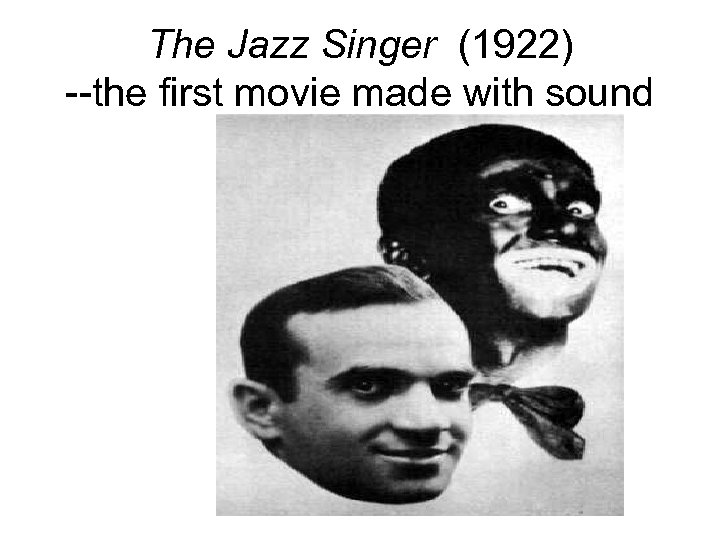
The Jazz Singer (1922) --the first movie made with sound
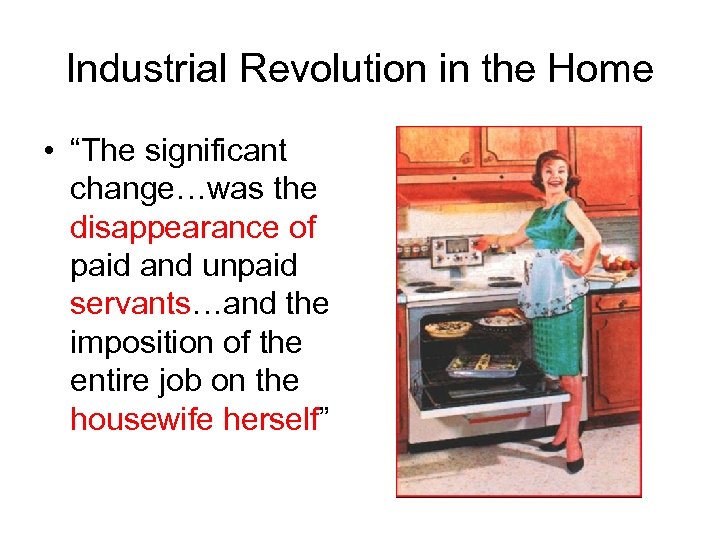
Industrial Revolution in the Home Past vs. Present • • “The significant Roles Duties change…was the Duties Roles disappearance of Jobs paid and unpaid Responsibilities servants…and the imposition of the entire job on the housewife herself”
The Home • In ads, “she was often the person being served, or she was supervising the serving”
Machines • The “mechanization of the household “ in the 1920 s meant that the housewife was more often alone, supervising machinery rather than servants.
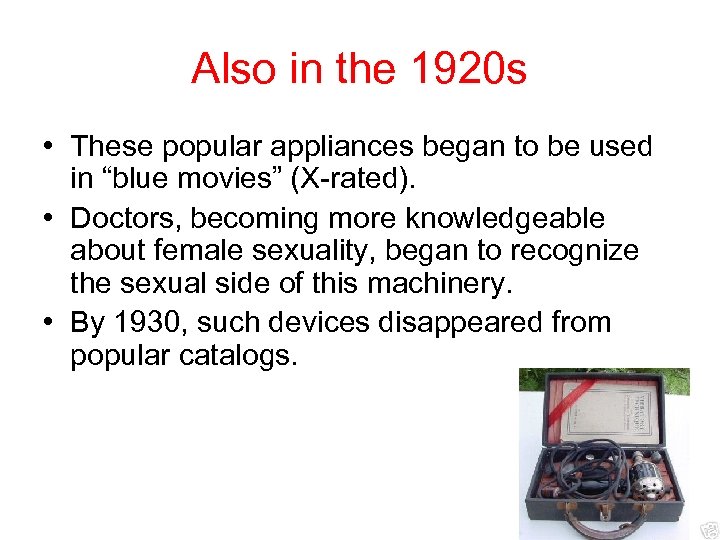
Also in the 1920 s • These popular appliances began to be used in “blue movies” (X-rated). • Doctors, becoming more knowledgeable about female sexuality, began to recognize the sexual side of this machinery. • By 1930, such devices disappeared from popular catalogs.
1960 s • The invention of the Birth Control Pill • The Civil Rights Movement and desegregation • The vibrator resurfaces as a sexual tool
Скачать презентацию SEX and women Back in the Day
7e972cf23152eda4ecacad22ed262199.ppt