


 Скачать презентацию SESSION 9 The Three D s an overview 1
63500023445ae38f64d0a4da1788bc35.ppt
- Количество слайдов: 15
 SESSION 9 The Three D’s an overview 1
 Objectives To review the definitions of Dementia, Depression, and Delirium. n To understand in what ways these cognitive disorders are similar n To understand which features help define or distinguish one from the other. n 2
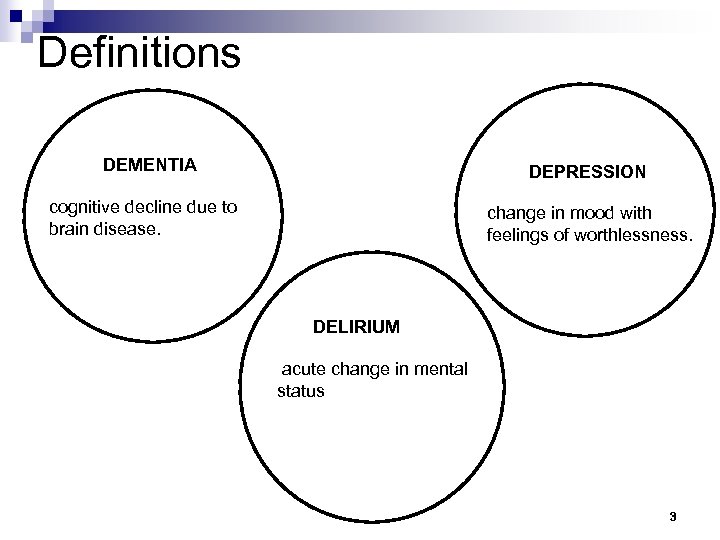 Definitions DEMENTIA DEPRESSION cognitive decline due to brain disease. change in mood with feelings of worthlessness. DELIRIUM acute change in mental status 3
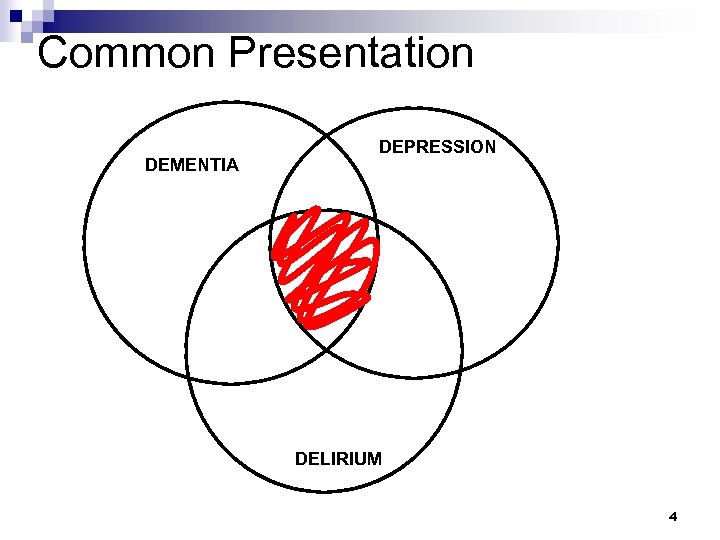 Common Presentation DEMENTIA DEPRESSION DELIRIUM 4
 Case A n 75 F widowed 1 year ago, now living with her son, increasingly more forgetful, increasingly dependent with IADLs, losing weight and getting weaker over the past year, sustained a fall and hip fracture 2 weeks ago, but now not eating well, sleeps all day, restless at night, and not participating well in rehabilitation efforts. n The son is upset about this and wants to know why she is not improving and what you are doing about it. 5
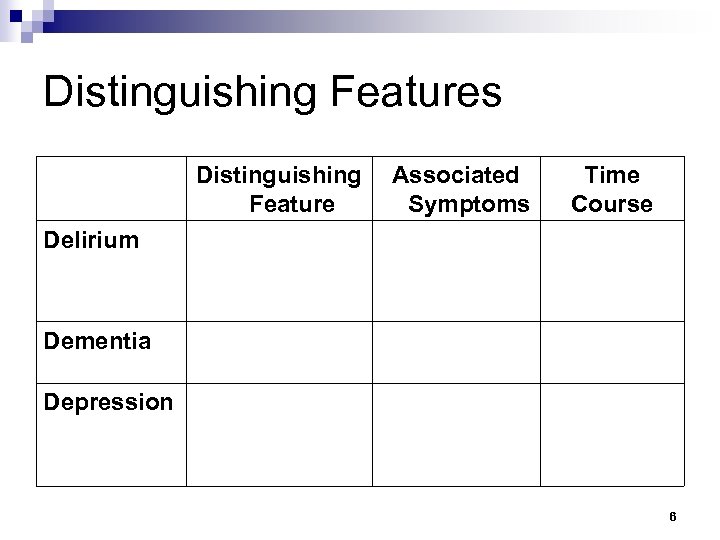 Distinguishing Features Distinguishing Feature Associated Symptoms Time Course Delirium Dementia Depression 6
 Case A n 75 F widowed 1 year ago, now living with her son, increasingly more forgetful, increasingly dependent with IADLs, losing weight and getting weaker over the past year, sustained a fall and hip fracture 2 weeks ago, but now not eating well, sleeps all day, restless at night, and not participating well in rehabilitation efforts. 7
 DELIRIUM: The Acute History n The son says… ¨ Mother confusing him for her deceased husband ¨ Picks in the air ¨ Falls asleep while he’s trying to talk to her ¨ New behavior since the surgery n The nurse says… ¨ Restless at night ¨ Placed in hallway by nurses station because trying to climb out of bed ¨ Pulled out foley and IV once already ¨ Only new med is Acetaminophen 8
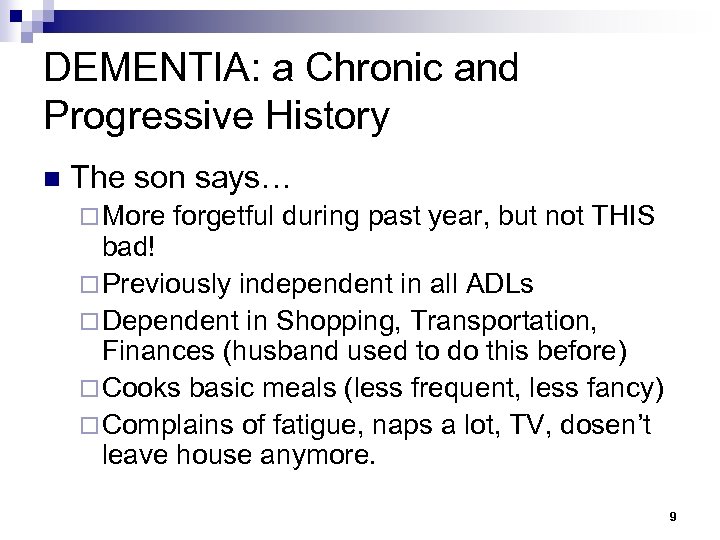 DEMENTIA: a Chronic and Progressive History n The son says… ¨ More forgetful during past year, but not THIS bad! ¨ Previously independent in all ADLs ¨ Dependent in Shopping, Transportation, Finances (husband used to do this before) ¨ Cooks basic meals (less frequent, less fancy) ¨ Complains of fatigue, naps a lot, TV, dosen’t leave house anymore. 9
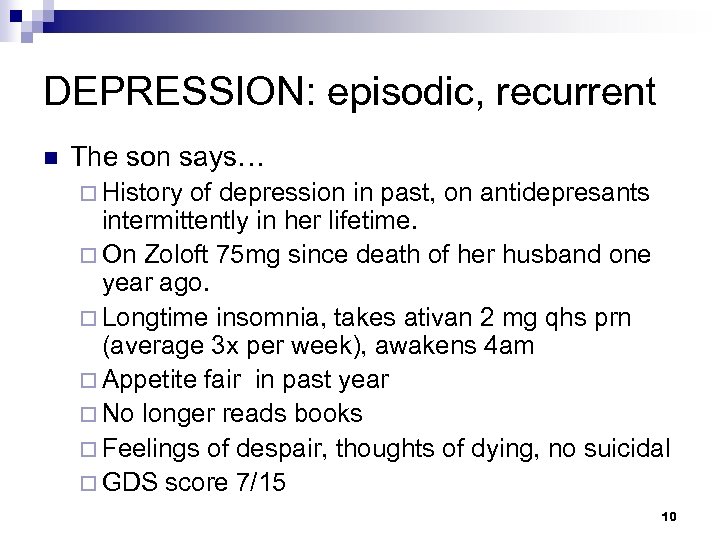 DEPRESSION: episodic, recurrent n The son says… ¨ History of depression in past, on antidepresants intermittently in her lifetime. ¨ On Zoloft 75 mg since death of her husband one year ago. ¨ Longtime insomnia, takes ativan 2 mg qhs prn (average 3 x per week), awakens 4 am ¨ Appetite fair in past year ¨ No longer reads books ¨ Feelings of despair, thoughts of dying, no suicidal ¨ GDS score 7/15 10
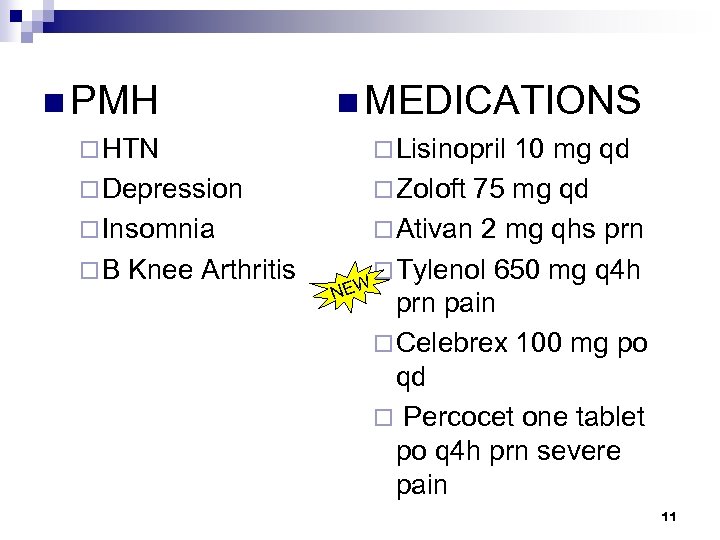 n PMH ¨ HTN ¨ Depression ¨ Insomnia ¨B Knee Arthritis n MEDICATIONS ¨ Lisinopril 10 mg qd ¨ Zoloft 75 mg qd ¨ Ativan 2 mg qhs prn ¨ Tylenol 650 mg q 4 h W NE prn pain ¨ Celebrex 100 mg po qd ¨ Percocet one tablet po q 4 h prn severe pain 11
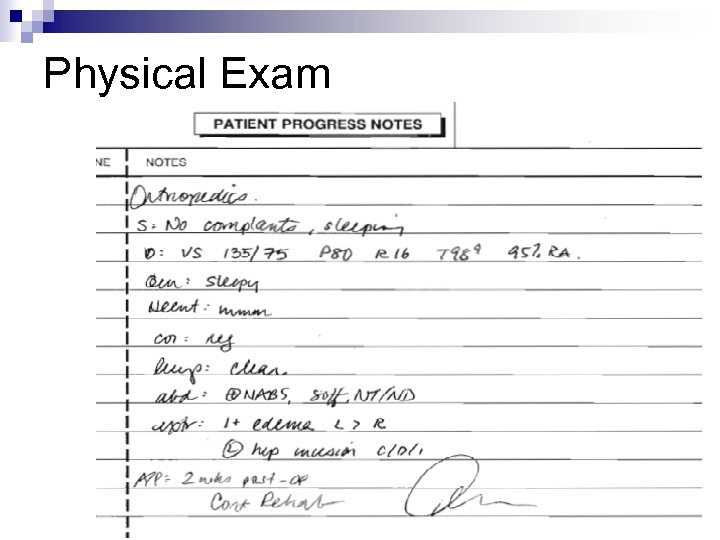 Physical Exam 12
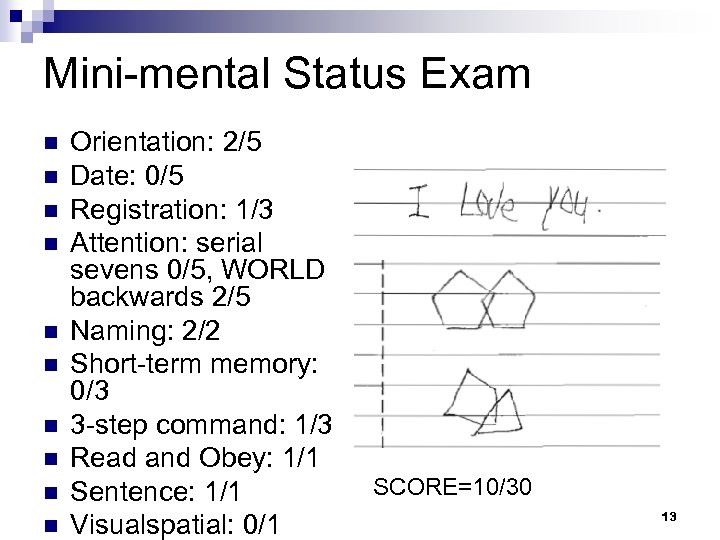 Mini-mental Status Exam n n n n n Orientation: 2/5 Date: 0/5 Registration: 1/3 Attention: serial sevens 0/5, WORLD backwards 2/5 Naming: 2/2 Short-term memory: 0/3 3 -step command: 1/3 Read and Obey: 1/1 Sentence: 1/1 Visualspatial: 0/1 SCORE=10/30 13
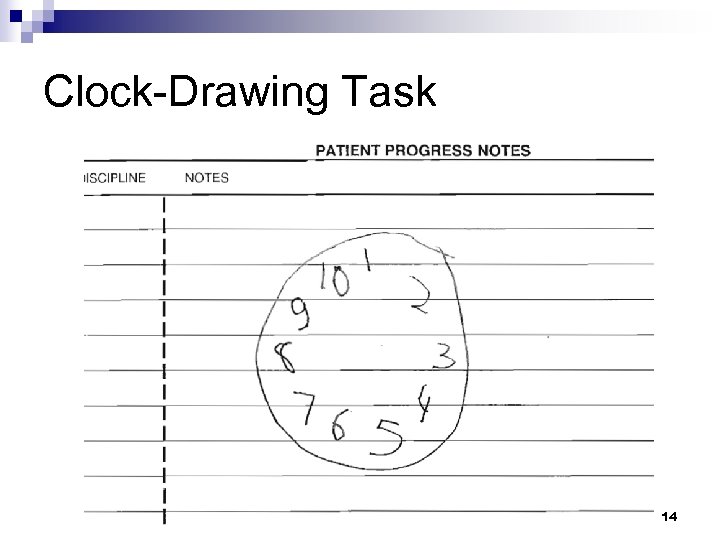 Clock-Drawing Task 14
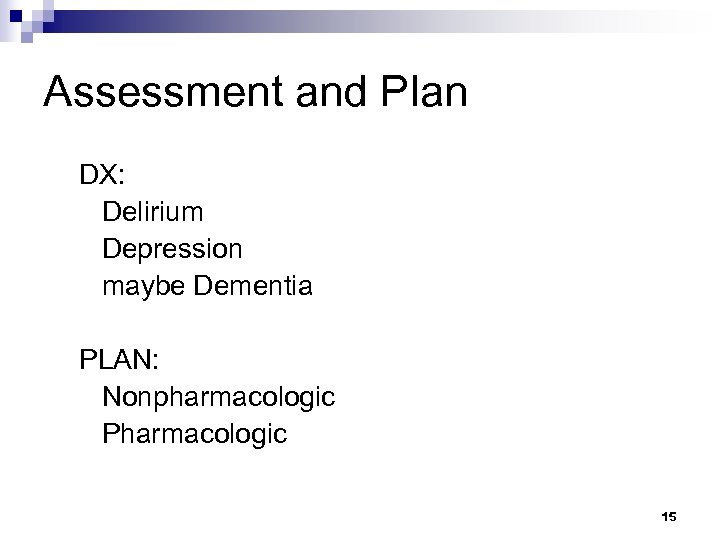 Assessment and Plan DX: Delirium Depression maybe Dementia PLAN: Nonpharmacologic Pharmacologic 15