


 Скачать презентацию Session 1 The Human Element People Process
69274c3d696de57cefc1f65777888901.ppt
- Количество слайдов: 28
 Session 1 The Human Element – People, Process & Environment Chris Collins March 26, 2007 1
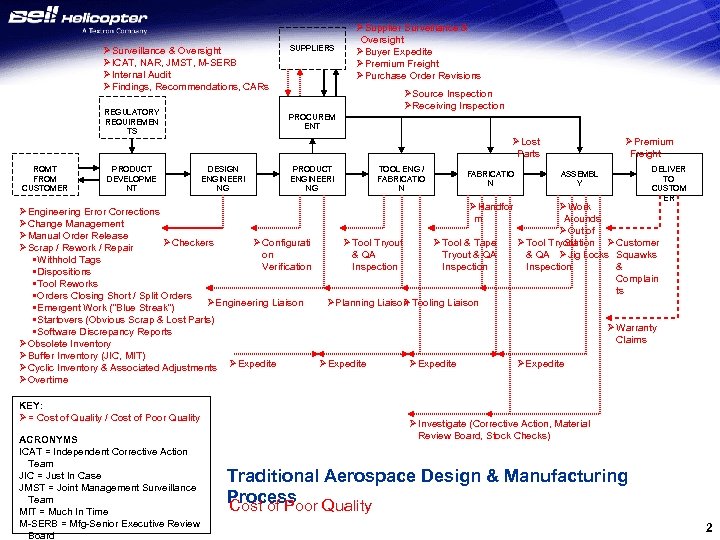 ØSurveillance & Oversight ØICAT, NAR, JMST, M-SERB ØInternal Audit ØFindings, Recommendations, CARs REGULATORY REQUIREMEN TS RQMT FROM CUSTOMER PRODUCT DEVELOPME NT SUPPLIERS ØSupplier Surveillance & Oversight ØBuyer Expedite ØPremium Freight ØPurchase Order Revisions ØSource Inspection ØReceiving Inspection PROCUREM ENT ØLost Parts DESIGN ENGINEERI NG PRODUCT ENGINEERI NG TOOL ENG / FABRICATIO N ØPremium Freight ASSEMBL Y DELIVER TO CUSTOM ER ØHandfor ØWork ØEngineering Error Corrections m Arounds ØChange Management ØOut of ØManual Order Release Ø Configurati Ø Tool Tryout Ø Tool & Tape Ø Tool Tryout Station Ø Customer ØCheckers ØScrap / Rework / Repair on & QA Tryout & QA ØJig Locks Squawks • Withhold Tags Verification Inspection & • Dispositions Complain • Tool Reworks ts • Orders Closing Short / Split Orders ØEngineering Liaison ØPlanning Liaison Tooling Liaison Ø • Emergent Work (“Blue Streak”) • Startovers (Obvious Scrap & Lost Parts) Ø Warranty • Software Discrepancy Reports Claims ØObsolete Inventory ØBuffer Inventory (JIC, MIT) ØExpedite ØCyclic Inventory & Associated Adjustments ØExpedite ØOvertime KEY: Ø = Cost of Quality / Cost of Poor Quality ACRONYMS ICAT = Independent Corrective Action Team JIC = Just In Case JMST = Joint Management Surveillance Team MIT = Much In Time M-SERB = Mfg-Senior Executive Review Board Ø Investigate (Corrective Action, Material Review Board, Stock Checks) Traditional Aerospace Design & Manufacturing Process Quality Cost of Poor 2
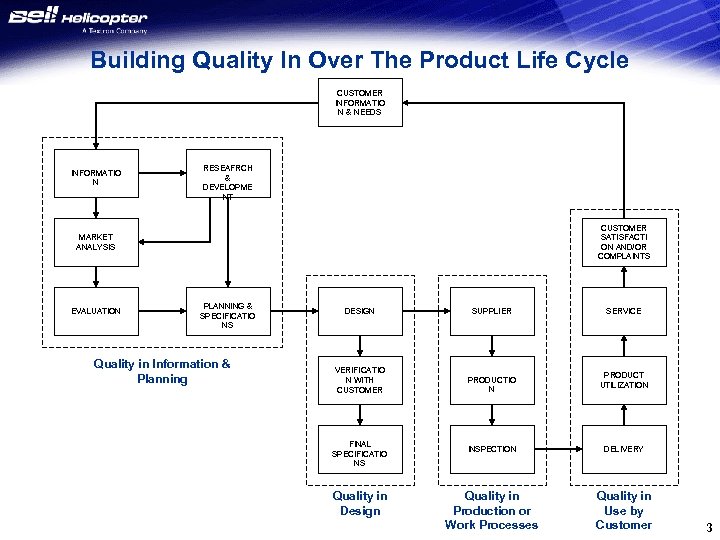 Building Quality In Over The Product Life Cycle CUSTOMER INFORMATIO N & NEEDS INFORMATIO N RESEAFRCH & DEVELOPME NT CUSTOMER SATISFACTI ON AND/OR COMPLAINTS MARKET ANALYSIS EVALUATION PLANNING & SPECIFICATIO NS Quality in Information & Planning DESIGN SUPPLIER VERIFICATIO N WITH CUSTOMER PRODUCTIO N FINAL SPECIFICATIO NS Quality in Design SERVICE PRODUCT UTILIZATION INSPECTION DELIVERY Quality in Production or Work Processes Quality in Use by Customer 3
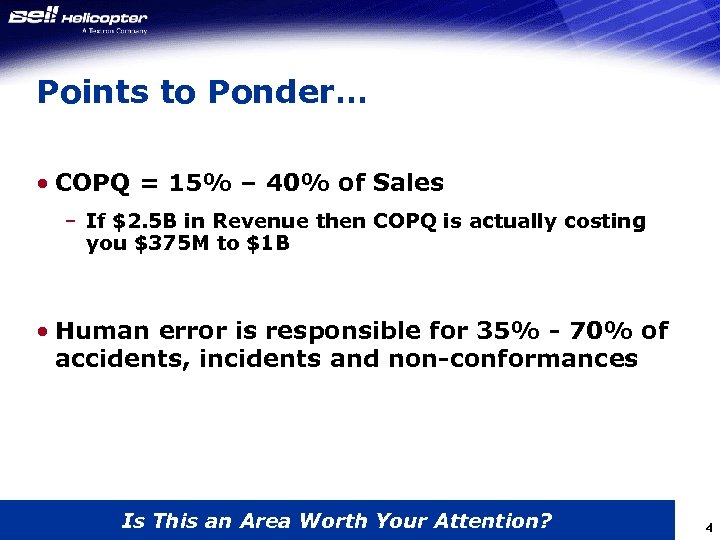 Points to Ponder… • COPQ = 15% – 40% of Sales – If $2. 5 B in Revenue then COPQ is actually costing you $375 M to $1 B • Human error is responsible for 35% - 70% of accidents, incidents and non-conformances Is This an Area Worth Your Attention? 4
 The Human Element – People, Process & Environment Work Design Chris Collins March 26, 2007 5
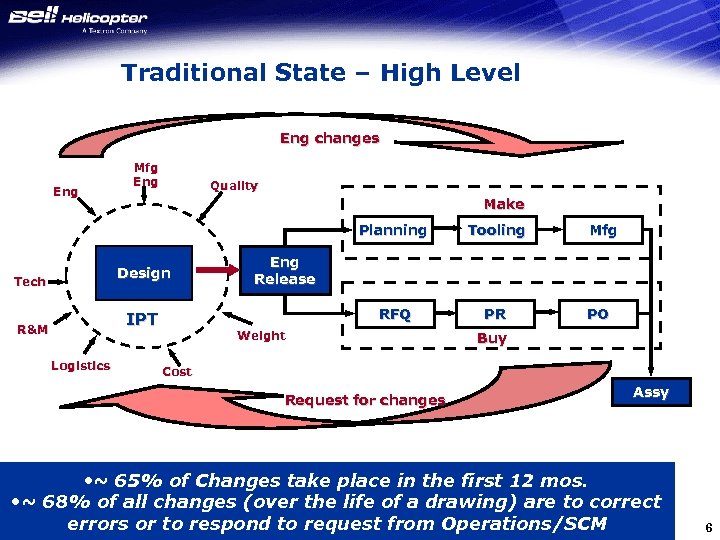 Traditional State – High Level Eng changes Eng Mfg Eng Quality Make Planning RFQ Design Tech IPT R&M Logistics Tooling PR Mfg Eng Release Weight PO Buy Cost Request for changes Assy • ~ 65% of Changes take place in the first 12 mos. • ~ 68% of all changes (over the life of a drawing) are to correct errors or to respond to request from Operations/SCM 6
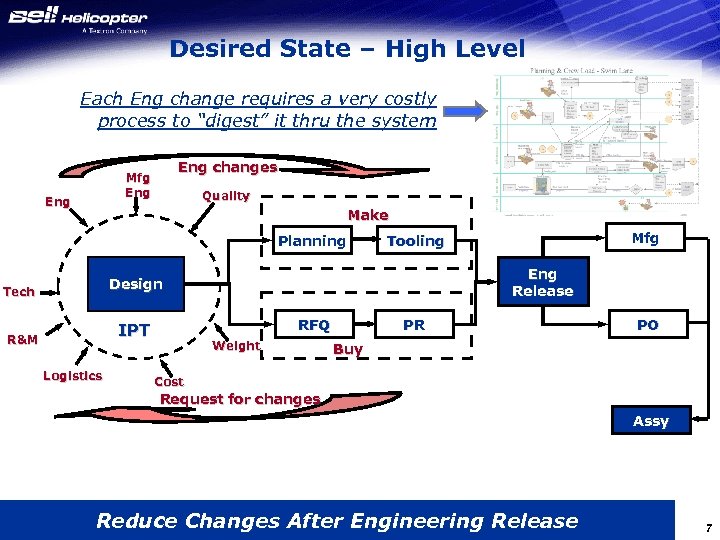 Desired State – High Level Each Eng change requires a very costly process to “digest” it thru the system Eng changes Mfg Eng Quality Make Planning Eng Release Design Tech RFQ IPT R&M Logistics Mfg Tooling Weight PR PO Buy Cost Request for changes Assy Reduce Changes After Engineering Release 7
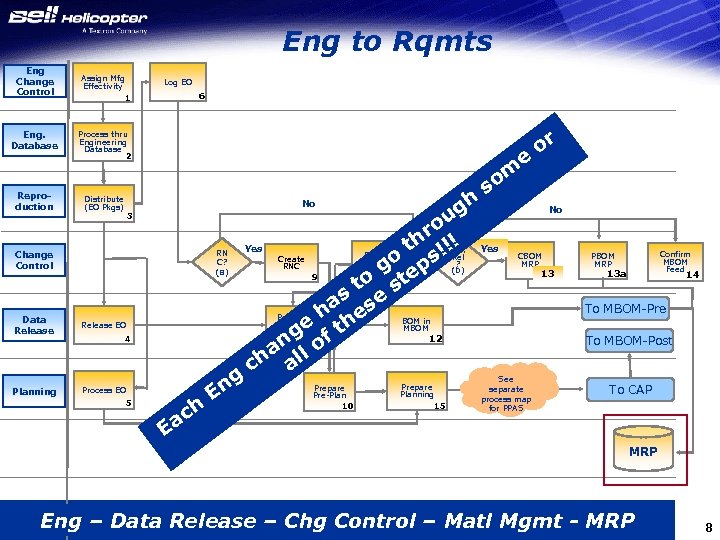 Eng to Rqmts Eng Change Control Eng. Database Reproduction Assign Mfg Effectivity Log EO 1 6 Process thru Engineering Database 2 Distribute (EO Pkgs) e No 3 Change Control Data Release EO Planning Process EO 4 5 ch Ea gh u ro ! Yes th !!Rel N/A RN Process Create s (b) C? RNC o RNC g 11 ep ? (a) 9 to st as se Prepare h e BOM in BOM for e th MBOM g 8 f 12 an ll o ch a Prepare ng Planning Pre-Plan E 10 15 s or om No Yes CBOM MRP 13 Confirm MBOM Feed PBOM MRP 13 a 14 To MBOM-Pre To MBOM-Post See separate process map for PPAS To CAP MRP Eng – Data Release – Chg Control – Matl Mgmt - MRP 8
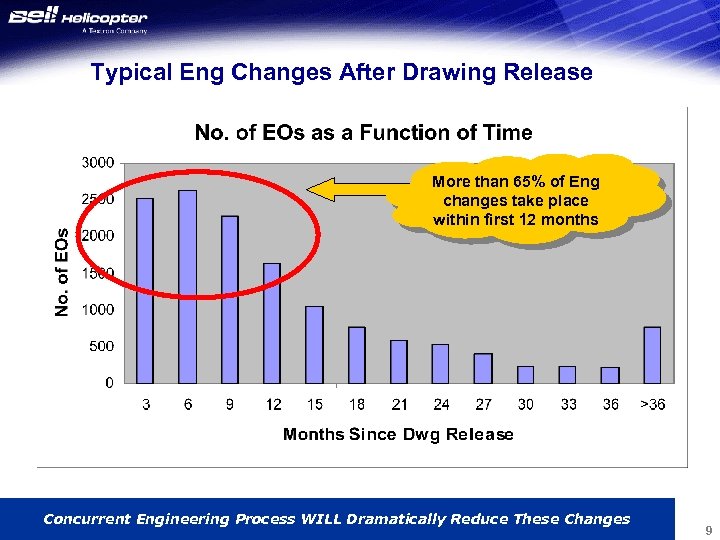 Typical Eng Changes After Drawing Release More than 65% of Eng changes take place within first 12 months Concurrent Engineering Process WILL Dramatically Reduce These Changes 9
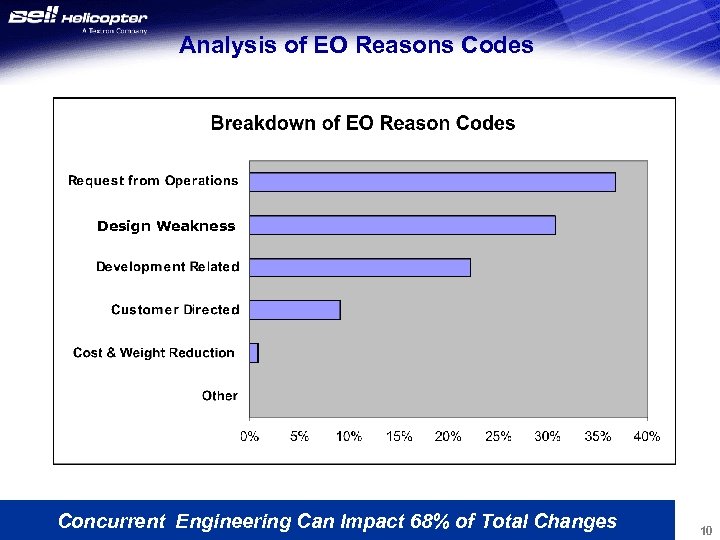 Analysis of EO Reasons Codes Design Weakness Concurrent Engineering Can Impact 68% of Total Changes 10
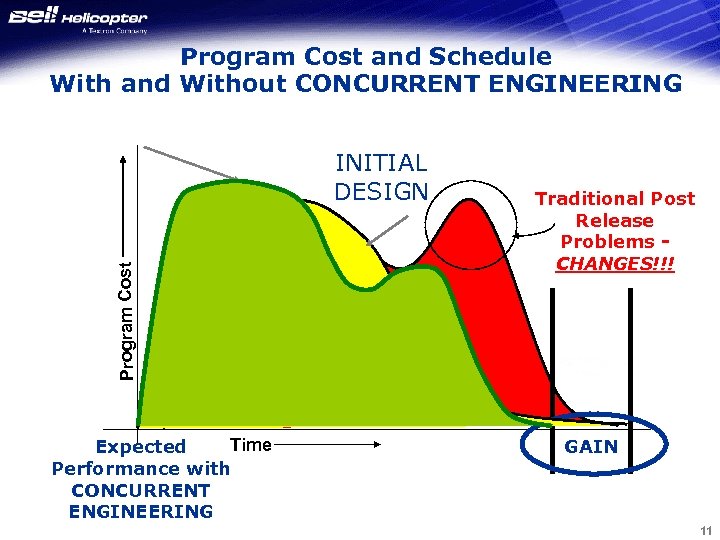 Program Cost and Schedule With and Without CONCURRENT ENGINEERING Program Cost INITIAL DESIGN Time Expected Performance with CONCURRENT ENGINEERING Traditional Post Release Problems CHANGES!!! GAIN 11
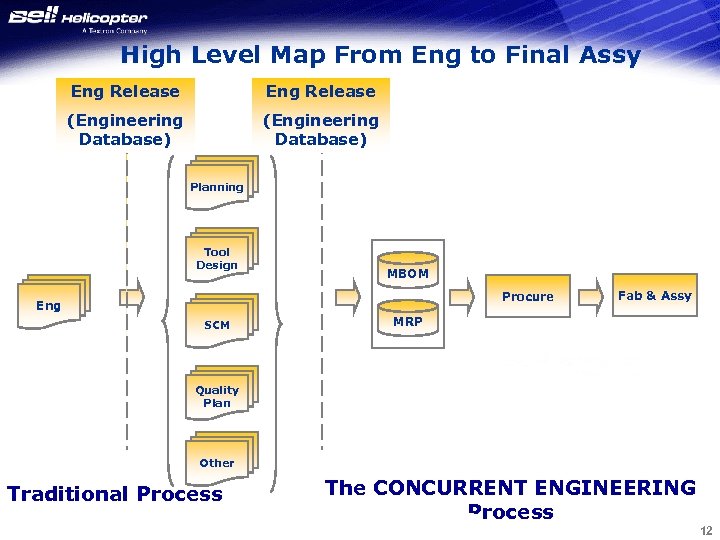 High Level Map From Eng to Final Assy Eng Release (Engineering Database) Planning Tool Design MBOM Procure Eng SCM Fab & Assy MRP Quality Plan Other Traditional Process The CONCURRENT ENGINEERING Process 12
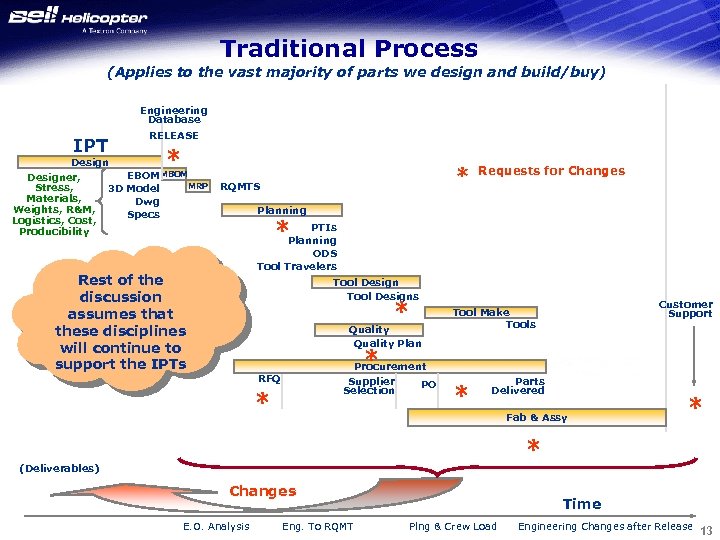 Traditional Process (Applies to the vast majority of parts we design and build/buy) Engineering Database IPT RELEASE * Design EBOMMBOM Designer, MRP Stress, 3 D Model Materials, Dwg Weights, R&M, Specs Logistics, Cost, Producibility * RQMTS Requests for Changes Planning PTIs *Planning ODS Tool Travelers Rest of the discussion assumes that these disciplines will continue to support the IPTs Tool Designs * Quality Plan Customer Support Tool Make Tools * Procurement Supplier PO Selection RFQ * * Parts Delivered Fab & Assy * * (Deliverables) Changes E. O. Analysis Eng. To RQMT Time Plng & Crew Load Engineering Changes after Release 13
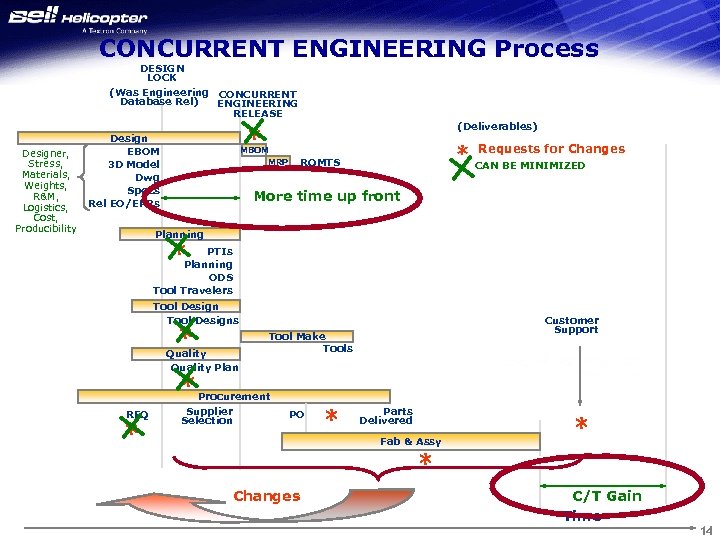 CONCURRENT ENGINEERING Process DESIGN LOCK (Was Engineering CONCURRENT Database Rel) ENGINEERING RELEASE Designer, Stress, Materials, Weights, R&M, Logistics, Cost, Producibility (Deliverables) * Design EBOM 3 D Model Dwg Specs Rel EO/EPRs Requests for Changes * CAN BE MINIMIZED MBOM RQMTS MRP More time up front Planning * PTIs Planning ODS Tool Travelers Tool Designs * Quality Plan Customer Support Tool Make Tools *Procurement RFQ * Supplier Selection PO * Parts Delivered Fab & Assy * * Changes C/T Gain Time 14
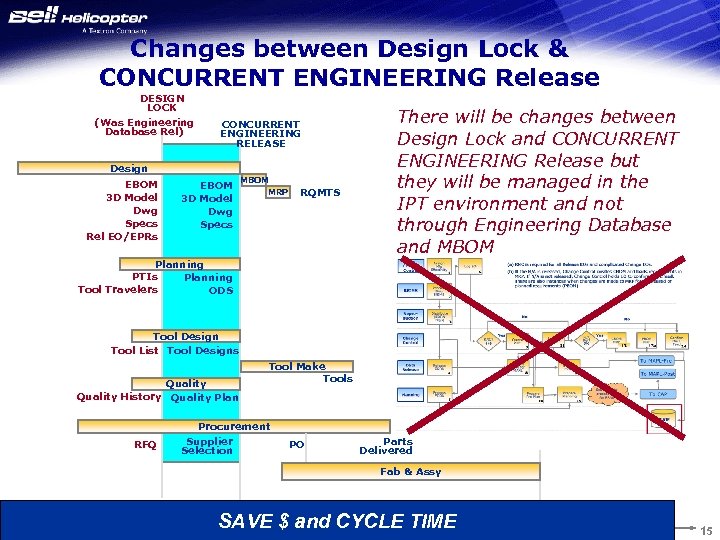 Changes between Design Lock & CONCURRENT ENGINEERING Release DESIGN LOCK (Was Engineering Database Rel) CONCURRENT ENGINEERING RELEASE Design EBOM 3 D Model Dwg Specs Rel EO/EPRs EBOM 3 D Model Dwg Specs MBOM MRP RQMTS There will be changes between Design Lock and CONCURRENT ENGINEERING Release but they will be managed in the IPT environment and not through Engineering Database and MBOM Planning PTIs Planning Tool Travelers ODS Tool Design Tool List Tool Designs Quality History Quality Plan RFQ Tool Make Tools Procurement Supplier Selection PO Parts Delivered Fab & Assy SAVE $ and CYCLE TIME Time 15
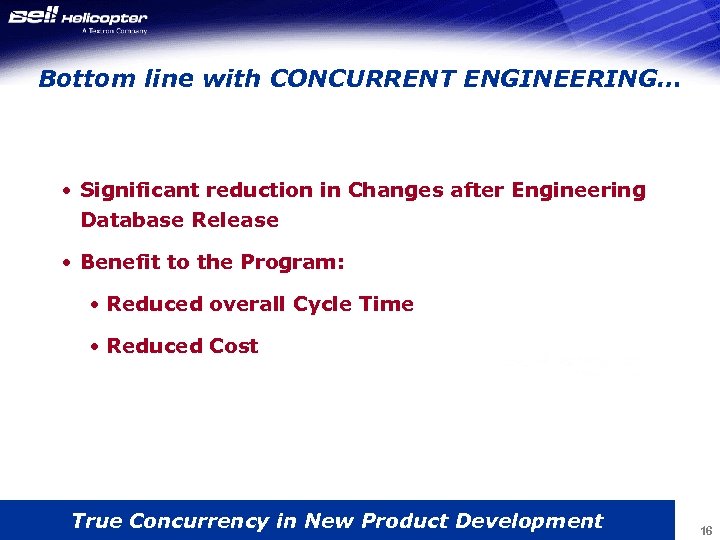 Bottom line with CONCURRENT ENGINEERING… • Significant reduction in Changes after Engineering Database Release • Benefit to the Program: • Reduced overall Cycle Time • Reduced Cost True Concurrency in New Product Development 16
 How will CONCURRENT ENGINEERING work? 17
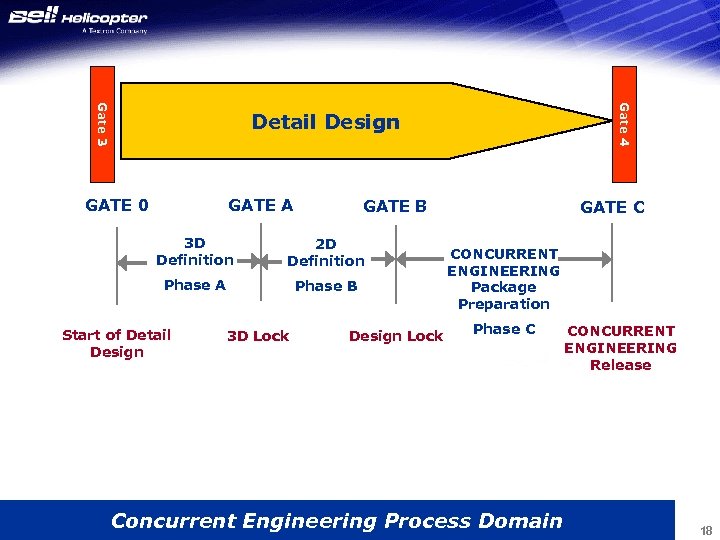 Gate 4 Gate 3 Detail Design GATE 0 GATE A GATE B 3 D Definition 2 D Definition Phase A Phase B Start of Detail Design 3 D Lock Design Lock GATE C CONCURRENT ENGINEERING Package Preparation Phase C Concurrent Engineering Process Domain CONCURRENT ENGINEERING Release 18
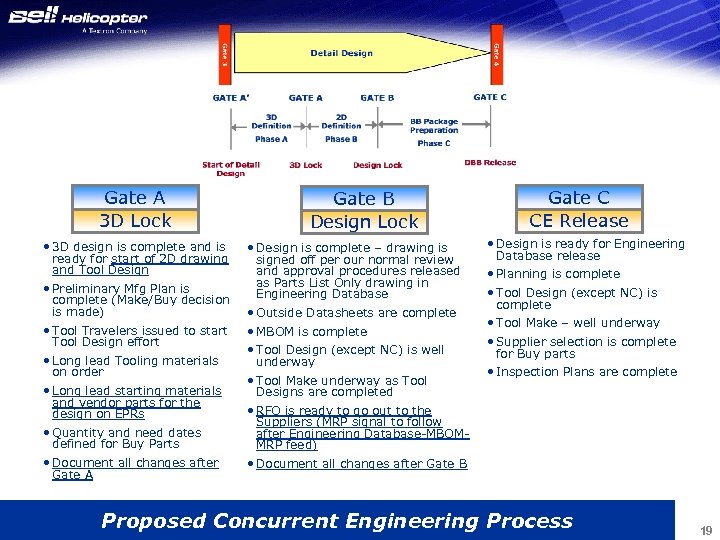 Gate A 3 D Lock • 3 D design is complete and is ready for start of 2 D drawing and Tool Design • Preliminary Mfg Plan is complete (Make/Buy decision is made) • Tool Travelers issued to start Tool Design effort • Long lead Tooling materials on order • Long lead starting materials and vendor parts for the design on EPRs • Quantity and need dates defined for Buy Parts • Document all changes after Gate A Gate B Design Lock • Design is complete – drawing is signed off per our normal review and approval procedures released as Parts List Only drawing in Engineering Database • Outside Datasheets are complete • MBOM is complete • Tool Design (except NC) is well underway • Tool Make underway as Tool Designs are completed • RFQ is ready to go out to the Suppliers (MRP signal to follow after Engineering Database-MBOMMRP feed) • Document all changes after Gate B Gate C CE Release • Design is ready for Engineering Database release • Planning is complete • Tool Design (except NC) is complete • Tool Make – well underway • Supplier selection is complete for Buy parts • Inspection Plans are complete Proposed Concurrent Engineering Process 19
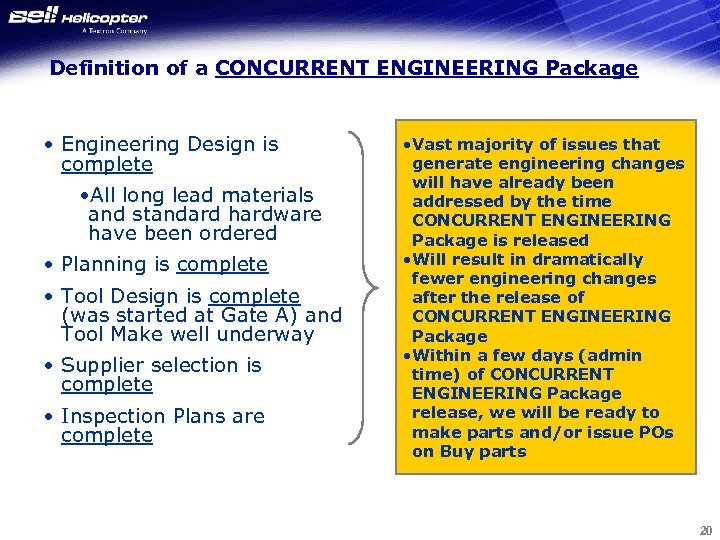 Definition of a CONCURRENT ENGINEERING Package • Engineering Design is complete • All long lead materials and standard hardware have been ordered • Planning is complete • Tool Design is complete (was started at Gate A) and Tool Make well underway • Supplier selection is complete • Inspection Plans are complete • Vast majority of issues that generate engineering changes will have already been addressed by the time CONCURRENT ENGINEERING Package is released • Will result in dramatically fewer engineering changes after the release of CONCURRENT ENGINEERING Package • Within a few days (admin time) of CONCURRENT ENGINEERING Package release, we will be ready to make parts and/or issue POs on Buy parts 20
 Questions & Answers Feedback Was this Value-Added? 21
 Critical / Key Characteristics - Process Architecture Chris Collins Developed a FMEA based process and application software which effectively identifies critical and key features of a part or assembly Nov 6, 2004 Proposed CONCURRENT
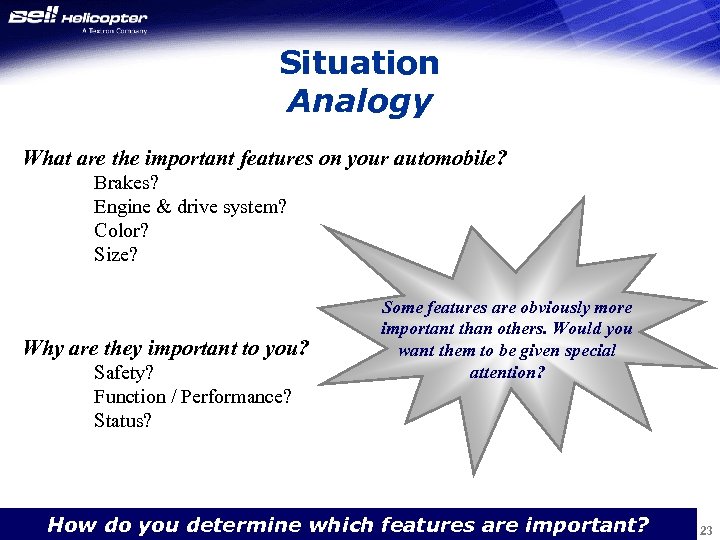 Situation Analogy What are the important features on your automobile? Brakes? Engine & drive system? Color? Size? Why are they important to you? Safety? Function / Performance? Status? Some features are obviously more important than others. Would you want them to be given special attention? How do you determine which features are important? 23
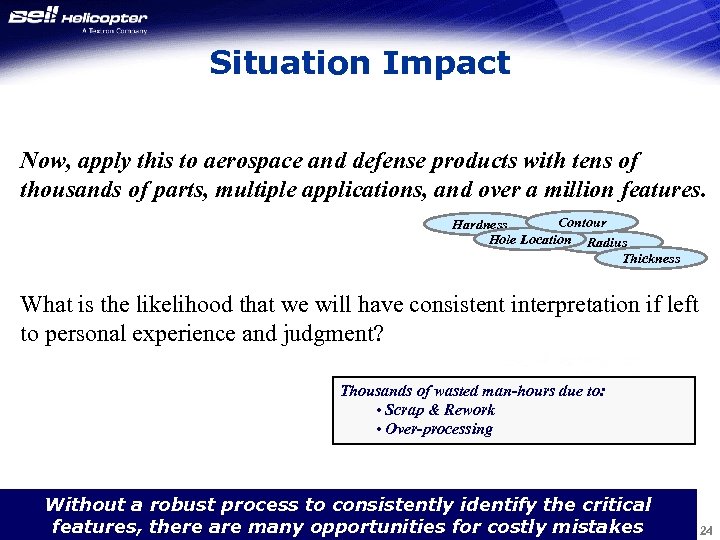 Situation Impact Now, apply this to aerospace and defense products with tens of thousands of parts, multiple applications, and over a million features. Contour Hardness Hole Location Radius Thickness What is the likelihood that we will have consistent interpretation if left to personal experience and judgment? Thousands of wasted man-hours due to: • Scrap & Rework • Over-processing Without a robust process to consistently identify the critical features, there are many opportunities for costly mistakes 24
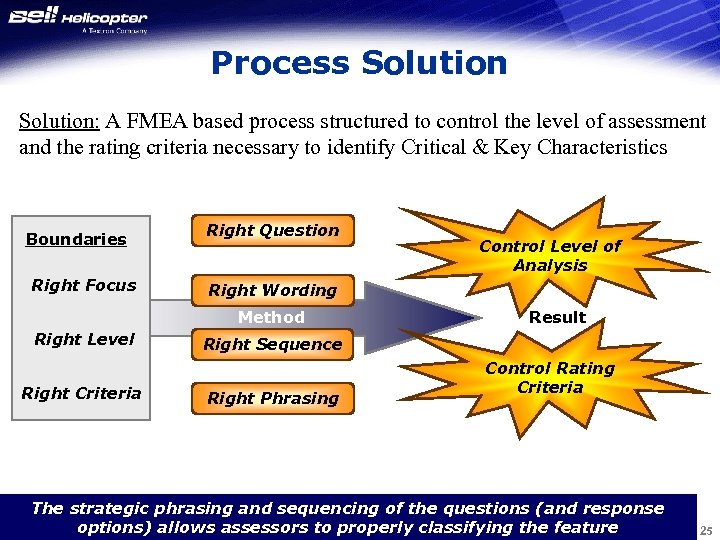 Process Solution: A FMEA based process structured to control the level of assessment and the rating criteria necessary to identify Critical & Key Characteristics Boundaries Right Focus Right Question Right Wording Method Right Level Right Criteria Control Level of Analysis Result Right Sequence Right Phrasing Control Rating Criteria The strategic phrasing and sequencing of the questions (and response options) allows assessors to properly classifying the feature 25
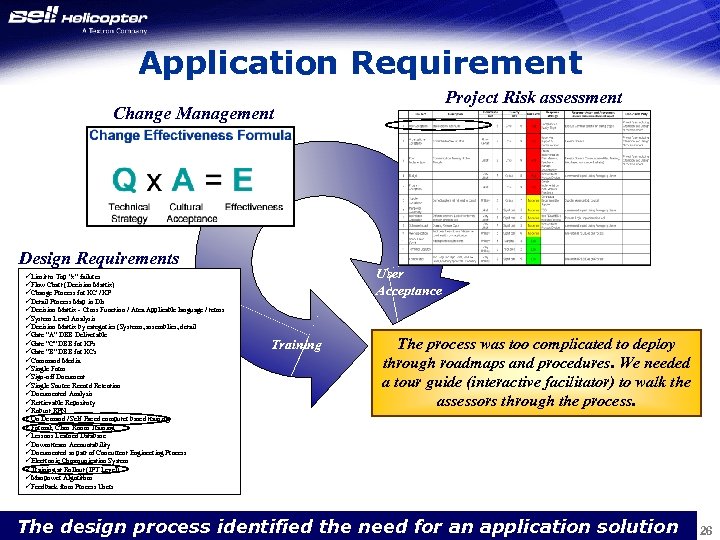 Application Requirement Project Risk assessment Change Management Design Requirements üLimit to Top "x" failures üFlow Chart (Decision Matrix) üChange Process for KC / KP üDetail Process Map in DIs üDecision Matrix - Cross Function / Area Applicable language / terms üSystem Level Analysis üDecision Matrix by categories (Systems, assemblies, detail üGate "A" DBB Deliverable üGate "C" DBB for KPs üGate "B" DBB for KCs üCommand Media üSingle Form üSign-off Document üSingle Source Record Retention üDocumented Analysis üRetrievable Repository üRobust RPN üOn Demand / Self Paced computer based training üFormal; Class Room Training üLessons Learned Database üDownstream Accountability üDocumented as part of Concurrent Engineering Process üElectronic Communication System üTraining at Rollout (IPT Level) üManpower Algorithm üFeedback from Process User Acceptance Training The process was too complicated to deploy through roadmaps and procedures. We needed a tour guide (interactive facilitator) to walk the assessors through the process. The design process identified the need for an application solution 26
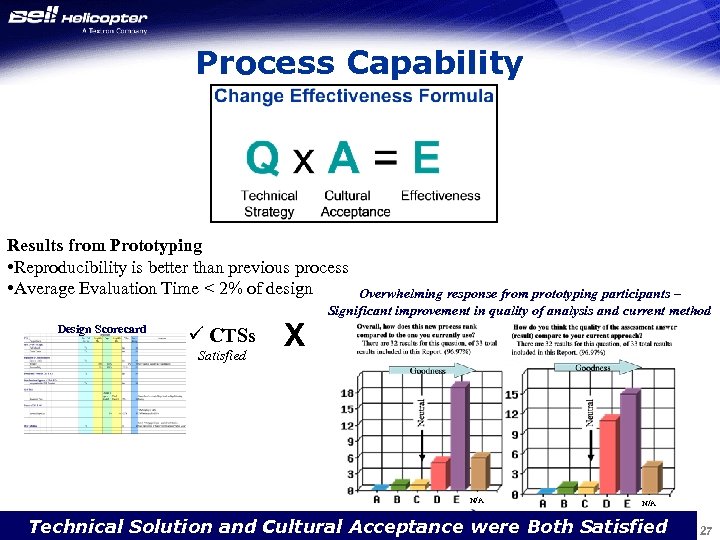 Process Capability Results from Prototyping • Reproducibility is better than previous process • Average Evaluation Time < 2% of design Design Scorecard ü CTSs Satisfied X Overwhelming response from prototyping participants – Significant improvement in quality of analysis and current method N/A Technical Solution and Cultural Acceptance were Both Satisfied 27
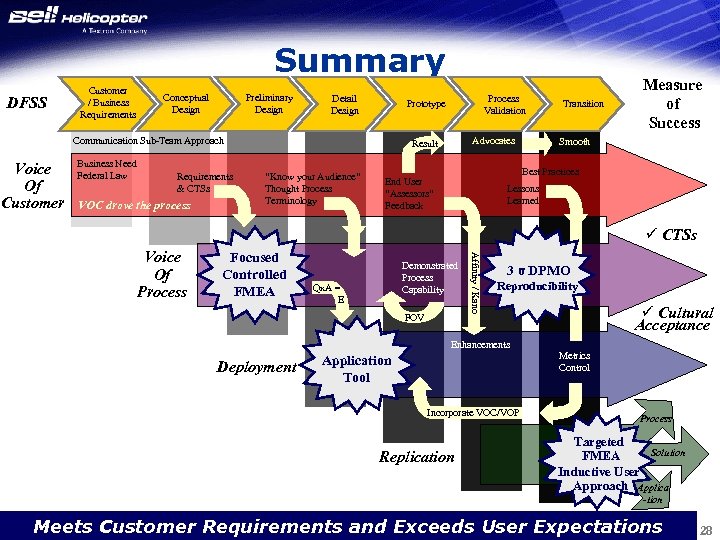 Summary DFSS Customer / Business Requirements Conceptual Design Preliminary Design Detail Design Prototype Communication Sub-Team Approach Voice Of Customer Business Need Federal Law Requirements & CTSs VOC drove the process Process Validation Advocates Result “Know your Audience” Thought Process Terminology Transition Measure of Success Smooth Best Practices End User “Assessors” Feedback Lessons Learned ü CTSs Focused Controlled FMEA Demonstrated Process Capability Qx. A = E FOV Affinity / Kano Voice Of Process 3 o DPMO x Reproducibility Enhancements Deployment Application Tool Incorporate VOC/VOP Replication ü Cultural Acceptance Metrics Control Process Targeted Solution FMEA Inductive User Approach Applica -tion Meets Customer Requirements and Exceeds User Expectations 28