


 Скачать презентацию Session 1 Catalysis Steve Marsden Catalysis within
0136276e0e14ed27b84fb87abbb52b31.ppt
- Количество слайдов: 29
 Session 1: Catalysis Steve Marsden
 Catalysis within i. PRD § New catalytic processes & reactions § Catalyst immobilisation/encapsulation § Mechanistic studies
 Catalysis within i. PRD Presentation focuses on: § Track record/in house expertise (highlights) § Current projects § Future perspectives/targets Discussion welcomed on: § Comments/suggestions on project portfolio § Identification of interested partners/ consortia for collaboration, application or information exchange
 Catalysis within i. PRD Landscape shaped by: § GCI Pharmaceutical Roundtable § EPSRC/AZ/GSK/Pfizer initiative § Discussions with collaborators (established and potential) § Inspiration and serendipity!
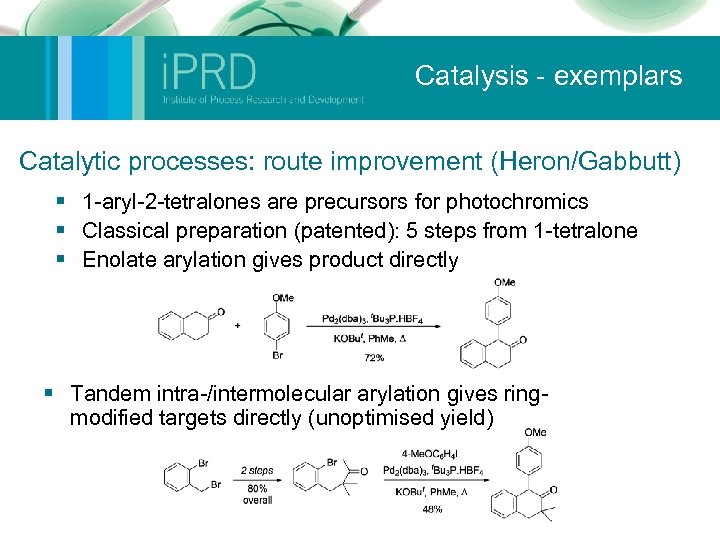 Catalysis - exemplars Catalytic processes: route improvement (Heron/Gabbutt) § 1 -aryl-2 -tetralones are precursors for photochromics § Classical preparation (patented): 5 steps from 1 -tetralone § Enolate arylation gives product directly § Tandem intra-/intermolecular arylation gives ringmodified targets directly (unoptimised yield)
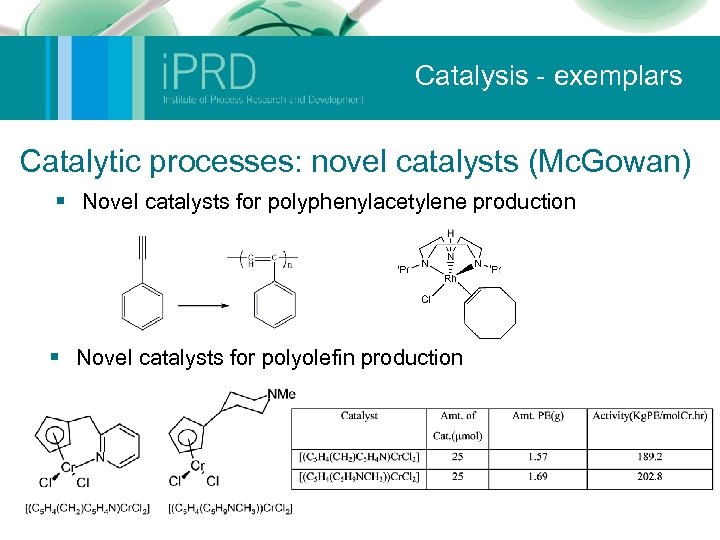 Catalysis - exemplars Catalytic processes: novel catalysts (Mc. Gowan) § Novel catalysts for polyphenylacetylene production § Novel catalysts for polyolefin production
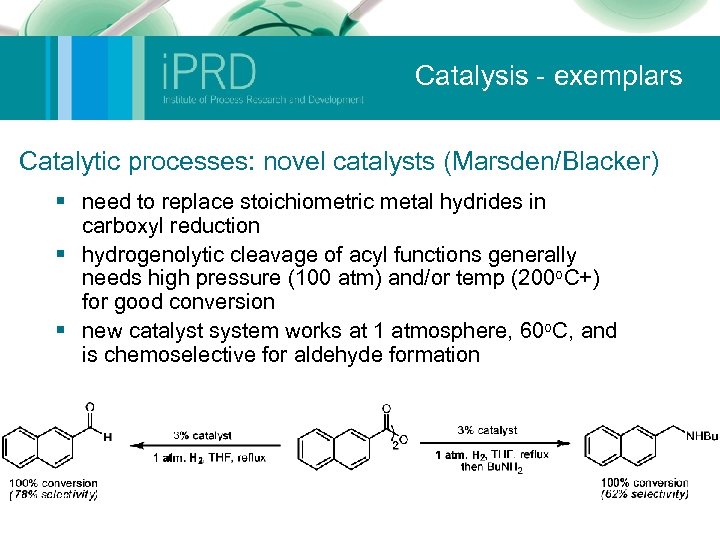 Catalysis - exemplars Catalytic processes: novel catalysts (Marsden/Blacker) § need to replace stoichiometric metal hydrides in carboxyl reduction § hydrogenolytic cleavage of acyl functions generally needs high pressure (100 atm) and/or temp (200 o. C+) for good conversion § new catalyst system works at 1 atmosphere, 60 o. C, and is chemoselective for aldehyde formation
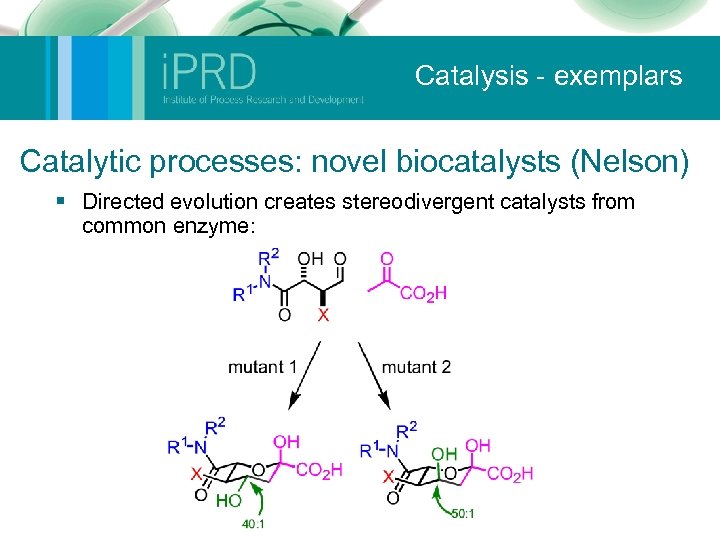 Catalysis - exemplars Catalytic processes: novel biocatalysts (Nelson) § Directed evolution creates stereodivergent catalysts from common enzyme:
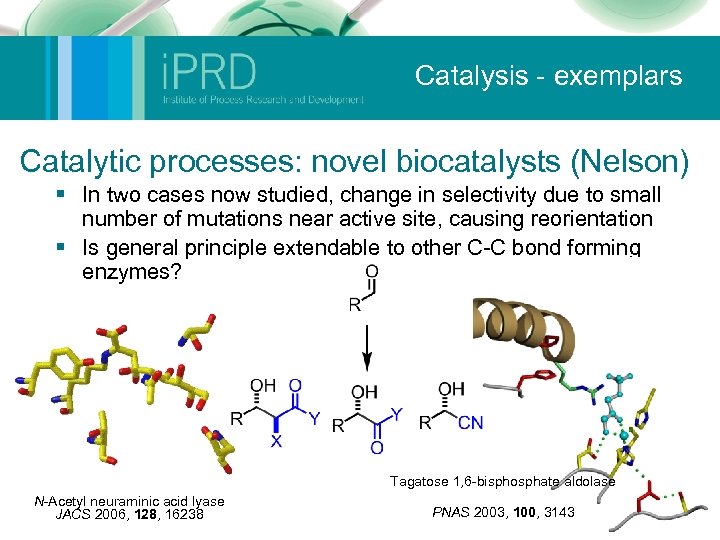 Catalysis - exemplars Catalytic processes: novel biocatalysts (Nelson) § In two cases now studied, change in selectivity due to small number of mutations near active site, causing reorientation § Is general principle extendable to other C-C bond forming enzymes? Tagatose 1, 6 -bisphosphate aldolase N-Acetyl neuraminic acid lyase JACS 2006, 128, 16238 PNAS 2003, 100, 3143
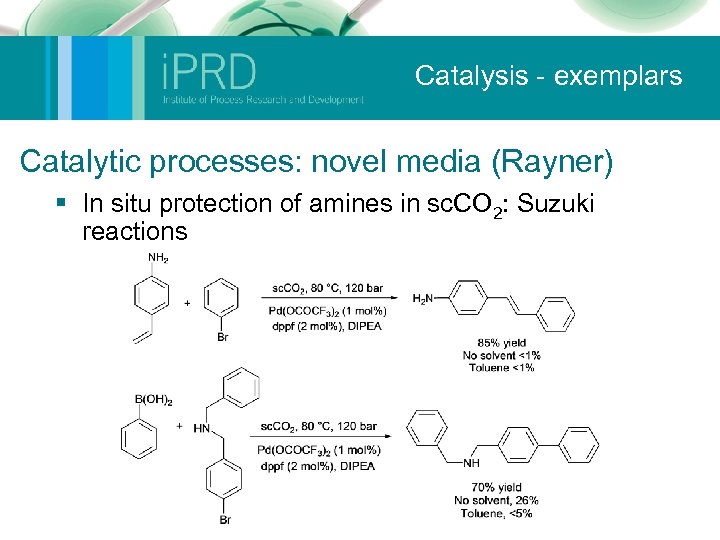 Catalysis - exemplars Catalytic processes: novel media (Rayner) § In situ protection of amines in sc. CO 2: Suzuki reactions
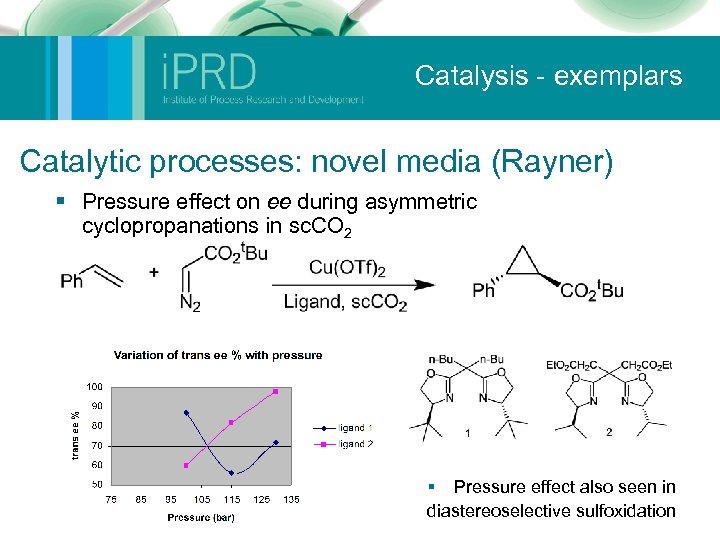 Catalysis - exemplars Catalytic processes: novel media (Rayner) § Pressure effect on ee during asymmetric cyclopropanations in sc. CO 2 § Pressure effect also seen in diastereoselective sulfoxidation
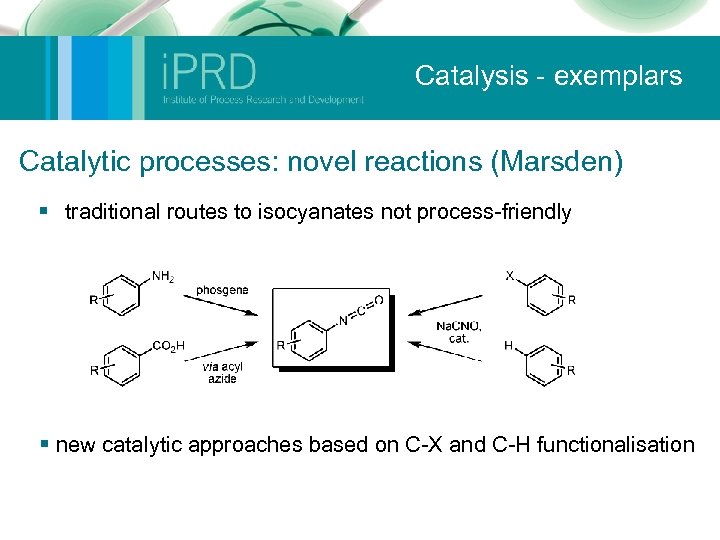 Catalysis - exemplars Catalytic processes: novel reactions (Marsden) § traditional routes to isocyanates not process-friendly § new catalytic approaches based on C-X and C-H functionalisation
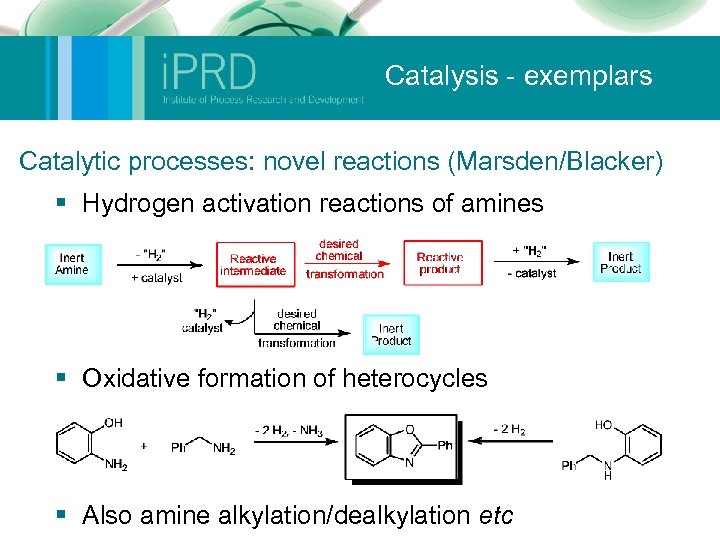 Catalysis - exemplars Catalytic processes: novel reactions (Marsden/Blacker) § Hydrogen activation reactions of amines § Oxidative formation of heterocycles § Also amine alkylation/dealkylation etc
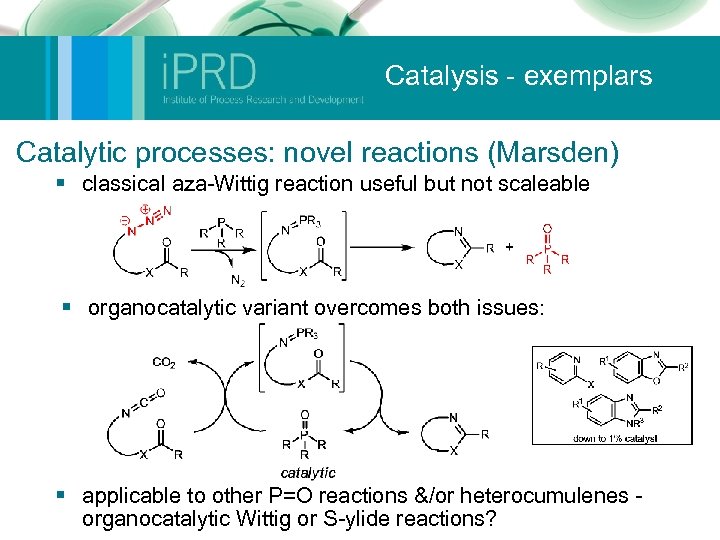 Catalysis - exemplars Catalytic processes: novel reactions (Marsden) § classical aza-Wittig reaction useful but not scaleable § organocatalytic variant overcomes both issues: § applicable to other P=O reactions &/or heterocumulenes organocatalytic Wittig or S-ylide reactions?
 Catalysis - future work Projects under review or in plan: § § § § Catalytic synthesis of cis and trans alkenes Catalytic oxidative synthesis of amides Asymmetric sulfoxidation Direct C-H activation for arylation of enolates Non-halide alkylations of alcohols Photocatalytic reactions Catalytic reduction of CO 2 Catalytic processing of lignin
 Catalysis Catalyst immobilisation Industrial problem: § homogeneous catalysts used in increasing number of processes § costs too high and separation of catalysts/metals to low levels difficult § the cost contribution of catalyst to product is dependant upon the catalyst type, loading and activity, ability to reuse or recover metal Background: § the use of immobilised catalysts is widely researched but not widely used in industry. Issues that remain to be solved are: § the effect on activity/selectivity § leaching of metal from ligand/support § stability and physical properties of the support; Benefits: § Success should enable cheaper catalysts, purer products, more intense processes eg continuous, plug-flow.
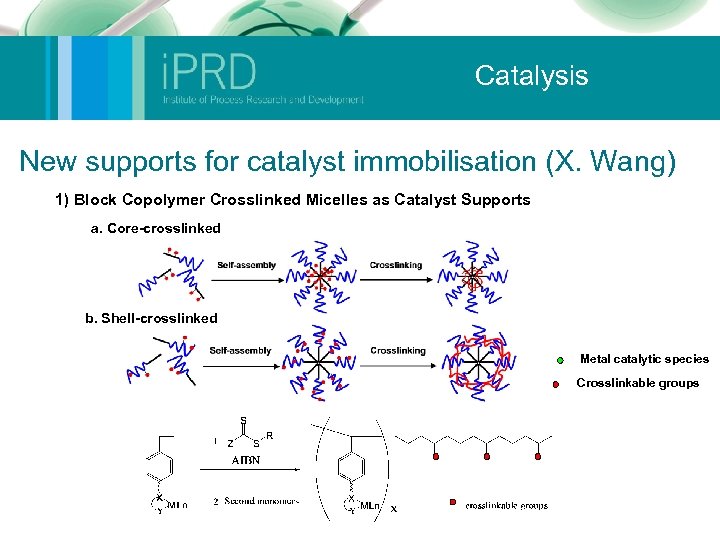 Catalysis New supports for catalyst immobilisation (X. Wang) 1) Block Copolymer Crosslinked Micelles as Catalyst Supports a. Core-crosslinked b. Shell-crosslinked Metal catalytic species Crosslinkable groups
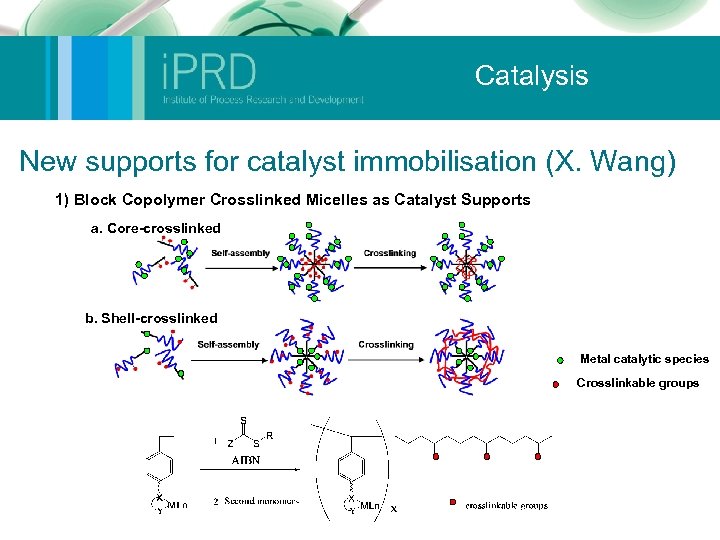 Catalysis New supports for catalyst immobilisation (X. Wang) 1) Block Copolymer Crosslinked Micelles as Catalyst Supports a. Core-crosslinked b. Shell-crosslinked Metal catalytic species Crosslinkable groups
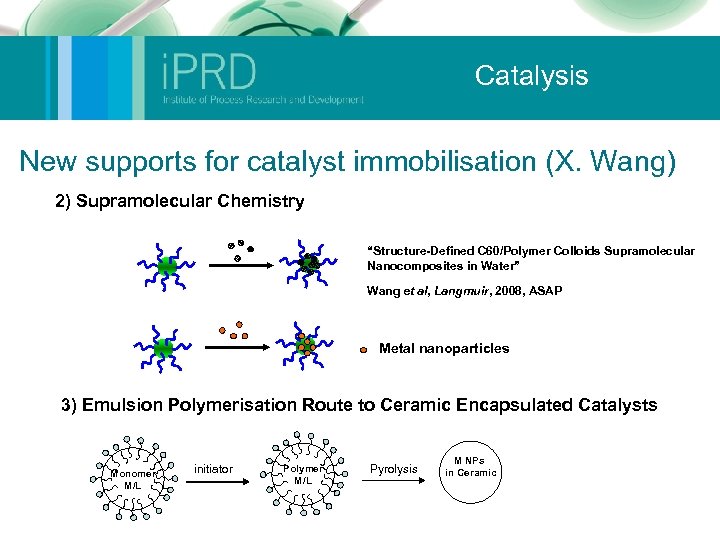 Catalysis New supports for catalyst immobilisation (X. Wang) 2) Supramolecular Chemistry “Structure-Defined C 60/Polymer Colloids Supramolecular Nanocomposites in Water” Wang et al, Langmuir, 2008, ASAP Metal nanoparticles 3) Emulsion Polymerisation Route to Ceramic Encapsulated Catalysts Monomer M/L initiator Polymer M/L Pyrolysis M NPs in Ceramic
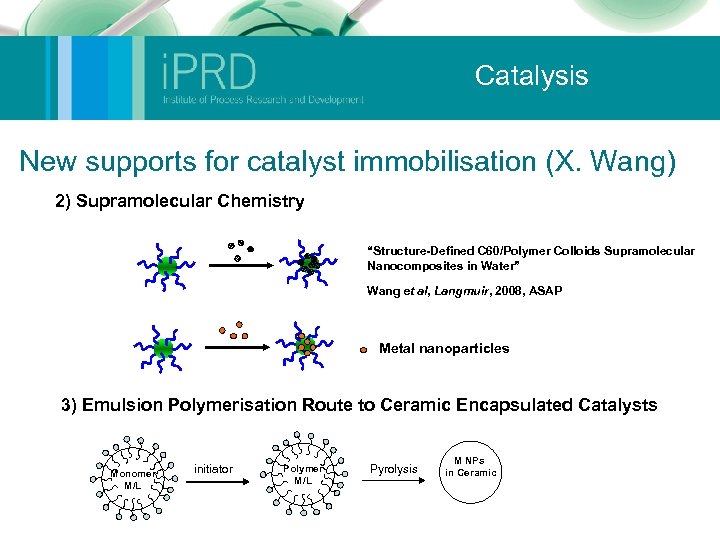 Catalysis New supports for catalyst immobilisation (X. Wang) 2) Supramolecular Chemistry “Structure-Defined C 60/Polymer Colloids Supramolecular Nanocomposites in Water” Wang et al, Langmuir, 2008, ASAP Metal nanoparticles 3) Emulsion Polymerisation Route to Ceramic Encapsulated Catalysts Monomer M/L initiator Polymer M/L Pyrolysis M NPs in Ceramic
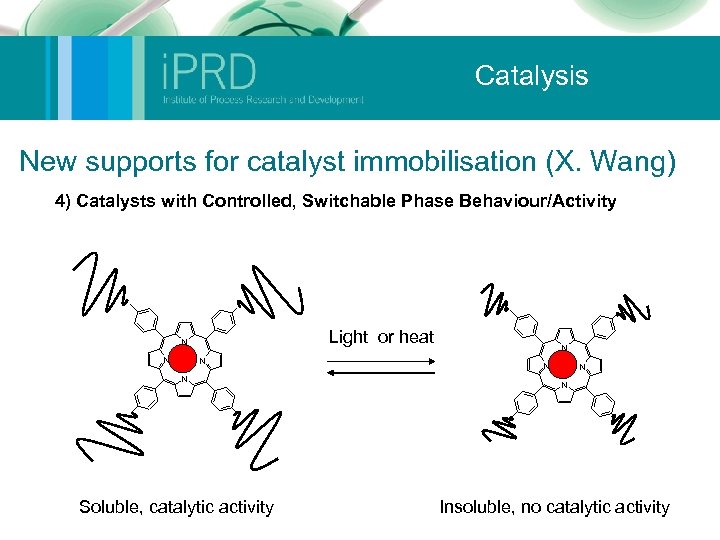 Catalysis New supports for catalyst immobilisation (X. Wang) 4) Catalysts with Controlled, Switchable Phase Behaviour/Activity Light or heat N N Soluble, catalytic activity N N Insoluble, no catalytic activity
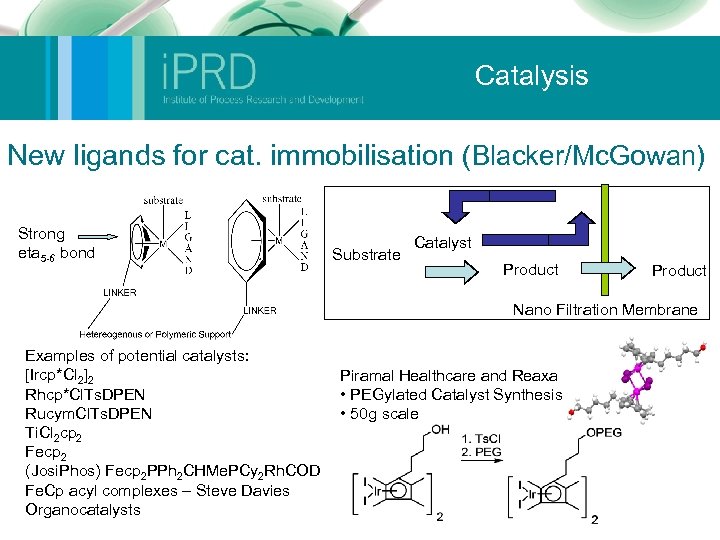 Catalysis New ligands for cat. immobilisation (Blacker/Mc. Gowan) Strong eta 5 -6 bond Substrate Catalyst Product Nano Filtration Membrane Examples of potential catalysts: [Ircp*Cl 2]2 Rhcp*Cl. Ts. DPEN Rucym. Cl. Ts. DPEN Ti. Cl 2 cp 2 Fecp 2 (Josi. Phos) Fecp 2 PPh 2 CHMe. PCy 2 Rh. COD Fe. Cp acyl complexes – Steve Davies Organocatalysts Piramal Healthcare and Reaxa • PEGylated Catalyst Synthesis • 50 g scale
 Catalysis Functional supported catalysts (Mc. Gowan/Rayner) § “Dye. Cat” method - integration of dye into catalyst and/or initiator for polymerisation leads to coloured polymer with covalently bound dyestuff § no separate dyeing step; no leaching of colourant § Initial study: ring opening polymerisation of lactide using aluminium complex and an alcohol initiator covalently bound to monomer (and hence polymer chain) § Applicable to other polymerisations, applications and effects R. S. Blackburn, C. M. Rayner, C. M. Pask, and P. C. Mc. Gowan, International Patent, WO 2007/052009, 1 -45.
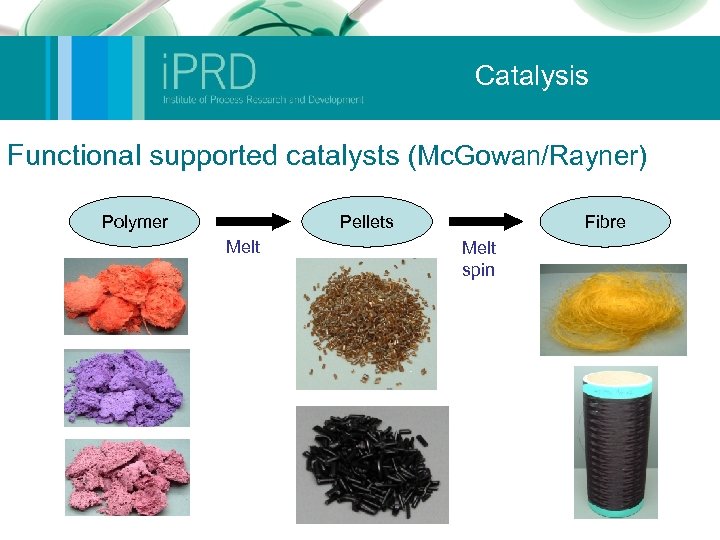 Catalysis Functional supported catalysts (Mc. Gowan/Rayner) Polymer Pellets Melt Fibre Melt spin
 Catalysis Mechanistic studies § § § Kinetic analysis of complex reactions Non-linear kinetics - Dr Annette Taylor Complex parallel pathways - Prof Mike Pilling Physical organic chemistry - Prof John Atherton Access to novel process analytical tools
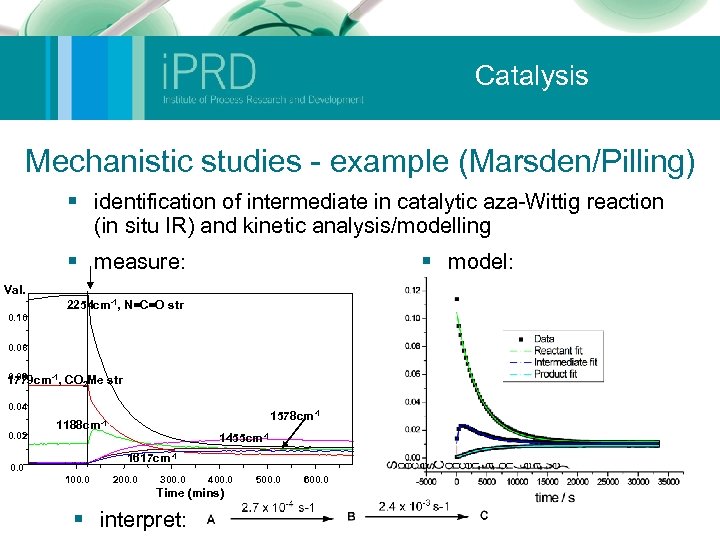 Catalysis Mechanistic studies - example (Marsden/Pilling) § identification of intermediate in catalytic aza-Wittig reaction (in situ IR) and kinetic analysis/modelling § measure: § model: Val. 2254 cm-1, N=C=O str 0. 10 0. 08 0. 06 1779 cm-1, CO 2 Me str 0. 04 0. 02 1578 cm-1 1188 cm-1 1455 cm-1 1617 cm-1 0. 0 100. 0 200. 0 300. 0 400. 0 Time (mins) § interpret: 500. 0 600. 0
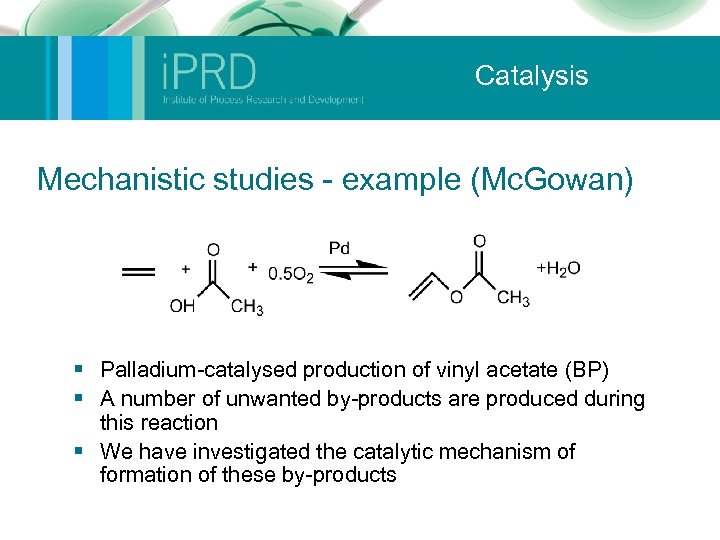 Catalysis Mechanistic studies - example (Mc. Gowan) § Palladium-catalysed production of vinyl acetate (BP) § A number of unwanted by-products are produced during this reaction § We have investigated the catalytic mechanism of formation of these by-products
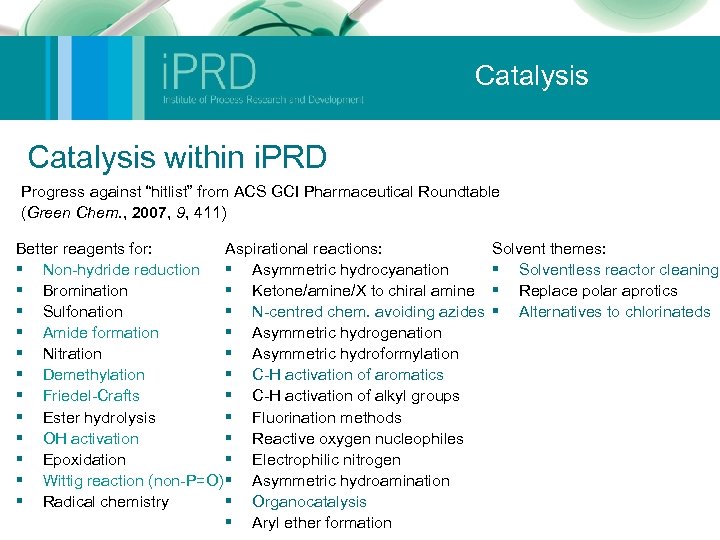 Catalysis within i. PRD Progress against “hitlist” from ACS GCI Pharmaceutical Roundtable (Green Chem. , 2007, 9, 411) Better reagents for: Aspirational reactions: § Non-hydride reduction § Asymmetric hydrocyanation § Bromination § Ketone/amine/X to chiral amine § Sulfonation § N-centred chem. avoiding azides § Amide formation § Asymmetric hydrogenation § Nitration § Asymmetric hydroformylation § Demethylation § C-H activation of aromatics § Friedel-Crafts § C-H activation of alkyl groups § Ester hydrolysis § Fluorination methods § OH activation § Reactive oxygen nucleophiles § Epoxidation § Electrophilic nitrogen § Wittig reaction (non-P=O) § Asymmetric hydroamination § Radical chemistry § Organocatalysis § Aryl ether formation Solvent themes: § Solventless reactor cleaning § Replace polar aprotics § Alternatives to chlorinateds
 Catalysis Recap: points for discussion § Comments/suggestions on project portfolio § Identification of interested partners/ consortia for collaboration, application or information exchange