


 Скачать презентацию Sesi 3 Reformasi Sektor Kesehatan di Dunia dan
c05ad43c7493037ee303dc6e935b6a9e.ppt
- Количество слайдов: 56
 Sesi 3 Reformasi Sektor Kesehatan di Dunia dan di Indonesia Laksono Trisnantoro Dwi Handono Sulistyo 1
 Isi Bagian 1. Memahami Reformasi Kesehatan Bagian 2. Apakah kebijakan financing saja cukup? Kasus Jamkesmas Bagian 3. Conctracting sebagai salahsatu kebijakan dalam reformasi kesehatan 2
 Bagian 1. Memahami Reformasi Kesehatan 3
 Health sector reform: “. . . sustained, purposeful, strategic change to improve health system performance” --Peter Berman “… perubahan yang berkelanjutan, bertujuan, dan stratejik untuk meningkatkan kinerja sistem kesehatan “ 4
 Mengapa Dilakukan Reformasi? Pendekatan “Negara Gagal” 5
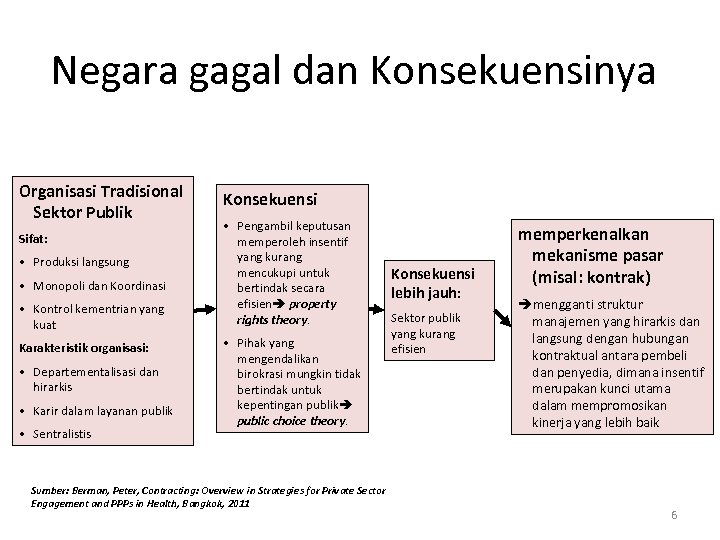 Negara gagal dan Konsekuensinya Organisasi Tradisional Sektor Publik Sifat: • Produksi langsung • Monopoli dan Koordinasi • Kontrol kementrian yang kuat Karakteristik organisasi: • Departementalisasi dan hirarkis • Karir dalam layanan publik • Sentralistis Konsekuensi • Pengambil keputusan memperoleh insentif yang kurang mencukupi untuk bertindak secara efisien property rights theory. • Pihak yang mengendalikan birokrasi mungkin tidak bertindak untuk kepentingan publik public choice theory. Sumber: Berman, Peter, Contracting: Overview in Strategies for Private Sector Engagement and PPPs in Health, Bangkok, 2011 Konsekuensi lebih jauh: Sektor publik yang kurang efisien memperkenalkan mekanisme pasar (misal: kontrak) mengganti struktur manajemen yang hirarkis dan langsung dengan hubungan kontraktual antara pembeli dan penyedia, dimana insentif merupakan kunci utama dalam mempromosikan kinerja yang lebih baik 6
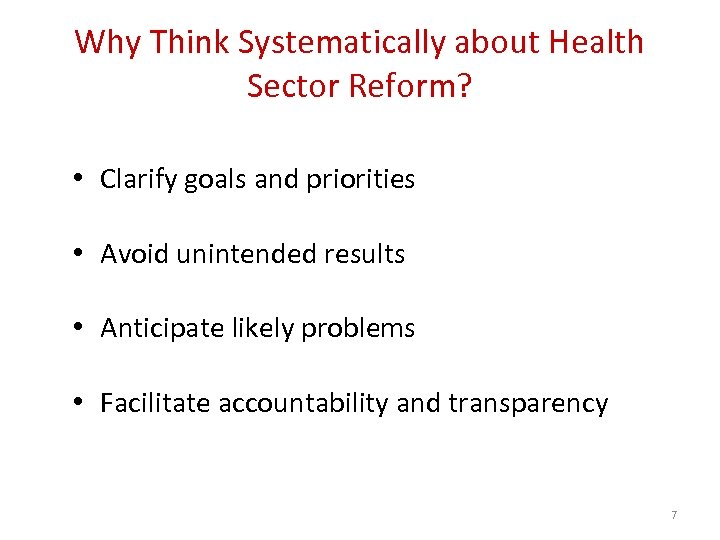 Why Think Systematically about Health Sector Reform? • Clarify goals and priorities • Avoid unintended results • Anticipate likely problems • Facilitate accountability and transparency 7
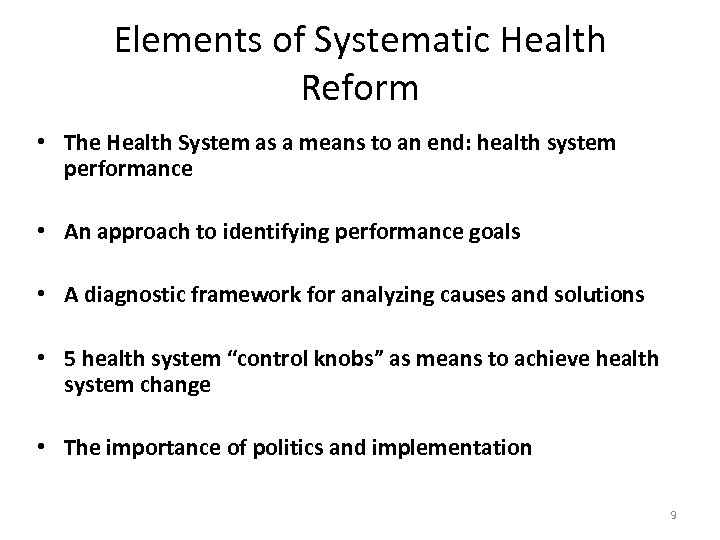 Elements of Systematic Health Reform • The Health System as a means to an end: health system performance • An approach to identifying performance goals • A diagnostic framework for analyzing causes and solutions • 5 health system “control knobs” as means to achieve health system change • The importance of politics and implementation 9
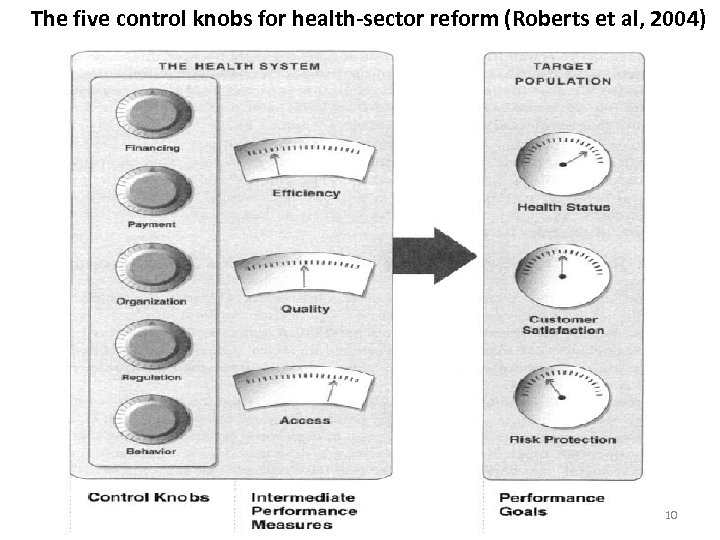 The five control knobs for health-sector reform (Roberts et al, 2004) 10
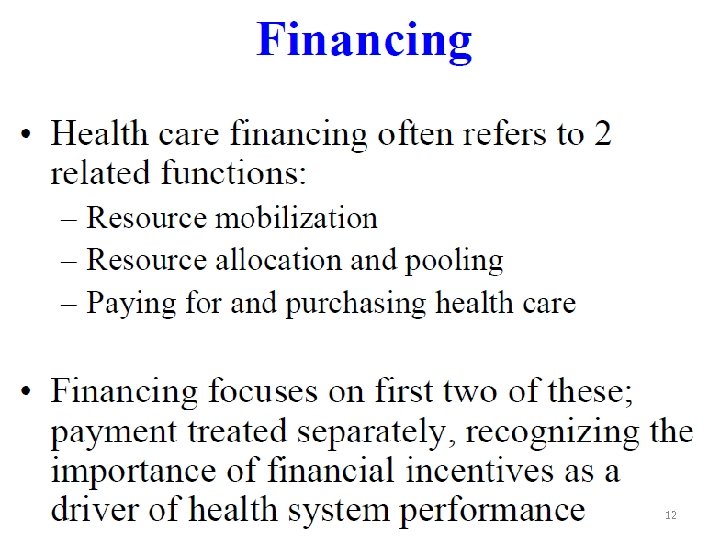
 Control Knob 1: Financing 11
 12
12
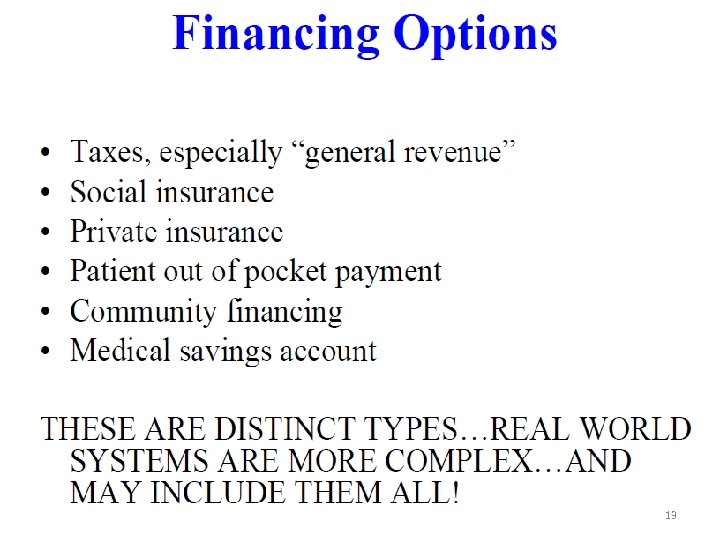 13
13
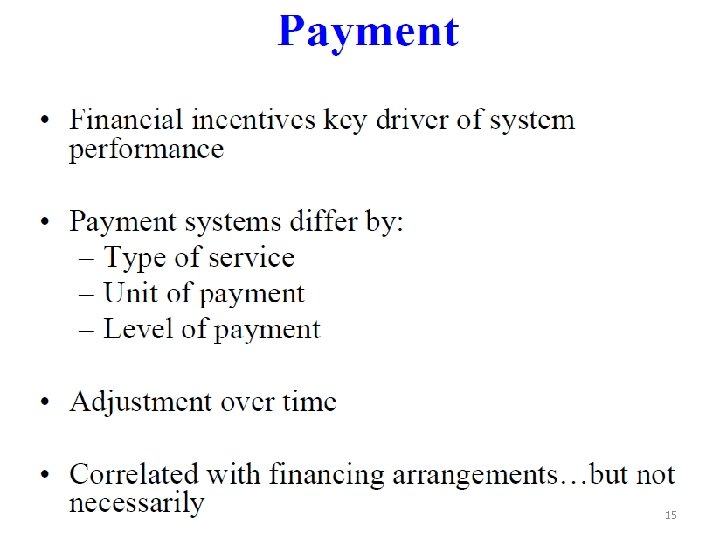
 Control Knob 2: Payment 14
 15
15
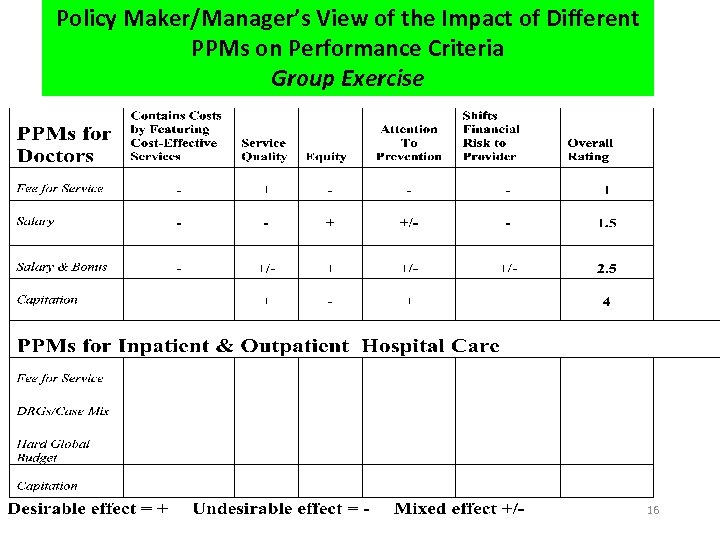 Policy Maker/Manager’s View of the Impact of Different PPMs on Performance Criteria Group Exercise 16
 Control Knob 3: Organization 17
 18
18
 • Strategies • Definition of service delivery model(s): scope and continuum of care • Human resource interventions • Innovations in information systems • Regionalization strategies • 19
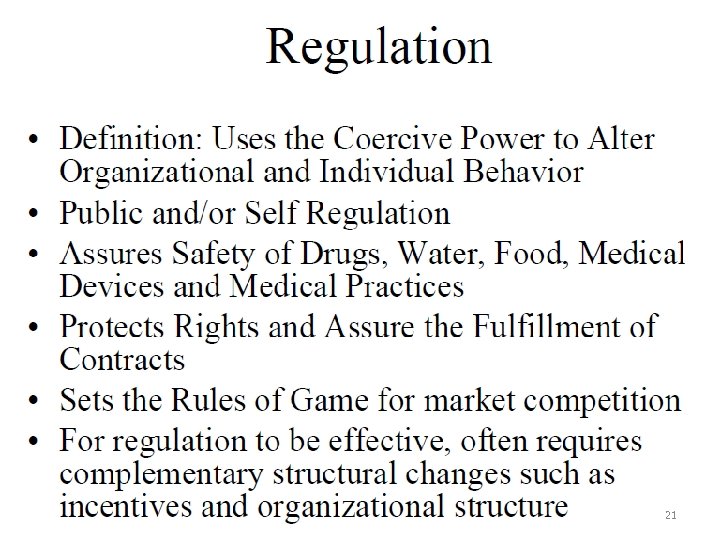
 Control Knob 4: Regulation 20
 21
21
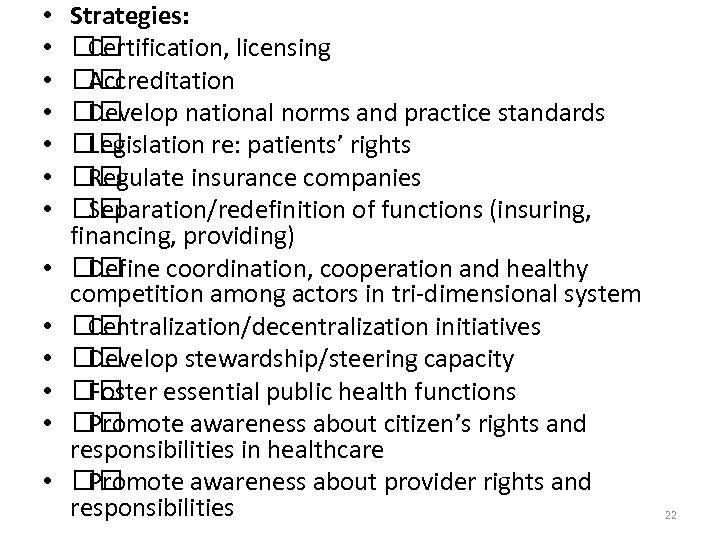 • • • • Strategies: Certification, licensing Accreditation Develop national norms and practice standards Legislation re: patients’ rights Regulate insurance companies Separation/redefinition of functions (insuring, financing, providing) Define coordination, cooperation and healthy competition among actors in tri-dimensional system Centralization/decentralization initiatives Develop stewardship/steering capacity essential public health functions Foster Promote awareness about citizen’s rights and responsibilities in healthcare Promote awareness about provider rights and responsibilities 22
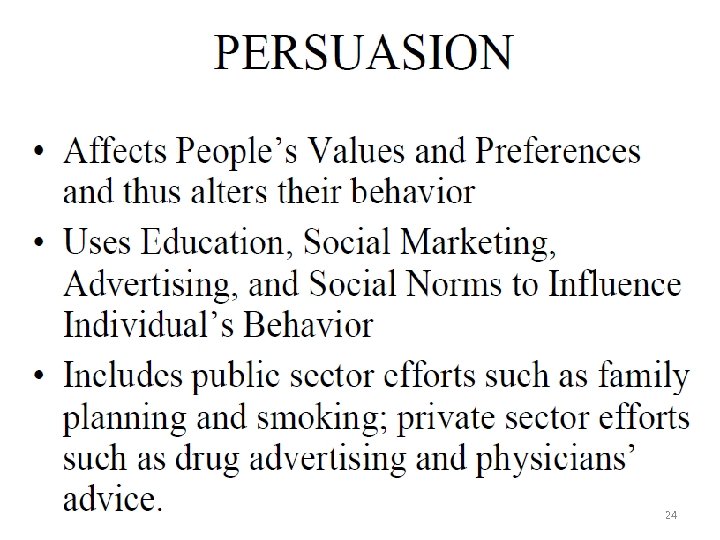
 Control Knob 5: Behavior 23
 24
24
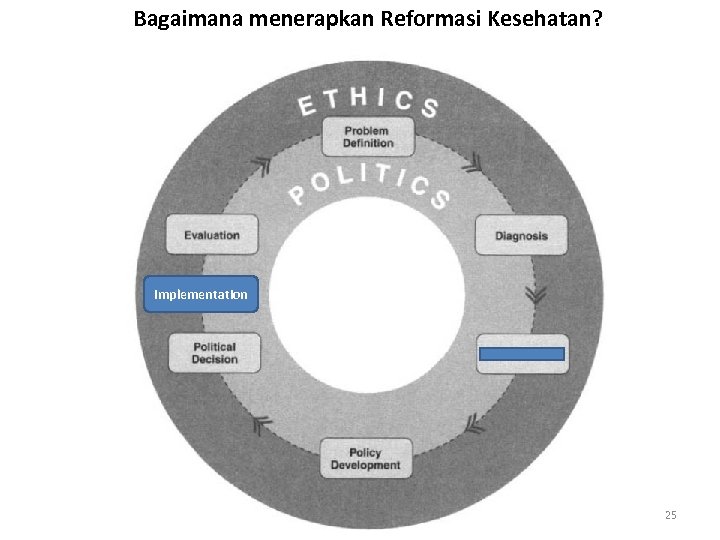 Bagaimana menerapkan Reformasi Kesehatan? Implementation 25
 Perkembangan Reformasi Kesehatan di Dunia & Indonesia 26
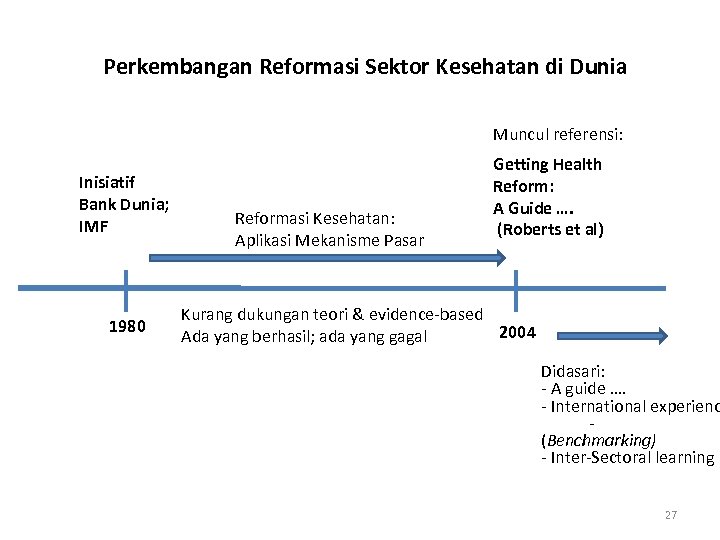 Perkembangan Reformasi Sektor Kesehatan di Dunia Muncul referensi: Inisiatif Bank Dunia; IMF 1980 Reformasi Kesehatan: Aplikasi Mekanisme Pasar Getting Health Reform: A Guide …. (Roberts et al) Kurang dukungan teori & evidence-based 2004 Ada yang berhasil; ada yang gagal Didasari: - A guide …. - International experienc (Benchmarking) - Inter-Sectoral learning 27
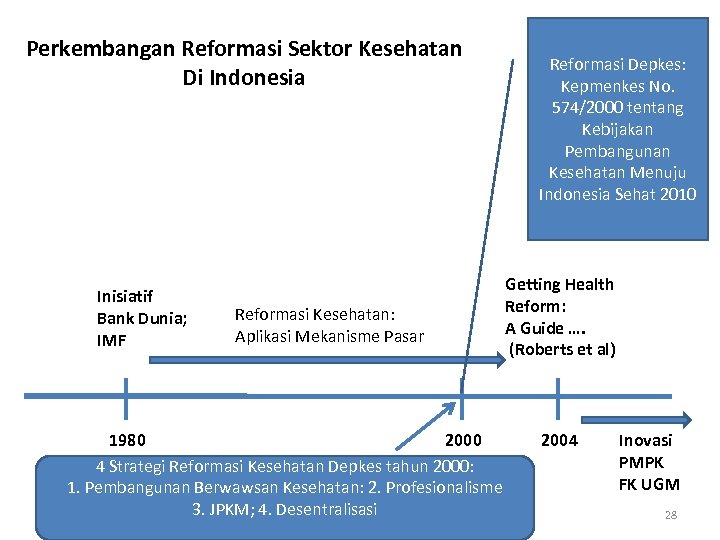 Perkembangan Reformasi Sektor Kesehatan Di Indonesia Inisiatif Bank Dunia; IMF Reformasi Kesehatan: Aplikasi Mekanisme Pasar 1980 2000 4 Strategi Reformasi Kesehatan Depkes tahun 2000: 1. Pembangunan Berwawsan Kesehatan: 2. Profesionalisme 3. JPKM; 4. Desentralisasi Reformasi Depkes: Kepmenkes No. 574/2000 tentang Kebijakan Pembangunan Kesehatan Menuju Indonesia Sehat 2010 Getting Health Reform: A Guide …. (Roberts et al) 2004 Inovasi PMPK FK UGM 28
 2. Apakah kebijakan financing saja cukup? Kasus Jamkesmas • Jamkesmas merupakan sebuah kebijalan pembiayaan. • Apakah cukup Jamkesmas? 29
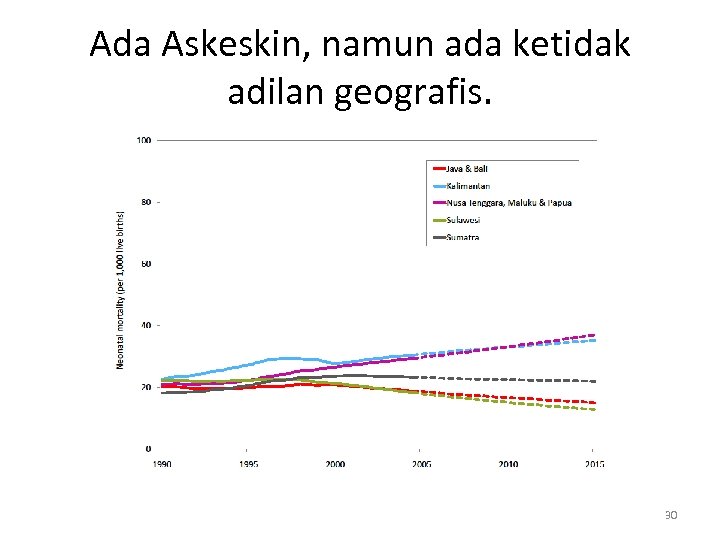 Ada Askeskin, namun ada ketidak adilan geografis. 30
 The Jamkesmas impact Scenario (to be discussed) In the future: • Can Jamkesmas improve both: socio-economic equity and geographical equity? • Or just improving socio-economic equity? 31
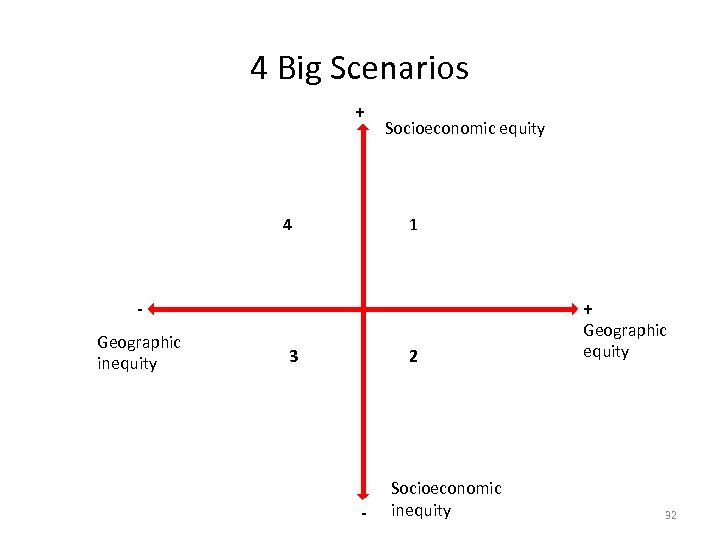 4 Big Scenarios + 4 Socioeconomic equity 1 + Geographic inequity 3 2 - Socioeconomic inequity Geographic equity 32
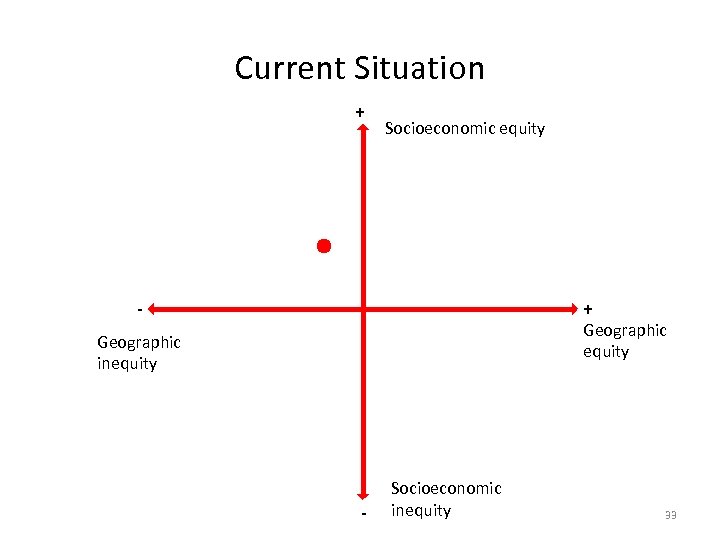 Current Situation + Socioeconomic equity + - Geographic equity Geographic inequity - Socioeconomic inequity 33
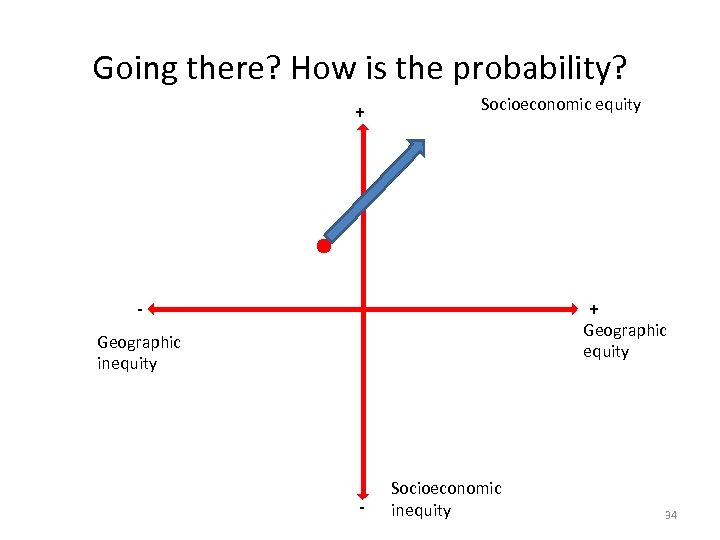 Going there? How is the probability? + Socioeconomic equity + - Geographic equity Geographic inequity - Socioeconomic inequity 34
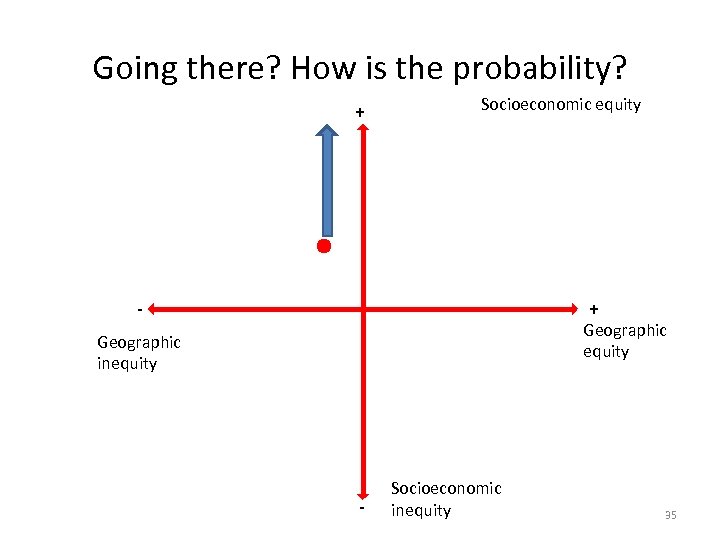 Going there? How is the probability? + Socioeconomic equity + - Geographic equity Geographic inequity - Socioeconomic inequity 35
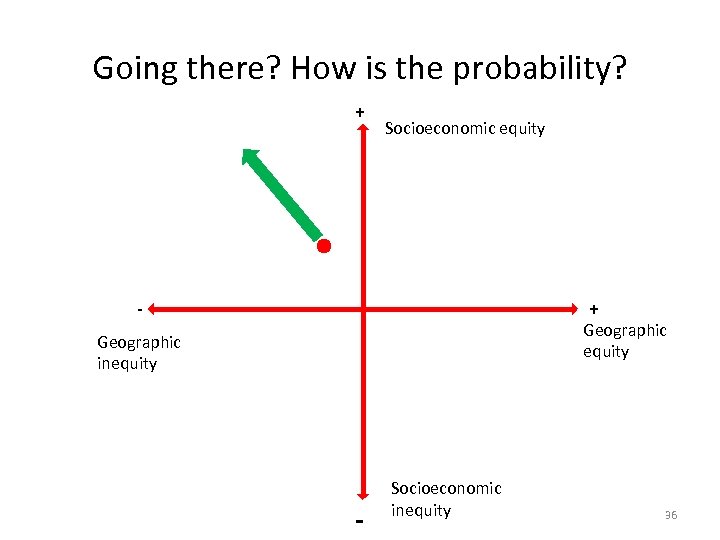 Going there? How is the probability? + Socioeconomic equity + - Geographic equity Geographic inequity - Socioeconomic inequity 36
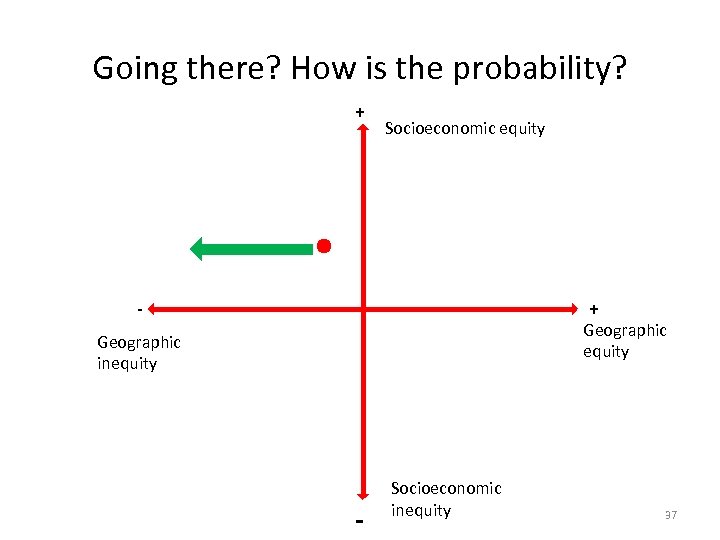 Going there? How is the probability? + Socioeconomic equity + - Geographic equity Geographic inequity - Socioeconomic inequity 37
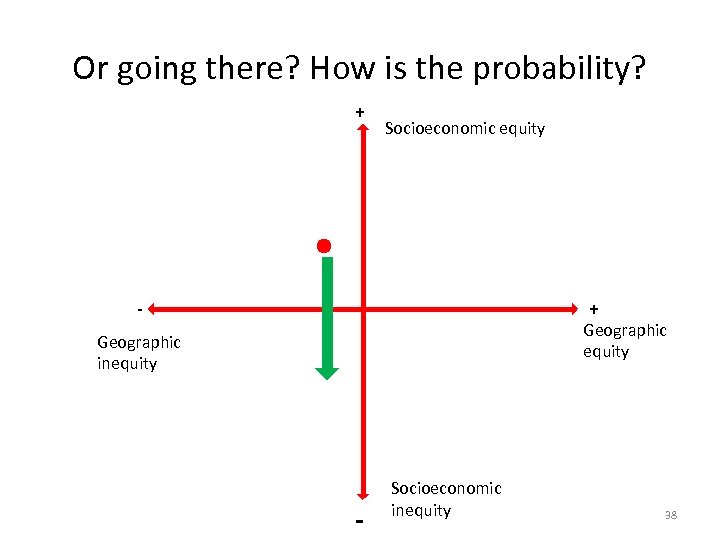 Or going there? How is the probability? + Socioeconomic equity + - Geographic equity Geographic inequity - Socioeconomic inequity 38
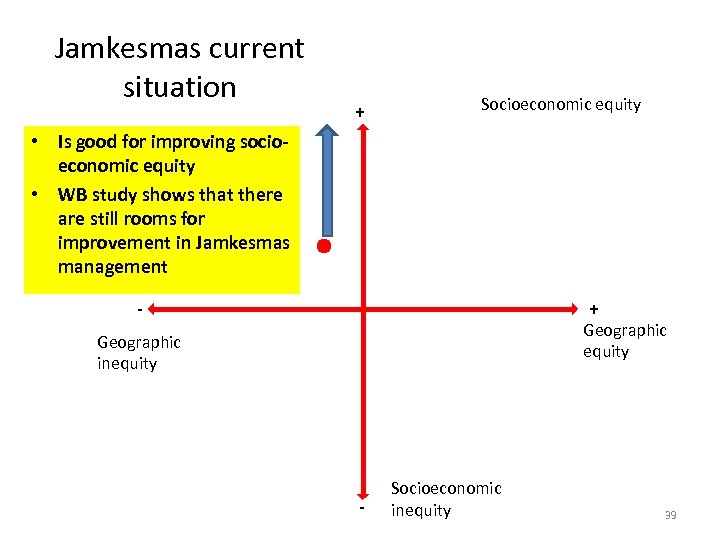 Jamkesmas current situation + Socioeconomic equity • Is good for improving socioeconomic equity • WB study shows that there are still rooms for improvement in Jamkesmas management + - Geographic equity Geographic inequity - Socioeconomic inequity 39
 2. Policy Options to prevent the bad scenarios 1. Do nothing: the current situation develop naturally 2. Increasing budget for Jamkesmas based on per capita calculation, do nothing for reducing the geographic inequity 3. Increasing budget for Jamkesmas, and trying to reduce geographic inequity 40
 For Policy Option 3 • Reducing geographic inequity • What are the relevant policies? • Will be analysed using control knobs of health care reform 41
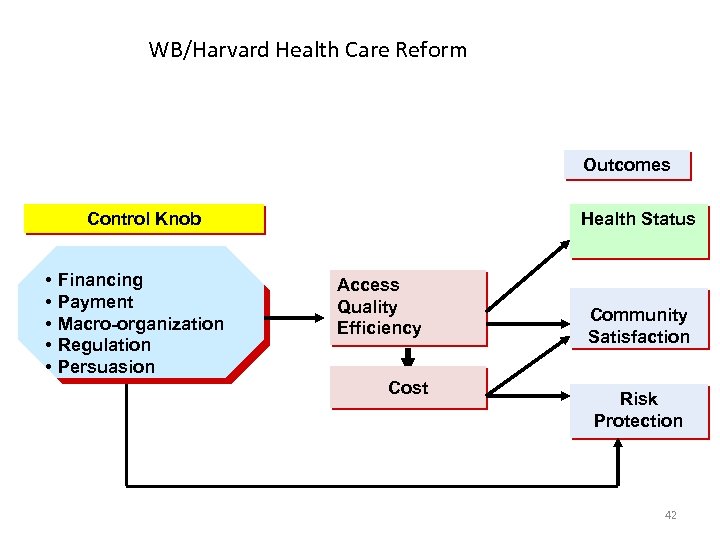 WB/Harvard Health Care Reform Outcomes Control Knob • • • Financing Payment Macro-organization Regulation Persuasion Health Status Access Quality Efficiency Cost Community Satisfaction Risk Protection 42
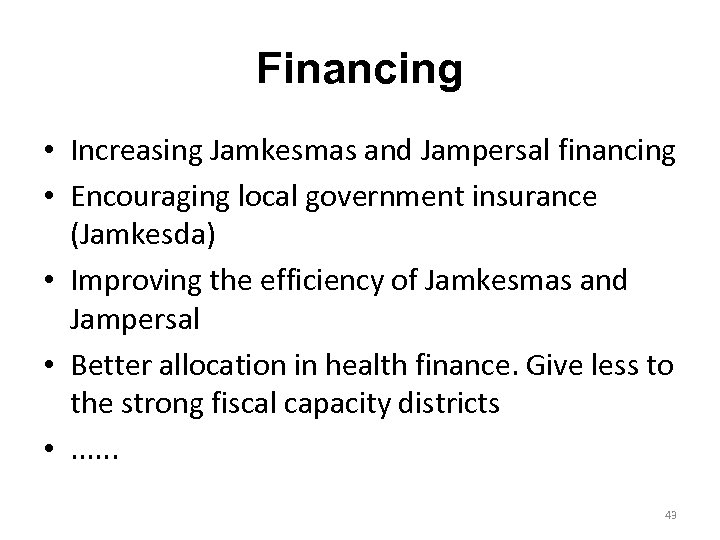 Financing • Increasing Jamkesmas and Jampersal financing • Encouraging local government insurance (Jamkesda) • Improving the efficiency of Jamkesmas and Jampersal • Better allocation in health finance. Give less to the strong fiscal capacity districts • . . . 43
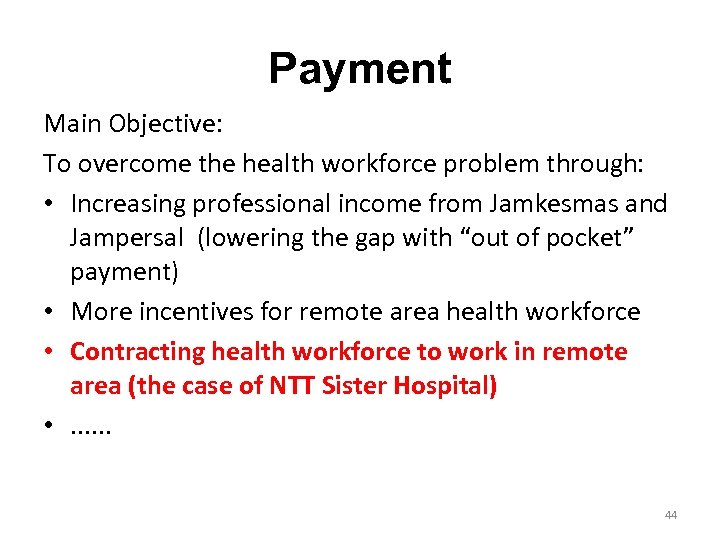 Payment Main Objective: To overcome the health workforce problem through: • Increasing professional income from Jamkesmas and Jampersal (lowering the gap with “out of pocket” payment) • More incentives for remote area health workforce • Contracting health workforce to work in remote area (the case of NTT Sister Hospital) • . . . 44
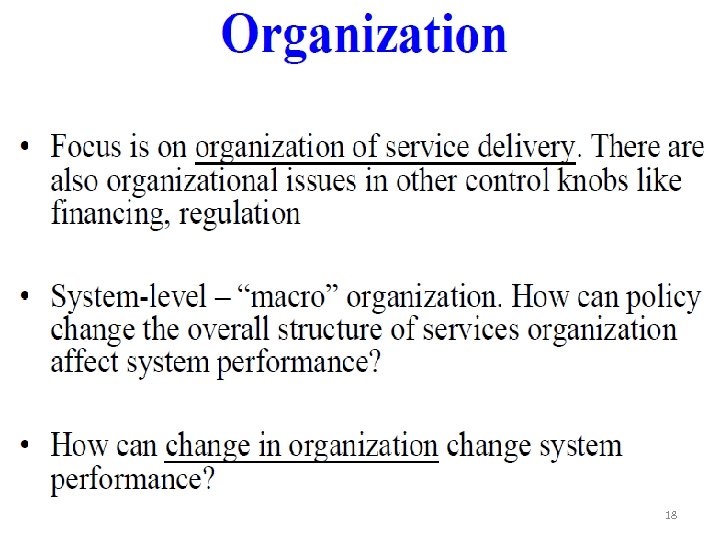
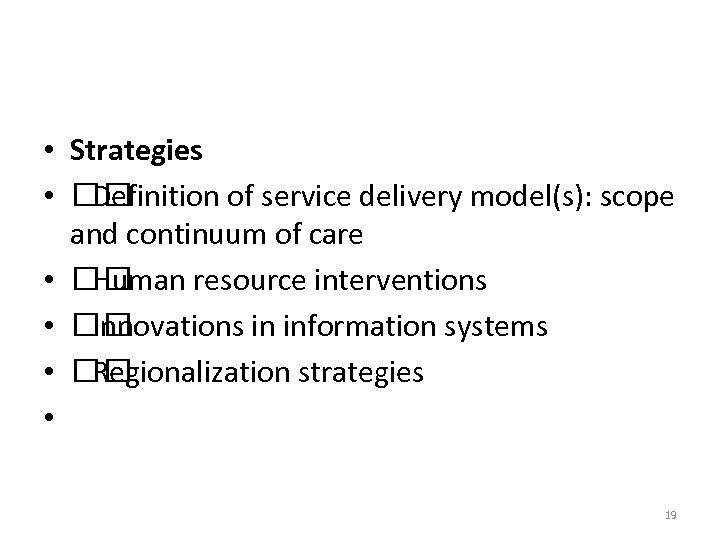
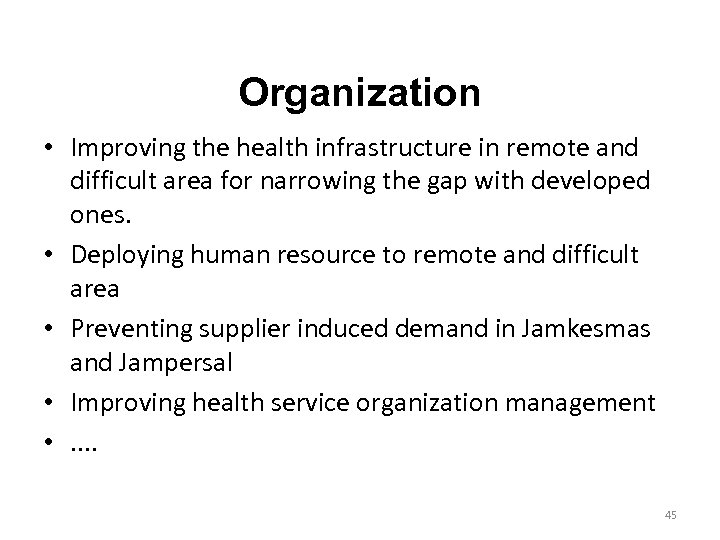 Organization • Improving the health infrastructure in remote and difficult area for narrowing the gap with developed ones. • Deploying human resource to remote and difficult area • Preventing supplier induced demand in Jamkesmas and Jampersal • Improving health service organization management • . . 45
 Regulation • Regulating medical education: affirmative policy for medical students and recidency training enrollment • Fellowships for local people to study in health sciences • . . . 46
 Closing remark • Jamkesmas is one of health financing policies as the replacement of Askeskin • Based on Askeskin impact on equity, it is predicted that Jamkesmas impact can be bad for geographical inequity • There are many secenarios for the impact of Jamkesmas; from the best to the worst 47
 Policy options To prevent the bad scenarios, there should be policy options for supporting Jamkesmas as financing policy: • Improving the human resources through better compensation for health workforce who work in insurance scheme and in remote areas • Developing health infrastructure for achieving a more balance hospital and health center distribution • Increasing the efficiency of Jamkesmas organizational system • Regulating medical education Using health care reform approach 48
 3. Sister Hospital NTT • Geographic inequity dalam pelayanan kesehatan ibu & anak karena keterbatasan tenaga medis • Tenaga medis khususnya dokter spesialis (obgin, anak, & anastesi) tidak berminat ke kabupaten di NTT • Pendekatan kontrak perorangan tidak efektif; di RSUD hanya fokus pelayanan (tidak mengembangkan sistem) • Dokter umum setempat sulit mengikuti PPDS 49
 Reformasi dalam Program Sister Hospital NTT • Merubah pengorganisasian pelayanan kesehatan melalui kerjasama antar organisasi (model sister hospital); (TOMBOL ORGANISASI) • Merubah sistem pembayaran untuk tenaga kesehatan melalui pendekatan kontrak per kelompok; dan (TOMBOL PAYMENT) • merubah regulasi pelayanan kesehatan ibu dan anak dan pendidikan tenaga kesehatan (spesialis) melalui kebijakan yang affirmative untuk daerah sulit seperti NTT. (TOMBOL REGULASI) 50
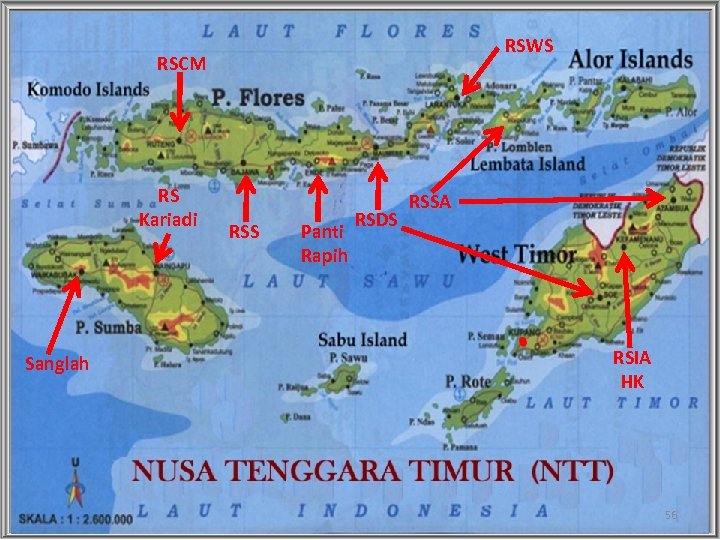
 Apa itu Program Sister Hospital NTT? (Bagian dari Revolusi KIA NTT) • Program kemitraan antara RS “besar” di luar NTT dengan RSUD Kabupaten di NTT • Untuk mengatasi kelangkaan dokter spesialis dan tenaga pendukung lainnya secara jangka pendek dalam pelayanan PONEK 24 Jam di RSUD di NTT • Kerja sama dalam bentuk kontrak (AIPMNH/Aus. Aid) dalam jangka waktu tertentu • Pemrakarsa: Dinas Kesehatan Propinsi NTT; difasilitasi oleh PMPK FK UGM • Pelaksanaan mulai: Juli 2010 – (Juli 2012) 51
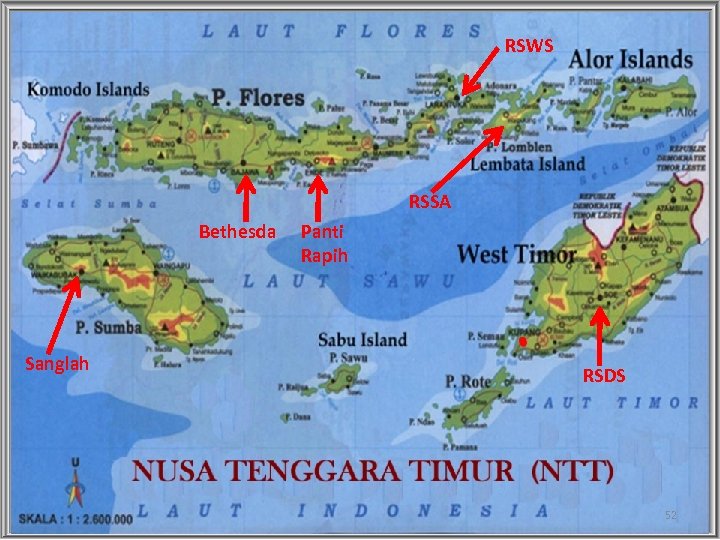 RSWS RSSA Bethesda Sanglah Panti Rapih RSDS 52
 Kegiatan (1) Kegiatan Kontrak Pelayanan Klinik (Clinical Contracting) dengan RS mitra dalam konsep Hospital Partnership; dan (2) kegiatan pengiriman pendidikan spesialis. Kegiatan dilakukan secara paket. RS Daerah yang dibantu dengan pengiriman tenaga dan pembangunan sistem PONEK harus mengirimkan dokter sebagai residen. Pengiriman tenaga dari RS mitra bersifat sementara 53
 Kegiatan Clinical Contracting Out • Tujuan: Meningkatkan kemampuan rumah sakit dalam hal pelayanan kesehatan ibu dan anak PONEK melalui: 1. Pengiriman dokter spesialis obstetri-ginekologi, dokter spesialis kesehatan anak, dan tenaga paramedis pendukung untuk melakukan pelayanan kesehatan ibu dan anak; 2. Peningkatan ketrampilan teknis staf di rumah sakit melalui pelatihan dan pembudayaan teknis kerja dalam kegiatan sehari 3. Pelatihan tim tenaga di Puskesmas dalam rangka penguatan sistem rujukan kesehatan ibu dan anak (mengembangkan hubungan PONED dan PONEK) 54
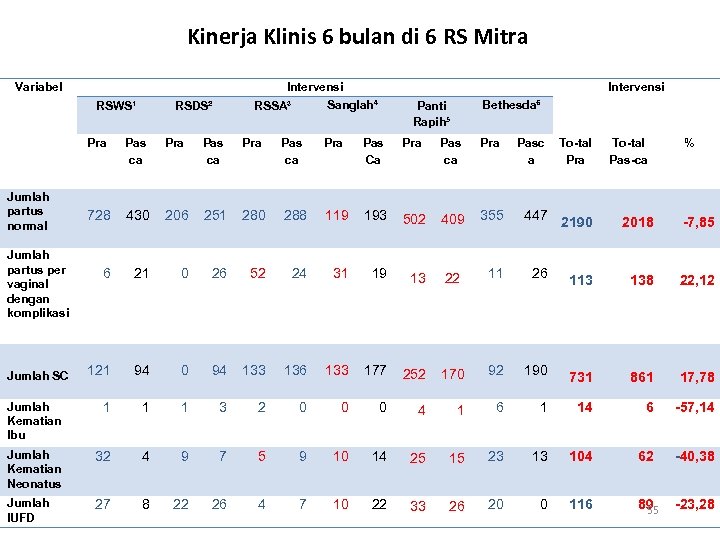 Kinerja Klinis 6 bulan di 6 RS Mitra Variabel RSWS¹ Intervensi Sanglah⁴ RSSA³ RSDS² Intervensi Bethesda⁶ Panti Rapih⁵ Pra Pas ca Pra Pas Ca Pra Pas ca Pra 728 430 206 251 280 288 119 193 502 409 355 447 6 21 0 26 52 24 31 19 13 22 11 26 121 94 0 94 133 136 133 177 252 170 92 190 Jumlah Kematian Ibu 1 1 1 3 2 0 0 0 4 1 6 Jumlah Kematian Neonatus 32 4 9 7 5 9 10 14 25 15 Jumlah IUFD 27 8 22 26 4 7 10 22 33 26 Jumlah partus normal Jumlah partus per vaginal dengan komplikasi Jumlah SC Pasc a To-tal Pra To-tal Pas-ca % 2190 2018 -7, 85 113 138 22, 12 731 861 17, 78 1 14 6 -57, 14 23 13 104 62 -40, 38 20 0 116 89 55 -23, 28
 RSWS RSCM RS Kariadi Sanglah RSS Panti Rapih RSDS RSSA RSIA HK 56
 TERIMA KASIH 57