


 Скачать презентацию Series of workshops 15 -16 ENGLISH LANGUAGE TEACHING
Classroom dynamics_version 2.pptx
- Количество слайдов: 29
 Series of workshops 15 -16 ENGLISH LANGUAGE TEACHING
 Professional Practices for ELT ü started on the 31 st of August ü 6 weeks of training ü free ü still possible to join (till October, 11 th) www. futurelearn. com
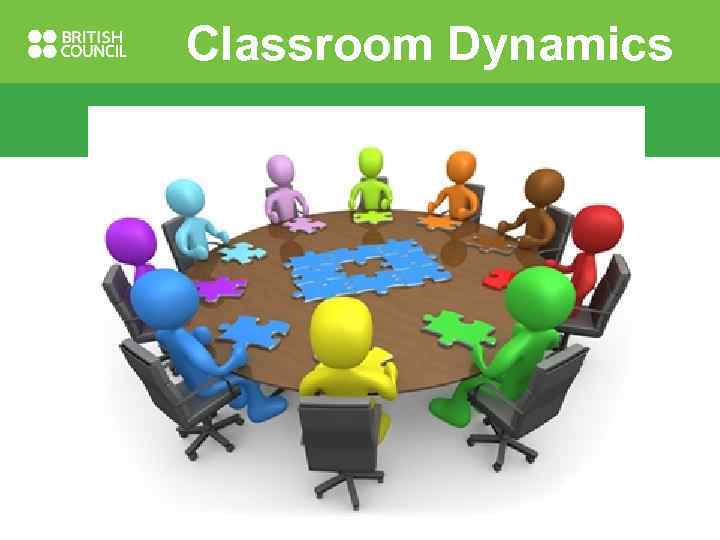 Classroom Dynamics
 Jigsaw puzzle How does the jigsaw puzzle present a metaphor for teamwork?
 Metaphor for teamwork • each piece is a different shape but fits with the others (unique contribution) • the whole is better than the individual pieces • there are boundaries (e. g. pieces with a straight edge)
 By the end of this workshop you will be able to: • define a group and the concept of group dynamics • reflect on different patterns of classroom interaction and seating arrangement • evaluate different types of group activities and their effectiveness in promoting effective group dynamics
 1. Group dynamics • Definition of a group?
 Group: definitions 1. Collection of individuals who have regular contact and frequent interaction, mutual influence, common feeling of camaraderie, and who work together to achieve a common set of goals. (www. businessdictionary. com/definition/group. html) 2. A number of individuals assembled together or having some unifying relationship. (www. merriam-webster. com/netdict/group)
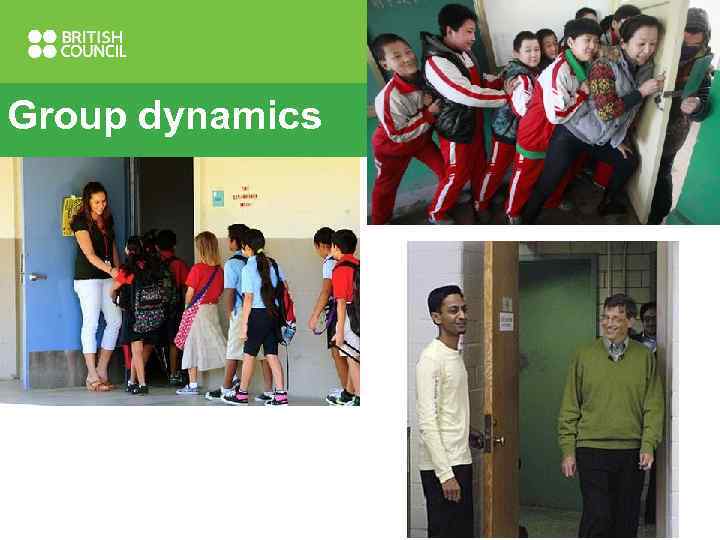 Group dynamics
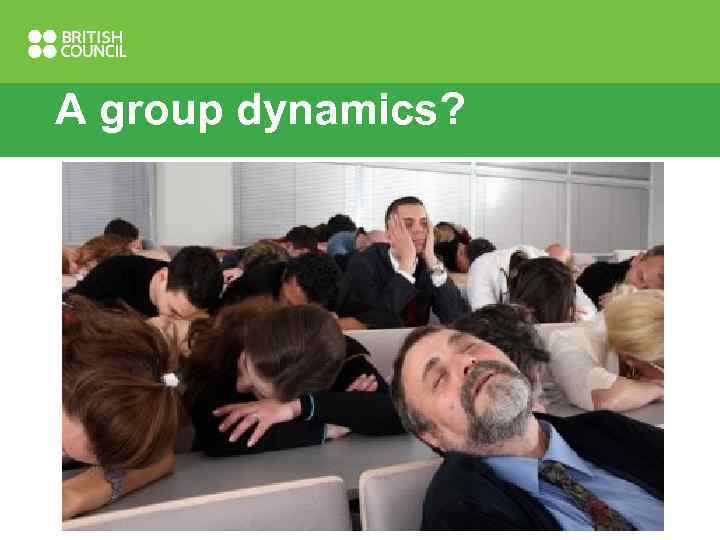 A group dynamics?
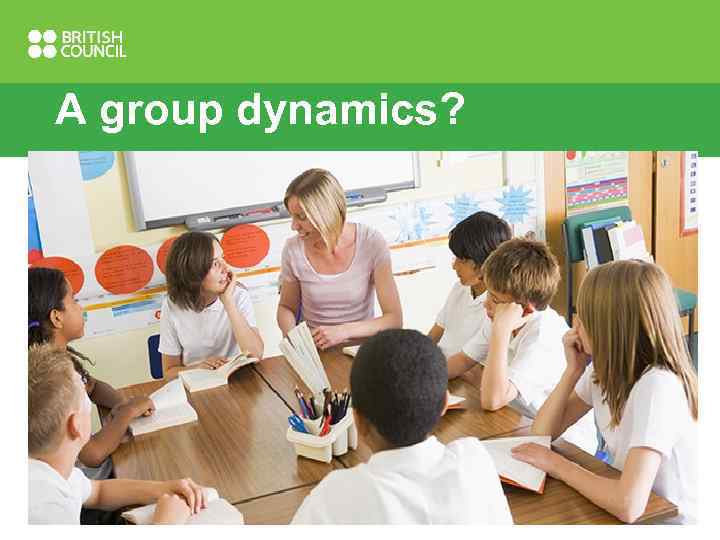 A group dynamics?
 What makes an effective group • • common goals (purposes) regular contact spirit of co-operation (positive climate) co-ordination and commonly understood procedures • mutual support • clear roles and responsibilities
 2. Patterns of interaction
 Classroom Activities • Almost all activities fit all three columns, so it is important to focus on ‘the most appropriate’, i. e. which would be most effective. • Activities 6, 7 and 11 are perhaps more likely to be done individually.
 3 -4. Seating arrangements I. Discuss the advantages and disadvantages of the seating arrangements. II. Watch the video and describe the seating arrangements (26: 14).
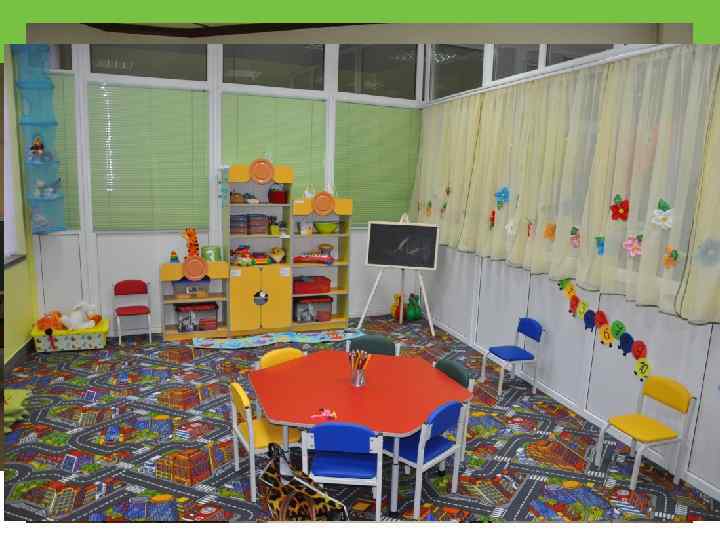
 Seating arrangements a U-shape / whole class horseshoe b U-shape / whole class horseshoe c small groups at three separate tables d boardroom style e small groups at two separate tables f small groups at four separate tables (E-shape)
 Seating arrangements 1. Is there a seating arrangement that is better than others? 2. What should guide our decision on changing seating arrangements? 3. Should seating be frequently re-arranged? 4. Why do learners want to sit in the same place with the same people? 5. Is there ever a need to move learners away from tables? 6. How does seating arrangement help to manage behaviour?
 Seating arrangements - feedback ü learners sitting in the back are less likely to participate and more likely to chat ü rows reduce interaction ü learners generally prefer to sit in the same place with the same people – they may resist moving ü changes in seating patterns can have a negative physiological effect ü some children are isolated by their peers – clever seating arrangements can help to reduce the impact of this
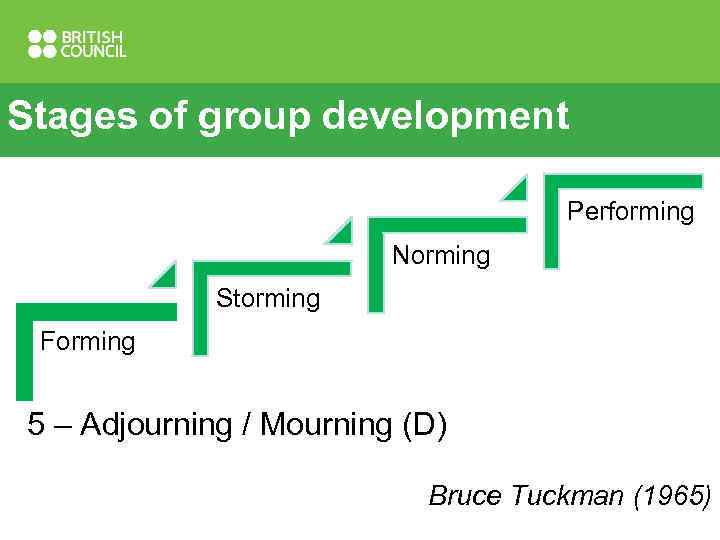 Stages of group development Performing Norming Storming Forming 5 – Adjourning / Mourning (D) Bruce Tuckman (1965)
 5. Types of group activities 5. 1 Department XYZ e. g. , TNET - Totally Neat English Teachers 5. 2 Hot seat frenzy
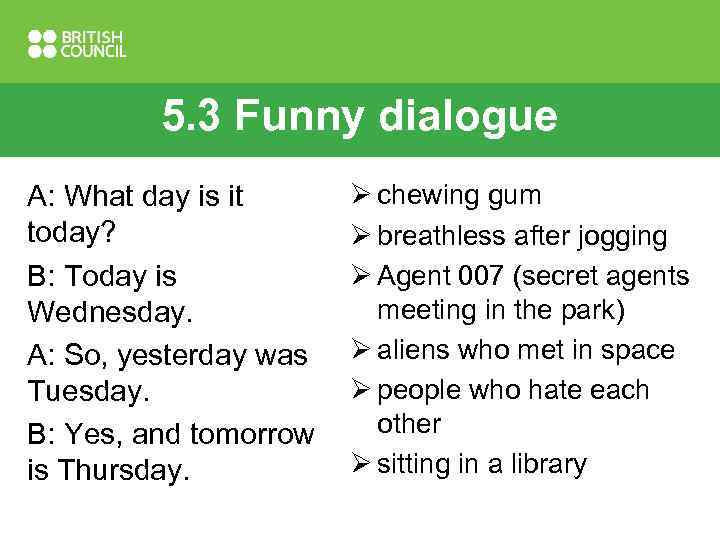 5. 3 Funny dialogue A: What day is it today? B: Today is Wednesday. A: So, yesterday was Tuesday. B: Yes, and tomorrow is Thursday. Ø chewing gum Ø breathless after jogging Ø Agent 007 (secret agents meeting in the park) Ø aliens who met in space Ø people who hate each other Ø sitting in a library
 5. 4 Live commentary Video clip
 Pyramid discussion • What are the seating arrangements? • Is it a group work? • What is the focus of this activity? Video
 • optimum group size • changes in seating patterns • time of day • planning time • grouping same ability learners or not • if it is ensuring balance between teacher input and practice • class sizes • if it is encouraging group discussions outside classroom time
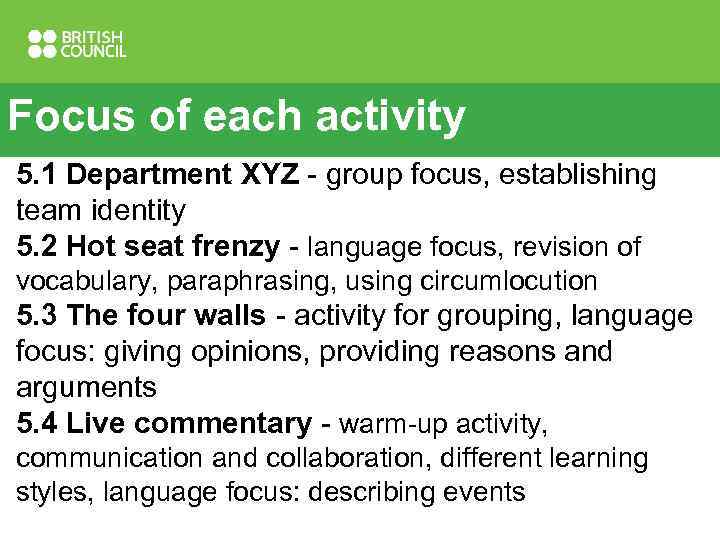 Focus of each activity 5. 1 Department XYZ - group focus, establishing team identity 5. 2 Hot seat frenzy - language focus, revision of vocabulary, paraphrasing, using circumlocution 5. 3 The four walls - activity for grouping, language focus: giving opinions, providing reasons and arguments 5. 4 Live commentary - warm-up activity, communication and collaboration, different learning styles, language focus: describing events
 Reflection ONE activity from the workshop you would recommend to your colleague
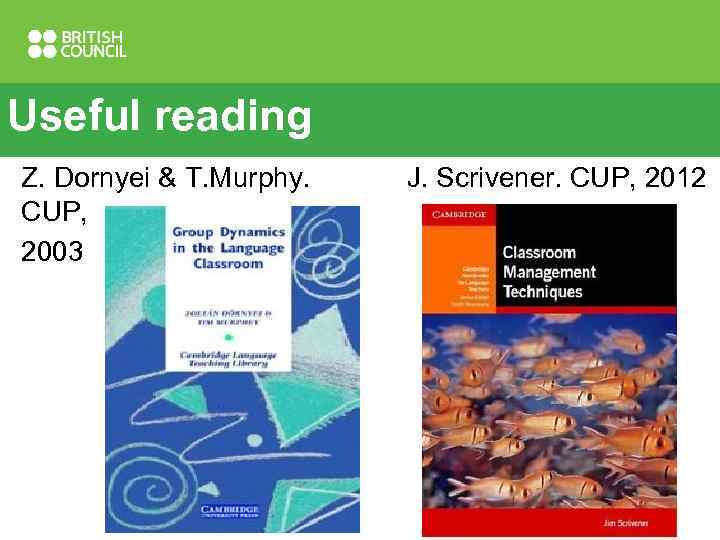 Useful reading Z. Dornyei & T. Murphy. CUP, 2003 J. Scrivener. CUP, 2012
 Thank you for your participation! Next workshop 18 th of November, 2015 Motivating teenagers