


 Скачать презентацию Series of lectures Telecommunication networks Lecture 02 Telegraph communications
90bed56b0d73bd30e8319bbf61cc48ef.ppt
- Количество слайдов: 31
 Series of lectures “Telecommunication networks” Lecture#02 Telegraph communications Instructor: Prof. Nikolay Sokolov, e-mail: sokolov@niits. ru The Bonch-Bruevich Saint-Petersburg State University of Telecommunications
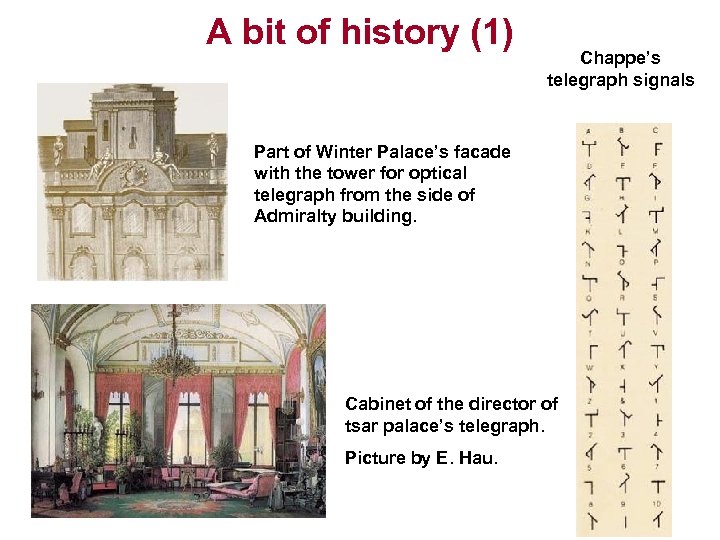 A bit of history (1) Chappe’s telegraph signals Part of Winter Palace’s facade with the tower for optical telegraph from the side of Admiralty building. Cabinet of the director of tsar palace’s telegraph. Picture by E. Hau.
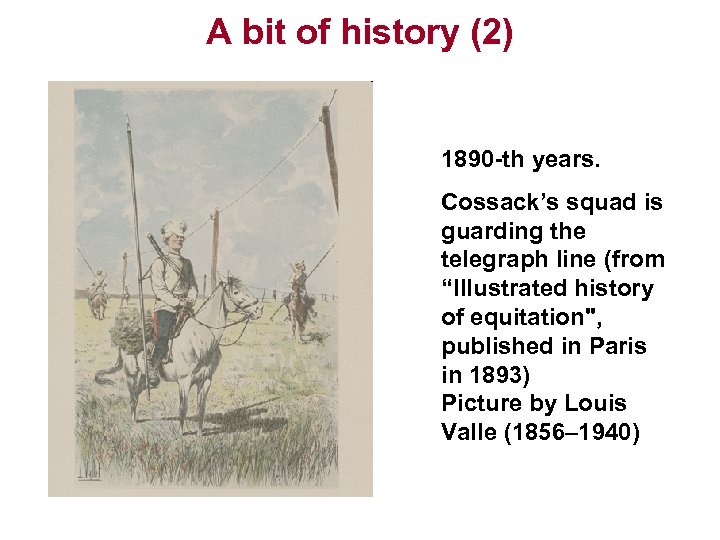 A bit of history (2) 1890 -th years. Cossack’s squad is guarding the telegraph line (from “Illustrated history of equitation", published in Paris in 1893) Picture by Louis Valle (1856– 1940)
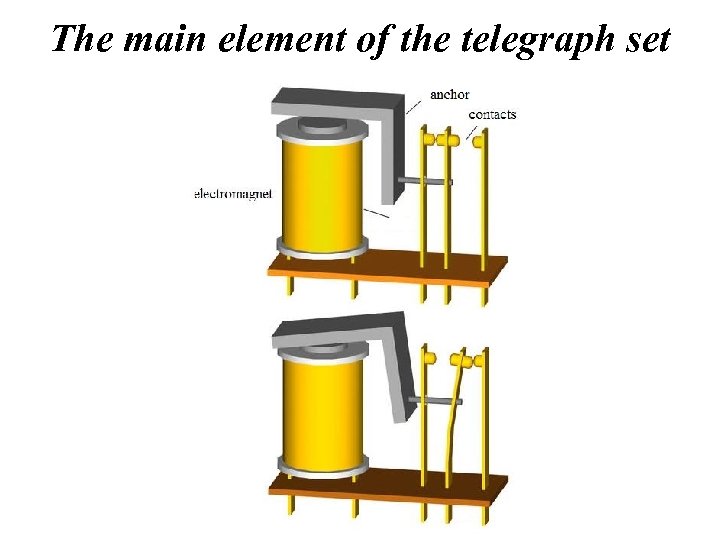 The main element of the telegraph set
 Telegraphy and ITU was International Telegraph Union (in 17/05/1865) World Telecommunication Day has been celebrated annually on 17 May since 1969, marking the foundation of ITU and the signing of the first International Telegraph Convention in 1865. It was instituted by the Plenipotentiary Conference in Malaga-Torremolinos, Spain, in 1973. In November 2006, the ITU Plenipotentiary Conference in Antalya, Turkey, decided to celebrate both events on 17 May as World Telecommunication and Information Society Day.
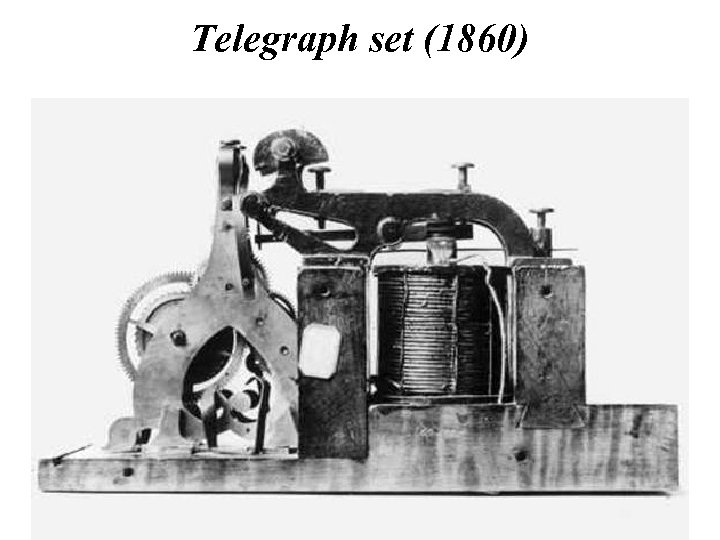 Telegraph set (1860)
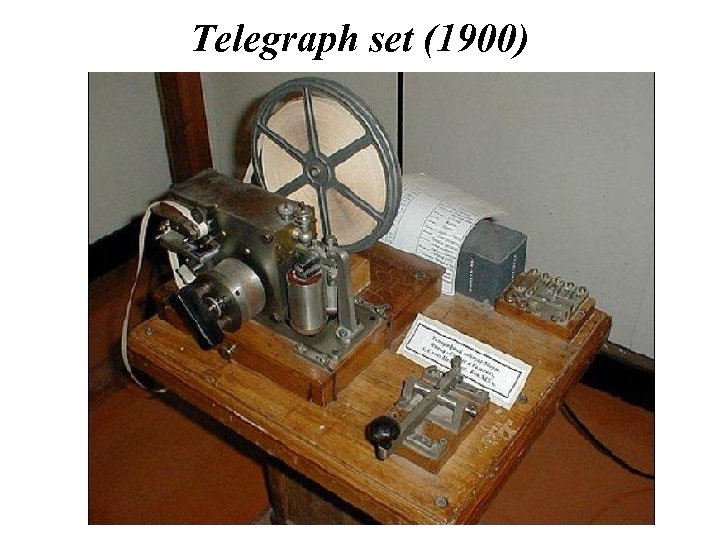 Telegraph set (1900)
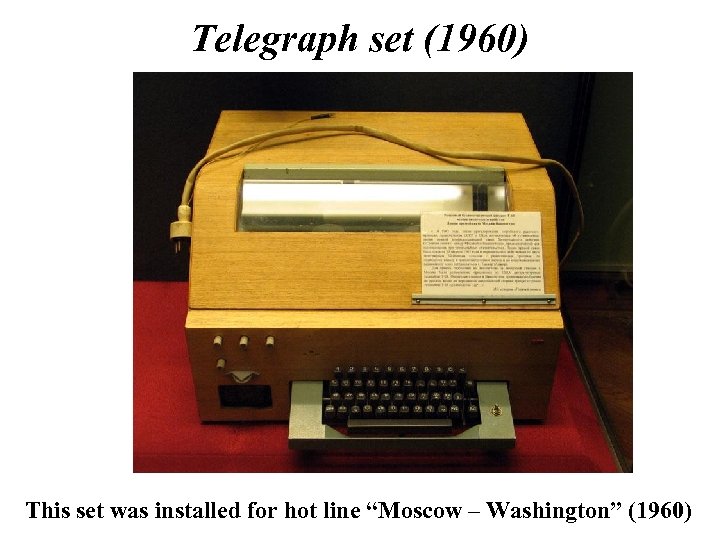 Telegraph set (1960) This set was installed for hot line “Moscow – Washington” (1960)
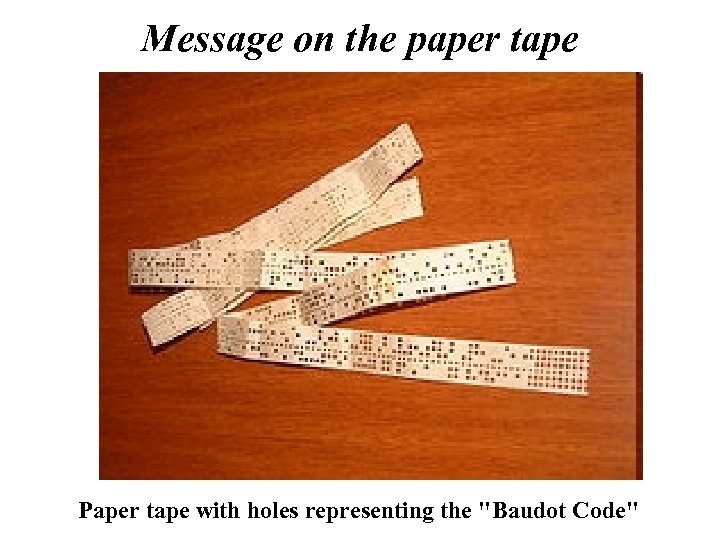 Message on the paper tape Paper tape with holes representing the "Baudot Code"
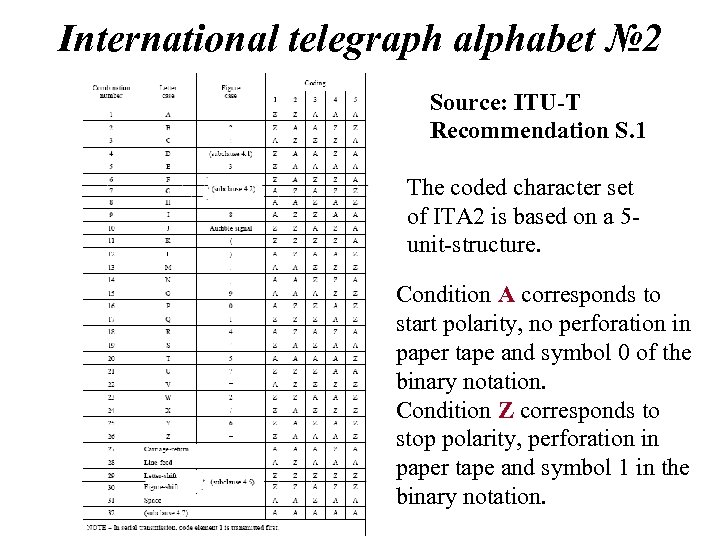 International telegraph alphabet № 2 Source: ITU-T Recommendation S. 1 The coded character set of ITA 2 is based on a 5 unit-structure. Condition A corresponds to start polarity, no perforation in paper tape and symbol 0 of the binary notation. Condition Z corresponds to stop polarity, perforation in paper tape and symbol 1 in the binary notation.
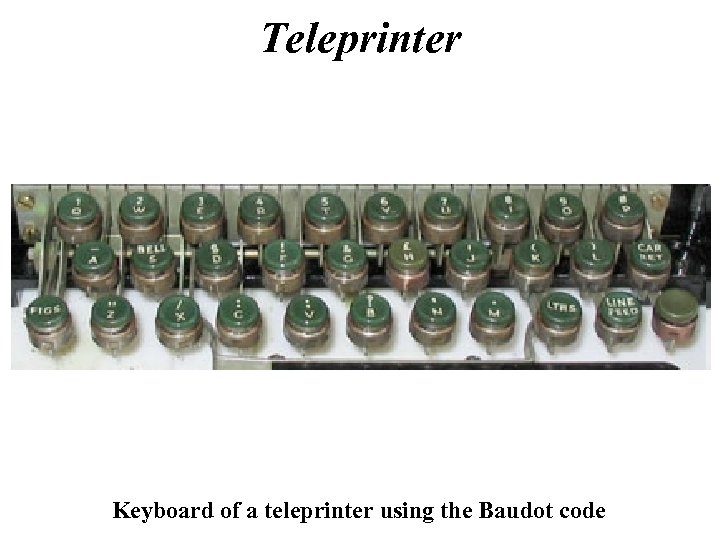 Teleprinter Keyboard of a teleprinter using the Baudot code
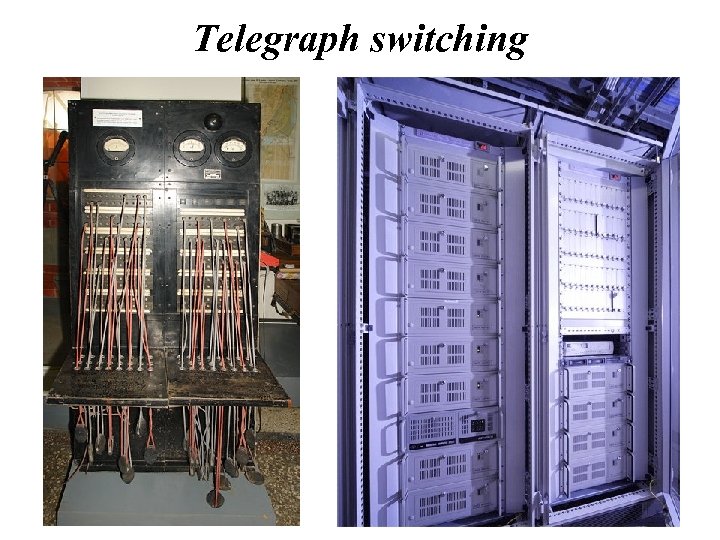 Telegraph switching
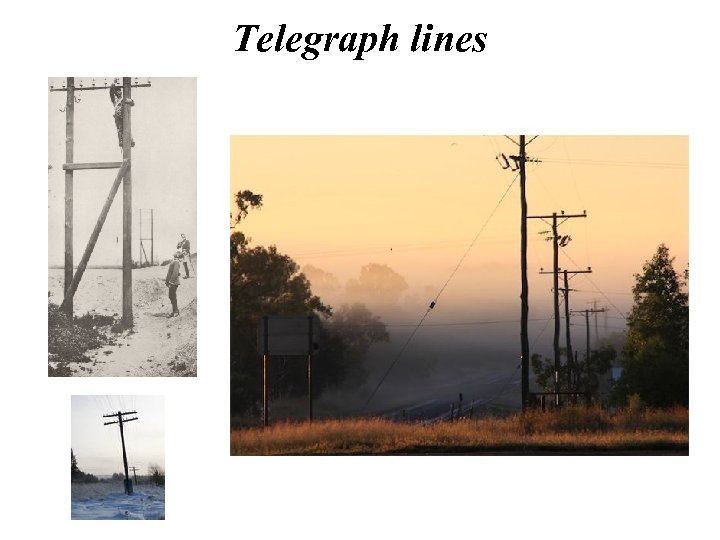 Telegraph lines
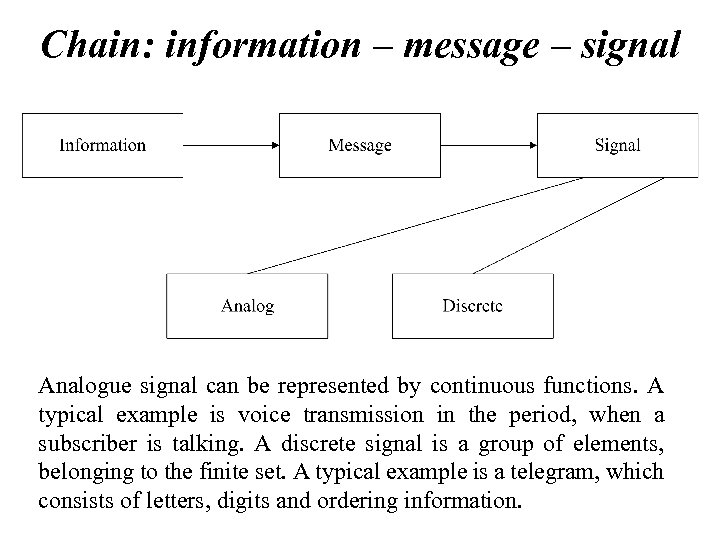 Chain: information – message – signal Analogue signal can be represented by continuous functions. A typical example is voice transmission in the period, when a subscriber is talking. A discrete signal is a group of elements, belonging to the finite set. A typical example is a telegram, which consists of letters, digits and ordering information.
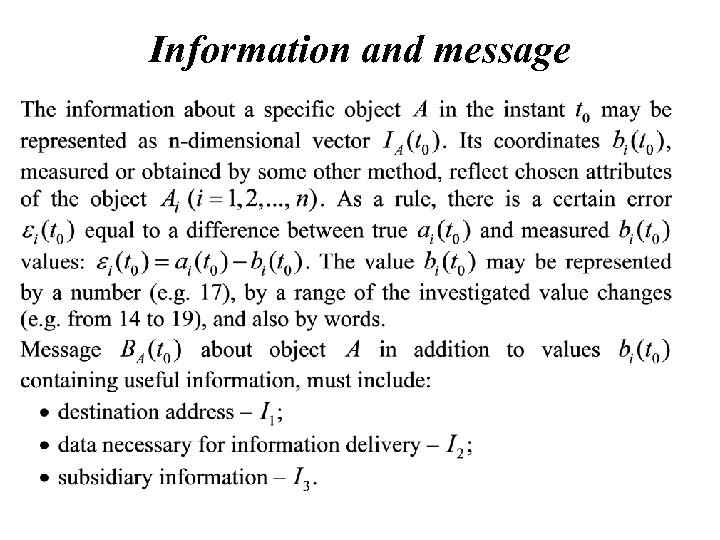 Information and message
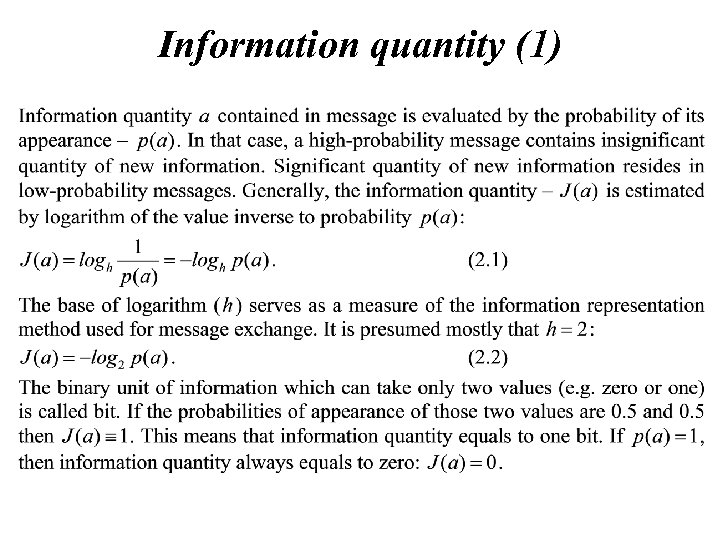 Information quantity (1)
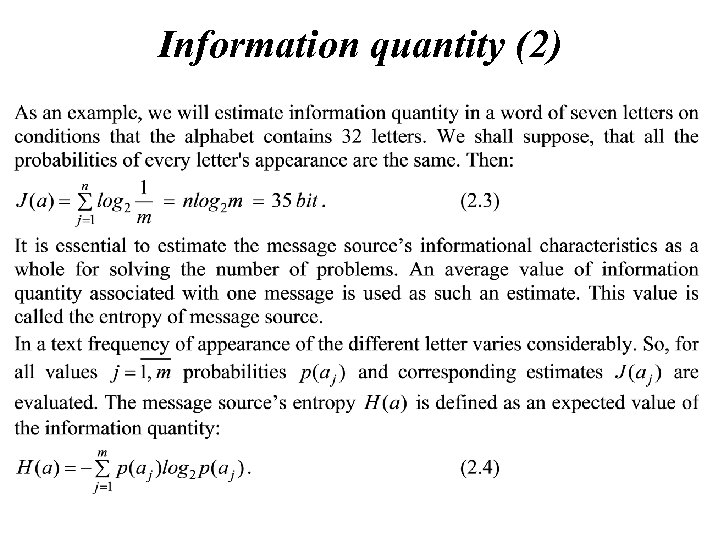 Information quantity (2)
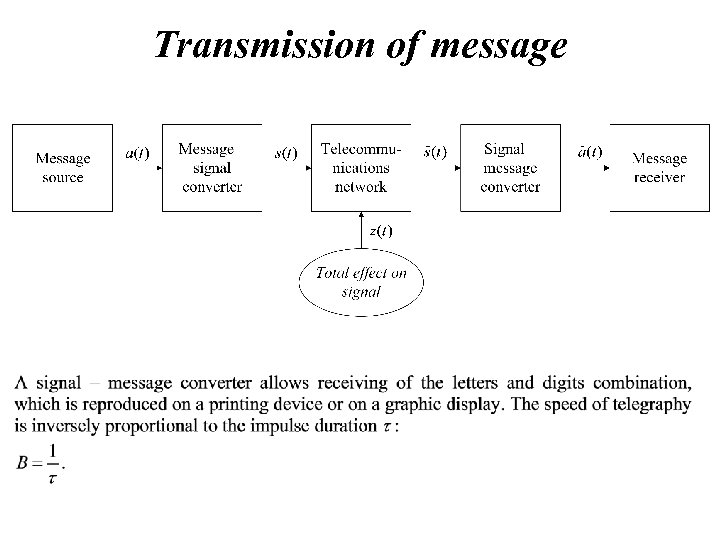 Transmission of message
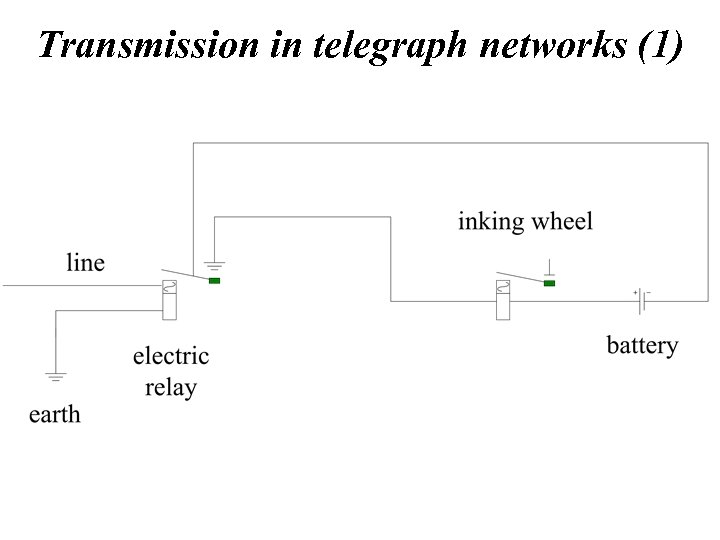 Transmission in telegraph networks (1)
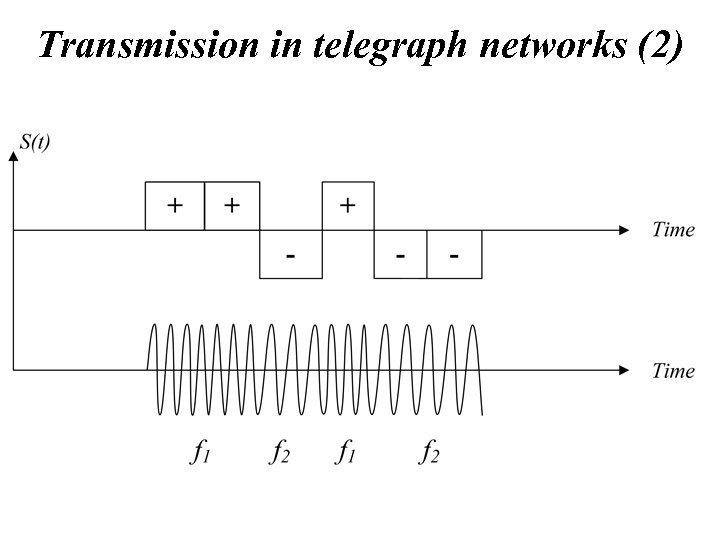 Transmission in telegraph networks (2)
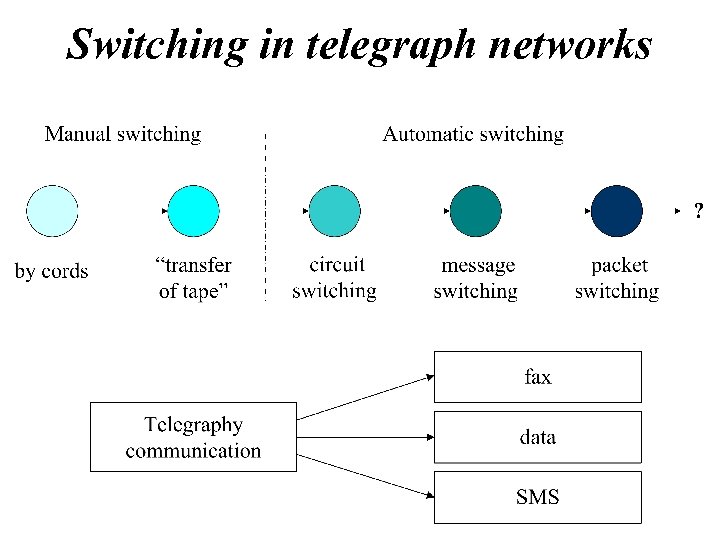 Switching in telegraph networks
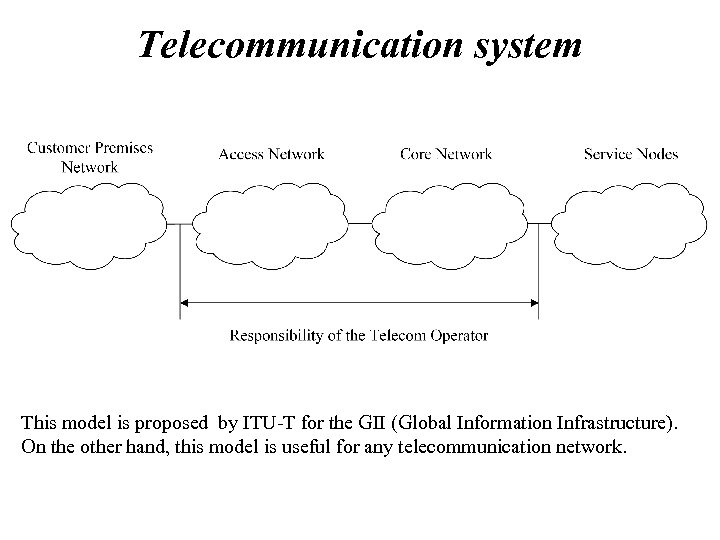 Telecommunication system This model is proposed by ITU-T for the GII (Global Information Infrastructure). On the other hand, this model is useful for any telecommunication network.
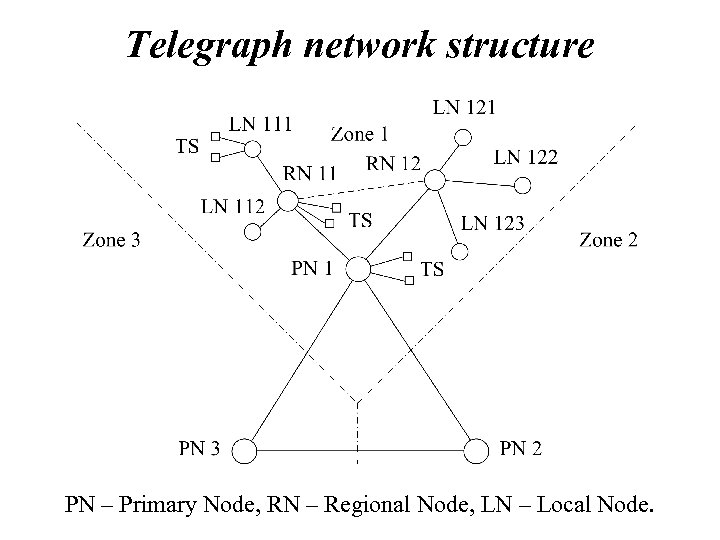 Telegraph network structure PN – Primary Node, RN – Regional Node, LN – Local Node.
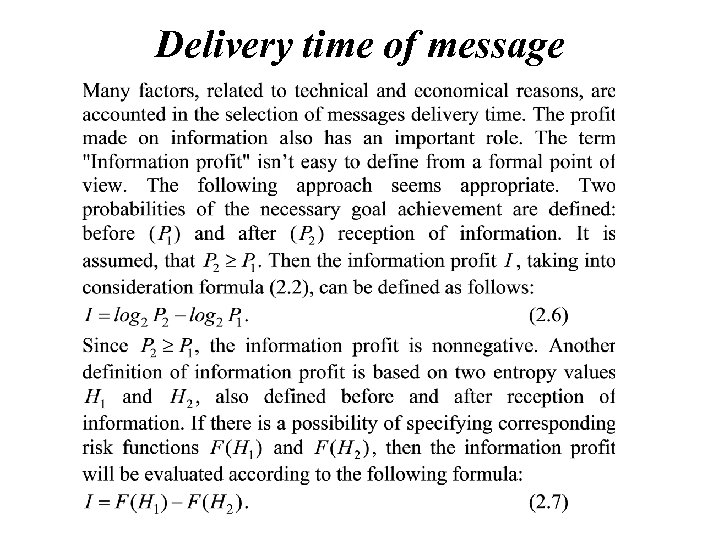 Delivery time of message
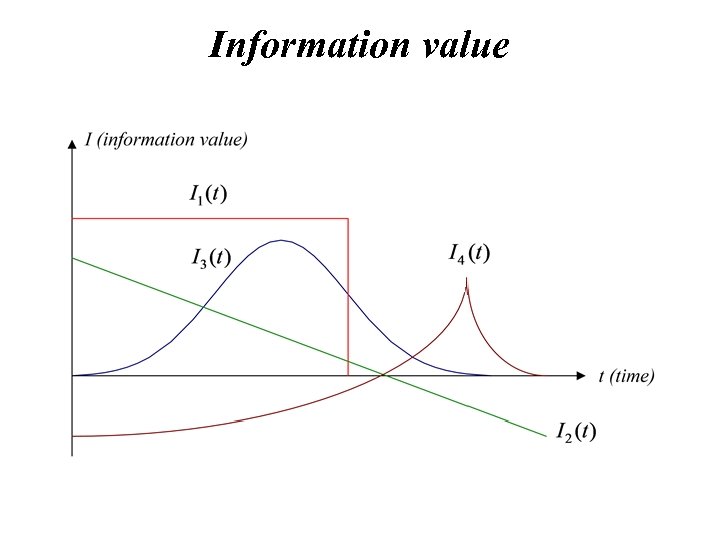 Information value
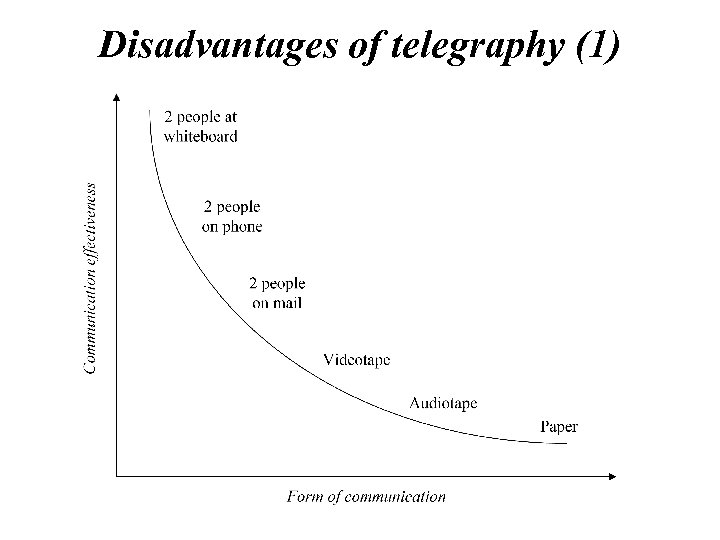 Disadvantages of telegraphy (1)
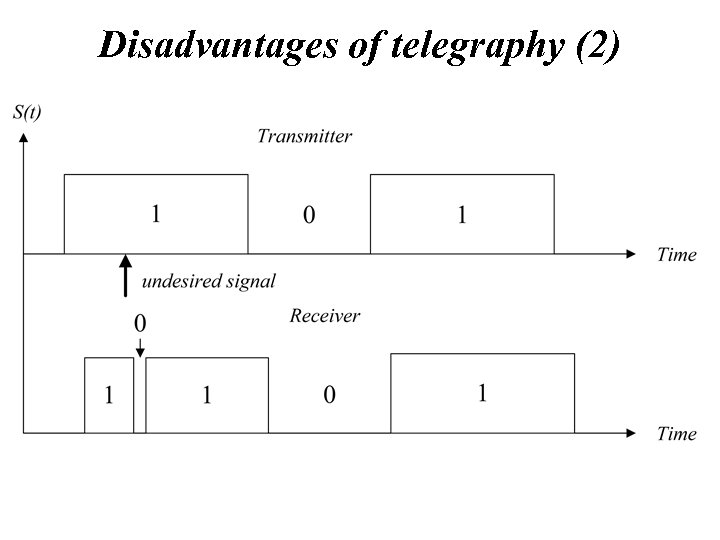 Disadvantages of telegraphy (2)
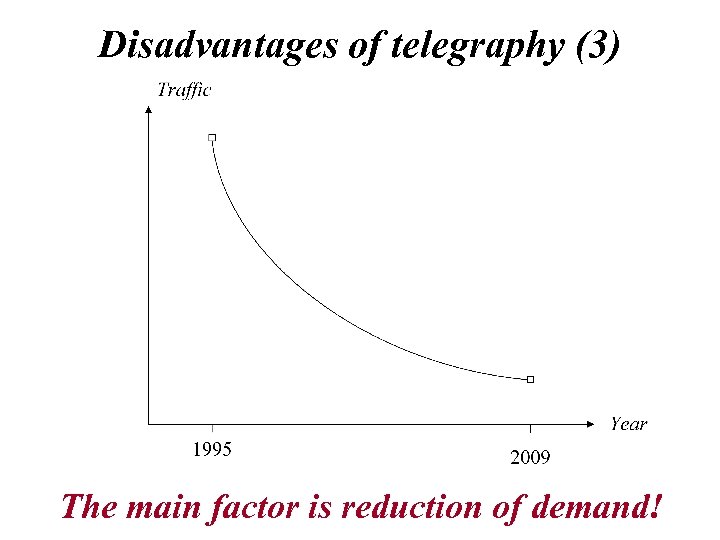 Disadvantages of telegraphy (3) The main factor is reduction of demand!
 Conclusions The decrease of demand for telegraph communications services and the growth of modern services demand is a worldwide tendency. In many countries the problem of supporting public telegraph network services is solved in a variety of ways. For example, in the Holland telegraph communication has ceased functioning in 2004. In January, 2006 the oldest American national operator Western Union has announced a total closure of the telegraph service. At the same time in Canada, Belgium, Germany, Japan some companies still support services on sending and delivering traditional telegraph messages.
 History
 Telegraph communications Questions? Instructor: Prof. Nikolay Sokolov, e-mail: sokolov@niits. ru