


 Скачать презентацию SERENDIPITY SYNDICATE 3 Talk Researching Complexity Dynamic
ea740c713977c84a6d80cadc0b9c220a.ppt
- Количество слайдов: 29
 SERENDIPITY SYNDICATE 3 : Talk Researching Complexity, Dynamic Form and the Design Process • Professor Robert Young • Centre for Design Research, Northumbria University
 Introduction • Design form and design process! • Confluence of two international conferences • De. SFor. M 07 – Northumbria University, December 2007, examined product/system interaction designing with a focus on their meaning and how designers communicate information, functions and ideas to enable these to be perceived and understood by people in their everyday lives. • Intersections – Baltic Gateshead, October 2007, asked how design is adapting in a world in transition by acquiring new know-how. • Common threads?
 De. SFor. M themes and topics 1. Methods and Tools • Active forms • Theatre and choreography • Sketching in space and time • Aesthetics and notation of motion • Editing and scripting of movements 2. Theoretical developments • Meaning and perception • Conditions of applicability • Ambient versus interactive movement • Structuring mechanisms and linguistics • Gestalt theory and compositionality of meaning 3. Practice-based research and case studies Using movement as a mediator • Appropriation of the everyday • Effects of context on meanings • New typologies and ecologies of objects • Dependencies between form and movement
 De. SFor. M observations • In mature markets, where the functionality and performance of products are often taken for granted, attention is increasingly focused on the visual characteristics of products. In such markets, ‘attention to a product’s appearance promises the manufacturer one of the highest returns on investment. (Lewalski, ZM. 1988)
 De. SFor. M observations • Creating Value By Design Stefano Marzano The challenge for designers, and indeed for everyone in societies that are entering the Third Wave, is to discover the new relevant benefits and qualities – the qualities that products and services will need to have if they are to fulfil the aspirations and dreams of those who use them. • The New Everyday - Views on Ambient Intelligence (The need for) meaning and purpose in life is common to everyone, the only difference is that technology changes the way it gets gratified John Perry Barlow (USA)
 De. SFor. M observations • The New Everyday - Views on Ambient Intelligence The distinction … is between syntax and semantics. For a machine, all that matters is syntax. The meaning does not matter … all that matters is the form and capacity to change that form into another form. For humans, what matters is not the syntax but the semantics, the meaning, what lies inside. Even if machines are able to imitate humans perfectly, it is unlikely, that they will have a concept of semantics in a way that human beings do. Meaning lies not in our heads or in the structure of our language or in the structure of our problem solving capacities. Meaning lies in the social world. It is the social world that imputes things and phenomena with meaning. And in so far as machines don’t live in a social world, they cannot have meaning. Kenan Malik (UK)
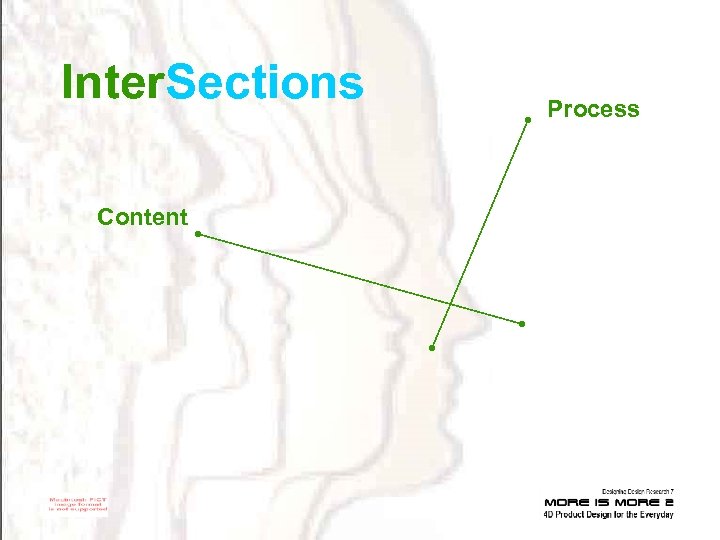
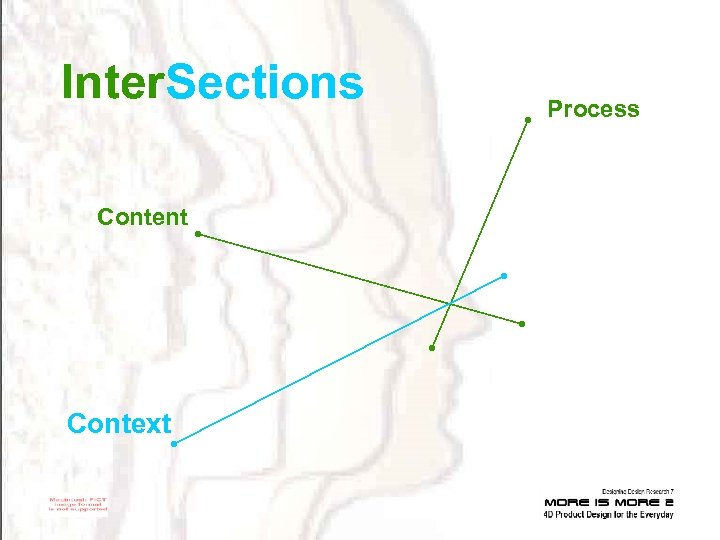
 Inter. Sections - Conclusions • Briefly, the Intersections conference pressed the pause button and explored the limits of design. Its speakers told us time and again, we live in more complex times. And complex times call for design practice with a wider repertoire. Complex times require designers to do new and different things. Jeremy Myserson summarized these, designers are acting as: – – strategists, co-creators, rationalists and storytellers
 Inter. Sections Content
 Inter. Sections Content Process
 Inter. Sections Content Context Process
 Inter. Sections Content Context Process
 Dealing with complexity Process Content Context Design Value Design Didactic
 Derivation
 Direction
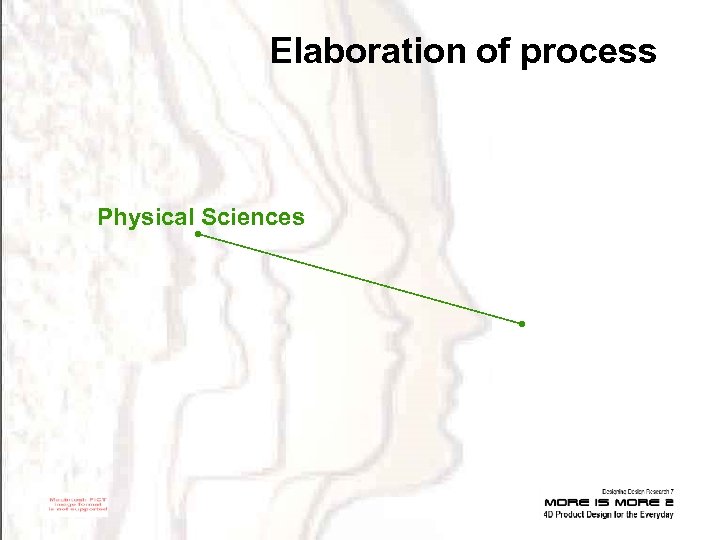 Elaboration of process Physical Sciences
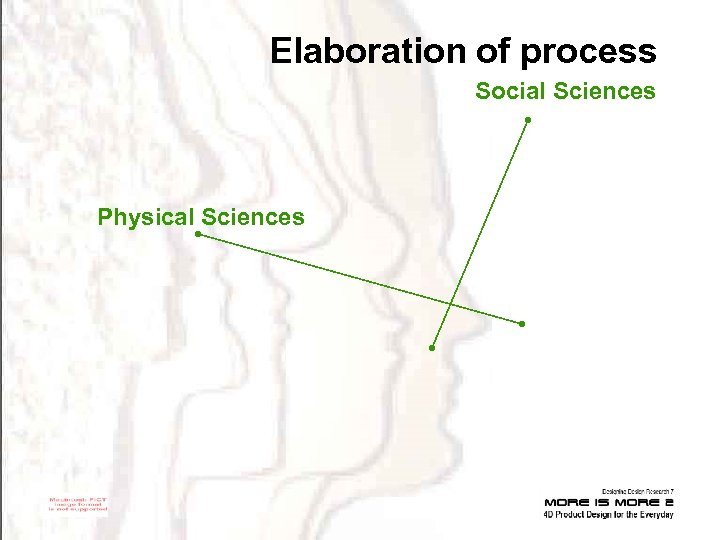 Elaboration of process Social Sciences Physical Sciences
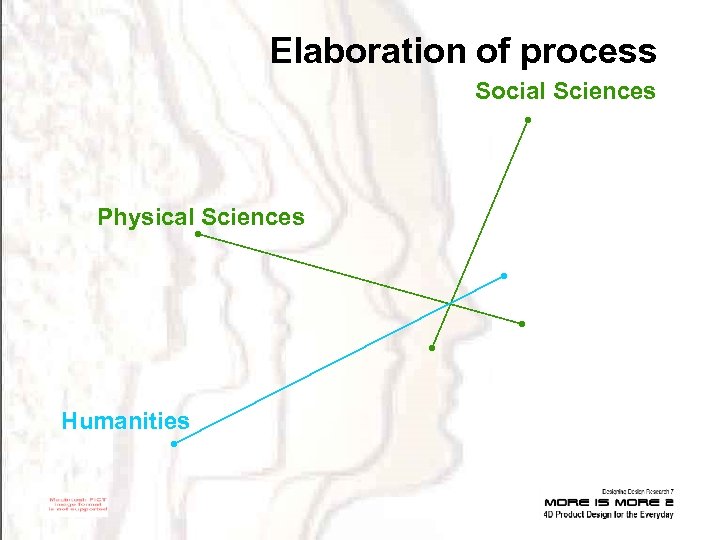 Elaboration of process Social Sciences Physical Sciences Humanities
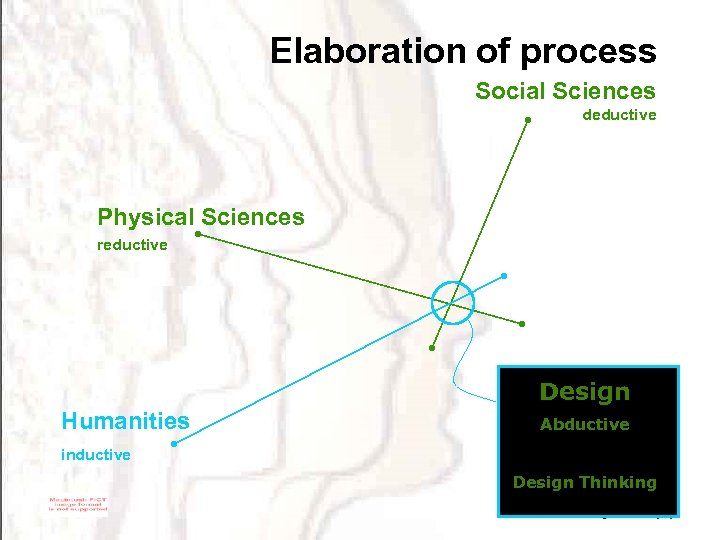 Elaboration of process Social Sciences deductive Physical Sciences reductive Design Humanities Abductive inductive Design Thinking
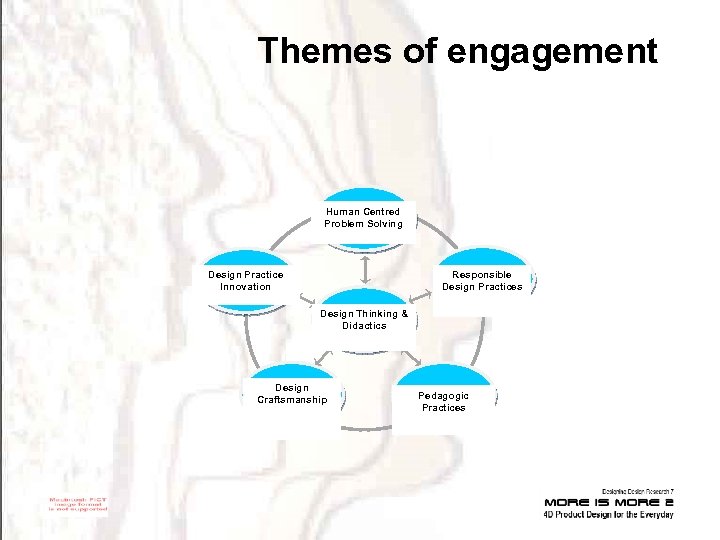 Themes of engagement Human Centred Problem Solving Responsible Design Practices Design Practice Innovation Design Thinking & Didactics Design Craftsmanship Pedagogic Practices
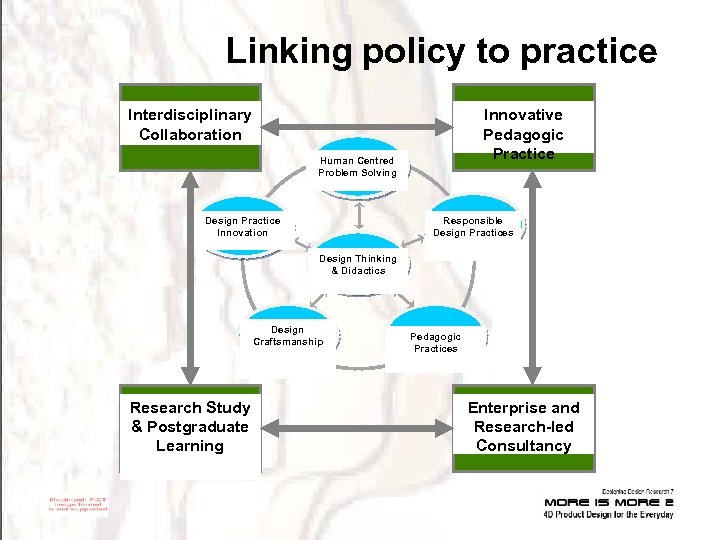 Linking policy to practice Innovative Pedagogic Practice Interdisciplinary Collaboration Human Centred Problem Solving Design Practice Innovation Responsible Design Practices Design Thinking & Didactics Design Craftsmanship Research Study & Postgraduate Learning Pedagogic Practices Enterprise and Research-led Consultancy
 Engagement with audiences and initiatives Human Centred Problem Solving In. STe. P Design advocacy - conferences and events - De. SFor. M
 Engagement with audiences and initiatives Responsible Design Practices Design-led social enterprise in developing communities Crime and security Ethical Fashion Design advocacy - conferences and events - EAP Design Health & Wellbeing
 Engagement with audiences and initiatives Pedagogical Practice Inside Out Design consciousness Design advocacy - conferences and events - EPDE
 Engagement with audiences and initiatives Design Craftsmanship LCFS Designers in Residence International programme delivery Design advocacy - conferences and events - Intersections
 Engagement with audiences and initiatives Design Practice and Innovation nu. DIL - Intel Mobiles on the Move, Philips Responsible Wellbeing Service Concepts Design advocacy - conferences and events - ISDn 3
 Design thinking Distinctions – the conscious and intuitive act of designers involved in the design process – a process of conscious reflection about the nature of design of itself
 Categories of design research • Design Ontology – branch of metaphysics concerned with the designer nature of being (experience and awareness) • Design Hermeneutics – methodology of interpreting/explaining design concepts, theories and principles • Design Epistemology – study of the nature of design knowledge – its foundations scope and validity. • Design Phenomenology - a philosophy of design exploring phenomena presenting to us as conscious experience of acts and outcomes of design(ing). • Design Praxiology - the study of professional skill Bruce Archer circa 1980
 Design exegetics • would be the branch of design research dealing with the study and interpretation of design thinking/consciousness in its broadest sense; • the conscious and unconscious essence of being and doing design, together with the energy and passion that this entails.
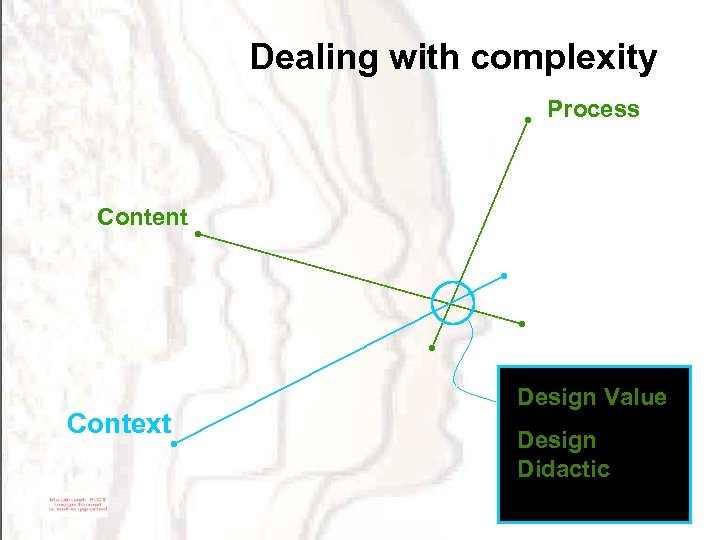
 Common threads! • Dealing with complexity - product system and service • Polysensorial manipulation • Storytelling and creator of narrative • Sense-making - meaning making