


 Скачать презентацию Sensors- Terminology Transducer is a device which
884e4c9f8cb15da117a1474386558481.ppt
- Количество слайдов: 22
 Sensors- Terminology • Transducer is a device which transforms energy from one type to another, even if both energy types are in the same domain. – Typical energy domains are mechanical, electrical, chemical, magnetic, optical and thermal. • Transducer can be further divided into Sensors, which monitors a system and Actuators, which impose an action on the system. – Sensors are devices which monitor a parameter of a system, hopefully without disturbing that parameter.
 Categorization of Sensor • Classification based on physical phenomena – Mechanical: strain gage, displacement (LVDT), velocity (laser vibrometer), accelerometer, tilt meter, viscometer, pressure, etc. – Thermal: thermal couple – Optical: camera, infrared sensor – Others … • Classification based on measuring mechanism – Resistance sensing, capacitance sensing, inductance sensing, piezoelectricity, etc. • Materials capable of converting of one form of energy to another are at the heart of many sensors. – Invention of new materials, e. g. , “smart” materials, would permit the design of new types of sensors.
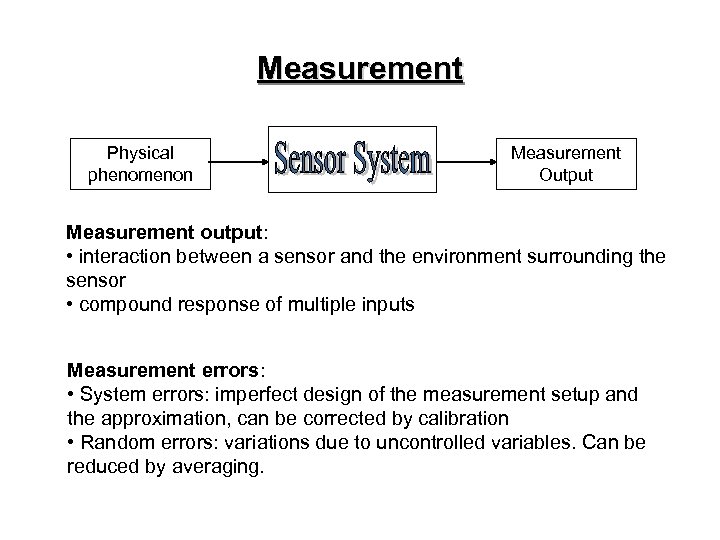 Measurement Physical phenomenon Measurement Output Measurement output: • interaction between a sensor and the environment surrounding the sensor • compound response of multiple inputs Measurement errors: • System errors: imperfect design of the measurement setup and the approximation, can be corrected by calibration • Random errors: variations due to uncontrolled variables. Can be reduced by averaging.
 Sensors Definition: a device for sensing a physical variable of a physical system or an environment Classification of Sensors • Mechanical quantities: displacement, Strain, rotation velocity, acceleration, pressure, force/torque, twisting, weight, flow • Thermal quantities: temperature, heat. • Electromagnetic/optical quantities: voltage, current, frequency phase; visual/images, light; magnetism. • Chemical quantities: moisture, p. H value
 Specifications of Sensor • Accuracy: error between the result of a measurement and the true value being measured. • Resolution: the smallest increment of measure that a device can make. • Sensitivity: the ratio between the change in the output signal to a small change in input physical signal. Slope of the input-output fit line. • Repeatability/Precision: the ability of the sensor to output the same value for the same input over a number of trials
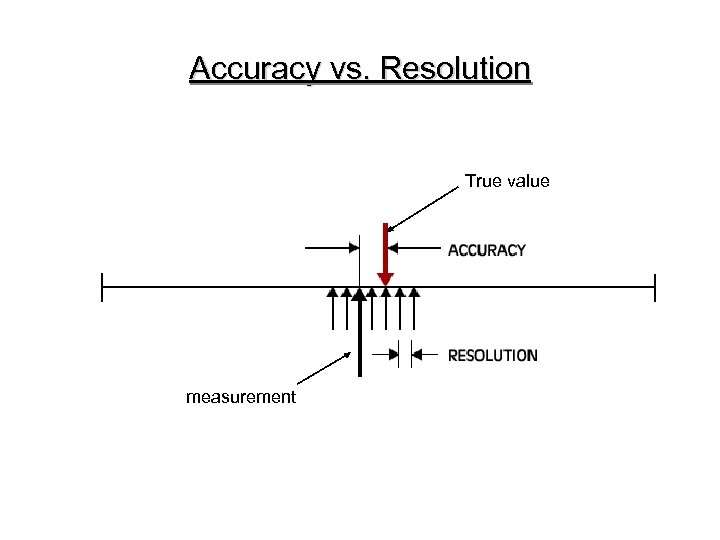 Accuracy vs. Resolution True value measurement
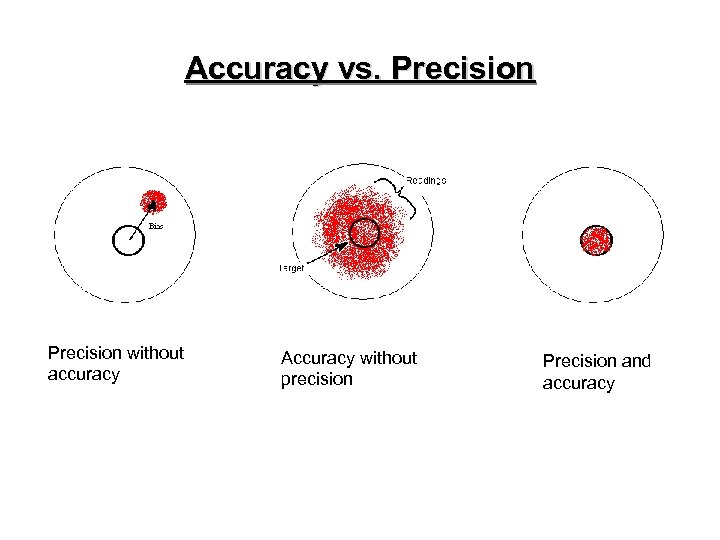 Accuracy vs. Precision without accuracy Accuracy without precision Precision and accuracy
 Specifications of Sensor • Dynamic Range: the ratio of maximum recordable input amplitude to minimum input amplitude, i. e. D. R. = 20 log (Max. Input Ampl. /Min. Input Ampl. ) d. B • Linearity: the deviation of the output from a best-fit straight line for a given range of the sensor • Transfer Function (Frequency Response): The relationship between physical input signal and electrical output signal, which may constitute a complete description of the sensor characteristics. • Bandwidth: the frequency range between the lower and upper cutoff frequencies, within which the sensor transfer function is constant gain or linear. • Noise: random fluctuation in the value of input that causes random fluctuation in the output value
 Attributes of Sensors • Operating Principle: Embedded technologies that make sensors function, such as electro-optics, electromagnetic, piezoelectricity, active and passive ultraviolet. • Dimension of Variables: The number of dimensions of physical variables. • Size: The physical volume of sensors. • Data Format: The measuring feature of data in time; continuous or discrete/analog or digital. • Intelligence: Capabilities of on-board data processing and decisionmaking. • Active versus Passive Sensors: Capability of generating vs. just receiving signals. • Physical Contact: The way sensors observe the disturbance in environment. • Environmental durability: will the sensor robust enough for its operation conditions
 Strain Gauges • Foil strain gauge – – – Least expensive Widely used Not suitable for long distance Electromagnetic Interference Sensitive to moisture & humidity • Vibration wire strain gauge – Determine strain from freq. of AC signal – Bulky • Fiber optic gauge – – Immune to EM and electrostatic noise Compact size High cost Fragile
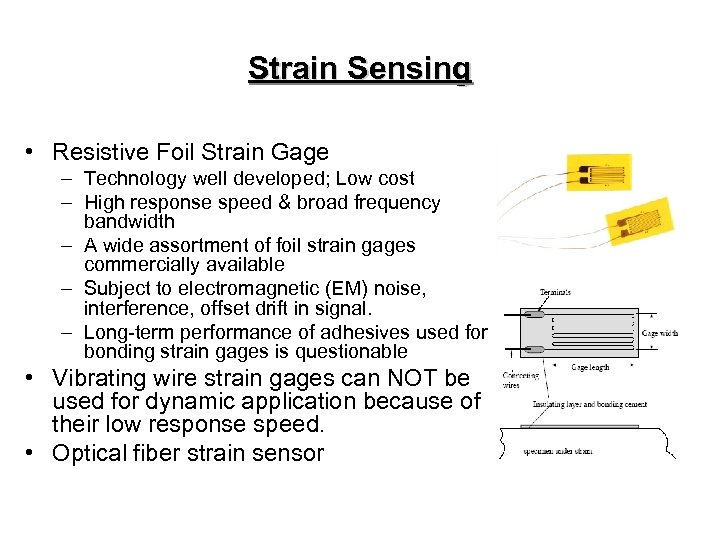 Strain Sensing • Resistive Foil Strain Gage – Technology well developed; Low cost – High response speed & broad frequency bandwidth – A wide assortment of foil strain gages commercially available – Subject to electromagnetic (EM) noise, interference, offset drift in signal. – Long-term performance of adhesives used for bonding strain gages is questionable • Vibrating wire strain gages can NOT be used for dynamic application because of their low response speed. • Optical fiber strain sensor
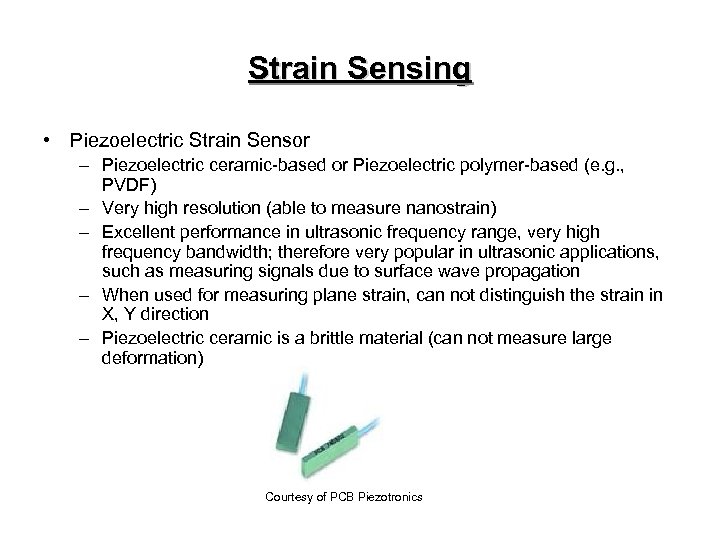 Strain Sensing • Piezoelectric Strain Sensor – Piezoelectric ceramic-based or Piezoelectric polymer-based (e. g. , PVDF) – Very high resolution (able to measure nanostrain) – Excellent performance in ultrasonic frequency range, very high frequency bandwidth; therefore very popular in ultrasonic applications, such as measuring signals due to surface wave propagation – When used for measuring plane strain, can not distinguish the strain in X, Y direction – Piezoelectric ceramic is a brittle material (can not measure large deformation) Courtesy of PCB Piezotronics
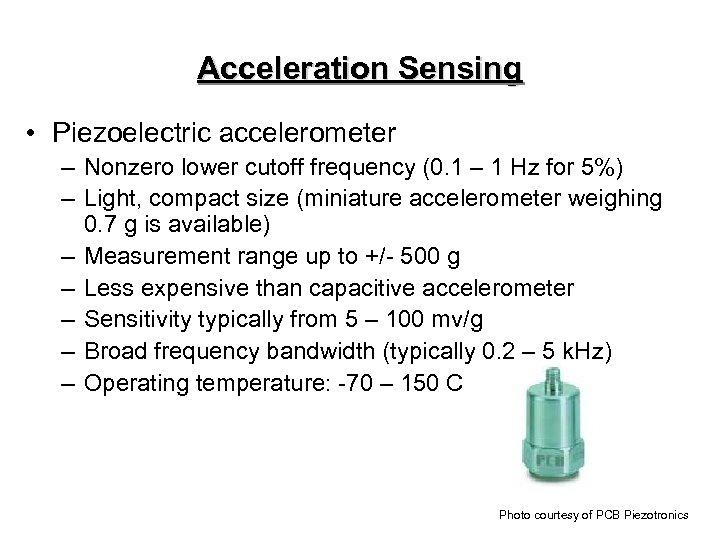 Acceleration Sensing • Piezoelectric accelerometer – Nonzero lower cutoff frequency (0. 1 – 1 Hz for 5%) – Light, compact size (miniature accelerometer weighing 0. 7 g is available) – Measurement range up to +/- 500 g – Less expensive than capacitive accelerometer – Sensitivity typically from 5 – 100 mv/g – Broad frequency bandwidth (typically 0. 2 – 5 k. Hz) – Operating temperature: -70 – 150 C Photo courtesy of PCB Piezotronics
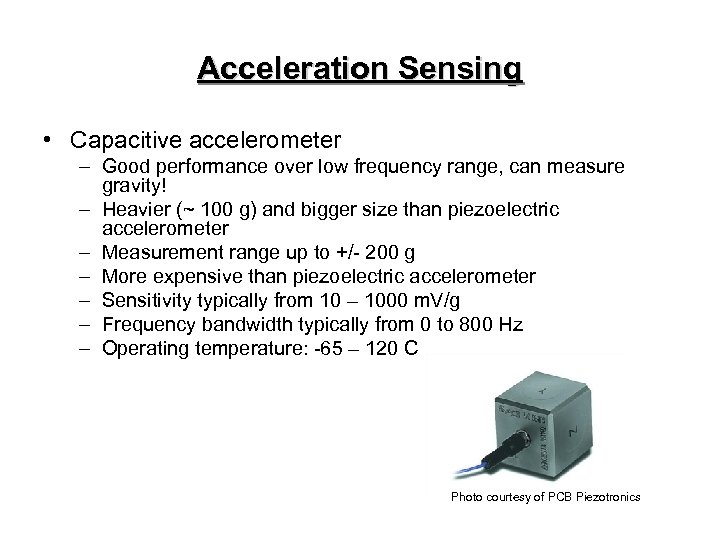 Acceleration Sensing • Capacitive accelerometer – Good performance over low frequency range, can measure gravity! – Heavier (~ 100 g) and bigger size than piezoelectric accelerometer – Measurement range up to +/- 200 g – More expensive than piezoelectric accelerometer – Sensitivity typically from 10 – 1000 m. V/g – Frequency bandwidth typically from 0 to 800 Hz – Operating temperature: -65 – 120 C Photo courtesy of PCB Piezotronics
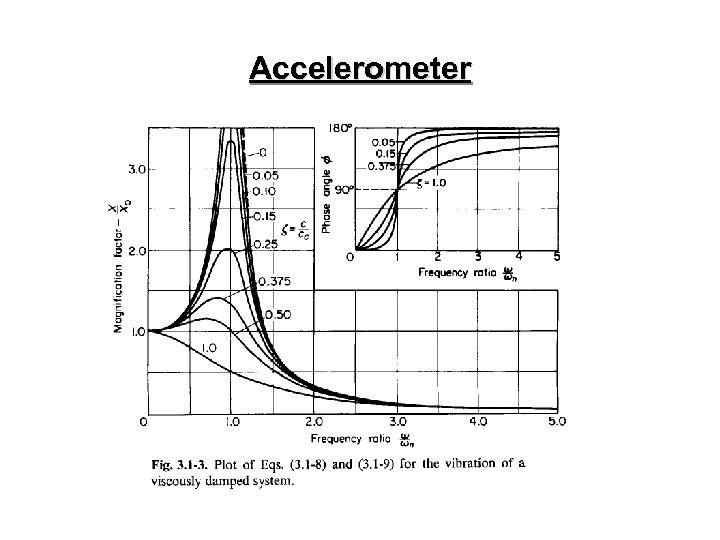 Accelerometer
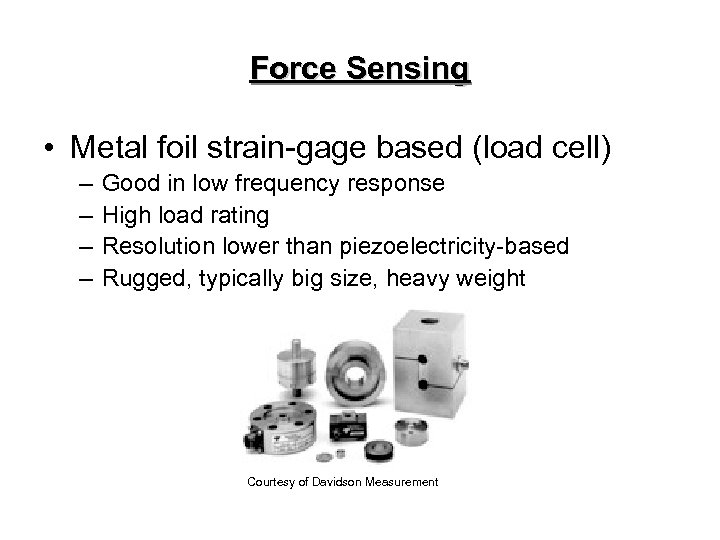 Force Sensing • Metal foil strain-gage based (load cell) – – Good in low frequency response High load rating Resolution lower than piezoelectricity-based Rugged, typically big size, heavy weight Courtesy of Davidson Measurement
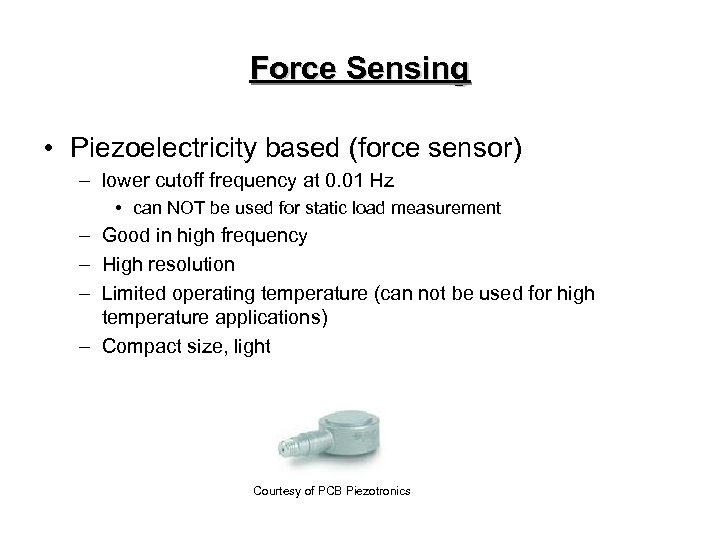 Force Sensing • Piezoelectricity based (force sensor) – lower cutoff frequency at 0. 01 Hz • can NOT be used for static load measurement – Good in high frequency – High resolution – Limited operating temperature (can not be used for high temperature applications) – Compact size, light Courtesy of PCB Piezotronics
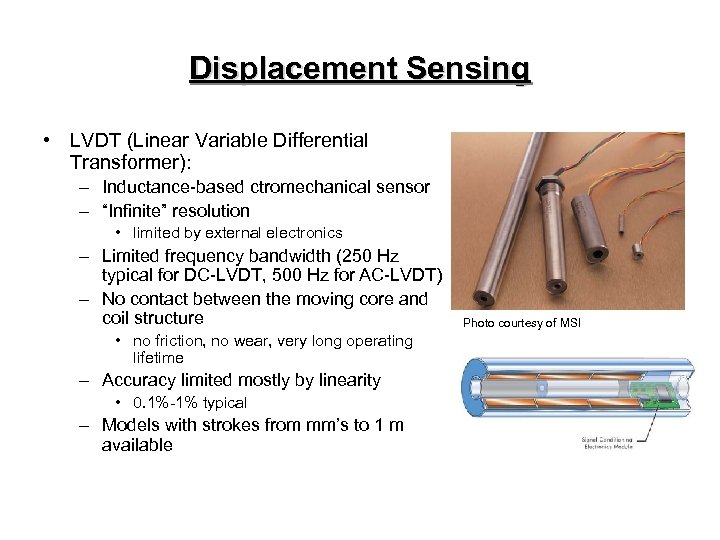 Displacement Sensing • LVDT (Linear Variable Differential Transformer): – Inductance-based ctromechanical sensor – “Infinite” resolution • limited by external electronics – Limited frequency bandwidth (250 Hz typical for DC-LVDT, 500 Hz for AC-LVDT) – No contact between the moving core and coil structure • no friction, no wear, very long operating lifetime – Accuracy limited mostly by linearity • 0. 1%-1% typical – Models with strokes from mm’s to 1 m available Photo courtesy of MSI
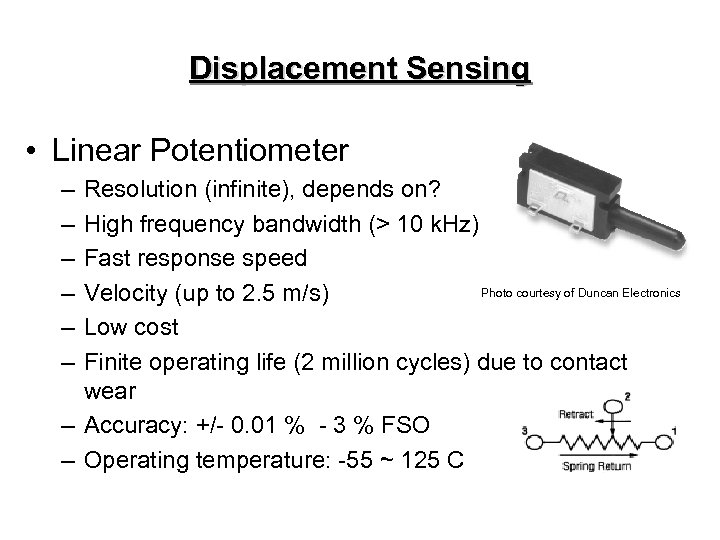 Displacement Sensing • Linear Potentiometer – – – Resolution (infinite), depends on? High frequency bandwidth (> 10 k. Hz) Fast response speed Photo courtesy of Duncan Electronics Velocity (up to 2. 5 m/s) Low cost Finite operating life (2 million cycles) due to contact wear – Accuracy: +/- 0. 01 % - 3 % FSO – Operating temperature: -55 ~ 125 C
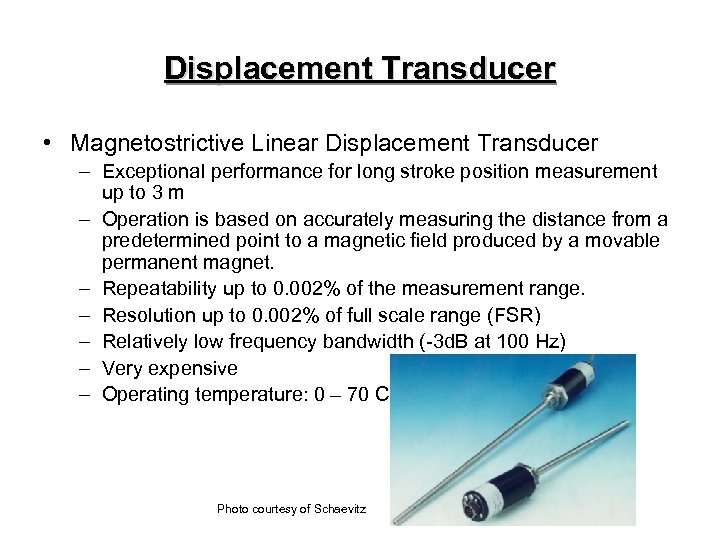 Displacement Transducer • Magnetostrictive Linear Displacement Transducer – Exceptional performance for long stroke position measurement up to 3 m – Operation is based on accurately measuring the distance from a predetermined point to a magnetic field produced by a movable permanent magnet. – Repeatability up to 0. 002% of the measurement range. – Resolution up to 0. 002% of full scale range (FSR) – Relatively low frequency bandwidth (-3 d. B at 100 Hz) – Very expensive – Operating temperature: 0 – 70 C Photo courtesy of Schaevitz
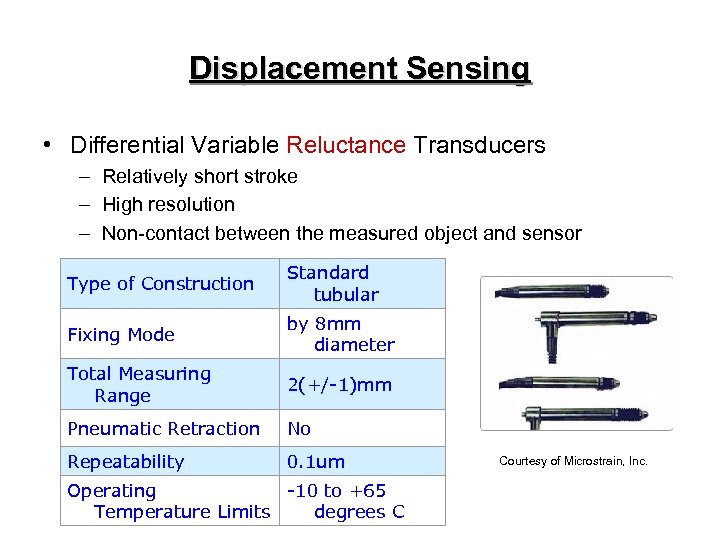 Displacement Sensing • Differential Variable Reluctance Transducers – Relatively short stroke – High resolution – Non-contact between the measured object and sensor Type of Construction Standard tubular Fixing Mode by 8 mm diameter Total Measuring Range 2(+/-1)mm Pneumatic Retraction No Repeatability 0. 1 um Operating -10 to +65 Temperature Limits degrees C Courtesy of Microstrain, Inc.
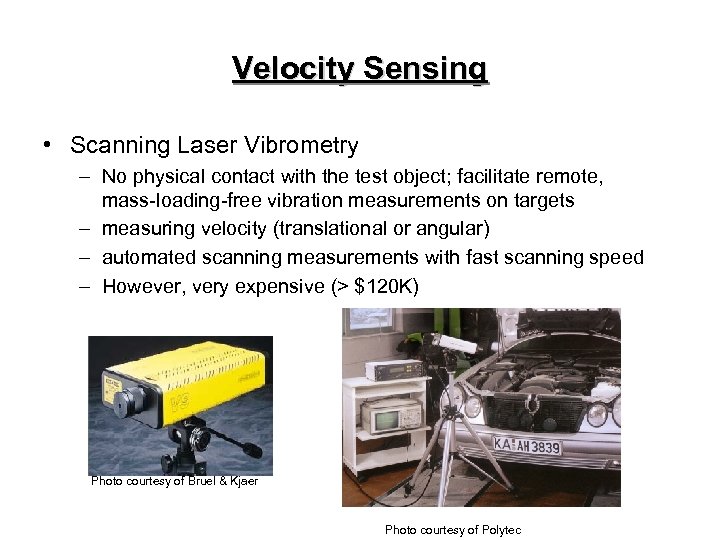 Velocity Sensing • Scanning Laser Vibrometry – No physical contact with the test object; facilitate remote, mass-loading-free vibration measurements on targets – measuring velocity (translational or angular) – automated scanning measurements with fast scanning speed – However, very expensive (> $120 K) Photo courtesy of Bruel & Kjaer Photo courtesy of Polytec