


 Скачать презентацию Seminar on organization of a statistical survey on
ac9a2216df0dcb4eb2ffe14f6049b07f.ppt
- Количество слайдов: 24
 Seminar on organization of a statistical survey on house price changes and the calculation of the HICP Kiev, 27 – 28 February 2013 Guidelines on the calculation of price indices for owner-occupied housing in a consumer price index and as an integral part of the HICP David Fenwick National accounts Definition of a service Conceptual & measurement issues Harmonised Consumer Price Index (HICP) Guidelines/Regulations
 Housing Costs: owner-occupier housing costs and rented accommodation in a consumer price index • Both owner-occupied housing costs & rent should be included in a CPI. – Owner-occupied housing costs. . . . issues. Different conceptual approaches – no international consensus. Choice of method can have numerical impact. Practical options often limited by lack of data (e. g. house prices). Rental equivalence an option where owner-occupier housing market not well developed. Double counting problematic e. g. repairs, depreciation, equivalent rent. • • • – • • • Rental accommodation – – – Weights – Household Budget Survey Prices - Rent surveys. Main difficulties. Accounting for missing observations. Updating the sample. Major home improvements – quality change. 2
 Owner-occupier housing costs reasons for including in a CPI • Inclusion of owner-occupier housing costs in a Consumer Price Index. – A legitimate expenditure • Household Final Monetary Consumption Expenditure (SNA) Improves relevance and representativity of the CPI. – • Broadens coverage. Should enhance cross-country comparisons. – • • If same methodologies used. However concerns expressed about. – Impact on the level and volatility of inflation. – Could add to cross-country divergences in inflation rates. » More difficult for inflation targeting. – OOH data are not always available to the same timescale and frequency as the other CPI data. – No international consensus. 3
 Owner-occupier housing costs in a CPI: evaluating & choosing between different methodologies • Criteria for deciding which approach to adopt for Owner. Occupier Housing to use. – It must be aligned with user needs and the main purpose of the CPI. – It must be as consistent as possible with the rest of the CPI (conceptual issues). – It must respect international practices. – It should have public acceptance. – It must be practical to implement. 4
 Owner-occupier housing costs – different conceptual approaches • • Acquisitions approach. – Measures the price of purchasing owner-occupier housing irrespective of how such a purchase is financed. – Acquisitions can be measured on a gross basis or on a net basis. Net basis consistent with treatment of other durables e. g. exclusion of second-hand cars purchased by one household from another. – In principle would cover cost of extensions & conversions. The payments approach. – Covers the expenditure actually incurred in occupying the house. It involves measuring the interest payments made on loans to purchase the house. – Repayment of capital: considered an investment? • The user cost approach. – Measures the changing cost of using OOH (opportunity cost of capital). – Usually uses rental equivalence (imputed rent). 5
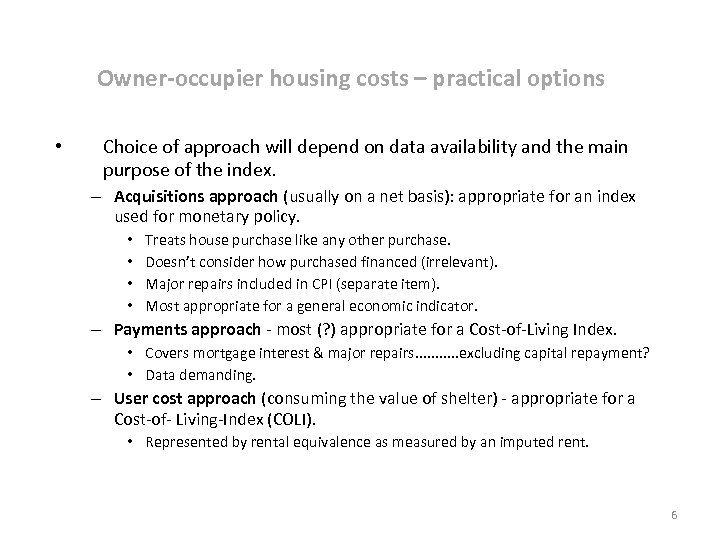 Owner-occupier housing costs – practical options • Choice of approach will depend on data availability and the main purpose of the index. – Acquisitions approach (usually on a net basis): appropriate for an index used for monetary policy. • • Treats house purchase like any other purchase. Doesn’t consider how purchased financed (irrelevant). Major repairs included in CPI (separate item). Most appropriate for a general economic indicator. – Payments approach - most (? ) appropriate for a Cost-of-Living Index. • Covers mortgage interest & major repairs. . . excluding capital repayment? • Data demanding. – User cost approach (consuming the value of shelter) - appropriate for a Cost-of- Living-Index (COLI). • Represented by rental equivalence as measured by an imputed rent. 6
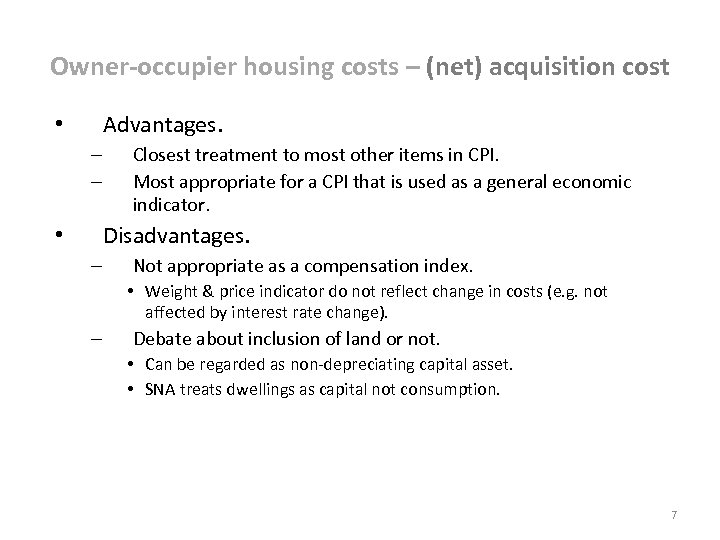 Owner-occupier housing costs – (net) acquisition cost Advantages. • – – Closest treatment to most other items in CPI. Most appropriate for a CPI that is used as a general economic indicator. Disadvantages. • – Not appropriate as a compensation index. • Weight & price indicator do not reflect change in costs (e. g. not affected by interest rate change). – Debate about inclusion of land or not. • Can be regarded as non-depreciating capital asset. • SNA treats dwellings as capital not consumption. 7
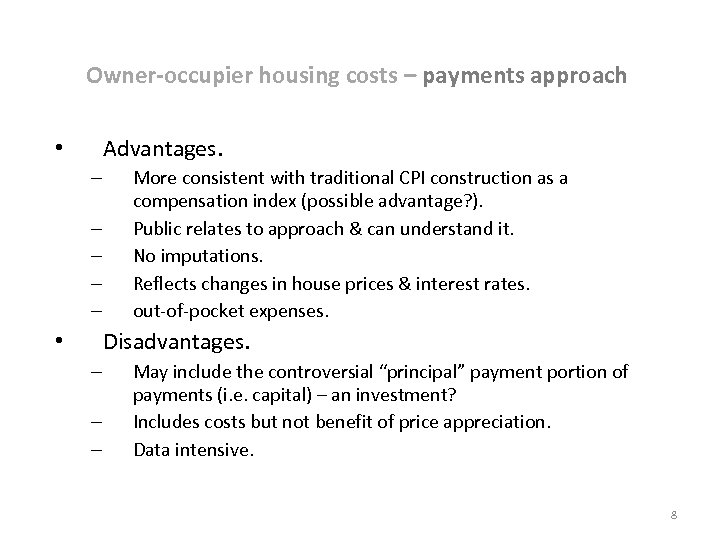 Owner-occupier housing costs – payments approach Advantages. • – – – More consistent with traditional CPI construction as a compensation index (possible advantage? ). Public relates to approach & can understand it. No imputations. Reflects changes in house prices & interest rates. out-of-pocket expenses. Disadvantages. • – – – May include the controversial “principal” payment portion of payments (i. e. capital) – an investment? Includes costs but not benefit of price appreciation. Data intensive. 8
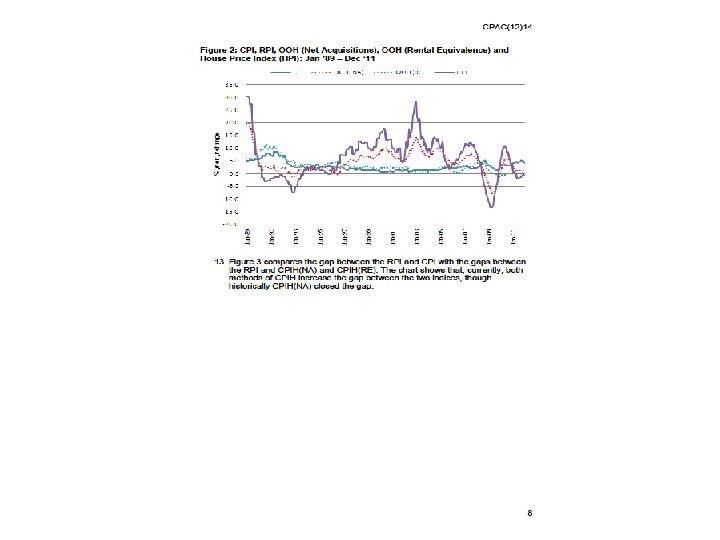
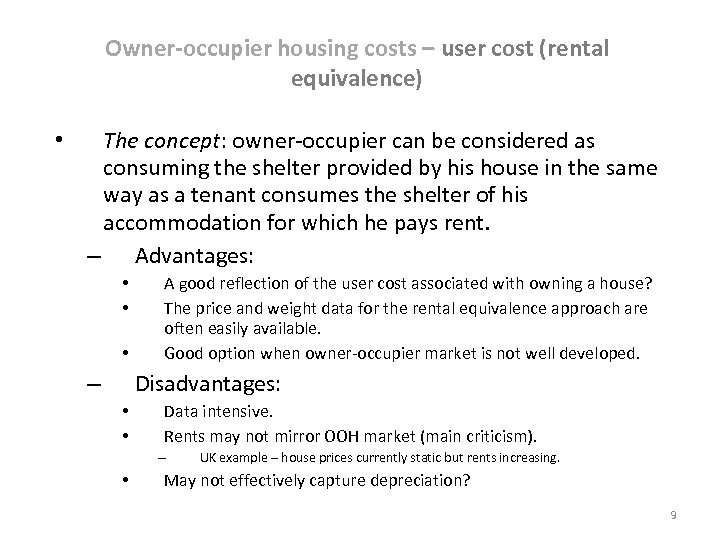 Owner-occupier housing costs – user cost (rental equivalence) • The concept: owner-occupier can be considered as consuming the shelter provided by his house in the same way as a tenant consumes the shelter of his accommodation for which he pays rent. – Advantages: • • • A good reflection of the user cost associated with owning a house? The price and weight data for the rental equivalence approach are often easily available. Good option when owner-occupier market is not well developed. Disadvantages: – • • Data intensive. Rents may not mirror OOH market (main criticism). – • UK example – house prices currently static but rents increasing. May not effectively capture depreciation? 9
 Owner-occupier housing costs – user cost (rental equivalence) • Practical advantages for countries where OOH market is less developed and system more informal. – Lack of formal records preclude other methods. • Housing stock consists of self-builds on family land or upgrading of old stock. • Informal financing and transfers of ownership. • Limited turnover, small market. – The price indicator for imputed rents can be derived either from available price series for rents or from experts in the field. – Important to stratify by house-type, location etc so that the rents data can be combined to reflect the overall composition of owner-occupied property. – Beware of double counting e. g. • Where expenditure on repairs, maintenance, local property taxes, water charges etc. are covered in the rent, these should not be included elsewhere in the index. • If the landlord ceases to provide these ancillary items, the CPI must adjust any rent survey information before calculating imputed rent. 10
 Owner-occupier housing costs – the HICP • Draft Commission Regulation. – Under discussion in Eurostat’s Price Statistics Working Group. – PSWG 01. 2012/07 on Eurostat website. – Covers owner-occupied housing in the HICP and a house price index in its own right. • The owner-occupied house price index in the HICP shall be based on “net acquisitions”. • Costs to be covered in the HICP include. – Changes in actual prices paid by consumers for the acquisition of dwellings that are new to the household sector. – As well as changes in other costs related to the ownership & transfer of ownership. • E. g. Major repair & maintenance, insurance. – Expenditure categories which account for at least 1 part per 100 of total owner-occupiers’ housing expenditures to be covered.
 The owner-occupied house price index in the HICP based on “net acquisitions” • In principle, in the net acquisitions approach land should be excluded. – It is a non-reproducible asset whose availability is fixed no matter how many transactions of dwellings are carried out. – It is a non-depreciating capital asset - investment, not consumption (similar argument used for not including capital repayments under “payment” approach).
 Owner-occupier housing costs – the HICP • House Price Index in its own right covers. – Covers purchases of new and old dwellings. • Separate indices for new and old dwellings if account for at least 1 part per 100 of total expenditure on new and old. • Owner-occupied House Price Index & House Price Index to be computed quarterly. – For Owner-occupied House Price Index from 2 nd quarter 2014 onwards. – For House Price Index from 2 nd quarter 2012. • Weights to be sent to Eurostat. • Back-data. Provision of estimated back-series. – For Owner-occupied House Price Index from 1 st quarter 2010 – For House Price Index from 1 st quarter 2008.
 Owner-occupier housing costs – in the HICP • Detailed methodology given in the HICP Owner-Occupied Housing draft manual. – Referred to in draft regulation. – Can be downloaded from Eurostat website. – Will be updated as necessary. • To summarise. – Owner-occupied house price index in the HICP covers. – Acquisition of new dwellings including conversions & self-builds. • Includes incidental costs related to the purchase e. g. solictors & registration fees. – Running costs - major repairs, insurance etc associated with house ownership. • Minor repairs already included in the HICP.
 House Price Index in its own right • Measures the price development of dwellings transacted in the market. – Gross acquisition approach. – Includes new & old dwellings & price of land is included. – Own-account production excluded. • Full transaction price. – Avoid appraisal price to obtain Bank loan, expert evaluations, advertised price or initial offer price. • In practice, variety of data sources leads to deviation from target index. – E. g. Advertisements - newspapers, internet & Estate Agent; valuations – mortgage lenders, local tax office; initial offer price – estate agent, mortgage lender; price actually paid-property registration. – Registration price – should be best but can be unrealistic price to avoid tax; large time-lag.
 Owner-occupier housing costs – the HICP • Eurostat Manual is not prescriptive on detailed methodology for Owner-occupied House Price Index or House Price Index but does state that target index is a Laspeyres-type annually-chained index.
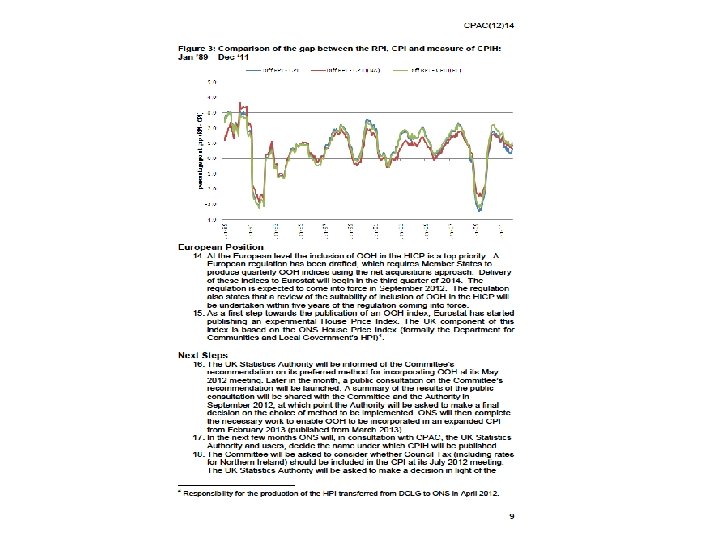
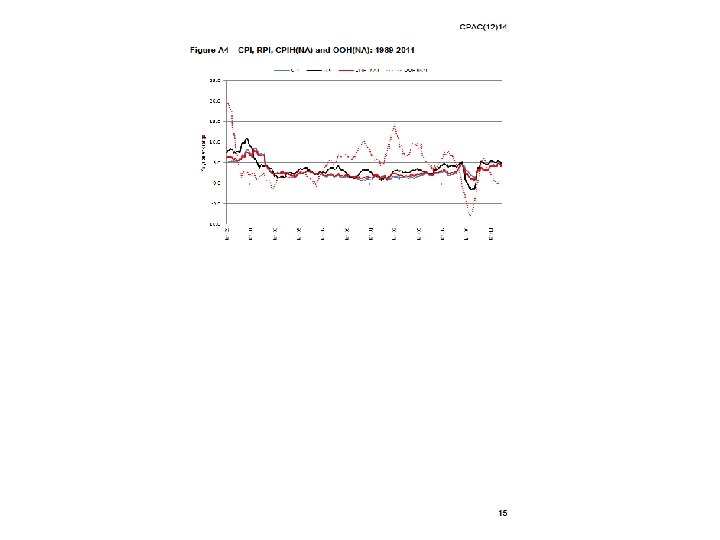
 Owner-occupier housing costs – the HICP: UK experience • Recommendation of UK Consumer Prices Advisory Committee in 2012. – Office for National Statistics (ONS) implements the rental equivalence approach to measure owner occupiers’ housing costs in a new additional measure of consumer price inflation (CPIH) introduced from February 2013, published in March 2013. – CPIH should be published alongside the existing measures of consumer price inflation (i. e. CPI and RPI). – Coverage of CPIH to be extended to include council tax, when it is introduced in early 2013. • Not to be applied to the existing CPI (i. e. HICP), since Eurostat has decided that Council Tax should not be included in the HICP. • Strategy for consumer price statistics endorsed by UK Statistics Authority - welcomed a CPIH developed to meet needs of users (a priority for Bank of England & HM Treasury).
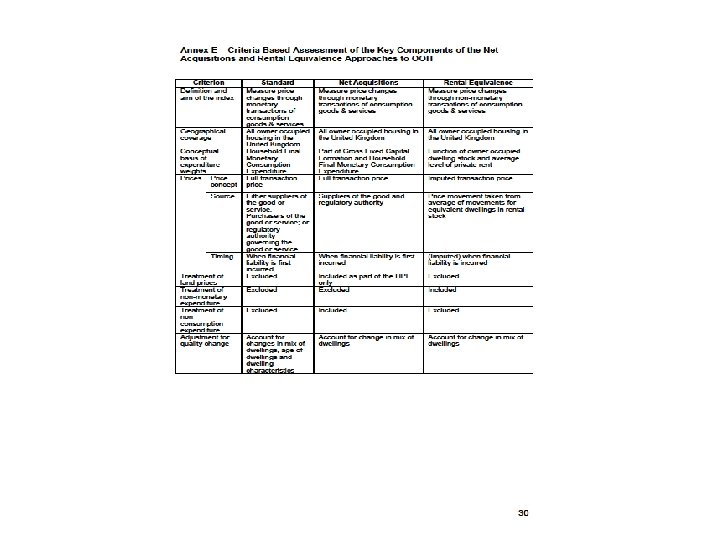
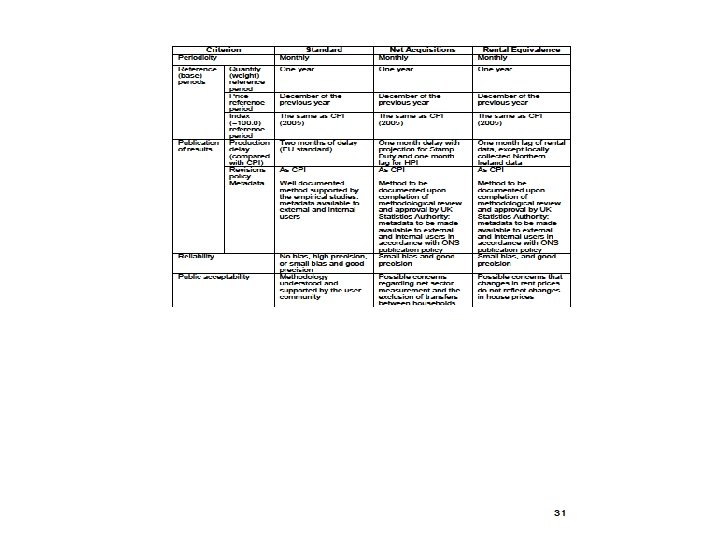
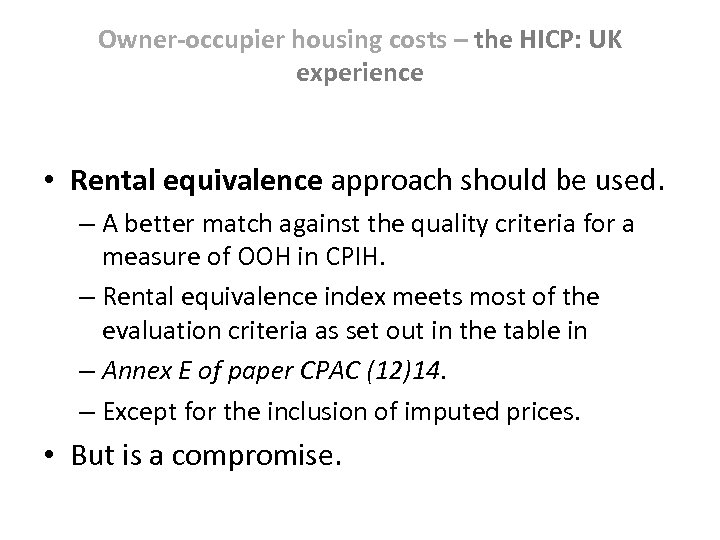 Owner-occupier housing costs – the HICP: UK experience • Rental equivalence approach should be used. – A better match against the quality criteria for a measure of OOH in CPIH. – Rental equivalence index meets most of the evaluation criteria as set out in the table in – Annex E of paper CPAC (12)14. – Except for the inclusion of imputed prices. • But is a compromise.
 Guidelines on the calculation of price indices for owner-occupied housing in a consumer price index and as an integral part of the HICP The End