 Скачать презентацию Semiconductors Manraj Aujla Winky Cheung Puneesh Lamba Shane
f593dc195974e8301b2c4c3140aa8f2f.ppt
- Количество слайдов: 84



Semiconductors Manraj Aujla Winky Cheung Puneesh Lamba Shane Johnston Insoo Park
Agenda • Industry Overview – Technology – Market • Intel • AMD • Applied Materials
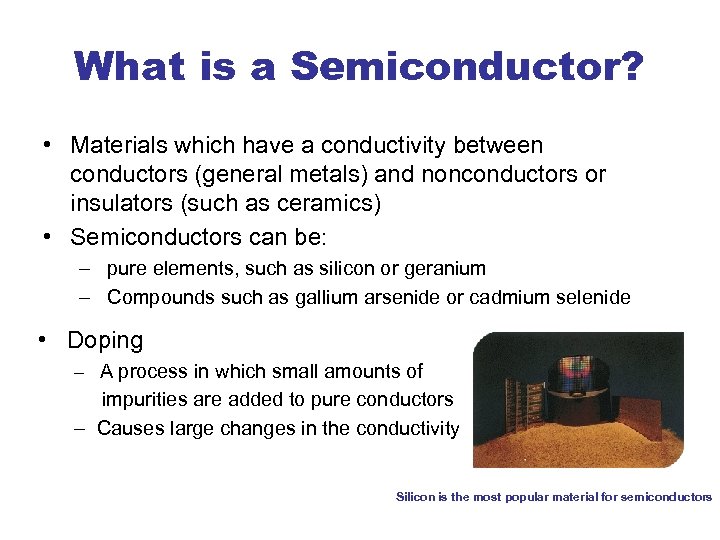
What is a Semiconductor? • Materials which have a conductivity between conductors (general metals) and nonconductors or insulators (such as ceramics) • Semiconductors can be: – pure elements, such as silicon or geranium – Compounds such as gallium arsenide or cadmium selenide • Doping – A process in which small amounts of impurities are added to pure conductors – Causes large changes in the conductivity Silicon is the most popular material for semiconductors
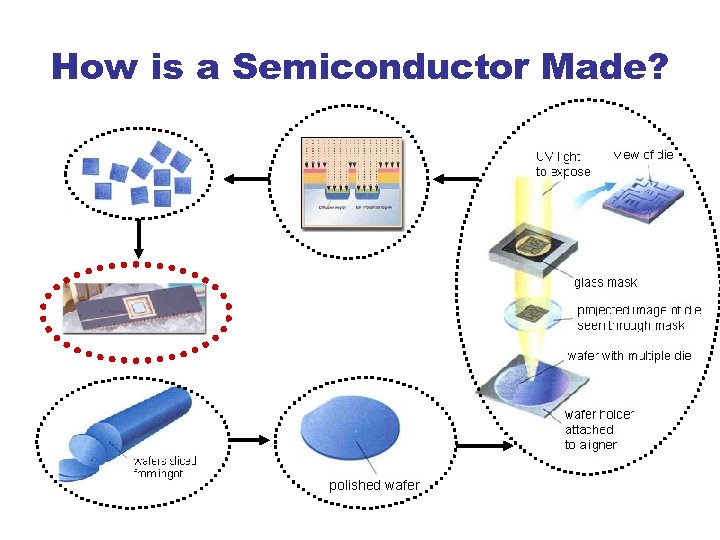
How is a Semiconductor Made?
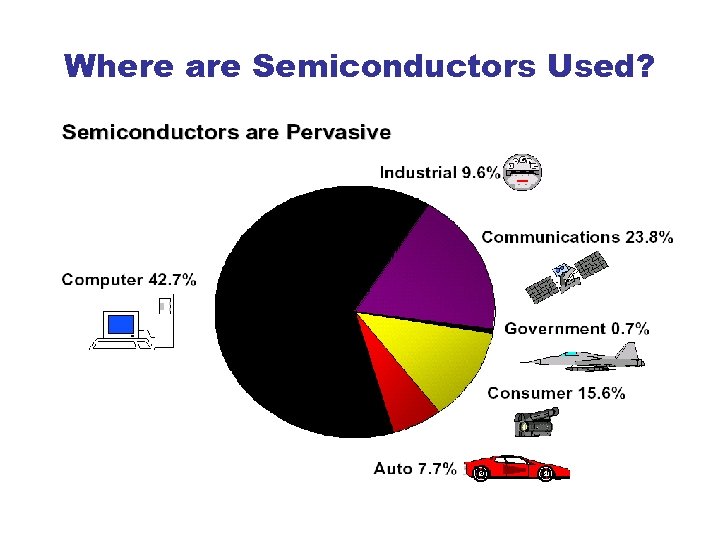
Where are Semiconductors Used?
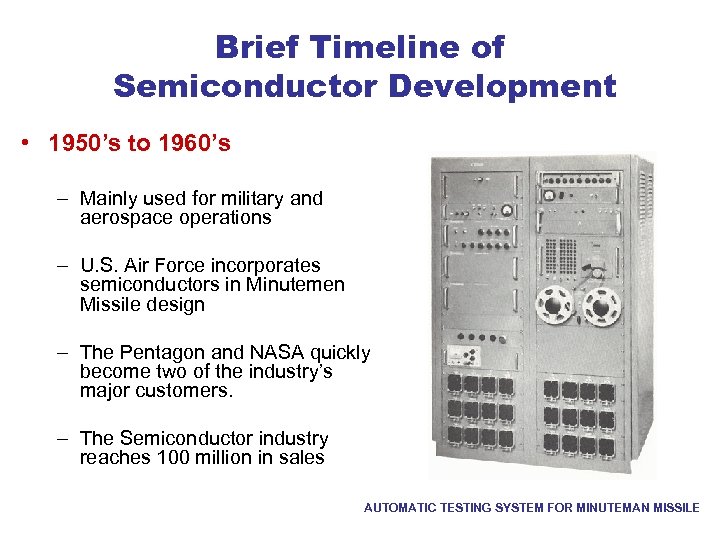
Brief Timeline of Semiconductor Development • 1950’s to 1960’s – Mainly used for military and aerospace operations – U. S. Air Force incorporates semiconductors in Minutemen Missile design – The Pentagon and NASA quickly become two of the industry’s major customers. – The Semiconductor industry reaches 100 million in sales AUTOMATIC TESTING SYSTEM FOR MINUTEMAN MISSILE
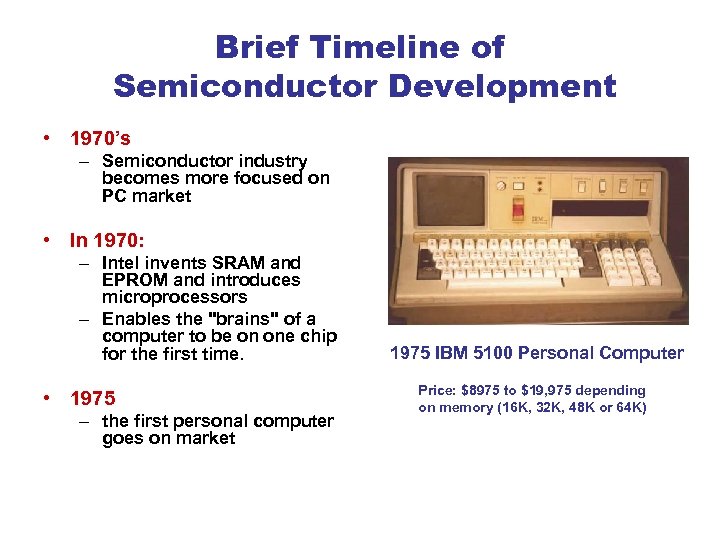
Brief Timeline of Semiconductor Development • 1970’s – Semiconductor industry becomes more focused on PC market • In 1970: – Intel invents SRAM and EPROM and introduces microprocessors – Enables the "brains" of a computer to be on one chip for the first time. • 1975 – the first personal computer goes on market 1975 IBM 5100 Personal Computer Price: $8975 to $19, 975 depending on memory (16 K, 32 K, 48 K or 64 K)
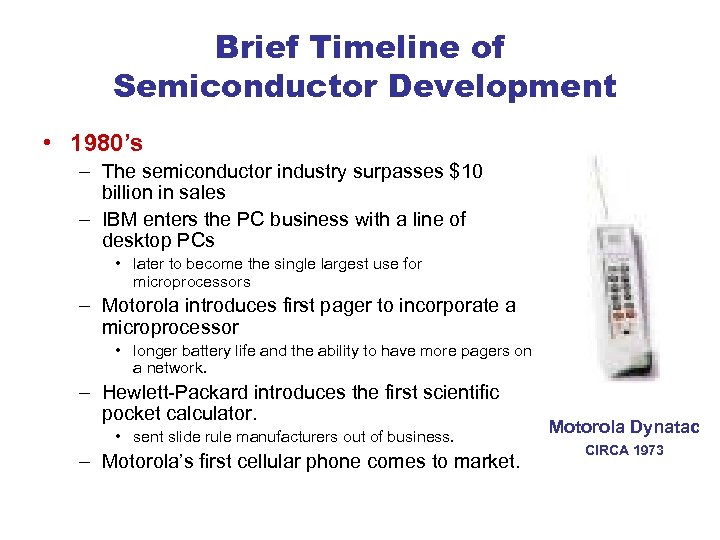
Brief Timeline of Semiconductor Development • 1980’s – The semiconductor industry surpasses $10 billion in sales – IBM enters the PC business with a line of desktop PCs • later to become the single largest use for microprocessors – Motorola introduces first pager to incorporate a microprocessor • longer battery life and the ability to have more pagers on a network. – Hewlett-Packard introduces the first scientific pocket calculator. • sent slide rule manufacturers out of business. – Motorola’s first cellular phone comes to market. Motorola Dynatac CIRCA 1973
Brief Timeline of Semiconductor Development • 1990’s – Sales in the PC market grow dramatically, semiconductor industry surpasses $100 billion sales by 1995. – U. S. chip companies command more than 50 percent of the global market. – Sales shift the demand from PCs to communications products.
Brief Timeline of Semiconductor Development • 2000 – Worldwide semiconductor sales exceed $200 billion for the first time in history.
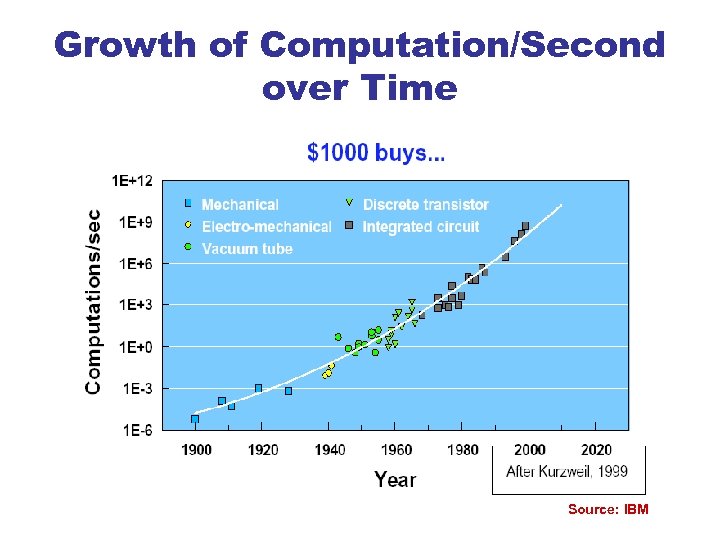
Growth of Computation/Second over Time Source: IBM
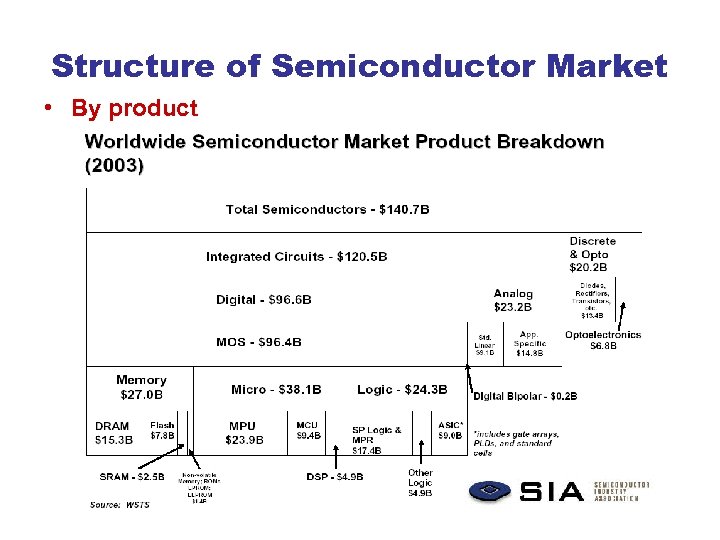
Structure of Semiconductor Market • By product
Structure of Semiconductor Market • By business model – – – – Fully Vertically Integrated OEM’s: IBM, GE, HP Silicon Suppliers: Intel, AMD, TI, Micron System Manufacturers: Apple, Sun Microsystems Equipment Manufacturers: Applied Materials EDA: Cadence, Synopsis Foundry: TSMC, UMC Fabless Design/Distribution: Adaptec, Altera
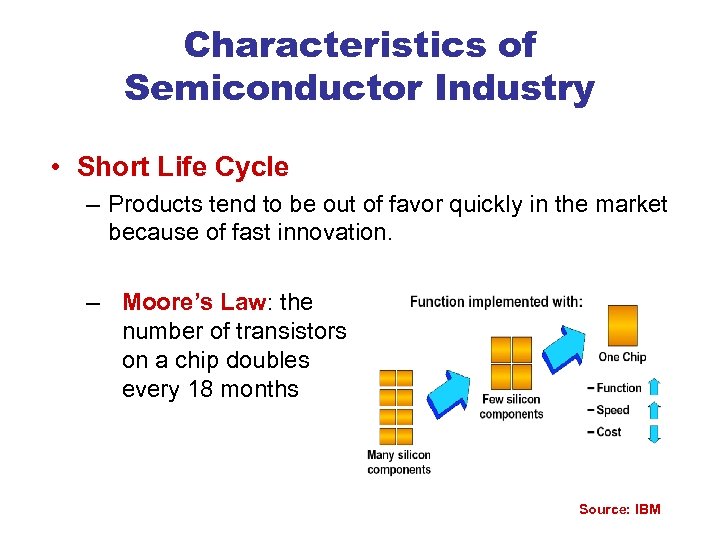
Characteristics of Semiconductor Industry • Short Life Cycle – Products tend to be out of favor quickly in the market because of fast innovation. – Moore’s Law: the number of transistors on a chip doubles every 18 months Source: IBM
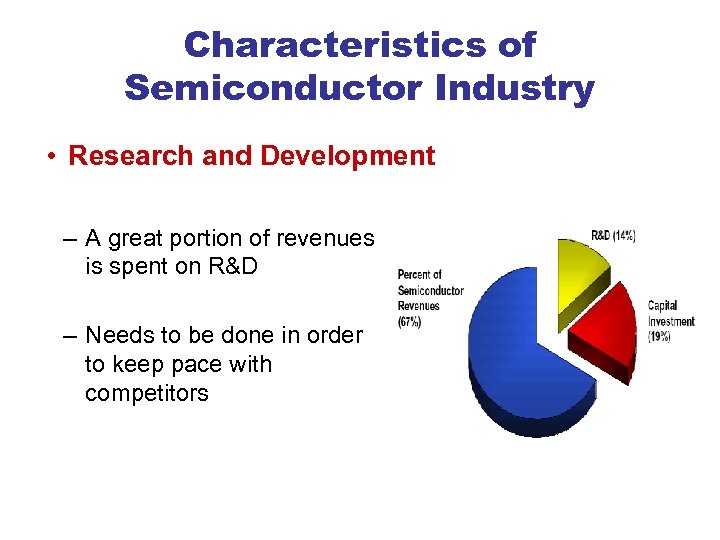
Characteristics of Semiconductor Industry • Research and Development – A great portion of revenues is spent on R&D – Needs to be done in order to keep pace with competitors
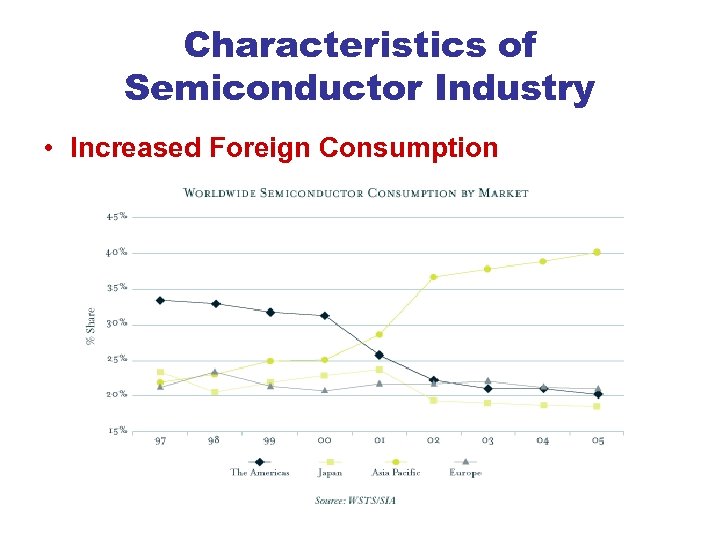
Characteristics of Semiconductor Industry • Increased Foreign Consumption
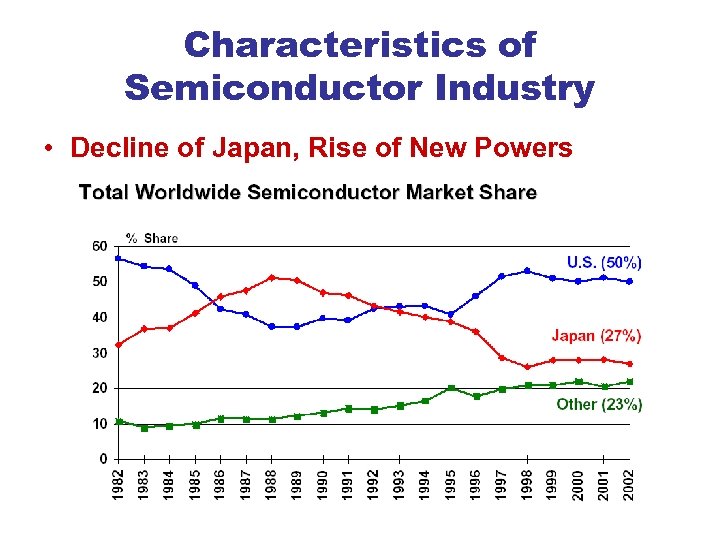
Characteristics of Semiconductor Industry • Decline of Japan, Rise of New Powers
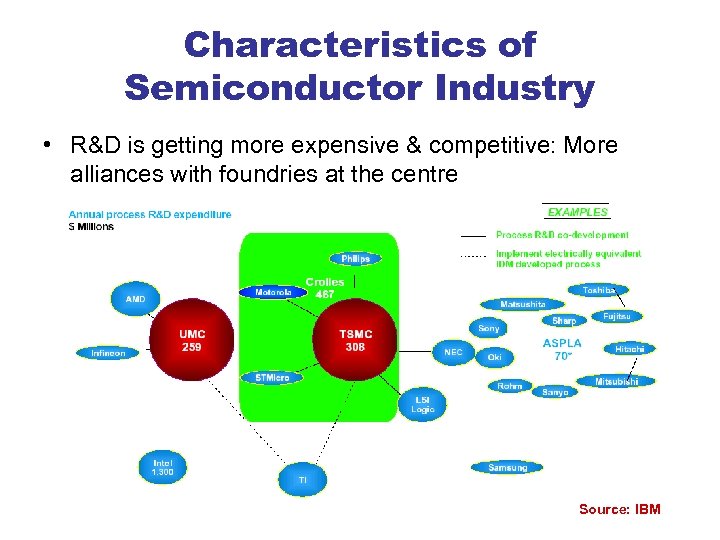
Characteristics of Semiconductor Industry • R&D is getting more expensive & competitive: More alliances with foundries at the centre Source: IBM
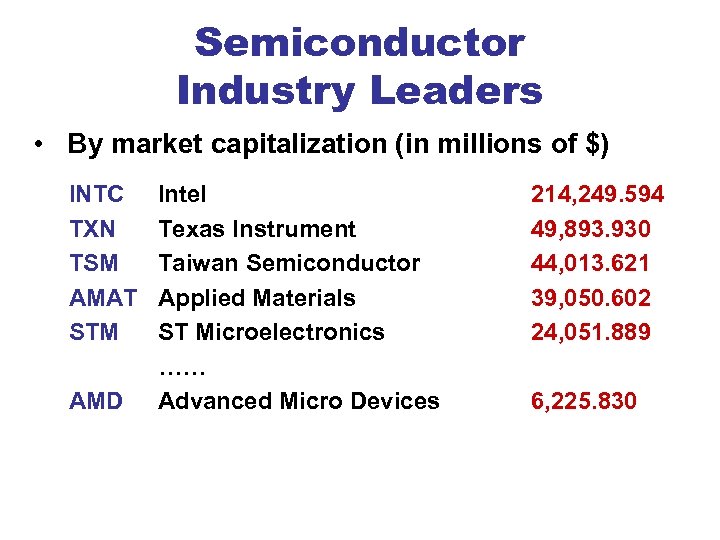
Semiconductor Industry Leaders • By market capitalization (in millions of $) INTC TXN TSM AMAT STM AMD Intel Texas Instrument Taiwan Semiconductor Applied Materials ST Microelectronics …… Advanced Micro Devices 214, 249. 594 49, 893. 930 44, 013. 621 39, 050. 602 24, 051. 889 6, 225. 830
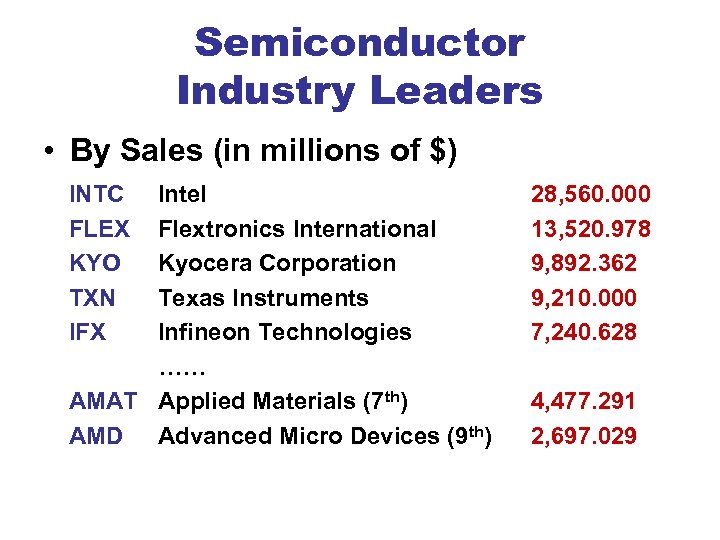
Semiconductor Industry Leaders • By Sales (in millions of $) INTC FLEX KYO TXN IFX Intel Flextronics International Kyocera Corporation Texas Instruments Infineon Technologies …… AMAT Applied Materials (7 th) AMD Advanced Micro Devices (9 th) 28, 560. 000 13, 520. 978 9, 892. 362 9, 210. 000 7, 240. 628 4, 477. 291 2, 697. 029
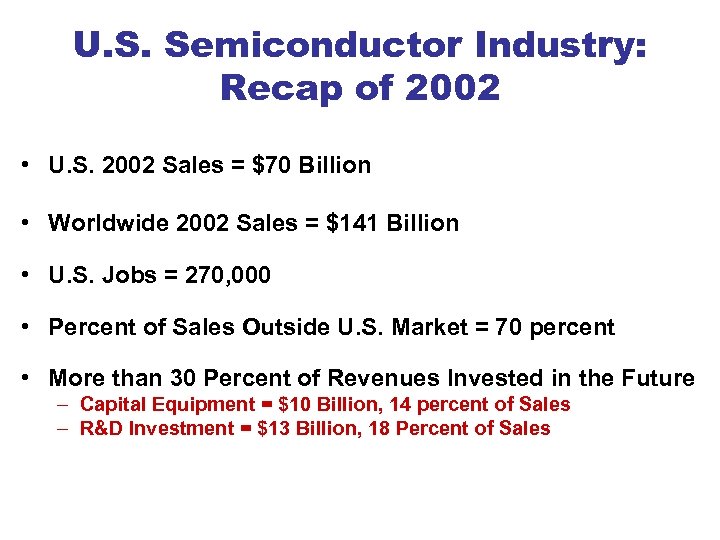
U. S. Semiconductor Industry: Recap of 2002 • U. S. 2002 Sales = $70 Billion • Worldwide 2002 Sales = $141 Billion • U. S. Jobs = 270, 000 • Percent of Sales Outside U. S. Market = 70 percent • More than 30 Percent of Revenues Invested in the Future – Capital Equipment = $10 Billion, 14 percent of Sales – R&D Investment = $13 Billion, 18 Percent of Sales
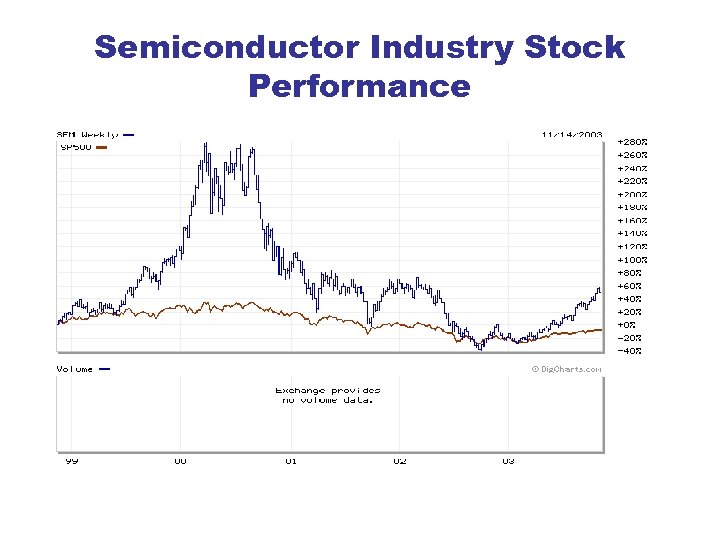
Semiconductor Industry Stock Performance
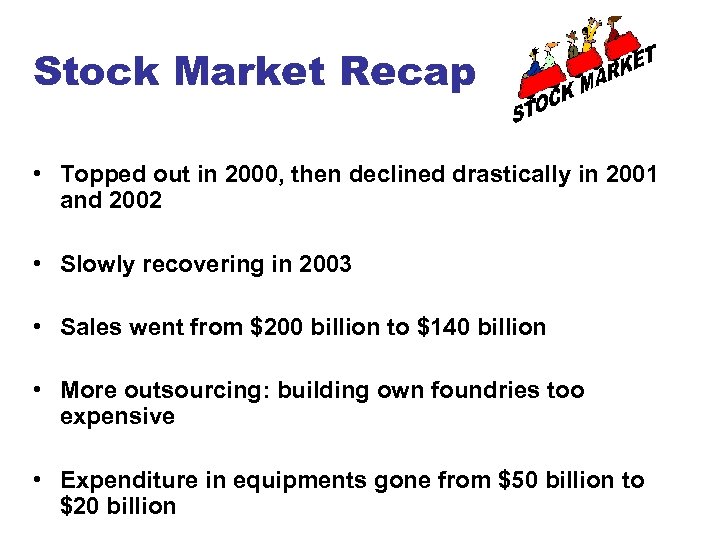
Stock Market Recap • Topped out in 2000, then declined drastically in 2001 and 2002 • Slowly recovering in 2003 • Sales went from $200 billion to $140 billion • More outsourcing: building own foundries too expensive • Expenditure in equipments gone from $50 billion to $20 billion
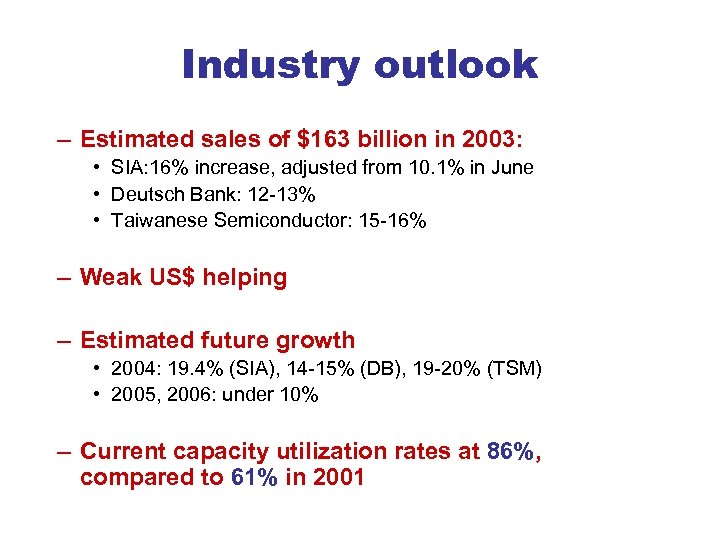
Industry outlook – Estimated sales of $163 billion in 2003: • SIA: 16% increase, adjusted from 10. 1% in June • Deutsch Bank: 12 -13% • Taiwanese Semiconductor: 15 -16% – Weak US$ helping – Estimated future growth • 2004: 19. 4% (SIA), 14 -15% (DB), 19 -20% (TSM) • 2005, 2006: under 10% – Current capacity utilization rates at 86%, compared to 61% in 2001
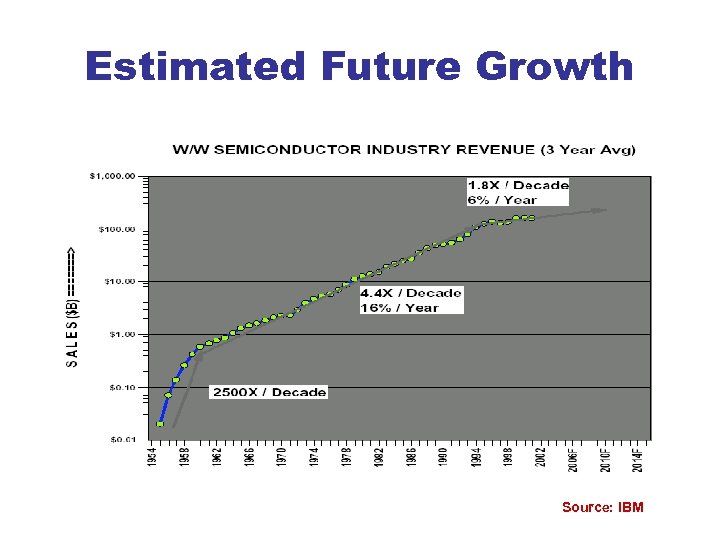
Estimated Future Growth Source: IBM
Future Developments • Productivity will continue to improve, though at lower rates • Revenue growth rate of the industry will continue to remain lower than traditional rates leading to: – Consolidation – Growth and dependency on foundries and off shore manufacturing – Partnerships in development and manufacturing
Future Developments • Investment in R&D required for leadership will continue to grow • More focus will be on innovative transistor structures, materials, circuits, design, and systems architecture • More chipmakers moving from parts to entire systems, consumer electronics, etc.
INTEL CORPORATION
HISTORY • Founded in 1968, supplying memory chips such as DRAM and EPROMS • Success of memory chip sales funded the microprocessor design, which revolutionized the electronics industry in the 1970 s. – Intel’s 8080 chip was chosen by IBM in 1981 and successively became the industry standard. – 1990 s, Intel’s Pentium and Celeron chips were installed in 4 out of every 5 computers sold. CURRENT • The world’s largest semiconductor chip maker, supplying advanced technology solutions for the computing and communications industries. • Products include chips, boards and other semiconductor components that are the building blocks integral to computers, servers, and networking and communications products. • Recent Products: Itanium for server market, Centrino for notebook market, Pentium 4 3. 2 HT for desktop market.
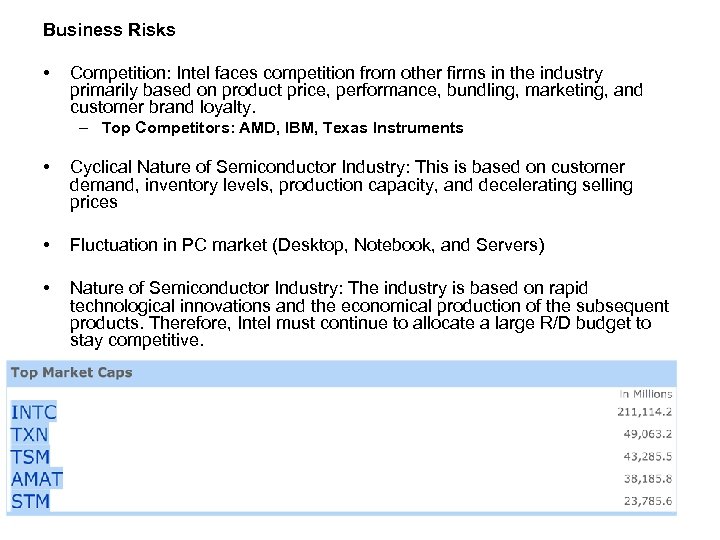
Business Risks • Competition: Intel faces competition from other firms in the industry primarily based on product price, performance, bundling, marketing, and customer brand loyalty. – Top Competitors: AMD, IBM, Texas Instruments • Cyclical Nature of Semiconductor Industry: This is based on customer demand, inventory levels, production capacity, and decelerating selling prices • Fluctuation in PC market (Desktop, Notebook, and Servers) • Nature of Semiconductor Industry: The industry is based on rapid technological innovations and the economical production of the subsequent products. Therefore, Intel must continue to allocate a large R/D budget to stay competitive.
Segments Intel Architecture Business The Intel Architecture business develops platform solutions around microprocessors and chipsets for end products in the desktop, mobile and server market segments. • • • Microprocessors: A microprocessor is the central processing unit (CPU) of a computer system. It processes system data and controls other devices in the system, acting as the ‘‘brains’’ of the computer. Desktop Platform: In 2002, Intel’s Pentium 4 processor was the highest volume desktop processor. Mobile Platform: Mobile products provide notebook and laptop PC users with the performance they need while providing wireless capability and meeting the power consumption and size constraints of mobile PCs. Enterprise Platform: The Enterprise Platforms Group provides microprocessors and chipsets for server and workstation systems. XEON Chipsets: Intel chipsets are compatible with variety of industry-accepted bus specifications, such as the Peripheral Components Interconnect (PCI) local bus specification and the Accelerated Graphics Port (AGP) specification. In addition, Intel provides chipsets compatible with the following memory types: Double Data Rate (DDR) Dynamic Random Access Memory (DRAM), Synchronous DRAM (SDRAM) and Rambus DRAM (RDRAM). Board-Level Products: All board-level products are based on Intel microprocessors.
Wireless Communications and Computing Group The Wireless Communications and Computing Group provides Component level building blocks for digital cellular communications and other applications requiring both low-power processing and high performance. • Flash Memory: Although flash memory is currently used predominantly in mobile phones and PDAs, it is also found in common consumer products, including MP 3 music players, handheld voice recorders and digital answering machines, as well as industrial products. • Processors for Handheld Computing Devices: The Intel XScale microarchitecture is used in many handheld PCs produced by Dell, HP, Compaq, and NEC. • Cellular Baseband Chipsets: Baseband chipsets are designed for multi-mode, multi-band wireless handsets. Chipsets support multiple wireless standards and deliver enhanced voice quality and high integration.
Intel Communications Group The Intel Communications Group provides silicon and integrated networking and communications building blocks based on three focus areas: • Ethernet Connectivity Products: Ethernet is an industry-standard technology used to translate and transmit data in packets across networks. • Optical Components: Opto-electronic components are electrical components used in optical networking equipment, and Synchronous Optical Network (SONET) • Network Processing Components The Intel Internet Exchange Architecture (Intel IXA) provides a flexible platform for the networking and communications industry to build faster, more intelligent networks using reprogrammable silicon. • Embedded Control Chips: Embedded control chips are used in a broad range of applications, including imaging products, storage media, point-ofsale systems, industrial automation equipment and automotive systems.
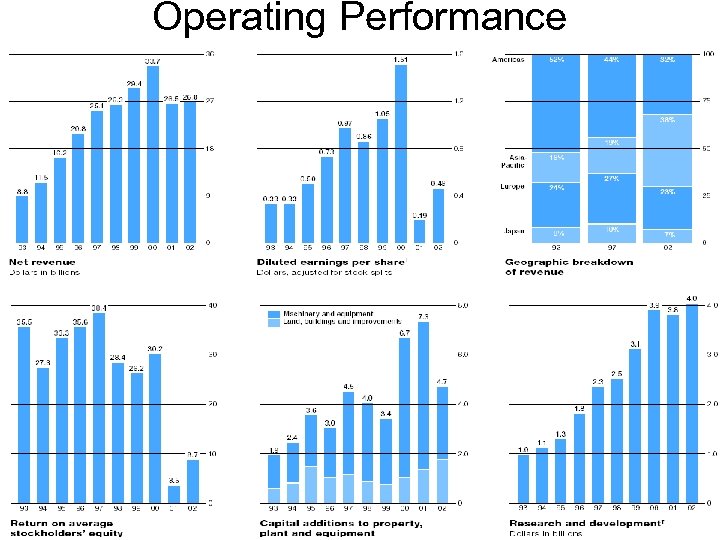
Operating Performance
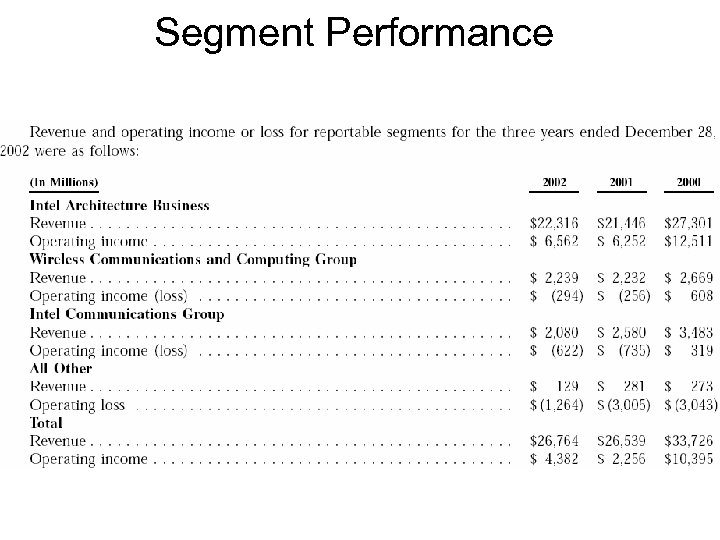
Segment Performance
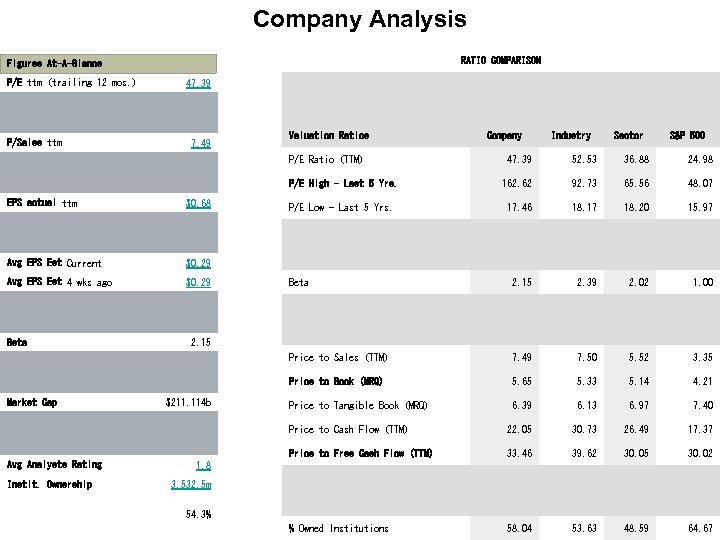
Company Analysis RATIO COMPARISON Figures At-A-Glance P/E ttm (trailing 12 mos. ) P/Sales ttm 47. 39 7. 49 Valuation Ratios P/E Ratio (TTM) Company Industry Sector S&P 500 92. 73 65. 56 48. 07 P/E Low - Last 5 Yrs. 17. 46 18. 17 18. 20 15. 97 Beta 2. 15 2. 39 2. 02 1. 00 7. 49 7. 50 5. 52 3. 35 5. 65 5. 33 5. 14 4. 21 Price to Tangible Book (MRQ) 6. 39 6. 13 6. 97 7. 40 Price to Cash Flow (TTM) 22. 05 30. 73 26. 49 17. 37 Price to Free Cash Flow (TTM) $0. 29 162. 62 33. 46 39. 62 30. 05 30. 02 % Owned Institutions 58. 04 53. 63 48. 59 64. 67 $0. 29 Avg EPS Est 4 wks ago 24. 98 Price to Book (MRQ) Avg EPS Est Current 36. 88 Price to Sales (TTM) $0. 68 52. 53 P/E High - Last 5 Yrs. EPS actual ttm 47. 39 Beta Market Cap Avg Analysts Rating Instit. Ownership 2. 15 $211. 114 b 1. 8 3, 532. 5 m 54. 3%
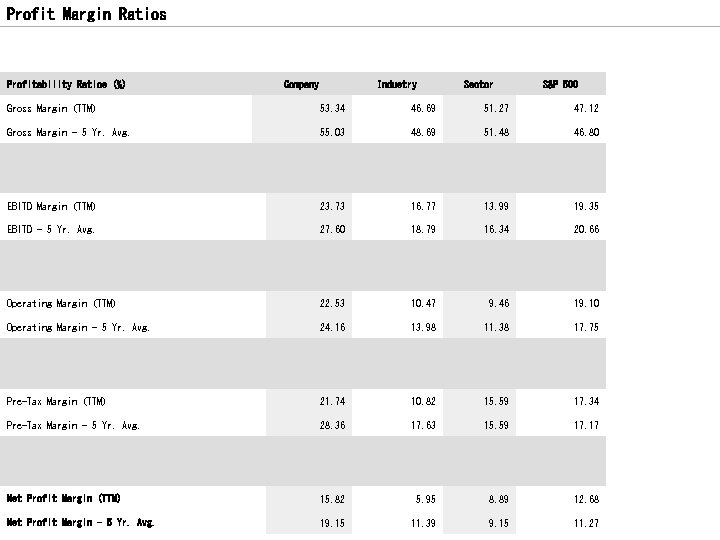
Profit Margin Ratios Profitability Ratios (%) Company Industry Sector S&P 500 Gross Margin (TTM) 53. 34 46. 69 51. 27 47. 12 Gross Margin - 5 Yr. Avg. 55. 03 48. 69 51. 48 46. 80 EBITD Margin (TTM) 23. 73 16. 77 13. 99 19. 35 EBITD - 5 Yr. Avg. 27. 60 18. 79 16. 34 20. 66 Operating Margin (TTM) 22. 53 10. 47 9. 46 19. 10 Operating Margin - 5 Yr. Avg. 24. 16 13. 98 11. 38 17. 75 Pre-Tax Margin (TTM) 21. 74 10. 82 15. 59 17. 34 Pre-Tax Margin - 5 Yr. Avg. 28. 36 17. 63 15. 59 17. 17 Net Profit Margin (TTM) 15. 82 5. 95 8. 89 12. 68 Net Profit Margin - 5 Yr. Avg. 19. 15 11. 39 9. 15 11. 27
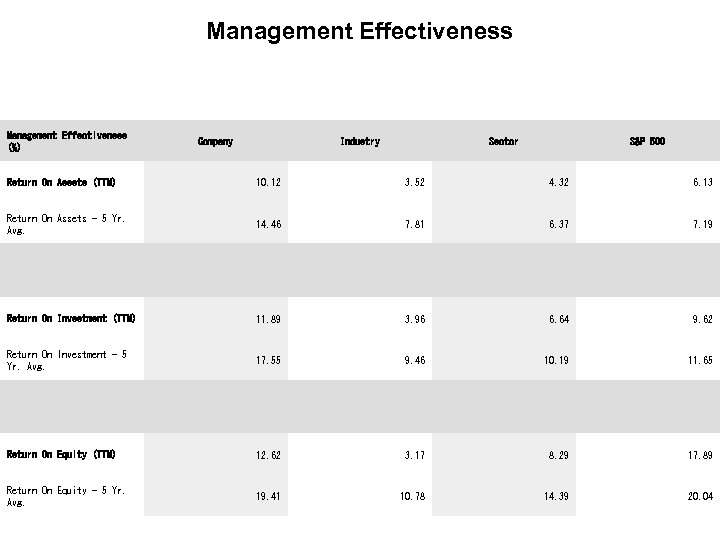
Management Effectiveness (%) Company Industry Sector S&P 500 Return On Assets (TTM) 10. 12 3. 52 4. 32 6. 13 Return On Assets - 5 Yr. Avg. 14. 46 7. 81 6. 37 7. 19 Return On Investment (TTM) 11. 89 3. 96 6. 64 9. 62 Return On Investment - 5 Yr. Avg. 17. 55 9. 46 10. 19 11. 65 Return On Equity (TTM) 12. 62 3. 17 8. 29 17. 89 Return On Equity - 5 Yr. Avg. 19. 41 10. 78 14. 39 20. 04

F/S Review
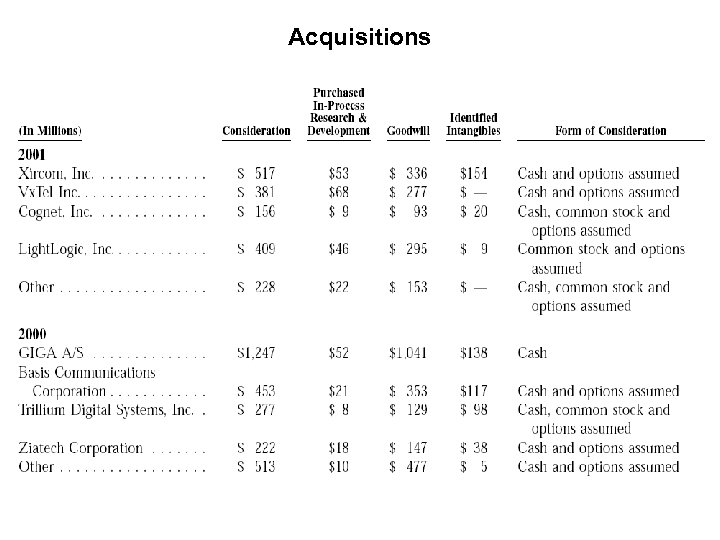
Acquisitions
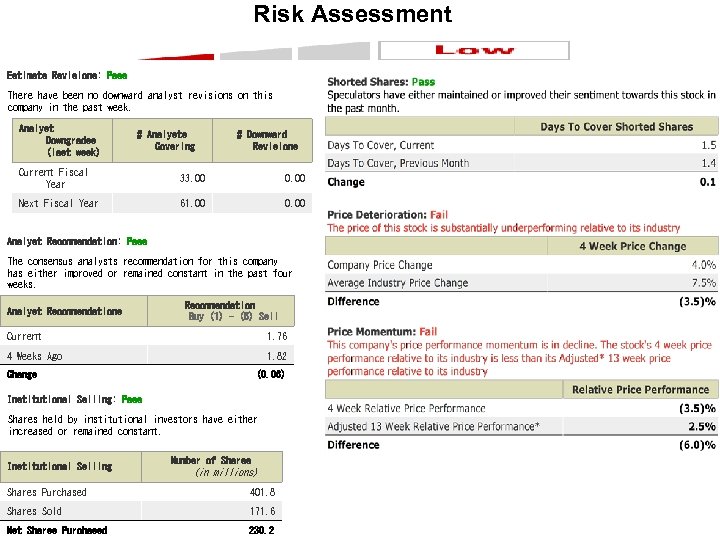
Risk Assessment Estimate Revisions: Pass There have been no downward analyst revisions on this company in the past week. Analyst Downgrades (last week) # Analysts Covering # Downward Revisions Current Fiscal Year 33. 00 0. 00 Next Fiscal Year 61. 00 0. 00 Analyst Recommendation: Pass The consensus analysts recommendation for this company has either improved or remained constant in the past four weeks. Analyst Recommendations Recommendation Buy (1) - (5) Sell Current 1. 76 4 Weeks Ago 1. 82 Change (0. 06) Institutional Selling: Pass Shares held by institutional investors have either increased or remained constant. Institutional Selling Number of Shares (in millions) Shares Purchased 401. 8 Shares Sold 171. 6 Net Shares Purchased 230. 2
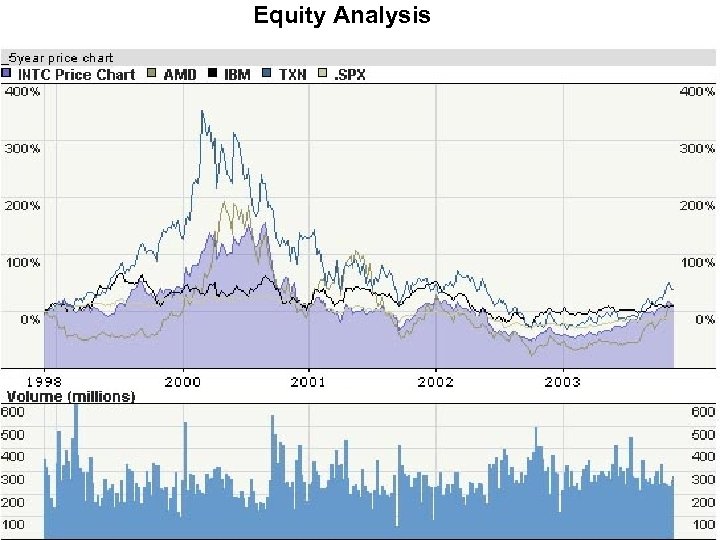
Equity Analysis
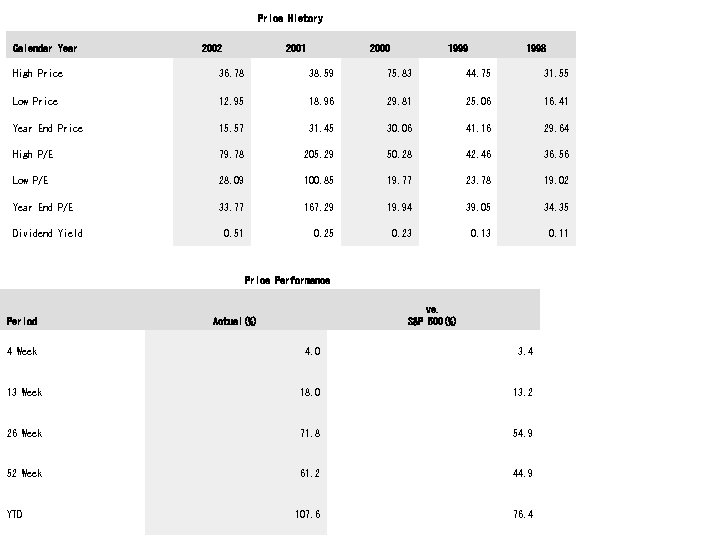
Price History Calendar Year 2002 2001 2000 1999 1998 High Price 36. 78 38. 59 75. 83 44. 75 31. 55 Low Price 12. 95 18. 96 29. 81 25. 06 16. 41 Year End Price 15. 57 31. 45 30. 06 41. 16 29. 64 High P/E 79. 78 205. 29 50. 28 42. 46 36. 56 Low P/E 28. 09 100. 85 19. 77 23. 78 19. 02 Year End P/E 33. 77 167. 29 19. 94 39. 05 34. 35 0. 51 0. 25 0. 23 0. 11 Dividend Yield Price Performance Period vs. S&P 500(%) Actual(%) 4 Week 4. 0 3. 4 13 Week 18. 0 13. 2 26 Week 71. 8 54. 9 52 Week 61. 2 44. 9 107. 6 76. 4 YTD
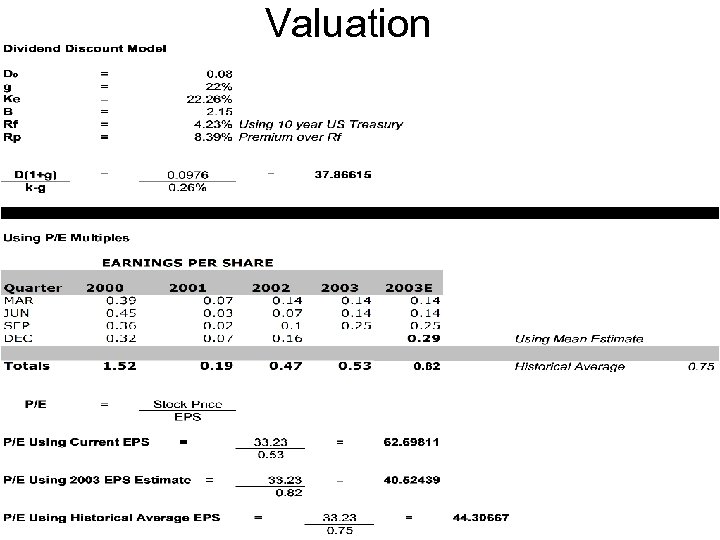
Valuation
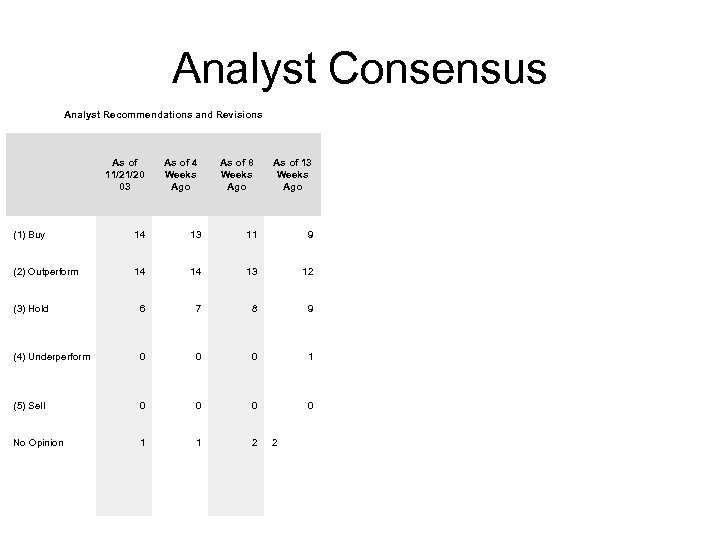
Analyst Consensus Analyst Recommendations and Revisions As of 11/21/20 03 As of 4 Weeks Ago As of 8 Weeks Ago As of 13 Weeks Ago (1) Buy 14 13 11 9 (2) Outperform 14 14 13 12 (3) Hold 6 7 8 9 (4) Underperform 0 0 0 1 (5) Sell 0 0 No Opinion 1 1 2 2
RECOMENDATION BUY/STRONG BUY -Appears to be undervalued using discounting/multiple analysis -Industry consensus -Future growth prospects are high
Advanced Micro Devices (AMD)
Background • Global supplier of integrated circuits (IC) o Personal, network computer and communications • Founded in 1969, based in Sunnyvale, California • Facilities in US, Europe, Japan and Asia • S&P’s 500 • Stock Symbol: NYSE: AMD
Background Cont’d • 2002 Revenue: $2. 7 Billion • Total Asset: $ 5. 6 Billion • 79% of sales is International (Up to 3 rd quarter 2003)
Core Products Segment • PC Processors • Flash Memory Devices –cellular telephones, networking equipment electrically rewritten • Integrated Circuits (ICs)
Foundry Services Segment • Fees for products sold to Vantis and Legerity • No longer manufacture products for Legerity or Vantis • Sell products previously manufactured to Vantis through 3 rd quarter of 2003
R&D • Microprocessors o 180 nanometer process technology 130 nanometer process technology o AMD Athlon XP Processor • Flash memory products o 130 nanometer process technology
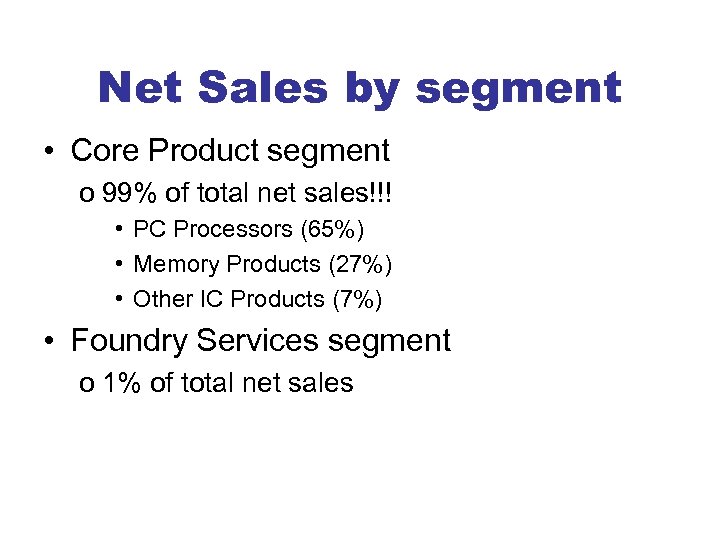
Net Sales by segment • Core Product segment o 99% of total net sales!!! • PC Processors (65%) • Memory Products (27%) • Other IC Products (7%) • Foundry Services segment o 1% of total net sales
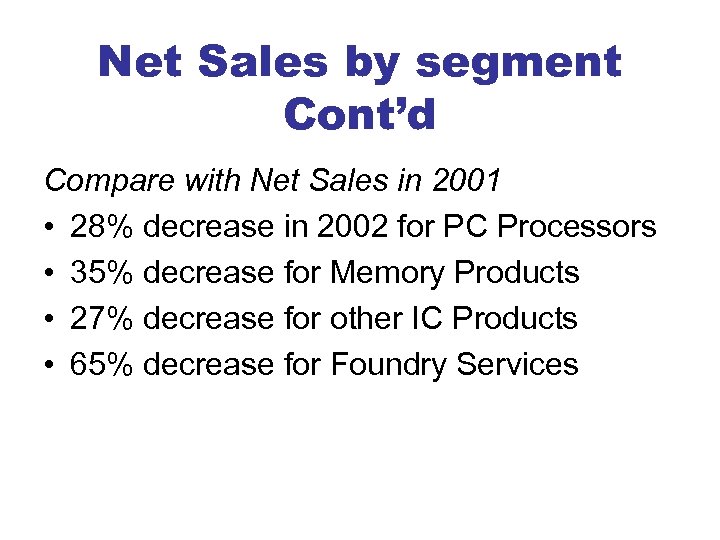
Net Sales by segment Cont’d Compare with Net Sales in 2001 • 28% decrease in 2002 for PC Processors • 35% decrease for Memory Products • 27% decrease for other IC Products • 65% decrease for Foundry Services
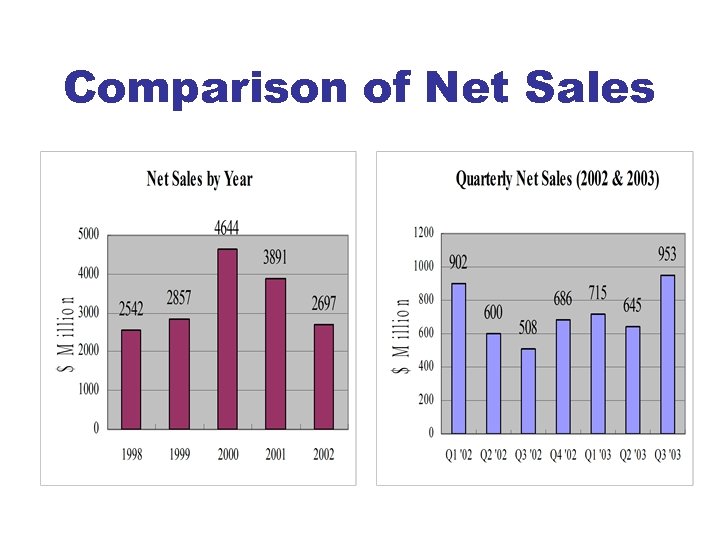
Comparison of Net Sales
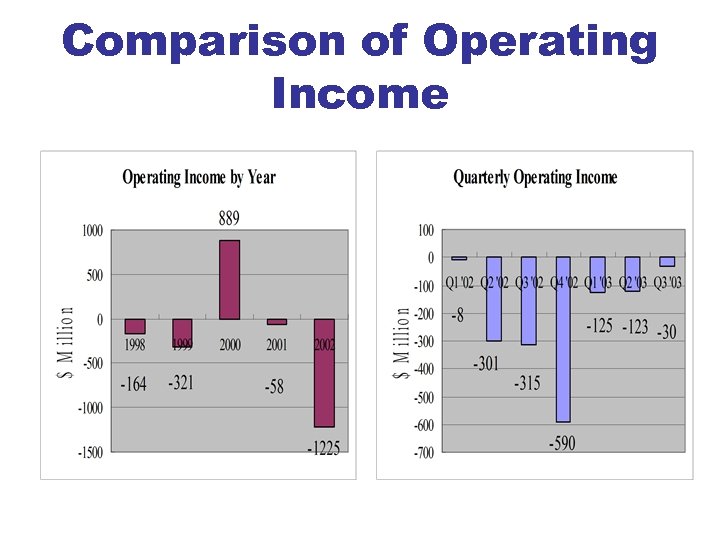
Comparison of Operating Income
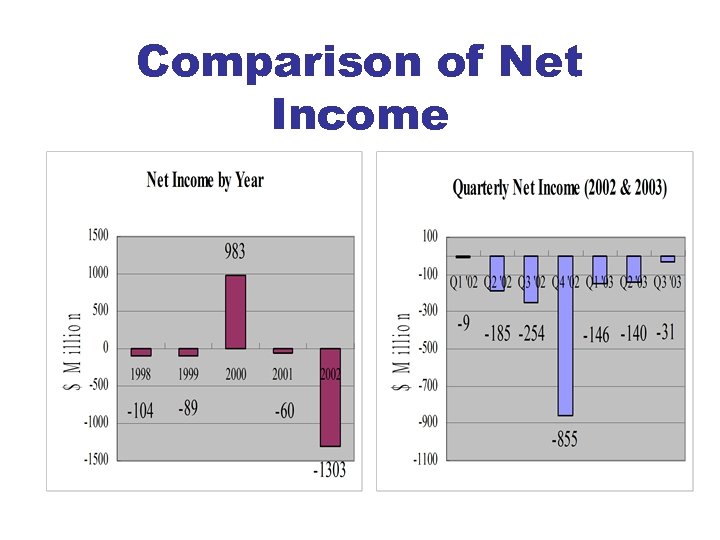
Comparison of Net Income
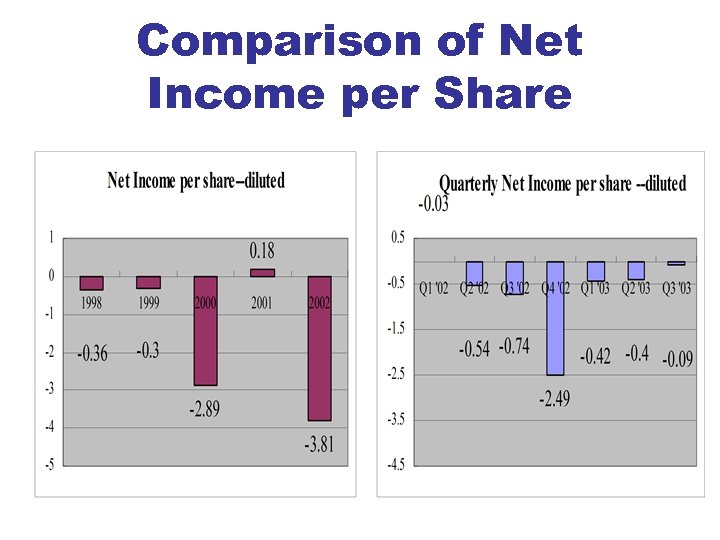
Comparison of Net Income per Share
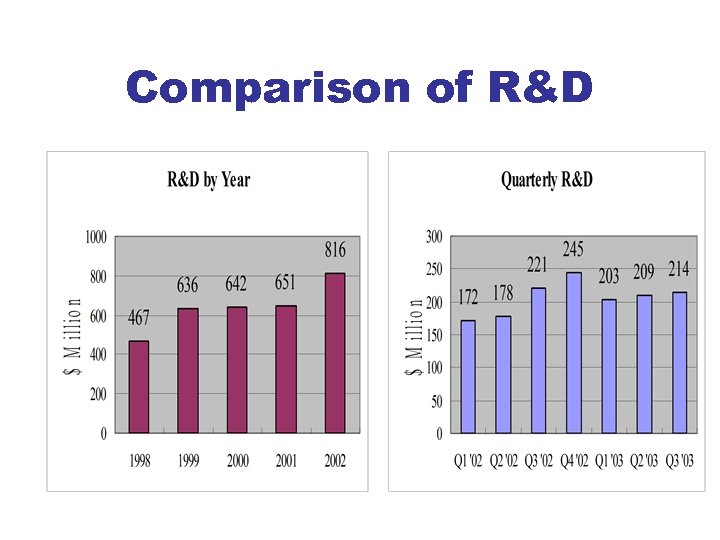
Comparison of R&D
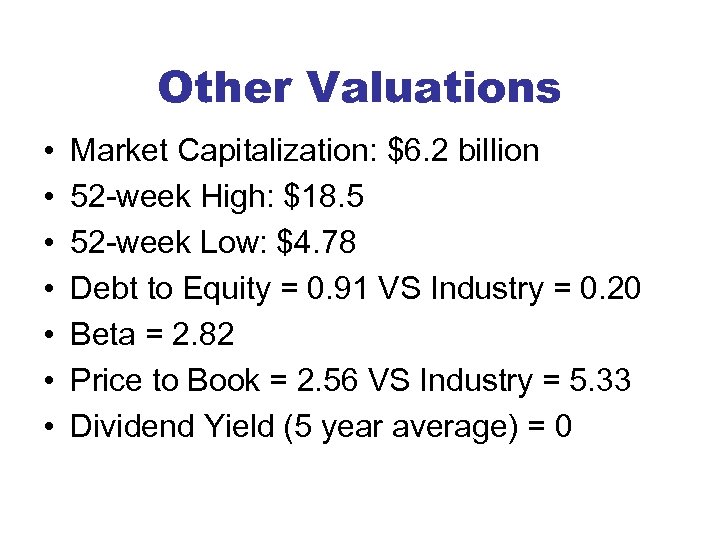
Other Valuations • • Market Capitalization: $6. 2 billion 52 -week High: $18. 5 52 -week Low: $4. 78 Debt to Equity = 0. 91 VS Industry = 0. 20 Beta = 2. 82 Price to Book = 2. 56 VS Industry = 5. 33 Dividend Yield (5 year average) = 0
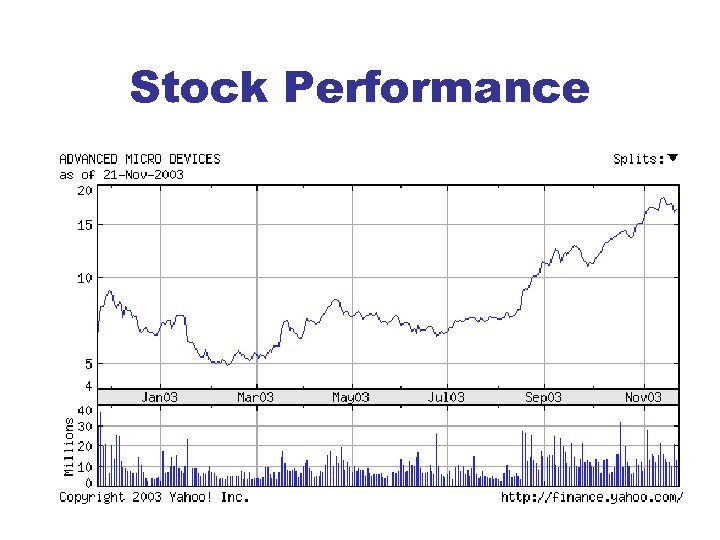
Stock Performance
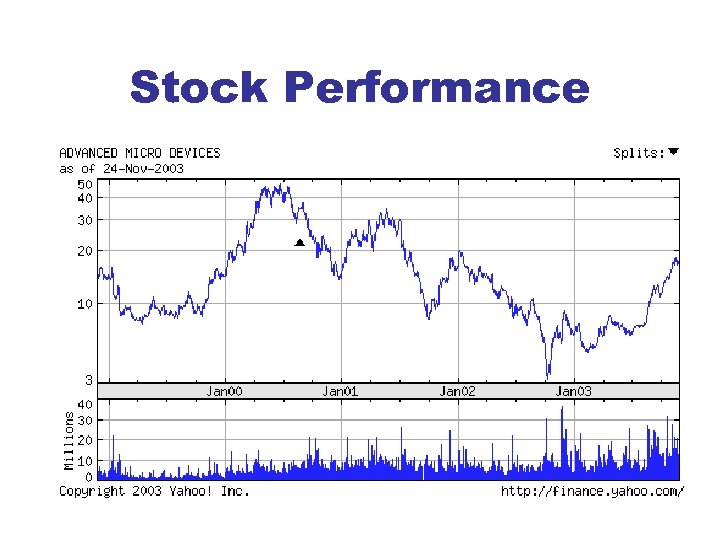
Stock Performance
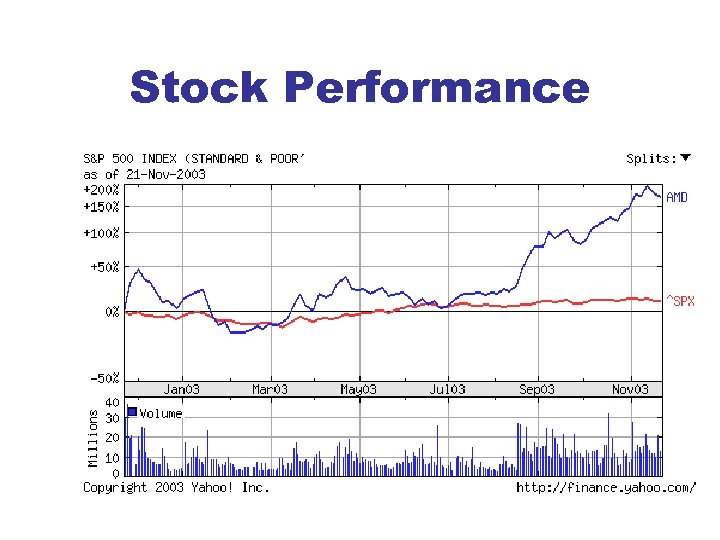
Stock Performance
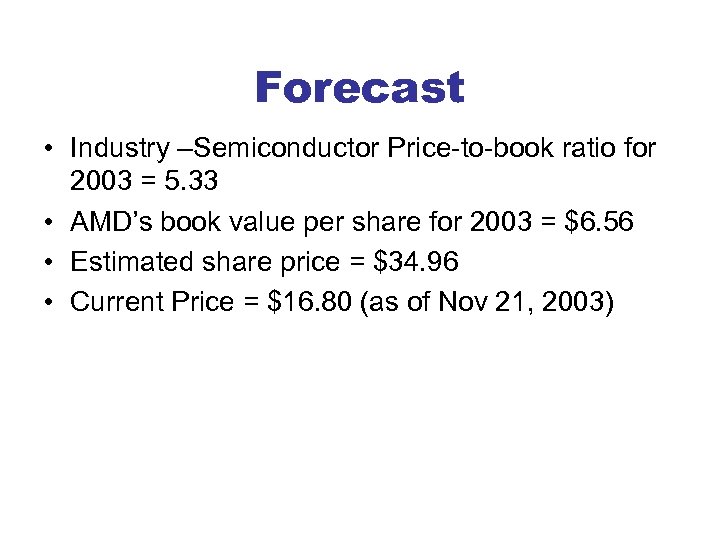
Forecast • Industry –Semiconductor Price-to-book ratio for 2003 = 5. 33 • AMD’s book value per share for 2003 = $6. 56 • Estimated share price = $34. 96 • Current Price = $16. 80 (as of Nov 21, 2003)
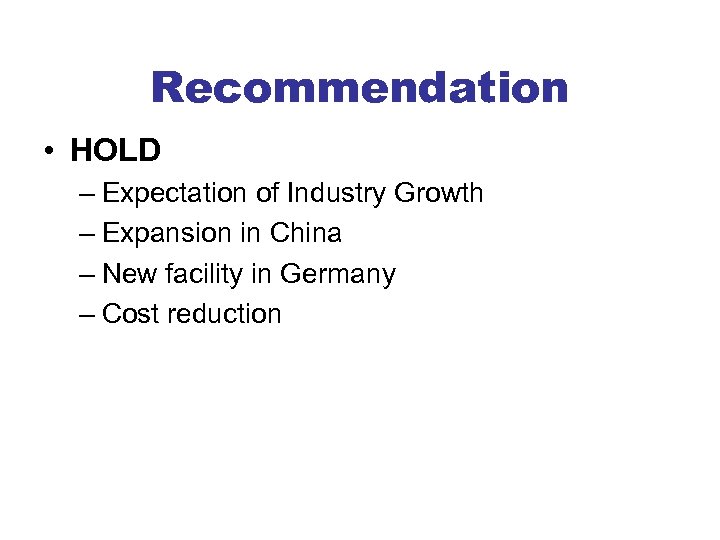
Recommendation • HOLD – Expectation of Industry Growth – Expansion in China – New facility in Germany – Cost reduction

Applied Materials
Questions to Answer 1. Is Applied Materials a Great Company? 2. Are the company’s shares selling at a good price?
Company Overview • World’s largest maker of semiconductor production equipment • Top customer: Intel - 10. 1% of sales
Management Overview • CEO: Michael Splinter – Named CEO in April 2003 – 20 years at Intel – Executive Vice President • Formerly, all 5 top executives had been with Applied for 19+ years
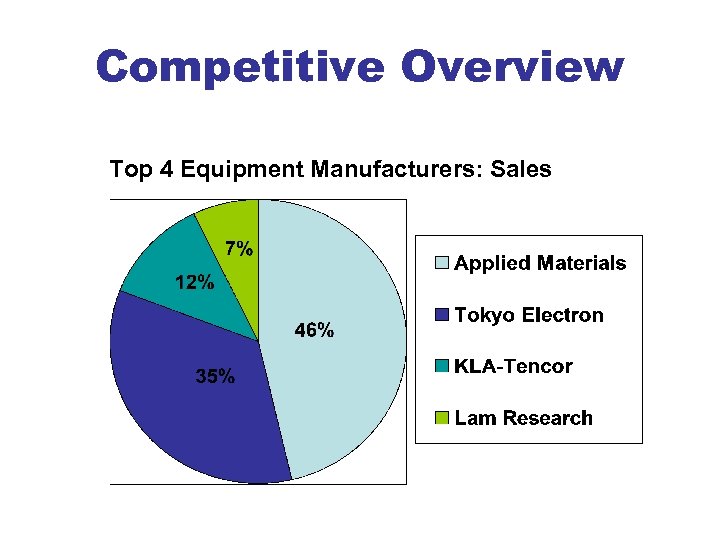
Competitive Overview Top 4 Equipment Manufacturers: Sales
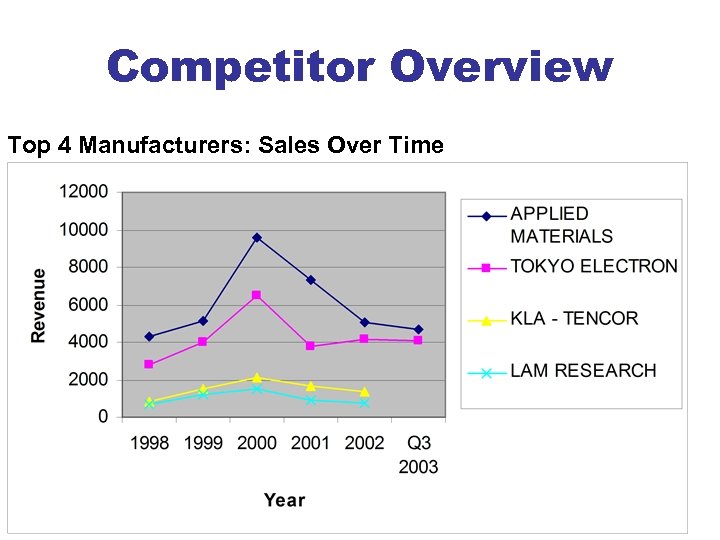
Competitor Overview Top 4 Manufacturers: Sales Over Time
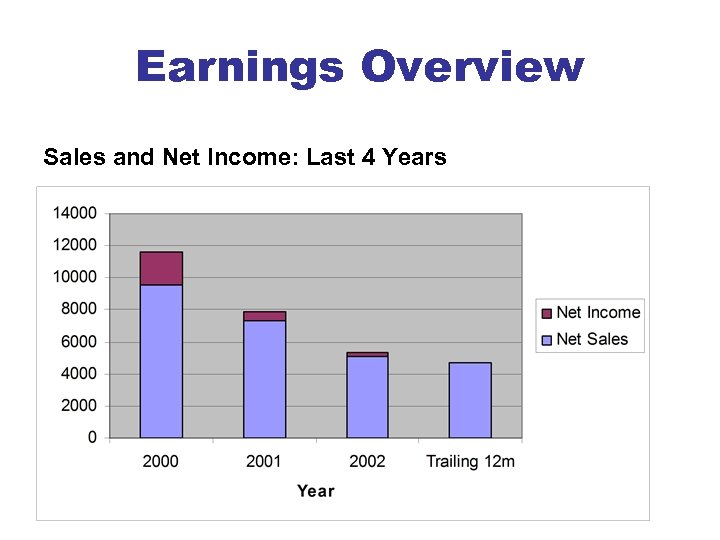
Earnings Overview Sales and Net Income: Last 4 Years
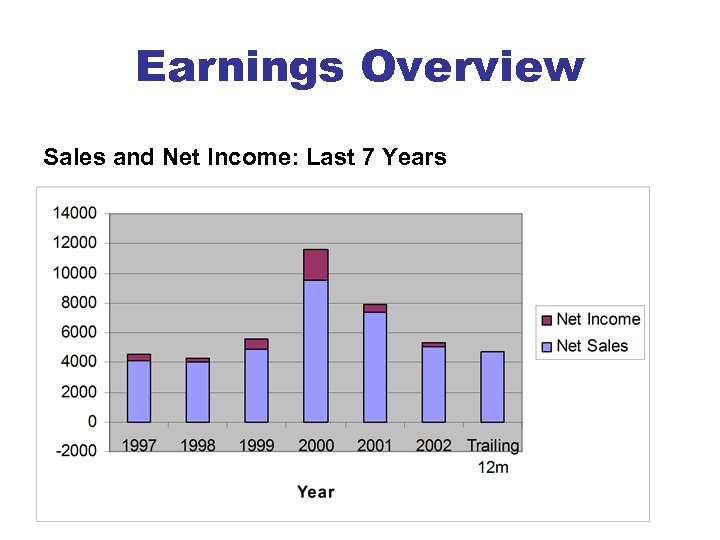
Earnings Overview Sales and Net Income: Last 7 Years
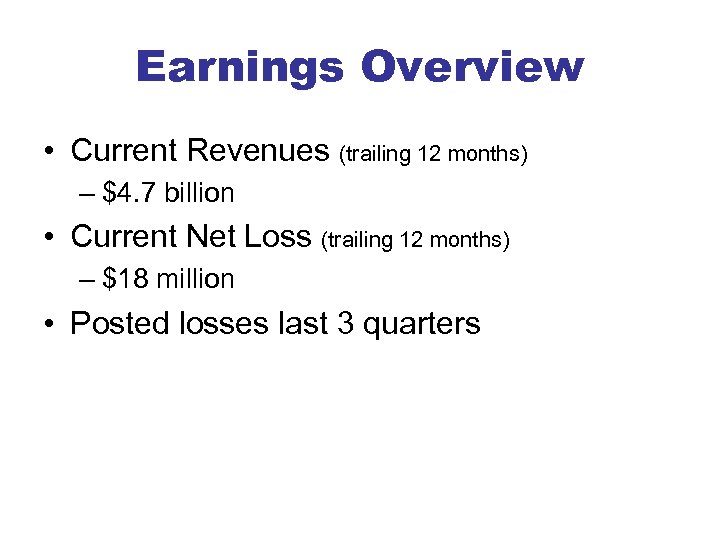
Earnings Overview • Current Revenues (trailing 12 months) – $4. 7 billion • Current Net Loss (trailing 12 months) – $18 million • Posted losses last 3 quarters
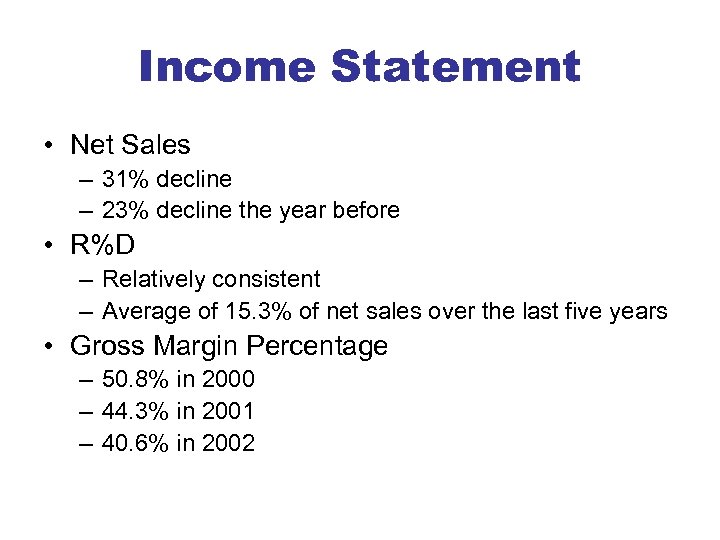
Income Statement • Net Sales – 31% decline – 23% decline the year before • R%D – Relatively consistent – Average of 15. 3% of net sales over the last five years • Gross Margin Percentage – 50. 8% in 2000 – 44. 3% in 2001 – 40. 6% in 2002
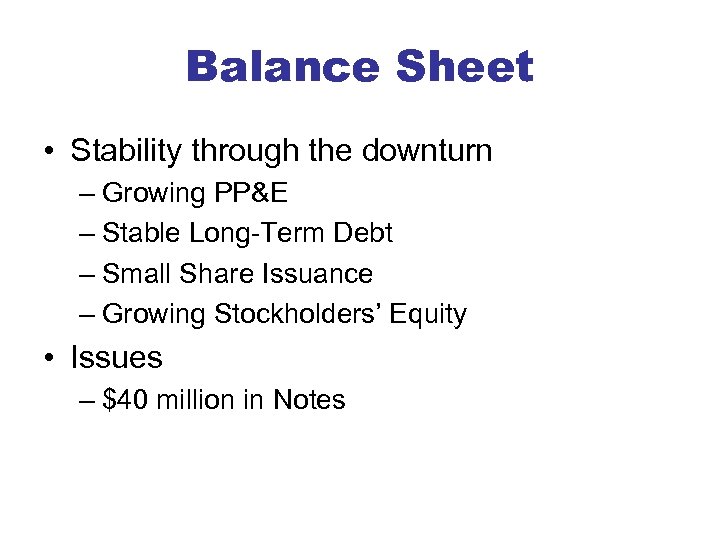
Balance Sheet • Stability through the downturn – Growing PP&E – Stable Long-Term Debt – Small Share Issuance – Growing Stockholders’ Equity • Issues – $40 million in Notes
Cash Flow Statement • Depleting inventories • $57 million in new debt • Stock repurchases to offset stock options
Great Company? …I believe Applied’s past performance and market share make it a great company. • Are Applied’s shares selling at an appropriate price?
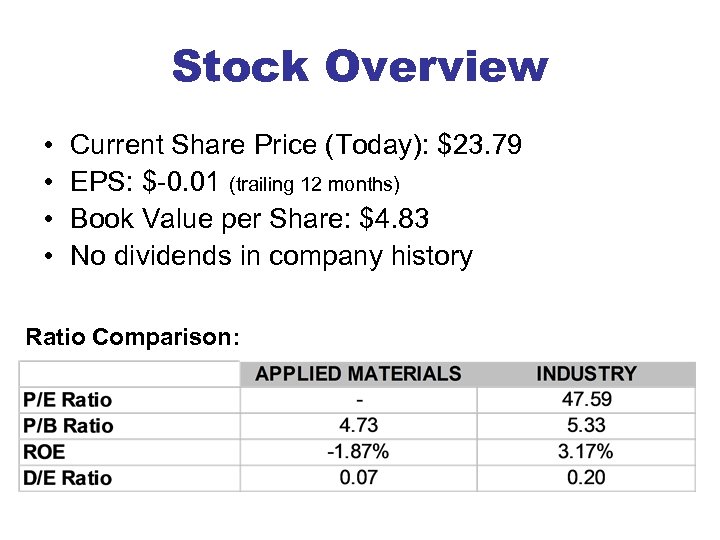
Stock Overview • • Current Share Price (Today): $23. 79 EPS: $-0. 01 (trailing 12 months) Book Value per Share: $4. 83 No dividends in company history Ratio Comparison:
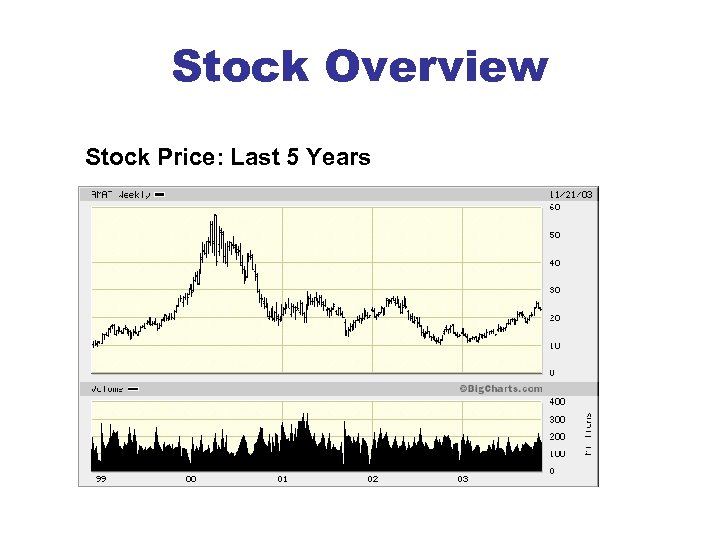
Stock Overview Stock Price: Last 5 Years
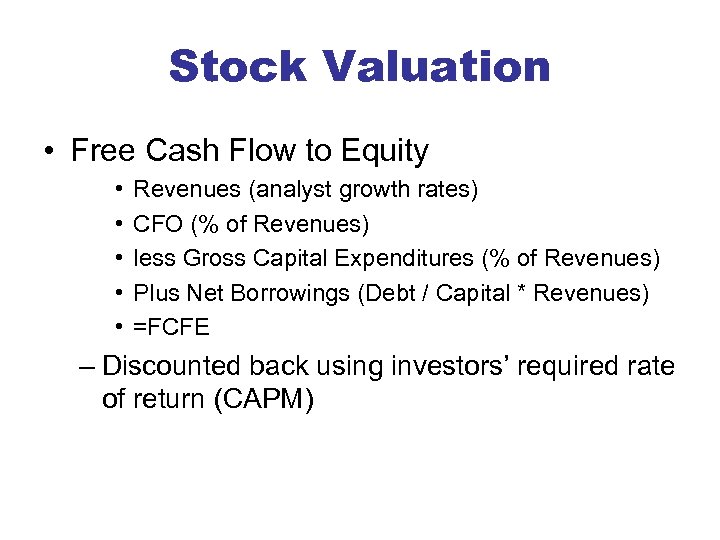
Stock Valuation • Free Cash Flow to Equity • • • Revenues (analyst growth rates) CFO (% of Revenues) less Gross Capital Expenditures (% of Revenues) Plus Net Borrowings (Debt / Capital * Revenues) =FCFE – Discounted back using investors’ required rate of return (CAPM)
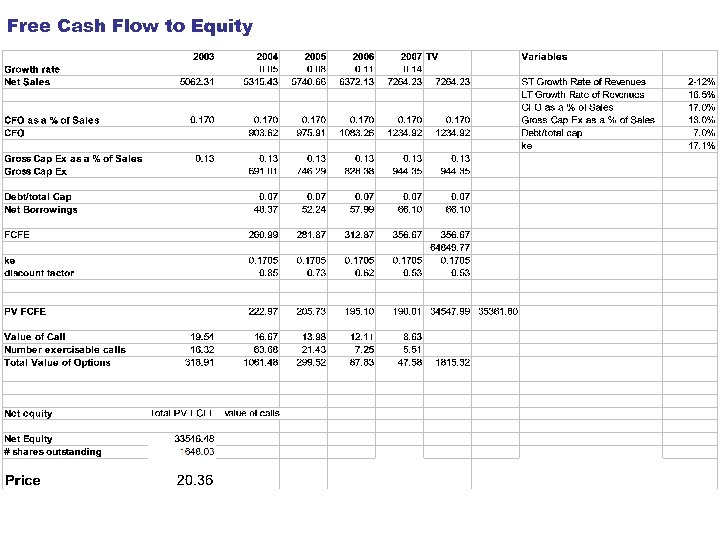
Free Cash Flow to Equity
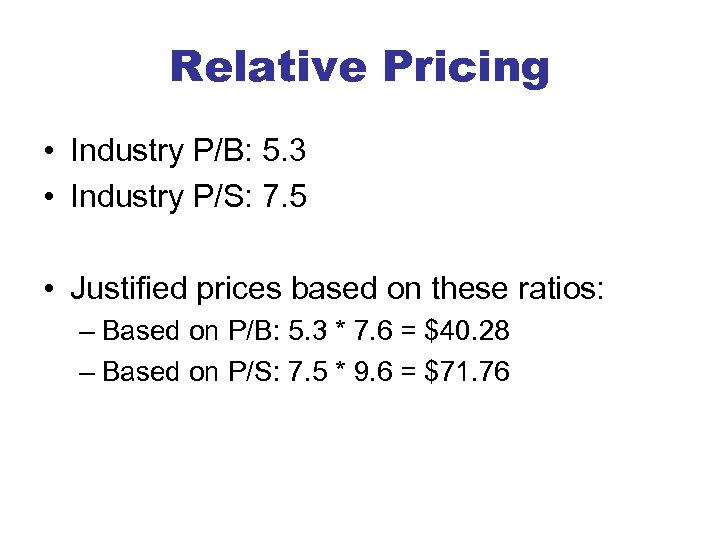
Relative Pricing • Industry P/B: 5. 3 • Industry P/S: 7. 5 • Justified prices based on these ratios: – Based on P/B: 5. 3 * 7. 6 = $40. 28 – Based on P/S: 7. 5 * 9. 6 = $71. 76
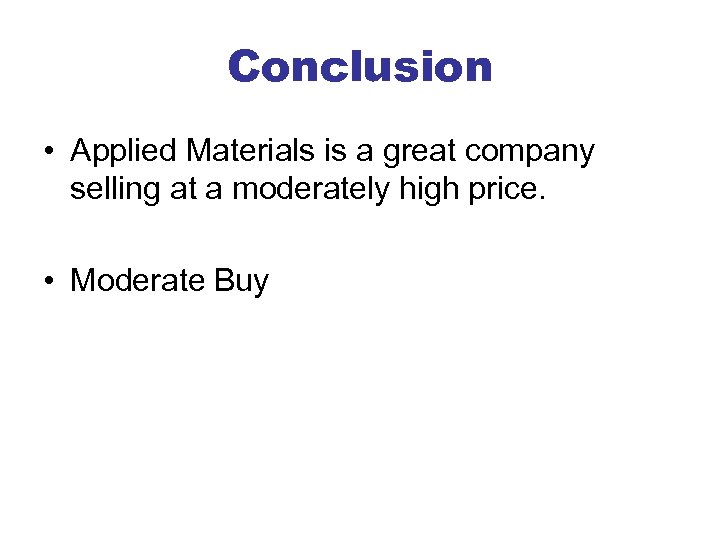
Conclusion • Applied Materials is a great company selling at a moderately high price. • Moderate Buy
Скачать презентацию Semiconductors Manraj Aujla Winky Cheung Puneesh Lamba Shane
f593dc195974e8301b2c4c3140aa8f2f.ppt