


 Скачать презентацию Semiconductor lasers What s next Grigorii Sokolovskii Ioffe Institute
ac52c4ef8ddf5d31ecdd317d4218e141.ppt
- Количество слайдов: 109
 Semiconductor lasers: What's next? Grigorii Sokolovskii Ioffe Institute, St Petersburg, Russia gs@mail. ioffe. ru
 Outline • Applications of semiconductor lasers. ‘Revolution’ of light. • Basic principles of laser operation (only to remind). • Absorption and gain in semiconductors, inversion of population and conditions for it's achievement. • Rate equations. Lasing threshold. Laser efficiency. • Modulation of the laser signal. Gain clamping. • Fiber-optical applications. DFB and DBR lasers. VCSELs and VECSELS • Waveguide in LD structure. Modes of the waveguide. • Beam-propagation (‘beam-quality’) parameter M 2 and how to measure it. Achieving maximum power density with LDs. • Interference focusing of LD beams. • What’s next? New applications and problems to solve.
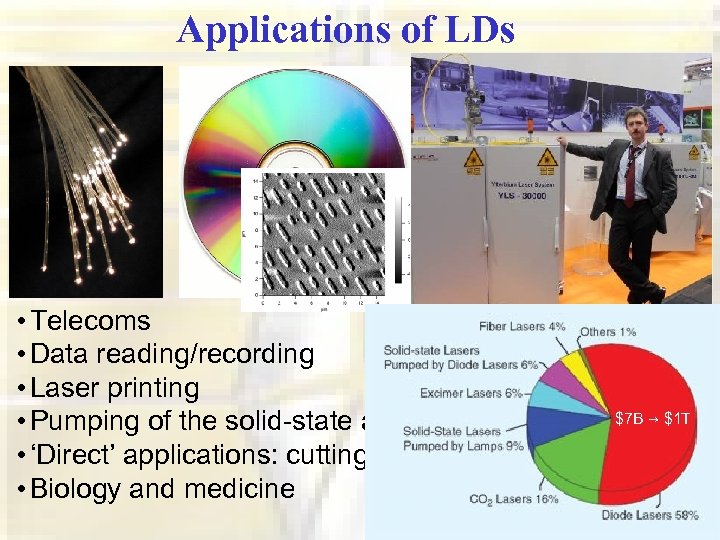 Applications of LDs • Telecoms • Data reading/recording • Laser printing • Pumping of the solid-state and fiber lasers • ‘Direct’ applications: cutting/drilling/welding • Biology and medicine $7 B → $1 T
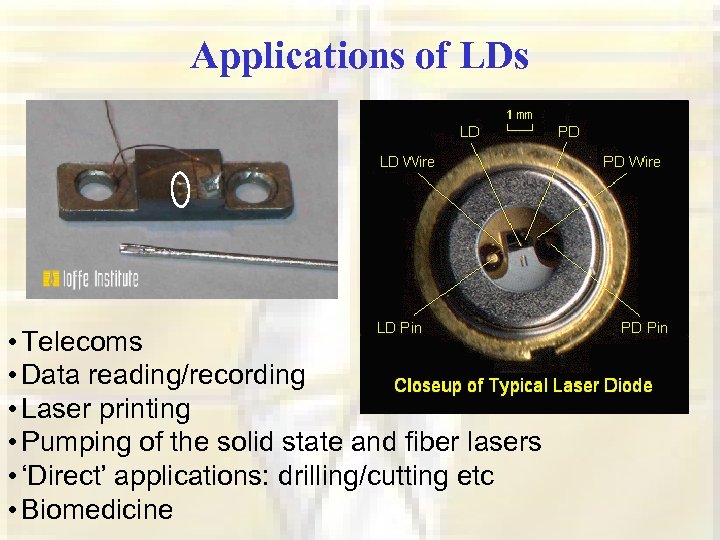 Applications of LDs • Telecoms • Data reading/recording • Laser printing • Pumping of the solid state and fiber lasers • ‘Direct’ applications: drilling/cutting etc • Biomedicine
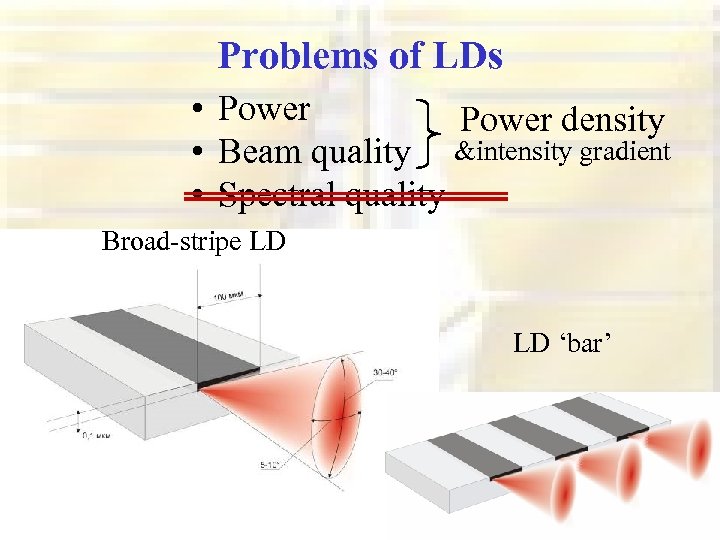
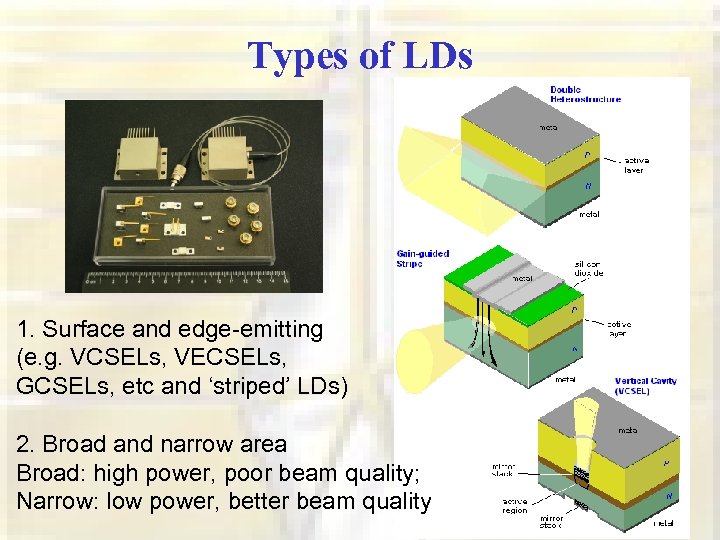 Types of LDs 1. Surface and edge-emitting (e. g. VCSELs, VECSELs, GCSELs, etc and ‘striped’ LDs) 2. Broad and narrow area Broad: high power, poor beam quality; Narrow: low power, better beam quality
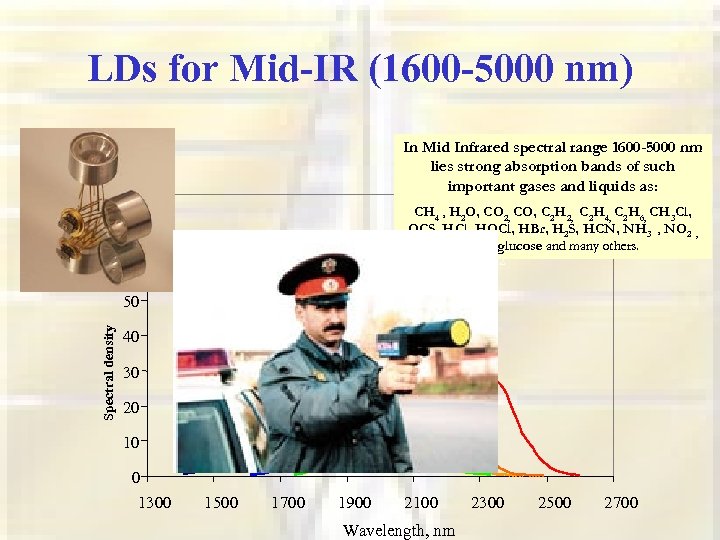 m. W/nm LDs for Mid-IR (1600 -5000 nm) In Mid Infrared spectral range 1600 -5000 nm lies strong absorption bands of such important gases and liquids as: 80 CH 4 , H 2 O, CO 2, CO, Cf=500 Hz 2 H 4, C 2 H 6, CH 3 Cl, 2 H 2, C LED 20 HCl, HOCl, HBr, H S, HCN, NH , NO OCS, 2 3 2 , SO 2 , glucose and many others. 70 LED 22 60 LED 18 Spectral density 50 40 30 20 10 0 1300 1500 1700 1900 2100 Wavelength, nm 2300 2500 2700
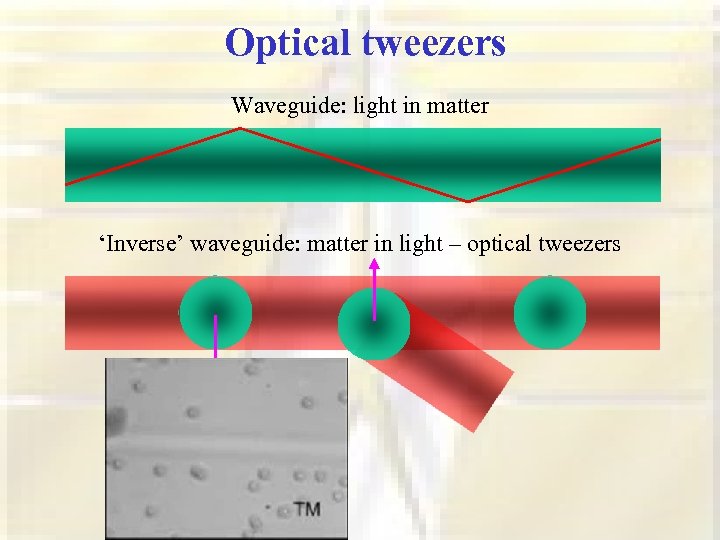 Optical tweezers Waveguide: light in matter ‘Inverse’ waveguide: matter in light – optical tweezers
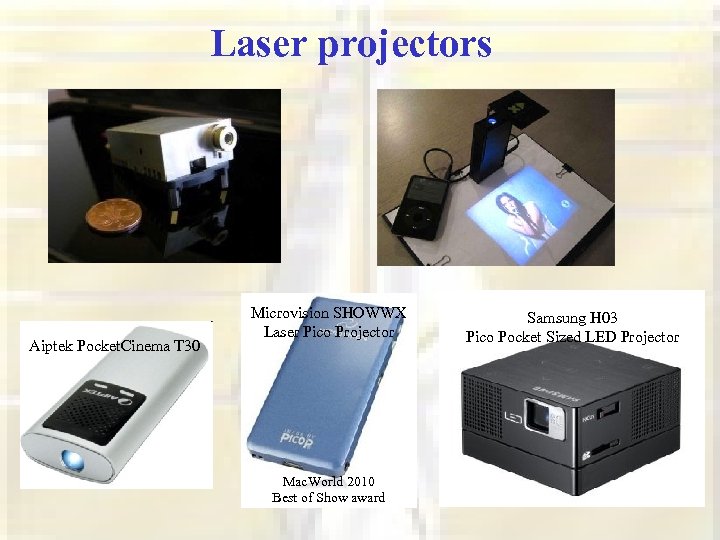 Laser projectors Aiptek Pocket. Cinema T 30 Microvision SHOWWX Laser Pico Projector Mac. World 2010 Best of Show award Samsung H 03 Pico Pocket Sized LED Projector
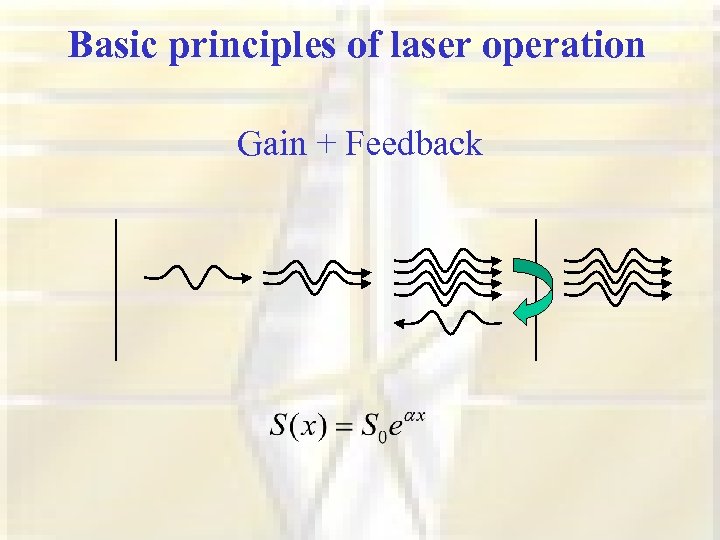 Basic principles of laser operation Gain + Feedback
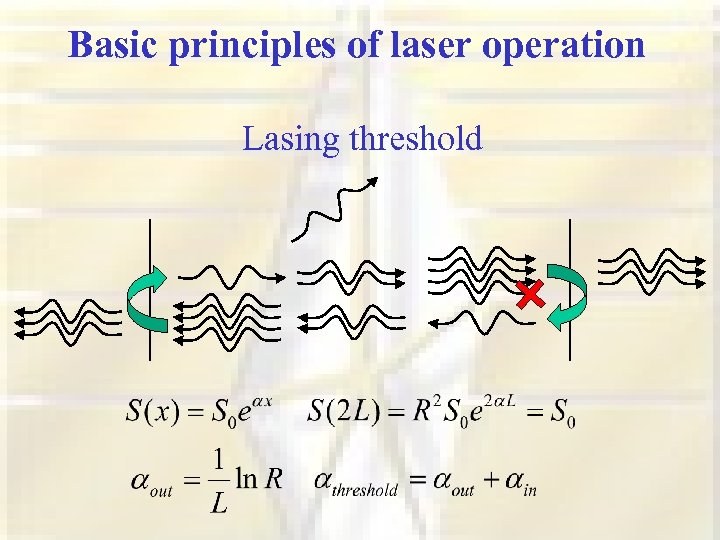 Basic principles of laser operation Lasing threshold
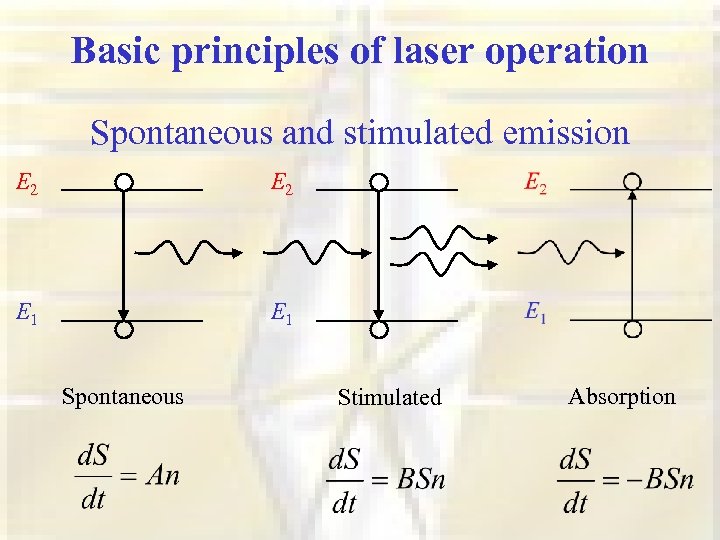 Basic principles of laser operation Spontaneous and stimulated emission E 2 E 1 Spontaneous Stimulated Absorption
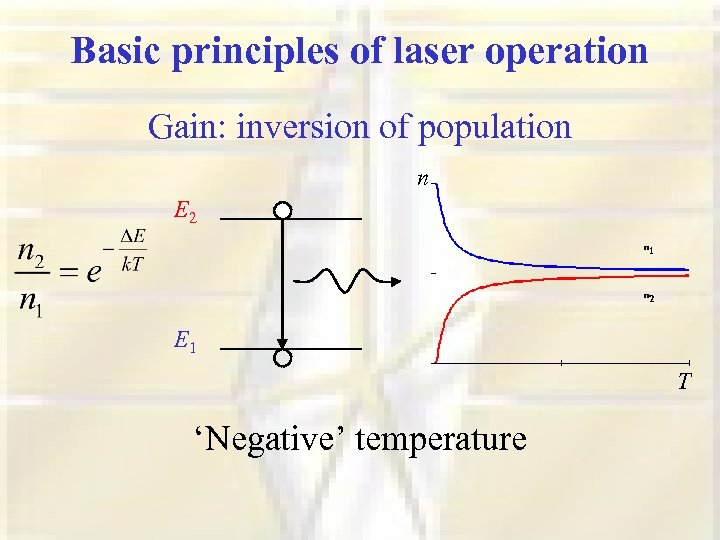 Basic principles of laser operation Gain: inversion of population n E 2 E 1 T ‘Negative’ temperature
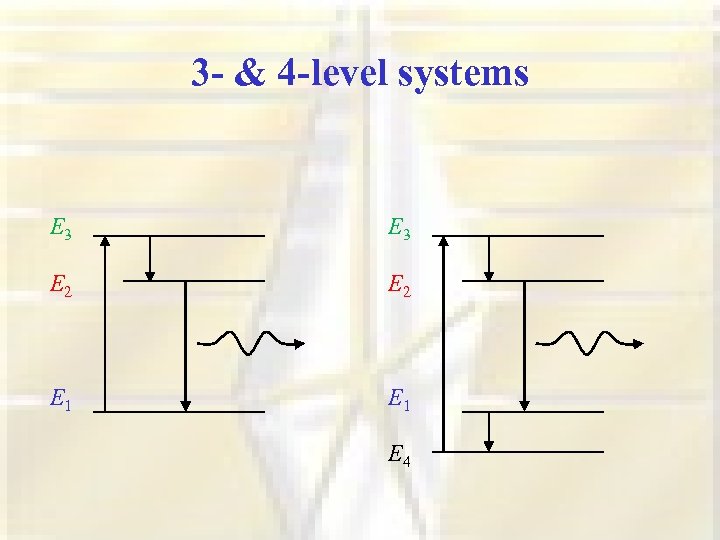 3 - & 4 -level systems E 3 E 2 E 1 E 4
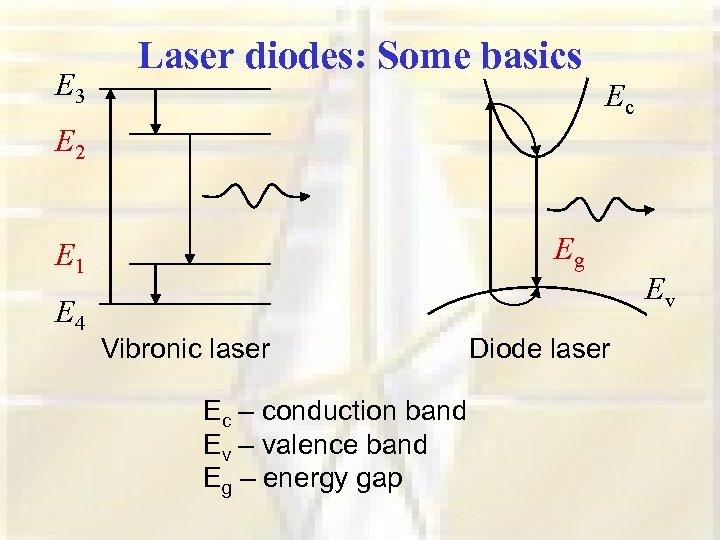 E 3 Laser diodes: Some basics Ec E 2 Eg E 1 E 4 Vibronic laser Ec – conduction band Ev – valence band Eg – energy gap Diode laser Ev
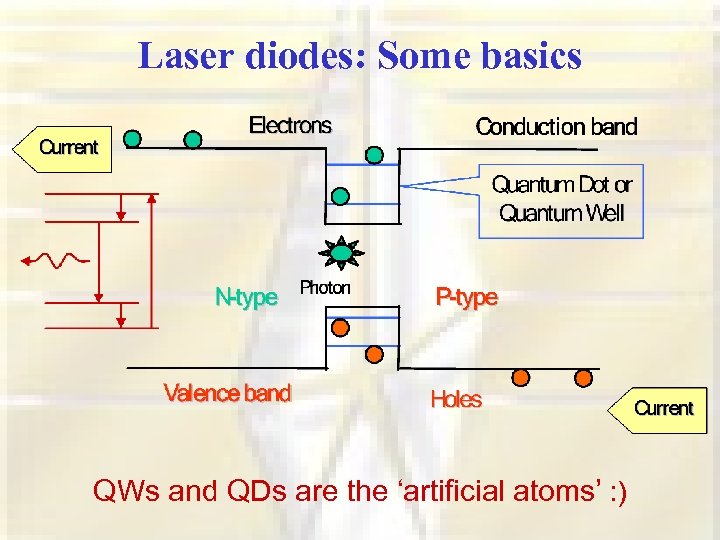 Laser diodes: Some basics QWs and QDs are the ‘artificial atoms’ : )
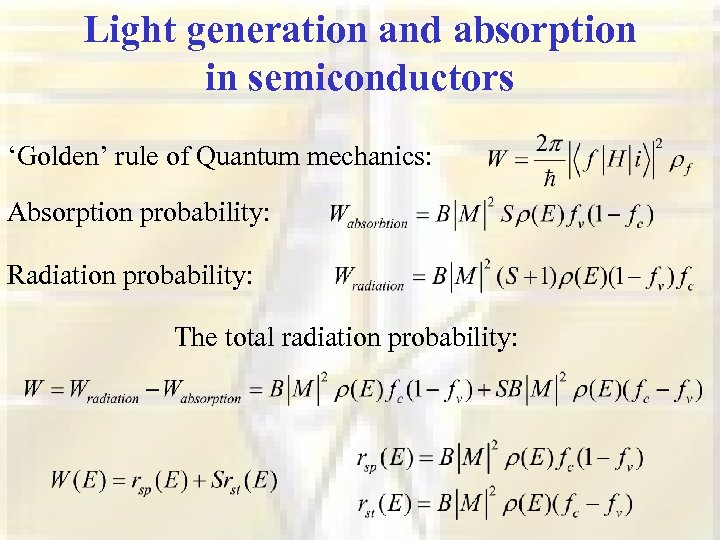 Light generation and absorption in semiconductors ‘Golden’ rule of Quantum mechanics: Absorption probability: Radiation probability: The total radiation probability:
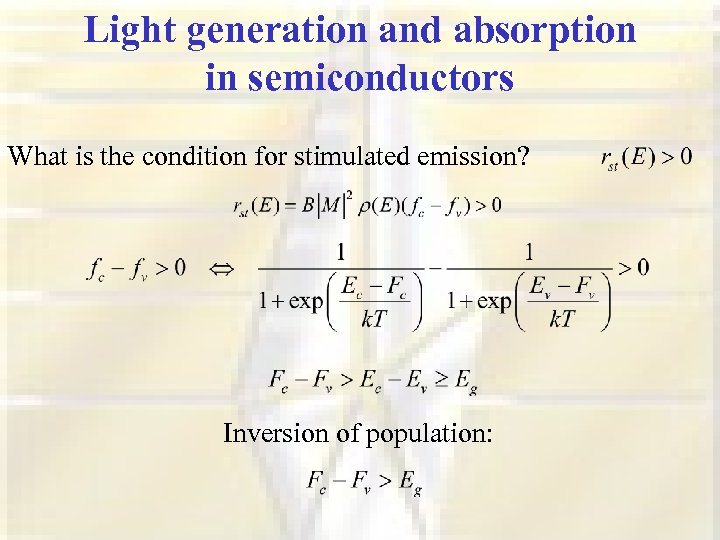 Light generation and absorption in semiconductors What is the condition for stimulated emission? Inversion of population:
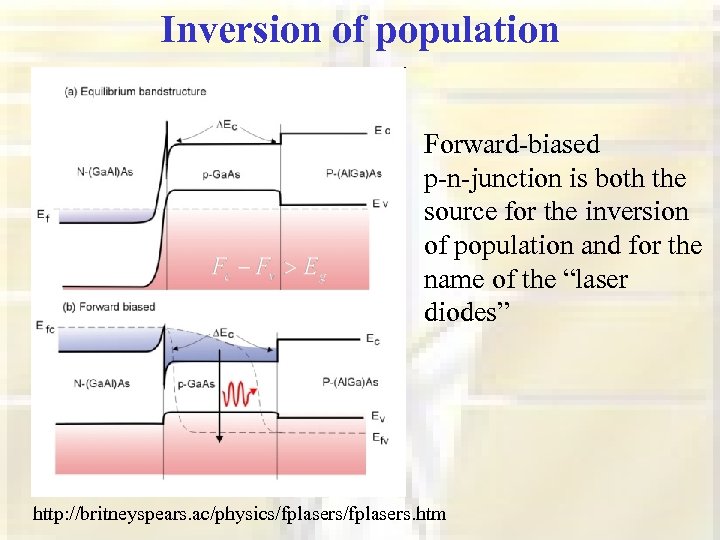 Inversion of population Forward-biased p-n-junction is both the source for the inversion of population and for the name of the “laser diodes” http: //britneyspears. ac/physics/fplasers. htm
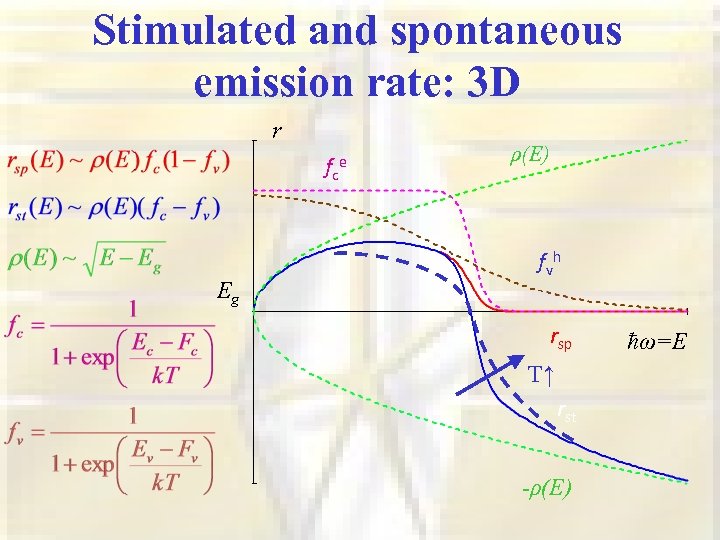 Stimulated and spontaneous emission rate: 3 D r fc e Eg ρ(E) fv h rsp T↑ rst -ρ(E) ћω=E
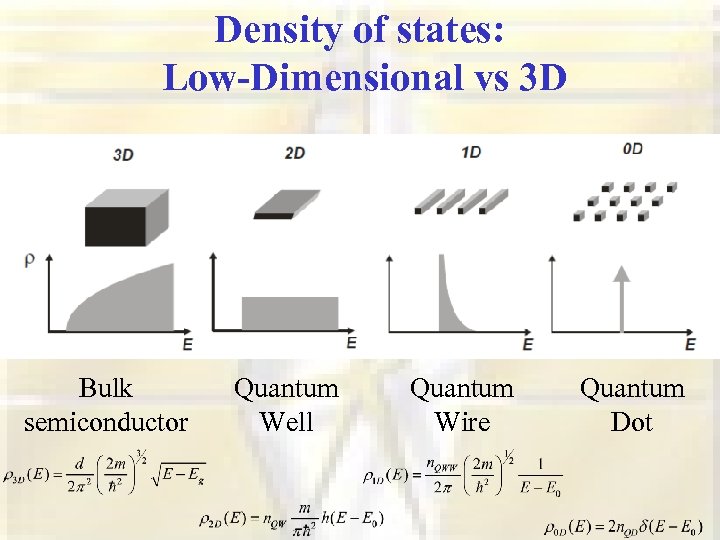 Density of states: Low-Dimensional vs 3 D Bulk semiconductor Quantum Well Quantum Wire Quantum Dot
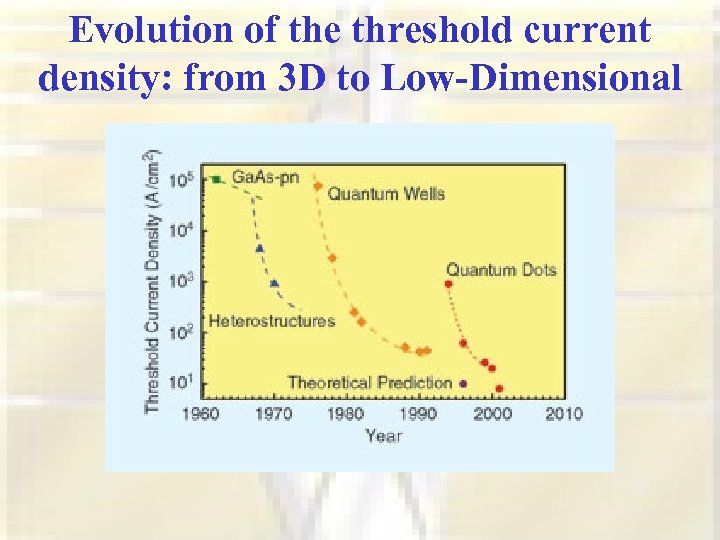 Evolution of the threshold current density: from 3 D to Low-Dimensional
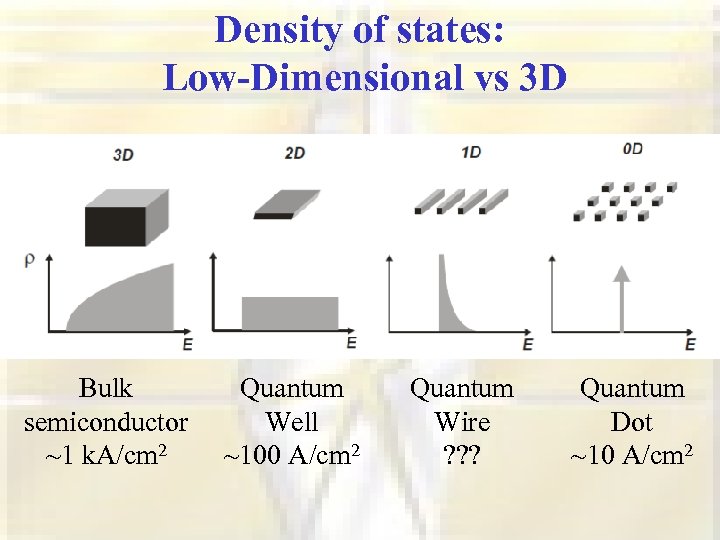 Density of states: Low-Dimensional vs 3 D Bulk semiconductor ~1 k. A/cm 2 Quantum Well ~100 A/cm 2 Quantum Wire ? ? ? Quantum Dot ~10 A/cm 2
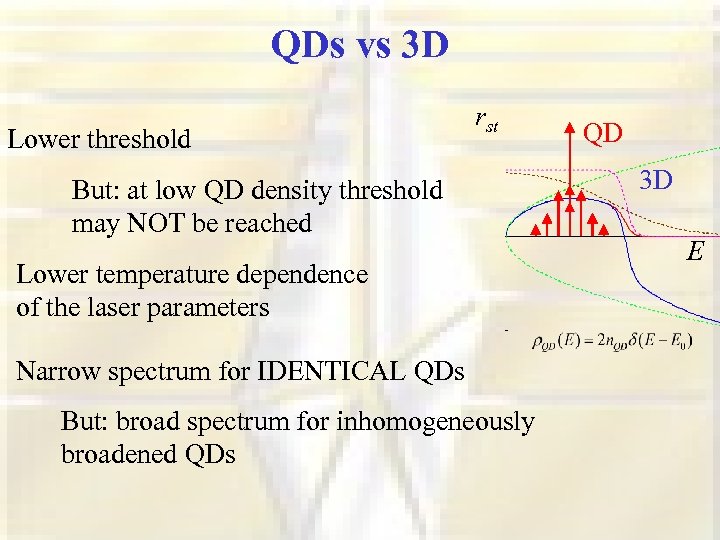 QDs vs 3 D Lower threshold rst But: at low QD density threshold may NOT be reached Lower temperature dependence of the laser parameters Narrow spectrum for IDENTICAL QDs But: broad spectrum for inhomogeneously broadened QDs QD 3 D E
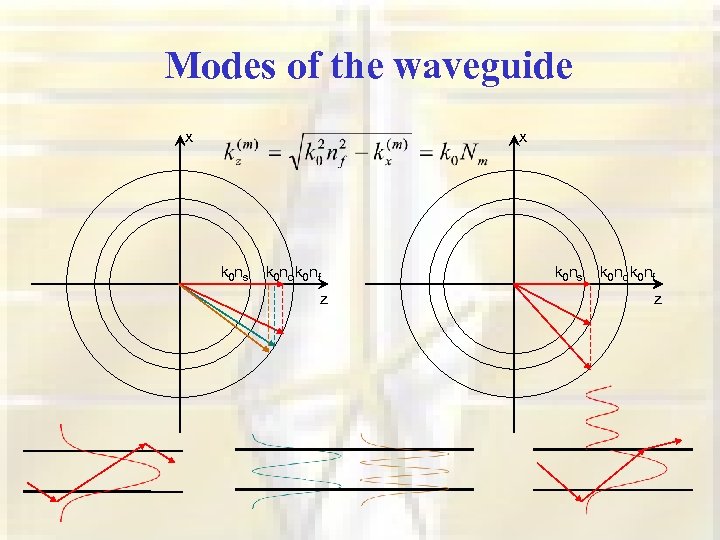
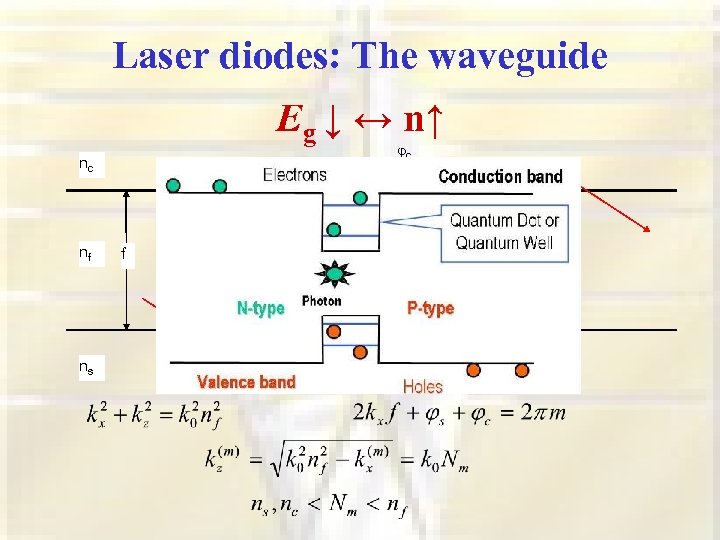 Laser diodes: The waveguide Eg ↓ ↔ n↑ φc nc kx nf ns f k 0 nf kz kxf φs
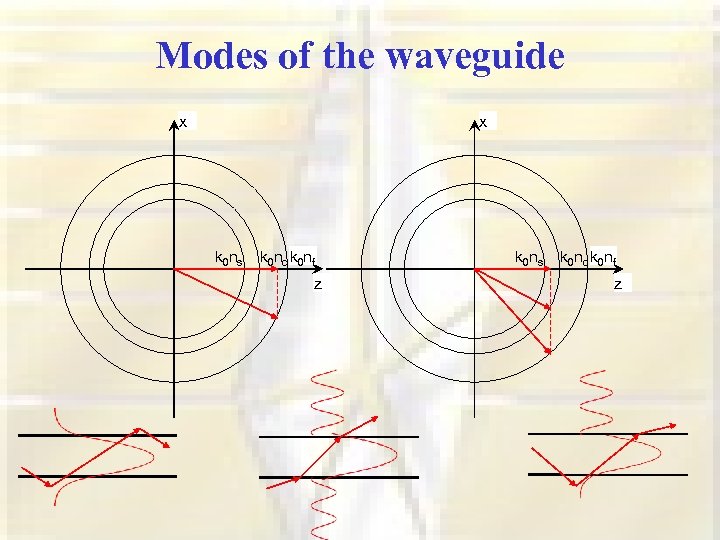 Modes of the waveguide x x k 0 ns k 0 nc k 0 nf z
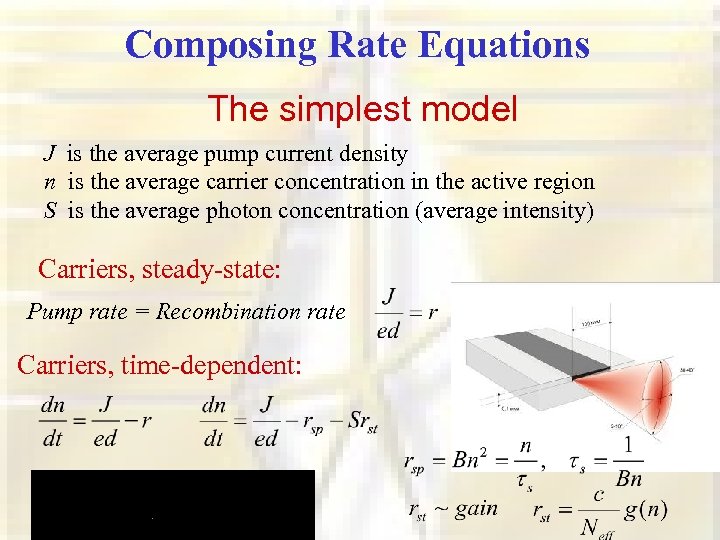 Composing Rate Equations The simplest model J is the average pump current density n is the average carrier concentration in the active region S is the average photon concentration (average intensity) Carriers, steady-state: Pump rate = Recombination rate Carriers, time-dependent:
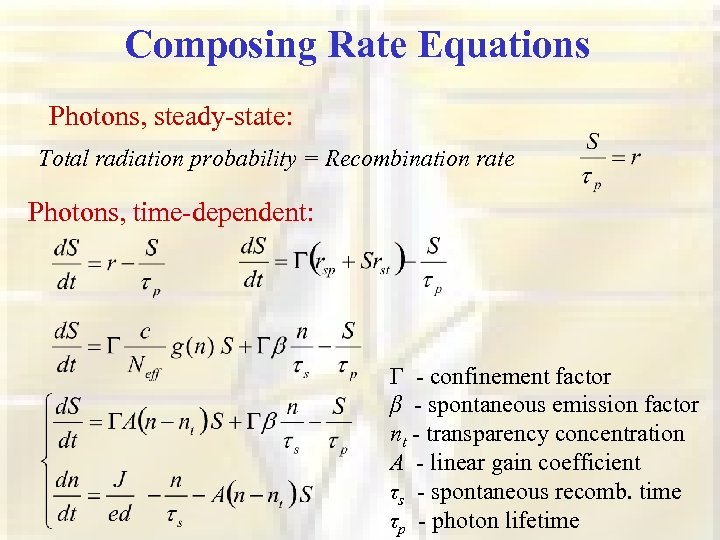 Composing Rate Equations Photons, steady-state: Total radiation probability = Recombination rate Photons, time-dependent: Г - confinement factor β - spontaneous emission factor nt - transparency concentration A - linear gain coefficient τs - spontaneous recomb. time τp - photon lifetime
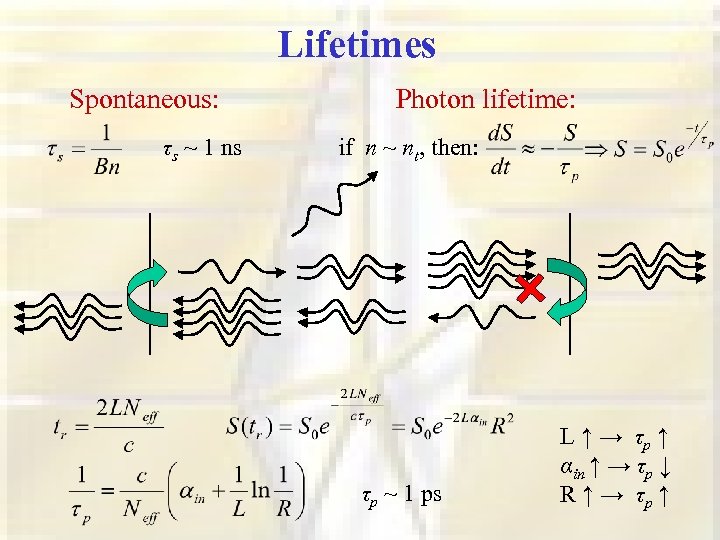 Lifetimes Spontaneous: τs ~ 1 ns Photon lifetime: if n ~ nt, then: τp ~ 1 ps L ↑ → τp ↑ αin ↑ → τp ↓ R ↑ → τp ↑
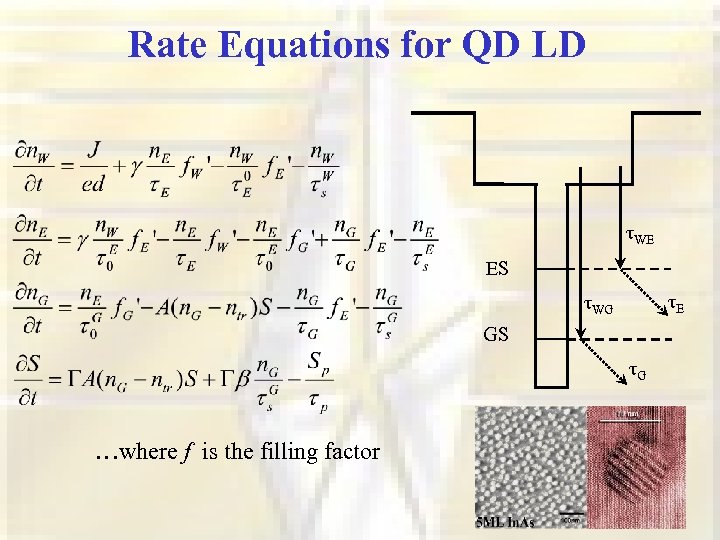 Rate Equations for QD LD τWE ES τE τWG GS τG …where f is the filling factor
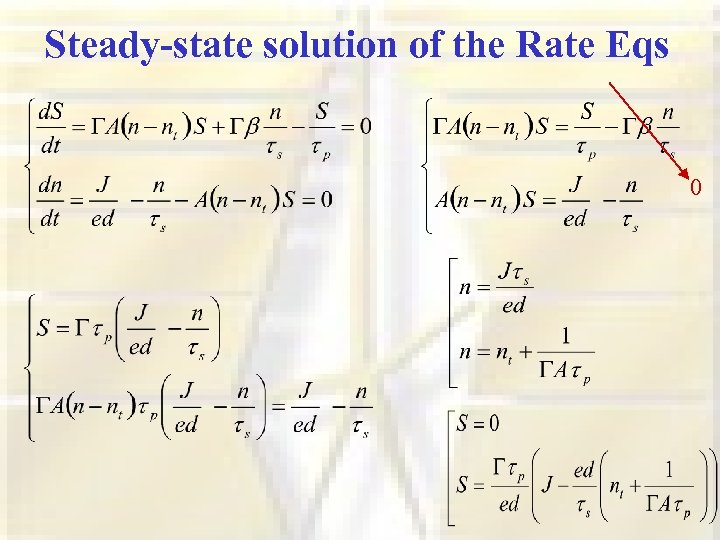 Steady-state solution of the Rate Eqs 0
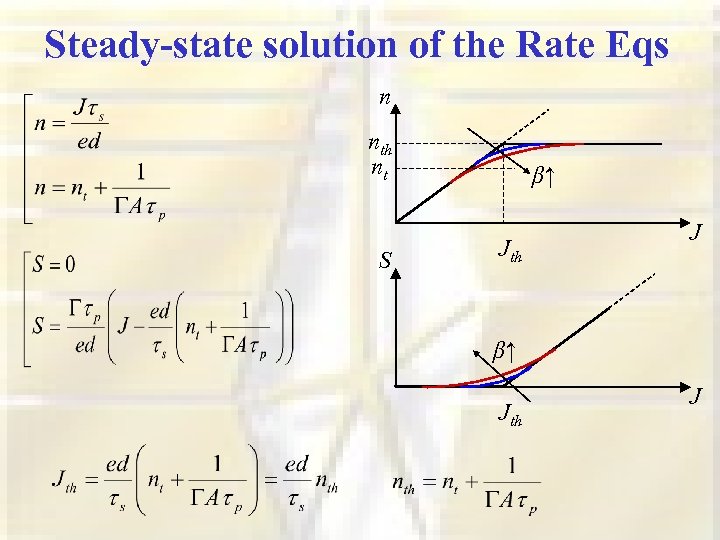 Steady-state solution of the Rate Eqs n nth nt S β↑ Jth J
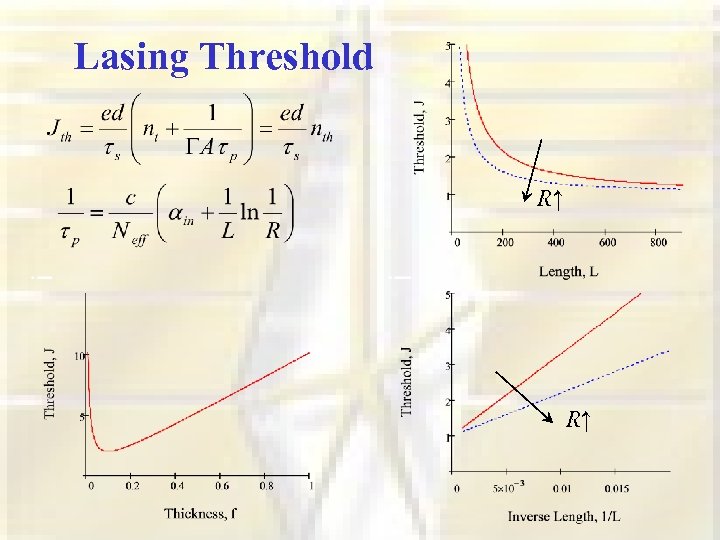 Lasing Threshold R↑ R↑
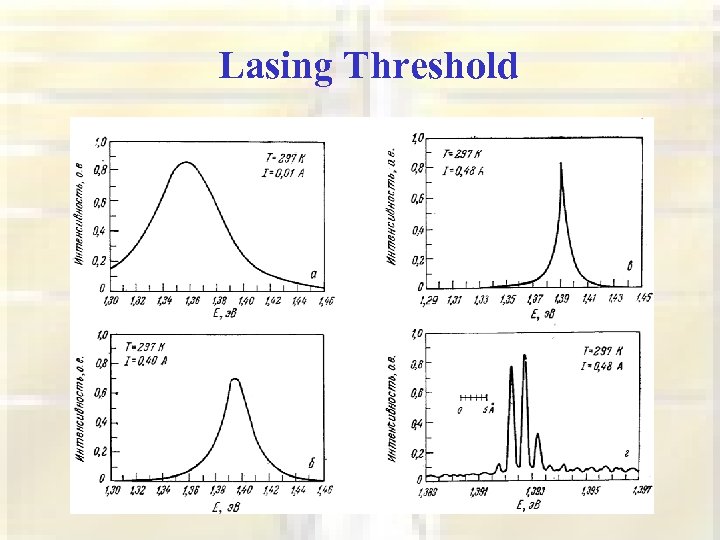 Lasing Threshold
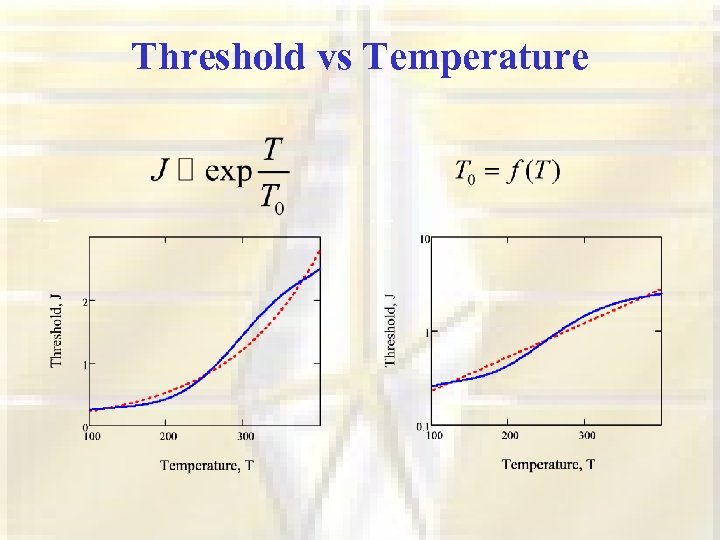 Threshold vs Temperature
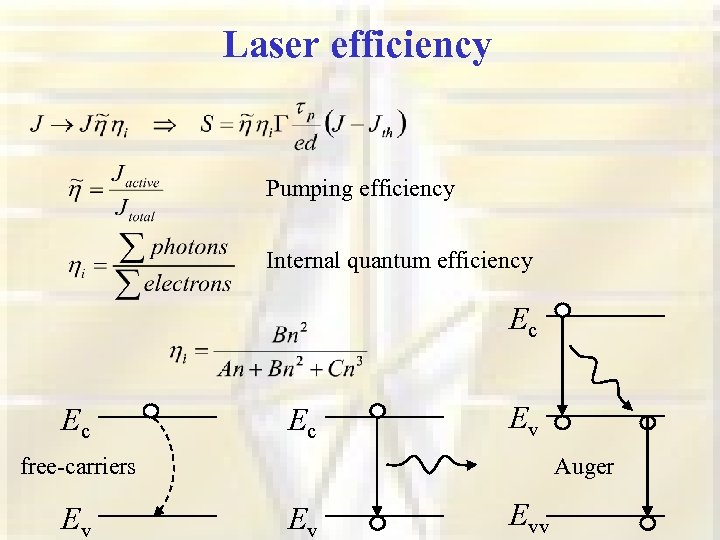 Laser efficiency Pumping efficiency Internal quantum efficiency Ec Ec Ec Ev free-carriers Ev Auger Ev Evv
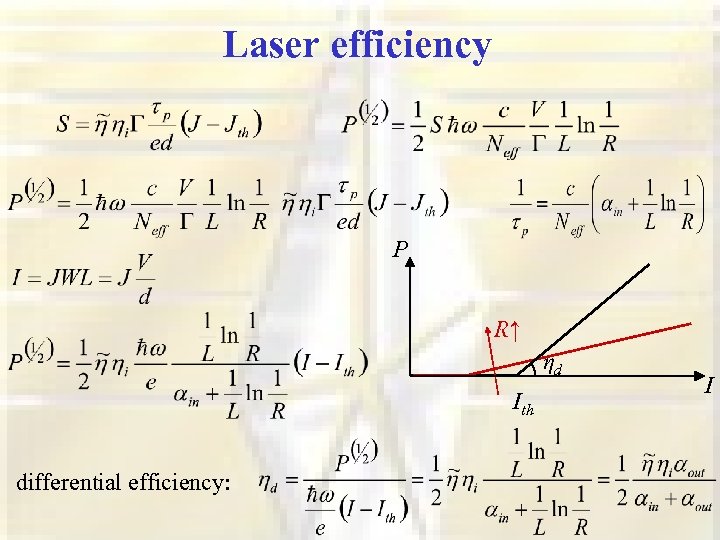 Laser efficiency P R↑ ηd Ith differential efficiency: I
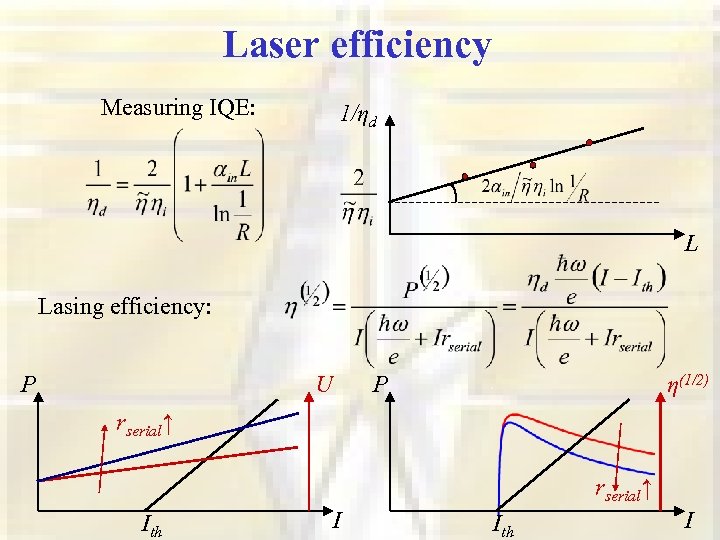 Laser efficiency Measuring IQE: 1/ηd L Lasing efficiency: P U P η(1/2) rserial↑ Ith I
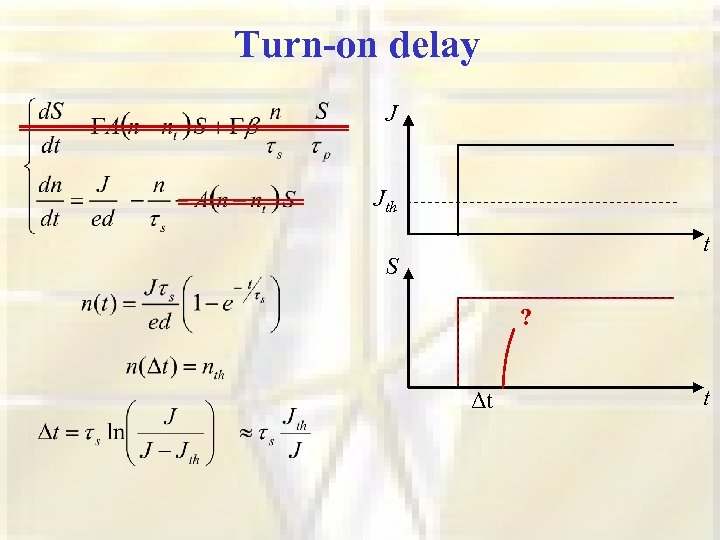 Turn-on delay J Jth t S ? Δt t
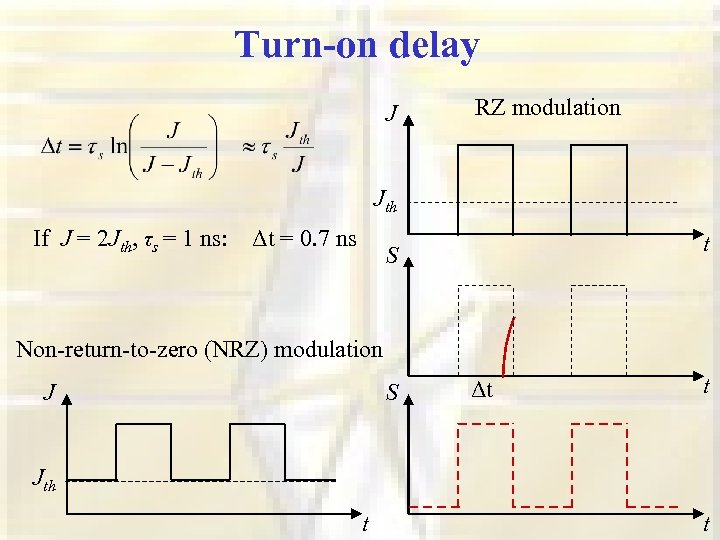 Turn-on delay J RZ modulation Jth If J = 2 Jth, τs = 1 ns: Δt = 0. 7 ns t S Non-return-to-zero (NRZ) modulation J S Δt t Jth t t
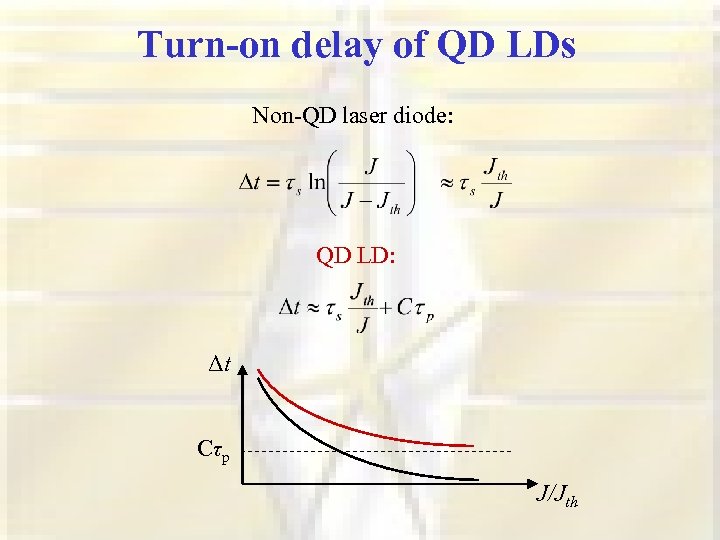 Turn-on delay of QD LDs Non-QD laser diode: QD LD: Δt Cτp J/Jth
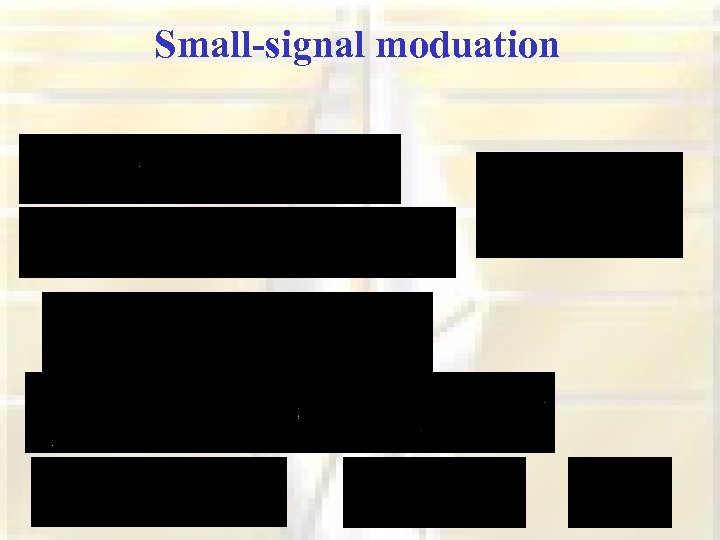
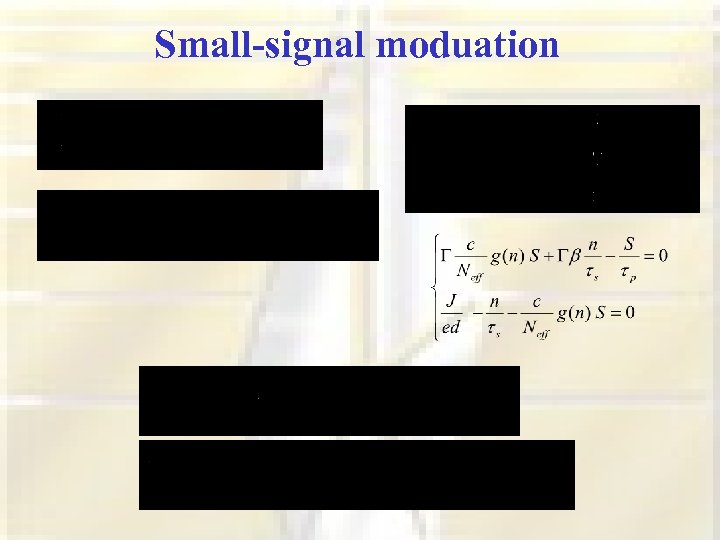 Small-signal moduation
 Small-signal moduation
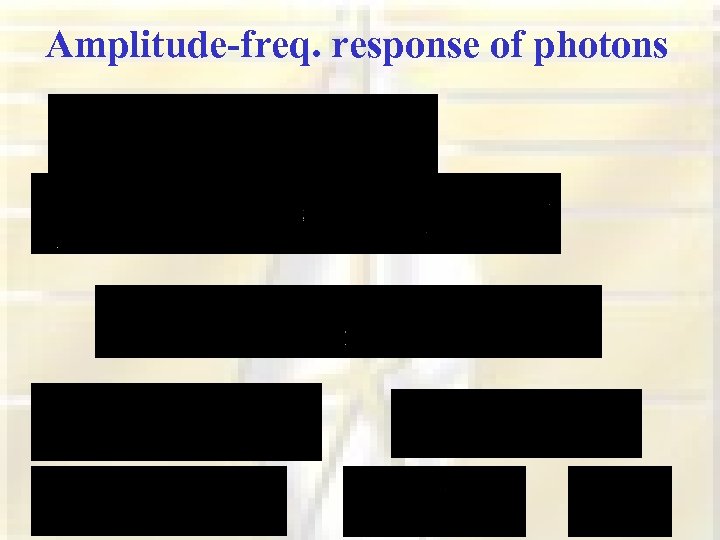 Amplitude-freq. response of photons
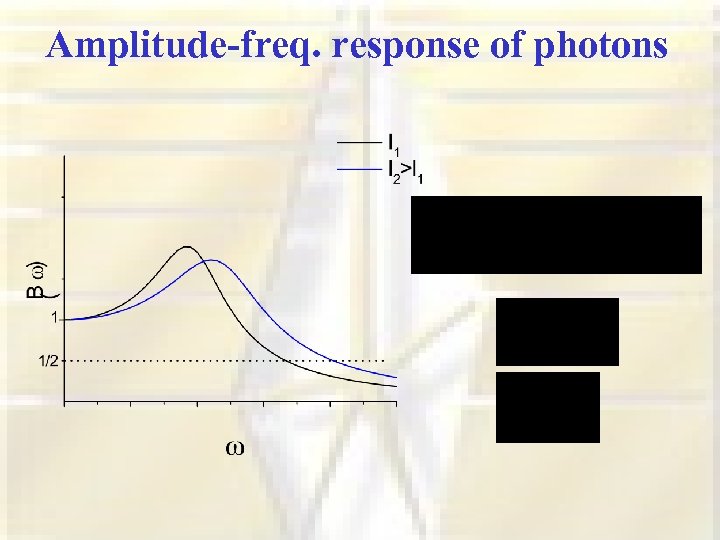 Amplitude-freq. response of photons
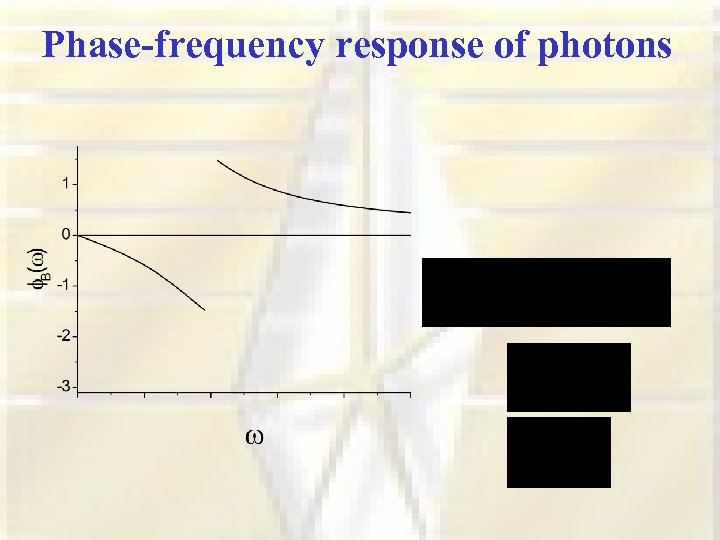 Phase-frequency response of photons
 Amplitude-freq. response of carriers
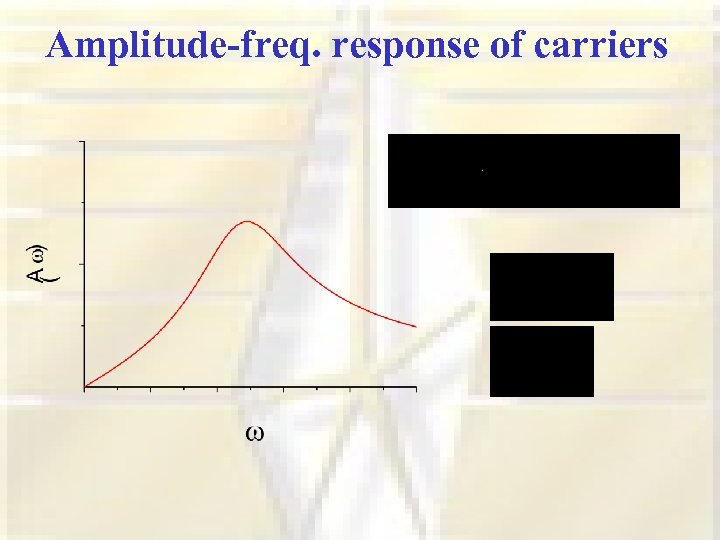 Amplitude-freq. response of carriers
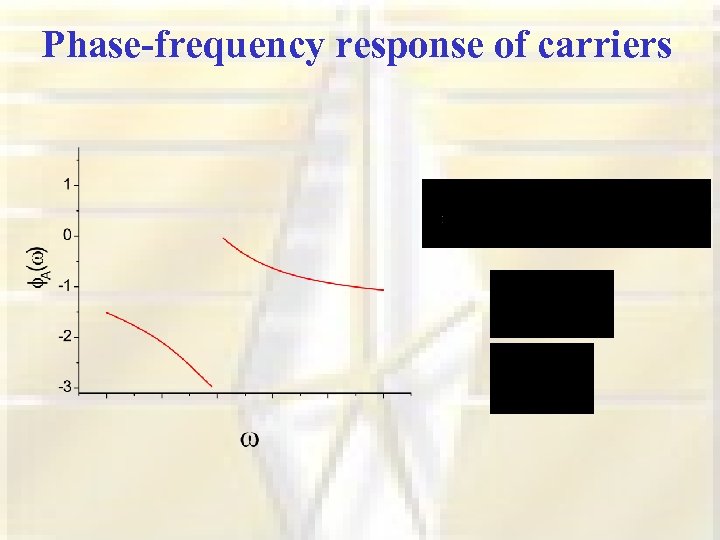 Phase-frequency response of carriers
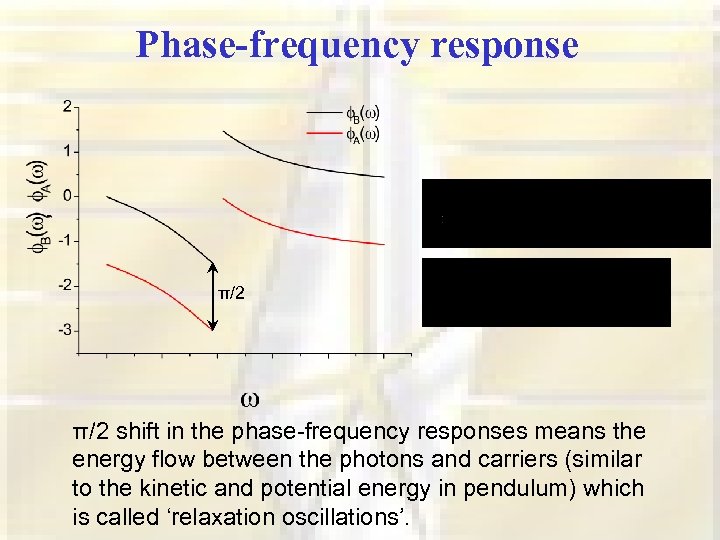 Phase-frequency response π/2 shift in the phase-frequency responses means the energy flow between the photons and carriers (similar to the kinetic and potential energy in pendulum) which is called ‘relaxation oscillations’.
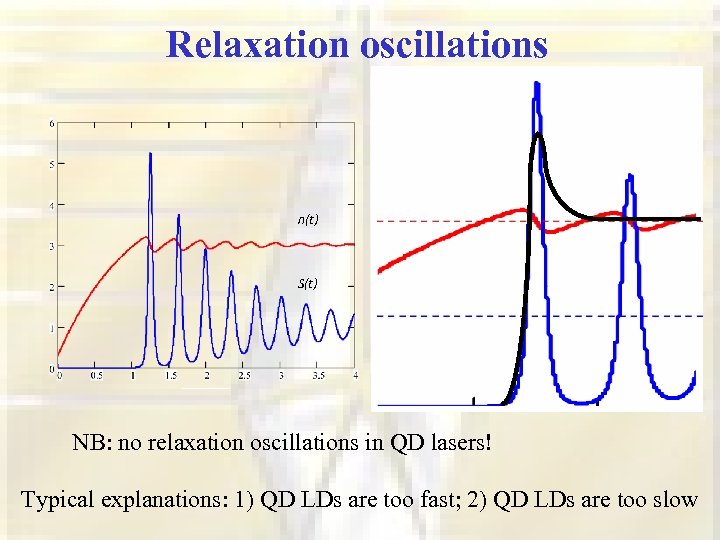 Relaxation oscillations n(t) S(t) NB: no relaxation oscillations in QD lasers! Typical explanations: 1) QD LDs are too fast; 2) QD LDs are too slow
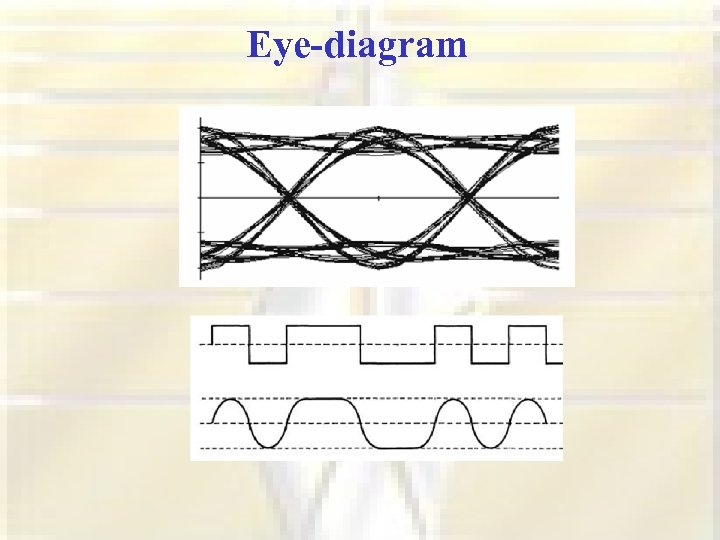 Eye-diagram
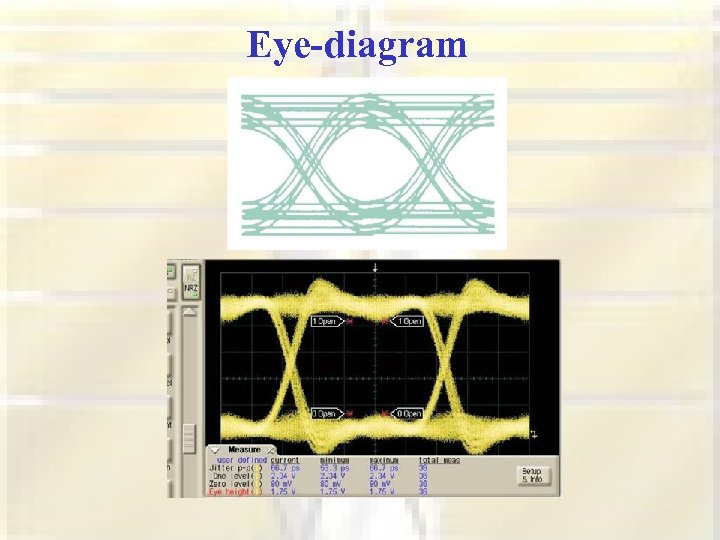 Eye-diagram
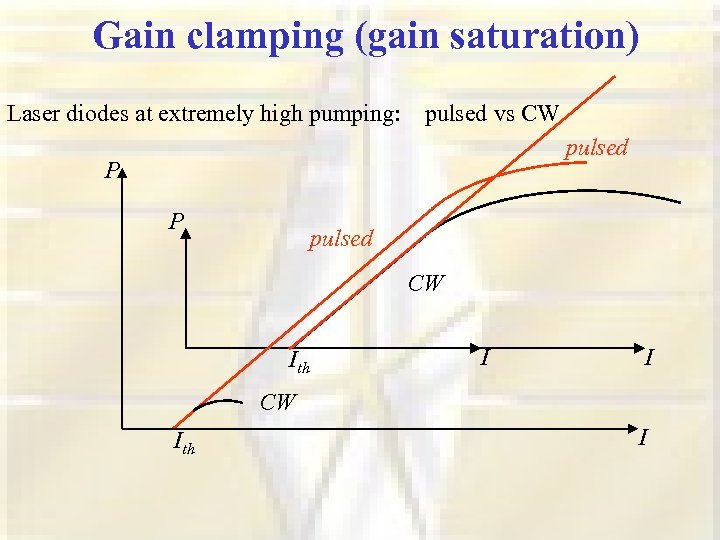 Gain clamping (gain saturation) Laser diodes at extremely high pumping: pulsed vs CW pulsed P P pulsed CW Ith I I CW Ith I
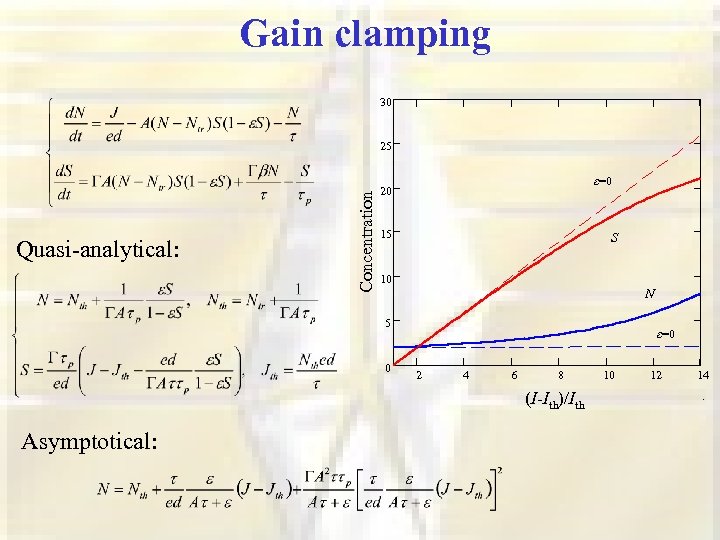 Gain clamping 30 Quasi-analytical: Concentration 25 ε=0 20 15 S 10 N 5 0 ε=0 2 4 6 8 (I-Ith)/Ith Asymptotical: 10 12 14.
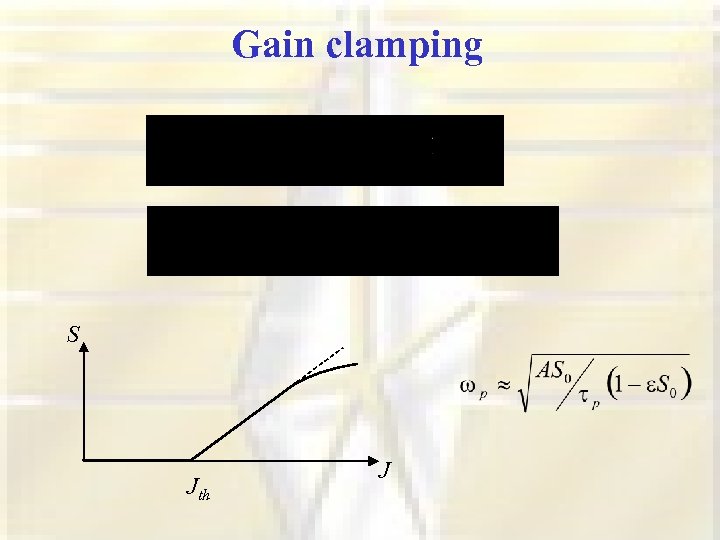 Gain clamping S Jth J
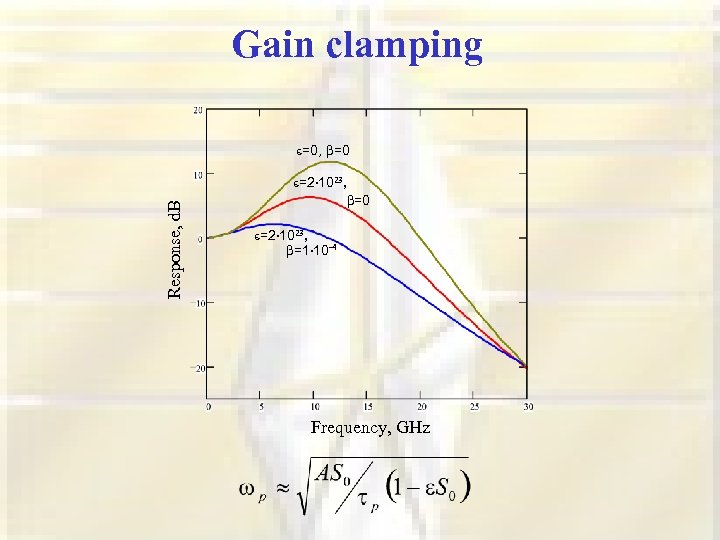 Gain clamping =0, =0 Response, d. B =2 1023, =0 =2 1023, =1 10 -4 Frequency, GHz
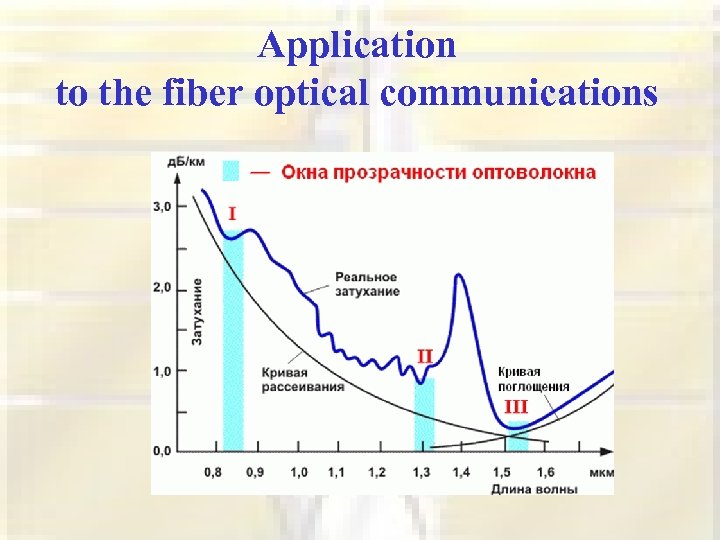 Application to the fiber optical communications
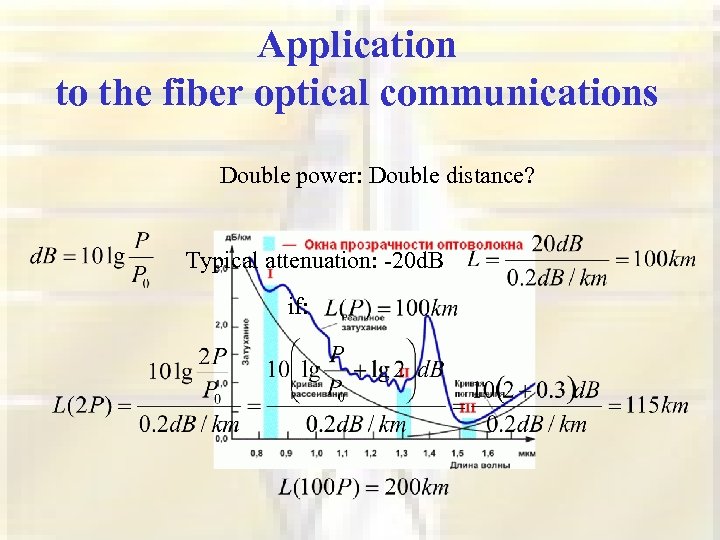 Application to the fiber optical communications Double power: Double distance? Typical attenuation: -20 d. B if:
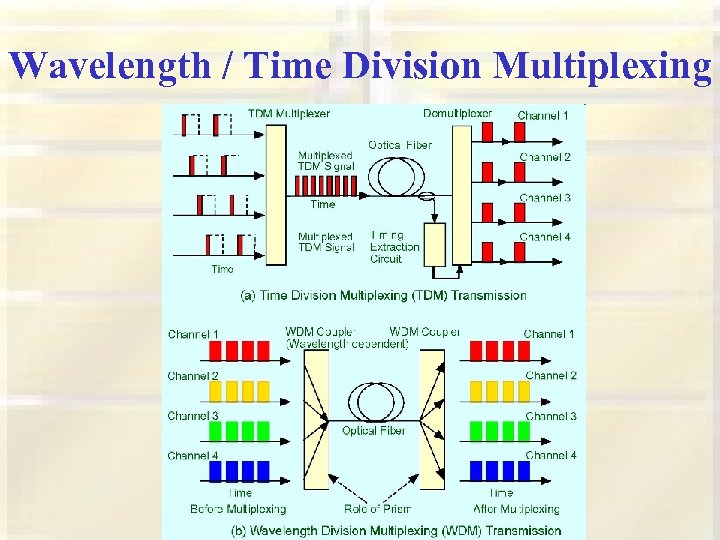 Wavelength / Time Division Multiplexing
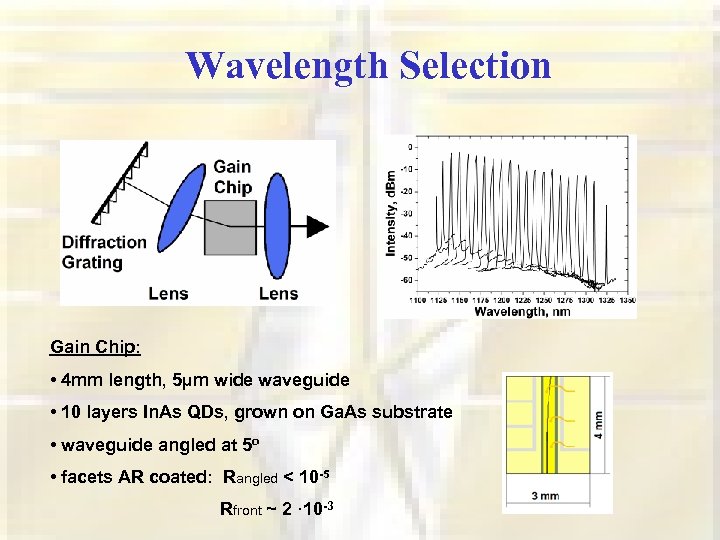 Wavelength Selection Gain Chip: • 4 mm length, 5µm wide waveguide • 10 layers In. As QDs, grown on Ga. As substrate • waveguide angled at 5 o • facets AR coated: Rangled < 10 -5 Rfront ~ 2 · 10 -3
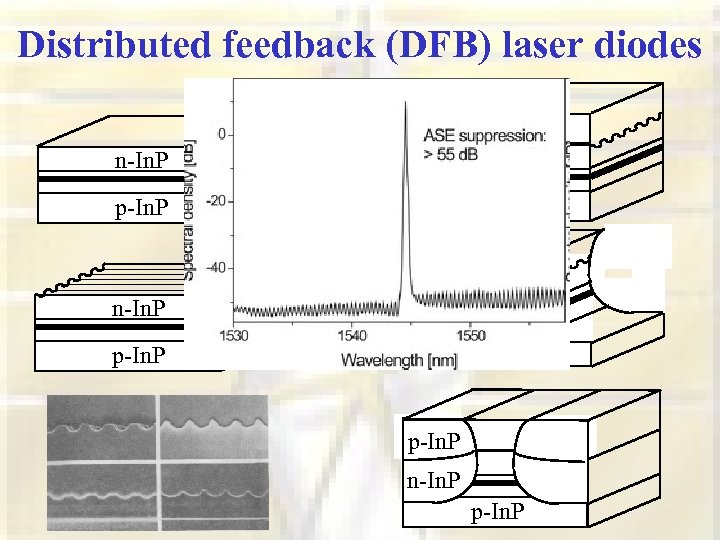 Distributed feedback (DFB) laser diodes n-In. P p-In. P
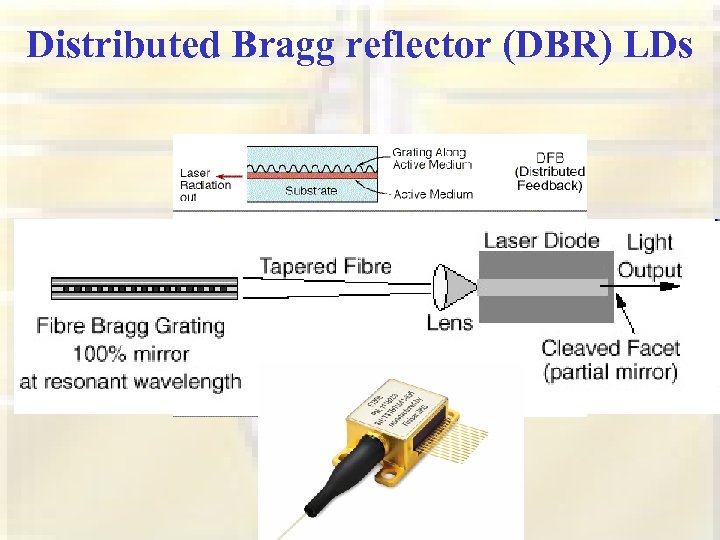 Distributed Bragg reflector (DBR) LDs
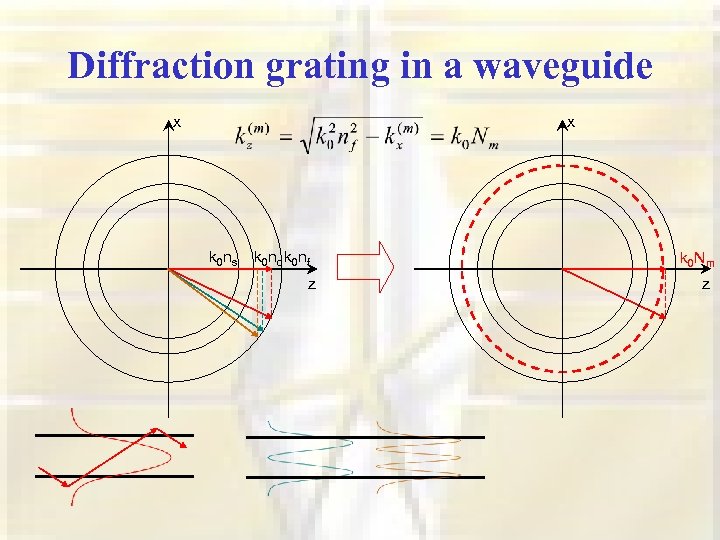 Diffraction grating in a waveguide x x k 0 ns k 0 nc k 0 nf z k 0 Nm z
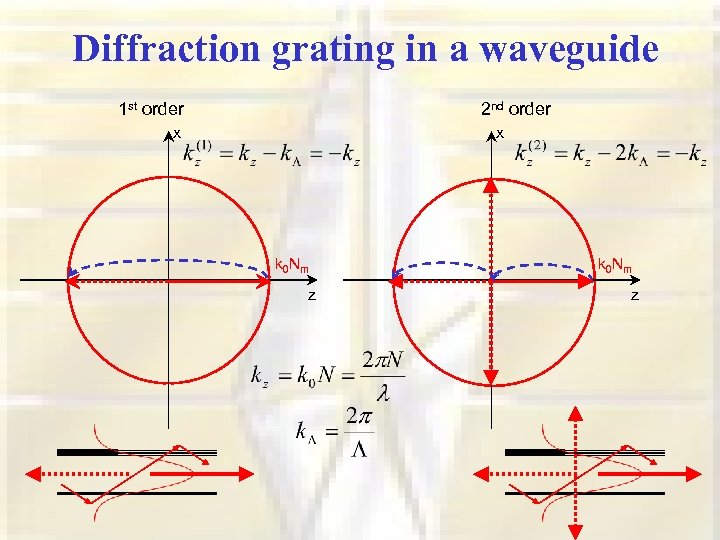 Diffraction grating in a waveguide 1 st order 2 nd order x x k 0 Nm z
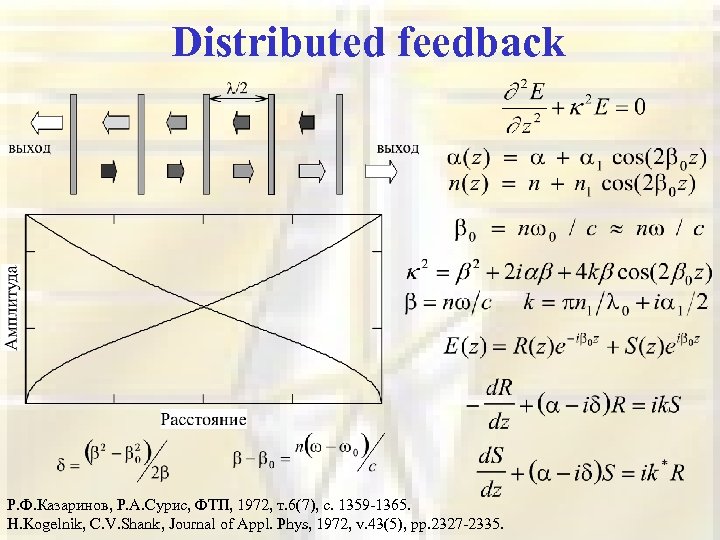 Distributed feedback Р. Ф. Казаринов, Р. А. Сурис, ФТП, 1972, т. 6(7), с. 1359 -1365. H. Kogelnik, C. V. Shank, Journal of Appl. Phys, 1972, v. 43(5), pp. 2327 -2335.
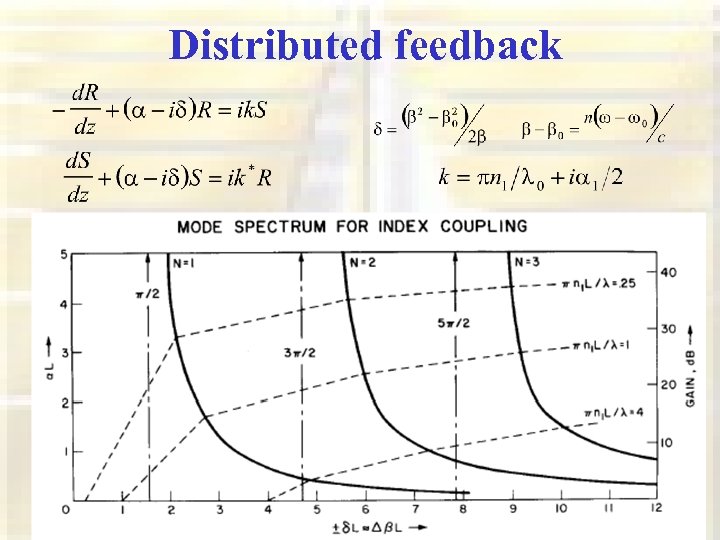 Distributed feedback
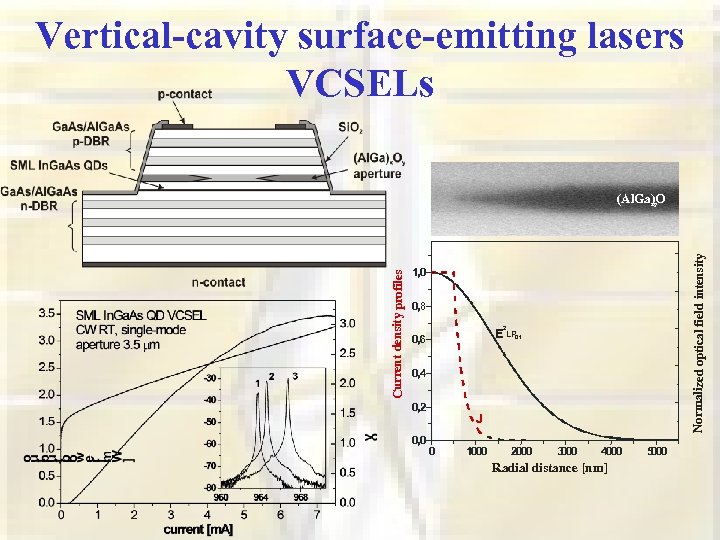 Vertical-cavity surface-emitting lasers VCSELs Normalized optical field intensity Current density profiles (Al. Ga)O xy 1, 0 0, 8 2 E LP 01 0, 6 0, 4 0, 2 0, 0 J 0 1000 2000 3000 4000 Radial distance [nm] 5000
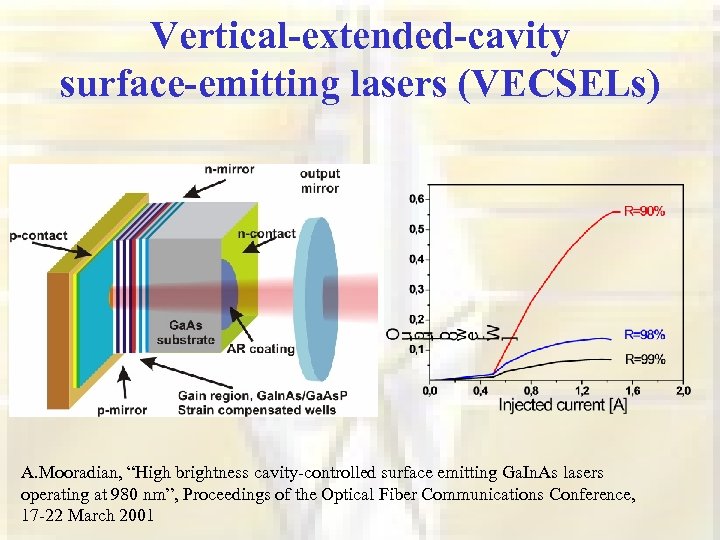 Vertical-extended-cavity surface-emitting lasers (VECSELs) A. Mooradian, “High brightness cavity-controlled surface emitting Ga. In. As lasers operating at 980 nm”, Proceedings of the Optical Fiber Communications Conference, 17 -22 March 2001
 Problems of LDs • Power density • Beam quality &intensity gradient • Spectral quality Broad-stripe LD LD ‘bar’
 Optical confinement Double confined Separately confined
 Modes of the waveguide x x k 0 ns k 0 nc k 0 nf z
 Optical confinement
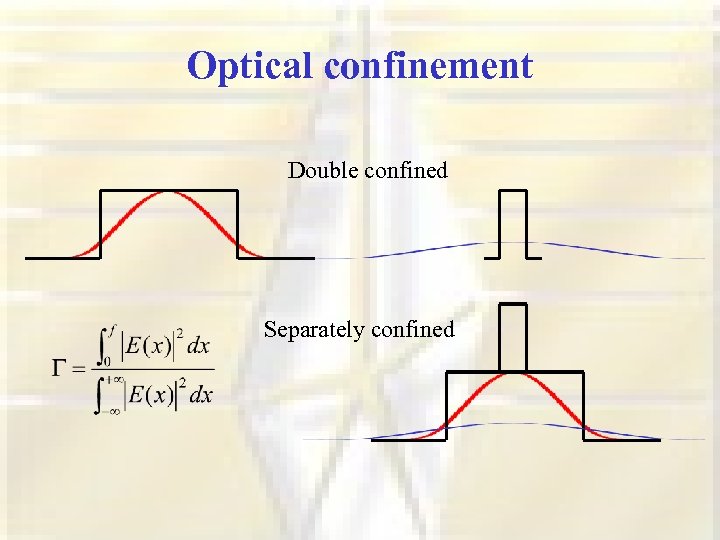
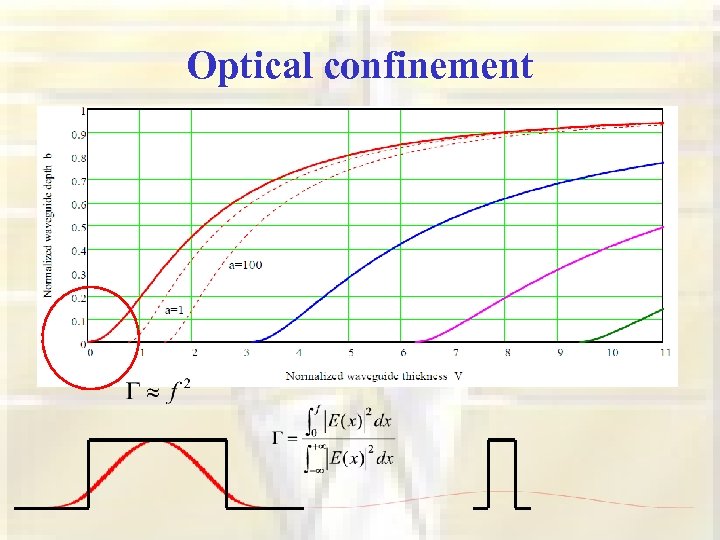
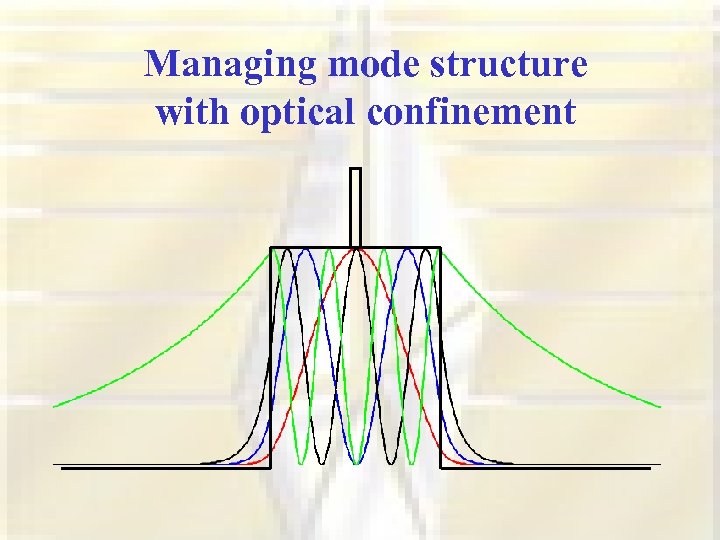 Managing mode structure with optical confinement
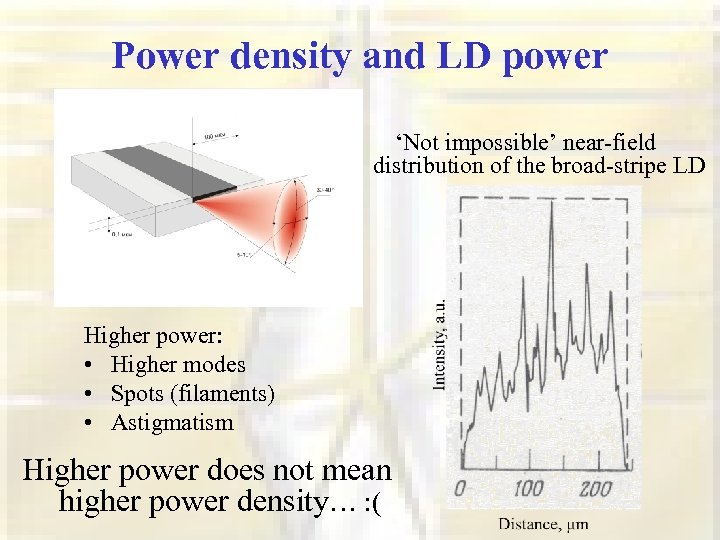 Power density and LD power ‘Not impossible’ near-field distribution of the broad-stripe LD Higher power: • Higher modes • Spots (filaments) • Astigmatism Higher power does not mean higher power density… : (
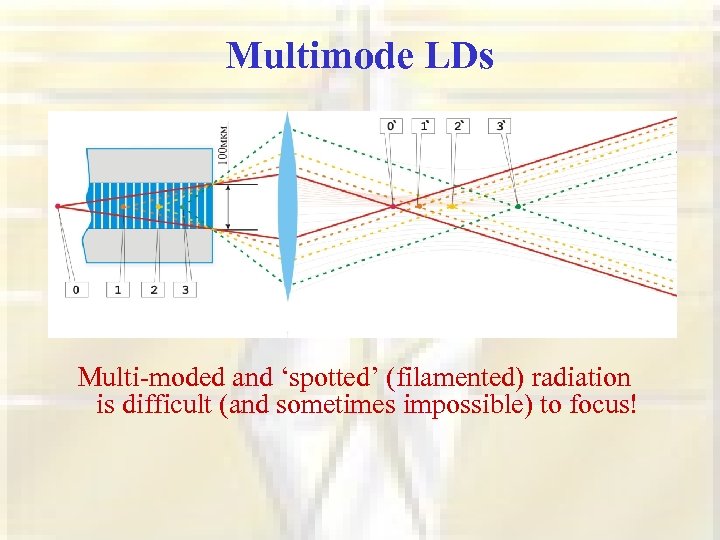 Multimode LDs Multi-moded and ‘spotted’ (filamented) radiation is difficult (and sometimes impossible) to focus!
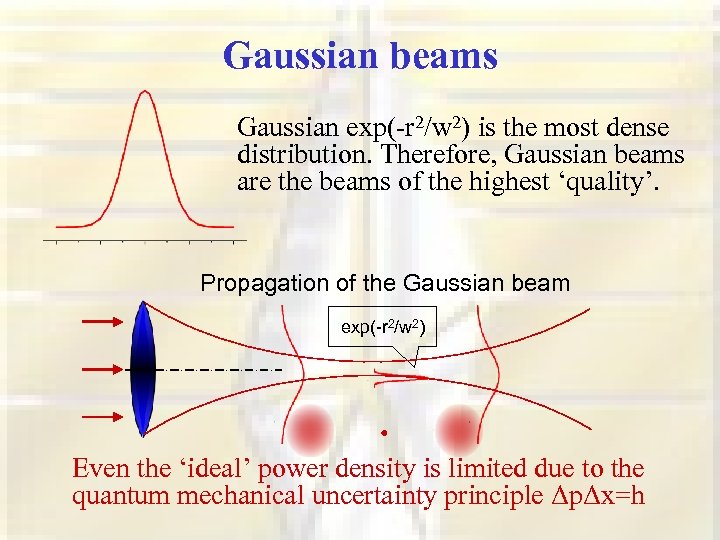 Gaussian beams Gaussian exp(-r 2/w 2) is the most dense distribution. Therefore, Gaussian beams are the beams of the highest ‘quality’. Propagation of the Gaussian beam exp(-r 2/w 2) Even the ‘ideal’ power density is limited due to the quantum mechanical uncertainty principle ΔpΔx=h
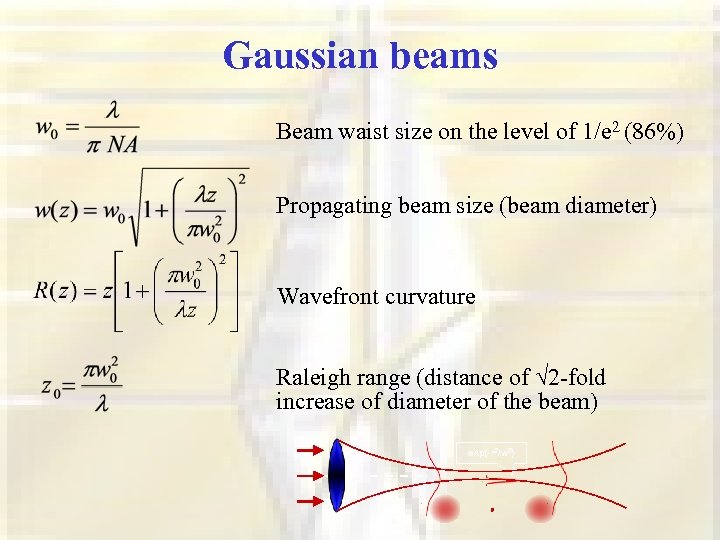 Gaussian beams Beam waist size on the level of 1/e 2 (86%) Propagating beam size (beam diameter) Wavefront curvature Raleigh range (distance of √ 2 -fold increase of diameter of the beam) exp(-r 2/w 2)
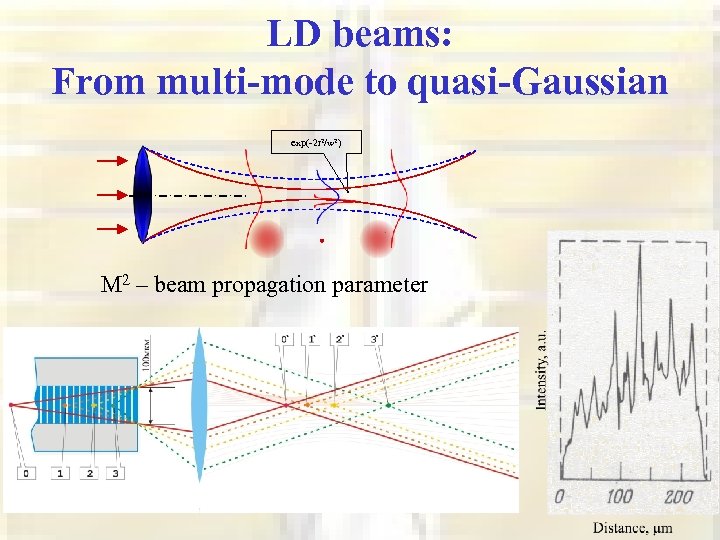 LD beams: From multi-mode to quasi-Gaussian exp(-2 r 2/w 2) M 2 – beam propagation parameter
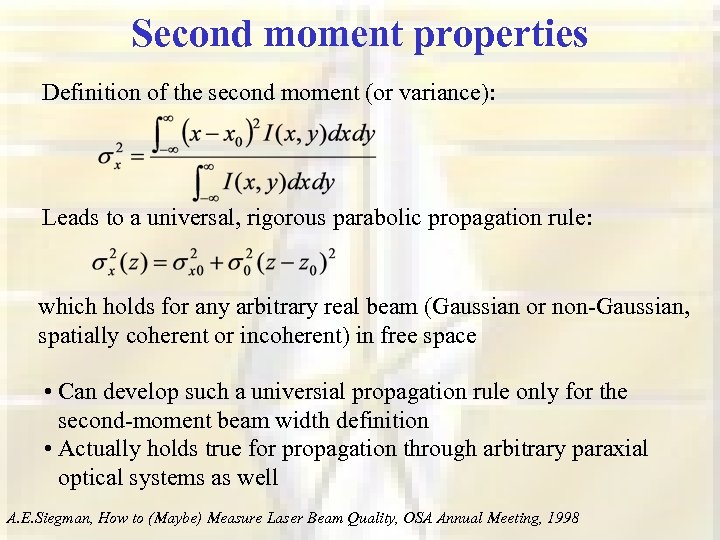 Second moment properties Definition of the second moment (or variance): Leads to a universal, rigorous parabolic propagation rule: which holds for any arbitrary real beam (Gaussian or non-Gaussian, spatially coherent or incoherent) in free space • Can develop such a universial propagation rule only for the second-moment beam width definition • Actually holds true for propagation through arbitrary paraxial optical systems as well A. E. Siegman, How to (Maybe) Measure Laser Beam Quality, OSA Annual Meeting, 1998
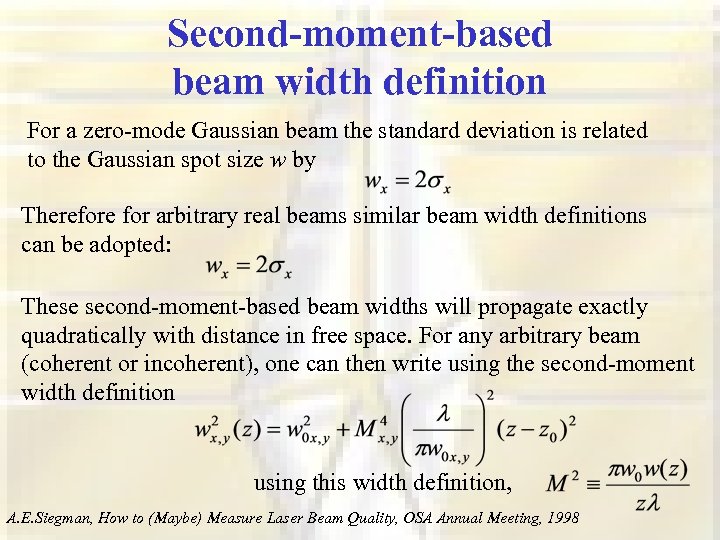 Second-moment-based beam width definition For a zero-mode Gaussian beam the standard deviation is related to the Gaussian spot size w by Therefore for arbitrary real beams similar beam width definitions can be adopted: These second-moment-based beam widths will propagate exactly quadratically with distance in free space. For any arbitrary beam (coherent or incoherent), one can then write using the second-moment width definition using this width definition, A. E. Siegman, How to (Maybe) Measure Laser Beam Quality, OSA Annual Meeting, 1998
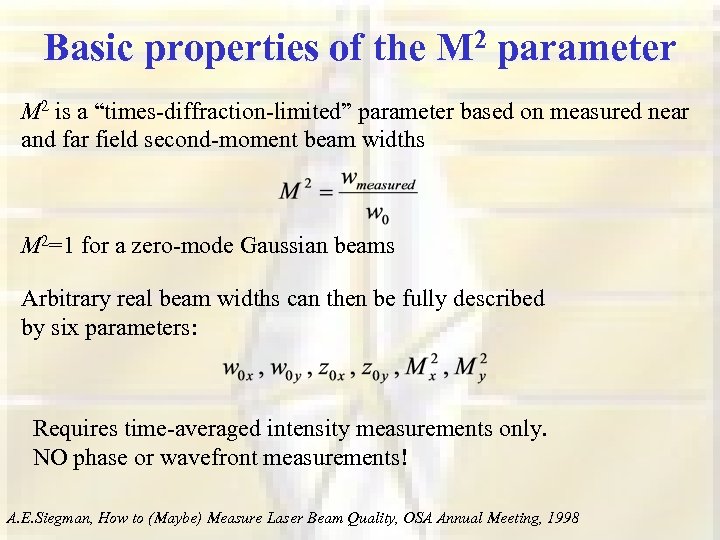 Basic properties of the M 2 parameter M 2 is a “times-diffraction-limited” parameter based on measured near and far field second-moment beam widths M 2=1 for a zero-mode Gaussian beams Arbitrary real beam widths can then be fully described by six parameters: Requires time-averaged intensity measurements only. NO phase or wavefront measurements! A. E. Siegman, How to (Maybe) Measure Laser Beam Quality, OSA Annual Meeting, 1998
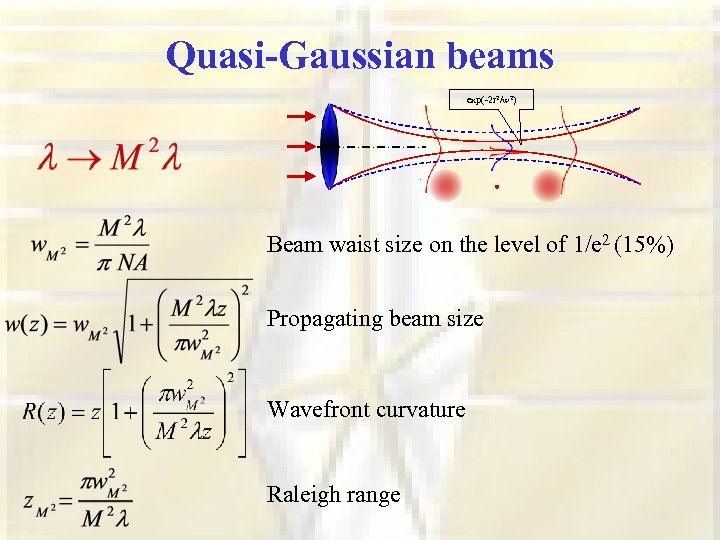 Quasi-Gaussian beams exp(-2 r 2/w 2) Beam waist size on the level of 1/e 2 (15%) Propagating beam size Wavefront curvature Raleigh range
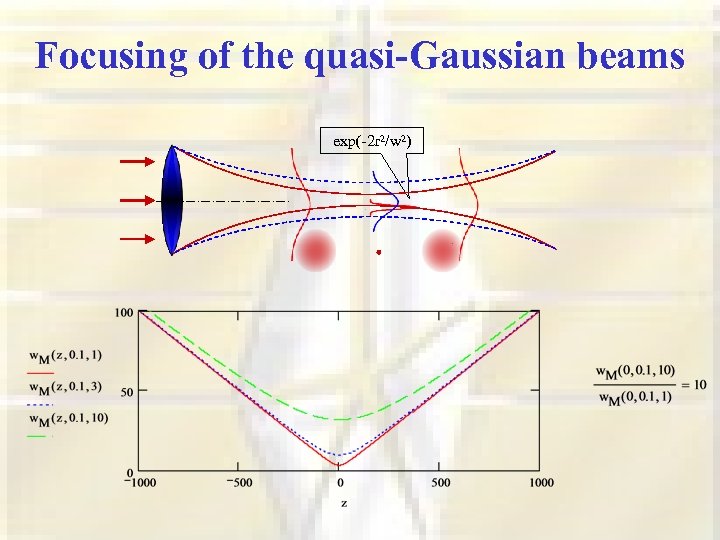 Focusing of the quasi-Gaussian beams exp(-2 r 2/w 2)
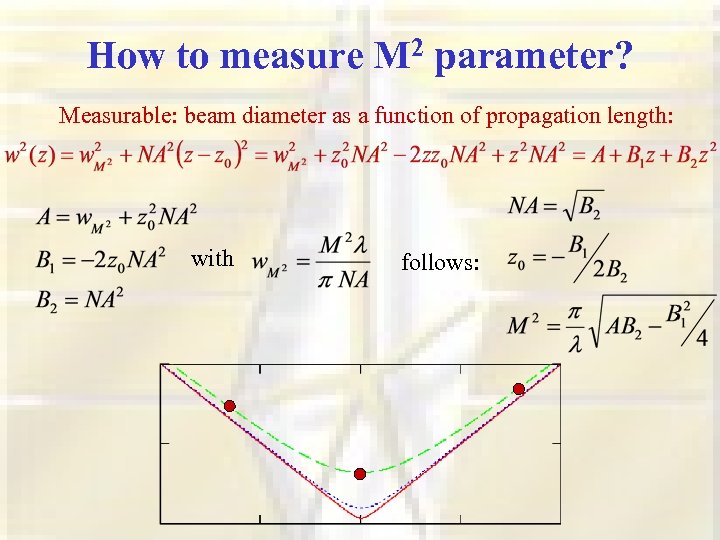 How to measure M 2 parameter? Measurable: beam diameter as a function of propagation length: with follows:
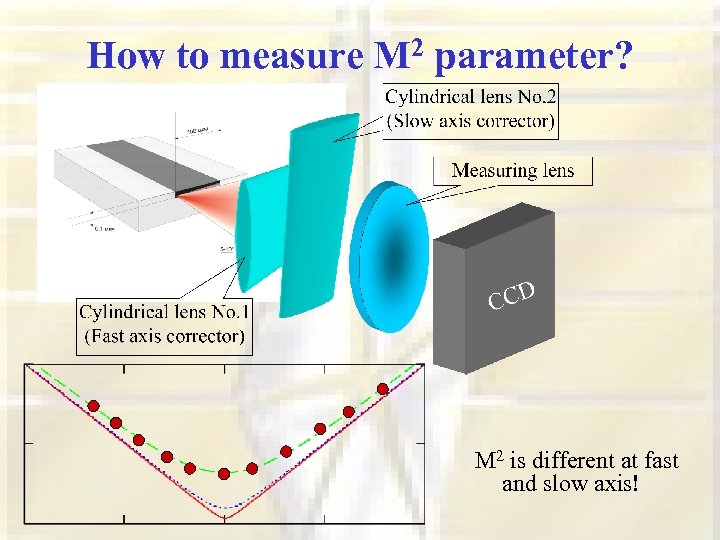 How to measure M 2 parameter? M 2 is different at fast and slow axis!
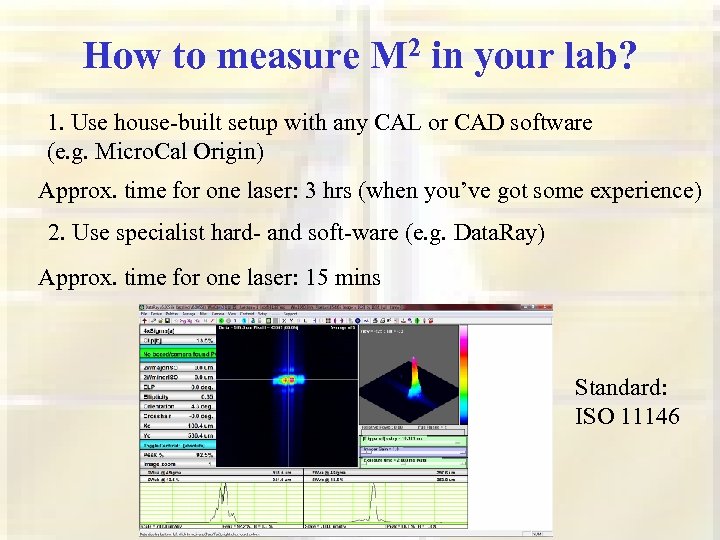 How to measure M 2 in your lab? 1. Use house-built setup with any CAL or CAD software (e. g. Micro. Cal Origin) Approx. time for one laser: 3 hrs (when you’ve got some experience) 2. Use specialist hard- and soft-ware (e. g. Data. Ray) Approx. time for one laser: 15 mins Standard: ISO 11146
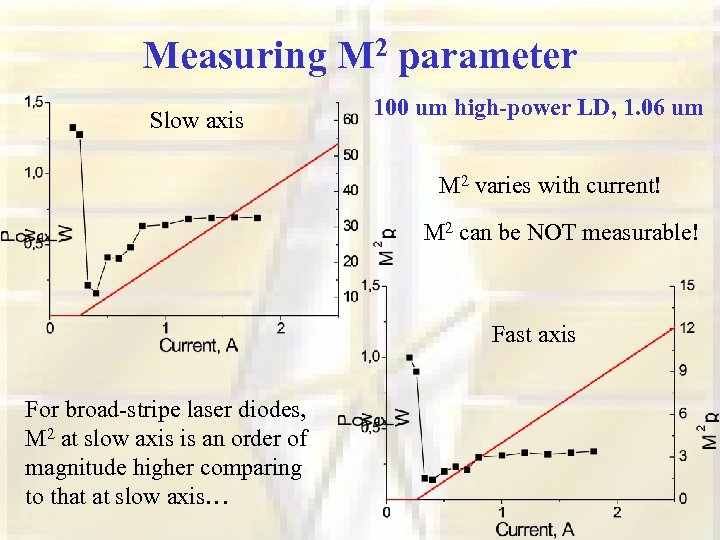 Measuring M 2 parameter Slow axis 100 um high-power LD, 1. 06 um M 2 varies with current! M 2 can be NOT measurable! Fast axis For broad-stripe laser diodes, M 2 at slow axis is an order of magnitude higher comparing to that at slow axis…
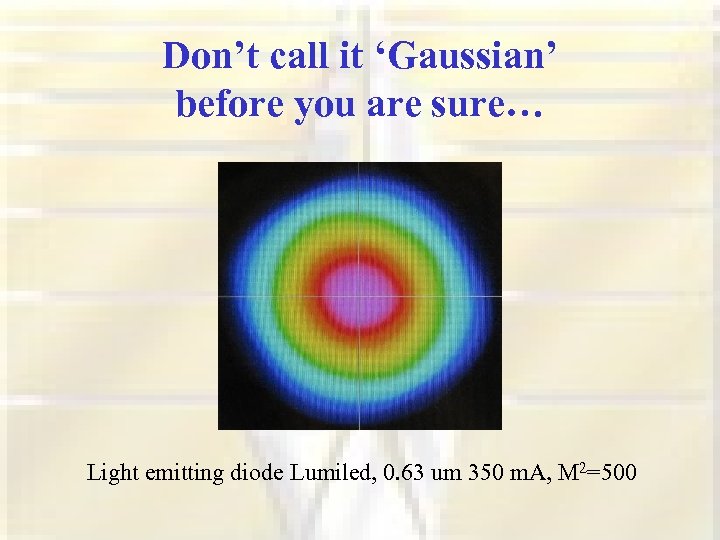 Don’t call it ‘Gaussian’ before you are sure… Light emitting diode Lumiled, 0. 63 um 350 m. A, M 2=500
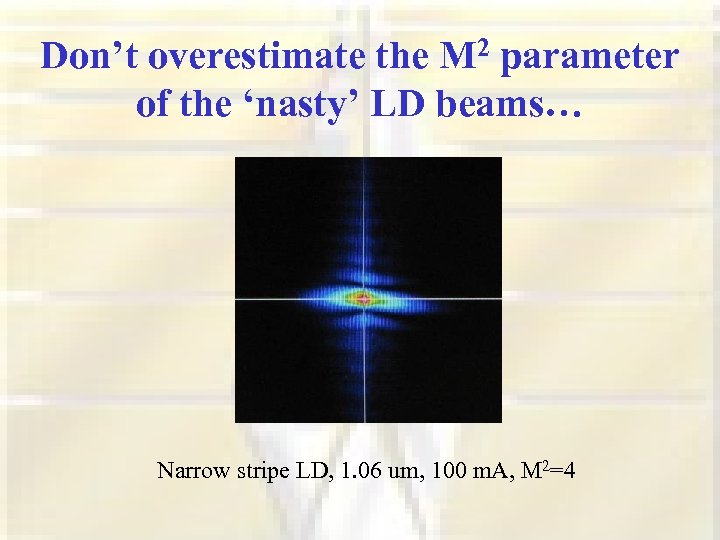 Don’t overestimate the M 2 parameter of the ‘nasty’ LD beams… Narrow stripe LD, 1. 06 um, 100 m. A, M 2=4
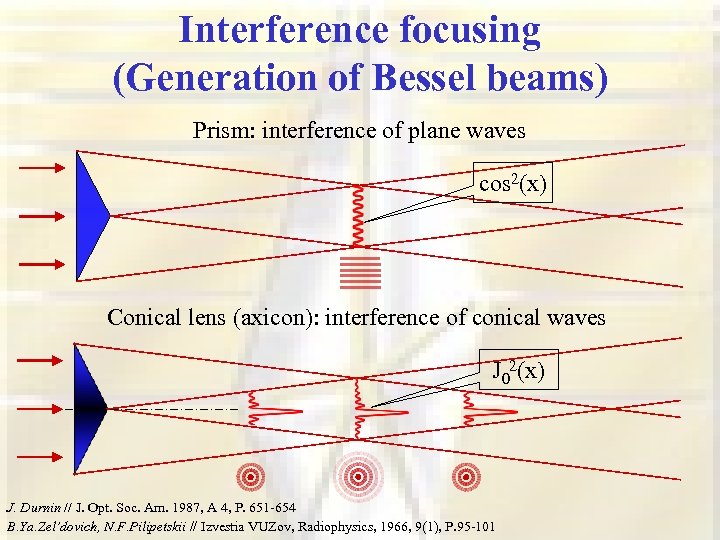 Interference focusing (Generation of Bessel beams) Prism: interference of plane waves cos 2(x) Conical lens (axicon): interference of conical waves J 02(x) J. Durnin // J. Opt. Soc. Am. 1987, A 4, P. 651 -654 B. Ya. Zel’dovich, N. F. Pilipetskii // Izvestia VUZov, Radiophysics, 1966, 9(1), P. 95 -101
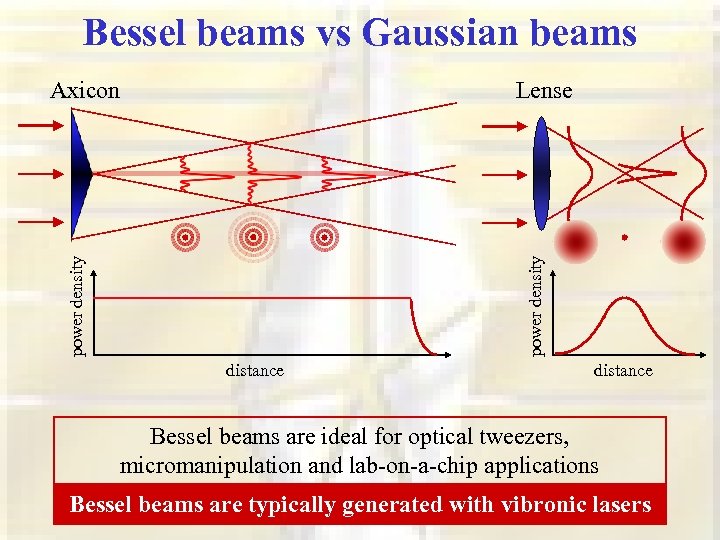 Bessel beams vs Gaussian beams Lense power density Axicon distance Bessel beams are ideal for optical tweezers, micromanipulation and lab-on-a-chip applications Bessel beams are typically generated with vibronic lasers
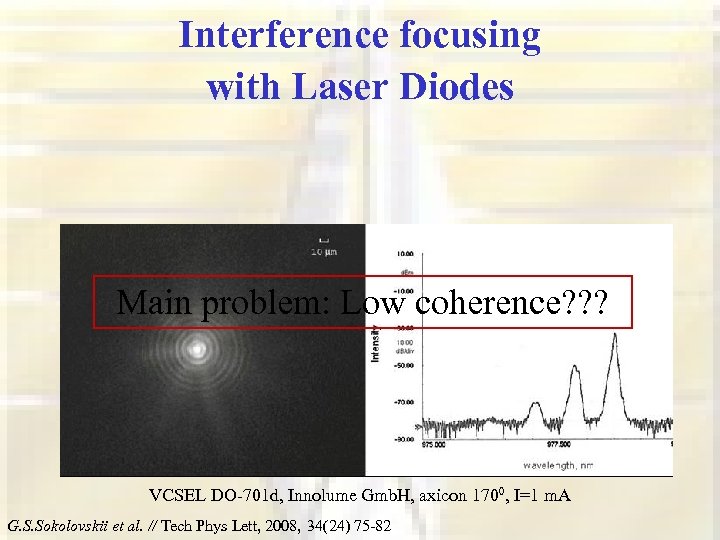 Interference focusing with Laser Diodes Main problem: Low coherence? ? ? VCSEL DO-701 d, Innolume Gmb. H, axicon 1700, I=1 m. А G. S. Sokolovskii et al. // Tech Phys Lett, 2008, 34(24) 75 -82
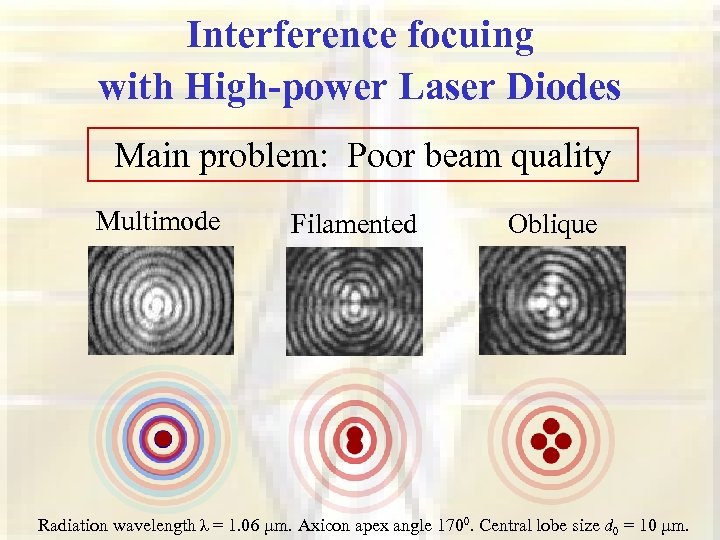 Interference focuing with High-power Laser Diodes Main problem: Poor beam quality Multimode Filamented Oblique Radiation wavelength λ = 1. 06 µm. Axicon apex angle 1700. Central lobe size d 0 = 10 µm.
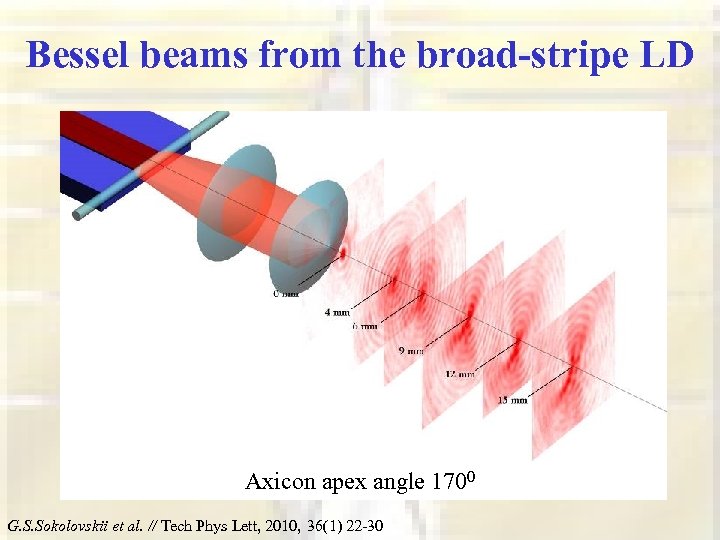 Bessel beams from the broad-stripe LD Axicon apex angle 1700 G. S. Sokolovskii et al. // Tech Phys Lett, 2010, 36(1) 22 -30
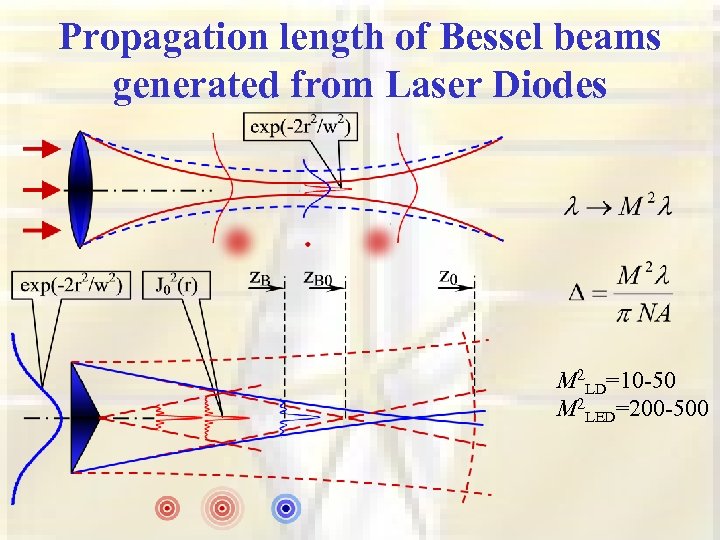 Propagation length of Bessel beams generated from Laser Diodes M 2 LD=10 -50 M 2 LED=200 -500
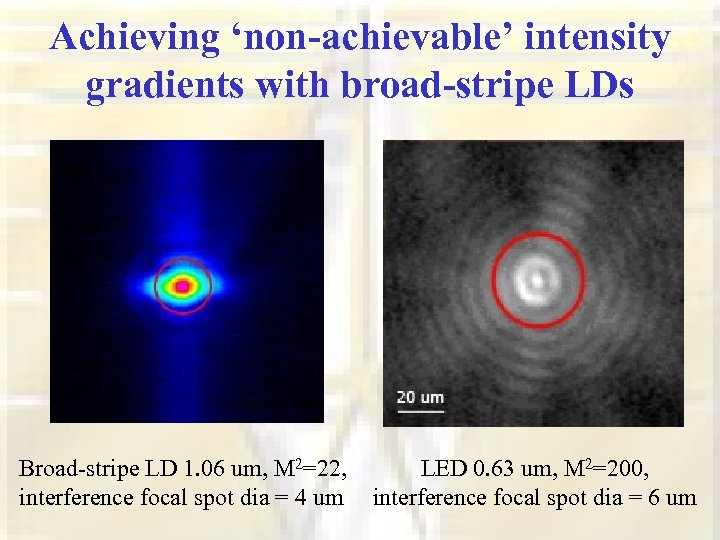 Achieving ‘non-achievable’ intensity gradients with broad-stripe LDs Broad-stripe LD 1. 06 um, М 2=22, LED 0. 63 um, М 2=200, interference focal spot dia = 4 um interference focal spot dia = 6 um
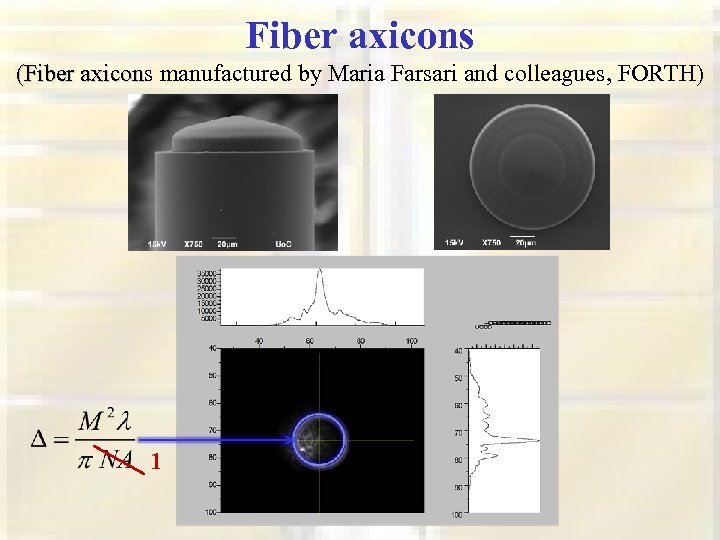 Fiber axicons (Fiber axicons manufactured by Maria Farsari and colleagues, FORTH) axicon 1
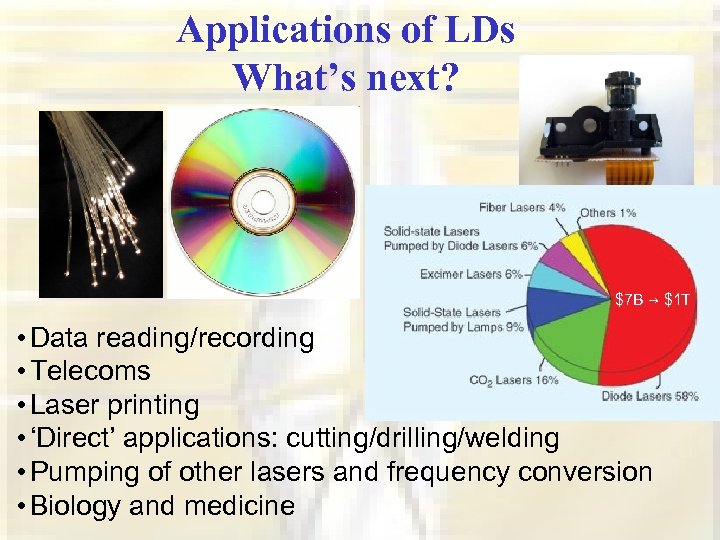 Applications of LDs What’s next? $7 B → $1 T • Data reading/recording • Telecoms • Laser printing • ‘Direct’ applications: cutting/drilling/welding • Pumping of other lasers and frequency conversion • Biology and medicine
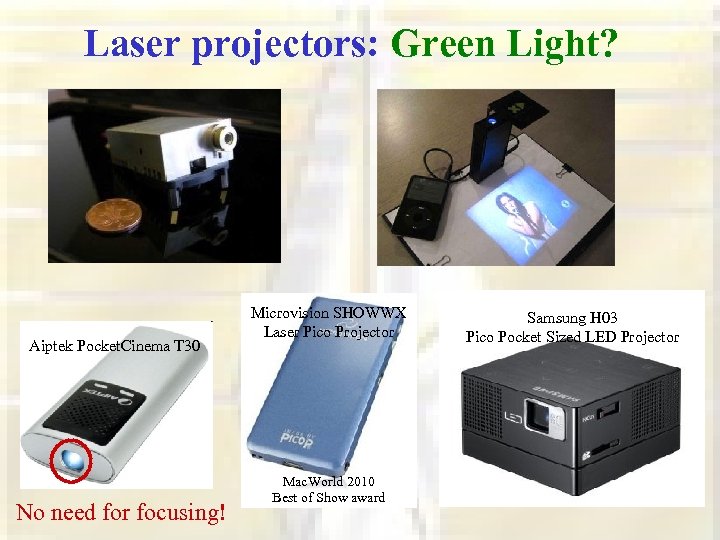 Laser projectors: Green Light? Aiptek Pocket. Cinema T 30 No need for focusing! Microvision SHOWWX Laser Pico Projector Mac. World 2010 Best of Show award Samsung H 03 Pico Pocket Sized LED Projector
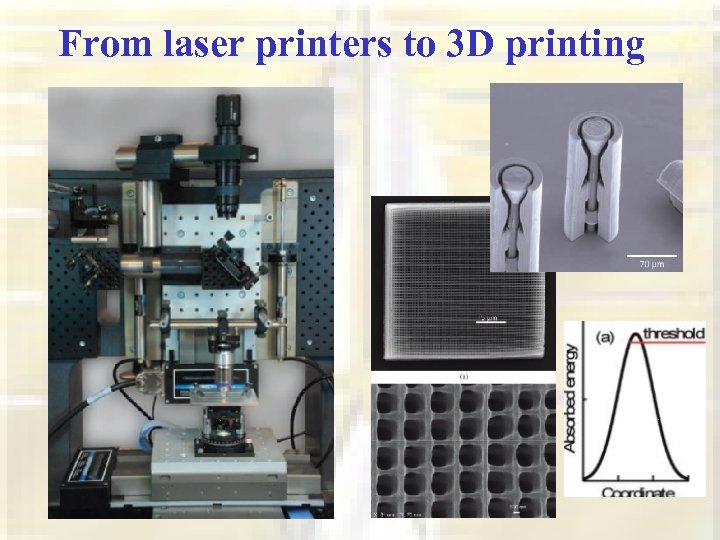 From laser printers to 3 D printing
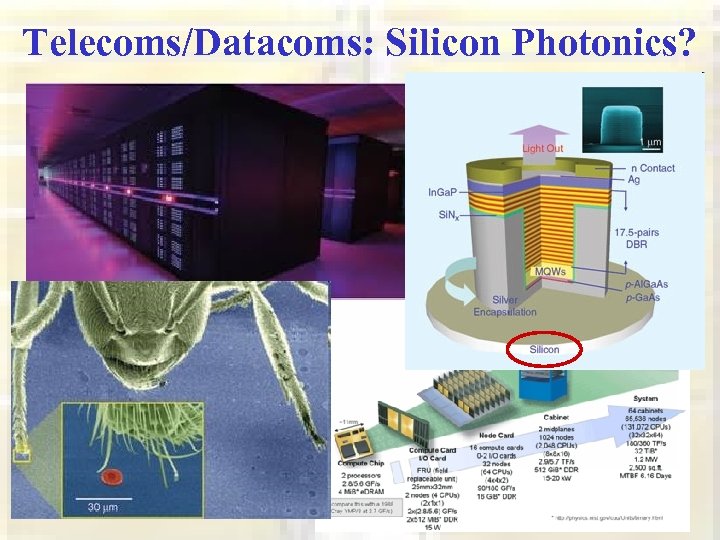 Telecoms/Datacoms: Silicon Photonics?
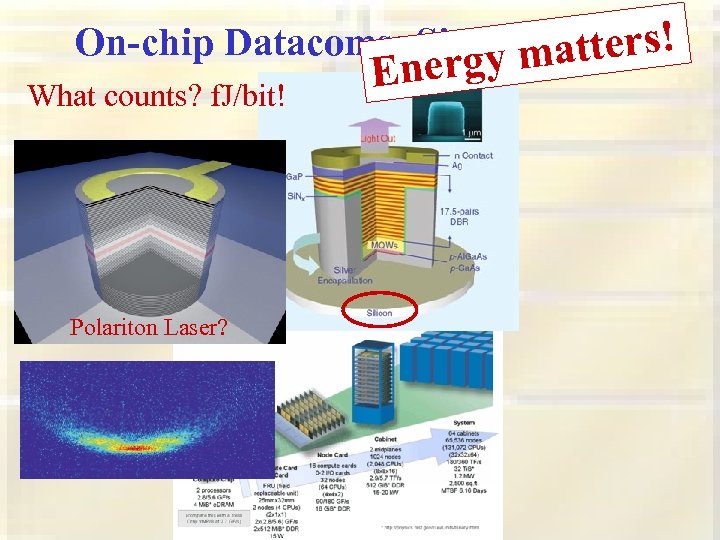 On-chip Datacoms: Sizey matters! matters? What counts? f. J/bit! Polariton Laser? Energ
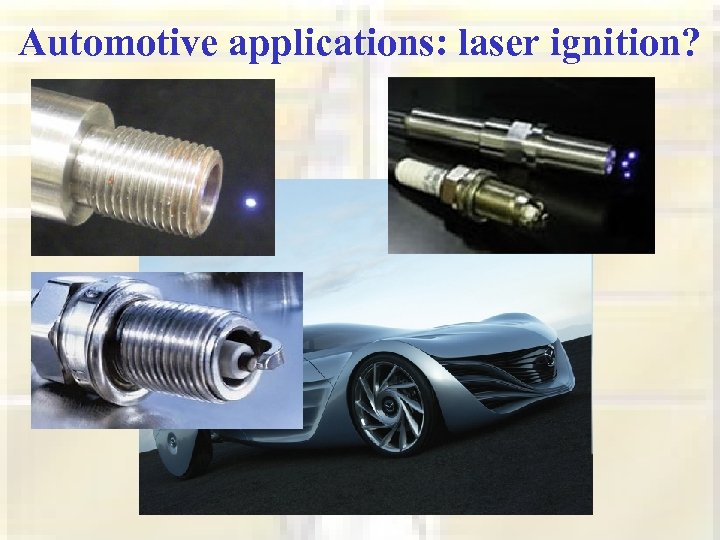 Automotive applications: laser ignition?
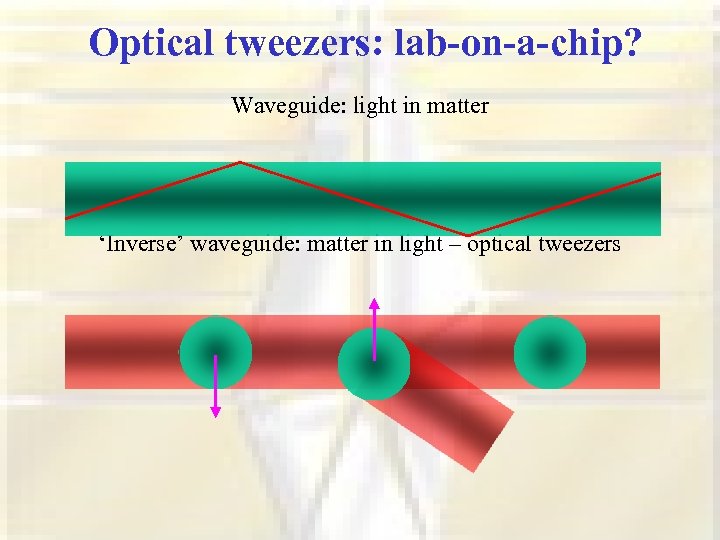 Optical tweezers: lab-on-a-chip? Waveguide: light in matter ‘Inverse’ waveguide: matter in light – optical tweezers
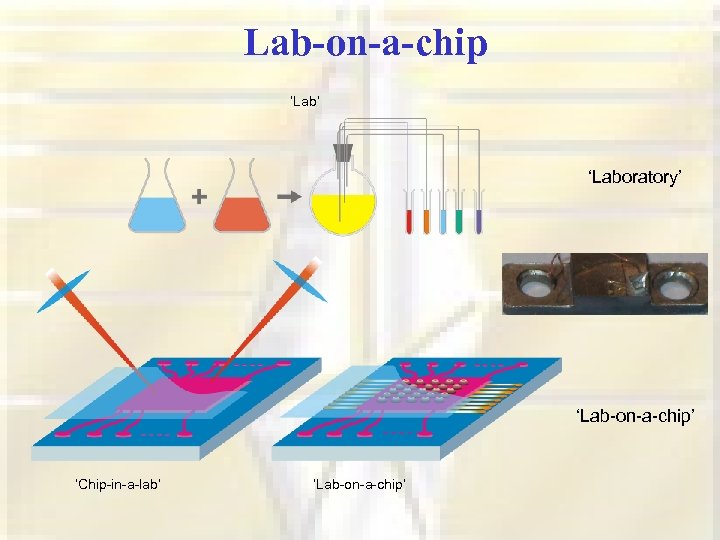 Lab-on-a-chip ‘Lab’ ‘Laboratory’ ‘Lab-on-a-chip’ ‘Chip-in-a-lab’ ‘Lab-on-a-chip’
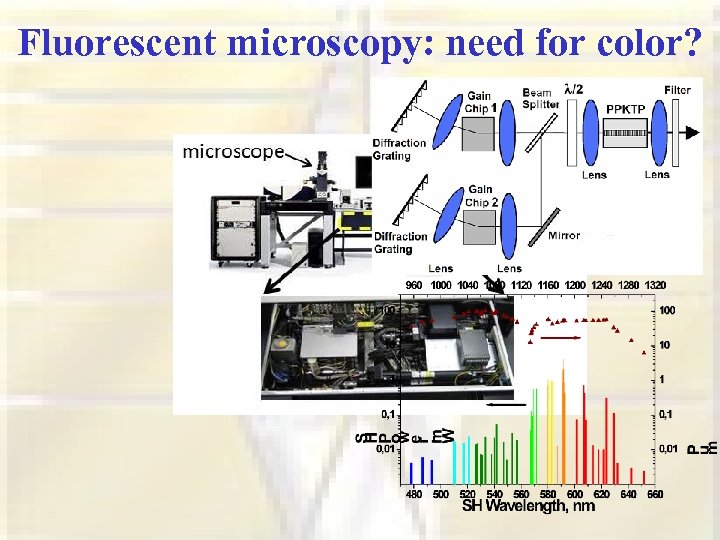 Fluorescent microscopy: need for color?
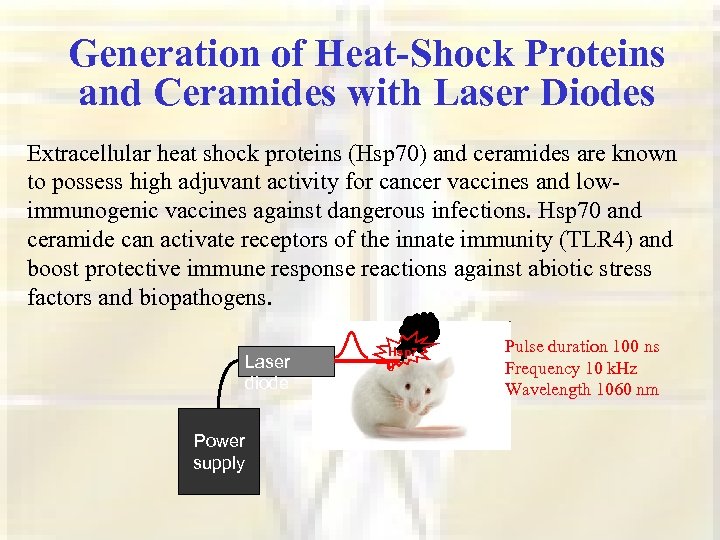 Generation of Heat-Shock Proteins and Ceramides with Laser Diodes Extracellular heat shock proteins (Hsp 70) and ceramides are known to possess high adjuvant activity for cancer vaccines and lowimmunogenic vaccines against dangerous infections. Hsp 70 and ceramide can activate receptors of the innate immunity (TLR 4) and boost protective immune response reactions against abiotic stress factors and biopathogens. Laser diode Power supply Hsp 7 0 Pulse duration 100 ns Frequency 10 k. Hz Wavelength 1060 nm
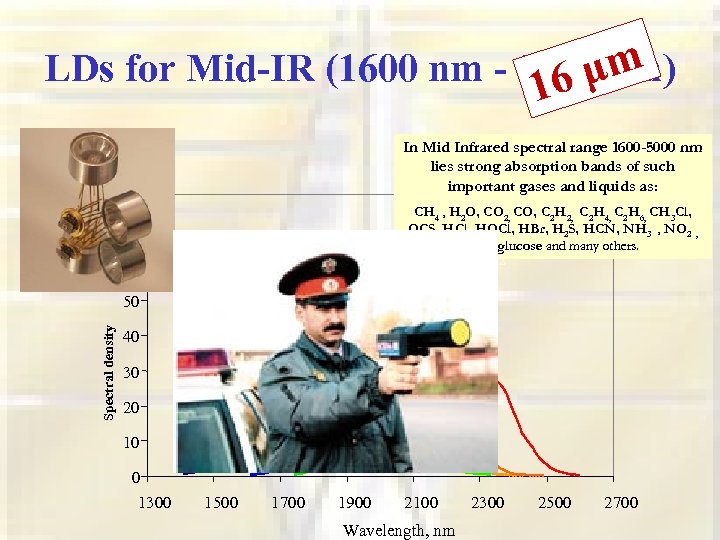 LDs for Mid-IR (1600 nm - 5000 nm) μm 6 m. W/nm 1 In Mid Infrared spectral range 1600 -5000 nm lies strong absorption bands of such important gases and liquids as: 80 CH 4 , H 2 O, CO 2, CO, Cf=500 Hz 2 H 4, C 2 H 6, CH 3 Cl, 2 H 2, C LED 20 HCl, HOCl, HBr, H S, HCN, NH , NO OCS, 2 3 2 , SO 2 , glucose and many others. 70 LED 22 60 LED 18 Spectral density 50 40 30 20 10 0 1300 1500 1700 1900 2100 Wavelength, nm 2300 2500 2700
 Thank you for your attention! • Applications of semiconductor lasers. ‘Revolution’ of light. • Basic principles of laser operation (only to remind). • Absorption and gain in semiconductors, inversion of population and conditions for it's achievement. • Rate equations. Lasing threshold. Laser efficiency. • Modulation of the laser signal. Gain clamping. • Fiber-optical applications. DFB and DBR lasers. VCSELs and VECSELS • Waveguide in LD structure. Modes of the waveguide. • Beam-propagation (‘beam-quality’) parameter M 2 and how to measure it. Achieving maximum power density with LDs. • Interference focusing of LD beams. • What’s next? New applications and problems to solve.