


 Скачать презентацию Semey State Medical University Department of neurology narcology
Bekenova_Aktolkyn_547_gr_Vidy_operatsii.pptx
- Количество слайдов: 17
 Semey State Medical University Department of neurology, narcology, psychology SIW OPERATIVE AND INTERVENTIONAL PROCEDURES IN HEMORRHAGIC AND ISCHEMIC STROKE Prepared by: student of 547 group Bekenova Aktolkyn Checked by: Akimzhanova A. K.
 INTRODUCTION Neurosurgical operations can be carried out both in ischemic and haemorrhagic stroke, and may include prevention of stroke, when there are signs of narrowing of the main arteries of the head and neck, and the elimination of consequences of the stroke.
 BEFORE THE OPERATION, USUALLY CONDUCTED SPECIAL STUDIES: -Duplex ultrasound scan -Computed tomography of the brain -Angiography These studies help to determine the level and degree of impairment of blood flow in the vessels of the neck and head, blood flow velocity, the presence of plaque formation and some other parameters of the cerebral circulation.
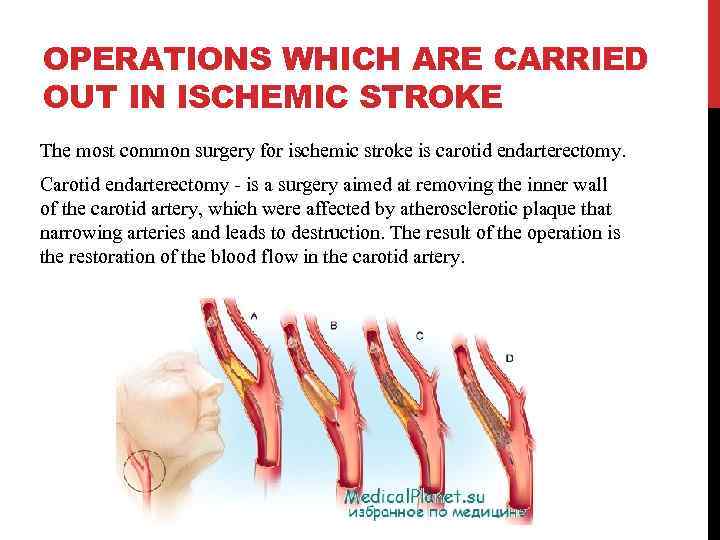 OPERATIONS WHICH ARE CARRIED OUT IN ISCHEMIC STROKE The most common surgery for ischemic stroke is carotid endarterectomy. Carotid endarterectomy - is a surgery aimed at removing the inner wall of the carotid artery, which were affected by atherosclerotic plaque that narrowing arteries and leads to destruction. The result of the operation is the restoration of the blood flow in the carotid artery.
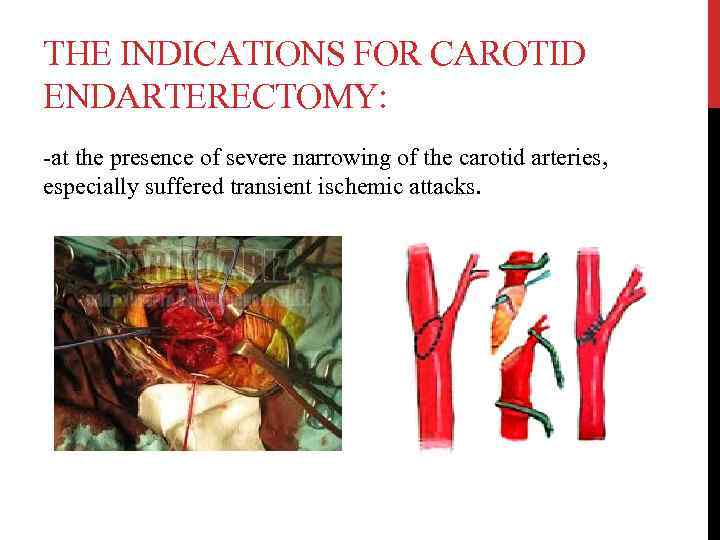 THE INDICATIONS FOR CAROTID ENDARTERECTOMY: -at the presence of severe narrowing of the carotid arteries, especially suffered transient ischemic attacks.
 CONTRAINDICATIONS TO CAROTID ENDARTERECTOMY ARE: -massive stroke -spread of tumors -high blood pressure -unstable angina -myocardial infarction in the last 6 months -congestive heart failure -signs of progressive brain disease such as Alzheimer's disease
 VASCULAR STENTING OF NECK AND HEAD In ischemic stroke performed vascular stenting of neck and head. This will done, as a rule, to prevent the further development of ischemic stroke in the presence of transient ischemic attacks. For example vascular stenting of carotid vessels. Carotid stenting - a procedure which consists in the installation into the lumen of the vessel narrowed thin wire construction in the form of a cylinder, which plays the role of a skeleton - stent. The stent is typically mounted in preexpanded artery.
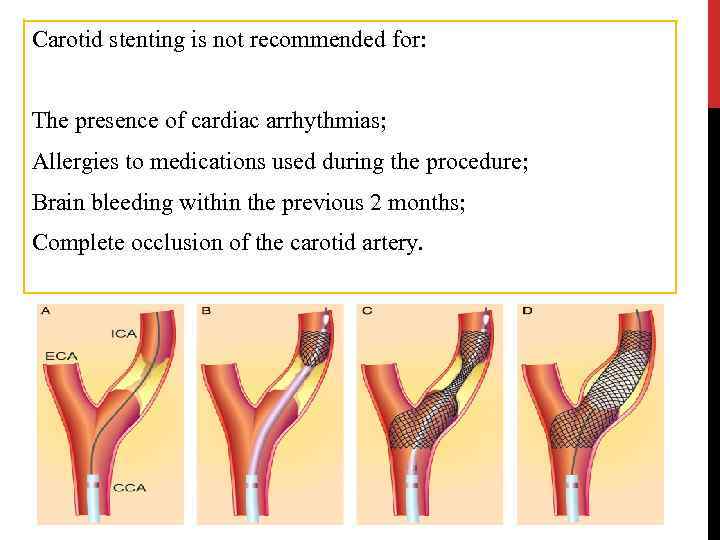 Carotid stenting is not recommended for: The presence of cardiac arrhythmias; Allergies to medications used during the procedure; Brain bleeding within the previous 2 months; Complete occlusion of the carotid artery.
 RISK FACTORS FOR COMPLICATIONS OF CAROTID STENTING -High blood pressure; -An allergy to radiocontrast agent; -Calcification (impregnation of lime) and large in extent -narrowing of the carotid arteries; -Sharp bends or other anatomical features that lead -difficulties of staging the stent; -plaques significant size or aortic atherosclerosis in the beginning of carotid arteries; -Age older than 80 years; -Related clogged of arteries of the hands and feet.
 SELECTIVE THROMBOLYSIS Also to surgery in ischemic stroke include conducting selective thrombolysis: is intravascular intervention is to ensure that through one of the major arteries (usually the thigh) held a thin catheter, which is fed directly to the site of artery blockage in the brain - a thrombolytic (substance, which will solve thromb as the root of cause of ischemic stroke), and locally administered in small doses.
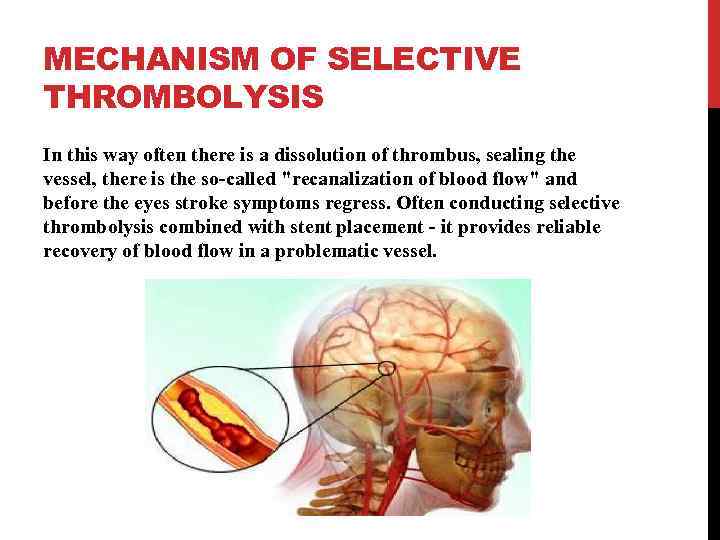 MECHANISM OF SELECTIVE THROMBOLYSIS In this way often there is a dissolution of thrombus, sealing the vessel, there is the so-called "recanalization of blood flow" and before the eyes stroke symptoms regress. Often conducting selective thrombolysis combined with stent placement - it provides reliable recovery of blood flow in a problematic vessel.
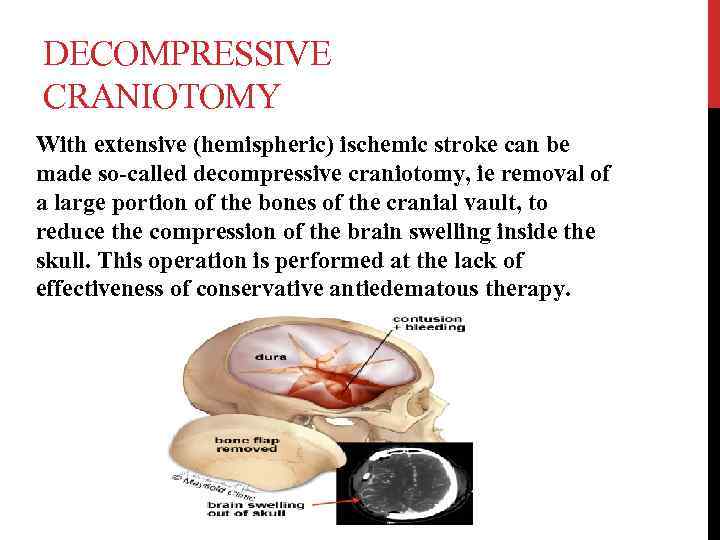 DECOMPRESSIVE CRANIOTOMY With extensive (hemispheric) ischemic stroke can be made so-called decompressive craniotomy, ie removal of a large portion of the bones of the cranial vault, to reduce the compression of the brain swelling inside the skull. This operation is performed at the lack of effectiveness of conservative antiedematous therapy.
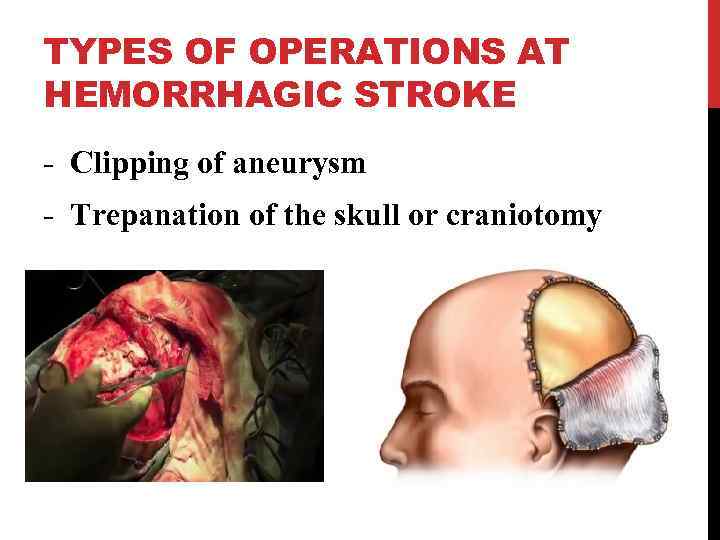 TYPES OF OPERATIONS AT HEMORRHAGIC STROKE - Clipping of aneurysm - Trepanation of the skull or craniotomy
 CLIPPING OF ANEURYSM With the development of spontaneous subarachnoid hemorrhage caused by an aneurysm of the vessel can be carried out clipping of the aneurysm - such intravascular surgery by using of coils (or spiral), which will fix the aneurysm. The technique does not require a providing of craniotomy, because it allows you to perform the desired procedure by insertion through the femoral artery to the brain vessels of a special catheter.
 TREPANATION OF THE SKULL OR CRANIOTOMY Open surgery through craniotomy (trepanation of the skull) when need to remove the hematoma, it is necessary to open the skull. This type of treatment, after detecting stroke pathology, accompanied by the opening of the skull, carried out not more than 24% of the cases because the operation itself can have a negative impact.
 CONTRAINDICATIONS TO SURGICAL TREATMENT: -Patient age over 70 years (relative contraindication) -The presence of severe somatic diseases (diabetes mellitus, renal, hepatic, cardiovascular, pulmonary pathology in the stage of sub- and decompensation expressed coagulation disorders, purulent-inflammatory diseases and cancer) -The level of consciousness - Coma
 REFERENCES http: //sosudy. pro/dostupno-ob-insulte/lechenie-insulta/99 -vidy-khirurgicheskogo-lecheniya-pri-insulte http: //proinsultmozga. ru/sposoby-lecheniya/trepanaciyacherepa-pri-insulte. html