 Скачать презентацию Semantic Web Services SS 2016 Semantic Services as
6edbc2902d56869170a3464dc410852a.ppt
- Количество слайдов: 76



Semantic Web Services SS 2016 Semantic Services as a Part of the Future Internet and Big Data Technology Anna Fensel 23. 05. 2016 © Copyright 2016 Anna Fensel 1
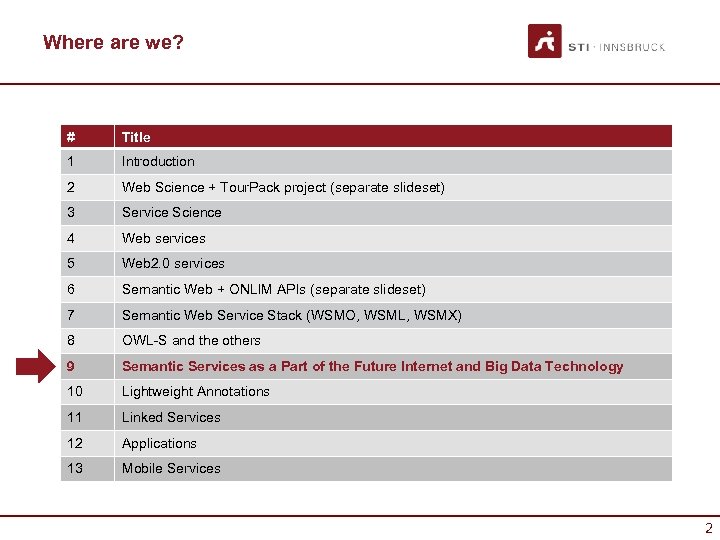
Where are we? # Title 1 Introduction 2 Web Science + Tour. Pack project (separate slideset) 3 Service Science 4 Web services 5 Web 2. 0 services 6 Semantic Web + ONLIM APIs (separate slideset) 7 Semantic Web Service Stack (WSMO, WSML, WSMX) 8 OWL-S and the others 9 Semantic Services as a Part of the Future Internet and Big Data Technology 10 Lightweight Annotations 11 Linked Services 12 Applications 13 Mobile Services 2
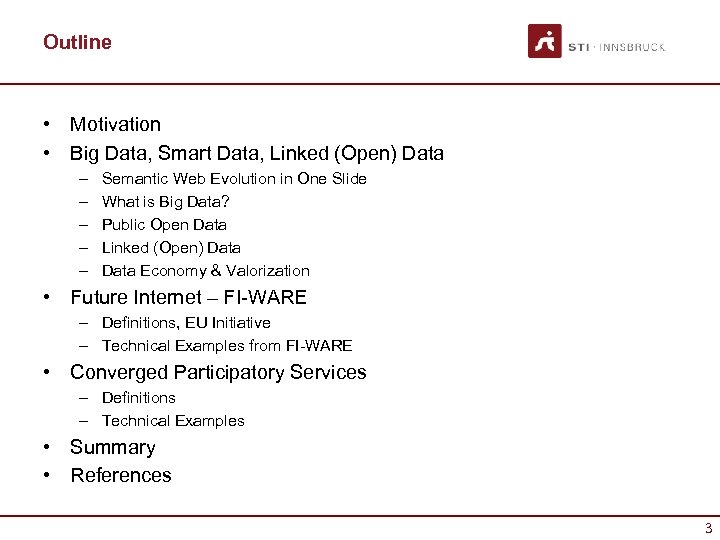
Outline • Motivation • Big Data, Smart Data, Linked (Open) Data – – – Semantic Web Evolution in One Slide What is Big Data? Public Open Data Linked (Open) Data Economy & Valorization • Future Internet – FI-WARE – Definitions, EU Initiative – Technical Examples from FI-WARE • Converged Participatory Services – Definitions – Technical Examples • Summary • References 3
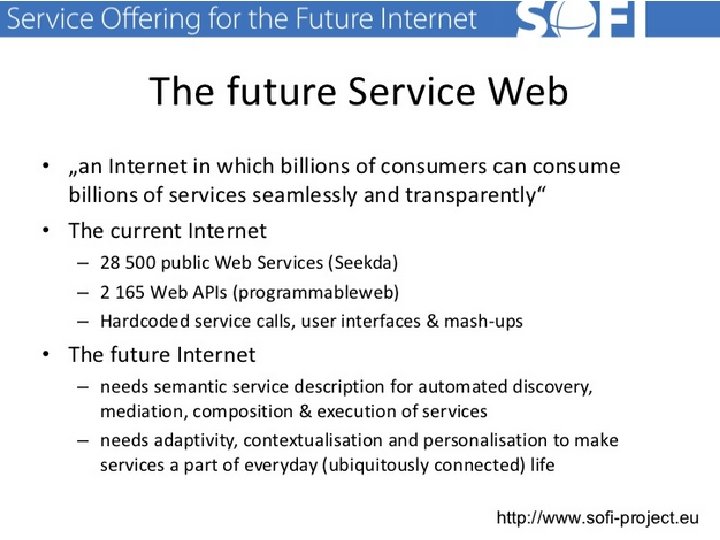
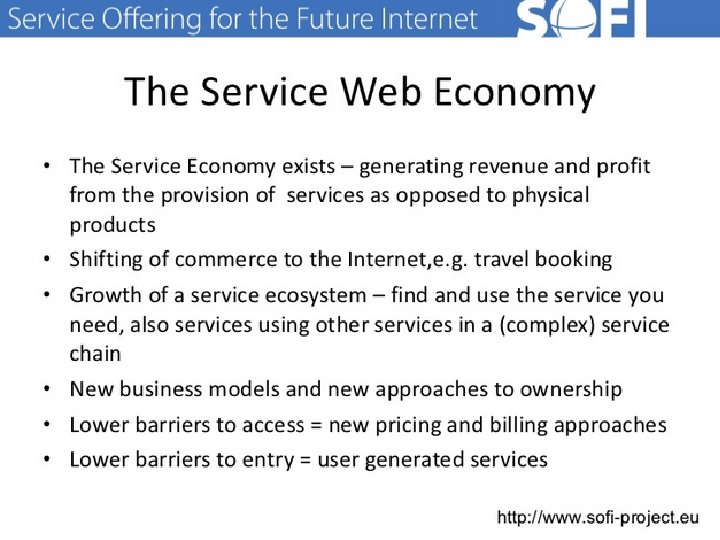
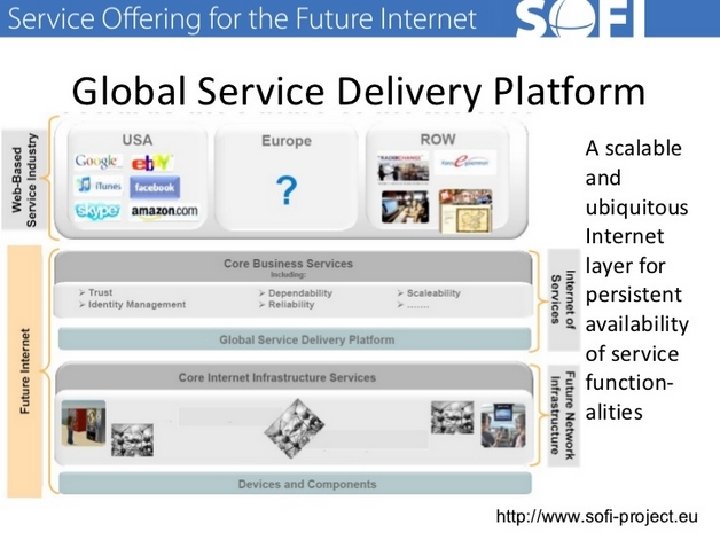
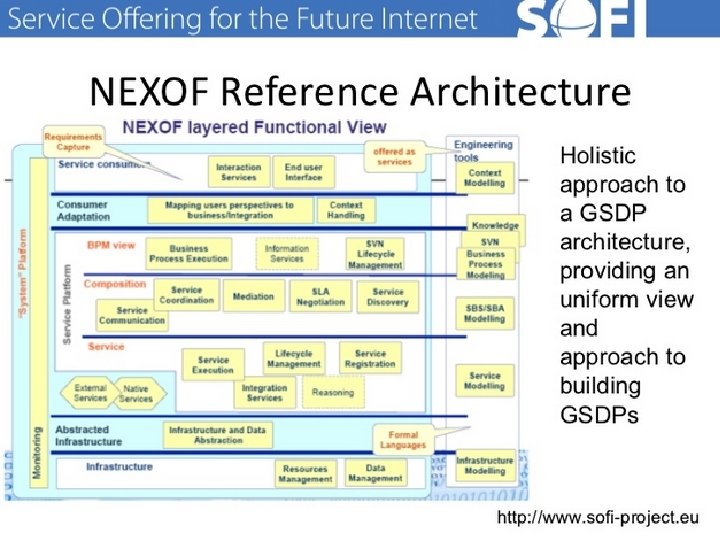
MOTIVATION SLIDES TAKEN FROM PRESENTATION OF L. NIXON: “LIMITATIONS OF THE CURRENT INTERNET FOR THE FUTURE INTERNET OF SERVICES”, 2010, HTTP: //WWW. SLIDESHARE. NET/MBASTI 2/SOFISERVICEARCHITECTURES 300910 4
5
6
7
8
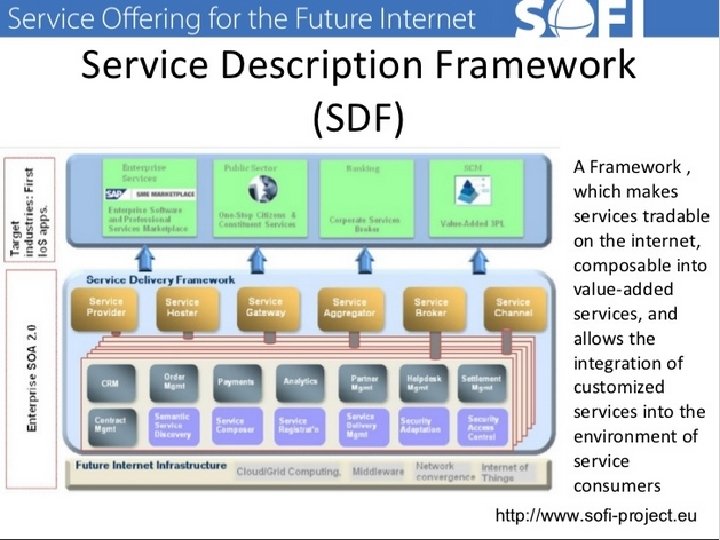
9
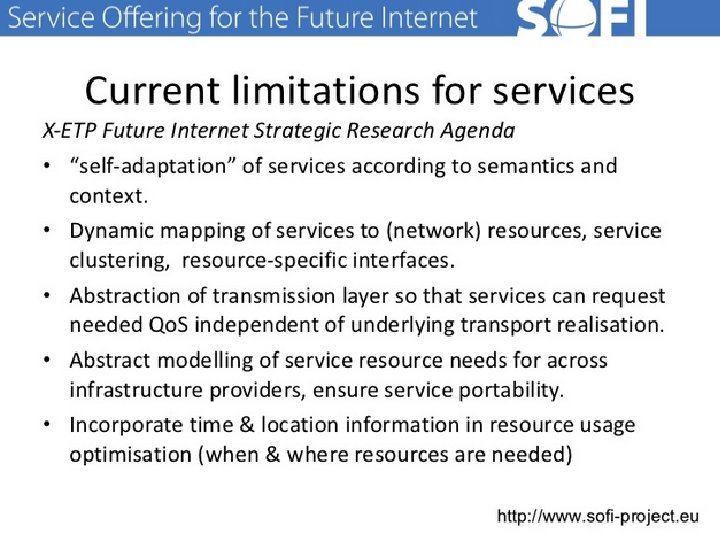
10
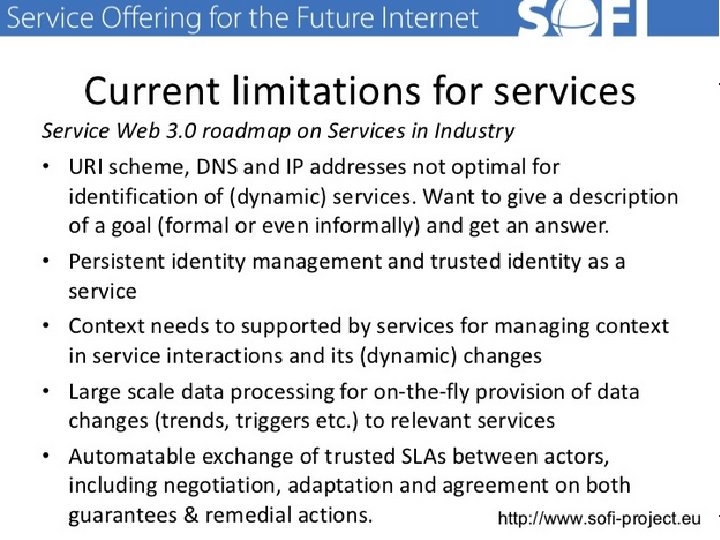
11
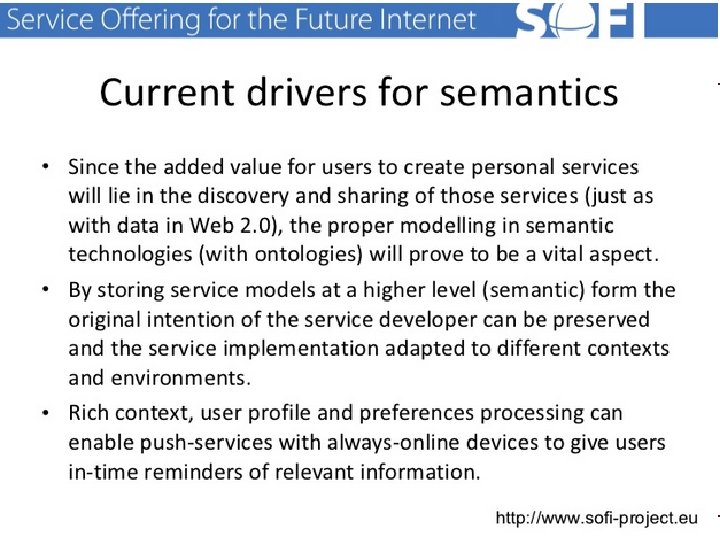
12
BIG DATA, SMART DATA, LINKED (OPEN) DATA 13
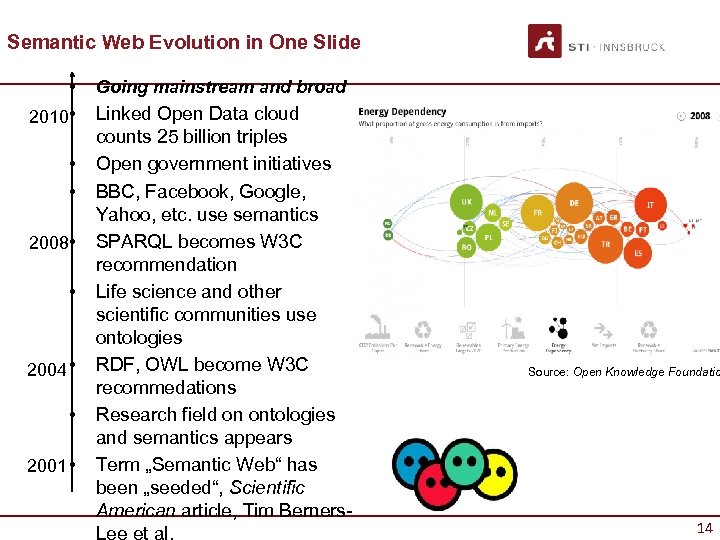
Semantic Web Evolution in One Slide • 2010 • • • 2008 • • 2004 • • 2001 • Going mainstream and broad Linked Open Data cloud counts 25 billion triples Open government initiatives BBC, Facebook, Google, Yahoo, etc. use semantics SPARQL becomes W 3 C recommendation Life science and other scientific communities use ontologies RDF, OWL become W 3 C recommedations Research field on ontologies and semantics appears Term „Semantic Web“ has been „seeded“, Scientific American article, Tim Berners. Lee et al. Source: Open Knowledge Foundatio 14
From Semantic Web to Semantic World: Data Challenges • Large volumes of raw data to smaller volumes of „processed“ data – Streaming, new data acquisition infrastructures – Data modeling, mining, analysis, processing, distribution – Complex event processing (e. g. in-house behaviour identification) • Data which is neither „free“ nor „open“ – – How to store, discover and link it How to sell it How to define and communicate its quality / provenance How to get the stekeholders in the game, create marketplaces • Establishment of radically new B 2 B and B 2 C services – „Tomorrow, your carton of milk will be on the Internet“ – J. da Silva, referring to Internet of Things – But how would the services look like? 15
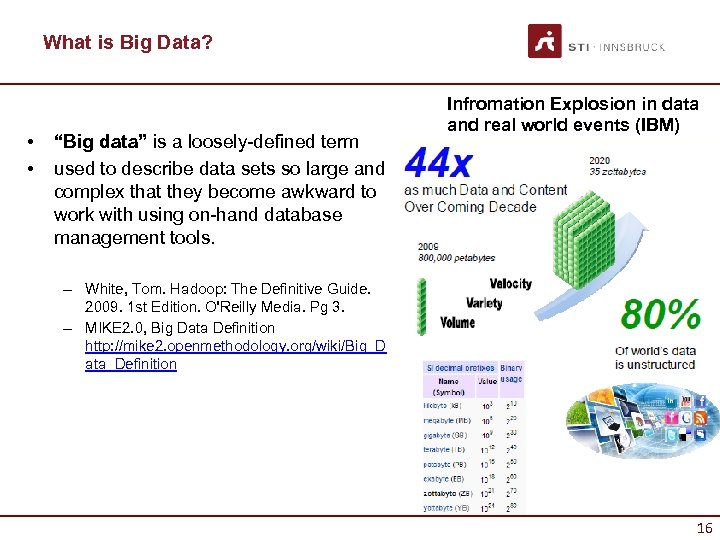
What is Big Data? • • “Big data” is a loosely-defined term used to describe data sets so large and complex that they become awkward to work with using on-hand database management tools. Infromation Explosion in data and real world events (IBM) – White, Tom. Hadoop: The Definitive Guide. 2009. 1 st Edition. O'Reilly Media. Pg 3. – MIKE 2. 0, Big Data Definition http: //mike 2. openmethodology. org/wiki/Big_D ata_Definition 16
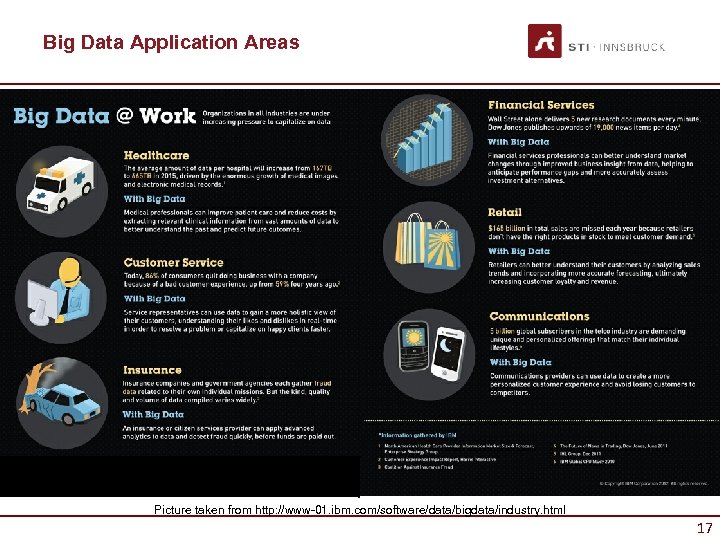
Big Data Application Areas Picture taken from http: //www-01. ibm. com/software/data/bigdata/industry. html 17
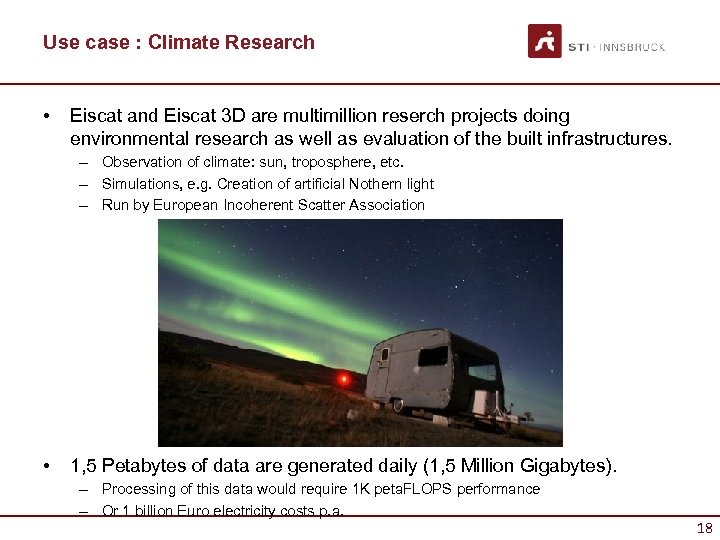
Use case : Climate Research • Eiscat and Eiscat 3 D are multimillion reserch projects doing environmental research as well as evaluation of the built infrastructures. – Observation of climate: sun, troposphere, etc. – Simulations, e. g. Creation of artificial Nothern light – Run by European Incoherent Scatter Association • 1, 5 Petabytes of data are generated daily (1, 5 Million Gigabytes). – Processing of this data would require 1 K peta. FLOPS performance – Or 1 billion Euro electricity costs p. a. 18
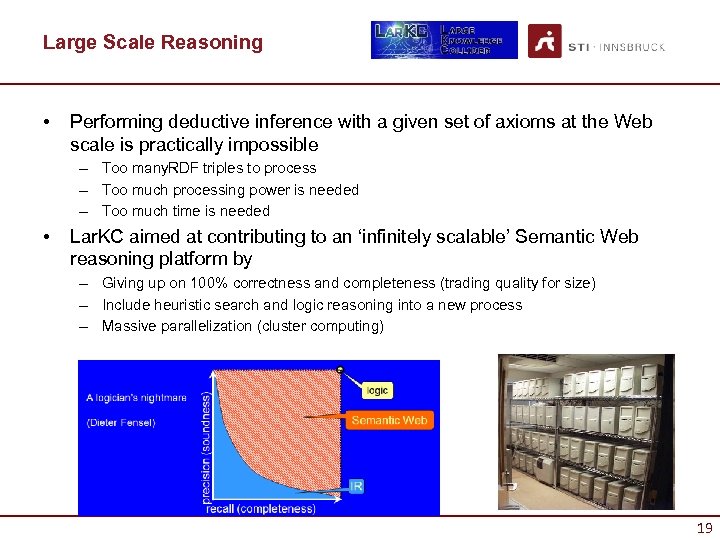
Large Scale Reasoning • Performing deductive inference with a given set of axioms at the Web scale is practically impossible – Too many. RDF triples to process – Too much processing power is needed – Too much time is needed • Lar. KC aimed at contributing to an ‘infinitely scalable’ Semantic Web reasoning platform by – Giving up on 100% correctness and completeness (trading quality for size) – Include heuristic search and logic reasoning into a new process – Massive parallelization (cluster computing) 19
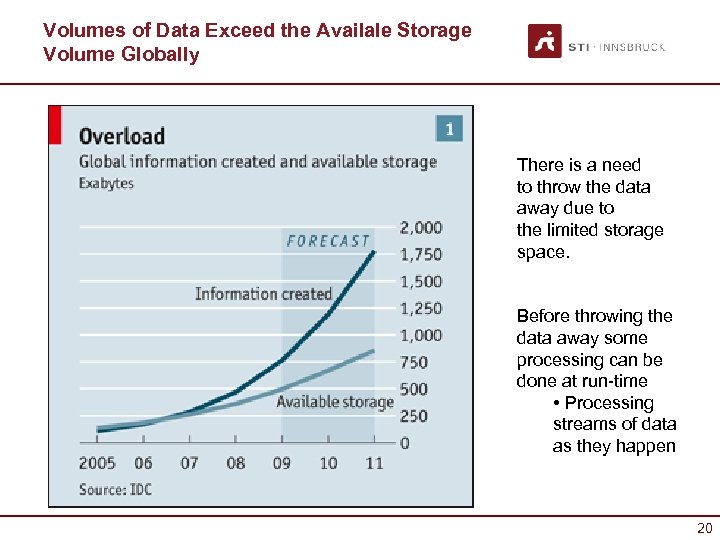
Volumes of Data Exceed the Availale Storage Volume Globally There is a need to throw the data away due to the limited storage space. Before throwing the data away some processing can be done at run-time • Processing streams of data as they happen 20
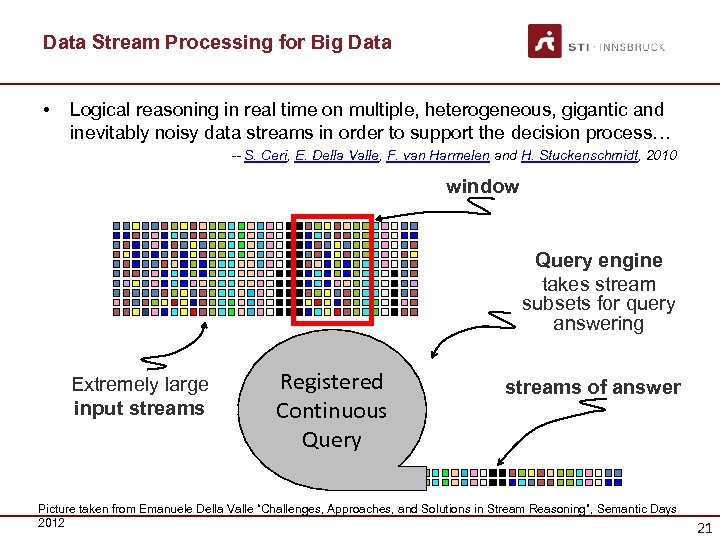
Data Stream Processing for Big Data • Logical reasoning in real time on multiple, heterogeneous, gigantic and inevitably noisy data streams in order to support the decision process… -- S. Ceri, E. Della Valle, F. van Harmelen and H. Stuckenschmidt, 2010 window Query engine takes stream subsets for query answering Extremely large input streams Registered Continuous Query streams of answer Picture taken from Emanuele Della Valle “Challenges, Approaches, and Solutions in Stream Reasoning”, Semantic Days 2012 21
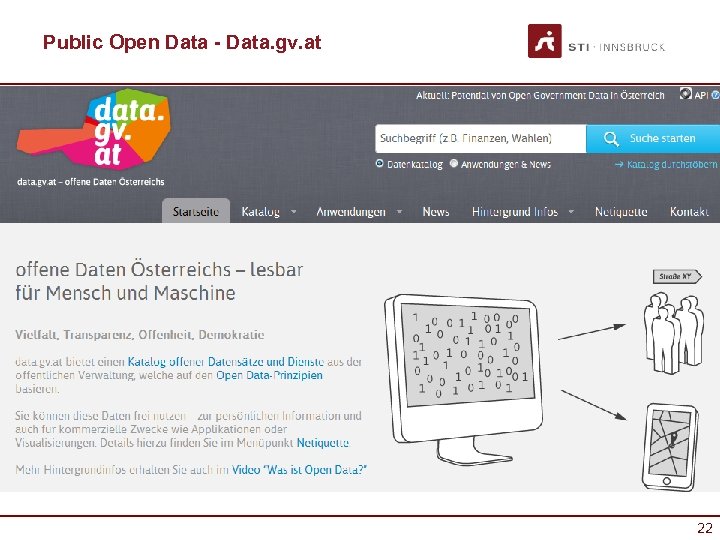
Public Open Data - Data. gv. at 22
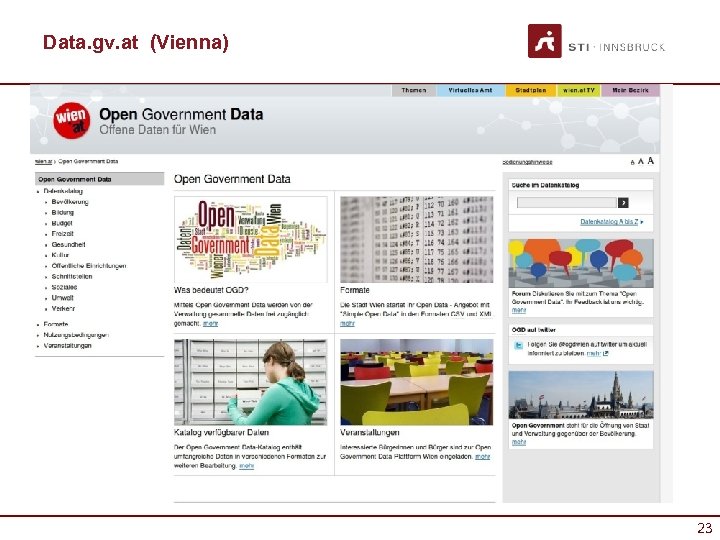
Data. gv. at (Vienna) 23
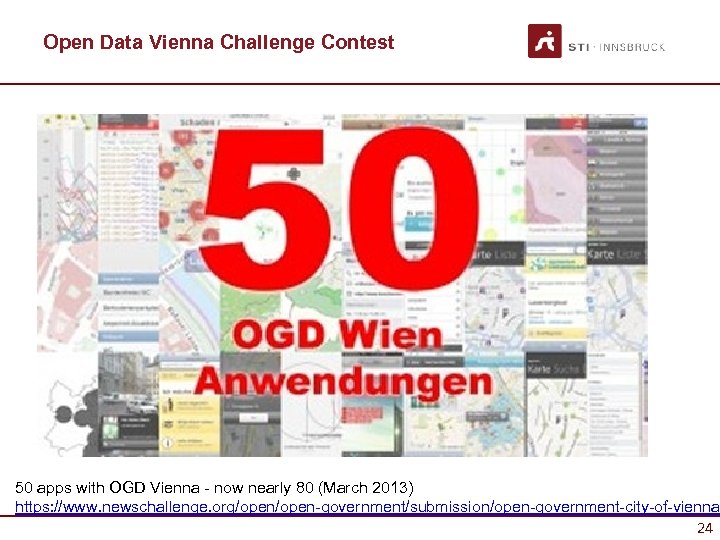
Open Data Vienna Challenge Contest 50 apps with OGD Vienna - now nearly 80 (March 2013) https: //www. newschallenge. org/open-government/submission/open-government-city-of-vienna/ 24
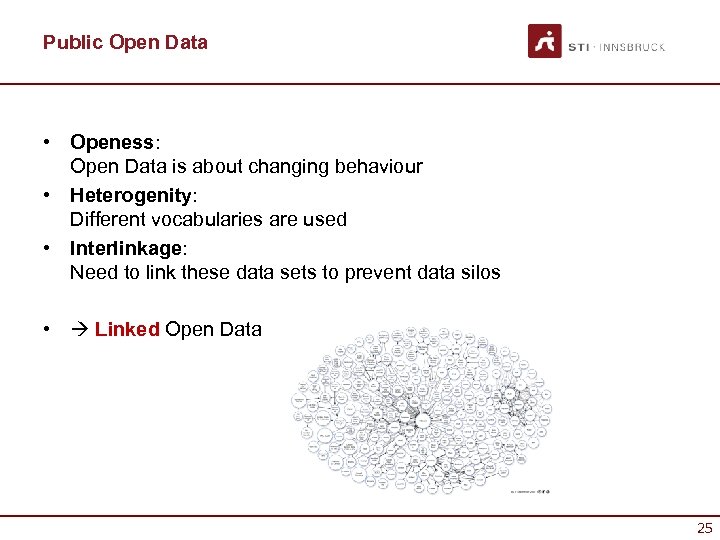
Public Open Data • Openess: Open Data is about changing behaviour • Heterogenity: Different vocabularies are used • Interlinkage: Need to link these data sets to prevent data silos • Linked Open Data 25
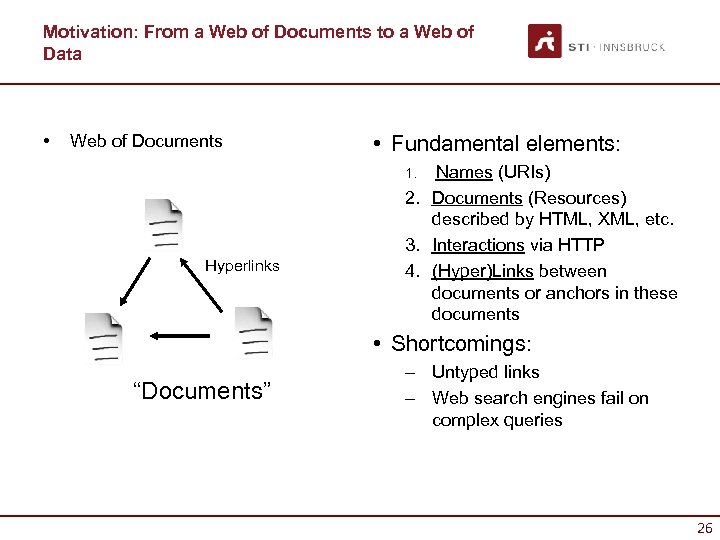
Motivation: From a Web of Documents to a Web of Data • Web of Documents • Fundamental elements: Names (URIs) 2. Documents (Resources) described by HTML, XML, etc. 3. Interactions via HTTP 4. (Hyper)Links between documents or anchors in these documents 1. Hyperlinks • Shortcomings: “Documents” – Untyped links – Web search engines fail on complex queries 26
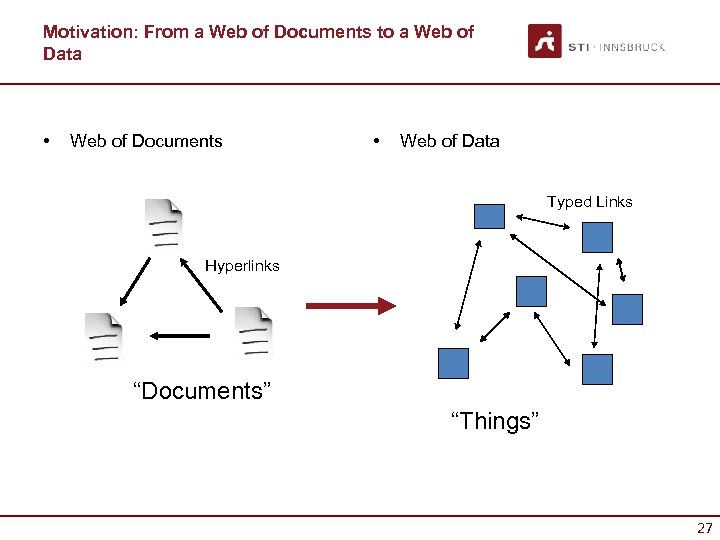
Motivation: From a Web of Documents to a Web of Data • Web of Documents • Web of Data Typed Links Hyperlinks “Documents” “Things” 27
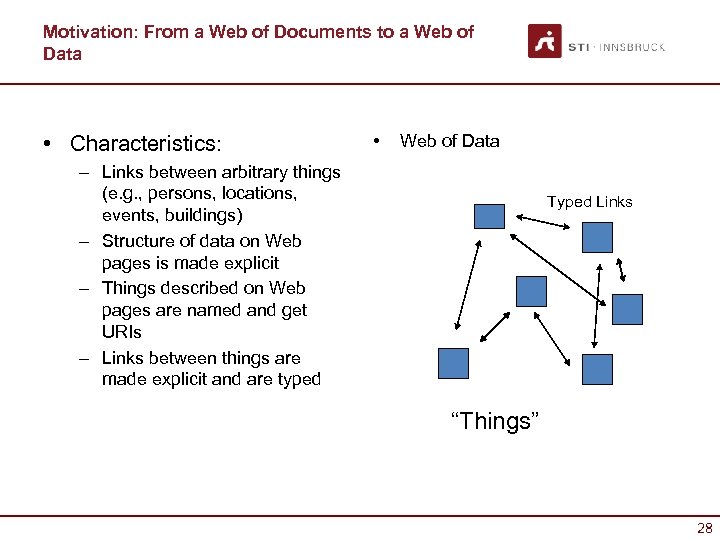
Motivation: From a Web of Documents to a Web of Data • Characteristics: • Web of Data – Links between arbitrary things (e. g. , persons, locations, events, buildings) – Structure of data on Web pages is made explicit – Things described on Web pages are named and get URIs – Links between things are made explicit and are typed Typed Links “Things” 28
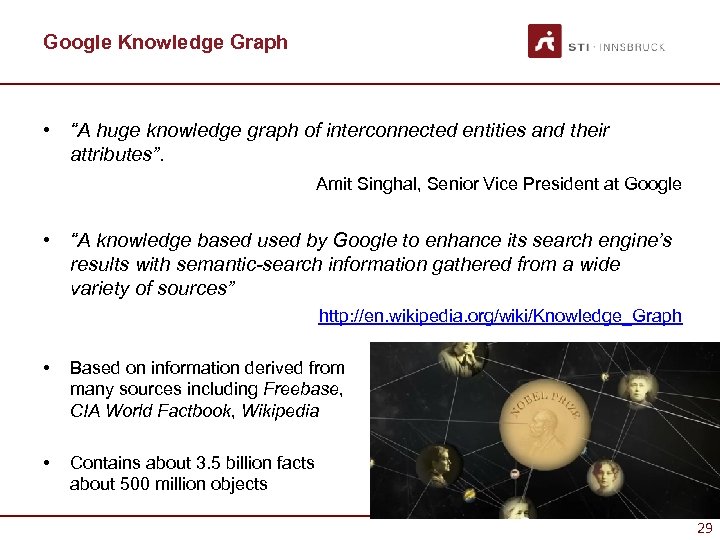
Google Knowledge Graph • “A huge knowledge graph of interconnected entities and their attributes”. Amit Singhal, Senior Vice President at Google • “A knowledge based used by Google to enhance its search engine’s results with semantic-search information gathered from a wide variety of sources” http: //en. wikipedia. org/wiki/Knowledge_Graph • Based on information derived from many sources including Freebase, CIA World Factbook, Wikipedia • Contains about 3. 5 billion facts about 500 million objects 29
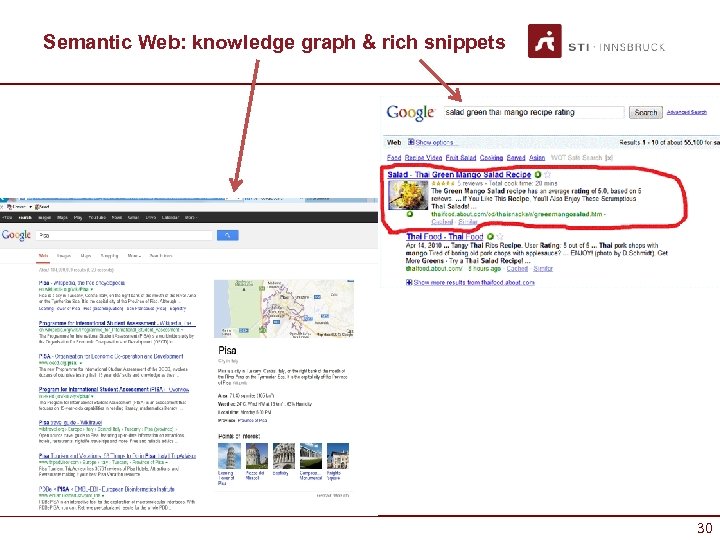
Semantic Web: knowledge graph & rich snippets 30
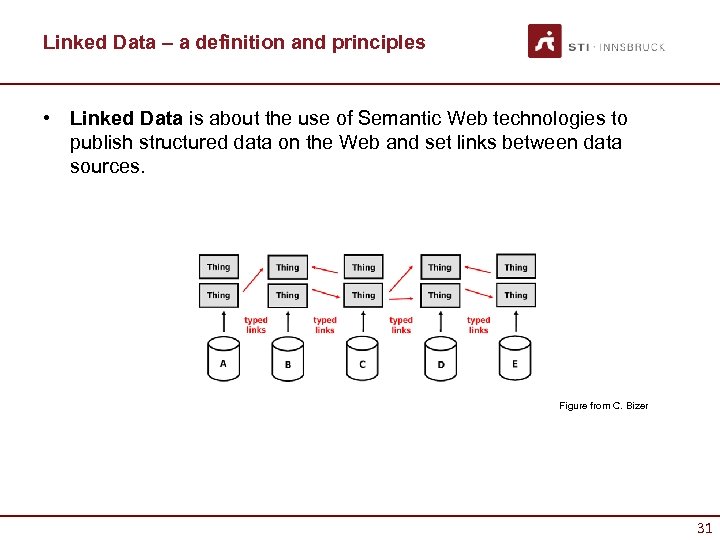
Linked Data – a definition and principles • Linked Data is about the use of Semantic Web technologies to publish structured data on the Web and set links between data sources. Figure from C. Bizer 31
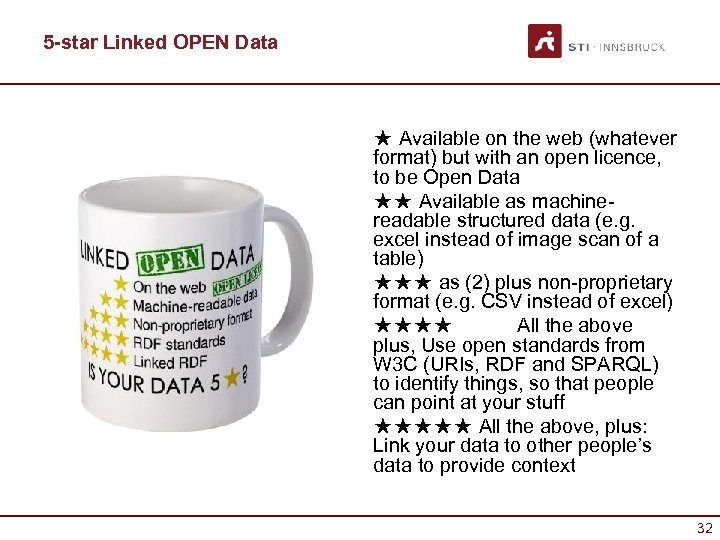
5 -star Linked OPEN Data ★ Available on the web (whatever format) but with an open licence, to be Open Data ★★ Available as machinereadable structured data (e. g. excel instead of image scan of a table) ★★★ as (2) plus non-proprietary format (e. g. CSV instead of excel) ★★★★ All the above plus, Use open standards from W 3 C (URIs, RDF and SPARQL) to identify things, so that people can point at your stuff ★★★★★ All the above, plus: Link your data to other people’s data to provide context 32
Linked Open Data – silver bullet for data integration • Linked Open Data can be seen as a global data integration platform – Heterogeneous data items from different data sets are linked to each other following the Linked Data principles – Widely deployed vocabularies (e. g. FOAF) provide the predicates to specify links between data items • Data integration with LOD requires: 1. Access to Linked Data • • HTTP, SPARQL endpoints, RDF dumps Crawling and caching 2. Normalize vocabularies – data sets that overlap in content use different vocabularies • Use schema mapping techniques based on rules (e. g. RIF, SWRL) or query languages (e. g. SPARQL Construct, etc. ) 3. Resolve identifies – data sets that overlap in content use different URIs for the same real world entities • Use manual merging or approaches such as SILK (part of Linked Data Integration Framework) or LIMES 4. Filter data • Use SIVE ((part of Linked Data Integration Framework) See: http: //www 4. wiwiss. fu-berlin. de/bizer/ldif/ 33
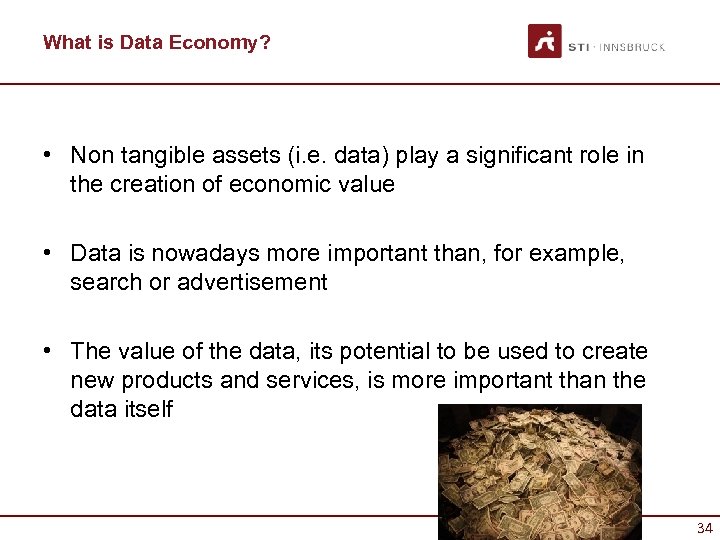
What is Data Economy? • Non tangible assets (i. e. data) play a significant role in the creation of economic value • Data is nowadays more important than, for example, search or advertisement • The value of the data, its potential to be used to create new products and services, is more important than the data itself 34 34
Why a Data Economy? • • • New businesses can be built on the back of these data: Data are an essential raw material for a wide range of new information products and services which build on new possibilities to analyse and visualise data from different sources. Facilitating re-use of these raw data will create jobs and thus stimulate growth. More Transparency: Open data is a powerful tool to increase the transparency of public administration, improving the visibility of previously inaccessible information, informing citizens and business about policies, public spending and outcomes. Evidence-based policy making and administrative efficiency: The availability of solid EU-wide public data will lead to better evidencebased policy making at all levels of government, resulting in better public services and more efficient public spending. See: http: //europa. eu/rapid/press. Releases. Action. do? reference=MEMO 11/891&format=HTML&aged=0&language=EN&gui. Language=en 35
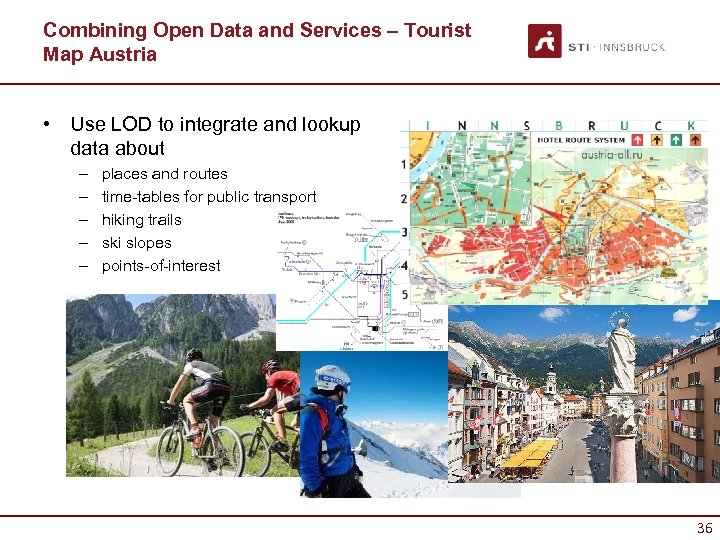
Combining Open Data and Services – Tourist Map Austria • Use LOD to integrate and lookup data about – – – places and routes time-tables for public transport hiking trails ski slopes points-of-interest 36
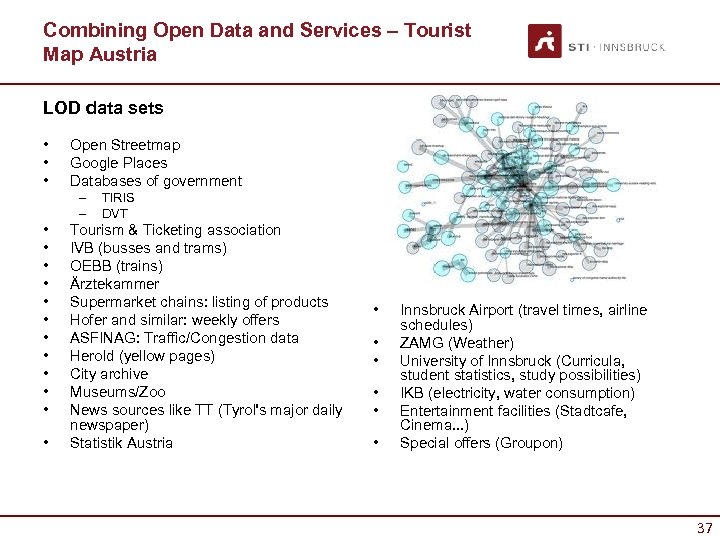
Combining Open Data and Services – Tourist Map Austria LOD data sets • • • Open Streetmap Google Places Databases of government – – • • • TIRIS DVT Tourism & Ticketing association IVB (busses and trams) OEBB (trains) Ärztekammer Supermarket chains: listing of products Hofer and similar: weekly offers ASFINAG: Traffic/Congestion data Herold (yellow pages) City archive Museums/Zoo News sources like TT (Tyrol's major daily newspaper) Statistik Austria • • • Innsbruck Airport (travel times, airline schedules) ZAMG (Weather) University of Innsbruck (Curricula, student statistics, study possibilities) IKB (electricity, water consumption) Entertainment facilities (Stadtcafe, Cinema. . . ) Special offers (Groupon) 37
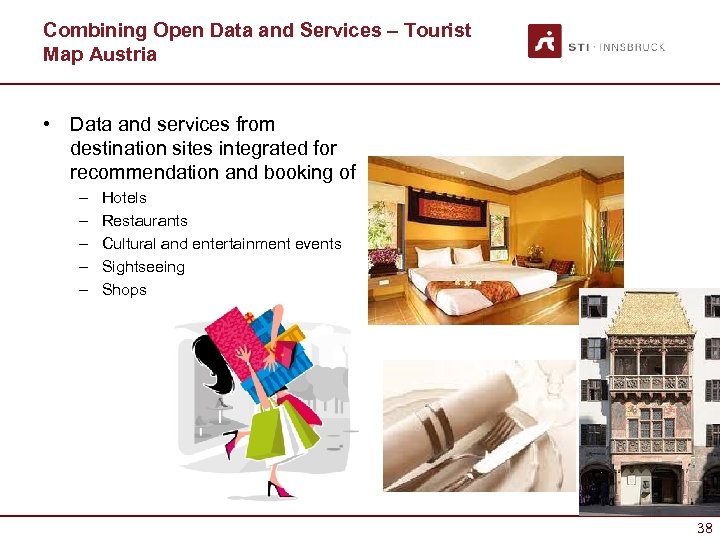
Combining Open Data and Services – Tourist Map Austria • Data and services from destination sites integrated for recommendation and booking of – – – Hotels Restaurants Cultural and entertainment events Sightseeing Shops 38
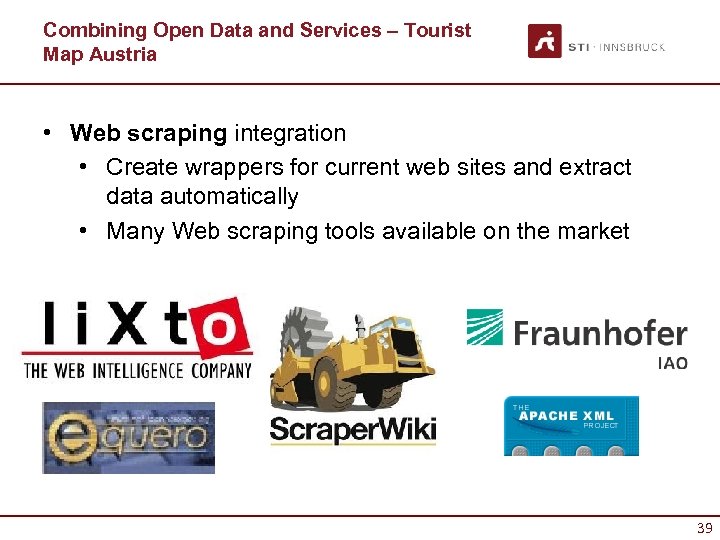
Combining Open Data and Services – Tourist Map Austria • Web scraping integration • Create wrappers for current web sites and extract data automatically • Many Web scraping tools available on the market 39
“There's No Money in Linked (Open) Data” http: //knoesis. wright. edu/faculty/pascal/pub/nomoneylod. pdf • It turns out that using LOD datasets in realistic settings is not always easy. – Surprisingly, in many cases the underlying issues are not technical but legal barriers erected by the LD data publishers. – Generally, mostly non-technical but socio-economical barriers hamper the reuse of date (do patents and IPR protections hamper or facilitate knowledge reuse? ). – Business intelligence – Dynamic Data – On the fly generation of data 40
FUTURE INTERNET – FI-WARE FOR THIS PART, FOLLOW PRESENTATION OF F. -M. FACCA: “FIWARE PRIMER - LEARN FIWARE IN 60 MINUTES”, 2015, HTTP: //WWW. SLIDESHARE. NET/CHICCO 785/FIWARE-PRIMERLEARN-FIWARE-IN-60 -MINUTES 41
CONVERGED PARTICIPATORY SERVICES 42
Research Aim Converged Semantic Services For Empowering Participation Aims: • Enabling efficient participation vs. current social network silos and groups – More possible roles for an individual – More roles at a time for an individual – More matching and satisfying roles for an individual => Motivation, added value and revenue increase Technologically that means: • Benefiting from data and services reuse at the maximum • Enabling participators to establish added value new and converged services on top of the data – commercially re-applying them across platforms =>There is a need to „understand“ and interlink content and objects coming from heterogeneous numerous sources 43
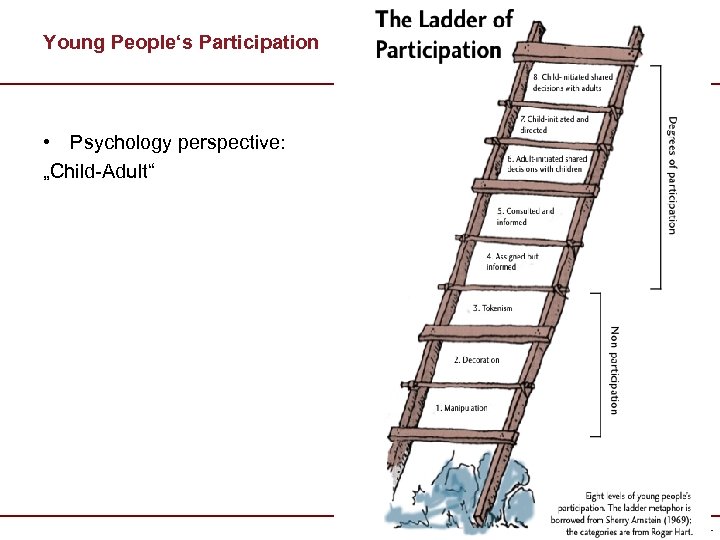
Young People‘s Participation • Psychology perspective: „Child-Adult“ 44 44
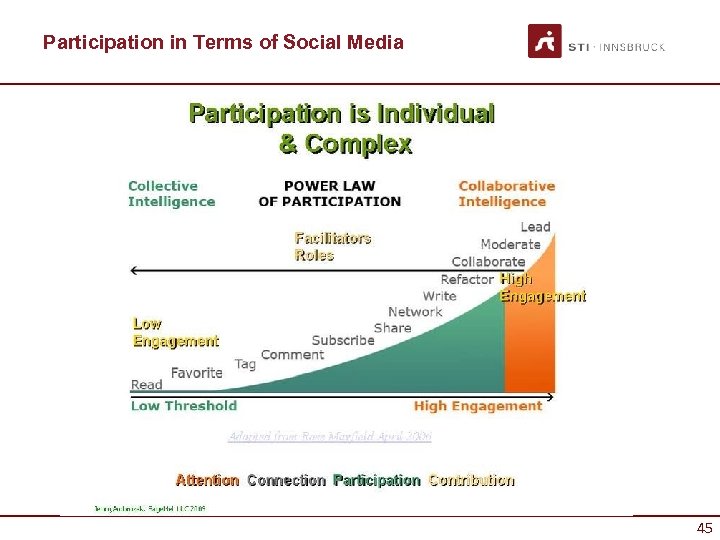
Participation in Terms of Social Media 45
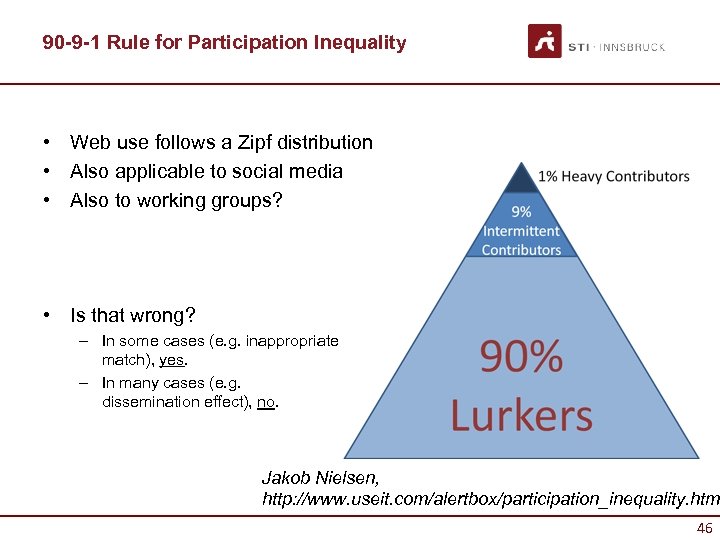
90 -9 -1 Rule for Participation Inequality • Web use follows a Zipf distribution • Also applicable to social media • Also to working groups? • Is that wrong? – In some cases (e. g. inappropriate match), yes. – In many cases (e. g. dissemination effect), no. Jakob Nielsen, http: //www. useit. com/alertbox/participation_inequality. html 46
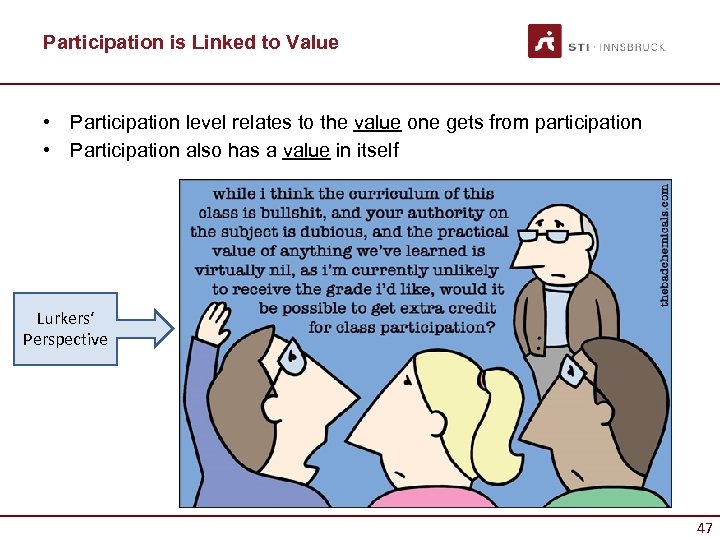
Participation is Linked to Value • Participation level relates to the value one gets from participation • Participation also has a value in itself Lurkers‘ Perspective 47
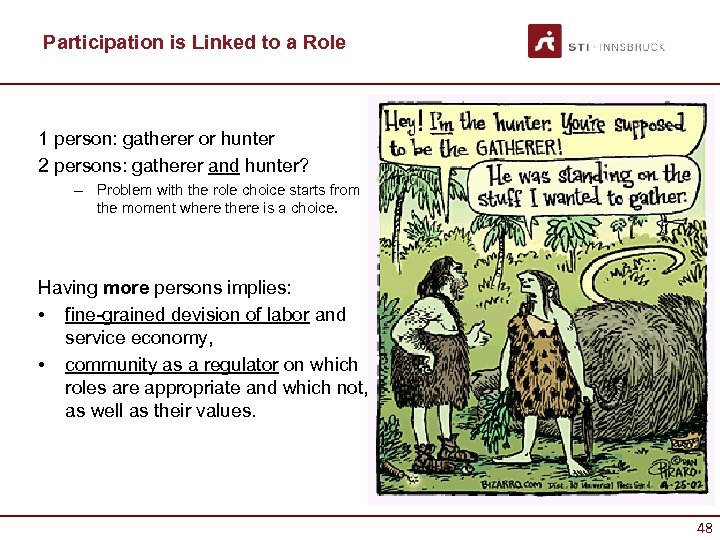
Participation is Linked to a Role 1 person: gatherer or hunter 2 persons: gatherer and hunter? – Problem with the role choice starts from the moment where there is a choice. Having more persons implies: • fine-grained devision of labor and service economy, • community as a regulator on which roles are appropriate and which not, as well as their values. 48
Impact of Roles/Relations and their Weights on Ontology Evolution Dynamics • People and relations are inherently associated with / connected to / can be decomposed into concepts and properties. – See also: Peter Mika, „Ontologies are Us: A Unified Model of Social Networks and Semantics”. International Semantic Web Conference 2005: 522 -536. • • Changing the roles drive social, ontology and market evolution. One of the important drive factors are the quantity of concepts/people relating to another concept/person via a specific property (hub vs. stub), e. g. a property spouse is stronger than friend. Thus, the networks are self-restructuring depending on the roles and weights put on them. – See also: Zhdanova, A. V. , Predoiu, L. , Pellegrini, T. , Fensel, D. "A Social Networking Model of a Web Community". In Proceedings of the 10 th International Symposium on Social Communication, 22 -26 January 2007, Santiago de Cuba, ISBN: 9597174 -08 -1, pp. 537 -541 (2007). 49 49
Convergence • “Telecommunications convergence, network convergence or simply convergence are broad terms used to describe emerging telecommunications technologies, and network architecture used to migrate multiple communications services into a single network. [1] Specifically this involves the converging of previously distinct media such as telephony and data communications into common interfaces on single devices. ” – Wikipedia • Convergent technologies/services include: – – – IP Multimedia Subsystem Session Initiation Protocol IPTV Voice over IP Voice call continuity Digital video broadcasting - handheld 50 50
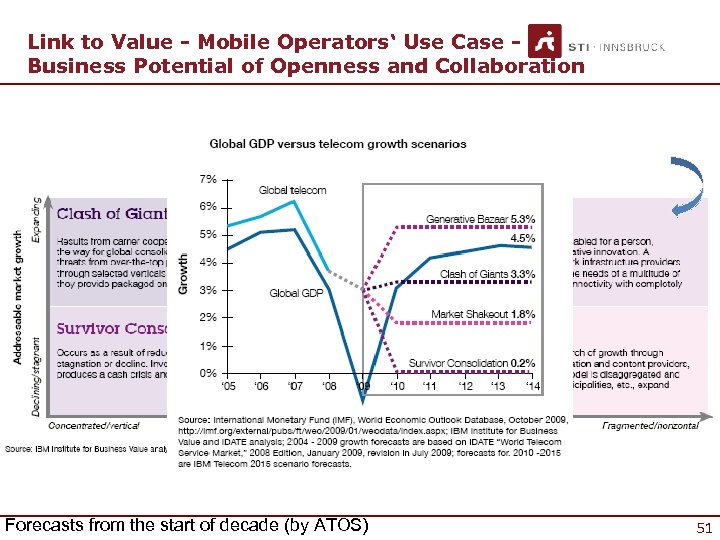
Link to Value - Mobile Operators‘ Use Case Business Potential of Openness and Collaboration Forecasts from the start of decade (by ATOS) 51
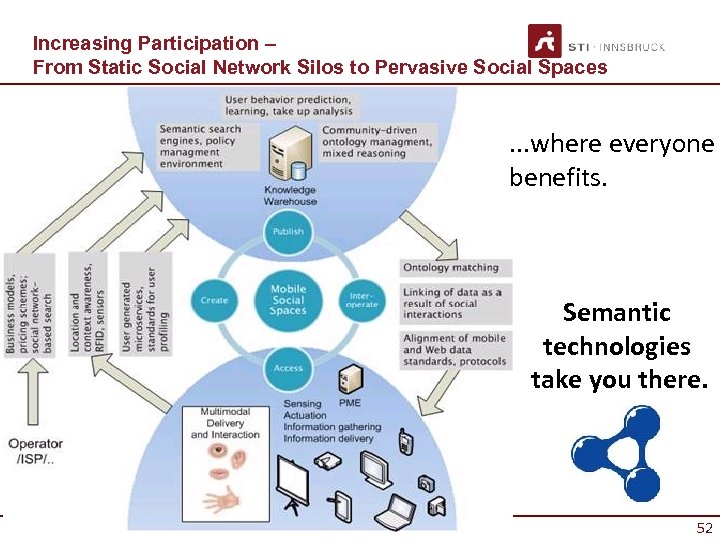
Increasing Participation – From Static Social Network Silos to Pervasive Social Spaces . . . where everyone benefits. Semantic technologies take you there. 52
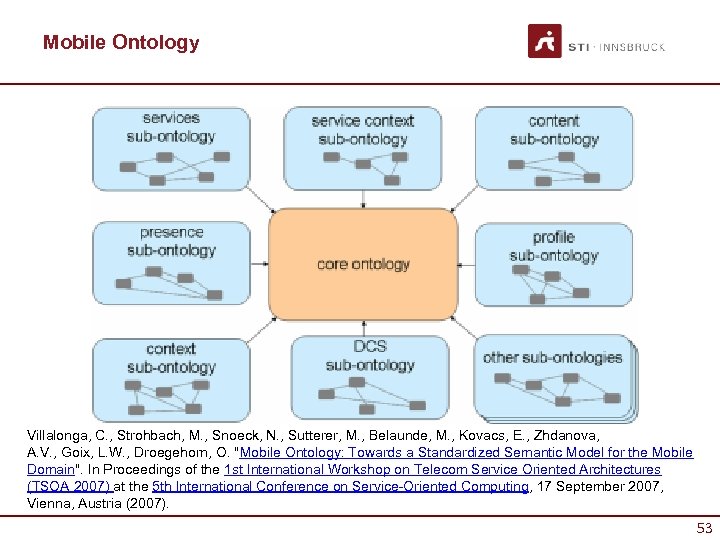
Mobile Ontology Villalonga, C. , Strohbach, M. , Snoeck, N. , Sutterer, M. , Belaunde, M. , Kovacs, E. , Zhdanova, A. V. , Goix, L. W. , Droegehorn, O. "Mobile Ontology: Towards a Standardized Semantic Model for the Mobile Domain". In Proceedings of the 1 st International Workshop on Telecom Service Oriented Architectures (TSOA 2007) at the 5 th International Conference on Service-Oriented Computing, 17 September 2007, Vienna, Austria (2007). 53
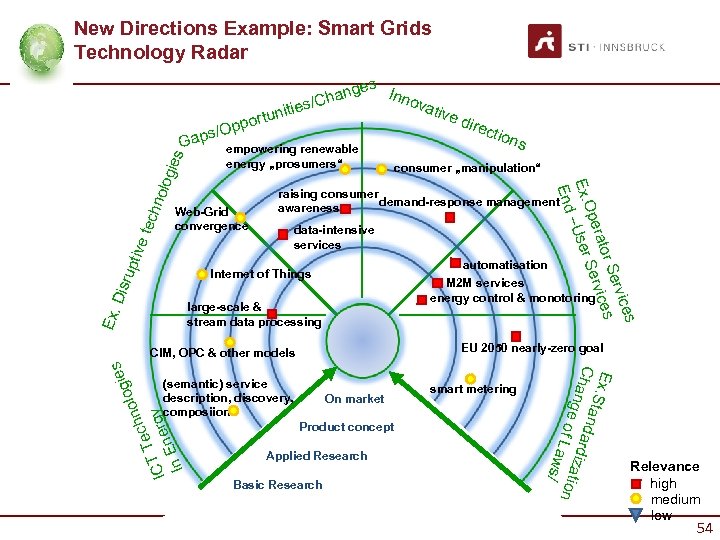
New Directions Example: Smart Grids Technology Radar ng /Cha ies tunit por empowering renewable energy „prosumers“ chn e te Dis rup tiv Web-Grid convergence raising consumer demand-response management awareness data-intensive services automatisation Internet of Things M 2 M services energy control & monotoring Ex. large-scale & stream data processing EU 2050 nearly-zero goal CIM, OPC & other models ech T T rgy IC ne In E (semantic) service description, discovery, composiion On market Product concept Applied Research Basic Research smart metering Ex. S Ch tan ang dardiza eo f La tion ws/ es logi no consumer „manipulation“ ces ervi tor S ices pera Serv Ex. O –User End olog ies G p ps/O a es In nov ativ e di rect ions Relevance high medium low 54
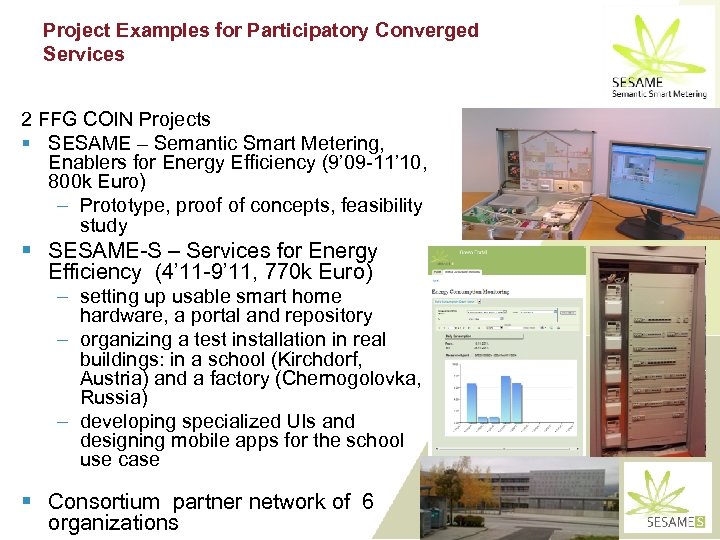
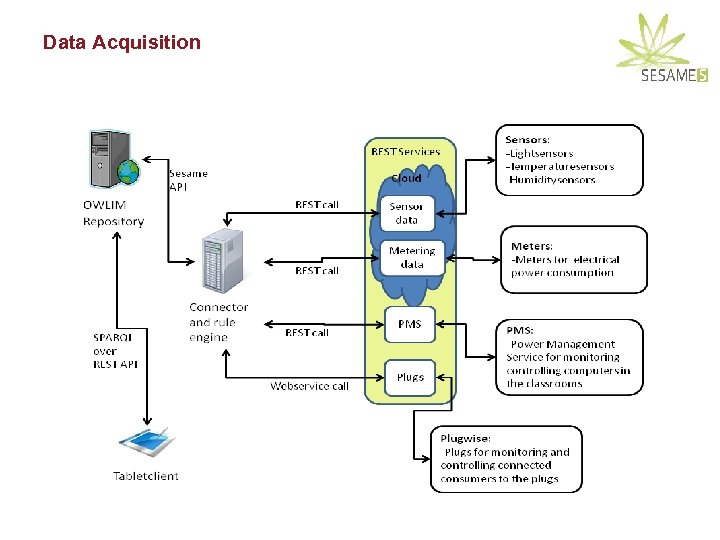
Project Examples for Participatory Converged Services 2 FFG COIN Projects § SESAME – Semantic Smart Metering, Enablers for Energy Efficiency (9’ 09 -11’ 10, 800 k Euro) – Prototype, proof of concepts, feasibility study § SESAME-S – Services for Energy Efficiency (4’ 11 -9’ 11, 770 k Euro) – setting up usable smart home hardware, a portal and repository – organizing a test installation in real buildings: in a school (Kirchdorf, Austria) and a factory (Chernogolovka, Russia) – developing specialized UIs and designing mobile apps for the school use case § Consortium partner network of 6 organizations
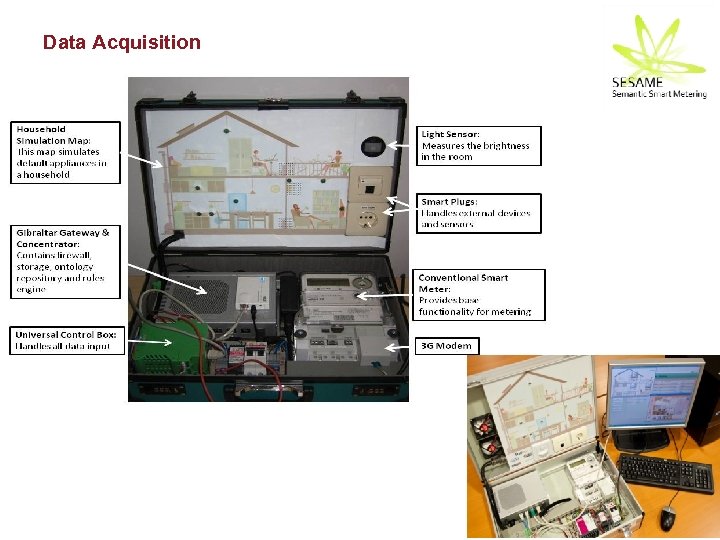
Data Acquisition
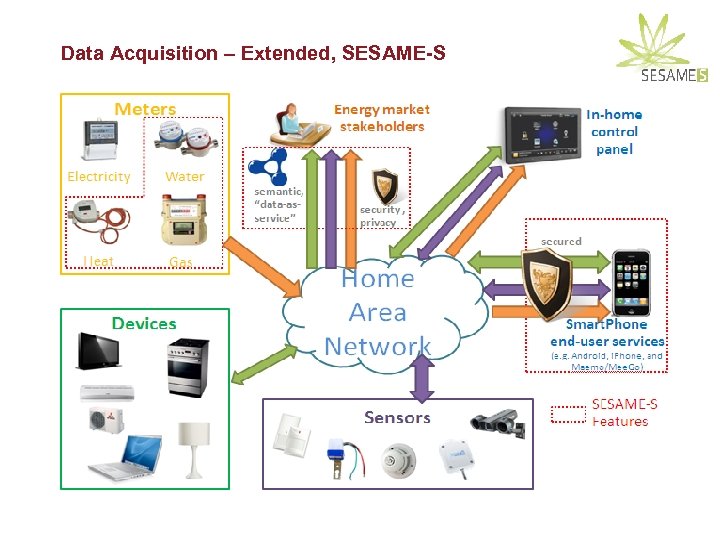
Data Acquisition – Extended, SESAME-S
Data Acquisition
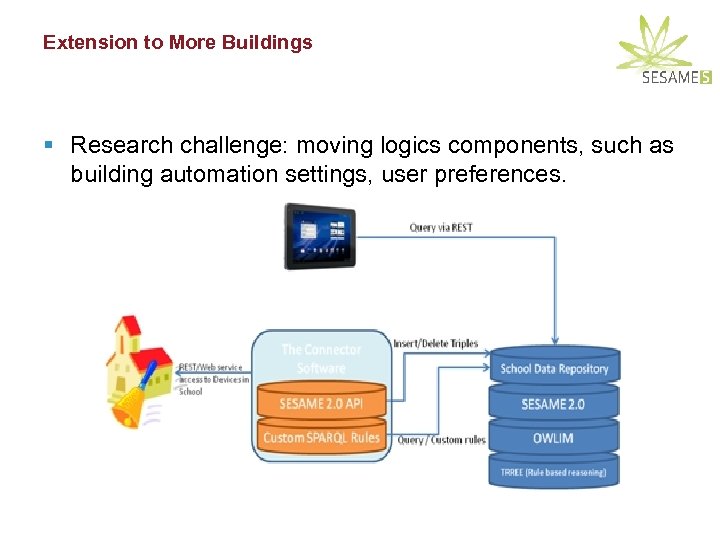
Extension to More Buildings § Research challenge: moving logics components, such as building automation settings, user preferences.
Many Stakeholders - Same Data § § § Ministries Provincial councils and centers Energy efficiency bodies Energy companies Municipalities Construction companies and Investors Home-automation market holders Home-appliance market holders Tourism companies: hotels, tourism settlements Telecommunication companies Cloud service providers …
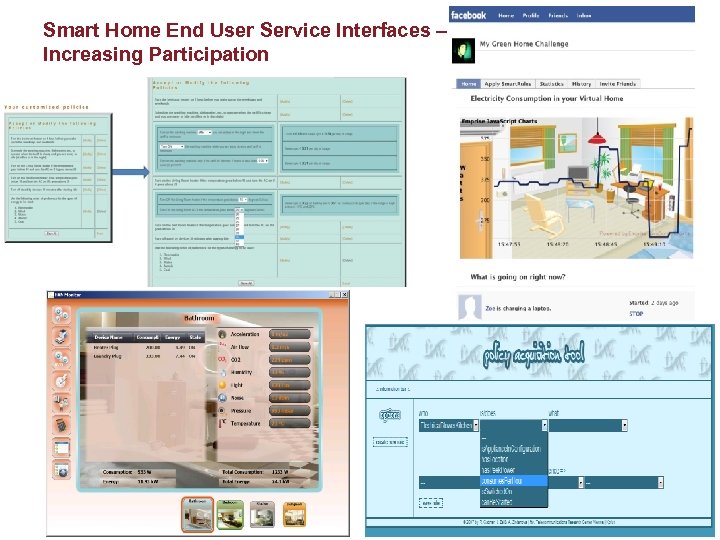
Smart Home End User Service Interfaces – Increasing Participation © FTW 2011
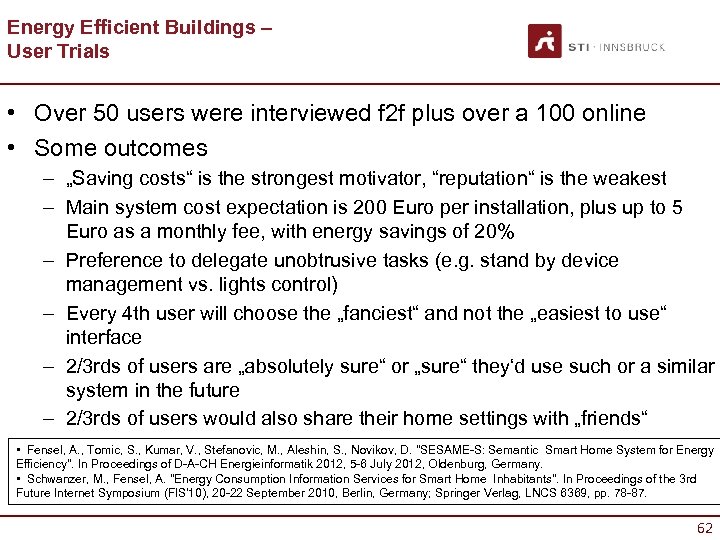
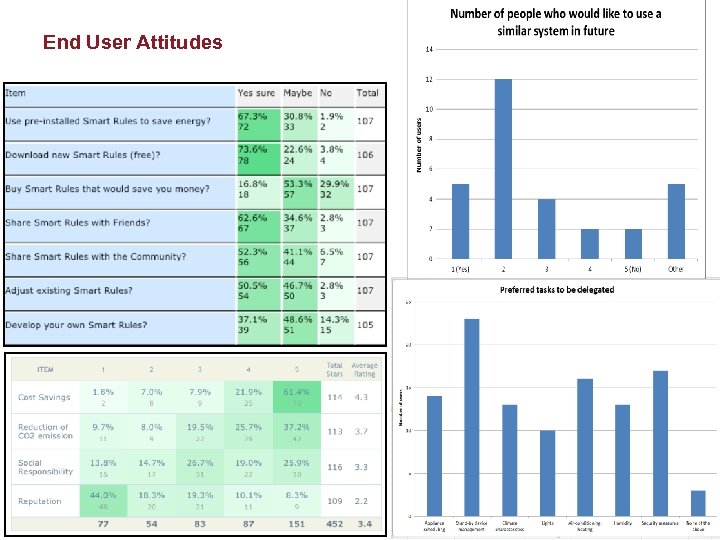
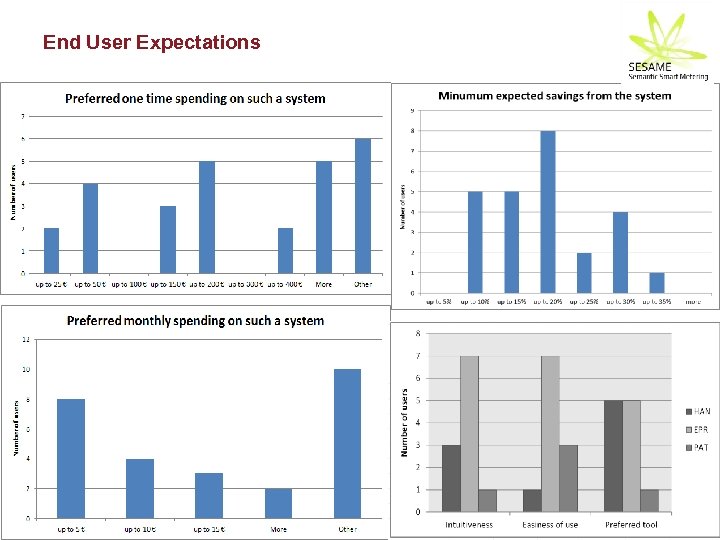
Energy Efficient Buildings – User Trials • Over 50 users were interviewed f 2 f plus over a 100 online • Some outcomes – „Saving costs“ is the strongest motivator, “reputation“ is the weakest – Main system cost expectation is 200 Euro per installation, plus up to 5 Euro as a monthly fee, with energy savings of 20% – Preference to delegate unobtrusive tasks (e. g. stand by device management vs. lights control) – Every 4 th user will choose the „fanciest“ and not the „easiest to use“ interface – 2/3 rds of users are „absolutely sure“ or „sure“ they‘d use such or a similar system in the future – 2/3 rds of users would also share their home settings with „friends“ • Fensel, A. , Tomic, S. , Kumar, V. , Stefanovic, M. , Aleshin, S. , Novikov, D. "SESAME-S: Semantic Smart Home System for Energy Efficiency". In Proceedings of D-A-CH Energieinformatik 2012, 5 -6 July 2012, Oldenburg, Germany. • Schwanzer, M. , Fensel, A. "Energy Consumption Information Services for Smart Home Inhabitants". In Proceedings of the 3 rd Future Internet Symposium (FIS'10), 20 -22 September 2010, Berlin, Germany; Springer Verlag, LNCS 6369, pp. 78 -87. 62
End User Attitudes © FTW 2011
End User Expectations © FTW 2010
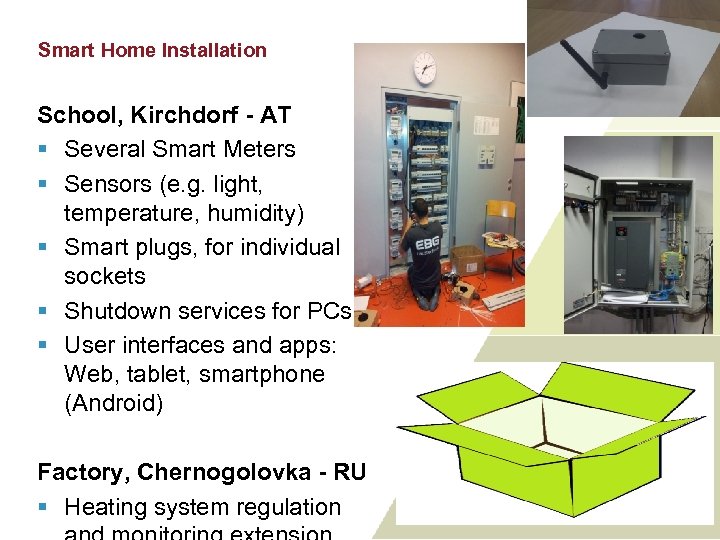
Smart Home Installation School, Kirchdorf - AT § Several Smart Meters § Sensors (e. g. light, temperature, humidity) § Smart plugs, for individual sockets § Shutdown services for PCs § User interfaces and apps: Web, tablet, smartphone (Android) Factory, Chernogolovka - RU § Heating system regulation
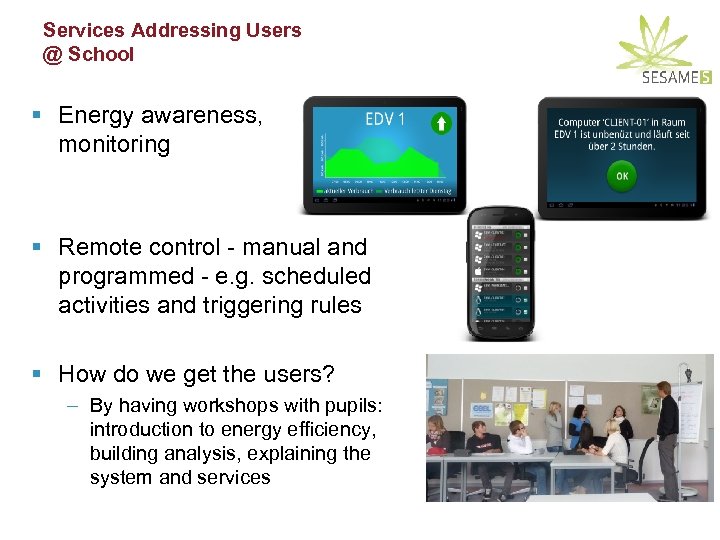
Services Addressing Users @ School § Energy awareness, monitoring § Remote control - manual and programmed - e. g. scheduled activities and triggering rules § How do we get the users? – By having workshops with pupils: introduction to energy efficiency, building analysis, explaining the system and services
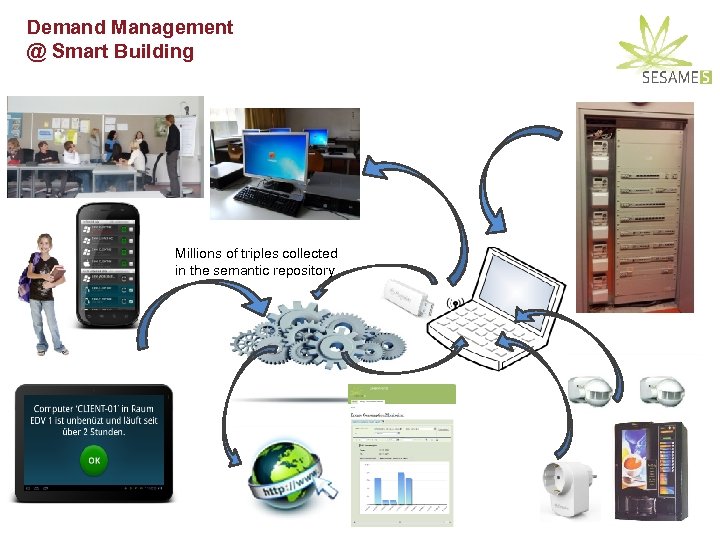
Demand Management @ Smart Building Millions of triples collected in the semantic repository
SUMMARY 68 68
Big, Smart, Linked (Open) Data: Conclusions • Semantics and big data application domains are currently diverse – Embracing a big data processing strategy can have a significant impact – Some application domains are pioneers, some lagging behind • (Big) data on Web scale suffers from an inherent heterogeneity and different levels of expressiveness – Complexity is more than just size! Web of things will be on the rise. – Think of integrating drastically new items, such as hardware and human brain. • Introducing the technology at the standards / best practice level is important. • Open Data can be used to enrich on-line presence of e. g. of touristic destination. • Addressing both “elephants” and “rabbits” (larger and smaller industry: For example, allow “rabbits” to build services on top of the data the “elephants” have anyway. • Valorization is important. Having “no money” in ecosystem is not sustainable. 69
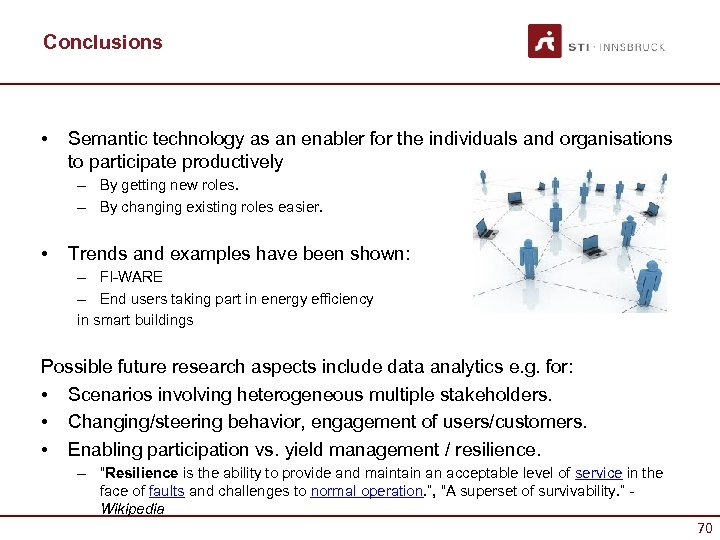
Conclusions • Semantic technology as an enabler for the individuals and organisations to participate productively – By getting new roles. – By changing existing roles easier. • Trends and examples have been shown: – FI-WARE – End users taking part in energy efficiency in smart buildings Possible future research aspects include data analytics e. g. for: • Scenarios involving heterogeneous multiple stakeholders. • Changing/steering behavior, engagement of users/customers. • Enabling participation vs. yield management / resilience. – “Resilience is the ability to provide and maintain an acceptable level of service in the face of faults and challenges to normal operation. ”, “A superset of survivability. ” - Wikipedia 70
REFERENCES 71 71
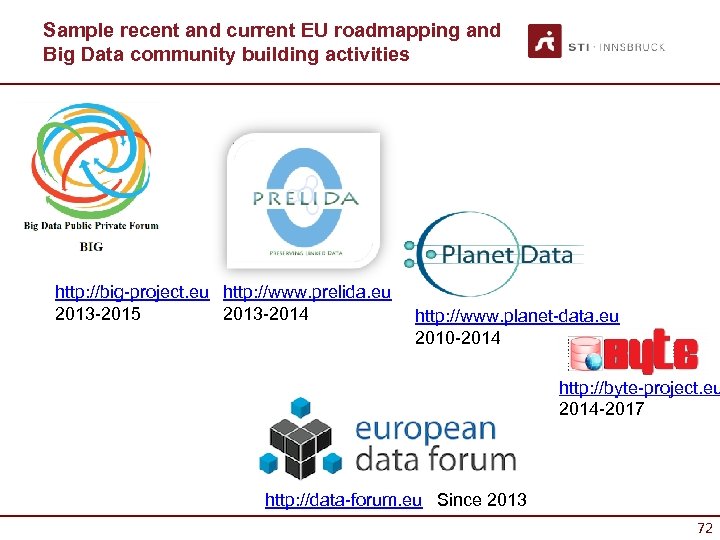
Sample recent and current EU roadmapping and Big Data community building activities http: //big-project. eu http: //www. prelida. eu 2013 -2015 2013 -2014 http: //www. planet-data. eu 2010 -2014 http: //byte-project. eu 2014 -2017 http: //data-forum. eu Since 2013 72
References Big, Smart, Linked (Open) Data: Cavanillas, J. M. , Curry, E. , & Wahlster, W. New Horizons for a Data-Driven Economy. Spinger, 2016. http: //link. springer. com/book/10. 1007/978 -3 -319 -21569 -3 Book is in open access!! Ongoing Open Data contests in Austria: http: //open 4 data. at http: //fi-ware. org http: //lab. fi-ware. org FI-WARE video tutorials: https: //www. youtube. com/playlist? list=PLR 9 el. AI 9 Jsc. SOu. Snw. Ik. Gz. SVW 1 QKgf. Dk 6 d 73
Rarticipatory converged services – energy efficiency in smart buildings • Fensel, A. , Kumar, V. , Tomic, S. D. K. "End User Interfaces for Energy Efficient Semantically-Enabled Smart Homes". Energy Efficiency, Volume 7, Issue 4, pp. 655– 675, Springer, 2014. ISSN: 1570 -646 X. • Fensel, A. , Tomic, S. , Kumar, V. , Stefanovic, M. , Aleshin, S. , Novikov, D. "SESAME-S: Semantic Smart Home System for Energy Efficiency", Informatik-Spektrum, Volume 36, Issue 1, pp. 46 -57, Springer, January 2013. • Schwanzer, M. , Fensel, A. "Energy Consumption Information Services for Smart Home Inhabitants". In Proceedings of the 3 rd Future Internet Symposium (FIS'10), 20 -22 September 2010, Berlin, Germany; Springer Verlag, LNCS 6369, pp. 78 -87 (2010). • Ongoing EU project in Energy: http: //entropy-project. eu 2015 -2018 74
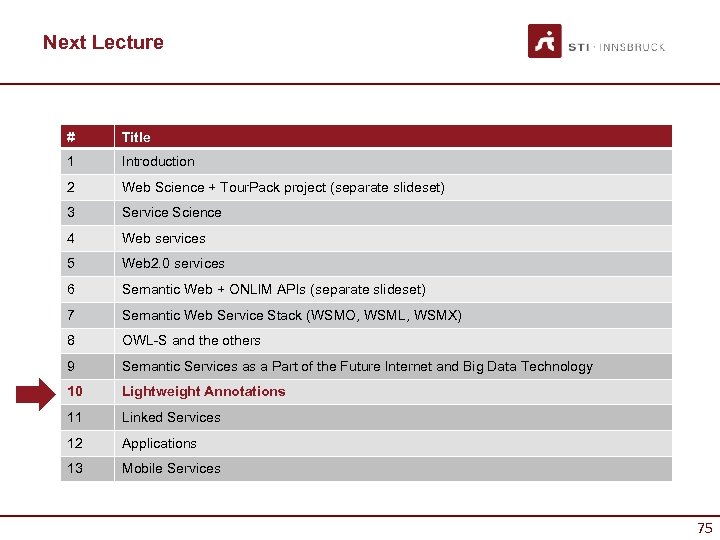
Next Lecture # Title 1 Introduction 2 Web Science + Tour. Pack project (separate slideset) 3 Service Science 4 Web services 5 Web 2. 0 services 6 Semantic Web + ONLIM APIs (separate slideset) 7 Semantic Web Service Stack (WSMO, WSML, WSMX) 8 OWL-S and the others 9 Semantic Services as a Part of the Future Internet and Big Data Technology 10 Lightweight Annotations 11 Linked Services 12 Applications 13 Mobile Services 75
Questions? 76
Скачать презентацию Semantic Web Services SS 2016 Semantic Services as
6edbc2902d56869170a3464dc410852a.ppt