 Скачать презентацию SELMA results SCATTER workshop 8 June Brussels
0a4b3354b8c110865c40e465ee156942.ppt
- Количество слайдов: 48



SELMA – results SCATTER workshop 8 June Brussels 2004 Annet Bogaerts
Spatial deconcentration of employment in the North wing of Randstad Holland, 1990 -2000
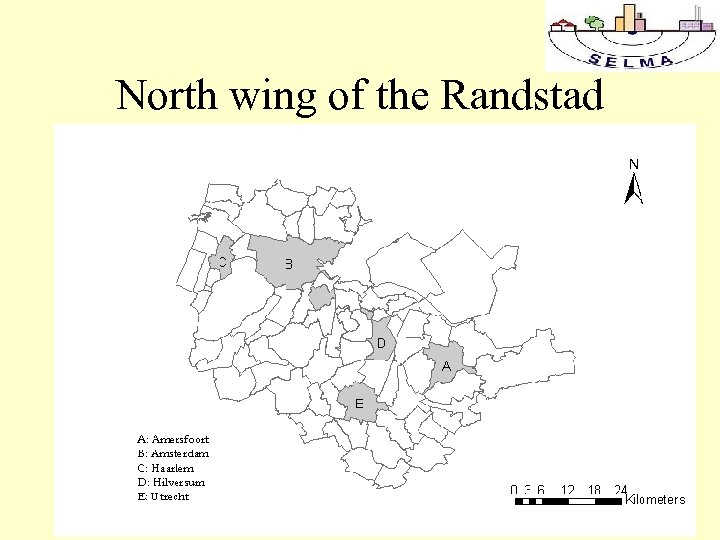
North wing of the Randstad
Contents (1) • Objectives WP 1 • Economic deconcentration • Research methods – Qualitative – Quantitative
Contents (2) • Results North wing of the Randstad • Conclusions – National contexts – Research methods

Objectives WP 1 (1) • Data collection on employment deconcentration • Chart developments and trends over a 10 year period relating to the form and magnitude of employment dispersal

Objectives WP 1 (2) • Provide the infrastructural knowledge base relating to European urban trends and to provide comparative case study evidence
Employment deconcentration (1) • Employment deconcentration – Movement from the centre to the urban fringe – Relative decline of employment in the centre versus the periphery • In-situ growth in the urban perimeter • In-movement to the fringe from outside the region

Employment deconcentration (2) • Focus on three economic sectors – Retail and personal services – Producer services – Manufacturing and building
Research methods • Qualitative • Quantitative • Both methods based on Galster et al. (2001) ‘Wrestling sprawl to the ground: defining and measuring an elusive concept’ • Two methods because – Problems with availability detailed data for a 10 -year period

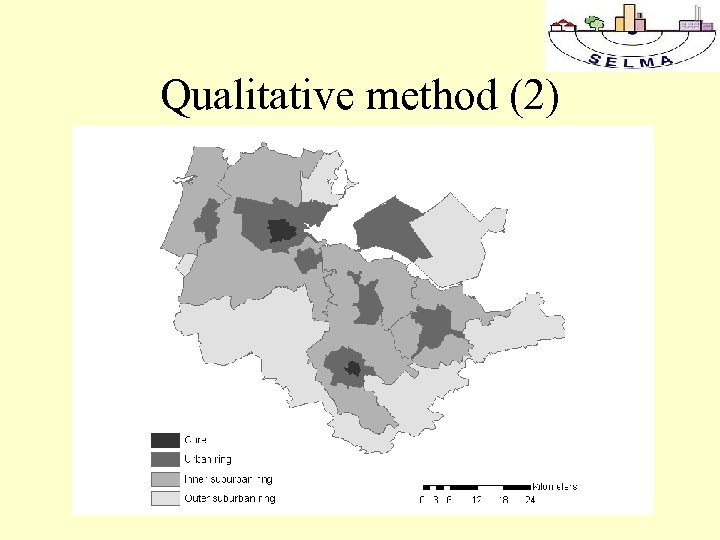
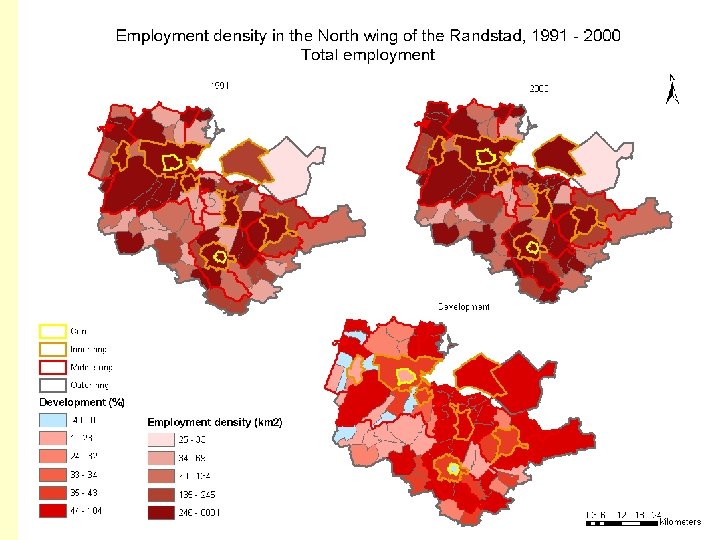
Qualitative method (1) • Galster’s methods – Approached in a ‘qualitative manner’ • Study areas divided in ‘rings’ – Core – Urban ring – Inner suburban ring – Outer suburban ring
Qualitative method (2)
Qualitative method (3) • Core – Inner city neighbourhoods • Urban ring – Municipality • Inner suburban ring – Daily urban system • Outer suburban ring – Other municipalities the ‘main city’ has functional relations with
Quantitative method (1) • Galster’s approach – Density based – Grid based • 250 m x 250 m • Developable land per grid

Quantitative method (2) • 8 measures of sprawl • 4 measures selected – Centrality – Density – Concentration – Mixed uses
Quantitative method (3) • Used data: – Employment data (1991, 1996, 2000) – Demographic data (1991, 1997, 2001) – Land use data (1989, 2000)

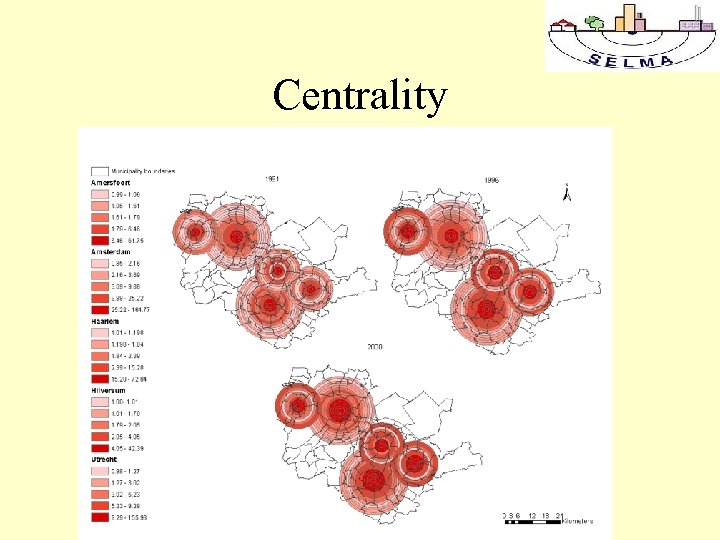
Quantitative method (4) • Centrality • Description – Degree to which employment is located close to the CBD
Centrality
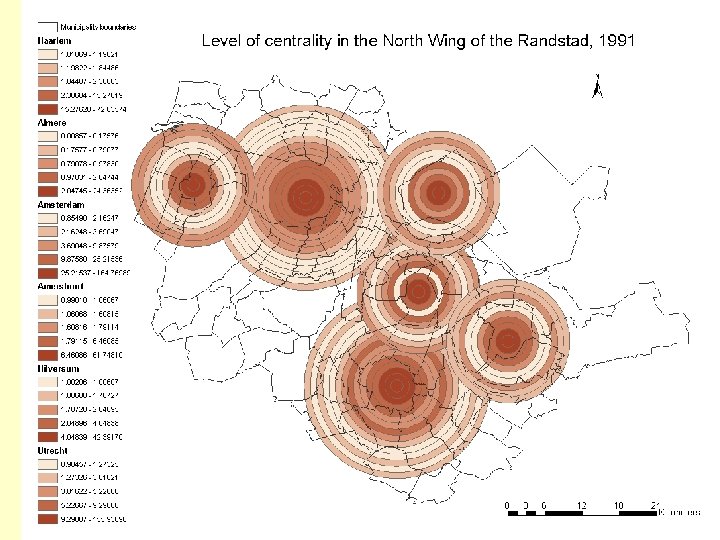
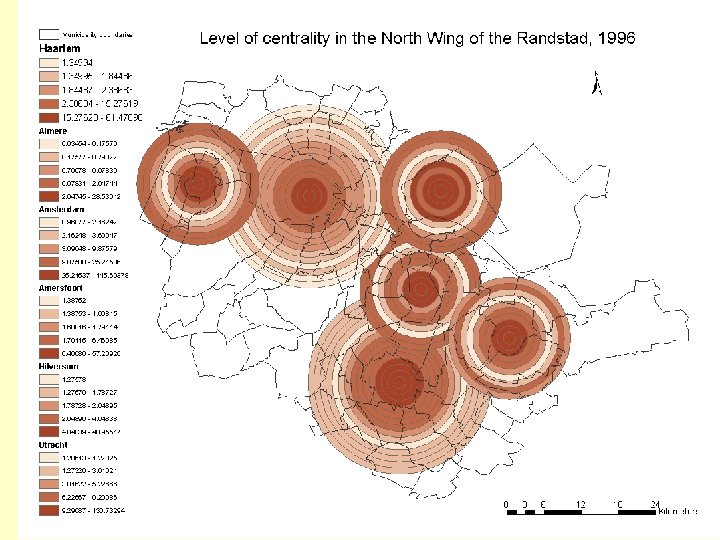
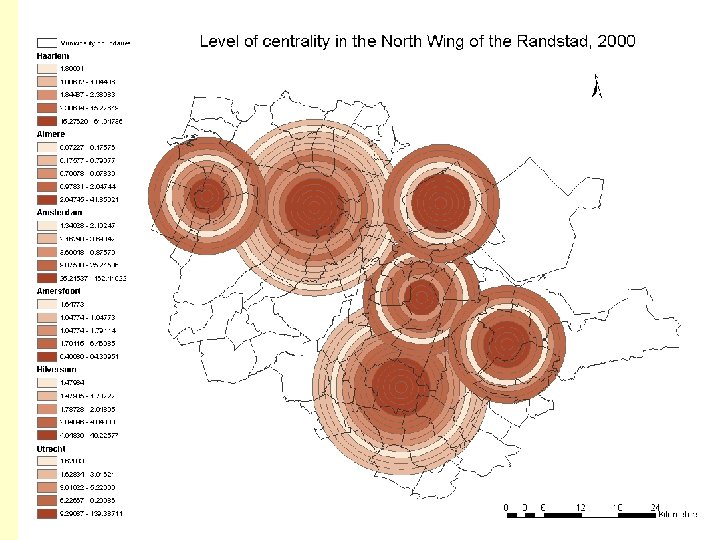
Results of centrality – Employment growth in the central city is combined with employment growth in outer rings – Amsterdam and Utrecht still are strong centres – Level of employment sprawl is relative large in Haarlem, Amersfoort and Hilversum
Quantitative method (5) • Density • Description – Average number of employees per square metre of developable land in an urban area.
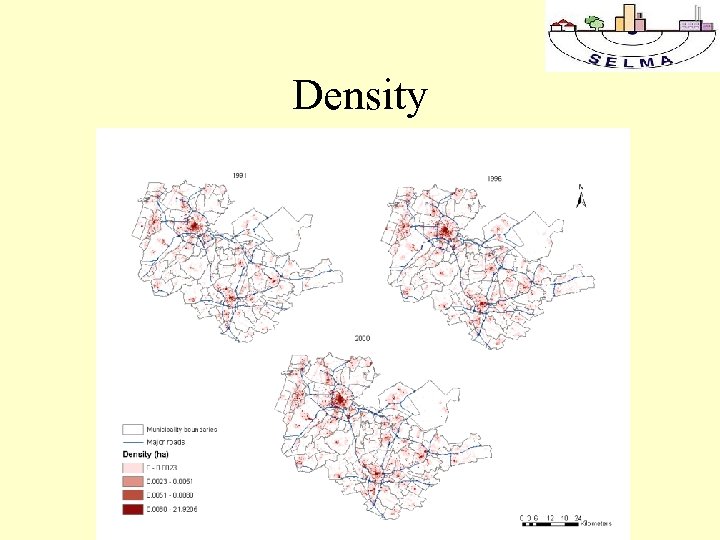
Density
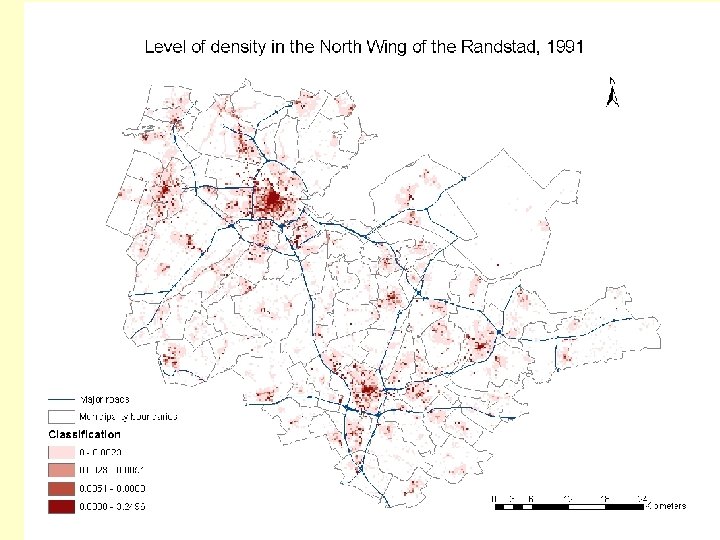
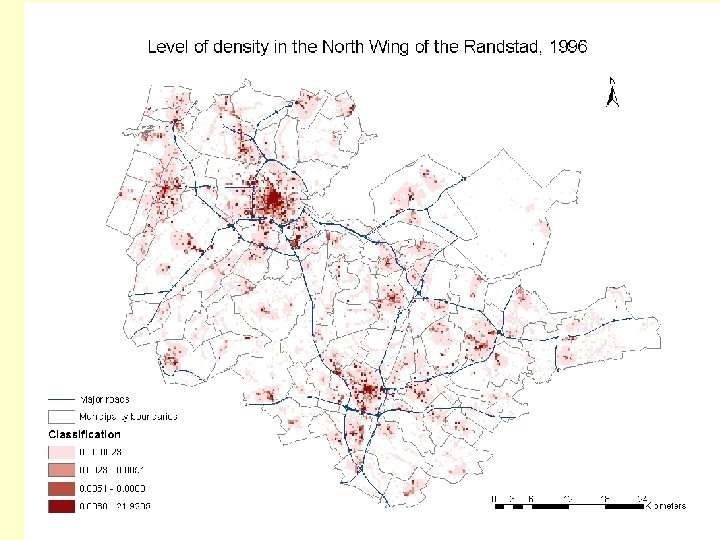
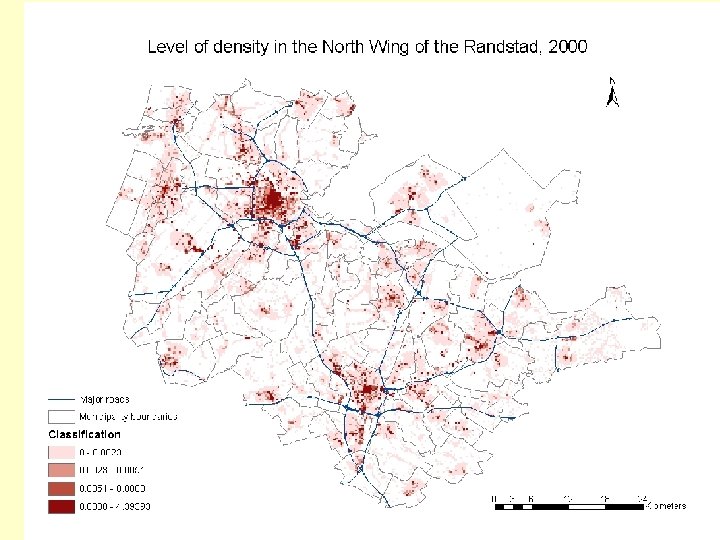
Results density • Density increases throughout the entire period • Growth of high density areas in: – City centres – Suburban locations • Near and alongside roads • Where connecting roads meet • Business parks
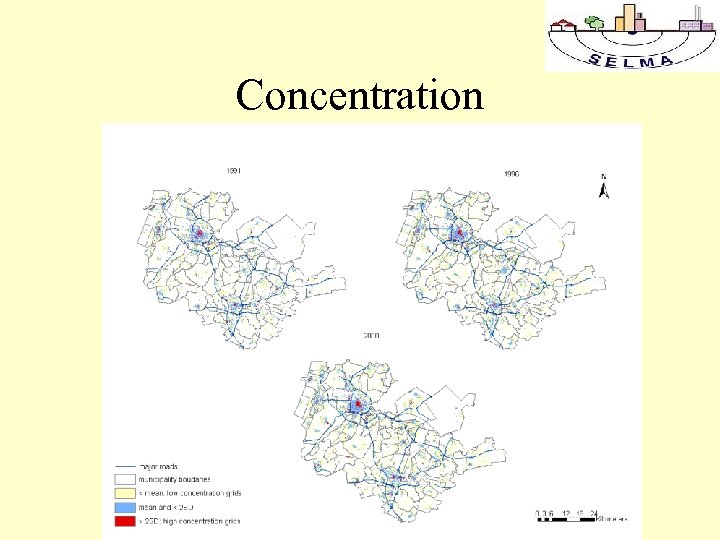
Quantitative method (6) • Concentration • Based on density thresholds – Description concentration • Level in which employment is located in relatively few areas or is spread evenly throughout the urban area.
Concentration
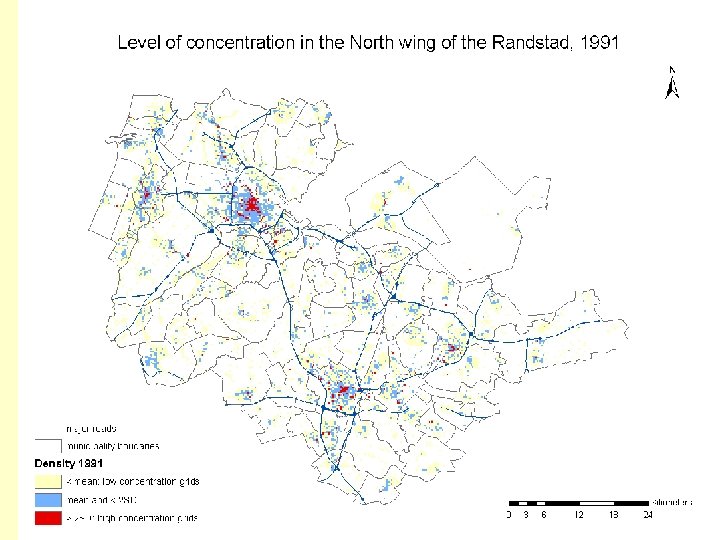
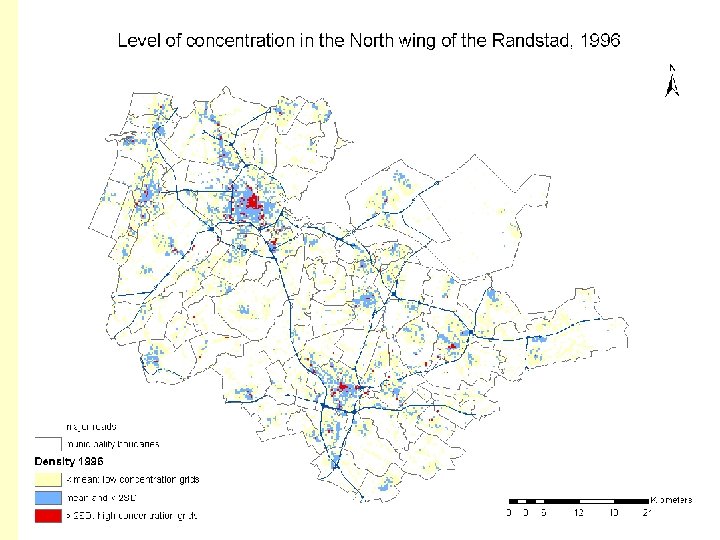
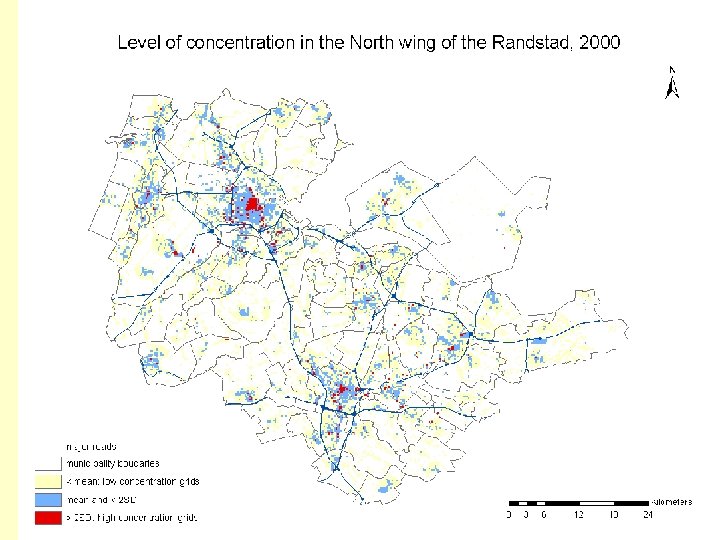
Results concentration • Growth of high concentration areas is relative constant • Growth of ‘low’ concentration areas is strongest between 1991 and 1996 – Cities grow closer together
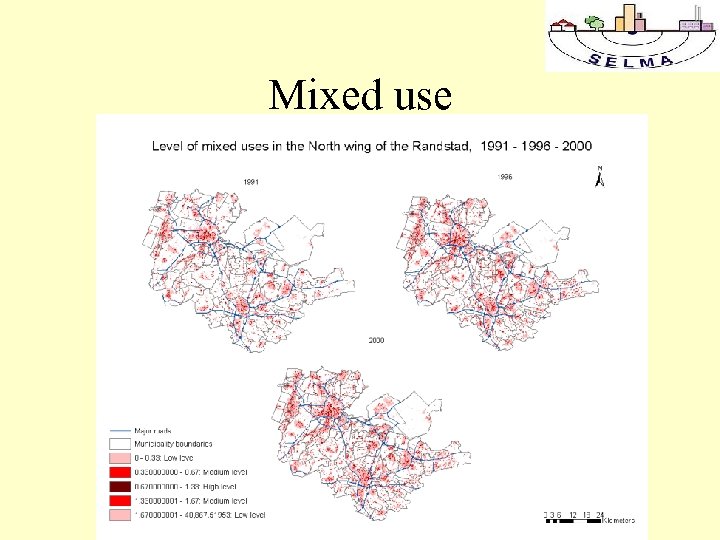
Quantitative method (7) • Mixed use • Description – The degree to which two different land uses/ functions coexist within the same small area
Mixed use
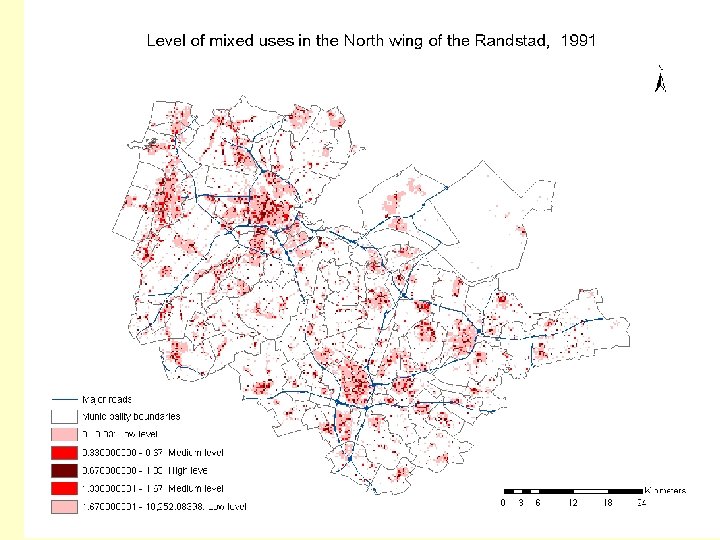
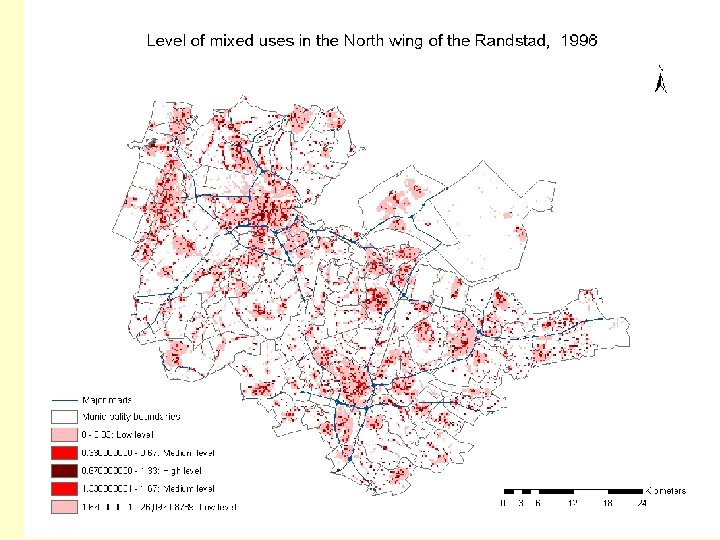
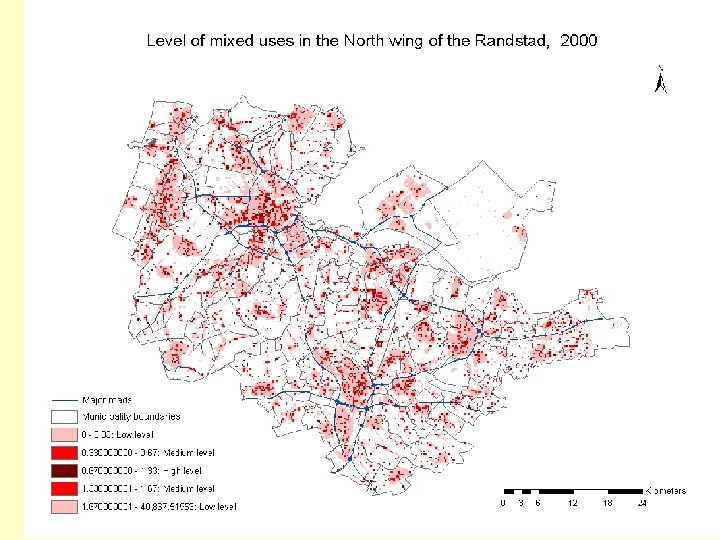
Results mixed use – Increase 1990 - 1996 – Decrease 1996 – 2000 – Areas with relatively more employees than inhabitants: • Increase alongside roads • Increase alongside railways • Increase on business parks
Conclusions: National contexts (1) • Netherlands – Economic deconcentration led by producer services – Less deconcentration retail and personal services • UK – Deconcentration and growth in city centres • Denmark – Growth of economic land uses evenly distributed over metropolitan area – Trend back to the city
Conclusions: National contexts (2) • Spain/ Italy – Strong metropolitan monocentric employment distribution • Czech Republic – Employment deconcentration preceded residential deconcentration – Especially retail, distribution, industry and offices • Israel – Especially deconcentration of retailing and business services
Conclusions: National contexts (3) • Metropolitan variations: – Total employment • Growth in total employment in all case study cities larger in the suburban rings than in the core or central cities • Israel, the Netherlands and the UK have experienced the largest increase in the number of jobs • Growth mainly in inner suburban rings, but also in outer suburban rings (NL, UK, Rome, Prague)
Conclusions: National contexts (4) – Share in total employment • In general, decrease in the core of the central cities • The cores of Prague, Brno and Aarhus accommodate still the majority of jobs • Copenhagen, Tel Aviv: share of the core is one third • Dutch cities: share of the core is less than 25%
Conclusions: Methods (1) • Methods – Data availability – Definition of urban rings (functional classification based on national situation) – Employment density basis for most measures Employment Surface developable land in a 250 m x 250 m area
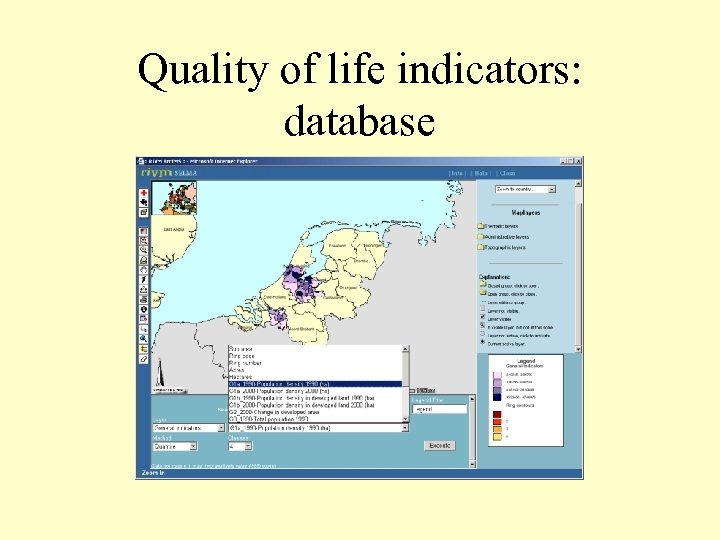
Conclusions: Methods (2) • Data – Study areas divided in rings basis for data assembly quality of life indicators
Quality of life indicators: database
Скачать презентацию SELMA results SCATTER workshop 8 June Brussels
0a4b3354b8c110865c40e465ee156942.ppt