


 Скачать презентацию Self-Care for Caregivers Sallie Gentry LCSW CCM The
31cdcccf50bec6d2dea8186b9b33190b.ppt
- Количество слайдов: 21
 Self-Care for Caregivers Sallie Gentry, LCSW, CCM The Pat Summitt Clinic
 2
2
 “It’s a difficult challenge to care for someone who is here, but not here—here physically, but gone mentally and psychologically. You feel alone, and in some ways, you are. For many caregivers, it’s as if there’s a stranger in the house. ” - Family Caregiver Alliance, National Center on Caregiving 3
 Feelings Among Caregivers • • • Depression Anxiety Worthlessness Guilt Anger Imbalanced care duties Loneliness Stress Resentment Trapped • • • Overwhelmed Frustration Exhaustion Reluctance Grief Irritation Fulfillment Love Satisfaction 4
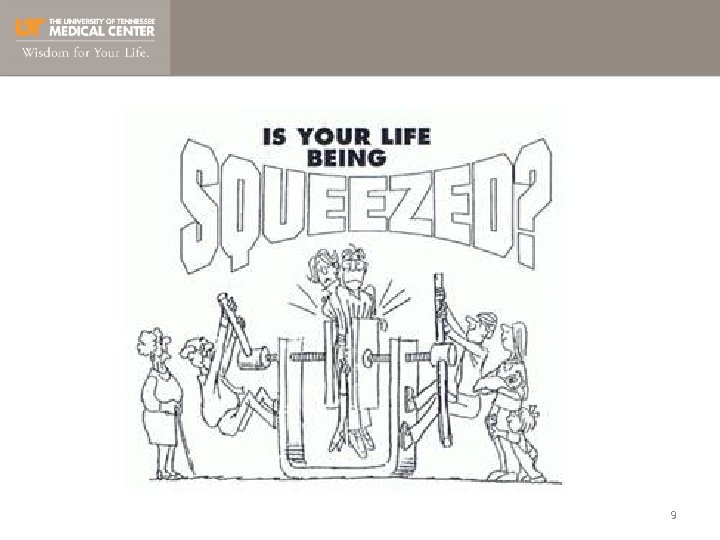
 What is Caregiver Stress? • Emotional and physical toll of caregiving • Significantly higher stress level than those who are not caregivers • Feeling “on call” • Unable to do what you enjoy • Role reversal 5
 Risk Factors • • Women Living with the person you are caring for Not having a choice Financial strain Depression Isolation Number of hours spent caregiving Challenging family members 6
 Signs of Caregiving Stress • • • Weight fluctuation Sadness and depression Unusual sleep patterns Alcohol/Drug abuse Bodily pain Exhaustion Overwhelmed Loss of interest Inability to make decisions 7
 It’s okay to feel the way you do! 8
 9
9
 Responsibilities • Personal • Husband/wife, kids, friends, church, etc. • Work • Caregiving • Daily tasks 10
 Statistics from the CDC • More than 34 million unpaid caregivers provide care to someone age 18 and older who is ill or has a disability (AARP, 2008). • Half (53%) of caregivers who said their health had gotten worse due to caregiving also said the decline in their health has affected their ability to provide care (NAC, 2006). • Caregivers said they do not go to the doctor because they put their family’s needs first (67% said that is a major reason), or they put the care recipient’s needs over their own (57%). • More than half (51%) said they do not have time to take care of themselves and almost half (49%) said they are too tired to do so (NAC, 2004). 11
 Preventing Burnout • Caring for yourself (MD appts, dentist, etc. ) • Get away • Stepping back • Support Groups • Talking with friends • Hobbies • Religion • • • Respite Care Adult Day Facilities In-home Assistance Meditation ASKING FOR HELP! 12
 Preparing for the Holidays • • • Plan ahead Self-care Prepare your loved one Prepare you family Involve everyone in activities • • • Communicate Smart gift giving Safe home environment Travel wisely Find sources of support When your loved one lives in a facility Provided by the Alzheimer's Association 10 Holiday Survival Tips 13
 Managing Difficult Behaviors • Wandering – Reduce stimuli – Curtains or signs on the doorways – Locks that are difficult to reach or open – Exercise – Seek medical attention 14
 Managing Difficult Behaviors • Aggressive Behaviors – Redirect the conversation – Routines – Stay grounded – Keep a calm tone – Positive/non-threatening body language – Limit distractions – Seek medical attention – DON’T ARGUE 15
 Planning Ahead • Have Power of Attorney and Living Will documents readily available and completed • Who will care for your loved one if something happens to you? • Make sure your family is involved and informed • Elder Law Attorneys 16
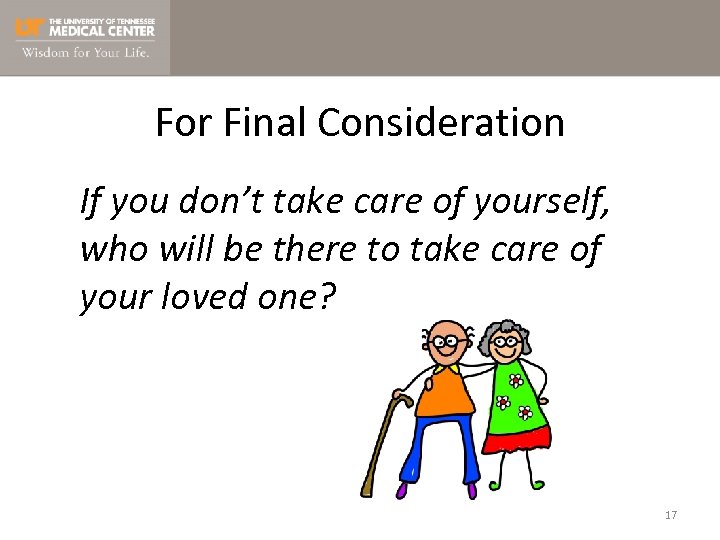 For Final Consideration If you don’t take care of yourself, who will be there to take care of your loved one? 17
 Resources and Support • Alzheimer’s Tennessee – www. alztennessee. org • Alzheimer’s Association – www. alz. org/altn • National Institute on Health – www. nih. org • Support Groups • Counseling Services • Purple Cities – www. purplecities. org 18
 References • • • 10 Holiday Survival Tips Alzheimer's Association (2017). Retrieved October 5, 2017, from https: //www. alz. org/flgulfcoast/alzheimers_disease_62487. asp Centers for Disease Control and Prevention. (2011, September 7). Healthy aging. Retrieved September 3, 2016, from Centers for Disease Control and Prevention: http: //www. cdc. gov/aging/caregiving/facts. htm Family Caregiver Alliance, National Center on Caregiving. (n. d. ). Caregiving and Ambiguous Loss. Retrieved September 1 2016, from Family caregiver alliance : https: //www. caregiver. org/caregiving-andambiguous-loss Holidays and Alzheimer's, Families Caregiver Center, Alzheimer’s Association (2017). Retrieved October 5, 2017, from https: //www. alz. org/care/alzheimers-dementia-holidays. asp Mayo Foundation for Medical Education and Research. (2016, March 07). Stress management. Retrieved September 1, 2016, from Mayo Clinic: http: //www. mayoclinic. org/healthy-lifestyle/stress-management/in -depth/caregiver-stress/art-20044784 Office on Women's Health, U. S. Dept. of Health and Human Services. (2015, August 17). Caregiver stress. Retrieved September 2, 2016, from Office on Women's Health : http: //www. womenshealth. gov/publications/our-publications/fact-sheet/caregiver-stress. html 19
 20
20
 21
21