


 Скачать презентацию SEISMIC RISK ASSESSMENT Dr Carlos E Ventura Kate
dfd28e500a14452979fde56ad99a18cc.ppt
- Количество слайдов: 27
 SEISMIC RISK ASSESSMENT Dr. Carlos E. Ventura Kate Thibert & Hugón Juárez García February 26 th, 2007 1
 Acknowledgements Dr José Martí, Dr Jorge Hollman, David Grigg (Campus and Community Planning), Alejandro Cervantes, Juan Carlos Carvajal, Jack Rong, Lucy Liu, Paul Couch and Dave Mancini Matt Shannon and Natanella Vukojevic (Records office), Erin Kastner and Doug Smith (UBC Utilities), John Manougian (Hospital), JIIRP members (Professors and students) 2
 Outline n Seismic Risk Assessment n Building Damage Assessment n Lifeline Damage Assessment n UBC Campus Case n Ongoing and Future Tasks n Conclusions 3
 Our Goals n Evolve from a Culture of Reaction into a Culture of Preparedness n Analysis of Interdependencies among Critical Infrastructures Evaluate Hazards n Develop Scenarios n Analysis of critical interdependencies n Reconsider strategies n 4
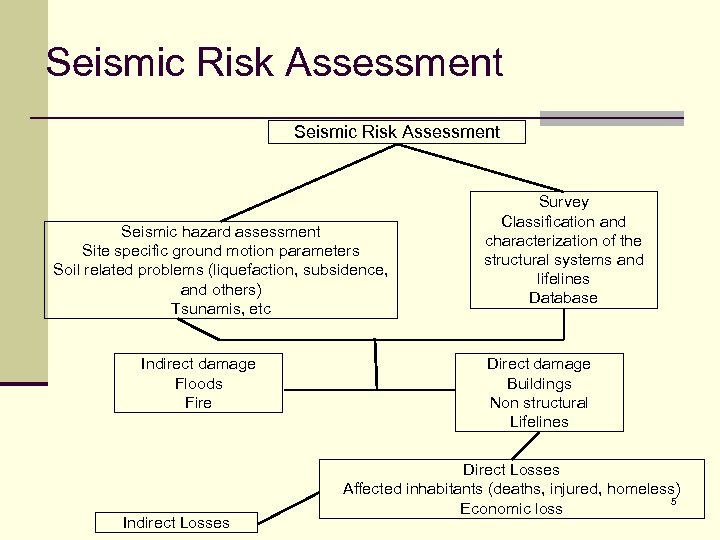 Seismic Risk Assessment Seismic hazard assessment Site specific ground motion parameters Soil related problems (liquefaction, subsidence, and others) Tsunamis, etc Indirect damage Floods Fire Indirect Losses Survey Classification and characterization of the structural systems and lifelines Database Direct damage Buildings Non structural Lifelines Direct Losses Affected inhabitants (deaths, injured, homeless) 5 Economic loss
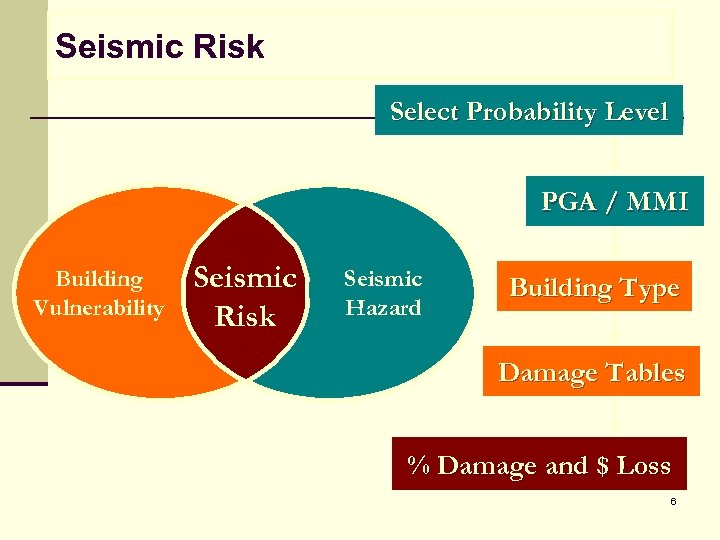 Seismic Risk Select Probability Level PGA / MMI Building Vulnerability Seismic Risk Seismic Hazard Building Type Damage Tables % Damage and $ Loss 6
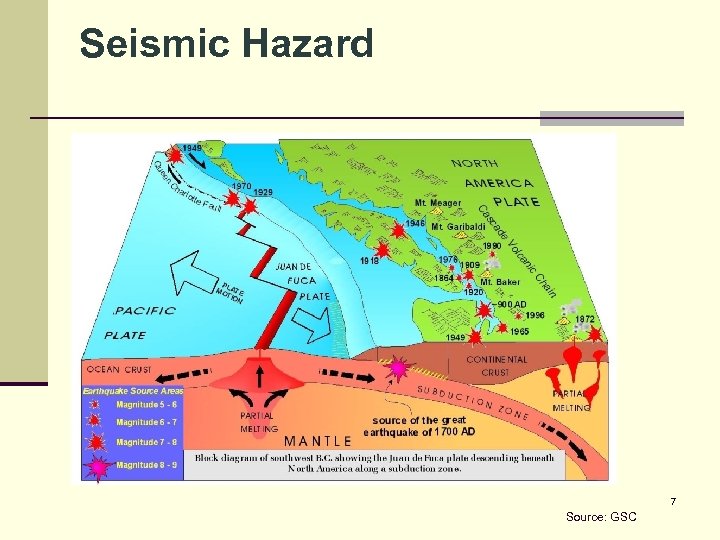 Seismic Hazard 7 Source: GSC
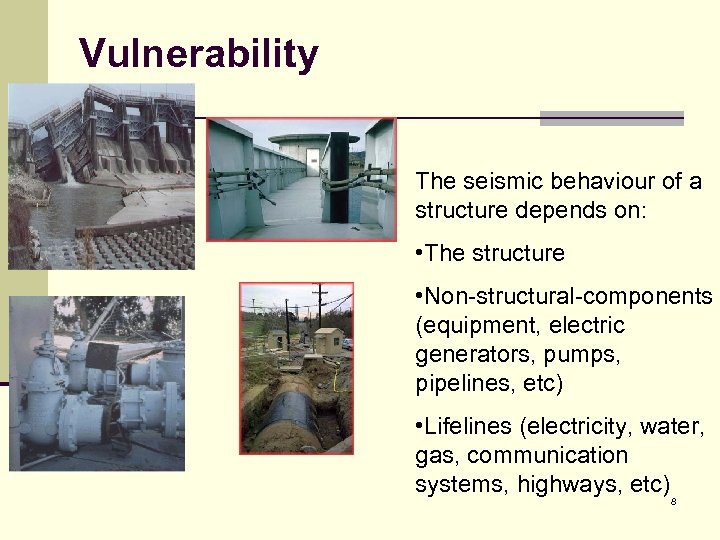 Vulnerability The seismic behaviour of a structure depends on: • The structure • Non-structural-components (equipment, electric generators, pumps, pipelines, etc) • Lifelines (electricity, water, gas, communication systems, highways, etc) 8
 Buildings 9
 Estimation of building damage n Building classification n Structural Damage n Damage to Non structural components n Casualties n Economic Loss n Functionality parameters 10
 Lifelines 11
 Lifelines n. Highways n. Railways n. Air transportation n. Sea water transportation n. Electrical n. Water supply n. Sanitary sewer 12
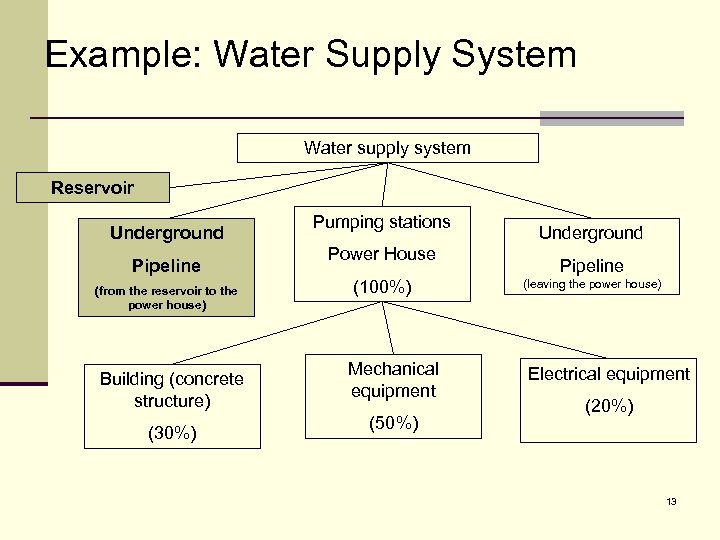 Example: Water Supply System Water supply system Reservoir Underground Pipeline (from the reservoir to the power house) Building (concrete structure) (30%) Pumping stations Power House (100%) Mechanical equipment (50%) Underground Pipeline (leaving the power house) Electrical equipment (20%) 13
 UBC Campus Case Study n Why modeling UBC campus? UBC campus shares attributes of a small city n 47, 000 daily transitory occupants n 10, 000 full time residents n well defined residential, recreational and business areas n own utility providers n Information accessibility n Objective of the Campus Case: n Earthquake scenarios developed to analyze consequences for infrastructures and people. n Collect UBC’s infrastructure information in a GIS feature n Seismic Risk Assessment of UBC campus is just a part of the project n 14
 UBC Campus Results n Approximately 400 buildings on UBC Campus were assessed n Building inventory data from three sources: 1995 Assessment n Records Office n Sidewalk survey n n Damage Assessed for MMI VIII, IX and X 15
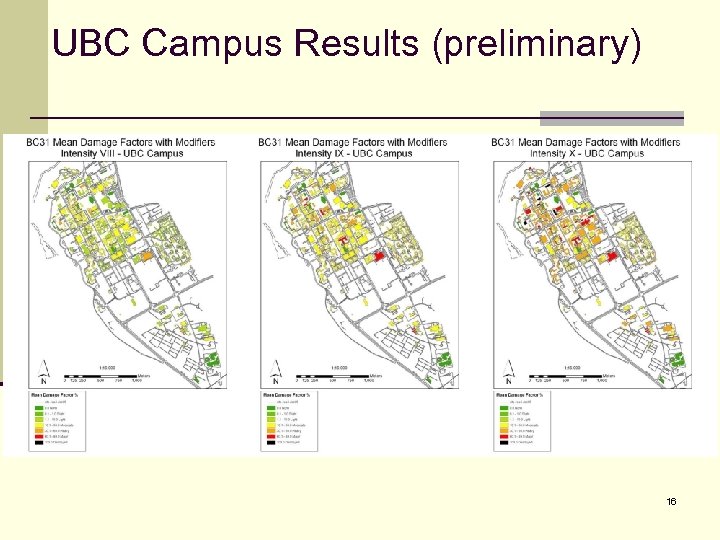 UBC Campus Results (preliminary) 16
 What are the most important lifelines at UBC campus? n Power n pumping (water, steam, oil), air conditioning, heaters, refrigeration systems, telephone, internet, media, light, information systems, gas, oil n Water n (drinking, sewer, storm) n Transportation n Services + supplies 17
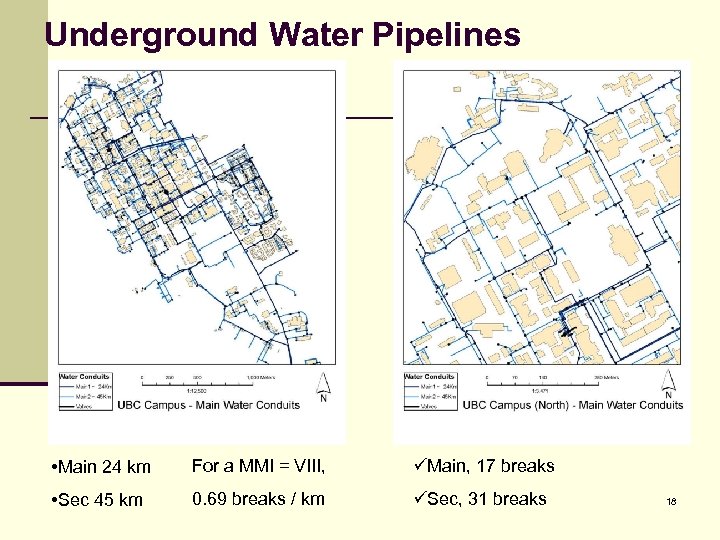 Underground Water Pipelines • Main 24 km For a MMI = VIII, üMain, 17 breaks • Sec 45 km 0. 69 breaks / km üSec, 31 breaks 18
 Ongoing Tasks Building Assessment § § § Non Structural Components Assessment Casualties Assessment Hazard Assessment Ambient Vibration Tests on “key” buildings Microtremor test of “UBC site” to determine site characteristics Non structural vibration tests 19
 Ongoing tasks Lifeline Assessment § A survey of important lifelines within UBC campus Pipelines (water, gas, sewer, etc) n Transportation (highways, roadways, etc) n Services (health facilities, telecommunications, commerce, etc) § Account for the different problems that affect the seismic behaviour of lifelines (soil, interaction, standards, age, etc) § Important lifelines outside UBC campus that will affect functionality § Vibration tests of existing infrastructure n 20
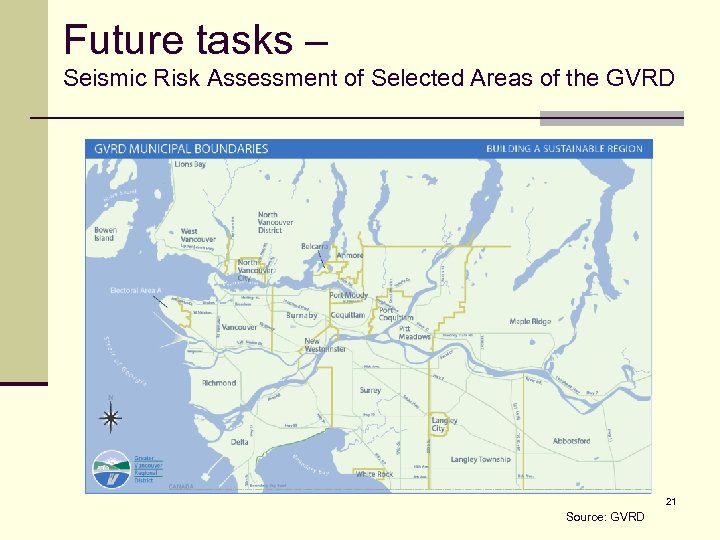 Future tasks – Seismic Risk Assessment of Selected Areas of the GVRD 21 Source: GVRD
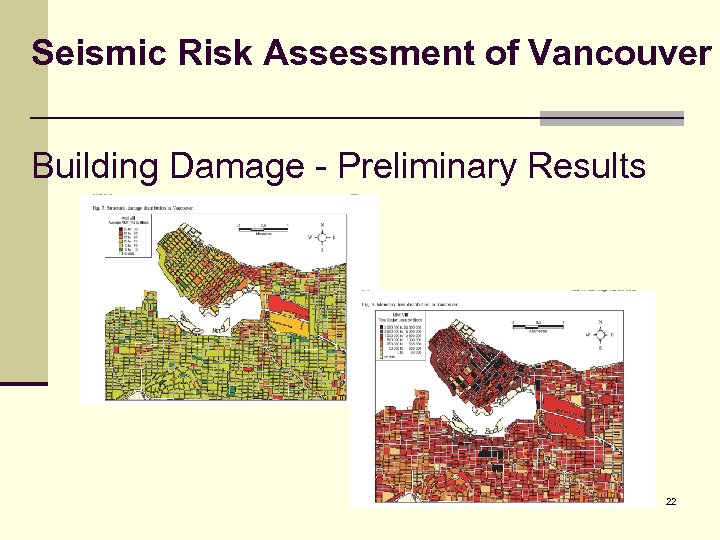 Seismic Risk Assessment of Vancouver Building Damage - Preliminary Results 22
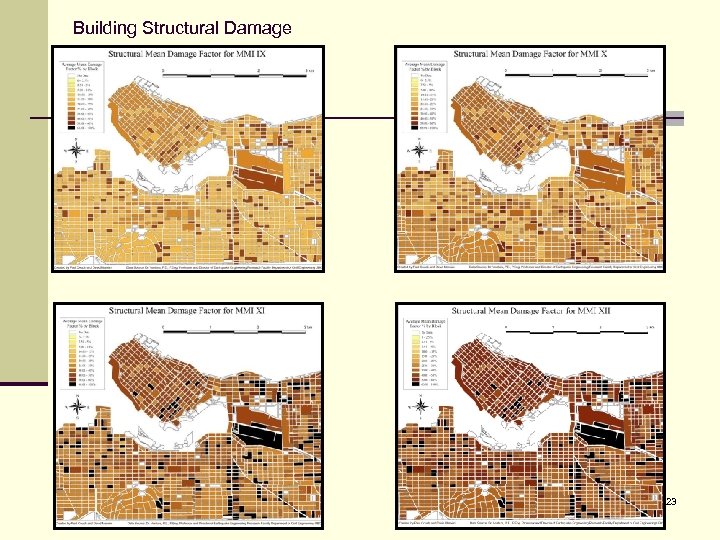 Building Structural Damage 23
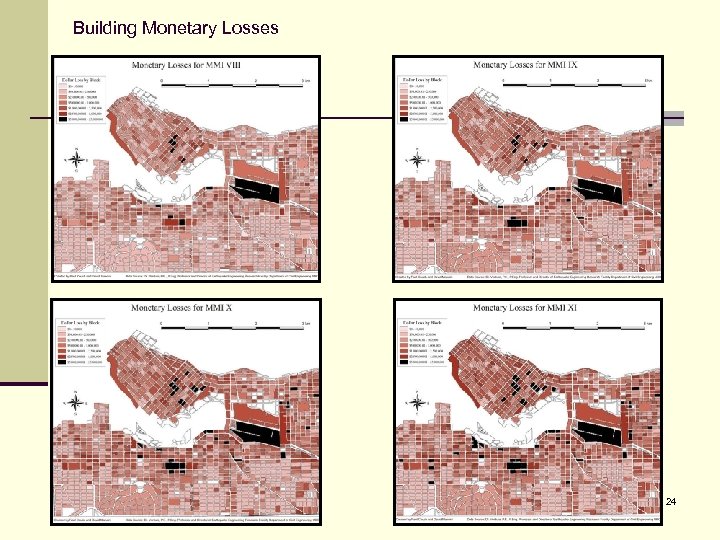 Building Monetary Losses 24
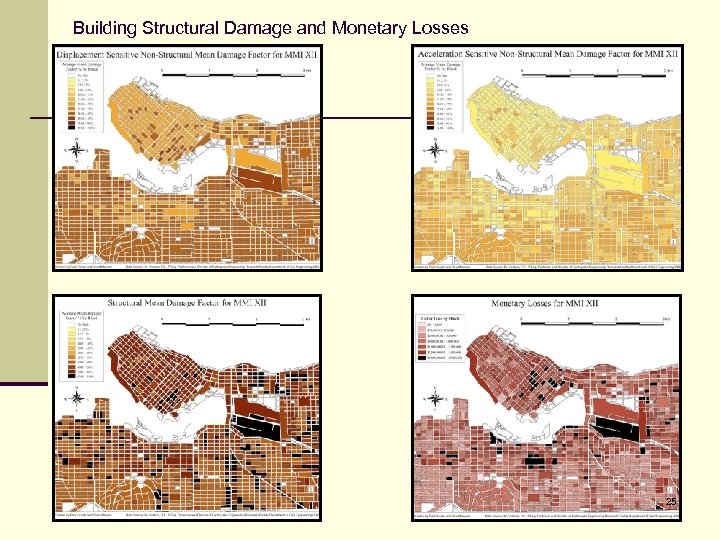 Building Structural Damage and Monetary Losses 25
 Conclusions n The research is ongoing, therefore some of the results shown in this presentation are preliminary and subject to further change n Vibration test will help to confirm the damage relationships and seismic behaviour n JIIRP is a very important study which will help us prepare for and understand disaster scenarios in a holistic way 26
 Thank you 27