


 Скачать презентацию Sedm starověkých divů světa Vynikající ukázky uměleckého a
8c69f4211674c48f0aa60a9a777bda3c.ppt
- Количество слайдов: 29
 Sedm starověkých divů světa Vynikající ukázky uměleckého a stavitelského umu Seve onde n. W r c he An s of t d Worl ient
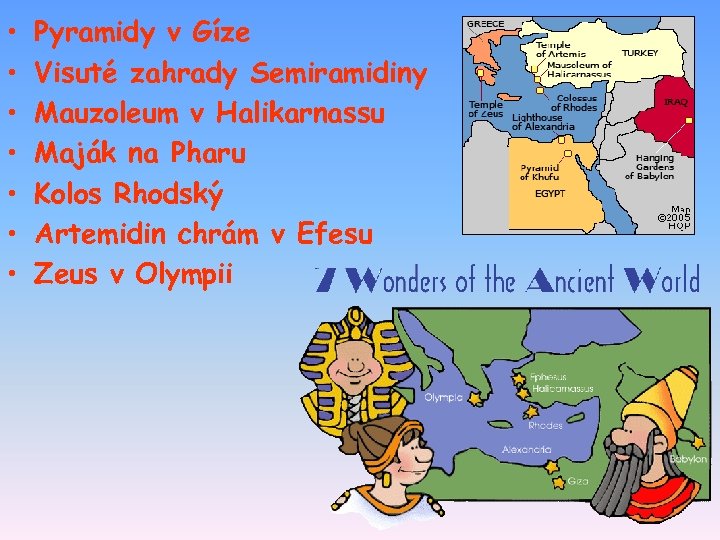 • • Pyramidy v Gíze Visuté zahrady Semiramidiny Mauzoleum v Halikarnassu Maják na Pharu Kolos Rhodský Artemidin chrám v Efesu Zeus v Olympii
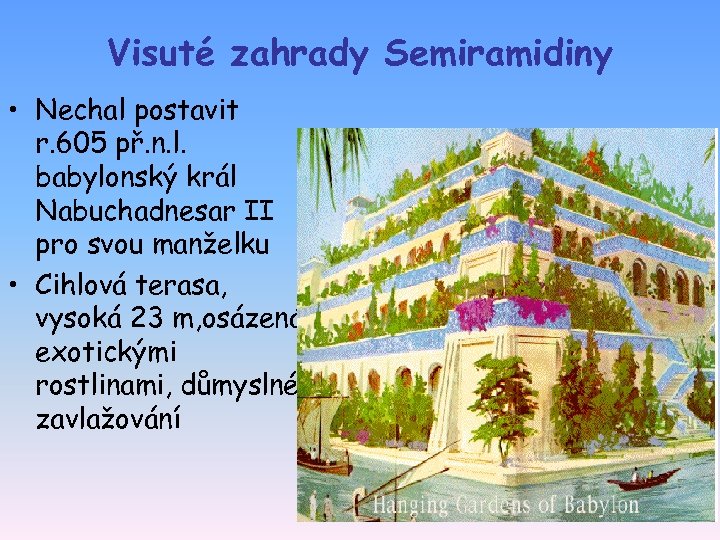 Visuté zahrady Semiramidiny • Nechal postavit r. 605 př. n. l. babylonský král Nabuchadnesar II pro svou manželku • Cihlová terasa, vysoká 23 m, osázená exotickými rostlinami, důmyslné zavlažování
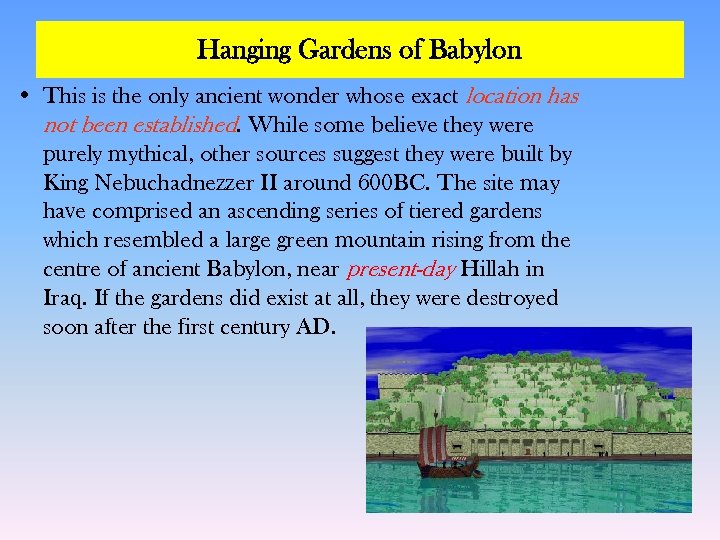 Hanging Gardens of Babylon • This is the only ancient wonder whose exact location has not been established. While some believe they were purely mythical, other sources suggest they were built by King Nebuchadnezzer II around 600 BC. The site may have comprised an ascending series of tiered gardens which resembled a large green mountain rising from the centre of ancient Babylon, near present-day Hillah in Iraq. If the gardens did exist at all, they were destroyed soon after the first century AD.
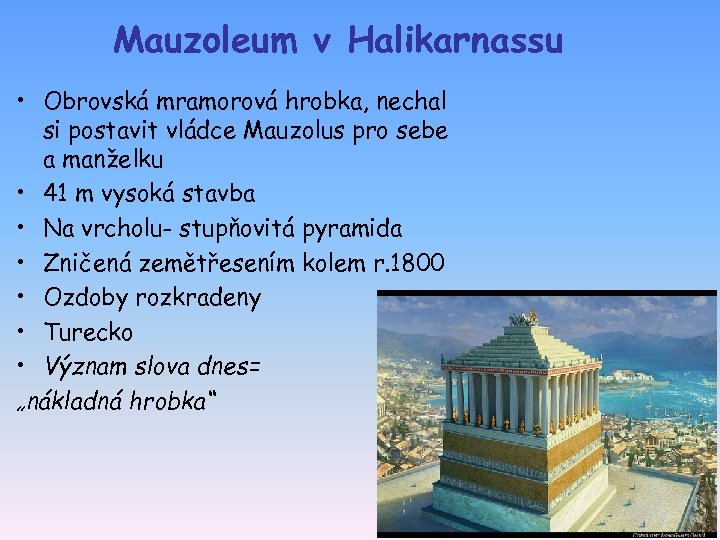 Mauzoleum v Halikarnassu • Obrovská mramorová hrobka, nechal si postavit vládce Mauzolus pro sebe a manželku • 41 m vysoká stavba • Na vrcholu- stupňovitá pyramida • Zničená zemětřesením kolem r. 1800 • Ozdoby rozkradeny • Turecko • Význam slova dnes= „nákladná hrobka“
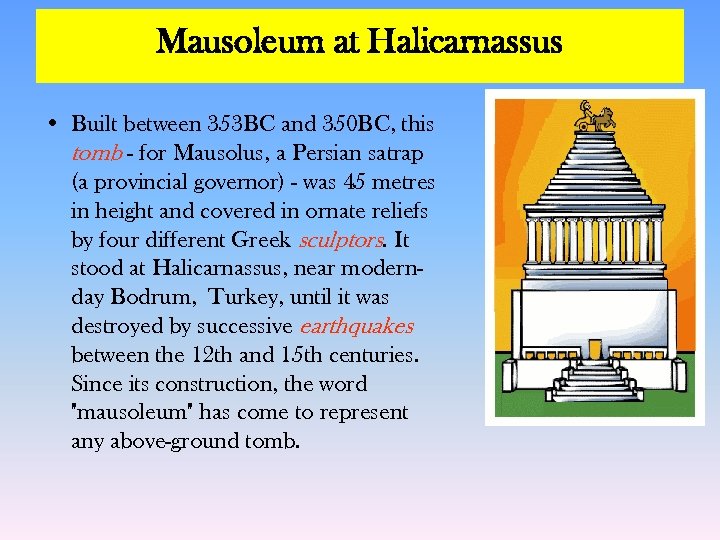 Mausoleum at Halicarnassus • Built between 353 BC and 350 BC, this tomb - for Mausolus, a Persian satrap (a provincial governor) - was 45 metres in height and covered in ornate reliefs by four different Greek sculptors. It stood at Halicarnassus, near modernday Bodrum, Turkey, until it was destroyed by successive earthquakes between the 12 th and 15 th centuries. Since its construction, the word "mausoleum" has come to represent any above-ground tomb.
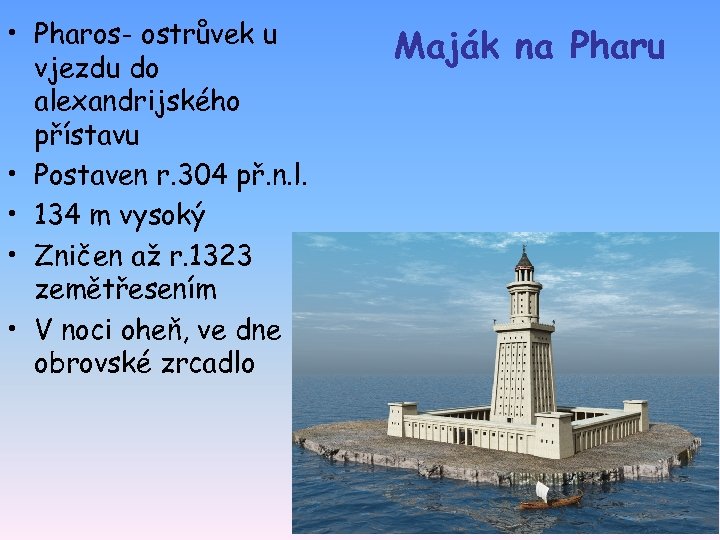 • Pharos- ostrůvek u vjezdu do alexandrijského přístavu • Postaven r. 304 př. n. l. • 134 m vysoký • Zničen až r. 1323 zemětřesením • V noci oheň, ve dne obrovské zrcadlo Maják na Pharu
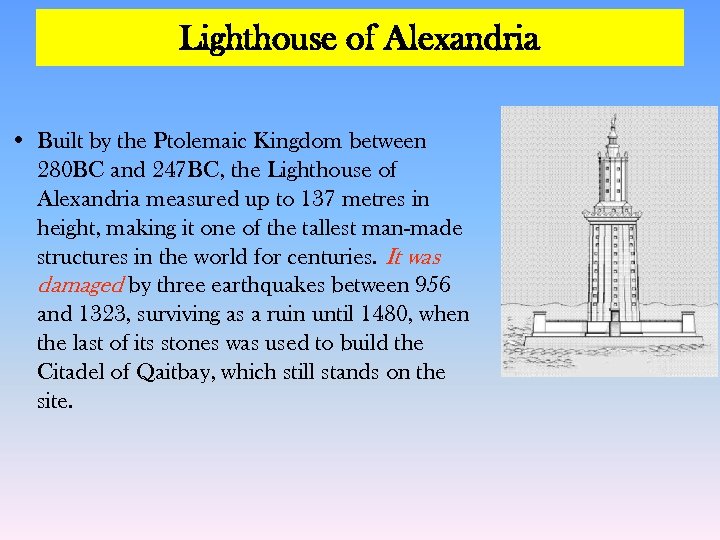 Lighthouse of Alexandria • Built by the Ptolemaic Kingdom between 280 BC and 247 BC, the Lighthouse of Alexandria measured up to 137 metres in height, making it one of the tallest man-made structures in the world for centuries. It was damaged by three earthquakes between 956 and 1323, surviving as a ruin until 1480, when the last of its stones was used to build the Citadel of Qaitbay, which still stands on the site.
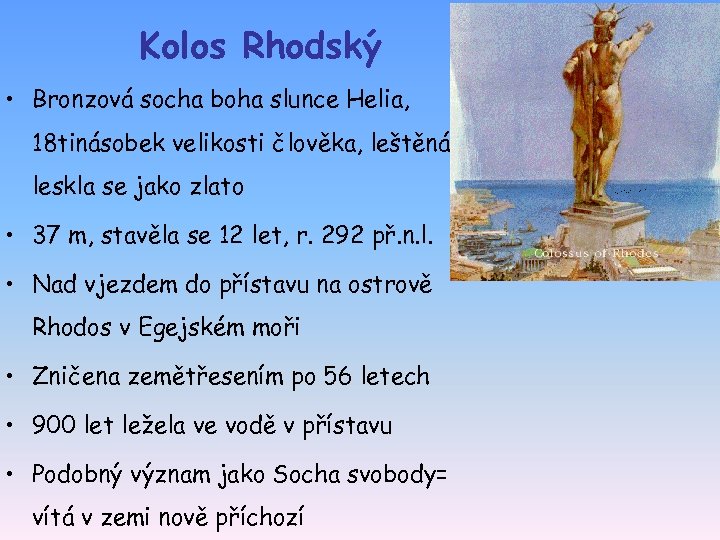 Kolos Rhodský • Bronzová socha boha slunce Helia, 18 tinásobek velikosti člověka, leštěnáleskla se jako zlato • 37 m, stavěla se 12 let, r. 292 př. n. l. • Nad vjezdem do přístavu na ostrově Rhodos v Egejském moři • Zničena zemětřesením po 56 letech • 900 let ležela ve vodě v přístavu • Podobný význam jako Socha svobody= vítá v zemi nově příchozí
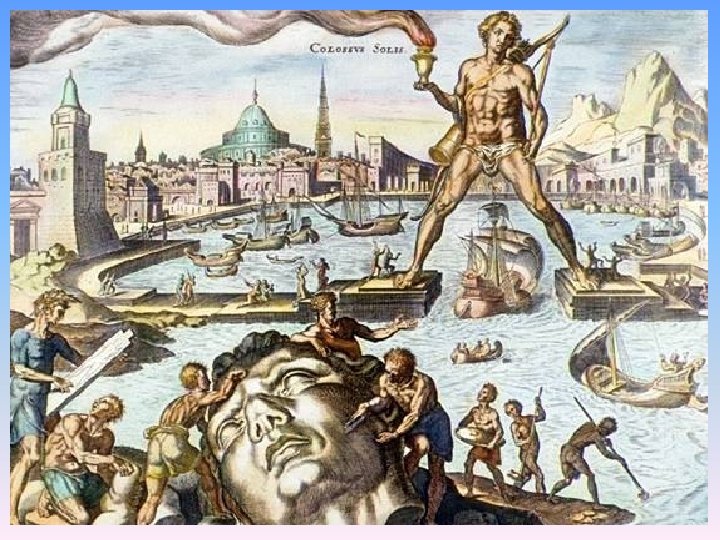
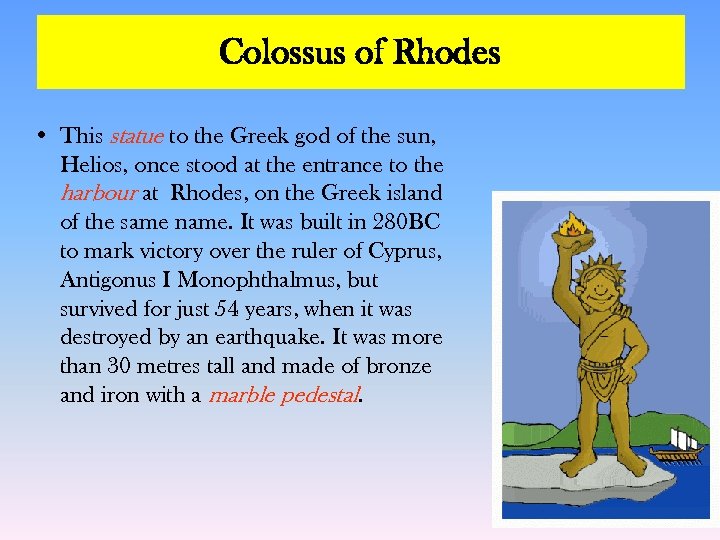 Colossus of Rhodes • This statue to the Greek god of the sun, Helios, once stood at the entrance to the harbour at Rhodes, on the Greek island of the same name. It was built in 280 BC to mark victory over the ruler of Cyprus, Antigonus I Monophthalmus, but survived for just 54 years, when it was destroyed by an earthquake. It was more than 30 metres tall and made of bronze and iron with a marble pedestal.
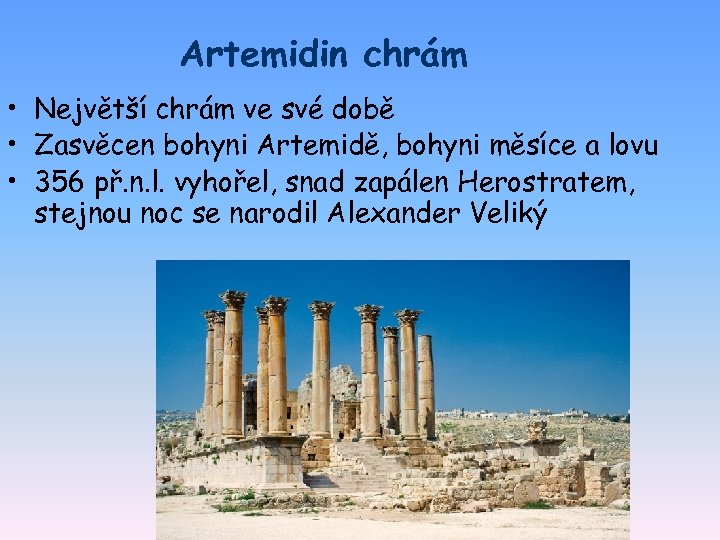 Artemidin chrám • Největší chrám ve své době • Zasvěcen bohyni Artemidě, bohyni měsíce a lovu • 356 př. n. l. vyhořel, snad zapálen Herostratem, stejnou noc se narodil Alexander Veliký
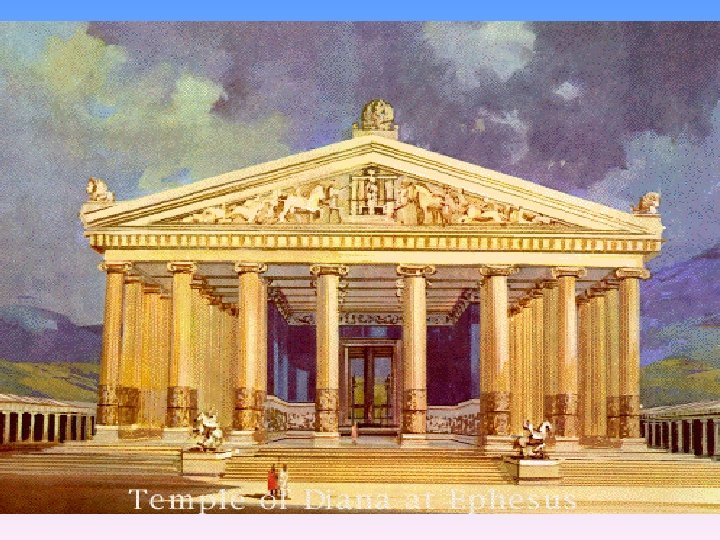
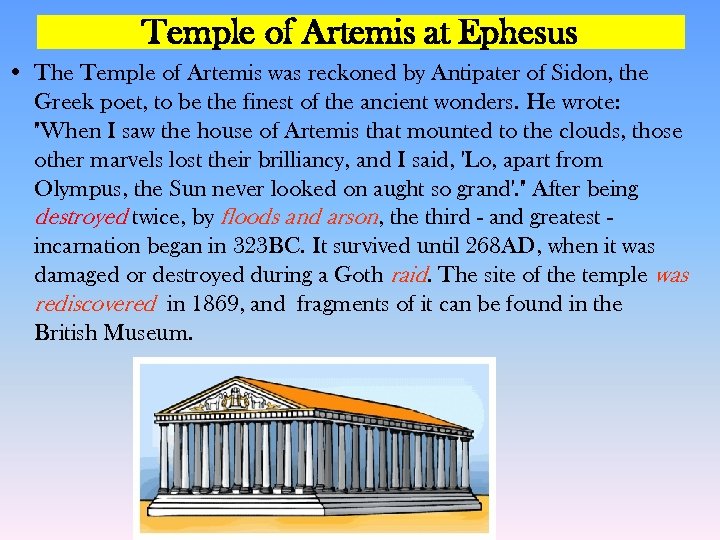 Temple of Artemis at Ephesus • The Temple of Artemis was reckoned by Antipater of Sidon, the Greek poet, to be the finest of the ancient wonders. He wrote: "When I saw the house of Artemis that mounted to the clouds, those other marvels lost their brilliancy, and I said, 'Lo, apart from Olympus, the Sun never looked on aught so grand'. " After being destroyed twice, by floods and arson, the third - and greatest incarnation began in 323 BC. It survived until 268 AD, when it was damaged or destroyed during a Goth raid. The site of the temple was rediscovered in 1869, and fragments of it can be found in the British Museum.
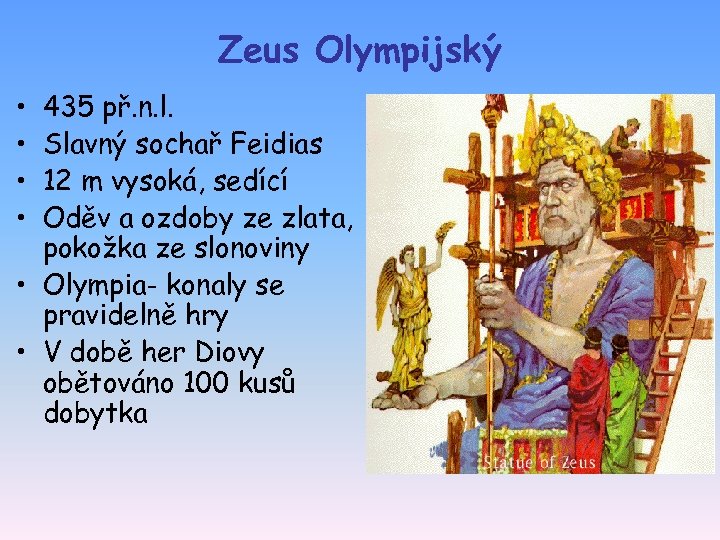 Zeus Olympijský • • 435 př. n. l. Slavný sochař Feidias 12 m vysoká, sedící Oděv a ozdoby ze zlata, pokožka ze slonoviny • Olympia- konaly se pravidelně hry • V době her Diovy obětováno 100 kusů dobytka
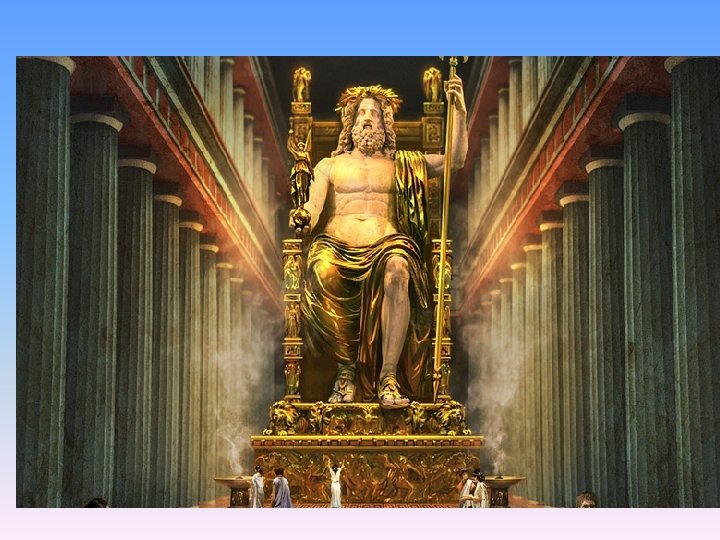
 Statue of Zeus at Olympia • This giant seated representation of the Greek god Zeus was built by the sculptor Phidias around 435 BC in the Temple of Zeus at the sanctuary of Olympia. It consisted of a wooden framework covered with ivory plates and gold panels, while throne was decorated with ebony, ivory, gold and precious stones. It was mentioned by the Roman historian Suetonius (apparently Caligula gave orders for it to be shipped to Rome so its head could be replaced with a sculpture of his own). The statue may have been destroyed when the Temple of Zeus was lost to fire in 425. Alternatively, it was taken to Constantinople (now Istanbul), where it burnt with the Palace of Lausus in 475. Phidias's workshop was rediscovered at Olympia in the 1950 s.
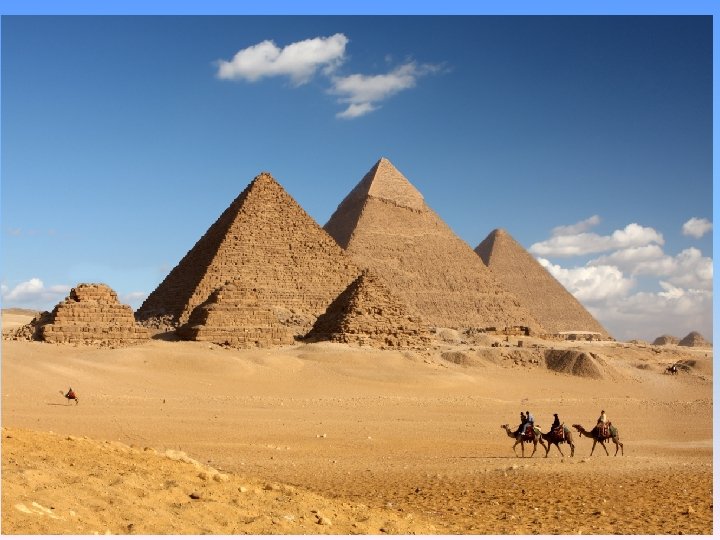
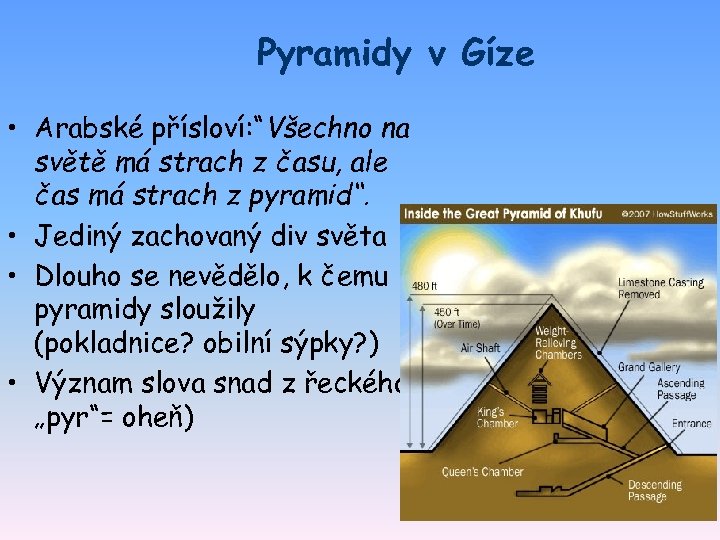 Pyramidy v Gíze • Arabské přísloví: “Všechno na světě má strach z času, ale čas má strach z pyramid“. • Jediný zachovaný div světa • Dlouho se nevědělo, k čemu pyramidy sloužily (pokladnice? obilní sýpky? ) • Význam slova snad z řeckého „pyr“= oheň)
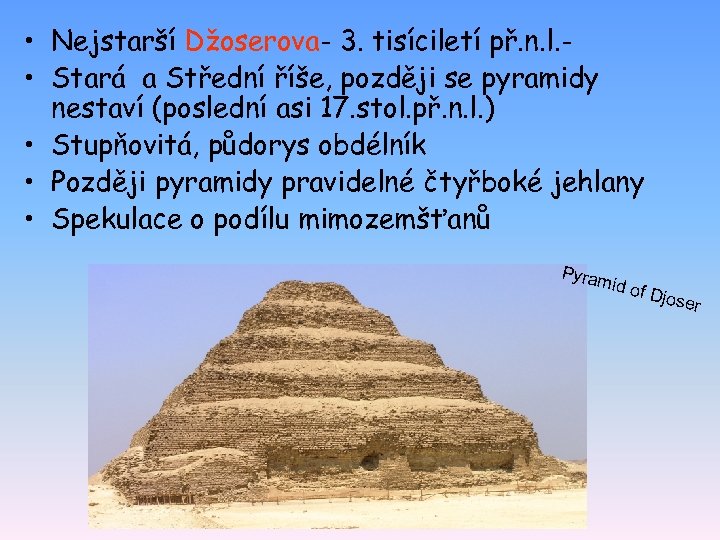 • Nejstarší Džoserova- 3. tisíciletí př. n. l. • Stará a Střední říše, později se pyramidy nestaví (poslední asi 17. stol. př. n. l. ) • Stupňovitá, půdorys obdélník • Později pyramidy pravidelné čtyřboké jehlany • Spekulace o podílu mimozemšťanů Pyram id of Djose r
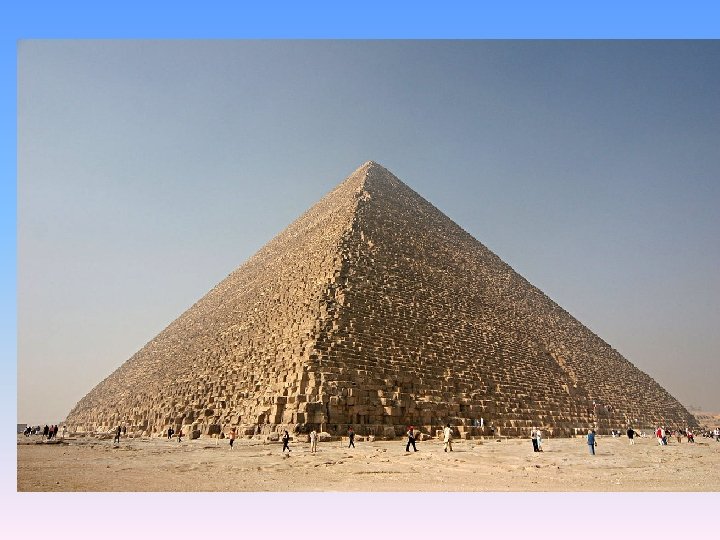
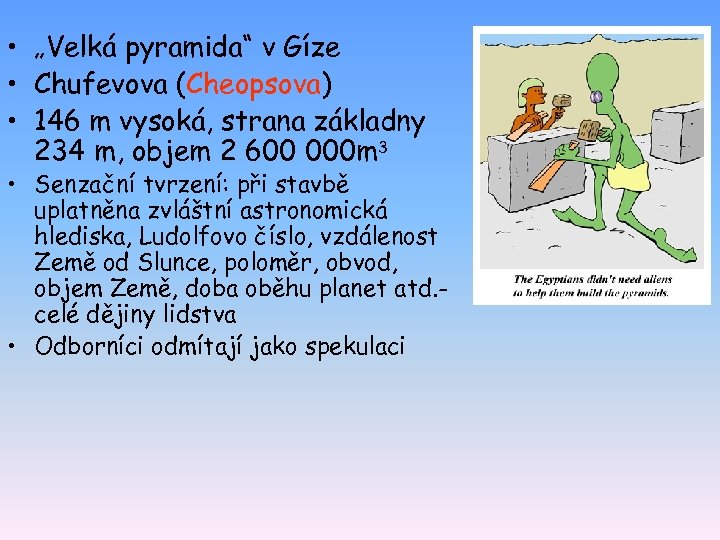 • „Velká pyramida“ v Gíze • Chufevova (Cheopsova) • 146 m vysoká, strana základny 234 m, objem 2 600 000 m 3 • Senzační tvrzení: při stavbě uplatněna zvláštní astronomická hlediska, Ludolfovo číslo, vzdálenost Země od Slunce, poloměr, obvod, objem Země, doba oběhu planet atd. celé dějiny lidstva • Odborníci odmítají jako spekulaci
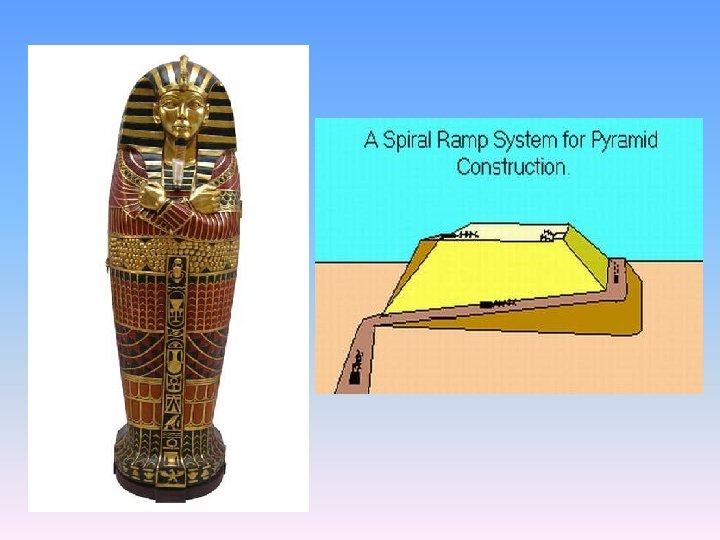
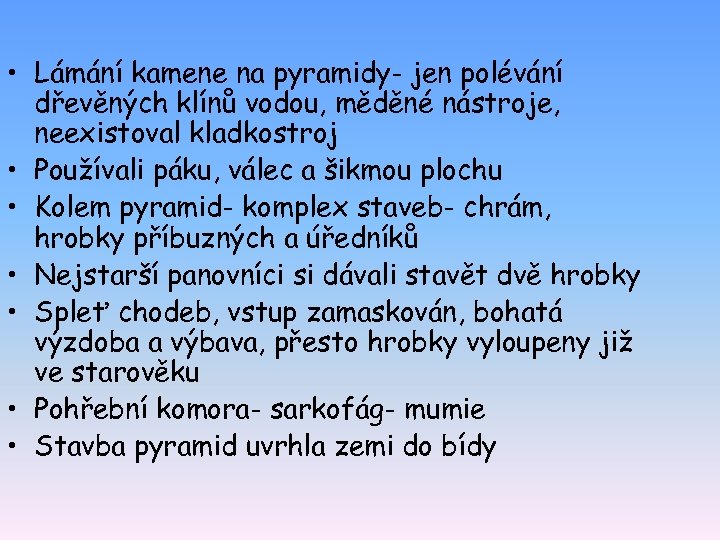 • Lámání kamene na pyramidy- jen polévání dřevěných klínů vodou, měděné nástroje, neexistoval kladkostroj • Používali páku, válec a šikmou plochu • Kolem pyramid- komplex staveb- chrám, hrobky příbuzných a úředníků • Nejstarší panovníci si dávali stavět dvě hrobky • Spleť chodeb, vstup zamaskován, bohatá výzdoba a výbava, přesto hrobky vyloupeny již ve starověku • Pohřební komora- sarkofág- mumie • Stavba pyramid uvrhla zemi do bídy
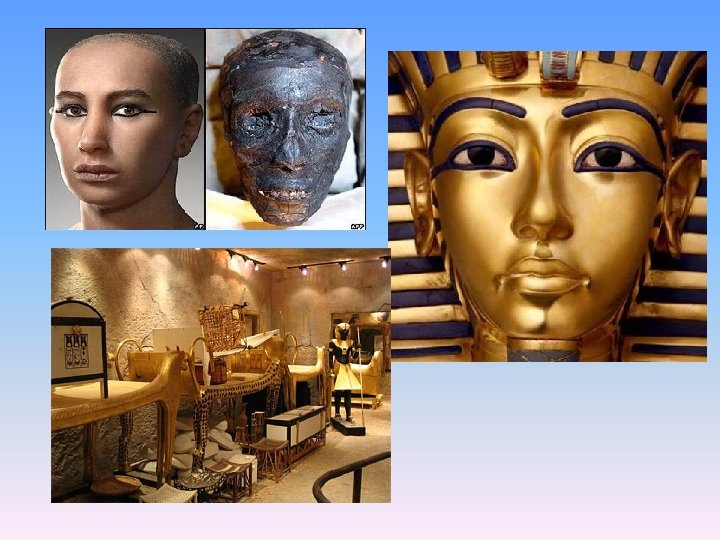
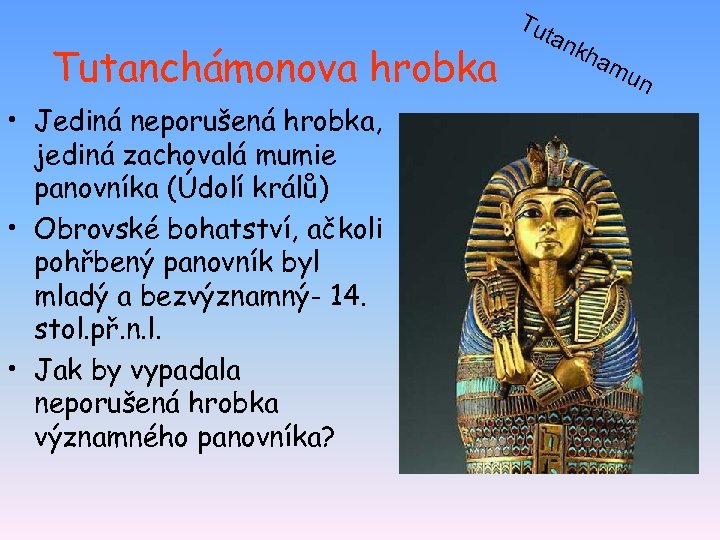 Tutanchámonova hrobka • Jediná neporušená hrobka, jediná zachovalá mumie panovníka (Údolí králů) • Obrovské bohatství, ačkoli pohřbený panovník byl mladý a bezvýznamný- 14. stol. př. n. l. • Jak by vypadala neporušená hrobka významného panovníka? Tu ta nkh am un
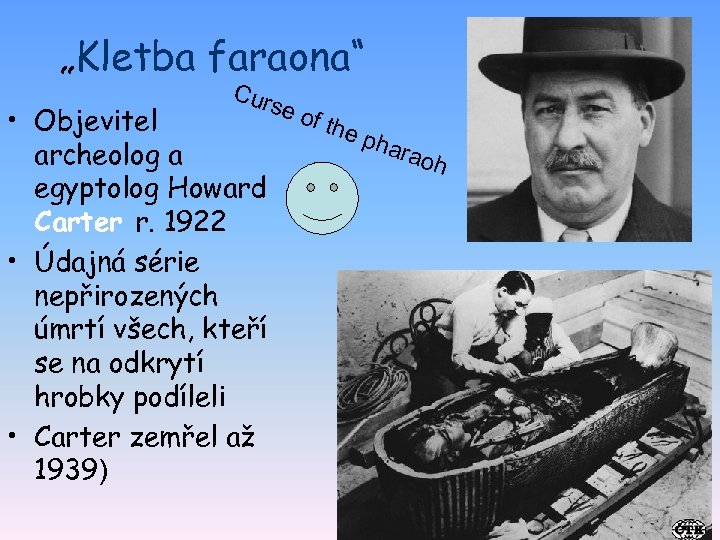 „Kletba faraona“ Cur • Objevitel archeolog a egyptolog Howard Carter r. 1922 • Údajná série nepřirozených úmrtí všech, kteří se na odkrytí hrobky podíleli • Carter zemřel až 1939) se o f the pha raoh
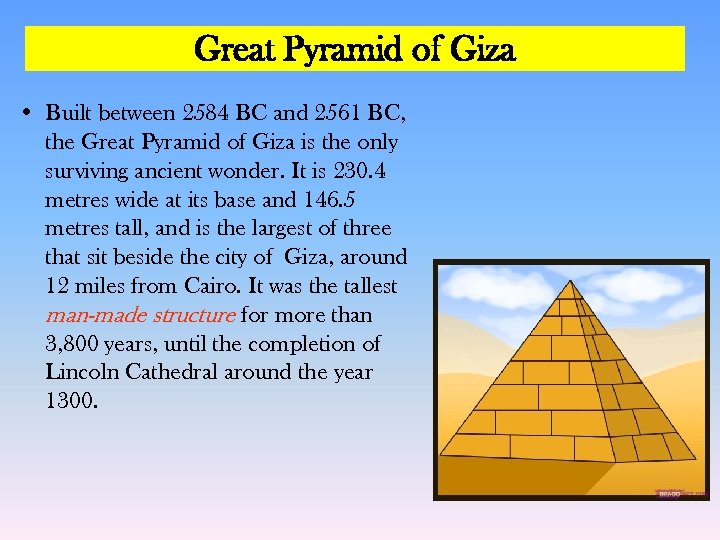 Great Pyramid of Giza • Built between 2584 BC and 2561 BC, the Great Pyramid of Giza is the only surviving ancient wonder. It is 230. 4 metres wide at its base and 146. 5 metres tall, and is the largest of three that sit beside the city of Giza, around 12 miles from Cairo. It was the tallest man-made structure for more than 3, 800 years, until the completion of Lincoln Cathedral around the year 1300.
 Find a missing word • Hanging Gardens of Babylon is the only ancient. . . whose exact. . . has not been established. • The word "mausoleum" has come to represent any above -ground. . . • The. . . of Alexandria measured up to 137 metres in height. • Colossus of Rhodos was more than 30 metres tall and made of. . . and. . . with a marble pedestal. • The fragments of the Temple of Artemis can be found in the. . . Museum. • The throne of Zeus at Olympia was decorated with ebony, ivory, gold and. . . Stones. • The Great Pyramid of Giza was the tallest. . . structure for more than 3, 800 years.