 Скачать презентацию Securing the Wireless Networks by Jacques and Steve
014519d5e827ed428194b94be01e1d0a.ppt
- Количество слайдов: 32



Securing the Wireless Networks by Jacques and Steve Cover security & encryption • • WPE WPA-2 Wi. Fi
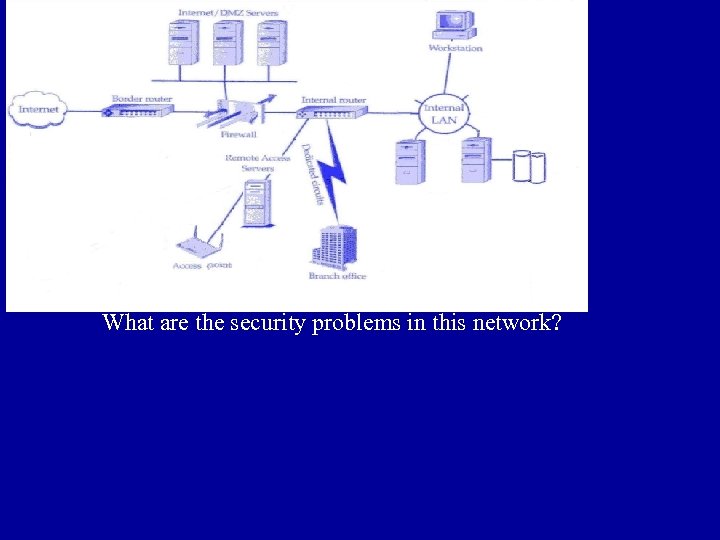
What are the security problems in this network?
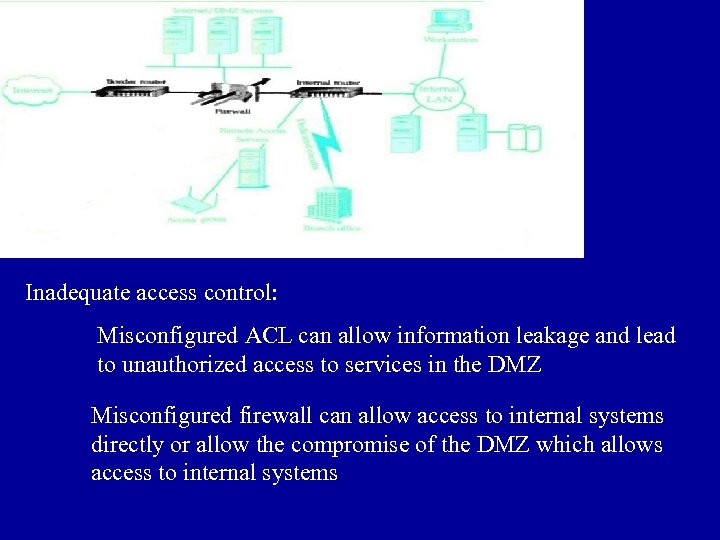
Inadequate access control: Misconfigured ACL can allow information leakage and lead to unauthorized access to services in the DMZ Misconfigured firewall can allow access to internal systems directly or allow the compromise of the DMZ which allows access to internal systems
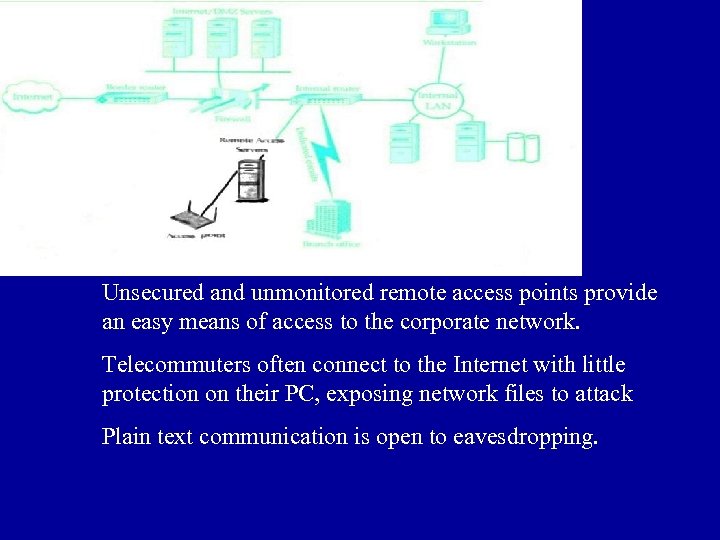
Unsecured and unmonitored remote access points provide an easy means of access to the corporate network. Telecommuters often connect to the Internet with little protection on their PC, exposing network files to attack Plain text communication is open to eavesdropping.
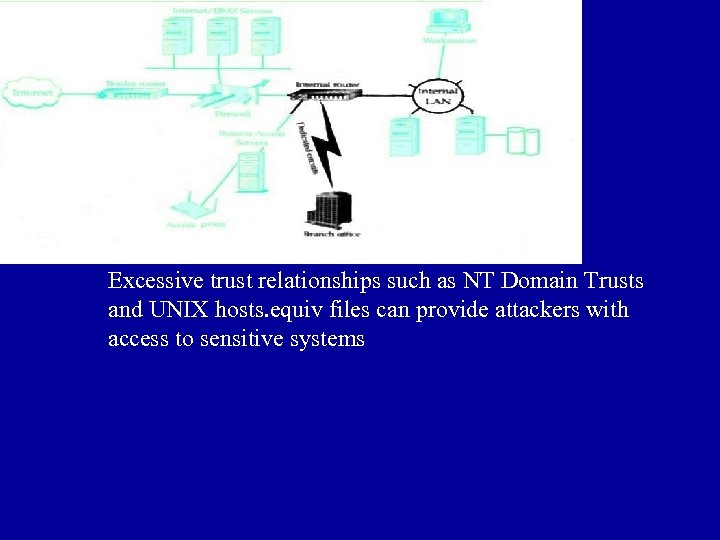
Excessive trust relationships such as NT Domain Trusts and UNIX hosts. equiv files can provide attackers with access to sensitive systems
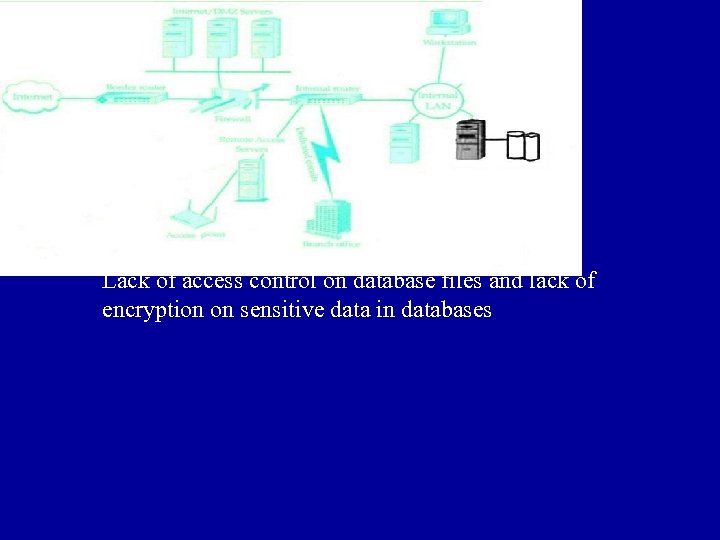
Lack of access control on database files and lack of encryption on sensitive data in databases
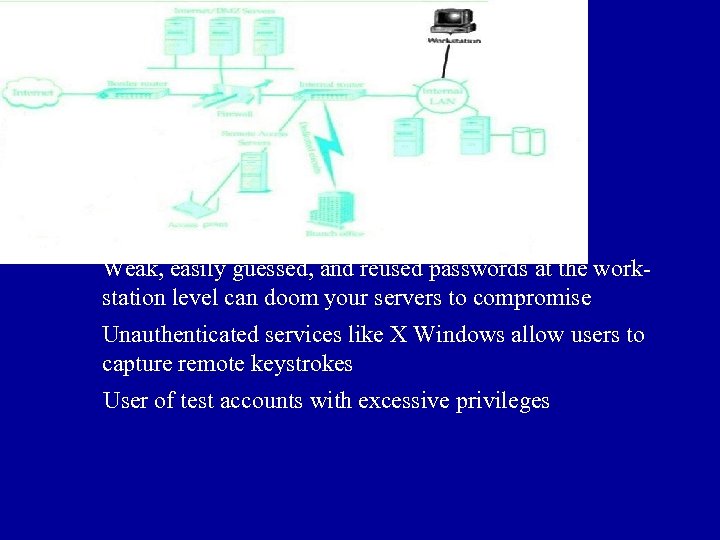
Weak, easily guessed, and reused passwords at the workstation level can doom your servers to compromise Unauthenticated services like X Windows allow users to capture remote keystrokes User of test accounts with excessive privileges
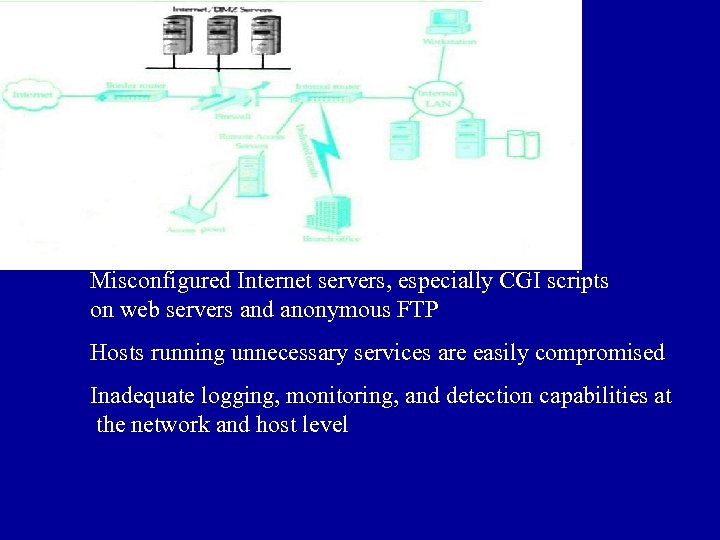
Misconfigured Internet servers, especially CGI scripts on web servers and anonymous FTP Hosts running unnecessary services are easily compromised Inadequate logging, monitoring, and detection capabilities at the network and host level
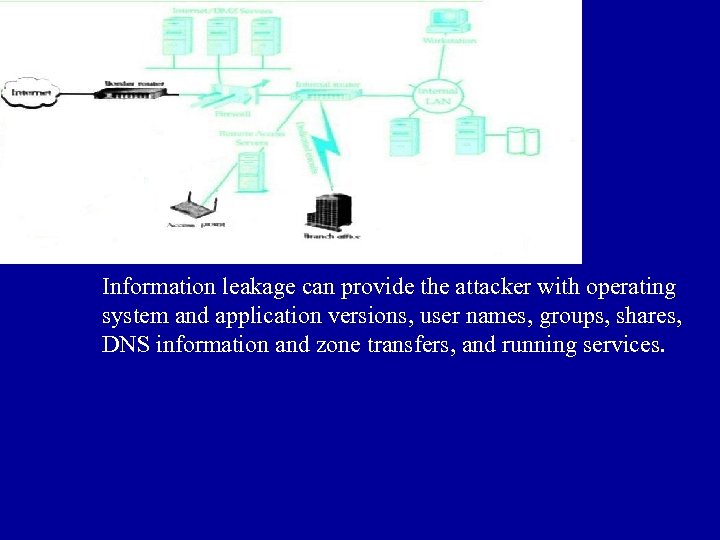
Information leakage can provide the attacker with operating system and application versions, user names, groups, shares, DNS information and zone transfers, and running services.
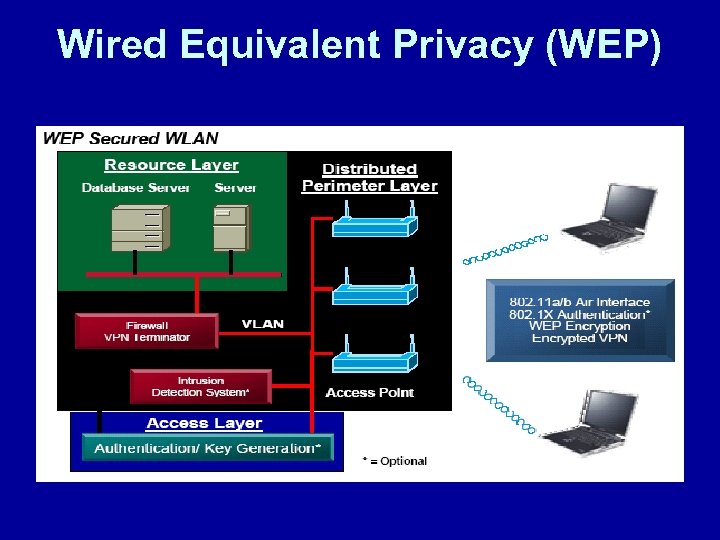
Wired Equivalent Privacy (WEP)
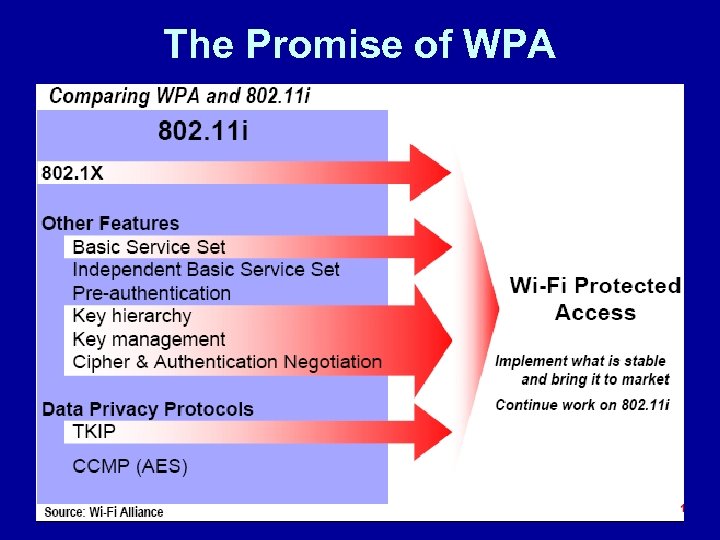
The Promise of WPA
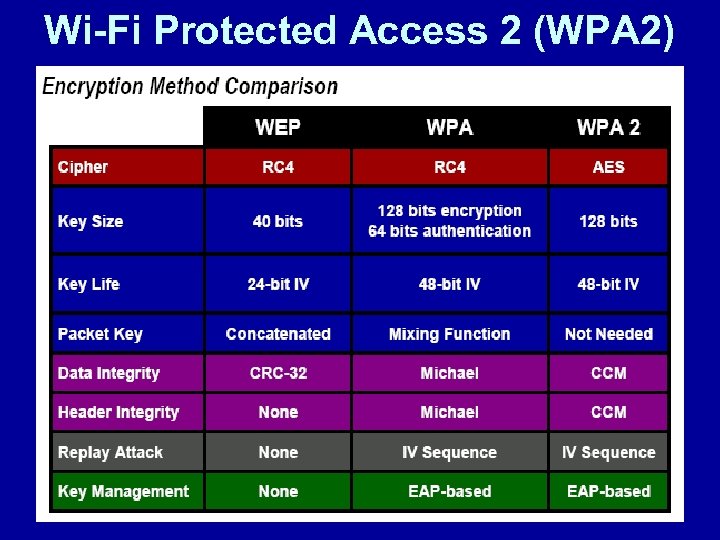
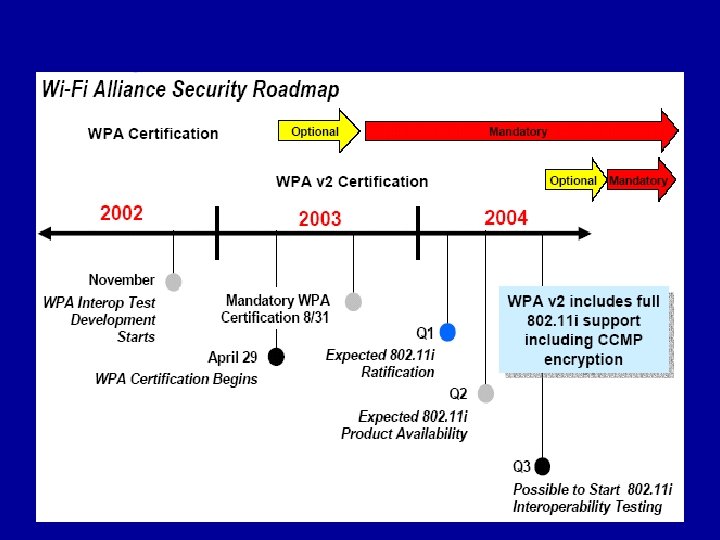
Wi-Fi Protected Access 2 (WPA 2)
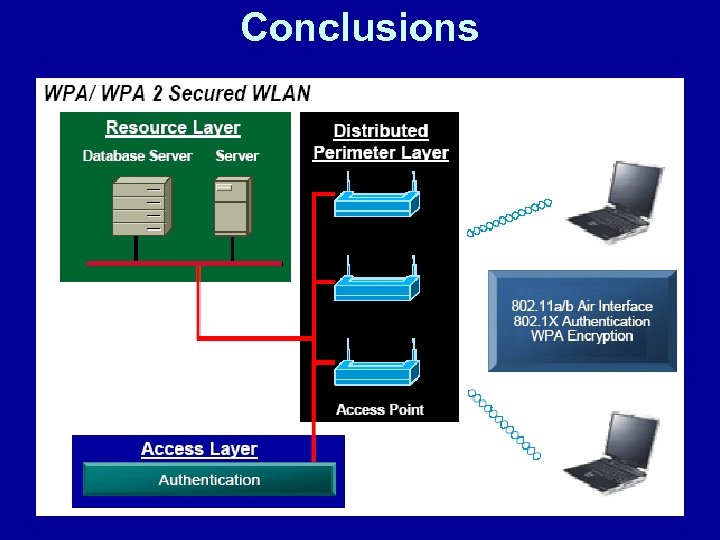
Conclusions
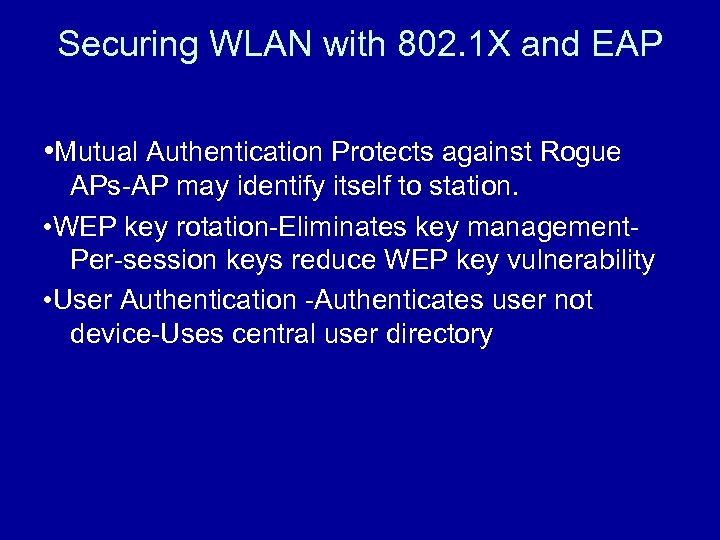
Securing WLAN with 802. 1 X and EAP • Mutual Authentication Protects against Rogue APs-AP may identify itself to station. • WEP key rotation-Eliminates key management. Per-session keys reduce WEP key vulnerability • User Authentication -Authenticates user not device-Uses central user directory
Wireless LAN Access Control Issues • Authentication and security on WLANS has been much in the news, especially with the successful and highly publicized attacks on WEP, the encryption method used over the air by WLAN equipment. • WEP fixes are being worked on by IEEE 802. 11 i standards group and will likely be available in 2002. • This presentation describes the overall model for 802. 11 access management and the current status of standards to support it. • Other Wireless methods have parallel issues but are not covered here: Mobile Network (e. g. 3 G Cellular) and Local Networks (e. g. Blue. Tooth)
First Step: Seamless Security • WPA 802. 1 x/EAP Across All WLAN Markets. Embedded software solution for WPA 802. 1 x security -Wireless access device assumes role of authentication server-Supports user authentication files in local memory. Compliant with WPA enterprise security requirements-Manages BB access and network membership-No external RADIUS server or directory required
Wired Equivalent Privacy (WEP) • What is WEP? • was designed to secure the radio link WEP • Wired Equivalent Privacy (WEP) uses the RC 4 encryption • algorithm devised by Ron Rivest (the “R” in RSA) of RSA • Security, Inc. • Symmetric-key stream cipher • Variable length key • uses 64 -bit shared keys WEP • Initialization Vector (IV) is 24 bits of the key and sent as plain text
Wired Equivalent Privacy (WEP) • WEP has been shown to have some serious weaknesses • single key is used for all access points and client A radios • can be recovered with easily available utilities Keys • Recovered keys expose the network to attacks or passive • monitoring • of automated key management contributes to Lack infinite • static key lifespan in large networks • When WEP was available it was not always turned on
Wired Equivalent Privacy (WEP) • • And if that wasn’t enough… provides no forgery protection WEP provides no replay protection WEP misuses the RC 4 encryption algorithm WEP and allows • weak key attacks • uses the Initialization Vector as part of WEP the key, and • when the IV wraps around, data can be easily recovered
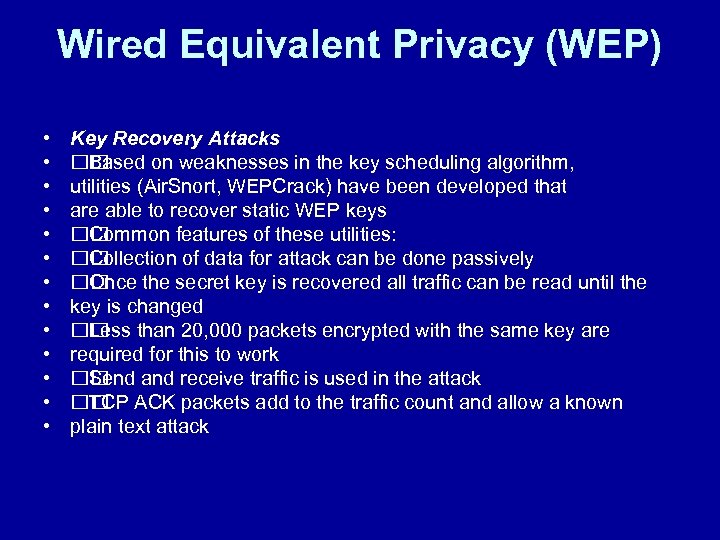
Wired Equivalent Privacy (WEP) • • • • Key Recovery Attacks Based on weaknesses in the key scheduling algorithm, utilities (Air. Snort, WEPCrack) have been developed that are able to recover static WEP keys Common features of these utilities: Collection of data for attack can be done passively Once the secret key is recovered all traffic can be read until the key is changed than 20, 000 packets encrypted with the same key are Less required for this to work Send and receive traffic is used in the attack ACK packets add to the traffic count and allow a known TCP plain text attack
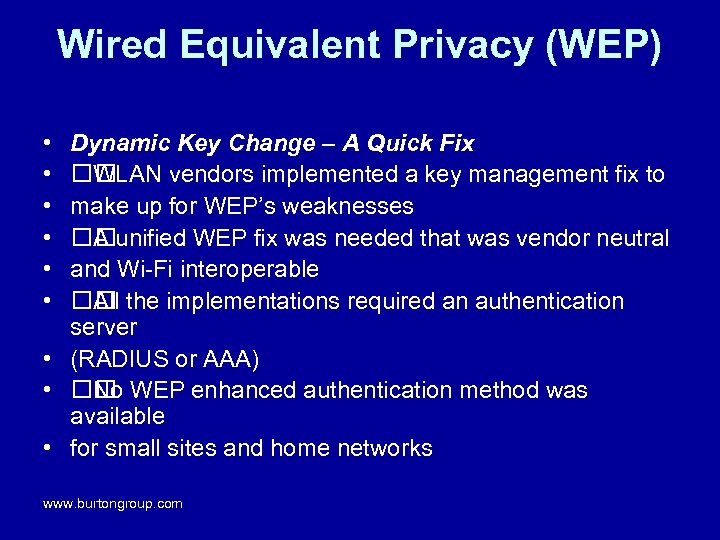
Wired Equivalent Privacy (WEP) • • • Dynamic Key Change – A Quick Fix WLAN vendors implemented a key management fix to make up for WEP’s weaknesses unified WEP fix was needed that was vendor neutral A and Wi-Fi interoperable the implementations required an authentication All server • (RADIUS or AAA) • WEP enhanced authentication method was No available • for small sites and home networks www. burtongroup. com
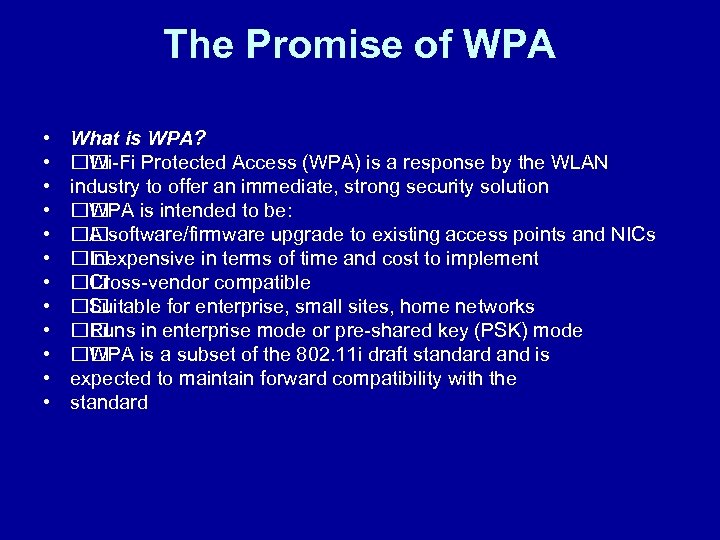
The Promise of WPA • • • What is WPA? Wi-Fi Protected Access (WPA) is a response by the WLAN industry to offer an immediate, strong security solution is intended to be: WPA software/firmware upgrade to existing access points and NICs A Inexpensive in terms of time and cost to implement Cross-vendor compatible Suitable for enterprise, small sites, home networks Runs in enterprise mode or pre-shared key (PSK) mode is a subset of the 802. 11 i draft standard and is WPA expected to maintain forward compatibility with the standard
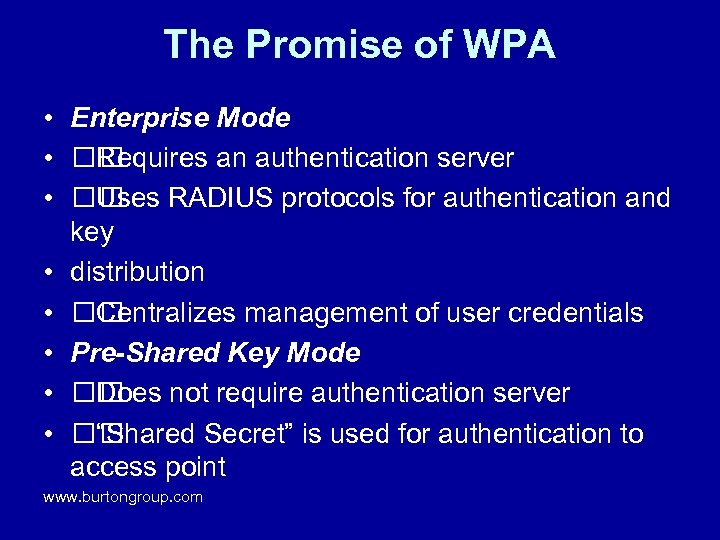
The Promise of WPA • Enterprise Mode • Requires an authentication server • RADIUS protocols for authentication and Uses key • distribution • Centralizes management of user credentials • Pre-Shared Key Mode • Does not require authentication server • “Shared Secret” is used for authentication to access point www. burtongroup. com
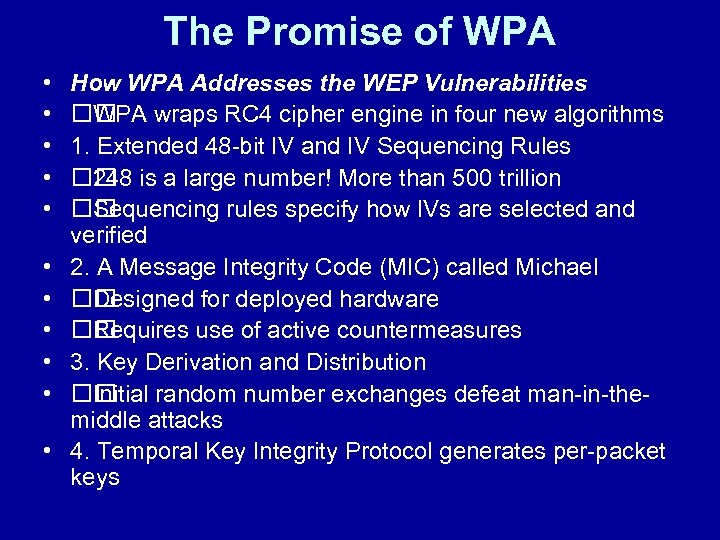
The Promise of WPA • • • How WPA Addresses the WEP Vulnerabilities wraps RC 4 cipher engine in four new algorithms WPA 1. Extended 48 -bit IV and IV Sequencing Rules is a large number! More than 500 trillion 248 Sequencing rules specify how IVs are selected and verified 2. A Message Integrity Code (MIC) called Michael Designed for deployed hardware Requires use of active countermeasures 3. Key Derivation and Distribution Initial random number exchanges defeat man-in-themiddle attacks 4. Temporal Key Integrity Protocol generates per-packet keys
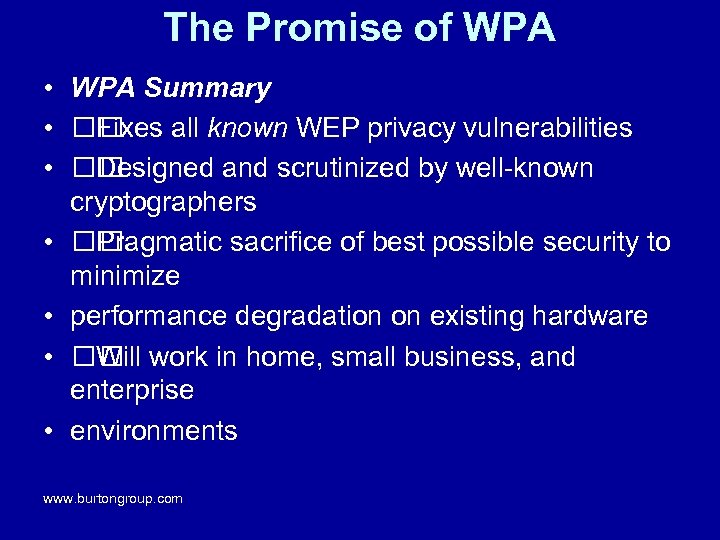
The Promise of WPA • WPA Summary • Fixes all known WEP privacy vulnerabilities • Designed and scrutinized by well-known cryptographers • Pragmatic sacrifice of best possible security to minimize • performance degradation on existing hardware • work in home, small business, and Will enterprise • environments www. burtongroup. com
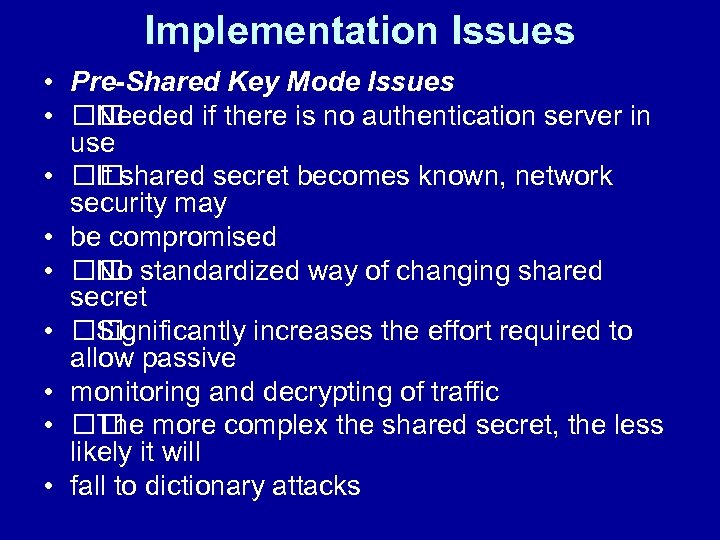
Implementation Issues • Pre-Shared Key Mode Issues • Needed if there is no authentication server in use • If shared secret becomes known, network security may • be compromised • standardized way of changing shared No secret • Significantly increases the effort required to allow passive • monitoring and decrypting of traffic • more complex the shared secret, the less The likely it will • fall to dictionary attacks
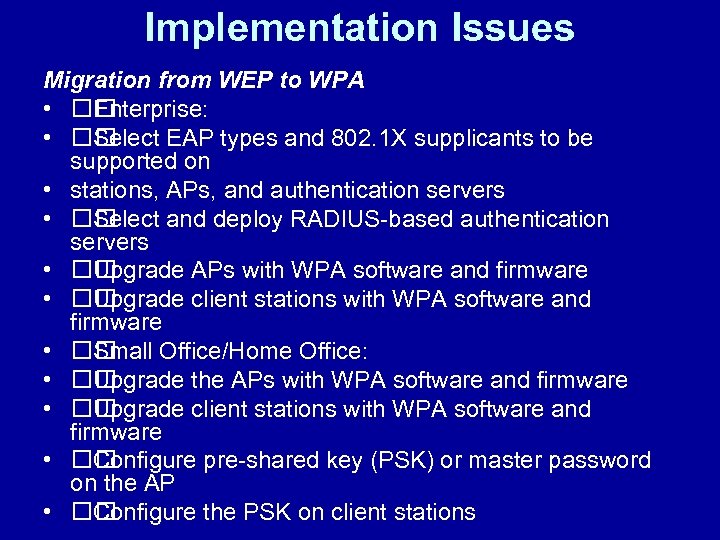
Implementation Issues Migration from WEP to WPA • Enterprise: • Select EAP types and 802. 1 X supplicants to be supported on • stations, APs, and authentication servers • Select and deploy RADIUS-based authentication servers • Upgrade APs with WPA software and firmware • Upgrade client stations with WPA software and firmware • Small Office/Home Office: • Upgrade the APs with WPA software and firmware • Upgrade client stations with WPA software and firmware • Configure pre-shared key (PSK) or master password on the AP • Configure the PSK on client stations
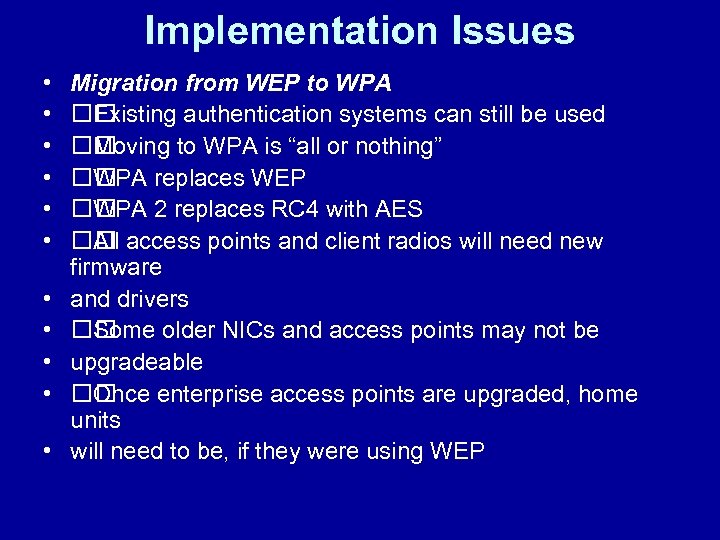
Implementation Issues • • • Migration from WEP to WPA Existing authentication systems can still be used Moving to WPA is “all or nothing” replaces WEP WPA 2 replaces RC 4 with AES WPA access points and client radios will need new All firmware and drivers Some older NICs and access points may not be upgradeable Once enterprise access points are upgraded, home units will need to be, if they were using WEP
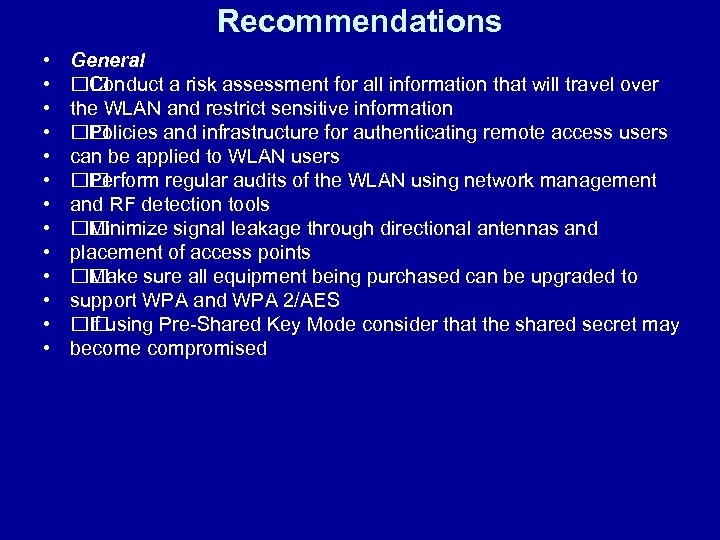
Recommendations • • • • General Conduct a risk assessment for all information that will travel over the WLAN and restrict sensitive information Policies and infrastructure for authenticating remote access users can be applied to WLAN users Perform regular audits of the WLAN using network management and RF detection tools Minimize signal leakage through directional antennas and placement of access points Make sure all equipment being purchased can be upgraded to support WPA and WPA 2/AES If using Pre-Shared Key Mode consider that the shared secret may become compromised
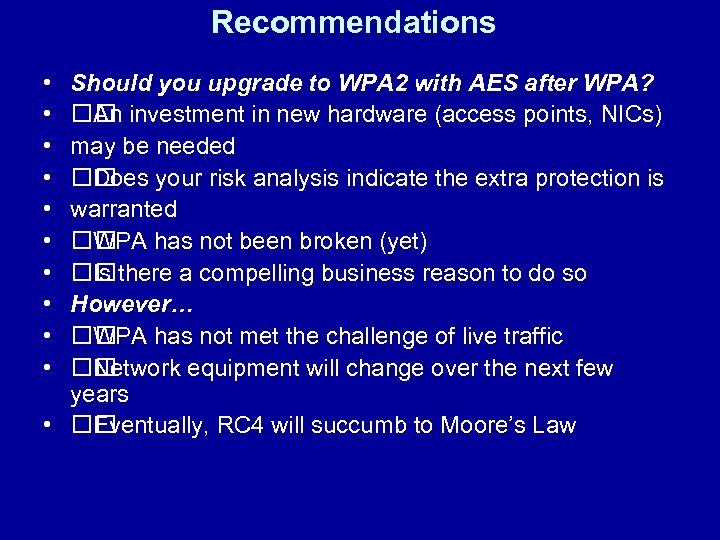
Recommendations • • • Should you upgrade to WPA 2 with AES after WPA? investment in new hardware (access points, NICs) An may be needed Does your risk analysis indicate the extra protection is warranted has not been broken (yet) WPA there a compelling business reason to do so Is However… has not met the challenge of live traffic WPA Network equipment will change over the next few years • Eventually, RC 4 will succumb to Moore’s Law
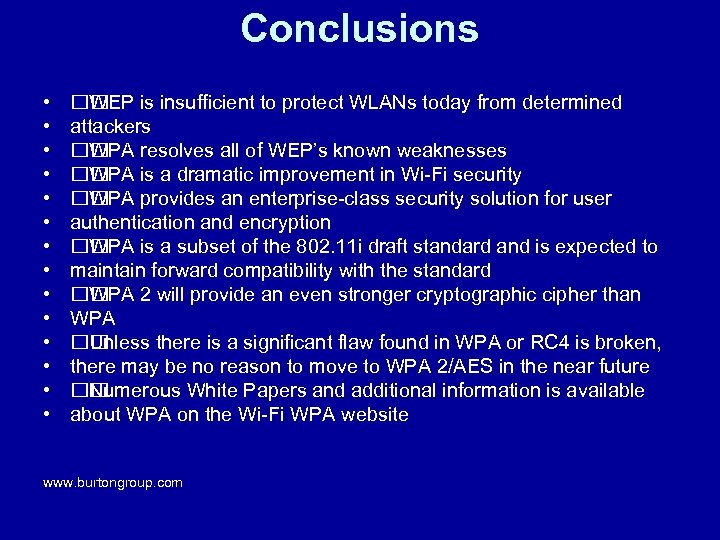
Conclusions • • • • is insufficient to protect WLANs today from determined WEP attackers resolves all of WEP’s known weaknesses WPA is a dramatic improvement in Wi-Fi security WPA provides an enterprise-class security solution for user WPA authentication and encryption is a subset of the 802. 11 i draft standard and is expected to WPA maintain forward compatibility with the standard 2 will provide an even stronger cryptographic cipher than WPA Unless there is a significant flaw found in WPA or RC 4 is broken, there may be no reason to move to WPA 2/AES in the near future Numerous White Papers and additional information is available about WPA on the Wi-Fi WPA website www. burtongroup. com
Скачать презентацию Securing the Wireless Networks by Jacques and Steve
014519d5e827ed428194b94be01e1d0a.ppt