


 Скачать презентацию Section 3 A Victory in Europe
211ad8fe4fa1a21c02a4b5b14b2c067d.ppt
- Количество слайдов: 92
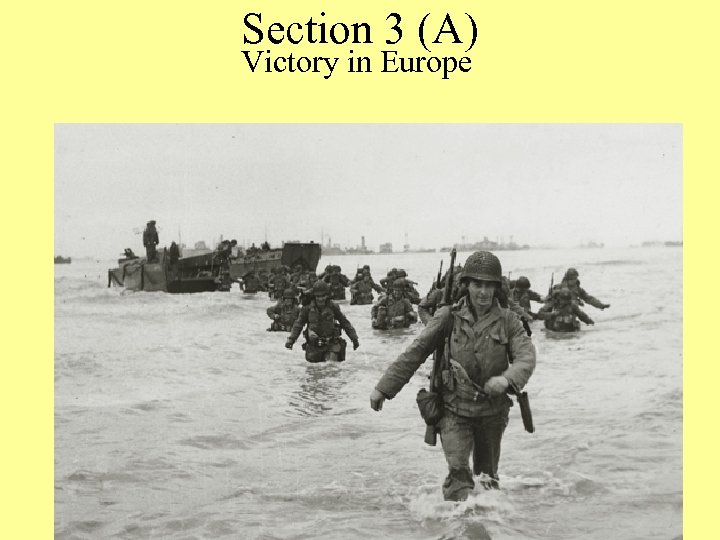 Section 3 (A) Victory in Europe
 • Do Now page 821 thinking critically question
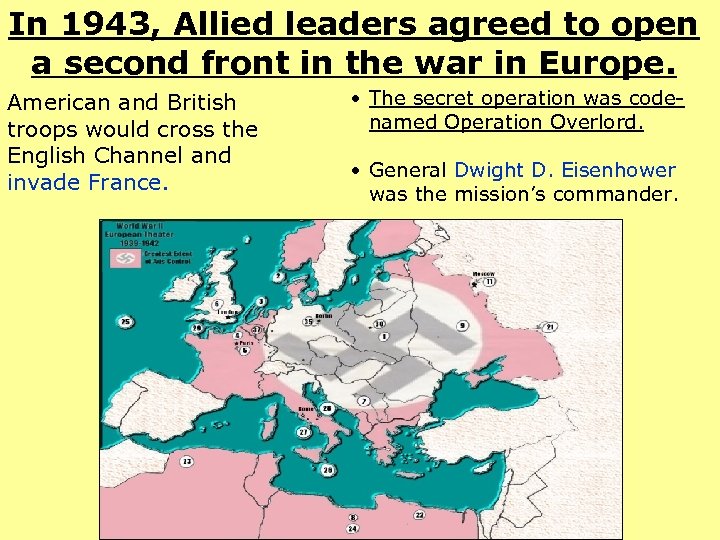 In 1943, Allied leaders agreed to open a second front in the war in Europe. American and British troops would cross the English Channel and invade France. • The secret operation was codenamed Operation Overlord. • General Dwight D. Eisenhower was the mission’s commander.
 The planning phase • Preparations for a ‘second front’ against Nazi Germany date back to 1942. • The Allies knew they would have to capture a port to ensure the success of the invasion of France. • A ‘dress-rehearsal’ took place in 1942 when a British. Canadian raid on the port of Dieppe was carried out. • The aim was to capture and hold a French port for a short period to test German defences. • The raid was a total disaster: of the 6, 086 men who made it ashore, 4, 384 were killed.
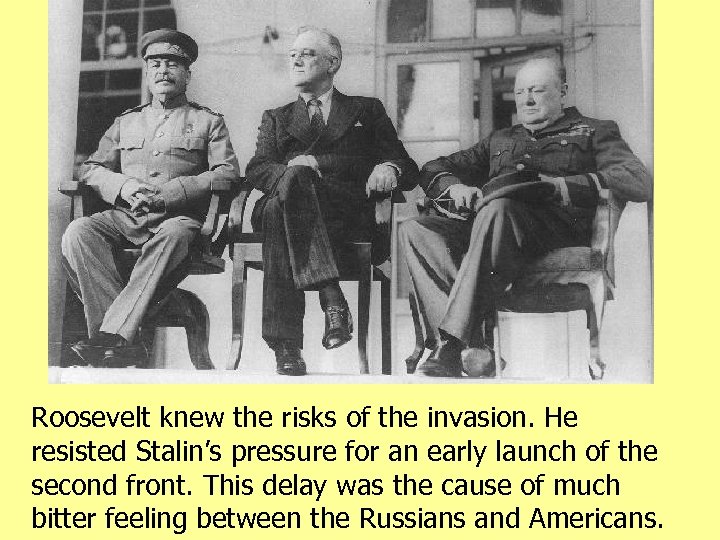 Roosevelt knew the risks of the invasion. He resisted Stalin’s pressure for an early launch of the second front. This delay was the cause of much bitter feeling between the Russians and Americans.
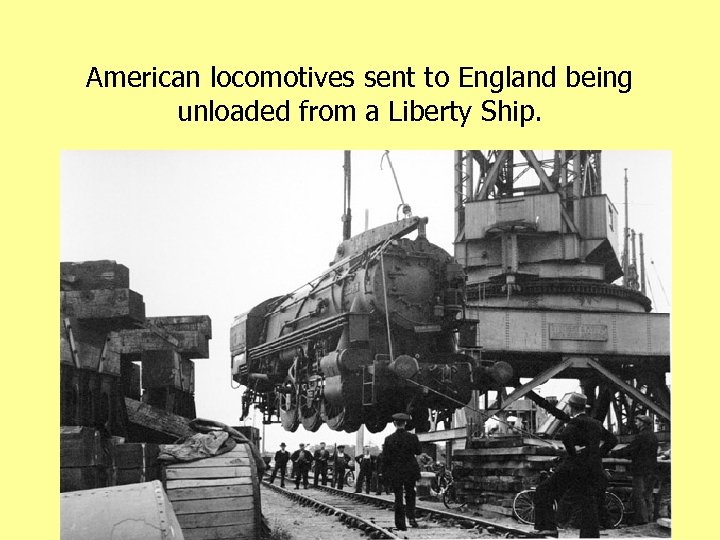 American locomotives sent to England being unloaded from a Liberty Ship.
 Air raids in preparation for D Day • The British and Americans began bombing targets in occupied France in preparation for D Day. • The French railway system came under continuous attack. • Raids were concentrated in the Calais region to mislead the Germans in to believing that was the intending invasion area. • The Normandy region was bombed, but less heavily.
 Operation Fortitude • The Allies began a massive deception of operation to conceal the intended landing zone. • A massive build-up of fake armies and equipment was concentrated in Kent to fool the Germans in to thinking Calais was the intended target. • Canvas and rubber tanks were assembled to confuse any German aerial reconnaissance aircraft. (In fact there were no German spy planes over England in 1944)
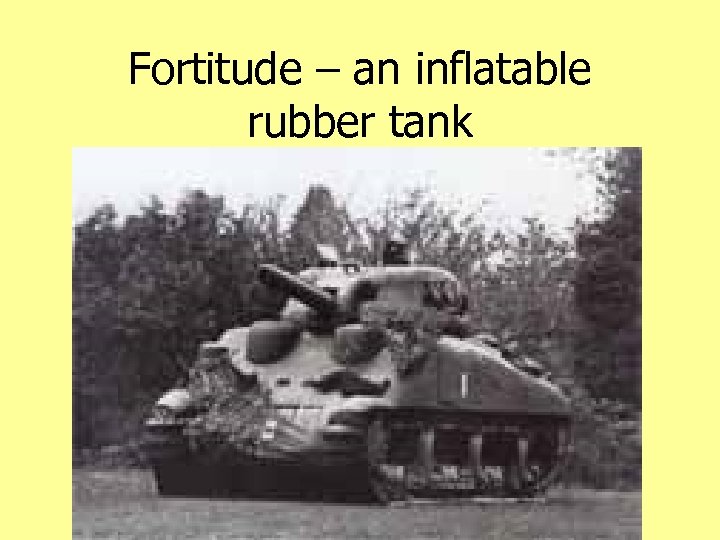 Fortitude – an inflatable rubber tank
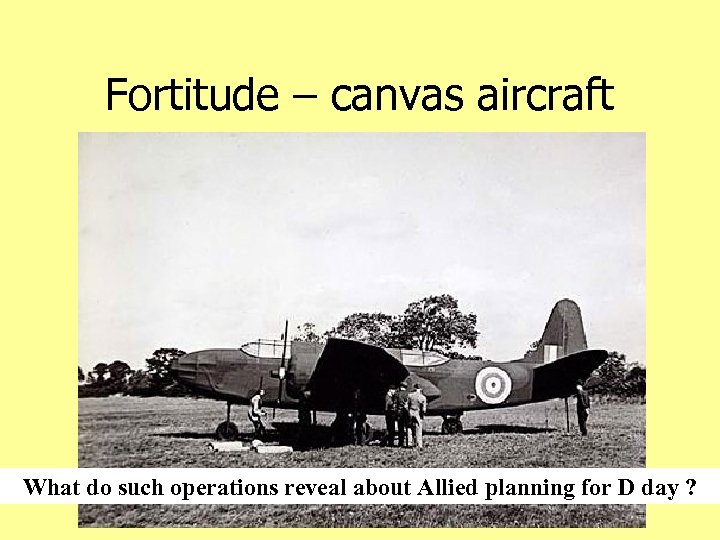 Fortitude – canvas aircraft What do such operations reveal about Allied planning for D day ?
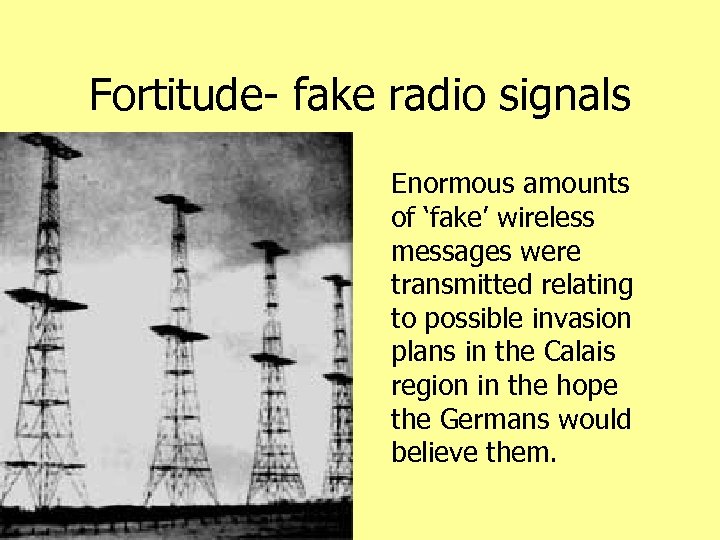 Fortitude- fake radio signals • Enormous amounts of ‘fake’ wireless messages were transmitted relating to possible invasion plans in the Calais region in the hope the Germans would believe them.
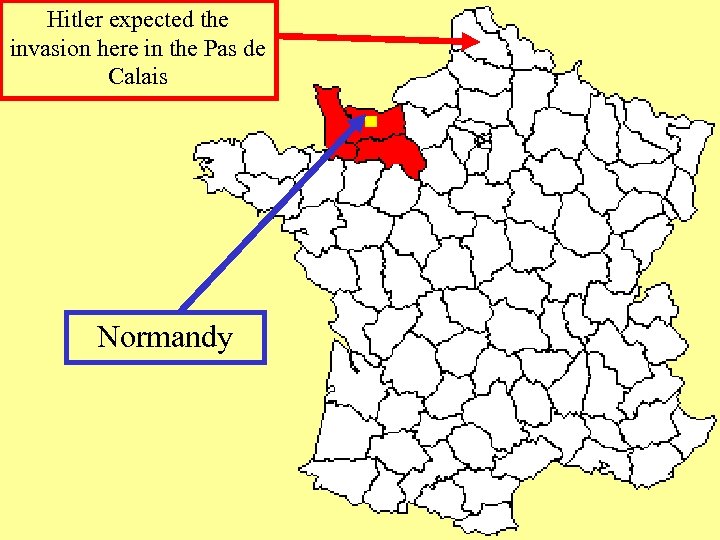 Hitler expected the invasion here in the Pas de Calais Normandy
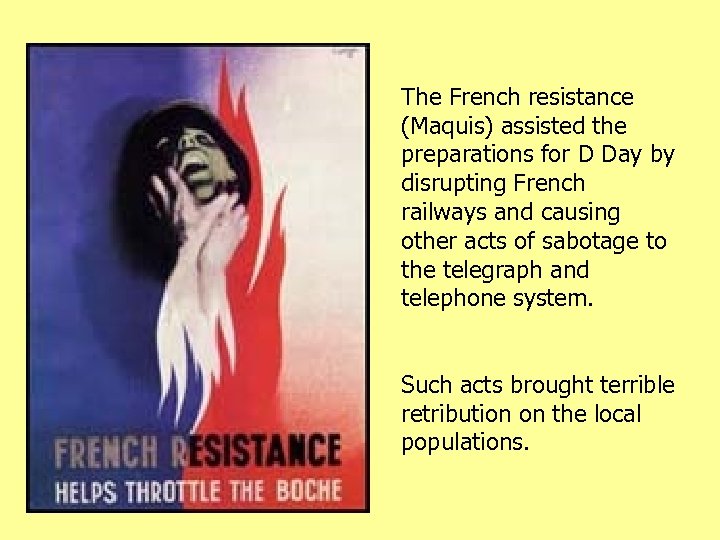 The French resistance (Maquis) assisted the preparations for D Day by disrupting French railways and causing other acts of sabotage to the telegraph and telephone system. Such acts brought terrible retribution on the local populations.
 June 1944 • The timing was now favourable for an invasion • The U boats had been defeated • The German air force was largely grounded for lack of fuel.
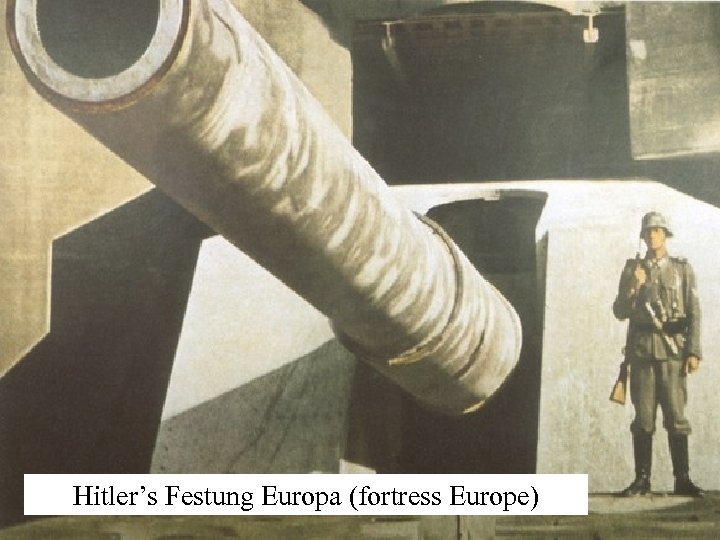 Hitler’s Festung Europa (fortress Europe)
 The Atlantic Wall • Despite all Allied efforts, the Germans obviously expected an Allied invasion somewhere in France. • Hitler appointed two of his best Generals, Gerd Von Rundstedt and Erwin Rommel to take charge of strengthening the French coast line from attack.
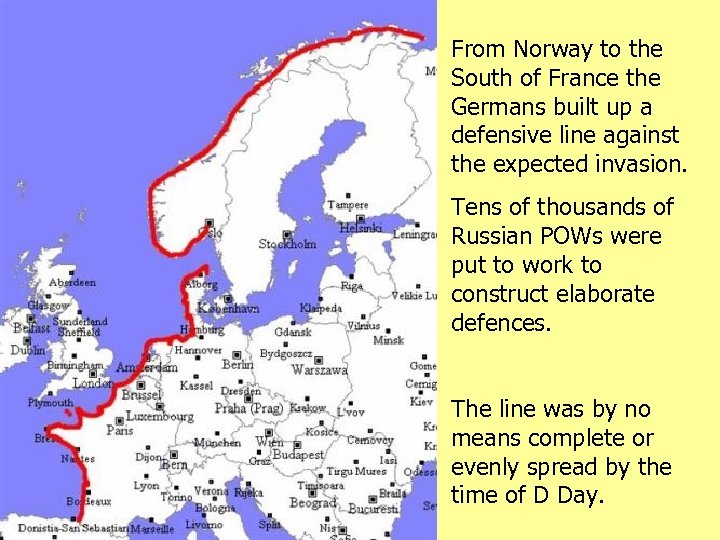 From Norway to the South of France the Germans built up a defensive line against the expected invasion. Tens of thousands of Russian POWs were put to work to construct elaborate defences. The line was by no means complete or evenly spread by the time of D Day.
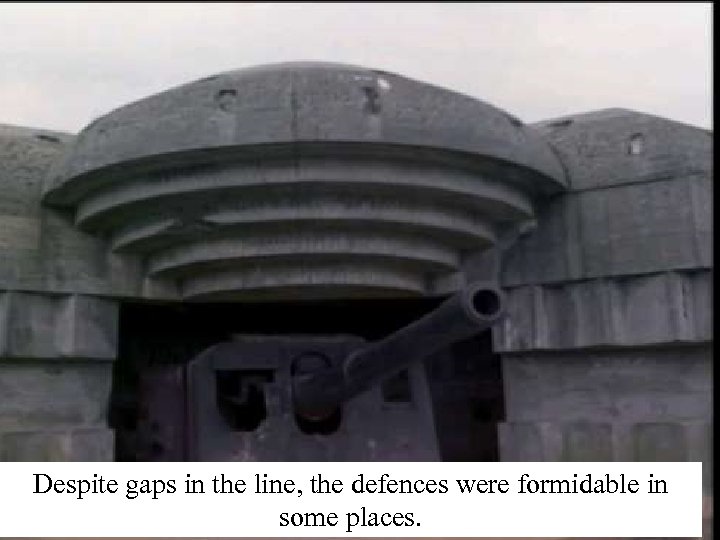 Despite gaps in the line, the defences were formidable in some places.
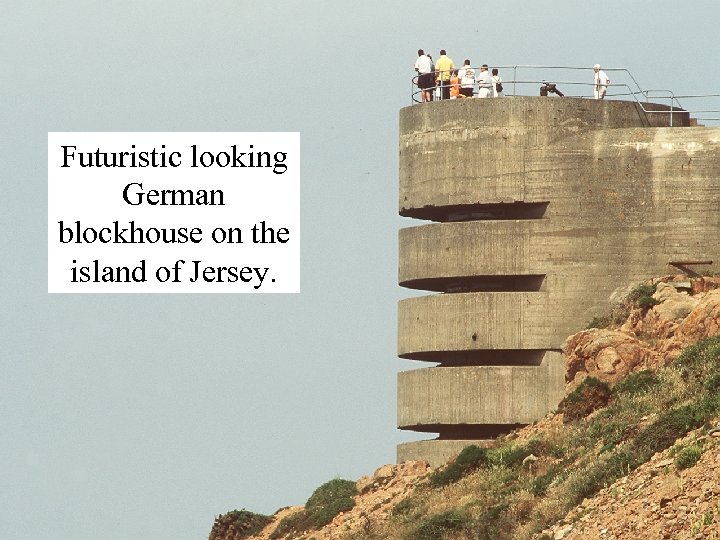 Futuristic looking German blockhouse on the island of Jersey.
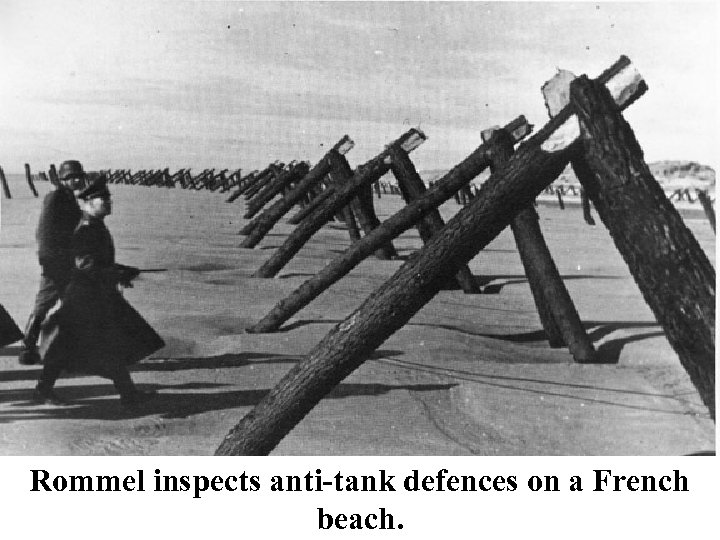 Rommel inspects anti-tank defences on a French beach.
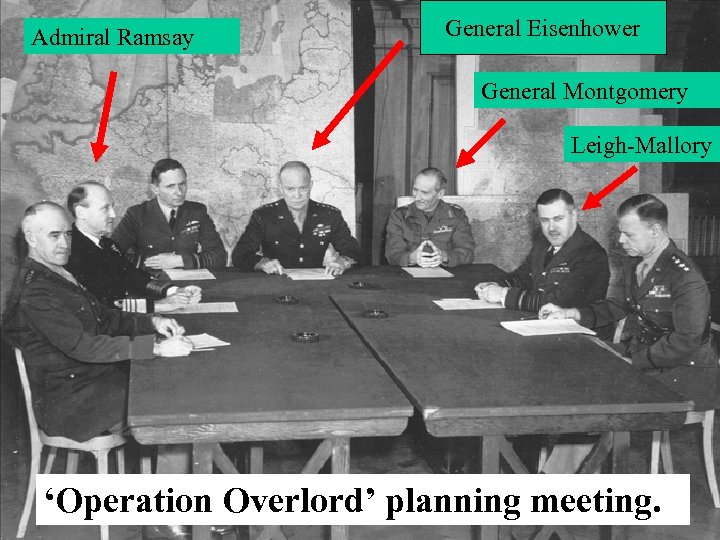 Admiral Ramsay General Eisenhower General Montgomery Leigh-Mallory ‘Operation Overlord’ planning meeting.
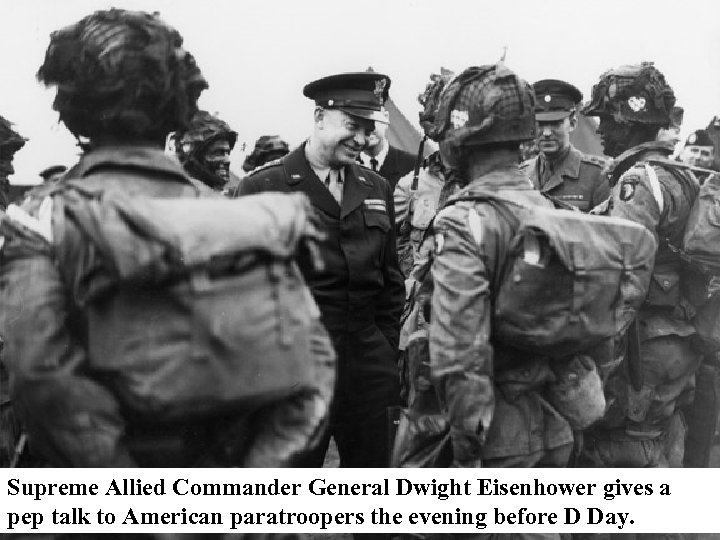 Supreme Allied Commander General Dwight Eisenhower gives a pep talk to American paratroopers the evening before D Day.
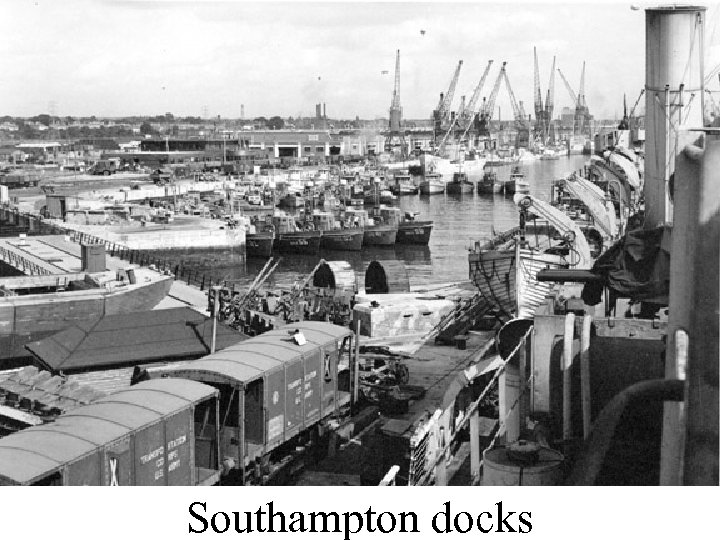 • Southampton docks
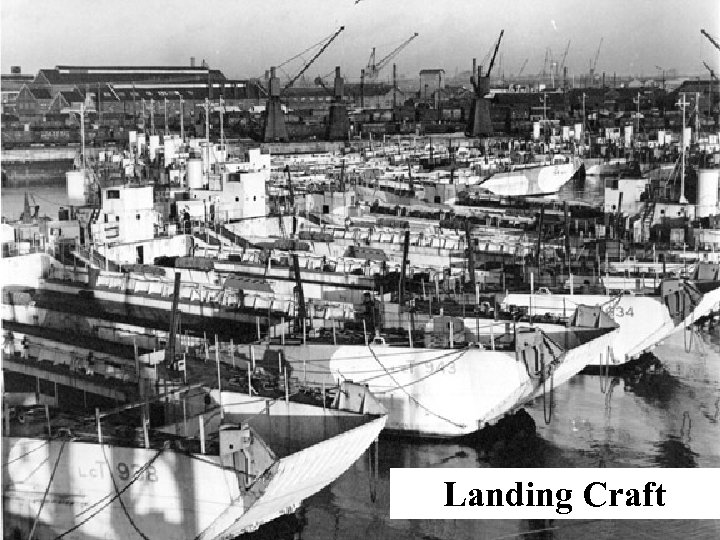 Landing Craft
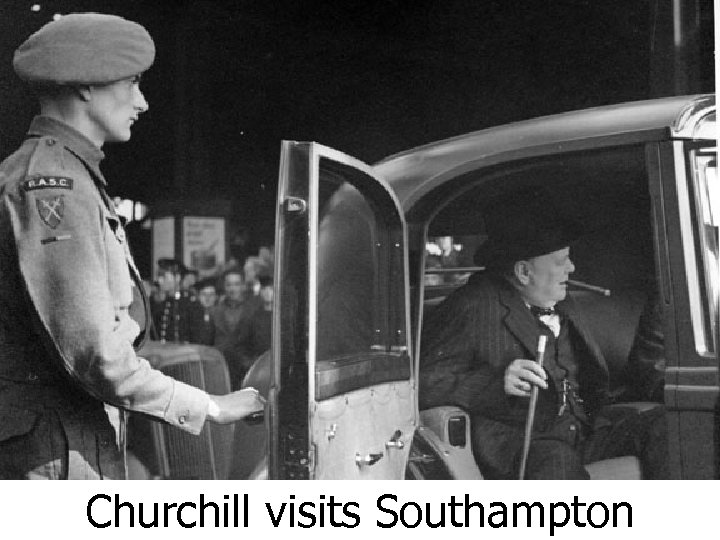 Churchill visits Southampton
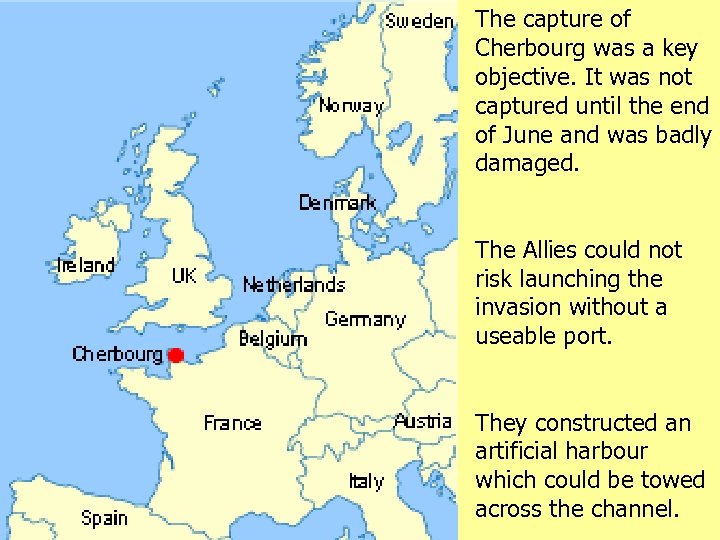 The capture of Cherbourg was a key objective. It was not captured until the end of June and was badly damaged. The Allies could not risk launching the invasion without a useable port. They constructed an artificial harbour which could be towed across the channel.
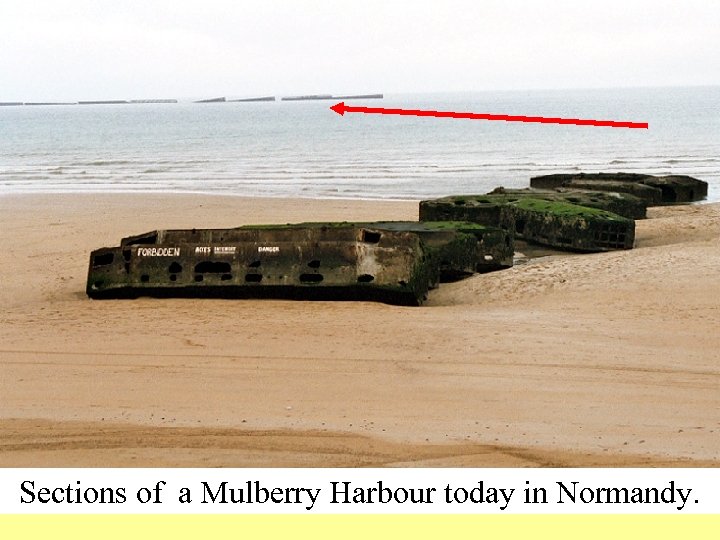 Sections of a Mulberry Harbour today in Normandy.
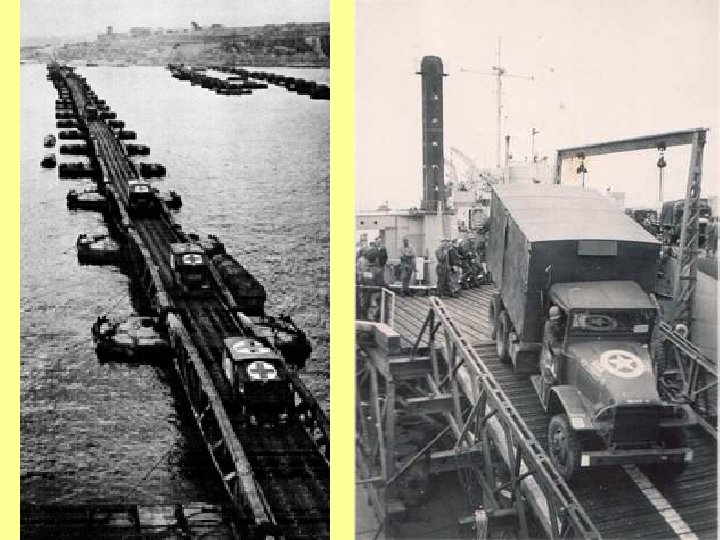
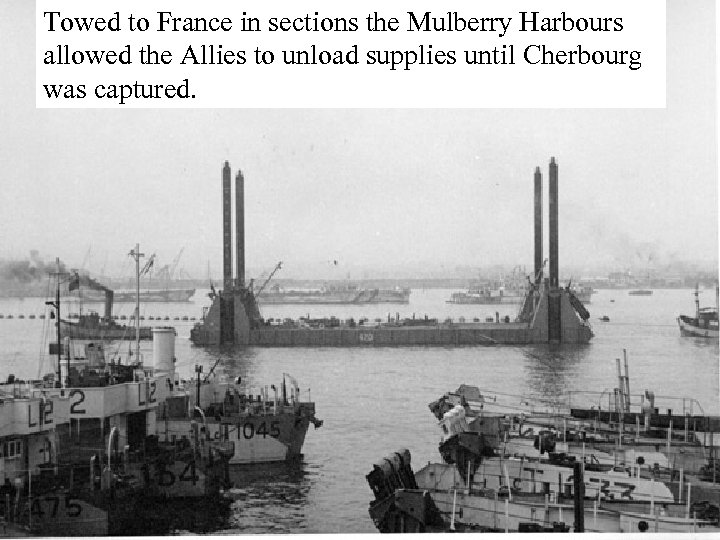 Towed to France in sections the Mulberry Harbours allowed the Allies to unload supplies until Cherbourg was captured.
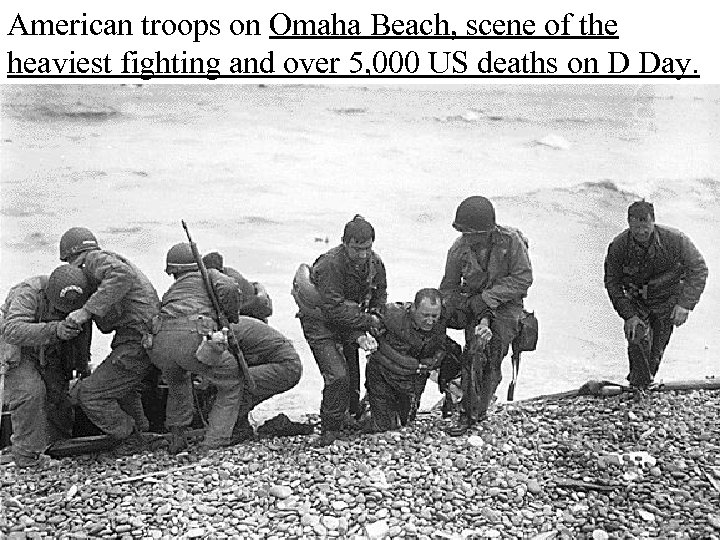 American troops on Omaha Beach, scene of the heaviest fighting and over 5, 000 US deaths on D Day.
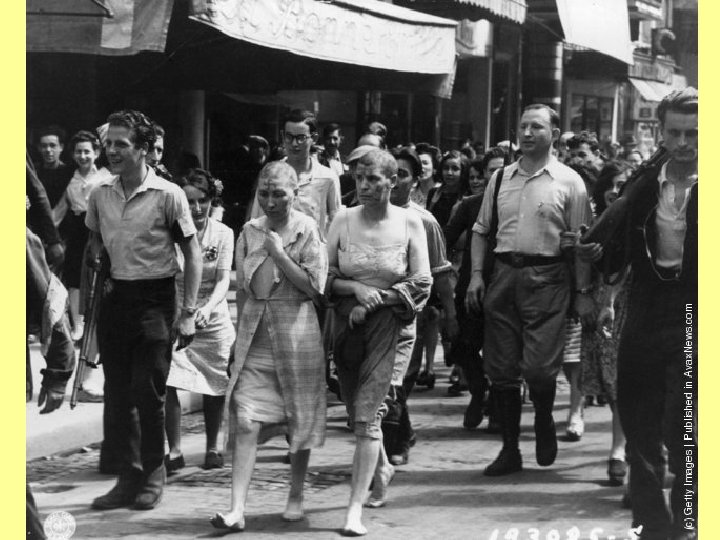
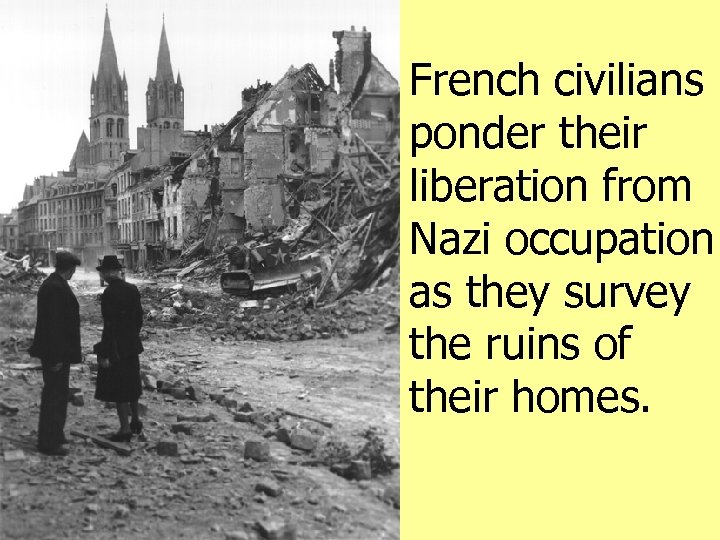 French civilians ponder their liberation from Nazi occupation as they survey the ruins of their homes.
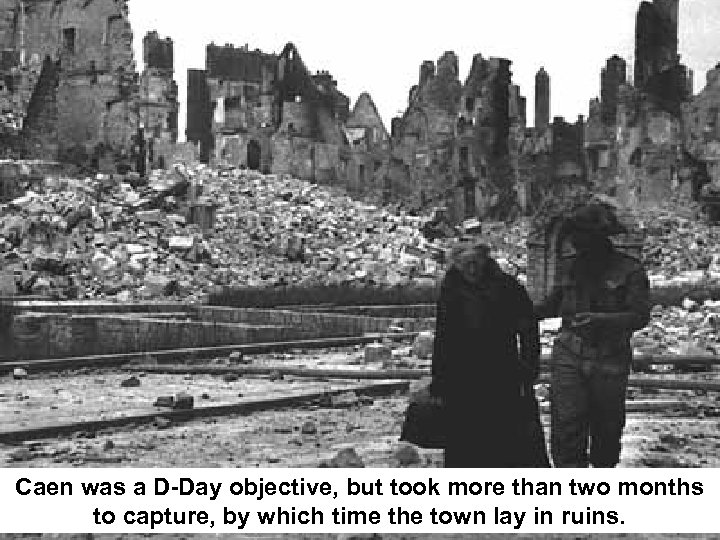 Caen was a D-Day objective, but took more than two months to capture, by which time the town lay in ruins.
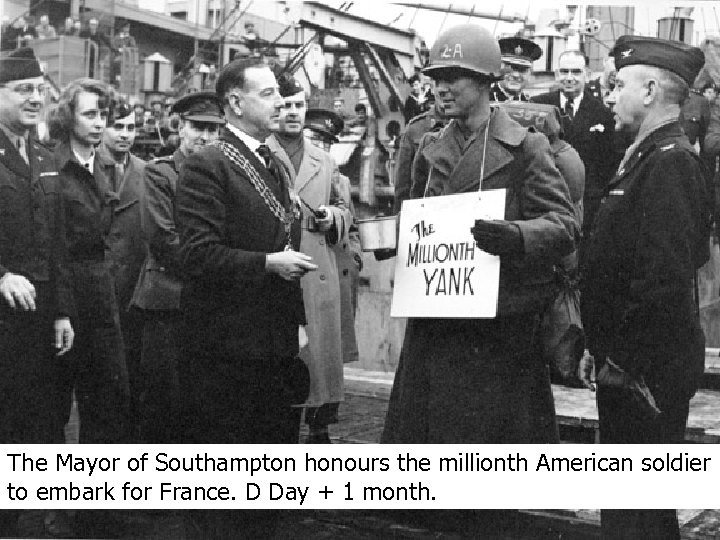 The Mayor of Southampton honours the millionth American soldier to embark for France. D Day + 1 month.
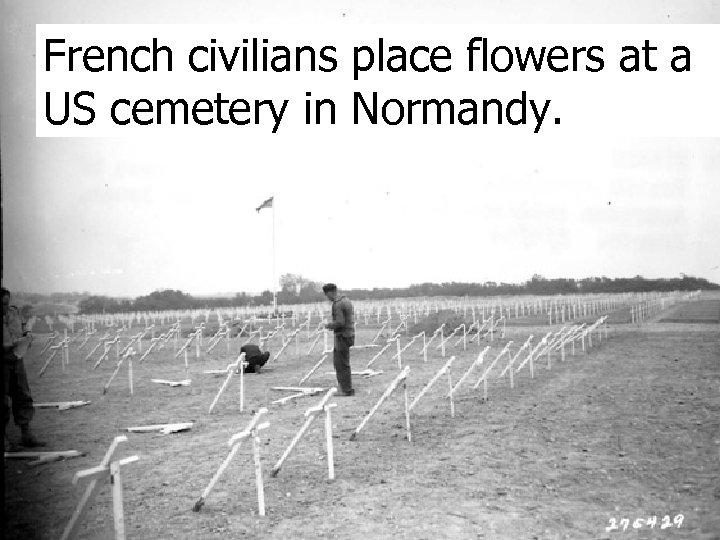 French civilians place flowers at a US cemetery in Normandy.
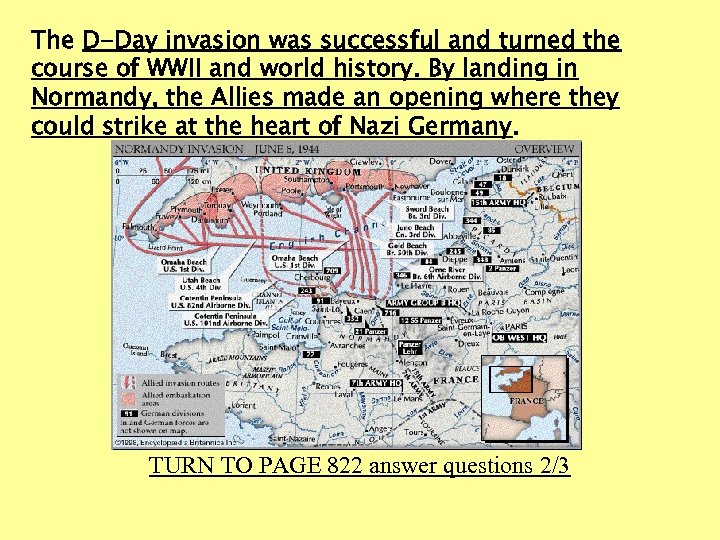 The D-Day invasion was successful and turned the course of WWII and world history. By landing in Normandy, the Allies made an opening where they could strike at the heart of Nazi Germany. TURN TO PAGE 822 answer questions 2/3
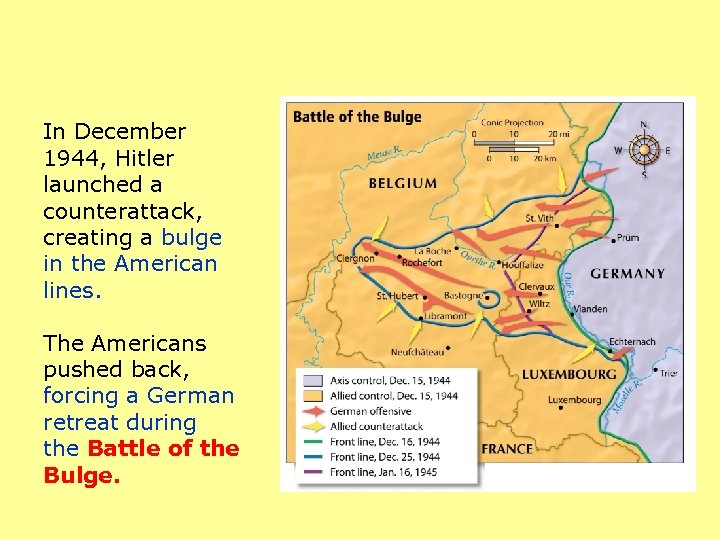 In December 1944, Hitler launched a counterattack, creating a bulge in the American lines. The Americans pushed back, forcing a German retreat during the Battle of the Bulge.
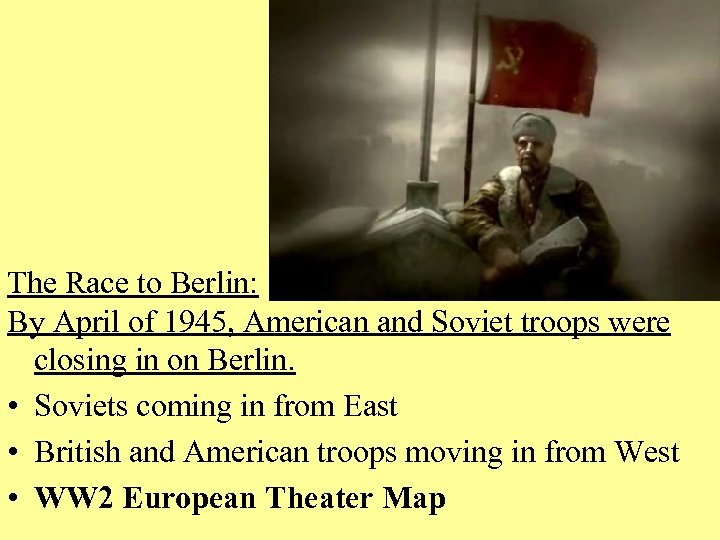 The Race to Berlin: By April of 1945, American and Soviet troops were closing in on Berlin. • Soviets coming in from East • British and American troops moving in from West • WW 2 European Theater Map
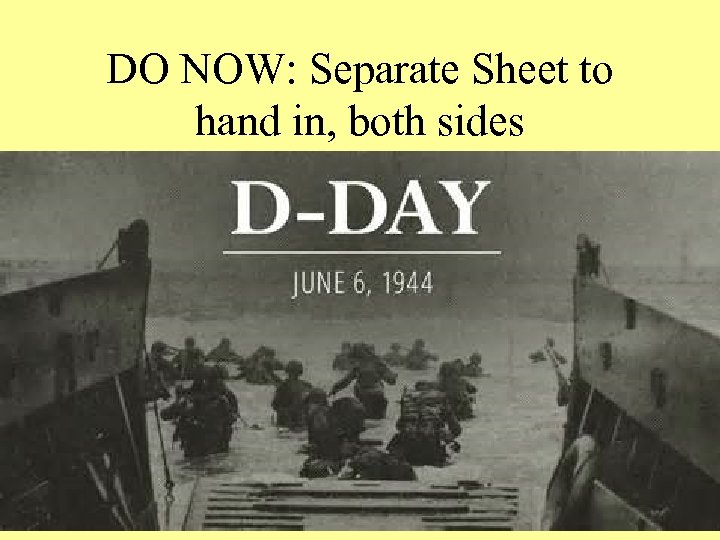 DO NOW: Separate Sheet to hand in, both sides
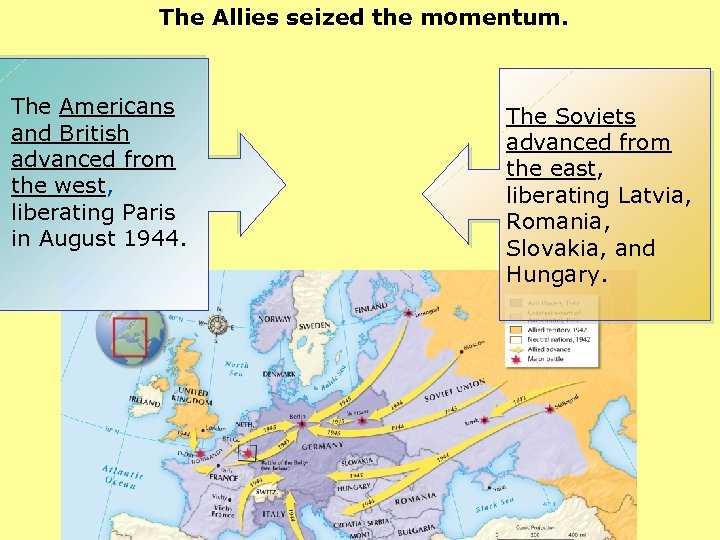 The Allies seized the momentum. The Americans and British advanced from the west, liberating Paris in August 1944. The Soviets advanced from the east, liberating Latvia, Romania, Slovakia, and Hungary.
 • Between April and May of 1945 5000 people committed suicide in Berlin (Why do you think this was? ) • On April 30, 1945 Adolf Hitler added himself to that list • The Last Film Pictures of Hitler Clip
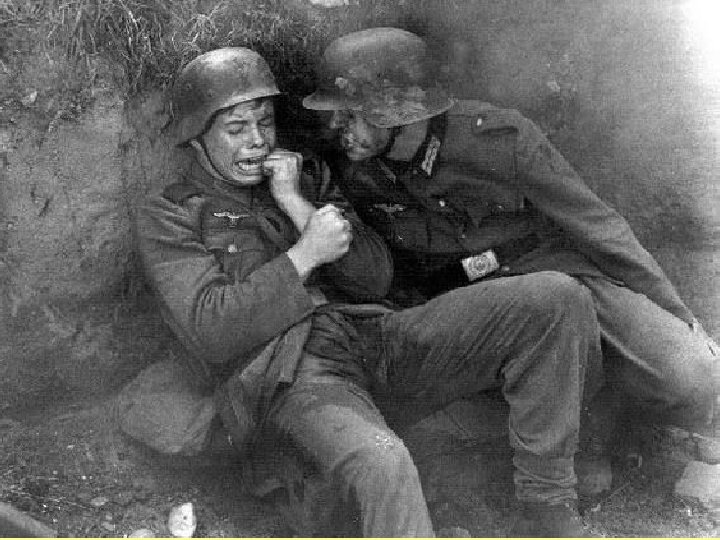
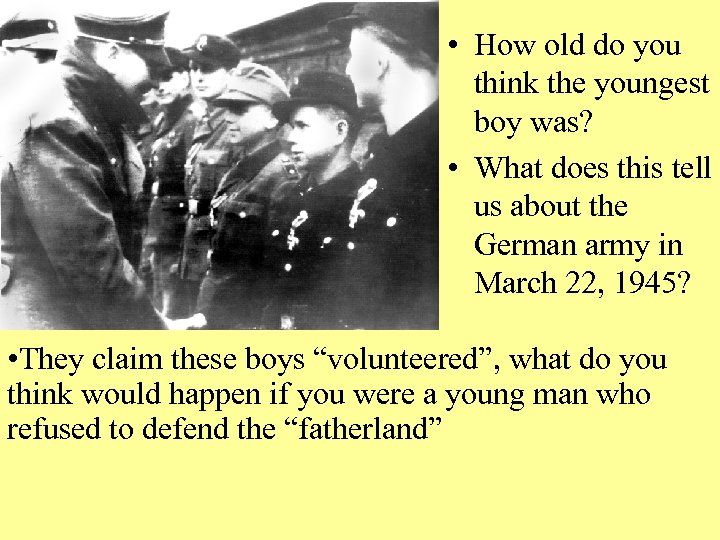 • How old do you think the youngest boy was? • What does this tell us about the German army in March 22, 1945? • They claim these boys “volunteered”, what do you think would happen if you were a young man who refused to defend the “fatherland”
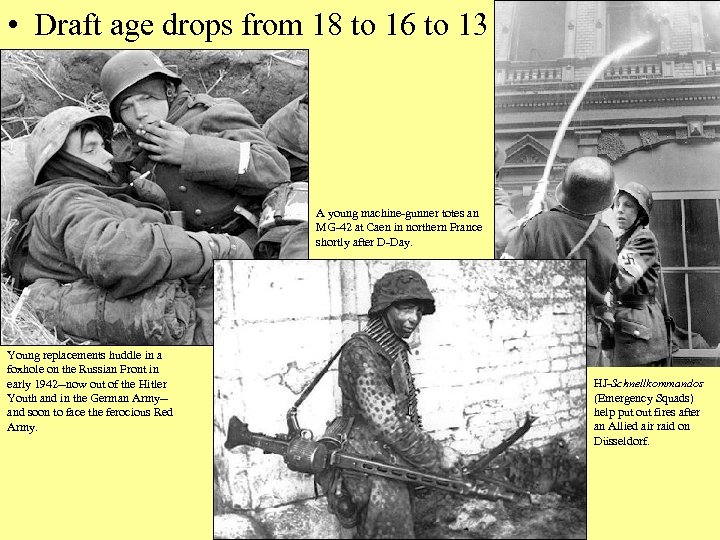 • Draft age drops from 18 to 16 to 13 A young machine-gunner totes an MG-42 at Caen in northern France shortly after D-Day. Young replacements huddle in a foxhole on the Russian Front in early 1942 --now out of the Hitler Youth and in the German Army-and soon to face the ferocious Red Army. HJ-Schnellkommandos (Emergency Squads) help put out fires after an Allied air raid on Düsseldorf.
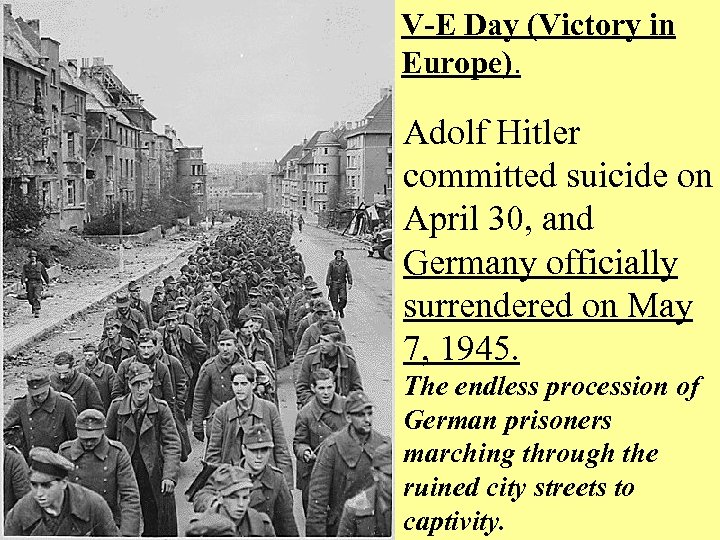 V-E Day (Victory in Europe). Adolf Hitler committed suicide on April 30, and Germany officially surrendered on May 7, 1945. The endless procession of German prisoners marching through the ruined city streets to captivity.
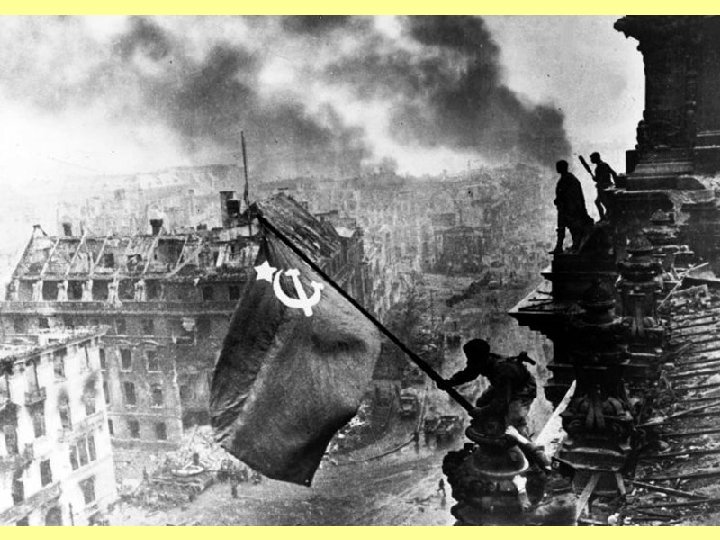
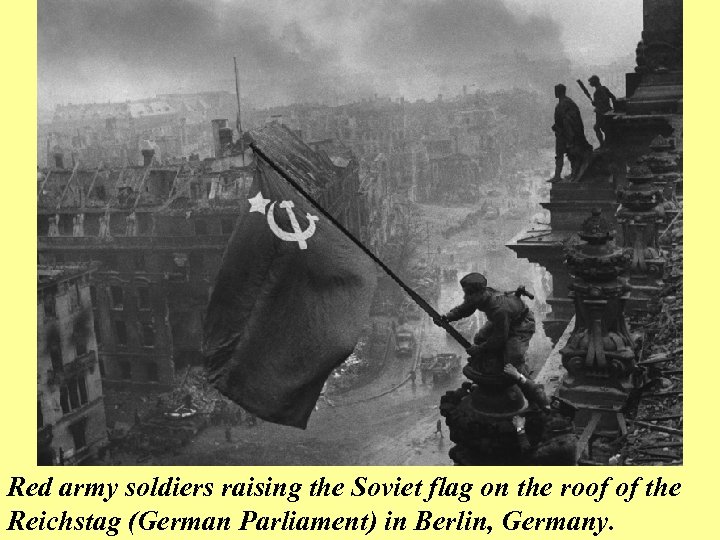 Red army soldiers raising the Soviet flag on the roof of the Reichstag (German Parliament) in Berlin, Germany.
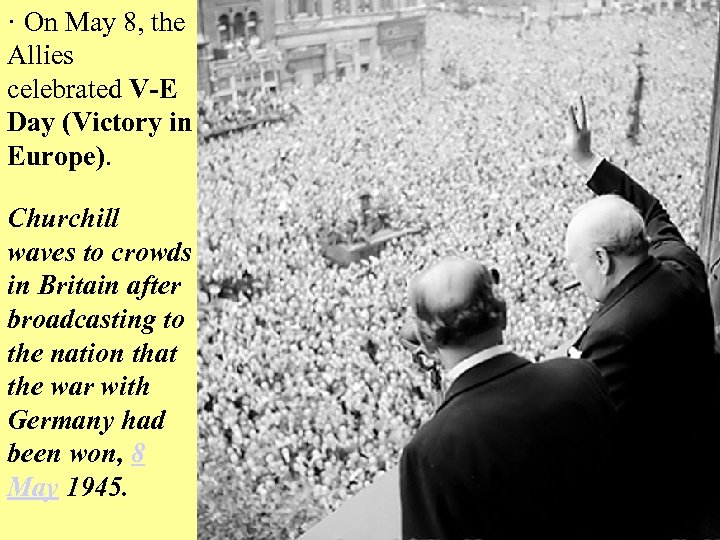 · On May 8, the Allies celebrated V-E Day (Victory in Europe). Churchill waves to crowds in Britain after broadcasting to the nation that the war with Germany had been won, 8 May 1945.
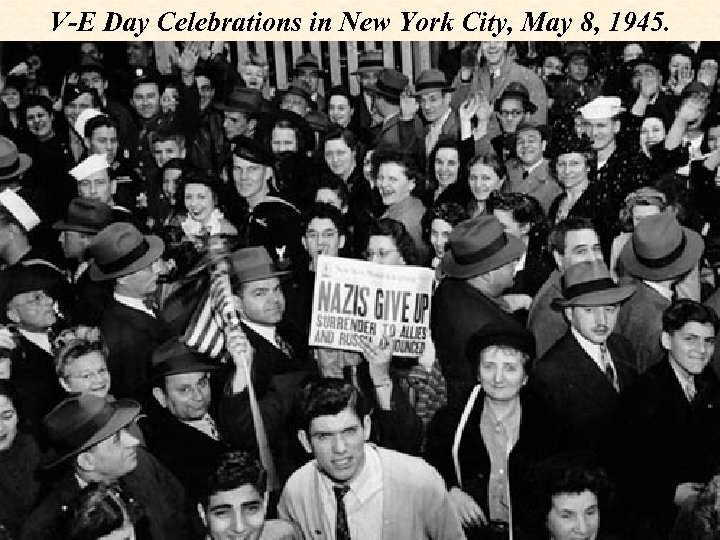 V-E Day Celebrations in New York City, May 8, 1945.
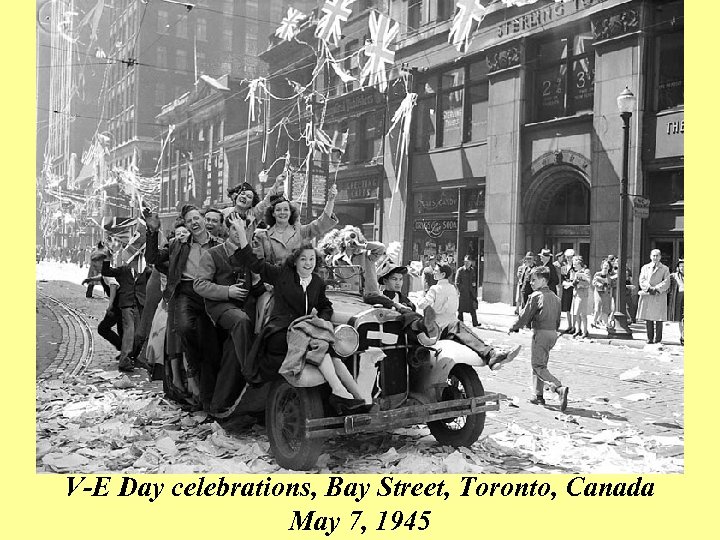 V-E Day celebrations, Bay Street, Toronto, Canada May 7, 1945
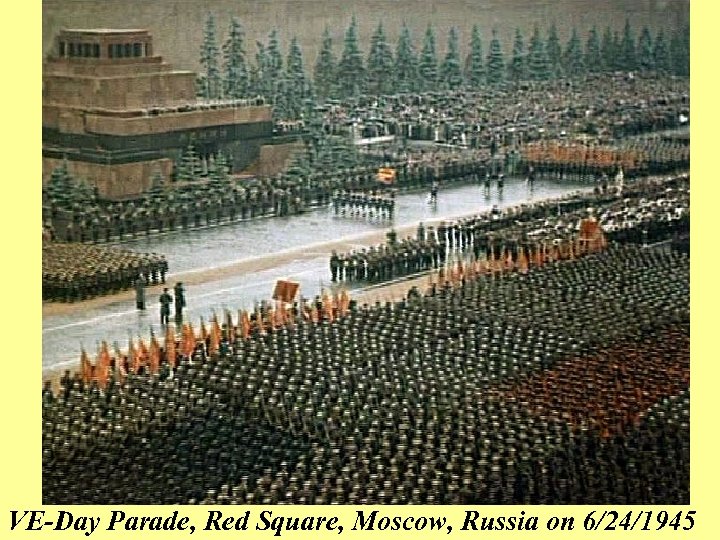 VE-Day Parade, Red Square, Moscow, Russia on 6/24/1945
 Band of Brothers Episode 9 “Why We Fight” Start 35 minutes in (then section 4)
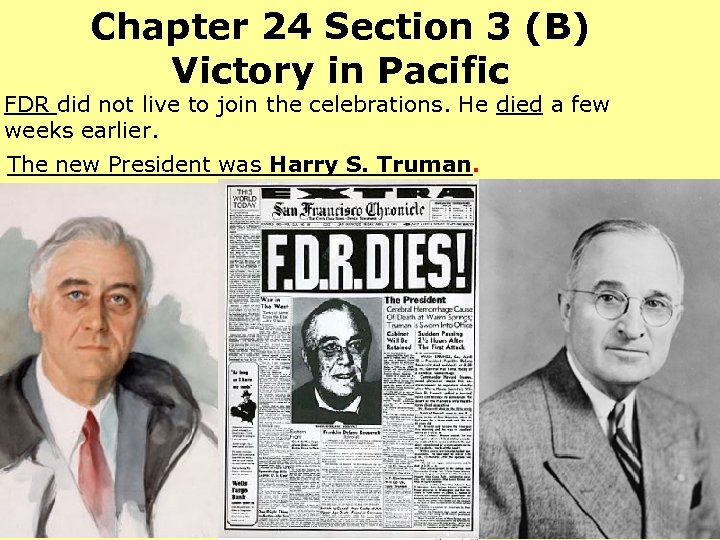 Chapter 24 Section 3 (B) Victory in Pacific FDR did not live to join the celebrations. He died a few weeks earlier. The new President was Harry S. Truman.
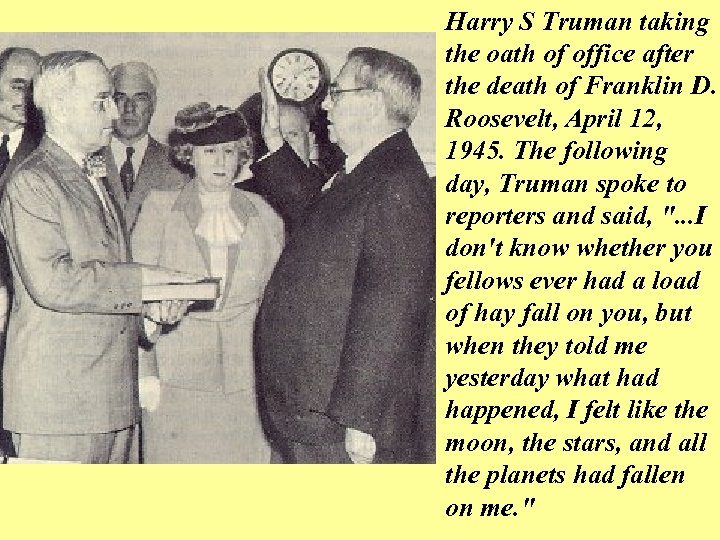 Harry S Truman taking the oath of office after the death of Franklin D. Roosevelt, April 12, 1945. The following day, Truman spoke to reporters and said, ". . . I don't know whether you fellows ever had a load of hay fall on you, but when they told me yesterday what had happened, I felt like the moon, the stars, and all the planets had fallen on me. "
 War still raged in the Pacific, where the Allies were fighting their way toward Japan. • Battles during the island-hopping campaign were fierce, with high casualties on both sides. • Kamikazes crashed into American ships. Japanese troops fought to the death. • An intense bombing campaign leveled much of Tokyo. Still, Japan refused to surrender.
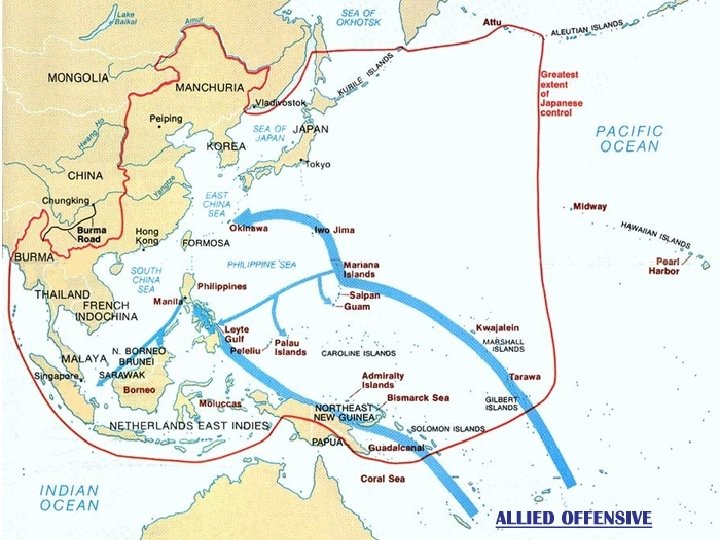
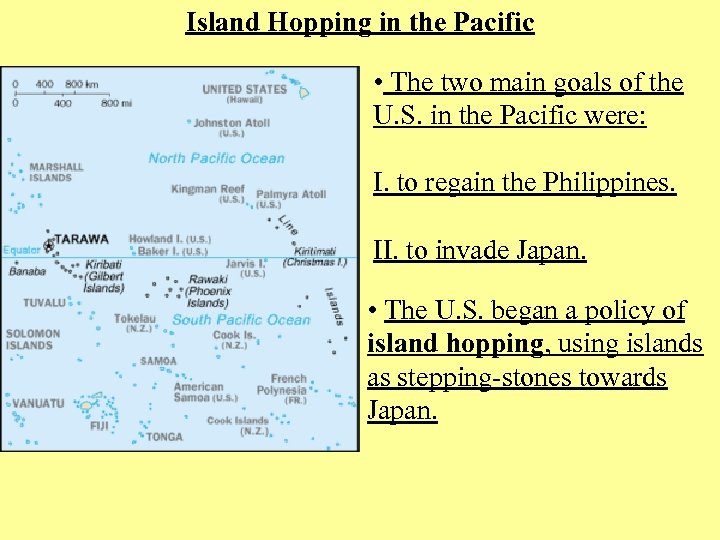 Island Hopping in the Pacific • The two main goals of the U. S. in the Pacific were: I. to regain the Philippines. II. to invade Japan. • The U. S. began a policy of island hopping, using islands as stepping-stones towards Japan.
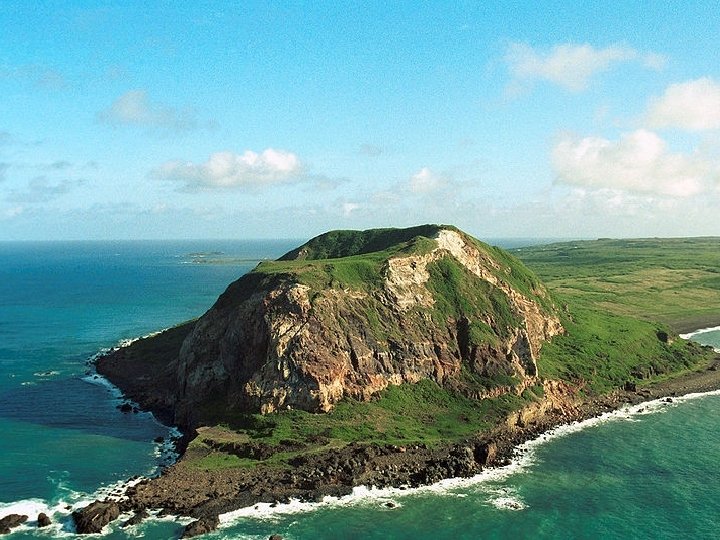
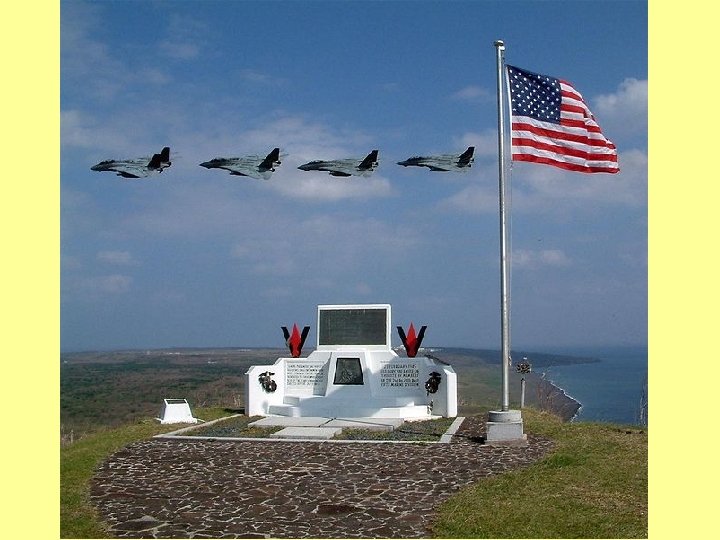
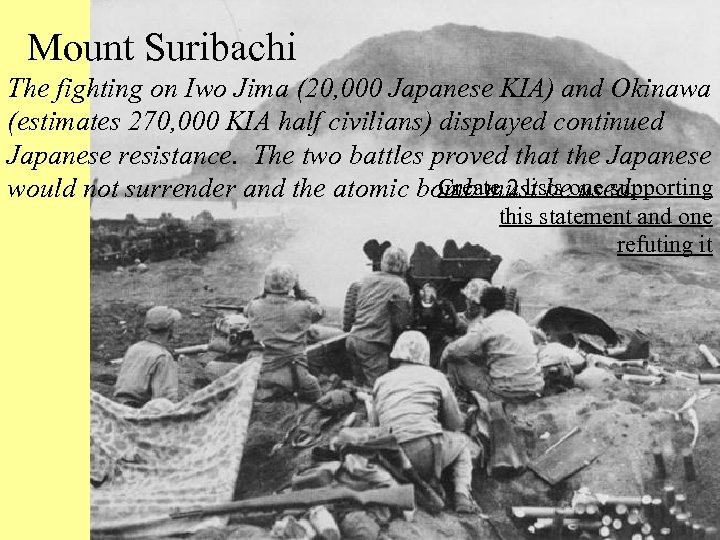 Mount Suribachi The fighting on Iwo Jima (20, 000 Japanese KIA) and Okinawa (estimates 270, 000 KIA half civilians) displayed continued Japanese resistance. The two battles proved that the Japanese Create 2 lists used. would not surrender and the atomic bomb must beone supporting this statement and one refuting it
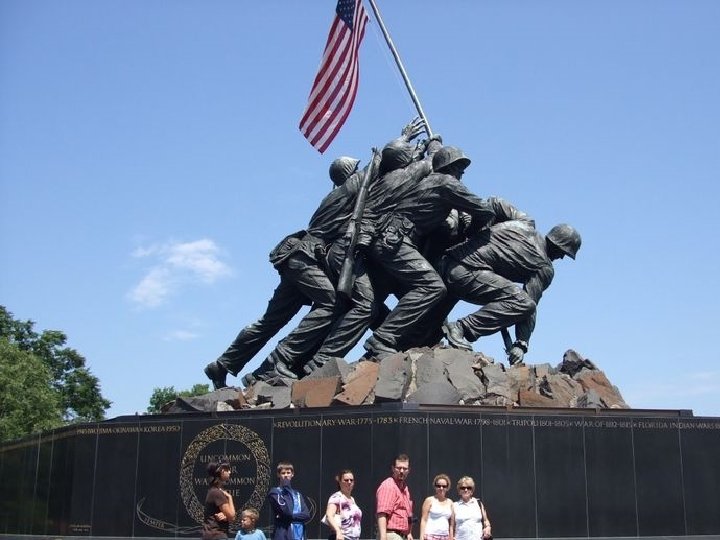
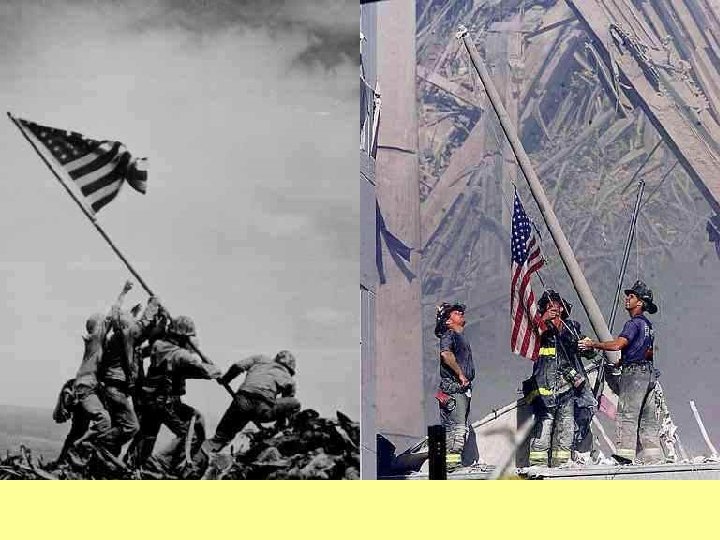
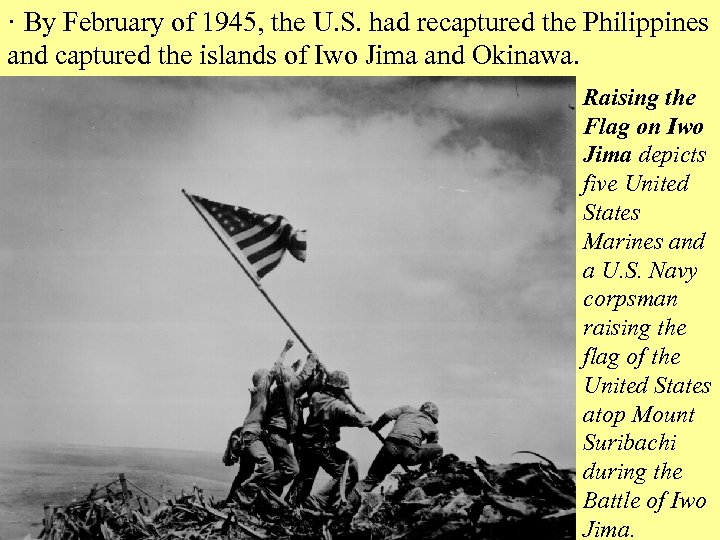 · By February of 1945, the U. S. had recaptured the Philippines and captured the islands of Iwo Jima and Okinawa. Raising the Flag on Iwo Jima depicts five United States Marines and a U. S. Navy corpsman raising the flag of the United States atop Mount Suribachi during the Battle of Iwo Jima.
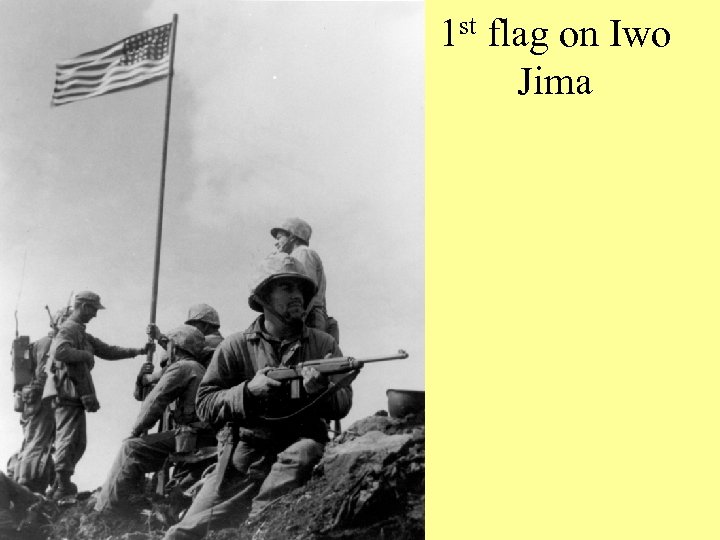 1 st flag on Iwo Jima
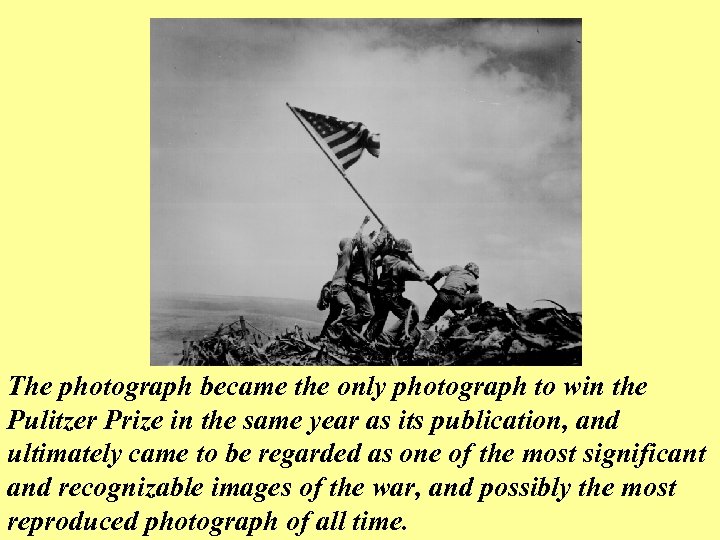 The photograph became the only photograph to win the Pulitzer Prize in the same year as its publication, and ultimately came to be regarded as one of the most significant and recognizable images of the war, and possibly the most reproduced photograph of all time.
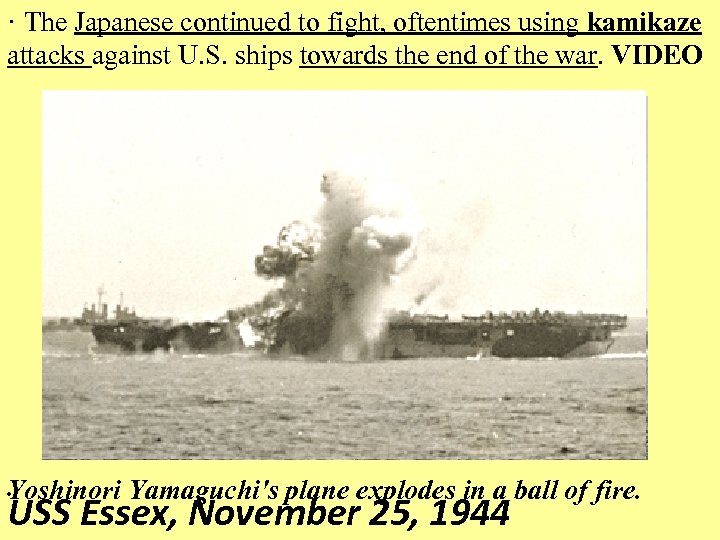 · The Japanese continued to fight, oftentimes using kamikaze attacks against U. S. ships towards the end of the war. VIDEO . oshinori Yamaguchi's plane explodes in a ball of fire. Y USS Essex, November 25, 1944
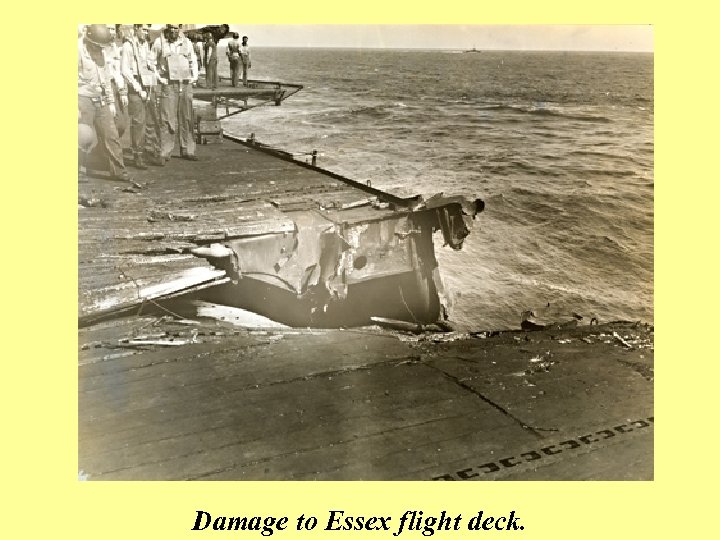 Damage to Essex flight deck.
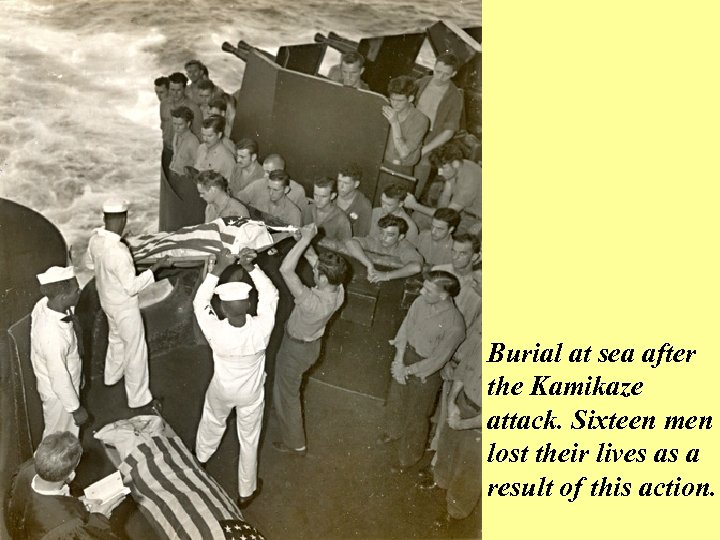 Burial at sea after the Kamikaze attack. Sixteen men lost their lives as a result of this action.
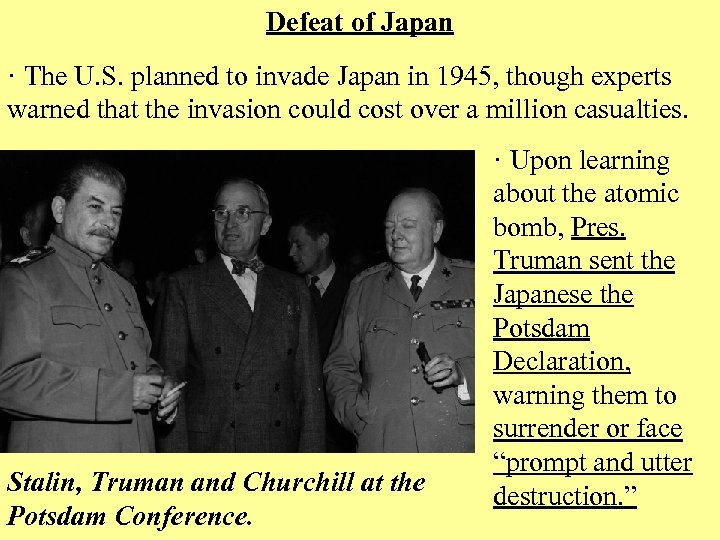 Defeat of Japan · The U. S. planned to invade Japan in 1945, though experts warned that the invasion could cost over a million casualties. Stalin, Truman and Churchill at the Potsdam Conference. · Upon learning about the atomic bomb, Pres. Truman sent the Japanese the Potsdam Declaration, warning them to surrender or face “prompt and utter destruction. ”
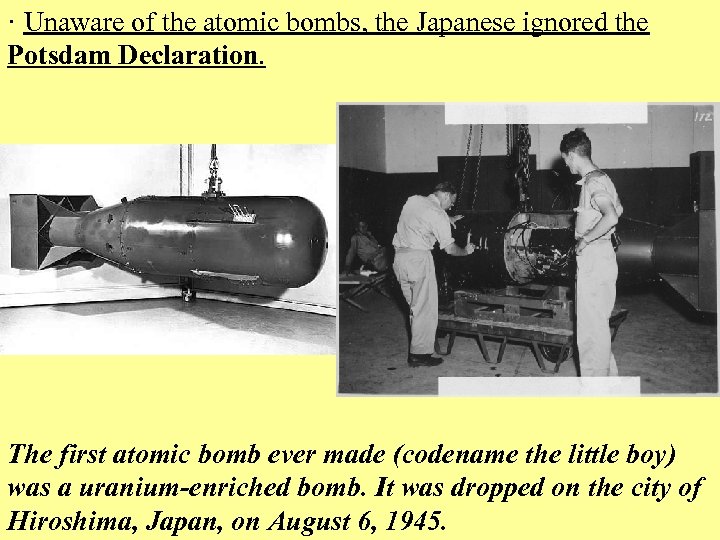 · Unaware of the atomic bombs, the Japanese ignored the Potsdam Declaration. The first atomic bomb ever made (codename the little boy) was a uranium-enriched bomb. It was dropped on the city of Hiroshima, Japan, on August 6, 1945.
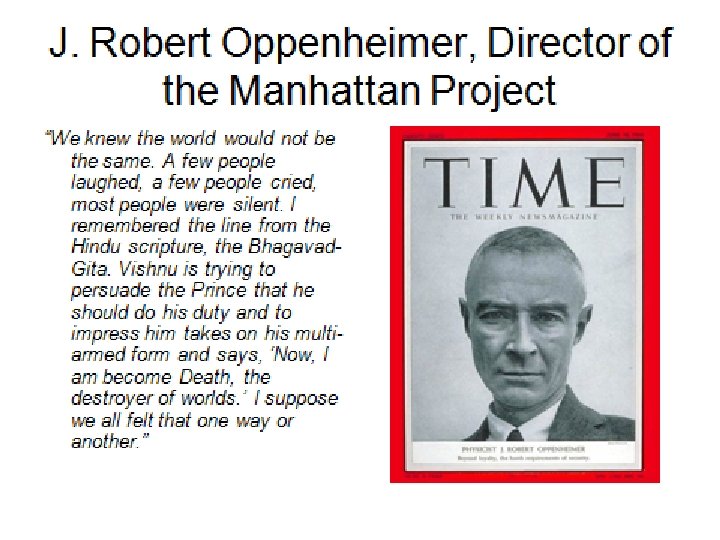
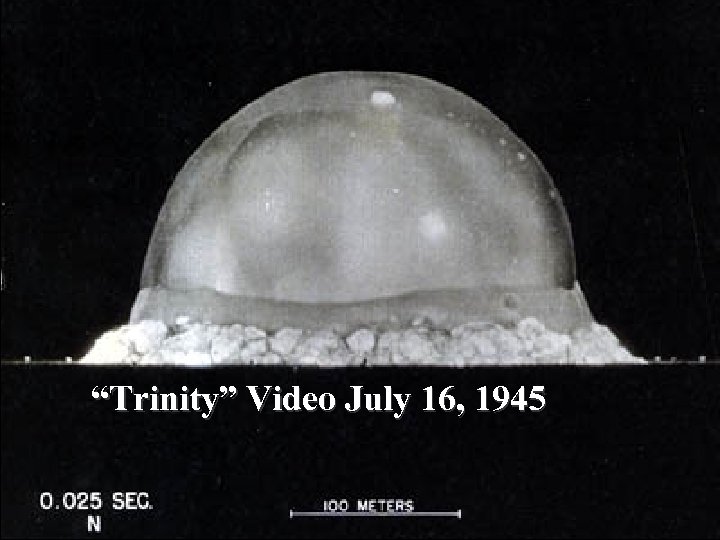 “Trinity” Video July 16, 1945
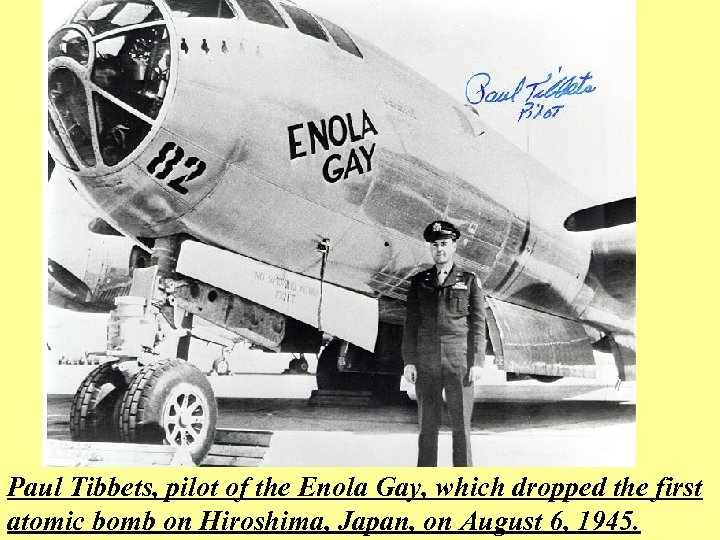 Paul Tibbets, pilot of the Enola Gay, which dropped the first atomic bomb on Hiroshima, Japan, on August 6, 1945.
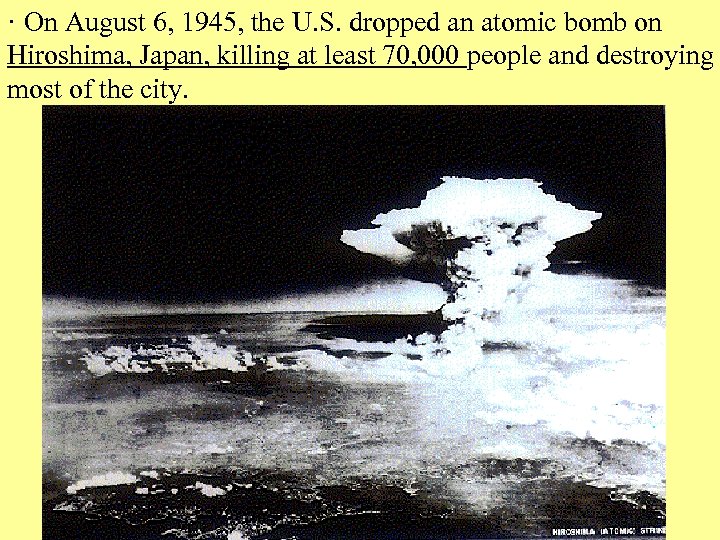 · On August 6, 1945, the U. S. dropped an atomic bomb on Hiroshima, Japan, killing at least 70, 000 people and destroying most of the city.
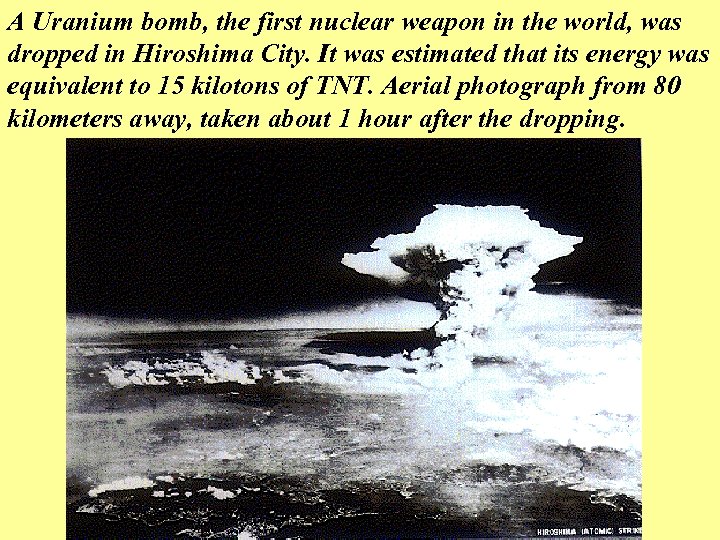 A Uranium bomb, the first nuclear weapon in the world, was dropped in Hiroshima City. It was estimated that its energy was equivalent to 15 kilotons of TNT. Aerial photograph from 80 kilometers away, taken about 1 hour after the dropping.
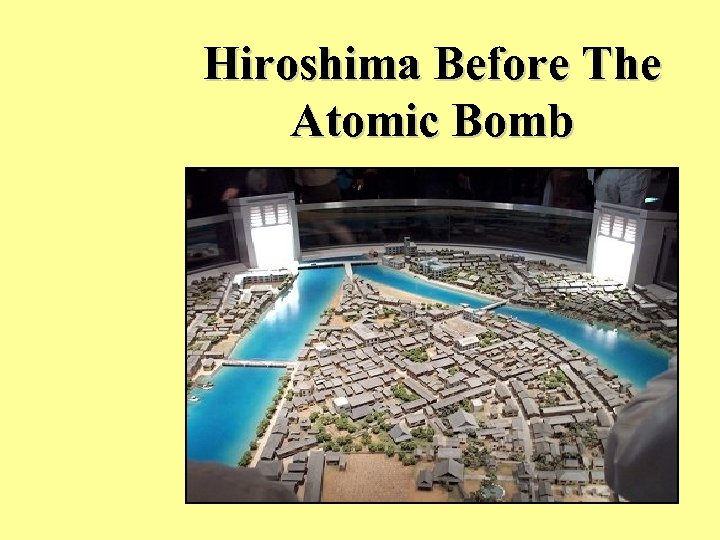 Hiroshima Before The Atomic Bomb
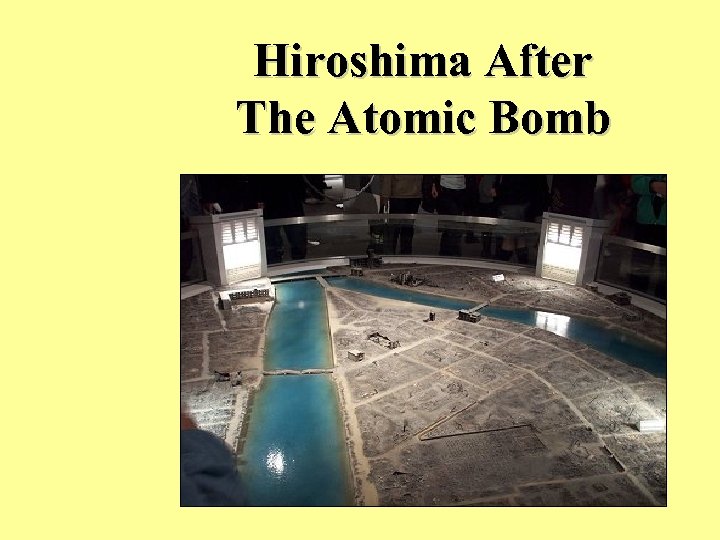 Hiroshima After The Atomic Bomb
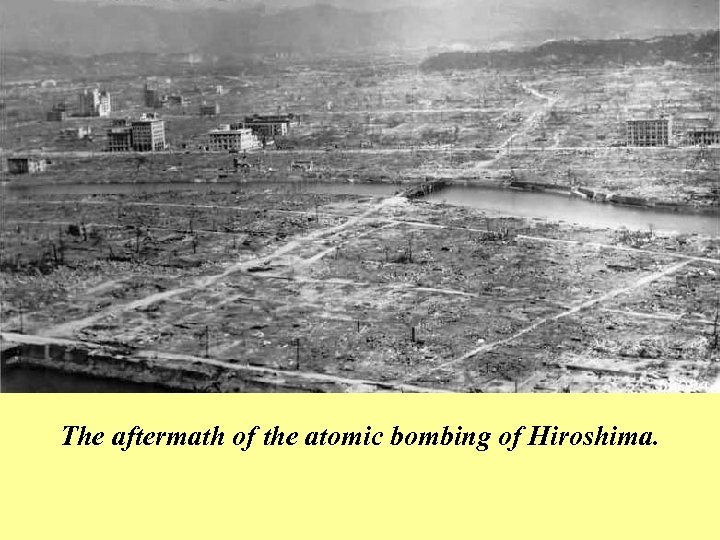 The aftermath of the atomic bombing of Hiroshima.
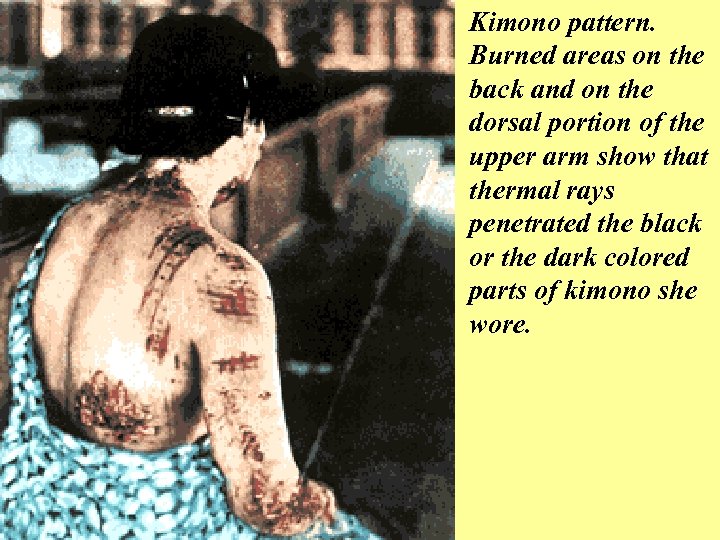 Kimono pattern. Burned areas on the back and on the dorsal portion of the upper arm show that thermal rays penetrated the black or the dark colored parts of kimono she wore.
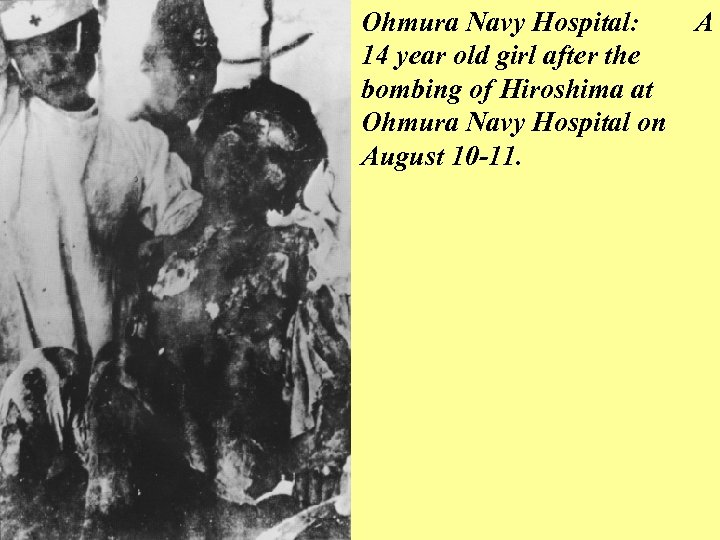 Ohmura Navy Hospital: 14 year old girl after the bombing of Hiroshima at Ohmura Navy Hospital on August 10 -11. A
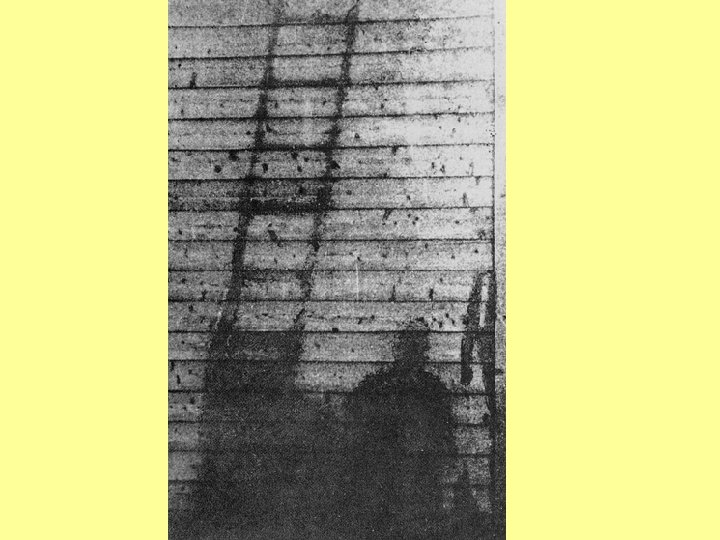
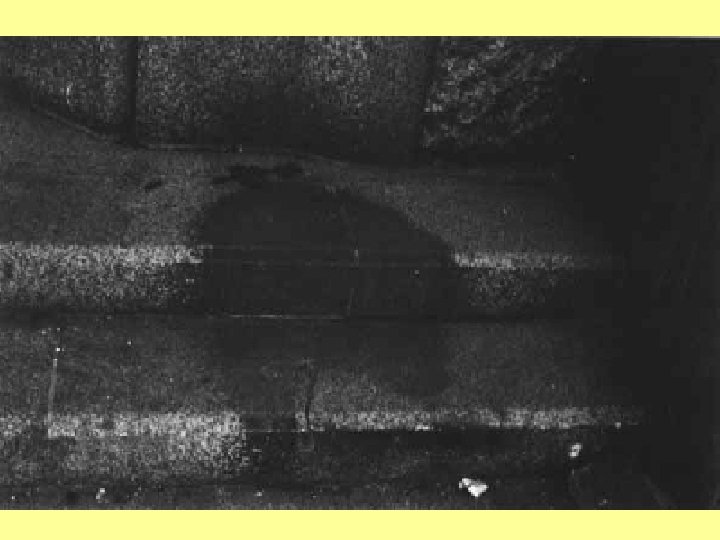
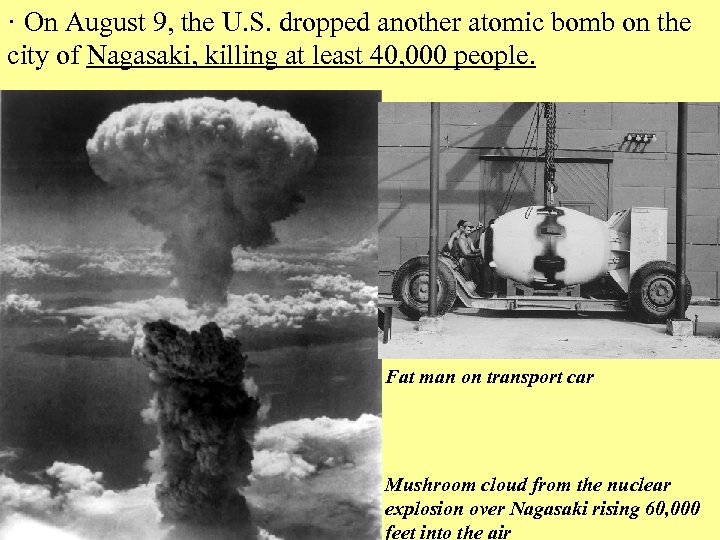 · On August 9, the U. S. dropped another atomic bomb on the city of Nagasaki, killing at least 40, 000 people. Fat man on transport car Mushroom cloud from the nuclear explosion over Nagasaki rising 60, 000 feet into the air
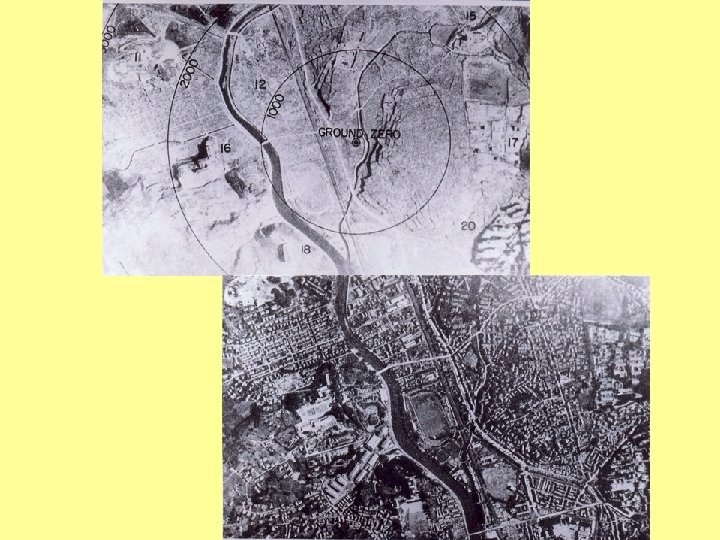
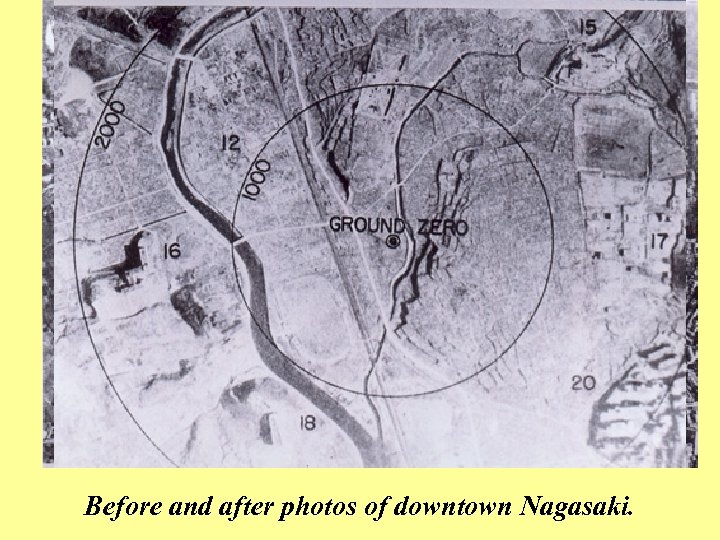 Before and after photos of downtown Nagasaki.
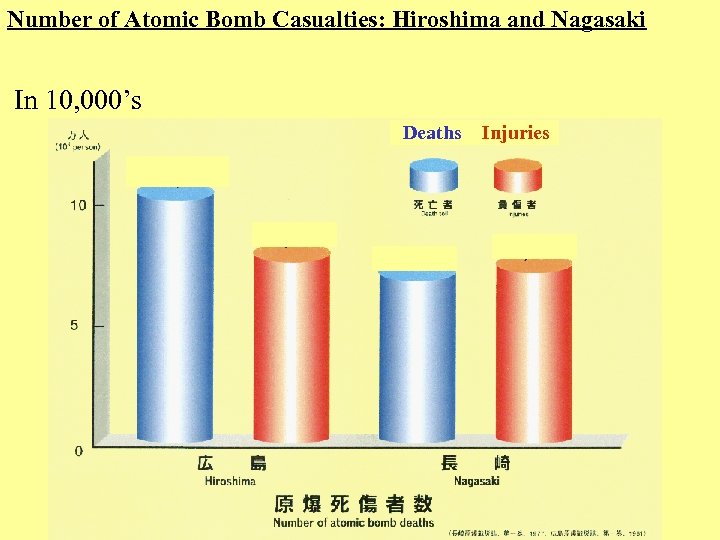 Number of Atomic Bomb Casualties: Hiroshima and Nagasaki In 10, 000’s Deaths Injuries
 Countries with nuclear weapons are: – USA – Russia – UK – France – China – Pakistan – India Countries suspected of having nuclear weapons: –Iran –North Korea –Israel
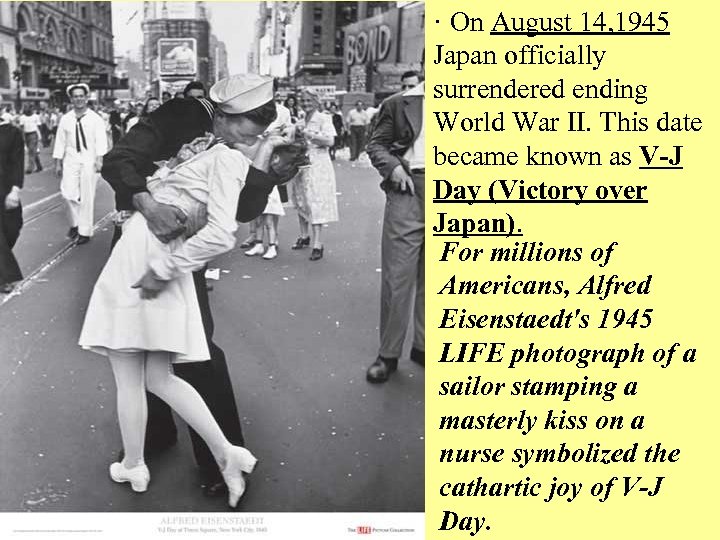 · On August 14, 1945 Japan officially surrendered ending World War II. This date became known as V-J Day (Victory over Japan). For millions of Americans, Alfred Eisenstaedt's 1945 LIFE photograph of a sailor stamping a masterly kiss on a nurse symbolized the cathartic joy of V-J Day.
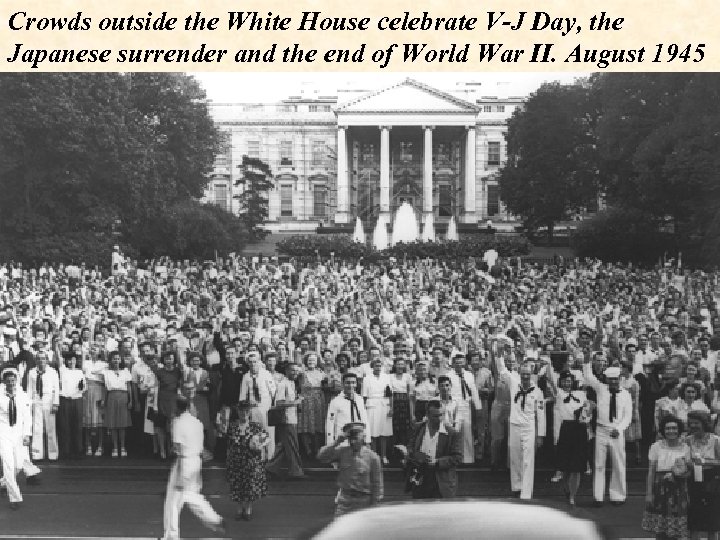 Crowds outside the White House celebrate V-J Day, the Japanese surrender and the end of World War II. August 1945