


 Скачать презентацию Secrets Lies and Fraud Auckland Clinical Team The
f9b066eef80f34cec315f1ef14445990.ppt
- Количество слайдов: 24
 Secrets, Lies and Fraud Auckland Clinical Team The Problem Gambling Foundation of New Zealand 2009
 Social theory Mills. C. W. (1959) The Sociological Imagination.
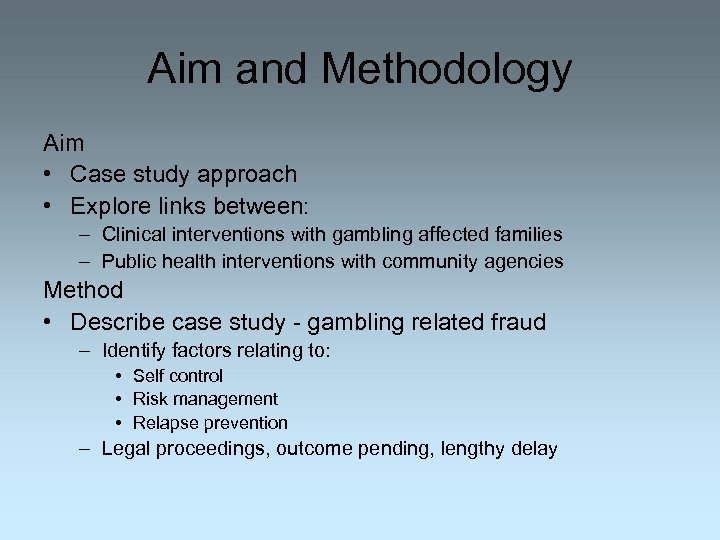 Aim and Methodology Aim • Case study approach • Explore links between: – Clinical interventions with gambling affected families – Public health interventions with community agencies Method • Describe case study - gambling related fraud – Identify factors relating to: • Self control • Risk management • Relapse prevention – Legal proceedings, outcome pending, lengthy delay
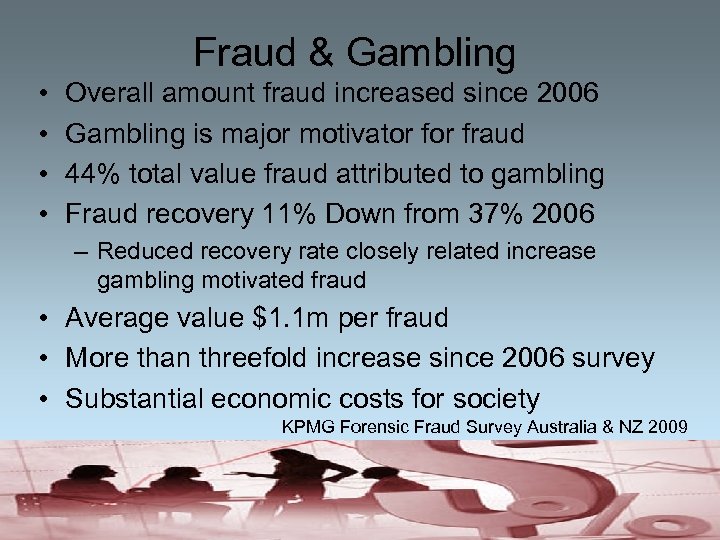 Fraud & Gambling • • Overall amount fraud increased since 2006 Gambling is major motivator fraud 44% total value fraud attributed to gambling Fraud recovery 11% Down from 37% 2006 – Reduced recovery rate closely related increase gambling motivated fraud • Average value $1. 1 m per fraud • More than threefold increase since 2006 survey • Substantial economic costs for society KPMG Forensic Fraud Survey Australia & NZ 2009
 Sentencing Problem Gamblers in NZ • Problem or pathological gambling is invisible as a mitigating factor in criminal sentencing • Failure to recognise gambling in sentencing decreases the likelihood of rehabilitation • Increases the likelihood of re-offending Minchin 2006 • Does not address risk management
 Continuum Approach – Evidence based Intervention • Our clinical practice and intervention plans place people on a sliding scale. • People can change their gambling behaviour over time. • People are affected by the range and interaction of risk and protective factors – Individual – Social systems levels • • Couple relationships Family Community Society • Identify factors amenable to change Develop optimally effective interventions
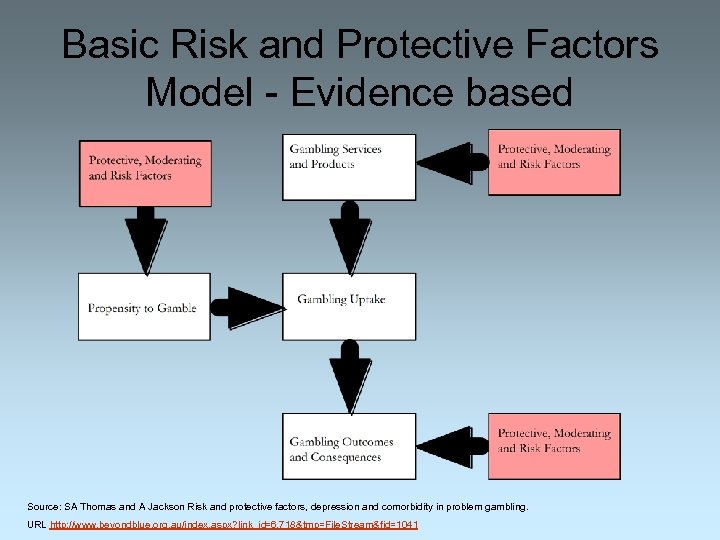 Basic Risk and Protective Factors Model - Evidence based Source: SA Thomas and A Jackson Risk and protective factors, depression and comorbidity in problem gambling. URL http: //www. beyondblue. org. au/index. aspx? link_id=6. 718&tmp=File. Stream&fid=1041
 Protective factors “Protective factors are influences that modify, stop or alter a person’s response to some hazard which predisposes the person to a maladaptive outcome. ” Rutter 1990
 Risk factors “a risk factor is a variable that is associated with an increased risk of a condition. It does not suggest a causal relationship…” Thomas & Jackson 2008 Identification high risk factors leads Identification of high risk groups Target early intervention and or prevention. Interaction of risk factors important Thomas & Jackson 2008
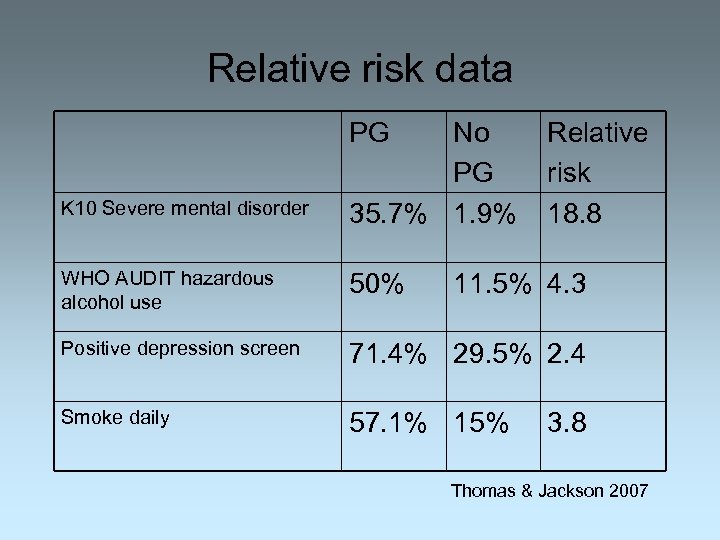 Relative risk data PG K 10 Severe mental disorder No PG 35. 7% 1. 9% Relative risk 18. 8 WHO AUDIT hazardous alcohol use 50% Positive depression screen 71. 4% 29. 5% 2. 4 Smoke daily 57. 1% 15% 11. 5% 4. 3 3. 8 Thomas & Jackson 2007
 Co morbidities that are risk factors for problem gambling • Problem gamblers have high rates of psychological disturbance, hazardous alcohol use, smoking and depression in combination with other social and family problems.
 Case study • • • Gambler: female 40 years European, middle class payroll clerk, 3 years Mode: Keno @ local dairy De-facto relationship 17 yrs Partner: truck driver Two children: 18 months and 5 yr Families of origin: physical distance plus lack of support “Keeping up appearances” dominant pattern Employer – medium sized family owned company Detection – fired – made bankrupt – caveat mother’s house and partner’s cars Lengthy period waiting to be charged, then another lengthy period waiting to be sentenced.
 Case study: Layers of concealment • Secretive gambler, partner knew fraud charges not about gambling. • Gambling known only to mother, sister • Fraud $400 000 – amt concealed from partner, clue from bankruptcy • Legal aid advice – Home D likely outcome. • Partner not prepared to look after dependents on own and didn’t attend court hearing. • Gambler sentenced to custodial sentence • Partner finds out about gambling after imprisonment • Where is the baby? What is happening? • After imprisonment: co owner of Company took out security over partner’s cars, tried to manoeuvre partner to take cars.
 Protective factors Individual • Strong sense of capability Relationship • Stable, long term, wish to be together after shock & devastation. • Mutual love of children, positive parenting skills
 Protective factors: environment • Referral for gambling assessment and counselling by legal representative. • Pre sentencing assessment & crisis management of identified risk factors • Ongoing regular counselling support • Clinical interventions that strengthened personal resiliency • Pre sentencing report for Probation services • Counselling & advocacy for partner during custodial sentence • Gambling counsellor as expert witness for High Court panel of judges • Secret disclosed - two trusted family members
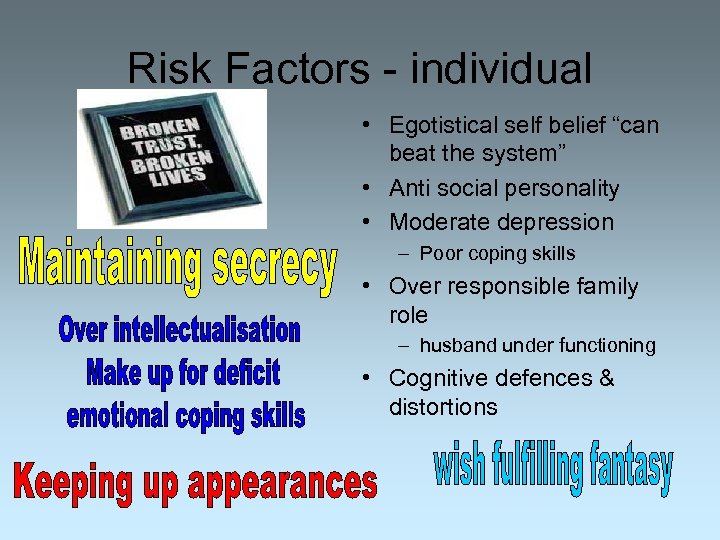 Risk Factors - individual • Egotistical self belief “can beat the system” • Anti social personality • Moderate depression – Poor coping skills • Over responsible family role – husband under functioning • Cognitive defences & distortions
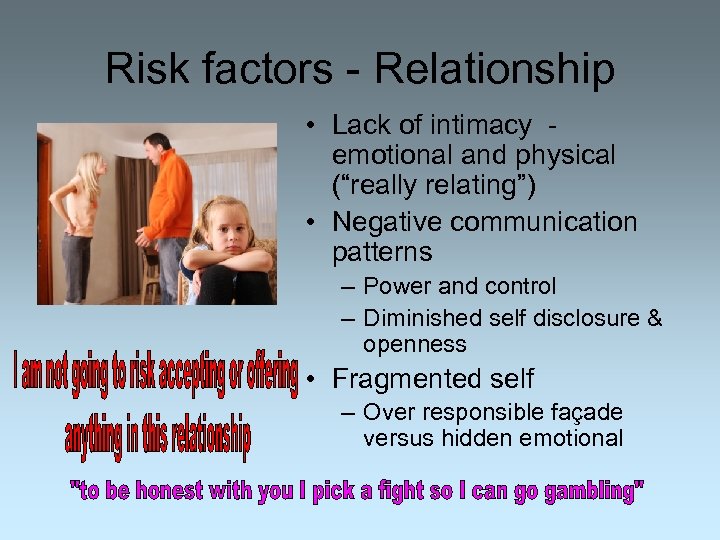 Risk factors - Relationship • Lack of intimacy emotional and physical (“really relating”) • Negative communication patterns – Power and control – Diminished self disclosure & openness • Fragmented self – Over responsible façade versus hidden emotional
 Risk factors - environment • Legal – no money no effective representation • Court – Judge’s attitude sympathetic to defamatory statements of company – worst sentence outcome for client • Middle class family encounter with social agency systems lack flexibility for support & resource options • Result – Blind to children’s safety & care – Blind to partner’s coping skills
 Risk Factor: Social Capital • Problem gamblers have low levels of social capital (Thomas and Jackson) • Social capital is evidenced by: – Level of interaction with others in the community – Quality of relationships • Examples of community involvement: Church, community groups • Examples of positive family/whanau interaction: regular social activities that support positive identification.
 Continuum Approach – 12 -24 months service contact Pre sentence Period • Risk assessment & Crisis management • Development two clinical goals with broader plan support Sentence & Probation Period • Risk assessment & crisis management for partner & family • Advocacy – community agencies
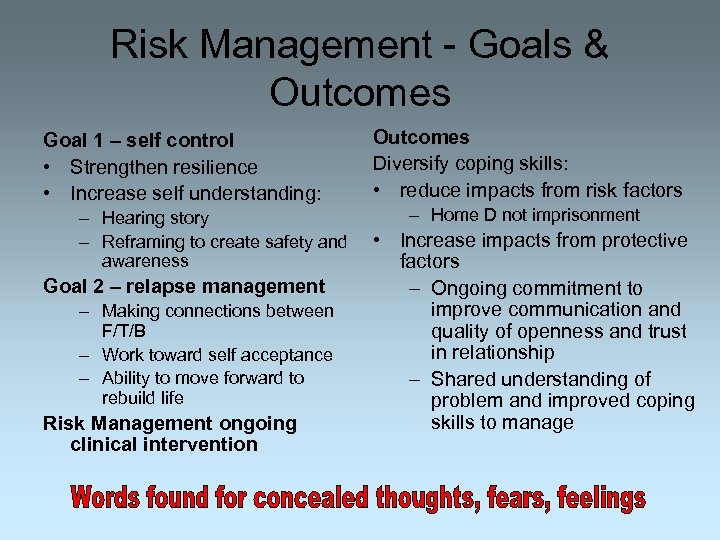 Risk Management - Goals & Outcomes Goal 1 – self control • Strengthen resilience • Increase self understanding: – Hearing story – Reframing to create safety and awareness Goal 2 – relapse management – Making connections between F/T/B – Work toward self acceptance – Ability to move forward to rebuild life Risk Management ongoing clinical intervention Outcomes Diversify coping skills: • reduce impacts from risk factors – Home D not imprisonment • Increase impacts from protective factors – Ongoing commitment to improve communication and quality of openness and trust in relationship – Shared understanding of problem and improved coping skills to manage
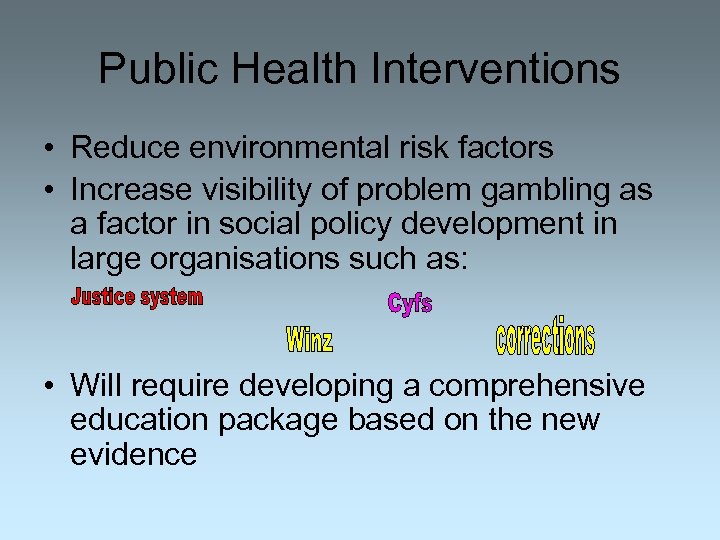 Public Health Interventions • Reduce environmental risk factors • Increase visibility of problem gambling as a factor in social policy development in large organisations such as: • Will require developing a comprehensive education package based on the new evidence
 Recommendations Service planning & funding • Closer attention needs to be paid to new approaches using risk and protective factors that allows for measurement of clinical outcomes • Evidence based approaches need to be applied to existing funding models to deliver adequate resourcing that takes into account case complexity. • As opposed to an individualised medical approach • Current electronic information systems do not capture the range of assessment and interventions we are implementing to minimise risk and maximise protective factors.
 Contact details Jenny. curry@pgfnz. org. nz Cheryl. campbell@pgfnz. org. nz Michael. henderson@pgfnz. org. nz Narelle. nichelsen@pgfnz. org. nz Problem Gambling Foundation 09 368 1520 128 Khyber Pass Grafton Auckland.