


 Скачать презентацию Sec 1 Review What were writs of assistance
256a4addfb5bb67f20370f0aaef33d2e.ppt
- Количество слайдов: 50
 Sec 1 Review What were writs of assistance? u How were they used? u Who did the Sugar Act affect in the colonies? u What basic trial principles did the Sugar Act violate? u What was the Stamp Act? u Who did it affect? u What concept did the colonists begin to argue because of the Stamp Act? u
 Sec 1 Review (cont’d) u What was the Quartering Act? u What was the Townshend Acts? u What was the colonists best form of resistance to the British taxes and acts? u Describe the Boston Massacre. u Who made the engraving of the Boston Massacre that most colonist saw in newspapers?
 Chapter Objectives Section 2: The Revolution Begins • Describe ways in which Massachusetts continued to defy Britain after the repeal of the Townshend Acts. • Summarize the first battles between Britain and the colonies. Click the mouse button or press the Space Bar to display the information.
 BR ACTS AND TAXES
 The Gaspee Affair (1772) u British used customs ships to stop smuggling u One of these, the Gaspee, ran aground u 150 colonists seized the ship and burned it u Result: Committee of Correspondence – It helped colonies unify by communicate about British activities
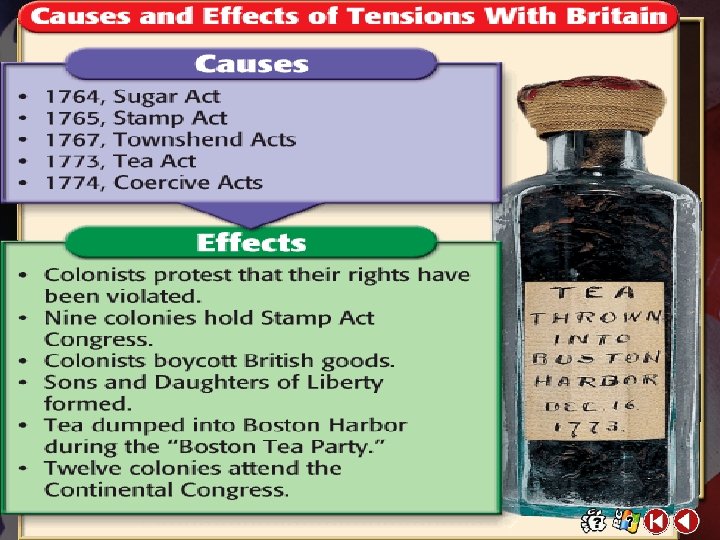
 Tea Act u 1773 u BR shippers don’t have to pay taxes on tea u Colonists have been smuggling u BR tea cheaper than smugglers u Takes away from colonial merchants u Tea agents forced to resign
 BTP Eyewitness to history u 1. How did the colonists refuse to pay the taxes from the Townshend Acts? – – – u u What was the colonists’ complaint with Britain? What product did Britain continue to tax even after they repealed the Townshend Acts? Why did the colonist refuse to buy tea? 2. What other cities rejected British tea? How? 3. What did the people of Boston demand happen with the tea ships? – – What did the Collector of Customs decide to do? What did the colonists decide to do?
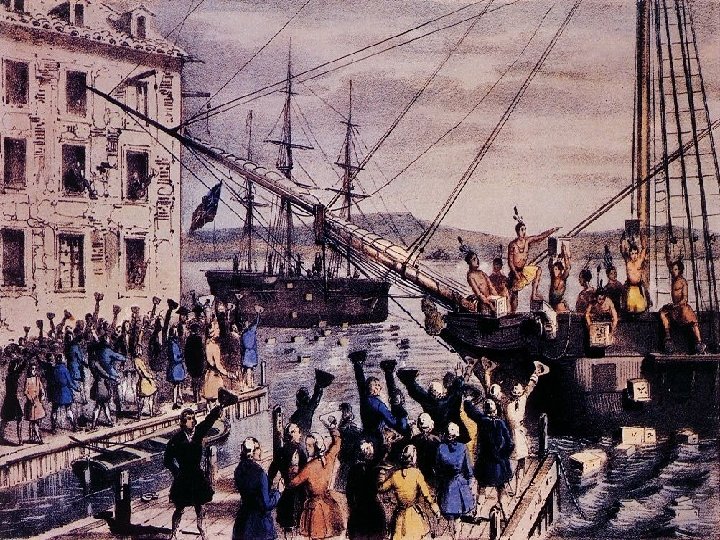
 The Boston Tea Party u Dec. 16, 1773 u Colonists pose as Indians u Dump tea in Boston harbor
 BR response to Boston Tea Party 1774 u The Coercive Acts u Punish the colonies u Close port of Boston until they pay for tea u Take away self-government u Must quarter soldiers in their homes u Colonists call these the Intolerable Acts u
 The Quebec Act (1774) u Reorganizes lands gained from FR u Quebec’s boundary to Ohio R. u Took away self-govt.
 Massachusetts Defies Britain (cont. ) What were the Intolerable Acts? The Coercive Acts and the Quebec Act became known as the Intolerable Acts. The colonists saw these two acts as the British trying to gain control of the colonial governments. (pages 126– 129) Click the mouse button or press the Space Bar to display the answer.
 Colonist response to Intolerable Acts u Form the First Continental Congress u Renew the boycott u Arm and form militias u Send the Declaration of Rights and Grievances to the King (John Dickinson) u Agree to meet again in May of 1775 if no solution
 Colonists prepare for war u MA begins forming militias if necessary u Called minutemen
 The Revolution Begins (cont. ) Why was the American Revolution also a civil war? Americans called Loyalists, or Tories, remained loyal to the king and felt British laws should be upheld. The Patriots, or Whigs, thought the British were tyrants. (pages 129– 131) Click the mouse button or press the Space Bar to display the answer.
 Sec 2 Review What did the Sons of Liberty do in protest of the Tea Act? u How did they carry out the Boston Tea Party? u How did BR respond to the Tea Party? u Name 3 provisions of the Coercive Acts? u What did the colonists call them? u What was the 1 st Continental Congress? u
 Sec 2 Review u What did they decide to do? u Who were the minutemen? u Why do some people call the Revolution a civil war?
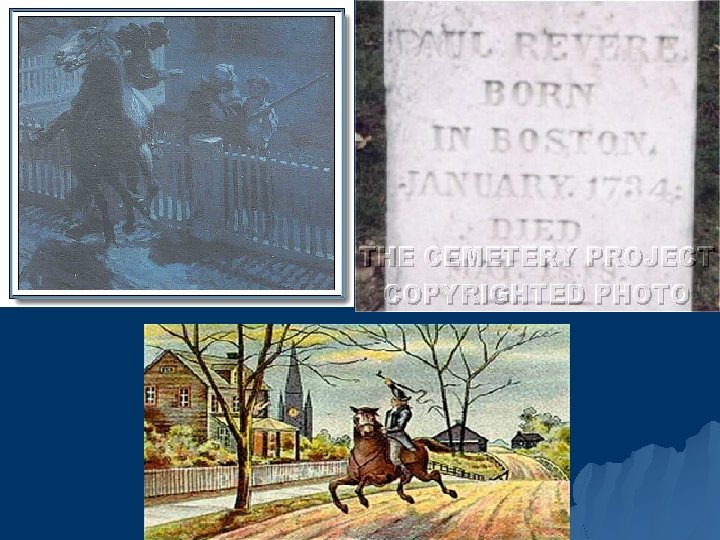
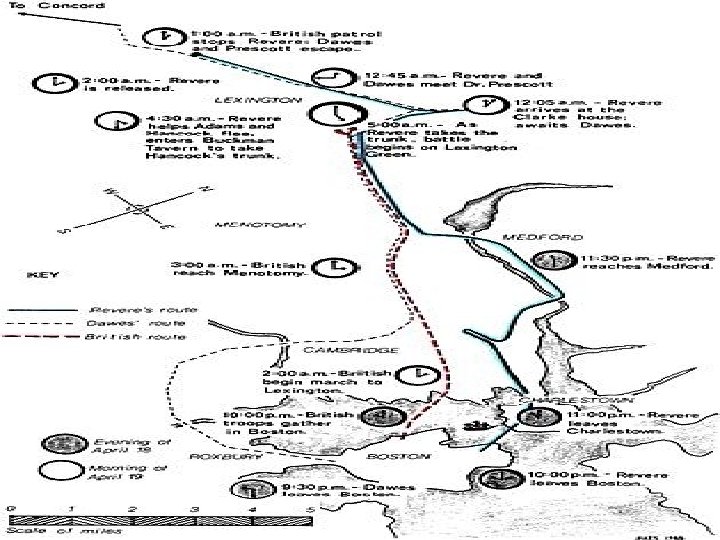
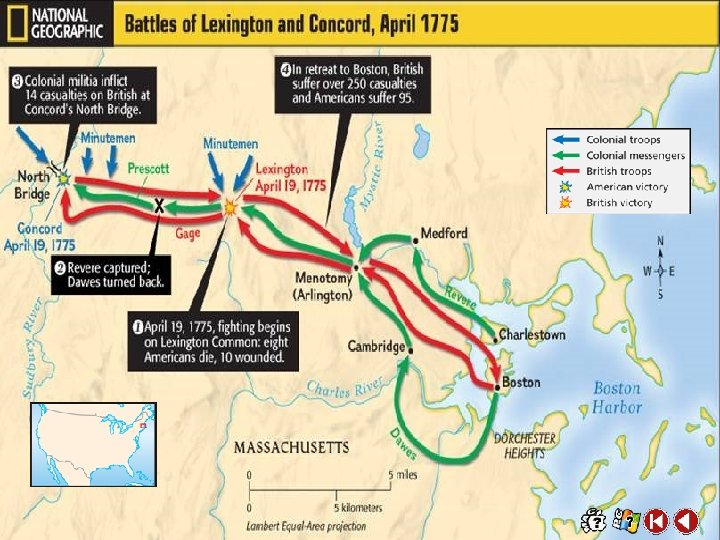
 The Battle of Lexington and Concord u Patriots stockpile weapons at Concord, MA u Apr. 18, 1775 - BR troops come to take weapons under Gen. Thomas Gage u Paul Revere, William Dawes, and Dr. Samuel Prescott to warn the colonists u “Midnight ride of Paul Revere”
 Read Document A & B Determine who fired the first shot at Lexington? u u u u How many colonists were at Lexington? What time did the British and Militiamen meet each other at Lexington? Where in Lexington? What caused the militia to disperse? Who fired the first shot? What can we conclude from these two accounts? Who actually fired the first shot? (‘the shot heard ‘round the world’)
 Lex. & Concord (cont’d) BR face minutemen at Lexington u “Shot heard around the world” (Sam Adams) u 8 colonists killed u BR burn stockpile at Concord u Returning to Boston, they are shot at from behind trees u BR- 70 killed and 170 wounded u Starts the Revolutionary War u
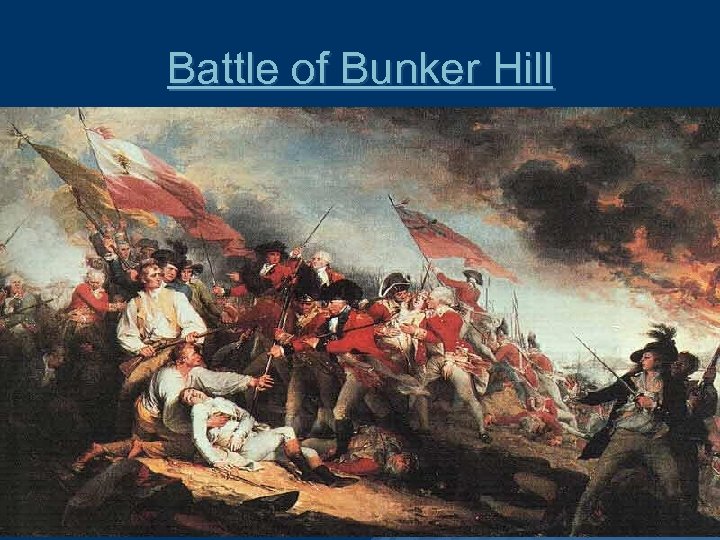
 Battle of Bunker Hill u June, 1775 u Patriots control Breed’s Hill u BR tries twice to take the hill u No success u 3 rd time they succeed u Colonists out of ammo u BR suffer high casualties
 Battle of Bunker Hill
 The Patriots that stir the pot
 Timeline
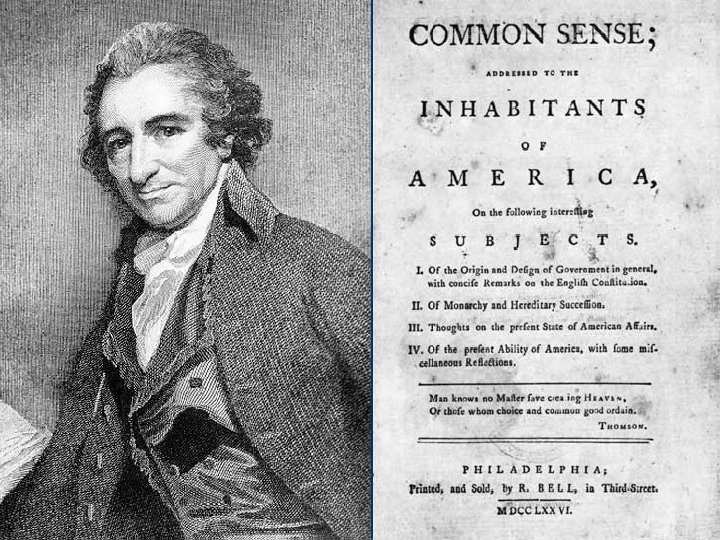
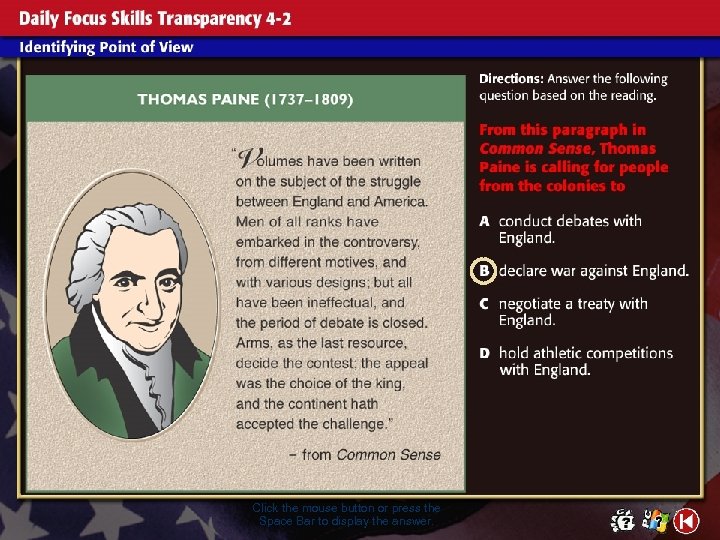
 Common Sense Pamphlet written by Thomas Paine u Common sense that we should govern ourselves u Large continent shouldn’t be ruled by an island of distant people u BR govt corrupt and laws are unreasonable u Convinces some colonists to revolt against BR (Revolution was the only option to preserving our liberty) u
 Common Sense u Introduction: The ideas I present here are so new that many people will reject them. Readers must clear their minds of long-held notions, apply common sense, and adopt the cause of America as the “cause of all mankind. ” How we respond to tyranny today will matter for all time. u Section One: The English government you worship? It’s a sham. Man may need government to protect him from his flawed nature, but that doesn’t mean he must suffocate under brute tyranny. Just as you would cut ties with abusive parents, you must break from Britain.
 Common Sense (cont’d) u Section Two: The monarchy you revere? It’s not our protector; it’s our enemy. It doesn’t care about us; it cares about Britain’s wealth. It has brought misery to people all over the world. And the very idea of monarchy is absurd. Why should someone rule over us simply because he (or she) is someone’s child? So evil is monarchy by its very nature that God condemns it in the Bible. u Section Three: Our crisis today? It’s folly to think we should maintain loyalty to a distant tyrant. It’s self-sabotage to pursue reconciliation. For us, right here, right now, reconciliation means ruin. America must separate from Britain. We can’t go back to the cozy days before the Stamp Act. You know that’s true; it’s time to admit it. For heaven’s sake, we’re already at war!
 Common Sense (cont’d) u Section Four: Can we win this war? Absolutely! Ignore the naysayers who tremble at the thought of British might. Let’s build a Continental Navy as we have built our Continental Army. Let us declare independence. If we delay, it will be that much harder to win. I know the prospect is daunting, but the prospect of inaction is terrifying. u A month later, in his appendix to the third edition, Paine escalated his appeal to a utopian fervor. “We have it in our power to begin the world over again, ” he insisted. “The birthday of a new world is at hand. ”
 Click the mouse button or press the Space Bar to display the answer.
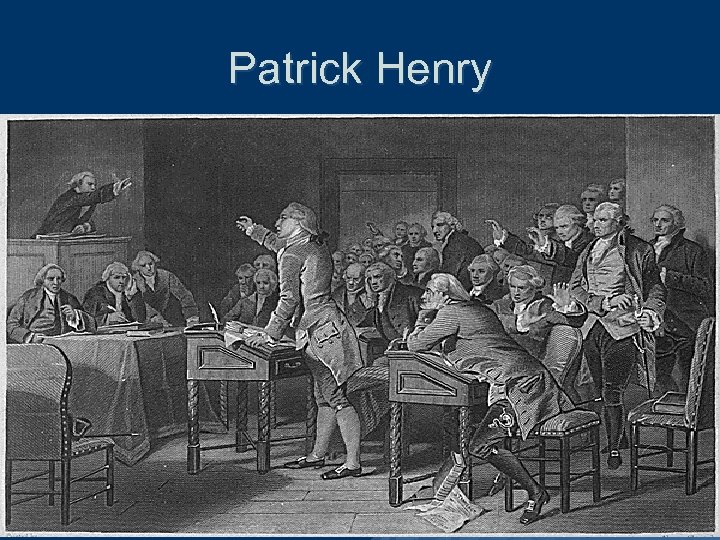
 Patrick Henry u Makes famous speech to VA legislature calling for war with BR u “Give me liberty, or give me death”
 Patrick Henry
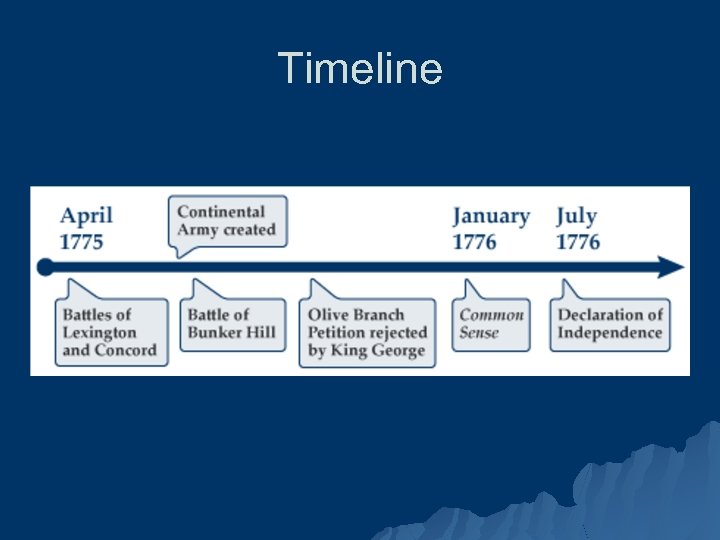
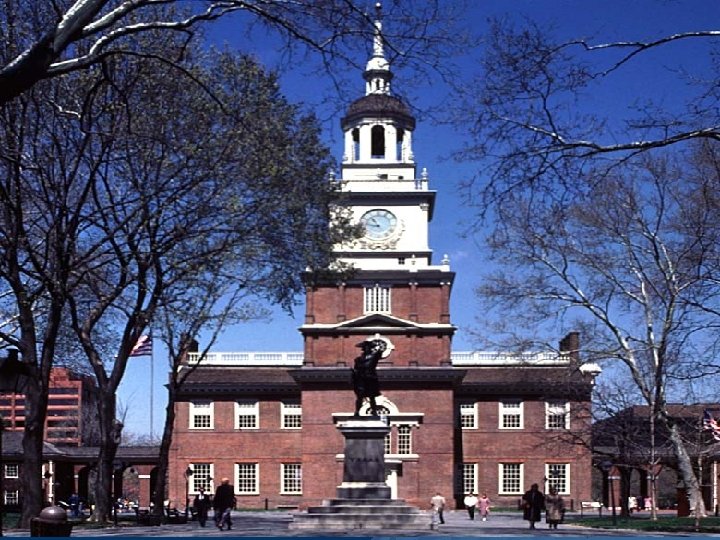
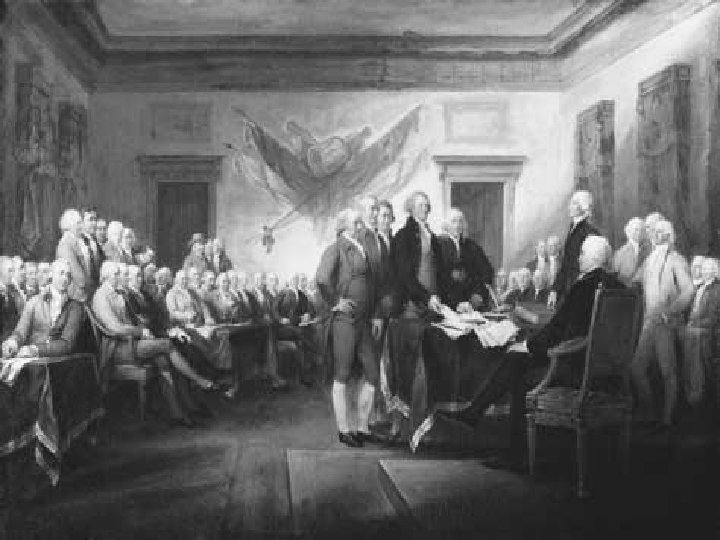
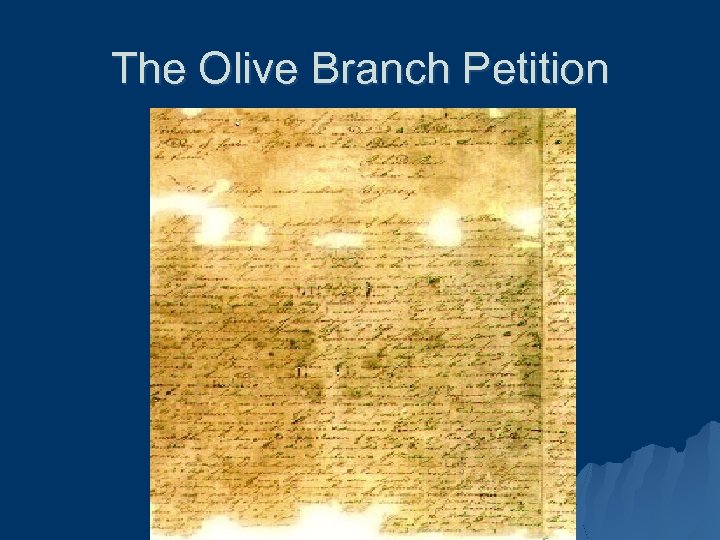
 The Second Continental Congress u May, 1775 u Delegates such as Ben Franklin, John Hancock and Thomas Jefferson u Divided between compromise and independence u Send Olive Branch Petition to the King u Names Washington Commander-inchief
 Sec 2 Review What is considered to be the first battle of the Revolutionary War? u Who warned the colonists the BR were coming to Concord? u Who wrote Common Sense? u What impact did it have on the Revolution? u Who made the statement, “Give me liberty, or give me death. ” u What was he talking about? u
 Sec 2 Review u Where was the Battle of Bunker Hill fought? u Why did the colonists lose? u Who was the presiding officer of the 2 nd Continental Congress?
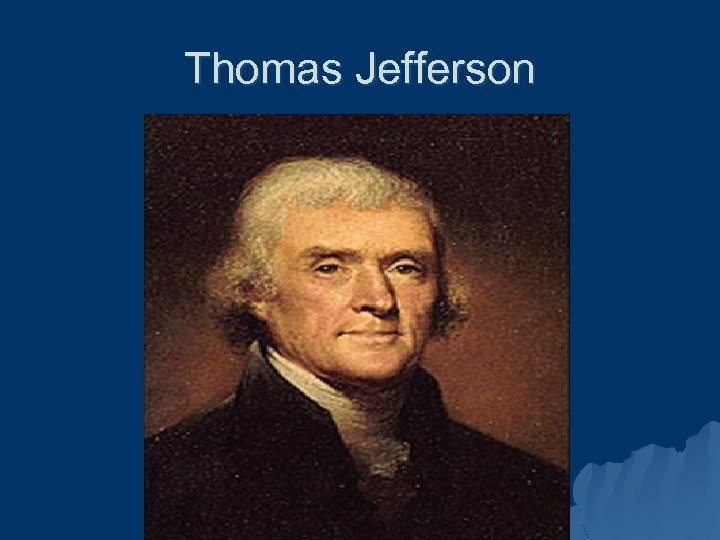
 Second Continental Congress (cont’d) u Nov. 1775 u Learn King George has rejected the Olive Branch Petition u To stop fighting until they can find a solution u June, 1776 - cut all ties with BR u Thomas Jefferson to write a declaration of independence
 The Olive Branch Petition
 Thomas Jefferson
 2 nd cont. (cont’d) Draws ideas from the Enlightenment u John Locke’s Social Contract theory u July 4, 1776 u The Declaration of Independence is adopted u Signed by all of the delegates u Committing treason against BR u What are the risks? u Death u JOHN HANCOCK u
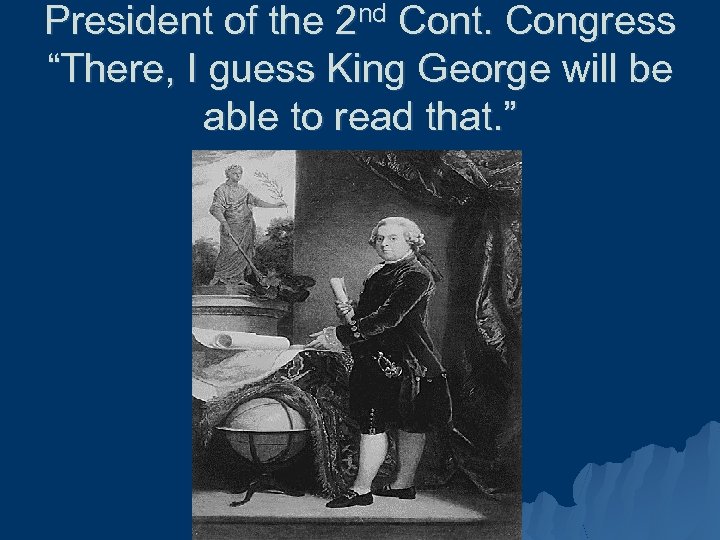 President of the 2 nd Cont. Congress “There, I guess King George will be able to read that. ”
 Parts of the Declaration u. Preamble (introduction)- explanation of purpose of document u. Statement of natural rights (body)“Life, Liberty, and the pursuit of happiness. ”
 Parts of the Declaration u. Statement of Wrongs (body)- long list of British actions disliked by colonists u. Conclusion- Jefferson writes that the colonies “ought to be Free and Independent States. ”
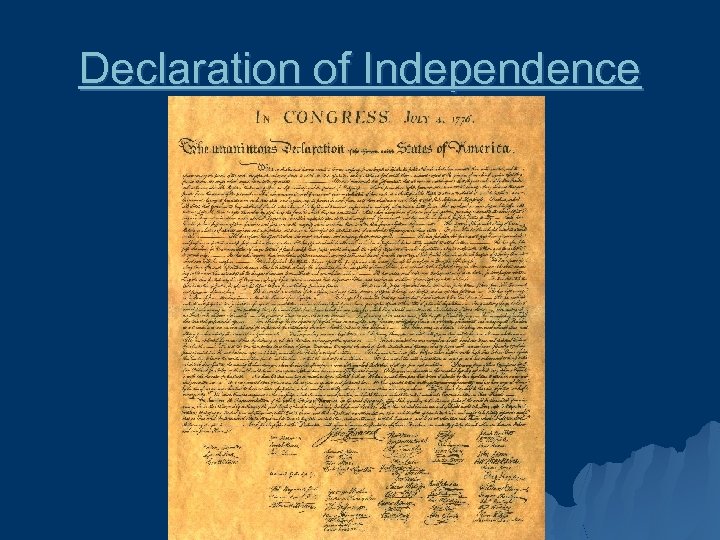 Declaration of Independence
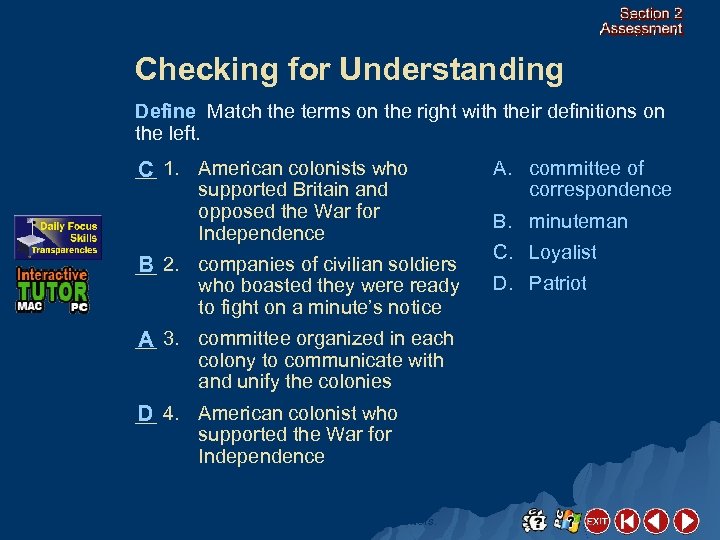 Checking for Understanding Define Match the terms on the right with their definitions on the left. __ 1. American colonists who C supported Britain and opposed the War for Independence __ 2. companies of civilian soldiers B who boasted they were ready to fight on a minute’s notice __ 3. committee organized in each A colony to communicate with and unify the colonies __ 4. American colonist who D supported the War for Independence Click the mouse button or press the Space Bar to display the answers. A. committee of correspondence B. minuteman C. Loyalist D. Patriot