 Скачать презентацию SEAD Sustainable Environment Actionable Data Margaret Hedstrom
8f3ac75ab0c1105faa60f2b9e263776f.ppt
- Количество слайдов: 28



SEAD Sustainable Environment – Actionable Data Margaret Hedstrom SEAD PI/Project Director Professor & Associate Dean UM School of Information Robert H. Mc. Donald SEAD Sr. Personnel Assoc. Dean/Associate Director Indiana University CNI Fall Members Meeting Arlington, VA 12/12/2011
NSF Data. Net Program • new types of organizations that integrate library & archival sciences, cyberinfrastructure, computer & information sciences, & domain science expertise • provide reliable digital preservation, access, integration, and analysis capabilities for science and/or engineering data over a decades-long timeline; • continuously anticipate and adapt to changes in technologies and in user needs and expectations; • engage in research to drive the leading edge forward • serve as component elements of an interoperable data preservation and access network http: //www. nsf. gov/funding/pgm_summ. jsp? pims_id=503141
Partners • SEAD’s Unique Contributions – Address domain-driven needs & requirements – Serve scientists and researchers in the “long tail” – Integrate existing technologies, tools & services (rather than build new from scratch)
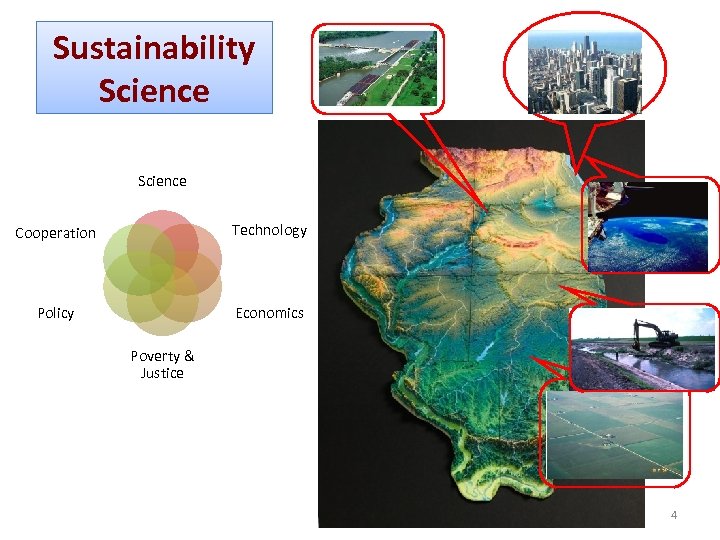
Sustainability Science Cooperation Technology Policy Economics Poverty & Justice 4
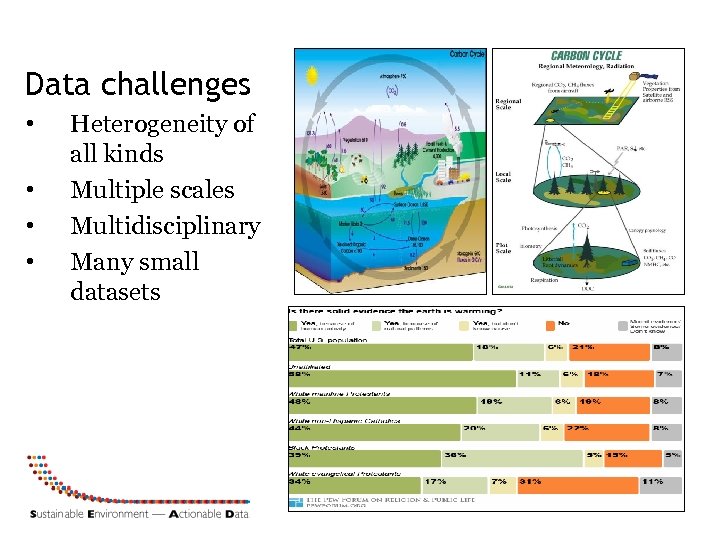
Data challenges • • Heterogeneity of all kinds Multiple scales Multidisciplinary Many small datasets
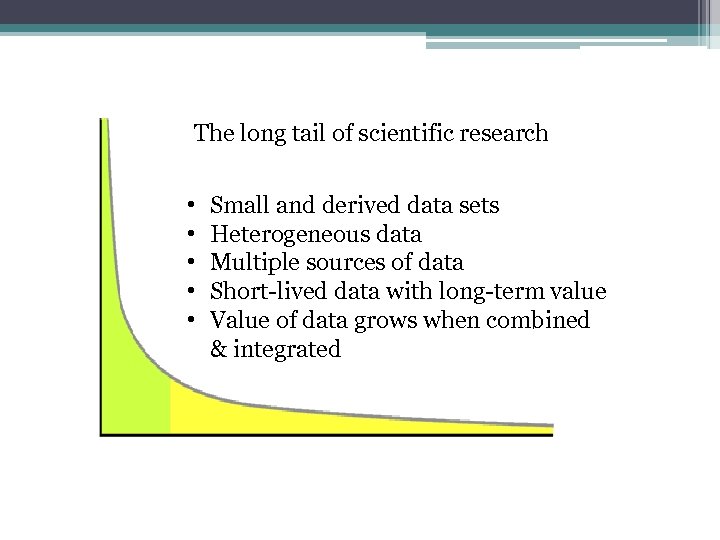
The long tail of scientific research • • • Small and derived data sets Heterogeneous data Multiple sources of data Short-lived data with long-term value Value of data grows when combined & integrated
SEAD’s Goals • Provide data services that address the needs of researchers working toward sustainability • Integrate these services into an generalizable “Active and Social Curation” infrastructure suited to the social structure and economics of long-tail research communities • Develop capabilities to package and migrate the most valuable datasets to a federated repository infrastructure for long-term preservation • Education, outreach, & training to disseminate SEAD’s contributions to other projects & communities
SEAD’s Strategy • Leverage social media for discovery of data, interest, and expertise • Move data curation upstream in the data life cycle • Involve domain scientists in setting priorities for evolution of data and services • Take advantage of existing infrastructures (Institutional Repositories, ICPSR) for longterm preservation
Active and Social Curation • Engage researchers during projects, not at the end • Automatically capture metadata as defined by the data producers • Provide facilities for commentary, recommendations, and mark-up of data • Further reduce costs by re-engineering curation processes to leverage this rich metadata and volunteered effort
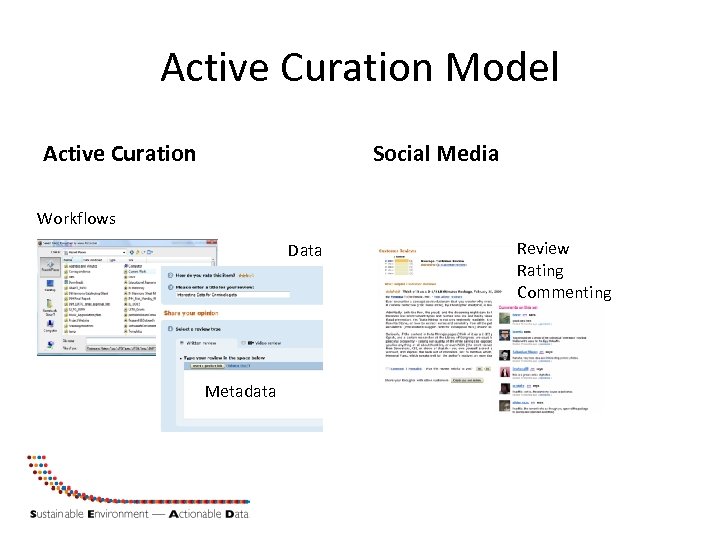
Active Curation Model Active Curation Social Media Workflows Data Metadata Review Rating Commenting
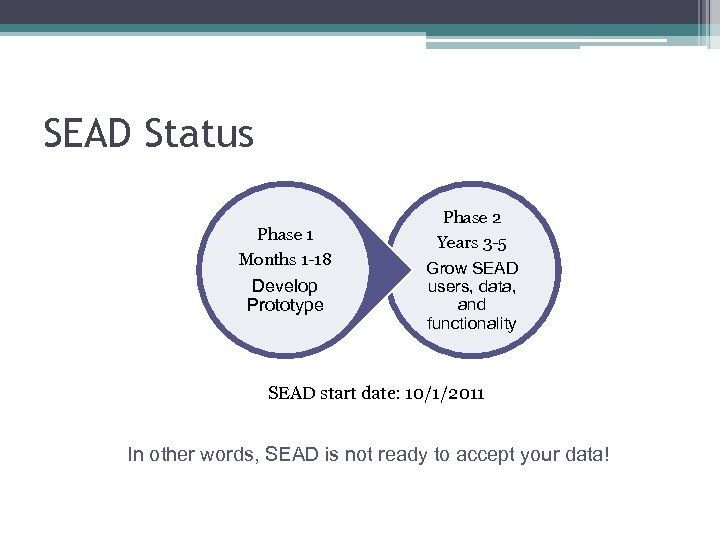
SEAD Status Phase 1 Months 1 -18 Develop Prototype Phase 2 Years 3 -5 Grow SEAD users, data, and functionality SEAD start date: 10/1/2011 In other words, SEAD is not ready to accept your data!
SEAD Personnel • • • Margaret Hedstrom, PI (Michigan) Praveen Kumar, co-PI (Illinois) Jim Myers, co-PI (RPI) Beth Plale, co-PI (Indiana) Ann Zimmerman, co-PI/Project Manager (Michigan) George Alter (ICPSR) Bryan Beecher (ICPSR) Katy Börner (Indiana) Robert Mc. Donald (Indiana) Jude Yew, Post-doc (Michigan) + many more to come
http: //sead-data. net
SEAD TEAM University of Michigan: Margaret Hedstrom (UM PI), Ann Zimmerman (Co-PI and Project Manager), George Alter, Bryan Beecher, Charles Severance, Karen Woollams, Jude Yew. Indiana University: Beth Plale (IU PI), Katy Borner, Robert H. Mc. Donald, Kavitha Chandrasekar, Robert Ping, Stacy Kowalczyk, Robert Light. University of Illinois: Praveen Kumar (UIUC PI), Rob Kooper, Luigi Marini, Terry Mc. Laren. Rensselaer Polytechnic Institute: Jim Myers (RPI PI), Ram Prasanna Govind Krishnan, Lindsay Todd, Adam Wilson.
SEAD Cyberinfrastructure • An international resource for sustainability science • Novel technical and business approaches to supporting the long-tail of research data • Lifecycle support: actionable data services integrated with curation and preservation infrastructure
Key Challenges for SEAD Cyberinfrastructure • • • Managed Data storage and services are expensive! Begging for metadata doesn’t work! Curation and preservation are time consuming! The long-tail is not standardized! Data collections are always missing something valuable! • Data models evolve! • Cyberinfrastructure is obsolete by the time you build it! • Building Community as you leverge cyberinfrastructure
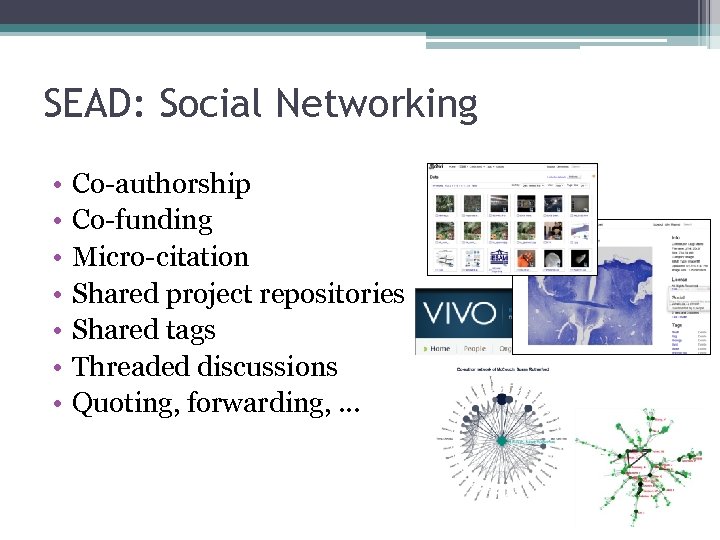
SEAD: Social Networking • • Co-authorship Co-funding Micro-citation Shared project repositories Shared tags Threaded discussions Quoting, forwarding, …
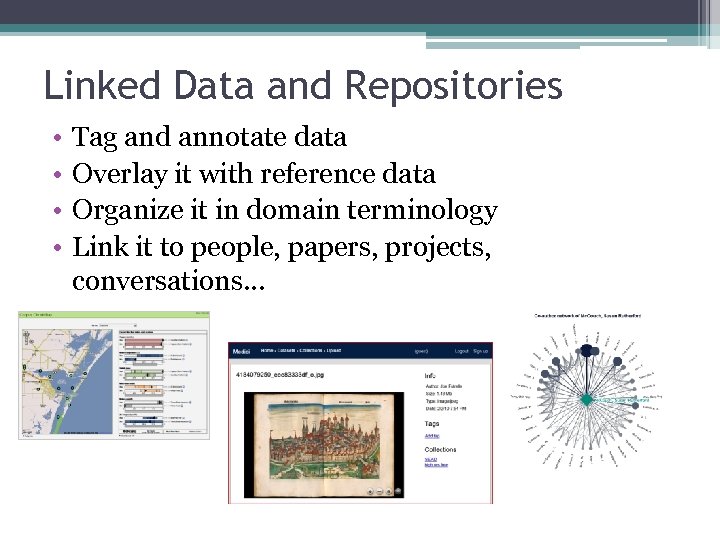
Linked Data and Repositories • • Tag and annotate data Overlay it with reference data Organize it in domain terminology Link it to people, papers, projects, conversations…
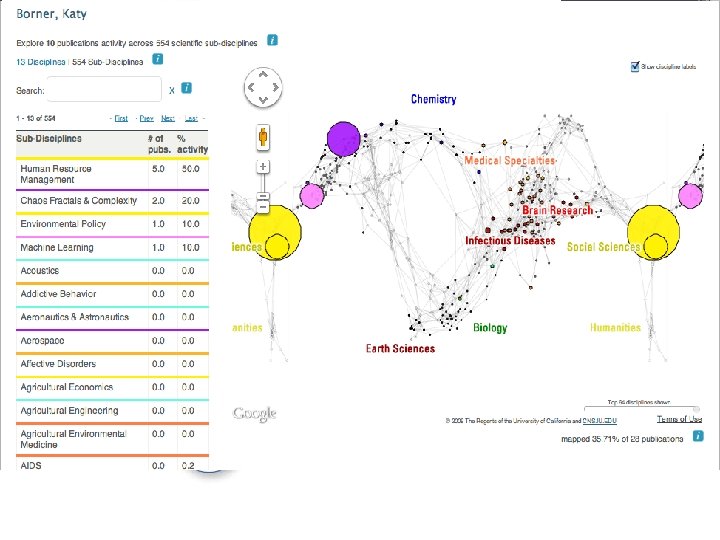
Using Science of Science to Link Repositories
KEY SEAD Questions • What could SEAD capture when? • How can SEAD provide direct value to data producers, users, and curators? • How can robust web-services and social computing lower barriers and reduce/realign costs?
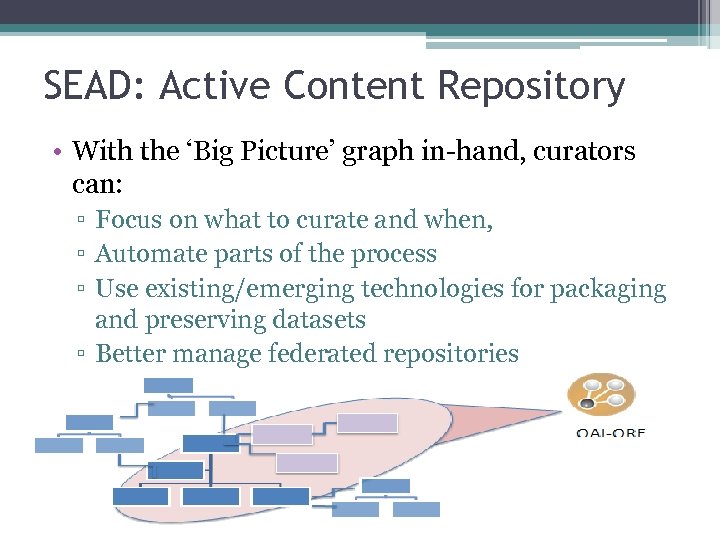
SEAD: Active Content Repository • With the ‘Big Picture’ graph in-hand, curators can: ▫ Focus on what to curate and when, ▫ Automate parts of the process ▫ Use existing/emerging technologies for packaging and preserving datasets ▫ Better manage federated repositories
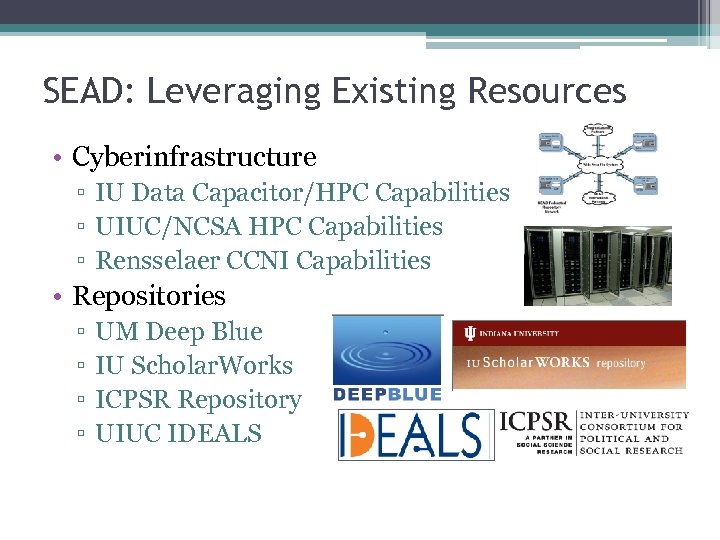
SEAD: Leveraging Existing Resources • Cyberinfrastructure ▫ IU Data Capacitor/HPC Capabilities ▫ UIUC/NCSA HPC Capabilities ▫ Rensselaer CCNI Capabilities • Repositories ▫ ▫ UM Deep Blue IU Scholar. Works ICPSR Repository UIUC IDEALS
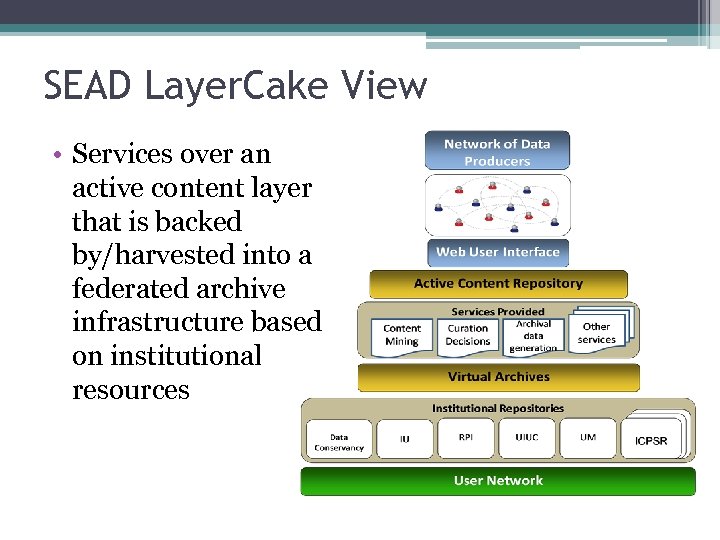
SEAD Layer. Cake View • Services over an active content layer that is backed by/harvested into a federated archive infrastructure based on institutional resources
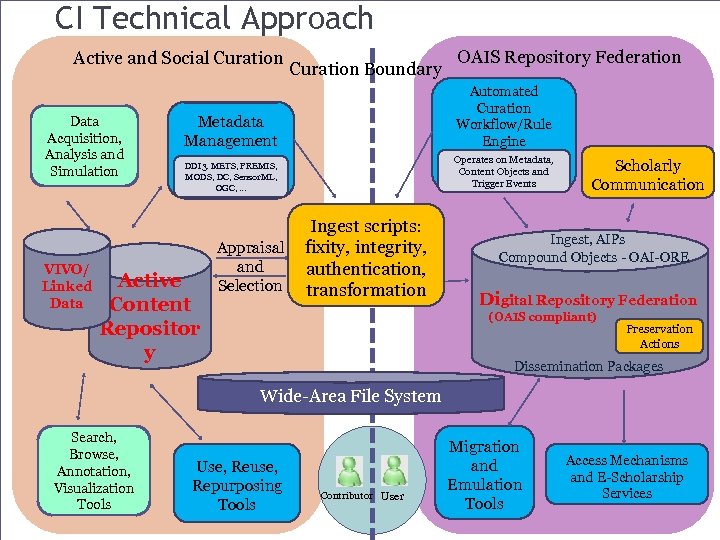
CI Technical Approach Active and Social Curation Data Acquisition, Analysis and Simulation VIVO/ Linked Data OAIS Repository Federation Curation Boundary Metadata Management Automated Curation Workflow/Rule Engine DDI 3. METS, PREMIS, MODS, DC, Sensor. ML, OGC, … Operates on Metadata, Content Objects and Trigger Events Active Content Repositor y Ingest scripts: Appraisal fixity, integrity, and CI Technical Approach authentication, Selection transformation Scholarly Communication Ingest, AIPs Compound Objects - OAI-ORE Digital Repository Federation (OAIS compliant) Preservation Actions Dissemination Packages Wide-Area File System Search, Browse, Annotation, Visualization Tools Use, Reuse, Repurposing Tools Contributor User Migration and Emulation Tools Access Mechanisms and E-Scholarship Services
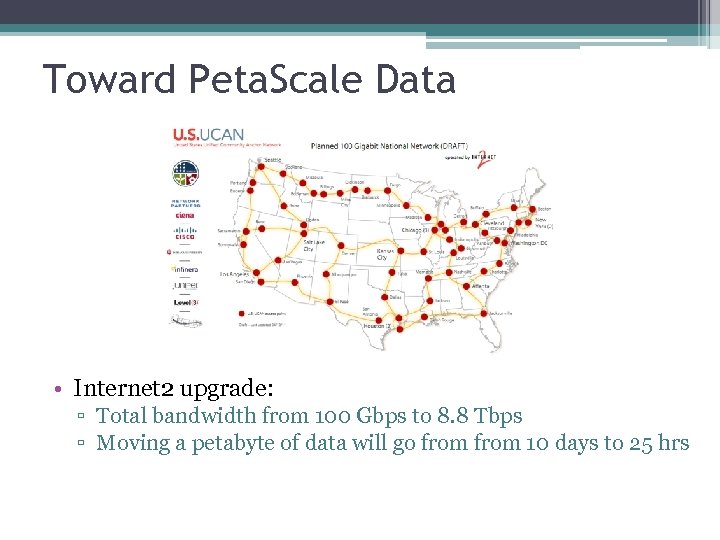
Toward Peta. Scale Data • Internet 2 upgrade: ▫ Total bandwidth from 100 Gbps to 8. 8 Tbps ▫ Moving a petabyte of data will go from 10 days to 25 hrs
SEAD 18 Month Prototype Targets for Cyberinfrastructure • Active and Social Content Curation ▫ Pilot Active Content Repository, VIVO deployments ▫ Exemplar services for Data Ingest, Discovery, Reuse, Curation • CI for Long-term Access ▫ Data model, protocol design/development ▫ Pilot Federated Repository infrastructure
SEAD CI Quick. View • SEAD will quickly build a repository and data services infrastructure for sustainability research that can be responsively adapted based on community feedback – Community Agile Development • SEAD will leverage existing tools and emerging practices to dramatically enhance the interactions of researchers and data librarians – Active Curation • SEAD’s focus on the long-tail will force an emphasis on ease-of-use and low costs that is critical for long-term sustainability – Leverage Existing Institution Resources for Long-term Access • SEAD will leverage experiences in the sustainability research community to provide guidance for other long-tail communities making the transition to an interdisciplinary, systems-oriented approach to research – Sustainability and Resource Growth Partnership and Collaboration
Acknowledgments SEAD is funded by the National Science Foundation under cooperative agreement #OCI 0940824 • For more on SEAD go to: • http: //sead-data. net • Follow us on Twitter @SEADdatanet http: //sead-data. net
Скачать презентацию SEAD Sustainable Environment Actionable Data Margaret Hedstrom
8f3ac75ab0c1105faa60f2b9e263776f.ppt