 Скачать презентацию SEA SWAT Sea Base Defense LCS Total Ship
a15b58b924007e7ae96734a402c24b6e.ppt
- Количество слайдов: 116



SEA SWAT Sea Base Defense LCS Total Ship Systems Engineering 2003
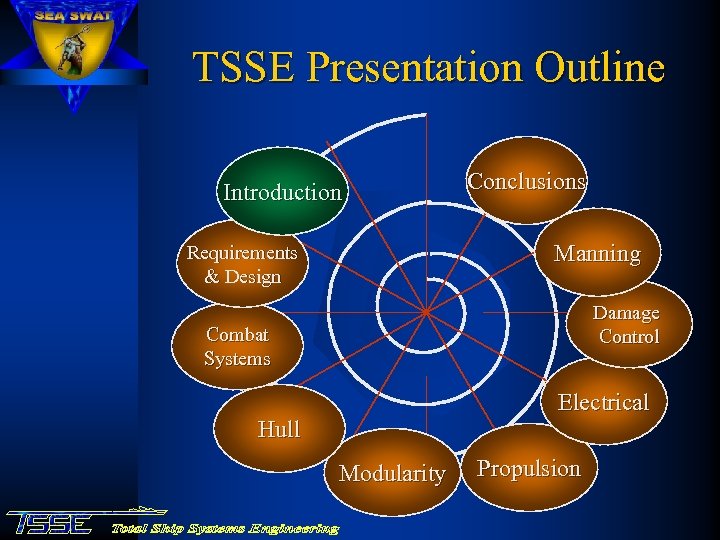
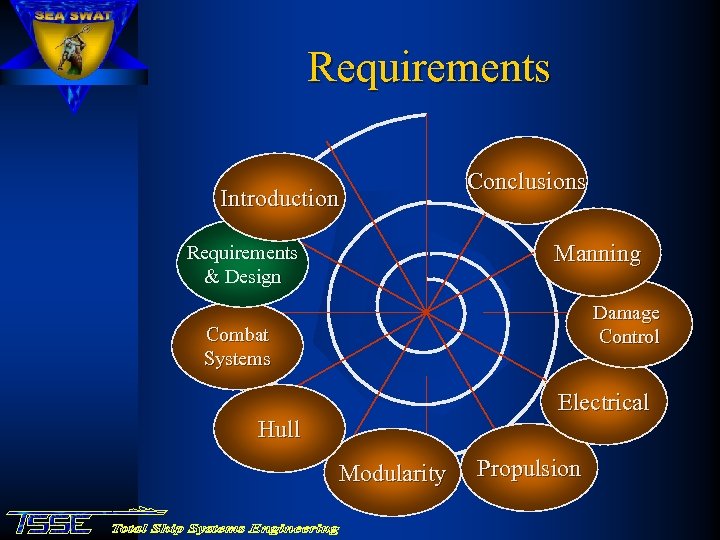
TSSE Presentation Outline Introduction Conclusions Manning Requirements & Design Damage Control Combat Systems Electrical Hull Modularity Propulsion
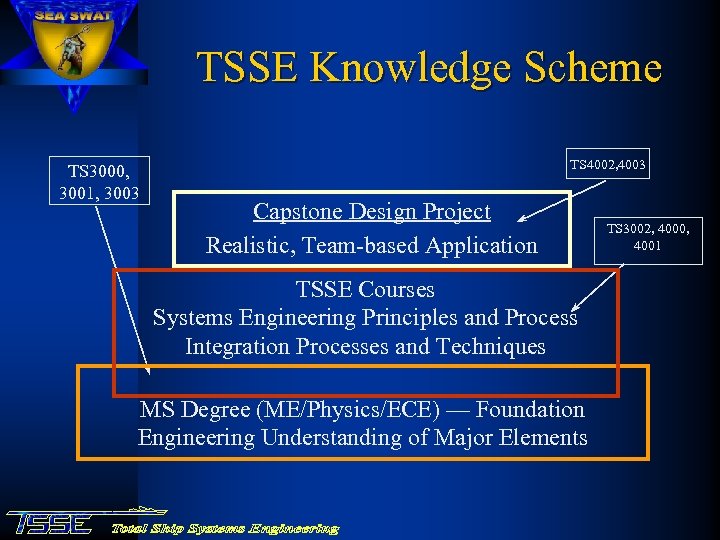
TSSE Knowledge Scheme TS 3000, 3001, 3003 TS 4002, 4003 Capstone Design Project Realistic, Team-based Application TSSE Courses Systems Engineering Principles and Process Integration Processes and Techniques MS Degree (ME/Physics/ECE) — Foundation Engineering Understanding of Major Elements TS 3002, 4000, 4001
2003 TSSE Faculty and Team Faculty Members Professor Fotis Papoulias Professor Mike Green Team Members LT Rodrigo Cabezas, Chilean Navy LT Jake Didoszak, USN LT Colin Echols, USN LTJG Zafer Elcin, Turkish Navy LT Constance Fernandez, USN LTJG Alper Kurultay, Turkish Navy LT Scott Lunt, USN LT Freddy Santos, USN
The Taskers • Systems Engineering Analysis - Initial Requirements Document (SEA-IRD) • TSSE Faculty Capstone Design Project Guidance • N 7 Preliminary Design Initial Requirements Document (N 7 PD-IRD)
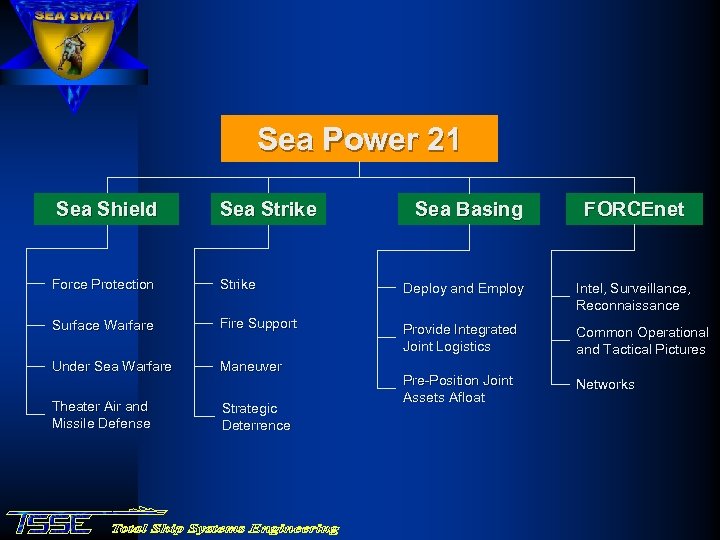
Sea Power 21 Sea Shield Sea Strike Sea Basing FORCEnet Force Protection Strike Deploy and Employ Intel, Surveillance, Reconnaissance Surface Warfare Fire Support Provide Integrated Joint Logistics Common Operational and Tactical Pictures Under Sea Warfare Maneuver Pre-Position Joint Assets Afloat Networks Theater Air and Missile Defense Strategic Deterrence
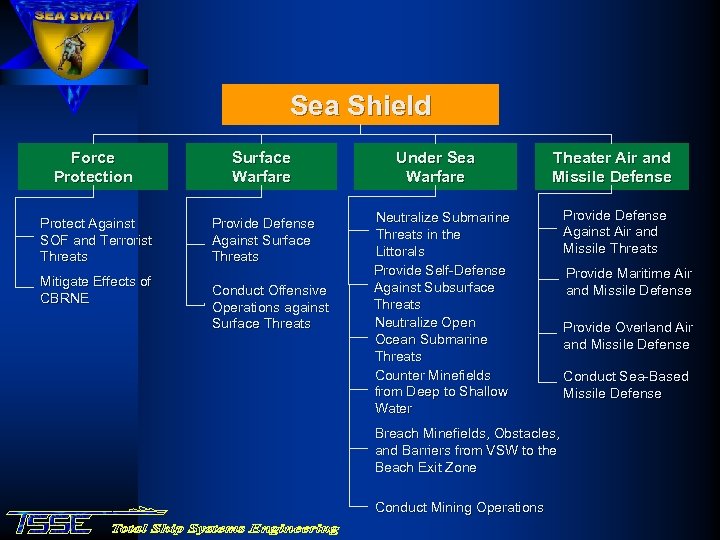
Sea Shield Force Protection Surface Warfare Under Sea Warfare Theater Air and Missile Defense Protect Against SOF and Terrorist Threats Provide Defense Against Surface Threats Neutralize Submarine Threats in the Littorals Provide Self-Defense Against Subsurface Threats Neutralize Open Ocean Submarine Threats Counter Minefields from Deep to Shallow Water Provide Defense Against Air and Missile Threats Mitigate Effects of CBRNE Conduct Offensive Operations against Surface Threats Breach Minefields, Obstacles, and Barriers from VSW to the Beach Exit Zone Conduct Mining Operations Provide Maritime Air and Missile Defense Provide Overland Air and Missile Defense Conduct Sea-Based Missile Defense
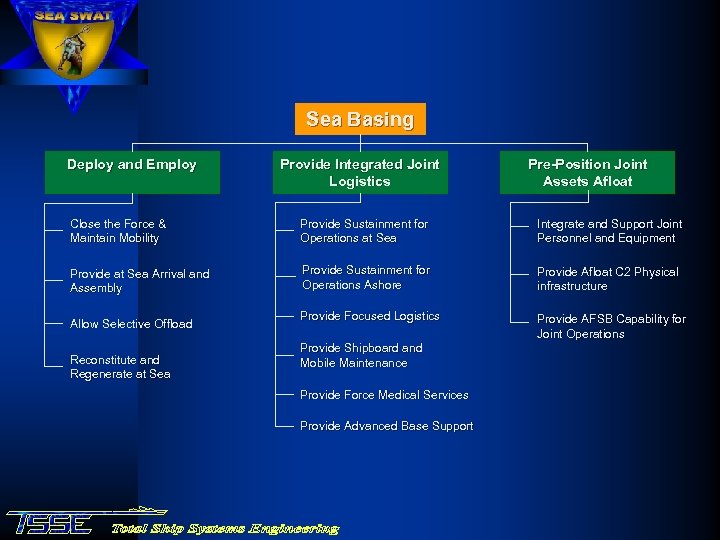
Sea Basing Deploy and Employ Provide Integrated Joint Logistics Pre-Position Joint Assets Afloat Close the Force & Maintain Mobility Provide Sustainment for Operations at Sea Integrate and Support Joint Personnel and Equipment Provide at Sea Arrival and Assembly Provide Sustainment for Operations Ashore Provide Afloat C 2 Physical infrastructure Provide Focused Logistics Provide AFSB Capability for Joint Operations Allow Selective Offload Reconstitute and Regenerate at Sea Provide Shipboard and Mobile Maintenance Provide Force Medical Services Provide Advanced Base Support
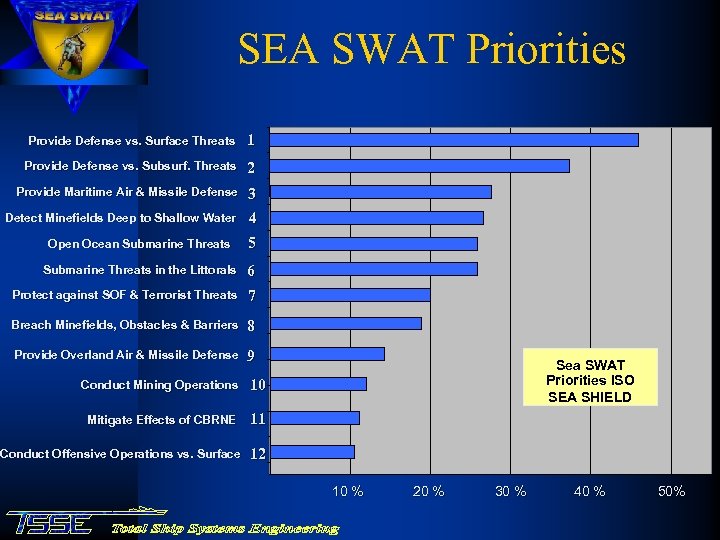
SEA SWAT Priorities Provide Defense vs. Surface Threats 1 Provide Defense vs. Subsurf. Threats 2 Provide Maritime Air & Missile Defense 3 4 Detect Minefields Deep to Shallow Water Open Ocean Submarine Threats 5 Submarine Threats in the Littorals 6 Protect against SOF & Terrorist Threats 7 Breach Minefields, Obstacles & Barriers 8 Provide Overland Air & Missile Defense 9 Conduct Mining Operations 10 Mitigate Effects of CBRNE Sea SWAT Priorities ISO SEA SHIELD 11 Conduct Offensive Operations vs. Surface 12 10 % 20 % 30 % 40 % 50%
Requirements Introduction Conclusions Manning Requirements & Design Damage Control Combat Systems Electrical Hull Modularity Propulsion
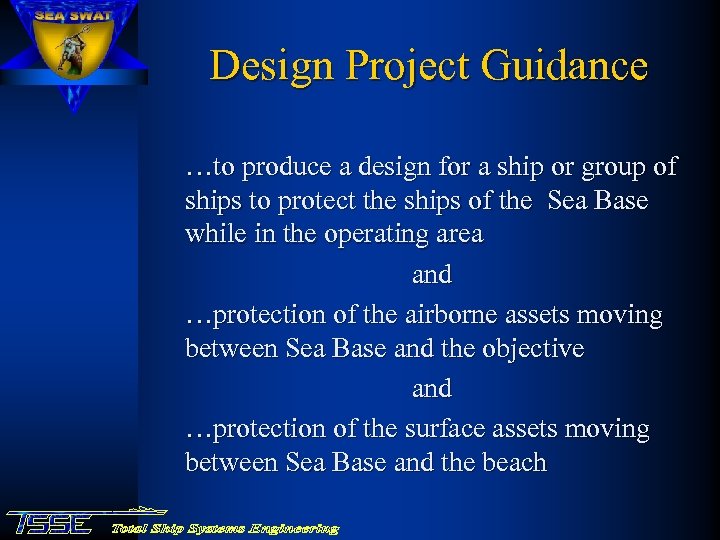
Design Project Guidance …to produce a design for a ship or group of ships to protect the ships of the Sea Base while in the operating area and …protection of the airborne assets moving between Sea Base and the objective and …protection of the surface assets moving between Sea Base and the beach
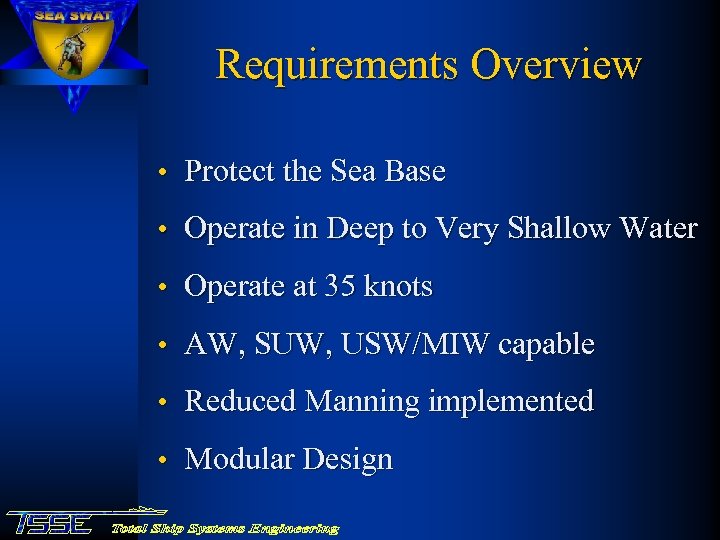
Requirements Overview • Protect the Sea Base • Operate in Deep to Very Shallow Water • Operate at 35 knots • AW, SUW, USW/MIW capable • Reduced Manning implemented • Modular Design
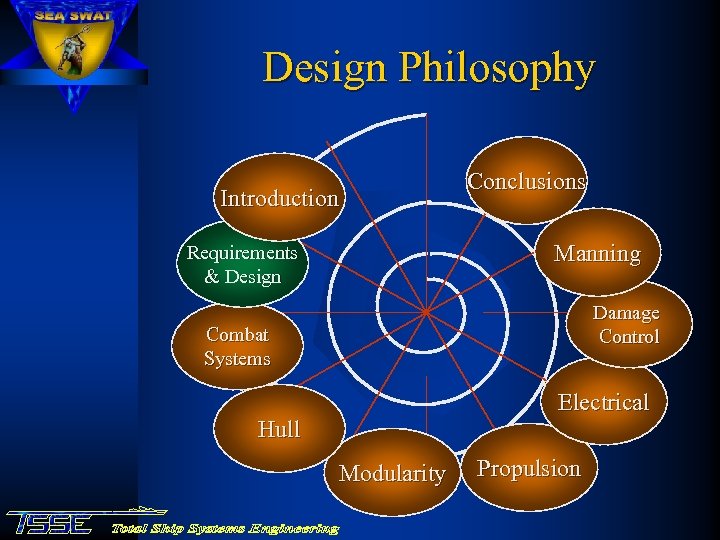
Design Philosophy Introduction Conclusions Manning Requirements & Design Damage Control Combat Systems Electrical Hull Modularity Propulsion
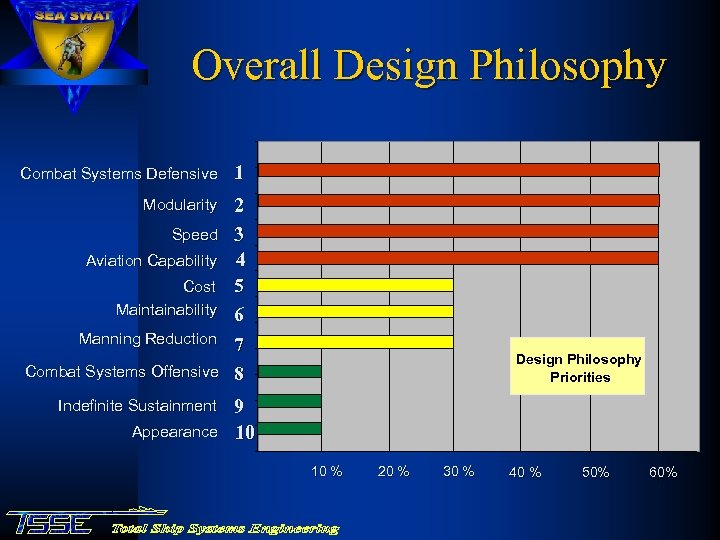
Overall Design Philosophy Combat Systems Defensive 1 Modularity 2 3 4 5 6 7 8 Speed Aviation Capability Cost Maintainability Manning Reduction Combat Systems Offensive Indefinite Sustainment Appearance Design Philosophy Priorities 9 10 10 % 20 % 30 % 40 % 50% 60%
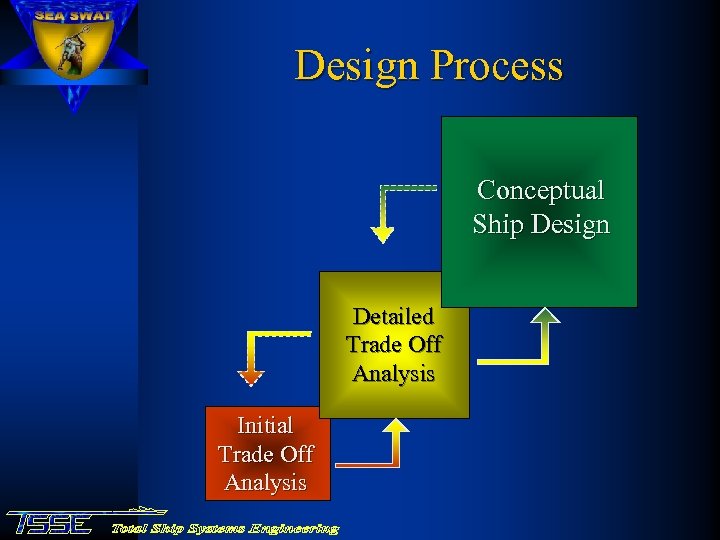
Design Process Conceptual Ship Design Detailed Trade Off Analysis Initial Trade Off Analysis
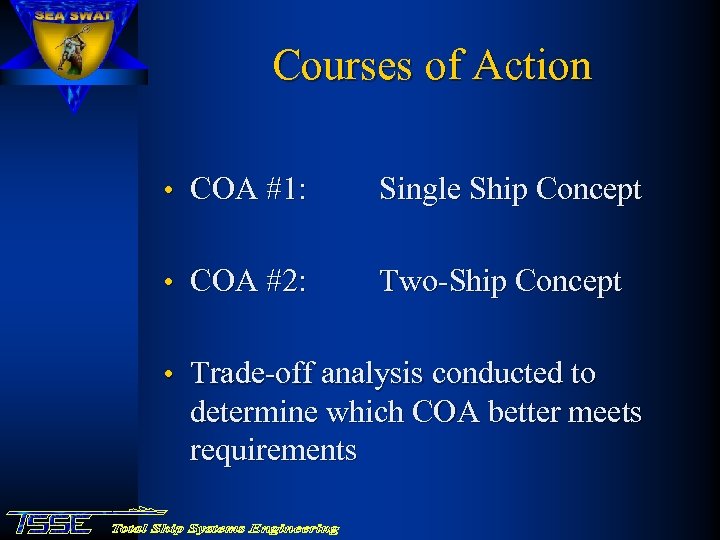
Courses of Action • COA #1: Single Ship Concept • COA #2: Two-Ship Concept • Trade-off analysis conducted to determine which COA better meets requirements
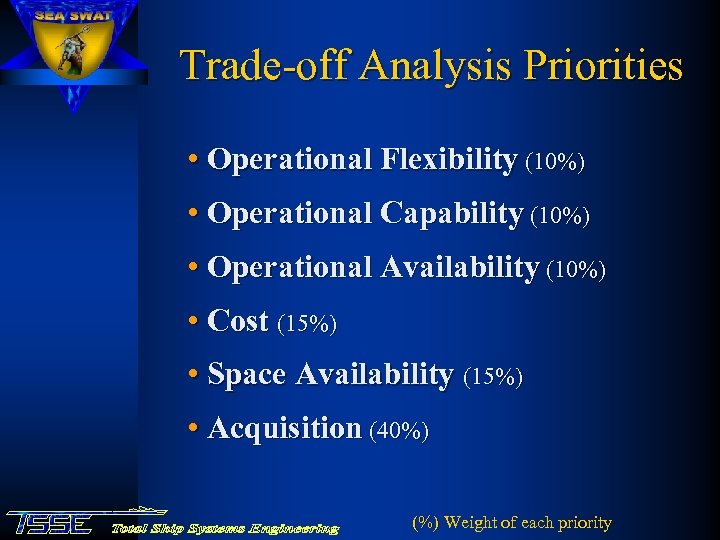
Trade-off Analysis Priorities • Operational Flexibility (10%) • Operational Capability (10%) • Operational Availability (10%) • Cost (15%) • Space Availability (15%) • Acquisition (40%) (%) Weight of each priority
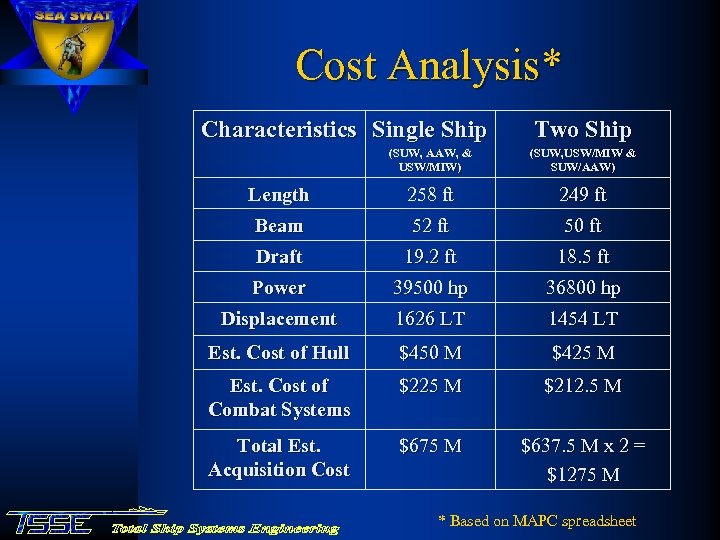
Cost Analysis* Characteristics Single Ship Two Ship (SUW, AAW, & USW/MIW) (SUW, USW/MIW & SUW/AAW) Length 258 ft 249 ft Beam 52 ft 50 ft Draft 19. 2 ft 18. 5 ft Power 39500 hp 36800 hp Displacement 1626 LT 1454 LT Est. Cost of Hull $450 M $425 M Est. Cost of Combat Systems $225 M $212. 5 M Total Est. Acquisition Cost $675 M $637. 5 M x 2 = $1275 M * Based on MAPC spreadsheet
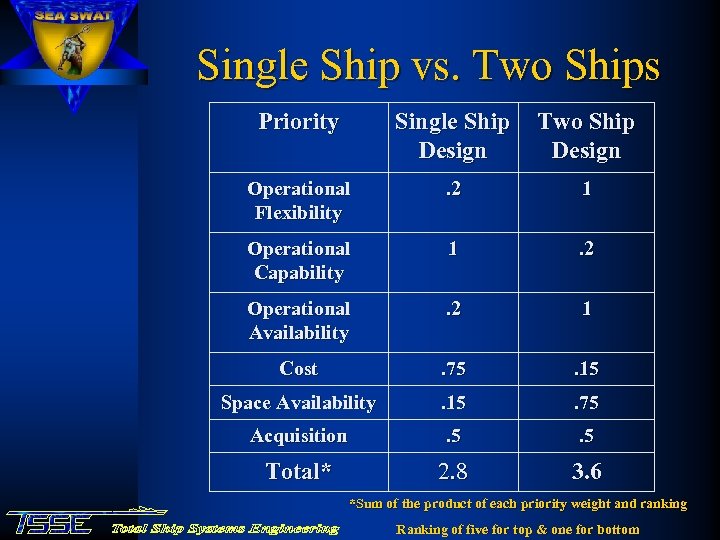
Single Ship vs. Two Ships Priority Single Ship Two Ship Design Operational Flexibility . 2 1 Operational Capability 1 . 2 Operational Availability . 2 1 Cost . 75 . 15 Space Availability . 15 . 75 Acquisition . 5 Total* 2. 8 3. 6 *Sum of the product of each priority weight and ranking Ranking of five for top & one for bottom
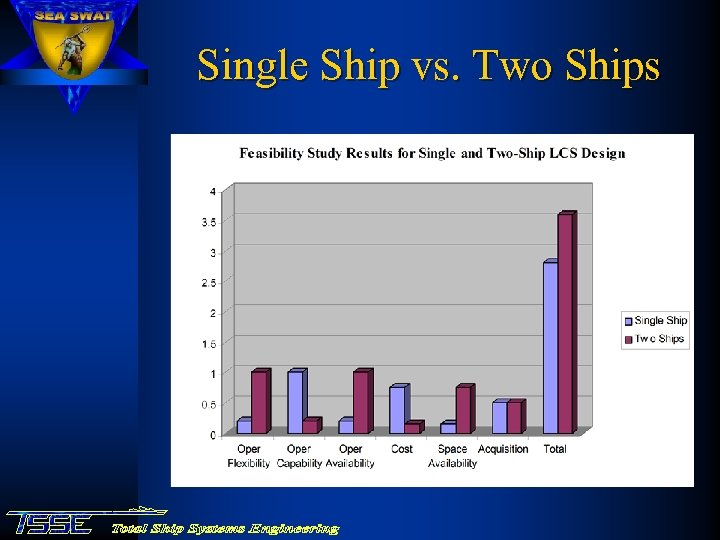
Single Ship vs. Two Ships
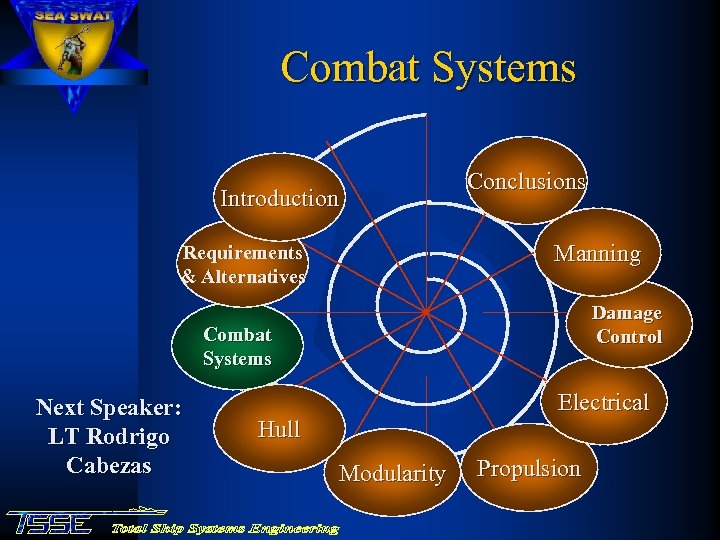
Combat Systems Introduction Conclusions Manning Requirements & Alternatives Damage Control Combat Systems Next Speaker: LT Rodrigo Cabezas Electrical Hull Modularity Propulsion
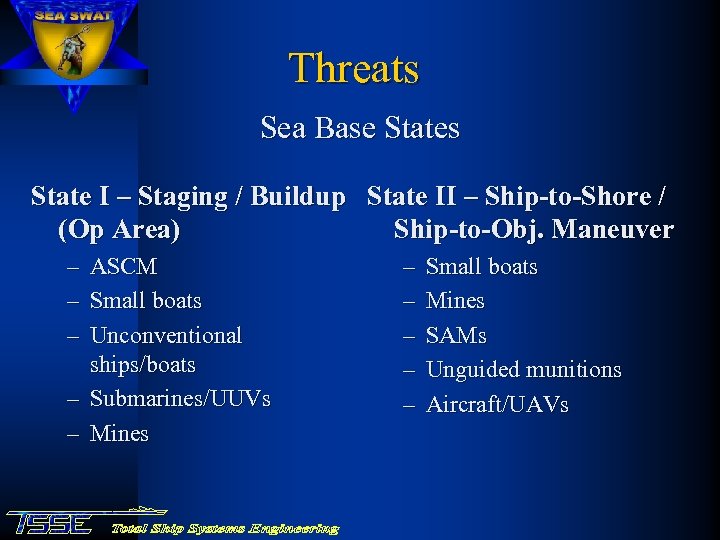
Threats Sea Base States State I – Staging / Buildup State II – Ship-to-Shore / (Op Area) Ship-to-Obj. Maneuver – ASCM – Small boats – Unconventional ships/boats – Submarines/UUVs – Mines – – – Small boats Mines SAMs Unguided munitions Aircraft/UAVs
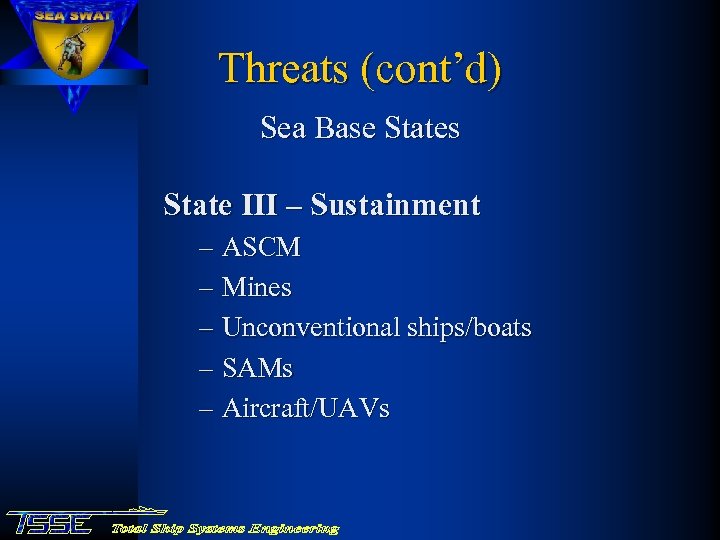
Threats (cont’d) Sea Base States State III – Sustainment – ASCM – Mines – Unconventional ships/boats – SAMs – Aircraft/UAVs
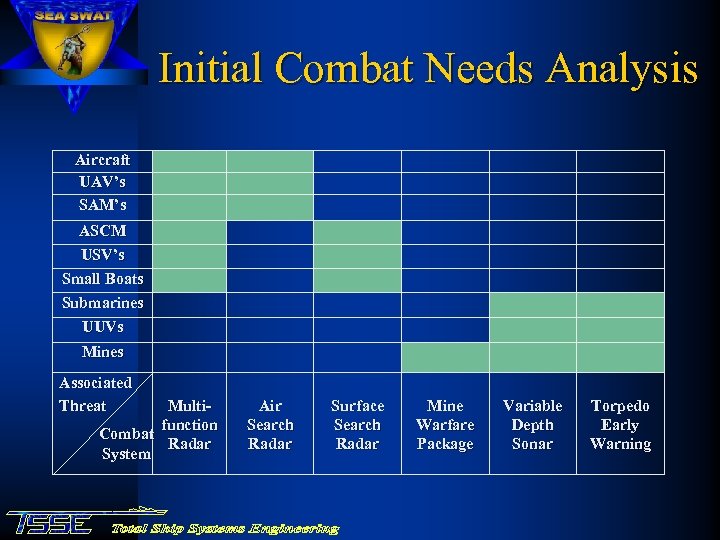
Initial Combat Needs Analysis Aircraft UAV’s SAM’s ASCM USV’s Small Boats Submarines UUVs Mines Associated Threat Multifunction Combat Radar System Air Search Radar Surface Search Radar Mine Warfare Package Variable Depth Sonar Torpedo Early Warning
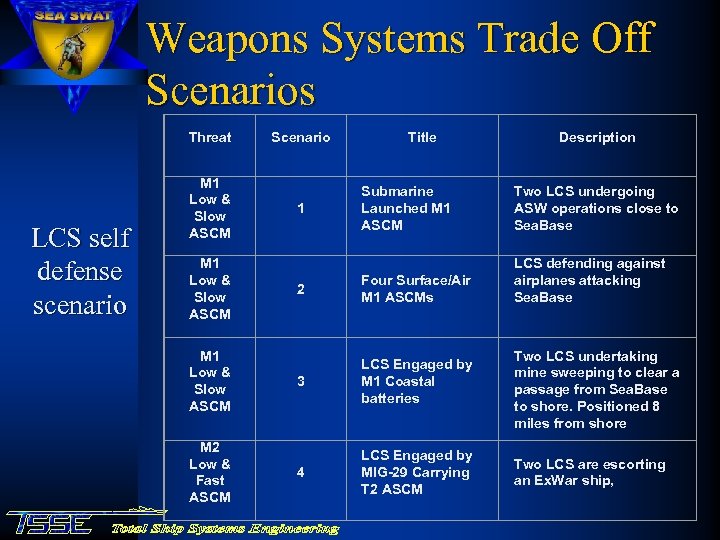
Weapons Systems Trade Off Scenarios Threat LCS self defense scenario M 1 Low & Slow ASCM M 2 Low & Fast ASCM Scenario Title Description Submarine Launched M 1 ASCM Two LCS undergoing ASW operations close to Sea. Base Four Surface/Air M 1 ASCMs LCS defending against airplanes attacking Sea. Base 3 LCS Engaged by M 1 Coastal batteries Two LCS undertaking mine sweeping to clear a passage from Sea. Base to shore. Positioned 8 miles from shore 4 LCS Engaged by MIG-29 Carrying T 2 ASCM Two LCS are escorting an Ex. War ship, 1 2
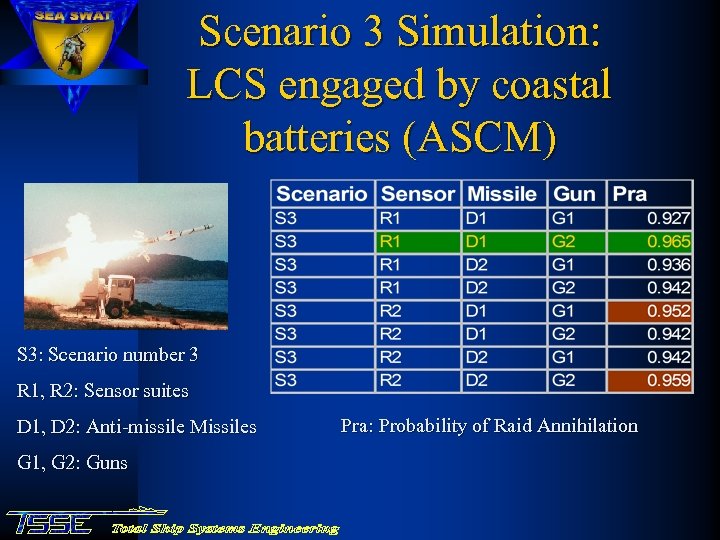
Scenario 3 Simulation: LCS engaged by coastal batteries (ASCM) S 3: Scenario number 3 R 1, R 2: Sensor suites D 1, D 2: Anti-missile Missiles G 1, G 2: Guns Pra: Probability of Raid Annihilation
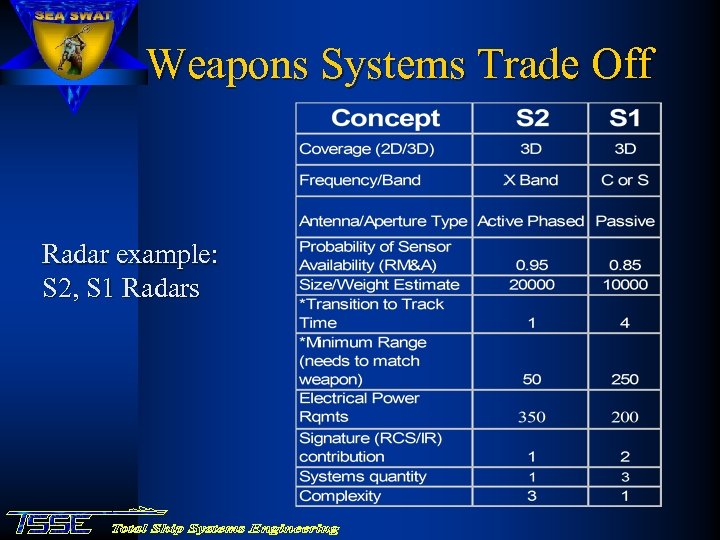
Weapons Systems Trade Off Radar example: S 2, S 1 Radars
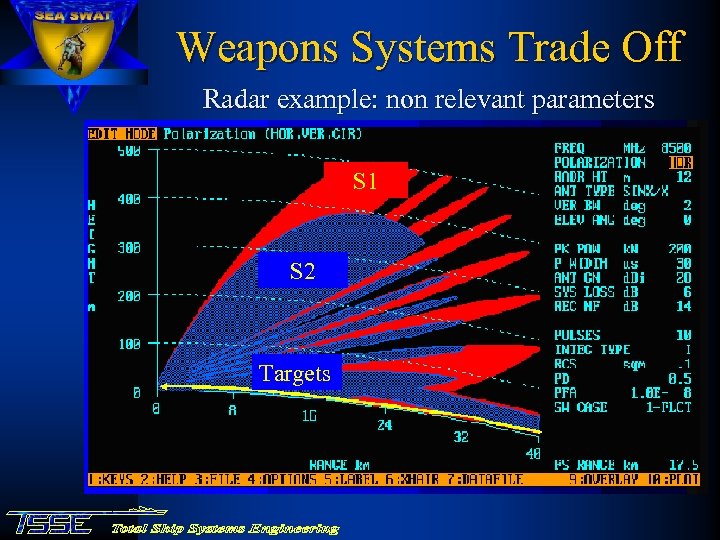
Weapons Systems Trade Off Radar example: non relevant parameters S 1 S 2 Targets
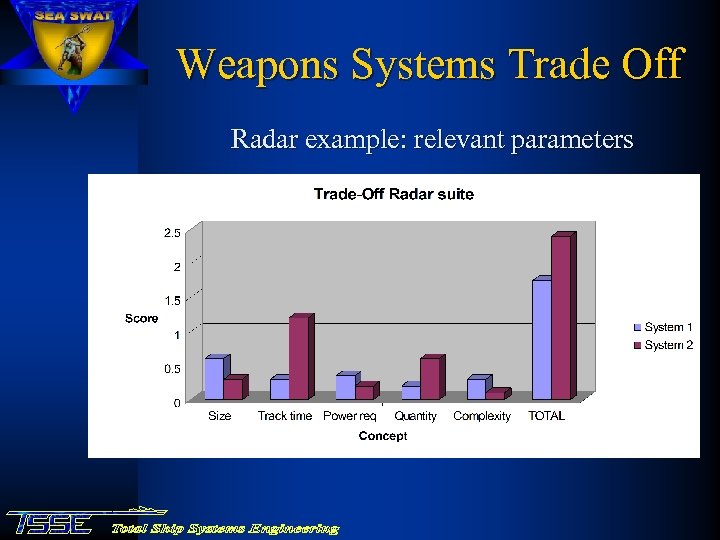
Weapons Systems Trade Off Radar example: relevant parameters
Mission packages 1. Ship’s payload limit: 160 LT (app) 2. Core package (CP) • Basic package (BP). Ship standard plus self defense. • Surface Warfare package (SUWP) 3. Anti Air Warfare package (AAWP) 4. Anti Submarine/ Mine Warfare package(ASW/MIWP) 5. Weapons systems Weight Limit: • CP + AAWP < 160 LT • CP + ASWP < 160 LT
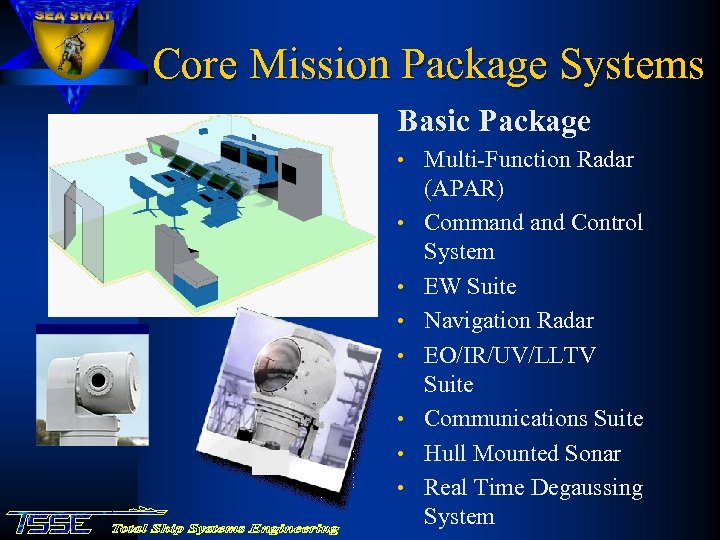
Core Mission Package Systems Basic Package • Multi-Function Radar • • (APAR) Command Control System EW Suite Navigation Radar EO/IR/UV/LLTV Suite Communications Suite Hull Mounted Sonar Real Time Degaussing System
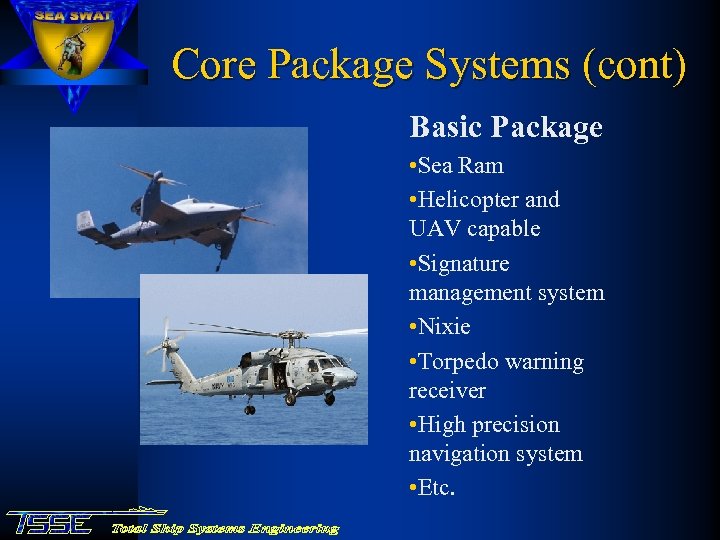
Core Package Systems (cont) Basic Package • Sea Ram • Helicopter and UAV capable • Signature management system • Nixie • Torpedo warning receiver • High precision navigation system • Etc.
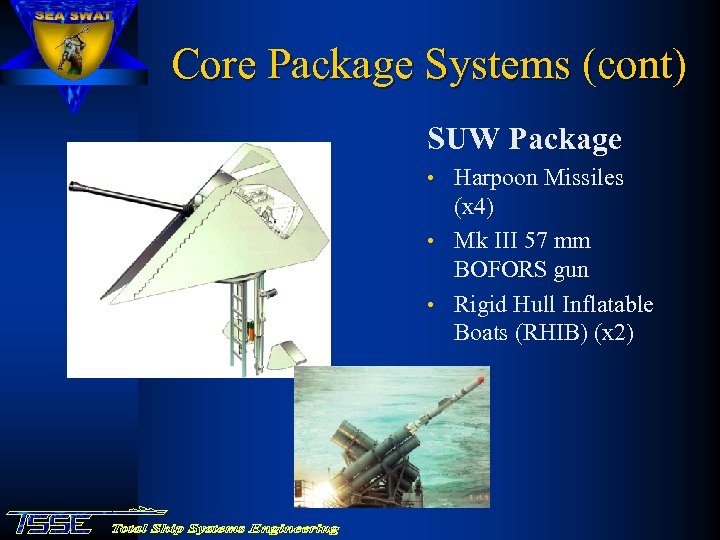
Core Package Systems (cont) SUW Package • Harpoon Missiles (x 4) • Mk III 57 mm BOFORS gun • Rigid Hull Inflatable Boats (RHIB) (x 2)
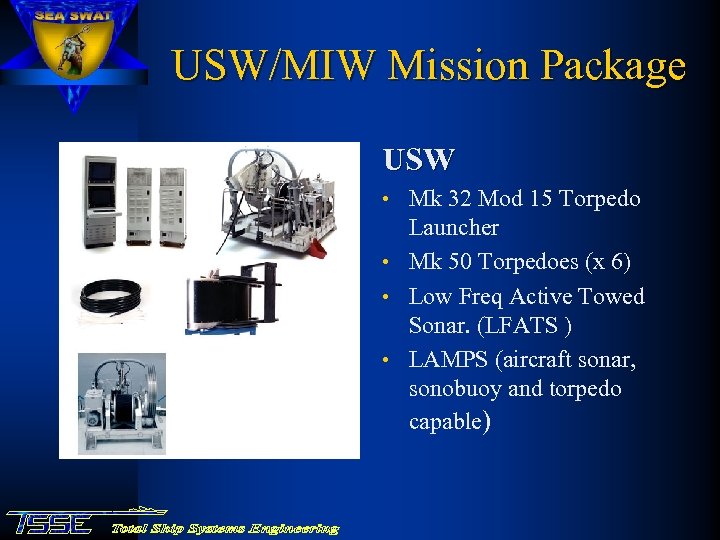
USW/MIW Mission Package USW • Mk 32 Mod 15 Torpedo Launcher • Mk 50 Torpedoes (x 6) • Low Freq Active Towed Sonar. (LFATS ) • LAMPS (aircraft sonar, sonobuoy and torpedo capable)
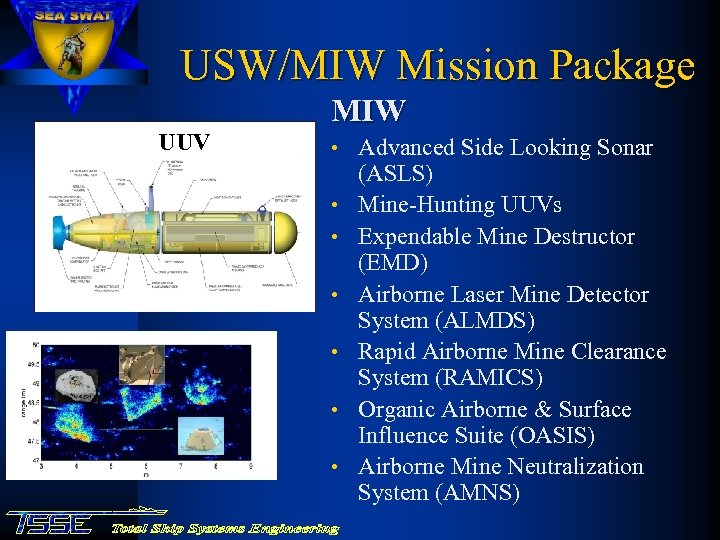
USW/MIW Mission Package UUV MIW • Advanced Side Looking Sonar • • • (ASLS) Mine-Hunting UUVs Expendable Mine Destructor (EMD) Airborne Laser Mine Detector System (ALMDS) Rapid Airborne Mine Clearance System (RAMICS) Organic Airborne & Surface Influence Suite (OASIS) Airborne Mine Neutralization System (AMNS)
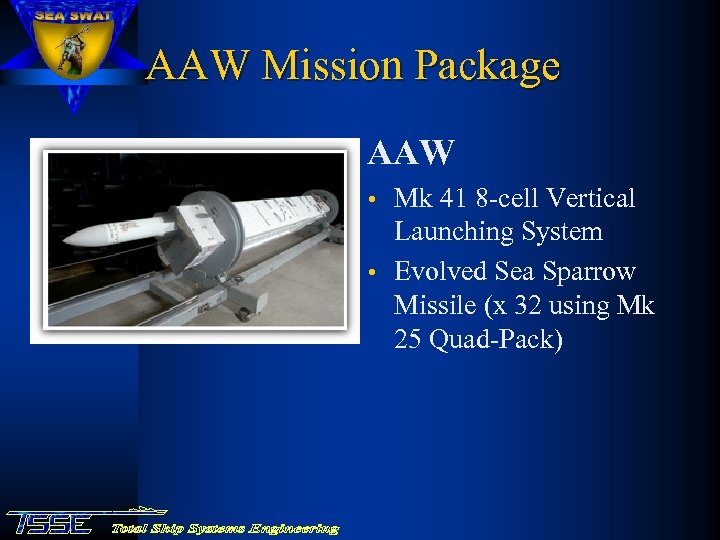
AAW Mission Package AAW • Mk 41 8 -cell Vertical Launching System • Evolved Sea Sparrow Missile (x 32 using Mk 25 Quad-Pack)
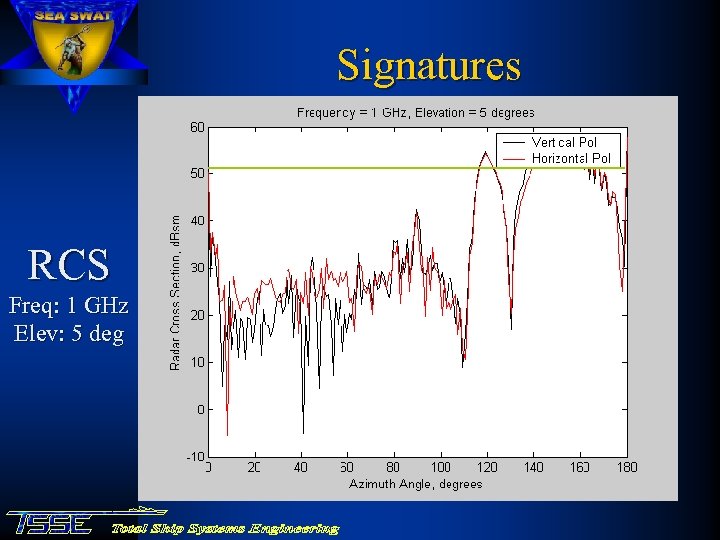
Signatures RCS Freq: 1 GHz Elev: 5 deg
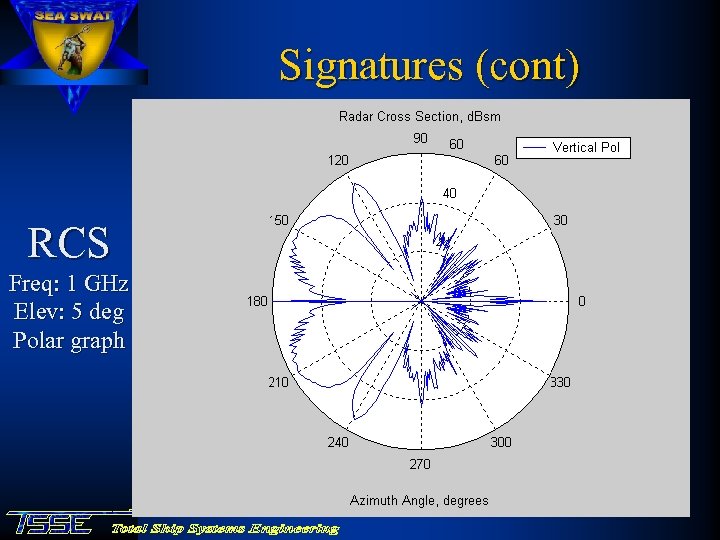
Signatures (cont) RCS Freq: 1 GHz Elev: 5 deg Polar graph
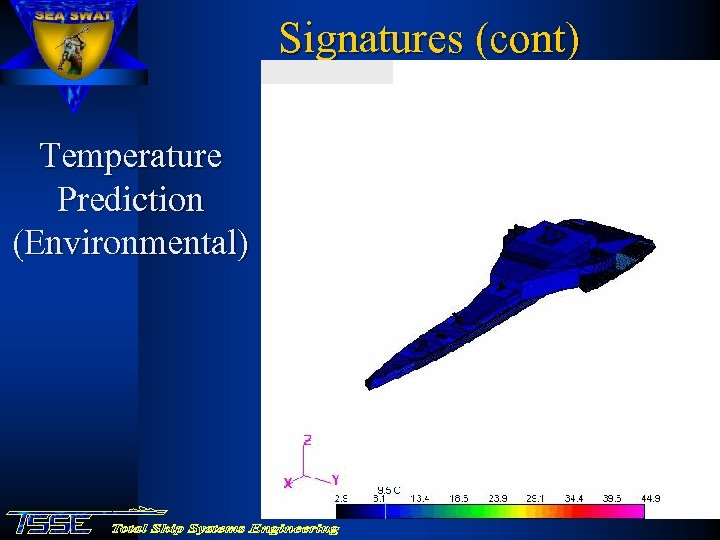
Signatures (cont) Temperature Prediction (Environmental)
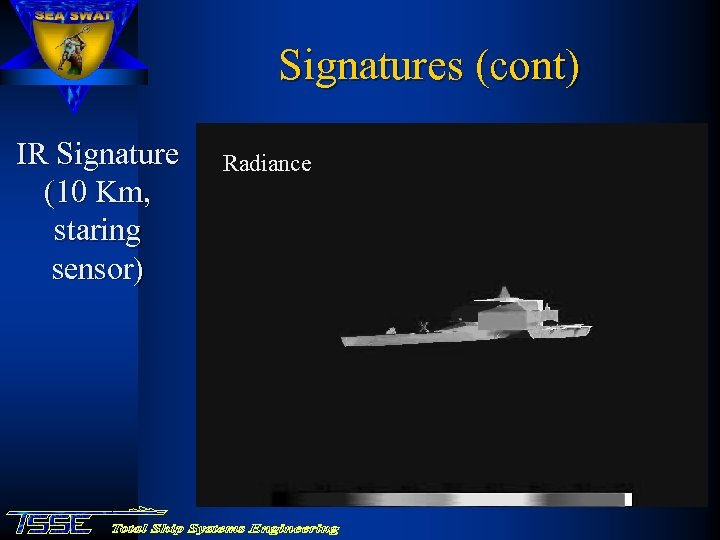
Signatures (cont) IR Signature (10 Km, staring sensor) Radiance
Summary • Threats • Scenarios • Trade off • Mission Packages • Signatures
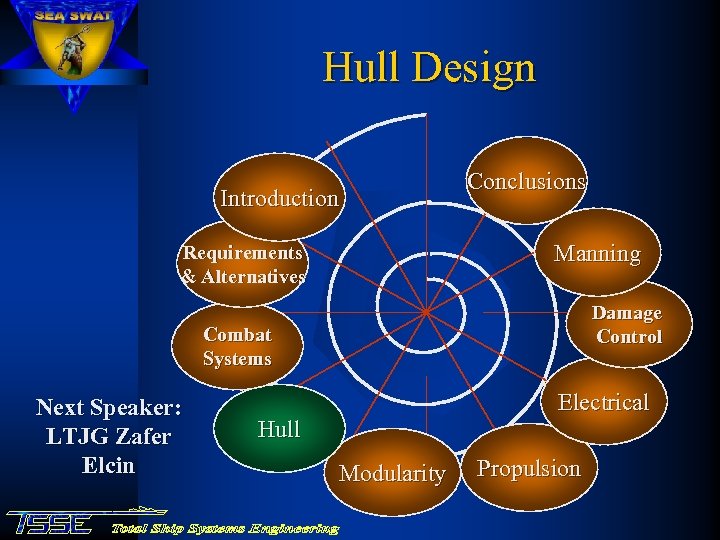
Hull Design Introduction Conclusions Manning Requirements & Alternatives Damage Control Combat Systems Next Speaker: LTJG Zafer Elcin Electrical Hull Modularity Propulsion
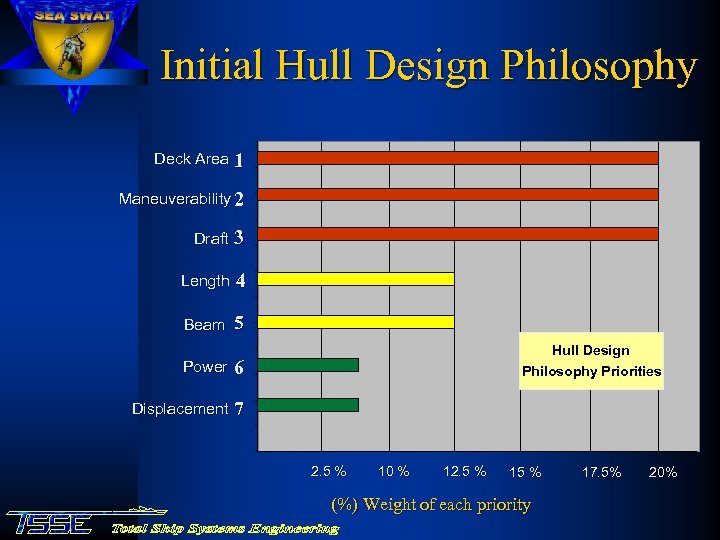
Initial Hull Design Philosophy Deck Area 1 Maneuverability 2 Draft 3 Length 4 Beam 5 Power 6 Displacement Hull Design 7 Philosophy Priorities 2. 5 % 10 % 12. 5 % 15 % (%) Weight of each priority 17. 5% 20%
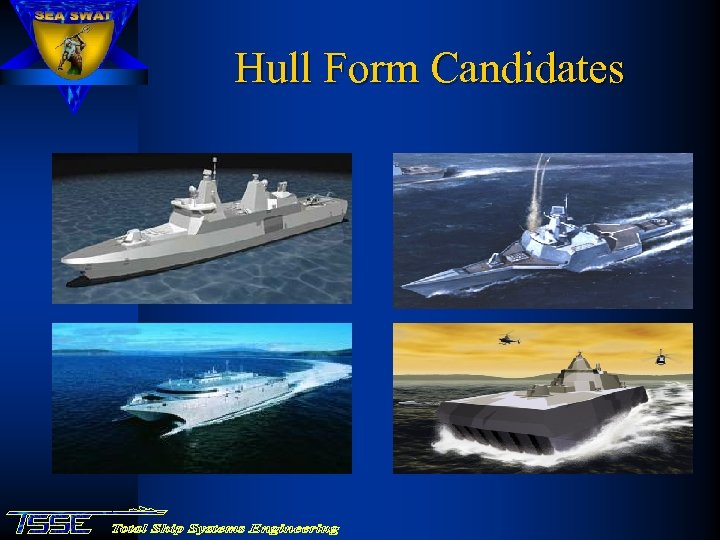
Hull Form Candidates
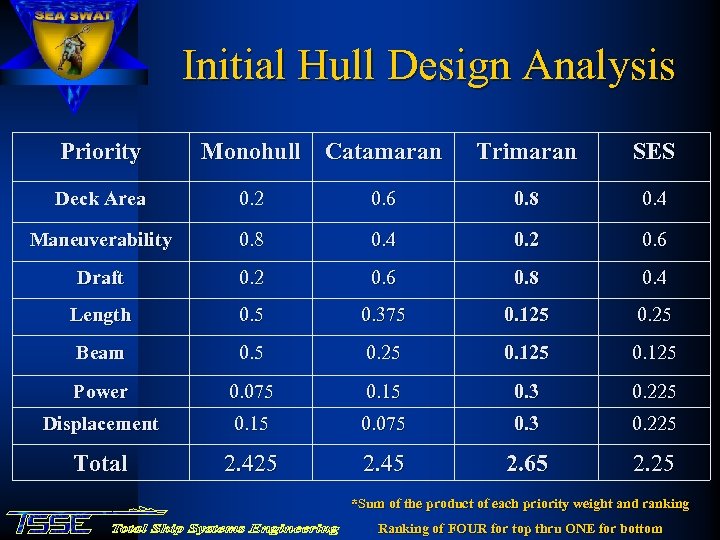
Initial Hull Design Analysis Priority Monohull Catamaran Trimaran SES Deck Area 0. 2 0. 6 0. 8 0. 4 Maneuverability 0. 8 0. 4 0. 2 0. 6 Draft 0. 2 0. 6 0. 8 0. 4 Length 0. 5 0. 375 0. 125 0. 25 Beam 0. 5 0. 25 0. 125 Power 0. 075 0. 15 0. 3 0. 225 Displacement 0. 15 0. 075 0. 3 0. 225 Total 2. 425 2. 45 2. 65 2. 25 *Sum of the product of each priority weight and ranking Ranking of FOUR for top thru ONE for bottom
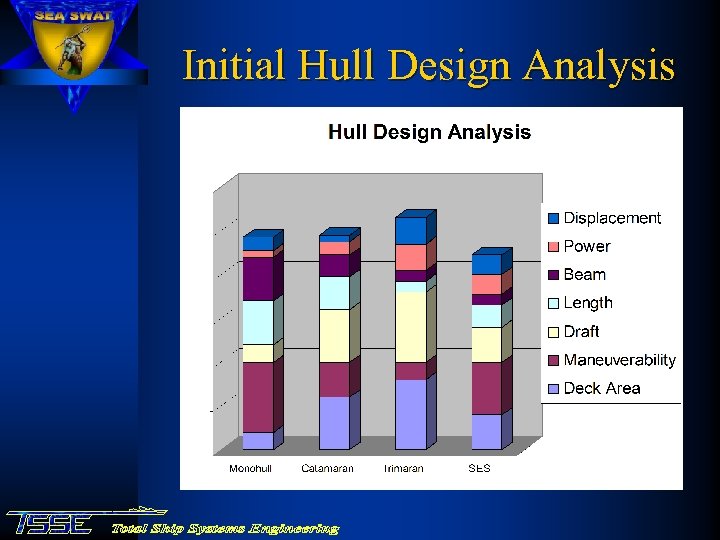
Initial Hull Design Analysis
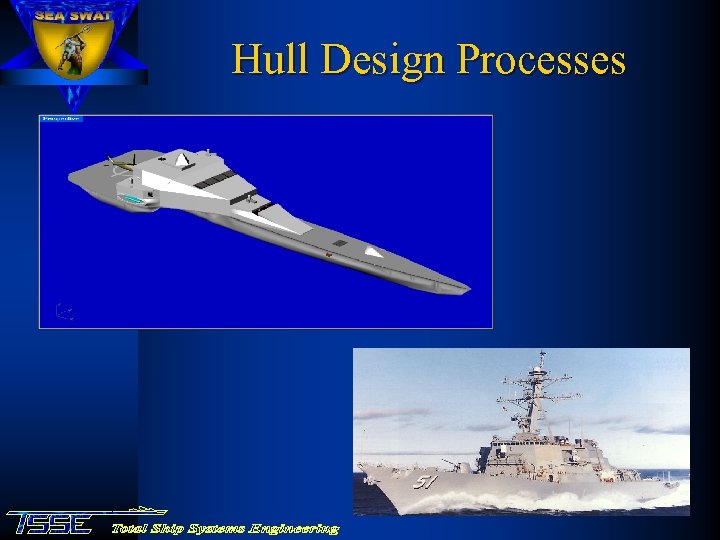
Hull Design Processes
Advantages • Resistance • Seakeeping and Motions • Maneuverability • General Arrangement • Survivability • Signature Reduction
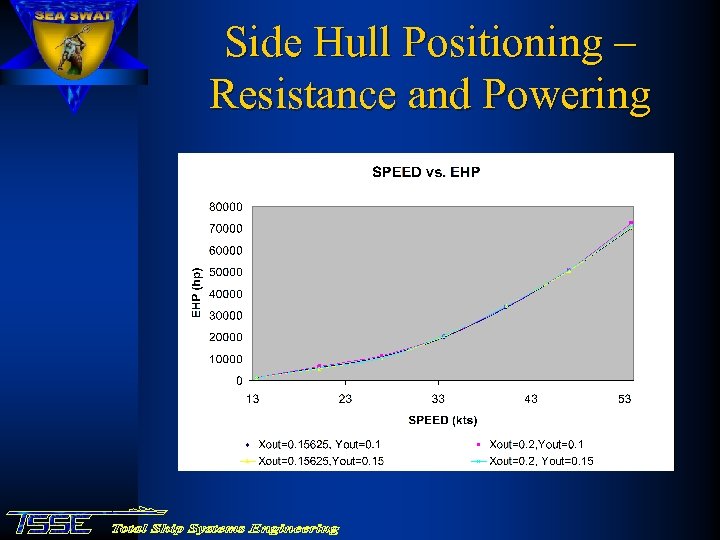
Side Hull Positioning – Resistance and Powering
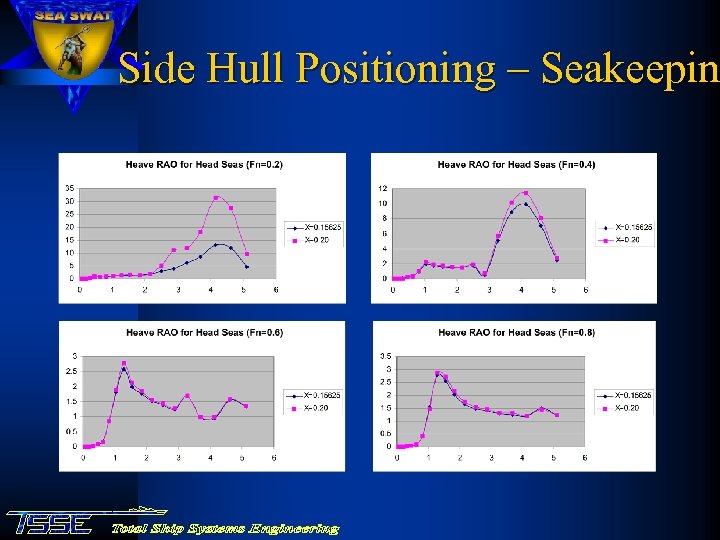
Side Hull Positioning – Seakeepin
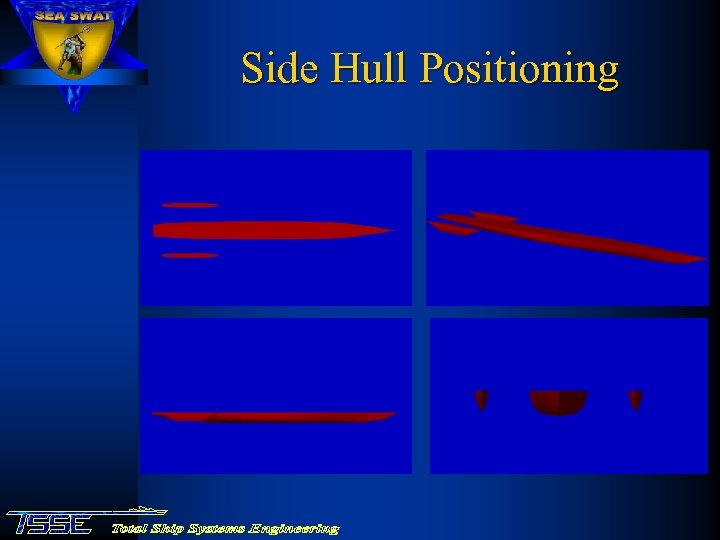
Side Hull Positioning
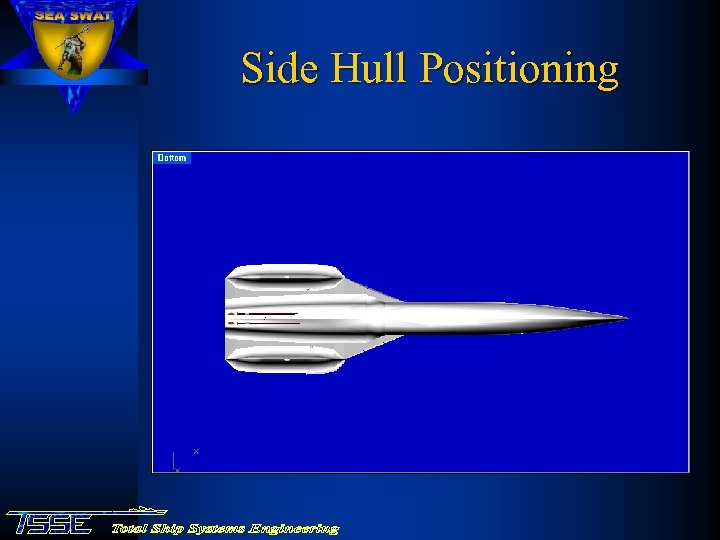
Side Hull Positioning
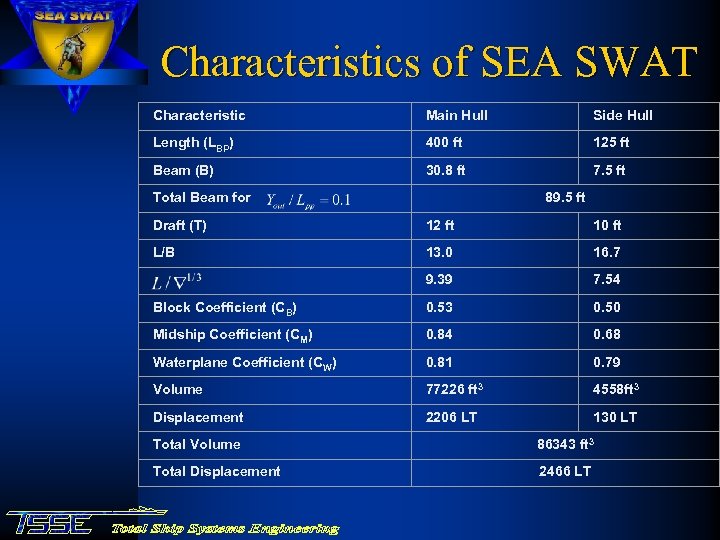
Characteristics of SEA SWAT Characteristic Main Hull Side Hull Length (LBP) 400 ft 125 ft Beam (B) 30. 8 ft 7. 5 ft Total Beam for 89. 5 ft Draft (T) 12 ft 10 ft L/B 13. 0 16. 7 9. 39 7. 54 Block Coefficient (CB) 0. 53 0. 50 Midship Coefficient (CM) 0. 84 0. 68 Waterplane Coefficient (CW) 0. 81 0. 79 Volume 77226 ft 3 4558 ft 3 Displacement 2206 LT 130 LT Total Volume 86343 ft 3 Total Displacement 2466 LT
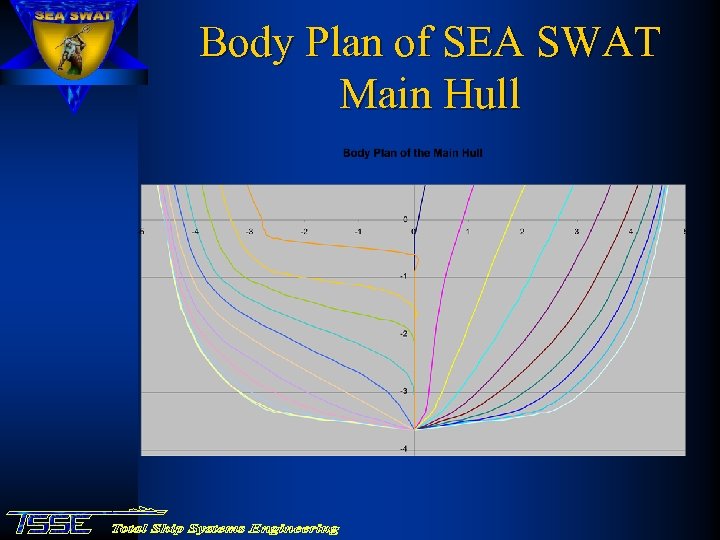
Body Plan of SEA SWAT Main Hull
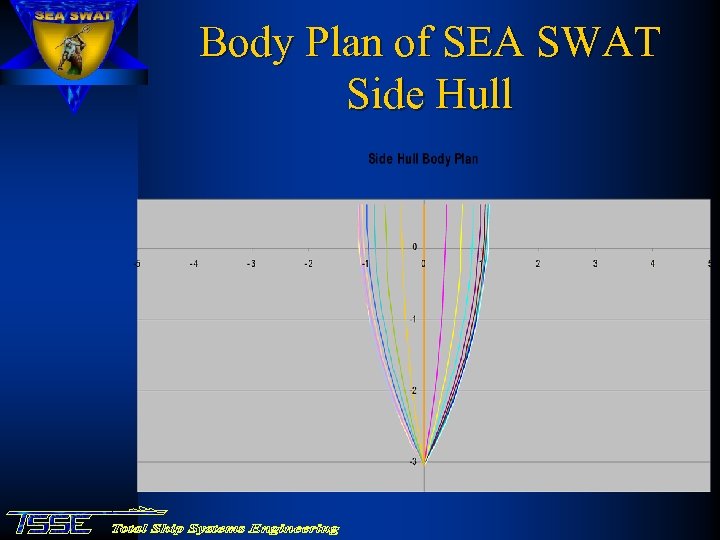
Body Plan of SEA SWAT Side Hull
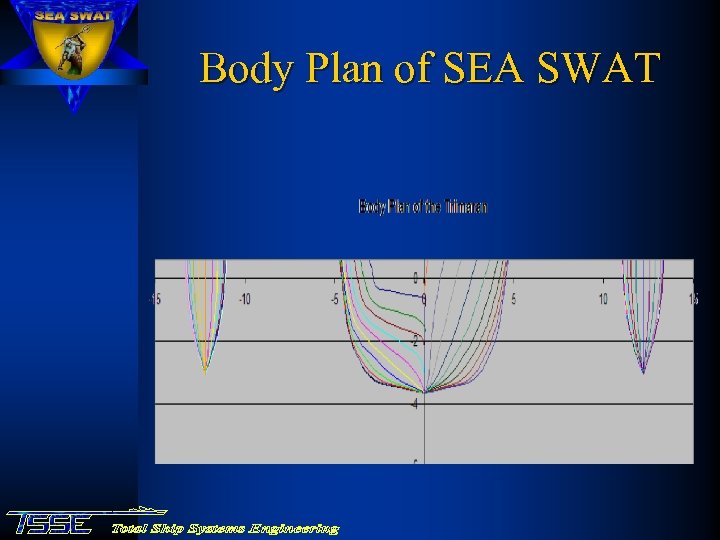
Body Plan of SEA SWAT
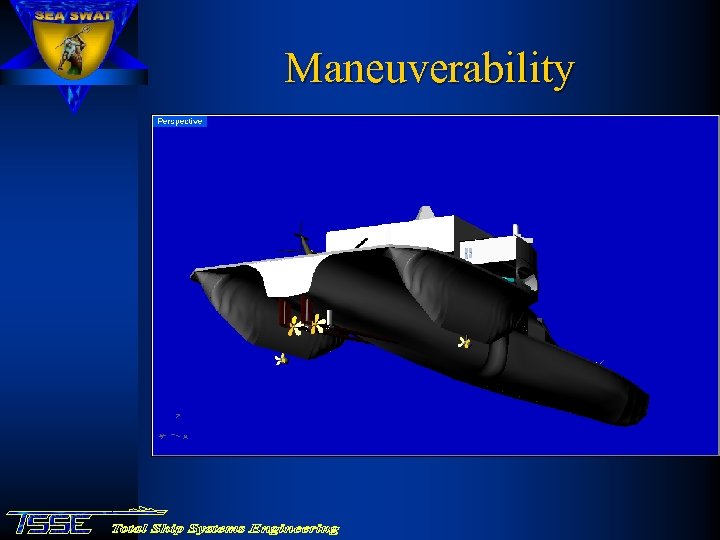
Maneuverability
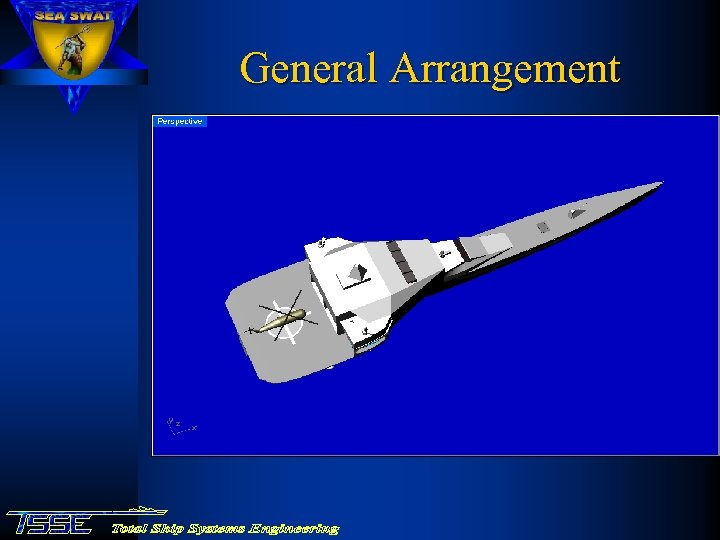
General Arrangement
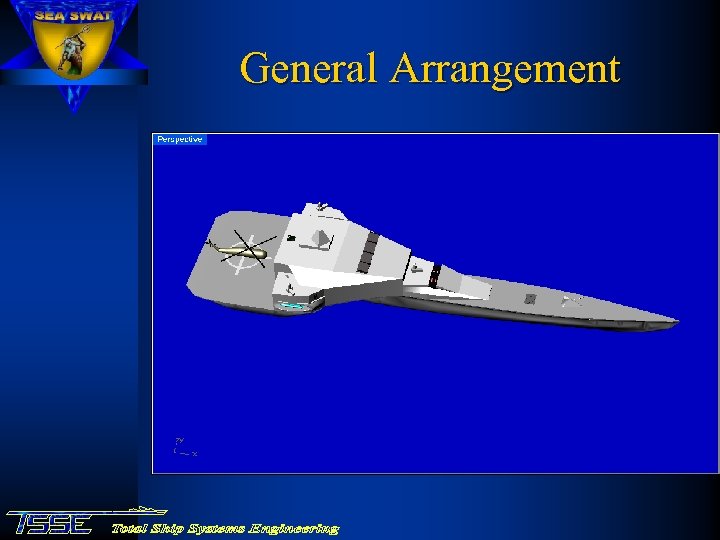
General Arrangement
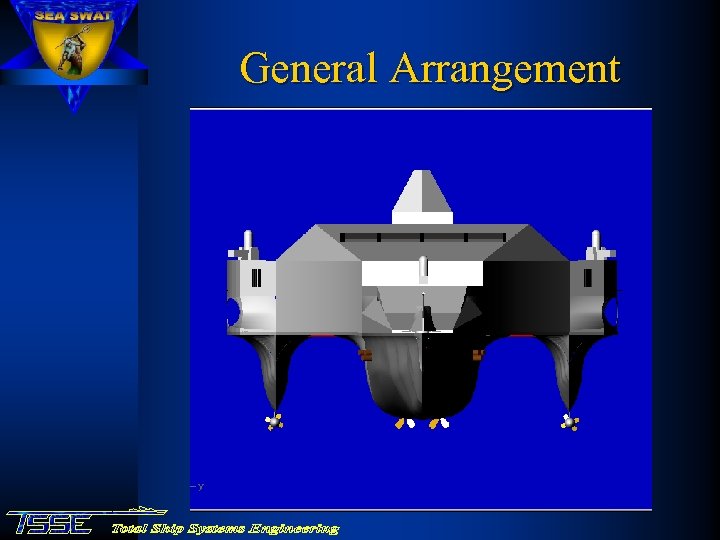
General Arrangement
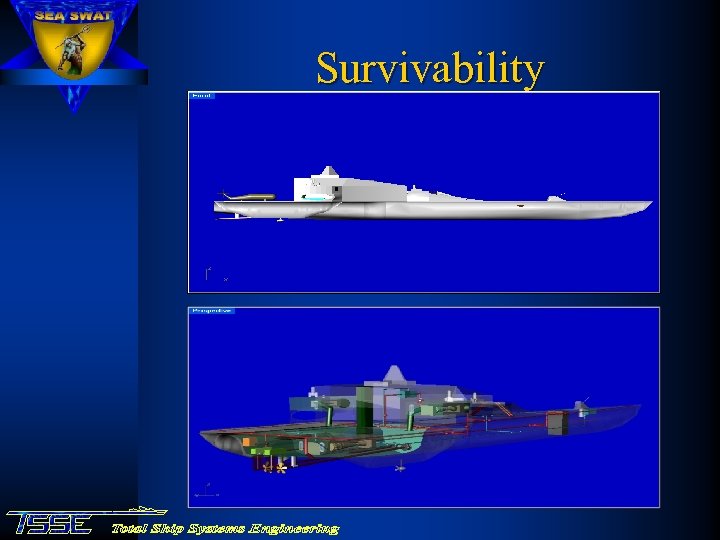
Survivability
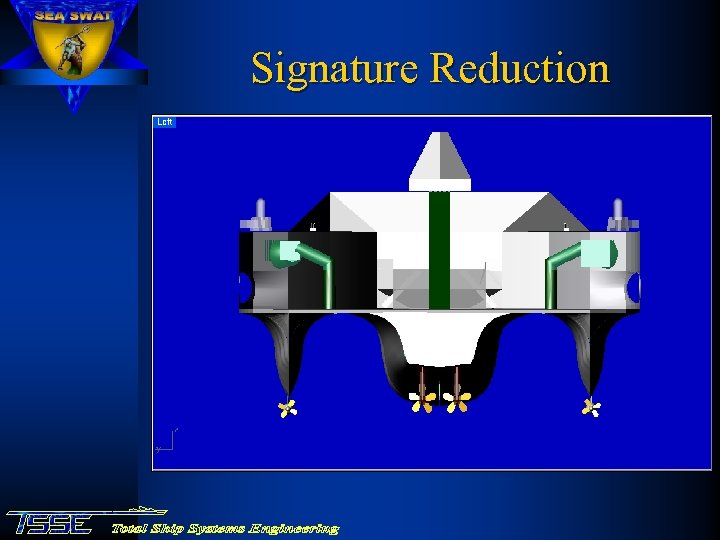
Signature Reduction
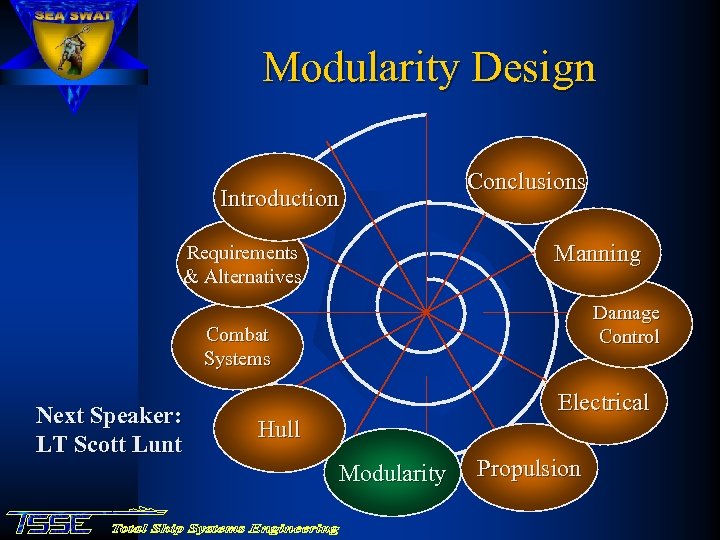
Modularity Design Introduction Conclusions Manning Requirements & Alternatives Damage Control Combat Systems Next Speaker: LT Scott Lunt Electrical Hull Modularity Propulsion
Modularity • Definition • Application to SEA SWAT
Modularity • Mission Packages • AW • USW/MIW • Core Systems
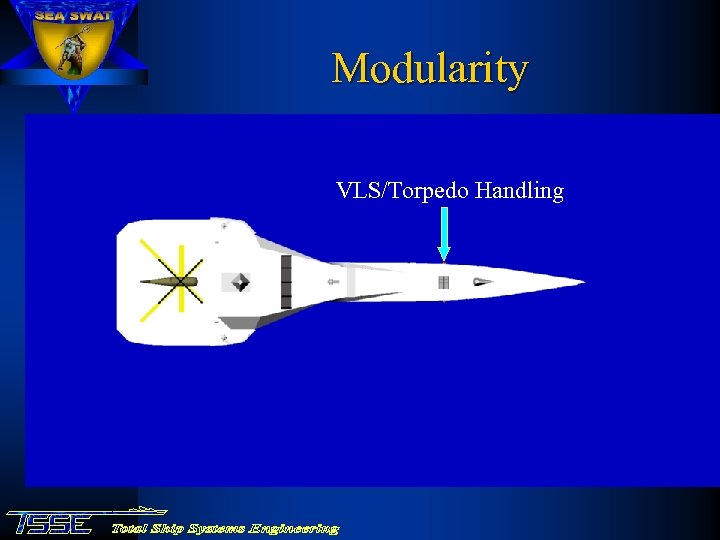
Modularity VLS/Torpedo Handling
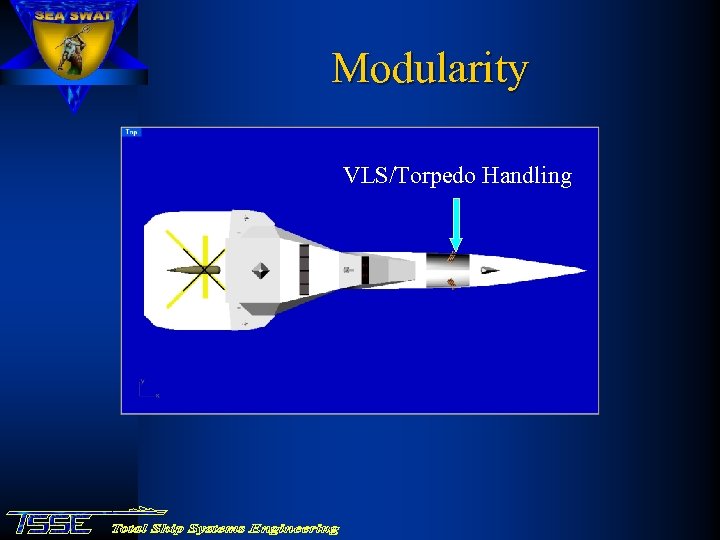
Modularity VLS/Torpedo Handling
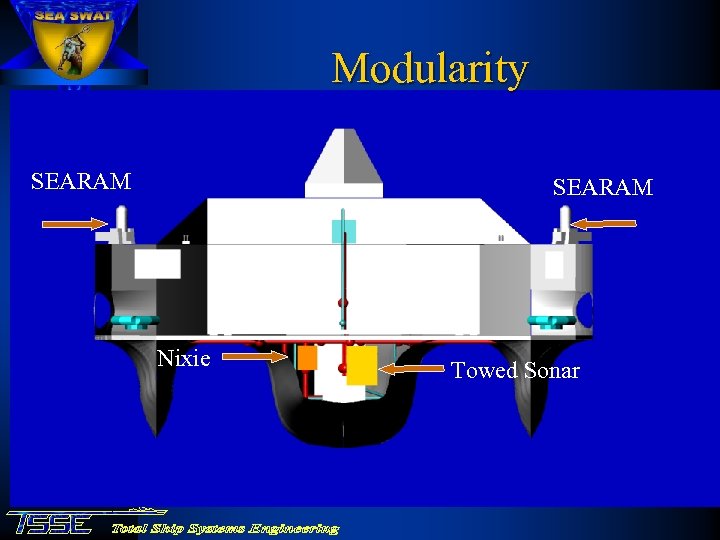
Modularity SEARAM Nixie Towed Sonar
Propulsion Design Introduction Conclusions Manning Requirements & Alternatives Damage Control Combat Systems Next Speaker: LTJG Alper Kurultay Electrical Hull Modularity Propulsion
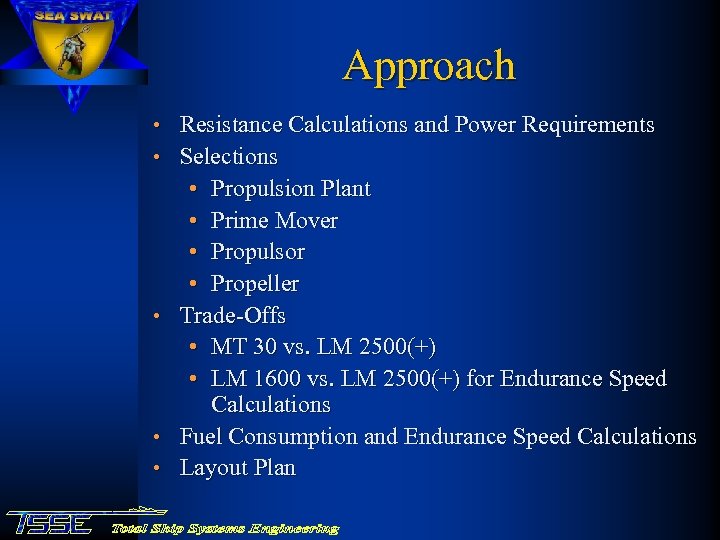
Approach • Resistance Calculations and Power Requirements • Selections • • Propulsion Plant • Prime Mover • Propulsor • Propeller Trade-Offs • MT 30 vs. LM 2500(+) • LM 1600 vs. LM 2500(+) for Endurance Speed Calculations Fuel Consumption and Endurance Speed Calculations Layout Plan
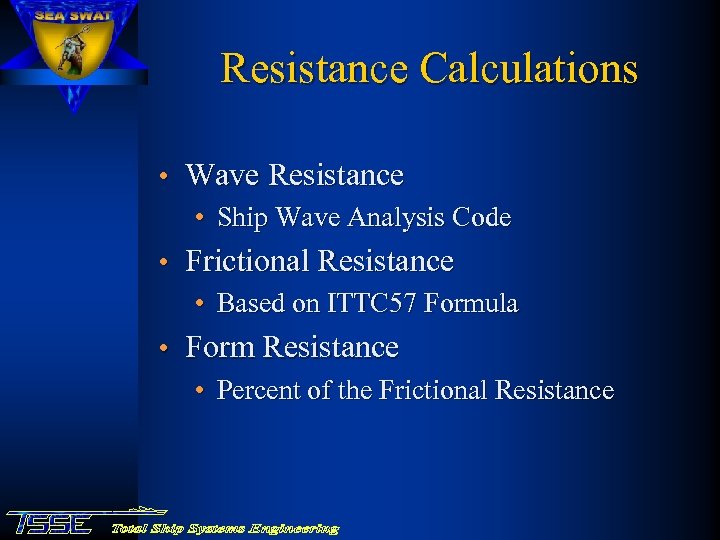
Resistance Calculations • Wave Resistance • Ship Wave Analysis Code • Frictional Resistance • Based on ITTC 57 Formula • Form Resistance • Percent of the Frictional Resistance
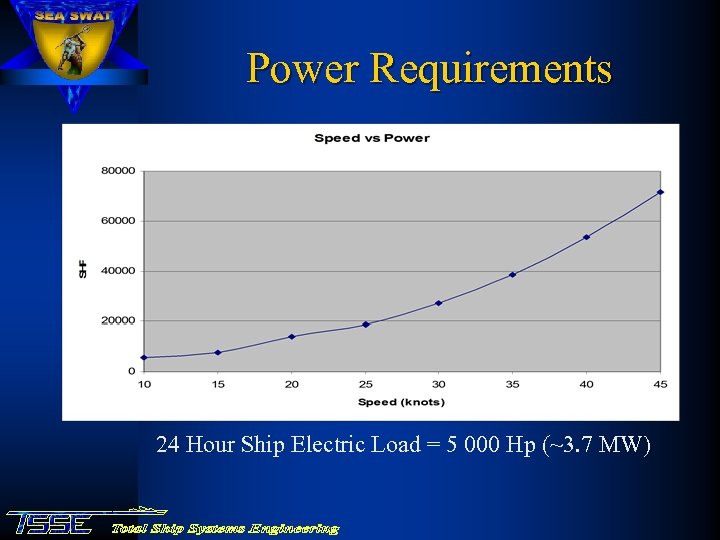
Power Requirements 24 Hour Ship Electric Load = 5 000 Hp (~3. 7 MW)
Alternatives for Propulsion Plants • Conventional Steam Plant • Nuclear Steam Plant • Fuel Cells • Diesels • Gas Turbines
Prime Mover Selection • ICR WR 21 • LM 1600 • LM 2500+ • MT 30 Trent
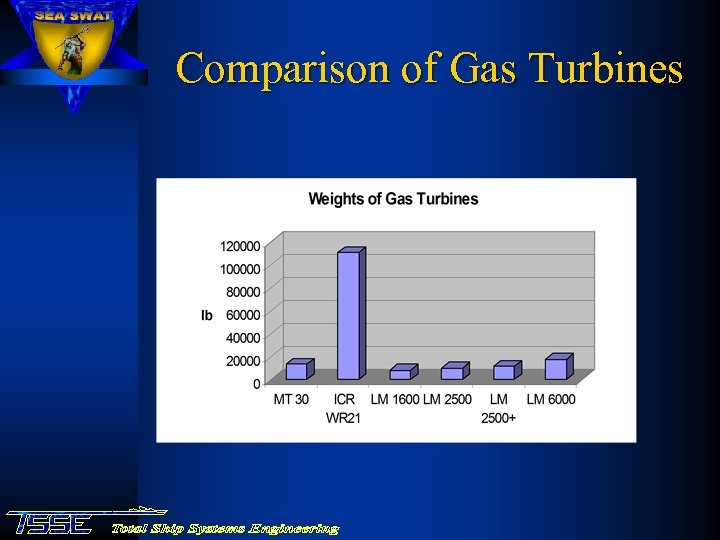
Comparison of Gas Turbines
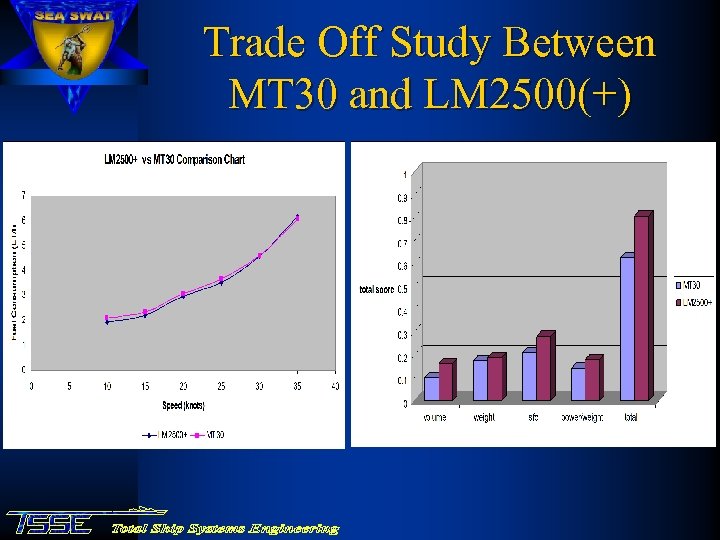
Trade Off Study Between MT 30 and LM 2500(+)
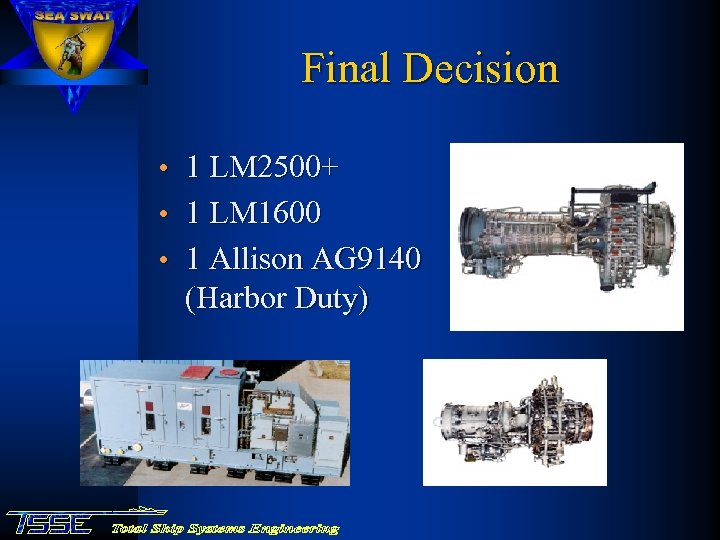
Final Decision • 1 LM 2500+ • 1 LM 1600 • 1 Allison AG 9140 (Harbor Duty)
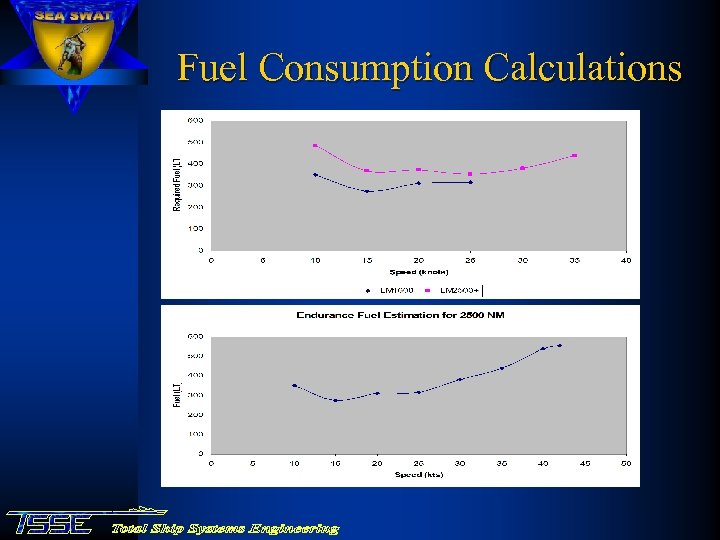
Fuel Consumption Calculations
Propulsor Choices • Podded Propulsors • Water jets and hydro drive • Conventional Propeller
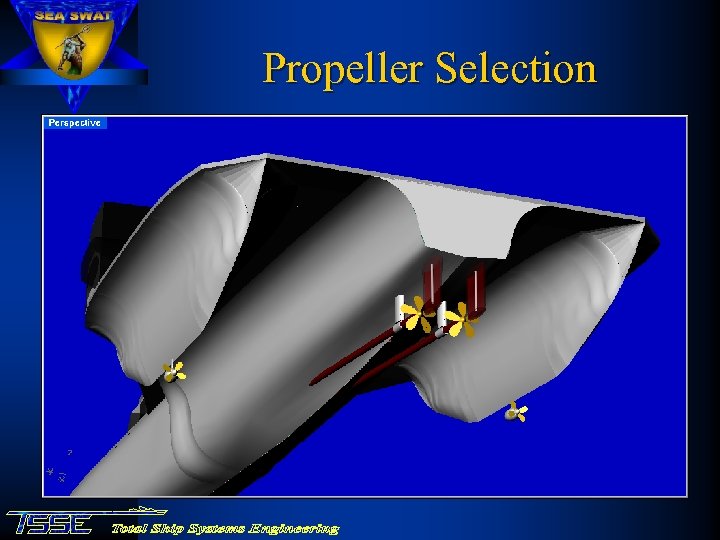
Propeller Selection
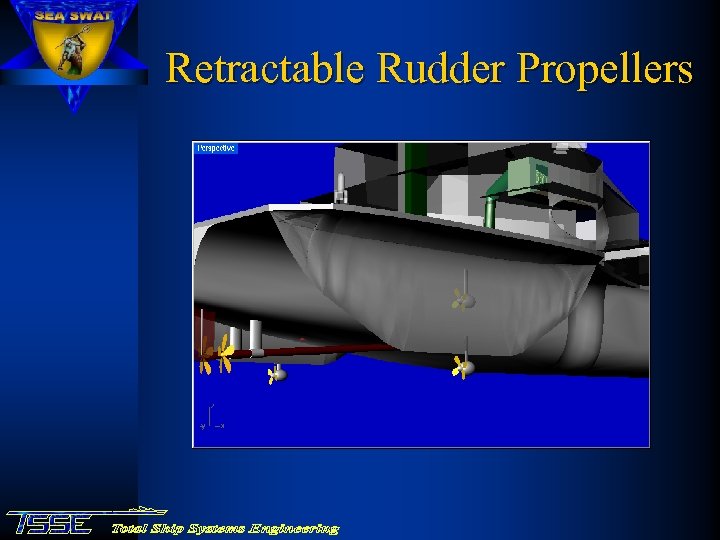
Retractable Rudder Propellers
Propulsion Motor Selection • Conventional motors • HTS AC synchronous motors • DC Super Conducting Homopolar motors
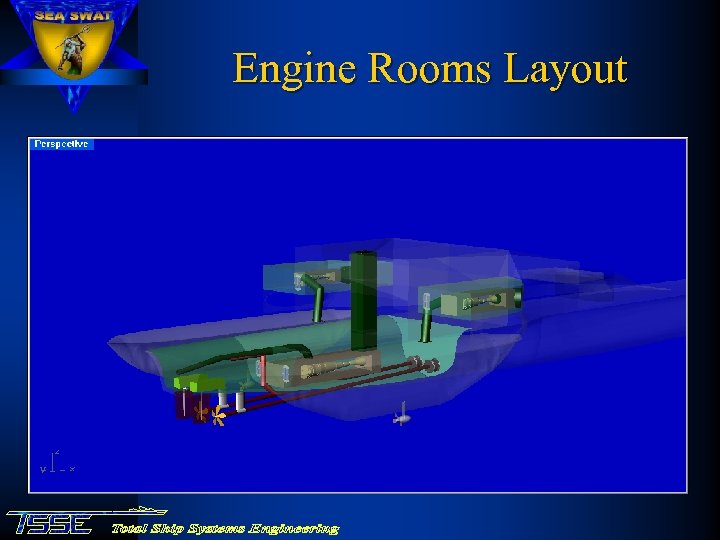
Engine Rooms Layout
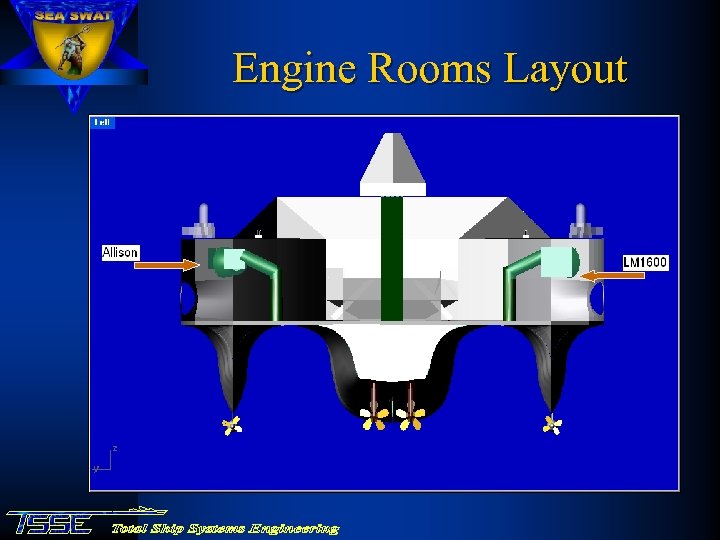
Engine Rooms Layout
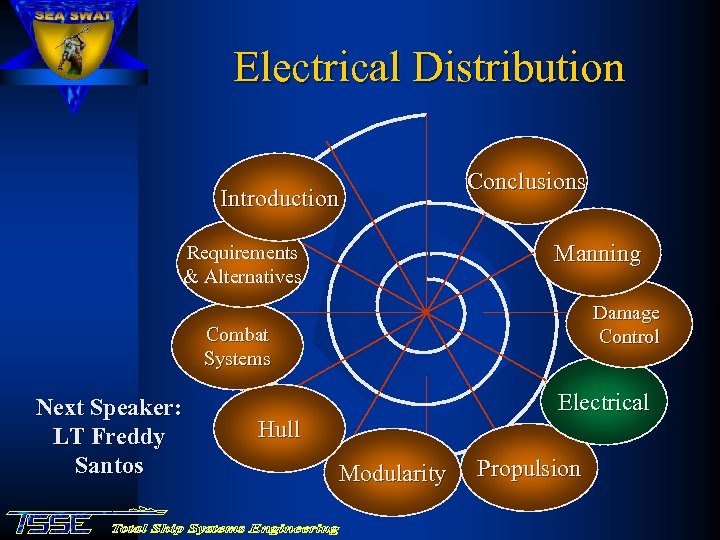
Electrical Distribution Introduction Conclusions Manning Requirements & Alternatives Damage Control Combat Systems Next Speaker: LT Freddy Santos Electrical Hull Modularity Propulsion
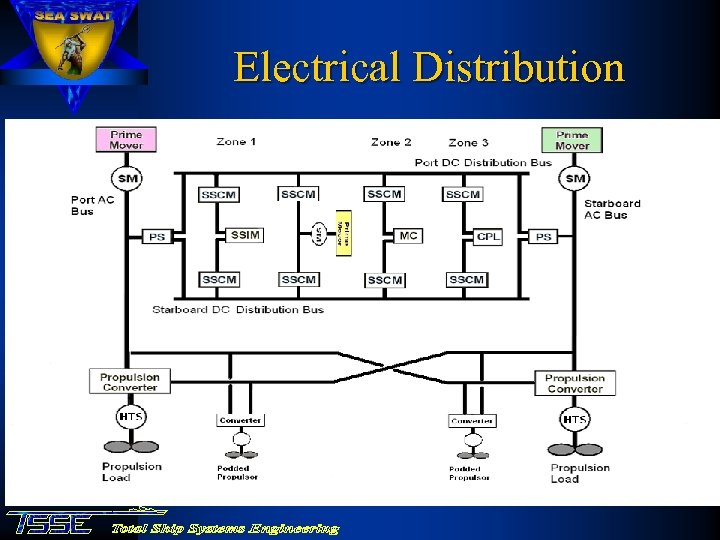
Electrical Distribution
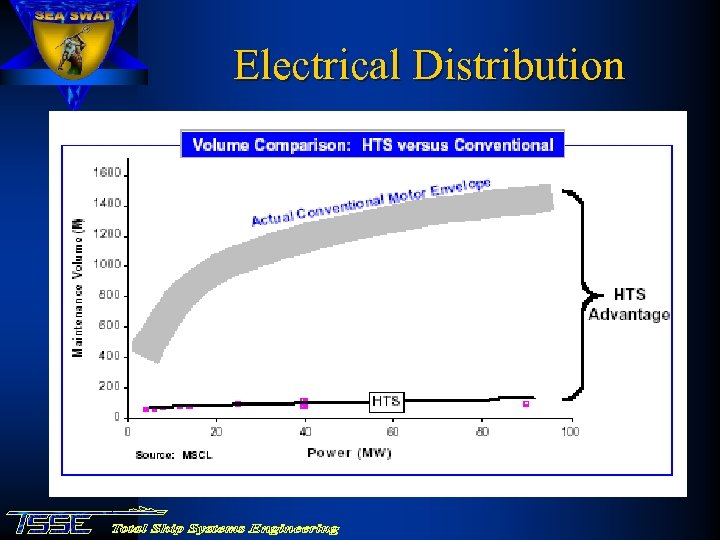
Electrical Distribution
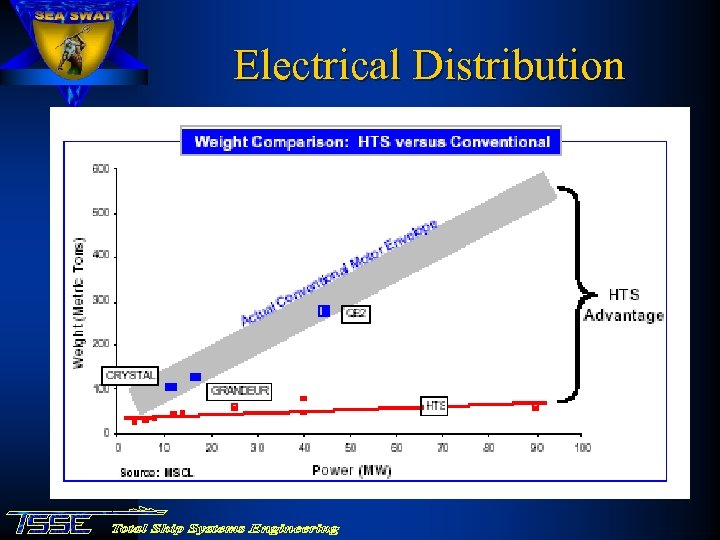
Electrical Distribution
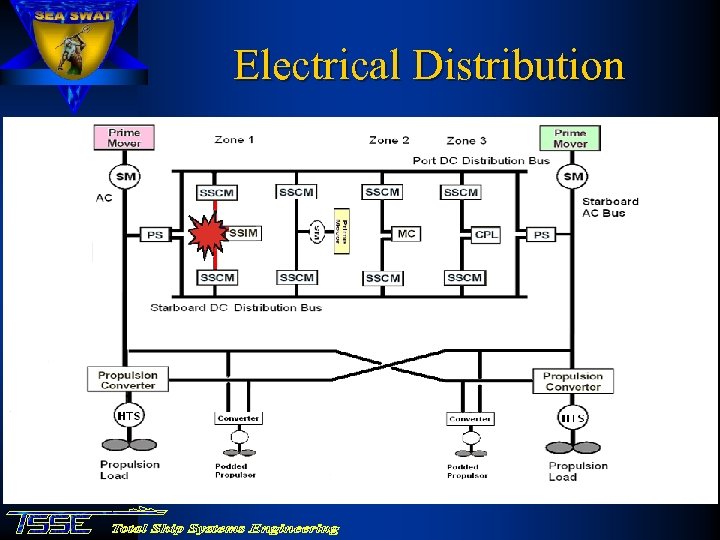
Electrical Distribution
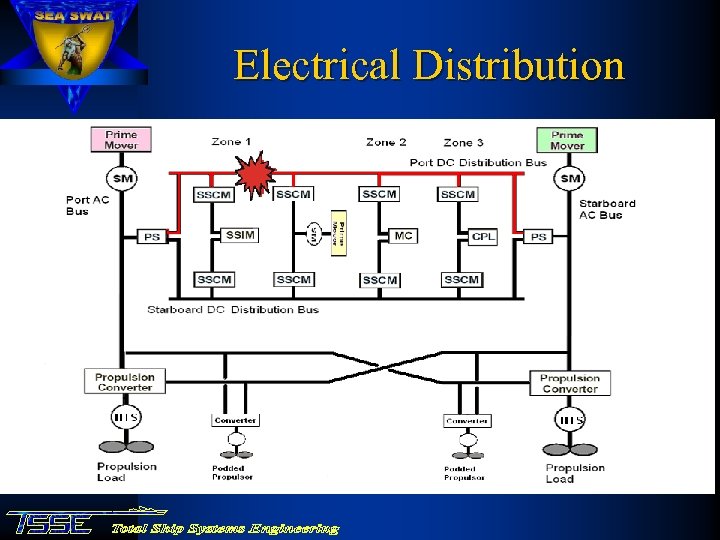
Electrical Distribution
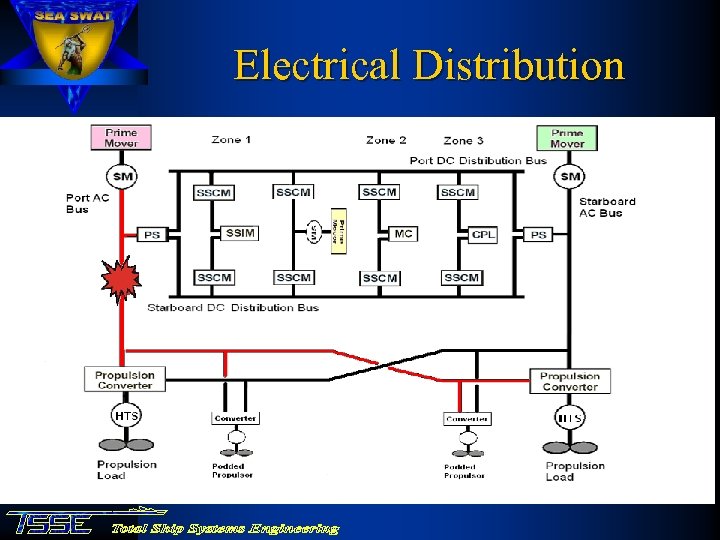
Electrical Distribution
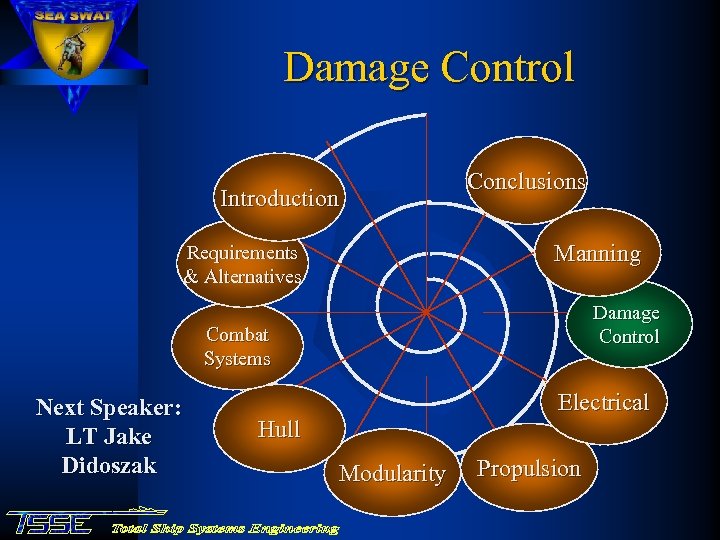
Damage Control Introduction Conclusions Manning Requirements & Alternatives Damage Control Combat Systems Next Speaker: LT Jake Didoszak Electrical Hull Modularity Propulsion
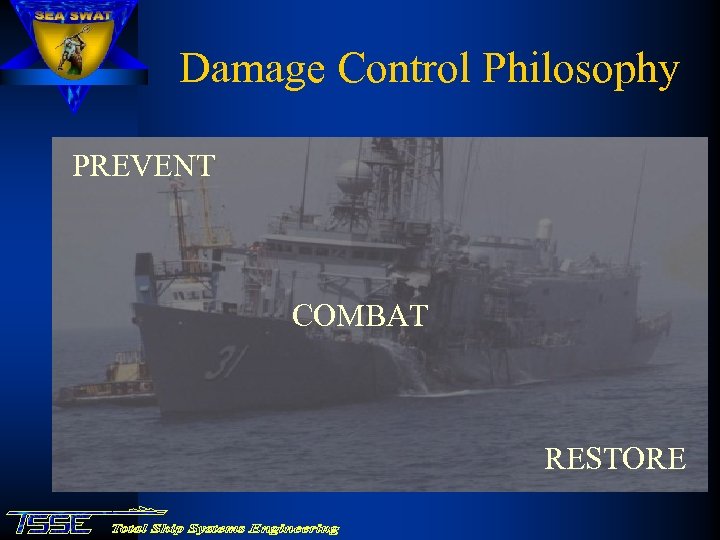
Damage Control Philosophy PREVENT COMBAT RESTORE
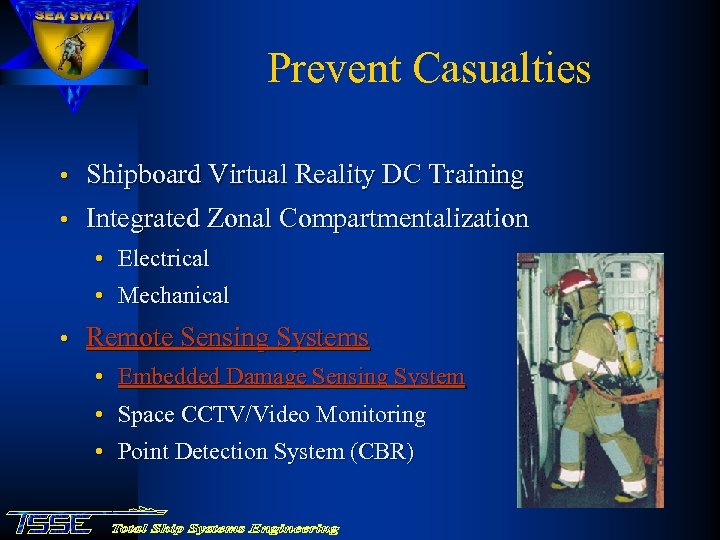
Prevent Casualties • Shipboard Virtual Reality DC Training • Integrated Zonal Compartmentalization • Electrical • Mechanical • Remote Sensing Systems • Embedded Damage Sensing System • Space CCTV/Video Monitoring • Point Detection System (CBR)
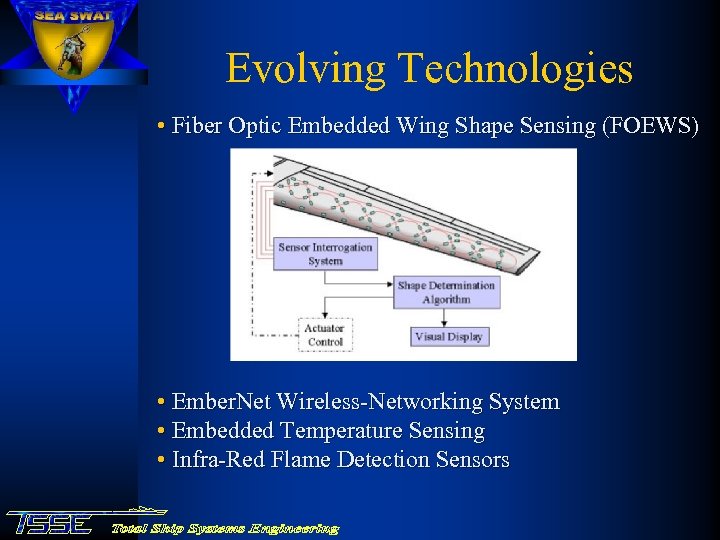
Evolving Technologies • Fiber Optic Embedded Wing Shape Sensing (FOEWS) • Ember. Net Wireless-Networking System • Embedded Temperature Sensing • Infra-Red Flame Detection Sensors
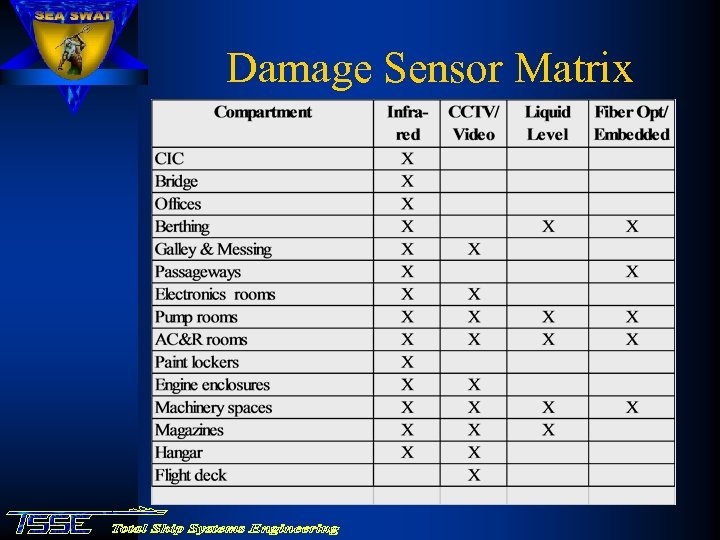
Damage Sensor Matrix
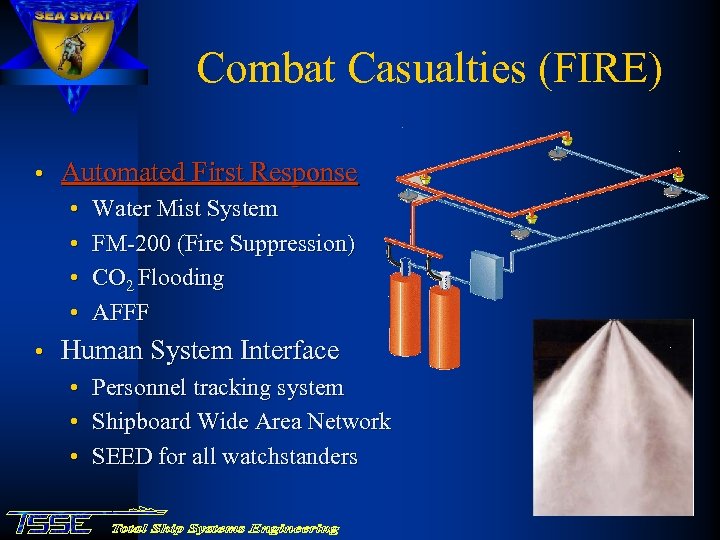
Combat Casualties (FIRE) • Automated First Response • Water Mist System • FM-200 (Fire Suppression) • CO 2 Flooding • AFFF • Human System Interface • Personnel tracking system • Shipboard Wide Area Network • SEED for all watchstanders
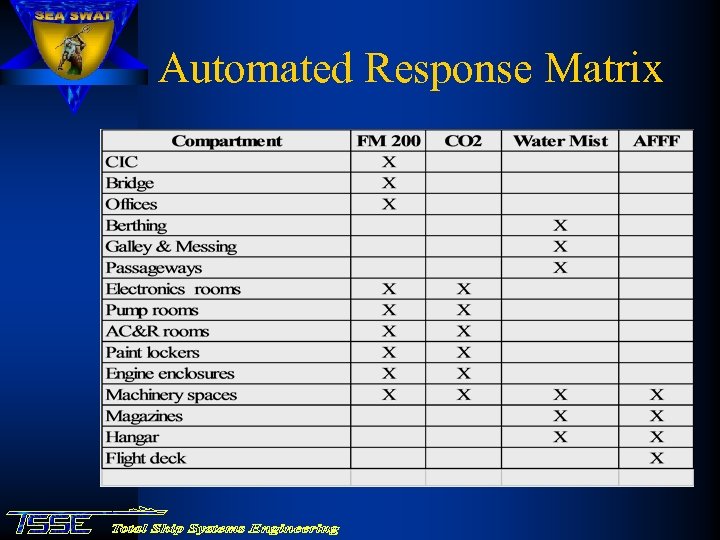
Automated Response Matrix
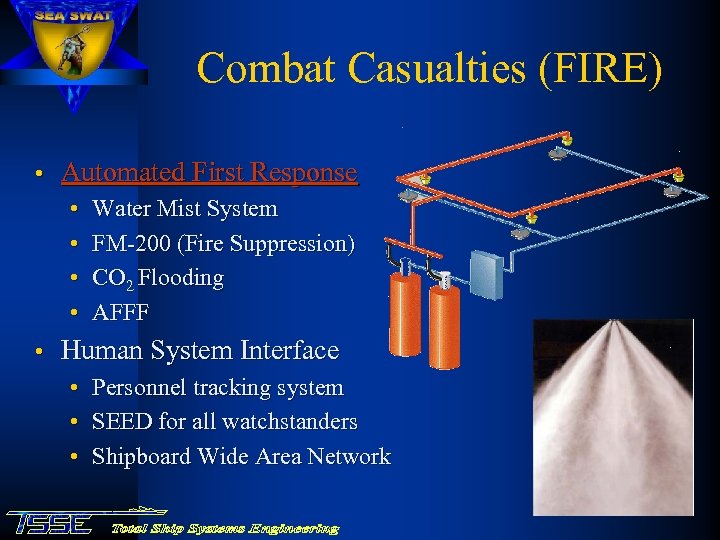
Combat Casualties (FIRE) • Automated First Response • Water Mist System • FM-200 (Fire Suppression) • CO 2 Flooding • AFFF • Human System Interface • Personnel tracking system • SEED for all watchstanders • Shipboard Wide Area Network
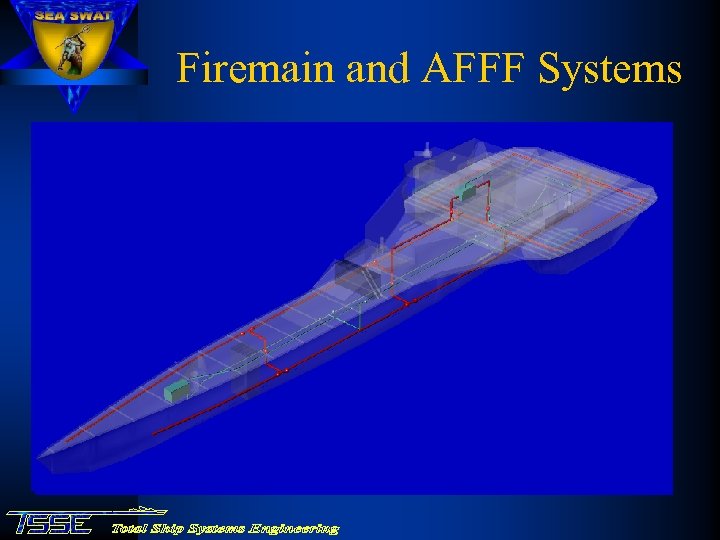
Firemain and AFFF Systems
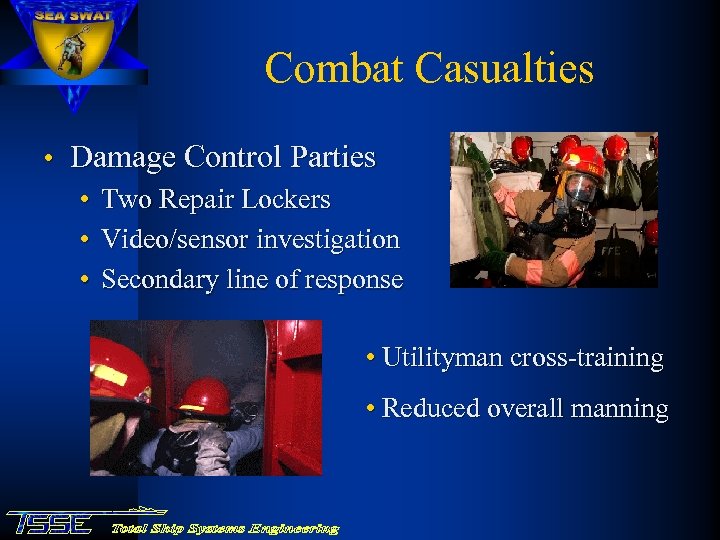
Combat Casualties • Damage Control Parties • Two Repair Lockers • Video/sensor investigation • Secondary line of response • Utilityman cross-training • Reduced overall manning
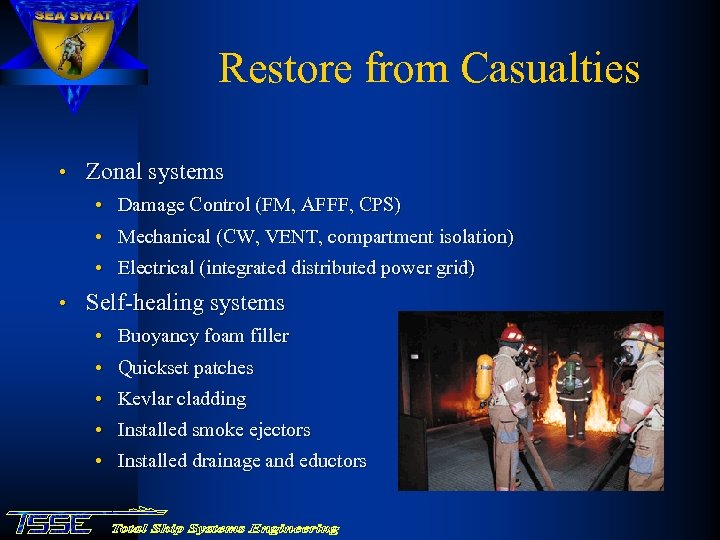
Restore from Casualties • Zonal systems • Damage Control (FM, AFFF, CPS) • Mechanical (CW, VENT, compartment isolation) • Electrical (integrated distributed power grid) • Self-healing systems • Buoyancy foam filler • Quickset patches • Kevlar cladding • • Installed smoke ejectors Installed drainage and eductors
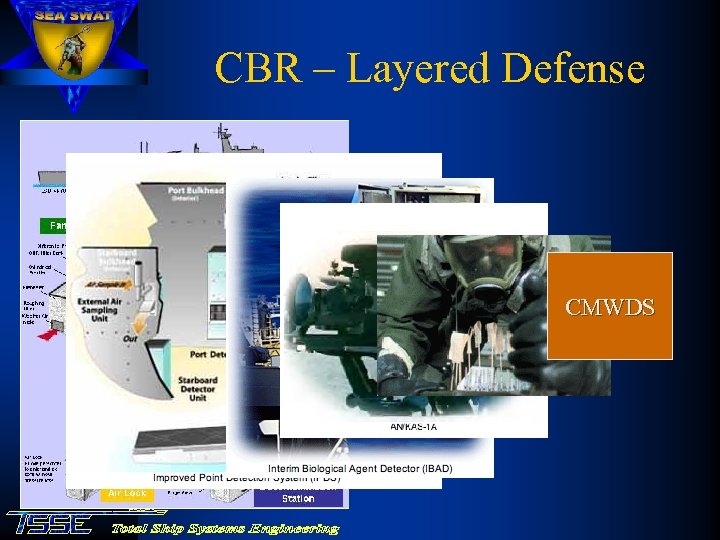
CBR – Layered Defense CMWDS
Damage Control Summary • Increased use of Automatic response systems • Real-time situational awareness through SWAN • More unmanned machinery/electrical spaces • Model & Simulate to predict damage progression • Use of COTS Damage Control systems • Greater survivability through better compartment/zonal segregation
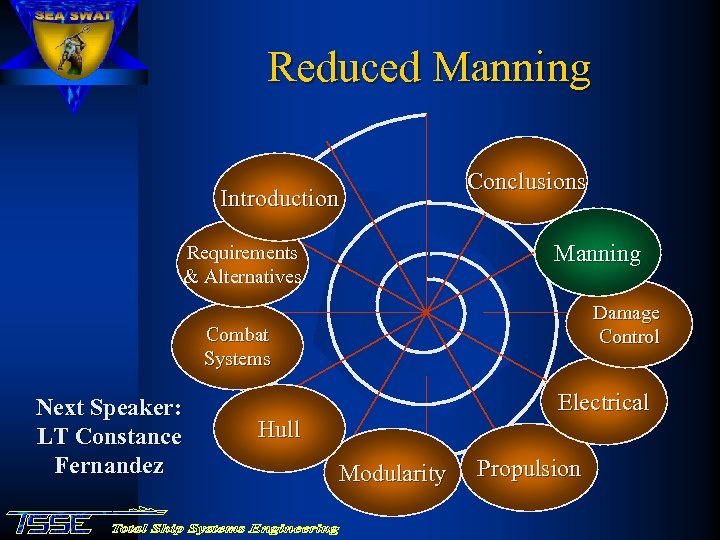
Reduced Manning Introduction Conclusions Manning Requirements & Alternatives Damage Control Combat Systems Next Speaker: LT Constance Fernandez Electrical Hull Modularity Propulsion
Reduced Manning • Manning levels determined based on • Watch Stations • Maintenance • Logistics Operations requirements • Focused on Reduced Manning • Low maintenance design • Increased skill level of crew
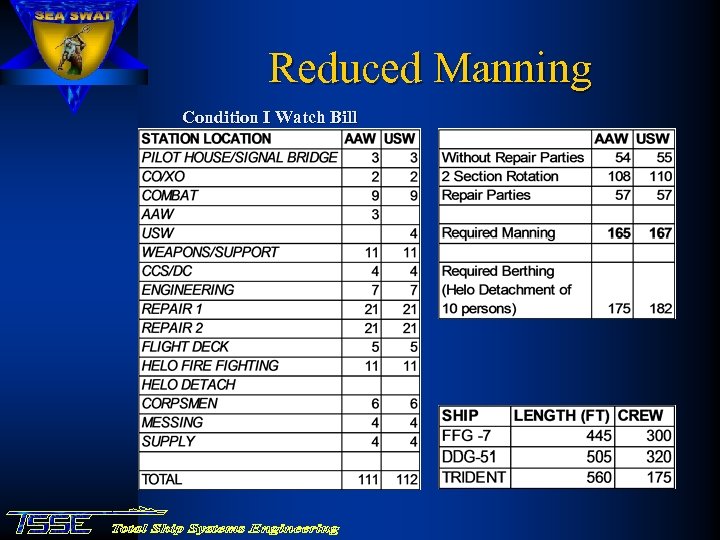
Reduced Manning Condition I Watch Bill
Reduced Manning • MAINTENANCE: • Condition Based Maintenance • COMBAT SYSTEMS: • Multi-function Radar - two maintenance men, no operators • Software for system is “self-diagnostic” and “self healing” • ENGINEERING: • Integrated Electric Drive • Electrical Distribution System (fully automatic)
Reduced Manning • DAMAGE CONTROL: • SWAN(Shipboard Wide Area Network) • Automated Identification Technology • Information Systems • Sensors • Virtual Training • Automated Response • Systems that are “self-diagnostic” and “self healing”
Reduced Manning • Summary of Reduced Manning • Low maintenance/operator design • Use of more Sensors • Use of self diagnostic systems • Increasing skill level of ship crew
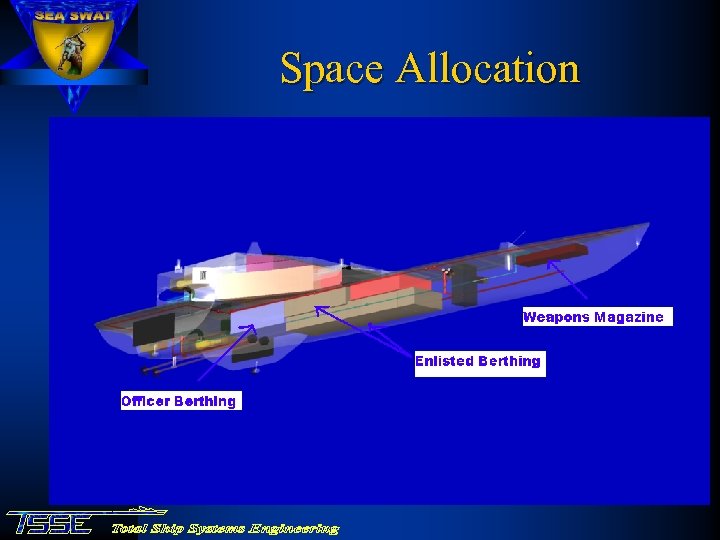
Space Allocation
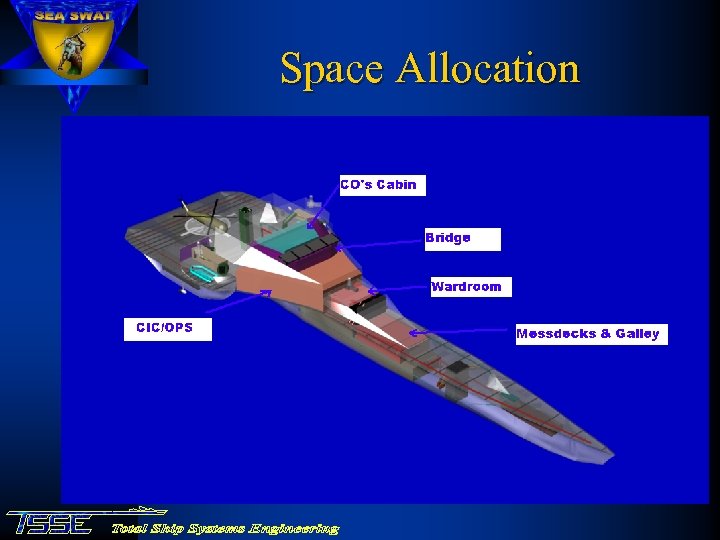
Space Allocation
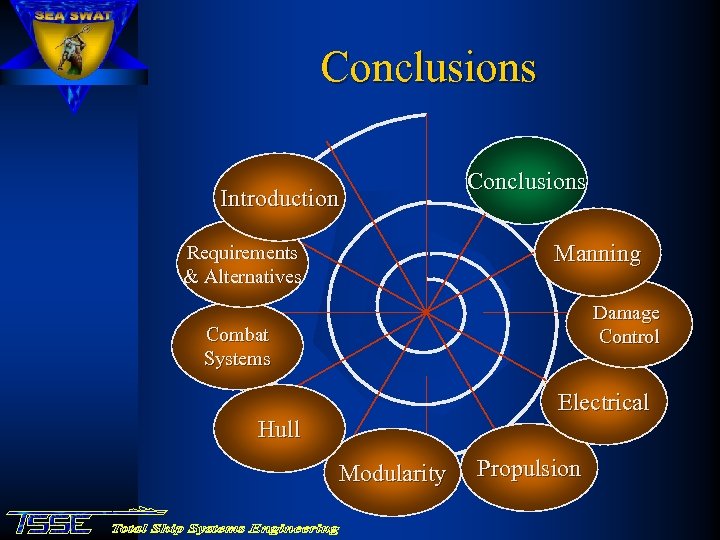
Conclusions Introduction Conclusions Manning Requirements & Alternatives Damage Control Combat Systems Electrical Hull Modularity Propulsion
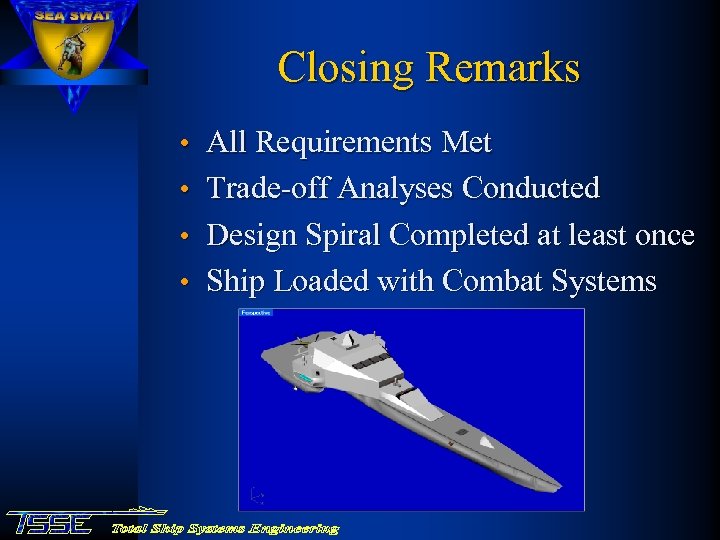
Closing Remarks • All Requirements Met • Trade-off Analyses Conducted • Design Spiral Completed at least once • Ship Loaded with Combat Systems
Closing Remarks • Weight Estimations • Cost ~$655 M • Hydrostatics • Environmental Concerns • Further Pursuits • http: //www. nps. navy. mil/tsse
Conference Room 3 Deck of MAE Building 3 rd Deck of MAE Building 1330 rd Go Navy Beat Army!
Скачать презентацию SEA SWAT Sea Base Defense LCS Total Ship
a15b58b924007e7ae96734a402c24b6e.ppt