 Скачать презентацию SCORE Annual Review Meeting 2016 17 -21 October
41dc78ec8ca088b0f9c3a949d3128d90.ppt
- Количество слайдов: 34



SCORE Annual Review Meeting 2016 17 -21 October 2016 Venue: Jinja – Nile Resort Ddamulira Charles TA – Early Childhood Development
Objective of our ECD interventions § To stimulate the physical, social, emotional, intellectual and language development of babies and young children.
Key concepts § Growth: The change in weight, height, and circumference of the head. Child’s growth refers to changes in body size. § Development: The process of change in which a child comes to master more complex levels of physical activity, thinking, feeling, communicating and interactions with people and objects. § Child growth and development are complementary but not the same.
Key Concepts Child development is often divided into four dimensions: § Physical dimension (the ability to move and coordinate; § Intellectual(cognitive) dimension (the ability to think and learn; § Social dimension (the ability to relate to others; § Emotional dimension (the ability to develop positive feeling for self and others).
Key Concepts § ECD is the process through which children grow and thrive physically, mentally, socially, emotionally and morally. ECD includes four stages; § Conception to birth, § 0 -3 years, § 3 -6 years § 6 -8 years (United Nations General Assembly, 2010)
Key Concepts § Stimulation: The process of making part of the infant’s or baby’s body function, make one feel more active and healthy, some examples of stimulation include listening to the child, love, touch, play and communicate (for instance telling a story and reading a book with the child).
ECD Implementing Groups § § § AVSI Central AVSI East AVSI North(Gulu and Kitgum) Meeting Point(Kitgum) Gulu Early Childhood Development Support Organization (GECDSO)
ECD pilot districts 1) 2) 3) 4) 5) 6) 7) 8) Buvuma, Mukono, Busia, Sironko, Amuru, Nwoya, Lamwo Kitgum
Strategies § Raise community awareness on ECD; § Build capacity of parents caregivers to enhance knowledge and practice in ECD; § Promote Early Childhood Development through Community Playgroups (CPGs) and ECD centers; § Identify and build on existing positive cultural practices and resources to educate children; § Coordinate and facilitate referrals and linkages for comprehensive ECD services
ECD Activities Implemented 1. Conducted ECD dialogues 2. Trained parents/caregivers in ECD ( the caregiver’s package); 3. Formed community playgroups
1. ECD dialogues • Emphasize the importance of ECD(early years); • Emphasize brain development especially the first 1000 days; • Emphasize the consequences of not investing in ECD ( school performance, behavior, relationships, employment etc…)
HHs involved in ECD dialogues • 899 HHs reached out of which 209 are direct SCORE HHs, representing (23%) who fully participated in ECD dialogues
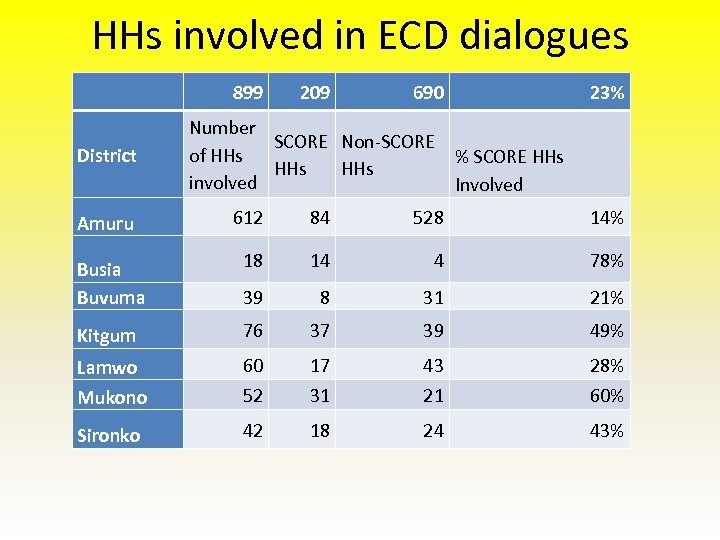
HHs involved in ECD dialogues District 899 209 690 23% Number SCORE Non-SCORE of HHs % SCORE HHs HHs involved Involved 612 84 528 14% Busia Buvuma 18 14 4 78% 39 8 31 21% Kitgum 76 37 39 49% Lamwo Mukono 60 17 43 28% 52 31 21 60% Sironko 42 18 24 43% Amuru
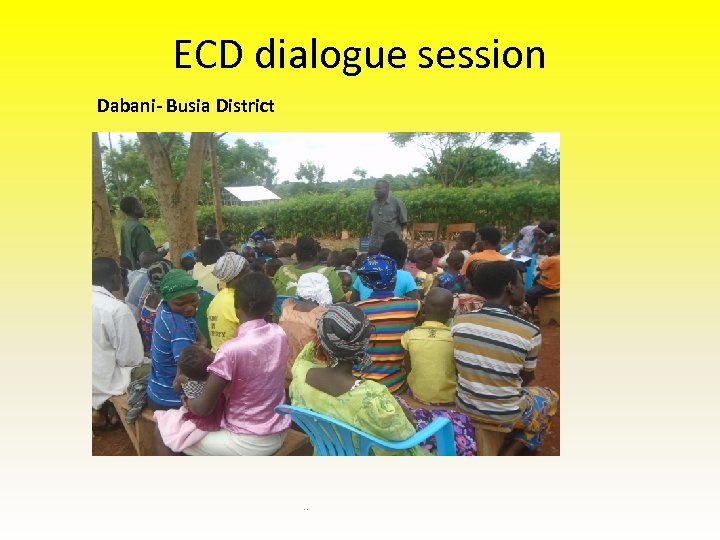
ECD dialogue session Dabani- Busia District . .
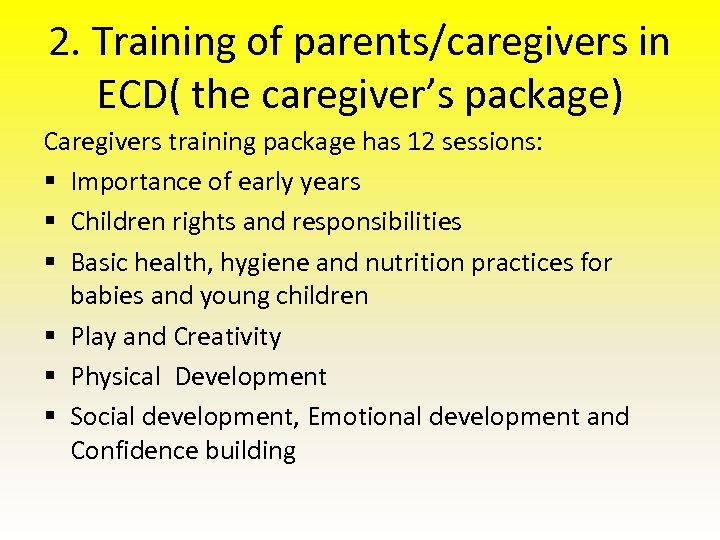
2. Training of parents/caregivers in ECD( the caregiver’s package) Caregivers training package has 12 sessions: § Importance of early years § Children rights and responsibilities § Basic health, hygiene and nutrition practices for babies and young children § Play and Creativity § Physical Development § Social development, Emotional development and Confidence building
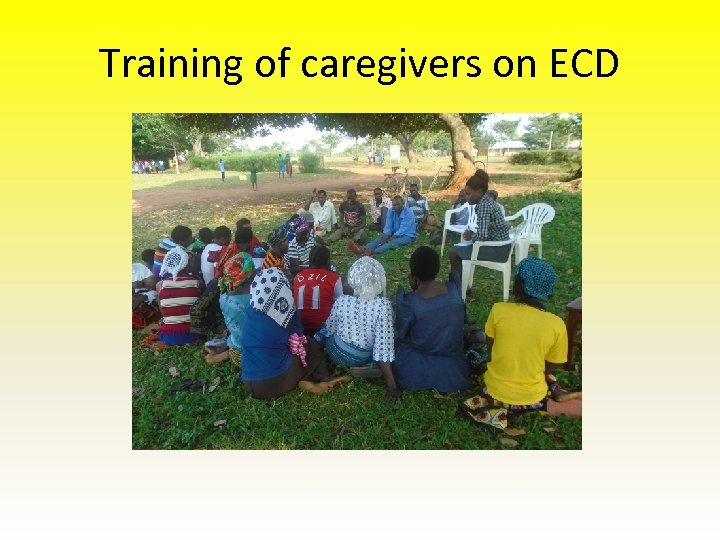
Training of caregivers on ECD
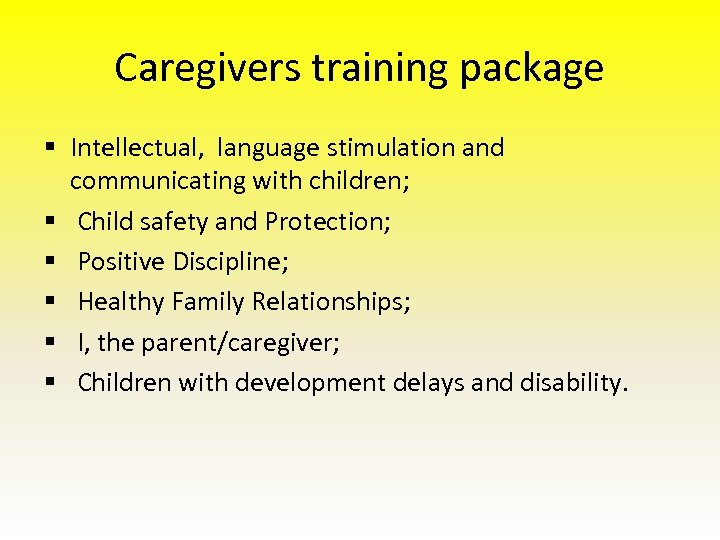
Caregivers training package § Intellectual, language stimulation and communicating with children; § Child safety and Protection; § Positive Discipline; § Healthy Family Relationships; § I, the parent/caregiver; § Children with development delays and disability.
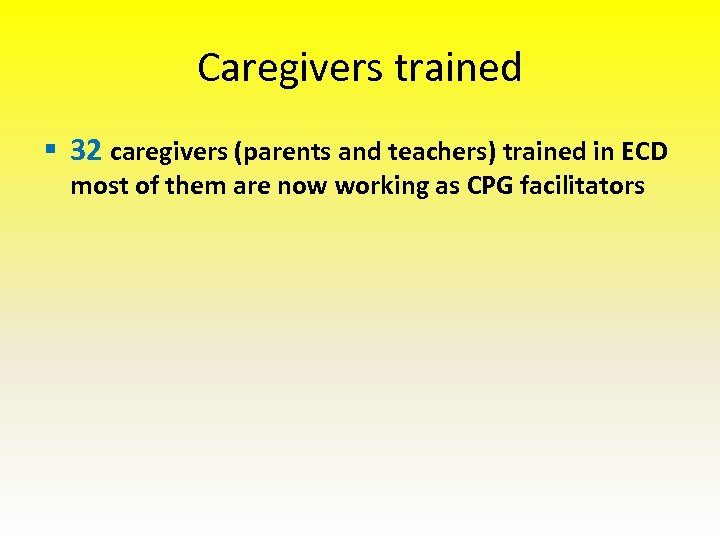
Caregivers trained § 32 caregivers (parents and teachers) trained in ECD most of them are now working as CPG facilitators
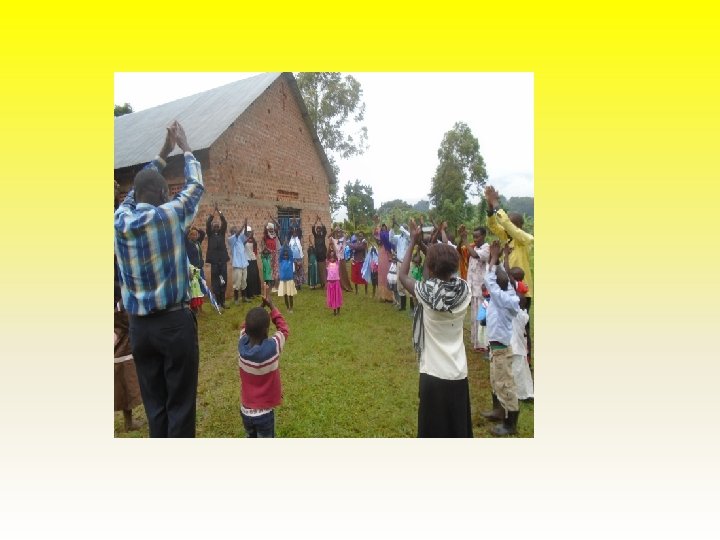
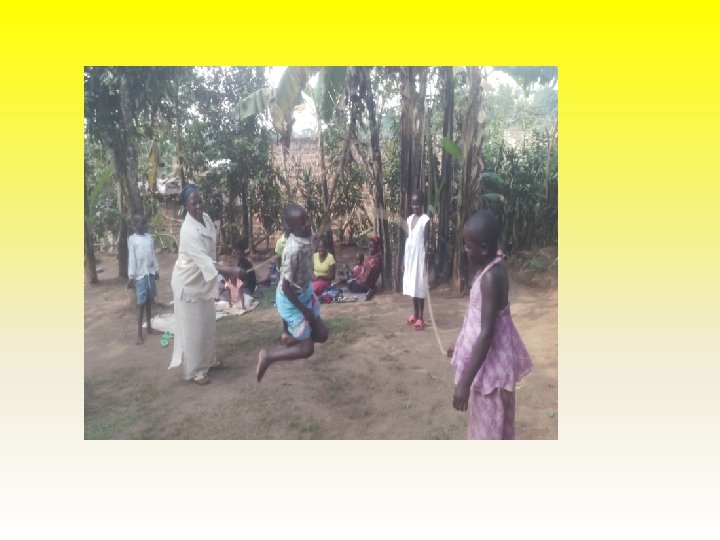
3. Community Playgroups § Community playgroup is a lightly structured, informal gathering where parents, caregivers, babies and children up to 8 years come together in a relaxed and friendly environment to connect, play and learn.
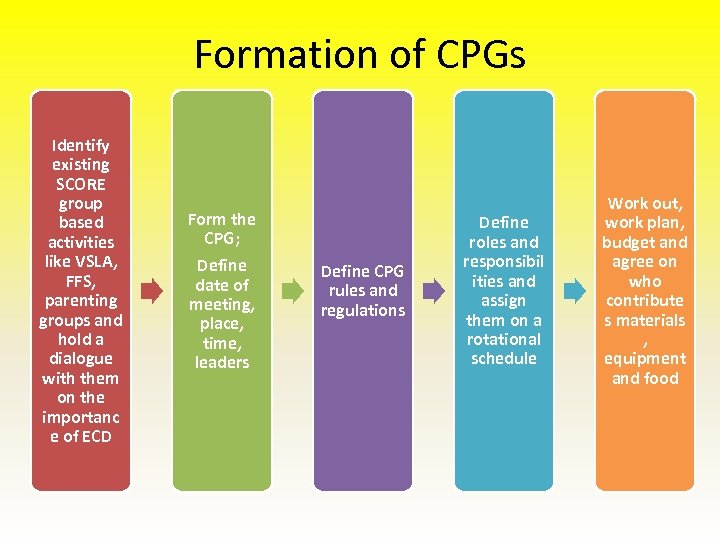
Formation of CPGs Identify existing SCORE group based activities like VSLA, FFS, parenting groups and hold a dialogue with them on the importanc e of ECD Form the CPG; Define date of meeting, place, time, leaders Define CPG rules and regulations Define roles and responsibil ities and assign them on a rotational schedule Work out, work plan, budget and agree on who contribute s materials , equipment and food
CPG Sessions § Sessions may be weekly or bi –weekly; § Sessions must run for 2 hours; § Each CPG has a CPG facilitator to plan, organize and resource for CPG sessions § Every CPG has a committee comprising of the chairperson, welfare officer and safety and protection officer, § Every CPG must have a monthly work plan.
Children data(Child intake form) at CPG must be taken and kept updated A child’s intake form must be developed. This form should include/have: § § § § Copy of the child’s birth certificate; Copy of the child’s immunization card; Surname, full name, gender and date of birth; The child’s home language; Home address and contact details of parents/family; Work address (es) and contact details of parents/family; The income of parents/guardians;
§ Name, address and contact details of another responsible person who can be contacted in an emergency; § Name, address and contact details of a person who has the parent or guardian’s permission to fetch the child from the playgroup on their behalf; § Parent/guardian’s concerns about the health/disability of the child, if any. § Parent/ Child’s HIV status? ? ? § Name, address and contact details of the child’s family doctor or health care provider, if any.
Activities in CPGs § Free play with toys and other play materials; § An activity like drawing, painting, gluing, art and craft making, molding with clay and dough; § Story telling (traditional folktales that promote values and morals); § Book reading; § Music, dance and drama and role plays; § Celebrations (birthdays, cultural and religious days); § Games and sports;
Activities in CPGs § § § Fashion shows; Feedback with parents; Special guest sessions ; Themed sessions ; Tours ( parks, mountains, lakes, rivers, religious and cultural sites etc…)
Children in CPGs § 28 CPGs formed. § 715 children of whom 382 (53%) SCORE direct children enrolled and participating in CPG activities.
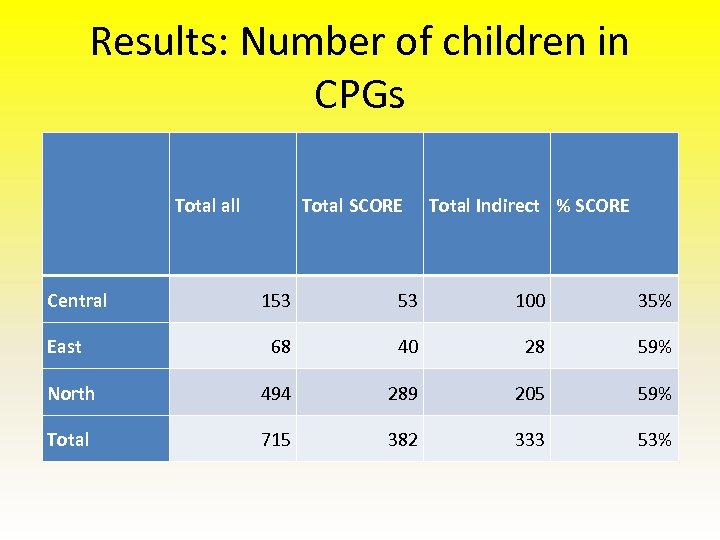
Results: Number of children in CPGs Total all Total SCORE Total Indirect % SCORE Central 153 53 100 35% 68 40 28 59% North 494 289 205 59% Total 715 382 333 53% East
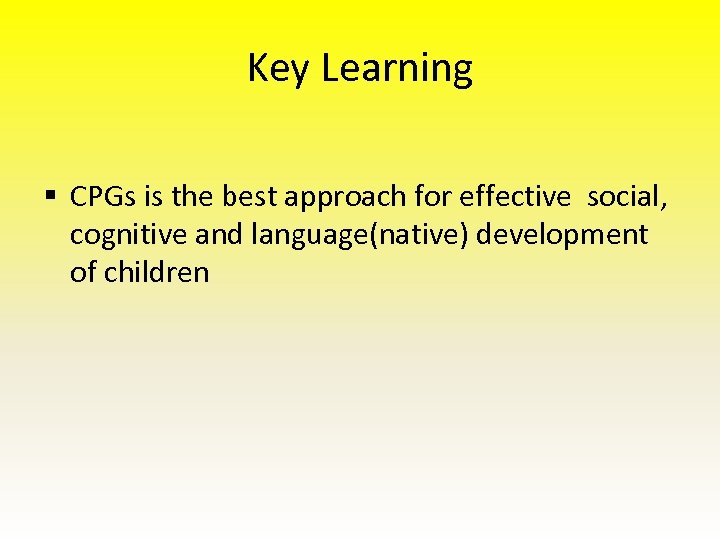
Key Learning § CPGs is the best approach for effective social, cognitive and language(native) development of children
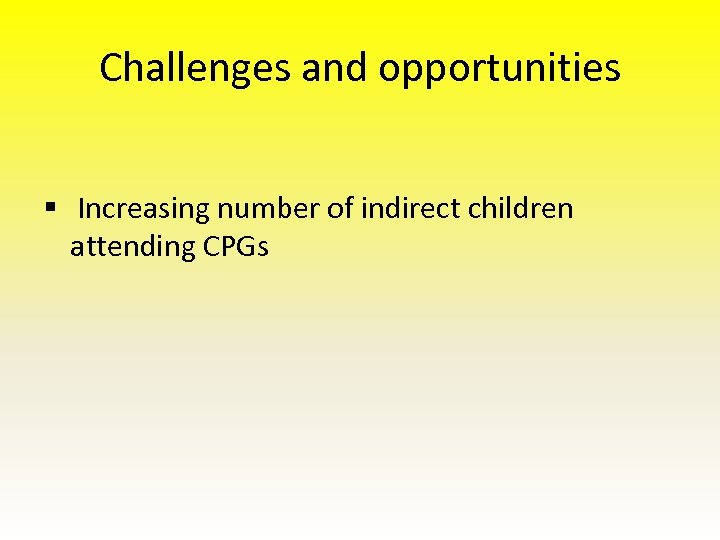
Challenges and opportunities § Increasing number of indirect children attending CPGs
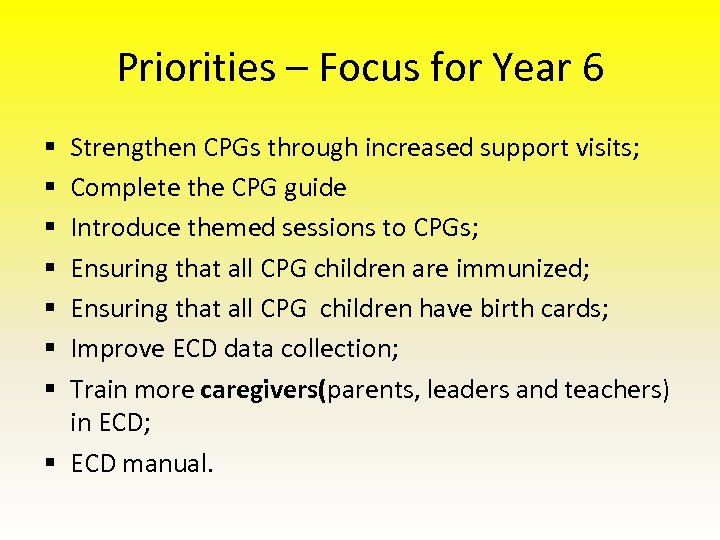
Priorities – Focus for Year 6 Strengthen CPGs through increased support visits; Complete the CPG guide Introduce themed sessions to CPGs; Ensuring that all CPG children are immunized; Ensuring that all CPG children have birth cards; Improve ECD data collection; Train more caregivers(parents, leaders and teachers) in ECD; § ECD manual. § § § §
ECD targets – COP 16/17 § 700 children in ECD (CPGs).
If you……………
Скачать презентацию SCORE Annual Review Meeting 2016 17 -21 October
41dc78ec8ca088b0f9c3a949d3128d90.ppt