 Скачать презентацию Scientific journals bibliography basics of bibliometrics for Ph
2e16bf6436856f93623c49e43c36f13a.ppt
- Количество слайдов: 37



Scientific journals, bibliography, basics of bibliometrics for Ph. D students Lívia Vasas lvasas@lib. sote. hu 2012
Bibliometrics: A quantitative measure of the scientific publications. bibliometrics is a part of life sciences Features of publications : • Authors • Citation • Age • Place • Topic 2/37
3/37
History, sources (continue) • Publish or perish • Question of priority: • Publication practice of the Semmelweis University • Discovery of the Neurofibromatosis gene • F. Collins - Science. R. White – Cell • – least publishable unit LPU 4/37
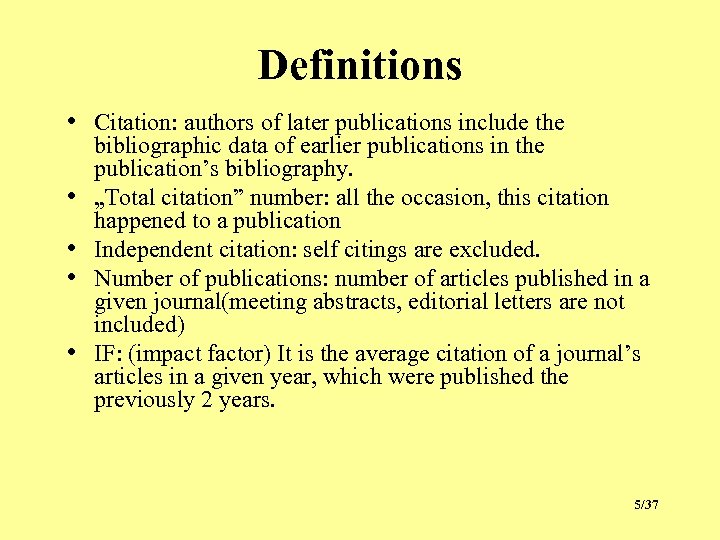
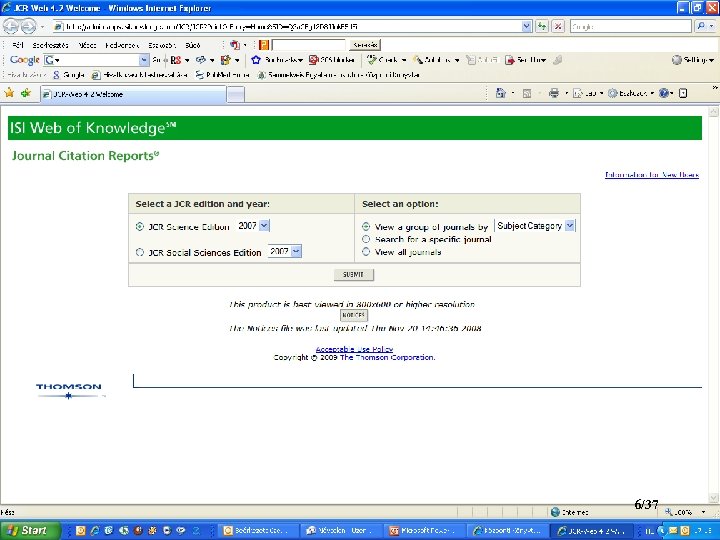
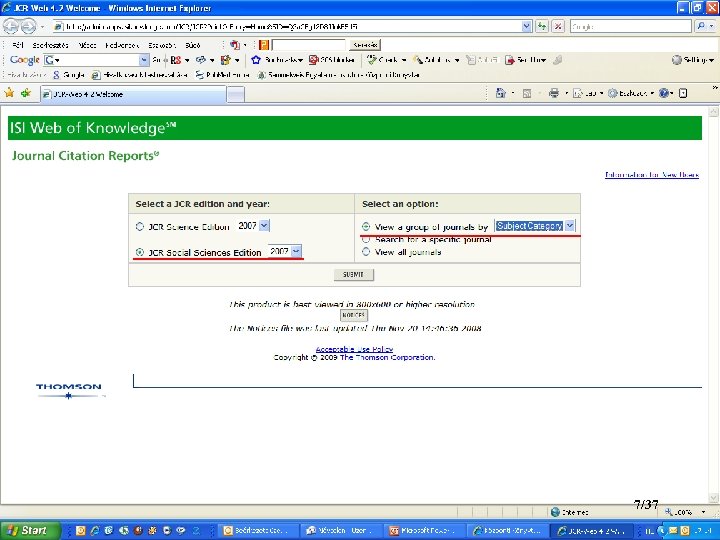
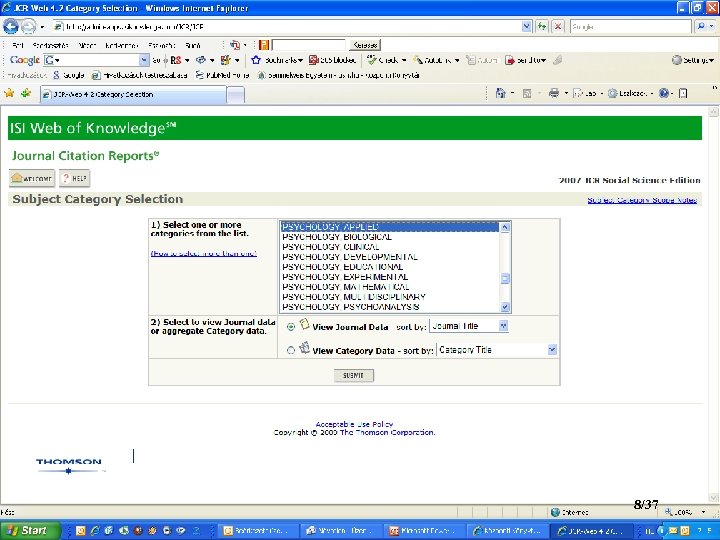
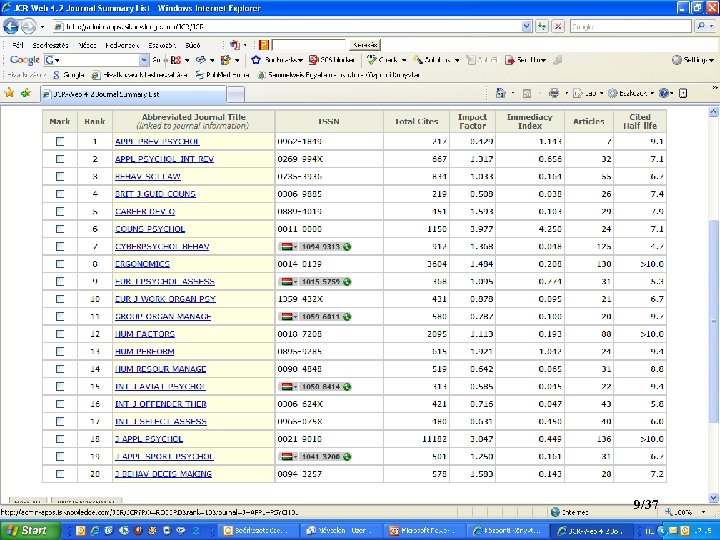
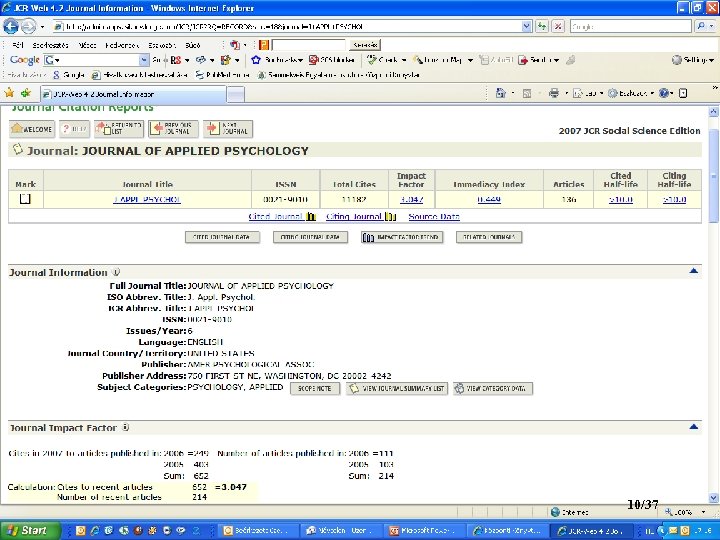
Definitions • Citation: authors of later publications include the • • bibliographic data of earlier publications in the publication’s bibliography. „Total citation” number: all the occasion, this citation happened to a publication Independent citation: self citings are excluded. Number of publications: number of articles published in a given journal(meeting abstracts, editorial letters are not included) IF: (impact factor) It is the average citation of a journal’s articles in a given year, which were published the previously 2 years. 5/37
6/37
7/37
8/37
9/37
10/37
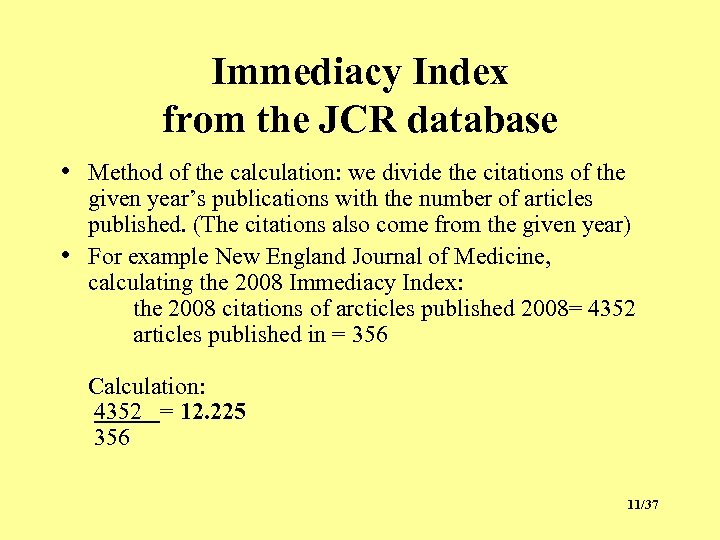
Immediacy Index from the JCR database • Method of the calculation: we divide the citations of the given year’s publications with the number of articles published. (The citations also come from the given year) • For example New England Journal of Medicine, calculating the 2008 Immediacy Index: the 2008 citations of arcticles published 2008= 4352 articles published in = 356 Calculation: 4352 = 12. 225 356 11/37
Median Impact Factor and Aggregate Impact Factor 12/37
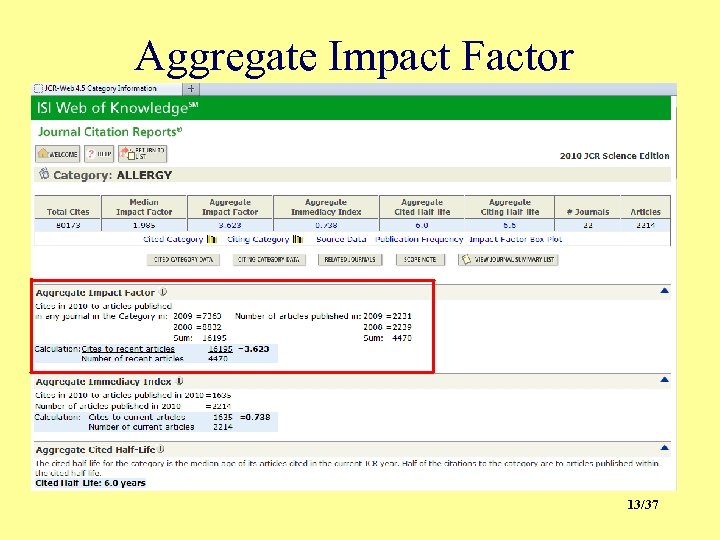
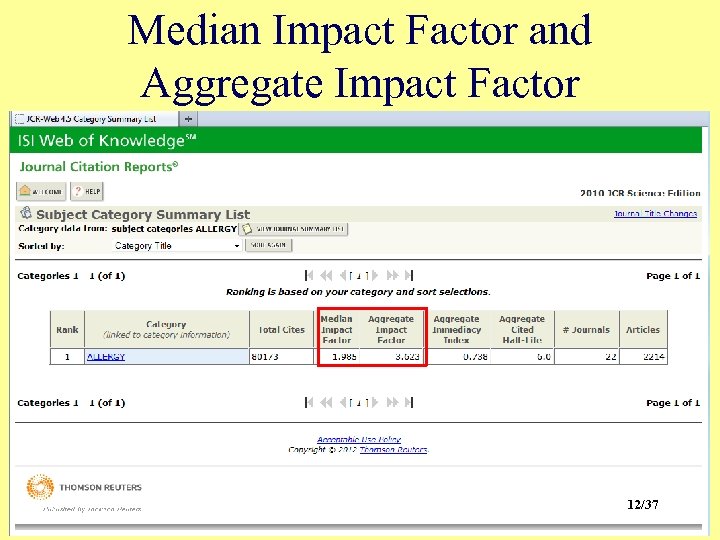
Aggregate Impact Factor 13/37
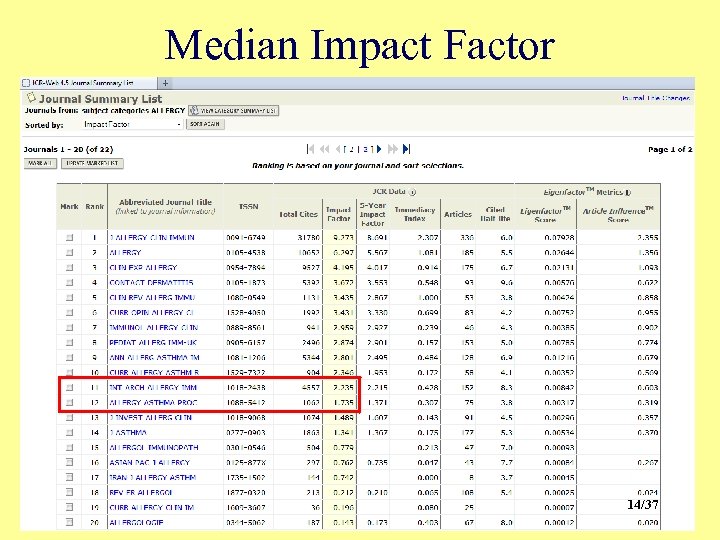
Median Impact Factor 14/37
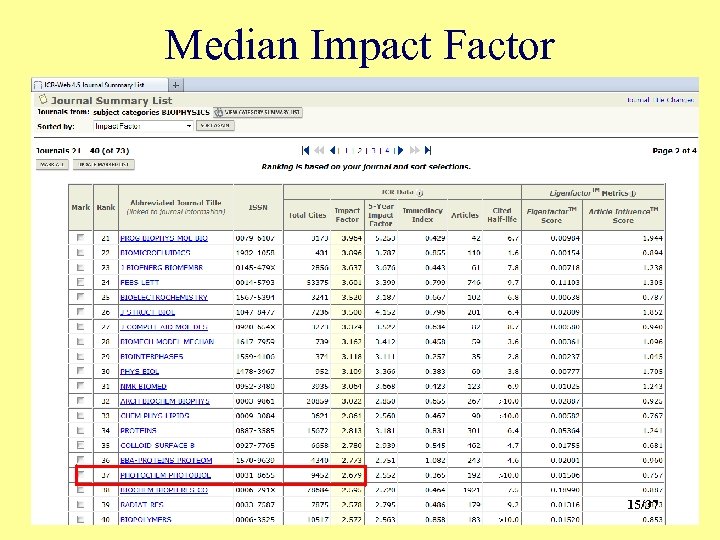
Median Impact Factor 15/37
Hirsch index An author with an index of h has published h papers each of which has been cited in other papers at least h times. • Scopus • Web of Science 16/37
Bibliometrics – the tool of successful publishing • - review the subject area: WOS, Scopus • - barriers and help in publication 17/37
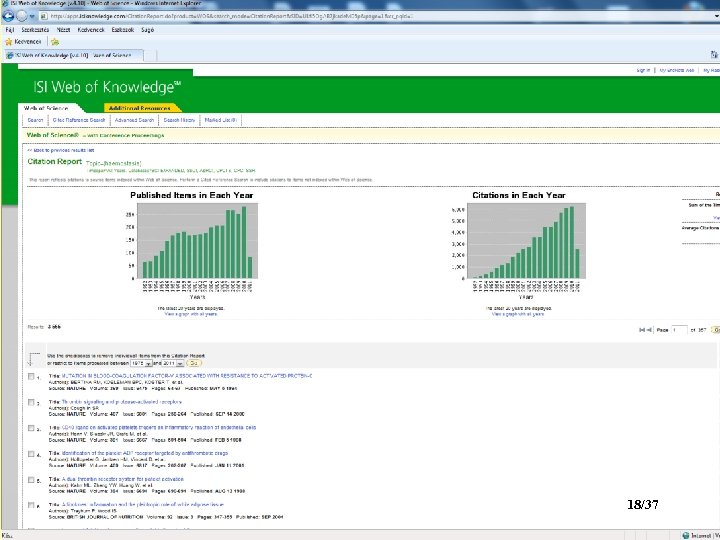
18/37
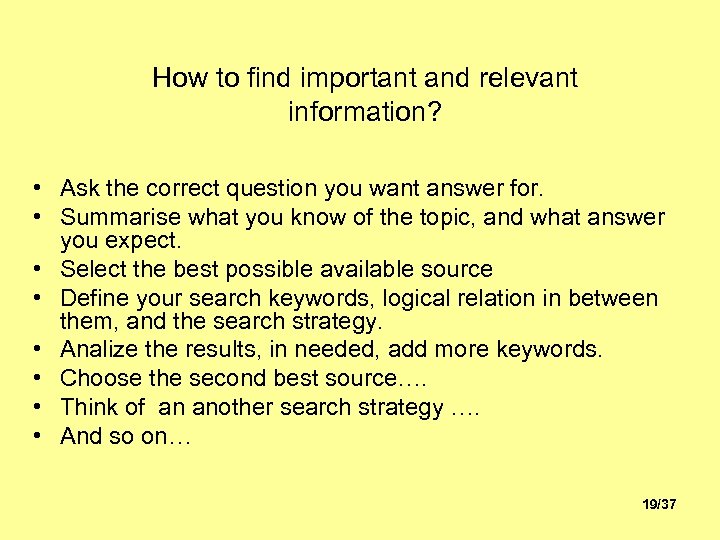
How to find important and relevant information? • Ask the correct question you want answer for. • Summarise what you know of the topic, and what answer you expect. • Select the best possible available source • Define your search keywords, logical relation in between them, and the search strategy. • Analize the results, in needed, add more keywords. • Choose the second best source…. • Think of an another search strategy …. • And so on… 19/37
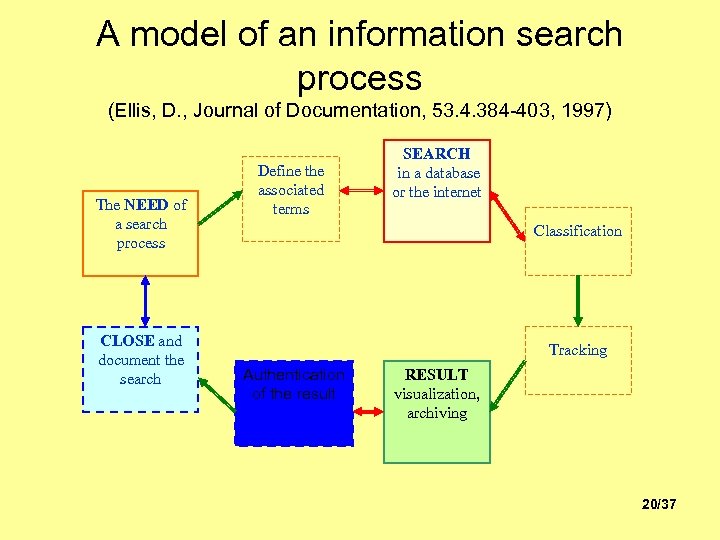
A model of an information search process (Ellis, D. , Journal of Documentation, 53. 4. 384 -403, 1997) The NEED of a search process CLOSE and document the search Define the associated terms SEARCH in a database or the internet Classification Tracking Authentication of the result RESULT visualization, archiving 20/37
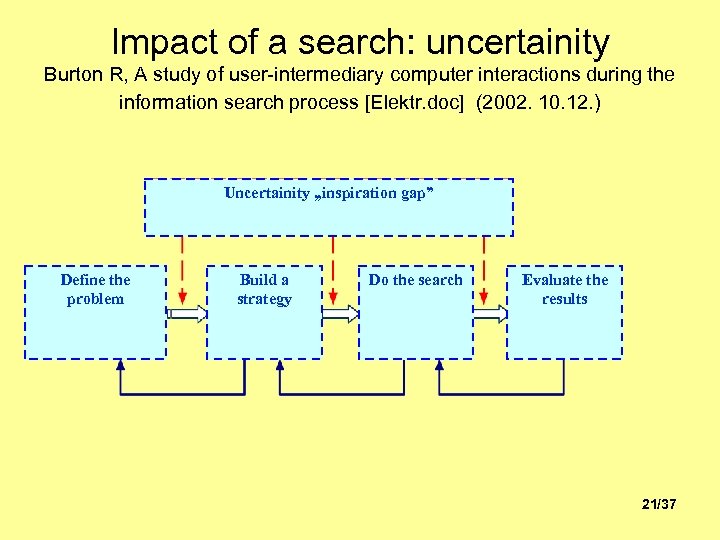
Impact of a search: uncertainity Burton R, A study of user-intermediary computer interactions during the information search process [Elektr. doc] (2002. 10. 12. ) Uncertainity „inspiration gap” Define the problem Build a strategy Do the search Evaluate the results 21/37
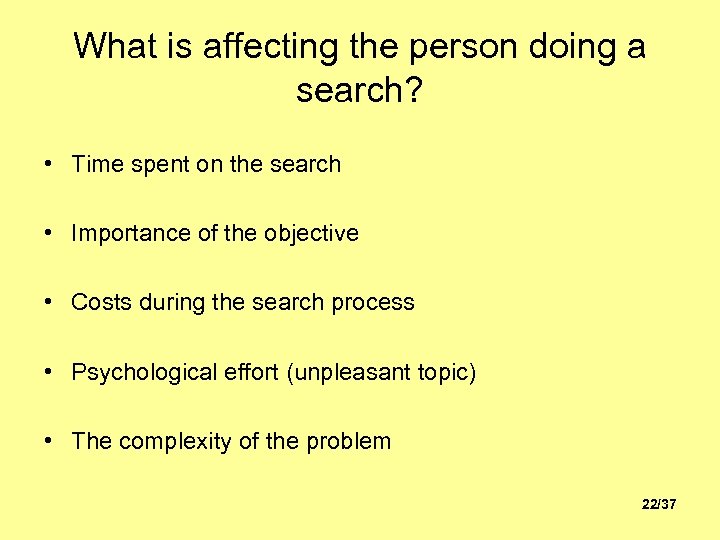
What is affecting the person doing a search? • Time spent on the search • Importance of the objective • Costs during the search process • Psychological effort (unpleasant topic) • The complexity of the problem 22/37
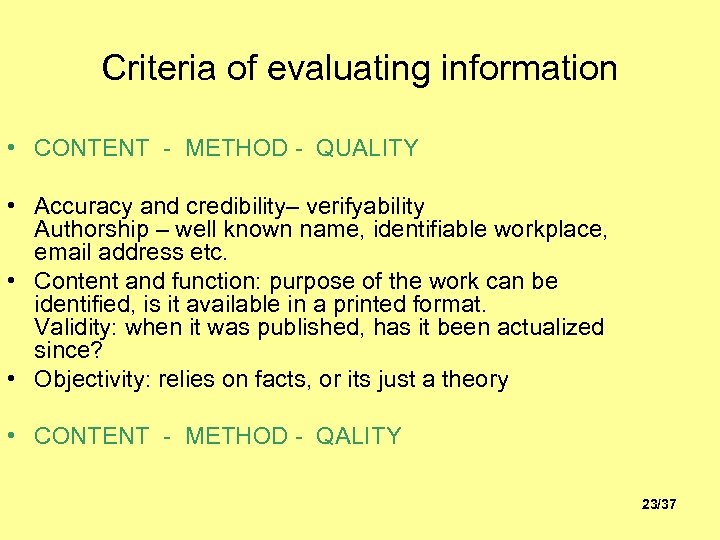
Criteria of evaluating information • CONTENT - METHOD - QUALITY • Accuracy and credibility– verifyability Authorship – well known name, identifiable workplace, email address etc. • Content and function: purpose of the work can be identified, is it available in a printed format. Validity: when it was published, has it been actualized since? • Objectivity: relies on facts, or its just a theory • CONTENT - METHOD - QALITY 23/37
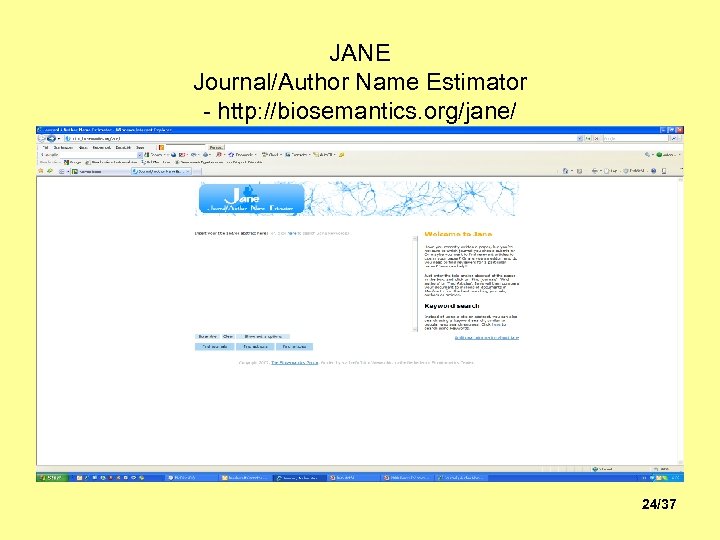
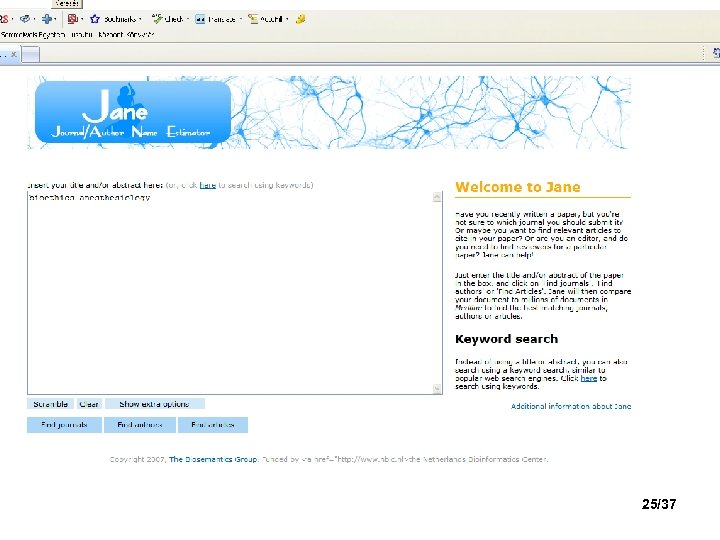
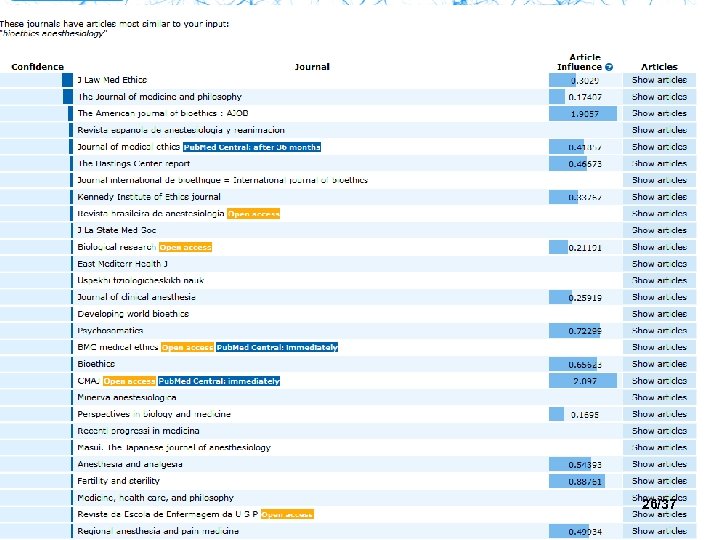
JANE Journal/Author Name Estimator - http: //biosemantics. org/jane/ 24/37
25/37
26/37
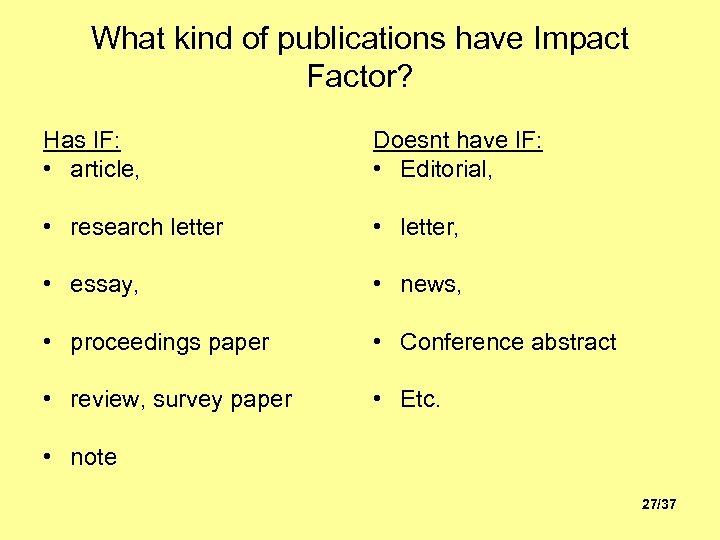
What kind of publications have Impact Factor? Has IF: • article, Doesnt have IF: • Editorial, • research letter • letter, • essay, • proceedings paper • news, • Conference abstract • review, survey paper • Etc. • note 27/37
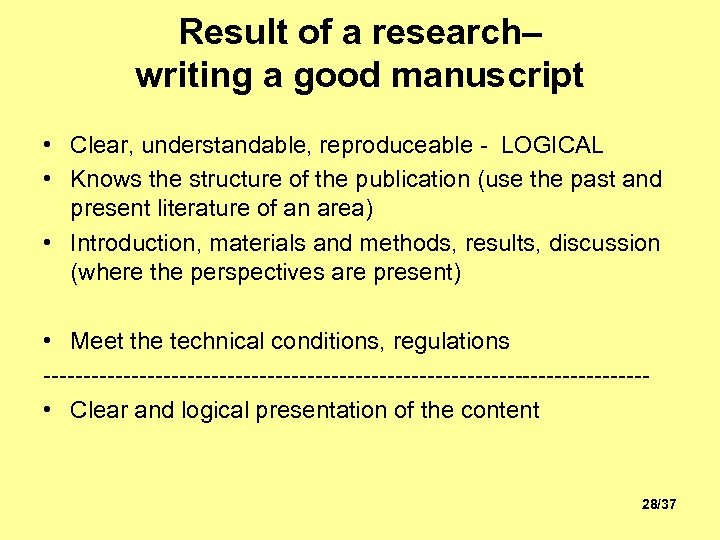
Result of a research– writing a good manuscript • Clear, understandable, reproduceable - LOGICAL • Knows the structure of the publication (use the past and present literature of an area) • Introduction, materials and methods, results, discussion (where the perspectives are present) • Meet the technical conditions, regulations -------------------------------------- • Clear and logical presentation of the content 28/37
Unsuccessful publication? • Search for a new journal: the second best • Look into an another insturction for authors • New publication – rewrite the current one, consider the causes of the rejection. 29/37
Instuctions for authors • Self explaining: look for these instuctions on the journals website • Uniform Requirements for Manuscripts Submitted to Biomedical Journals: Writing and Editing for Biomedical Publications http: //www. icmje. org/ • Content and formal requirements 30/37
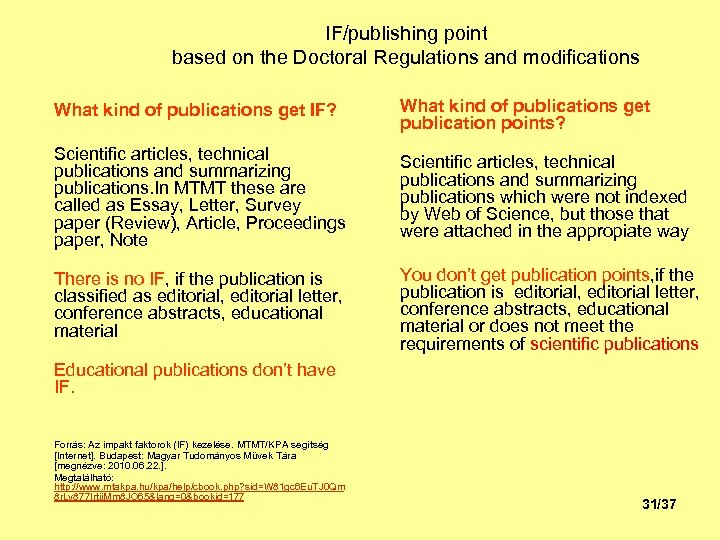
IF/publishing point based on the Doctoral Regulations and modifications What kind of publications get IF? What kind of publications get publication points? Scientific articles, technical publications and summarizing publications. In MTMT these are called as Essay, Letter, Survey paper (Review), Article, Proceedings paper, Note Scientific articles, technical publications and summarizing publications which were not indexed by Web of Science, but those that were attached in the appropiate way There is no IF, if the publication is classified as editorial, editorial letter, conference abstracts, educational material You don’t get publication points, if the publication is editorial, editorial letter, conference abstracts, educational material or does not meet the requirements of scientific publications Educational publications don’t have IF. Forrás: Az impakt faktorok (IF) kezelése. MTMT/KPA segítség [Internet]. Budapest: Magyar Tudományos Művek Tára [megnézve: 2010. 06. 22. ]. Megtalálható: http: //www. mtakpa. hu/kpa/help/cbook. php? sid=W 81 gc 6 Eu. TJ 0 Qm 8 r. Ly 877 Irtji. Mm 8 JO 65&lang=0&bookid=177 31/37
Ethics in publishing - contents COPE – Committee On Publication Ethics http: //publicationethics. org/resources/guidelines Ø Authors, co-authors Ø Second publishing (title, reference list analyzing, text identity) Ø Plagiarism 32/37
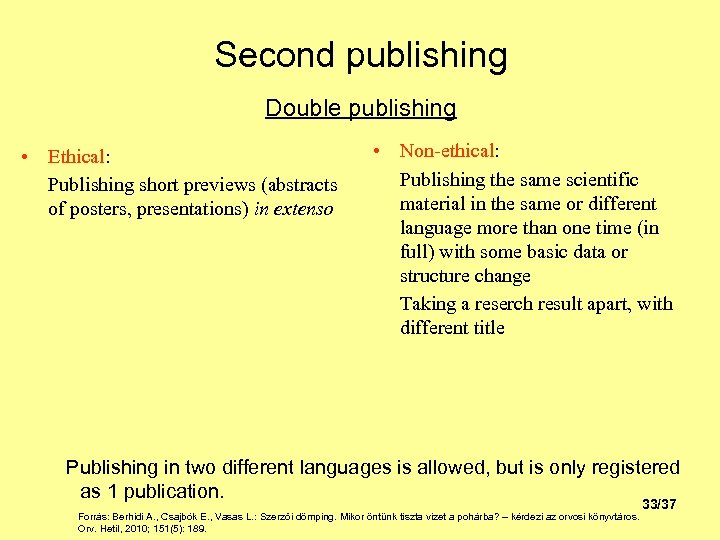
Second publishing Double publishing • Ethical: Publishing short previews (abstracts of posters, presentations) in extenso • Non-ethical: Publishing the same scientific material in the same or different language more than one time (in full) with some basic data or structure change Taking a reserch result apart, with different title Publishing in two different languages is allowed, but is only registered as 1 publication. 33/37 Forrás: Berhidi A. , Csajbók E. , Vasas L. : Szerzői dömping. Mikor öntünk tiszta vizet a pohárba? – kérdezi az orvosi könyvtáros. Orv. Hetil, 2010; 151(5): 189.
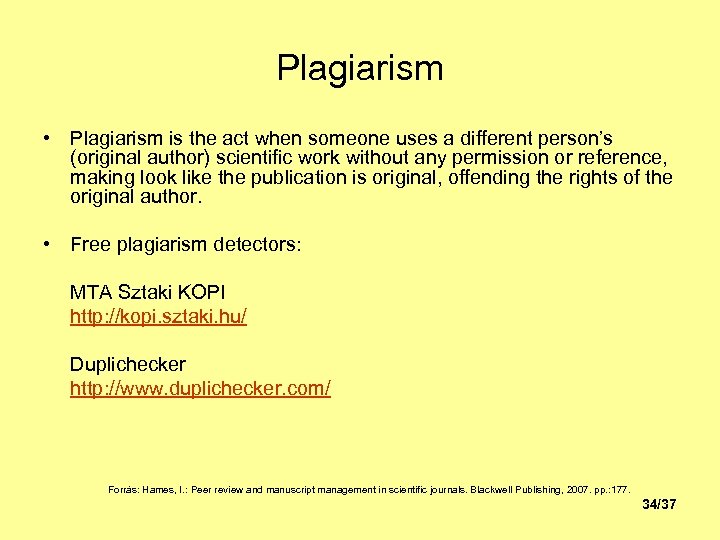
Plagiarism • Plagiarism is the act when someone uses a different person’s (original author) scientific work without any permission or reference, making look like the publication is original, offending the rights of the original author. • Free plagiarism detectors: MTA Sztaki KOPI http: //kopi. sztaki. hu/ Duplichecker http: //www. duplichecker. com/ Forrás: Hames, I. : Peer review and manuscript management in scientific journals. Blackwell Publishing, 2007. pp. : 177. 34/37
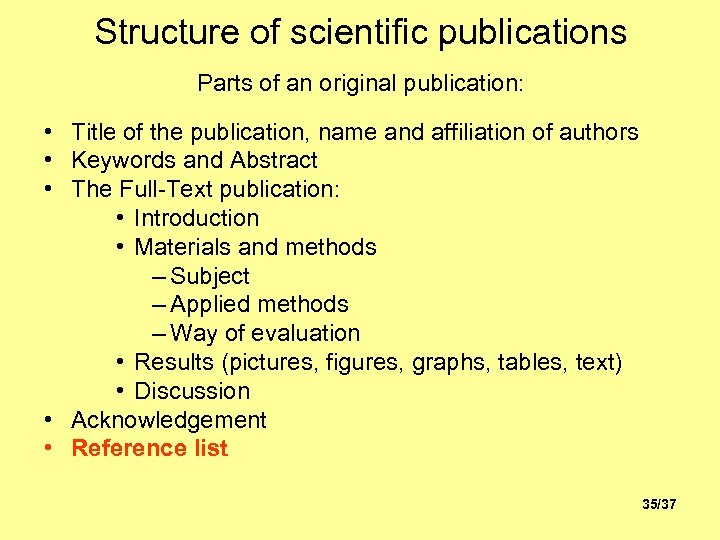
Structure of scientific publications Parts of an original publication: • Title of the publication, name and affiliation of authors • Keywords and Abstract • The Full-Text publication: • Introduction • Materials and methods – Subject – Applied methods – Way of evaluation • Results (pictures, figures, graphs, tables, text) • Discussion • Acknowledgement • Reference list 35/37
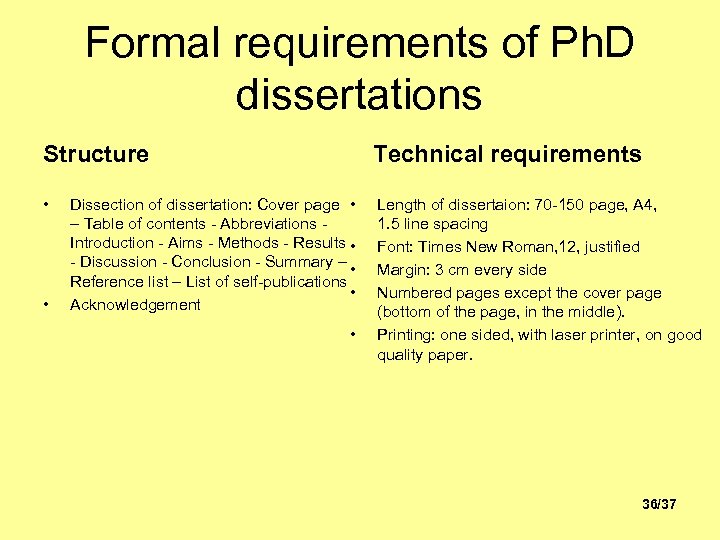
Formal requirements of Ph. D dissertations Structure Technical requirements • Length of dissertaion: 70 -150 page, A 4, 1. 5 line spacing Font: Times New Roman, 12, justified Margin: 3 cm every side Numbered pages except the cover page (bottom of the page, in the middle). Printing: one sided, with laser printer, on good quality paper. • Dissection of dissertation: Cover page • – Table of contents - Abbreviations - Introduction - Aims - Methods - Results • - Discussion - Conclusion - Summary – • Reference list – List of self-publications • Acknowledgement • 36/37
Thank you for your attention! 37/37
Скачать презентацию Scientific journals bibliography basics of bibliometrics for Ph
2e16bf6436856f93623c49e43c36f13a.ppt