


 Скачать презентацию SCIENCE THE UNIVERSITY OF QUEENSLAND International Agents 2008
d1fa0f5fa51ccff23ed337abbb9ec7e5.ppt
- Количество слайдов: 59
 SCIENCE THE UNIVERSITY OF QUEENSLAND International Agents 2008
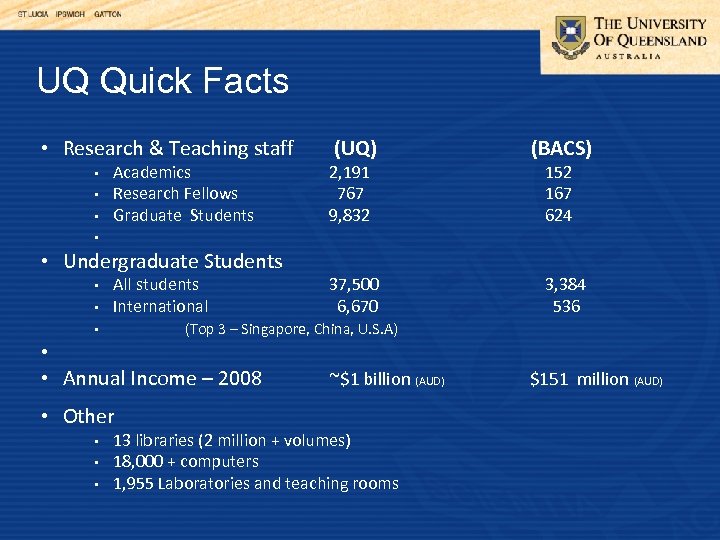 UQ Quick Facts • Research & Teaching staff • • • Academics Research Fellows Graduate Students (UQ) (BACS) 37, 500 6, 670 3, 384 536 2, 191 767 9, 832 152 167 624 • • Undergraduate Students • • All students International (Top 3 – Singapore, China, U. S. A) • • • Annual Income – 2008 • Other • • • ~$1 billion (AUD) 13 libraries (2 million + volumes) 18, 000 + computers 1, 955 Laboratories and teaching rooms $151 million (AUD)
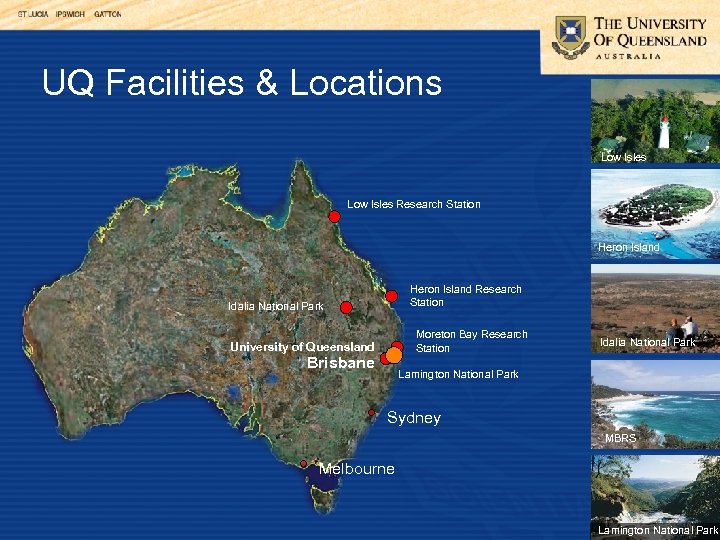 UQ Facilities & Locations Low Isles Research Station Heron Island Research Station Idalia National Park Moreton Bay Research Station University of Queensland Brisbane Idalia National Park Lamington National Park Sydney MBRS Melbourne Lamington National Park
 Research
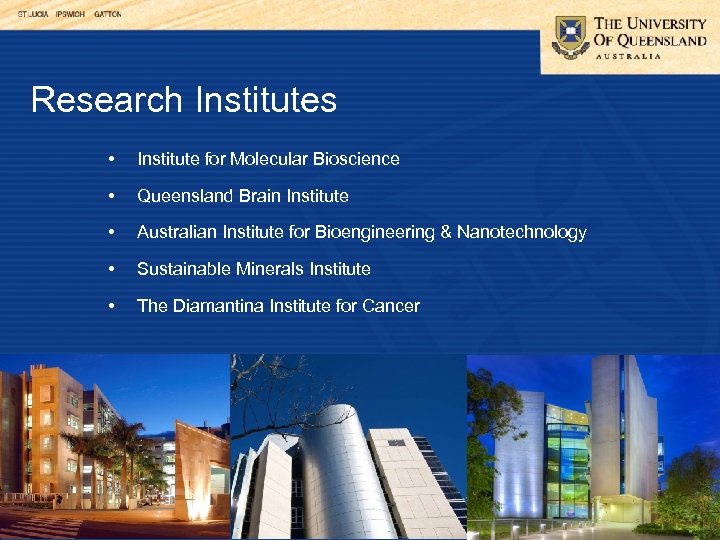 Research Institutes • Institute for Molecular Bioscience • Queensland Brain Institute • Australian Institute for Bioengineering & Nanotechnology • Sustainable Minerals Institute • The Diamantina Institute for Cancer
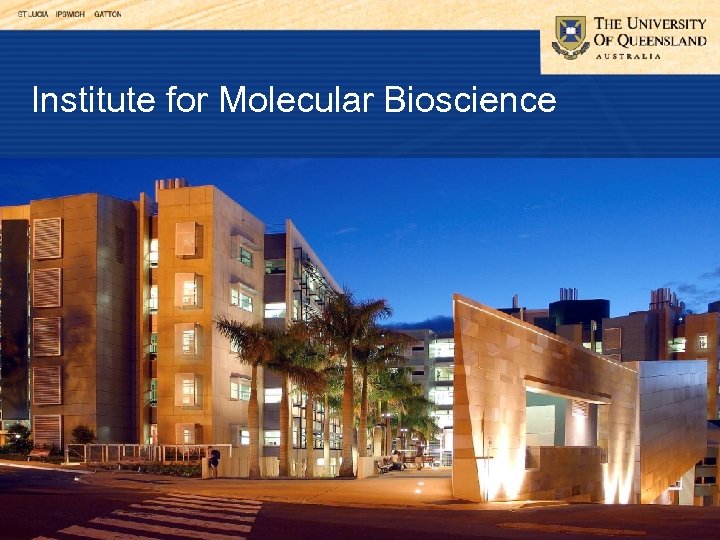 Institute for Molecular Bioscience
 Institute for Molecular Bioscience • • • Largest purpose - built biotechnology complex in Australia Opened May, 2001 750 scientists from – UQ's Institute for Molecular Bioscience – Commonwealth Scientific & Industrial Research Organisation (CSIRO) Division of Livestock Industries – • CSIRO Plant Industry & Sustainable Ecosystems – Queensland Department of Primary Industries IMB was funded by an Irish/American philanthropist, UQ, Queensland Government, Australian Government and CSIRO.
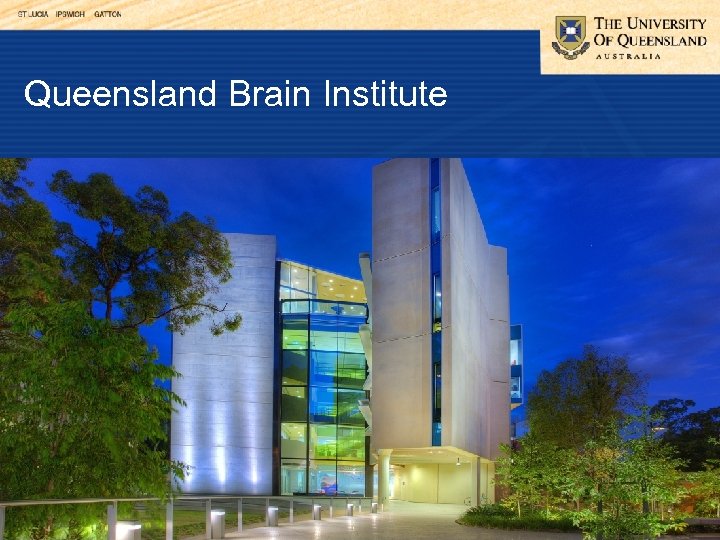 Queensland Brain Institute
 Queensland Brain Institute • Established in 2003 • An AUD$60 million neuroscience research institute • Developing new molecular, genetic and imaging technologies to drive discovery in the neurosciences • Opened December 2007 and will house around 240 scientists • Aims to gain a thorough understanding of brain function at the cellular and molecular level • Will use this knowledge to further the R&D of therapeutics to enhance cognition during ageing, and to treat major brain diseases like stroke, dementia (Alzheimer’s Disease), spinal cord injury and anxiety disorders
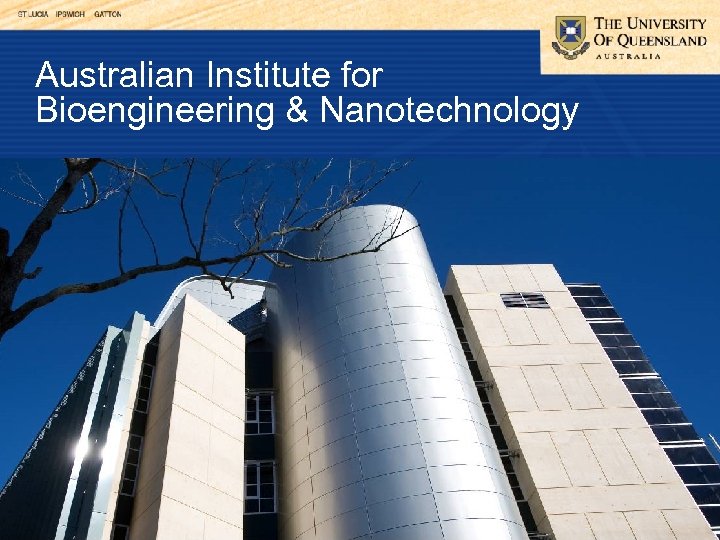 Australian Institute for Bioengineering & Nanotechnology
 Australian Institute for Bioengineering & Nanotechnology • AUD$70 million research institute Established in 2002 • Integrated biotechnology-based institute merges the skills of the engineer, chemist, biologist and computational scientist. • Research strengths in: Nanotechnology, Cell and Tissue Engineering Systems Biotechnology, Nanobiomaterials and Devices • AIBN is made up of 14 core research groups, 250 research scientists and Ph. D students.
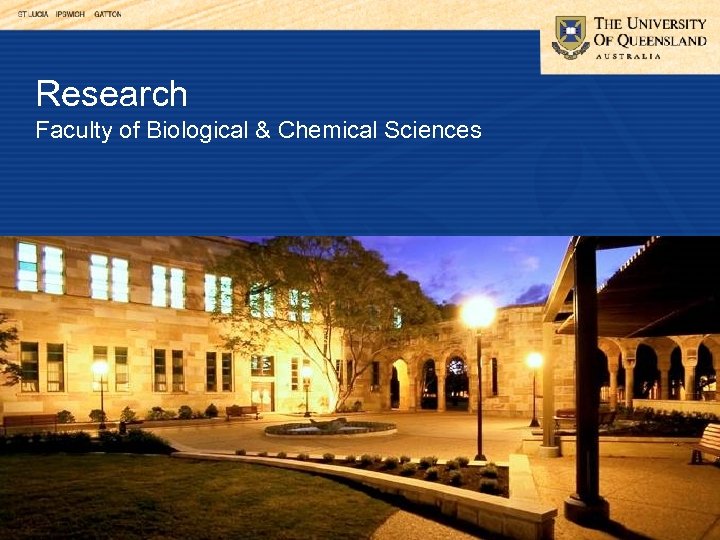 Research Faculty of Biological & Chemical Sciences
 Research Themes • • Chemical Biology Infectious Diseases Ion Transport & Cell Signaling Molecular Biology & Biotechnology Molecular Design & Synthesis Developmental Biology Ecology Genetics & Evolution • • Insects Parasites & Interactions Marine Science Microbiology Molecular Plant Sciences Neuroscience Pharmacology & Toxicology Plant Sciences/Biotechnology
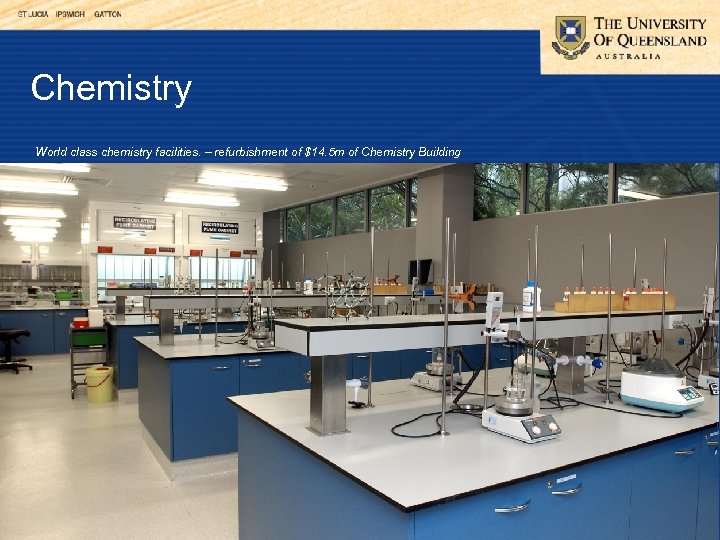 Chemistry World class chemistry facilities. – refurbishment of $14. 5 m of Chemistry Building
 Chemistry Molecular Design and Synthesis Peptide and Carbohydrate Chemistry - drug and vaccine delivery Centre for Organo-Photonics and Electronics – new generation LEDs and solar cells Biodiscovery and Chemical Ecology – isolation, characterization and synthesis of natural products ARC Centre of Excellence for Functional Nanomaterials
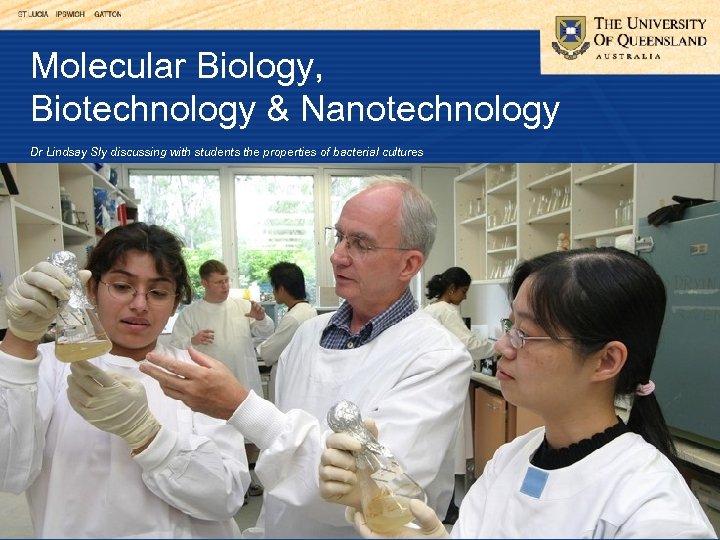 Molecular Biology, Biotechnology & Nanotechnology Dr Lindsay Sly discussing with students the properties of bacterial cultures
 Biochemistry Structural Biology – X-ray crystallography, NMR, structural bioinformatics, drug and inhibitor design Molecular Genetics – breast and skin cancer, plant developmental genetics, fungal pathogens Cell Metabolism – neurochemistry, enzymology, bacterial diversity and biotechnology
 Microbiology, Infectious Diseases Molecular virology – focus on flaviviruses including Dengue, Japanese encephalitis and West Nile Bacterial Pathogenicity – focus on mucosal pathogens including uropathogenic E. coli, Neisseria meningitidis, Streptococcus pneumoniae Biotechnology – vaccines, diagnostics, anti-infectives
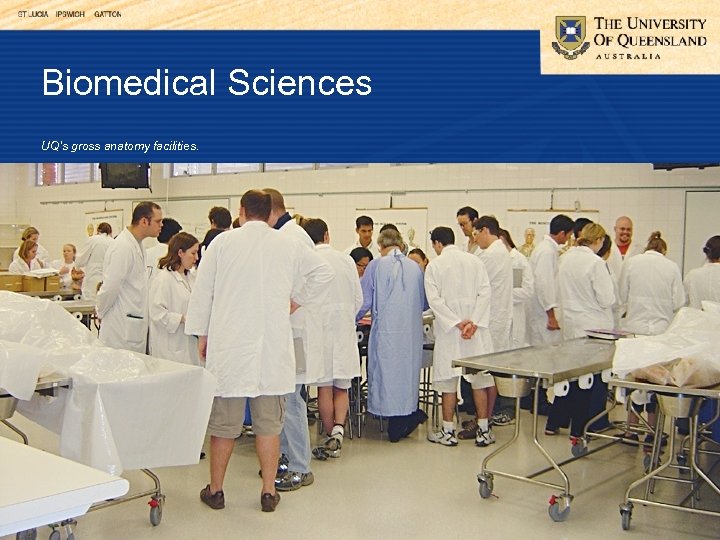 Biomedical Sciences UQ’s gross anatomy facilities.
 Biomedical Science Over $10 million in competitive grants annually Over 50 research academic staff State-of-the-art equipment and laboratory infrastructure Research areas in: Neuroscience Pharmacology Functional Biology Developmental Biology Cell Physiology and Biophysics
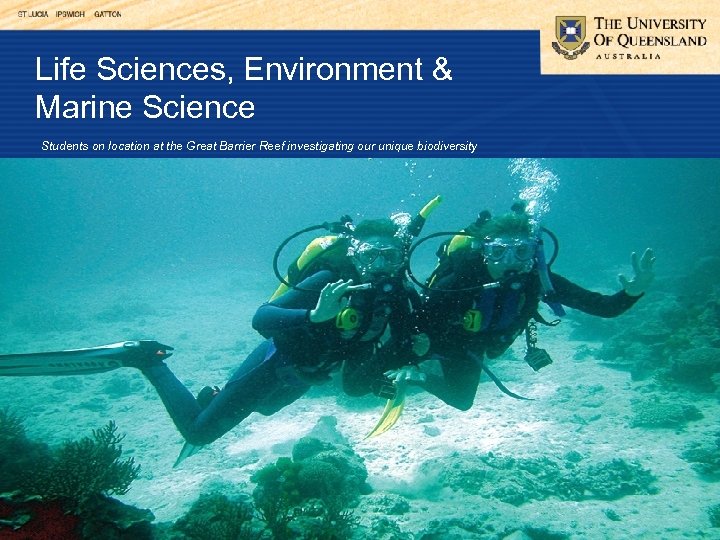 Life Sciences, Environment & Marine Science Students on location at the Great Barrier Reef investigating our unique biodiversity
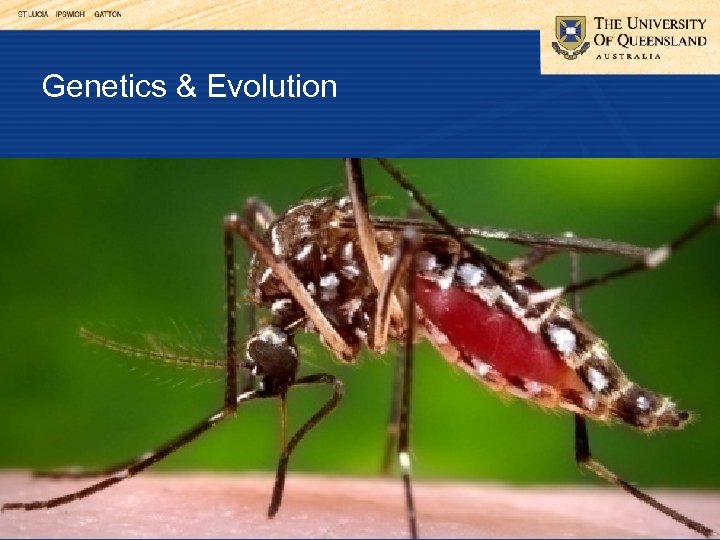 Genetics & Evolution
 Genetics & Evolution 16 researchers who apply new genomic technologies to non-model organism systems. Total research funding of $14. 66 M, and 51 Ph. D students in the period 2001 -2006. Of the 190 peer-reviewed publications in the period 2001 -2006, 86 (45%) had an author resident at an international institution. Highlight: An international consortium of researchers from 5 countries (Thailand, Vietnam, Japan, Australia and the United States) lead by Prof Scott O’Neill and funded by a $10 M Gates Foundation grant, to develop Wolbachia as a biological control agent for mosquito borne disease.
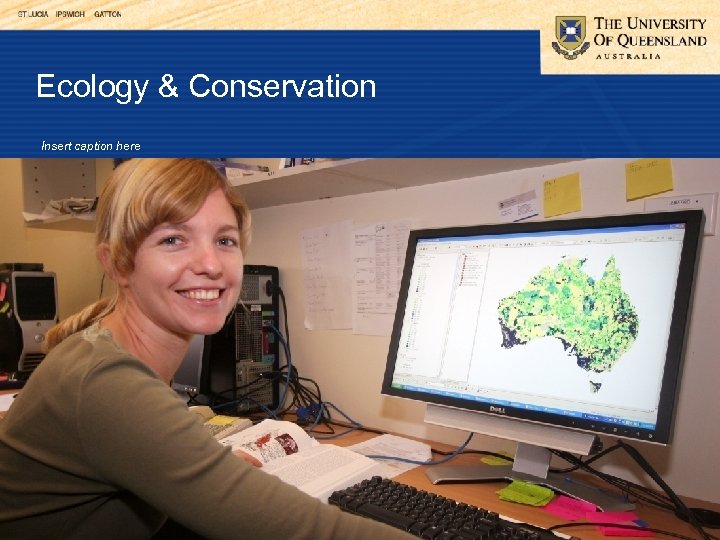 Ecology & Conservation Insert caption here
 Ecology & Conservation 24 researchers who conduct both applied and pure ecological studies Total research funding of $43 M in the period 2001 -2006. The 464 peer-reviewed publications in the period 2001 -2006, had collaborations with researchers spread across 33 countries. Highlight: The development of a systematic conservation planning tool – MARXAN – by Prof Possingham that is the most widely used conservation planning tool in the world and is used by all the major conservation NGOs and many governments.
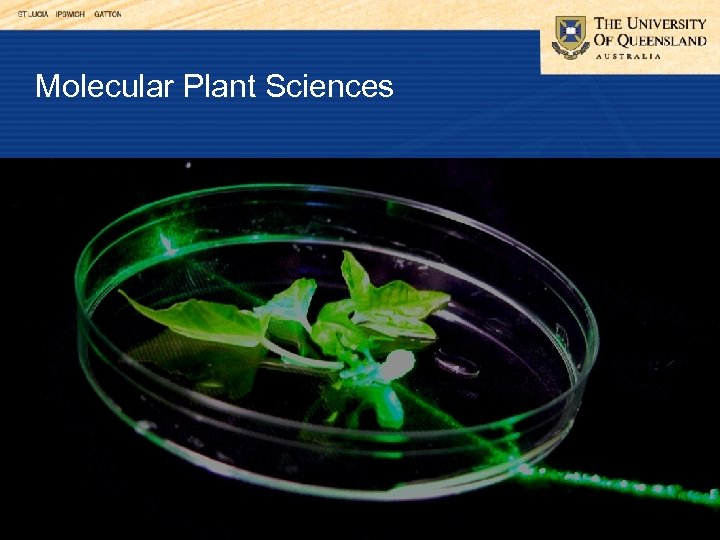 Molecular Plant Sciences
 Molecular Plant Sciences 12 researchers focusing on fundamental and applied aspects of limits to plant productivity, gene discovery and applications in plant improvement Two national research centres: the ARC Centre of Excellence in Integrative Legume Research (Director, Prof Gresshoff) and the CRC for Tropical Plant Protection (Director, Prof Irwin), Total research funding of $58 M in the period 2001 -2006. Highlight: The cloning of the super-nodulation gene in soybean which regulates nodule numbers by Prof Greshoff Highlight: The development by Professor Birch of genetic technology resulting in high sucrose yielding sugarcane to underpin a value-added sugarcane industry. Higher sucrose yield is a key to sustainable export profitability, and it makes the development of renewable biofuels from sugarcane more feasible.
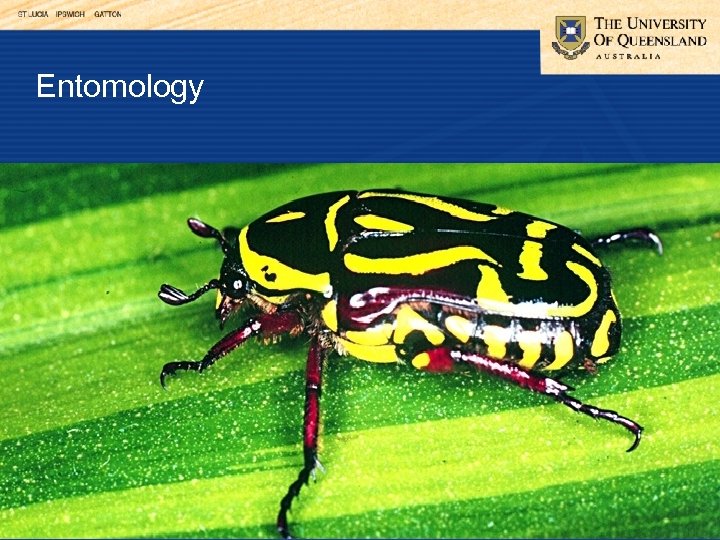 Entomology
 Research Centre for Marine Studies • • Aquaculture and Aquatic Animal Health - Dr Andy Barnes Coastal Resource Management - Associate Professor Ron Johnstone Coastal Plant Communities - Dr Cath Lovelock Coastal Ecosystems and Climate Change - Professor Ove Hoegh. Guldberg Marine Biology and Biodiscovery - Dr Ian Tibbets Marine Botany - Dr Norm Duke Palaeoecology of Benthic Ecosystems - Associate Professor John Pandolfi Photobiology & Symbiosis - Dr Sophie Dove
 Research Funding Highlights MARINE STUDIES – Coral Reef Targeted Research and Capacity Building for Management Project (CRTR) • Multinational research effort - more than 70 scientists and four Centres of Excellence in Australia, Mexico, Philippines and Tanzania • Project Funds in excess of AUD$20 million in cash and $70 m in-kind support – from Global Environment Fund, World Bank, Queensland Government and UQ • UQ is the Project Executing Agent – 15 year project of research to provide practical information and management tools to coral reef management jct Funds in excess of AUD$20 million in cash and $70 m in-kind support – from Global Environment Fund, World Bank, Queensland Government and UQ • UQ is the Project Executing Agent – 15 year project of research to provide practical information and management tools to coral reef management
 Research Centre for Microscopy & Microanalysis Provide centralised access and training for characterisation instrumentation for all research disciplines at UQ • • • 5 locations 8 Transmission electron microscopes 7 Scanning electron microscopes 3 X-ray diffractometers 1 X-ray photoelectron spectrometer 2 High level mass spectrometers for isotope radiogenic studies 400 clients Comprehensive training programs Part of a national network
 Commercialisation
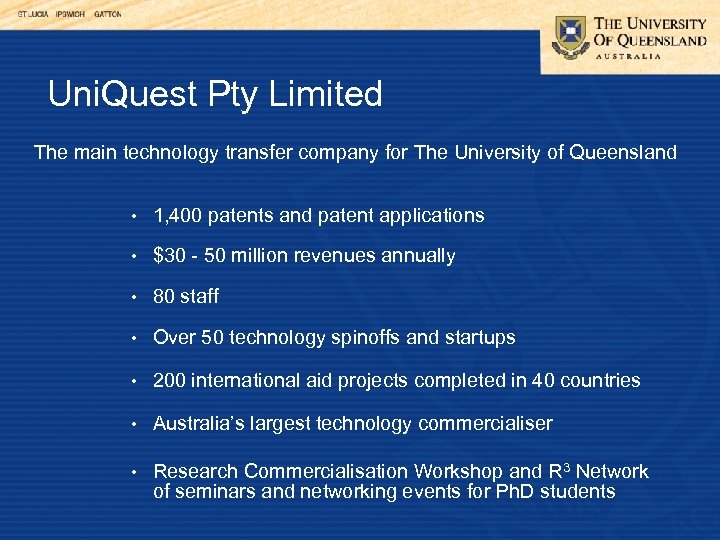 Uni. Quest Pty Limited The main technology transfer company for The University of Queensland • 1, 400 patents and patent applications • $30 - 50 million revenues annually • 80 staff • Over 50 technology spinoffs and startups • 200 international aid projects completed in 40 countries • Australia’s largest technology commercialiser • Research Commercialisation Workshop and R 3 Network of seminars and networking events for Ph. D students
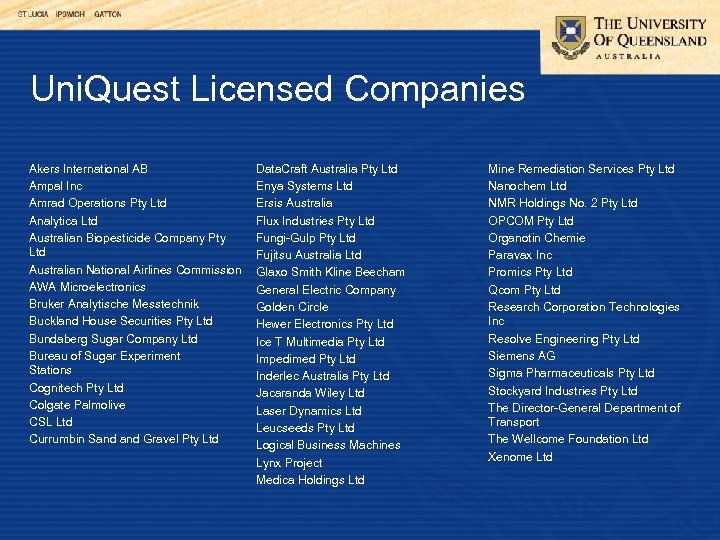 Uni. Quest Licensed Companies Akers International AB Data. Craft Australia Pty Ltd Mine Remediation Services Pty Ltd Ampal Inc Enya Systems Ltd Nanochem Ltd Amrad Operations Pty Ltd Ersis Australia NMR Holdings No. 2 Pty Ltd Analytica Ltd Flux Industries Pty Ltd OPCOM Pty Ltd Australian Biopesticide Company Pty Fungi-Gulp Pty Ltd Organotin Chemie Ltd Fujitsu Australia Ltd Paravax Inc Australian National Airlines Commission Glaxo Smith Kline Beecham Promics Pty Ltd AWA Microelectronics General Electric Company Qcom Pty Ltd Bruker Analytische Messtechnik Golden Circle Research Corporation Technologies Buckland House Securities Pty Ltd Inc Hewer Electronics Pty Ltd Bundaberg Sugar Company Ltd Resolve Engineering Pty Ltd Ice T Multimedia Pty Ltd Bureau of Sugar Experiment Siemens AG Impedimed Pty Ltd Stations Sigma Pharmaceuticals Pty Ltd Inderlec Australia Pty Ltd Cognitech Pty Ltd Stockyard Industries Pty Ltd Jacaranda Wiley Ltd Colgate Palmolive The Director-General Department of Laser Dynamics Ltd CSL Ltd Transport Leucseeds Pty Ltd Currumbin Sand Gravel Pty Ltd The Wellcome Foundation Ltd Logical Business Machines Xenome Ltd Lynx Project Medica Holdings Ltd
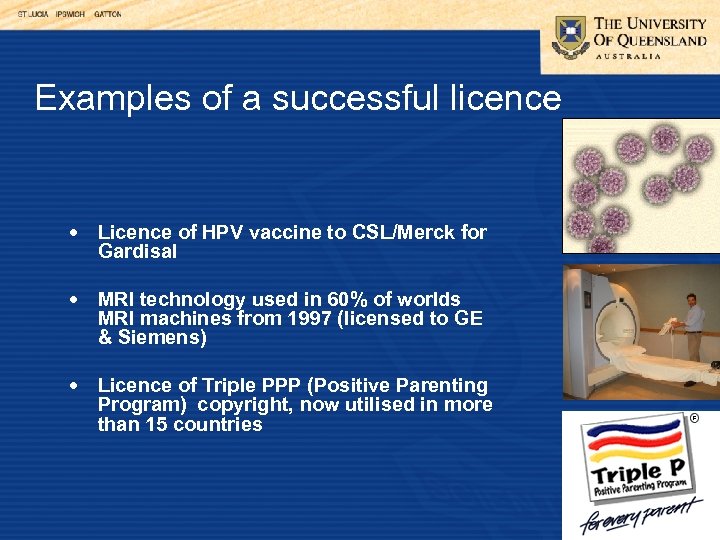 Examples of a successful licence Licence of HPV vaccine to CSL/Merck for Gardisal MRI technology used in 60% of worlds MRI machines from 1997 (licensed to GE & Siemens) Licence of Triple PPP (Positive Parenting Program) copyright, now utilised in more than 15 countries
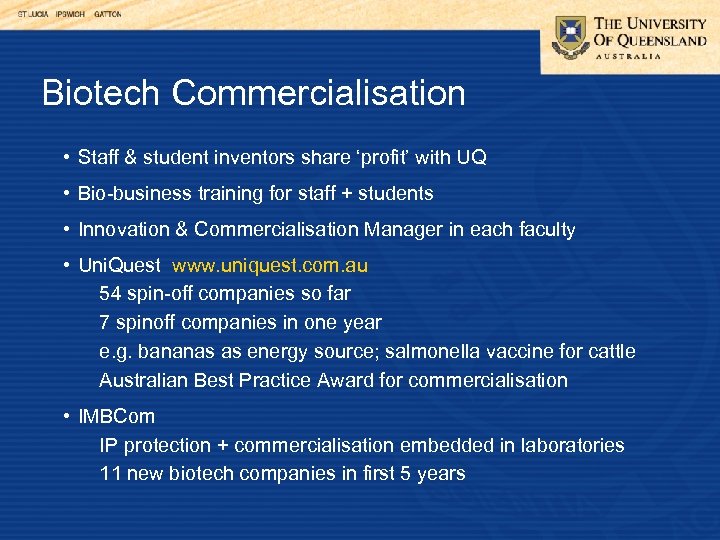 Biotech Commercialisation • Staff & student inventors share ‘profit’ with UQ • Bio-business training for staff + students • Innovation & Commercialisation Manager in each faculty • Uni. Quest www. uniquest. com. au 54 spin-off companies so far 7 spinoff companies in one year e. g. bananas as energy source; salmonella vaccine for cattle Australian Best Practice Award for commercialisation • IMBCom IP protection + commercialisation embedded in laboratories 11 new biotech companies in first 5 years
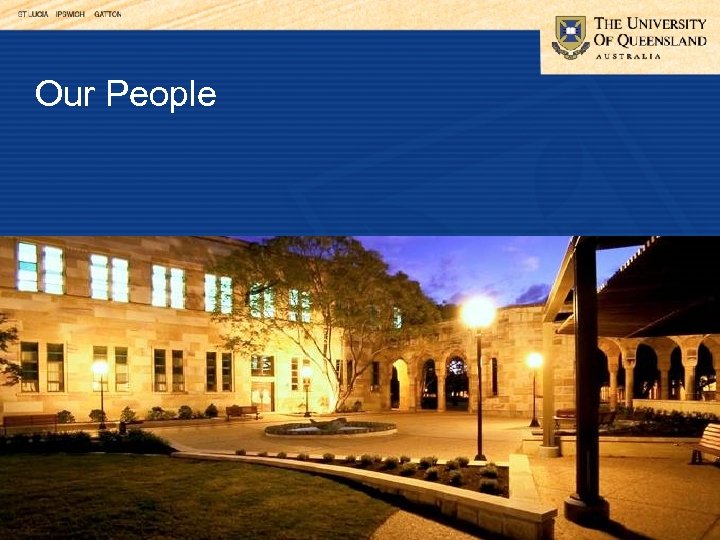 Our People
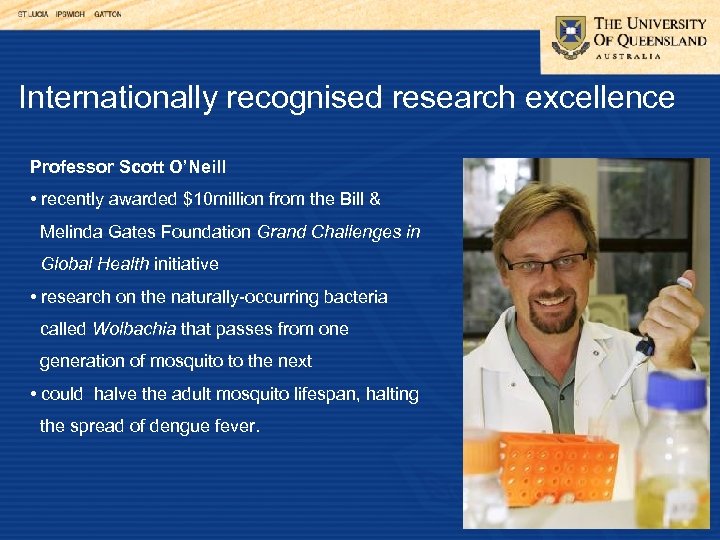 Internationally recognised research excellence Professor Scott O’Neill • recently awarded $10 million from the Bill & Melinda Gates Foundation Grand Challenges in Global Health initiative • research on the naturally-occurring bacteria called Wolbachia that passes from one generation of mosquito to the next • could halve the adult mosquito lifespan, halting the spread of dengue fever.
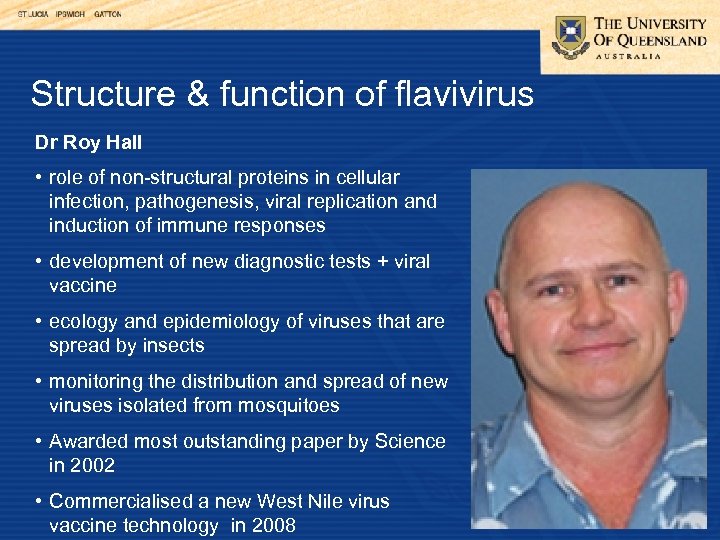 Structure & function of flavivirus Dr Roy Hall • role of non-structural proteins in cellular infection, pathogenesis, viral replication and induction of immune responses • development of new diagnostic tests + viral vaccine • ecology and epidemiology of viruses that are spread by insects • monitoring the distribution and spread of new viruses isolated from mosquitoes • Awarded most outstanding paper by Science in 2002 • Commercialised a new West Nile virus vaccine technology in 2008
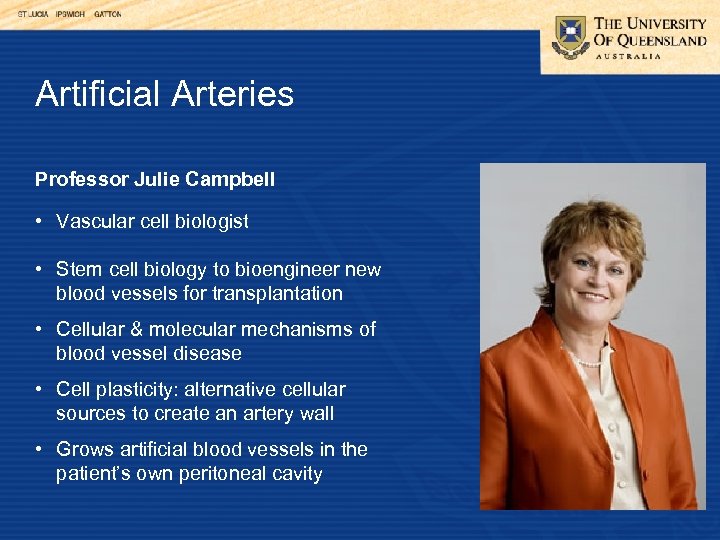 Artificial Arteries Professor Julie Campbell • Vascular cell biologist • Stem cell biology to bioengineer new blood vessels for transplantation • Cellular & molecular mechanisms of blood vessel disease • Cell plasticity: alternative cellular sources to create an artery wall • Grows artificial blood vessels in the patient’s own peritoneal cavity
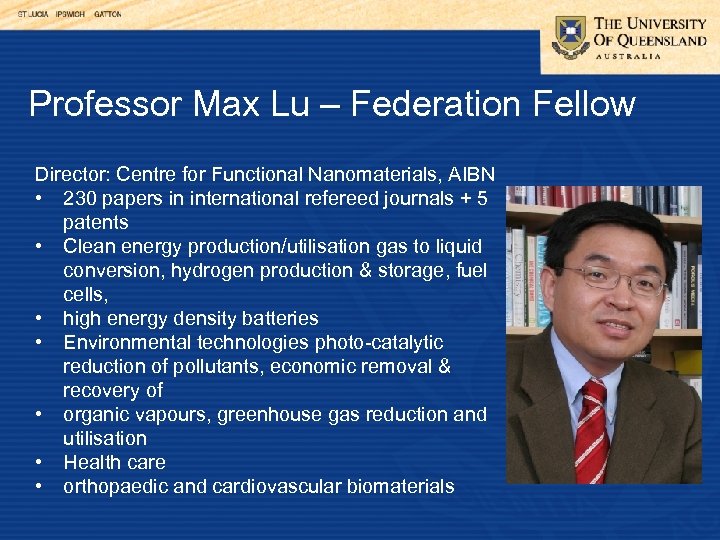 Professor Max Lu – Federation Fellow – Director: Centre for Functional Nanomaterials, AIBN • 230 papers in international refereed journals + 5 patents • Clean energy production/utilisation gas to liquid conversion, hydrogen production & storage, fuel cells, • high energy density batteries • Environmental technologies photo-catalytic reduction of pollutants, economic removal & recovery of • organic vapours, greenhouse gas reduction and utilisation • Health care • orthopaedic and cardiovascular biomaterials
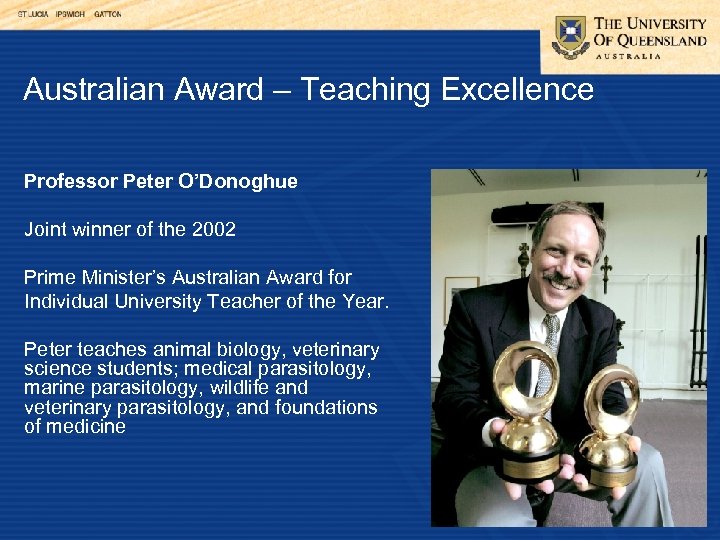 Australian Award – Teaching Excellence Professor Peter O’Donoghue Joint winner of the 2002 Prime Minister’s Australian Award for Individual University Teacher of the Year. Peter teaches animal biology, veterinary science students; medical parasitology, marine parasitology, wildlife and veterinary parasitology, and foundations of medicine
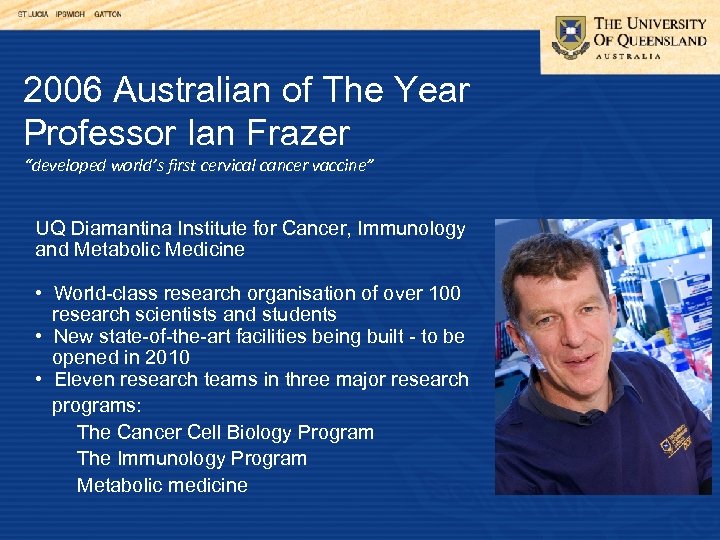 2006 Australian of The Year Professor Ian Frazer “developed world’s first cervical cancer vaccine” UQ Diamantina Institute for Cancer, Immunology and Metabolic Medicine • World-class research organisation of over 100 research scientists and students • New state-of-the-art facilities being built - to be opened in 2010 • Eleven research teams in three major research programs: The Cancer Cell Biology Program The Immunology Program Metabolic medicine
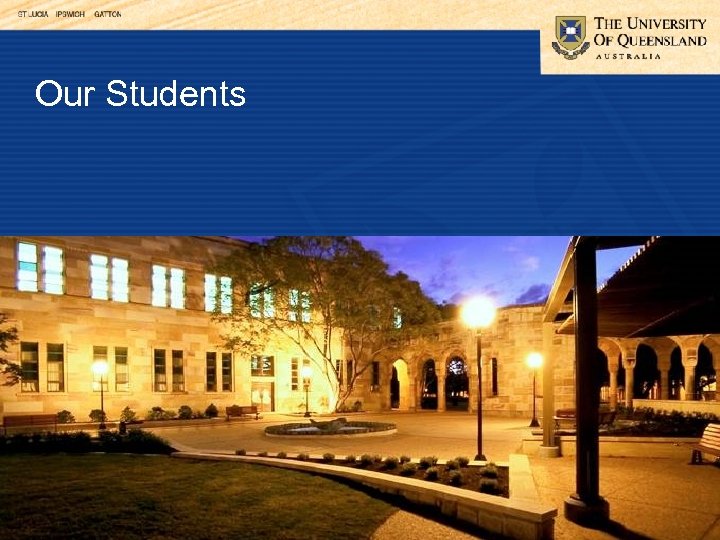 Our Students
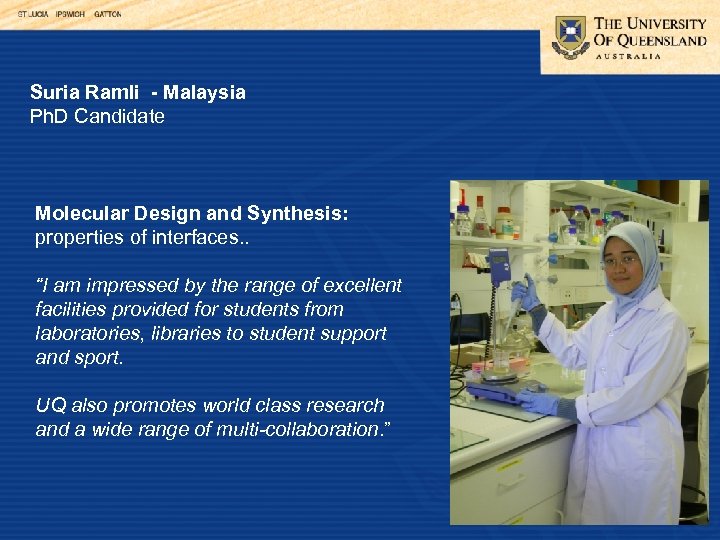 Suria Ramli - Malaysia Ph. D Candidate Molecular Design and Synthesis: properties of interfaces. . “I am impressed by the range of excellent facilities provided for students from laboratories, libraries to student support and sport. UQ also promotes world class research and a wide range of multi-collaboration. ”
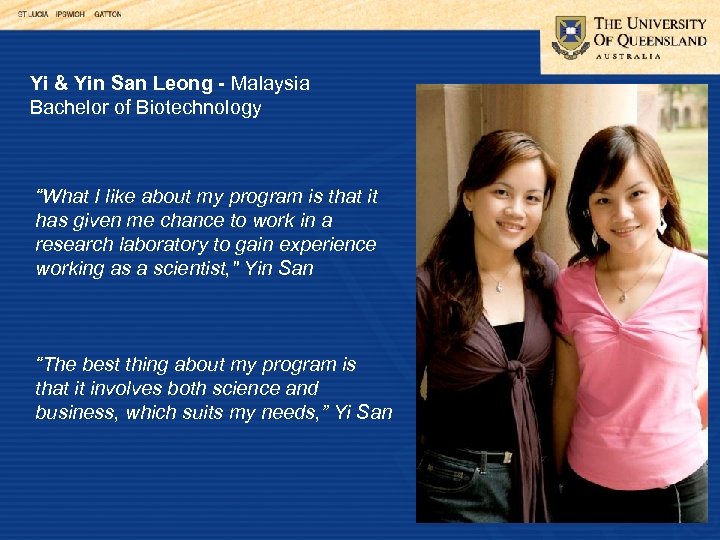 Yi & Yin San Leong - Malaysia Bachelor of Biotechnology “What I like about my program is that it has given me chance to work in a research laboratory to gain experience working as a scientist, " Yin San “The best thing about my program is that it involves both science and business, which suits my needs, ” Yi San
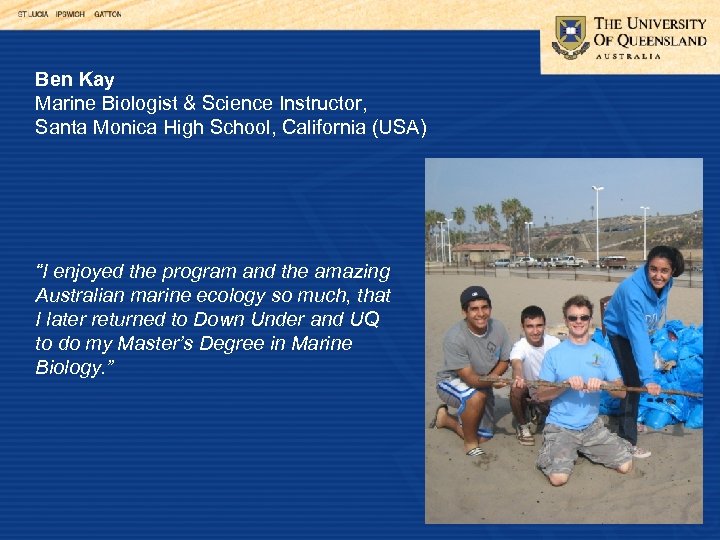 Ben Kay Marine Biologist & Science Instructor, Santa Monica High School, California (USA) “I enjoyed the program and the amazing Australian marine ecology so much, that I later returned to Down Under and UQ to do my Master’s Degree in Marine Biology. ”
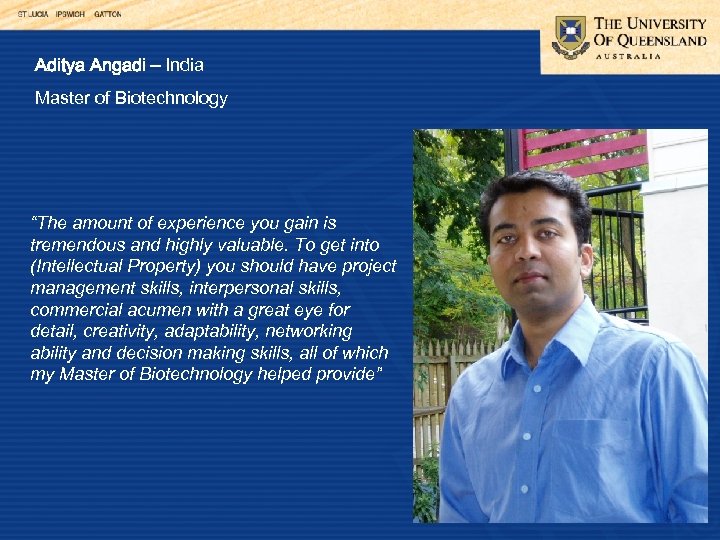 Aditya Angadi – India Master of Biotechnology “The amount of experience you gain is tremendous and highly valuable. To get into (Intellectual Property) you should have project management skills, interpersonal skills, commercial acumen with a great eye for detail, creativity, adaptability, networking ability and decision making skills, all of which my Master of Biotechnology helped provide”
 Studying Science
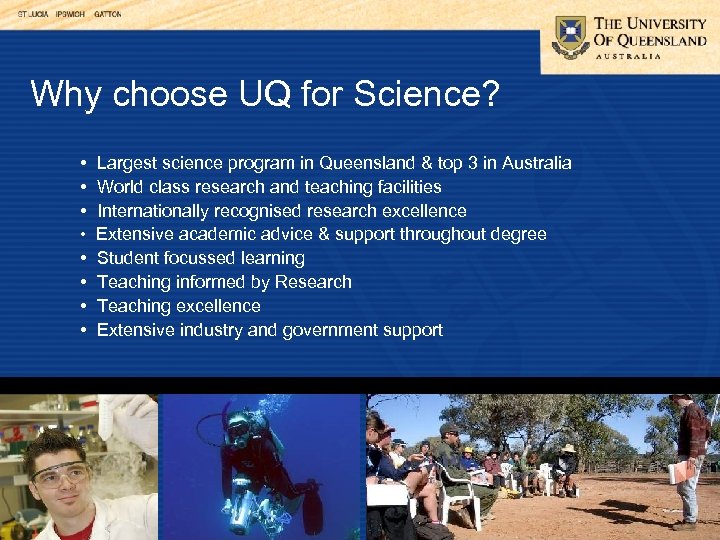 Why choose UQ for Science? • Largest science program in Queensland & top 3 in Australia • World class research and teaching facilities • Internationally recognised research excellence • Extensive academic advice & support throughout degree • Student focussed learning • Teaching informed by Research • Teaching excellence • Extensive industry and government support
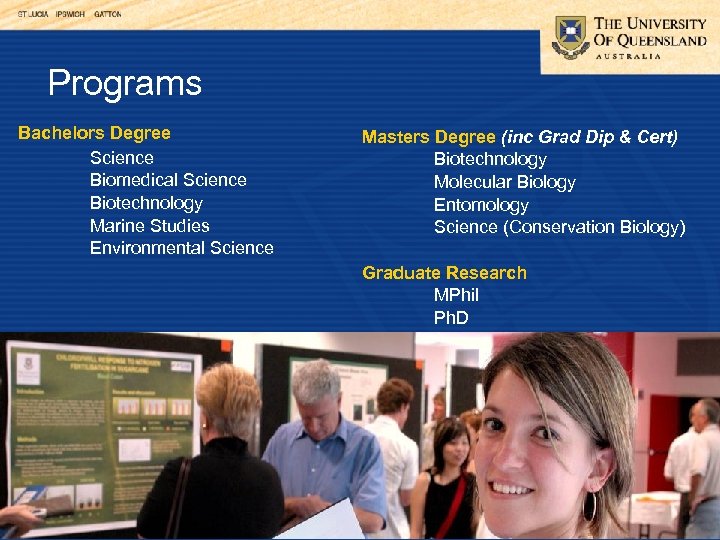 Programs Bachelors Degree Science Biomedical Science Biotechnology Marine Studies Environmental Science Masters Degree (inc Grad Dip & Cert) Biotechnology Molecular Biology Entomology Science (Conservation Biology) Graduate Research MPhil Ph. D
 Majors Bachelor of Science Dual Majors Biochemistry & Molecular Biology Biomedical Science Chemistry Computer Science Ecology Genetics Geographical Science Geological Sciences Marine Science Mathematics Microbiology Physics Plant Sciences Psychology Statistics Zoology Biophysics Bioinformatics Chemical Sciences Computational Science Extended Majors Biomedical Science Computer Science Mathematics Physics Psychology
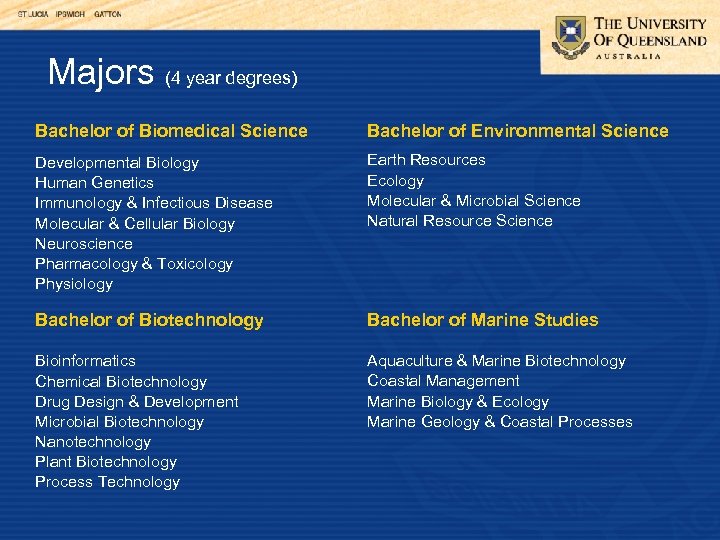 Majors (4 year degrees) Bachelor of Biomedical Science Bachelor of Environmental Science Developmental Biology Human Genetics Immunology & Infectious Disease Molecular & Cellular Biology Neuroscience Pharmacology & Toxicology Physiology Earth Resources Ecology Molecular & Microbial Science Natural Resource Science Bachelor of Biotechnology Bachelor of Marine Studies Bioinformatics Chemical Biotechnology Drug Design & Development Microbial Biotechnology Nanotechnology Plant Biotechnology Process Technology Aquaculture & Marine Biotechnology Coastal Management Marine Biology & Ecology Marine Geology & Coastal Processes
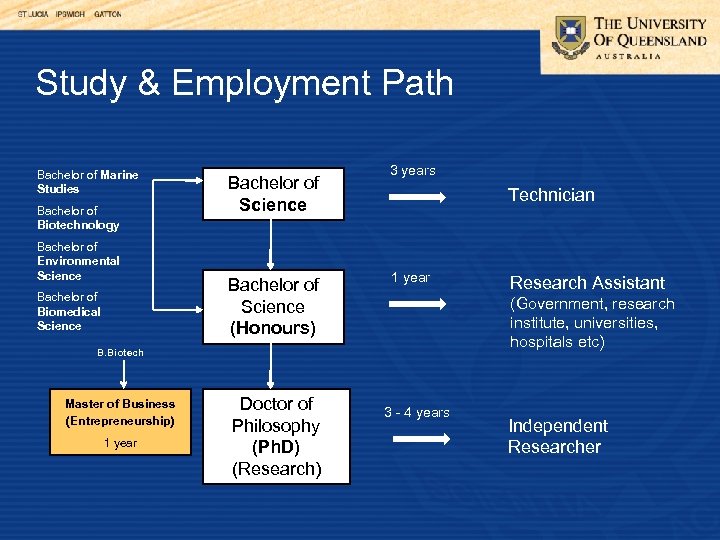 Study & Employment Path Bachelor of Marine Studies Bachelor of Biotechnology Bachelor of Environmental Science Bachelor of Biomedical Science Bachelor of Science (Honours) 3 years Technician 1 year (Government, research institute, universities, hospitals etc) B. Biotech Master of Business (Entrepreneurship) 1 year Doctor of Philosophy (Ph. D) (Research) Research Assistant 3 - 4 years Independent Researcher
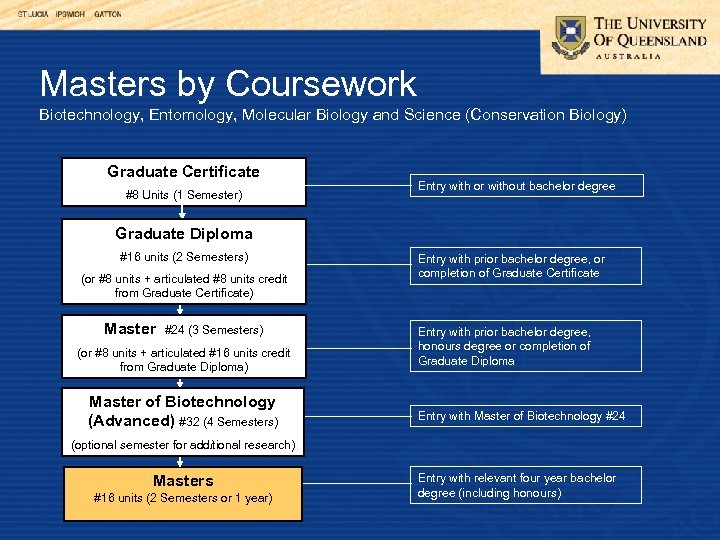 Masters by Coursework Biotechnology, Entomology, Molecular Biology and Science (Conservation Biology) Graduate Certificate #8 Units (1 Semester) Entry with or without bachelor degree Graduate Diploma #16 units (2 Semesters) (or #8 units + articulated #8 units credit from Graduate Certificate) Master #24 (3 Semesters) (or #8 units + articulated #16 units credit from Graduate Diploma) Master of Biotechnology (Advanced) #32 (4 Semesters) Entry with prior bachelor degree, or completion of Graduate Certificate Entry with prior bachelor degree, honours degree or completion of Graduate Diploma Entry with Master of Biotechnology #24 (optional semester for additional research) Masters #16 units (2 Semesters or 1 year) Entry with relevant four year bachelor degree (including honours)
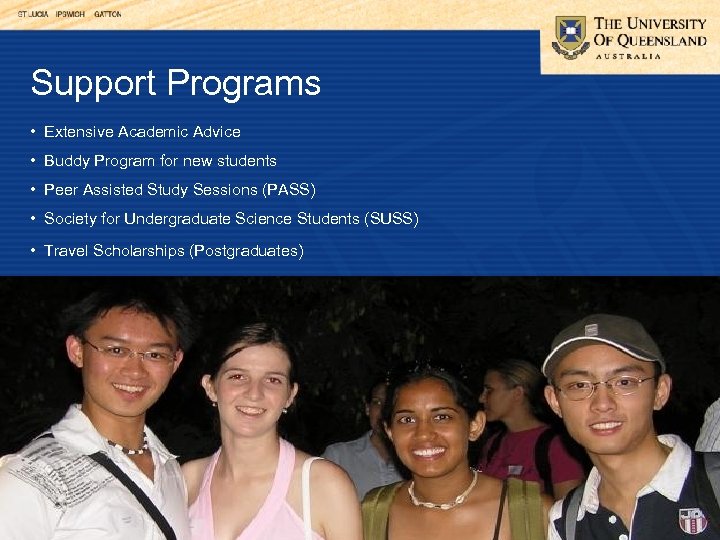 Support Programs • Extensive Academic Advice • Buddy Program for new students • Peer Assisted Study Sessions (PASS) • Society for Undergraduate Science Students (SUSS) • Travel Scholarships (Postgraduates)
 Scholarships - International Undergraduate (Malaysia and UQ Foundation Year graduates) - International Honours (in Biological & Chemical Sciences) - International Postgraduate Coursework (India, Vietnam, Thailand) - Ph. D Conference Support
 Important Websites Faculty website www. bacs. uq. edu. au Study Science Website www. uq. edu. au/science Science scholarships www. bacs. uq. edu. au/scholarships PASS Program www. bacs. uq. edu. au/undergraduate
 Thank you Further Information: Faculty of Biological & Chemical Sciences Phone: +61 7 3365 1888 Email: science. enquiries@uq. edu. au Website: www. bacs. uq. edu. au