


 Скачать презентацию Science and Manufacturing Ingredients for Innovation Professor Alma
AFOSR Hodzic Dec 2013_Final_public_short version.pptx
- Количество слайдов: 28
 Science and Manufacturing: Ingredients for Innovation Professor Alma Hodzic AMRC Research Director 17 th December 2013 AFOSR, Washington DC
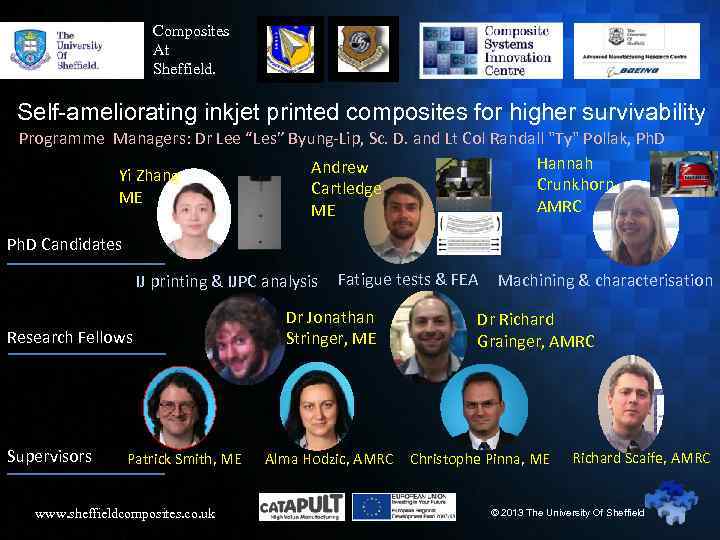 Composites At Sheffield. Self-ameliorating inkjet printed composites for higher survivability Programme Managers: Dr Lee “Les” Byung-Lip, Sc. D. and Lt Col Randall "Ty" Pollak, Ph. D Hannah Andrew Yi Zhang Crunkhorn Cartledge ME AMRC ME Ph. D Candidates IJ printing & IJPC analysis Research Fellows Supervisors Patrick Smith, ME www. sheffieldcomposites. co. uk Fatigue tests & FEA Dr Jonathan Stringer, ME Alma Hodzic, AMRC Machining & characterisation Dr Richard Grainger, AMRC Christophe Pinna, ME Richard Scaife, AMRC © 2013 The University Of Sheffield
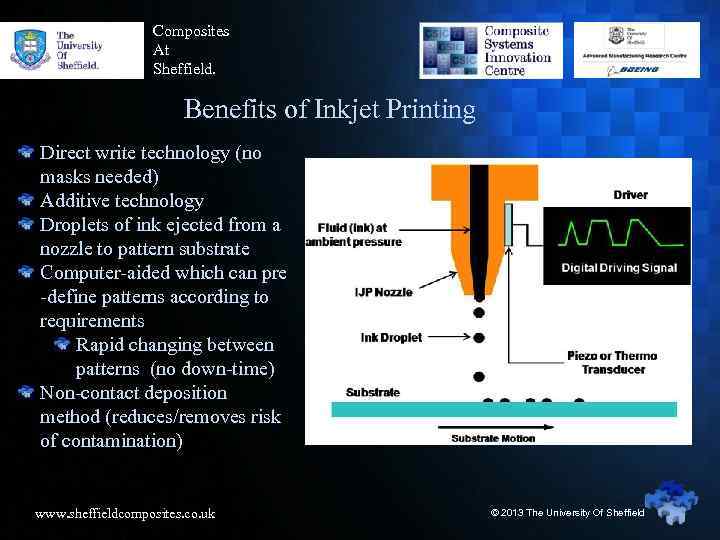 Composites At Sheffield. Benefits of Inkjet Printing Direct write technology (no masks needed) Additive technology Droplets of ink ejected from a nozzle to pattern substrate Computer-aided which can pre -define patterns according to requirements Rapid changing between patterns (no down-time) Non-contact deposition method (reduces/removes risk of contamination) www. sheffieldcomposites. co. uk © 2013 The University Of Sheffield
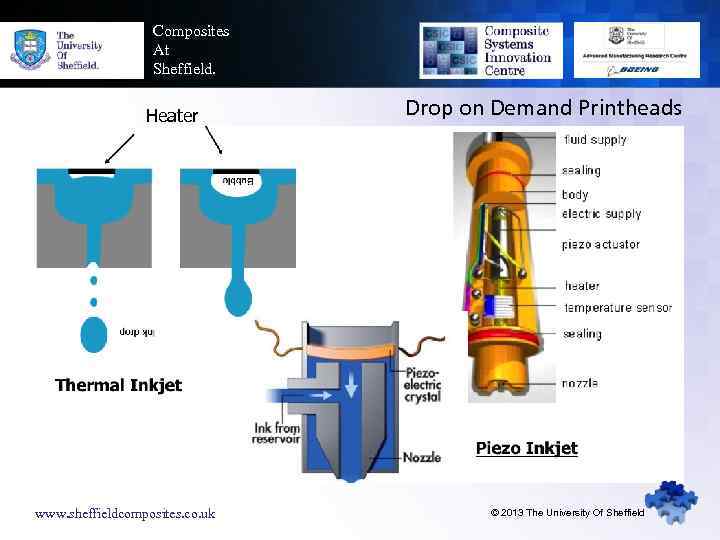 Composites At Sheffield. Heater www. sheffieldcomposites. co. uk Drop on Demand Printheads © 2013 The University Of Sheffield
 Composites At Sheffield. 1 < Z < 10 Optimum printing www. sheffieldcomposites. co. uk © 2013 The University Of Sheffield
 Composites At Sheffield. www. sheffieldcomposites. co. uk © 2013 The University Of Sheffield
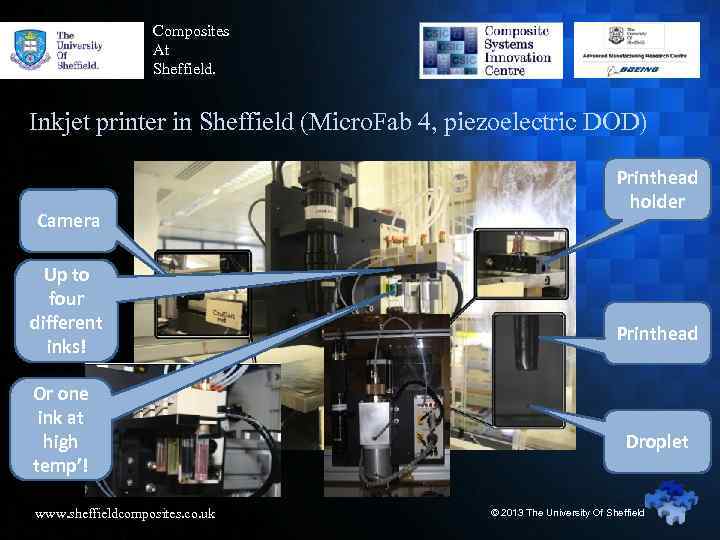 Composites At Sheffield. Inkjet printer in Sheffield (Micro. Fab 4, piezoelectric DOD) Camera Up to four different inks! Or one ink at high temp’! www. sheffieldcomposites. co. uk Printhead holder Printhead Droplet © 2013 The University Of Sheffield
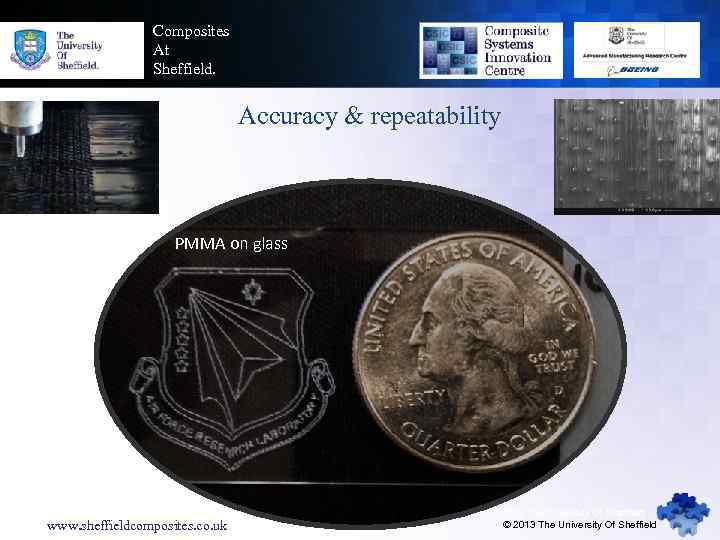 Composites At Sheffield. Accuracy & repeatability PMMA on glass www. sheffieldcomposites. co. uk © 2013 The University Of Sheffield
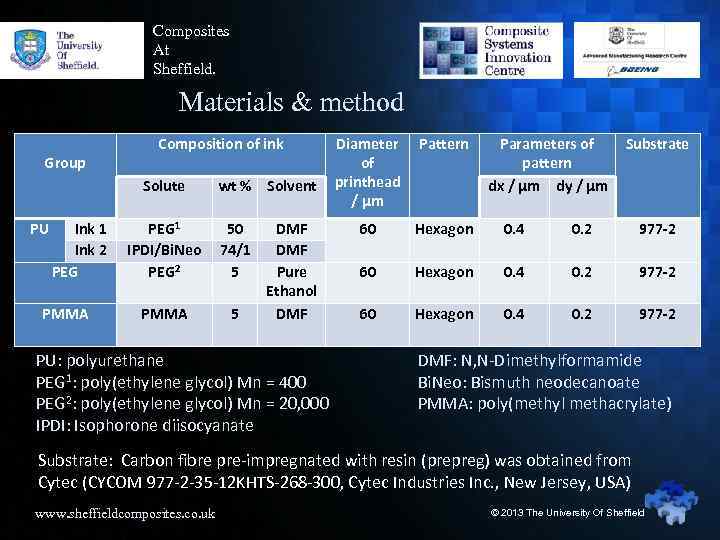 Composites At Sheffield. Materials & method Group Composition of ink Solute PU Ink 1 Ink 2 PEG PMMA wt % Solvent PEG 1 IPDI/Bi. Neo PEG 2 50 74/1 5 PMMA 5 DMF Pure Ethanol DMF PU: polyurethane PEG 1: poly(ethylene glycol) Mn = 400 PEG 2: poly(ethylene glycol) Mn = 20, 000 IPDI: Isophorone diisocyanate Diameter of printhead / μm Pattern Parameters of pattern dx / μm dy / μm Substrate 60 Hexagon 0. 4 0. 2 977 -2 DMF: N, N-Dimethylformamide Bi. Neo: Bismuth neodecanoate PMMA: poly(methyl methacrylate) Substrate: Carbon fibre pre-impregnated with resin (prepreg) was obtained from Cytec (CYCOM 977 -2 -35 -12 KHTS-268 -300, Cytec Industries Inc. , New Jersey, USA) www. sheffieldcomposites. co. uk © 2013 The University Of Sheffield
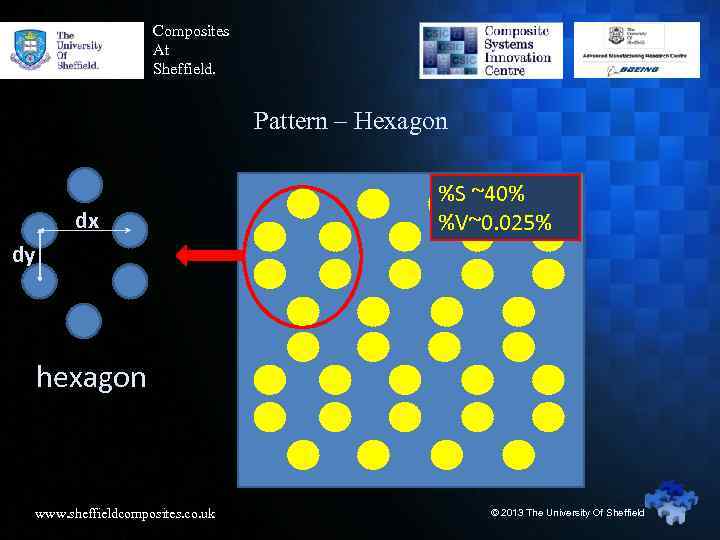 Composites At Sheffield. Pattern – Hexagon dx %S ~40% %V~0. 025% dy hexagon www. sheffieldcomposites. co. uk © 2013 The University Of Sheffield
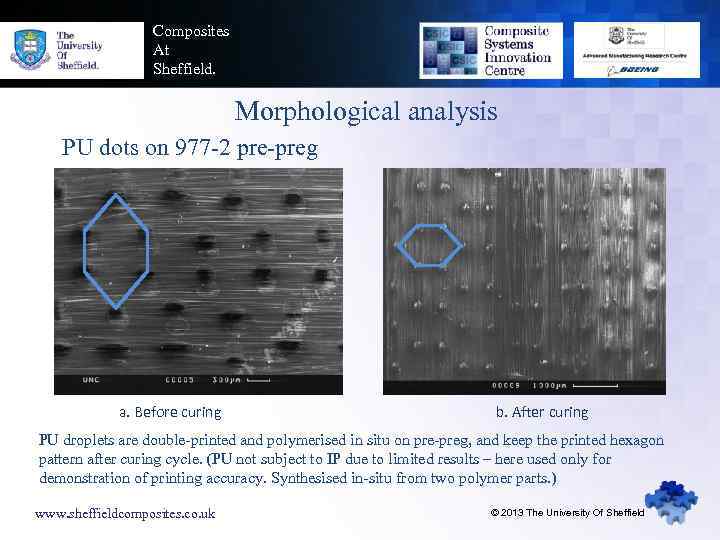 Composites At Sheffield. Morphological analysis PU dots on 977 -2 pre-preg a. Before curing b. After curing PU droplets are double-printed and polymerised in situ on pre-preg, and keep the printed hexagon pattern after curing cycle. (PU not subject to IP due to limited results – here used only for demonstration of printing accuracy. Synthesised in-situ from two polymer parts. ) www. sheffieldcomposites. co. uk © 2013 The University Of Sheffield
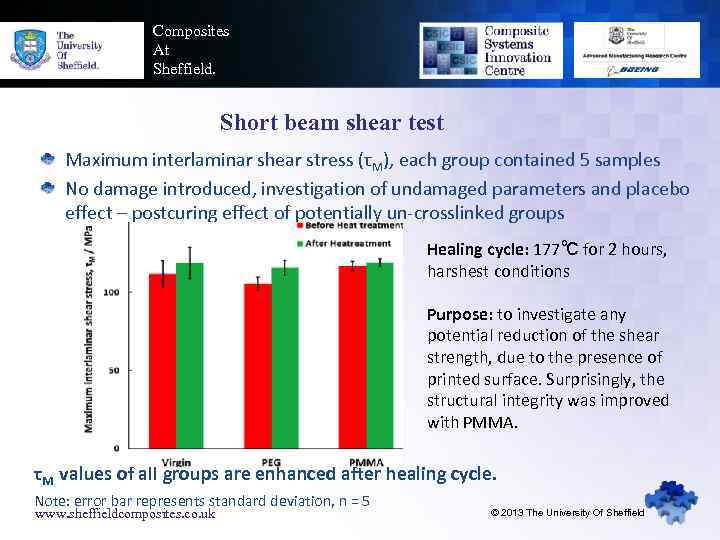 Composites At Sheffield. Short beam shear test Maximum interlaminar shear stress (τM), each group contained 5 samples No damage introduced, investigation of undamaged parameters and placebo effect – postcuring effect of potentially un-crosslinked groups Healing cycle: 177℃ for 2 hours, harshest conditions Purpose: to investigate any potential reduction of the shear strength, due to the presence of printed surface. Surprisingly, the structural integrity was improved with PMMA. τM values of all groups are enhanced after healing cycle. Note: error bar represents standard deviation, n = 5 www. sheffieldcomposites. co. uk © 2013 The University Of Sheffield
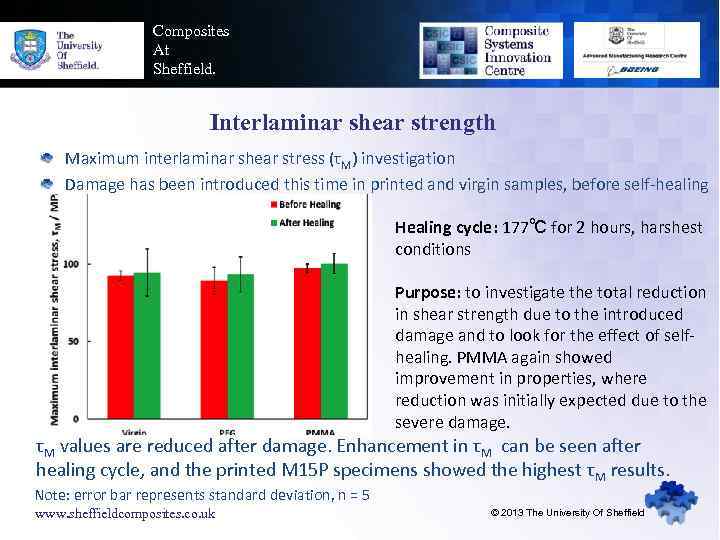 Composites At Sheffield. Interlaminar shear strength Maximum interlaminar shear stress (τM) investigation Damage has been introduced this time in printed and virgin samples, before self-healing Healing cycle: 177℃ for 2 hours, harshest conditions Purpose: to investigate the total reduction in shear strength due to the introduced damage and to look for the effect of selfhealing. PMMA again showed improvement in properties, where reduction was initially expected due to the severe damage. τM values are reduced after damage. Enhancement in τM can be seen after healing cycle, and the printed M 15 P specimens showed the highest τM results. Note: error bar represents standard deviation, n = 5 www. sheffieldcomposites. co. uk © 2013 The University Of Sheffield
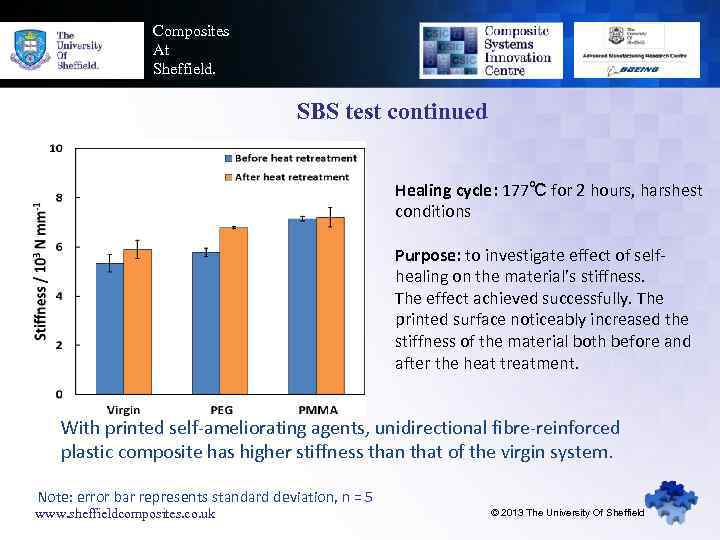 Composites At Sheffield. SBS test continued Healing cycle: 177℃ for 2 hours, harshest conditions Purpose: to investigate effect of selfhealing on the material’s stiffness. The effect achieved successfully. The printed surface noticeably increased the stiffness of the material both before and after the heat treatment. With printed self-ameliorating agents, unidirectional fibre-reinforced plastic composite has higher stiffness than that of the virgin system. Note: error bar represents standard deviation, n = 5 www. sheffieldcomposites. co. uk © 2013 The University Of Sheffield
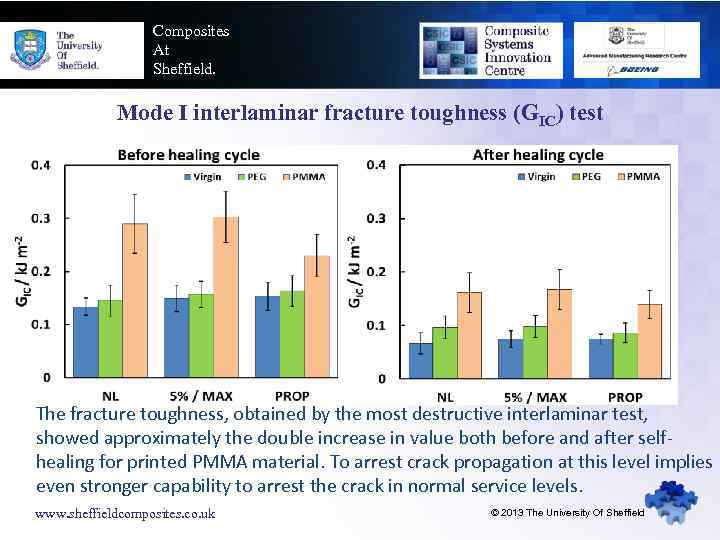 Composites At Sheffield. Mode I interlaminar fracture toughness (GIC) test The fracture toughness, obtained by the most destructive interlaminar test, showed approximately the double increase in value both before and after selfhealing for printed PMMA material. To arrest crack propagation at this level implies even stronger capability to arrest the crack in normal service levels. www. sheffieldcomposites. co. uk © 2013 The University Of Sheffield
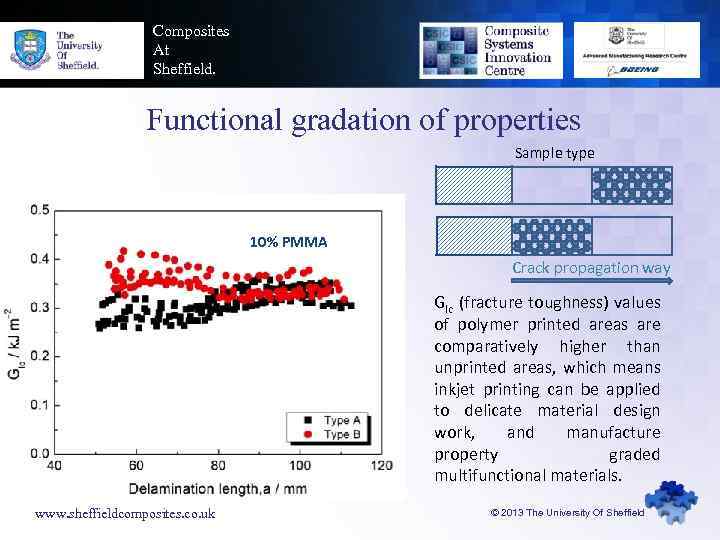 Composites At Sheffield. Functional gradation of properties Sample type 10% PMMA Crack propagation way GIc (fracture toughness) values of polymer printed areas are comparatively higher than unprinted areas, which means inkjet printing can be applied to delicate material design work, and manufacture property graded multifunctional materials. www. sheffieldcomposites. co. uk © 2013 The University Of Sheffield
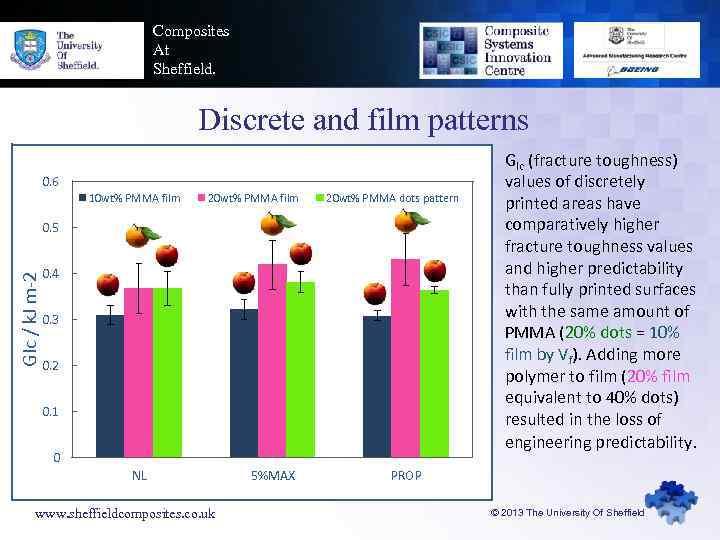 Composites At Sheffield. Discrete and film patterns 0. 6 10 wt% PMMA film 20 wt% PMMA dots pattern GIc / k. J m-2 0. 5 0. 4 0. 3 0. 2 0. 1 0 NL www. sheffieldcomposites. co. uk 5%MAX GIc (fracture toughness) values of discretely printed areas have comparatively higher fracture toughness values and higher predictability than fully printed surfaces with the same amount of PMMA (20% dots = 10% film by Vf). Adding more polymer to film (20% film equivalent to 40% dots) resulted in the loss of engineering predictability. PROP © 2013 The University Of Sheffield
 Composites At Sheffield. Patterns and polymer loadings 0. 5 NP 20 wt% PMMA hexagon 0. 7/0. 35 20 wt% PMMA hexagon 0. 4/0. 2 GIc / k. J m-2 0. 4 0. 3 0. 2 0. 1 0 NL 5%MAX PROP 0. 5 5 wt% PMMA 20 wt% PMMA %PMMA GIc Repeatability www. sheffieldcomposites. co. uk GIc / k. J m-2 0. 4 0. 3 0. 2 0. 1 0 NL © 2013 The University Of Sheffield 5%MAX PROP
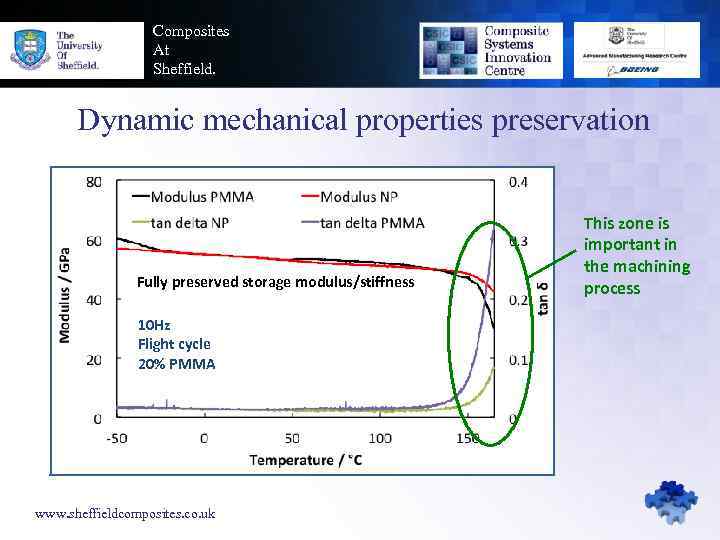 Composites At Sheffield. Dynamic mechanical properties preservation Fully preserved storage modulus/stiffness 10 Hz Flight cycle 20% PMMA www. sheffieldcomposites. co. uk This zone is important in the machining process
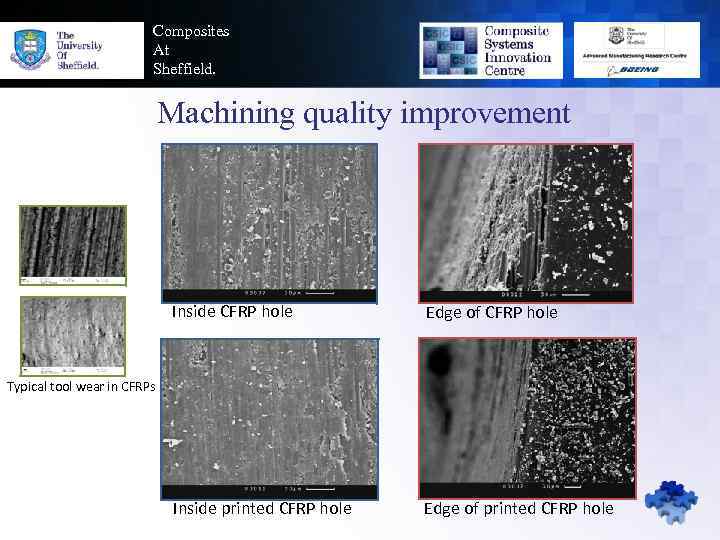 Composites At Sheffield. Machining quality improvement Inside CFRP hole Edge of CFRP hole Inside printed CFRP hole Edge of printed CFRP hole Typical tool wear in CFRPs
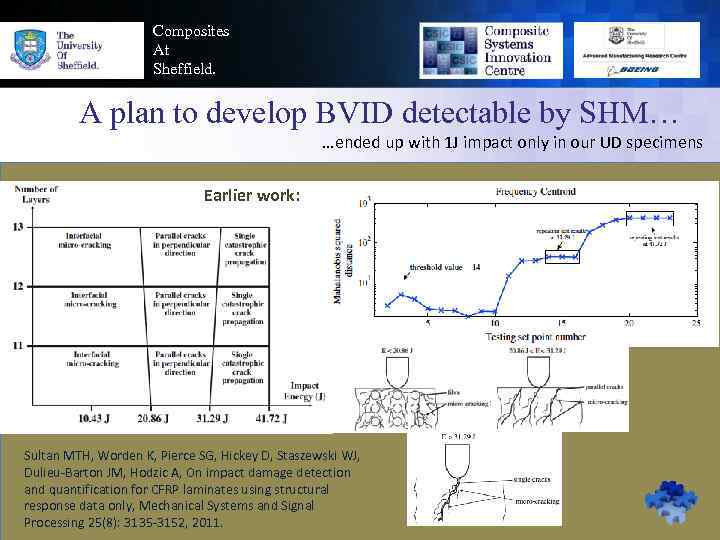 Composites At Sheffield. A plan to develop BVID detectable by SHM… …ended up with 1 J impact only in our UD specimens Earlier work: Sultan MTH, Worden K, Pierce SG, Hickey D, Staszewski WJ, Dulieu-Barton JM, Hodzic A, On impact damage detection and quantification for CFRP laminates using structural response data only, Mechanical Systems and Signal Processing 25(8): 3135 -3152, 2011.
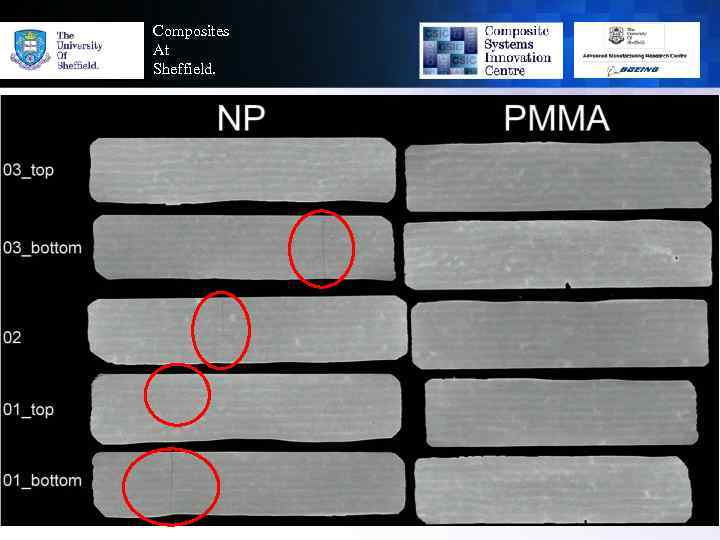
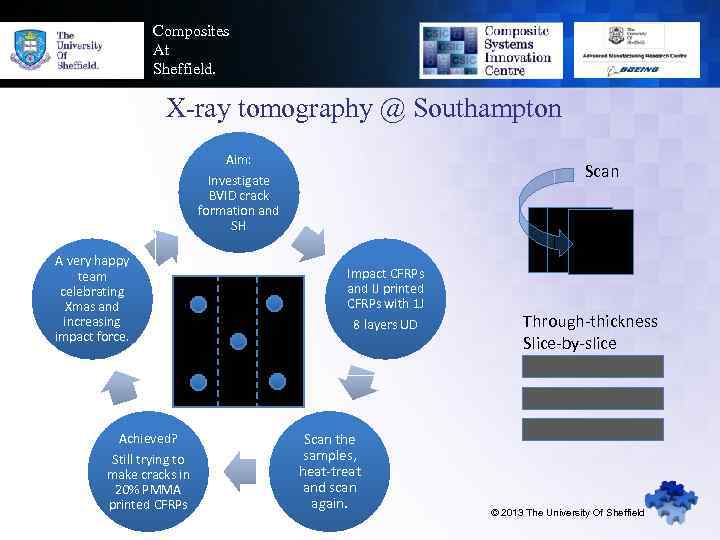 Composites At Sheffield. X-ray tomography @ Southampton Aim: Scan Investigate BVID crack formation and SH A very happy team celebrating Xmas and increasing impact force. Achieved? Still trying to make cracks in 20% PMMA printed CFRPs Impact CFRPs and IJ printed CFRPs with 1 J 8 layers UD Scan the samples, heat-treat and scan again. Through-thickness Slice-by-slice © 2013 The University Of Sheffield
 Composites At Sheffield. X-ray tomography @ Southampton System: Custom design Nikon/Metris dual source high energy micro-focus walk-in room system This scan used the 225 k. V source with and 1621 Perkin. Elmer cesium-iodide detector To enhance contrast a Mo target was used and peak voltage was set at 55 k. V, with no pre-filtration The current was set at 157 u. A (8. 6 W) and the panel brought forwards so that the source-imaging distance was ~700 mm. At this power, the focal spot is spread slightly to prevent melting of the target - however, since the voxel size at this magnification was 7. 6 microns, we could afford to gain flux at the expense of focal spot size, without affecting the resolution of the reconstruction. 3142 projections were taken over the 360 degree rotation, with 4 frames per projection being averaged in order to improve signal to noise Exposure time of each projection was 354 ms and the gain set to 30 d. B To reduce the effect of ring artefacts, shuttling was used with a maximum displacement of 5 pixels © 2013 The University Of Sheffield
 Composites At Sheffield.
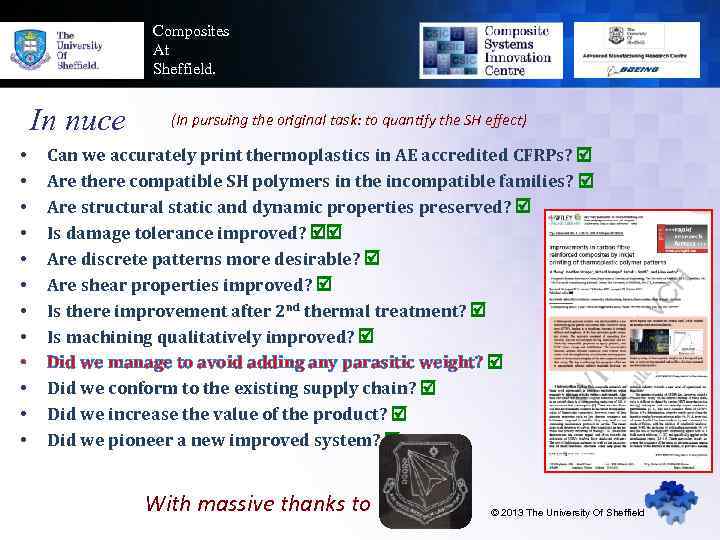 Composites At Sheffield. In nuce • • • (In pursuing the original task: to quantify the SH effect) Can we accurately print thermoplastics in AE accredited CFRPs? Are there compatible SH polymers in the incompatible families? Are structural static and dynamic properties preserved? Is damage tolerance improved? Are discrete patterns more desirable? Are shear properties improved? Is there improvement after 2 nd thermal treatment? Is machining qualitatively improved? Did we manage to avoid adding any parasitic weight? Did we conform to the existing supply chain? Did we increase the value of the product? Did we pioneer a new improved system? With massive thanks to © 2013 The University Of Sheffield
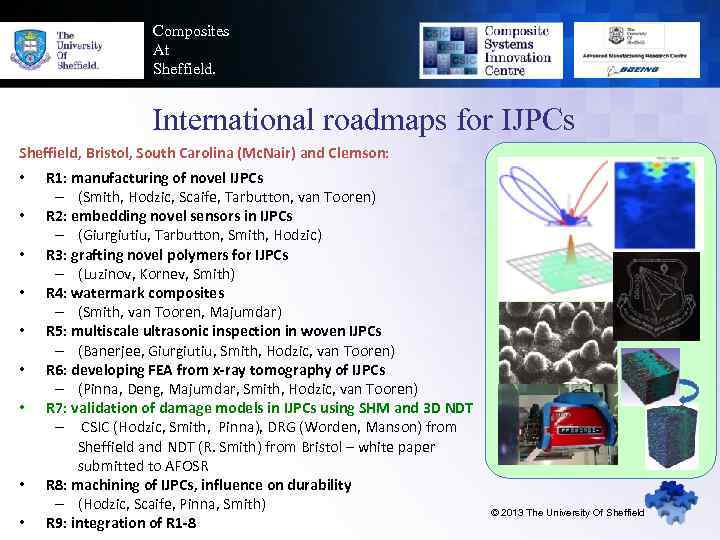 Composites At Sheffield. International roadmaps for IJPCs Sheffield, Bristol, South Carolina (Mc. Nair) and Clemson: • • • R 1: manufacturing of novel IJPCs – (Smith, Hodzic, Scaife, Tarbutton, van Tooren) R 2: embedding novel sensors in IJPCs – (Giurgiutiu, Tarbutton, Smith, Hodzic) R 3: grafting novel polymers for IJPCs – (Luzinov, Kornev, Smith) R 4: watermark composites – (Smith, van Tooren, Majumdar) R 5: multiscale ultrasonic inspection in woven IJPCs – (Banerjee, Giurgiutiu, Smith, Hodzic, van Tooren) R 6: developing FEA from x-ray tomography of IJPCs – (Pinna, Deng, Majumdar, Smith, Hodzic, van Tooren) R 7: validation of damage models in IJPCs using SHM and 3 D NDT – CSIC (Hodzic, Smith, Pinna), DRG (Worden, Manson) from Sheffield and NDT (R. Smith) from Bristol – white paper submitted to AFOSR R 8: machining of IJPCs, influence on durability – (Hodzic, Scaife, Pinna, Smith) R 9: integration of R 1 -8 © 2013 The University Of Sheffield
 Innovation and Research Manufacture/Characterization/Certification Center for Mechanics, Materials, and Non-Destructive Evaluation Laboratory for Active Materials and Smart Structures Center for Friction Stir Processing, NSFI/UCRC Virtual Test Bed Condition-Based Maintenance Research Center Lightning Response Laboratory Hetro. Foa. M Center Solid Oxide Fuel Cell Center Strategic Approaches to the Generation of Electricity May 2014: Advanced Composite Material Research Laboratory
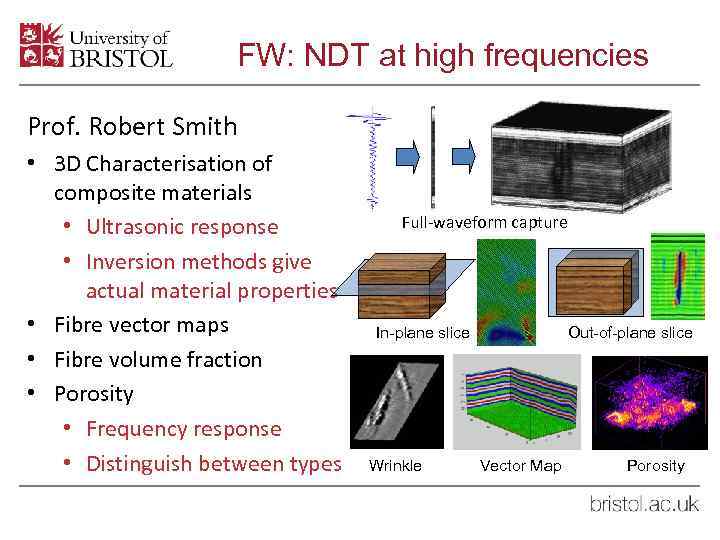 FW: NDT at high frequencies Prof. Robert Smith • 3 D Characterisation of composite materials • Ultrasonic response • Inversion methods give actual material properties • Fibre vector maps • Fibre volume fraction • Porosity • Frequency response • Distinguish between types Full-waveform capture In-plane slice Wrinkle Out-of-plane slice Vector Map Porosity