 Скачать презентацию School-Wide Positive Behavior Support Introduction Presented by Susan
29c29644bb0d887b4937a8505fac8b97.ppt
- Количество слайдов: 75



School-Wide Positive Behavior Support: Introduction Presented by Susan Barrett Horner & Sugai OSEP Center on PBIS University of Oregon June 7, 2005 www. pbis. org www. swis. org
Advanced Organizer • Review • Critical Features • Examples • Data
Main Message! Successful Individual student behavior support is linked to host environments or school climates that are effective, efficient, relevant, & durable (Zins & Ponti, 1990)
Big Ideas • 3 -5 years • Organizational Framework • Critical Features same across schools-unique to the culture of the school • Invest in Coaching Capacity
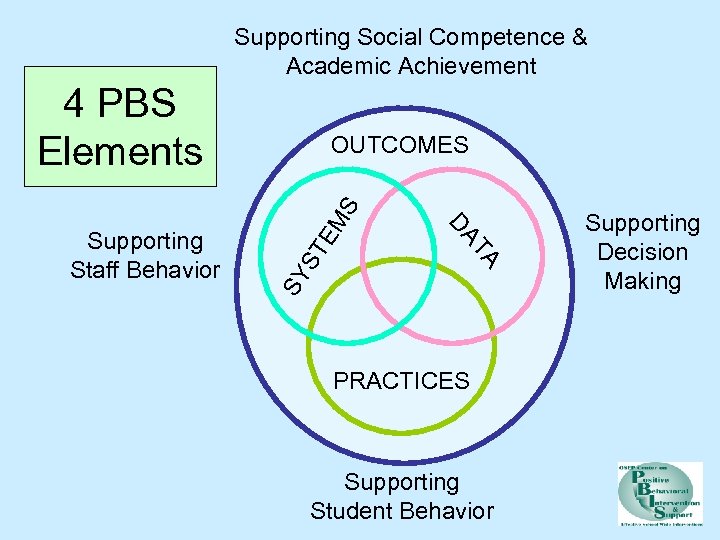
Supporting Social Competence & Academic Achievement 4 PBS Elements EM S ST SY TA DA Supporting Staff Behavior OUTCOMES PRACTICES Supporting Student Behavior Supporting Decision Making
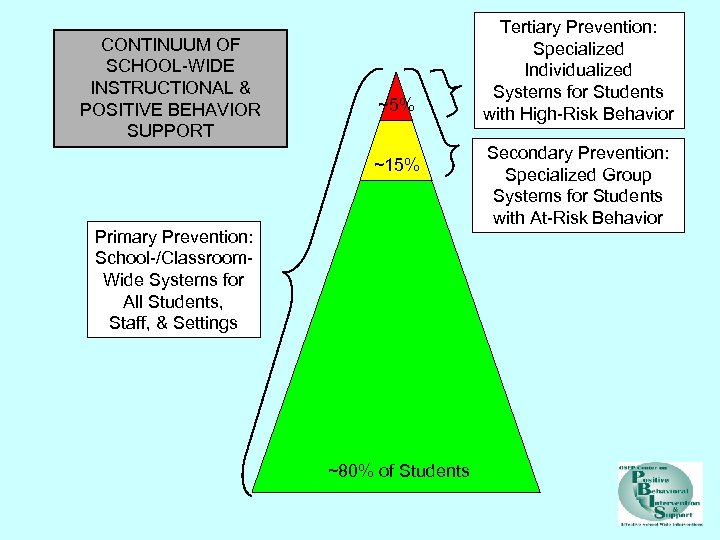
CONTINUUM OF SCHOOL-WIDE INSTRUCTIONAL & POSITIVE BEHAVIOR SUPPORT ~5% ~15% Primary Prevention: School-/Classroom. Wide Systems for All Students, Staff, & Settings ~80% of Students Tertiary Prevention: Specialized Individualized Systems for Students with High-Risk Behavior Secondary Prevention: Specialized Group Systems for Students with At-Risk Behavior
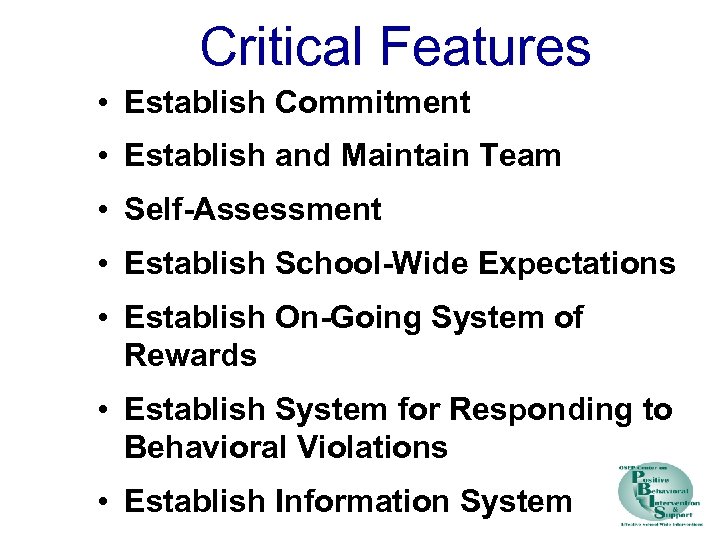
Critical Features • Establish Commitment • Establish and Maintain Team • Self-Assessment • Establish School-Wide Expectations • Establish On-Going System of Rewards • Establish System for Responding to Behavioral Violations • Establish Information System
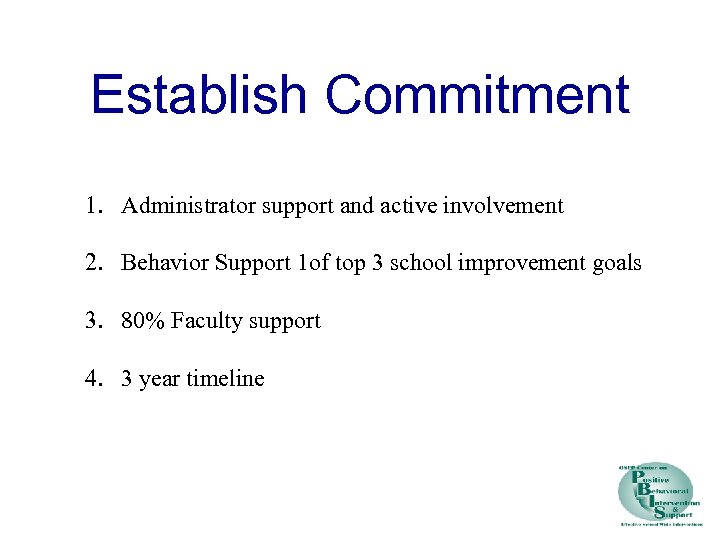
Establish Commitment 1. Administrator support and active involvement 2. Behavior Support 1 of top 3 school improvement goals 3. 80% Faculty support 4. 3 year timeline
Build Your Team Core team members will make or break the change effort. Choose the team to assure: • Representation from all subject areas • Representation from all staff cohorts • Inclusion of a trusted administrator, discipline guru, motivator
Team Composition • Administrator • Grade/Department Representation • Specialized Support – Special Educator, Counselor, School Psychologist, Social Worker, etc. • Support Staff – Office, Supervisory, Custodial, Bus, Security, etc. • Parent • Community – Mental Health, Business • Student Start with Team that “Works. ”
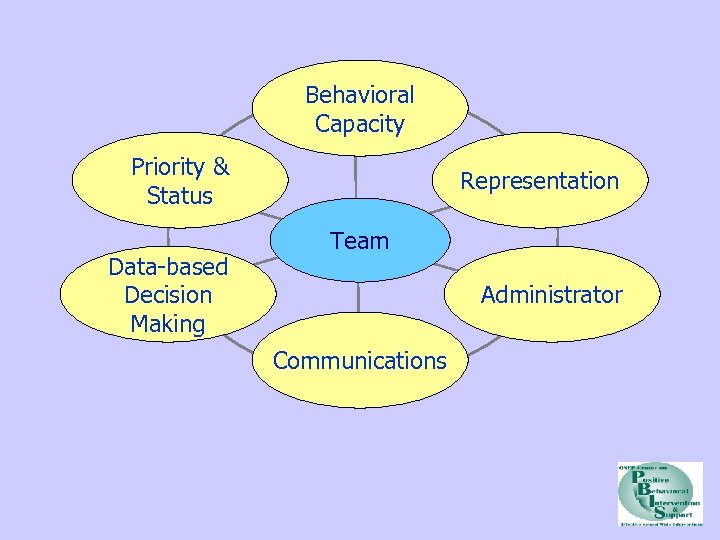
Behavioral Capacity Priority & Status Data-based Decision Making Representation Team Administrator Communications
Gather Information Data: Office Referrals, Suspension, Attendance, Academic Survey Staff, Students, Administration, Parents
Marketing Strategy • Integrate past school behavior plans • Assure clarity of target areas • Incorporate school colors or mascot
Self-Assessment 1. Completion of PBIS Staff Survey 2. Team summarizes existing school discipline data 3. Strengths, areas of immediate focus identified 4. Action plan written
80% Staff Buy In • Share Data/Presentations • Start Small • Easy Implementation • Showcase Success
Staff Buy In CITY RRAP ASK ABOUT IT !!!!
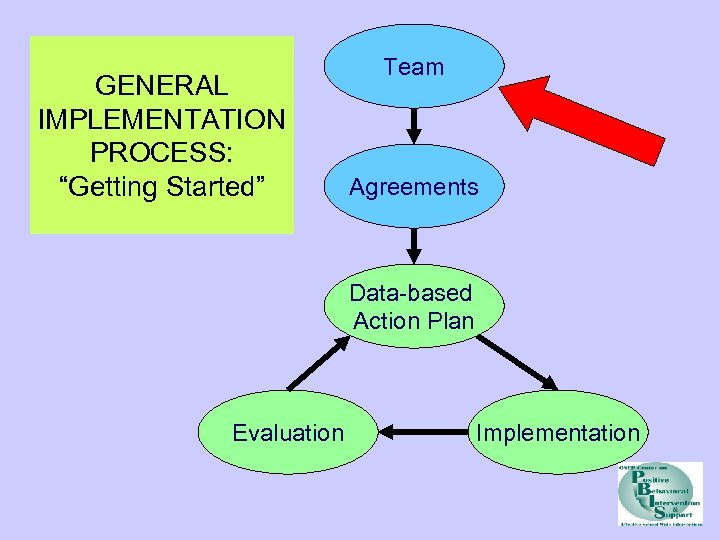
GENERAL IMPLEMENTATION PROCESS: “Getting Started” Team Agreements Data-based Action Plan Evaluation Implementation
Nuts and Bolts • Brainstorm classroom vs. office managed behaviors • Come to consensus on language to be used • Agree on behaviors to list
Repeat the Process for Office Managed Behaviors • Possible administrative relations to referrals • Procedures for handling referrals • Create a decision tree
Develop a Process Flow Chart • Combine the two decision trees to create a process flow chart to guide all student behavior management. • Keep it as simple as possible • Keep it as clear as possible
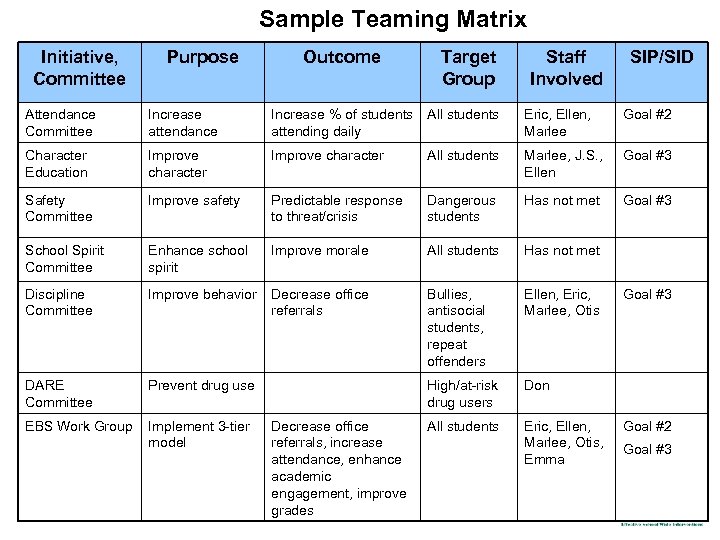
Sample Teaming Matrix Initiative, Committee Purpose Outcome Target Group Staff Involved SIP/SID Attendance Committee Increase attendance Increase % of students All students attending daily Eric, Ellen, Marlee Goal #2 Character Education Improve character All students Marlee, J. S. , Ellen Goal #3 Safety Committee Improve safety Predictable response to threat/crisis Dangerous students Has not met Goal #3 School Spirit Committee Enhance school spirit Improve morale All students Has not met Discipline Committee Improve behavior Decrease office referrals Bullies, antisocial students, repeat offenders Ellen, Eric, Marlee, Otis DARE Committee Prevent drug use High/at-risk drug users Don EBS Work Group Implement 3 -tier model All students Eric, Ellen, Marlee, Otis, Emma Decrease office referrals, increase attendance, enhance academic engagement, improve grades Goal #3 Goal #2 Goal #3
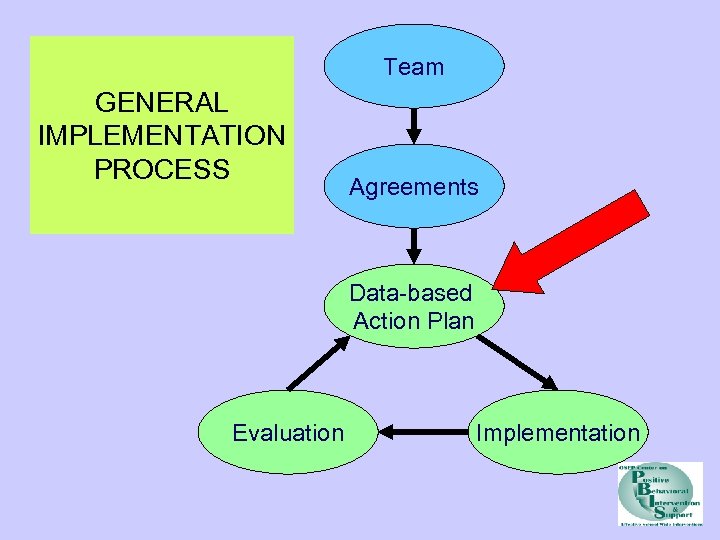
Team GENERAL IMPLEMENTATION PROCESS Agreements Data-based Action Plan Evaluation Implementation
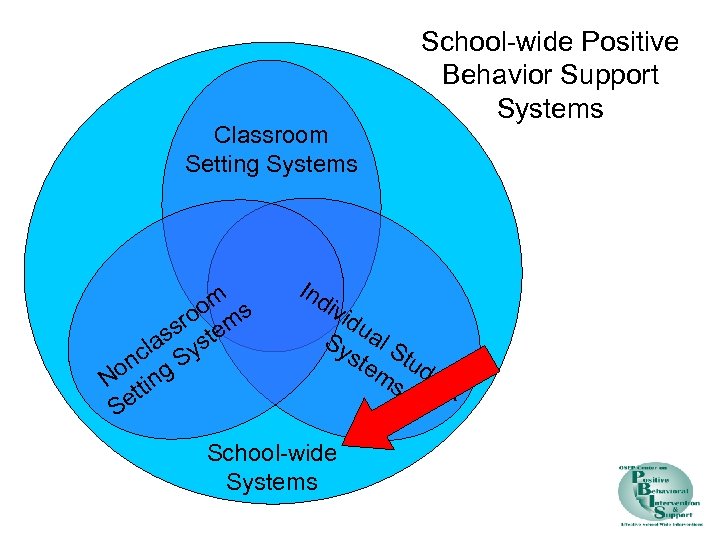
Classroom Setting Systems om s ro em s as yst cl S on ng N tti Se School-wide Positive Behavior Support Systems Ind ivi du Sy al S ste tu ms den School-wide Systems t
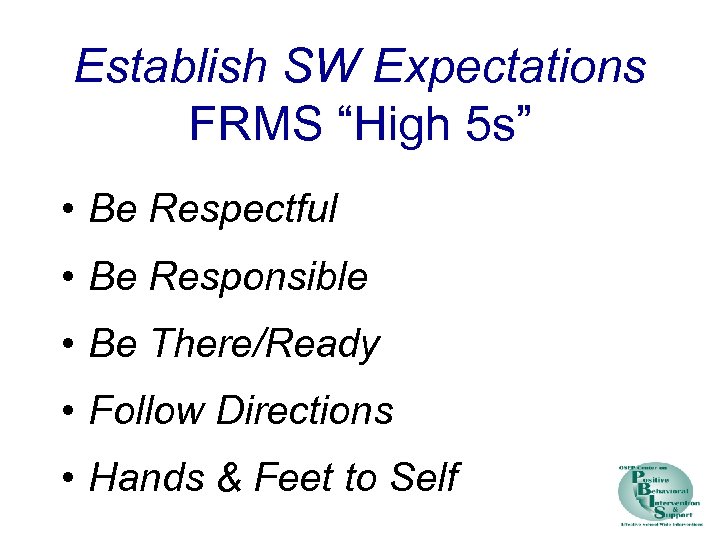
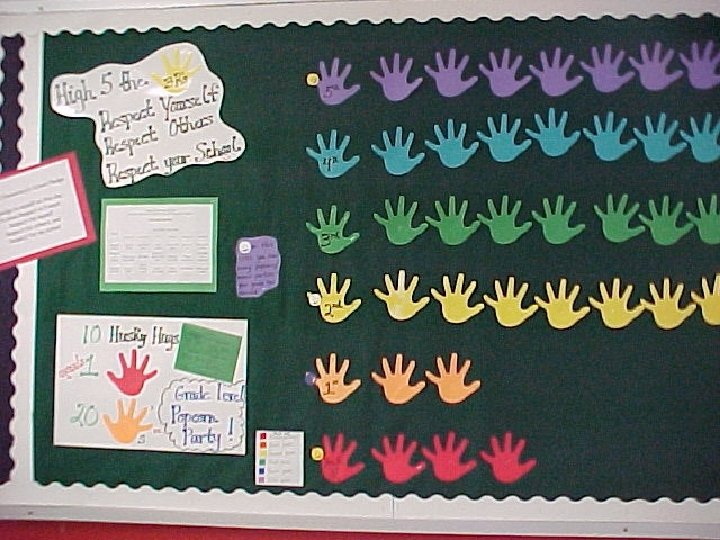
Establish SW Expectations FRMS “High 5 s” • Be Respectful • Be Responsible • Be There/Ready • Follow Directions • Hands & Feet to Self
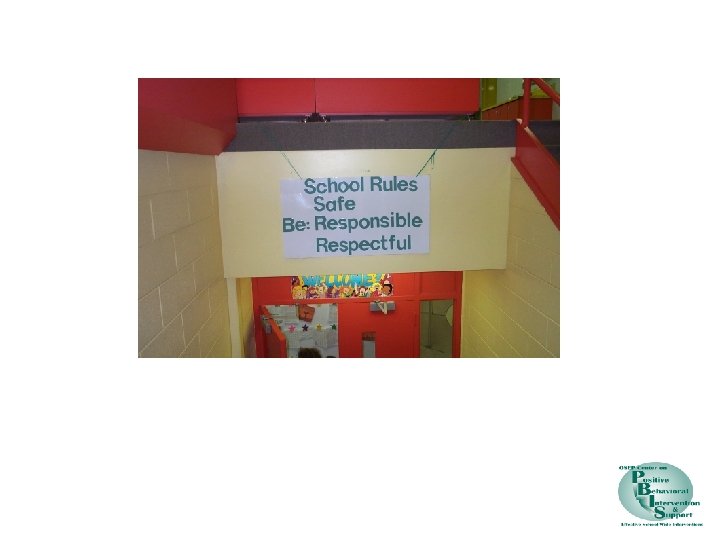
Teaching SW Expectations FRMS “Opening Day” • Teach directly in context (“teaching stations”) – See/model – Practice – Acknowledge • 2 day intensive by all staff/students • Regular weekly/monthly review 5
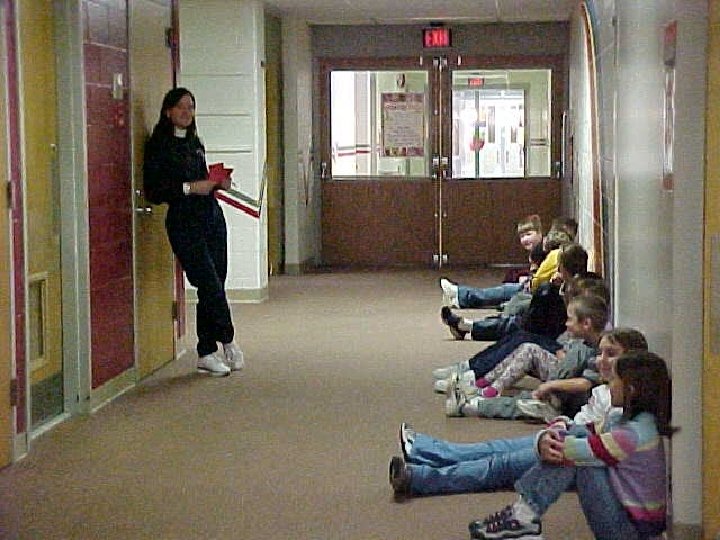
Teaching guidelines • Show, tell, describe. • Practice frequently. • Monitor/supervise use. • Acknowledge/recognize.
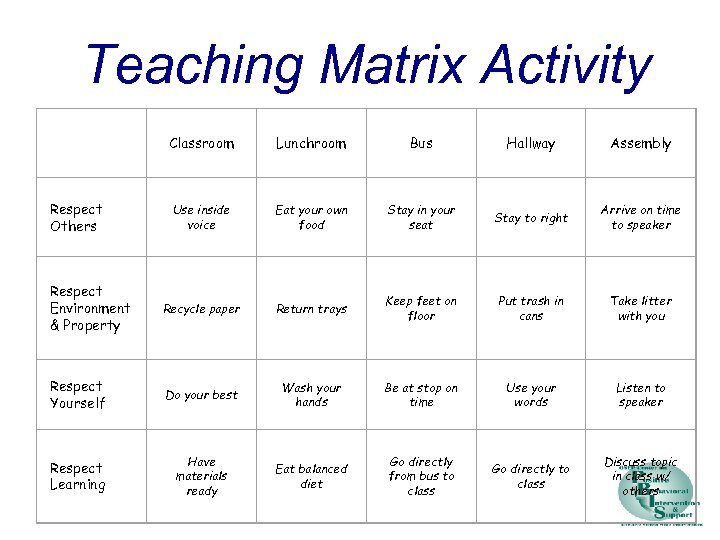
Teaching Matrix Activity Classroom Lunchroom Bus Hallway Assembly Use inside voice Eat your own food Stay in your seat Stay to right Arrive on time to speaker Respect Environment & Property Recycle paper Return trays Keep feet on floor Put trash in cans Take litter with you Respect Yourself Do your best Wash your hands Be at stop on time Use your words Listen to speaker Respect Learning Have materials ready Eat balanced diet Go directly from bus to class Go directly to class Discuss topic in class w/ others Respect Others
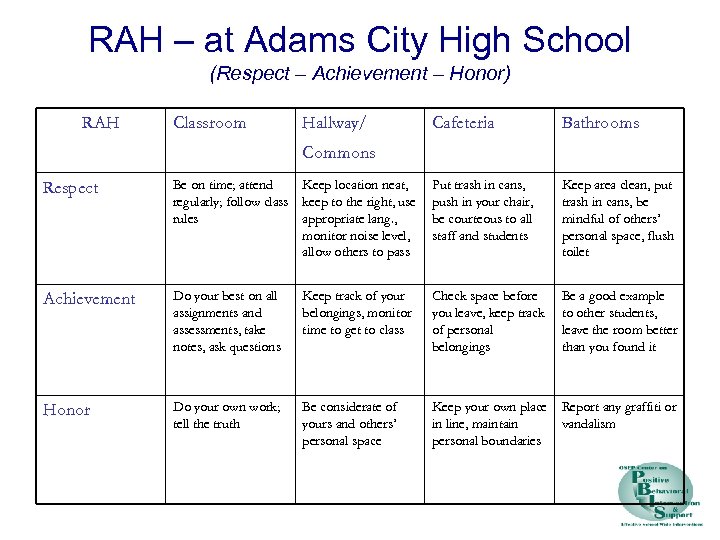
RAH – at Adams City High School (Respect – Achievement – Honor) RAH Classroom Hallway/ Cafeteria Bathrooms Commons Respect Be on time; attend Keep location neat, regularly; follow class keep to the right, use rules appropriate lang. , monitor noise level, allow others to pass Put trash in cans, push in your chair, be courteous to all staff and students Keep area clean, put trash in cans, be mindful of others’ personal space, flush toilet Achievement Do your best on all assignments and assessments, take notes, ask questions Keep track of your belongings, monitor time to get to class Check space before you leave, keep track of personal belongings Be a good example to other students, leave the room better than you found it Honor Do your own work; tell the truth Be considerate of yours and others’ personal space Keep your own place in line, maintain personal boundaries Report any graffiti or vandalism
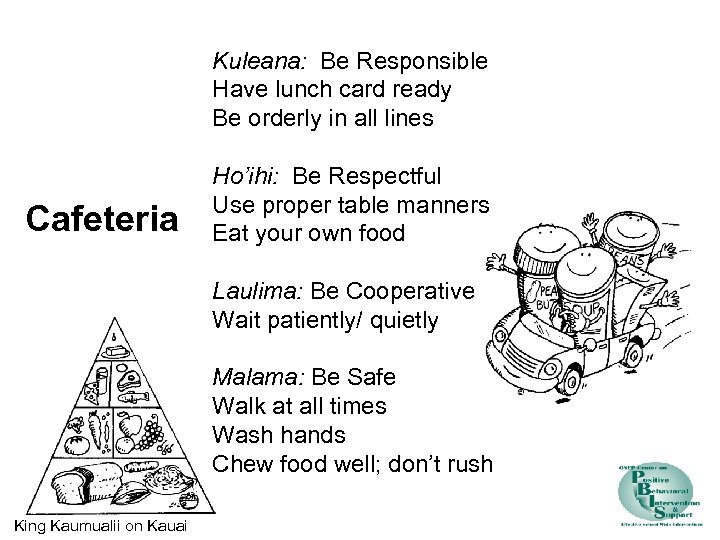
Kuleana: Be Responsible Have lunch card ready Be orderly in all lines Cafeteria Ho’ihi: Be Respectful Use proper table manners Eat your own food Laulima: Be Cooperative Wait patiently/ quietly Malama: Be Safe Walk at all times Wash hands Chew food well; don’t rush King Kaumualii on Kauai
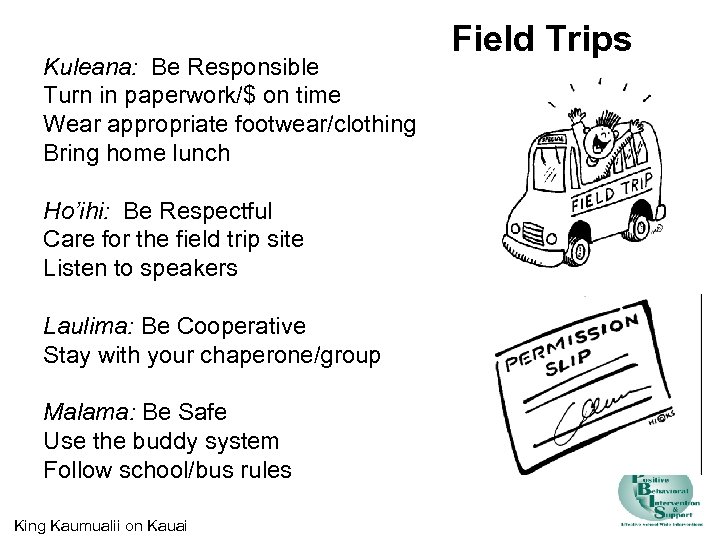
Kuleana: Be Responsible Turn in paperwork/$ on time Wear appropriate footwear/clothing Bring home lunch Ho’ihi: Be Respectful Care for the field trip site Listen to speakers Laulima: Be Cooperative Stay with your chaperone/group Malama: Be Safe Use the buddy system Follow school/bus rules King Kaumualii on Kauai Field Trips
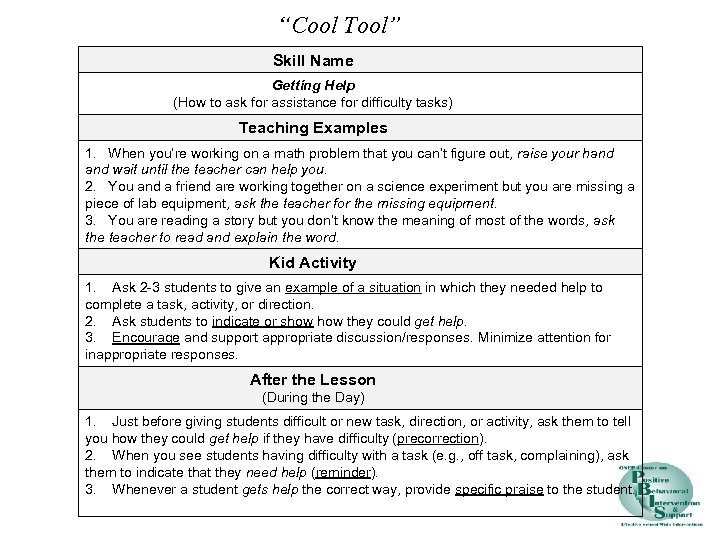
“Cool Tool” Skill Name Getting Help (How to ask for assistance for difficulty tasks) Teaching Examples 1. When you’re working on a math problem that you can’t figure out, raise your hand wait until the teacher can help you. 2. You and a friend are working together on a science experiment but you are missing a piece of lab equipment, ask the teacher for the missing equipment. 3. You are reading a story but you don’t know the meaning of most of the words, ask the teacher to read and explain the word. Kid Activity 1. Ask 2 -3 students to give an example of a situation in which they needed help to complete a task, activity, or direction. 2. Ask students to indicate or show they could get help. 3. Encourage and support appropriate discussion/responses. Minimize attention for inappropriate responses. After the Lesson (During the Day) 1. Just before giving students difficult or new task, direction, or activity, ask them to tell you how they could get help if they have difficulty (precorrection). 2. When you see students having difficulty with a task (e. g. , off task, complaining), ask them to indicate that they need help (reminder). 3. Whenever a student gets help the correct way, provide specific praise to the student.
“Traveling Passports” • Precorrecting new kids in Tigard, Oregon • Procedures – Meet with key adults – Review expectations – Go to class
“P-word” >80% of elementary students can name “five most important words, ” & give contextually appropriate behavioral examples: Respect, Responsibility, Safety, Achievement, & “P-word”.
Establish procedures for encouraging SW expectations • FRMS: “High Fives” • Guidelines – Lots to less – Individual to group – External- to self-managed – Frequent to infrequent – Paired with social recognition – Label specific expectation & behavior – Culturally/contextually appropriate & considerate
Acknowledging SW Expectations: Rationale • Humans require regular & frequent feedback on their actions • Humans experience frequent feedback from others, self, & environment • W/o formal feedback to encourage desired behavior, other forms of feedback shape undesired behaviors
Samples • • • • High Fives, Gotchas Traveling Passport Super Sub Slips, Bus Bucks 1 Gallon Back/front of bus Free homework coupon Discount school store, grab bag Early dismissal/Late arrival First/last in Line Video store coupon, free fries Positive Office Referrals Extra dessert Class event • G. O. O. S. E • 1 -Free Period • Massage • File stuffer • Coffee Coupon • Golden Plunger • Give Em’ a Hand • Kudos
Cougar Traits in the Community Student Name _________________ Displayed the Cougar Trait of: Respect Responsibility Caring Citizenship (Circle the trait you observed) Signature _______________________ If you would like to write on the back the details of what you observed feel free! Thank you for supporting our youth.
“Good morning, class!” Teachers report that when students are greeted by an adult in morning, it takes less time to complete morning routines & get first lesson started.
“Bus Bucks” • Springfield P. S. , OR • Procedures – Review bus citations – On-going driver meetings – Teaching expectations – Link bus bucks w/ schools – Acknowledging bus drivers
“Super Sub Slips” • Empowering subs in Cottage Grove, OR • Procedures – Give 5 per sub in subfolder – Give 2 out immediately
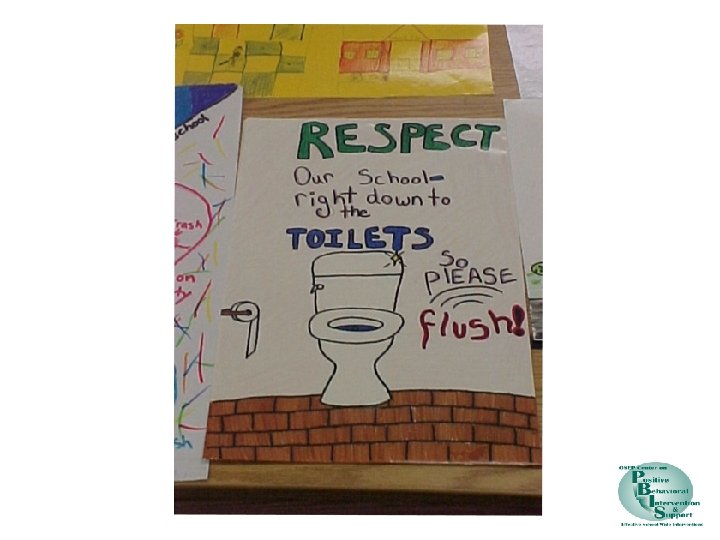
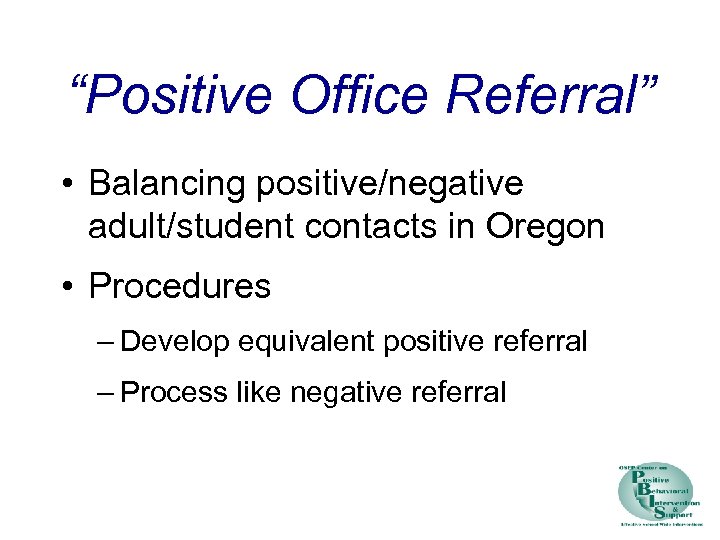
“Positive Office Referral” • Balancing positive/negative adult/student contacts in Oregon • Procedures – Develop equivalent positive referral – Process like negative referral
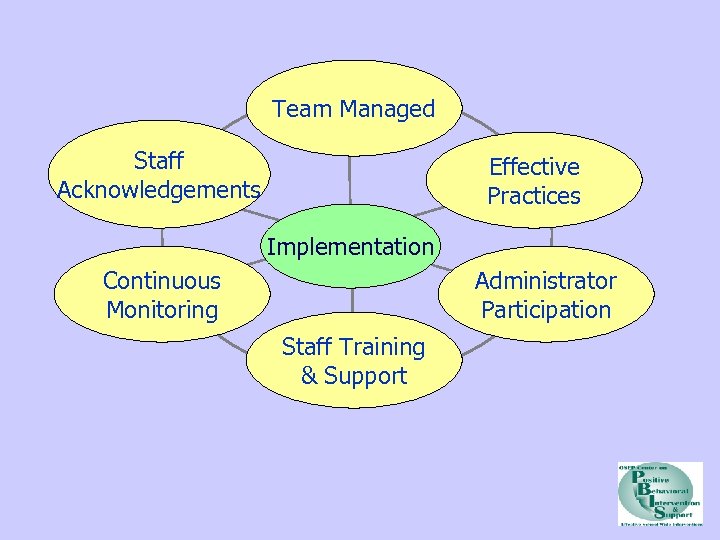
Team Managed Staff Acknowledgements Effective Practices Implementation Continuous Monitoring Administrator Participation Staff Training & Support
“ 80% Rule” • Apply triangle to adult behavior! • Regularly acknowledge staff behavior • Provide Alternative Option for Students with Chronic Problem Behavior – Do not expect school- wide effort to influence behavior of 1 -7% of students.
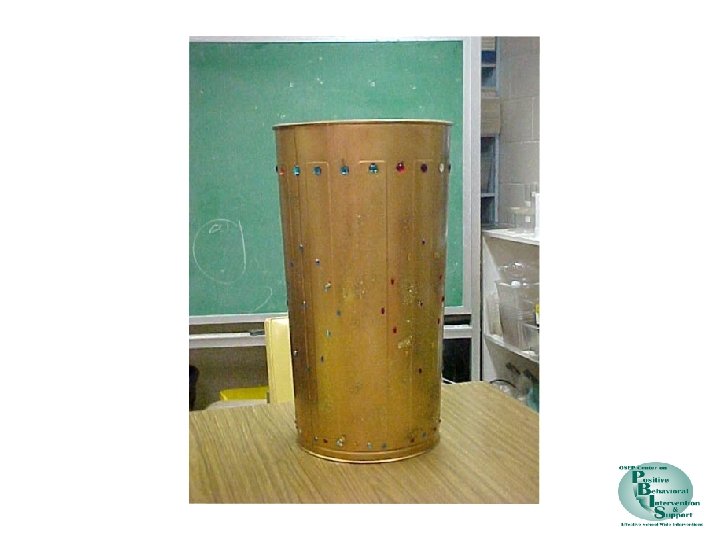
“Golden Plunger” • Involve custodian • Procedure – Custodian selects one classroom/ hallway each week that is clean & orderly – Sticks gold-painted plunger with banner on wall
“ 1 Free Period” • Contributing to a safe, caring, effective school environment • Procedures – Given by Principal – Principal takes over class for one hour – Used at any time
“G. O. O. S. E. ” • “Get Out Of School Early” – Or “arrive late” • Procedures – Kids/staff nominate – Kids/staff reward, then pick
Data Based Decision Making
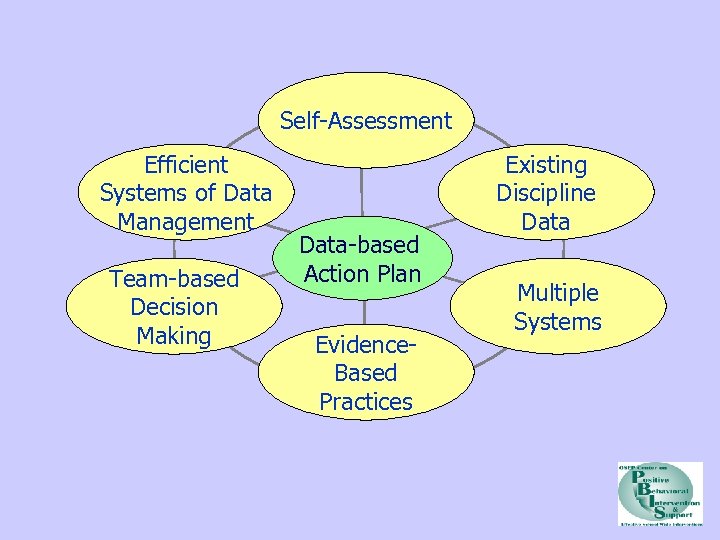
Self-Assessment Efficient Systems of Data Management Team-based Decision Making Data-based Action Plan Evidence. Based Practices Existing Discipline Data Multiple Systems
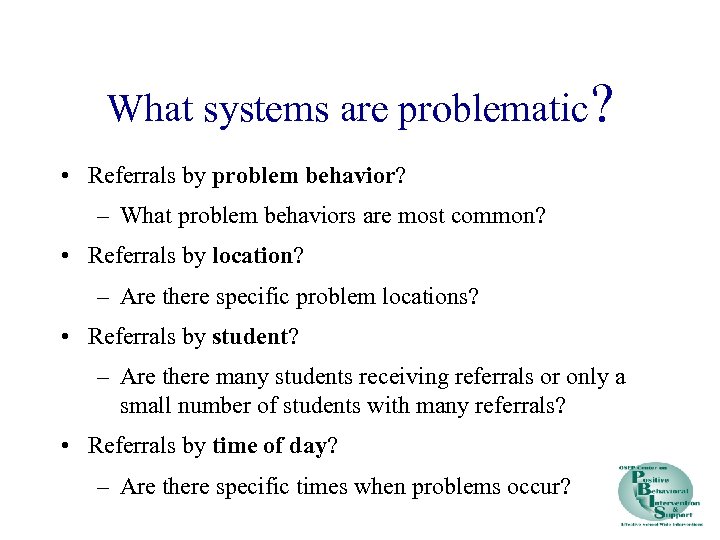
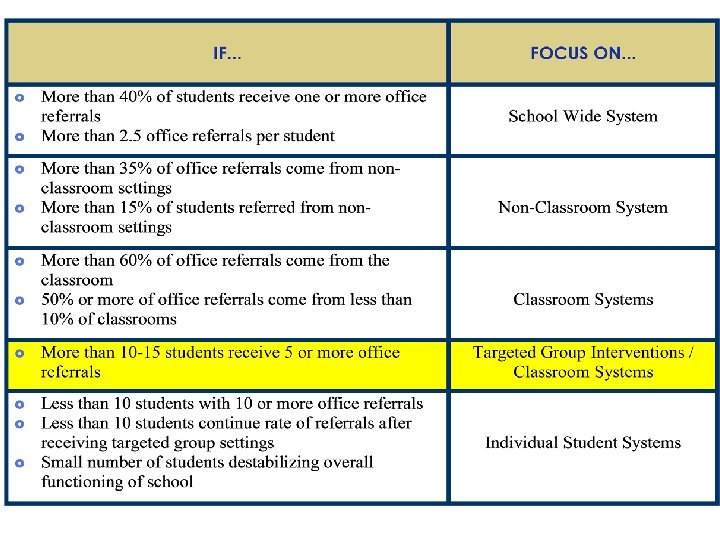
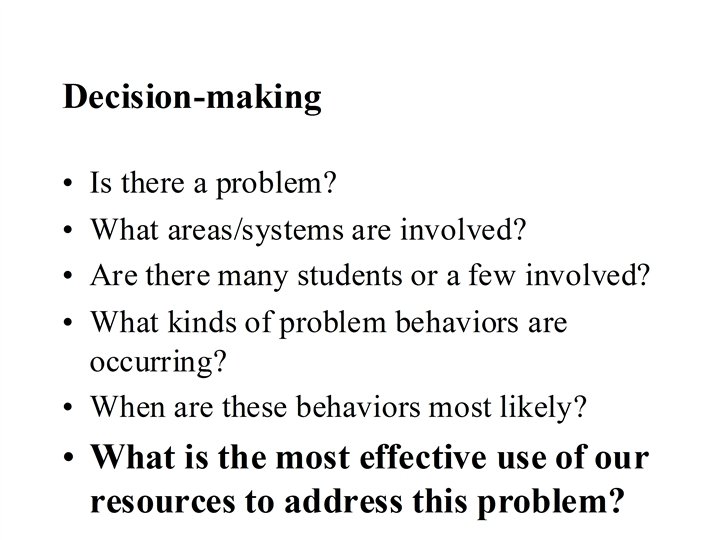
What systems are problematic? • Referrals by problem behavior? – What problem behaviors are most common? • Referrals by location? – Are there specific problem locations? • Referrals by student? – Are there many students receiving referrals or only a small number of students with many referrals? • Referrals by time of day? – Are there specific times when problems occur?
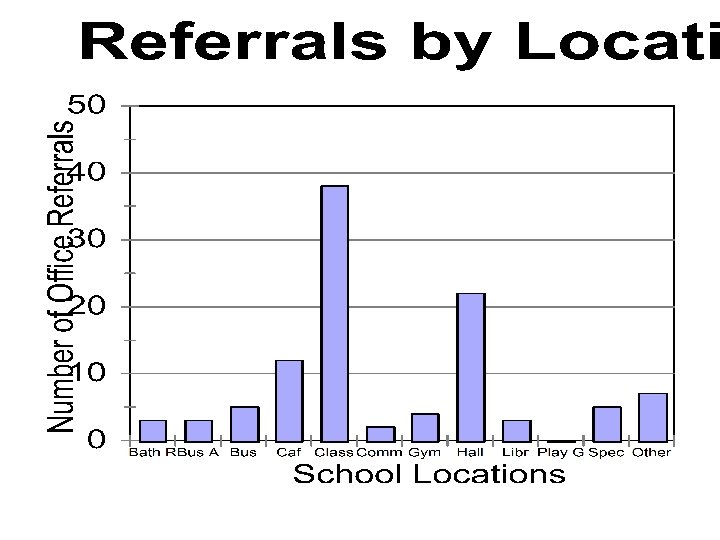
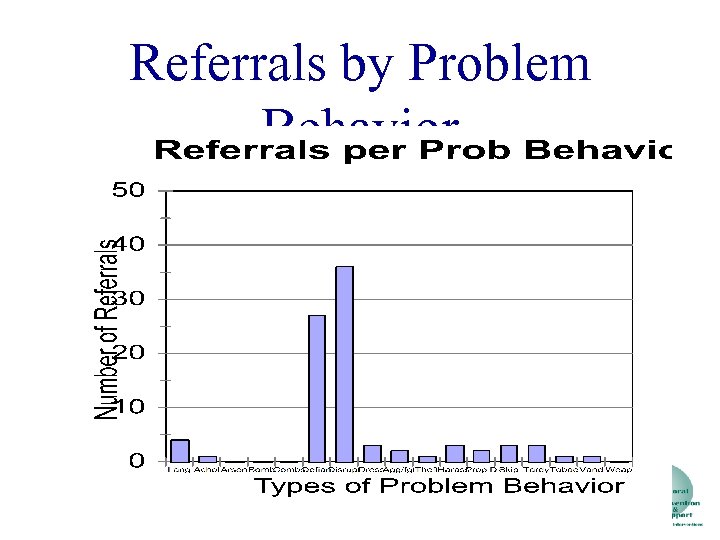
Referrals by Problem Behavior
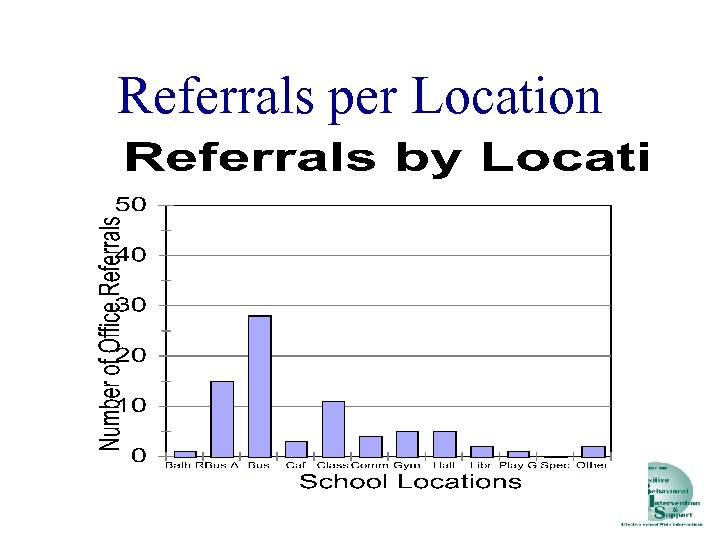
Referrals per Location
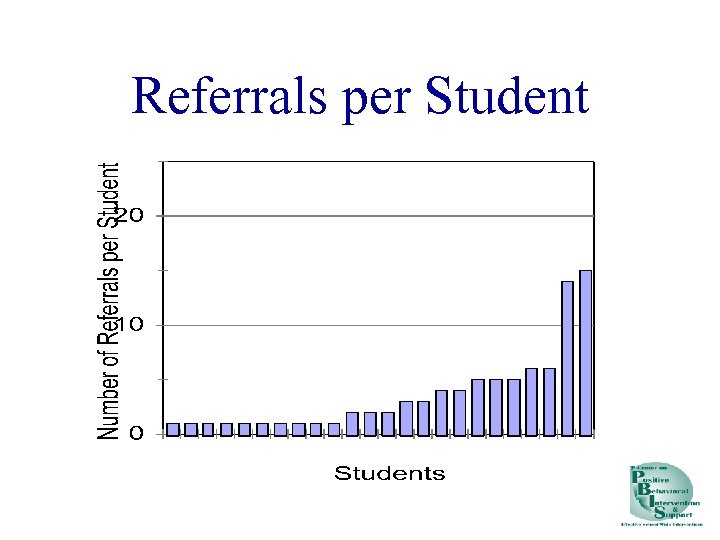
Referrals per Student
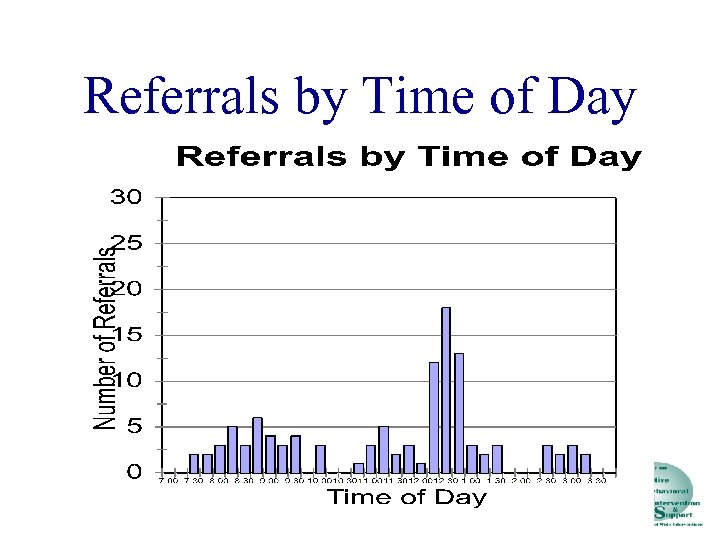
Referrals by Time of Day
Designing Solutions • If many students are making the same mistake it typically is the system that needs to change not the students. • Teach, monitor and reward before relying on punishment.
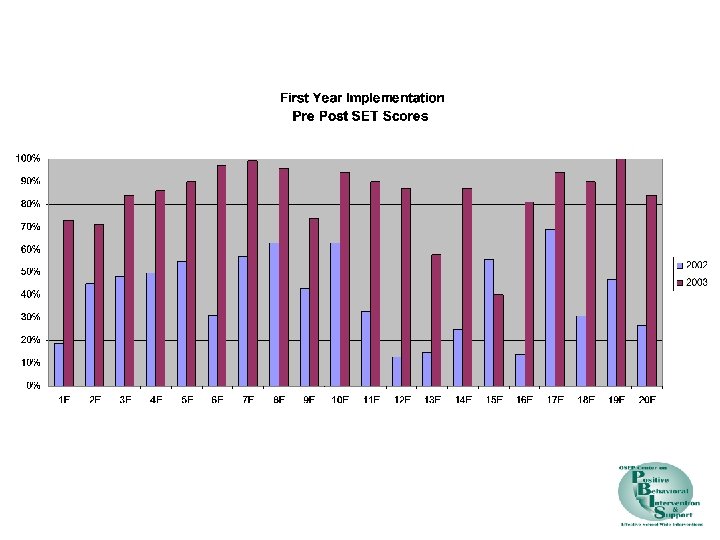
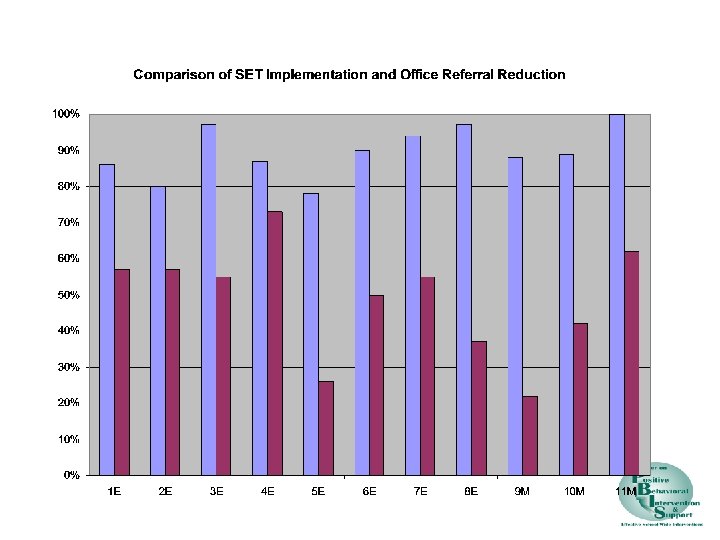
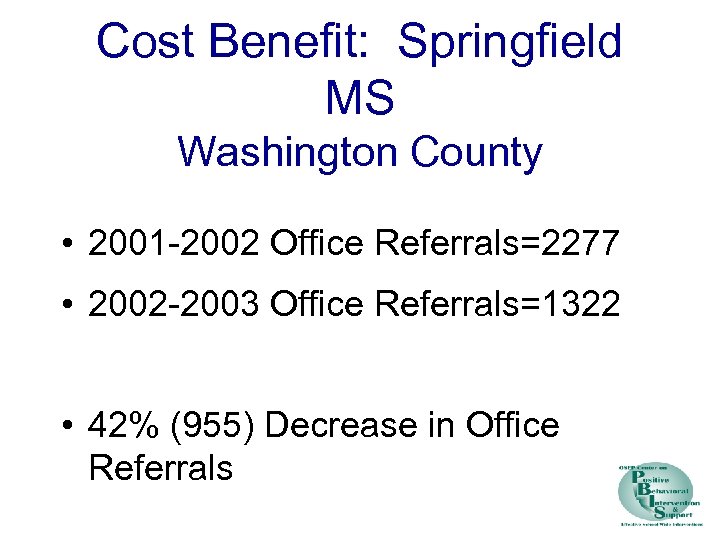
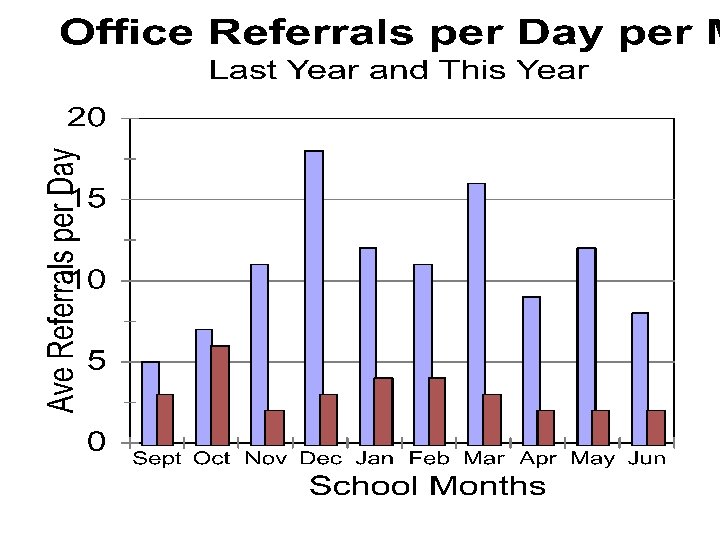
Cost Benefit: Springfield MS Washington County • 2001 -2002 Office Referrals=2277 • 2002 -2003 Office Referrals=1322 • 42% (955) Decrease in Office Referrals
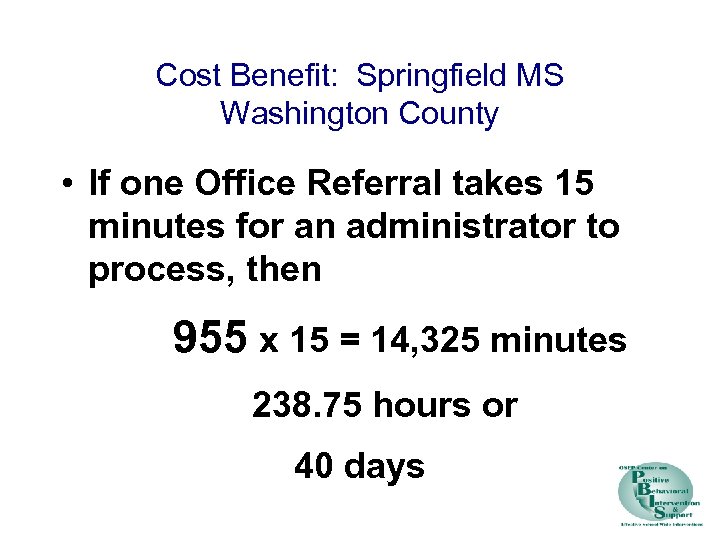
Cost Benefit: Springfield MS Washington County • If one Office Referral takes 15 minutes for an administrator to process, then 955 x 15 = 14, 325 minutes 238. 75 hours or 40 days
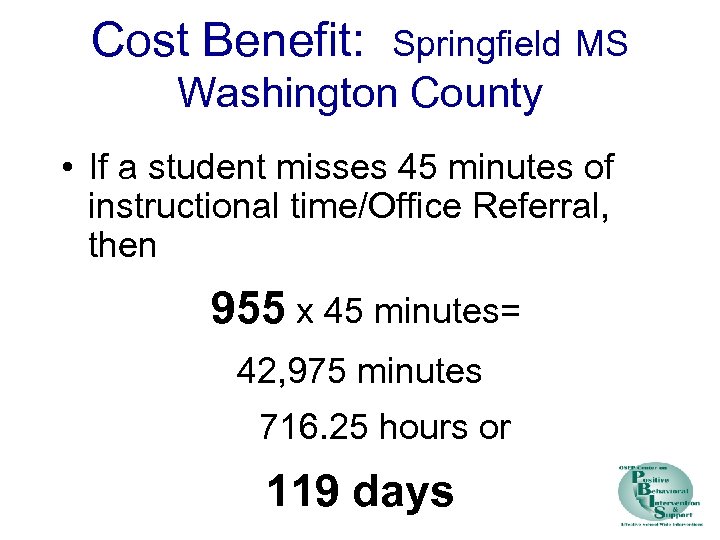
Cost Benefit: Springfield MS Washington County • If a student misses 45 minutes of instructional time/Office Referral, then 955 x 45 minutes= 42, 975 minutes 716. 25 hours or 119 days
To Conclude • Create systems-based preventive continuum of behavior support • Focus on adult behavior • Establish behavioral competence • Utilize data based decisions • Give priority to academic success • Invest in evidence-based practices • Teach & acknowledge behavioral expectations • Work from a person-centered, function-based approach • Arrange to work smarter
Implementation Tools • Team Checklist • Self Assessment- Staff Survey • SWIS
Resources • www. pbis. org • www. pbismaryland. org • www. swis. org • sbarrett@sheppardpratt. org
Скачать презентацию School-Wide Positive Behavior Support Introduction Presented by Susan
29c29644bb0d887b4937a8505fac8b97.ppt