


 Скачать презентацию School students and VET NSW and Scotland Learning
a90f9d27cc00c741c16f9f553b6f49c0.ppt
- Количество слайдов: 20
 School students and VET NSW and Scotland Learning exchange seminar SQA – November 2013
 Overview The Australian and NSW context of schooling and VET as part of NSW schooling credentials Some policy challenges Questions throughout: What appears to be the same? What appears to be different? What can we learn?
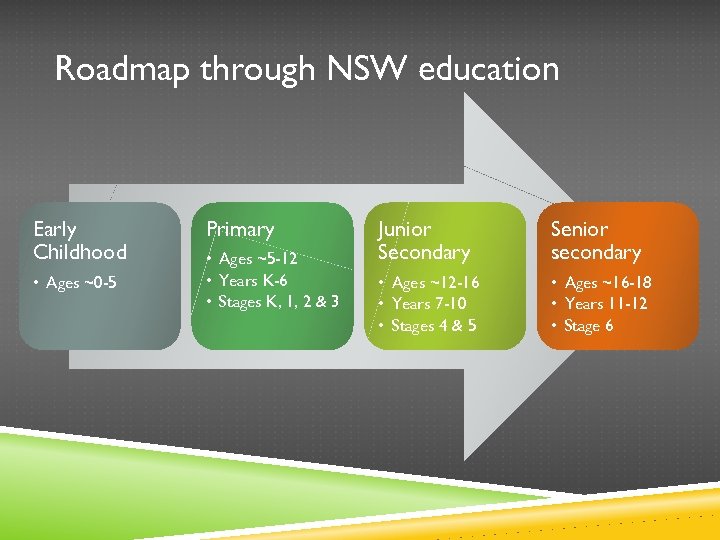 Roadmap through NSW education Early Childhood • Ages ~0 -5 Primary • Ages ~5 -12 • Years K-6 • Stages K, 1, 2 & 3 Junior Secondary Senior secondary • Ages ~12 -16 • Years 7 -10 • Stages 4 & 5 • Ages ~16 -18 • Years 11 -12 • Stage 6
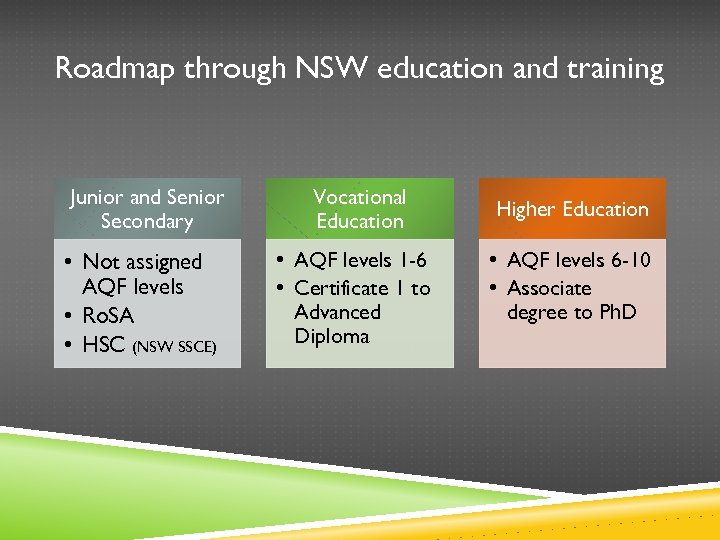 Roadmap through NSW education and training Junior and Senior Secondary • Not assigned AQF levels • Ro. SA • HSC (NSW SSCE) Vocational Education • AQF levels 1 -6 • Certificate 1 to Advanced Diploma Higher Education • AQF levels 6 -10 • Associate degree to Ph. D
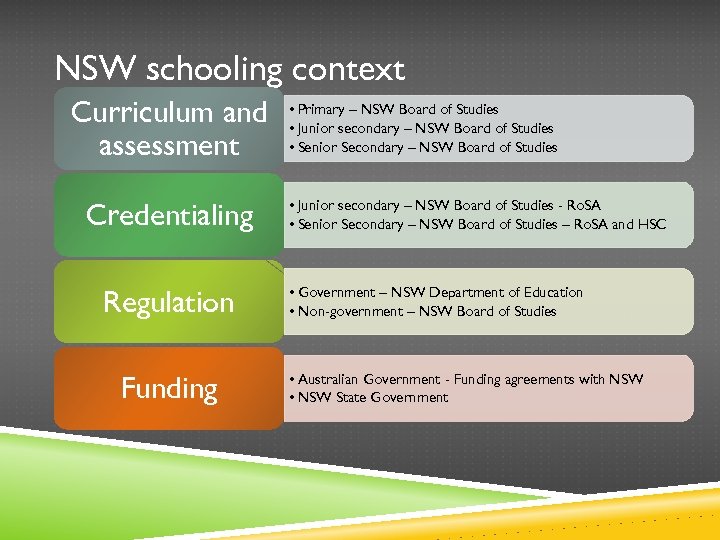 NSW schooling context Curriculum and assessment Credentialing Regulation Funding • Primary – NSW Board of Studies • Junior secondary – NSW Board of Studies • Senior Secondary – NSW Board of Studies • Junior secondary – NSW Board of Studies - Ro. SA • Senior Secondary – NSW Board of Studies – Ro. SA and HSC • Government – NSW Department of Education • Non-government – NSW Board of Studies • Australian Government - Funding agreements with NSW • NSW State Government
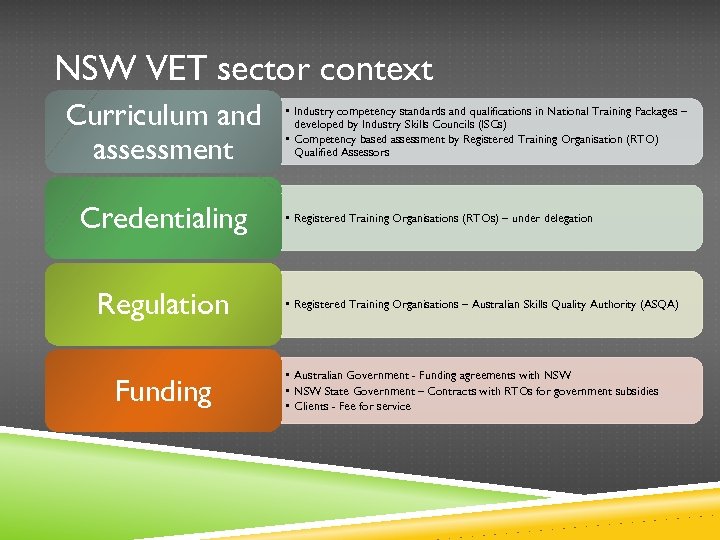 NSW VET sector context Curriculum and assessment Credentialing Regulation Funding • Industry competency standards and qualifications in National Training Packages – developed by Industry Skills Councils (ISCs) • Competency based assessment by Registered Training Organisation (RTO) Qualified Assessors • Registered Training Organisations (RTOs) – under delegation • Registered Training Organisations – Australian Skills Quality Authority (ASQA) • Australian Government - Funding agreements with NSW • NSW State Government – Contracts with RTOs for government subsidies • Clients - Fee for service

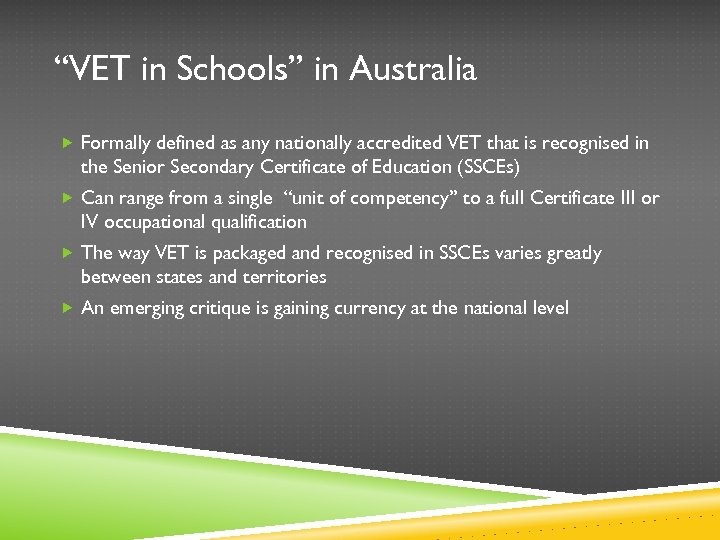 “VET in Schools” in Australia Formally defined as any nationally accredited VET that is recognised in the Senior Secondary Certificate of Education (SSCEs) Can range from a single “unit of competency” to a full Certificate III or IV occupational qualification The way VET is packaged and recognised in SSCEs varies greatly between states and territories An emerging critique is gaining currency at the national level
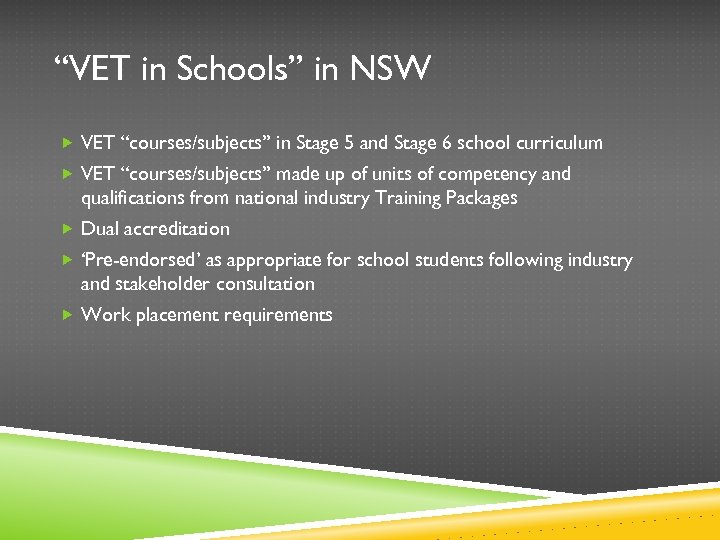 “VET in Schools” in NSW VET “courses/subjects” in Stage 5 and Stage 6 school curriculum VET “courses/subjects” made up of units of competency and qualifications from national industry Training Packages Dual accreditation ‘Pre-endorsed’ as appropriate for school students following industry and stakeholder consultation Work placement requirements
 Industry Curriculum Frameworks “Premium product” Cover 13 key industry areas Mandatory work placement requirements Optional HSC examination for results to contribute to tertiary entrance rank HSC examination based on ‘HSC Content’ - a description of the underpinning knowledge associated with mandatory units of competency
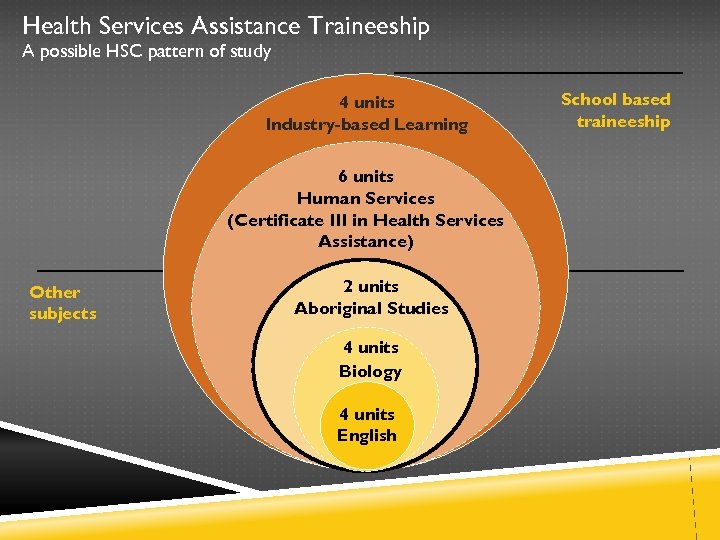 Health Services Assistance Traineeship A possible HSC pattern of study 4 units Industry-based Learning 6 units Human Services (Certificate III in Health Services Assistance) Other subjects 2 units Aboriginal Studies 4 units Biology 4 units English School based traineeship
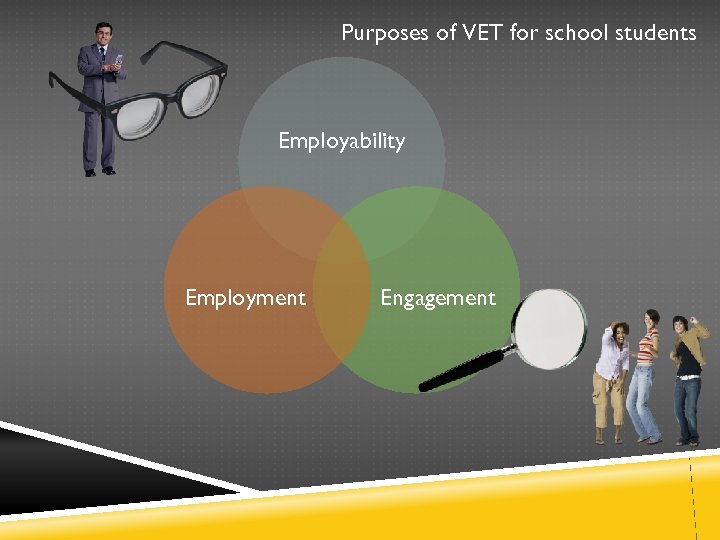 Purposes of VET for school students Employability Employment Engagement
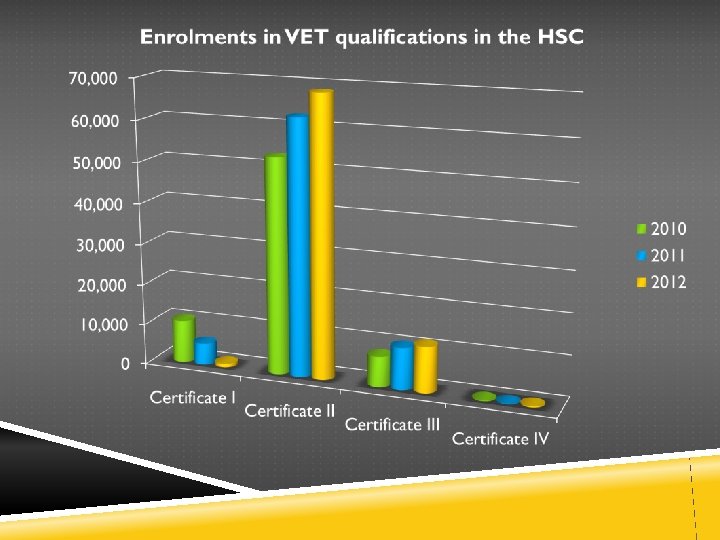
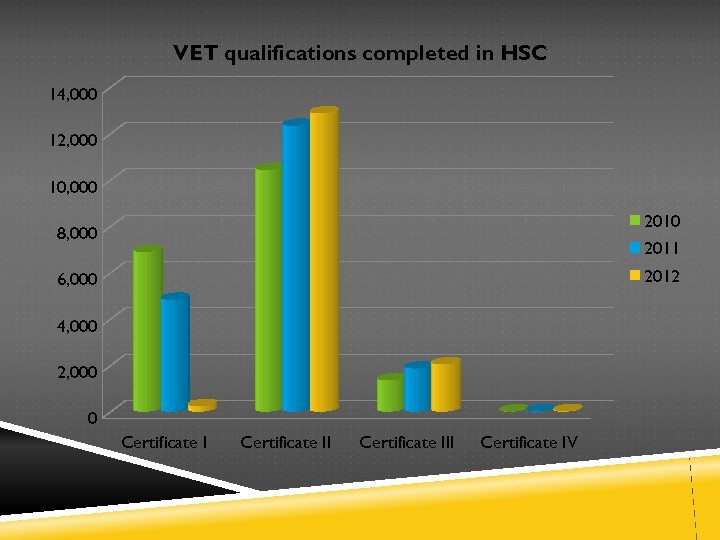 VET qualifications completed in HSC 14, 000 12, 000 10, 000 2010 8, 000 2011 2012 6, 000 4, 000 2, 000 0 Certificate III Certificate IV
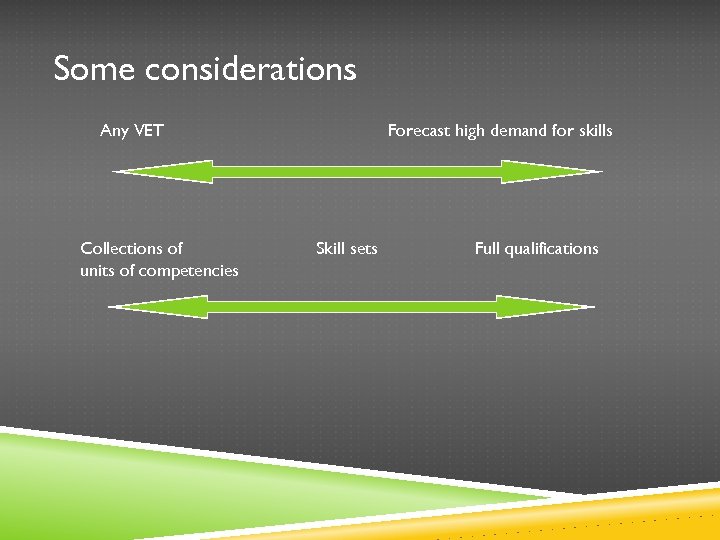 Some considerations Any VET Collections of units of competencies Forecast high demand for skills Skill sets Full qualifications
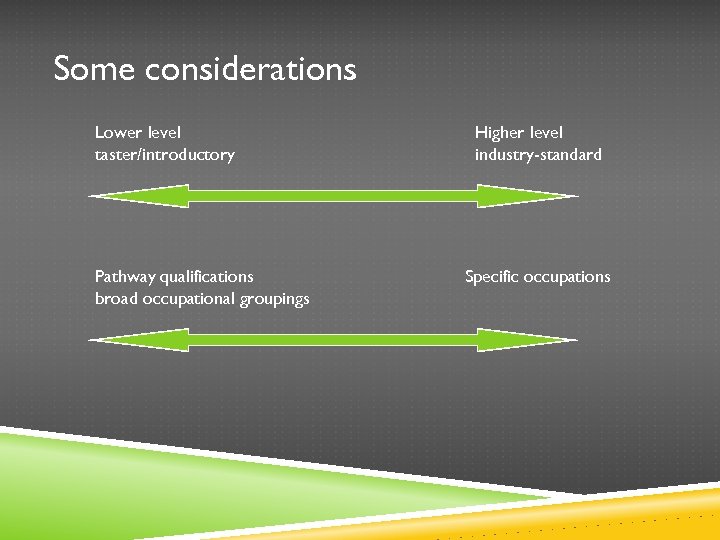 Some considerations Lower level taster/introductory Pathway qualifications broad occupational groupings Higher level industry-standard Specific occupations
 Some policy challenges Reaching a settlement around purposes of “VET in Schools” VET sector change fatigue Government budget pressures Work placement brokerage services Diversity of offerings Demand for literacy and numeracy assessments when students leave school
 Thank you