


 Скачать презентацию School Health Research Network Surveys 2017 18 Recap
92bbede1b444dfdde2558a63f9414a22.ppt
- Количество слайдов: 42
 School Health Research Network Surveys 2017/18 • Recap of 2015/16 Surveys • Overview of the 2017/18 Surveys • Break • Groupwork • Timeline and next steps • Local Authority Reports
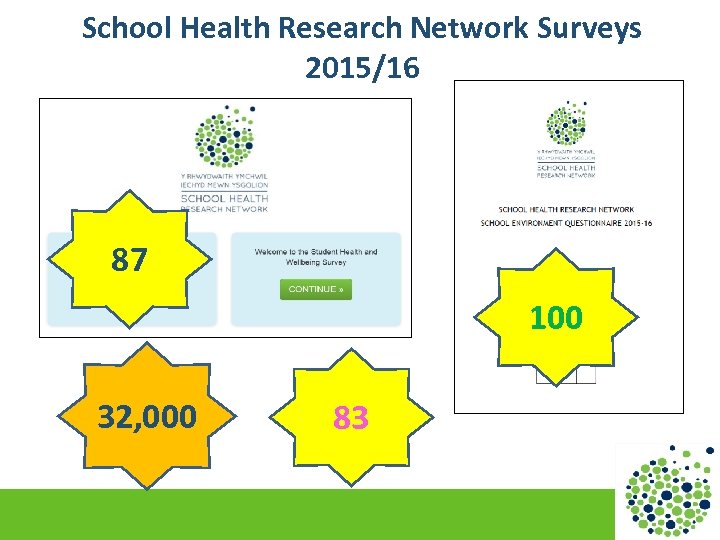 School Health Research Network Surveys 2015/16 87 100 32, 000 83
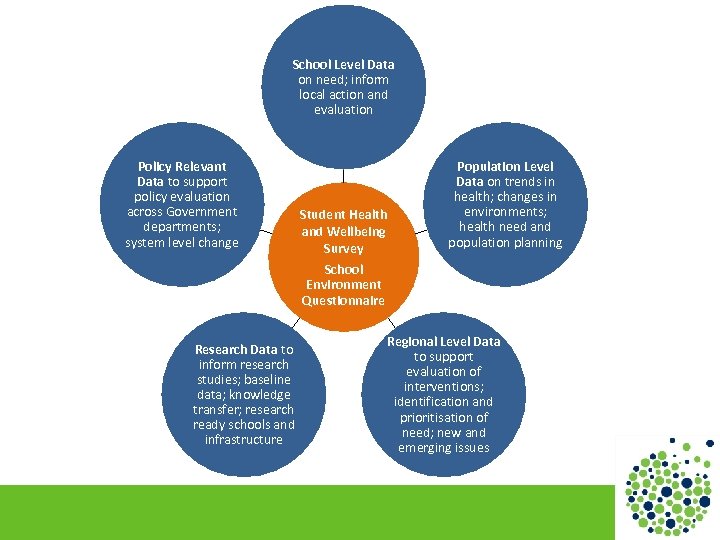
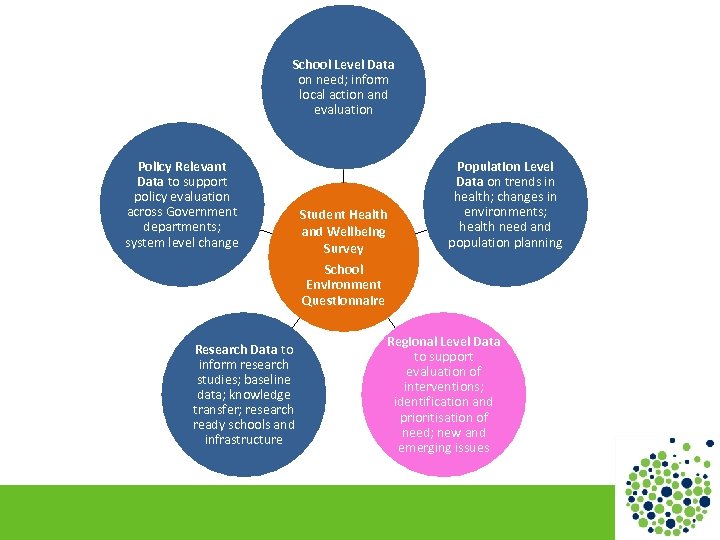
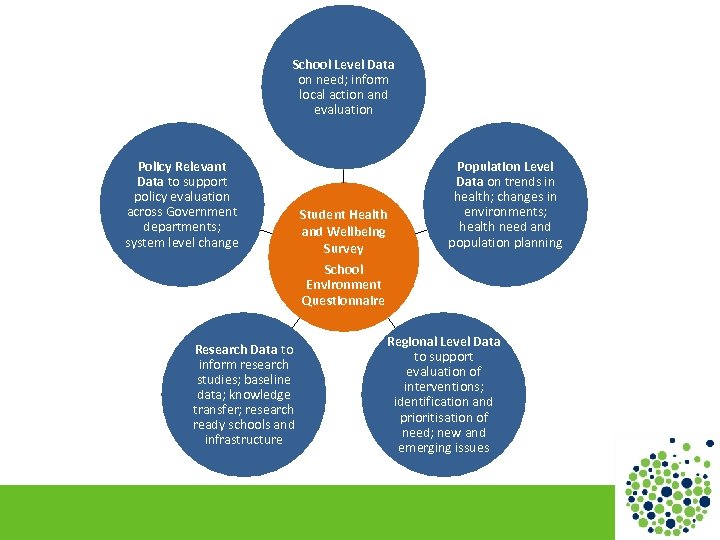 School Level Data on need; inform local action and evaluation Policy Relevant Data to support policy evaluation across Government departments; system level change Student Health and Wellbeing Survey Population Level Data on trends in health; changes in environments; health need and population planning School Environment Questionnaire Research Data to inform research studies; baseline data; knowledge transfer; research ready schools and infrastructure Regional Level Data to support evaluation of interventions; identification and prioritisation of need; new and emerging issues
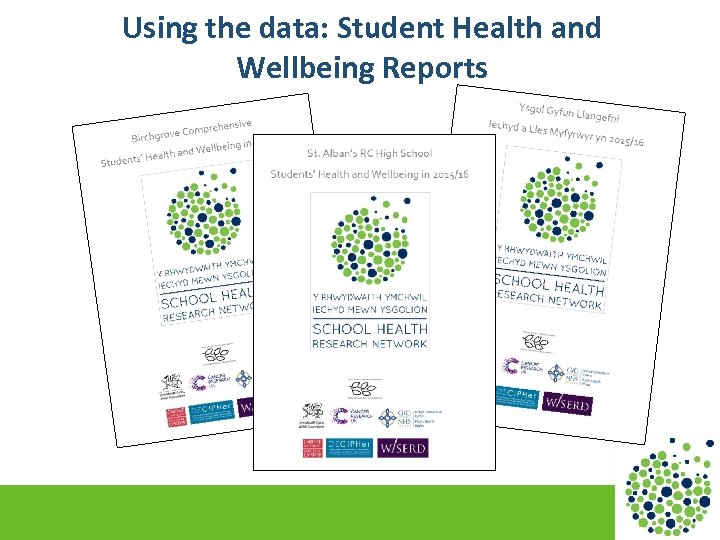 Using the data: Student Health and Wellbeing Reports
 Using the data: Feeding into policy and practice • Tobacco Control Delivery Board Prevention Group • Advisory Panel on Substance Misuse • SRE Expert Panel for the new curriculum • SEQ Report for WNHSS
 Using the data: Research Student Data • E-cigarette and tobacco use* • Wellbeing and substance misuse in looked after children* School Environment Data • Health improvement activity and educational attainment and attendance • Health improvement activity and inequalities in educational performance Student and School Environment Data combined • School sexual health practices and student outcomes
 School Health Research Network Surveys 2017/18 Student Health and Wellbeing Survey School Environment Questionnaire September – December 2017 January – February 2018
 Student Health and Wellbeing Survey Key Features Who? Ø Whole school • Years 7 to 11 • Sixth form welcome!
 Student Health and Wellbeing Survey Key Features How? Ø Laptop, desktop or tablet Ø One lesson period Ø School-led organisation Ø English or Welsh
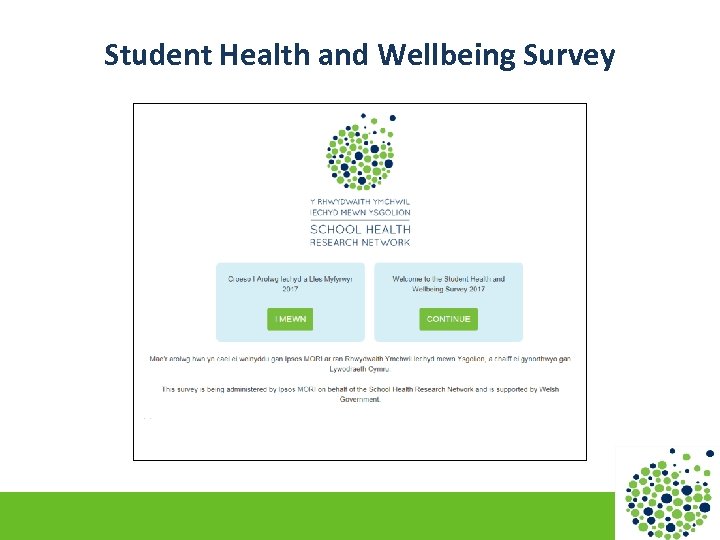 Student Health and Wellbeing Survey
 Student Health and Wellbeing Survey Key Features What? Ø Four core health topic areas • Food and Fitness • Substance Use and Misuse • Mental and emotional health and wellbeing • Sexual behaviour Ø Questions on home circumstances
 Student Health and Wellbeing Survey Key Features What? Sexual behaviour questions Ø Asked to years 11, 12 and 13 only Ø Seven questions • Sexually active • Contraceptive use at last intercourse (5 methods) • Age at first intercourse Ø Optional for years 9 and 10
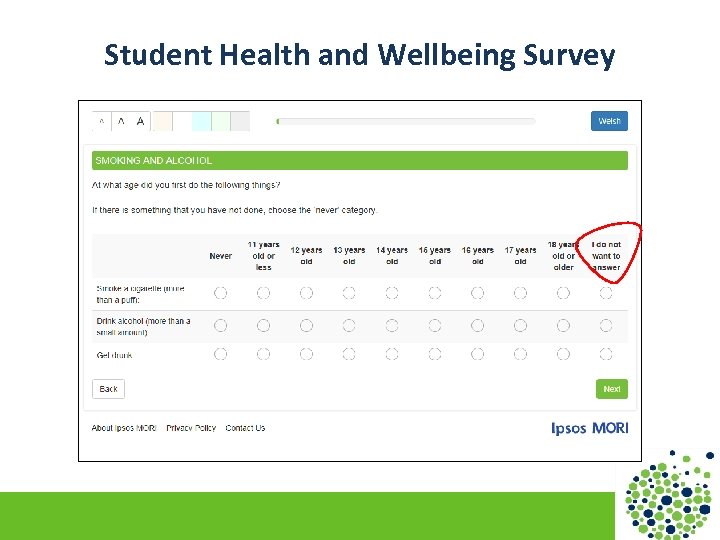 Student Health and Wellbeing Survey
 Student Health and Wellbeing Survey Key Features What? New questions for 2017 Ø More detailed questions on tobacco and e-cigarettes Ø Wider range of drugs Ø More detailed questions on school life Ø New measures of wellbeing Ø More detailed questions on young people’s care histories Ø Young carers Ø Relationships with family and friends Ø Use of social media Ø Gambling Ø Spirituality Ø Holiday hunger
 Student Health and Wellbeing Survey Key Features Consent Parental information and consent Ø We have to ensure parents are informed that the survey is taking place, its purpose and their right to withdraw their child if they want to (opt-out consent). Ø We have to use two methods to ensure the information reaches parents. • Pupil post / email / text Ø We can print letters for you or send an electronic letter.
 Student Health and Wellbeing Survey Key Features Consent Student information and consent Ø Screens of information at the start of the survey. • Please ensure they read them! Ø Consent question at start of survey. Ø Advised to speak to a teacher or counsellor if they are worried by any of the questions.
 School Environment Questionnaire Key Features Ø Questions on school policies and practices on health and wellbeing. Ø Paper copy. Ø Can be completed by one or several members of staff over one month period.
 Student Health and Wellbeing Survey Ø Integrating with the Health Behaviour in School-aged Children Survey and extending the research potential of the survey. Ø Data linkage and longitudinal research pilot project.
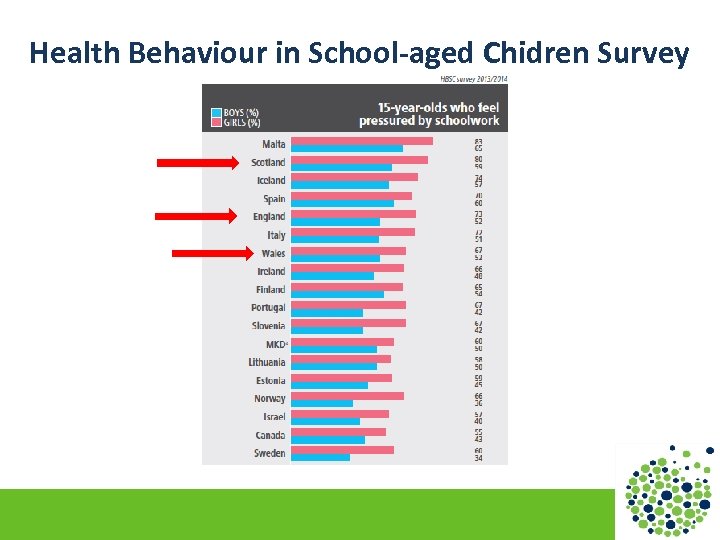
 Health Behaviour in School-aged Chidren Survey Ø International World Health Organization Study Ø 44 countries Ø Every 4 years
 Health Behaviour in School-aged Chidren Survey
 Student Health and Wellbeing Survey SHWB Reports
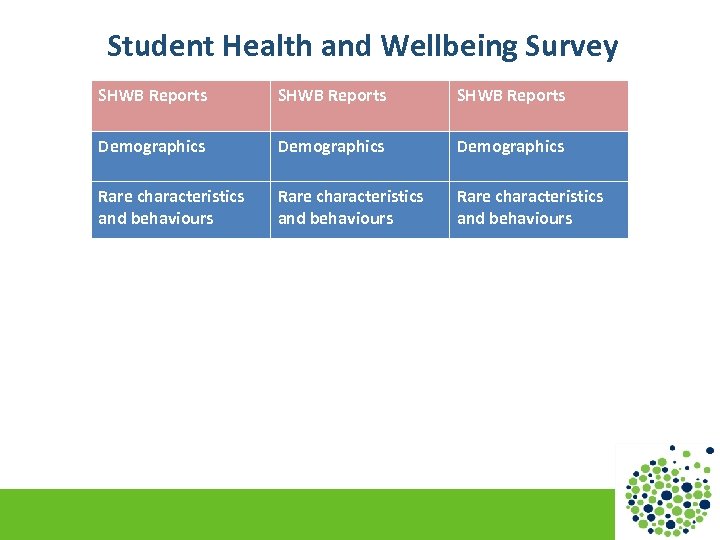 Student Health and Wellbeing Survey SHWB Reports Demographics Rare characteristics and behaviours
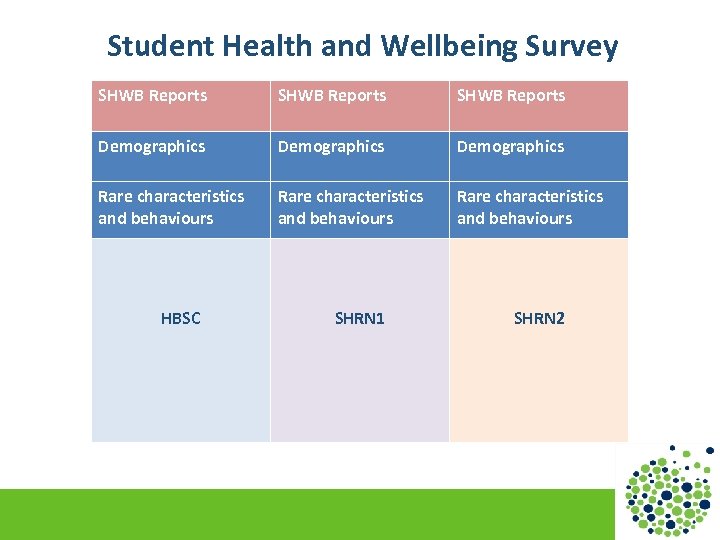 Student Health and Wellbeing Survey SHWB Reports Demographics Rare characteristics and behaviours HBSC SHRN 1 SHRN 2
 Student Health and Wellbeing Survey Ø Integrating with the Health Behaviour in School-aged Children Survey and extending the research potential of the survey. Ø Data linkage and longitudinal research pilot project.
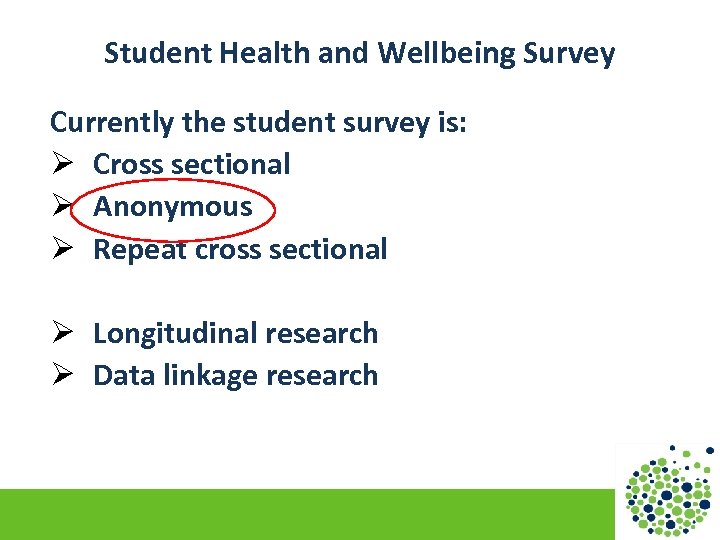 Student Health and Wellbeing Survey Currently the student survey is: Ø Cross sectional Ø Anonymous Ø Repeat cross sectional Ø Longitudinal research Ø Data linkage research
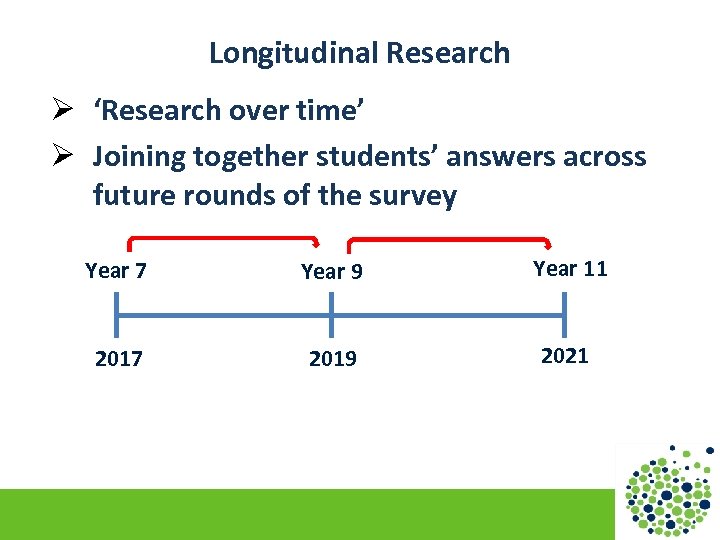 Longitudinal Research Ø ‘Research over time’ Ø Joining together students’ answers across future rounds of the survey Year 7 Year 9 Year 11 2017 2019 2021
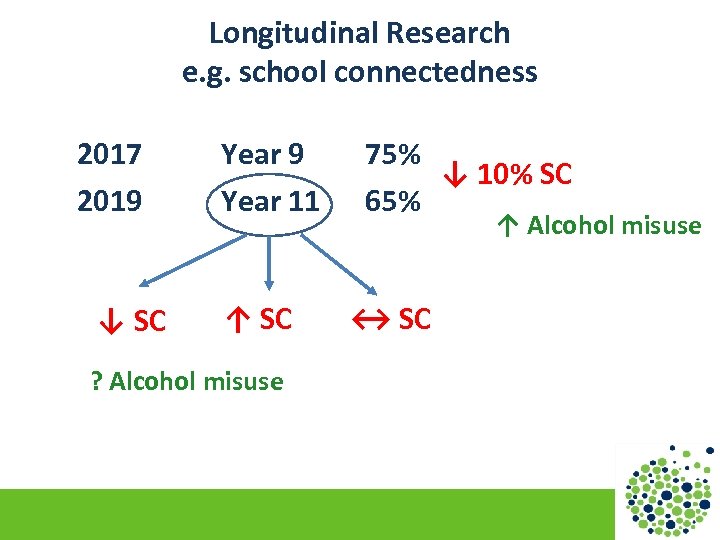 Longitudinal Research e. g. school connectedness 2017 2019 ↓ SC Year 9 Year 11 ↑ SC ? Alcohol misuse 75% ↓ 10% SC 65% ↑ Alcohol misuse ↔ SC
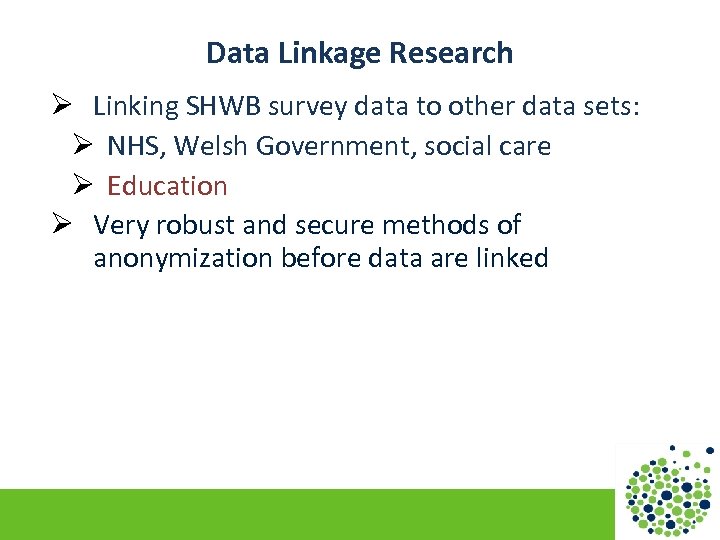 Data Linkage Research Ø Linking SHWB survey data to other data sets: Ø NHS, Welsh Government, social care Ø Education Ø Very robust and secure methods of anonymization before data are linked
 Data Linkage and Longitudinal Research Project Ø Is it acceptable to collect student name, date of birth and postcode at the end of the survey? Ø Schools Ø Parents Ø Students Ø What proportion of young people provide the information and with what level of accuracy?
 Data Linkage and Longitudinal Research Project What does taking part involve? SCHOOLS Ø Showing a video to students about a week before they take part in the survey Ø Send letter about the survey and the project to parents Ø Record any parent withdrawals
 Data Linkage and Longitudinal Research Project What does taking part involve? PARENTS Ø Notify the school if they do not want their child to take part STUDENTS Ø Give their consent and provide their details at the end of the survey
 Video
Video
 Content of the Student Health and Wellbeing Survey Ø Questions we’ve used for SHWB Reports Ø Mandatory questions for the HBSC survey Ø Welsh Government policy data needs Ø Health Ø Education / wellbeing Ø Research questions
 Content of the Student Health and Wellbeing Survey Ø ALPHA Ø SHRN Advisory Board Ø You!
 Student Health and Wellbeing Survey Groupwork Ø Topic areas – is anything missing? Ø Survey questions o Feedback on new items (green) o New data for SHWB Reports? Ø Cannabis and sedentary behaviour o Views on changing these
 Student Health and Wellbeing Survey TIMELINE When What June school pack with registration form (Form A) sent out July w/c 26 th 10 th 21 st Survey registration (Form A) deadline August Data linkage pilot schools selected September 1 st September school pack sent to all registered schools 8 th Live survey links sent to all registered schools 11 th Survey opens December 21 st Survey closes Start contacting schools who have not sent in Form A
 Student Health and Wellbeing Survey JUNE SCHOOL PACK Ø Overview of survey Ø IT information sheet Ø Information on the data linkage and longitudinal research project Ø Draft survey questions Ø Power. Point slides for students and staff Ø Form A (survey registration)
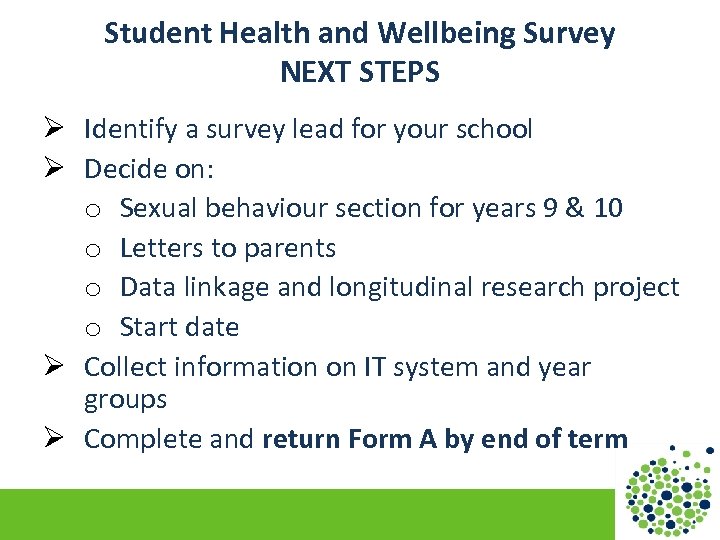 Student Health and Wellbeing Survey NEXT STEPS Ø Identify a survey lead for your school Ø Decide on: o Sexual behaviour section for years 9 & 10 o Letters to parents o Data linkage and longitudinal research project o Start date Ø Collect information on IT system and year groups Ø Complete and return Form A by end of term
 School Level Data on need; inform local action and evaluation Policy Relevant Data to support policy evaluation across Government departments; system level change Student Health and Wellbeing Survey Population Level Data on trends in health; changes in environments; health need and population planning School Environment Questionnaire Research Data to inform research studies; baseline data; knowledge transfer; research ready schools and infrastructure Regional Level Data to support evaluation of interventions; identification and prioritisation of need; new and emerging issues
 School Level Data on need; inform local action and evaluation Policy Relevant Data to support policy evaluation across Government departments; system level change Student Health and Wellbeing Survey Population Level Data on trends in health; changes in environments; health need and population planning School Environment Questionnaire Research Data to inform research studies; baseline data; knowledge transfer; research ready schools and infrastructure Regional Level Data to support evaluation of interventions; identification and prioritisation of need; new and emerging issues
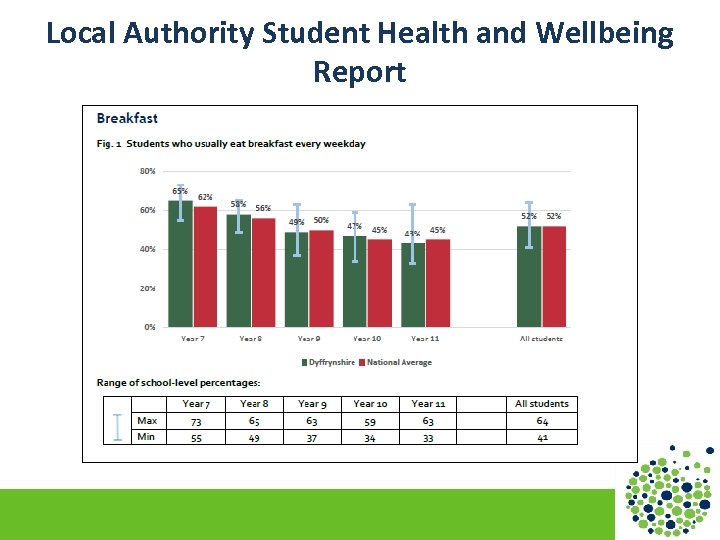
 Local Authority Student Health and Wellbeing Report Ø County level averages with national averages for comparison Ø School level range Ø Same charts as school SHWBRs Ø No school names included
 Local Authority Student Health and Wellbeing Report