


 Скачать презентацию SCANDINAVIA NORTHERN EUROPE Sweden Norway Finland FINLAND
Scandinavia.pptx
- Количество слайдов: 74
 SCANDINAVIA NORTHERN EUROPE Sweden Norway Finland
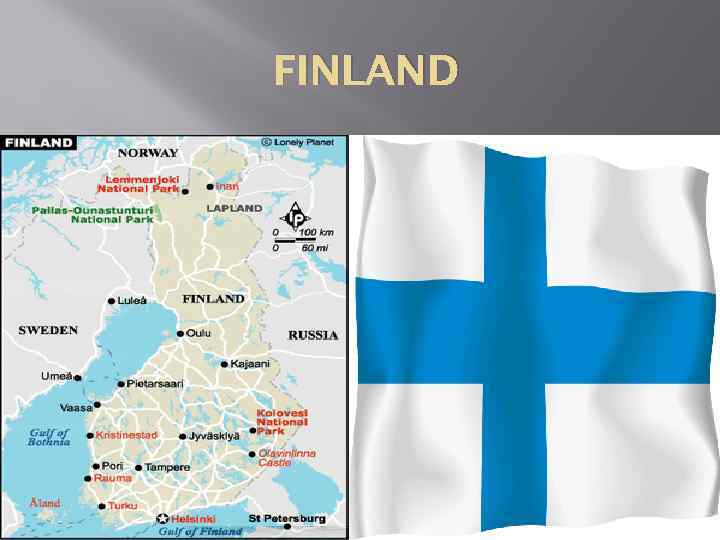 FINLAND
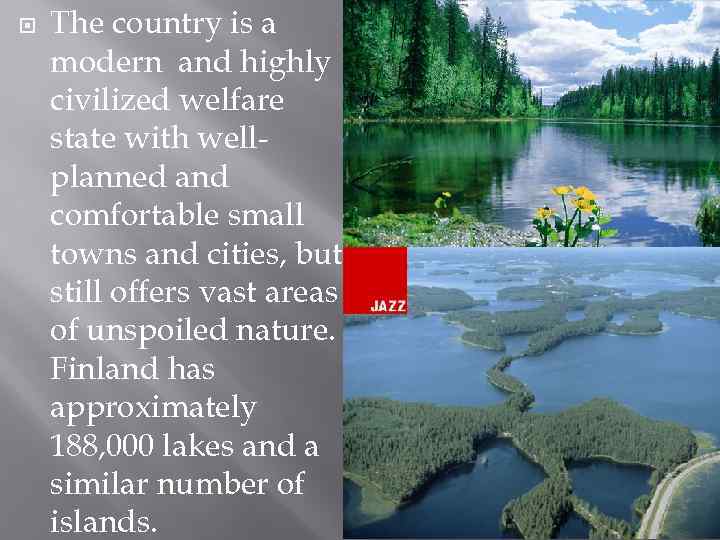 The country is a modern and highly civilized welfare state with wellplanned and comfortable small towns and cities, but still offers vast areas of unspoiled nature. Finland has approximately 188, 000 lakes and a similar number of islands.
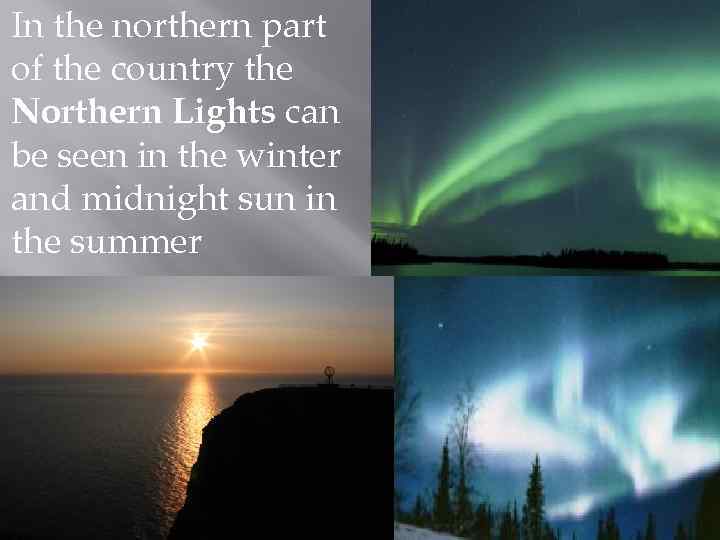 In the northern part of the country the Northern Lights can be seen in the winter and midnight sun in the summer
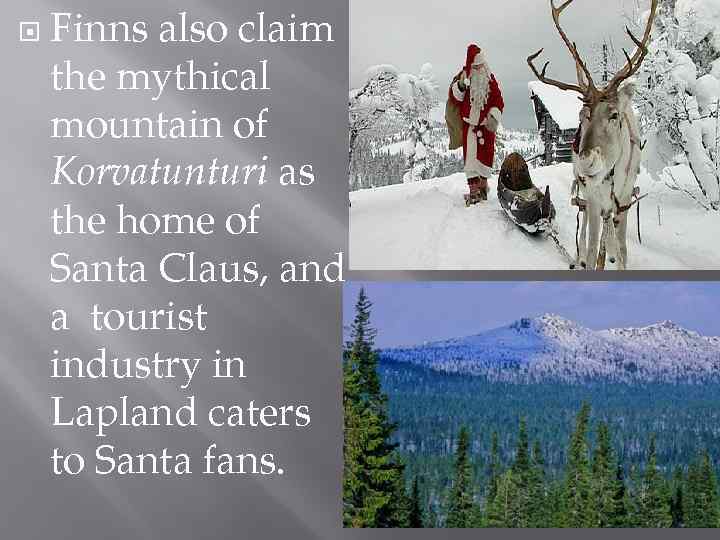 Finns also claim the mythical mountain of Korvatunturi as the home of Santa Claus, and a tourist industry in Lapland caters to Santa fans.
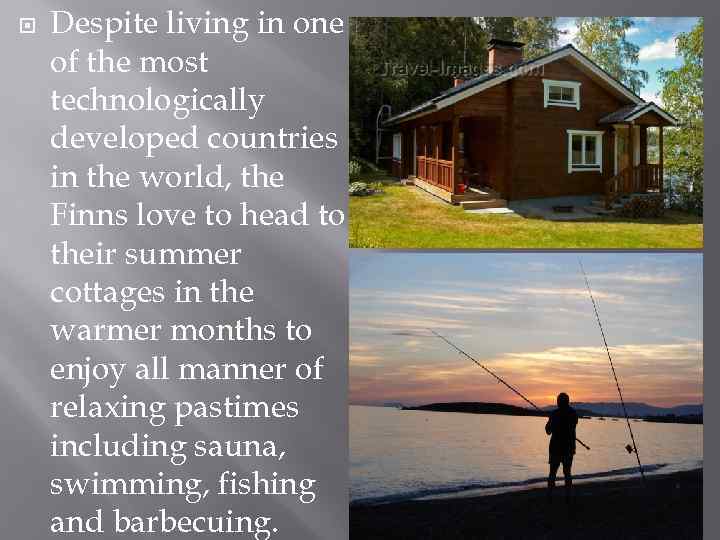 Despite living in one of the most technologically developed countries in the world, the Finns love to head to their summer cottages in the warmer months to enjoy all manner of relaxing pastimes including sauna, swimming, fishing and barbecuing.
 HISTORY Roman historian Tacitus mentions a tribe primitive and savage Fenni in 100 AD
 HISTORY In the mid-1150 s Sweden started out to conquer and Christianize the Finnish pagans in earnest, incorporating most of the country into Sweden in 1249. Finland stayed an integral part of Sweden until the 19 th century
 HISTORY After Sweden's final disastrous defeat in the Finnish War of 1808 -1809, Finland became an autonomous grand duchy under Russian rule after 1809.
 During World War II, Finland was attacked by the Soviet Union in the Winter War. Finland then allied with Germany in an unsuccessful attempt to repel the Soviets and regain the lost territory. Finland fought three separate wars during World War II. In the end, Finland lost much of Karelia and Finland's second city Vyborg
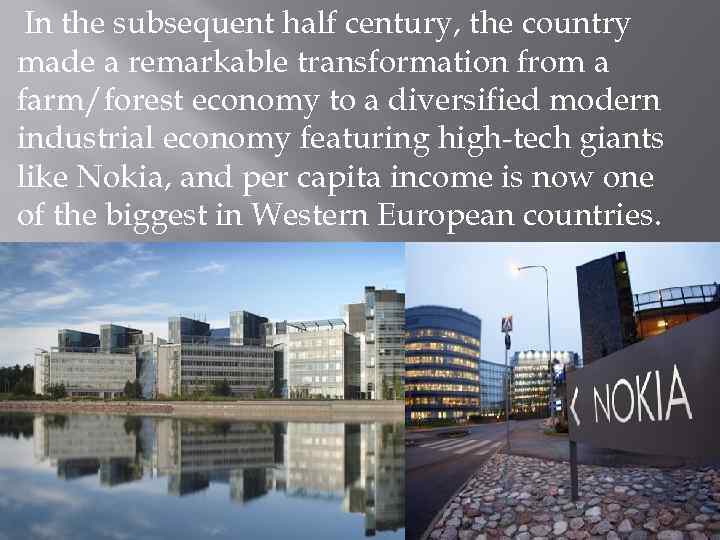 In the subsequent half century, the country made a remarkable transformation from a farm/forest economy to a diversified modern industrial economy featuring high-tech giants like Nokia, and per capita income is now one of the biggest in Western European countries.
 Buffeted by its neighbors for centuries and absorbing influences from west, east and south, Finnish culture as a distinct identity was only born in the 19 th century: "we are not Swedes, and we do not wish to become Russian, so let us be Finns. "
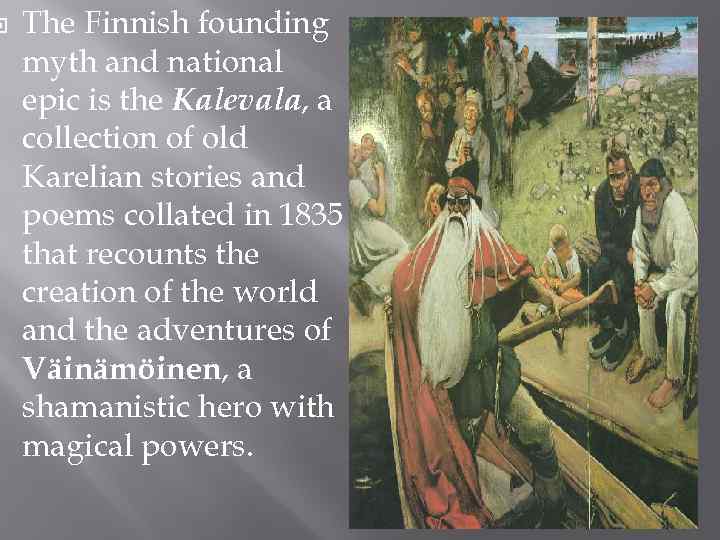 The Finnish founding myth and national epic is the Kalevala, a collection of old Karelian stories and poems collated in 1835 that recounts the creation of the world and the adventures of Väinämöinen, a shamanistic hero with magical powers.
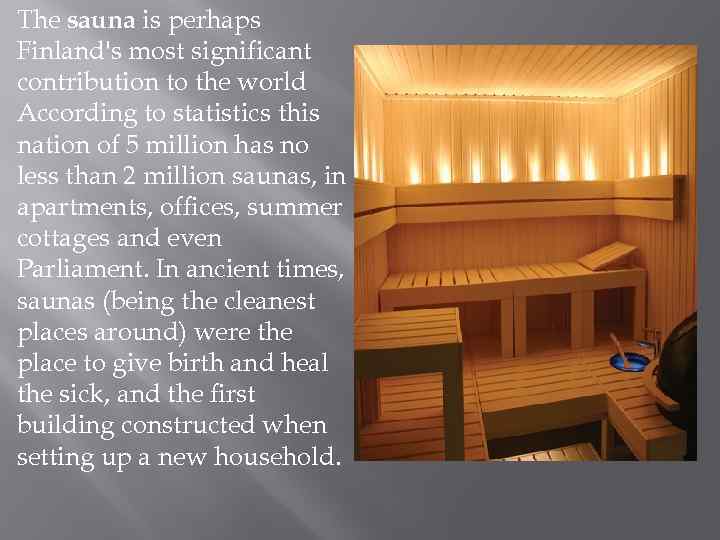 The sauna is perhaps Finland's most significant contribution to the world According to statistics this nation of 5 million has no less than 2 million saunas, in apartments, offices, summer cottages and even Parliament. In ancient times, saunas (being the cleanest places around) were the place to give birth and heal the sick, and the first building constructed when setting up a new household.
 If invited to visit a Finnish home, you may be invited to bathe in the sauna as well — this is an honor and should be treated as such, although Finns do understand that foreigners may not be keen about the idea. Enter the sauna nude after taking a shower, as wearing a bathing suit or any other clothing is considered a bit of a faux pas, although if you are feeling shy, you can wrap yourself in a bath towel.
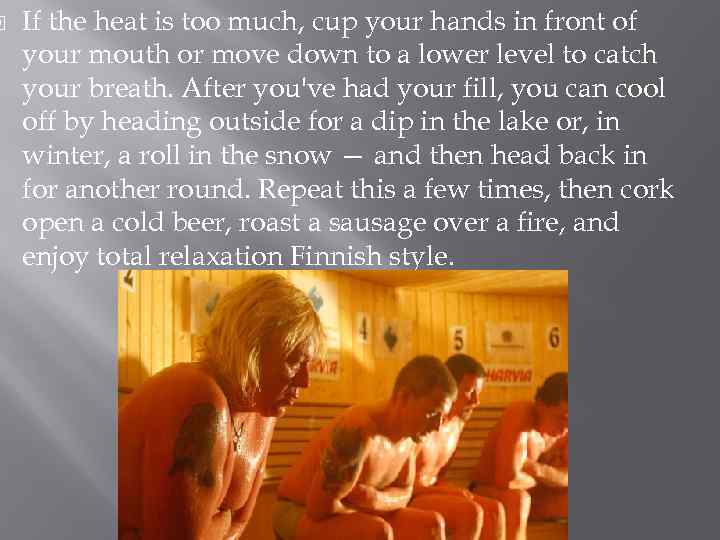 If the heat is too much, cup your hands in front of your mouth or move down to a lower level to catch your breath. After you've had your fill, you can cool off by heading outside for a dip in the lake or, in winter, a roll in the snow — and then head back in for another round. Repeat this a few times, then cork open a cold beer, roast a sausage over a fire, and enjoy total relaxation Finnish style.
 Respect Finns are a famously taciturn (молчаливый)people who have little time for small talk or social niceties, so don't expect to hear phrases like "thank you" or "you're welcome" too often. The Finnish language lacks a specific word for "please", so Finns sometimes forget to use it when speaking English, even when they don't mean to be rude.
 Respect Also lacking in Finnish of the distinction between "he" and "she" may lead to confusing errors. Loud speaking and loud laughing is not normal in Finland may irritate some Finns. Occasional silence is considered a part of the conversation, not a sign of hostility or irritation
 Fishing Finnish style It was a beautiful summer day, and Virtanen and Lahtinen were in a little rowboat in the middle of a lake, fishing. Two hours passed, both men sitting quietly, and then Lahtinen said "Nice weather today. " Virtanen grunted and stared intently at his fishing rod. Two more hours passed. Lahtinen said, "Gee, the fish aren't biting today. " Virtanen shot back: "That's because you blabber too much. " Drinking Finnish style Virtanen and Lahtinen decided to go drinking at their lakeside cottage. For a couple hours, both men sat silently and emptied their bottles. After a few more hours, Lahtinen decided to break the ice: "Isn't it nice to have some quality time? " Virtanen glared at Lahtinen and answered: "Are we here to drink or talk? "
 Respect Another highly regarded virtue in Finland is punctuality. A visitor should apologize even for being late for a few minutes. If you are invited to a Finnish home, the only bad mistake visitors can make is not to remove their shoes. In Finland there is little in the way of a dress code. The general attire is casual and even in business meetings dressing is somewhat more relaxed than in some other countries. Topless sunbathing is accepted but not very common on beaches in the summer
 Tourism There aren’t many world-famous attractions. However, the government do all their best to attract tourists by throwing numerous festivals, organising new museums, creating different theme parks. Moreover, Finland is famous for its architecture. Finns have always tried to let the nature be in their cities.
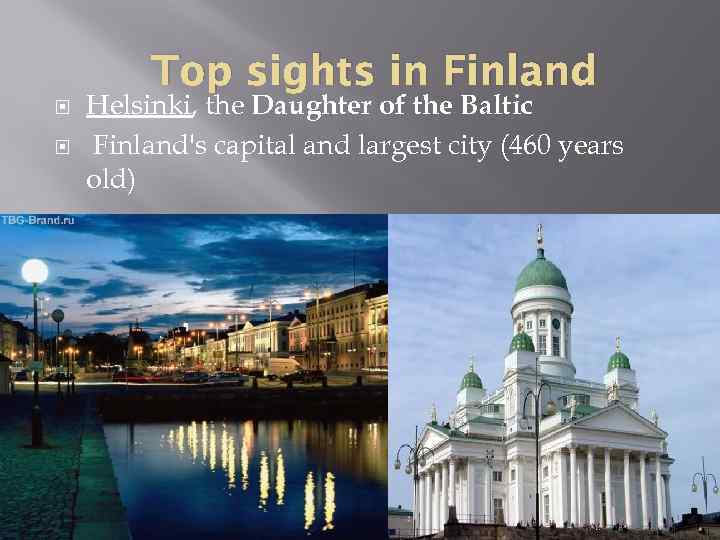 Top sights in Finland Helsinki, the Daughter of the Baltic Finland's capital and largest city (460 years old)
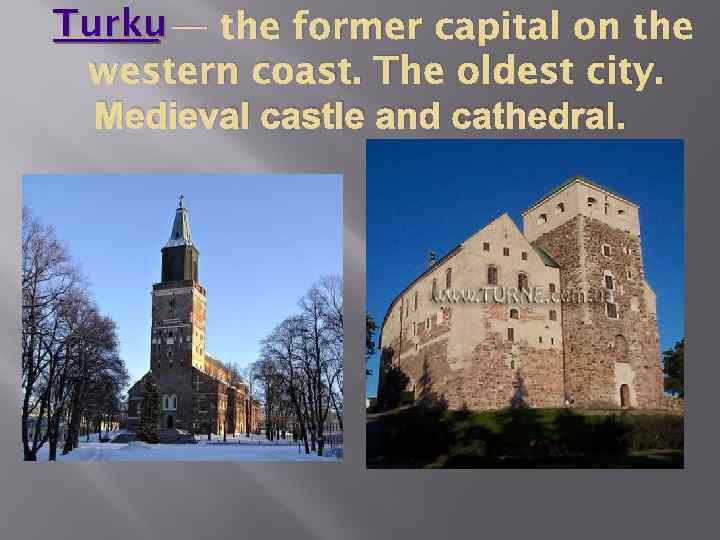 Turku — the former capital on the western coast. The oldest city. Medieval castle and cathedral.
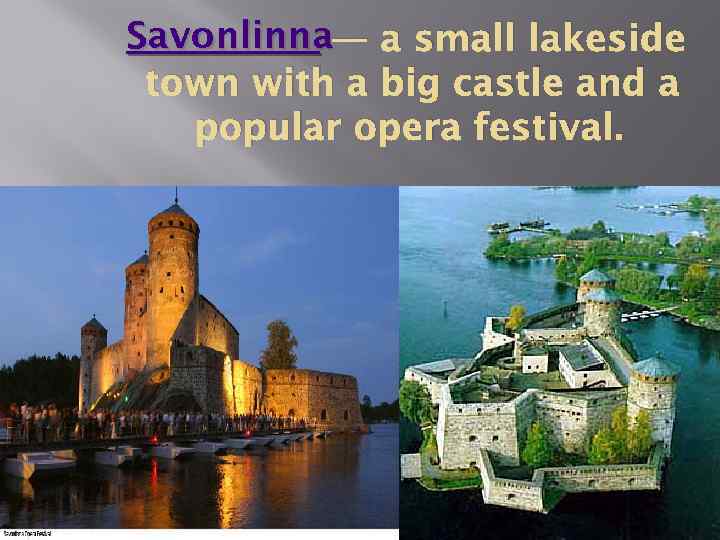 Savonlinna— a small lakeside town with a big castle and a popular opera festival.
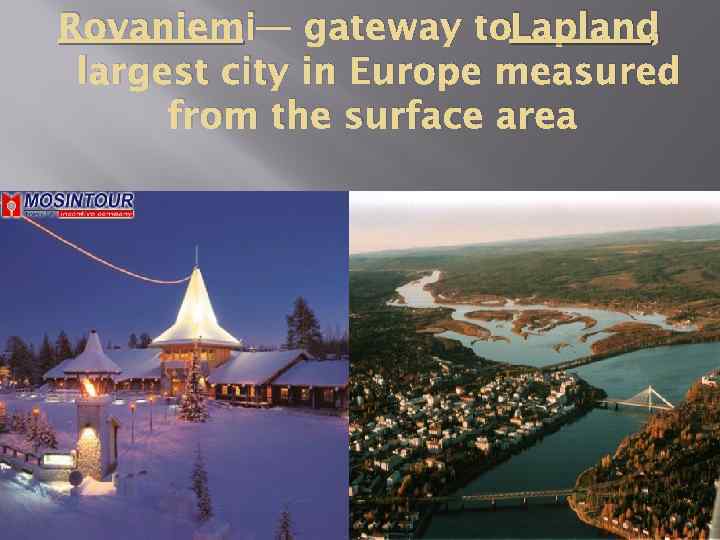 Rovaniemi— gateway to. Lapland , largest city in Europe measured from the surface area
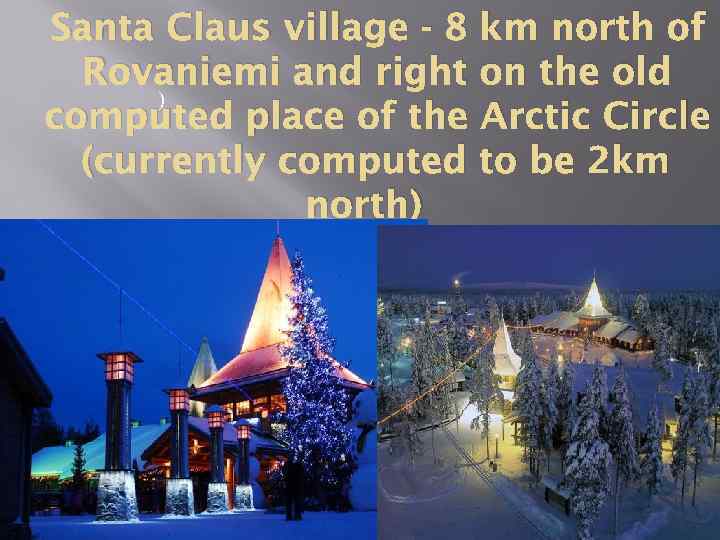 Santa Claus village - 8 km north of Rovaniemi and right on the old ) computed place of the Arctic Circle (currently computed to be 2 km north)
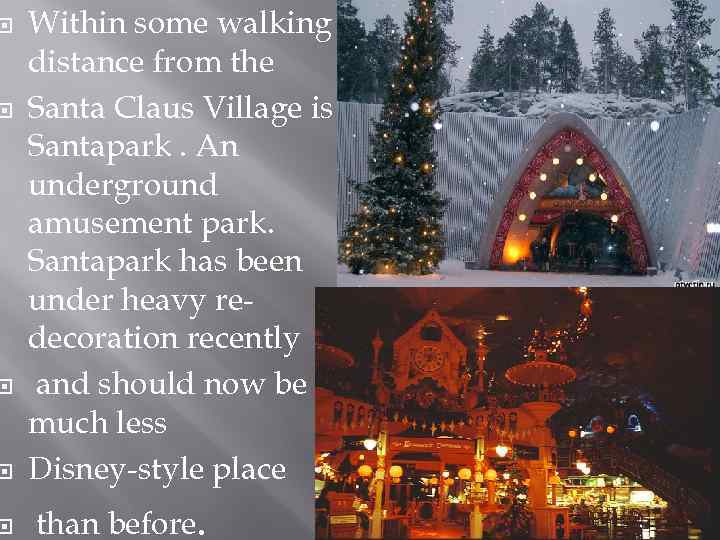 Within some walking distance from the Santa Claus Village is Santapark. An underground amusement park. Santapark has been under heavy redecoration recently and should now be much less Disney-style place than before.
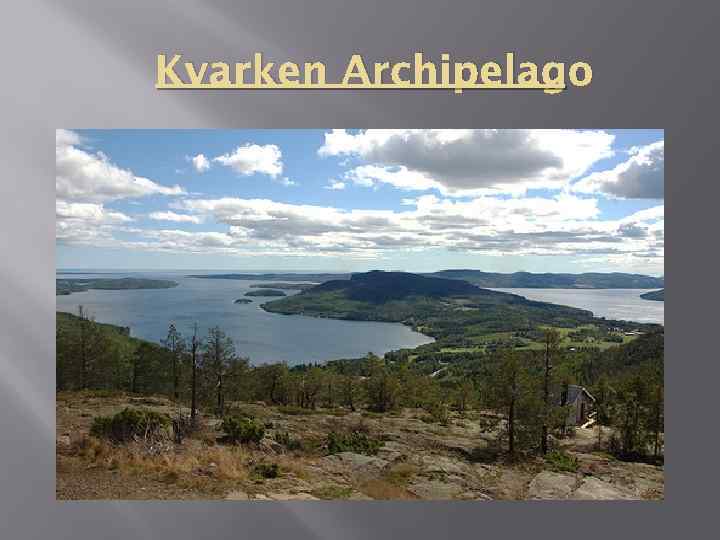 Kvarken Archipelago
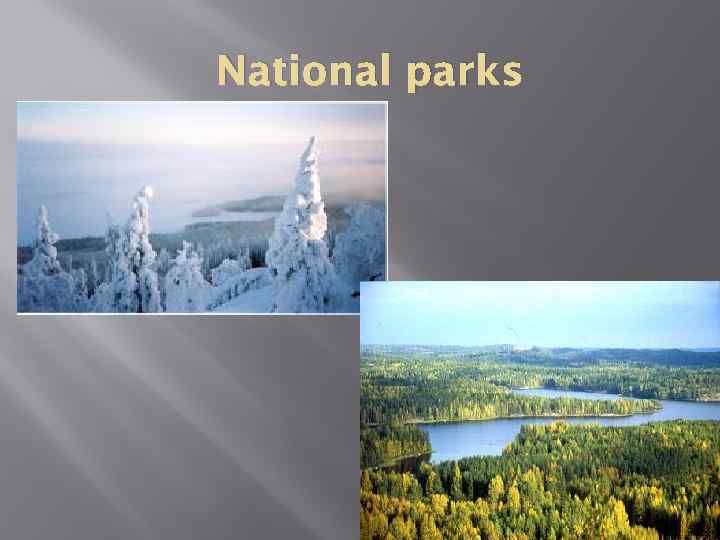 National parks
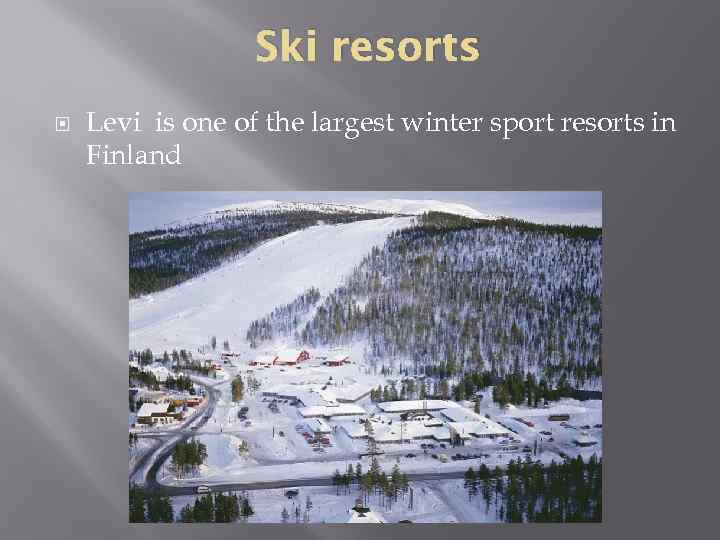 Ski resorts Levi is one of the largest winter sport resorts in Finland
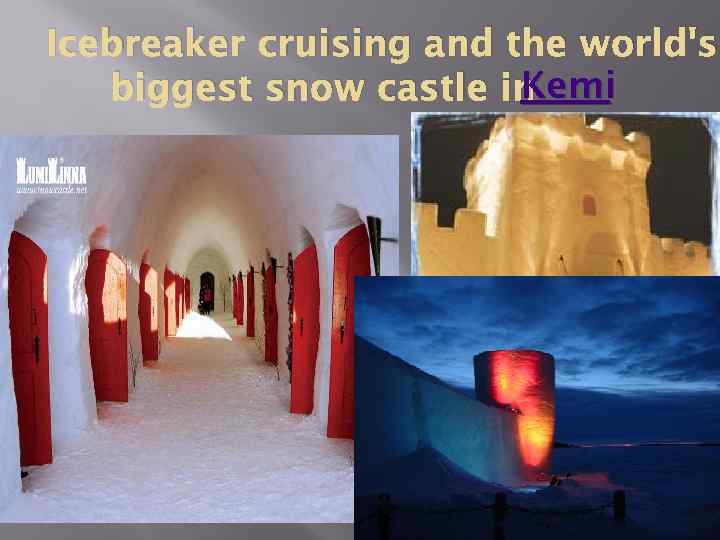 Icebreaker cruising and the world's Kemi biggest snow castle in
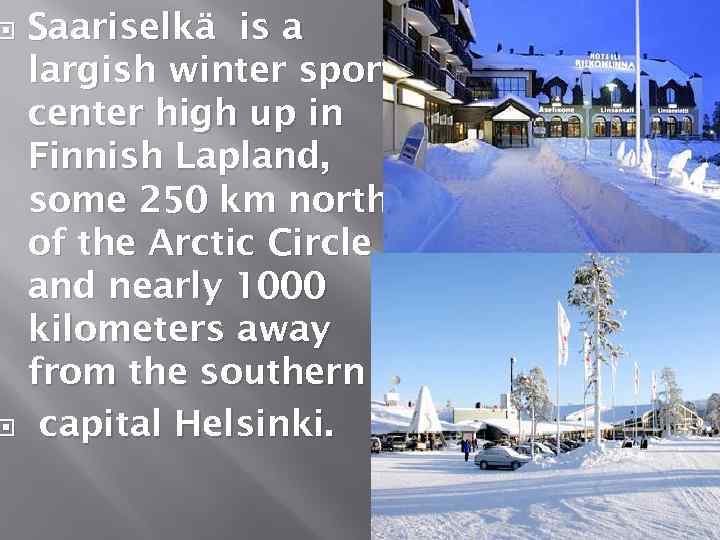 Saariselkä is a largish winter sports center high up in Finnish Lapland, some 250 km north of the Arctic Circle and nearly 1000 kilometers away from the southern capital Helsinki.
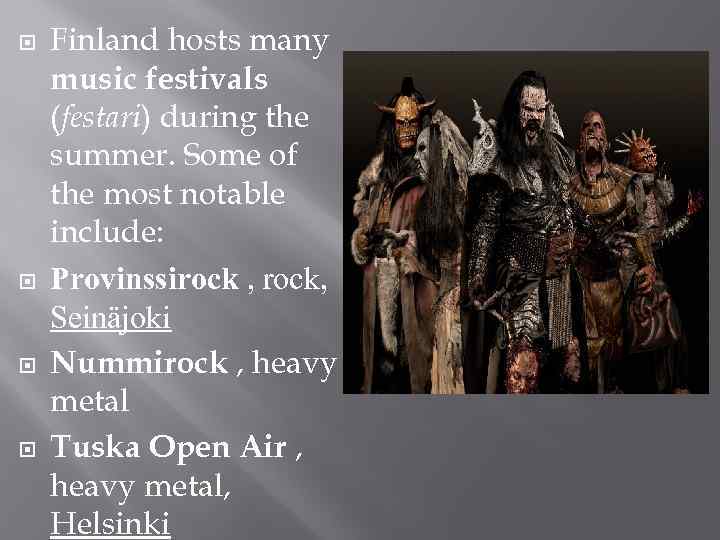 Finland hosts many music festivals (festari) during the summer. Some of the most notable include: Provinssirock , rock, Seinäjoki Nummirock , heavy metal Tuska Open Air , heavy metal, Helsinki
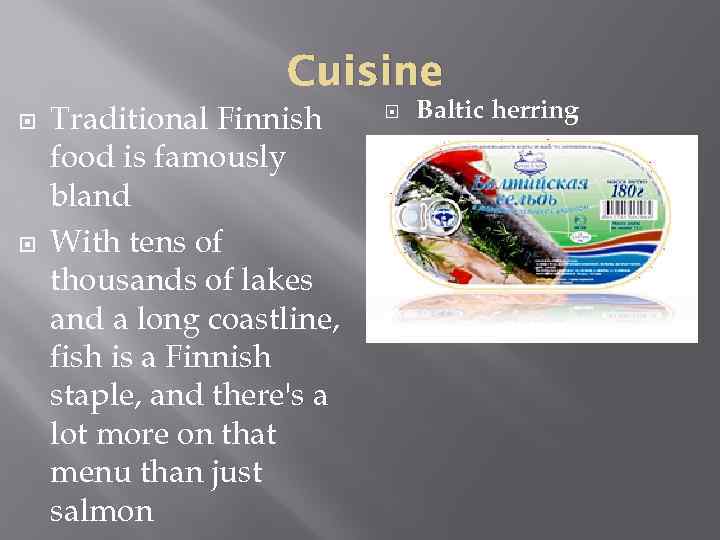 Cuisine Traditional Finnish food is famously bland With tens of thousands of lakes and a long coastline, fish is a Finnish staple, and there's a lot more on that menu than just salmon Baltic herring
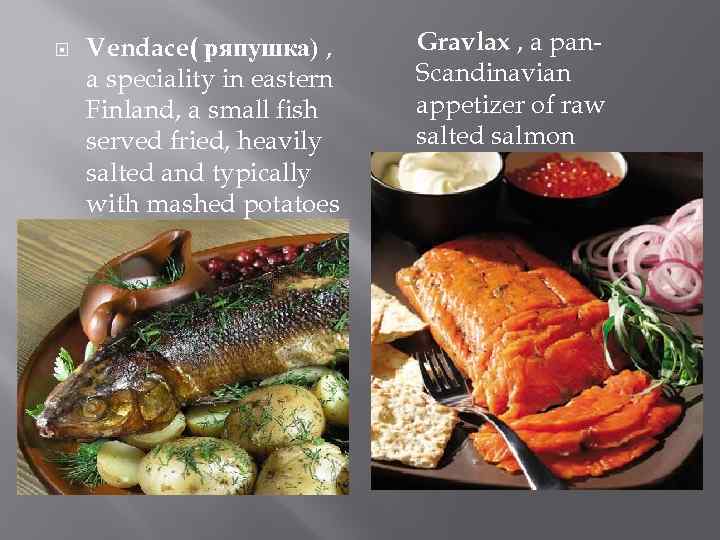 Vendace( ряпушка) , a speciality in eastern Finland, a small fish served fried, heavily salted and typically with mashed potatoes Gravlax , a pan. Scandinavian appetizer of raw salted salmon
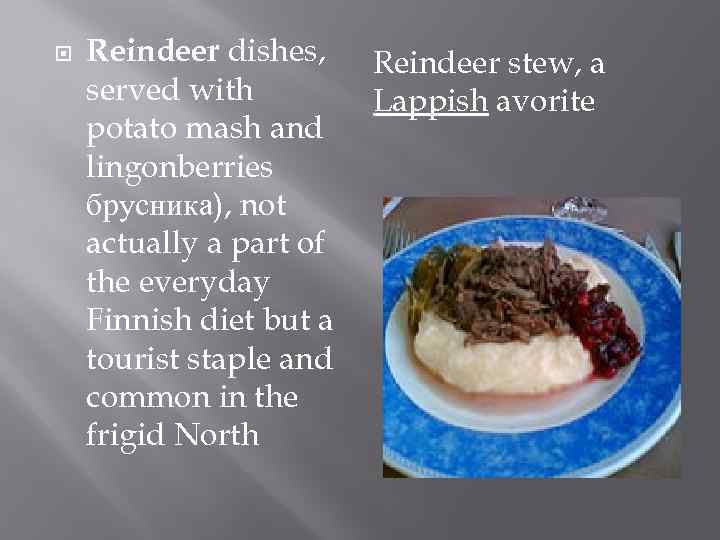 Reindeer dishes, served with potato mash and lingonberries брусника), not actually a part of the everyday Finnish diet but a tourist staple and common in the frigid North Reindeer stew, a Lappish avorite
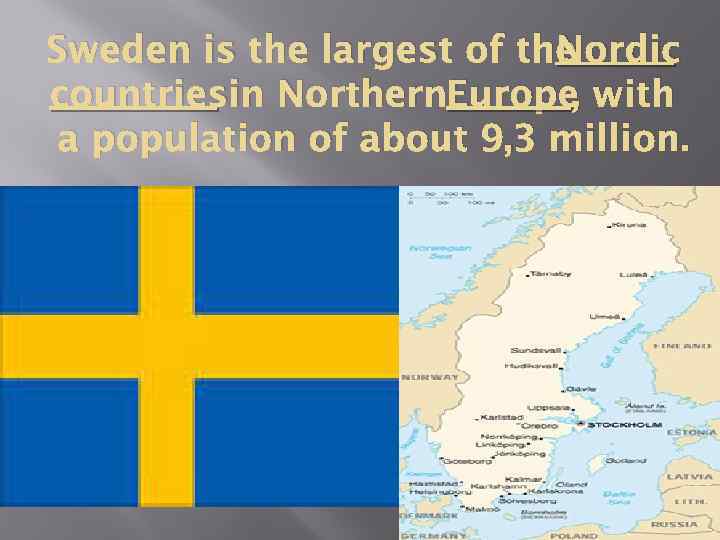 Sweden is the largest of the Nordic countriesin Northern. Europe with , a population of about 9, 3 million.
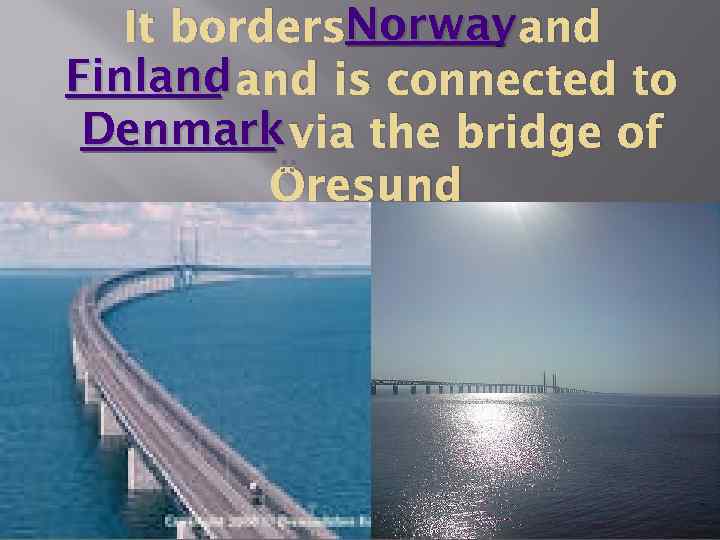 It borders. Norway and Finland is connected to Denmark via the bridge of Öresund
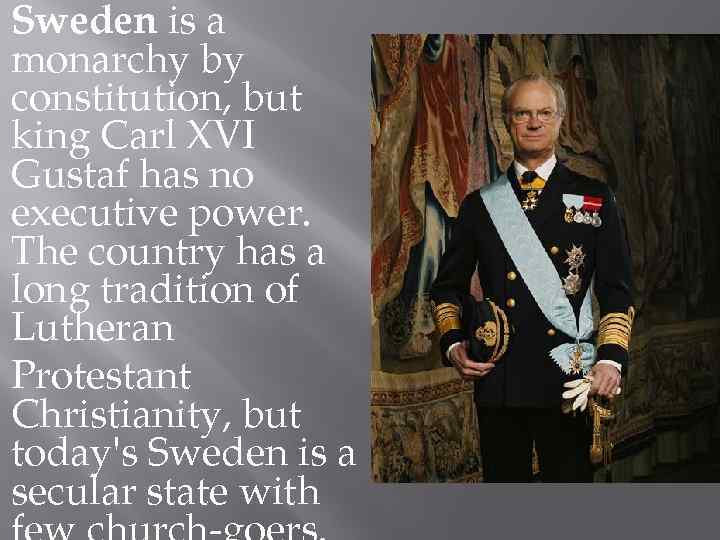 Sweden is a monarchy by constitution, but king Carl XVI Gustaf has no executive power. The country has a long tradition of Lutheran Protestant Christianity, but today's Sweden is a secular state with
 The standard of living and life expectancy rank among the highest in the world. Sweden joined the European Union in 1995, but decided by a referendum in 2003 not to commit to the European Monetary Union and the euro currency.
 Citizens sometimes appear to be quite reserved at first, but once they get to know who they are dealing with, they'll be as warm and friendly as you'd wish. Privacy is regarded as a key item and many visitors, for example mega-stars in various lines of trade, have many times realized that they mostly can walk the streets of the cities virtually undisturbed.
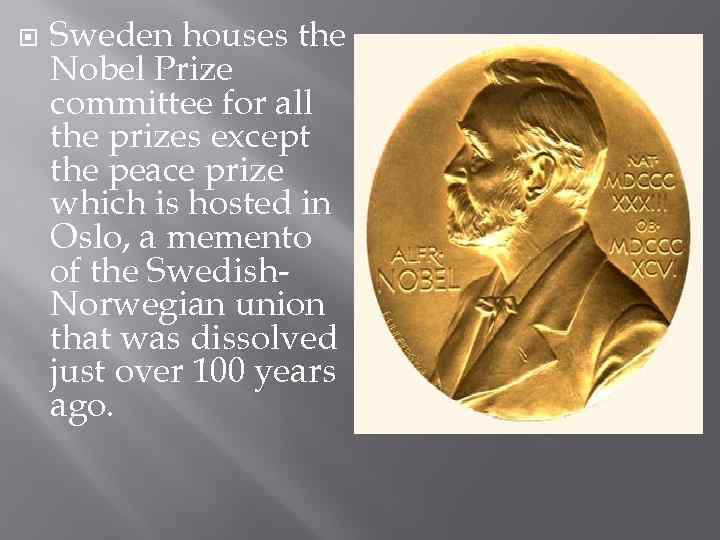 Sweden houses the Nobel Prize committee for all the prizes except the peace prize which is hosted in Oslo, a memento of the Swedish. Norwegian union that was dissolved just over 100 years ago.
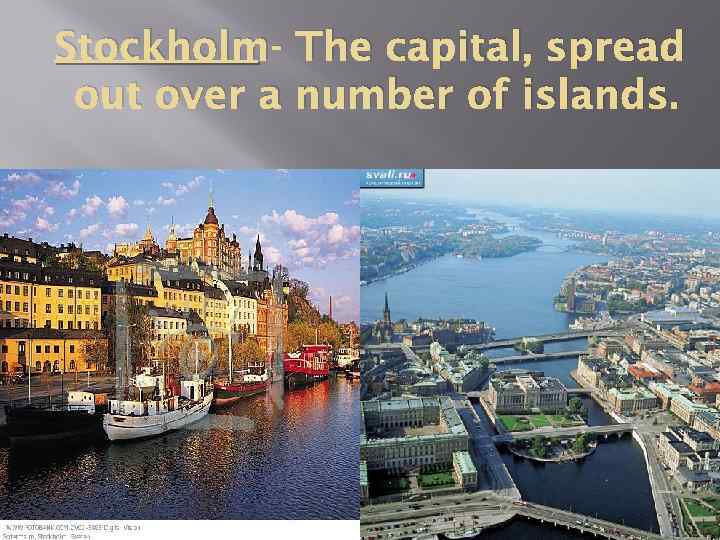 Stockholm - The capital, spread out over a number of islands.
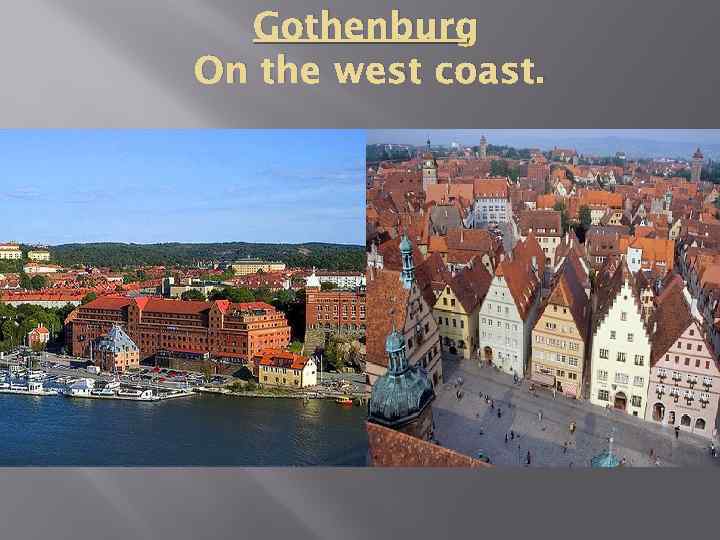 Gothenburg On the west coast.
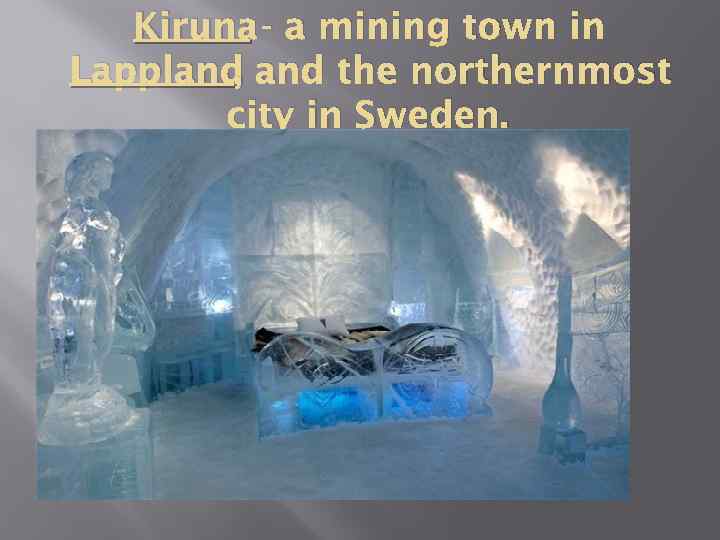 Kiruna - a mining town in Lappland the northernmost , city in Sweden.
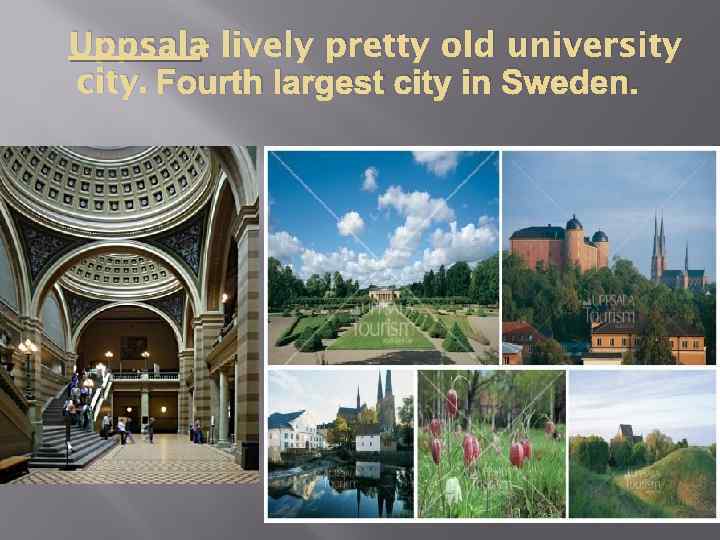 Uppsala lively pretty old university city. Fourth largest city in Sweden.
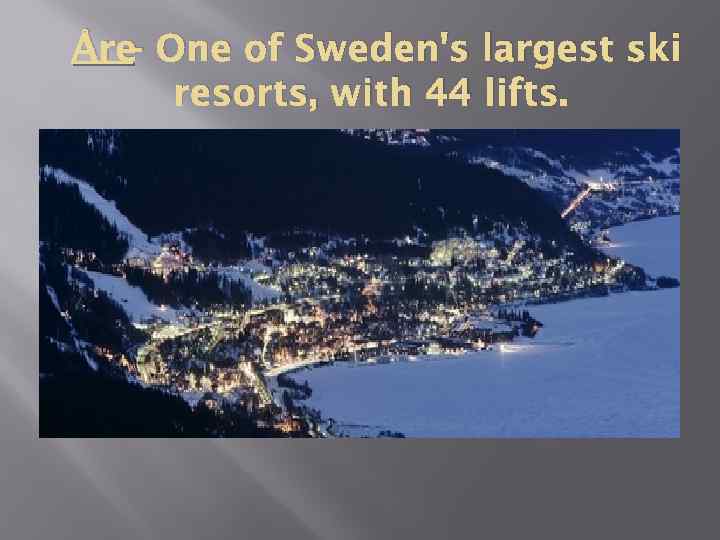 Åre- One of Sweden's largest ski resorts, with 44 lifts.
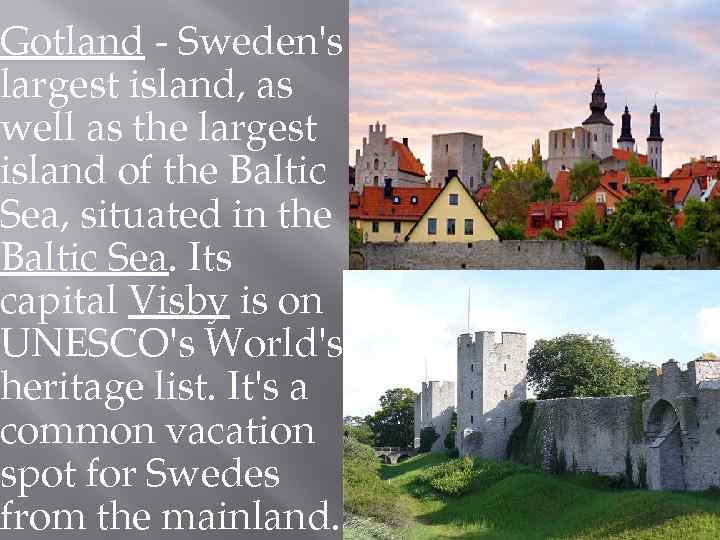 Gotland - Sweden's largest island, as well as the largest island of the Baltic Sea, situated in the Baltic Sea. Its capital Visby is on UNESCO's World's heritage list. It's a common vacation spot for Swedes from the mainland.
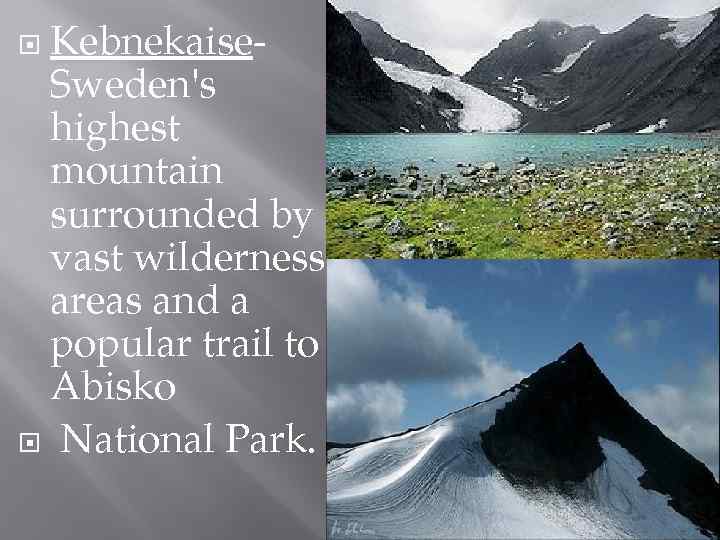 Kebnekaise. Sweden's highest mountain surrounded by vast wilderness areas and a popular trail to Abisko National Park.
 Swedish is the national language of Sweden, but you will find that people, especially those born since 1945, also speak English very well an estimated 89% of Swedes can speak English, according to the Eurobarometer, making Sweden the most English-proficient country on the continent.
 Hej (hay) is the massively dominant greeting in Sweden, useful on kings and bums alike. You can even say it when you leave. The Swedes most often do not say "please" (snälla say snell-LA), instead they are generous with the word tack (tuck), meaning "thanks". If you need to get someone's attention, whether it's a waiter or you need to pass someone in a crowded situation, a simple "ursäkta" (say "oor-sehk-ta") ("excuse me") will do the trick.
 Where are the Vikings? Many tourists from English-speaking countries wonder where they can see real Vikings. Unfortunately, they have not been around for a thousand years. "Viking" is not the name of a separate tribe or nation - it is simply a word meaning "sailor" or "navigator of the fjords". Some Swedish, Norwegian and Danish men (and in a few cases women) gave up farming or fishing to join expeditions of trade, exploration and piracy, reaching as far as present-day Canada, Morocco and the Caspian Sea.
 As the pagan Scandinavians were christened around AD 1000, the Viking raids declined. There are still traces from the Viking age, such as runestones and burial mounds, everywhere in Sweden. . Some good places to see Viking artifacts are The Museum of National Antiquities ("Historiska museet") in Stockholm, Gamla Uppsala in Uppsala and Birka just west of Stockholm
 The Viking heritage has been contorted through history romanticized during the 19 th century, abused by neo-Nazis, but more truthfully re-enacted by neopagans and live-action roleplayers. Most Swedes are proud of their Viking roots, though they don't take it very seriously
 Sweden is great for outdoor life skiing, skating, hiking, canoeing, cycling and berry-picking depending of season. Stockholm and Gothenburg have great nightlife and shopping opportunities. Most cities have well-preserved pre-industrial architecture.
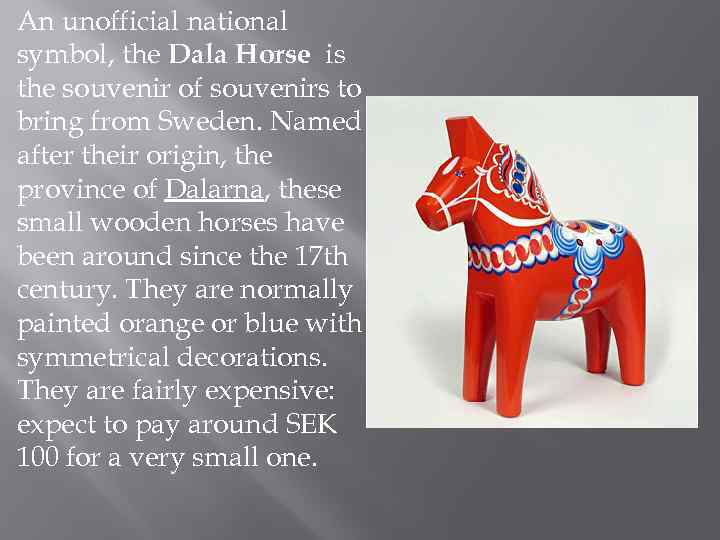 An unofficial national symbol, the Dala Horse is the souvenir of souvenirs to bring from Sweden. Named after their origin, the province of Dalarna, these small wooden horses have been around since the 17 th century. They are normally painted orange or blue with symmetrical decorations. They are fairly expensive: expect to pay around SEK 100 for a very small one.
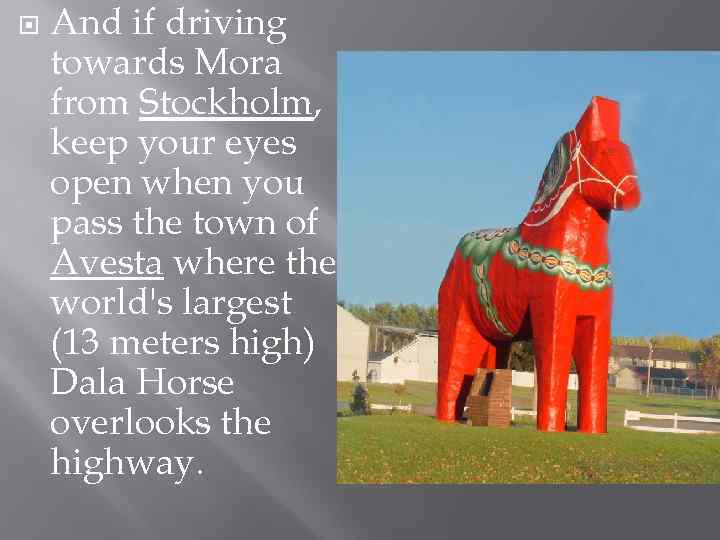 And if driving towards Mora from Stockholm, keep your eyes open when you pass the town of Avesta where the world's largest (13 meters high) Dala Horse overlooks the highway.
 Swedish glass is world famous for its beauty. Several skilled glass artists have contributed to this reputation through innovative, complex (and expensive) art creations, but mass-produced Swedish table glass has also been an international success.
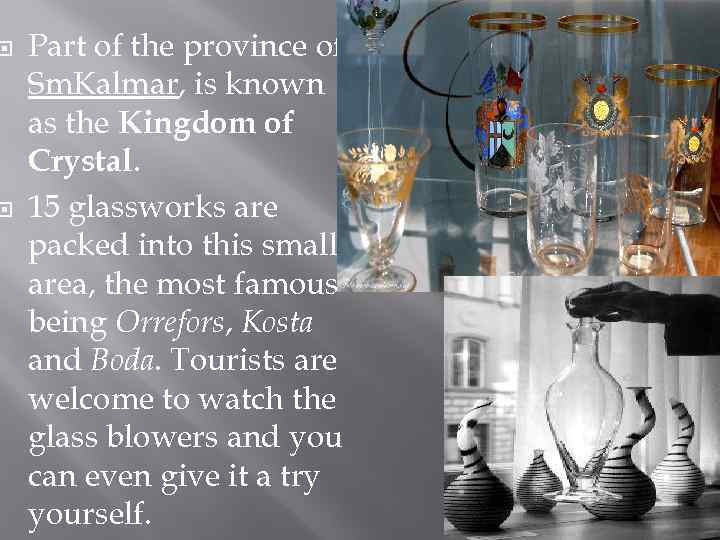 Part of the province of Sm. Kalmar, is known as the Kingdom of Crystal. 15 glassworks are packed into this small area, the most famous being Orrefors, Kosta and Boda. Tourists are welcome to watch the glass blowers and you can even give it a try yourself.
 cuisine is mostly hearty meat or fish with potatoes, derived from the days when men needed to chop wood all day long. Besides the ubiquitous potatoes, modern Swedish cuisine is to a great extent based on bread Swedish
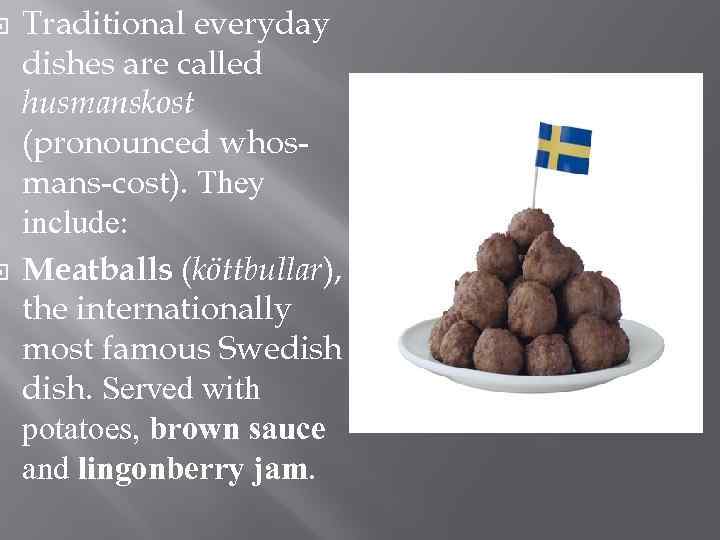 Traditional everyday dishes are called husmanskost (pronounced whosmans-cost). They include: Meatballs (köttbullar), the internationally most famous Swedish. Served with potatoes, brown sauce and lingonberry jam.
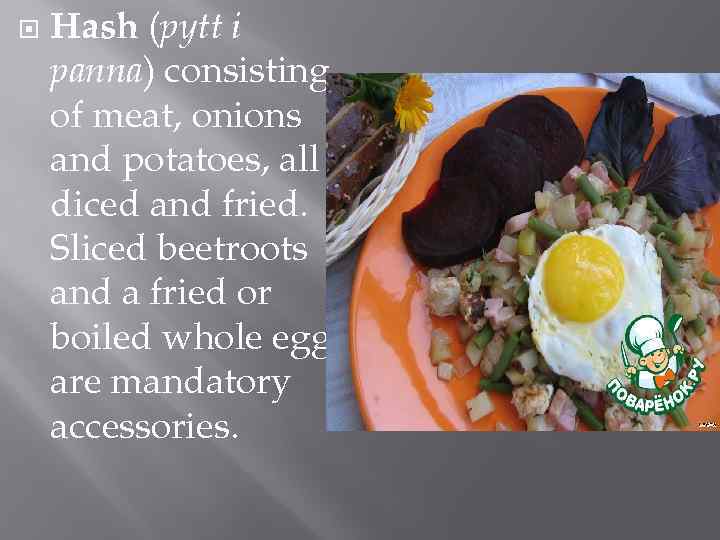 Hash (pytt i panna) consisting of meat, onions and potatoes, all diced and fried. Sliced beetroots and a fried or boiled whole eggs are mandatory accessories.
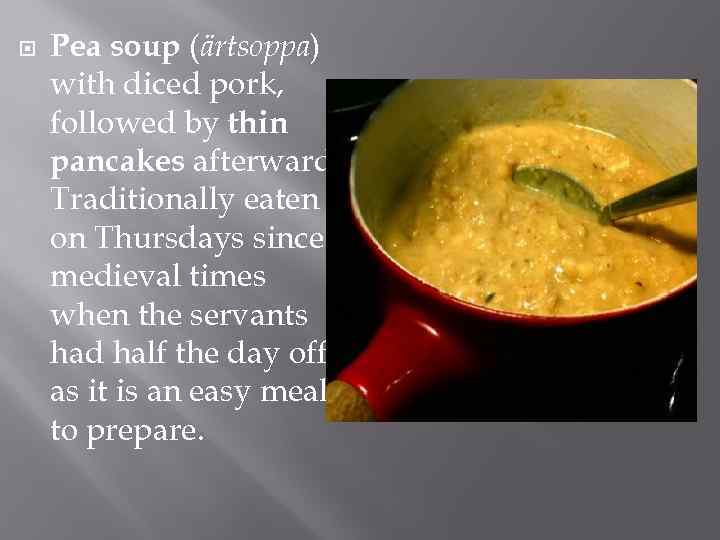 Pea soup (ärtsoppa) with diced pork, followed by thin pancakes afterwards. Traditionally eaten on Thursdays since medieval times when the servants had half the day off as it is an easy meal to prepare.
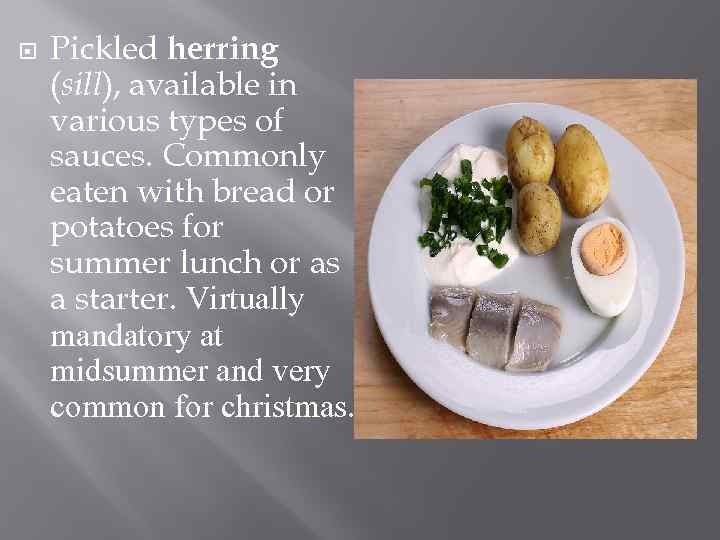 Pickled herring (sill), available in various types of sauces. Commonly eaten with bread or potatoes for summer lunch or as a starter. Virtually mandatory at midsummer and very common for christmas.
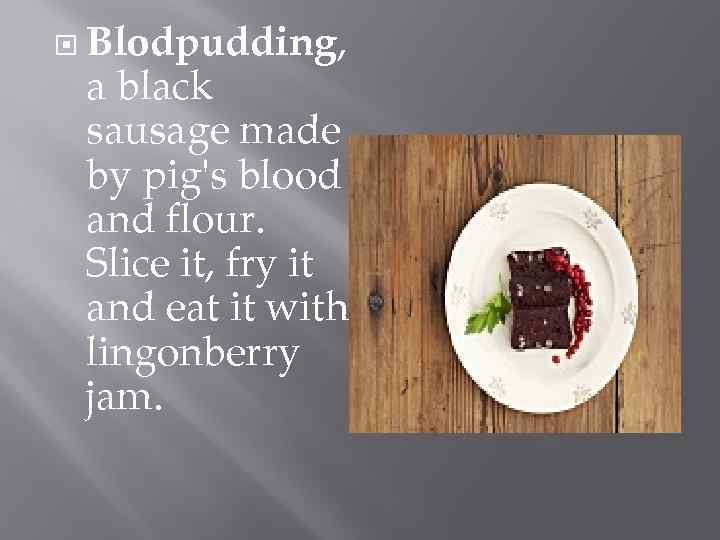 Blodpudding, a black sausage made by pig's blood and flour. Slice it, fry it and eat it with lingonberry jam.
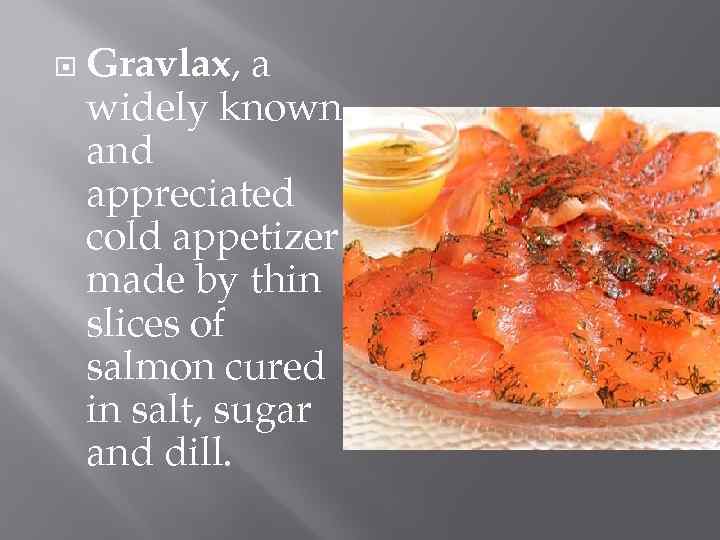 Gravlax, a widely known and appreciated cold appetizer made by thin slices of salmon cured in salt, sugar and dill.
 Sweden has more varieties of bread than most other countries. Many of them are wholegrain or mixed grain, containing wheat, barley, oats, compact and rich in fiber.
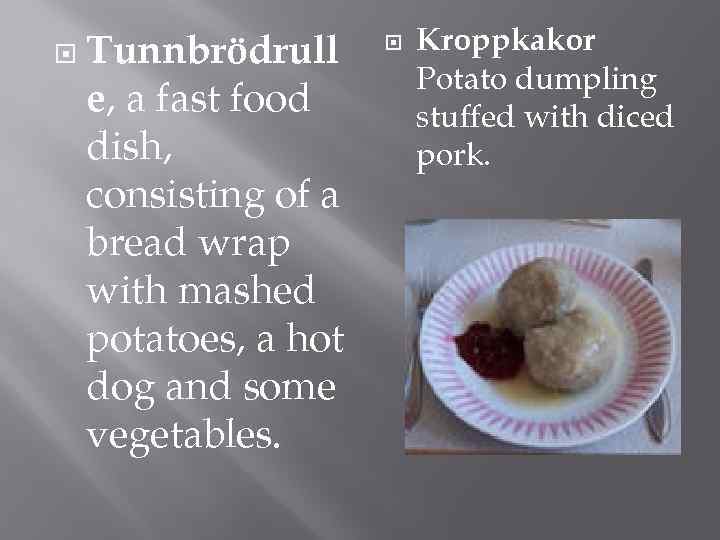 Tunnbrödrull e, a fast food dish, consisting of a bread wrap with mashed potatoes, a hot dog and some vegetables. Kroppkakor Potato dumpling stuffed with diced pork.
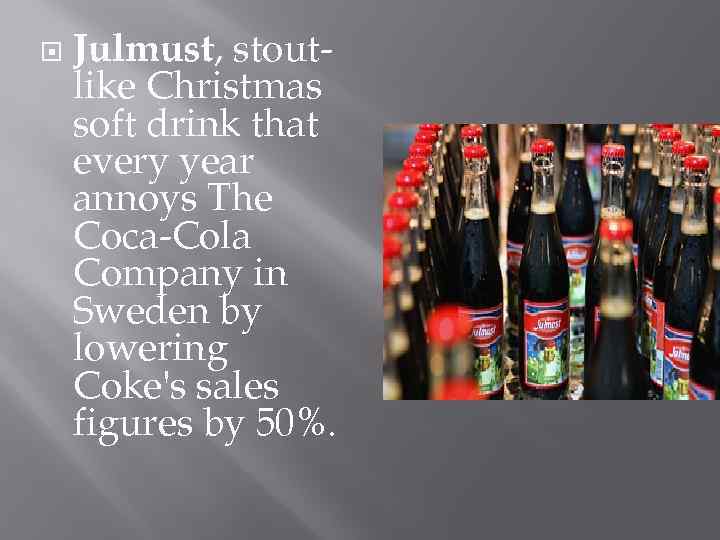 Julmust, stoutlike Christmas soft drink that every year annoys The Coca-Cola Company in Sweden by lowering Coke's sales figures by 50%.
 Respect Most Swedes have liberal, cosmopolitan, secular, egalitarian and environmentalist values by Anglo-Saxon standards. This spares Western tourists from cultural clashes which might be imminent in other countries. However, some strict rules of etiquette are almost unique to Swedish people.
 Swedish people are reputed to be rigid and organized. Almost everything has a number. Swedish people have a ten-digit personal identity number (starting by date of birth in the form YYMMDD) used in contact with all kinds of government authorities, usually mentioned before the name.
 Customers in Swedish shops or bank need to take a queue number note from a machine to be served in order. Each product at Systembolaget is known for its product number (which is often easier to keep track of than foreign-sounding names), and the most important feature in selection is the alcohol content (often divided by price to find the most cost -efficient product).
 If you order a drink in the bar, be prepared to tell how many centiliters of liquor you want. Before going outdoors, Swedes check air temperature, and before bathing in open water, they check water temperature. Many Swedes also own barometers, hygrometers and rain gauges to support the eternal conversation about weather with statistics. In conversation about housing, Swedes define their flats by number of rooms (En trea - "a three" - is simply a three-room-and-kitchen flat) and usually ask each other about the area by square meter. They have week numbers running from 1 to 52.
 Always ask if you should remove your shoes or not when entering a Swedish home. In most homes it is customary to remove your shoes, but some Swedes prefer if their guests keep their shoes on. Show up on the minute for meetings and meals, preferably five minutes before set time. There is no "fashionably late" in Sweden. However, showing up early at a private invitation is considered rude. If it's acceptable to arrive late it's usually mentioned ". . . arrive after 17. 00" or exists formal rules (some of the universities applies a "akademisk kvart", an academic quarter hour, within which it is accetable to arrive to lectures).