Скачать презентацию scaffolding setting 10 cm EPS vs expected energy
23de153e50f6e43c01c478eb3a63dd06.ppt
- Количество слайдов: 26
 scaffolding setting 10 cm EPS vs. expected energy savings
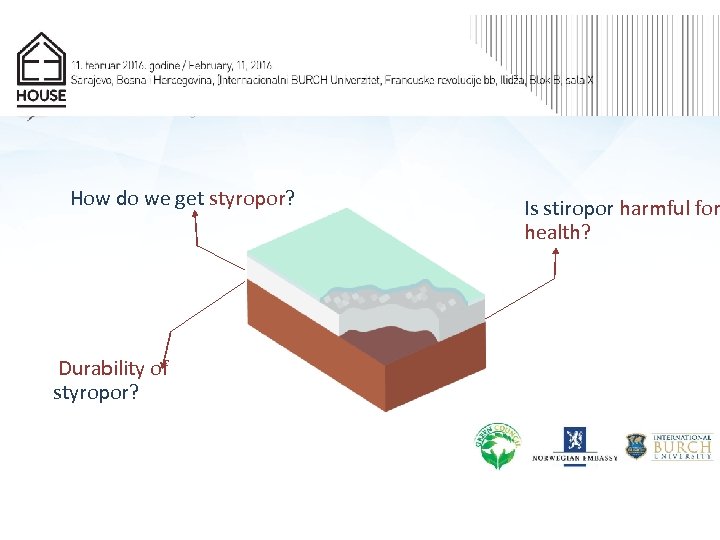 How do we get styropor? Durability of styropor? Is stiropor harmful for health?
 How do we get plastic windows? Is plastic harmful for health?
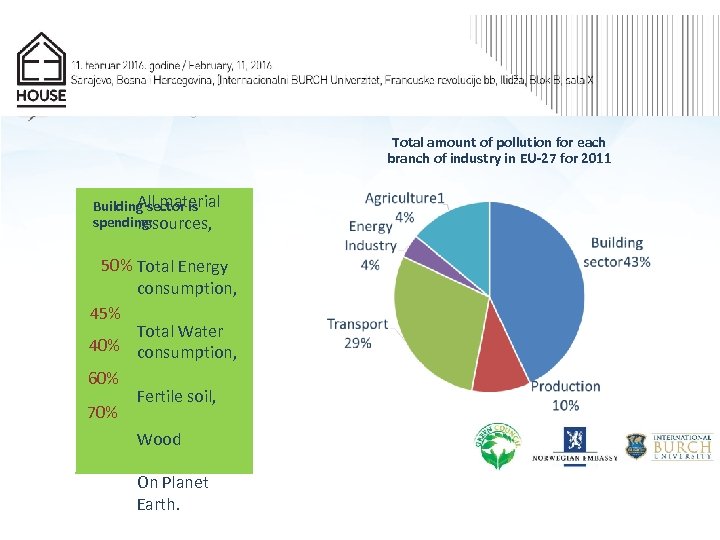 Total amount of pollution for each branch of industry in EU-27 for 2011 All material Building sector is spending: resources, 50% Total Energy consumption, 45% Total Water 40% consumption, 60% Fertile soil, 70% Wood On Planet Earth.
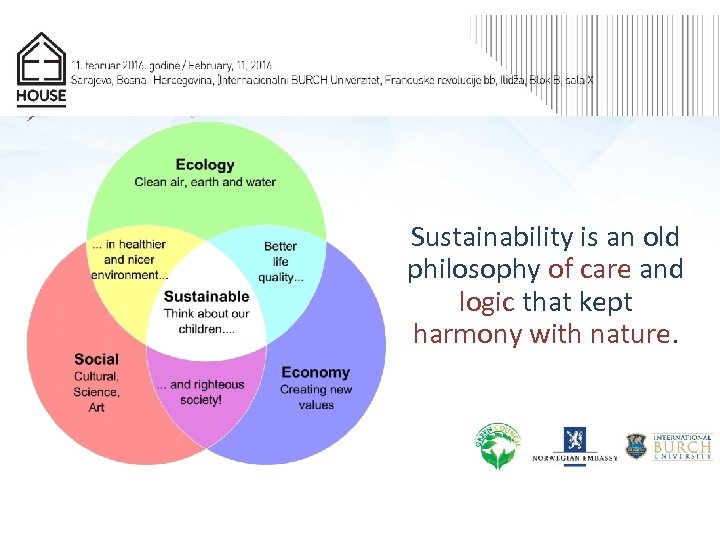 Sustainability is an old philosophy of care and logic that kept harmony with nature.
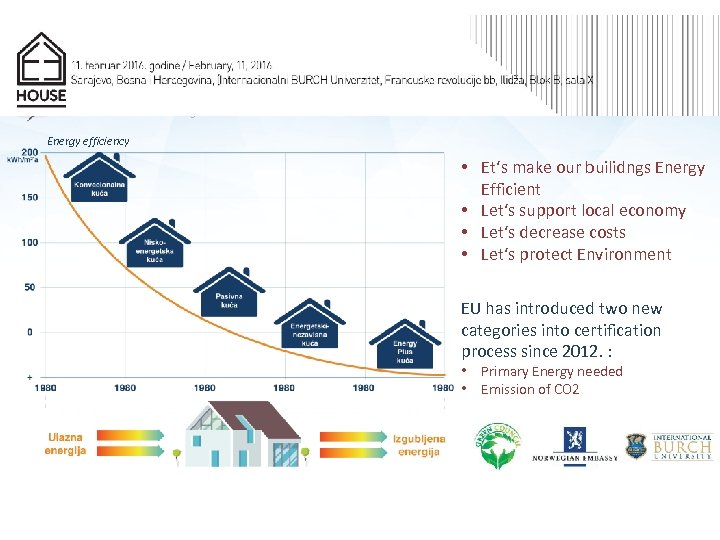 Energy efficiency • Et‘s make our builidngs Energy Efficient • Let‘s support local economy • Let‘s decrease costs • Let‘s protect Environment EU has introduced two new categories into certification process since 2012. : • Primary Energy needed • Emission of CO 2
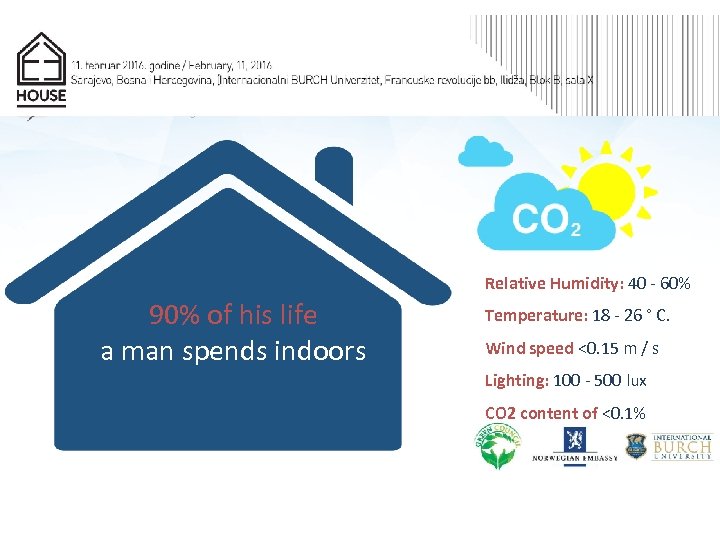 Relative Humidity: 40 - 60% 90% of his life a man spends indoors Temperature: 18 - 26 ° C. Wind speed <0. 15 m / s Lighting: 100 - 500 lux CO 2 content of <0. 1%
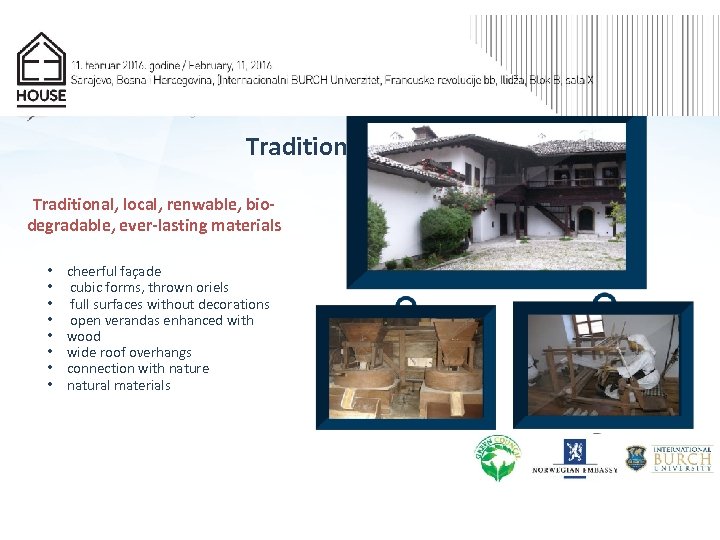 Tradition in B&H Traditional, local, renwable, biodegradable, ever-lasting materials • • cheerful façade cubic forms, thrown oriels full surfaces without decorations open verandas enhanced with wood wide roof overhangs connection with nature natural materials
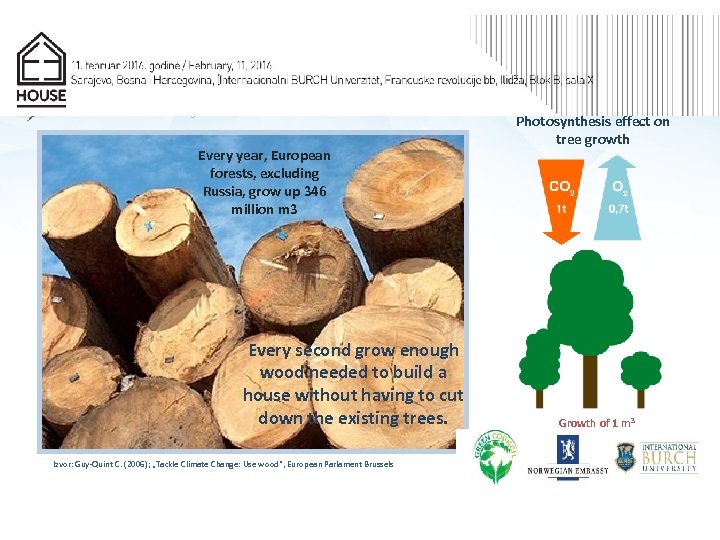 Every year, European forests, excluding Russia, grow up 346 million m 3 Every second grow enough wood needed to build a house without having to cut down the existing trees. Izvor: Guy-Quint C. (2006); „Tackle Climate Change: Use wood“, European Parlament Brussels Photosynthesis effect on tree growth Growth of 1 m 3
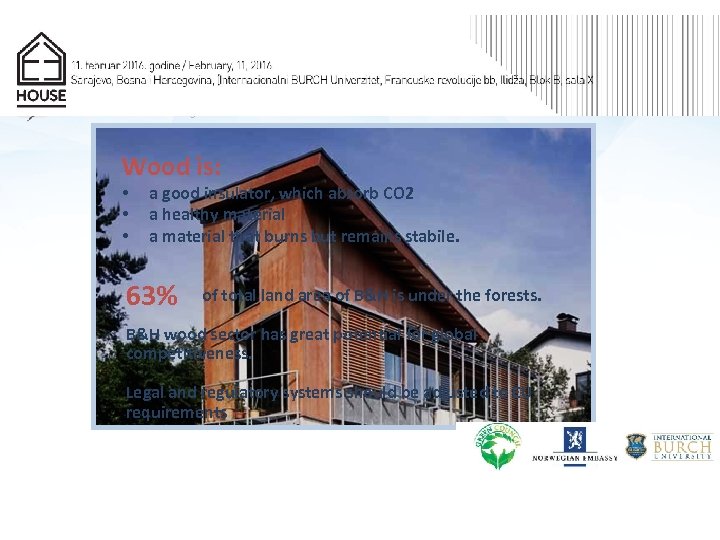 Wood is: • • • a good insulator, which absorb CO 2 a healthy material a material that burns but remains stabile. 63% of total land area of B&H is under the forests. B&H wood sector has great potential for global competitiveness. Legal and regulatory systems should be adjusted to EU requirements
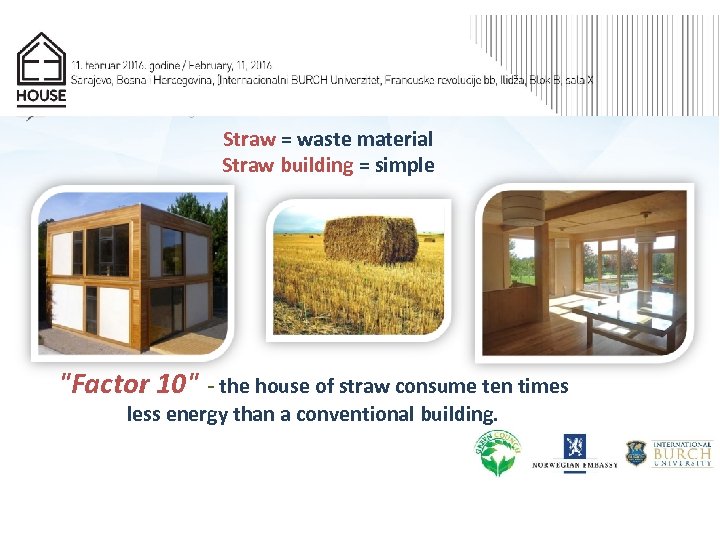 Straw = waste material Straw building = simple "Factor 10" - the house of straw consume ten times less energy than a conventional building.
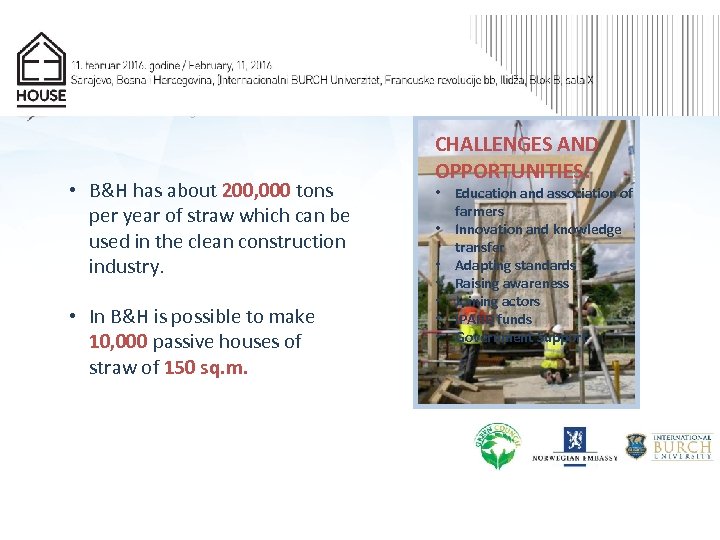 • B&H has about 200, 000 tons per year of straw which can be used in the clean construction industry. • In B&H is possible to make 10, 000 passive houses of straw of 150 sq. m. CHALLENGES AND OPPORTUNITIES: • Education and association of farmers • Innovation and knowledge transfer • Adapting standards • Raising awareness • Joining actors • IPARD funds • Government Support
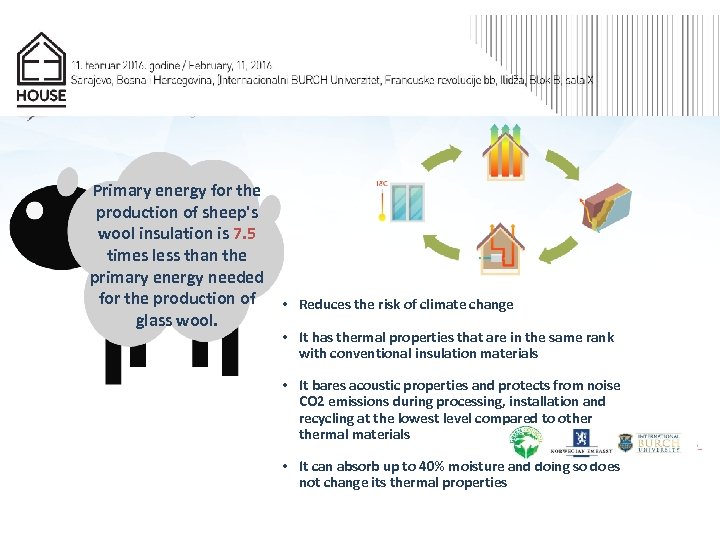 Primary energy for the production of sheep's wool insulation is 7. 5 times less than the primary energy needed for the production of glass wool. • Reduces the risk of climate change • It has thermal properties that are in the same rank with conventional insulation materials • It bares acoustic properties and protects from noise CO 2 emissions during processing, installation and recycling at the lowest level compared to othermal materials • It can absorb up to 40% moisture and doing so does not change its thermal properties
 • 2012. FAO the total number of cattle in B&H 1, 515 000 • 80% belong to the local breed Pramenka • Average per head = 1 to 1. 7 kg of wool = 2, 500 tons per year • Before: five processing plants and the production of wool • Currently in B&H - one small factory
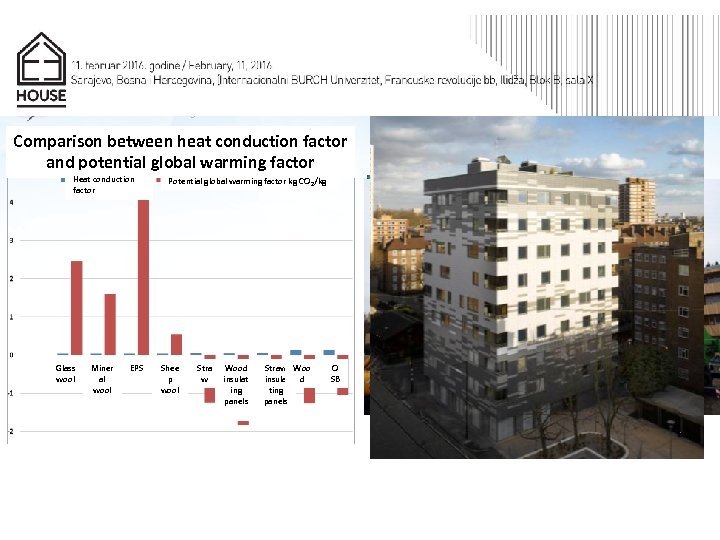 Comparison between heat conduction factor and potential global warming factor Heat conduction factor Glass wool Miner al wool EPS Potential global warming factor kg CO 2/kg Shee p wool Stra w Wood insulat ing panels Straw Woo insula d ting panels O SB
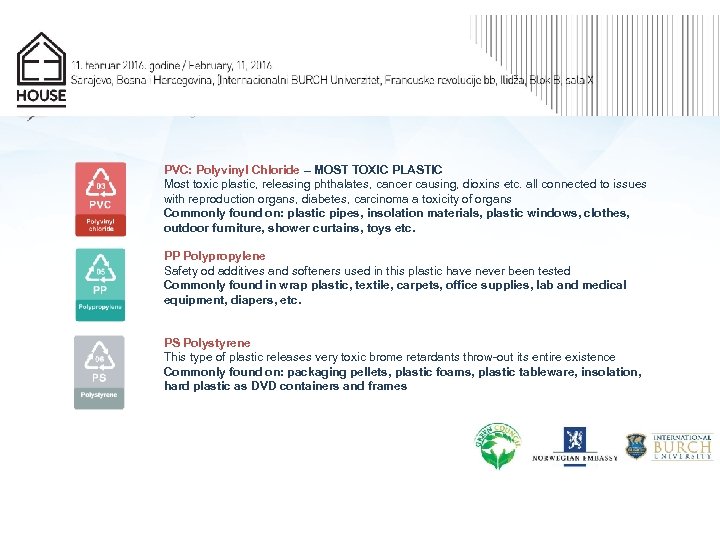 PVC: Polyvinyl Chloride – MOST TOXIC PLASTIC Most toxic plastic, releasing phthalates, cancer causing, dioxins etc. all connected to issues with reproduction organs, diabetes, carcinoma a toxicity of organs Commonly found on: plastic pipes, insolation materials, plastic windows, clothes, outdoor furniture, shower curtains, toys etc. PP Polypropylene Safety od additives and softeners used in this plastic have never been tested Commonly found in wrap plastic, textile, carpets, office supplies, lab and medical equipment, diapers, etc. PS Polystyrene This type of plastic releases very toxic brome retardants throw-out its entire existence Commonly found on: packaging pellets, plastic foams, plastic tableware, insolation, hard plastic as DVD containers and frames
 Sanela Klarić Assist. Prof. Ph. D. Francuske revolucije 71000 Sarajevo +38761382336 sanela. klaric@ibu. edu. ba www. ibu. edu. ba Sanela Klarić President Brčanska 17 71000 Sarajevo +38761382336 sanela. klaric@green-co www. green-counci