Скачать презентацию SAY NO TO THE PLASTIC MONSTER We still
3b4cf297992f0633f1af3ee032136245.ppt
- Количество слайдов: 15
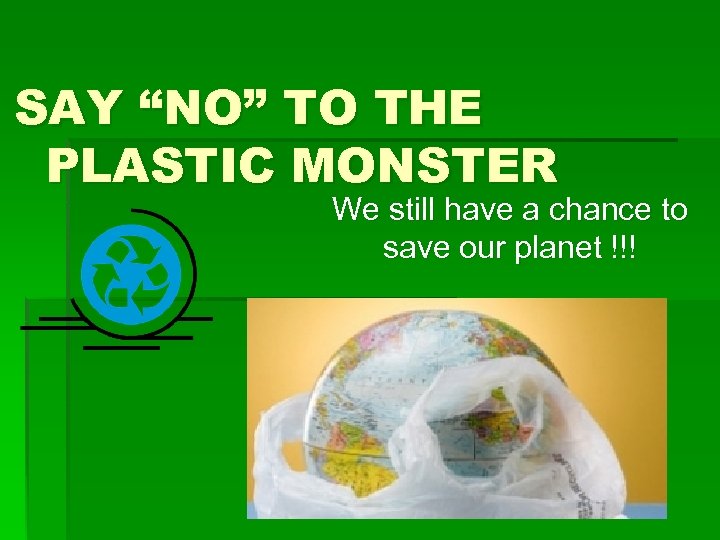 SAY “NO” TO THE PLASTIC MONSTER We still have a chance to save our planet !!!
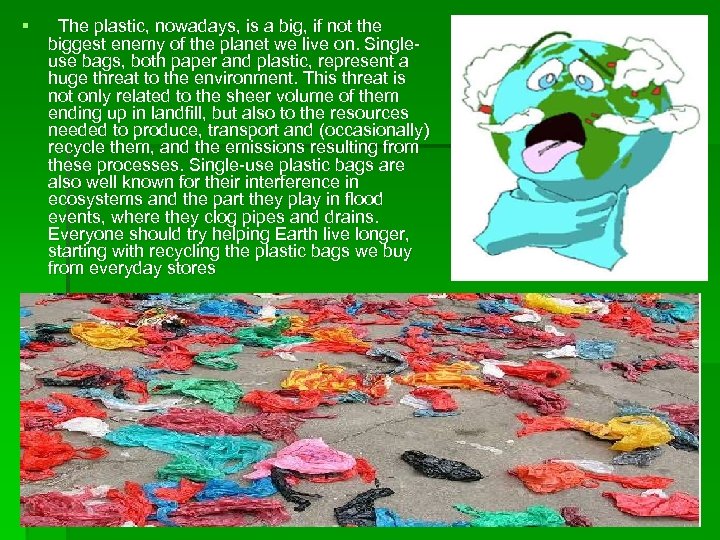 § The plastic, nowadays, is a big, if not the biggest enemy of the planet we live on. Singleuse bags, both paper and plastic, represent a huge threat to the environment. This threat is not only related to the sheer volume of them ending up in landfill, but also to the resources needed to produce, transport and (occasionally) recycle them, and the emissions resulting from these processes. Single-use plastic bags are also well known for their interference in ecosystems and the part they play in flood events, where they clog pipes and drains. Everyone should try helping Earth live longer, starting with recycling the plastic bags we buy from everyday stores
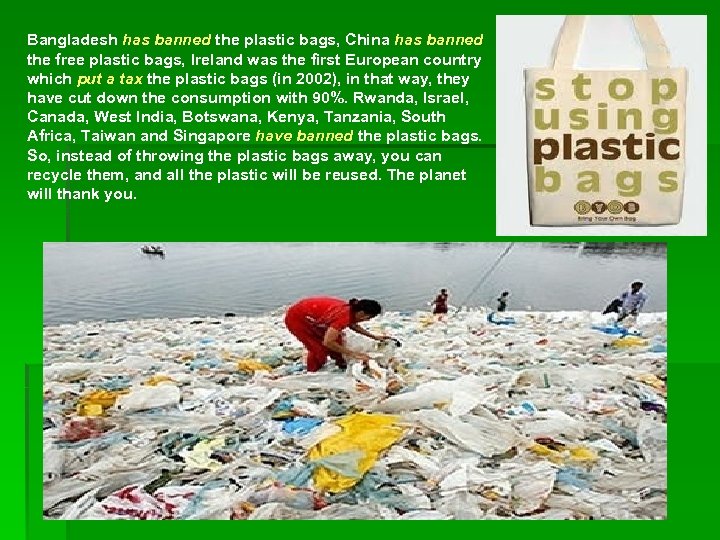 Bangladesh has banned the plastic bags, China has banned the free plastic bags, Ireland was the first European country which put a tax the plastic bags (in 2002), in that way, they have cut down the consumption with 90%. Rwanda, Israel, Canada, West India, Botswana, Kenya, Tanzania, South Africa, Taiwan and Singapore have banned the plastic bags. So, instead of throwing the plastic bags away, you can recycle them, and all the plastic will be reused. The planet will thank you.
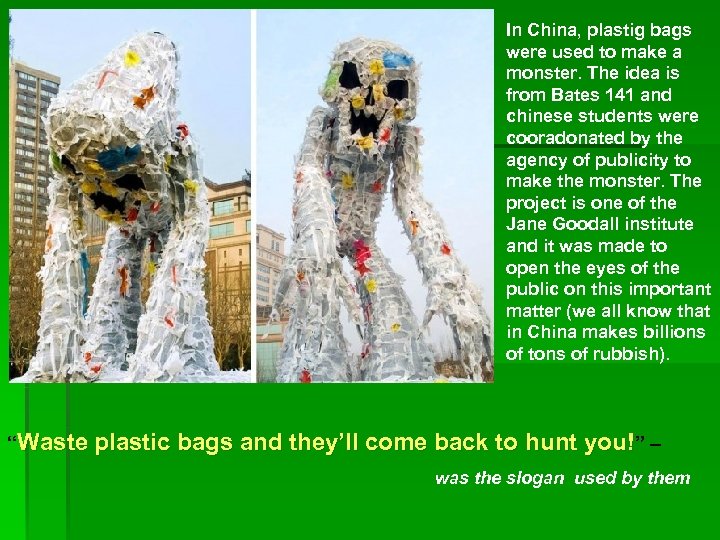 In China, plastig bags were used to make a monster. The idea is from Bates 141 and chinese students were cooradonated by the agency of publicity to make the monster. The project is one of the Jane Goodall institute and it was made to open the eyes of the public on this important matter (we all know that in China makes billions of tons of rubbish). “Waste plastic bags and they’ll come back to hunt you!” – was the slogan used by them
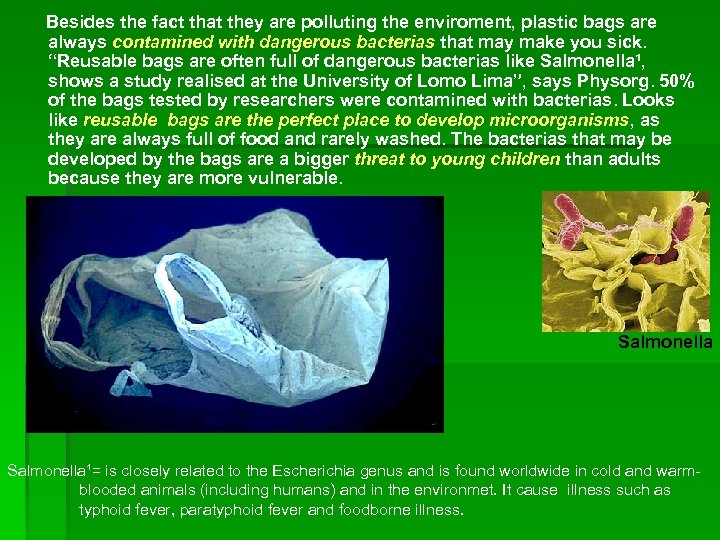 Besides the fact that they are polluting the enviroment, plastic bags are always contamined with dangerous bacterias that may make you sick. “Reusable bags are often full of dangerous bacterias like Salmonella¹, shows a study realised at the University of Lomo Lima”, says Physorg. 50% of the bags tested by researchers were contamined with bacterias. Looks like reusable bags are the perfect place to develop microorganisms, as microorganisms they are always full of food and rarely washed. The bacterias that may be developed by the bags are a bigger threat to young children than adults because they are more vulnerable. Salmonella¹= is closely related to the Escherichia genus and is found worldwide in cold and warmblooded animals (including humans) and in the environmet. It cause illness such as typhoid fever, paratyphoid fever and foodborne illness.
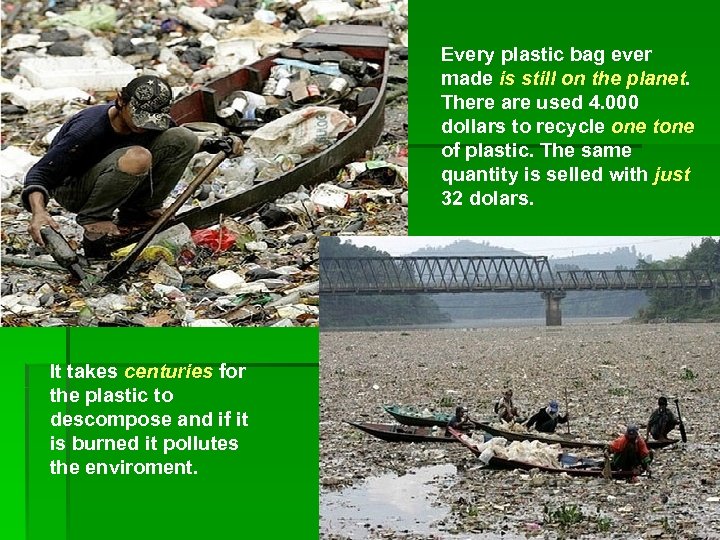 Every plastic bag ever made is still on the planet There are used 4. 000 dollars to recycle one tone of plastic. The same quantity is selled with just 32 dolars. It takes centuries for the plastic to descompose and if it is burned it pollutes the enviroment.
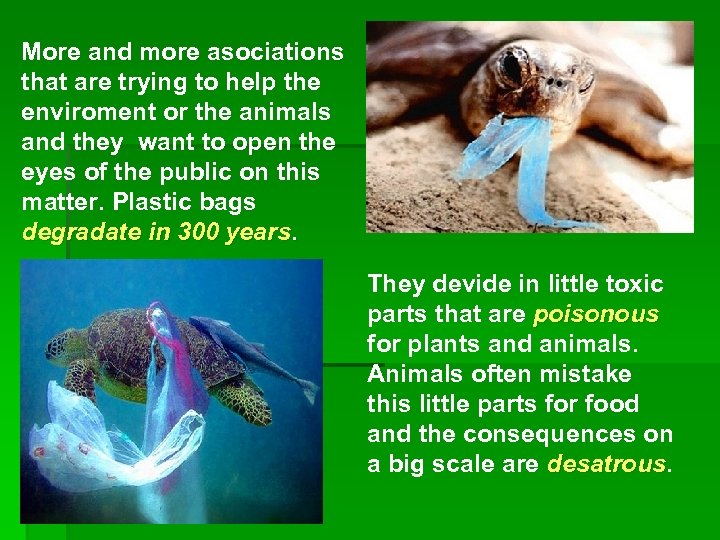 More and more asociations that are trying to help the enviroment or the animals and they want to open the eyes of the public on this matter. Plastic bags degradate in 300 years. They devide in little toxic parts that are poisonous for plants and animals. Animals often mistake this little parts for food and the consequences on a big scale are desatrous
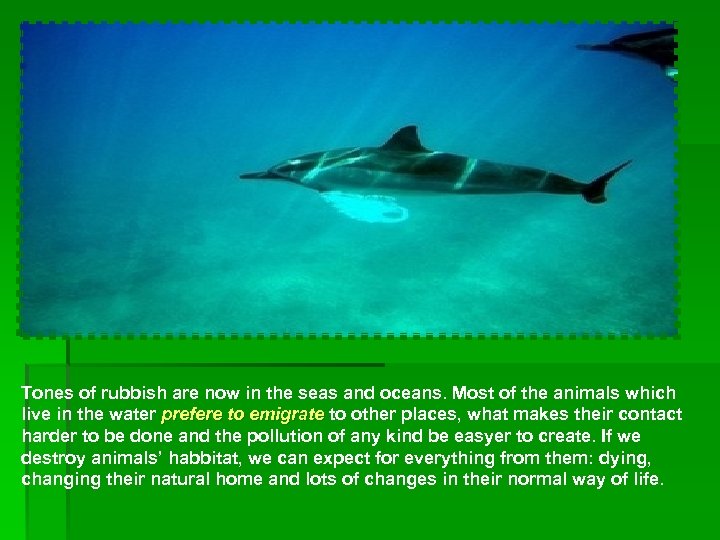 Tones of rubbish are now in the seas and oceans. Most of the animals which live in the water prefere to emigrate to other places, what makes their contact harder to be done and the pollution of any kind be easyer to create. If we destroy animals’ habbitat, we can expect for everything from them: dying, changing their natural home and lots of changes in their normal way of life.
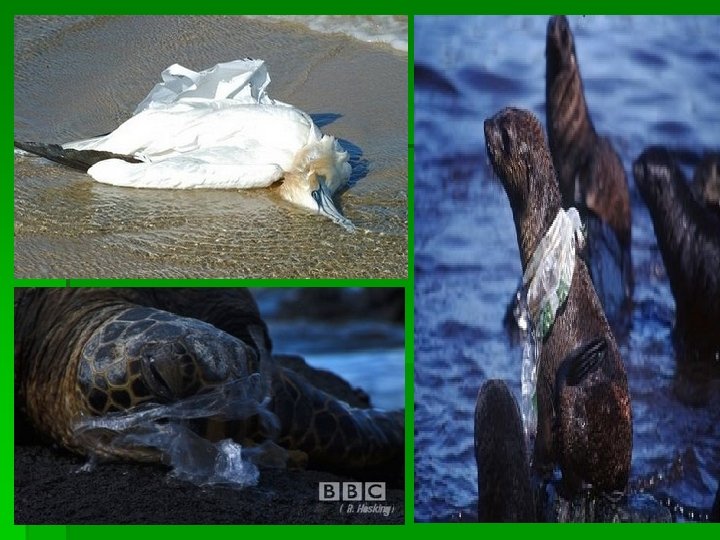
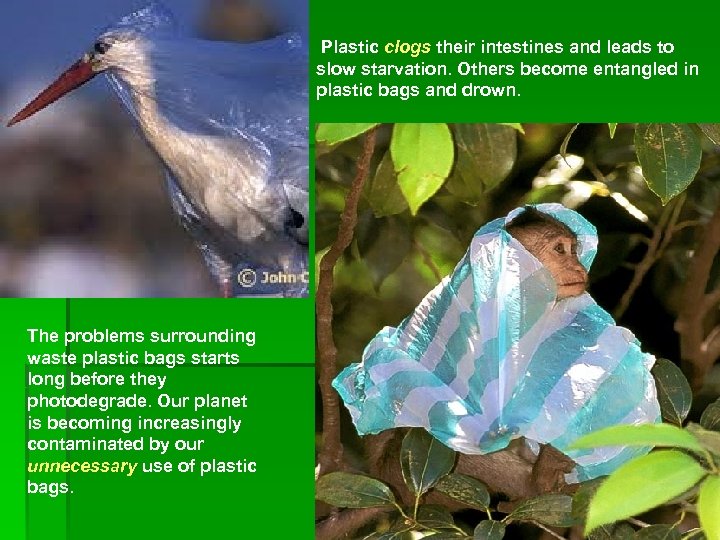 Plastic clogs their intestines and leads to slow starvation. Others become entangled in plastic bags and drown. The problems surrounding waste plastic bags starts long before they photodegrade. Our planet is becoming increasingly contaminated by our unnecessary use of plastic bags.
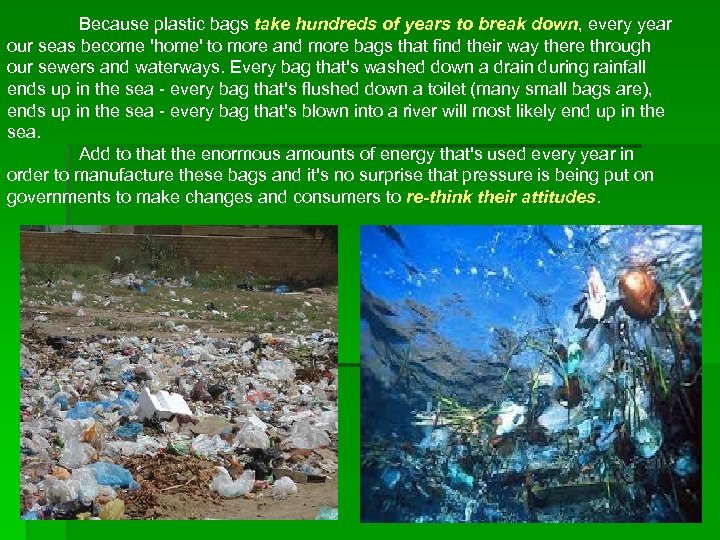 Because plastic bags take hundreds of years to break down, every year take hundreds of years to break down our seas become 'home' to more and more bags that find their way there through our sewers and waterways. Every bag that's washed down a drain during rainfall ends up in the sea - every bag that's flushed down a toilet (many small bags are), ends up in the sea - every bag that's blown into a river will most likely end up in the sea. Add to that the enormous amounts of energy that's used every year in order to manufacture these bags and it's no surprise that pressure is being put on governments to make changes and consumers to re-think their attitudes
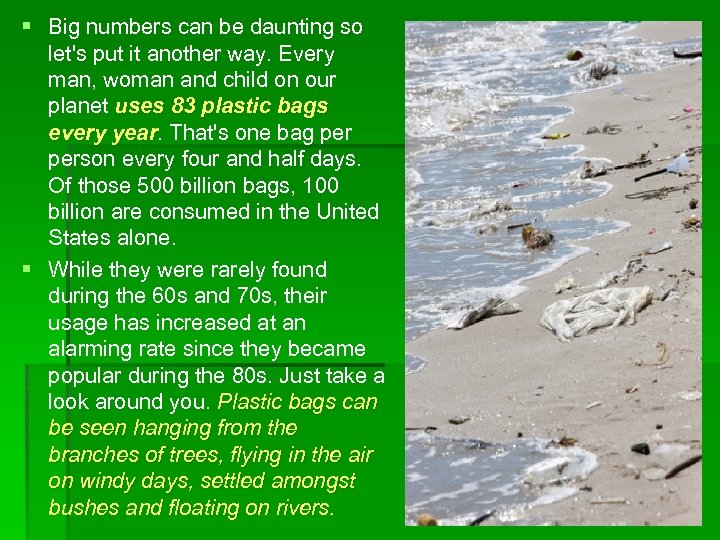 § Big numbers can be daunting so let's put it another way. Every man, woman and child on our planet uses 83 plastic bags every year. That's one bag per every year person every four and half days. Of those 500 billion bags, 100 billion are consumed in the United States alone. § While they were rarely found during the 60 s and 70 s, their usage has increased at an alarming rate since they became popular during the 80 s. Just take a look around you. Plastic bags can be seen hanging from the branches of trees, flying in the air on windy days, settled amongst bushes and floating on rivers.
 Use reusable items. Instead of using plastic bags or disposable containers, try using reusable materials. This way, you will not use as much plastic. Avoid products that use Styrofoam takes decades or even centuries to decompose. It may not even decompose all the way because it is made of plastic and plastic cannot break down into its original form. This material can also be extremely harmful if it enters the food chain. Buy local food. Food grown by local farmers is not only supporting your community, but usually has less packaging. This way, you will have helped out your ocean. Choose biodegradable bags to use for litter (photodegradable bags used in this way are guaranteed to end up on landfill sites taking hundreds of years to break down). Refrigerate food in containers rather than plastic bags.
 A project made by: Nature’s Reporters: Iriciuc Elena Vîlcu Monica