


 Скачать презентацию San Antonio s Approach to Emerging Containments Med Drop
b30a60c95f8b54aba5c559bd53ea6d08.ppt
- Количество слайдов: 28
 San Antonio’s Approach to Emerging Containments: Med. Drop. SA - Residential Pharmaceutical Drug Disposal Program (October 3, 2011) ANNUAL TEXAS RECYCLING AND SUSTAINABILITY SUMMIT Ken Diehl, Environmental Protection Specialist IV San Antonio Water System
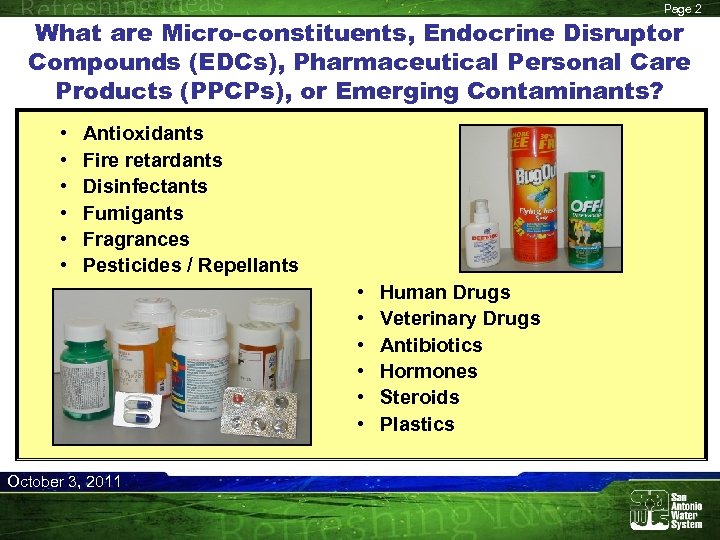 Page 2 What are Micro-constituents, Endocrine Disruptor Compounds (EDCs), Pharmaceutical Personal Care Products (PPCPs), or Emerging Contaminants? • • • Antioxidants Fire retardants Disinfectants Fumigants Fragrances Pesticides / Repellants • • • October 3, 2011 Human Drugs Veterinary Drugs Antibiotics Hormones Steroids Plastics
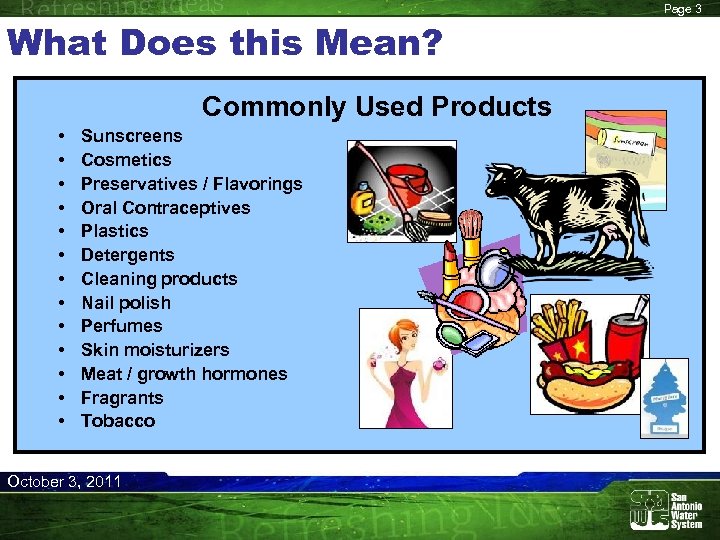 What Does this Mean? Commonly Used Products • • • • Sunscreens Cosmetics Preservatives / Flavorings Oral Contraceptives Plastics Detergents Cleaning products Nail polish Perfumes Skin moisturizers Meat / growth hormones Fragrants Tobacco October 3, 2011 Page 3
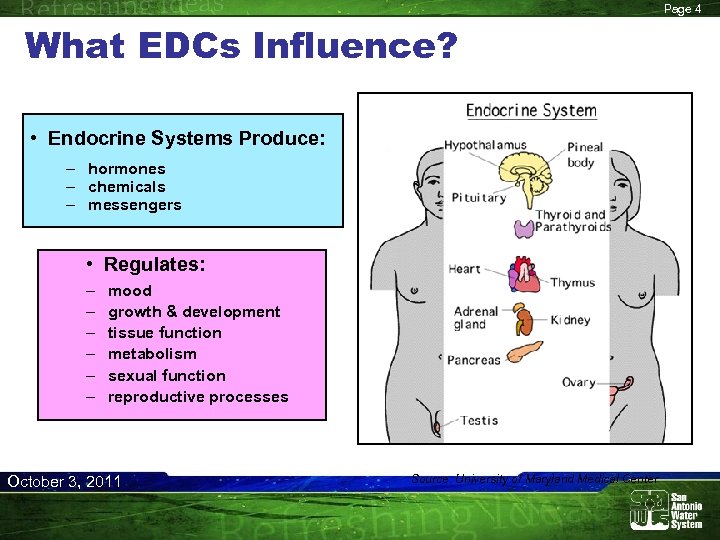 Page 4 What EDCs Influence? • Endocrine Systems Produce: – hormones – chemicals – messengers • Regulates: – – – mood growth & development tissue function metabolism sexual function reproductive processes October 3, 2011 Source: University of Maryland Medical Center
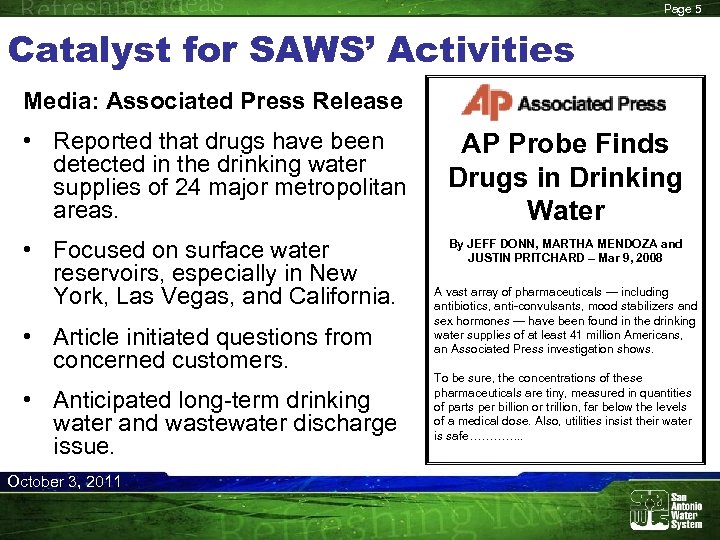 Page 5 Catalyst for SAWS’ Activities Media: Associated Press Release • Reported that drugs have been detected in the drinking water supplies of 24 major metropolitan areas. AP Probe Finds Drugs in Drinking Water • Focused on surface water reservoirs, especially in New York, Las Vegas, and California. By JEFF DONN, MARTHA MENDOZA and JUSTIN PRITCHARD – Mar 9, 2008 • Article initiated questions from concerned customers. • Anticipated long-term drinking water and wastewater discharge issue. October 3, 2011 A vast array of pharmaceuticals — including antibiotics, anti-convulsants, mood stabilizers and sex hormones — have been found in the drinking water supplies of at least 41 million Americans, an Associated Press investigation shows. To be sure, the concentrations of these pharmaceuticals are tiny, measured in quantities of parts per billion or trillion, far below the levels of a medical dose. Also, utilities insist their water is safe…………. .
 Page 6 Current Findings • Scientists have discovered a range of adverse effects in wildlife exposed to pharmaceuticals and generally agree that aquatic life is most at risk. • Male fish feminization has been documented, creating egg yolk proteins, a process usually restricted to females. - Colorado's Boulder Creek Study, 50 of the 60 (83%) white suckers collected downstream of Boulder's wastewater treatment plant were female, compared to about half of them upstream. • Fish tissue tested positive for different pharmaceuticals. • Arid regions of the West considered more vulnerable. - Larger senior populations - Streams predominantly effluent October 3, 2011
 Page 7 General EDC Information • Primary concern is with surface drinking water – Edwards Aquifer is recharged by storm water, not surface water influenced by effluent • Released for decades through human activities – Long-term chronic exposure vs. periodic large doses (dose response) – No demonstrated impact on human health. • Our ability to measure contaminants currently exceeds our understanding of their affects. – ppb vs. ppt levels • Very technically complex subject. October 3, 2011
 Page 8 General EDC Information (continued) • EPA Activity: – Can risk of known or suspected EDCs be managed in a cost effective manner and what new tools are needed? – EPA uses a tiered screening and testing process to identify chemicals that interact with the endocrine system. – Amphibian Metamorphosis & Teratogenicity tests (frog embryo development assays) and fish short-term reproduction assays as a good indicators. – EPA has prepared a guidance document to help permit writers and pretreatment coordinators develop wastewater discharge permits and pretreatment requirements for pharmaceutical manufacturing facilities. – The EPA regulates only one component of pharmaceuticals in drinking water, Lindane, an ingredient in delousing shampoos. – No regulatory standards or approved EPA testing methodologies. October 3, 2011
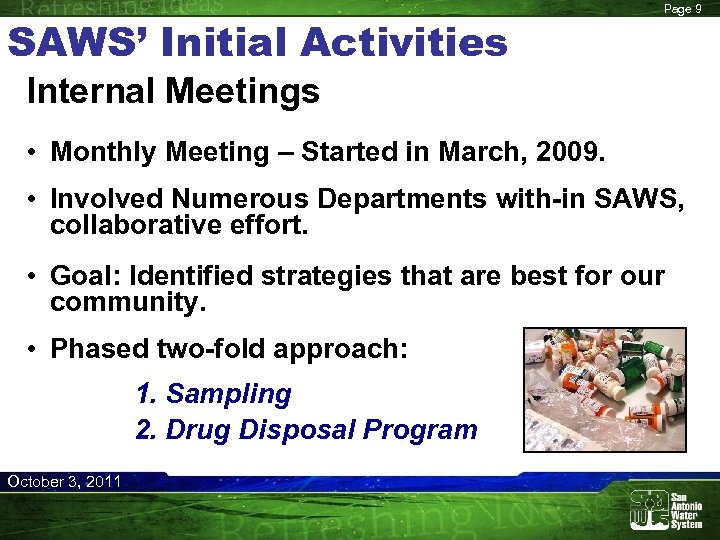 SAWS’ Initial Activities Page 9 Internal Meetings • Monthly Meeting – Started in March, 2009. • Involved Numerous Departments with-in SAWS, collaborative effort. • Goal: Identified strategies that are best for our community. • Phased two-fold approach: 1. Sampling 2. Drug Disposal Program October 3, 2011
 Two-Fold Approach Page 10 1. Sampling • Utilized USGS for sampling and testing protocols. - Complex sampling and testing procedures • Most recognized organization on the subject. • Two of SAWS’ primary Edwards /pump stations and raw wastewater from four sewersheds. • Data interpretation could be difficult. • Worked with Communications Department. October 3, 2011
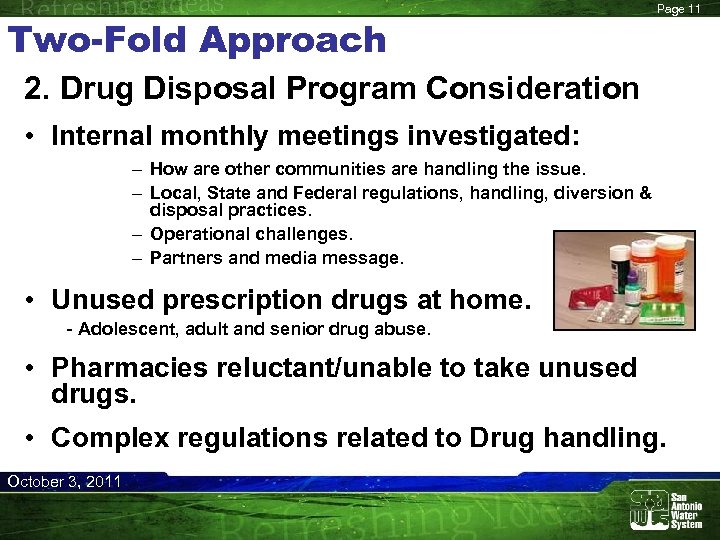 Two-Fold Approach Page 11 2. Drug Disposal Program Consideration • Internal monthly meetings investigated: – How are other communities are handling the issue. – Local, State and Federal regulations, handling, diversion & disposal practices. – Operational challenges. – Partners and media message. • Unused prescription drugs at home. - Adolescent, adult and senior drug abuse. • Pharmacies reluctant/unable to take unused drugs. • Complex regulations related to Drug handling. October 3, 2011
 Page 12 Texas Legislative Initiative SB 1757 Studying Safe Handling & Disposal of Medical Waste • The commission reported their results of the study to the legislature by December 1, 2010. • TCEQ’s Water Supply Division, responsible for complying. • SAWS was part of the Water Advisory Committee. • The TCEQ recommended that a statewide education effort be initiated to begin providing the most current information to health-care providers, consumers and others on the topic of unused pharmaceuticals and their proper disposal. October 3, 2011
 Federal Legislative Activities Page 13 Proposed House Bills HR 1359 and SB 1292 • PASSED • Amends the CSA to provide for take-back disposal of controlled substances in certain instances. • User may deliver controlled substance to authorized person. Care facilities dispose of drugs in a specific manner. October 3, 2011
 Federal Legislative Activities Page 14 Proposed House Bill HR 553 • The Endocrine Disruptor Screening Enhancement Act of 2011 was introduced on May 5, 2010. • Directs EPA to establish a plan and schedule that tests chemicals found in drinking water to determine whether they are endocrine disruptors, their level of interference and with-in 4 year time frame. Status: • 2/8/2011 - Referred to the House Committee on Energy and Commerce • 2/15/2011 - Referred to the Subcommittee on Environment and the Economy October 3, 2011
 Federal Legislative Activities Page 15 Proposed House Bill HR 2939 • Pharmaceutical Stewardship Act of 2011 was introduced on Sept. 19, 2011. • Congresswoman Louise Slaughter, Ranking Member of the House Rules Committee announced that she has introduced H. R. 2939, the Pharmaceutical Stewardship Act. • The bill would require prescription drug manufacturers to establish a national collection and disposal program with oversight from the U. S. EPA. October 3, 2011
 Page 16 Results of Internal Meetings • Involved numerous stakeholders for input. - SAPD/Narcotics Division, HEB, CVS, Wal-greens, Bexar County, COSA, TCEQ, Clean Harbors Environmental Services, Inc. , Restorative Health Care, School of Pharmacy (UIW), Home Instead Senior Care and AAGOG & CPS Energy • Ever increasing trend in the abuse of controlled prescription drugs. • Law Enforcement needs to be the Lead Agency. - DEA and Law enforcement dictates diversion process. • Issues with Hospitals, State run facilities vs. residential participants. October 3, 2011
 Page 17 Results of Internal Meetings • Identified Advantages for Program Initiation: – Reduces community abuse of prescription drugs. – Aids TCEQ to comply with their Legislative directive. – Environmental Protection, reduces EDC load into Water Recycling Centers/WWTPs and landfills. – Indicates positive collaboration between local agencies and community. – Important component: » Educating the public on the proper disposal of drugs that will have the greatest impact over time. October 3, 2011
 Page 18 Program Development - Pilot Program • Expand COSA’s Single-Day Household Hazardous Waste Collection Events to accept pharmaceuticals. • San Antonio Police Dept. / Narcotics Division will: − Handle, Transport, Store & Incinerate • Develop media, educational and Press Release message (Med. Drop. SA). • Comply with TCEQ’s HHW Notification and Operational Plan requirements. • December 12, 2009 - Event Results: – First Drug Disposal program initiated in a large Texas City. – 171 pounds collected – Incineration Cost: $180 • Identified items to resolve: – Concern for chemically decomposing drugs, Sharp Collection, Drug Categorization, Additional outreach (Hospice, Senior Care, Pharmacies) October 3, 2011
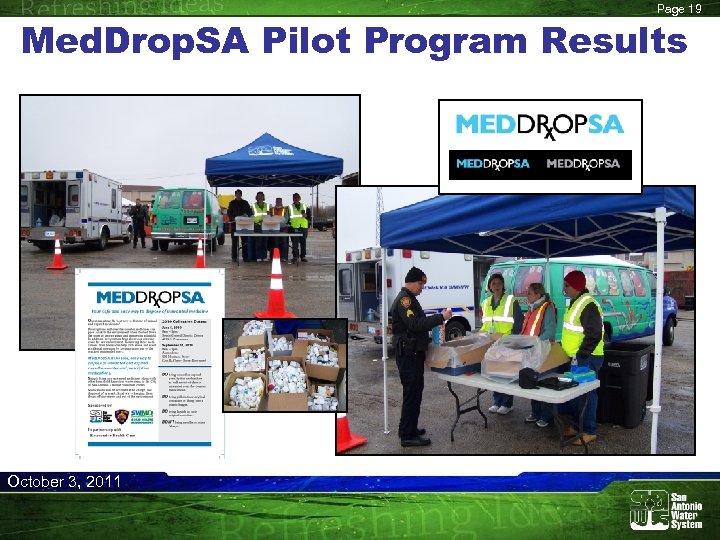 Page 19 Med. Drop. SA Pilot Program Results October 3, 2011
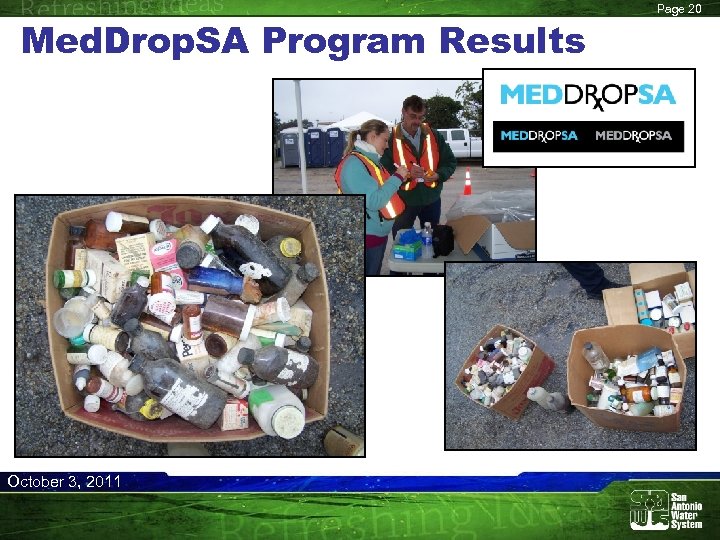 Med. Drop. SA Program Results October 3, 2011 Page 20
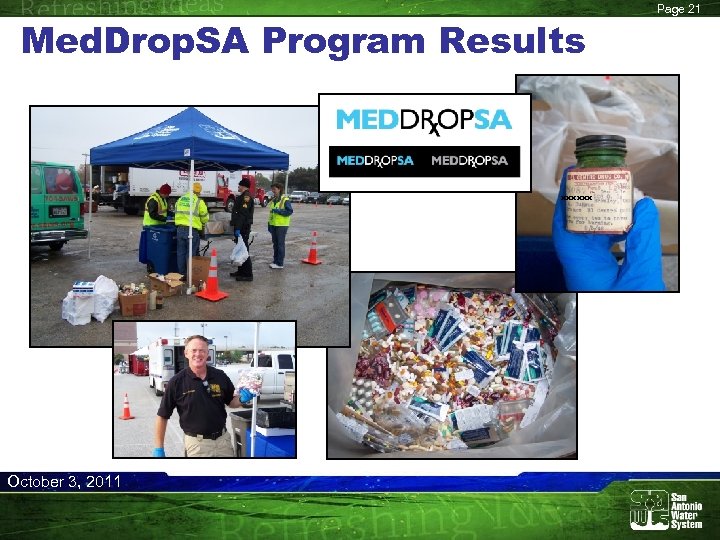 Med. Drop. SA Program Results xxxxxx October 3, 2011 Page 21
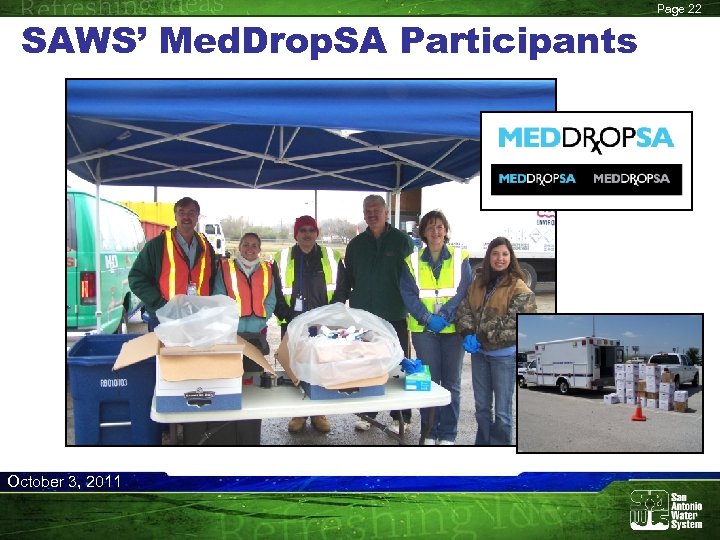 SAWS’ Med. Drop. SA Participants October 3, 2011 Page 22
 Page 23 Summary – Med. Drop. SA & DEA Results Med. Drop. SA Results: • • • December 12 th, 2009 = 171 lbs. (Pilot Program) June 5 th, 2010 = 1, 336 lbs. September 11 th, 2010 = 1, 270 lbs. March 5 th, 2011 = 427 lbs. June 4 th, 2011 = 424 lbs. September 10 th, 2011 = 992 lbs. Total to Date: 4, 620 lbs. DEA National Take-back Day Results: • Sept. 25 th - 10 Sites/Regional drop-off locations: 1, 166 lbs. • April 28 th - 22 Sites/Regional drop-off locations: 2, 465 lbs. • October 29 th, 2011 – To Be Determined October 3, 2011
 Next Steps – Med. Drop. SA Page 24 • Refine Program specifics for future. • Involve Stakeholders in resolving identified issues during the Pilot Program. • Continue to comply with TCEQ’s SB 1757 results. • Track State & Federal Legislative Bills that promote takeback/Drug Disposal Programs and EDC analysis of environmental impacts. • Continue to support SAWS’ Mission, Vision and Value Statement. October 3, 2011
 Page 25 Partnership Growth School of Pharmacy October 3, 2011
 Page 26 Additional Information Web-site Link: Meddropsa. com Contact Information: Ken Diehl San Antonio Water System (210) 233 -3535 ken. diehl@saws. org October 3, 2011
 Emerging Containments: San Antonio Residential Pharmaceutical Drug Disposal Program ANNUAL TEXAS RECYCLING AND SUSTAINABILITY SUMMIT Ken Diehl, Environmental Protection Specialist IV San Antonio Water System
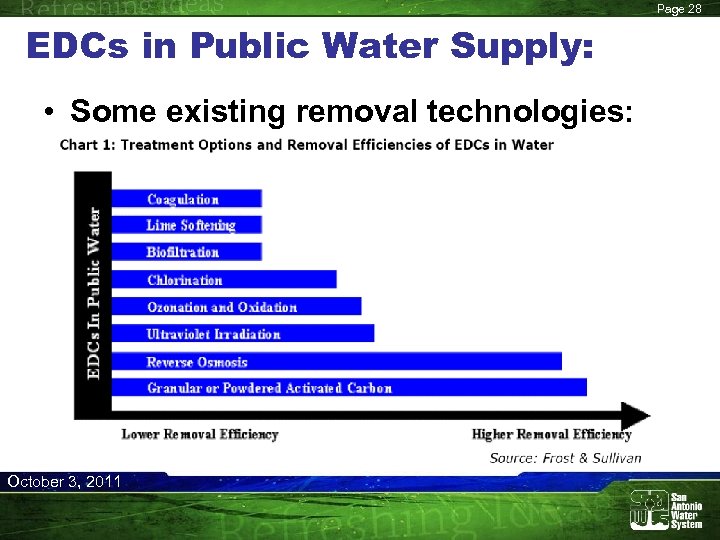 Page 28 EDCs in Public Water Supply: • Some existing removal technologies: October 3, 2011