


 Скачать презентацию Safety 2008 SET Sept 6 th 2008 in
e0f36dd5c25603b3d76cb08e9ba0ce72.ppt
- Количество слайдов: 21
 ´Safety 2008´ SET Sept. 6 th, 2008 in Finland Dr. Seppo Sisättö OH 1 VR Em. Com Coordinator of the IARU R 1 Friedrichshafen June 26 th, 2008
 This is Finland n n n 5, 3 M inhabitants more than 400 counties abt. 1200 km from south to north 5000 Amateur Radio Operators No big natural disasters – so far big fires, accidents, searching. .
 Objectives: 1) 2) 3) to build up a two-way independent national communication network to add the preparedness of Amateur Radio Operators in the case of emergency to create a base for more permanent cooperation with authorities
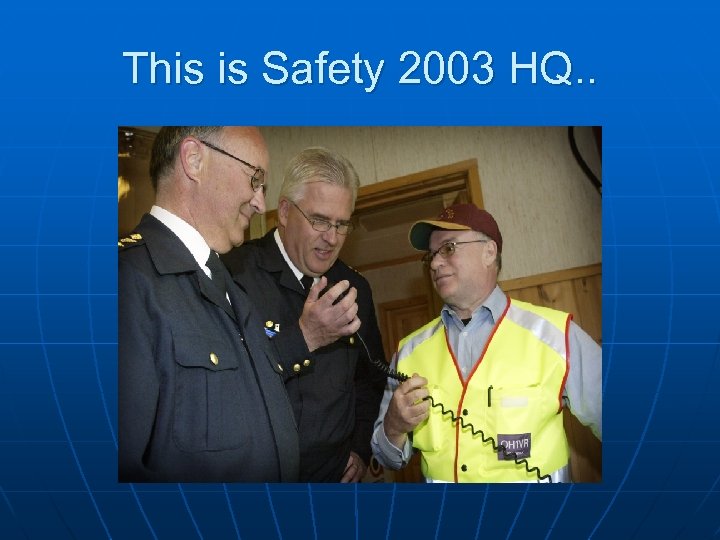 This is Safety 2003 HQ. .
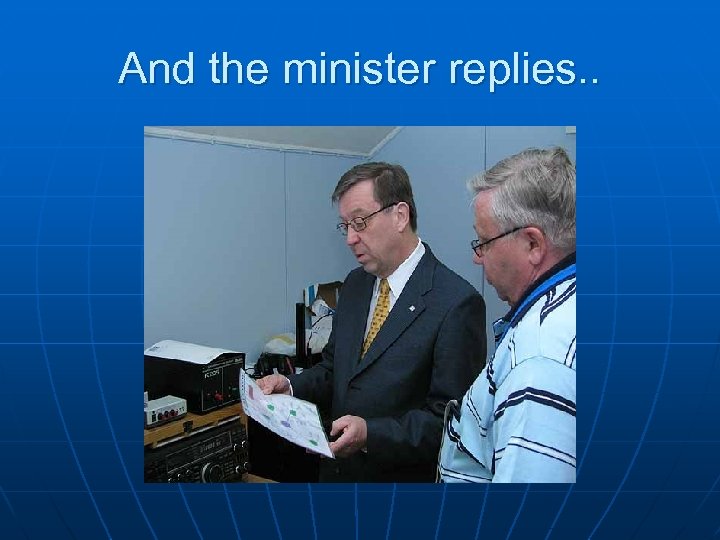 And the minister replies. .
 What we learned in Safety 2003 n n In general Safety 2003 was a success National HQ operated well from the point of view of follow up – BUT there was a traffic jam towards HQ Communication at a local level was a success We need more practice in handling messages to avoid traffic jams
 Conclusions 1 1) 2) Amateur Radio Operators have the skills and equipment to build up an independent two-way network that covers the whole country, Amateur Radio Operators have the skills to take care of communication in this network
 Conclusions 2 3) Amateur radio equipment provides effective tools for emergency communication, 4) Safety 2003 was a success – there are good reasons to continue in a few years. Safety 2008 is this next step. Regional exercises in between are possible,
 Conclusions 3 5) Safety 2003 effectively demonstrated to authorities the power of Amateur Radio in emergency communications – a new national capacity was ‘found’. For many Amateur Radio Operators Safety 2003 meant many personal sacrifices – also economical
 Conclusions 4 6) We learned that Finnish Authorities are ready for more active cooperation, 7) During Safety 2003, we tested a new national rescue area system 6 months before its official start.
 Regional Comments 1 Radio Amateur Operators valued having time for preparations – over one year. Participants were active in training and planning. Many clubs got ´a new life´. Safety 2003 information covered the needs of the participants well.
 Regional Comments 2 There were also problems: The Regional Heads were too often alone with their responsibilities. They had a lot of work to do, a limited amount of free time and especially they made economical sacrifices. They also were responsible for the recruiting process of the participants. There were problematic regions. The bureaucracy of message handling created difficult situations
 Conclusions of the regional comments Regional Heads found that their regional network functioned as expected and also message handling succeeded in many areas. Many said that everything worked as they had planned it beforehand. Excellent media coverage was a big thing for everybody who participated
 Our biggest problem The biggest problem of Safety 2003 was the traffic jam between the National HQ and Regional HQs (23)
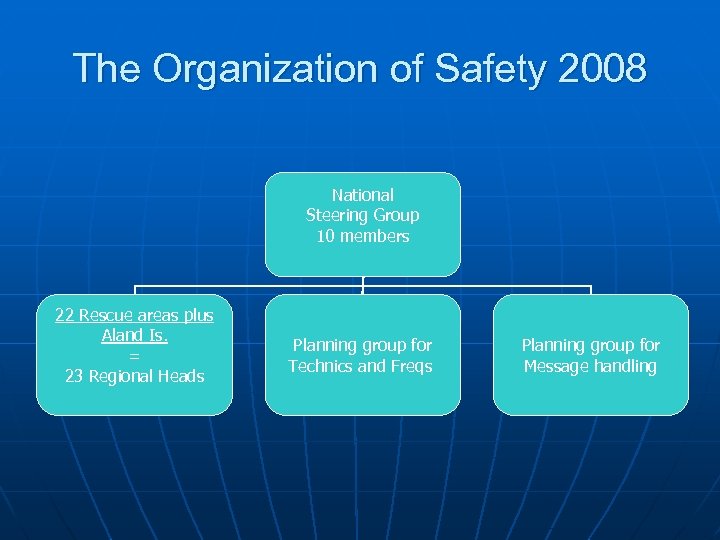 The Organization of Safety 2008 National Steering Group 10 members 22 Rescue areas plus Aland Is. = 23 Regional Heads Planning group for Technics and Freqs Planning group for Message handling
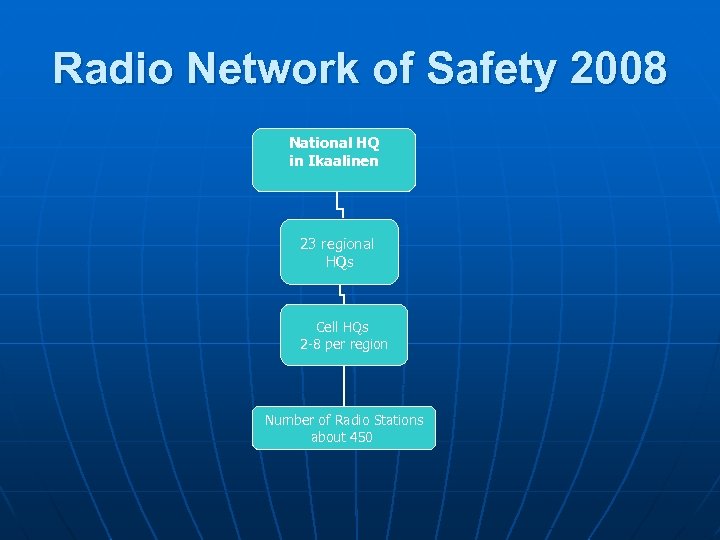 Radio Network of Safety 2008 National HQ in Ikaalinen 23 regional HQs Cell HQs 2 -8 per region Number of Radio Stations about 450
 Principles of the Organization n n National Steering Group decides all basic practices of the exercise Regions have full responsibility for their areas Communication between all levels is a key issue Own web site is an important tool
 Responsibilities of the regional Head n n He is a Director of his region. He answers to the National Steering Group (NSG) and ensures that all happens as ordered He is a spokesman of his region towards NSG He recruits all operators and is a controller of preparations in his region He works in cooperation – if needed – with other regions
 Steps of the preparations n n n 1. Meeting in Kuopio 13. 10. 07 Participation in Global. SETs 11. 07 and 3. 5. 08 National Convention of SRAL 11/07 2. Meeting in Kuopio 15. 3. 08 Field Camp of the SRAL July 10 -13 th Local Club meetings where somebody from the NSG acts as a speaker
 What after Safety 2008? n n We will have a tested emcomm network Monthly tests between regional HQs More information on what to do next New, better relations with authorities on the regional and national level
 Thank you! www. turva-2008. fi seppo. sisatto@uta. fi +358 -050 -360 2600