


 Скачать презентацию Safe Routes to School An update on programs
2a38164f35a6456f54a287ba133f9841.ppt
- Количество слайдов: 36
 Safe Routes to School: An update on programs, practice and how public health is playing a role Nancy Pullen, MPH, Program Manager September 14, 2006
 Today’s presentation • • • What is Safe Routes to School? Federal program State programs Role of public health Resources
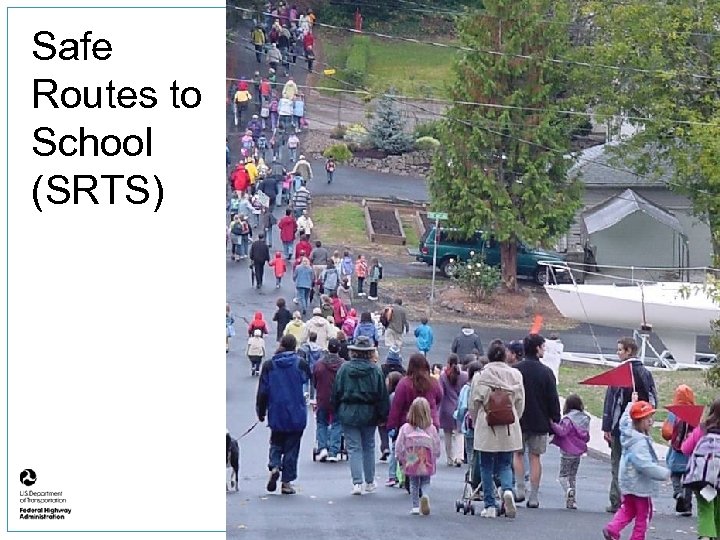 Safe Routes to School (SRTS)
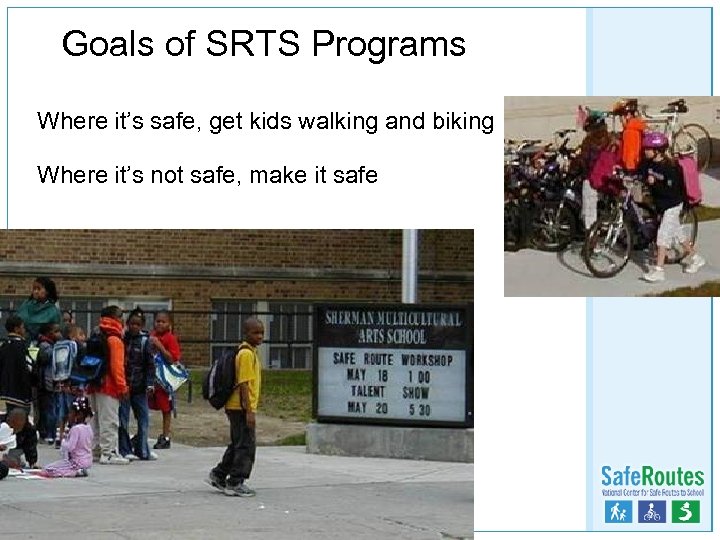 Goals of SRTS Programs Where it’s safe, get kids walking and biking Where it’s not safe, make it safe
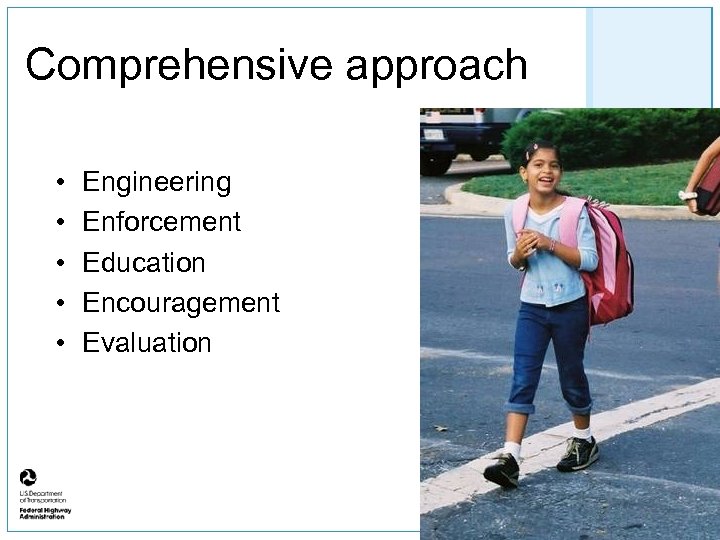 Comprehensive approach • • • Engineering Enforcement Education Encouragement Evaluation
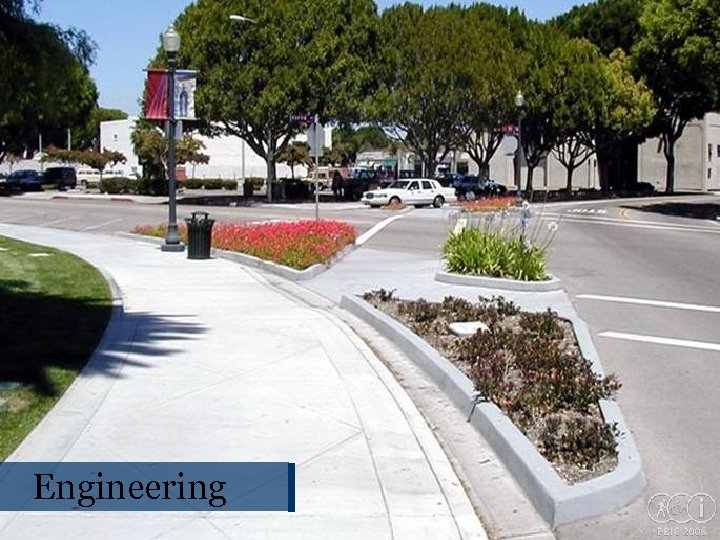 Engineering
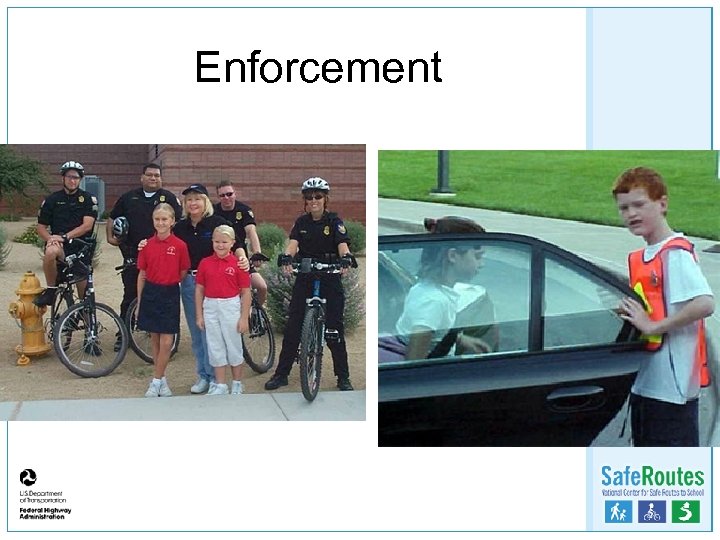 Enforcement
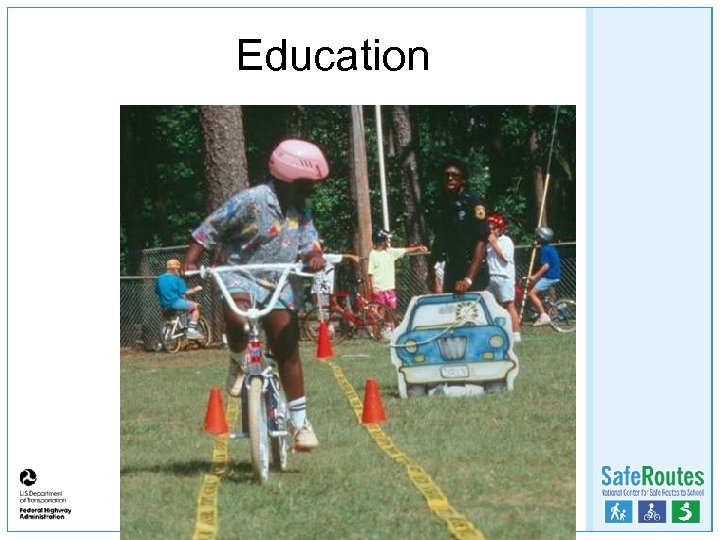 Education
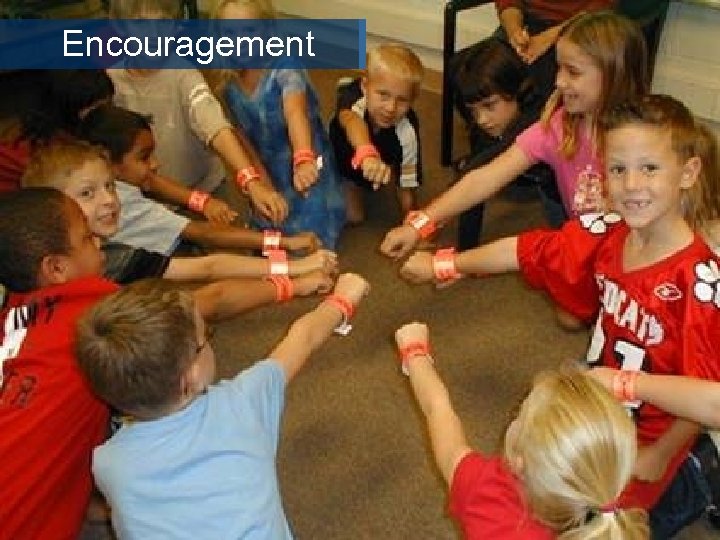 Encouragement
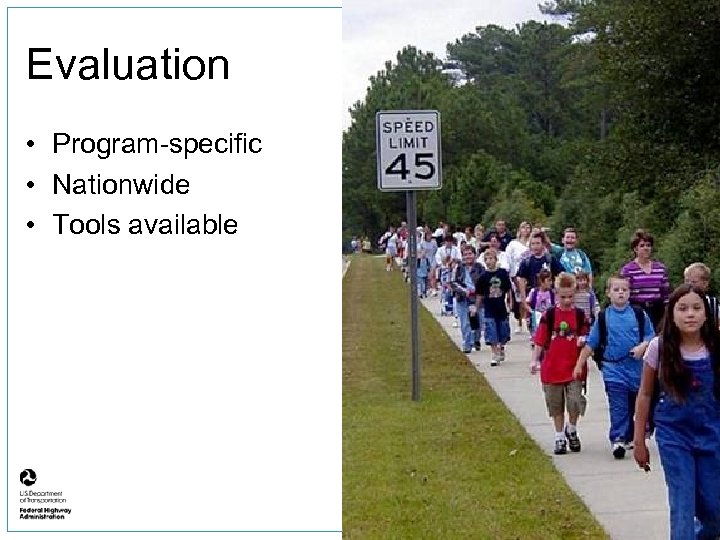 Evaluation • Program-specific • Nationwide • Tools available
 Federal program • Federal transportation bill 2005 • $612 million total 2005 -2009 See State-by-State breakdown at: http: //safety. fhwa. dot. gov/saferoutes/
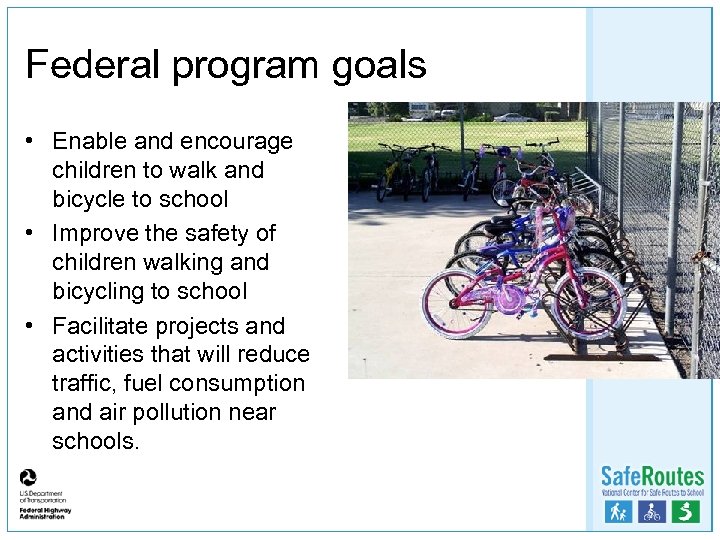 Federal program goals • Enable and encourage children to walk and bicycle to school • Improve the safety of children walking and bicycling to school • Facilitate projects and activities that will reduce traffic, fuel consumption and air pollution near schools.
 Broad measures • Increase pedestrian and bicycle safety around schools • More children walking and biking to schools • Reduce congestion around schools • Improve children’s health • Improve air quality and reduce fuel consumption • Enhance community accessibility • Improve partnerships
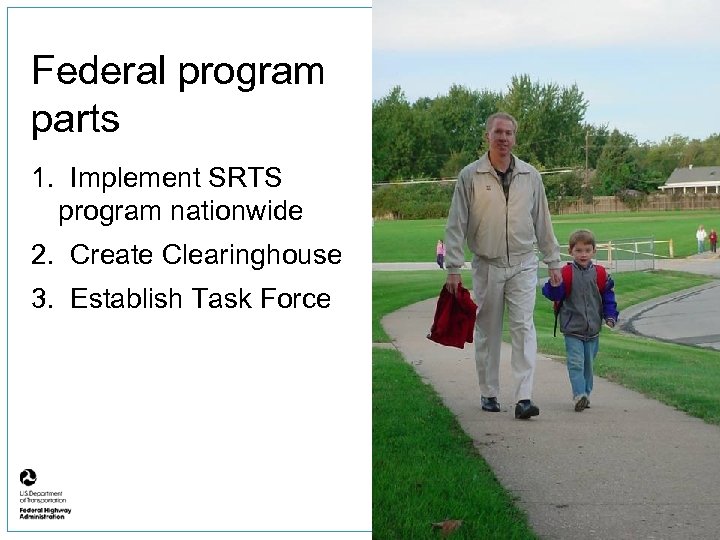 Federal program parts 1. Implement SRTS program nationwide 2. Create Clearinghouse 3. Establish Task Force
 State program implementation • State Depts of Transportation lead • Full-time coordinator
 State program implementation • State DOT encouraged to establish competitive application process. • No matching required • Eligible grant recipients include: – State, local and regional agencies and non-profits. • Two funding categories: – Infrastructure Projects – Non-Infrastructure Projects
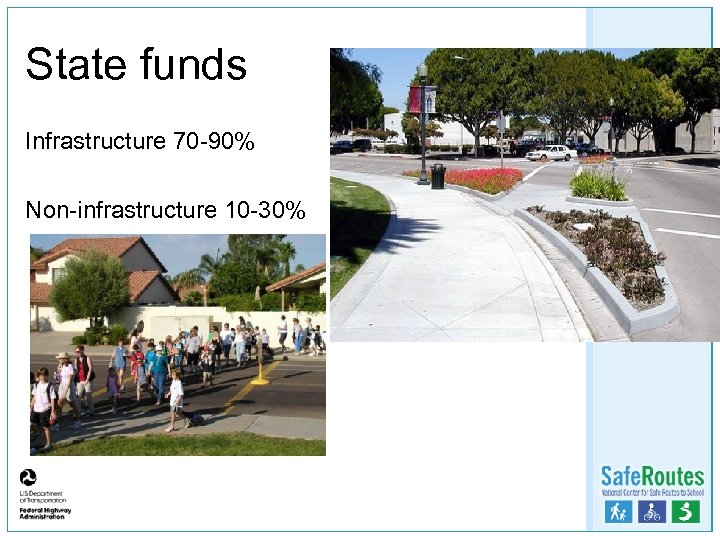 State funds Infrastructure 70 -90% Non-infrastructure 10 -30%
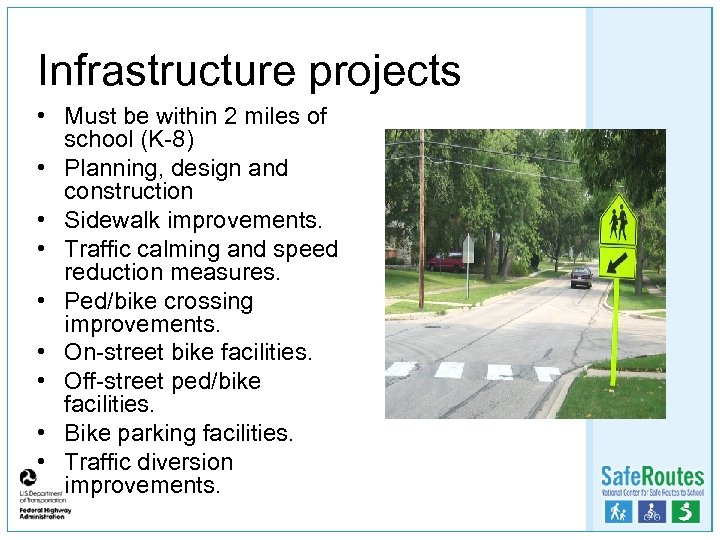 Infrastructure projects • Must be within 2 miles of school (K-8) • Planning, design and construction • Sidewalk improvements. • Traffic calming and speed reduction measures. • Ped/bike crossing improvements. • On-street bike facilities. • Off-street ped/bike facilities. • Bike parking facilities. • Traffic diversion improvements.
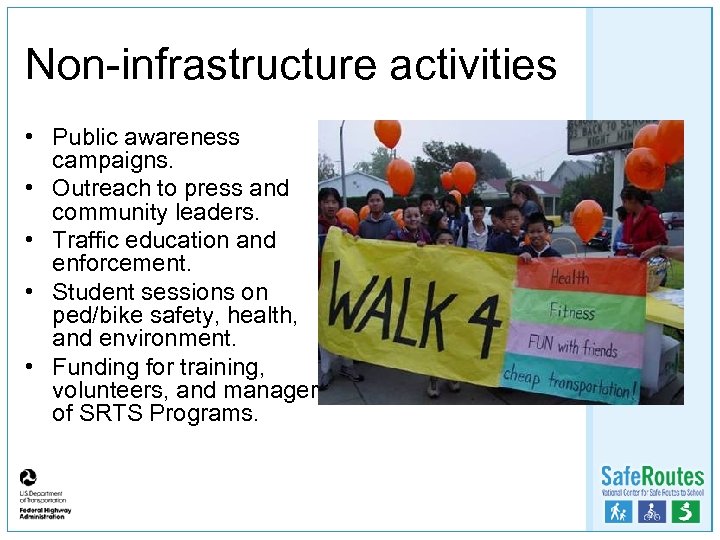 Non-infrastructure activities • Public awareness campaigns. • Outreach to press and community leaders. • Traffic education and enforcement. • Student sessions on ped/bike safety, health, and environment. • Funding for training, volunteers, and managers of SRTS Programs.
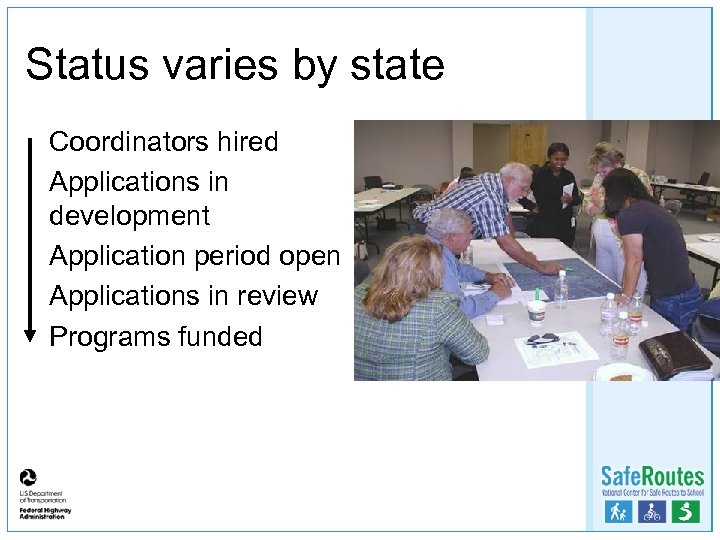 Status varies by state Coordinators hired Applications in development Application period open Applications in review Programs funded
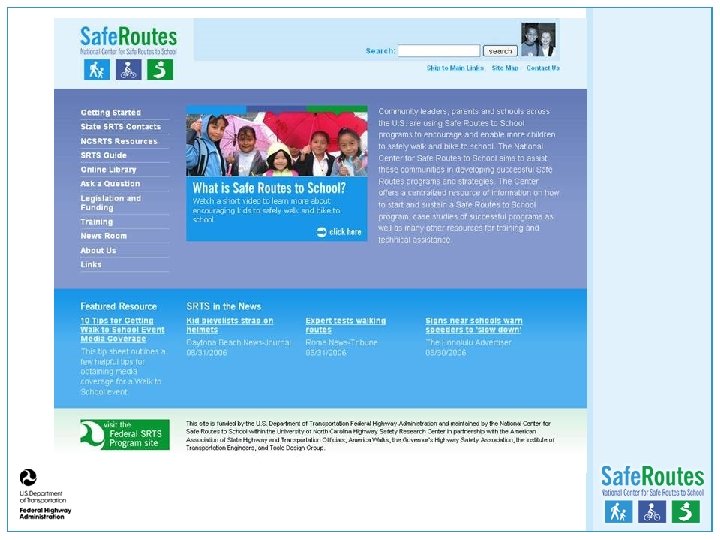
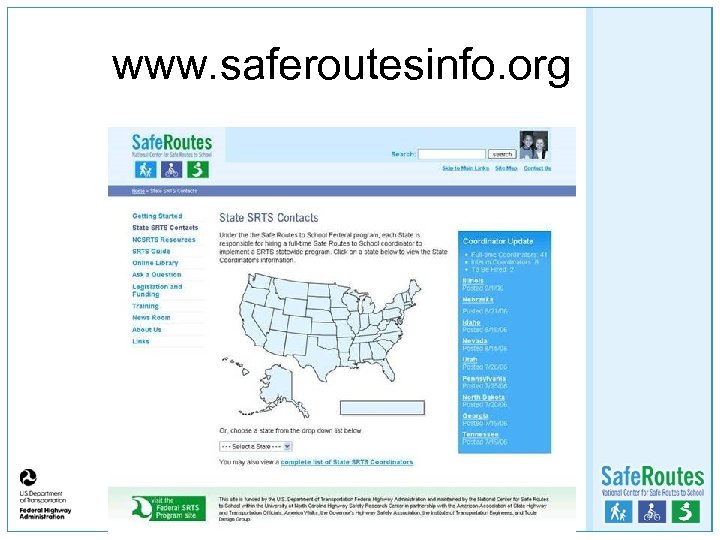 www. saferoutesinfo. org
 Roles for public health • • Overview of opportunities What’s BEEN happening (state and local) What public health brings to the table What’s to come
 Opportunities Influence or directly implement: • Policy • Changes to built environment • Education for parents, children, drivers, community members • Program evaluation • Coalition building • Raising visibility for SRTS / role in PA • More
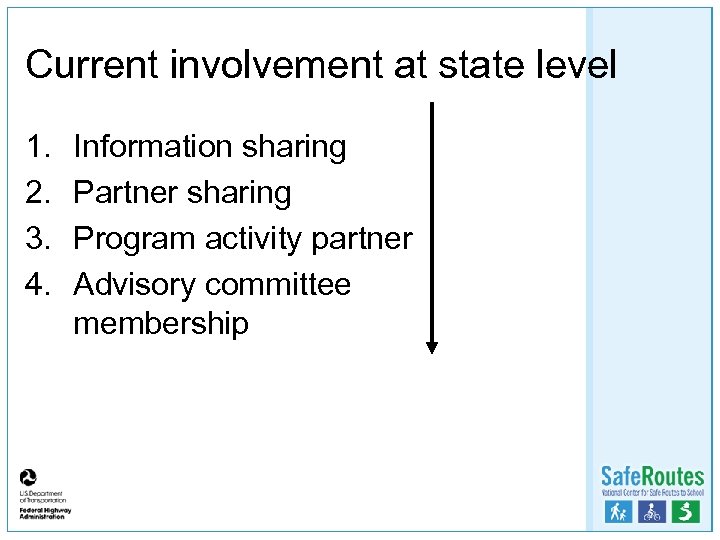 Current involvement at state level 1. 2. 3. 4. Information sharing Partner sharing Program activity partner Advisory committee membership
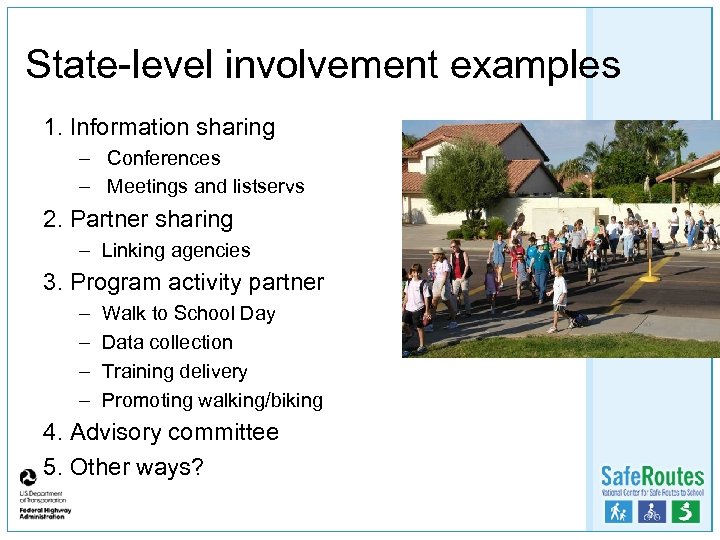 State-level involvement examples 1. Information sharing – Conferences – Meetings and listservs 2. Partner sharing – Linking agencies 3. Program activity partner – – Walk to School Day Data collection Training delivery Promoting walking/biking 4. Advisory committee 5. Other ways?
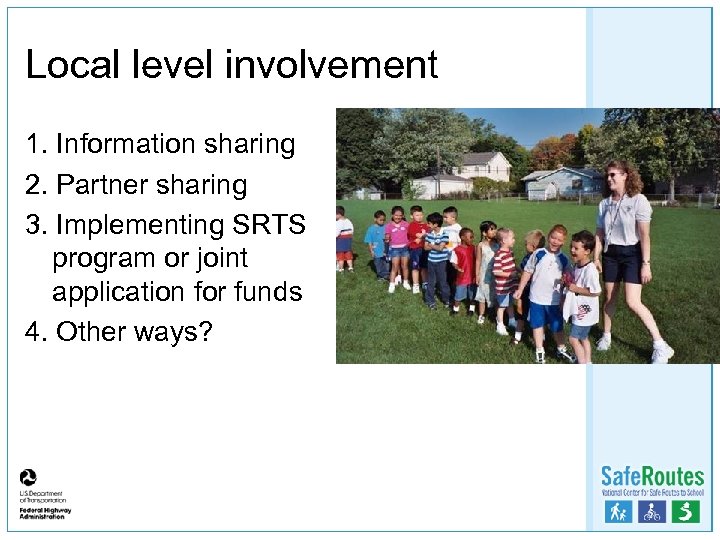 Local level involvement 1. Information sharing 2. Partner sharing 3. Implementing SRTS program or joint application for funds 4. Other ways?
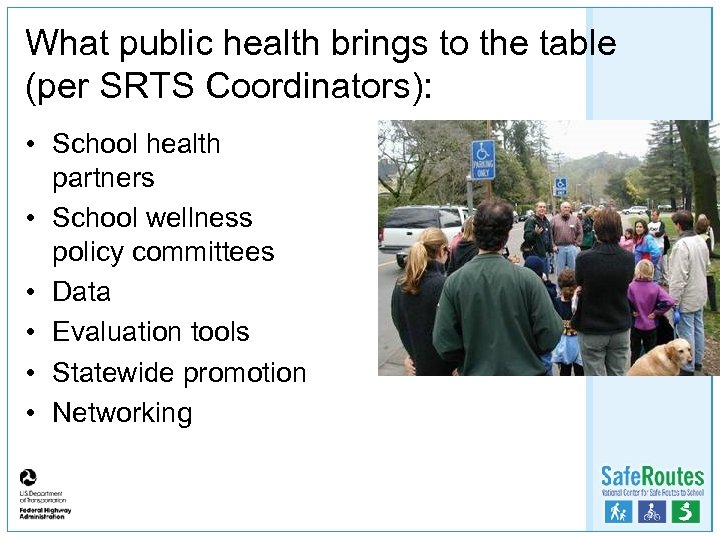 What public health brings to the table (per SRTS Coordinators): • School health partners • School wellness policy committees • Data • Evaluation tools • Statewide promotion • Networking
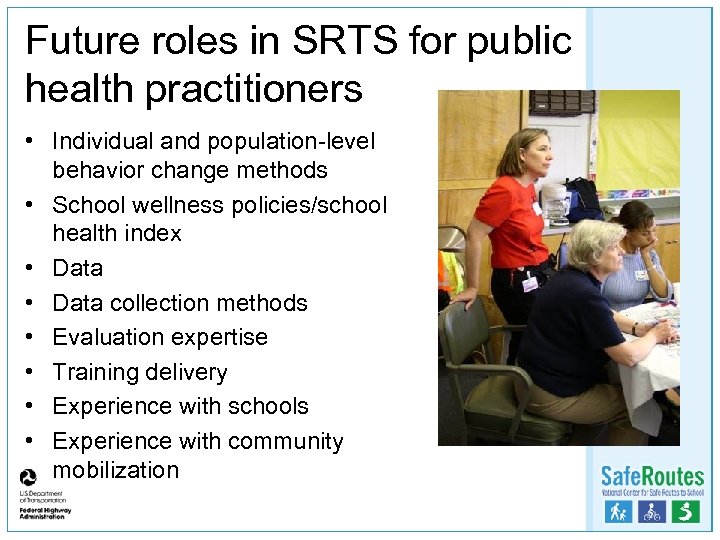 Future roles in SRTS for public health practitioners • Individual and population-level behavior change methods • School wellness policies/school health index • Data collection methods • Evaluation expertise • Training delivery • Experience with schools • Experience with community mobilization
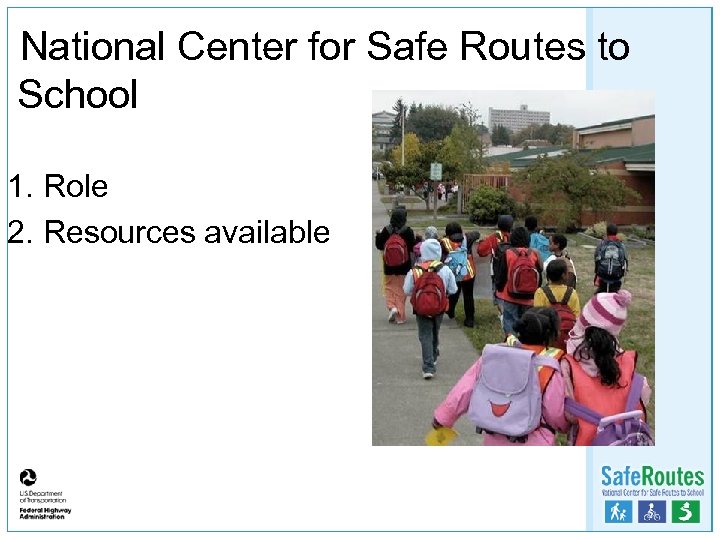 National Center for Safe Routes to School 1. Role 2. Resources available
 Center tasks • • Operate a National Safe Routes to School Clearinghouse Provide web-based resources (www. saferoutesinfo. org) Support State Coordinators Plan and conduct training Provide technical assistance Disseminate promising strategies Conduct other coordination, planning, tracking and evaluation activities • Promote SRTS (including Walk to School Day)
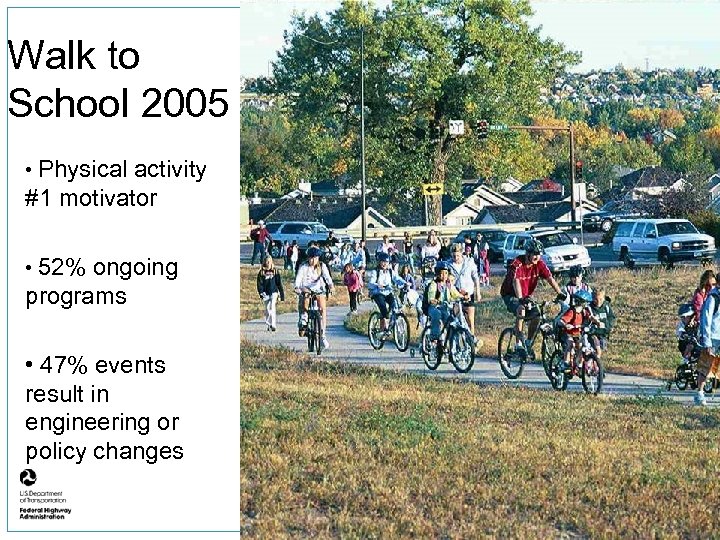 Walk to School 2005 • Physical activity #1 motivator • 52% ongoing programs • 47% events result in engineering or policy changes
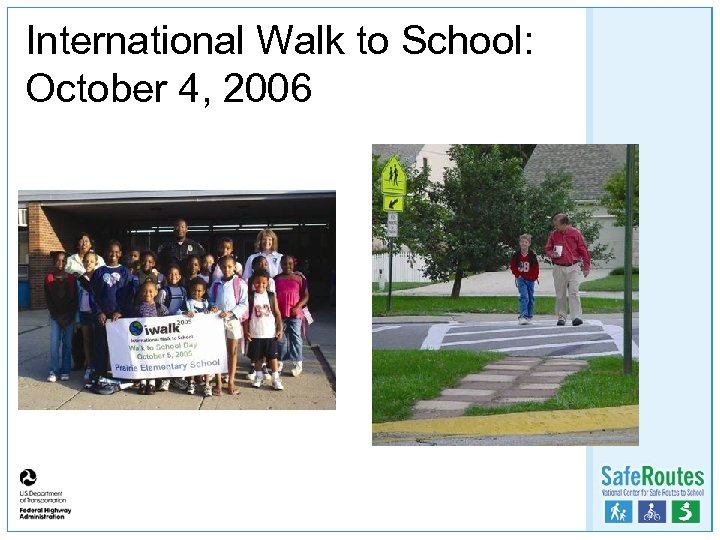 International Walk to School: October 4, 2006
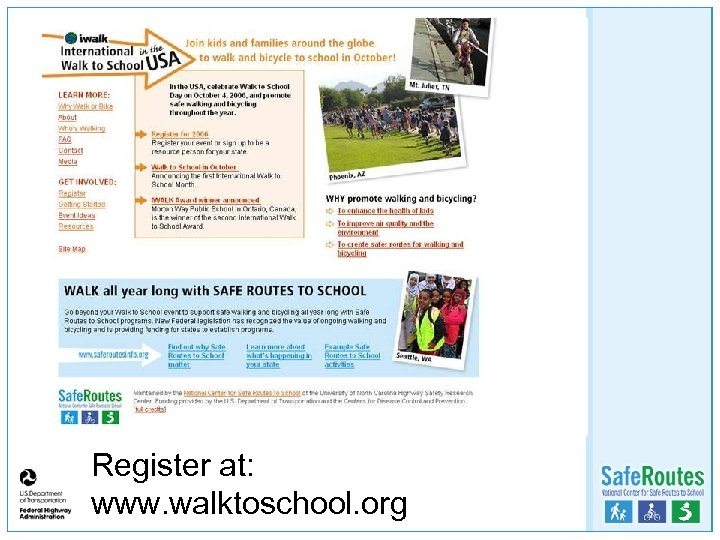 Register at: www. walktoschool. org
 Web-based resources • Online library – Materials from programs around the country • • • SRTS guide Promotional materials Data collection tools State SRTS program information Technical assistance
 Questions? Nancy Pullen pullen@hsrc. unc. edu 919 962 -7419 Thank you.