Скачать презентацию Safe Patient Handling Susan Harwood Training Grant Program
e10f31950321633425d34eb56cd1fe6f.ppt
- Количество слайдов: 50
 Safe Patient Handling Susan Harwood Training Grant Program
 Disclaimer • This material was produced under grant SH 20829 SHO from the Occupational Safety and Health Administration, U. S. Department of Labor. It does not necessarily reflect the views or policies of the U. S. Department of Labor, nor does mention of trade names, commercial products, or organization simply endorsement by the U. S. Government.
 Worker Rights Under the Occupational Safety and Health Act of 1970 • You have the right to a safe workplace. OSHA requires employers to provide a workplace that is free of serious recognized hazards and in compliance with OSHA standards.
 You have the right to: 1) Get training from your employer 2) Request information from your employer 3) Request action from your employer to correct hazards or violations 4) File a complaint with OSHA 5) Be involved in OSHA’s inspection of your workplace. 6) Find out results of an OSHA inspection 7) Get involved 8) File a formal appeal 9) File a discrimination complaint 10) Request a research investigation on possible workplace hazards. 11) Provide comments and testimony to OSHA.
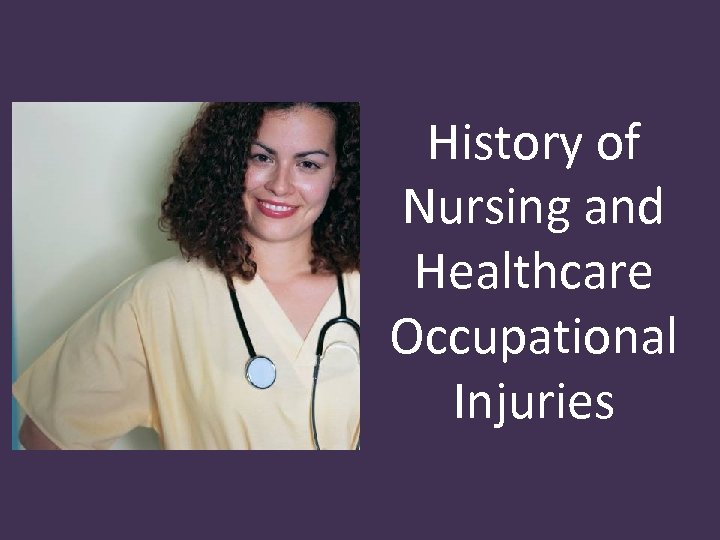 History of Nursing and Healthcare Occupational Injuries
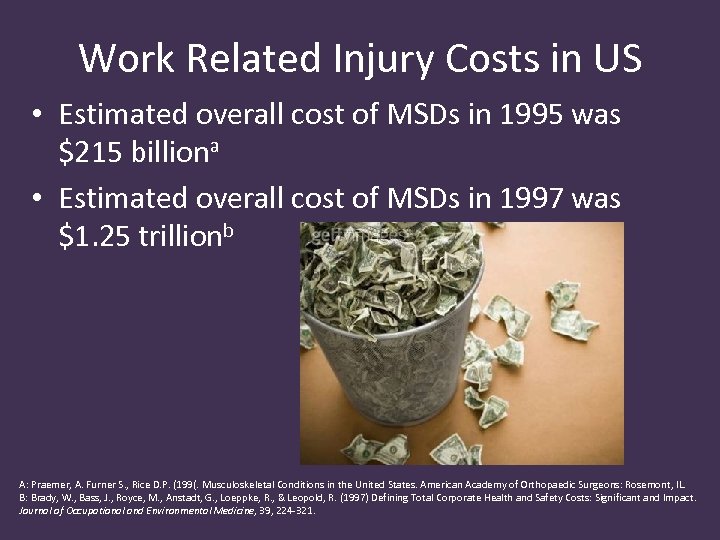 Work Related Injury Costs in US • Estimated overall cost of MSDs in 1995 was $215 billiona • Estimated overall cost of MSDs in 1997 was $1. 25 trillionb A: Praemer, A. Furner S. , Rice D. P. (199(. Musculoskeletal Conditions in the United States. American Academy of Orthopaedic Surgeons: Rosemont, IL. B: Brady, W. , Bass, J. , Royce, M. , Anstadt, G. , Loeppke, R. , & Leopold, R. (1997) Defining Total Corporate Health and Safety Costs: Significant and Impact. Journal of Occupational and Environmental Medicine, 39, 224 -321.
 Bureau of Labor Statistics 1995 to 2004 • Nursing, psychiatric, and home health aides sustained 799, 004 injuries and illnesses involving days away from work. • Accounts for 5% of all nonfatal work injuries and illnesses during the period. Hoskins, Anne. “Occupational Injuries, Illnesses, and Fatalities among Nursing, Psychiatric, and Home Health Aides, 19952004. ” http: //www. bls. gov/opub/cwc/sh 20060628 ar 01 p 1. htm
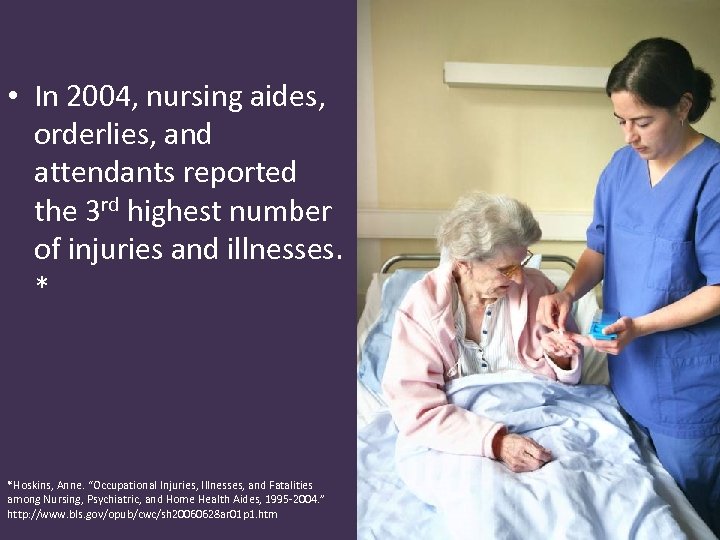 • In 2004, nursing aides, orderlies, and attendants reported the 3 rd highest number of injuries and illnesses. * *Hoskins, Anne. “Occupational Injuries, Illnesses, and Fatalities among Nursing, Psychiatric, and Home Health Aides, 1995 -2004. ” http: //www. bls. gov/opub/cwc/sh 20060628 ar 01 p 1. htm
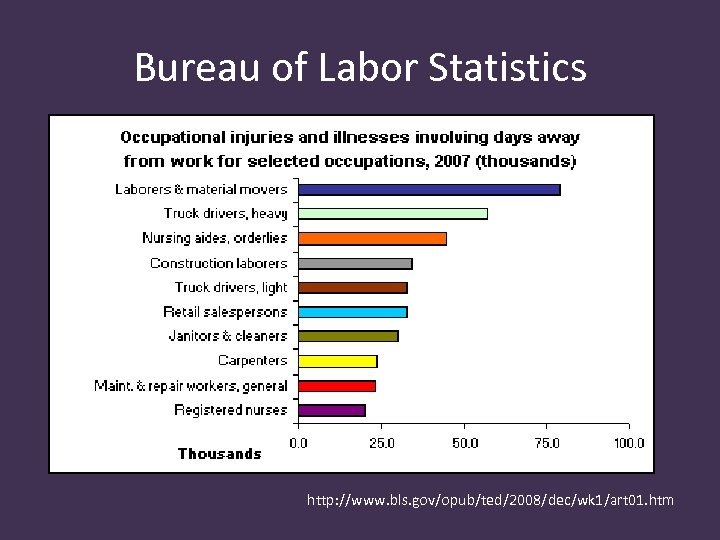 Bureau of Labor Statistics http: //www. bls. gov/opub/ted/2008/dec/wk 1/art 01. htm
 Demographics • Women sustained more than 90% of these injuries during the 1995 -2004 period. • This occupational group accounted for 13% of the total number of workplace injuries and illnesses among women, the highest proportion of any one broad occupational group.
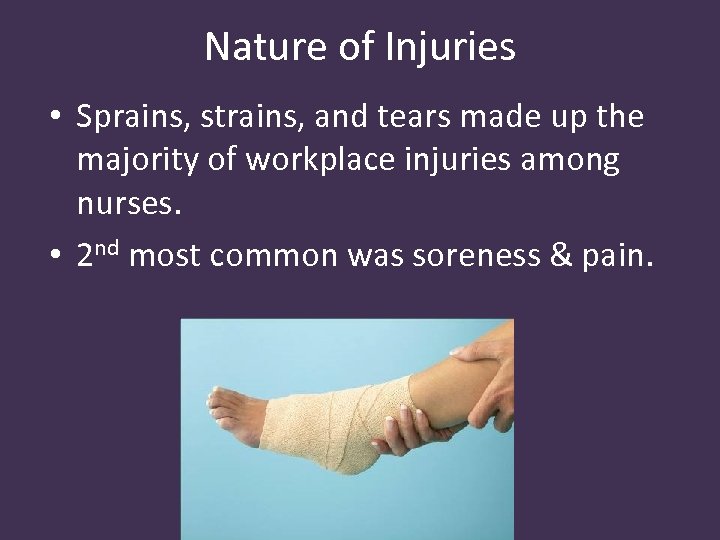 Nature of Injuries • Sprains, strains, and tears made up the majority of workplace injuries among nurses. • 2 nd most common was soreness & pain.
 According to ANA* • 52% of nurses complain of chronic back pain • 12% leave nursing because back pain • 20% transfer to different units because back pain. • Back pain is the leading cause of disability in those under age 45. *American Nursing Association. “Handle with Care. ” http: //www. nursingworld. org/Main. Menu. Categories/Occupationaland. Environmental/occupationalhealth/handlewithcare/hwc. aspx
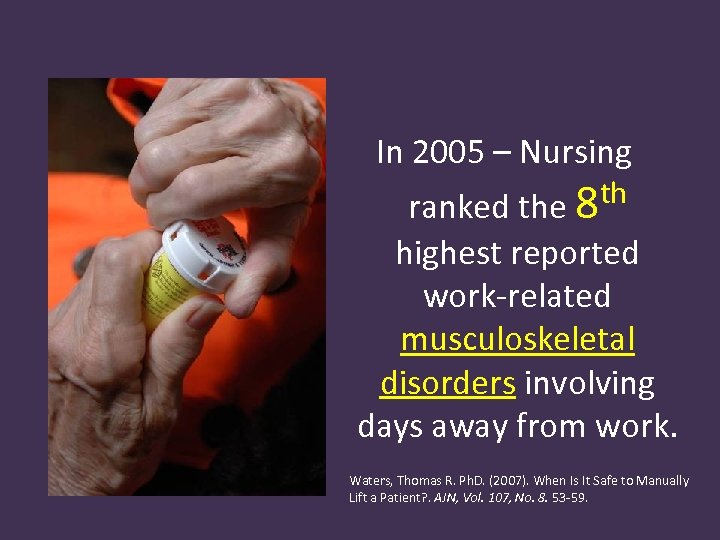 In 2005 – Nursing th ranked the 8 highest reported work-related musculoskeletal disorders involving days away from work. Waters, Thomas R. Ph. D. (2007). When Is It Safe to Manually Lift a Patient? . AJN, Vol. 107, No. 8. 53 -59.
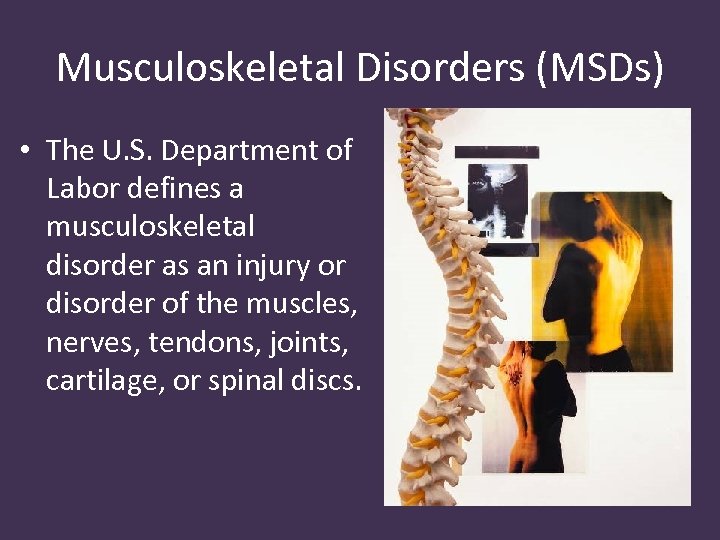 Musculoskeletal Disorders (MSDs) • The U. S. Department of Labor defines a musculoskeletal disorder as an injury or disorder of the muscles, nerves, tendons, joints, cartilage, or spinal discs.
 Stages of MDSs • Early stage – pain may disappear after a rest away from work • Intermediate stage – body part aches and feels weak soon after starting work and lasts until well after finishing work • Advanced stage – body part aches and feels weak even at rest, sleep may be affected, light tasks are difficult on days off
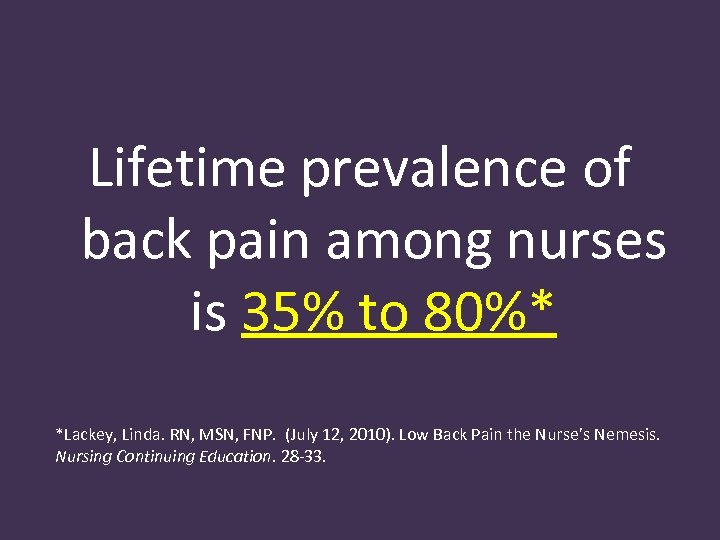 Lifetime prevalence of back pain among nurses is 35% to 80%* *Lackey, Linda. RN, MSN, FNP. (July 12, 2010). Low Back Pain the Nurse’s Nemesis. Nursing Continuing Education. 28 -33.
 DO NOT ignore signs and symptoms of MSDs. Employees should report any to job and seek treatment immediately
 What causes these injuries in the nursing field?
 Many of these work relatedinjuries are results of Common Myths and Beliefs
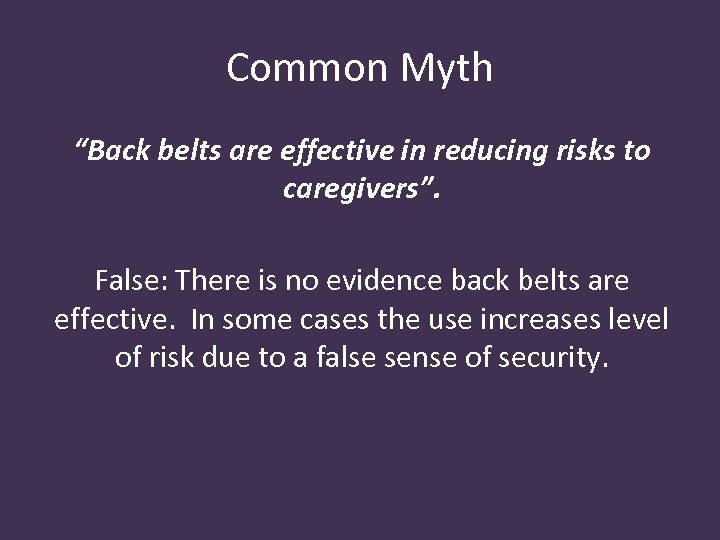 Common Myth “Back belts are effective in reducing risks to caregivers”. False: There is no evidence back belts are effective. In some cases the use increases level of risk due to a false sense of security.
 Common Myth “Staff in great physical condition are less likely to be injured”. False: These staff are exposed to risk at a greater level; co-workers are more likely to ask them for help.
 Common Myth “Patient Handling Equipment is too expensive”. False: Employers should consider that long term benefits of proper equipment FAR outweigh costs related to nursing work-related injuries.
 Common Myth “Use of mechanical lifts eliminates all the risk of manual lifting”. False: With any transfer, human effort is required and there is always a possibility of injury. However, lifts do eliminate extreme stress on the care giver.
 Common Myth “If you buy it, staff will use it” False: Staff do not use equipment for several reasons including lack of training or administrative support.
 Factors Causing Injuries • High amount of dependent patients – require assistance dressing, bathing, feeding, toileting. • Lack of or proper use of lifting equipment • Staff shortage • Average of a registered nurse in US is approximately 47 years old • Educators teaching outdated techniques
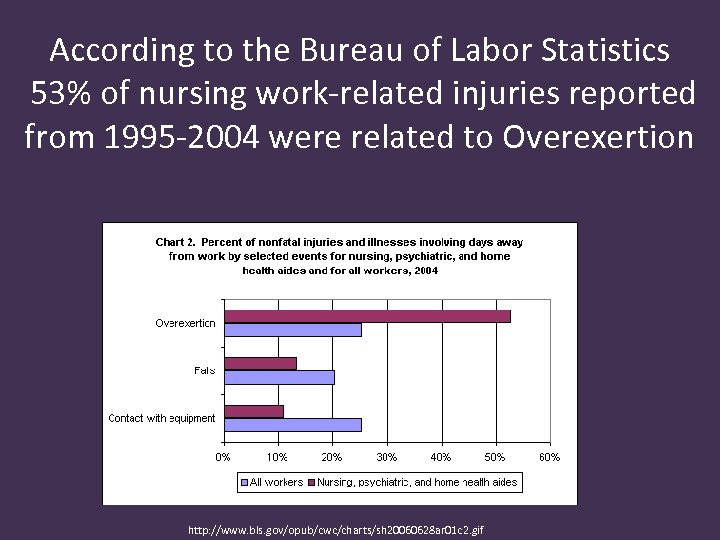 According to the Bureau of Labor Statistics 53% of nursing work-related injuries reported from 1995 -2004 were related to Overexertion http: //www. bls. gov/opub/cwc/charts/sh 20060628 ar 01 c 2. gif
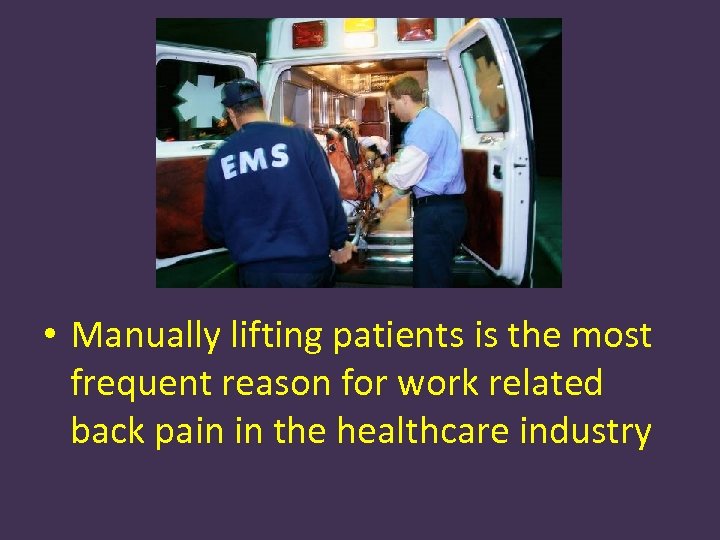 • Manually lifting patients is the most frequent reason for work related back pain in the healthcare industry
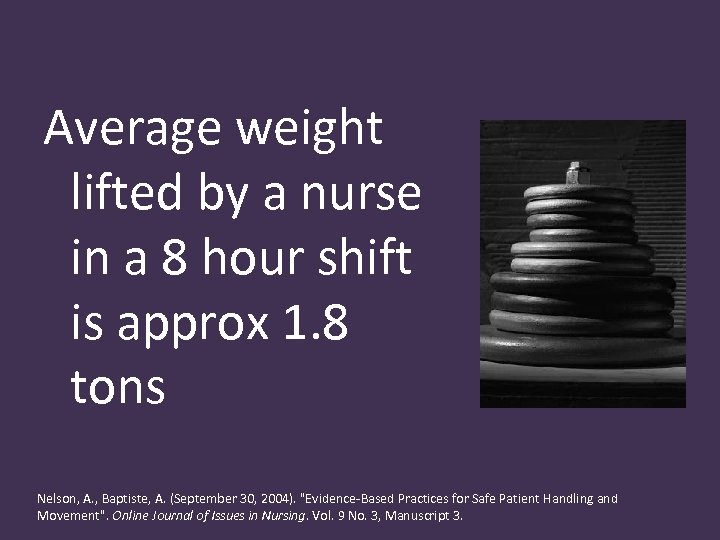 Average weight lifted by a nurse in a 8 hour shift is approx 1. 8 tons Nelson, A. , Baptiste, A. (September 30, 2004). "Evidence-Based Practices for Safe Patient Handling and Movement". Online Journal of Issues in Nursing. Vol. 9 No. 3, Manuscript 3.
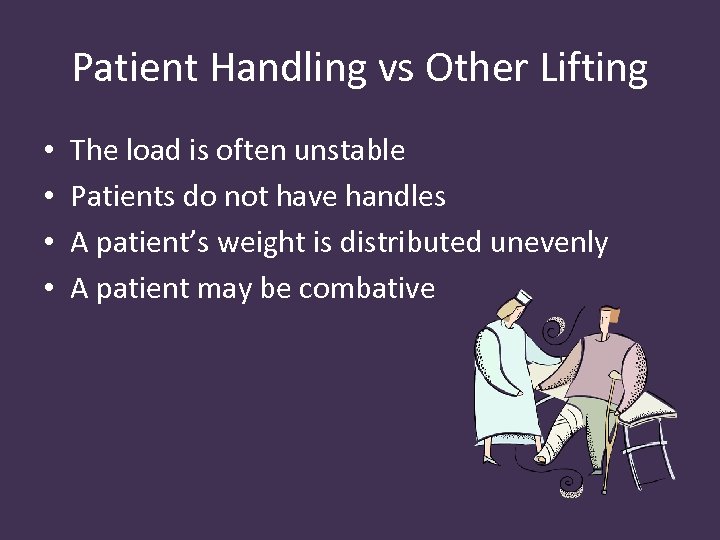 Patient Handling vs Other Lifting • • The load is often unstable Patients do not have handles A patient’s weight is distributed unevenly A patient may be combative
 So what is the best practice for safe patient handling? The most common methods taught are proper Body Mechanics and Ergonomics
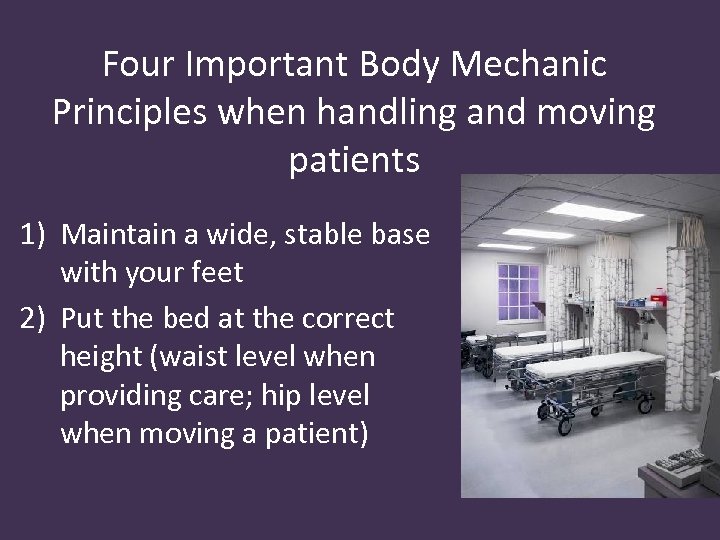 Four Important Body Mechanic Principles when handling and moving patients 1) Maintain a wide, stable base with your feet 2) Put the bed at the correct height (waist level when providing care; hip level when moving a patient)
 Continued Body Mechanic Principles 3) Try to keep the work directly in front of you to avoid rotating the spine 4) Keep the patient as close to your body as possible to minimize reaching
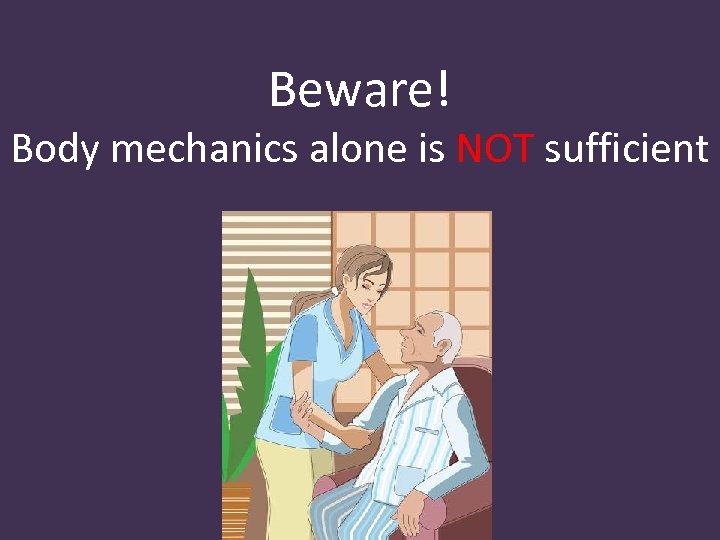 Beware! Body mechanics alone is NOT sufficient
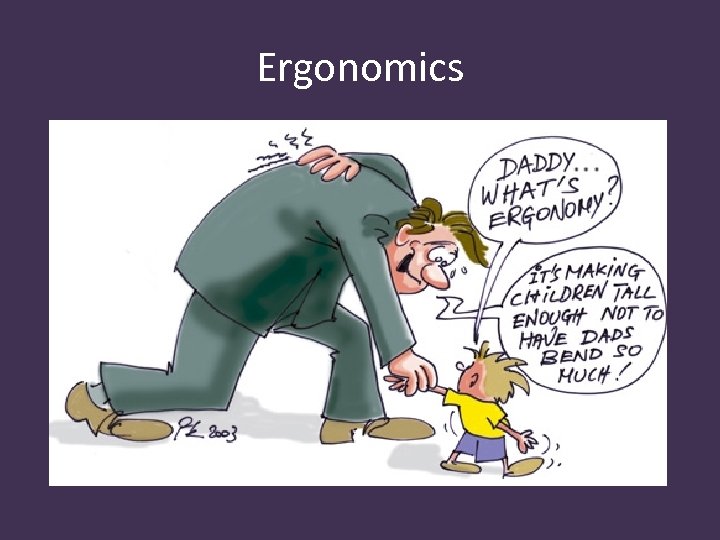 Ergonomics
 Ergonomics – the science of fitting the job to the worker and practice of designing equipment and work tasks to match the capability of the worker.
 Ergonomic approaches are used to: 1) Design tasks to fit each person 2) Understand the limits of the individual 3) Evaluate the work environment, taking into account that when job demands exceed the physical ability of workers, problems likely exist.
 Ergonomic Risk Factors Observed in Patient Care Occupations • • Forceful and Heavy Exertions High Frequency/Repetitive Tasks Awkward Postures Work Duration Uneven work floors Unpredictable patients Dependence level of patients
 Your Employer’s Duties to control a Ergonomically Safe Environment include: 1) Change and enforce rules and procedures 2) Rotating workers through jobs that are physically tiring 3) Training workers to learn techniques for reducing the stress and strain while performing their work tasks.
 Your Employer’s Duties to control a Ergonomically Safe Environment include: 4) Maintain a clutter-free environment 5) Encourage no-lift of low-lift policies 6) Supervisor encouragement of early reporting of injuries.
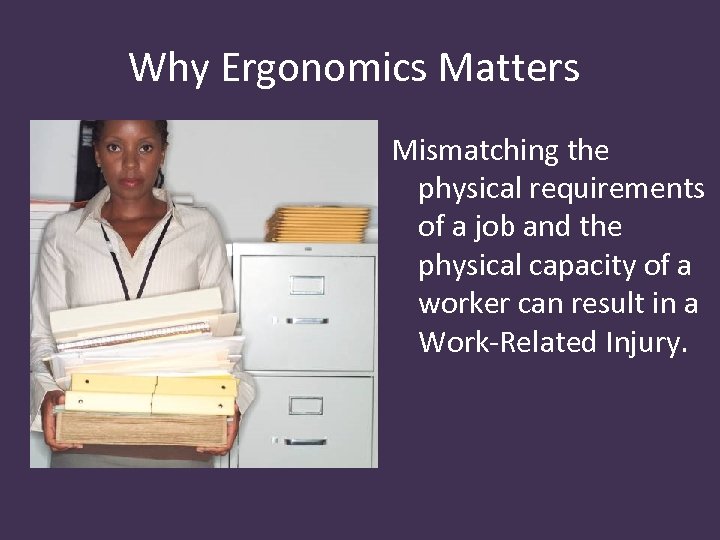 Why Ergonomics Matters Mismatching the physical requirements of a job and the physical capacity of a worker can result in a Work-Related Injury.
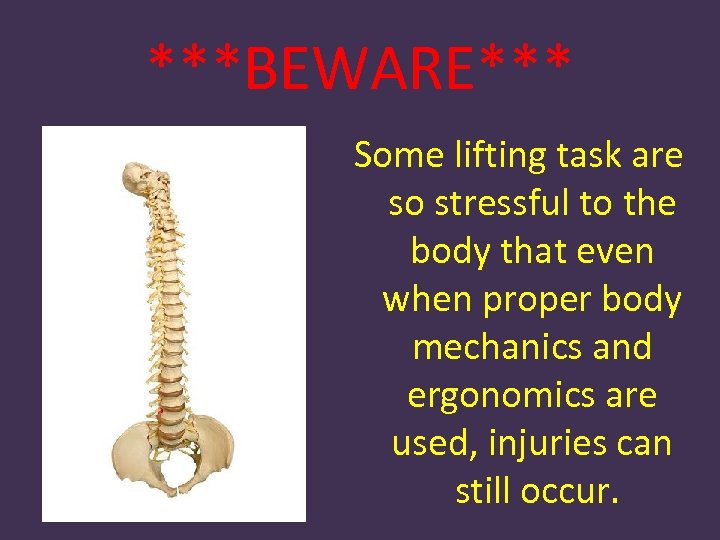 ***BEWARE*** Some lifting task are so stressful to the body that even when proper body mechanics and ergonomics are used, injuries can still occur.
 Manual Lifting? • 98% of nurses use the manual lifting technique known as “Hook and Toss” even though it was deemed unsafe since 1981 • Why? Because nurse instructors teach them! Nelson, A. , Baptiste, A. (September 30, 2004). "Evidence-Based Practices for Safe Patient Handling and Movement". Online Journal of Issues in Nursing. Vol. 9 No. 3, Manuscript 3.
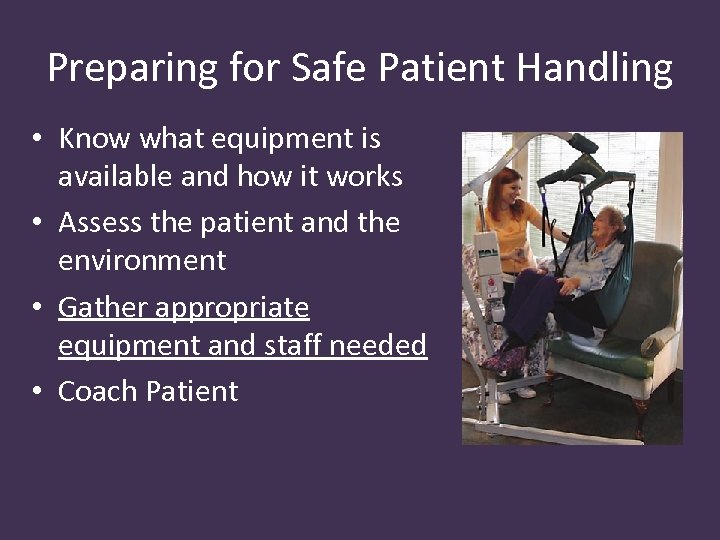 Preparing for Safe Patient Handling • Know what equipment is available and how it works • Assess the patient and the environment • Gather appropriate equipment and staff needed • Coach Patient
 When and Why Use Lifts
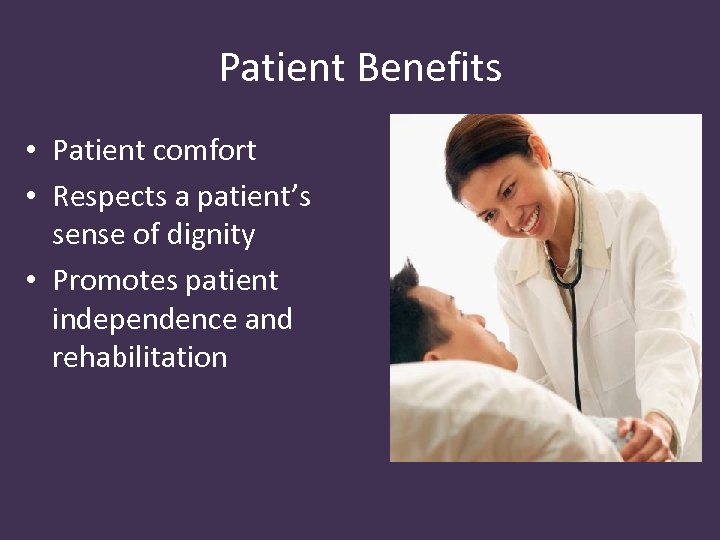 Patient Benefits • Patient comfort • Respects a patient’s sense of dignity • Promotes patient independence and rehabilitation
 Economic Benefits Decreases occupational injuries and indirect costs including employee replacement, additional training, loss of productivity, and liability
 Increase in Obesity *The number of U. S. patients hospitalized for obesity more than doubled from 1994 to 2004 – 797, 000 to 1. 7 million – 2/3 of all U. S. adults are obese or overweight *“Hospital Employees Learn How to Handle Heavier Patients” Dean Olsen, Be. Healthy. Springfield. com
 When to Use a Lift • For most patient-lifting tasks – max weight limit is 35 pounds. * • Patient Characteristics that add risk – Height – Weight – Body Shape – Dependency *Waters, Thomas R. Ph. D. (2007). When Is It Safe to Manually Lift a Patient? . AJN, Vol. 107, No. 8. 53 -59.
 Your Responsibility • Know the characteristics of an unsafe lift • Know the help that is available – both coworkers and equipment • Know your employer’s lift policies • If unsure about the safety of a lift, ask your instructor/director