


 Скачать презентацию SAFE LIFTING AND MOVING IN HEALTH CARE PARTNERS
1d3c7f6e9db0fa67d09fac49165c9f8a.ppt
- Количество слайдов: 18
 SAFE LIFTING AND MOVING IN HEALTH CARE: PARTNERS IN SUCCESS What We Can Learn From Injured Workers About Preventing Injuries Jean Eichenberger, MS, RN University of Illinois Hospital November 15, 2012
 ABOUT THE UNIVERSITY OF ILLINOIS HOSPITAL & HEALTH SCIENCES SYSTEM Conveniently located just southwest of Chicago’s downtown • 495 bed tertiary care hospital • Out-patient and specialty clinics • Seven health science colleges including the College of Medicine • As a leader in patient care, research and education, UI Health is committed to making positive and lasting differences in health science and in people’s lives.
 WHY DO HEALTHCARE WORKERS GET INJURED? Number of lateral transfers per day………… 231 • Number of patients being repositioned per day……. . 138 • On average, patients are repositioned 12 times per 24 hour period Extensive and total assist patients are transferred at least 5 times per day to and from toilet, bed, chair, and laterally 3
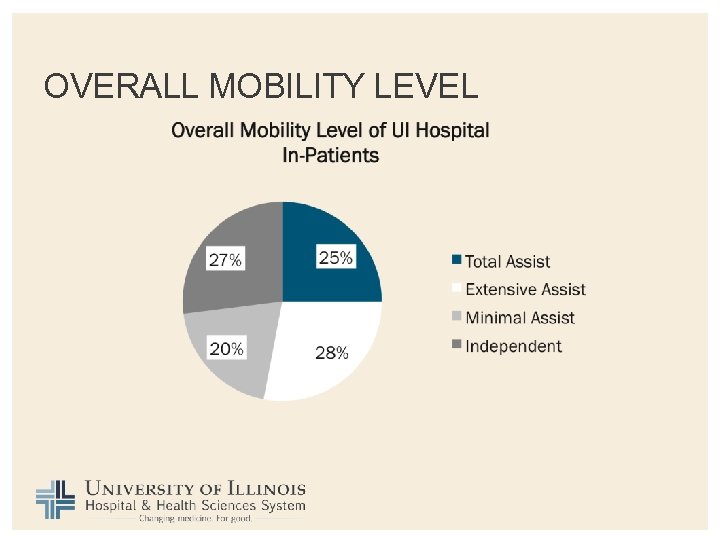 OVERALL MOBILITY LEVEL
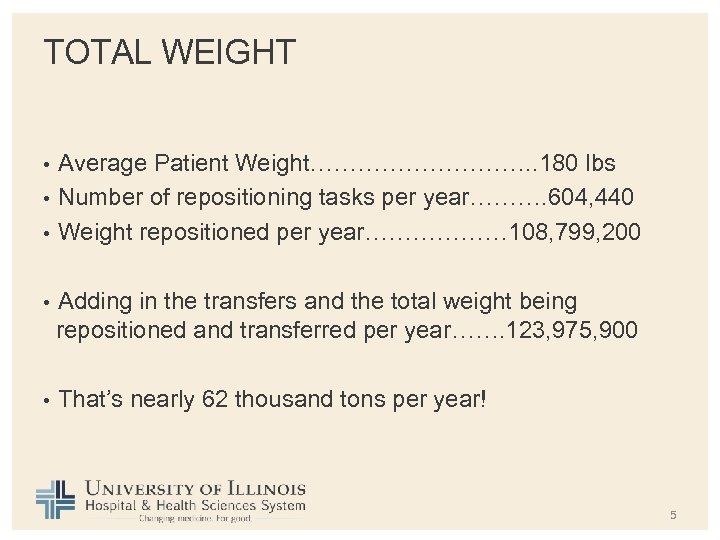 TOTAL WEIGHT Average Patient Weight……………. . 180 lbs • Number of repositioning tasks per year………. 604, 440 • Weight repositioned per year……………… 108, 799, 200 • • Adding in the transfers and the total weight being repositioned and transferred per year……. 123, 975, 900 • That’s nearly 62 thousand tons per year! 5
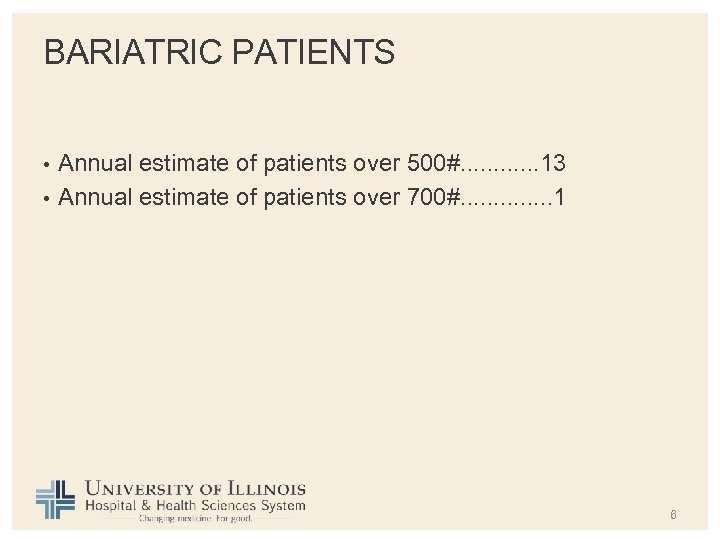 BARIATRIC PATIENTS Annual estimate of patients over 500#. . . 13 • Annual estimate of patients over 700#. . . 1 • 6
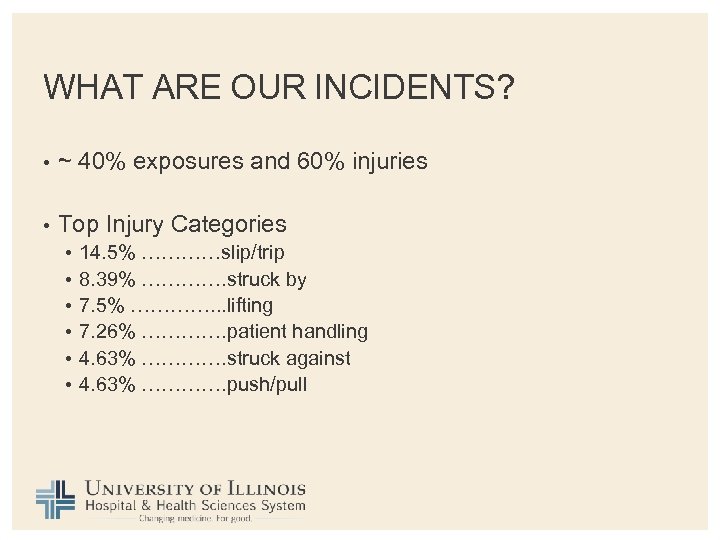 WHAT ARE OUR INCIDENTS? • ~ 40% exposures and 60% injuries • Top Injury Categories • • • 14. 5% …………slip/trip 8. 39% …………. struck by 7. 5% …………. . . lifting 7. 26% …………. patient handling 4. 63% …………. struck against 4. 63% …………. push/pull
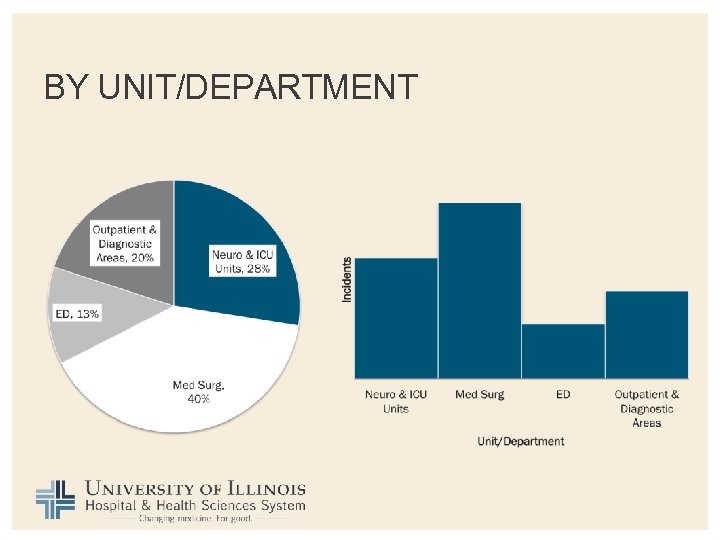 BY UNIT/DEPARTMENT
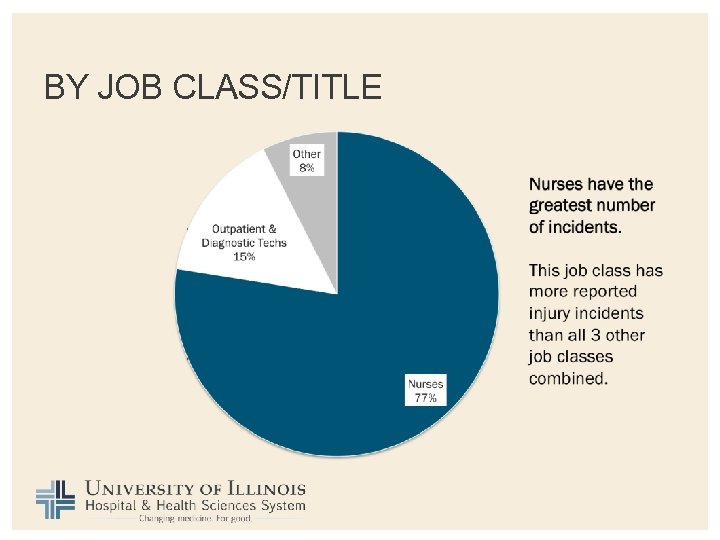 BY JOB CLASS/TITLE
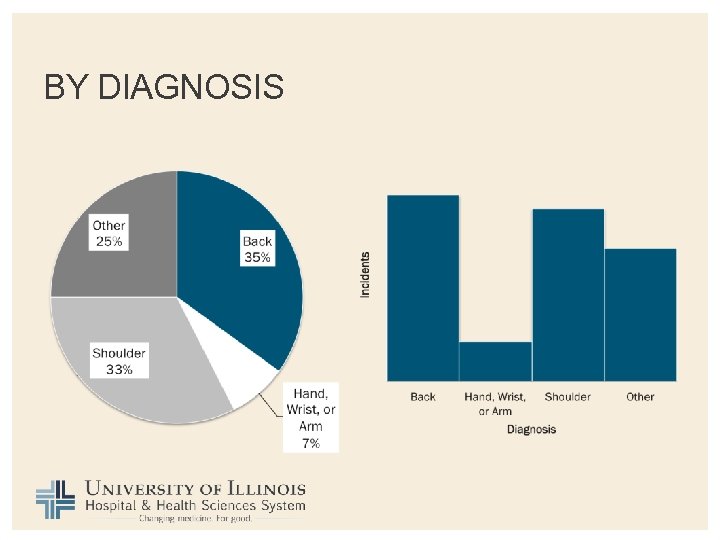 BY DIAGNOSIS
 DEFINITIONS OF SPH CLASSIFICATION “Transfer” – refers to making lateral transfers, moving from bed to chair, toilet to stand; • “Reposition” – refers to action of pulling patient up in bed, log-rolling patient in bed, repositioning limbs; • “Push-pull” – refers to motion of pushing or pulling wheelchair, bed and/or other equipment WITH patient present; • “Fall Intervention” – refers to “catching a fall”, assisting patient to floor when falling; •
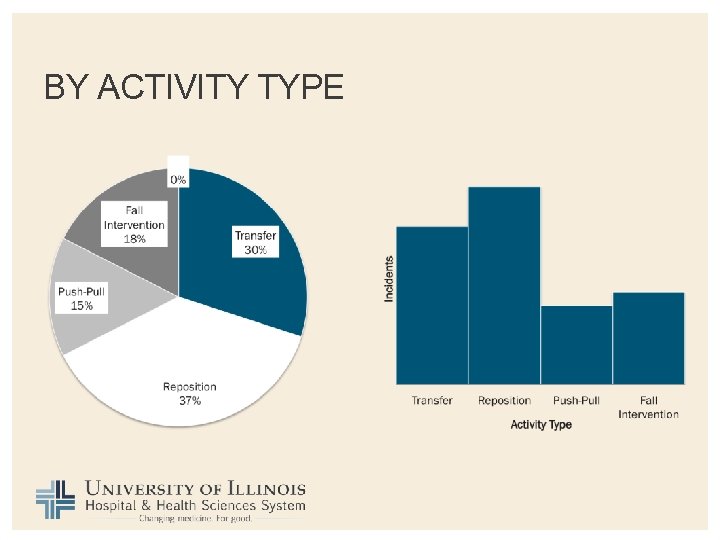 BY ACTIVITY TYPE
 RETURN TO WORK PROGRAM • Definition: method to help injured workers get back to work by providing them with temporary, modified jobs that take into consideration physical restrictions, skills, interests and capabilities.
 RTW PROGRAM GOALS • Return partially disabled workers to work • Prevent permanent partial disability cases • Reduce hidden, uninsurable costs • Reduce insurance costs by reducing lost time • Save the careers of good workers • Improve morale
 BENEFITS TO THE EMPLOYEE • Allows the employee to return to the job-site, and thus protect their income, career, and working relationships • Protects the employee from developing habits that can lead to long absences from the workplace • Permits the employee to return to the job-site during the rehabilitation period • Allows the employee to maintain self confidence
 BENEFITS TO THE EMPLOYER • Improves employee morale when there is a commitment to the injured worker’s well-being • Reduces the cost of workers’ compensation insurance by decreasing lost time days • Increased productivity in the workforce • Assists in the reduction of employer’s indirect expenses such as hiring and training of new employees
 RTW MODIFICATIONS • Alternate assignment: return to a different existing job within the functional capacity assigned by the physician • Restricted work: return to regular job with accommodations as assigned by the physician, e. g. lifting restriction. • Modified duty or total accommodation: positions are specifically created to accommodate restrictions of injured worker • Modified Work Hours: any of the above accommodations applying reduced hours, graduating to full time
 LESSONS LEARNED • Management buy-in is critical • Cultures change slowly, but they do change • Advocate for the employee • Parking, paycheck, performance • Be creative!