


 Скачать презентацию Safe Handling of Chemical Wastes The need
06466a761cb4c9988ee0d7639678bbc1.ppt
- Количество слайдов: 25
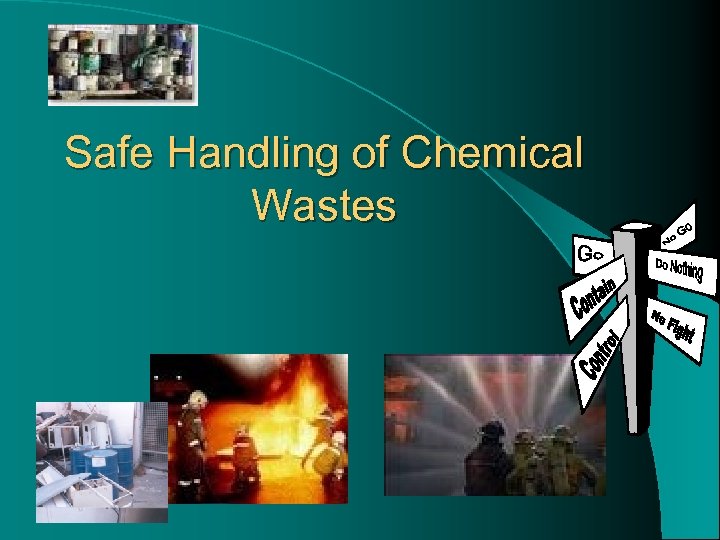 Safe Handling of Chemical Wastes
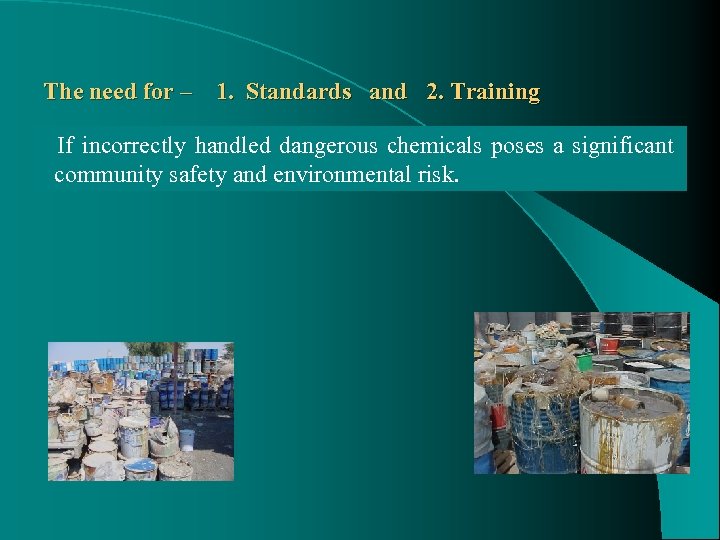 The need for – 1. Standards and 2. Training If incorrectly handled dangerous chemicals poses a significant community safety and environmental risk.
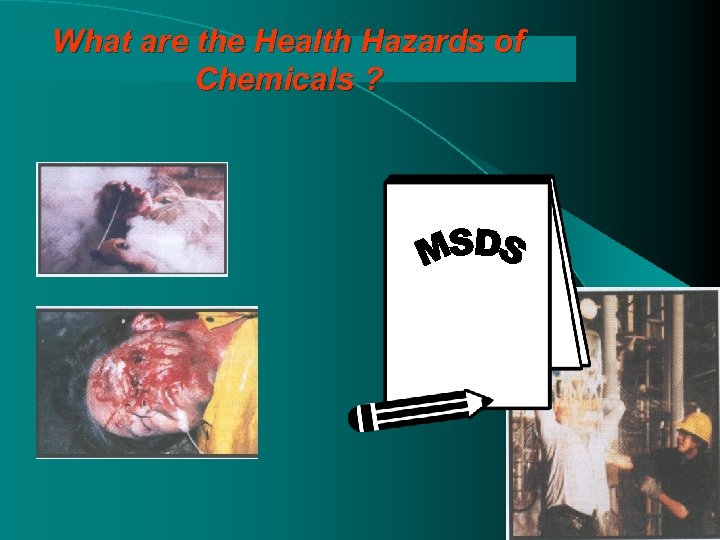 What are the Health Hazards of Chemicals ?
 Persistent Bio-accumulative Persistent: The constituent does not generally break down into other substances once they are released into the environment. Bio-accumulative: The constituent accumulates in plant and animal tissue Toxic: The constituent found in hazardous waste has the potential to harm the environment or adversely impact human health.
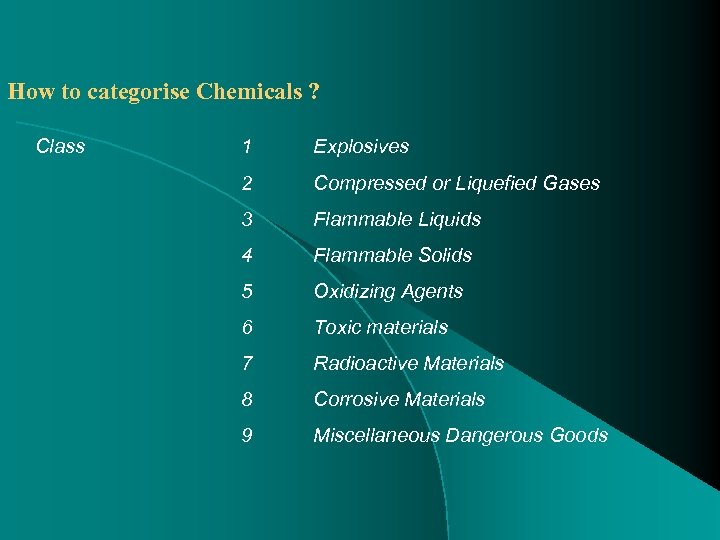 How to categorise Chemicals ? Class 1 2 3 Explosives Compressed or Liquefied Gases Flammable Liquids 4 Flammable Solids 5 Oxidizing Agents 6 Toxic materials 7 Radioactive Materials 8 Corrosive Materials 9 Miscellaneous Dangerous Goods
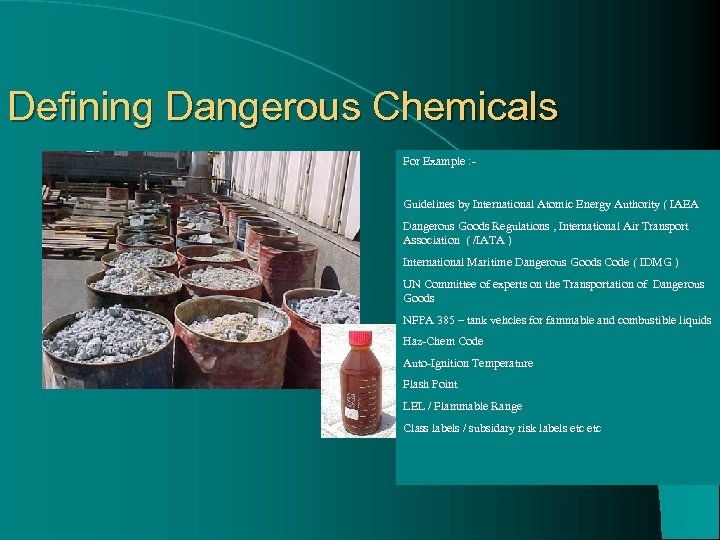 Defining Dangerous Chemicals For Example : - Guidelines by International Atomic Energy Authority ( IAEA Dangerous Goods Regulations , International Air Transport Association ( /IATA ) International Maritime Dangerous Goods Code ( IDMG ) UN Committee of experts on the Transportation of Dangerous Goods NFPA 385 – tank vehcles for fammable and combustible liquids Haz-Chem Code Auto-Ignition Temperature Flash Point LEL / Flammable Range Class labels / subsidary risk labels etc
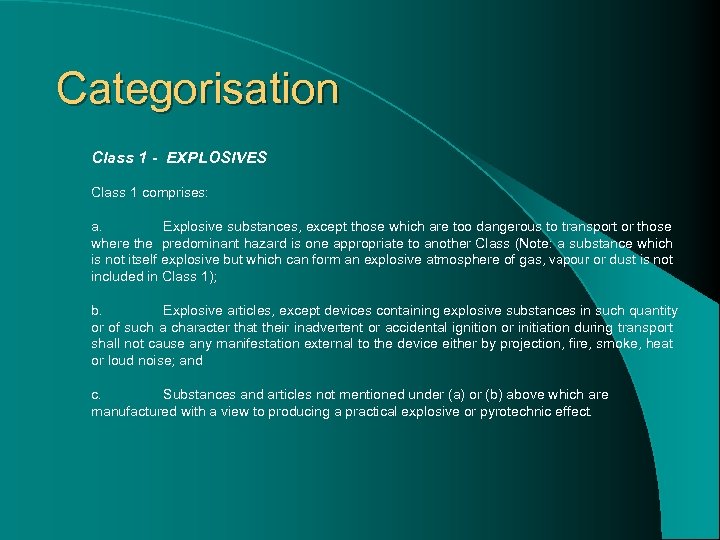 Categorisation Class 1 - EXPLOSIVES Class 1 comprises: a. Explosive substances, except those which are too dangerous to transport or those where the predominant hazard is one appropriate to another Class (Note: a substance which is not itself explosive but which can form an explosive atmosphere of gas, vapour or dust is not included in Class 1); b. Explosive articles, except devices containing explosive substances in such quantity or of such a character that their inadvertent or accidental ignition or initiation during transport shall not cause any manifestation external to the device either by projection, fire, smoke, heat or loud noise; and c. Substances and articles not mentioned under (a) or (b) above which are manufactured with a view to producing a practical explosive or pyrotechnic effect.
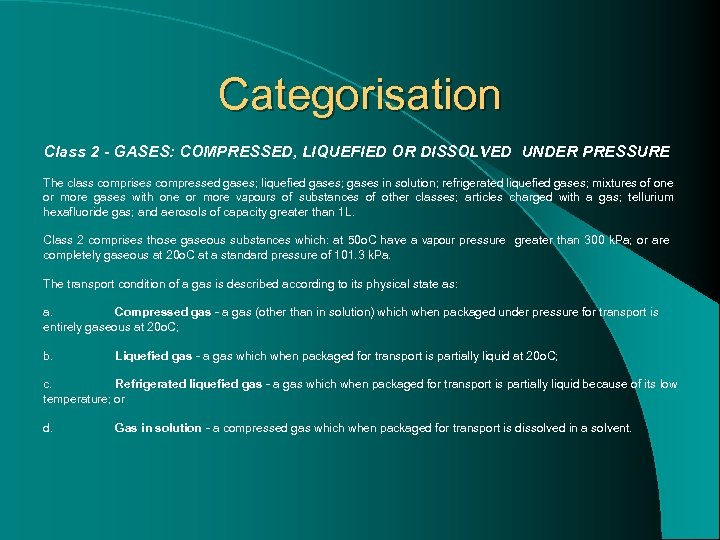 Categorisation Class 2 - GASES: COMPRESSED, LIQUEFIED OR DISSOLVED UNDER PRESSURE The class comprises compressed gases; liquefied gases; gases in solution; refrigerated liquefied gases; mixtures of one or more gases with one or more vapours of substances of other classes; articles charged with a gas; tellurium hexafluoride gas; and aerosols of capacity greater than 1 L. Class 2 comprises those gaseous substances which: at 50 o. C have a vapour pressure greater than 300 k. Pa; or are completely gaseous at 20 o. C at a standard pressure of 101. 3 k. Pa. The transport condition of a gas is described according to its physical state as: a. Compressed gas - a gas (other than in solution) which when packaged under pressure for transport is entirely gaseous at 20 o. C; b. Liquefied gas - a gas which when packaged for transport is partially liquid at 20 o. C; c. Refrigerated liquefied gas - a gas which when packaged for transport is partially liquid because of its low temperature; or d. Gas in solution - a compressed gas which when packaged for transport is dissolved in a solvent.
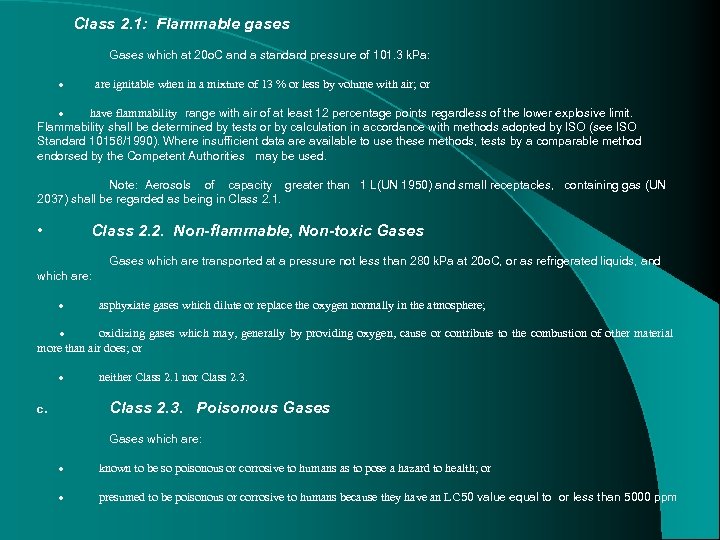 Class 2. 1: Flammable gases Gases which at 20 o. C and a standard pressure of 101. 3 k. Pa: · are ignitable when in a mixture of 13 % or less by volume with air; or · have flammability range with air of at least 12 percentage points regardless of the lower explosive limit. Flammability shall be determined by tests or by calculation in accordance with methods adopted by ISO (see ISO Standard 10156/1990). Where insufficient data are available to use these methods, tests by a comparable method endorsed by the Competent Authorities may be used. Note: Aerosols of capacity greater than 1 L(UN 1950) and small receptacles, containing gas (UN 2037) shall be regarded as being in Class 2. 1. • Class 2. 2. Non-flammable, Non-toxic Gases which are transported at a pressure not less than 280 k. Pa at 20 o. C, or as refrigerated liquids, and which are: · asphyxiate gases which dilute or replace the oxygen normally in the atmosphere; · oxidizing gases which may, generally by providing oxygen, cause or contribute to the combustion of other material more than air does; or · neither Class 2. 1 nor Class 2. 3. Poisonous Gases c. Gases which are: · known to be so poisonous or corrosive to humans as to pose a hazard to health; or · presumed to be poisonous or corrosive to humans because they have an LC 50 value equal to or less than 5000 ppm
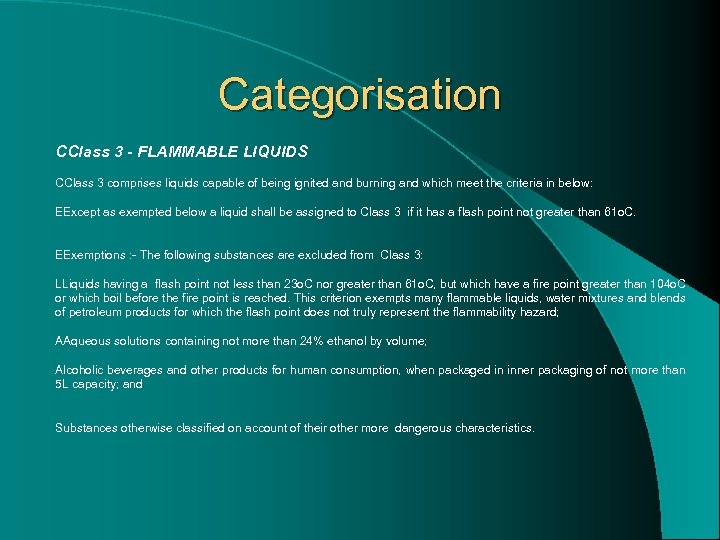 Categorisation CClass 3 - FLAMMABLE LIQUIDS CClass 3 comprises liquids capable of being ignited and burning and which meet the criteria in below: EExcept as exempted below a liquid shall be assigned to Class 3 if it has a flash point not greater than 61 o. C. EExemptions : - The following substances are excluded from Class 3: LLiquids having a flash point not less than 23 o. C nor greater than 61 o. C, but which have a fire point greater than 104 o. C or which boil before the fire point is reached. This criterion exempts many flammable liquids, water mixtures and blends of petroleum products for which the flash point does not truly represent the flammability hazard; AAqueous solutions containing not more than 24% ethanol by volume; Alcoholic beverages and other products for human consumption, when packaged in inner packaging of not more than 5 L capacity; and Substances otherwise classified on account of their other more dangerous characteristics.
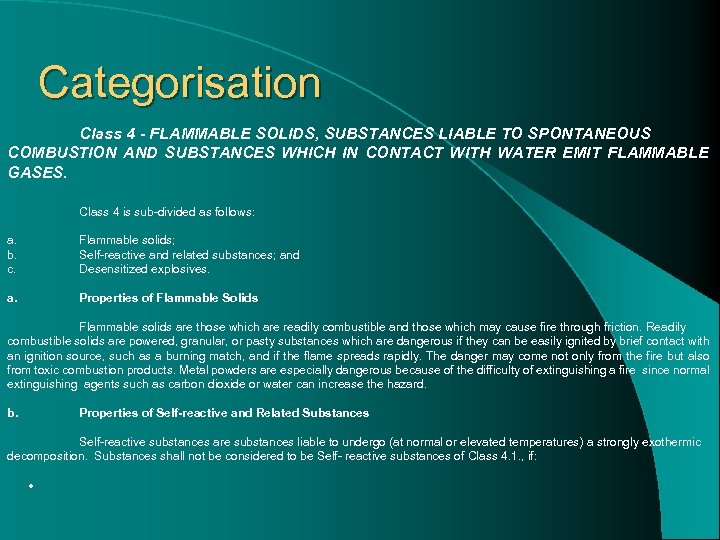 Categorisation Class 4 - FLAMMABLE SOLIDS, SUBSTANCES LIABLE TO SPONTANEOUS COMBUSTION AND SUBSTANCES WHICH IN CONTACT WITH WATER EMIT FLAMMABLE GASES. Class 4 is sub-divided as follows: a. b. c. a. Flammable solids; Self-reactive and related substances; and Desensitized explosives. Properties of Flammable Solids Flammable solids are those which are readily combustible and those which may cause fire through friction. Readily combustible solids are powered, granular, or pasty substances which are dangerous if they can be easily ignited by brief contact with an ignition source, such as a burning match, and if the flame spreads rapidly. The danger may come not only from the fire but also from toxic combustion products. Metal powders are especially dangerous because of the difficulty of extinguishing a fire since normal extinguishing agents such as carbon dioxide or water can increase the hazard. b. Properties of Self-reactive and Related Substances Self-reactive substances are substances liable to undergo (at normal or elevated temperatures) a strongly exothermic decomposition. Substances shall not be considered to be Self- reactive substances of Class 4. 1. , if: ·
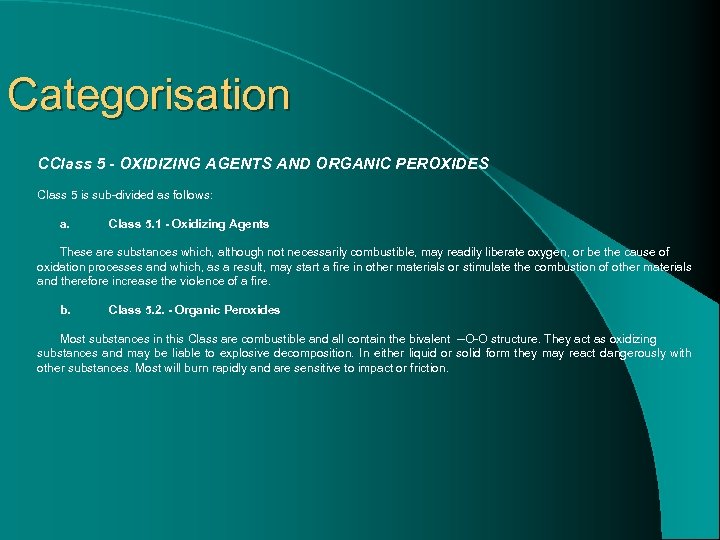 Categorisation CClass 5 - OXIDIZING AGENTS AND ORGANIC PEROXIDES Class 5 is sub-divided as follows: a. Class 5. 1 - Oxidizing Agents These are substances which, although not necessarily combustible, may readily liberate oxygen, or be the cause of oxidation processes and which, as a result, may start a fire in other materials or stimulate the combustion of other materials and therefore increase the violence of a fire. b. Class 5. 2. - Organic Peroxides Most substances in this Class are combustible and all contain the bivalent --O-O structure. They act as oxidizing substances and may be liable to explosive decomposition. In either liquid or solid form they may react dangerously with other substances. Most will burn rapidly and are sensitive to impact or friction.
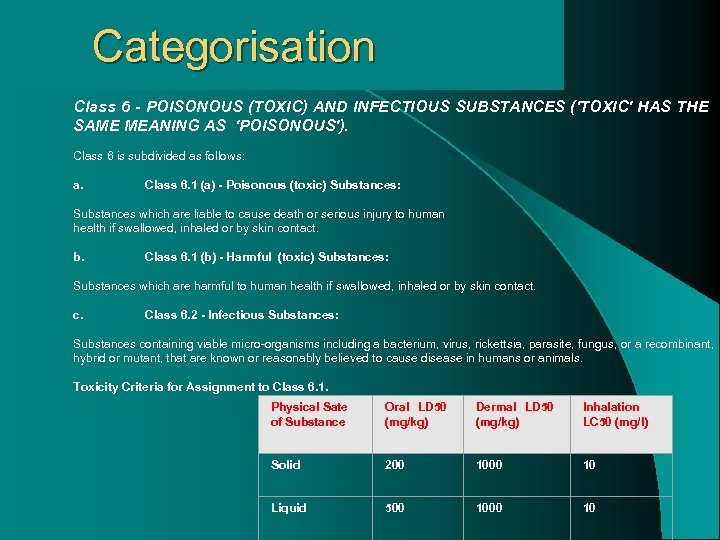 Categorisation Class 6 - POISONOUS (TOXIC) AND INFECTIOUS SUBSTANCES ('TOXIC' HAS THE SAME MEANING AS 'POISONOUS'). Class 6 is subdivided as follows: a. Class 6. 1 (a) - Poisonous (toxic) Substances: Substances which are liable to cause death or serious injury to human health if swallowed, inhaled or by skin contact. b. Class 6. 1 (b) - Harmful (toxic) Substances: Substances which are harmful to human health if swallowed, inhaled or by skin contact. c. Class 6. 2 - Infectious Substances: Substances containing viable micro-organisms including a bacterium, virus, rickettsia, parasite, fungus, or a recombinant, hybrid or mutant, that are known or reasonably believed to cause disease in humans or animals. Toxicity Criteria for Assignment to Class 6. 1. Physical Sate Oral LD 50 Dermal LD 50 Inhalation of Substance (mg/kg) LC 50 (mg/l) Solid 200 10 Liquid 500 10
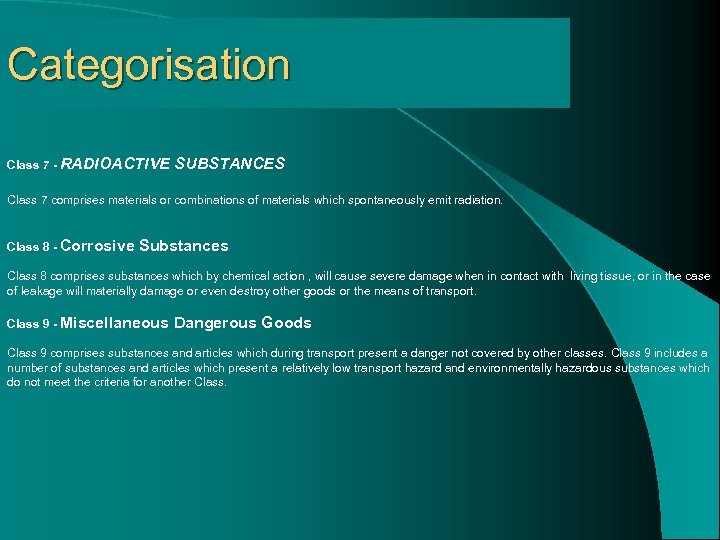 Categorisation Class 7 - RADIOACTIVE SUBSTANCES Class 7 comprises materials or combinations of materials which spontaneously emit radiation. Class 8 - Corrosive Substances Class 8 comprises substances which by chemical action , will cause severe damage when in contact with living tissue, or in the case of leakage will materially damage or even destroy other goods or the means of transport. Class 9 - Miscellaneous Dangerous Goods Class 9 comprises substances and articles which during transport present a danger not covered by other classes. Class 9 includes a number of substances and articles which present a relatively low transport hazard and environmentally hazardous substances which do not meet the criteria for another Class.
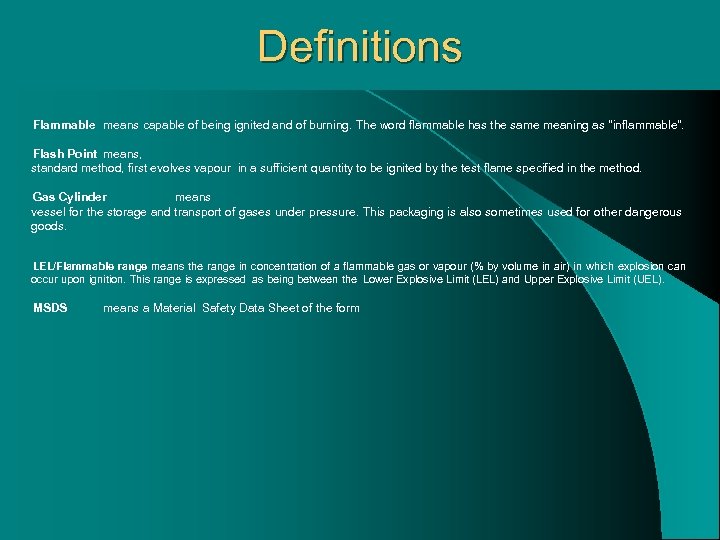 Definitions Flammable means capable of being ignited and of burning. The word flammable has the same meaning as "inflammable". Flash Point means, standard method, first evolves vapour in a sufficient quantity to be ignited by the test flame specified in the method. Gas Cylinder means vessel for the storage and transport of gases under pressure. This packaging is also sometimes used for other dangerous goods. LEL/Flammable range means the range in concentration of a flammable gas or vapour (% by volume in air) in which explosion can occur upon ignition. This range is expressed as being between the Lower Explosive Limit (LEL) and Upper Explosive Limit (UEL). MSDS means a Material Safety Data Sheet of the form
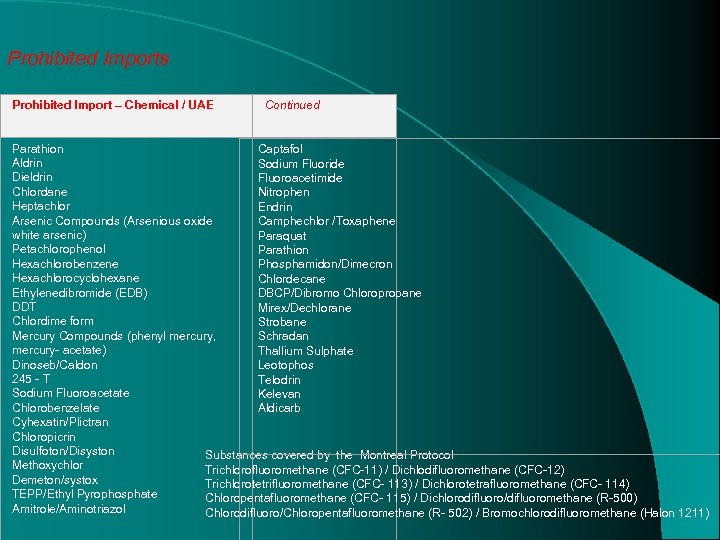 Prohibited Imports Prohibited Import – Chemical / UAE Continued Parathion Captafol Aldrin Sodium Fluoride Dieldrin Fluoroacetimide Chlordane Nitrophen Heptachlor Endrin Arsenic Compounds (Arsenious oxide Camphechlor /Toxaphene white arsenic) Paraquat Petachlorophenol Parathion Hexachlorobenzene Phosphamidon/Dimecron Hexachlorocyclohexane Chlordecane Ethylenedibromide (EDB) DBCP/Dibromo Chloropropane DDT Mirex/Dechlorane Chlordime form Strobane Mercury Compounds (phenyl mercury, Schradan mercury- acetate) Thallium Sulphate Dinoseb/Caldon Leotophos 245 - T Telodrin Sodium Fluoroacetate Kelevan Chlorobenzelate Aldicarb Cyhexatin/Plictran Chloropicrin Disulfoton/Disyston Substances covered by the Montreal Protocol Methoxychlor Trichlorofluoromethane (CFC-11) / Dichlodifluoromethane (CFC-12) Demeton/systox Trichlorotetrifluoromethane (CFC- 113) / Dichlorotetrafluoromethane (CFC- 114) TEPP/Ethyl Pyrophosphate Chloropentafluoromethane (CFC- 115) / Dichlorodifluoro/difluoromethane (R-500) Amitrole/Aminotriazol Chlorodifluoro/Chloropentafluoromethane (R- 502) / Bromochlorodifluoromethane (Halon 1211)
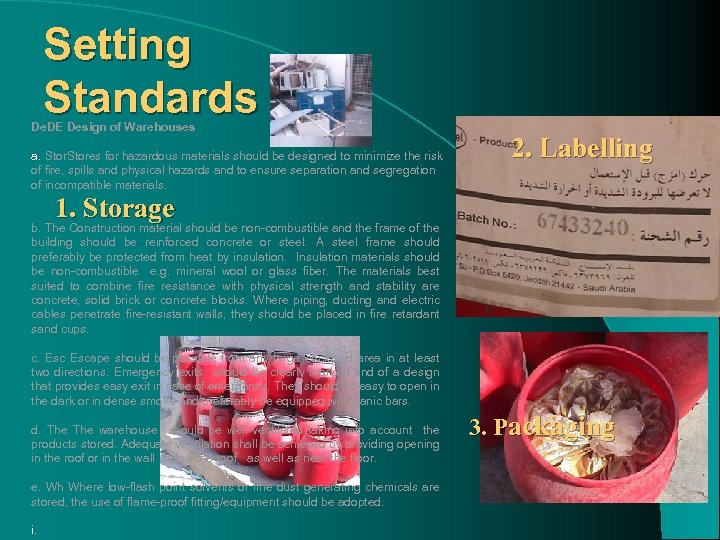 Setting Standards De. DE Design of Warehouses a. Stores for hazardous materials should be designed to minimize the risk of fire, spills and physical hazards and to ensure separation and segregation of incompatible materials. 2. Labelling 1. Storage b. The Construction material should be non-combustible and the frame of the building should be reinforced concrete or steel. A steel frame should preferably be protected from heat by insulation. Insulation materials should be non-combustible e. g. mineral wool or glass fiber. The materials best suited to combine fire resistance with physical strength and stability are concrete, solid brick or concrete blocks. Where piping, ducting and electric cables penetrate fire-resistant walls, they should be placed in fire retardant sand cups. c. Escape should be possible from any large enclosed area in at least two directions. Emergency exits should be clearly marked and of a design that provides easy exit in case of emergency. They should be easy to open in the dark or in dense smoke and preferably be equipped with panic bars. d. The warehouse should be well-ventilated taking into account the products stored. Adequate ventilation shall be achieved by providing opening in the roof or in the wall below the roof as well as near the floor. e. Wh Where low-flash point solvents or fine dust generating chemicals are stored, the use of flame-proof fitting/equipment should be adopted. i. 3. Packaging
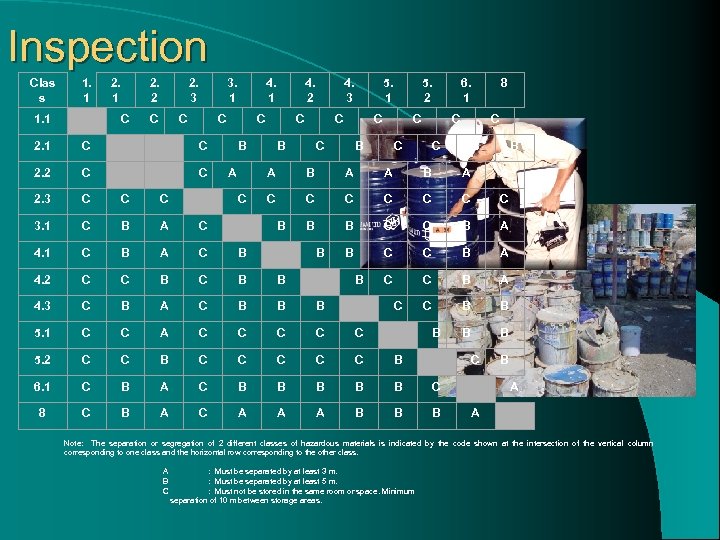 Inspection Clas s 1. 1 2. 2 2. 3 1. 1 C 2. 1 C C 2. 2 C C 2. 3 C C 3. 1 C B A C B 4. 1 C B A C B B 4. 2 C C B B B 4. 3 C B A C B B B C 5. 1 C C A C C C B 5. 2 C C B C 6. 1 C B A C B B B C A 8 C B A C A A A B B B A C 3. 1 C 4. 2 C C B A 4. 3 5. 1 C B 5. 2 C C 6. 1 C B 8 C C B B A A C C C C B B C C B A C B B B Note: The separation or segregation of 2 different classes of hazardous materials is indicated by the code shown at the intersection of the vertical column corresponding to one class and the horizontal row corresponding to the other class. A : Must be separated by at least 3 m. B : Must be separated by at least 5 m. C : Must not be stored in the same room or space. Minimum separation of 10 m between storage areas.
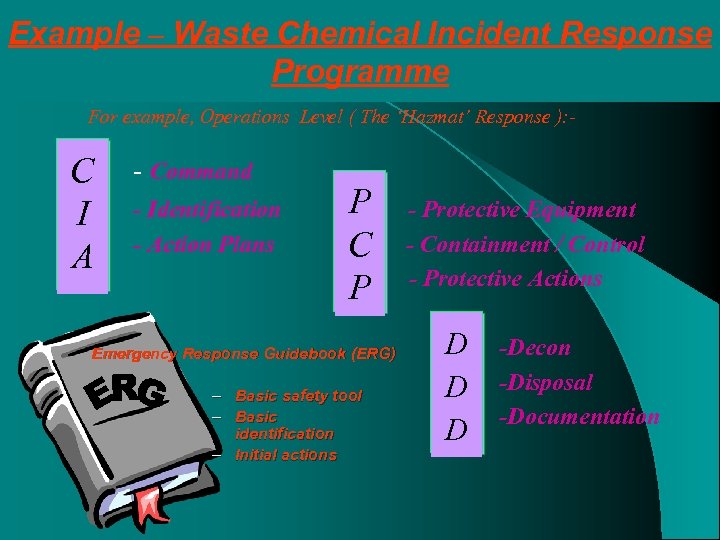 Example – Waste Chemical Incident Response Programme For example, Operations Level ( The ‘Hazmat’ Response ): - C I A - Command - Identification - Action Plans P C P Emergency Response Guidebook (ERG) – Basic safety tool – Basic identification – Initial actions - Protective Equipment - Containment / Control - Protective Actions D D D -Decon -Disposal -Documentation
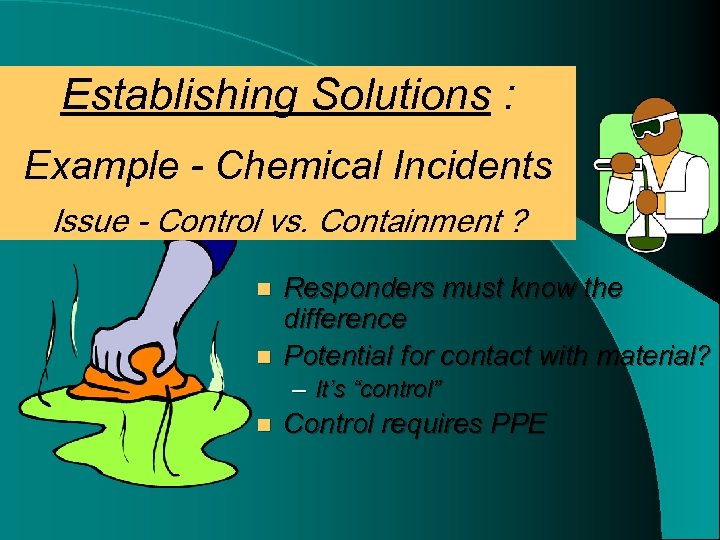 Establishing Solutions : Example - Chemical Incidents Issue - Control vs. Containment ? n n Responders must know the difference Potential for contact with material? – It’s “control” n Control requires PPE
 Emergency Response Management Key Issues • Defining Responsibilities - appraising and defining capabilities • Defining and implementing Hazmat systems
 Example : - Contingency planning for spillages and leaking containers. a. All spillages and leakages must be dealt with immediately after the appropriate material safety data sheet has been referred too. b. On no account must even a small amount of spilled material of any potentially hazardous material be flushed into drainage system or sewers. c. For dealing with spillages the following equipment is required and must be maintained: Personal Protective Equipment Empty drums Self adhesive paper labels for marking drums Absorbent material i. e. sand or sawdust Detergent solution brooms Shovels Drum spanners Metal funnels Wooden Wedges for plugging holes in drums Chemical resistant sealant.
 d. All emergency and safety related equipment must be regularly checked and maintained to ensure that it is in good condition. e. Personal Protective Equipment must be decontaminated and cleaned after use and properly maintained. f. Liquid spills should be absorbed into a suitable dustless solid absorbent such as sand or saw dust. Saw dust should not be used with flammable or oxidizing liquids of classes 3 and 5. g. Spilt solids must be cleaned with an industrial vacuum cleaner. h. Spillages or fire situations releasing toxic or poisonous gases should be dealt with appropriate ventilation and respiratory protective system dependent on the gas. i. All wastes including packaging materials, broken pallets etc. must be disposed of in a safe and environmentally responsible manner. j. All contaminated containers not intended for re-use must be decontaminated where necessary and made unusable by puncturing before disposal.
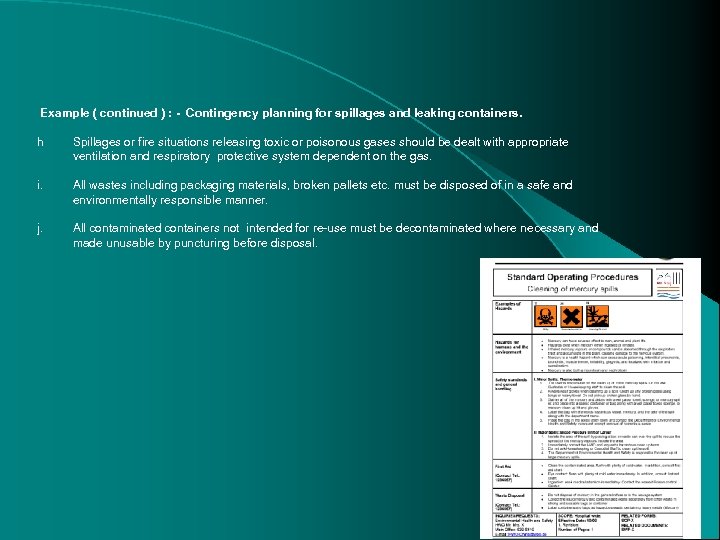 Example ( continued ) : - Contingency planning for spillages and leaking containers. h Spillages or fire situations releasing toxic or poisonous gases should be dealt with appropriate ventilation and respiratory protective system dependent on the gas. i. All wastes including packaging materials, broken pallets etc. must be disposed of in a safe and environmentally responsible manner. j. All contaminated containers not intended for re-use must be decontaminated where necessary and made unusable by puncturing before disposal.
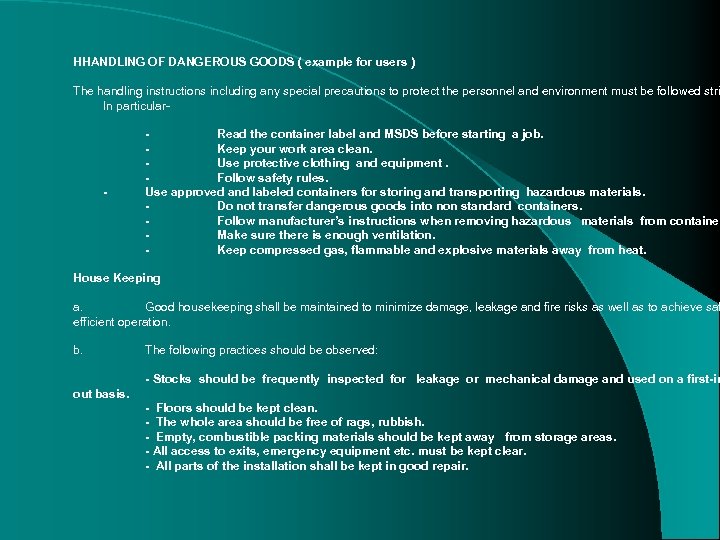 HHANDLING OF DANGEROUS GOODS ( example for users ) The handling instructions including any special precautions to protect the personnel and environment must be followed stri In particular Read the container label and MSDS before starting a job. Keep your work area clean. Use protective clothing and equipment. Follow safety rules. - Use approved and labeled containers for storing and transporting hazardous materials. - Do not transfer dangerous goods into non standard containers. - Follow manufacturer’s instructions when removing hazardous materials from container - Make sure there is enough ventilation. - Keep compressed gas, flammable and explosive materials away from heat. House Keeping a. Good housekeeping shall be maintained to minimize damage, leakage and fire risks as well as to achieve saf efficient operation. b. The following practices should be observed: - Stocks should be frequently inspected for leakage or mechanical damage and used on a first-in out basis. - Floors should be kept clean. - The whole area should be free of rags, rubbish. - Empty, combustible packing materials should be kept away from storage areas. - All access to exits, emergency equipment etc. must be kept clear. - All parts of the installation shall be kept in good repair.