 Скачать презентацию S Alliance Global Bioinformatics Online Distance Education Justin
9fa301e8b48b0d28650f1421e3577592.ppt
- Количество слайдов: 36



S* Alliance Global Bioinformatics Online Distance Education Justin Choo*, Tan Tin Wee, Shoba Ranganathan * Presenter
Bioinformatics & Its Challenge Rapid growth in past 3 years; rapidly evolving field n Few universities can offer the complete range of Bioinformatics courses n Lack of trained bioinformaticians in the Asia-Pacific region n
What is S* ? Founded in 2000, S* is a collaboration among 6 universities. 1 university joined. n To meet this challenge using distance learning technologies over advanced networks n Unified learning environment over the Internet freely accessible to everyone n
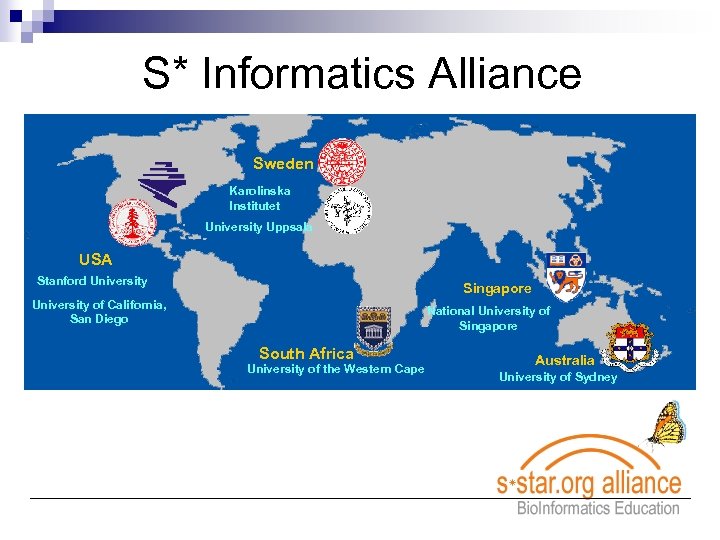
S* Informatics Alliance Sweden Karolinska Institutet University Uppsala USA Stanford University Singapore University of California, San Diego National University of Singapore South Africa University of the Western Cape Australia University of Sydney
Goals of S* n n n Provide a GLObal Bioinformatics Unified Learning Environment (GLOBULE) made up of modular courses in the disciplines of bioinformatics, medical informatics and genomics Provide accessibility to the highest possible quality of online courseware approved by the educators from the host institutions. Develop an integrated modular learning environment that allows a student to select from both pre-requisite modules and advanced modules in order to build a comprehensive program.
History of S* 2000 - Sweden Stanford and Singapore agreement in Singapore - Meeting in Sweden: all founders involved n 2001 - AGM in Copenhagen, 1 st course n 2002 – 2 nd course n 2002 - Bio. Ed conference in Singapore, AGM at NUS n 2003 – UCSD joins, 3 rd course, 4 th course n
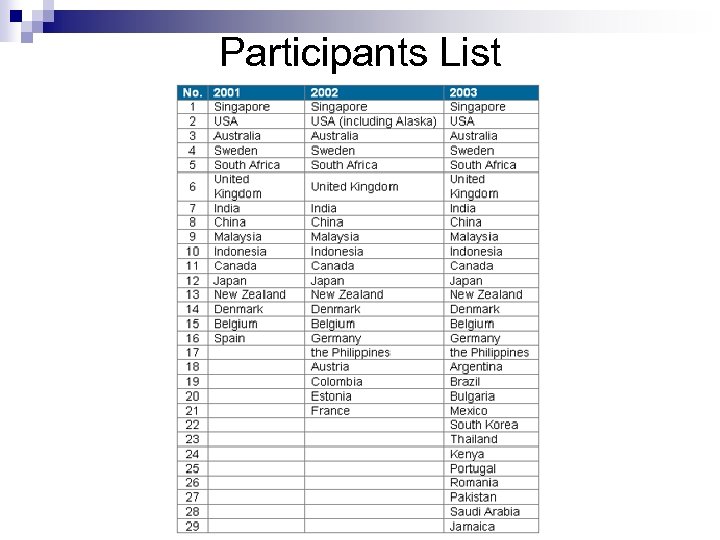
Participants List
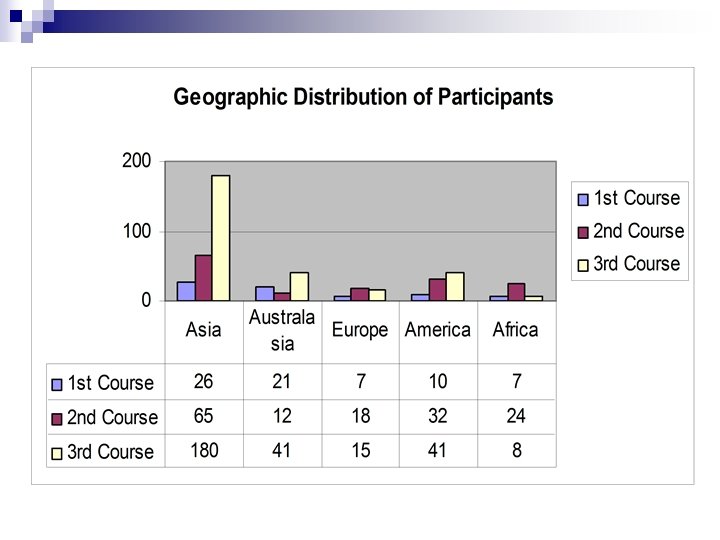
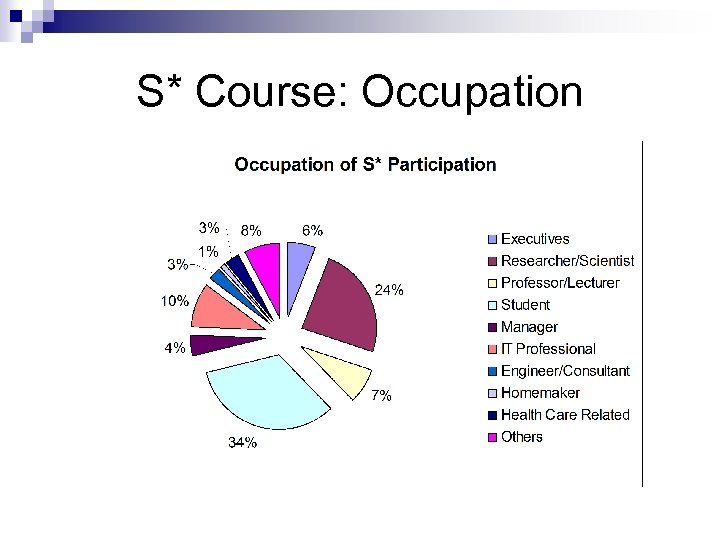
S* Course: Occupation
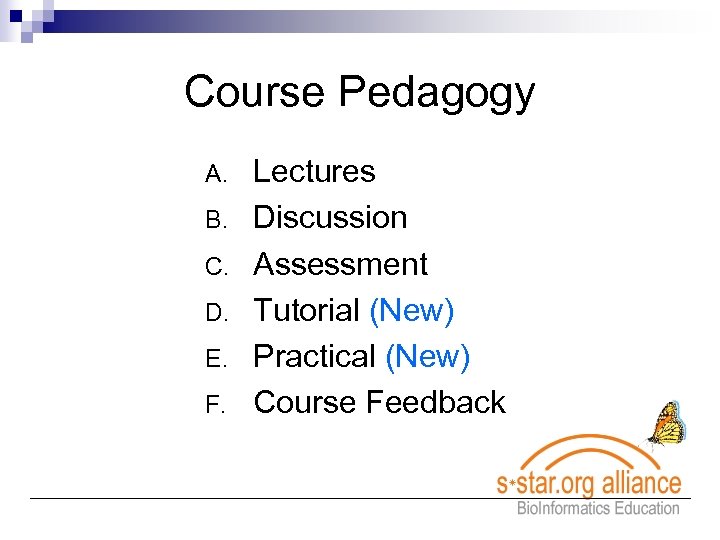
Course Pedagogy A. B. C. D. E. F. Lectures Discussion Assessment Tutorial (New) Practical (New) Course Feedback
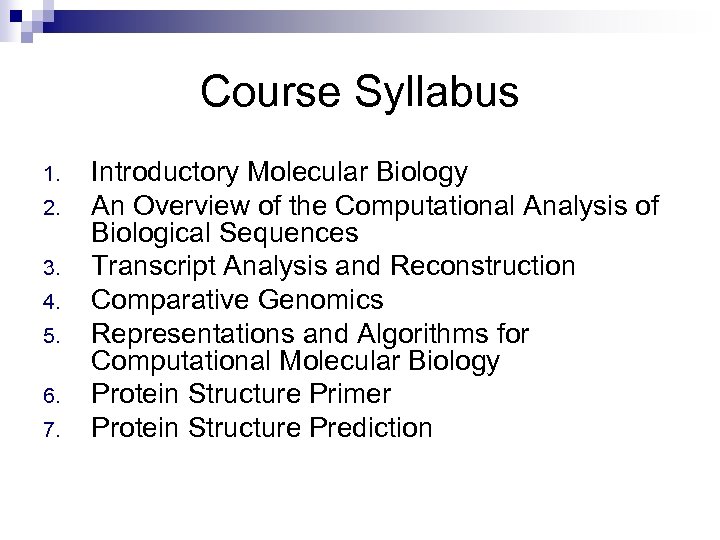
Course Syllabus 1. 2. 3. 4. 5. 6. 7. Introductory Molecular Biology An Overview of the Computational Analysis of Biological Sequences Transcript Analysis and Reconstruction Comparative Genomics Representations and Algorithms for Computational Molecular Biology Protein Structure Primer Protein Structure Prediction
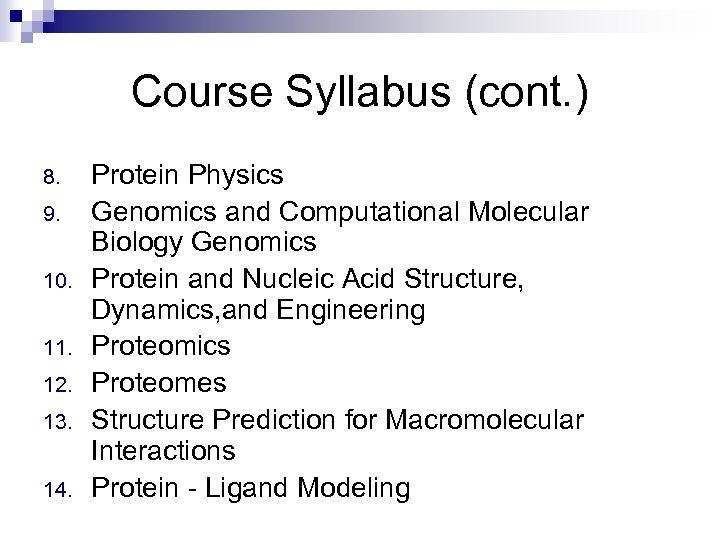
Course Syllabus (cont. ) 8. 9. 10. 11. 12. 13. 14. Protein Physics Genomics and Computational Molecular Biology Genomics Protein and Nucleic Acid Structure, Dynamics, and Engineering Proteomics Proteomes Structure Prediction for Macromolecular Interactions Protein - Ligand Modeling
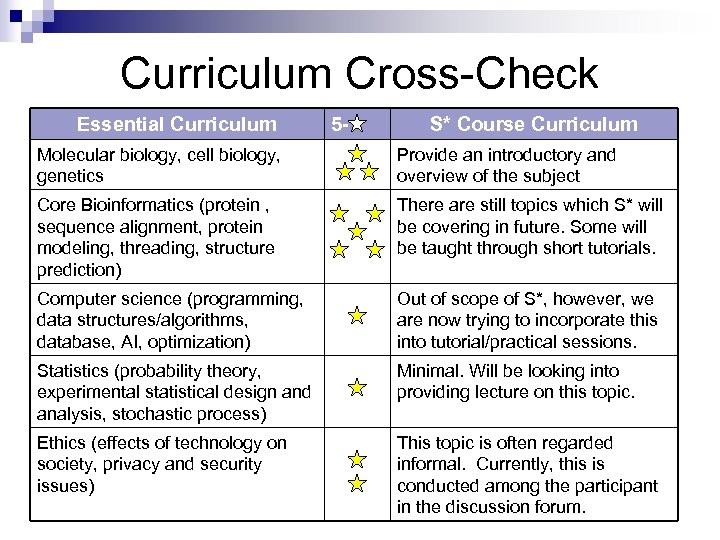
Curriculum Cross-Check Essential Curriculum 5 - S* Course Curriculum Molecular biology, cell biology, genetics Provide an introductory and overview of the subject Core Bioinformatics (protein , sequence alignment, protein modeling, threading, structure prediction) There are still topics which S* will be covering in future. Some will be taught through short tutorials. Computer science (programming, data structures/algorithms, database, AI, optimization) Out of scope of S*, however, we are now trying to incorporate this into tutorial/practical sessions. Statistics (probability theory, experimental statistical design and analysis, stochastic process) Minimal. Will be looking into providing lecture on this topic. Ethics (effects of technology on society, privacy and security issues) This topic is often regarded informal. Currently, this is conducted among the participant in the discussion forum.
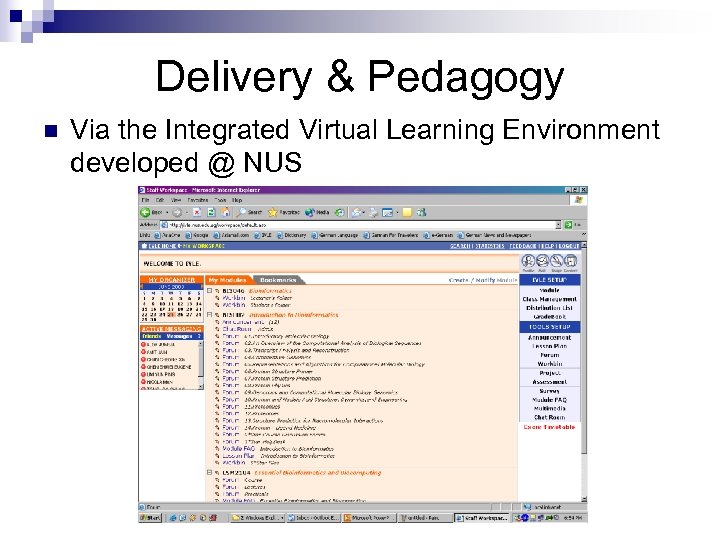
Delivery & Pedagogy n Via the Integrated Virtual Learning Environment developed @ NUS
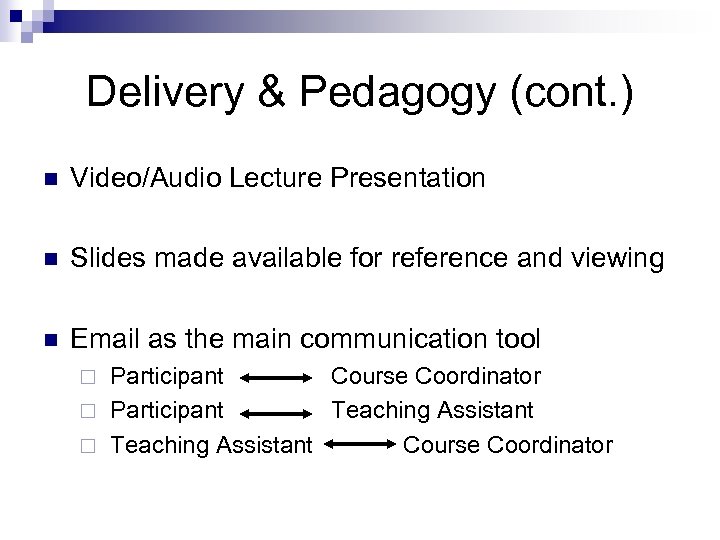
Delivery & Pedagogy (cont. ) n Video/Audio Lecture Presentation n Slides made available for reference and viewing n Email as the main communication tool Participant Course Coordinator ¨ Participant Teaching Assistant ¨ Teaching Assistant Course Coordinator ¨
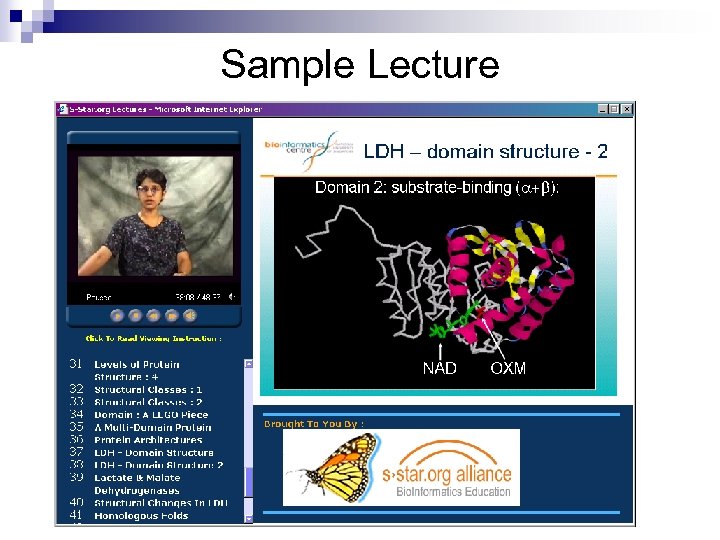
Sample Lecture
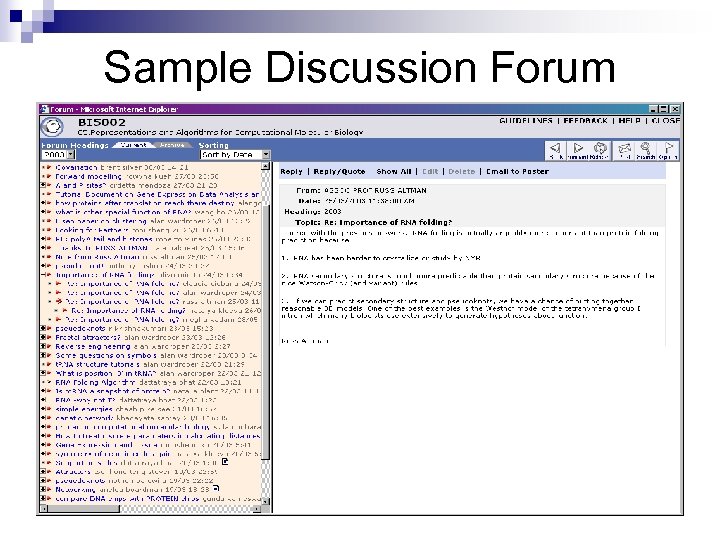
Sample Discussion Forum
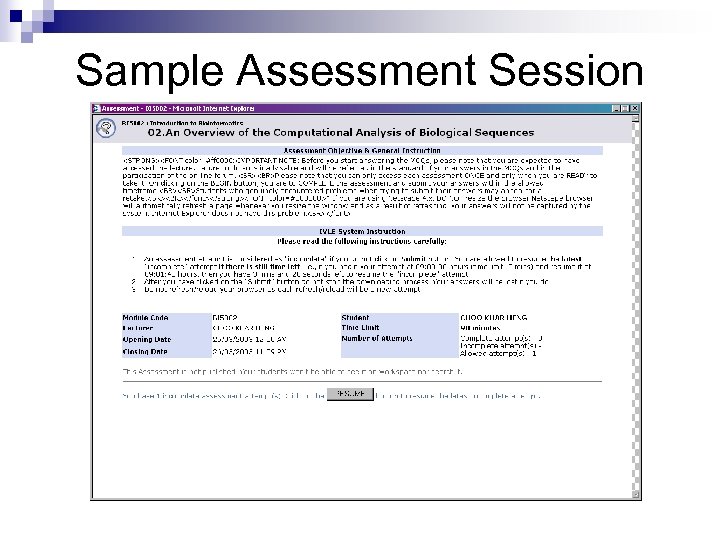
Sample Assessment Session
Problems Encountered n Delivery format (video/audio) ¨ Made different quality video/audio encoding files n Bandwidth problem ¨ Slow connection
Solution n Overcoming the bandwidth problem - network of mirror sites - Mo. U tie up with APBio. Net n Pressing of CDs (to countries like Africa, Iran)
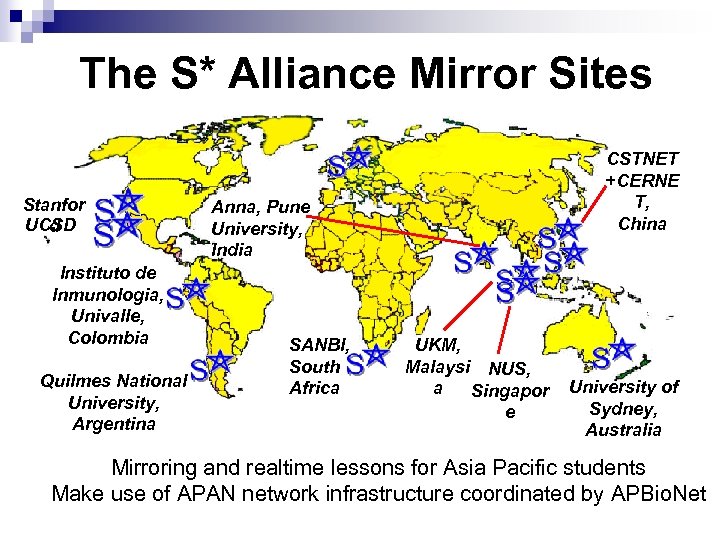
The S* Alliance Mirror Sites Stanfor UCSD d Instituto de Inmunologia, Univalle, Colombia Quilmes National University, Argentina CSTNET +CERNE T, China Anna, Pune University, India SANBI, South Africa UKM, Malaysi NUS, a Singapor e University of Sydney, Australia Mirroring and realtime lessons for Asia Pacific students Make use of APAN network infrastructure coordinated by APBio. Net
Strength Of The Course Online content allow anytime-anywhere access n Presented by world renowned experts from different institutions n Made available to a broad audience n Well-organised n User friendly system n
Advantages Member organizations do not need to wait until experts in all domains of bioinformatics are hired (if at all possible) n Re-usable courseware n Easily updated content n Uniformity of curriculum and evaluation n Globally accessible education n
Feedback n To think that a world-class, web based education with such valued lectures is brought to your desk free of cost is impossible elsewhere. The course was wonderfully well managed. Our requests and problems were quickly and well attended to. I had a great time doing this course and thank the S*STAR team whole heartedly for making me a fortunate participant with this fantastic experience. ~ Naidu Ratnala Thulaja, Singapore n I think it is a very useful course, it is exactly what it says it is: an introduction to bioinformatics. It covers nicely major topics and provides enough information in order for us to understand what bioinformatics is all about. I enjoyed it very much and I am even a bit sad it is over. Thank you very much! ~ Patricia Severino, Romania
Feedback (cont. ) n Pretty good. A few rough edges but I'm sure you'll work them out over time. I really enjoyed it. Most of the lectures were very well presented and the participants in the forums helpful. I'm very impressed at the amount of work that has obviously gone into setting up the course. ~ Alan Wardroper, Thailand n The international participation of the lecturers and students. The relevance of the field of bioinformatics in meeting the biomedical needs of today. The level of communication provided by the IVLE system enhanced learning considerably. The range of professional and academic background of students. The technical support provided by SStar was rapid and efficient to queries. ~ C. A. O. IDOWU, England
Problem-Based Learning (PBL) n Started at Mc. Master University Medical School over 25 years ago n Encourages hand-on and critical thinking. Its hands-on approach is particular suited for bioinformatics where many of the skills require practical execution and the problems encountered are generally open-ended. n PBL encourages : acquisition of critical knowledge. problem solving proficiency; problems tackled are generally open -ended. ¨ self-motivated learning. ¨ team participation. ¨ ¨
Role Change n In PBL, there’s a fundamental change in the role played by the participants. ¨a facilitator guides the entire session. ¨ a scribe records the entire session. ¨ some participants field questions; others try to brainstorm and provide answers. There will not be student-teacher relationship, everybody is treated equally. Focus is on peer learning
PBL Session S* is currently experimenting PBL session using web-based collaboration platform – TWi. Ki (http: //twiki. org) n Consideration/Issues to resolve : n ¨ How to accommodate so many participants ¨ How to host so many TWi. Ki page ¨ Will participants with slow connection able to access ?
Online Delivery Mechanism n Consider and want to explore various advanced networking technologies particularly on video conferencing software. ¨ e. g. Access. Grid. TM http: //www. accessgrid. org/
Access. Grid n n n TM It is a suite of resources including multimedia largeformat displays, presentation and interactive environments, and interfaces to Grid middleware and to visualization environments. Developed by the Futures Laboratory at Argonne National Laboratory and deployed by the NCSA PACI Alliance, it is now used over 150 institutions worldwide with each institution hosting one or more Access Grid (AG) node. Each node employs high-end audio and visual technology needed to provide a high-quality compelling user experience.
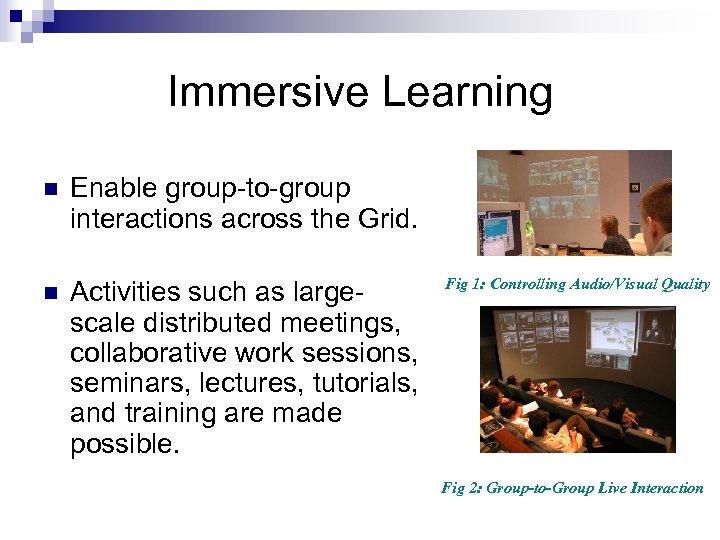
Immersive Learning n Enable group-to-group interactions across the Grid. n Activities such as largescale distributed meetings, collaborative work sessions, seminars, lectures, tutorials, and training are made possible. Fig 1: Controlling Audio/Visual Quality Fig 2: Group-to-Group Live Interaction
Benefits n n n Reduce the costs and time of traveling. Enable live lecture presentation by the prominent lecturers. Allow bi-direction interactive discussion forum Conduct virtual seminars and workshops Empower group-to-group collaboration work.
Example n n National University of Singapore (NUS) Singapore-MIT Alliance (SMA) lecture were beamed across twelve time zones from a classroom in MIT to a classroom at NUS live, "virtual classroom" spanned continents, linking students half a world apart over Internet 2
Issues & Consideration Infrastructure (high speed network, connection/bandwidth) n Cost of setting up n Location of set-up n Manpower required n Technical competency n
Contact Information n Emails ¨ Justin Choo n n ¨ A/P Tan Tin Wee n n ¨ Course Coordinator justin@bic. nus. edu. sg Secretariat tinwee@bic. nus. edu. sg A/P Shoba Ranganathan n n Chairman shoba@bic. nus. edu. sg S* Web Site : http: //www. s-star. org S* Secretariat : secretariat@s-star. org S* Mailing Address : Bio. Informatics Center Dept of Biochemistry, MD 7 10 Kent Ridge Crescent Singapore 119260 Tel: +65 -774 -7149 Fax: +65 -778 -2466
End Of Presentation
Скачать презентацию S Alliance Global Bioinformatics Online Distance Education Justin
9fa301e8b48b0d28650f1421e3577592.ppt