 Скачать презентацию Ryazan state medical University named by academician I
Лекция 1 Физика АНГЛ.ppt
- Количество слайдов: 30



Ryazan state medical University named by academician I. P. Pavlov Lecture 1. Medbiophysics as a branch of applied physics. Mechanical vibrations in the medical applications. Avacheva Tatiana Gennadievna Head of the Department mathematics, physics and medical Informatics, candidate of physico-mathematical Sciences Ryazan, 2017
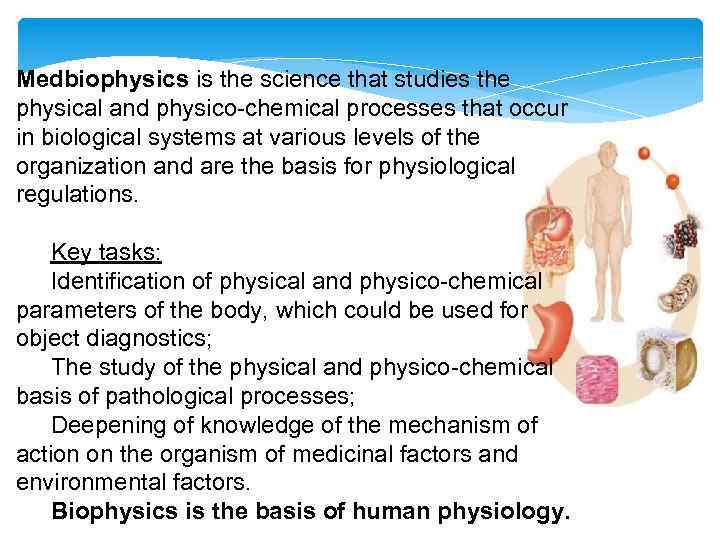
Medbiophysics is the science that studies the physical and physico-chemical processes that occur in biological systems at various levels of the organization and are the basis for physiological regulations. Key tasks: Identification of physical and physico-chemical parameters of the body, which could be used for object diagnostics; The study of the physical and physico-chemical basis of pathological processes; Deepening of knowledge of the mechanism of action on the organism of medicinal factors and environmental factors. Biophysics is the basis of human physiology.
Many vital processes in the human body obey the laws of physics: the movement of blood through the vessels is in accordance with the laws of hydrodynamics; propagation of elastic waves through the vessels is the harmonic oscillations; in the study of blood flow velocity using the laws of magnetic fields. . . In medicine, the use of physical methods in diagnostics (temperature measurements, listening to the respiratory system (laws of acoustics), etc. ). Widely used methods of physical impact on the body UHF, inductothermy based on the laws of electrodynamics.
• Periodic mechanical processes in the living body «Each person is a complex oscillatory system. " N. Wiener Oscillations are processes that repeat in time. In this case, the system repeatedly deviates from its equilibrium state and returns to it again each time. Depending on the physical nature of the repeating process, oscillations are distinguished: mechanical, electrical, etc. In this lecture, mechanical vibrations are considered. Repeating processes continuously occur inside any living organism.
For example: • Дыхательные движения грудной клетки; • Rhythmic contractions of the heart; • Blood flow to the arteries (pulse); • Breathing movements of the chest; • we hear and talk due to fluctuations in the eardrums and vocal cords; • when walking our feet make oscillatory movements. • The atoms from which we are forming fluctuate.
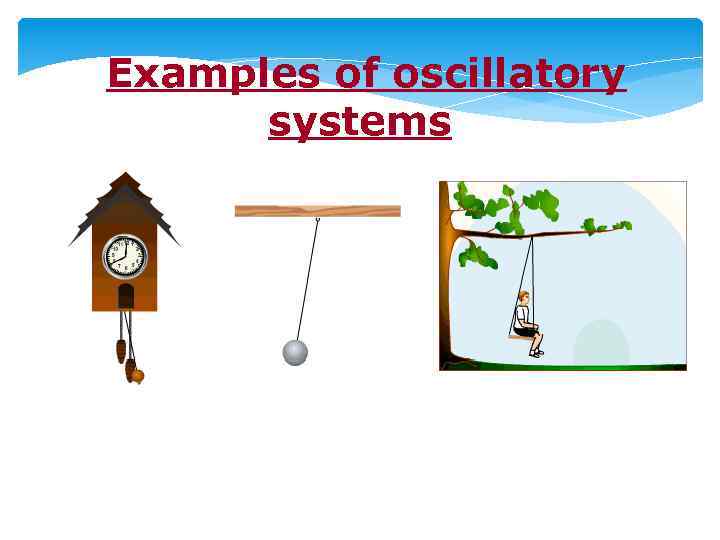
Examples of oscillatory systems
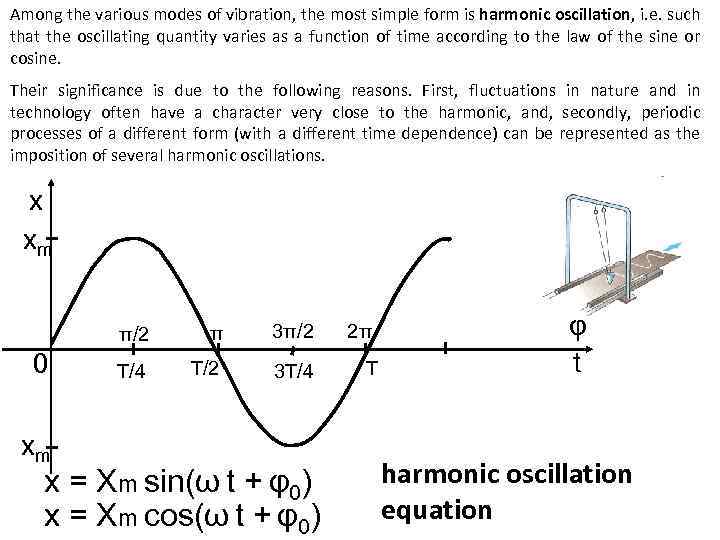
Among the various modes of vibration, the most simple form is harmonic oscillation, i. e. such that the oscillating quantity varies as a function of time according to the law of the sine or cosine. Their significance is due to the following reasons. First, fluctuations in nature and in technology often have a character very close to the harmonic, and, secondly, periodic processes of a different form (with a different time dependence) can be represented as the imposition of several harmonic oscillations. x xm π/2 0 xm π 3π/2 2π T/4 T/2 3 T/4 T x = Xm sin(ω t + φ0) x = Xm cos(ω t + φ0) φ t harmonic oscillation equation
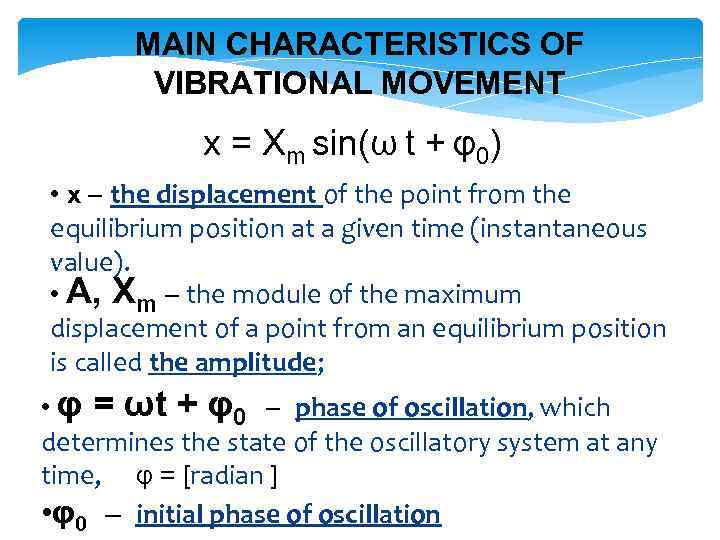
MAIN CHARACTERISTICS OF VIBRATIONAL MOVEMENT x = Xm sin(ω t + φ0) • x – the displacement of the point from the equilibrium position at a given time (instantaneous value). • А, Xm – the module of the maximum displacement of a point from an equilibrium position is called the amplitude; • φ = ωt + φ0 – phase of oscillation, which determines the state of the oscillatory system at any time, φ = [radian ] • φ0 – initial phase of oscillation
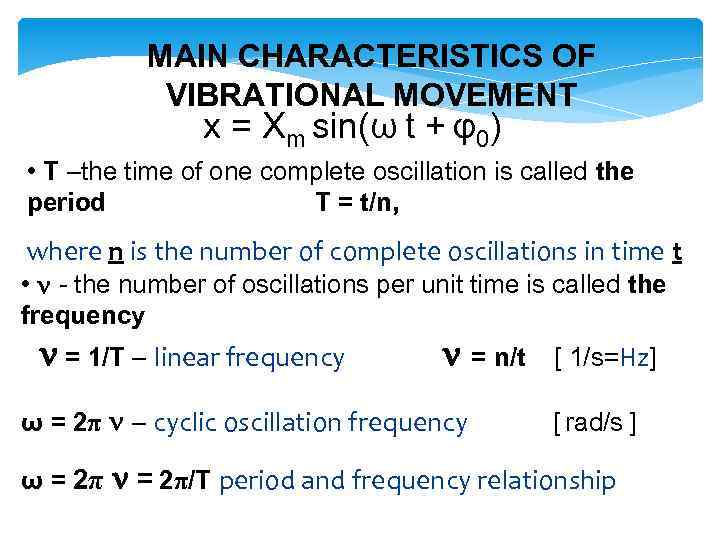
MAIN CHARACTERISTICS OF VIBRATIONAL MOVEMENT x = Xm sin(ω t + φ0) • Т –the time of one complete oscillation is called the period Т = t/n, where n is the number of complete oscillations in time t • - the number of oscillations per unit time is called the frequency = 1/Т – linear frequency = n/t [ 1/s=Hz] ω = 2π – cyclic oscillation frequency [ rad/s ] ω = 2π/Т period and frequency relationship
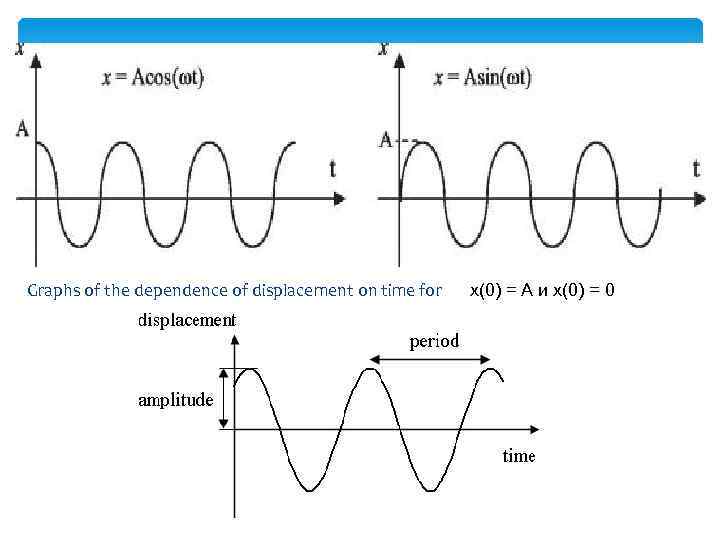
Graphs of the dependence of displacement on time for х(0) = А и х(0) = 0
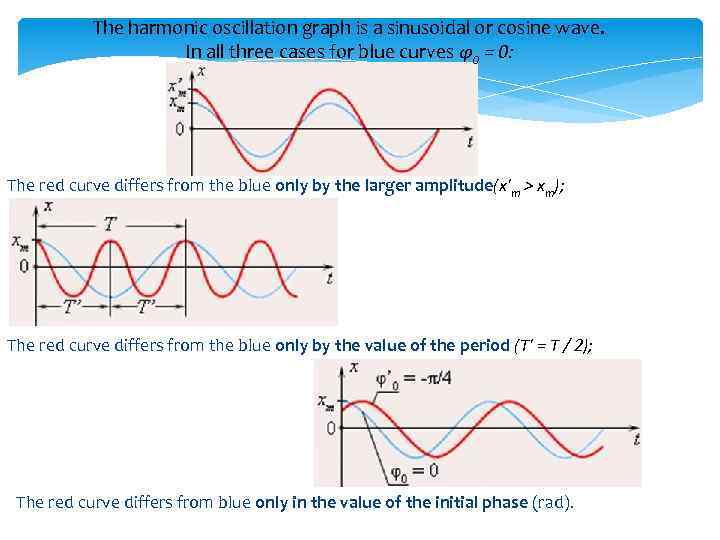
The harmonic oscillation graph is a sinusoidal or cosine wave. In all three cases for blue curves φ0 = 0: The red curve differs from the blue only by the larger amplitude(x'm > xm); The red curve differs from the blue only by the value of the period (T' = T / 2); The red curve differs from blue only in the value of the initial phase (rad).
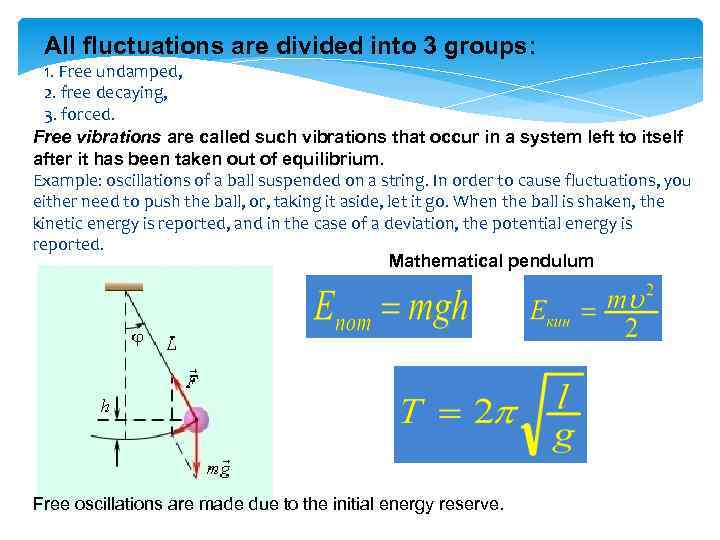
All fluctuations are divided into 3 groups: 1. Free undamped, 2. free decaying, 3. forced. Free vibrations are called such vibrations that occur in a system left to itself after it has been taken out of equilibrium. Example: oscillations of a ball suspended on a string. In order to cause fluctuations, you either need to push the ball, or, taking it aside, let it go. When the ball is shaken, the kinetic energy is reported, and in the case of a deviation, the potential energy is reported. Mathematical pendulum Free oscillations are made due to the initial energy reserve.
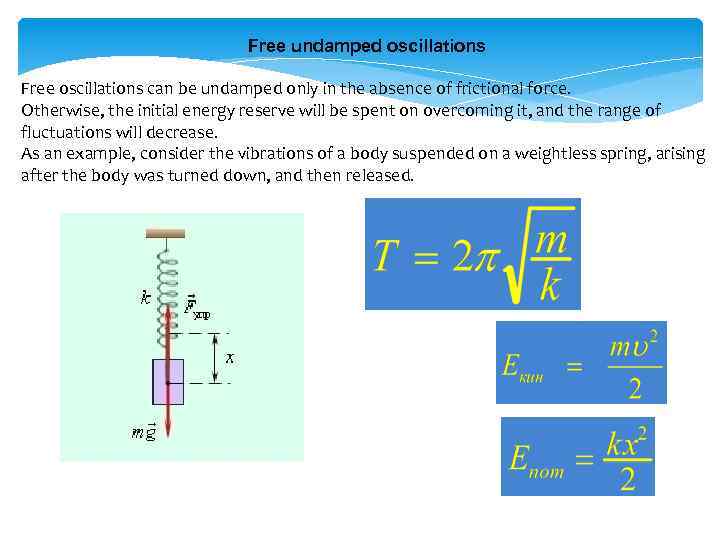
Free undamped oscillations Free oscillations can be undamped only in the absence of frictional force. Otherwise, the initial energy reserve will be spent on overcoming it, and the range of fluctuations will decrease. As an example, consider the vibrations of a body suspended on a weightless spring, arising after the body was turned down, and then released.
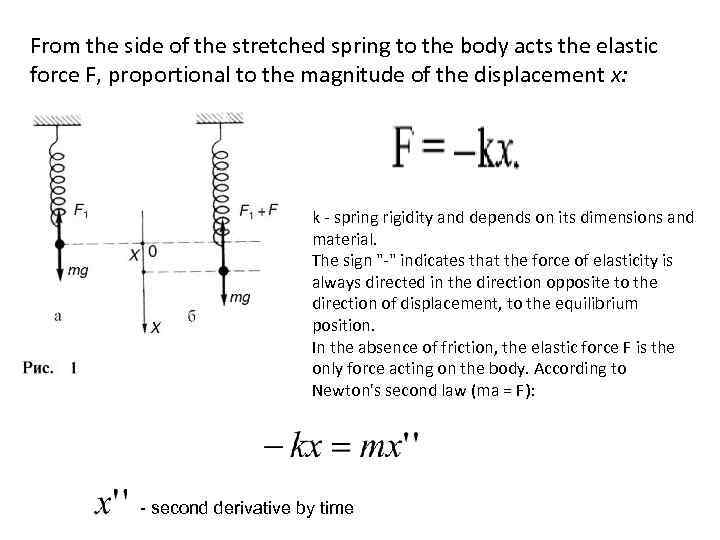
From the side of the stretched spring to the body acts the elastic force F, proportional to the magnitude of the displacement х: k - spring rigidity and depends on its dimensions and material. The sign "-" indicates that the force of elasticity is always directed in the direction opposite to the direction of displacement, to the equilibrium position. In the absence of friction, the elastic force F is the only force acting on the body. According to Newton's second law (ma = F): - second derivative by time
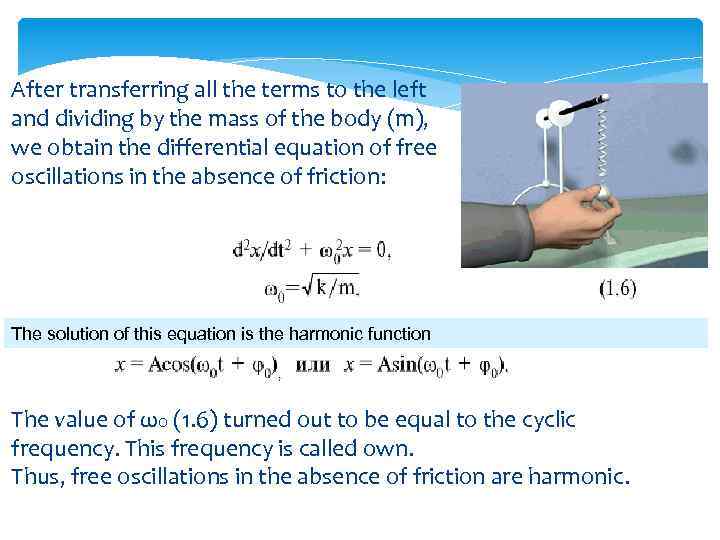
After transferring all the terms to the left and dividing by the mass of the body (m), we obtain the differential equation of free oscillations in the absence of friction: The solution of this equation is the harmonic function The value of ω0 (1. 6) turned out to be equal to the cyclic frequency. This frequency is called own. Thus, free oscillations in the absence of friction are harmonic.
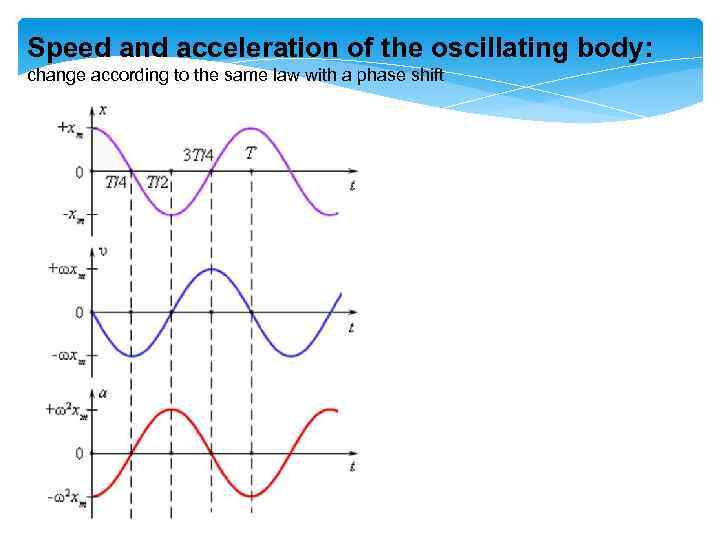
Speed and acceleration of the oscillating body: change according to the same law with a phase shift
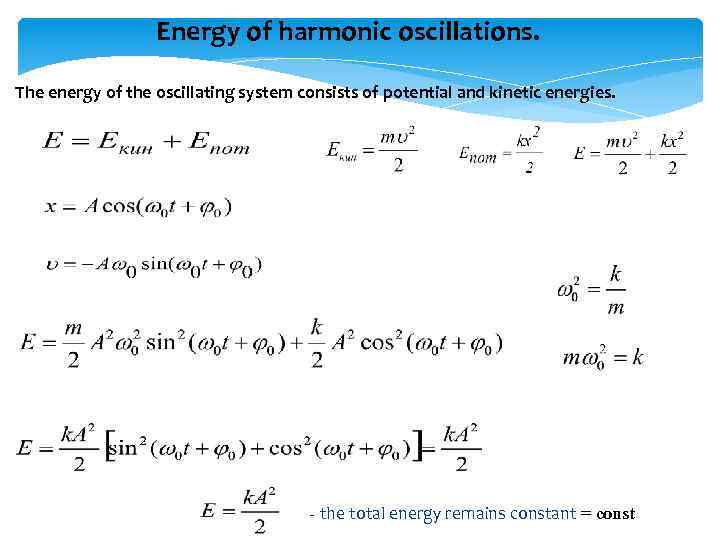
Energy of harmonic oscillations. The energy of the oscillating system consists of potential and kinetic energies. - the total energy remains constant = const
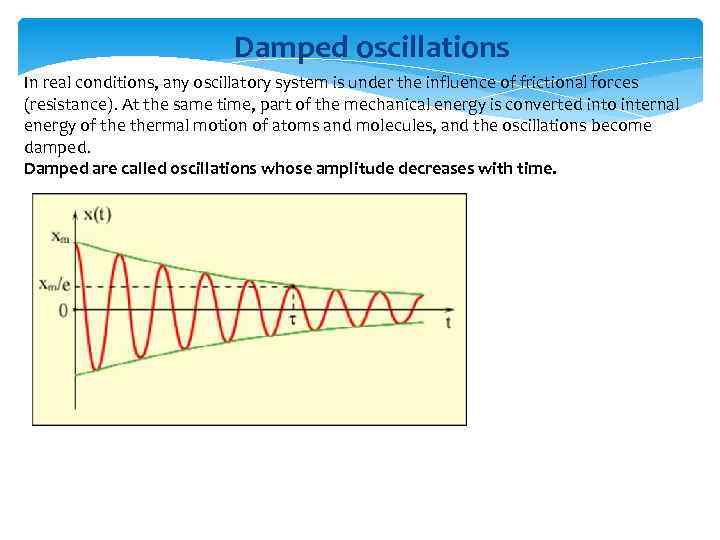
Damped oscillations In real conditions, any oscillatory system is under the influence of frictional forces (resistance). At the same time, part of the mechanical energy is converted into internal energy of thermal motion of atoms and molecules, and the oscillations become damped. Damped are called oscillations whose amplitude decreases with time.
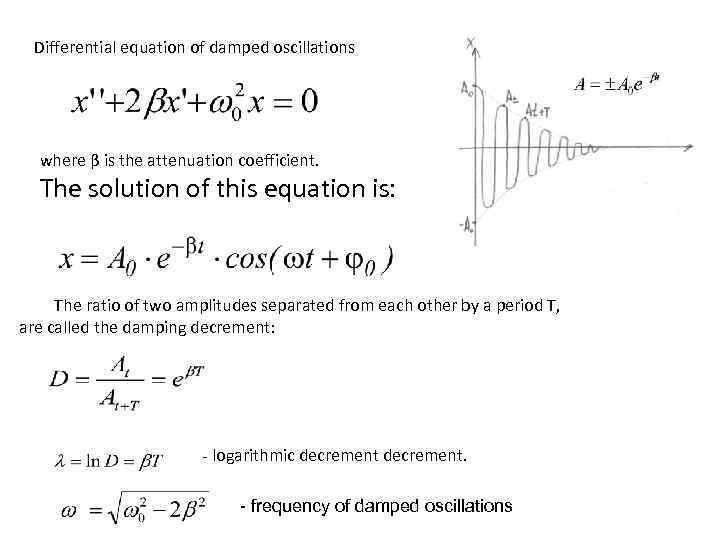
Differential equation of damped oscillations where β is the attenuation coefficient. The solution of this equation is: The ratio of two amplitudes separated from each other by a period T, are called the damping decrement: - logarithmic decrement. - frequency of damped oscillations
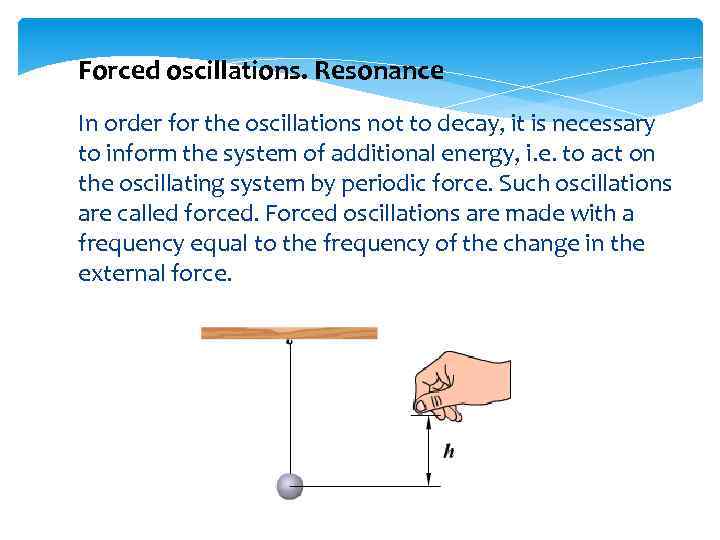
Forced oscillations. Resonance In order for the oscillations not to decay, it is necessary to inform the system of additional energy, i. e. to act on the oscillating system by periodic force. Such oscillations are called forced. Forced oscillations are made with a frequency equal to the frequency of the change in the external force.
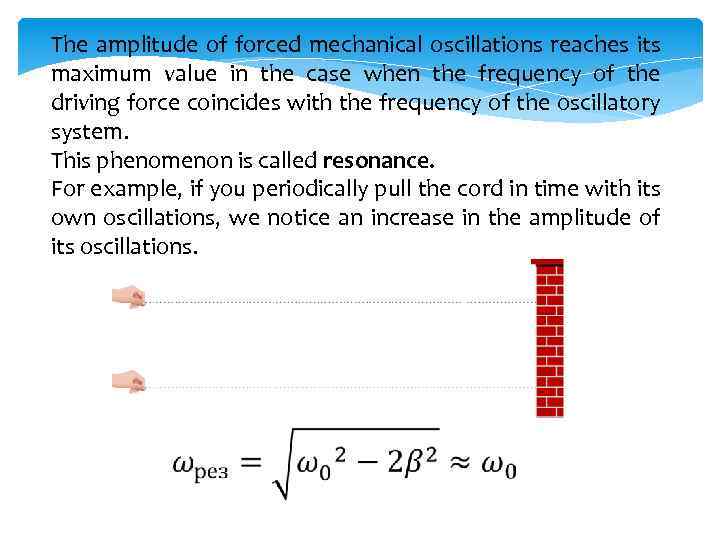
The amplitude of forced mechanical oscillations reaches its maximum value in the case when the frequency of the driving force coincides with the frequency of the oscillatory system. This phenomenon is called resonance. For example, if you periodically pull the cord in time with its own oscillations, we notice an increase in the amplitude of its oscillations.
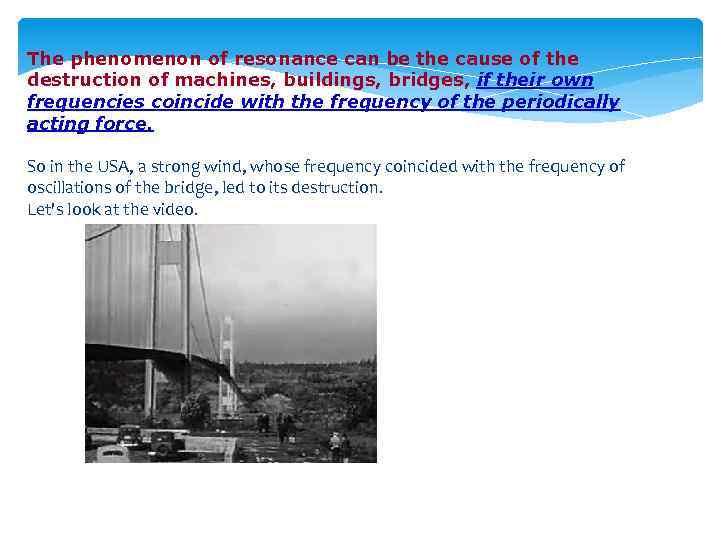
The phenomenon of resonance can be the cause of the destruction of machines, buildings, bridges, if their own frequencies coincide with the frequency of the periodically acting force. So in the USA, a strong wind, whose frequency coincided with the frequency of oscillations of the bridge, led to its destruction. Let's look at the video.
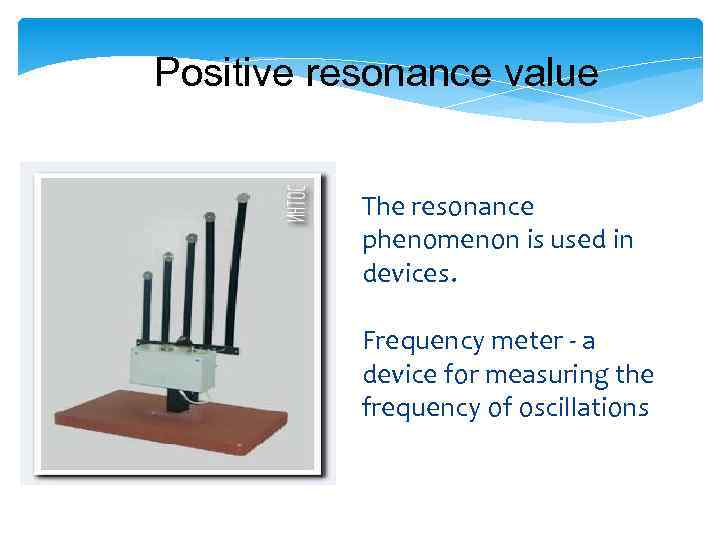
Positive resonance value The resonance phenomenon is used in devices. Frequency meter - a device for measuring the frequency of oscillations
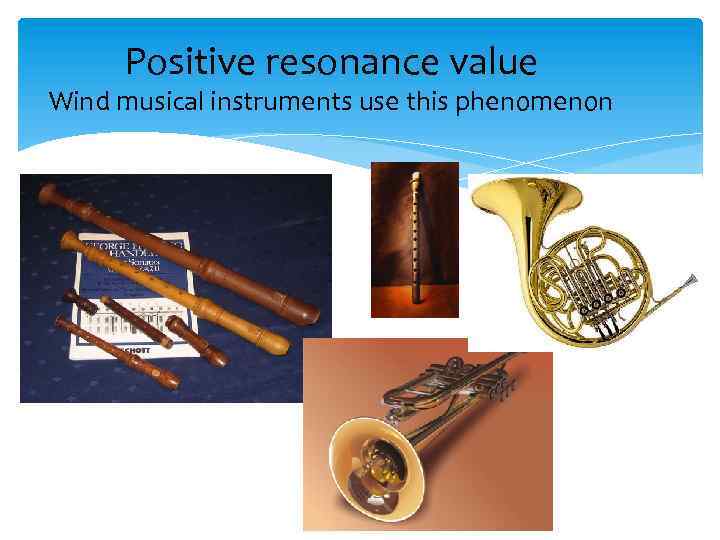
Positive resonance value Wind musical instruments use this phenomenon
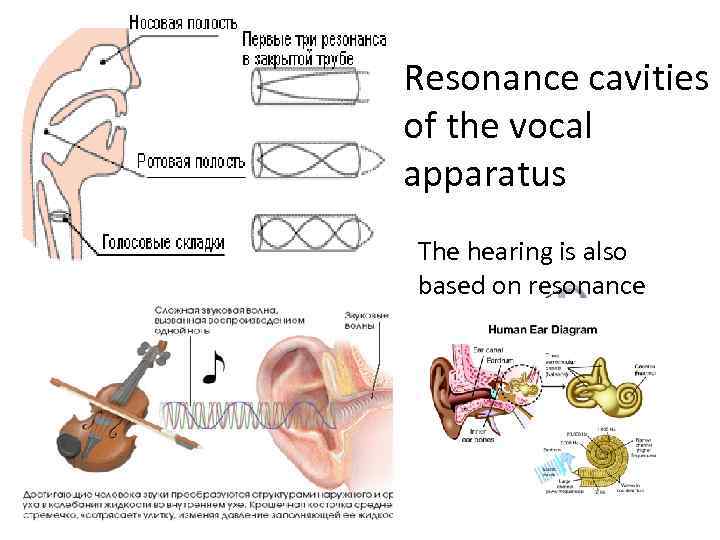
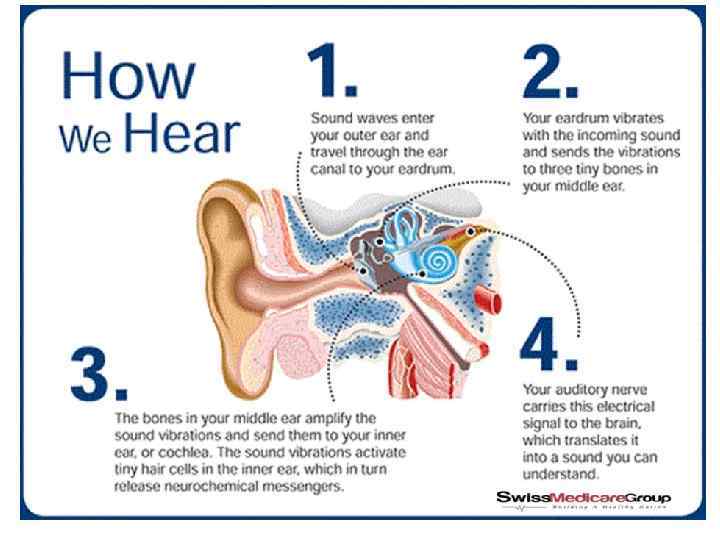
Resonance cavities of the vocal apparatus The hearing is also based on resonance
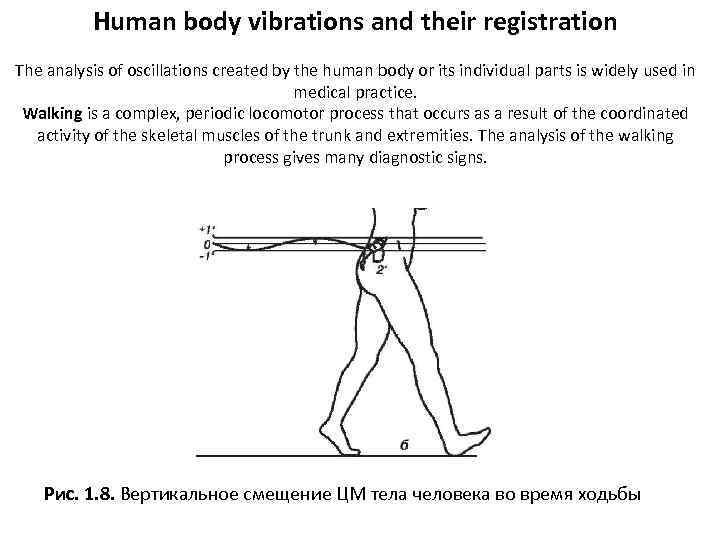
Human body vibrations and their registration The analysis of oscillations created by the human body or its individual parts is widely used in medical practice. Walking is a complex, periodic locomotor process that occurs as a result of the coordinated activity of the skeletal muscles of the trunk and extremities. The analysis of the walking process gives many diagnostic signs. Рис. 1. 8. Вертикальное смещение ЦМ тела человека во время ходьбы
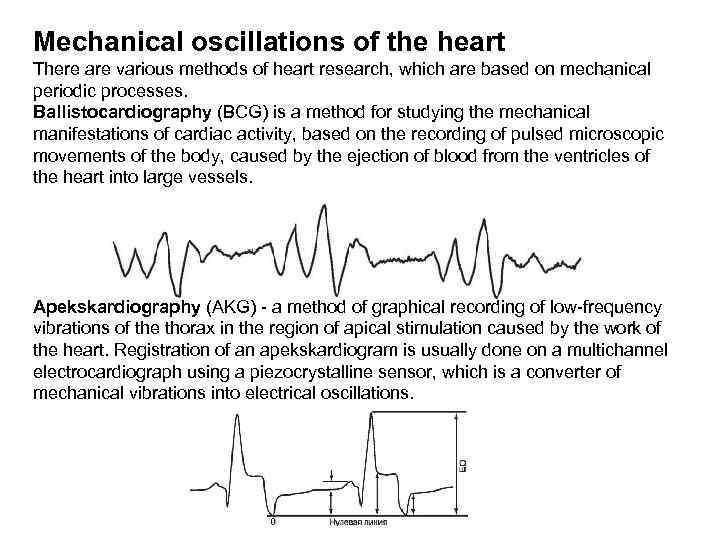
Mechanical oscillations of the heart There are various methods of heart research, which are based on mechanical periodic processes. Ballistocardiography (BCG) is a method for studying the mechanical manifestations of cardiac activity, based on the recording of pulsed microscopic movements of the body, caused by the ejection of blood from the ventricles of the heart into large vessels. Apekskardiography (AKG) - a method of graphical recording of low-frequency vibrations of the thorax in the region of apical stimulation caused by the work of the heart. Registration of an apekskardiogram is usually done on a multichannel electrocardiograph using a piezocrystalline sensor, which is a converter of mechanical vibrations into electrical oscillations.
Vibration The work of many mechanisms is associated with the occurrence of vibrations, which are transmitted to a person and have a harmful effect on him. Vibration - forced oscillations of the body, under which either the whole body vibrates as a single whole, or its individual parts oscillate with different amplitudes and frequencies. Long-term exposure to vibrations causes persistent disturbances in normal physiological functions in the body. Oscillations with a frequency of 3 -5 Hz cause the reactions of the vestibular apparatus, vascular disorders. At frequencies of 3 -15 Hz, there are disorders associated with resonance oscillations of individual organs (liver, stomach, head) and the body as a whole. Oscillations with frequencies of 11 -45 Hz cause visual impairment, nausea, vomiting. At frequencies exceeding 45 Hz, cerebral vessels are damaged, blood circulation is disturbed, etc. At a frequency of 10, 000 Hz there is heating of tissues, destruction of cells.
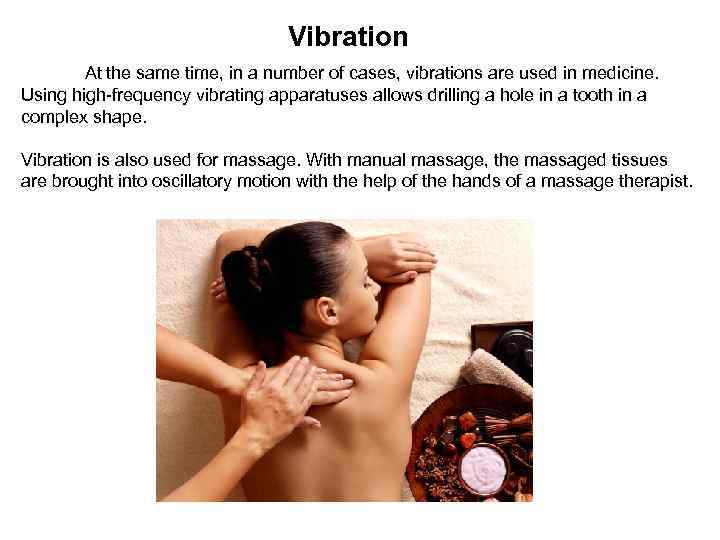
Vibration At the same time, in a number of cases, vibrations are used in medicine. Using high-frequency vibrating apparatuses allows drilling a hole in a tooth in a complex shape. Vibration is also used for massage. With manual massage, the massaged tissues are brought into oscillatory motion with the help of the hands of a massage therapist.
Скачать презентацию Ryazan state medical University named by academician I
Лекция 1 Физика АНГЛ.ppt