 Russian winter festivals guide Pankova N. , 8 B
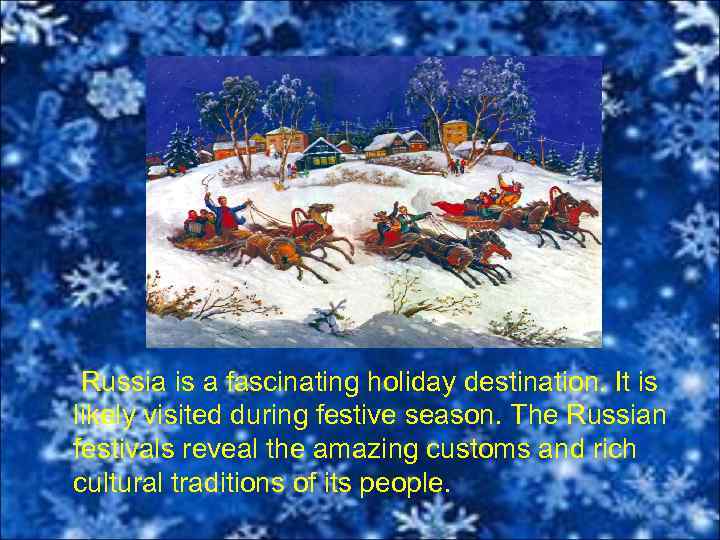 Russia is a fascinating holiday destination. It is likely visited during festive season. The Russian festivals reveal the amazing customs and rich cultural traditions of its people.
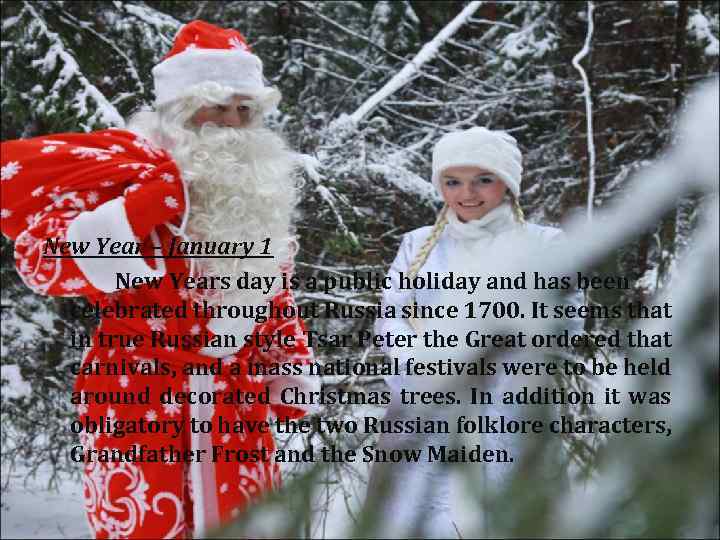 New Year – January 1 New Years day is a public holiday and has been celebrated throughout Russia since 1700. It seems that in true Russian style Tsar Peter the Great ordered that carnivals, and a mass national festivals were to be held around decorated Christmas trees. In addition it was obligatory to have the two Russian folklore characters, Grandfather Frost and the Snow Maiden.
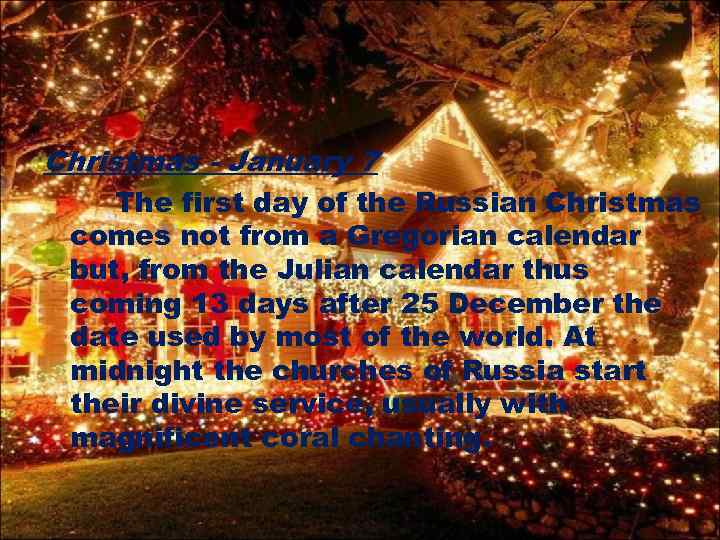 Christmas - January 7 The first day of the Russian Christmas comes not from a Gregorian calendar but, from the Julian calendar thus coming 13 days after 25 December the date used by most of the world. At midnight the churches of Russia start their divine service, usually with magnificent coral chanting.
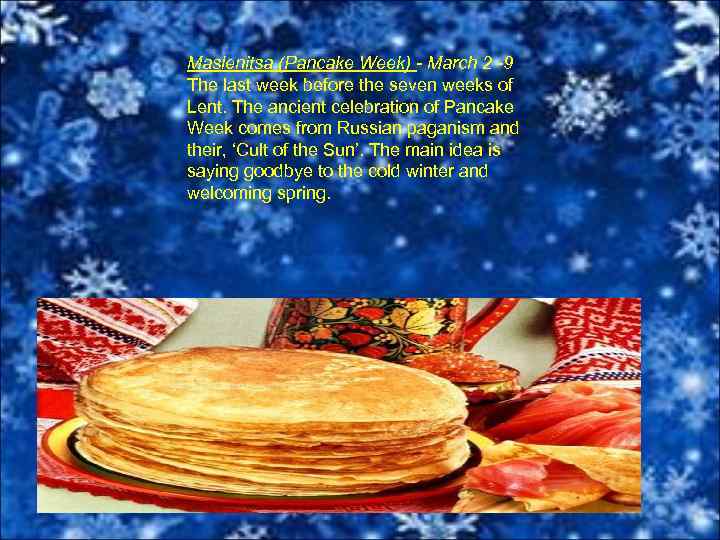 Maslenitsa (Pancake Week) - March 2 -9 The last week before the seven weeks of Lent. The ancient celebration of Pancake Week comes from Russian paganism and their, ‘Cult of the Sun’. The main idea is saying goodbye to the cold winter and welcoming spring.
 Ancient Slavs believed that rituals, and ceremonies, can help make the Sun bring its warmth to the Earth and speed up the arrival of spring. The traditional Russian way of celebrating this is to have carnivals and festivals with clowns, dancing around fires, and riding the troika. The Volga
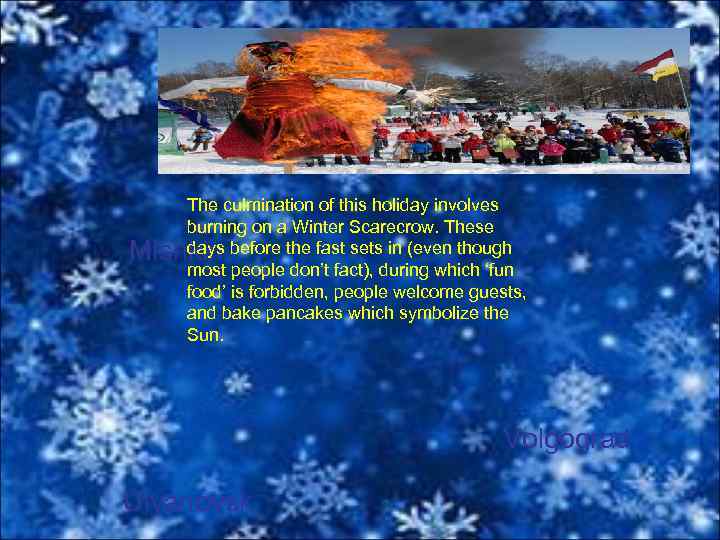 The culmination of this holiday involves burning on a Winter Scarecrow. These days before the fast sets in (even though Mishkin most people don’t fact), during which ‘fun food’ is forbidden, people welcome guests, and bake pancakes which symbolize the Sun. Volgograd Ulyanovsk
 The Black Sea
 The White Sea
 One Russian symbol is the Russian national flag. This flag has three wide stripes on it.