


 Скачать презентацию Russia under Alexander II 1855 -1881 Crimean
Russia under Alexander II.ppt
- Количество слайдов: 21
 Russia under Alexander II 1855 -1881
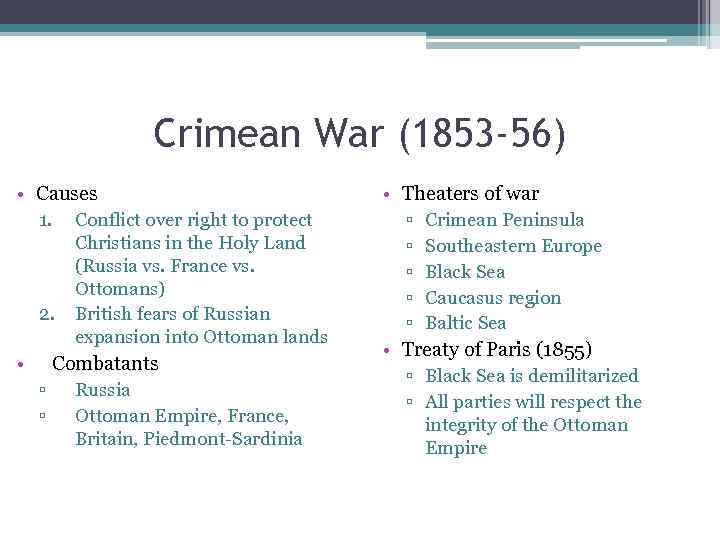 Crimean War (1853 -56) • Causes 1. Conflict over right to protect 2. • Christians in the Holy Land (Russia vs. France vs. Ottomans) British fears of Russian expansion into Ottoman lands Combatants ▫ ▫ Russia Ottoman Empire, France, Britain, Piedmont-Sardinia • Theaters of war ▫ Crimean Peninsula ▫ Southeastern Europe ▫ Black Sea ▫ Caucasus region ▫ Baltic Sea • Treaty of Paris (1855) ▫ Black Sea is demilitarized ▫ All parties will respect the integrity of the Ottoman Empire
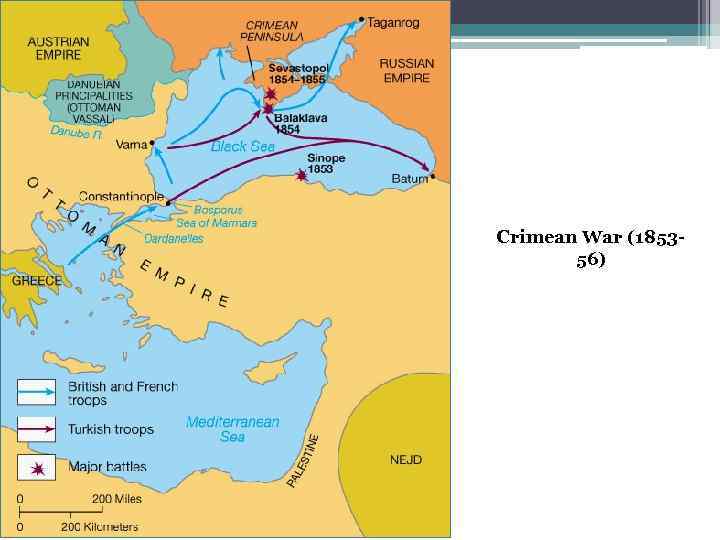 Crimean War (185356)
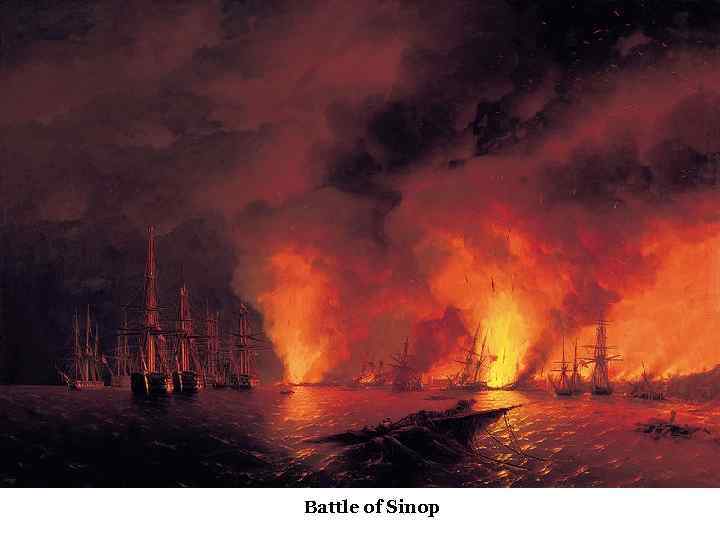 Battle of Sinop
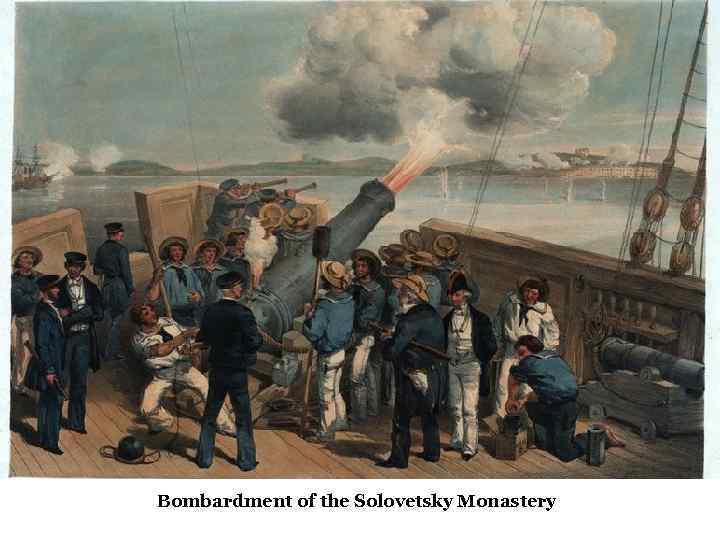 Bombardment of the Solovetsky Monastery
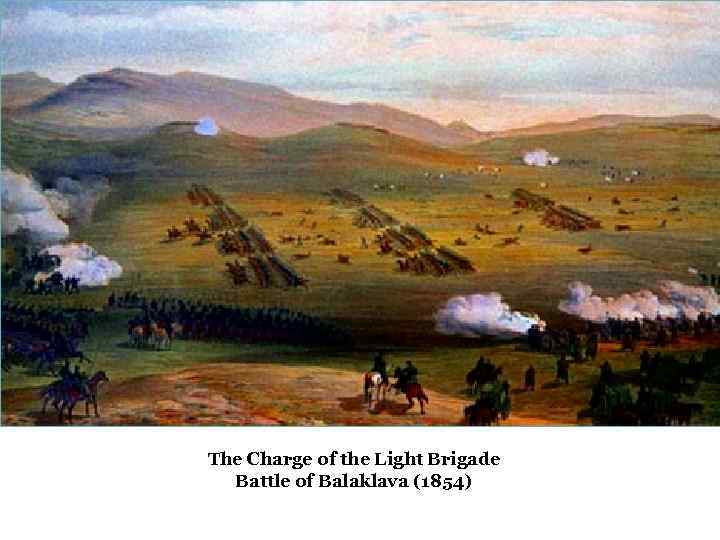 The Charge of the Light Brigade Battle of Balaklava (1854)
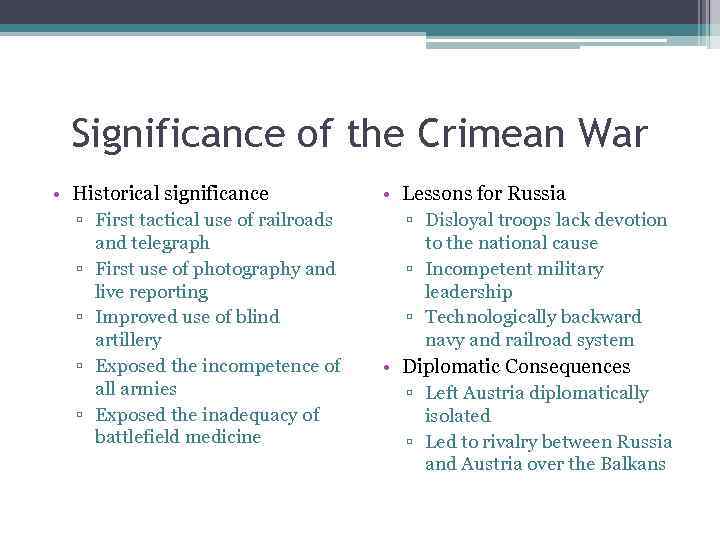 Significance of the Crimean War • Historical significance ▫ First tactical use of railroads ▫ ▫ and telegraph First use of photography and live reporting Improved use of blind artillery Exposed the incompetence of all armies Exposed the inadequacy of battlefield medicine • Lessons for Russia ▫ Disloyal troops lack devotion to the national cause ▫ Incompetent military leadership ▫ Technologically backward navy and railroad system • Diplomatic Consequences ▫ Left Austria diplomatically isolated ▫ Led to rivalry between Russia and Austria over the Balkans
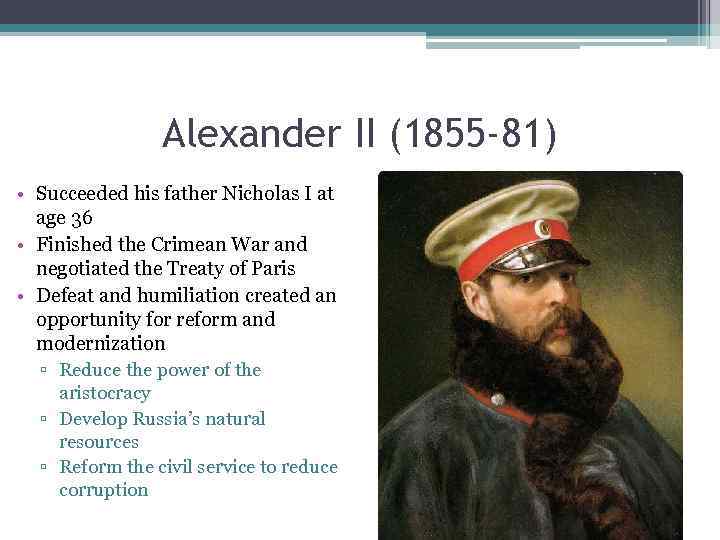 Alexander II (1855 -81) • Succeeded his father Nicholas I at age 36 • Finished the Crimean War and negotiated the Treaty of Paris • Defeat and humiliation created an opportunity for reform and modernization ▫ Reduce the power of the aristocracy ▫ Develop Russia’s natural resources ▫ Reform the civil service to reduce corruption
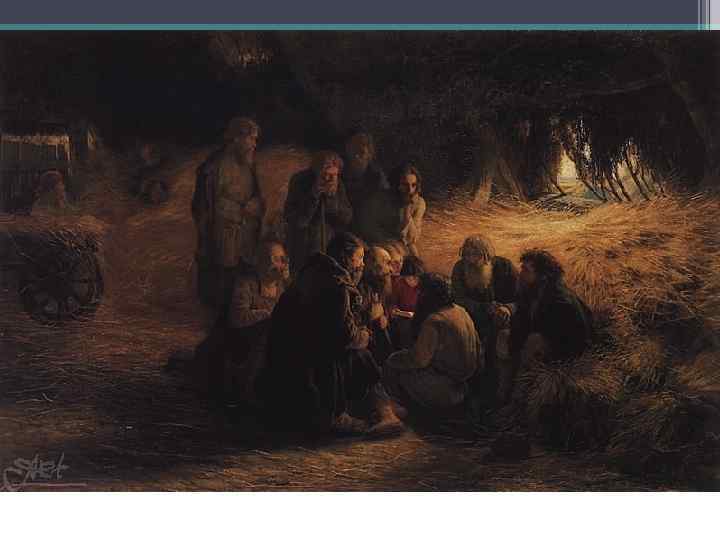
 Emancipation of the Serfs (1861) • Serfs granted full rights of citizens ▫ Marriage ▫ Property ownership ▫ Right to purchase land from • Problems ▫ Peasants were required to buy ▫ landlords • Serfs created communities called mirs ▫ Mirs distributed land among the peasants ▫ Mirs held some land in common ▫ ▫ ▫ the land they held with longterm govt loans Mir ownership of communal lands made land sales difficult Best quality land retained by the aristocracy Most land plots were too small for subsistence Peasants had to pay a high redemption tax to compensate the landlords
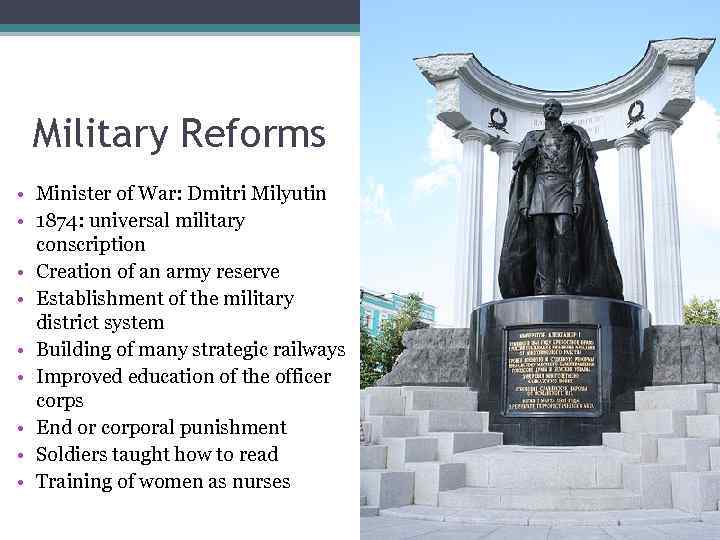 Military Reforms • Minister of War: Dmitri Milyutin • 1874: universal military conscription • Creation of an army reserve • Establishment of the military district system • Building of many strategic railways • Improved education of the officer corps • End or corporal punishment • Soldiers taught how to read • Training of women as nurses
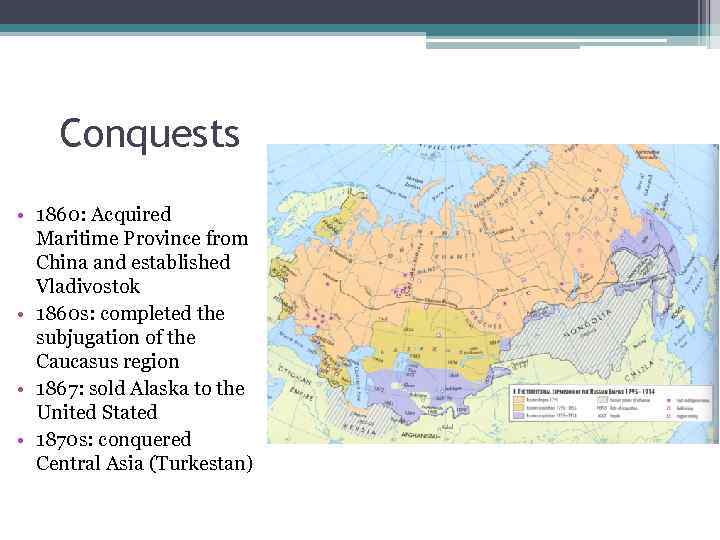 Conquests • 1860: Acquired Maritime Province from China and established Vladivostok • 1860 s: completed the subjugation of the Caucasus region • 1867: sold Alaska to the United Stated • 1870 s: conquered Central Asia (Turkestan)
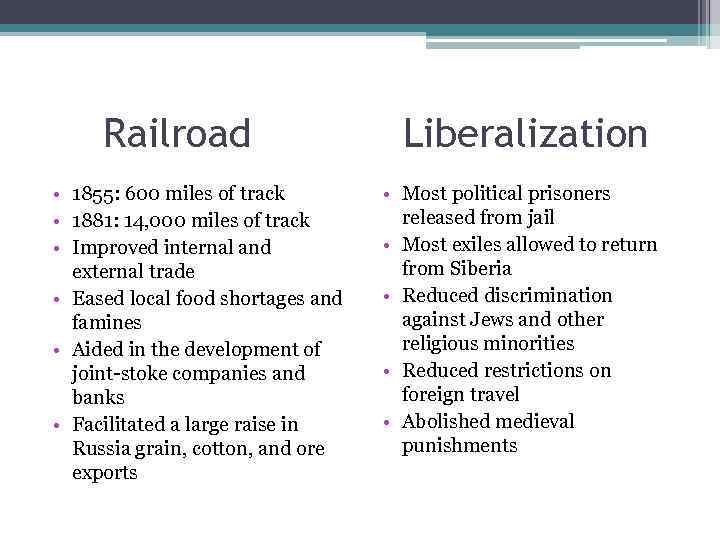 Railroad • 1855: 600 miles of track • 1881: 14, 000 miles of track • Improved internal and external trade • Eased local food shortages and famines • Aided in the development of joint-stoke companies and banks • Facilitated a large raise in Russia grain, cotton, and ore exports Liberalization • Most political prisoners released from jail • Most exiles allowed to return from Siberia • Reduced discrimination against Jews and other religious minorities • Reduced restrictions on foreign travel • Abolished medieval punishments
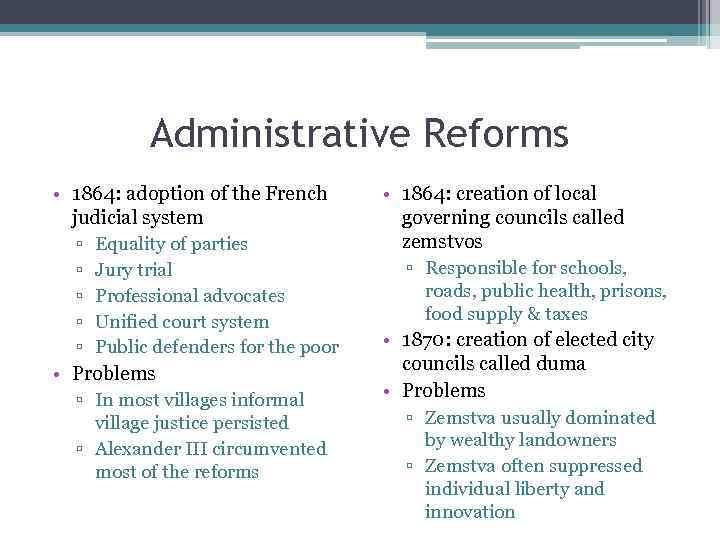 Administrative Reforms • 1864: adoption of the French judicial system ▫ Equality of parties ▫ Jury trial ▫ Professional advocates ▫ Unified court system ▫ Public defenders for the poor • Problems ▫ In most villages informal village justice persisted ▫ Alexander III circumvented most of the reforms • 1864: creation of local governing councils called zemstvos ▫ Responsible for schools, roads, public health, prisons, food supply & taxes • 1870: creation of elected city councils called duma • Problems ▫ Zemstva usually dominated by wealthy landowners ▫ Zemstva often suppressed individual liberty and innovation
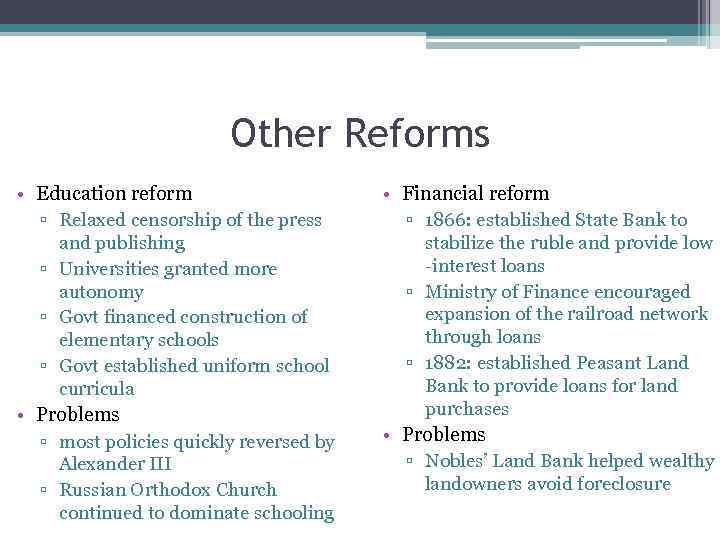 Other Reforms • Education reform ▫ Relaxed censorship of the press and publishing ▫ Universities granted more autonomy ▫ Govt financed construction of elementary schools ▫ Govt established uniform school curricula • Problems ▫ most policies quickly reversed by Alexander III ▫ Russian Orthodox Church continued to dominate schooling • Financial reform ▫ 1866: established State Bank to stabilize the ruble and provide low -interest loans ▫ Ministry of Finance encouraged expansion of the railroad network through loans ▫ 1882: established Peasant Land Bank to provide loans for land purchases • Problems ▫ Nobles’ Land Bank helped wealthy landowners avoid foreclosure
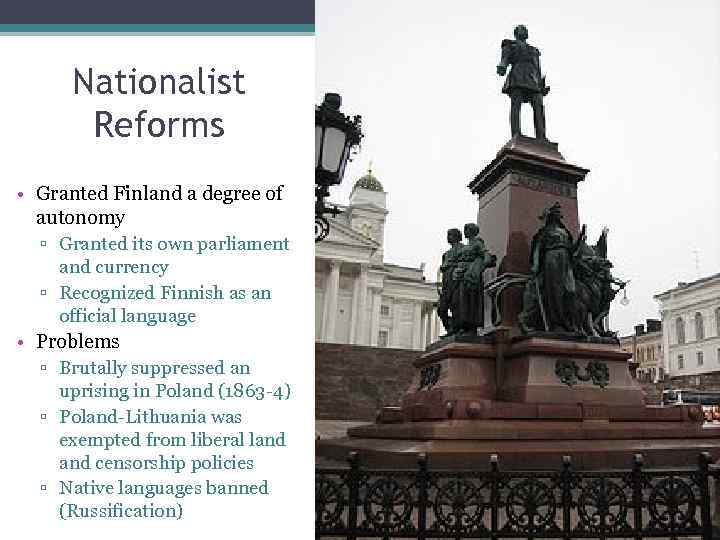 Nationalist Reforms • Granted Finland a degree of autonomy ▫ Granted its own parliament and currency ▫ Recognized Finnish as an official language • Problems ▫ Brutally suppressed an uprising in Poland (1863 -4) ▫ Poland-Lithuania was exempted from liberal land censorship policies ▫ Native languages banned (Russification)
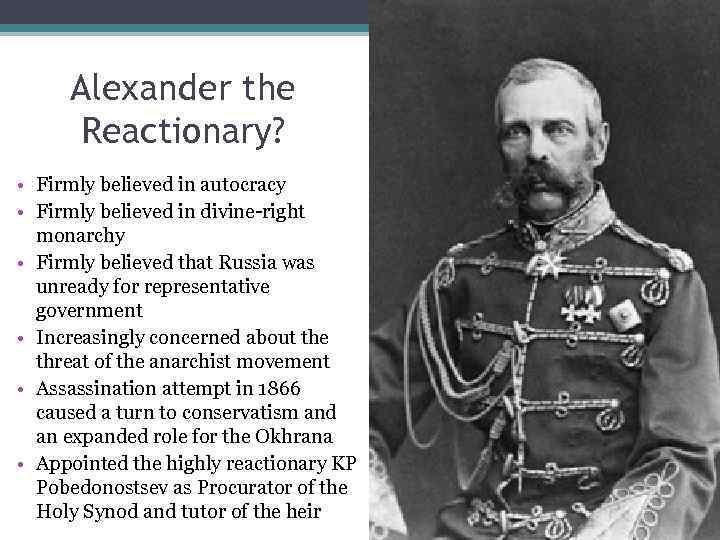 Alexander the Reactionary? • Firmly believed in autocracy • Firmly believed in divine-right monarchy • Firmly believed that Russia was unready for representative government • Increasingly concerned about the threat of the anarchist movement • Assassination attempt in 1866 caused a turn to conservatism and an expanded role for the Okhrana • Appointed the highly reactionary KP Pobedonostsev as Procurator of the Holy Synod and tutor of the heir
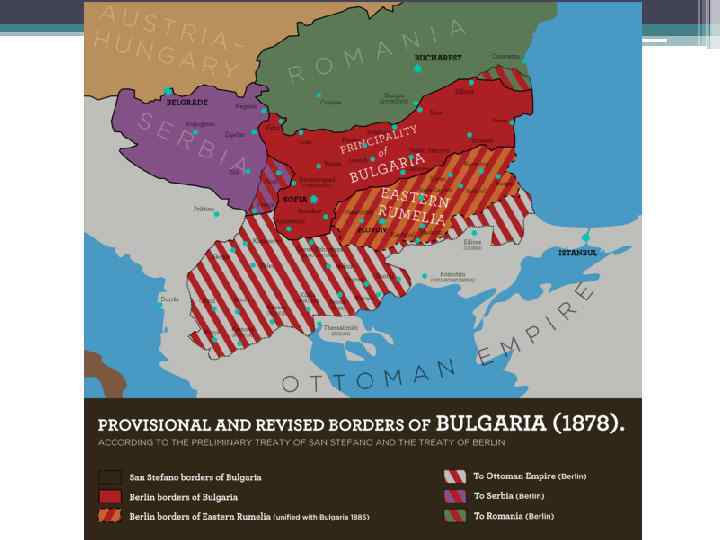
 Russo-Turkish War (1877) • Pan-Slavists encouraged Alexander II to promote Slavic nationalism in the Balkans • 1876: Serbs rebelled against the Ottoman Empire • 1877: Russia invaded the Balkan provinces of the Ottoman Empire and won decisively • Treaty of San Stefano ▫ Independence for Romania, Serbia, Montenegro, and Bulgaria ▫ Russian hegemony in the Balkans ▫ Ottoman Empire significantly weakened • Congress of Berlin ▫ All European nations saw Russian victory as a threat to the balance of power ▫ Intention to keep Constantinople safely under Ottoman control ▫ Bulgaria was reduced in size and made an autonomous province of the Ottoman Empire ▫ Macedonia and Eastern Rumelia returned to Ottoman rule ▫ Bosnia made a protectorate of Austria-Hungary ▫ Serbia, Bulgaria and Greece unsatisfied with gains ▫ Russia humiliated angry after diplomatic failing following military victory ▫ Russians outraged at Bismarck’s duplicity ▫ Shattered the Three Emperor’s League
 U-Turns • 1879 -80: series of nearly successful assassination attempts • Tsar appoints Count Melikov to eradicate the People’s Will terrorist group • Public opinion was angered by repressive policies since 1866 • 1880: Tsarina died and the Alexander II planned to marry his mistress • Public opinion would be firmly opposed • Alexander II planned to unveil the creation of two legislative commissions composed of elected representatives ▫ Loris-Melikov Constitution • Signed the decree on March 1, 1881 • Mortally wounded by an attack by the People’s Will while departing the Winter Palace
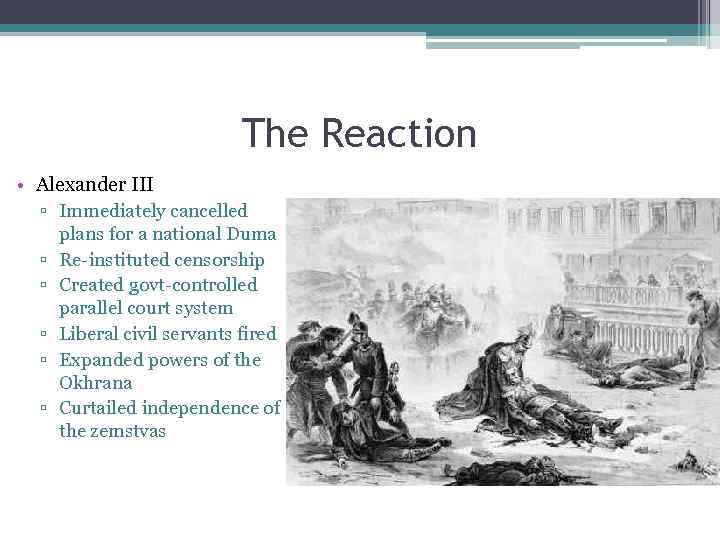 The Reaction • Alexander III ▫ Immediately cancelled ▫ ▫ ▫ plans for a national Duma Re-instituted censorship Created govt-controlled parallel court system Liberal civil servants fired Expanded powers of the Okhrana Curtailed independence of the zemstvas