


 Скачать презентацию RROs and the user community Dynamic society
e227cab140e7f67579f3fe6bede68da8.ppt
- Количество слайдов: 12
 RROs and the user community
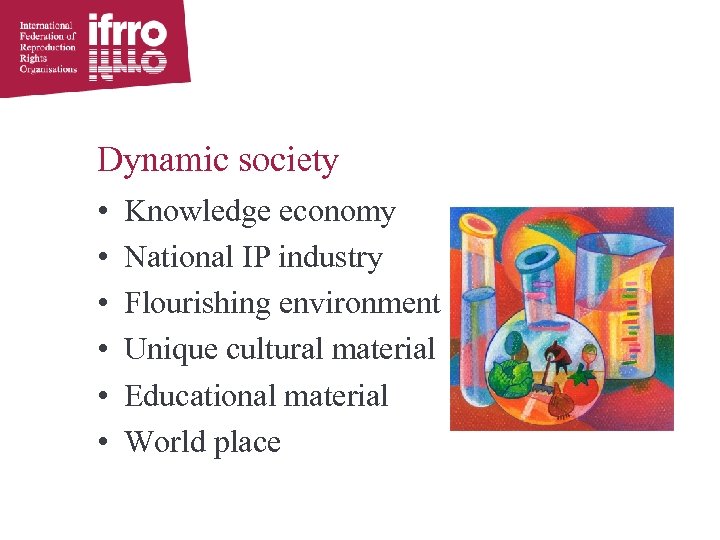 Dynamic society • • • Knowledge economy National IP industry Flourishing environment Unique cultural material Educational material World place
 Users in the © sphere • Education • Research • Libraries • Individuals • Government • Industry • Businesses • Professions • Churches • Charitable bodies • Copy shops • Press cutting agencies. . .
 Users’ wishes • Access to © materials o Formats, uses, repertoires • • Transparency and affordability Flexibility One-stop-shop Legal certainty o Statutory o Or indemnity
 Rightholder requirements for collective management • Access on an orderly basis • Protection of rights, moral and economic • Support for business models
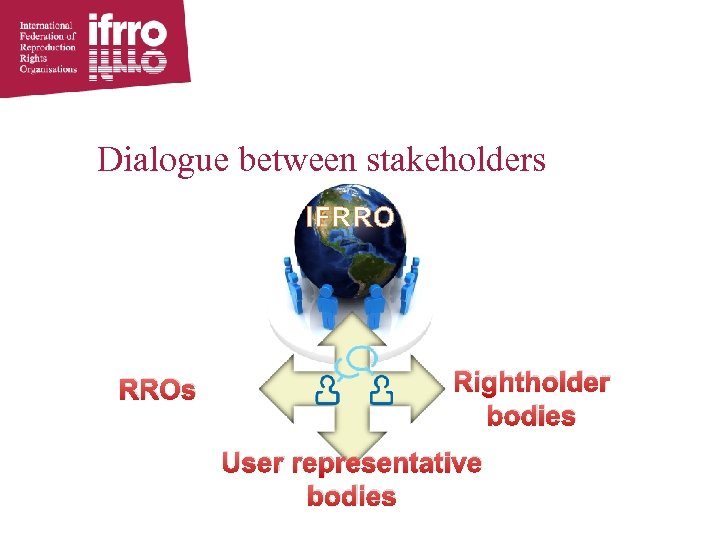 Dialogue between stakeholders IFRRO RROs Rightholder bodies User representative bodies
 Shared aims • Use of information sources o Print and electronic o On-site and remote • Mutual engagement o Fairness and flexibility o Balance
 RRO initiatives • VIPs – Australia, CAL o Statutory licence to format-shift o Masters’ Catalogue of accessible versions • Internet users – Norway, Kopinor o ECL with National Library of Norway o Thousands of digital books available • Information professionals – USA, CCC o Proprietary – knowledge sharing and © compliance o Assign, maintain and organise rights
 Publisher-led initiatives • Standards o ACAP o DOI • Pricing and access models o HINARI, AGORA, OARE
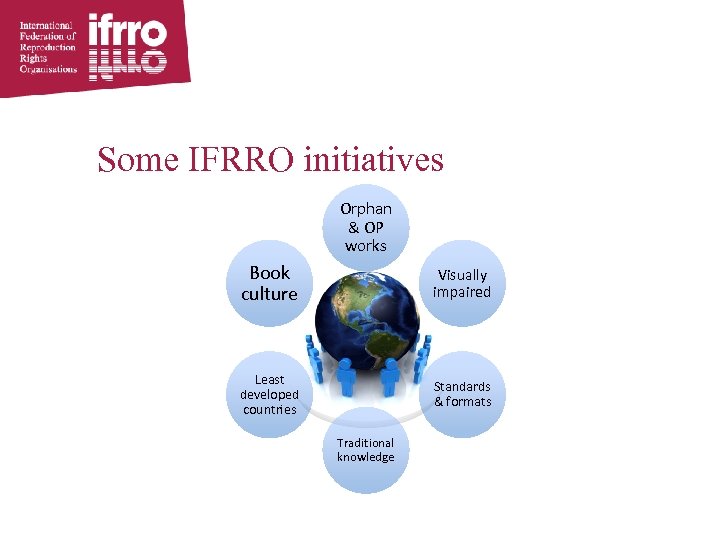 Some IFRRO initiatives Orphan & OP works Book culture Visually impaired Least developed countries Standards & formats Traditional knowledge
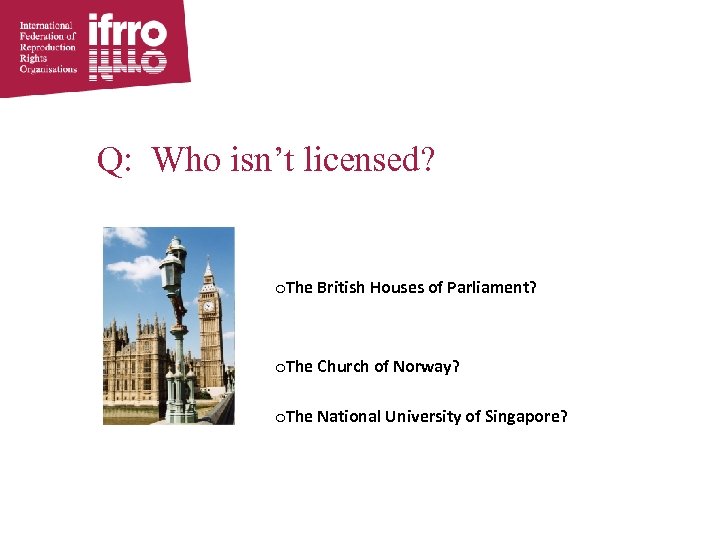 Q: Who isn’t licensed? o. The British Houses of Parliament? © Photography by Deryc Sands. Parliamentary copyright images are reproduced with the permission of Parliament o. The Church of Norway? o. The National University of Singapore?
 A: Trick question! Naturally, all three of these ©-compliant user bodies are licensed! • The Houses of Parliament in the UK are licensed by CLA • The Church of Norway is licensed by Kopinor • The National University of Singapore is licensed by CLASS