


 Скачать презентацию Royal Court Выполнил Костерин Максим 01 -21
Королевский двор.pptx
- Количество слайдов: 7
 Royal Court Выполнил: Костерин Максим 01 -21
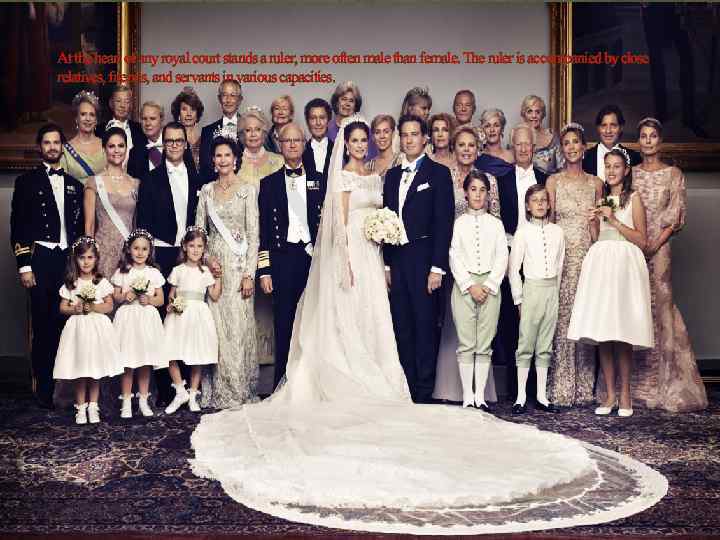 At the heart of any royal court stands a ruler, more often male than female. The ruler is accompanied by close relatives, friends, and servants in various capacities.
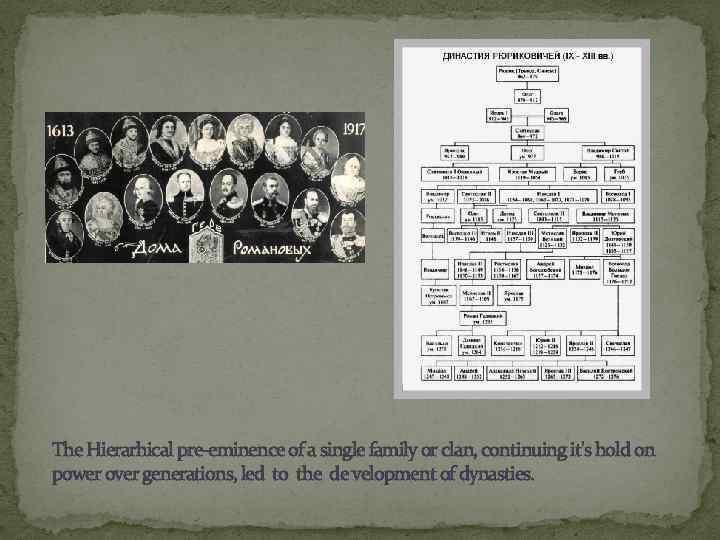 The Hierarhical pre-eminence of a single family or clan, continuing it's hold on power over generations, led to the de velopment of dynasties.
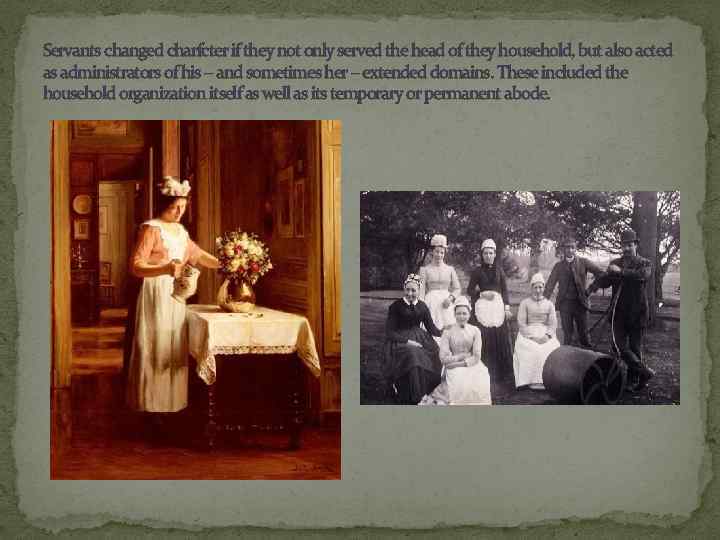 Servants changed charfcter if they not only served the head of they household, but also acted as administrators of his – and sometimes her – extended domains. These included the household organization itself as well as its temporary or permanent abode.
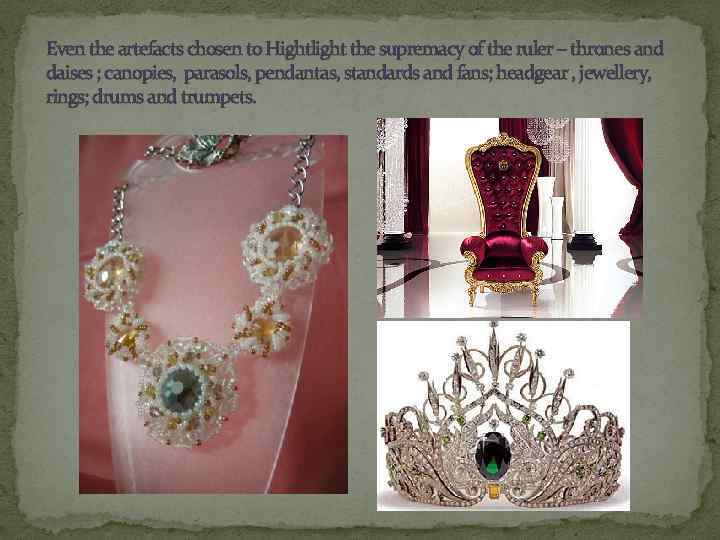 Even the artefacts chosen to Hightlight the supremacy of the ruler – thrones and daises ; canopies, parasols, pendantas, standards and fans; headgear , jewellery, rings; drums and trumpets.
 It can be used for all people at court including menial as a generic term nts as well the ruler's higher-ranking intimates: as Often courtiers are viewed domestics as well as state servants. primarily in Castiglione's literary perspective, as suave elite characters orbiting the court, forming as well as broadcasting its manners.
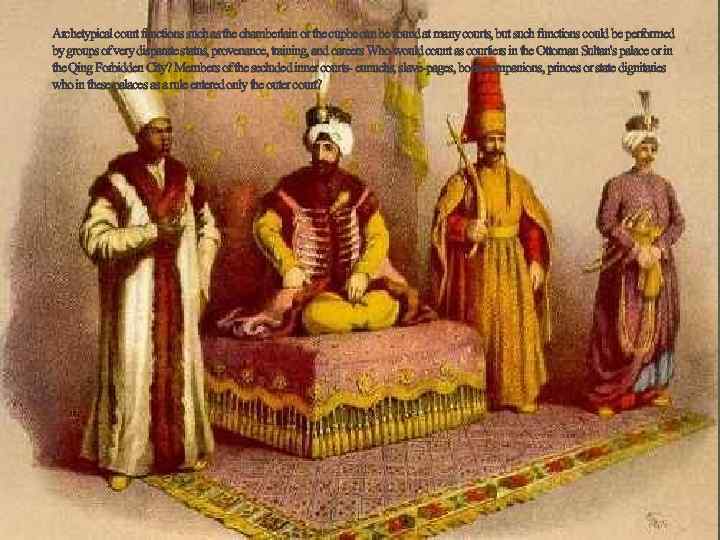 Archetypical court functions such as the chamberlain or the cupbe can be found at many courts, but such functions could be performed by groups of very disparate status, provenance, training, and careers Who would count as courtiers in the Ottoman Sultan's palace or in the Qing Forbidden City? Members of the secluded inner courts- eunuchs, slave-pages, boon companions, princes or state dignitaries who in these palaces as a rule entered only the outer court?