


 Скачать презентацию Routes to Fellowship Kathryn Harrison Academic Development Officer
12511d3c5673d7e56a56459adfe0157d.ppt
- Количество слайдов: 26
 Routes to Fellowship Kathryn Harrison, Academic Development Officer, HE Academy. Kathryn Mc. Farlane, Professional Development Manager, Staffordshire University. HE Academy Conference 3. 7. 13.
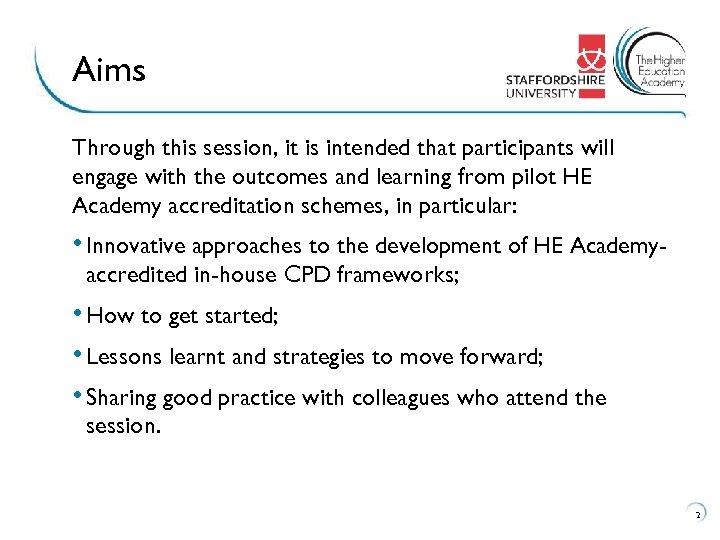 Aims Through this session, it is intended that participants will engage with the outcomes and learning from pilot HE Academy accreditation schemes, in particular: • Innovative approaches to the development of HE Academyaccredited in-house CPD frameworks; • How to get started; • Lessons learnt and strategies to move forward; • Sharing good practice with colleagues who attend the session. 2
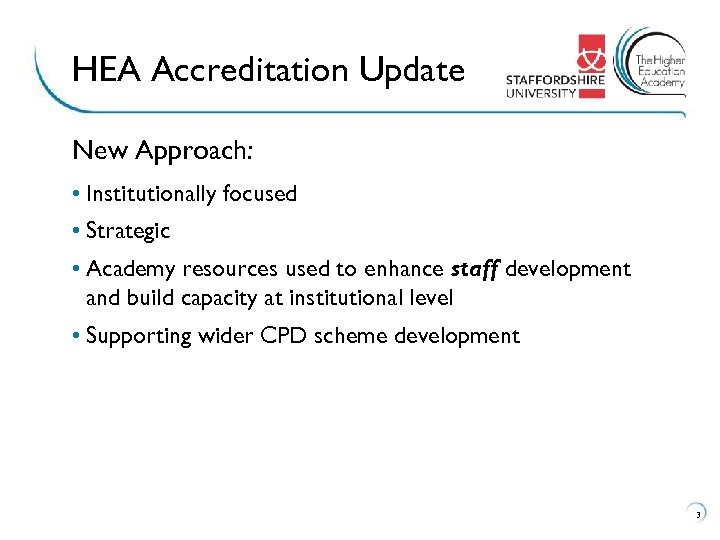 HEA Accreditation Update New Approach: • Institutionally focused • Strategic • Academy resources used to enhance staff development and build capacity at institutional level • Supporting wider CPD scheme development 3
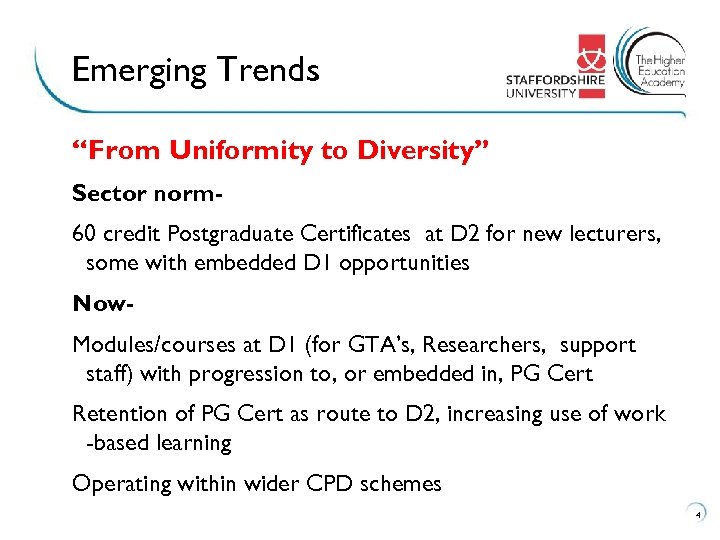 Emerging Trends “From Uniformity to Diversity” Sector norm 60 credit Postgraduate Certificates at D 2 for new lecturers, some with embedded D 1 opportunities Now. Modules/courses at D 1 (for GTA’s, Researchers, support staff) with progression to, or embedded in, PG Cert Retention of PG Cert as route to D 2, increasing use of work -based learning Operating within wider CPD schemes 4
 Emerging Trends “Growing importance of CPD Schemes” D 1 to D 4 Incorporating a range of routes to recognition Some allow direct applications to HEA via Individual Recognition route Varied levels of integration with institutional HR processes 5
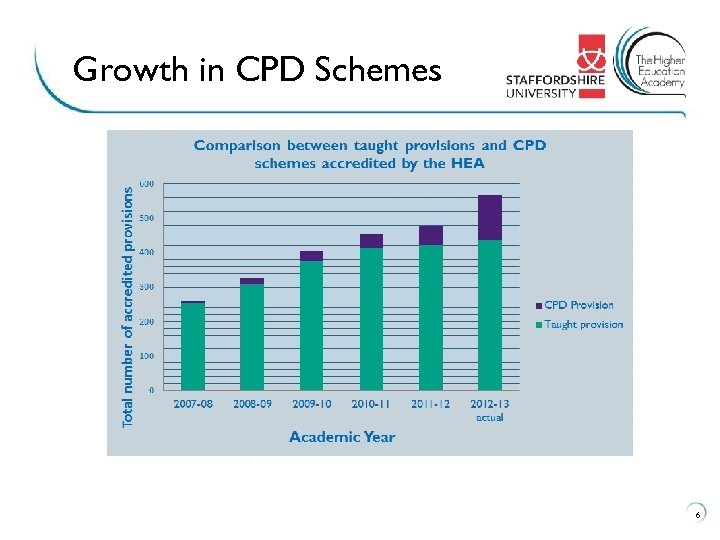 Growth in CPD Schemes 6
 Staffordshire University Routes to Fellowship 7
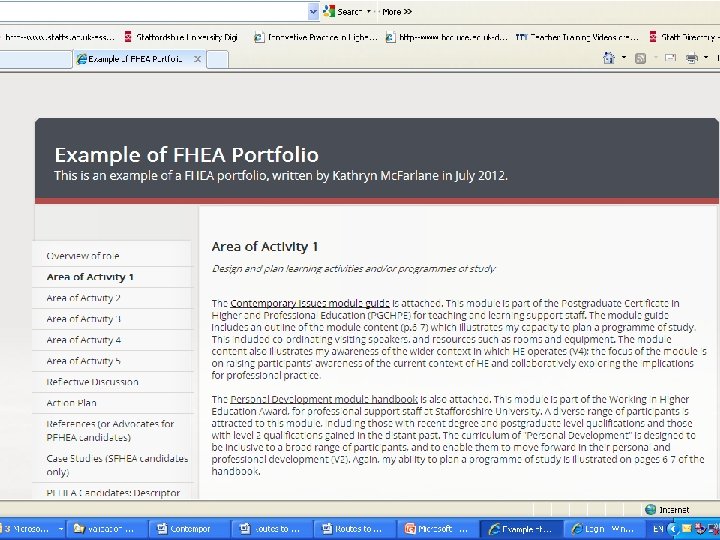
 Routes to Fellowship Previously: • Accredited course route; • Individual direct applications. But now: • Revised system; • Accredited routes still active and integrated; • Internal CPD framework for Associate, Fellow, Senior and Principal; • Part of a national pilot. 8
 Key features • Portfolio – electronic or paper; • Can build on portfolio while progressing through the framework; • Reflective discussion – verbal or written; • Mentoring from Centre for Professional Development and Faculty / Service. 9
 The system is. . • Accessible; • Inclusive; • Achievable; • Aligned to student portfolio building; • Linked to career development; • Customised to Staffordshire University; • Recognises own experience; • Aligned to normal teaching / facilitating of learning duties. 10
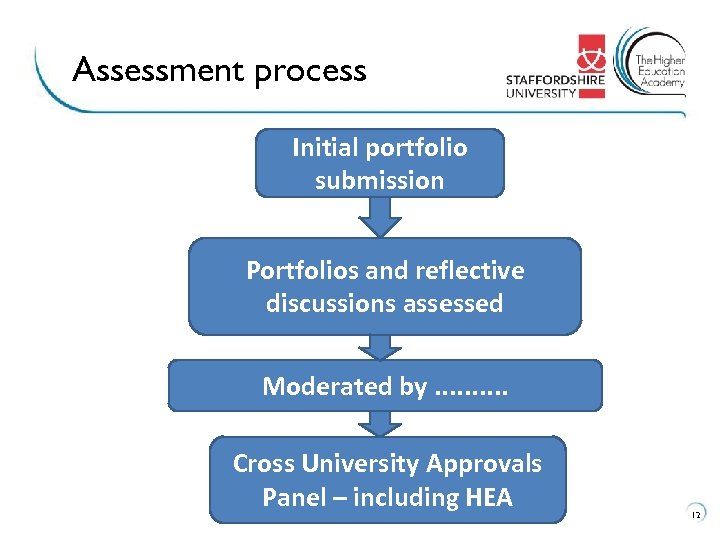 Assessment process Initial portfolio submission Portfolios and reflective discussions assessed Moderated by. . Cross University Approvals Panel – including HEA 12
 Development processes • Development Matters – http: //www. staffs. ac. uk/cpd • Accredited courses; • Staff Fest; • Mentoring support – successful Fellows – progression! • Portfolio clinics. 13
 Views from the Fellows • I found the whole process very useful in terms of looking back through my teaching history and I'd certainly recommend it. • Love the principle of having an eportfolio based on the Staffordshire graduate attributes – I really want to push this with all of the courses I’m involved in. 14
 Activity • What approaches or plans are currently underway in your institution? Please discuss in groups of 3 -4. 15
 Other Approaches • The Liverpool Institute for Performing Arts and Rose Bruford College of Theatre and Performance • University of Ulster • Grimsby Institute 16
 How to get started • Institutional strategies – University Plan and Human Resources and Organisational Development Strategy; • Launch to senior staff with HE Academy Representative; • Faculty briefing sessions; • Institutional launch – including HE Academy Representative and practical guidance. And later. . . • Involving successful candidates in mentoring and guidance; • Identifying Faculty and Service “champions” to act as Assessors. 17
 Fostering participation Institutional ethos of celebrating teaching excellence: • Teaching Excellence Fellowships since 2002; • Celebrating Staff Success; • Long standing tradition of providing accreditation for learning and teaching (since 1993); • Proactive encouragement to apply for National Teaching Fellowships. 18
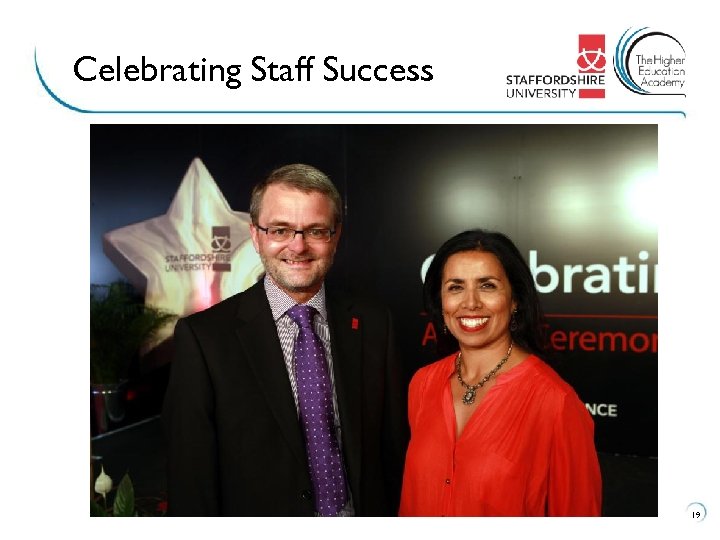 Celebrating Staff Success 19
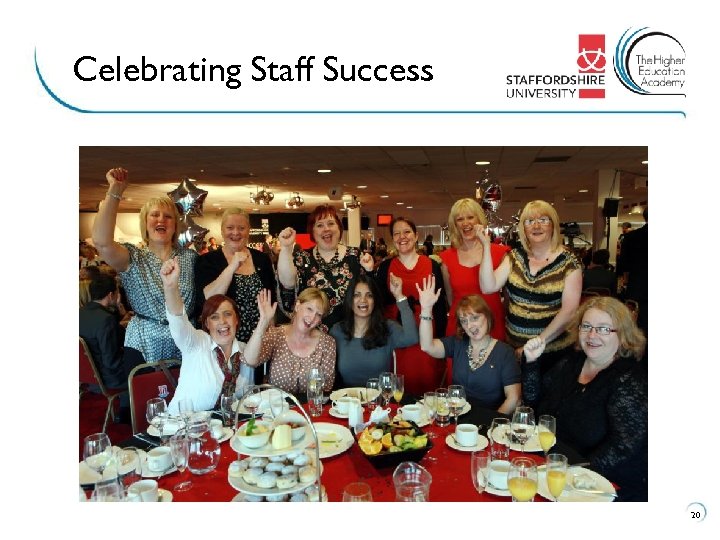 Celebrating Staff Success 20
 Lessons from the first cycle • Don’t expect to get it right first time; • It is crucial to understand the criteria for the different levels, especially D 4; • Length of time from deadline to panel; • Caution in guidance to mentees; • Process for dealing with “downgrades”; • Clarifying the role of the panel – e. g. focus on candidates who are less clear cut; • Get support e. g. from successful candidates. 21
 Discussion • What will you do next within your own institution? • Are there ways in which you could use some of the strategies explained? 22
 Our plans to move forward • Integrating qualification based routes; • Working in partnership with HE in FE providers; • Working in partnership with neighbouring institutions; • Developing staff in faculties and services to enable them to engage in the processes of assessment and verification. 23
 Our plans to move forward (2) • Developing closer links with other initiatives, e. g. Teaching Excellence Fellows; • Using the framework to create development opportunities; • Development of parallel schemes for professional support staff, managers and leaders. 24
 Working With The HEA • Continue to offer bespoke individual support for institutions • Range of support events • Accreditation Advice and Guidance Events • Accreditation Review Workshops • Recognition Decision Workshops • Publishing case studies 25
 More information • Kathryn Harrison • Kathryn. Harrison@heacademy. ac. uk • http: //www. heacademy. ac. uk • Kathryn Mc. Farlane • k. j. mcfarlane@staffs. ac. uk • http: //www. staffs. ac. uk/support_depts/cpd/hea/ 26