 Route 66
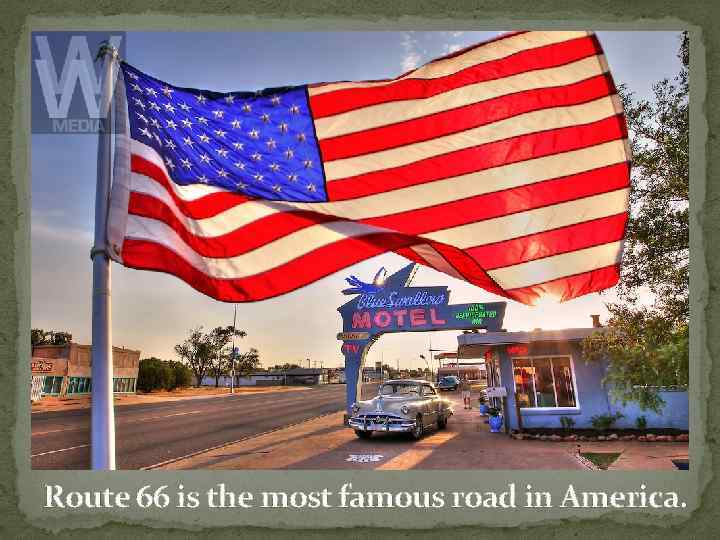 Route 66 is the most famous road in America.
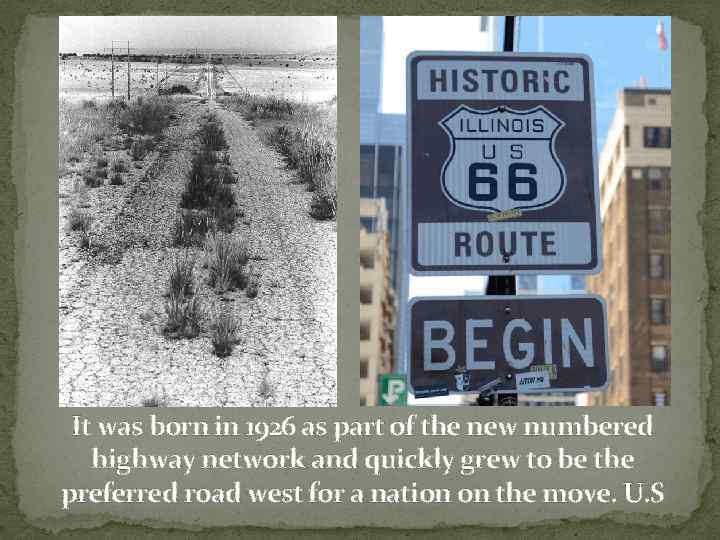 It was born in 1926 as part of the new numbered highway network and quickly grew to be the preferred road west for a nation on the move. U. S
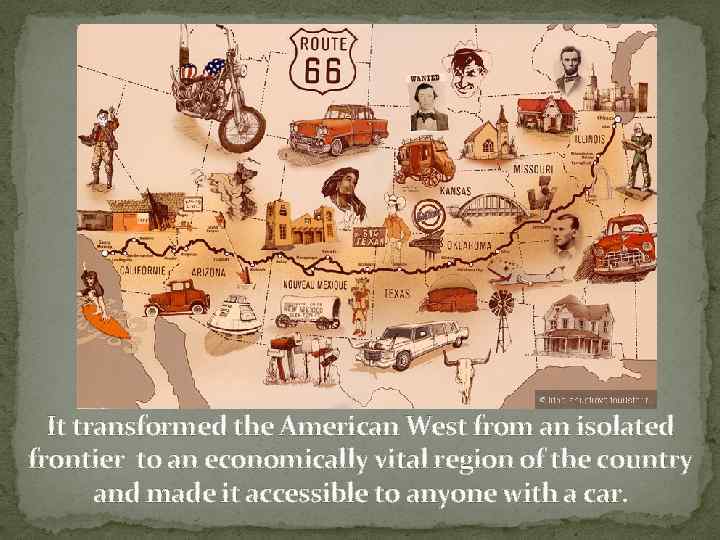 It transformed the American West from an isolated frontier to an economically vital region of the country and made it accessible to anyone with a car.
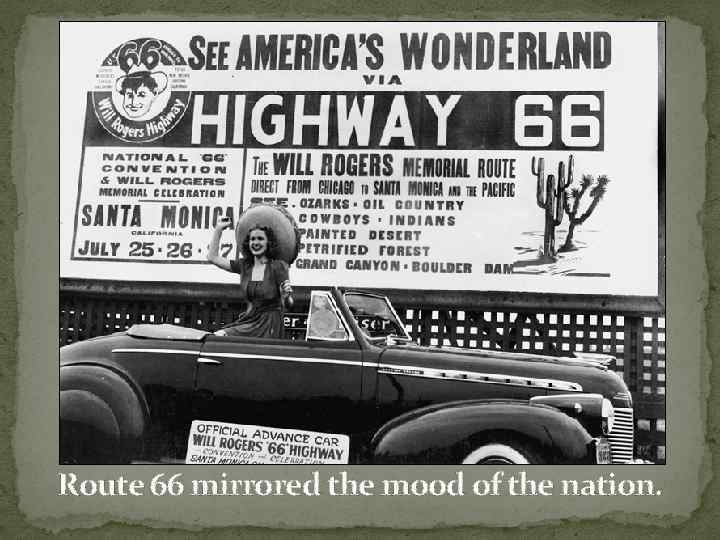 Route 66 mirrored the mood of the nation.
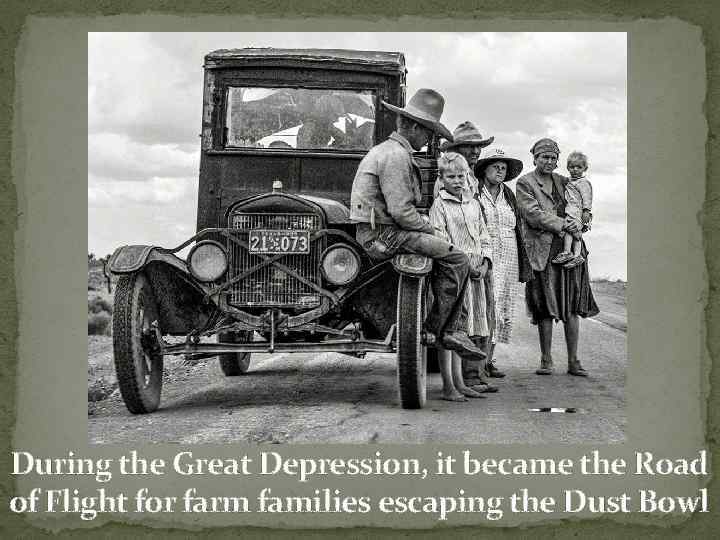 During the Great Depression, it became the Road of Flight for farm families escaping the Dust Bowl
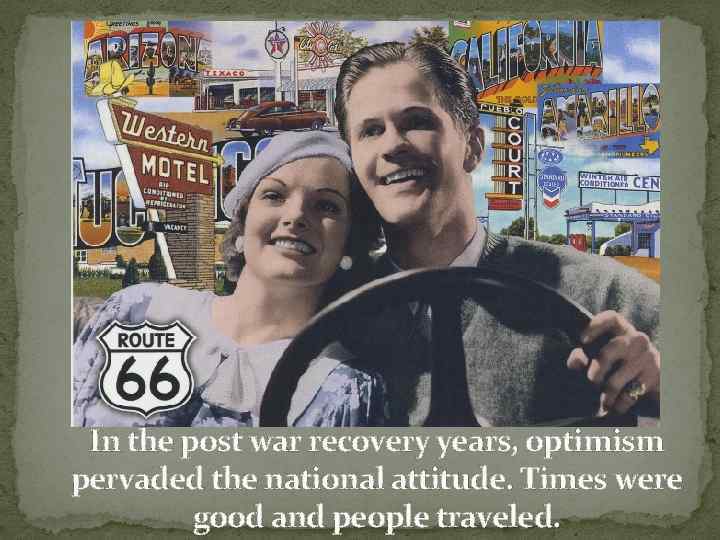 In the post war recovery years, optimism pervaded the national attitude. Times were good and people traveled.
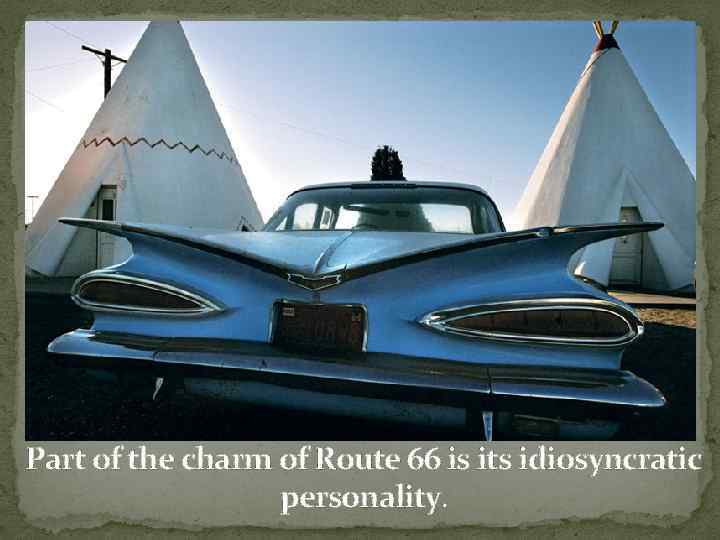 Part of the charm of Route 66 is its idiosyncratic personality.
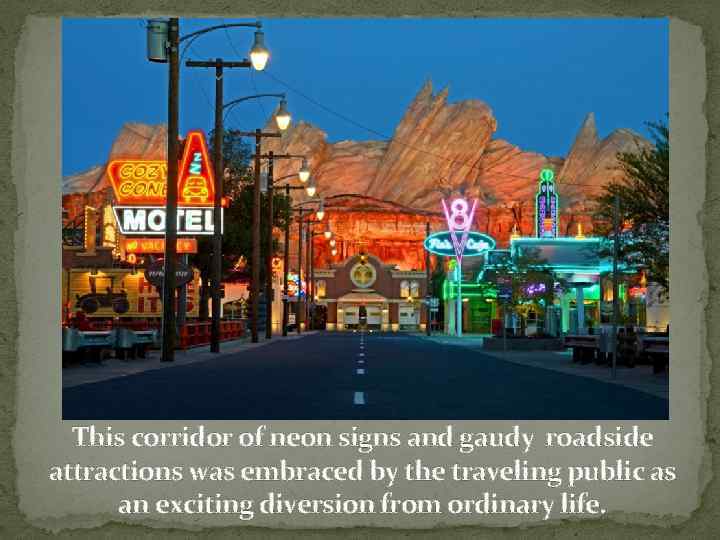 This corridor of neon signs and gaudy roadside attractions was embraced by the traveling public as an exciting diversion from ordinary life.
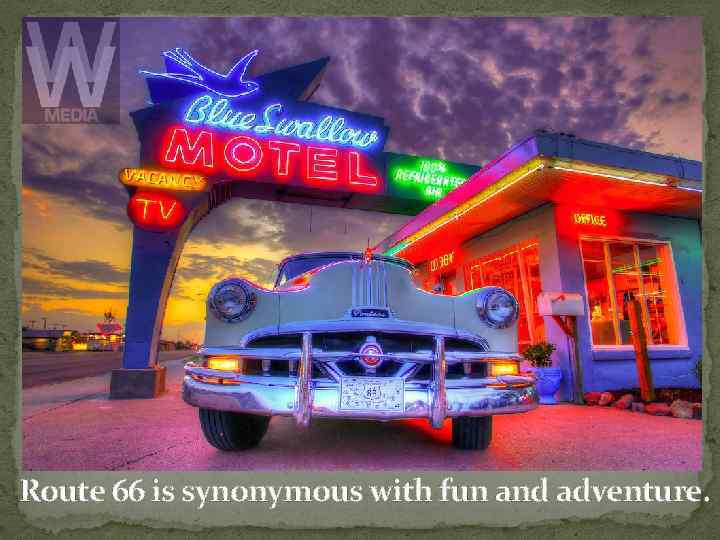 Route 66 is synonymous with fun and adventure.
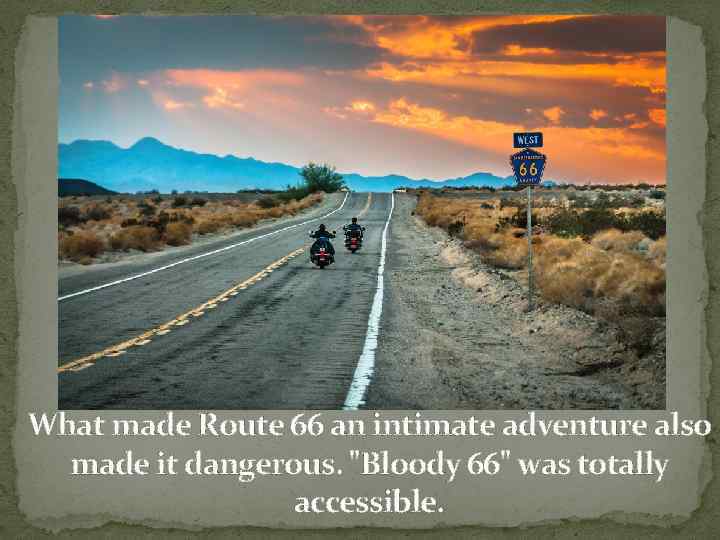 What made Route 66 an intimate adventure also made it dangerous. "Bloody 66" was totally accessible.
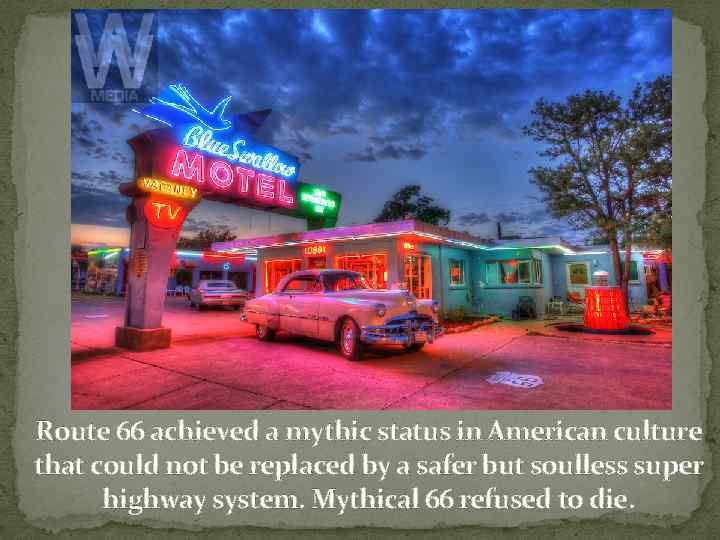 Route 66 achieved a mythic status in American culture that could not be replaced by a safer but soulless super highway system. Mythical 66 refused to die.
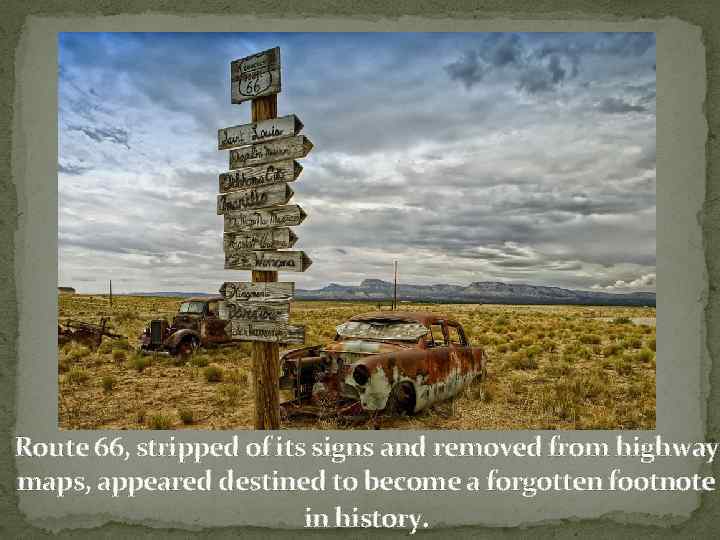 Route 66, stripped of its signs and removed from highway maps, appeared destined to become a forgotten footnote in history.
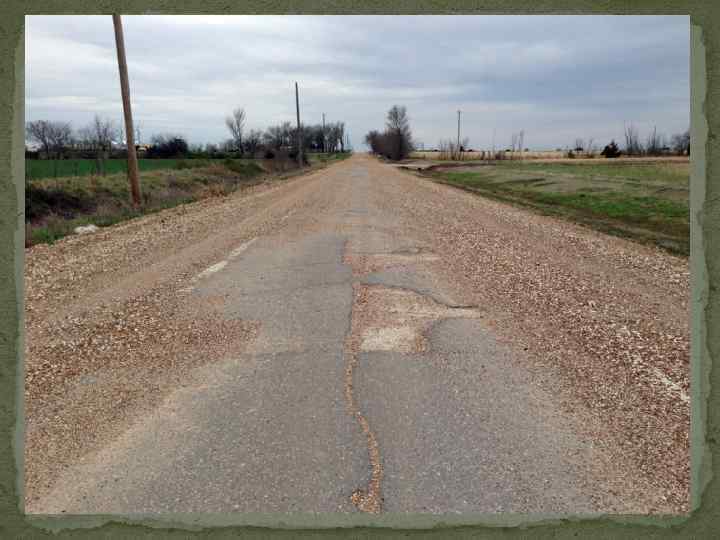
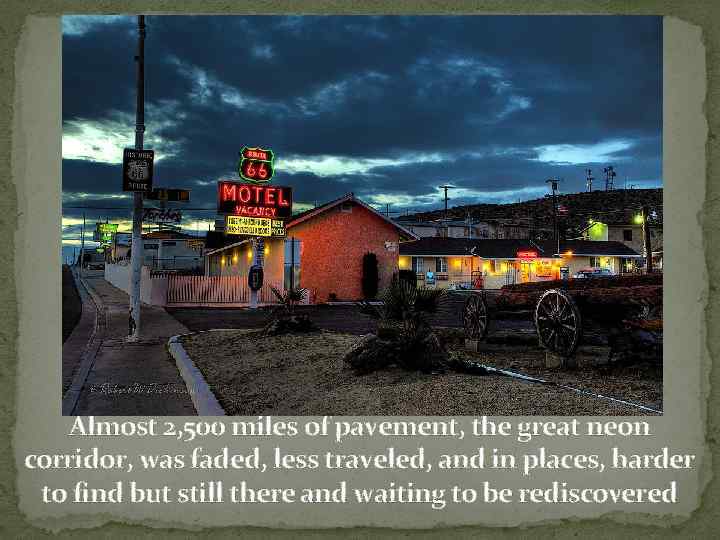 Almost 2, 500 miles of pavement, the great neon corridor, was faded, less traveled, and in places, harder to find but still there and waiting to be rediscovered
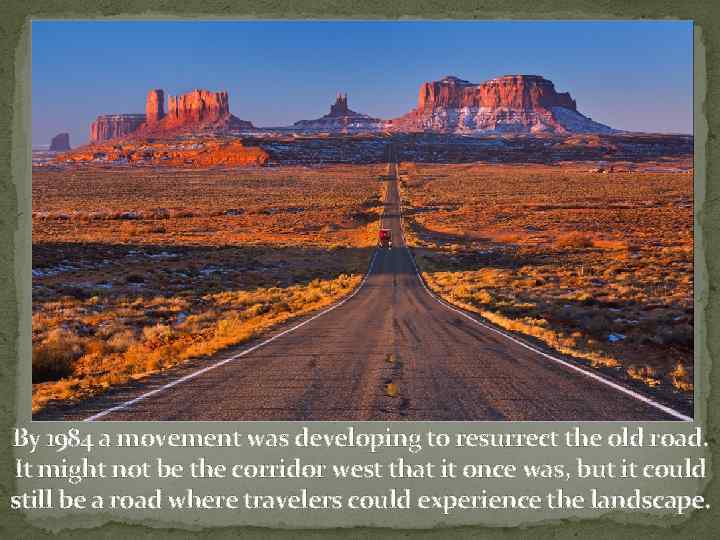 By 1984 a movement was developing to resurrect the old road. It might not be the corridor west that it once was, but it could still be a road where travelers could experience the landscape.
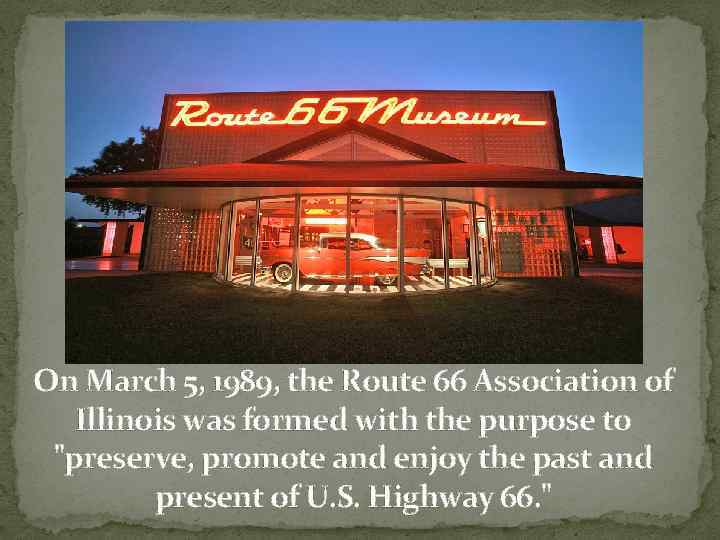 On March 5, 1989, the Route 66 Association of Illinois was formed with the purpose to "preserve, promote and enjoy the past and present of U. S. Highway 66. "
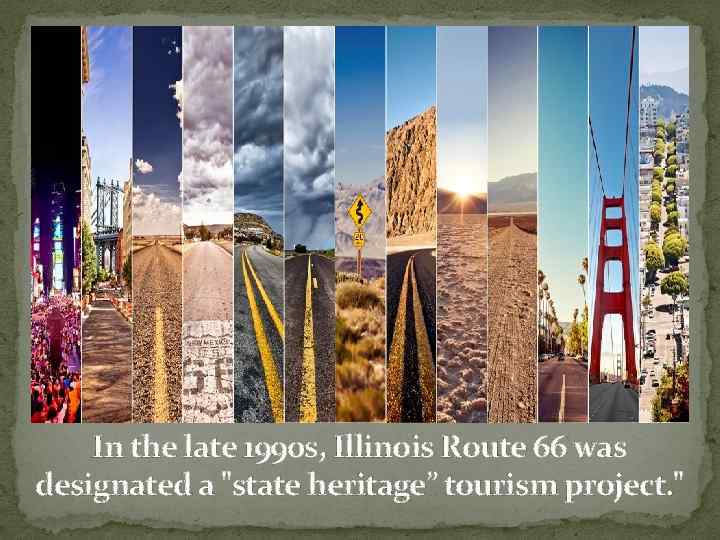 In the late 1990 s, Illinois Route 66 was designated a "state heritage” tourism project. "
 Interesting Facts