


 Скачать презентацию Rotorcraft Center of Excellence Analysis and Control of
a0081c3151106770c99f7a2f7ba3a7e1.ppt
- Количество слайдов: 57
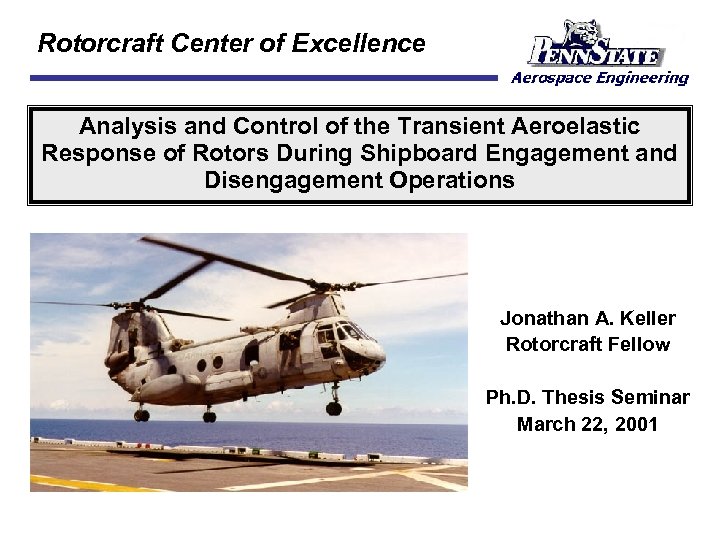 Rotorcraft Center of Excellence Analysis and Control of the Transient Aeroelastic Response of Rotors During Shipboard Engagement and Disengagement Operations Jonathan A. Keller Rotorcraft Fellow Ph. D. Thesis Seminar March 22, 2001
 Presentation Outline • Introduction • Previous Research • Objectives • Approach • Results • Conclusions
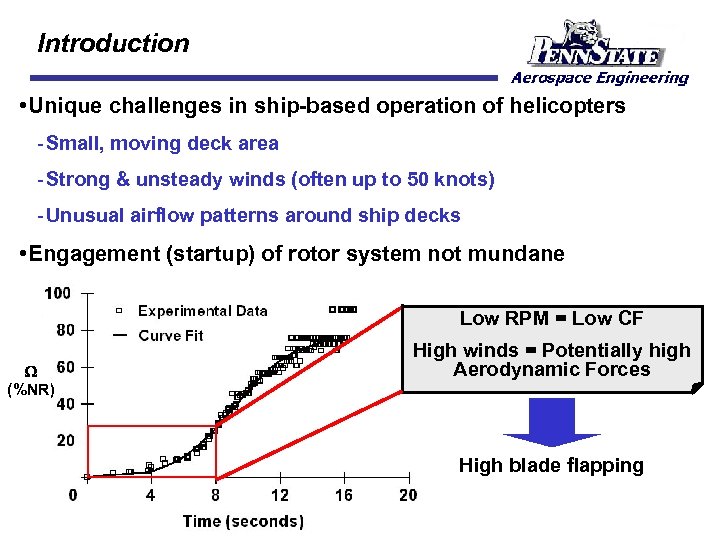 Introduction • Unique challenges in ship-based operation of helicopters Small, moving deck area Strong & unsteady winds (often up to 50 knots) Unusual airflow patterns around ship decks • Engagement (startup) of rotor system not mundane Low RPM = Low CF (%NR) High winds = Potentially high Aerodynamic Forces High blade flapping
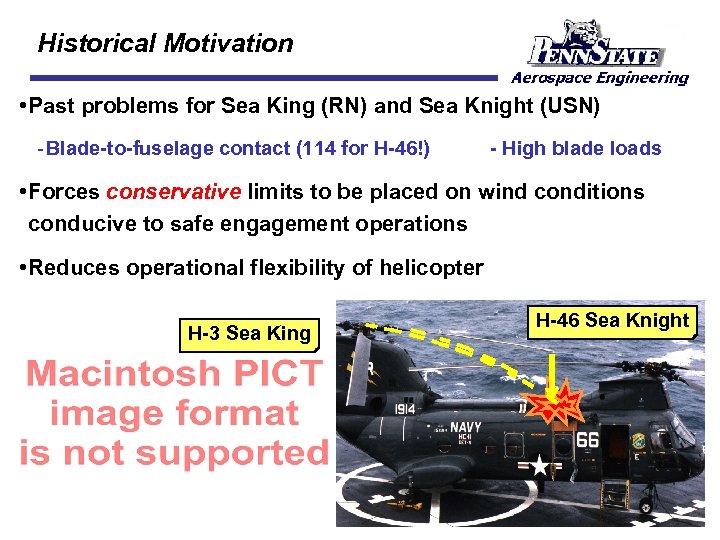 Historical Motivation • Past problems for Sea King (RN) and Sea Knight (USN) Blade-to-fuselage contact (114 for H-46!) - High blade loads • Forces conservative limits to be placed on wind conditions conducive to safe engagement operations • Reduces operational flexibility of helicopter H-3 Sea King H-46 Sea Knight
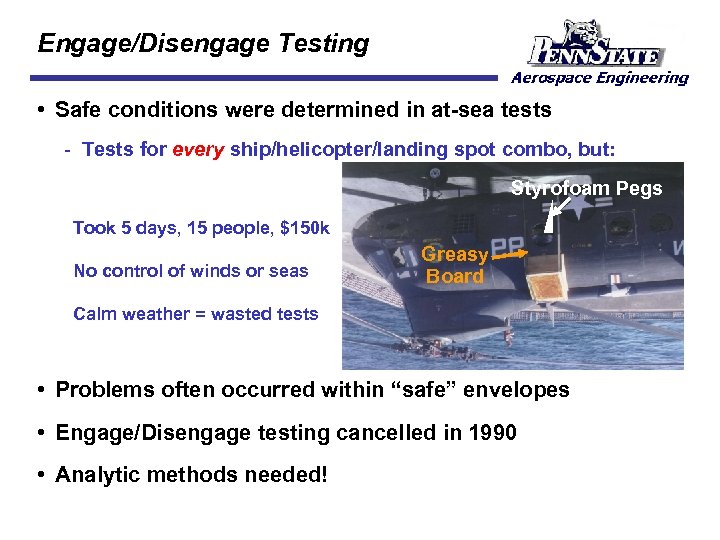 Engage/Disengage Testing • Safe conditions were determined in at-sea tests Tests for every ship/helicopter/landing spot combo, but: Styrofoam Pegs Took 5 days, 15 people, $150 k No control of winds or seas Greasy Board Calm weather = wasted tests • Problems often occurred within “safe” envelopes • Engage/Disengage testing cancelled in 1990 • Analytic methods needed!
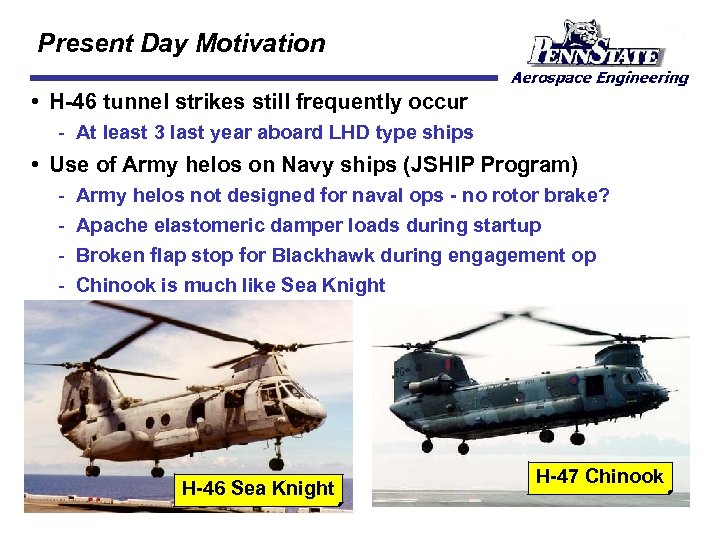 Present Day Motivation • H-46 tunnel strikes still frequently occur At least 3 last year aboard LHD type ships • Use of Army helos on Navy ships (JSHIP Program) Army helos not designed for naval ops - no rotor brake? Apache elastomeric damper loads during startup Broken flap stop for Blackhawk during engagement op Chinook is much like Sea Knight H-46 Sea Knight H-47 Chinook
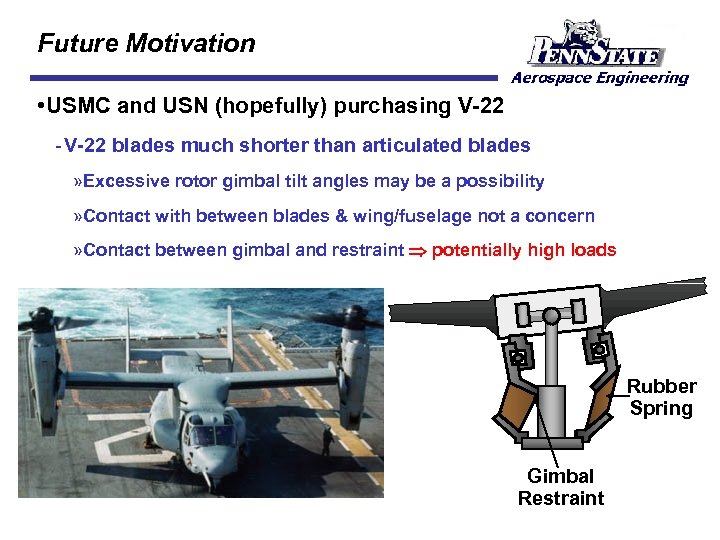 Future Motivation • USMC and USN (hopefully) purchasing V-22 blades much shorter than articulated blades » Excessive rotor gimbal tilt angles may be a possibility » Contact with between blades & wing/fuselage not a concern » Contact between gimbal and restraint potentially high loads Rubber Spring Gimbal Restraint
 Presentation Outline üIntroduction • Previous Research • Objectives • Approach • Results • Conclusions
 Early Engage/Disengage Research • Willmer, Burton, & King at Westland (1960 s) Investigated Whirlwind, Wasp, and Sea King helicopters • Leone at Boeing Vertol (1964) Investigated H-46 Sea Knight tunnel strikes Measured and predicted loads during blade-droop stop impacts • Healey et al at Naval Postgraduate School (1985 -1992) Measured model-scale ship airwake for LHA, DD, AOR Unsuccessfully investigated H-46 Sea Knight tunnel strikes • Kunz at Mc. Donnell Douglas (1997) Investigated high loads in AH-64 Apache elastomeric dampers
 Recent Engage/Disengage Research • Newman at University of Southampton (1985 -1995) Developed elastic F-T code for single rotor blade » Articulated or hingeless hubs Articulated rotors more prone to blade sailing than hingeless Correlated code w/ model-scale rigid R/C helicopter tests • Geyer, Keller, Kang and Smith at PSU (1995 - Present) Developed F-L-T code for multiple rotor blades » Articulated, hingeless, teetering, or gimballed hubs Simulated H-46 Sea Knight engagements and disengagements • Botasso and Bauchau (2000) Multi-body modeling of engagement and disengagement ops
 Presentation Outline üIntroduction üPrevious Research • Objectives • Approach • Results • Conclusions
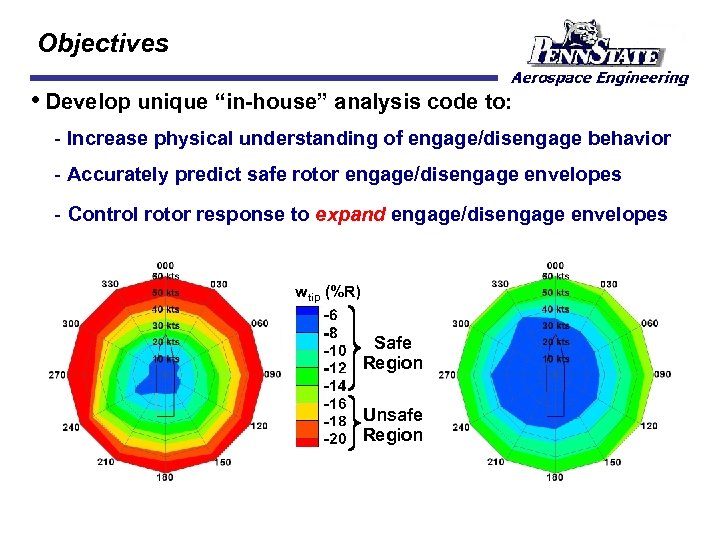
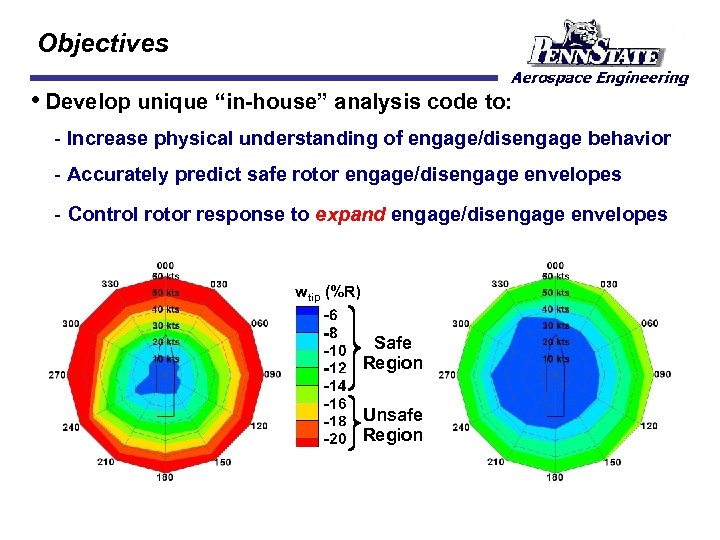 Objectives • Develop unique “in-house” analysis code to: Increase physical understanding of engage/disengage behavior Accurately predict safe rotor engage/disengage envelopes Control rotor response to expand engage/disengage envelopes wtip (%R) Safe Region Unsafe Region
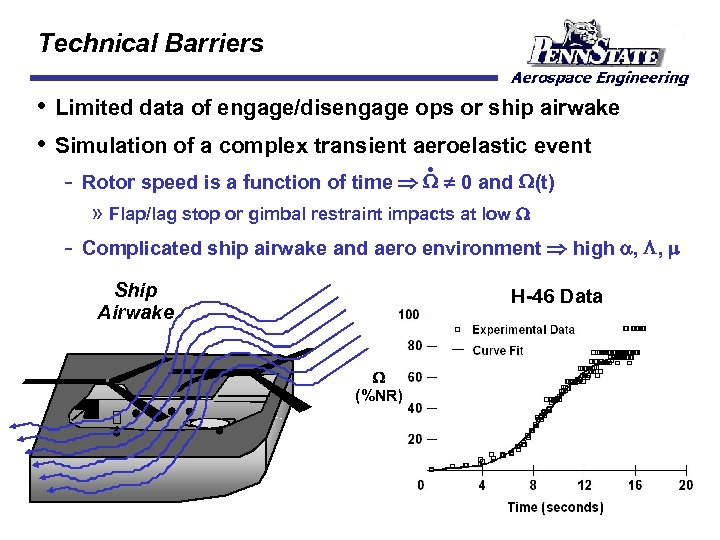 Technical Barriers • Limited data of engage/disengage ops or ship airwake • Simulation of a complex transient aeroelastic event • Rotor speed is a function of time 0 and (t) » Flap/lag stop or gimbal restraint impacts at low Complicated ship airwake and aero environment high a, L, m Ship Airwake H-46 Data (%NR)
 Presentation Outline üIntroduction üPrevious Research üObjectives • Approach • Results • Conclusions
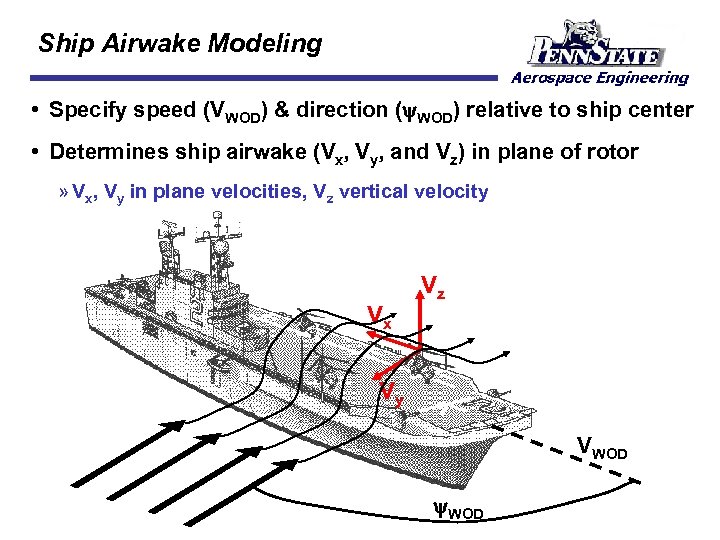 Ship Airwake Modeling • Specify speed (VWOD) & direction (y. WOD) relative to ship center • Determines ship airwake (Vx, Vy, and Vz) in plane of rotor » Vx, Vy in plane velocities, Vz vertical velocity Vx Vz Vy VWOD y. WOD
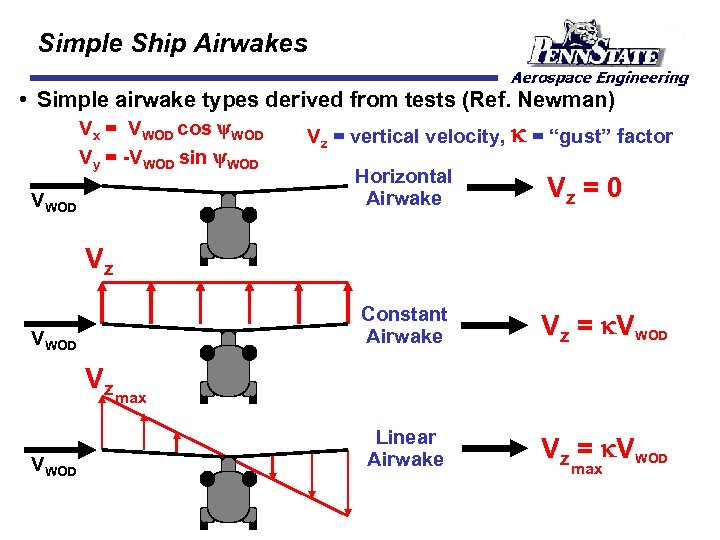 Simple Ship Airwakes • Simple airwake types derived from tests (Ref. Newman) Vx = VWOD cos y. WOD Vy = -VWOD sin y. WOD Vz = vertical velocity, k = “gust” factor Horizontal Airwake Vz = 0 Vz Constant Airwake VWOD Vz = k. VWOD Linear Airwake Vz = k. VWOD max
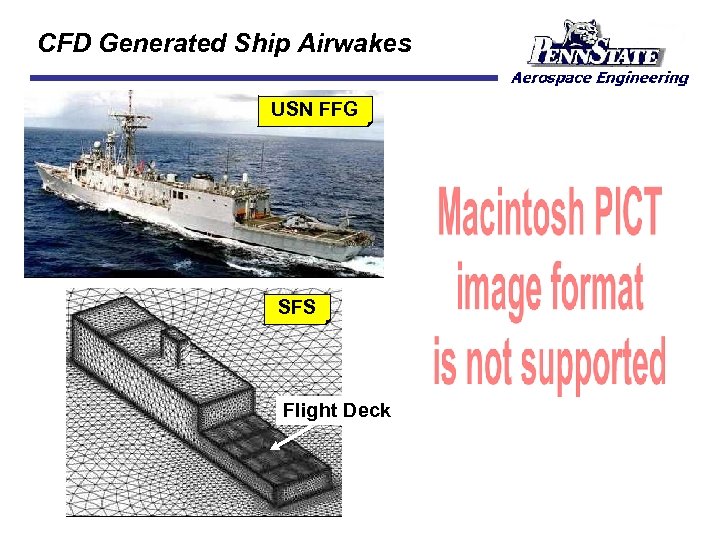 CFD Generated Ship Airwakes USN FFG SFS Flight Deck
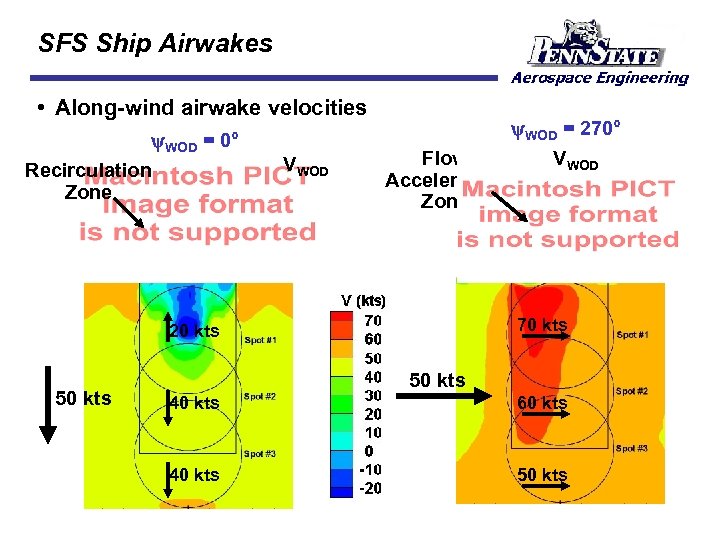 SFS Ship Airwakes • Along-wind airwake velocities y. WOD = 0° Recirculation Zone VWOD y. WOD = 270° Flow Acceleration Zone 70 kts 20 kts 50 kts VWOD 50 kts 40 kts 60 kts 40 kts 50 kts
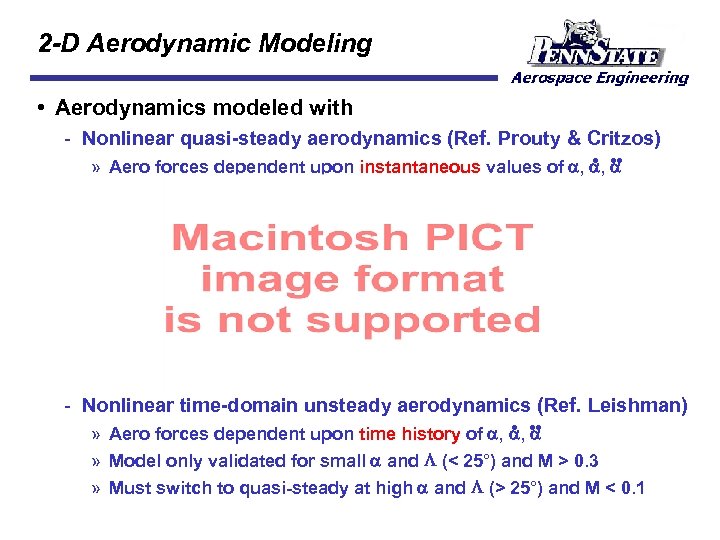 2 -D Aerodynamic Modeling • Aerodynamics modeled with Nonlinear quasi-steady aerodynamics (Ref. Prouty & Critzos) • a » Aero forces dependent upon instantaneous values of a, a, • • Nonlinear time-domain unsteady aerodynamics (Ref. Leishman) • a » Aero forces dependent upon time history of a, a, • • » Model only validated for small a and L (< 25°) and M > 0. 3 » Must switch to quasi-steady at high a and L (> 25°) and M < 0. 1
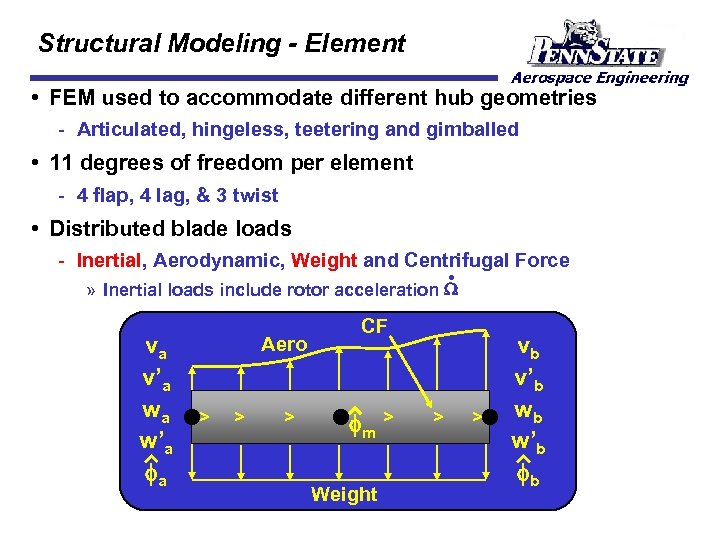 Structural Modeling - Element • FEM used to accommodate different hub geometries Articulated, hingeless, teetering and gimballed • 11 degrees of freedom per element 4 flap, 4 lag, & 3 twist • Distributed blade loads Inertial, Aerodynamic, Weight and Centrifugal Force • » Inertial loads include rotor acceleration va v’a wa w’a a CF Aero • > > > • > m Weight > > • > vb v’b wb w’b b
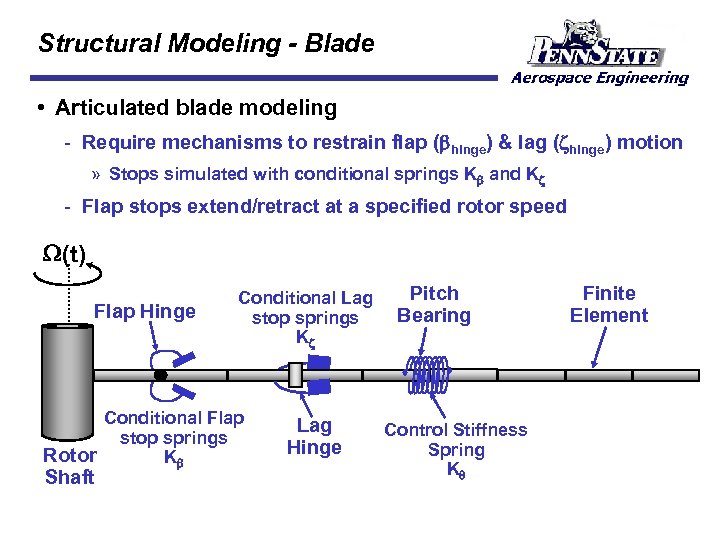 Structural Modeling - Blade • Articulated blade modeling Require mechanisms to restrain flap ( hinge) & lag (zhinge) motion » Stops simulated with conditional springs K and Kz Flap stops extend/retract at a specified rotor speed (t) Flap Hinge Conditional Lag stop springs Kz Conditional Flap stop springs Rotor K Shaft Lag Hinge Pitch Bearing Control Stiffness Spring K Finite Element
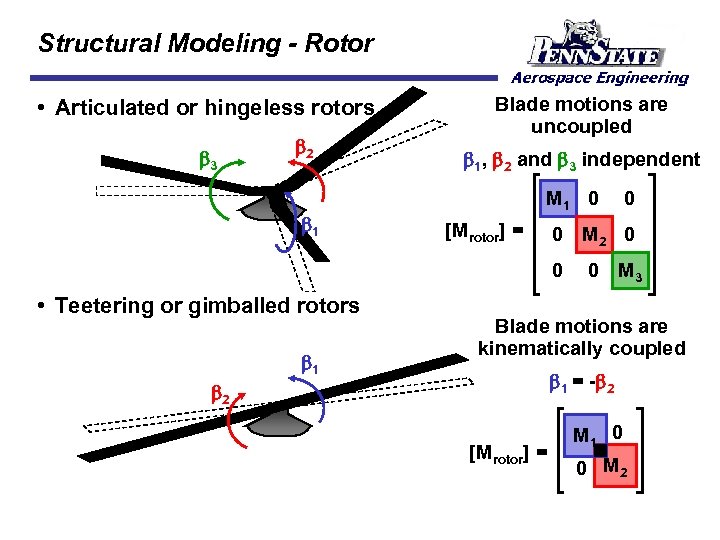 Structural Modeling - Rotor • Articulated or hingeless rotors 3 2 1 Blade motions are uncoupled 1, 2 and 3 independent M 1 0 [Mrotor] = 0 M 2 0 0 • Teetering or gimballed rotors 1 0 0 M 3 Blade motions are kinematically coupled 1 = - 2 2 [Mrotor] = M 1 0 0 M 2
 Presentation Outline üIntroduction üPrevious Research üObjectives üApproach • Results Baseline rotor Passive control of H-46 rotor Feedback control of gimballed rotor • Conclusions
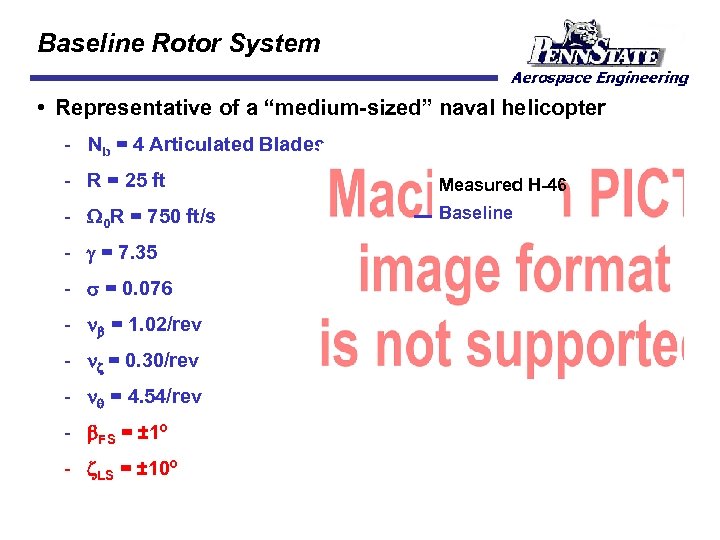 Baseline Rotor System • Representative of a “medium-sized” naval helicopter Nb = 4 Articulated Blades R = 25 ft Measured H-46 0 R = 750 ft/s Baseline g = 7. 35 s = 0. 076 n = 1. 02/rev nz = 0. 30/rev n = 4. 54/rev FS = ± 1º z. LS = ± 10º
 Typical Engagement • Linear airwake VWOD = 60 knots k = 25% • Largest wtip occur < 25%NR • Blade strikes flap stops repeatedly • Majority of wtip is elastic bending rigid body wtip ± 2%R • Large a in low even near blade tip
 Typical Engagement • Linear airwake VWOD = 60 knots k = 25% • Majority of vtip is rigid body motion • Blade strikes lag stop repeatedly • Largest torque due to impacts
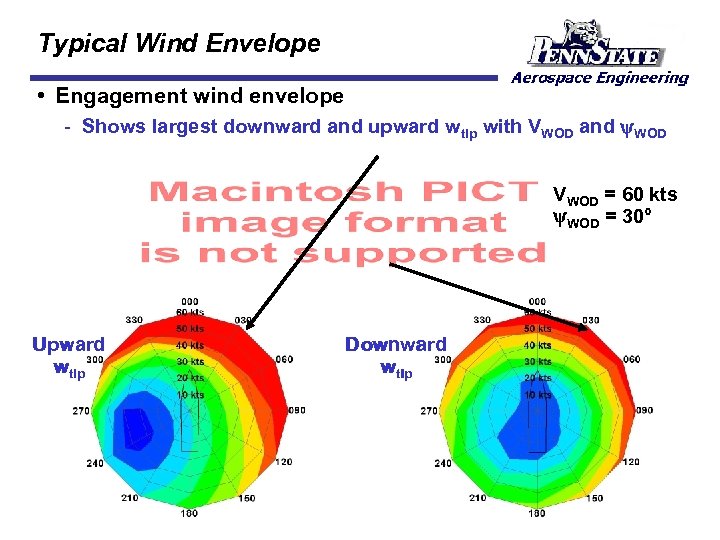 Typical Wind Envelope • Engagement wind envelope Shows largest downward and upward wtip with VWOD and y. WOD VWOD = 60 kts y. WOD = 30° Upward wtip Downward wtip
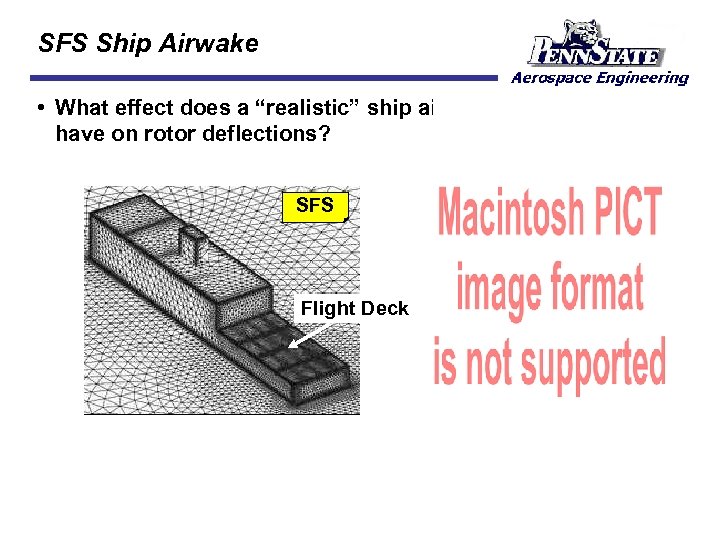 SFS Ship Airwake • What effect does a “realistic” ship airwake have on rotor deflections? SFS Flight Deck
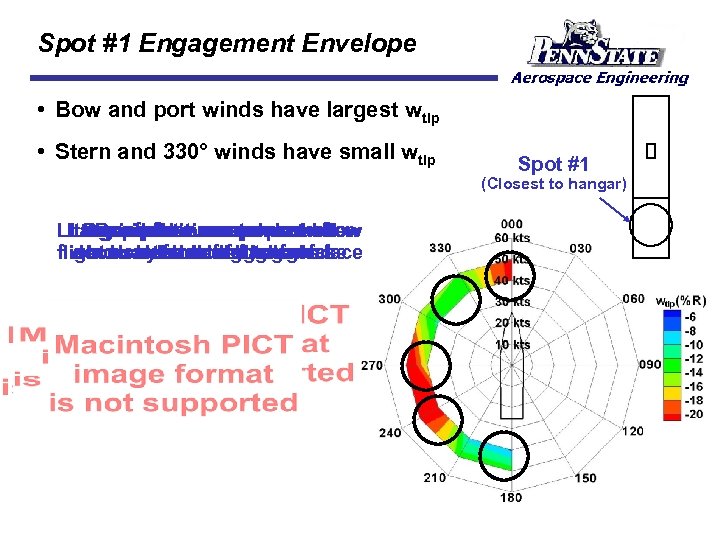 Spot #1 Engagement Envelope • Bow and port winds have largest wtip • Stern and 330° winds have small wtip Spot #1 (Closest to hangar) Little upflow over and pushed Large upflow component over Large upflow component on Recirculation zone downflow Recirculation stern and flow flight away and over hangar face windwardfrom hangar face decelerates near hangar face deck side flight deck behind of flight deck
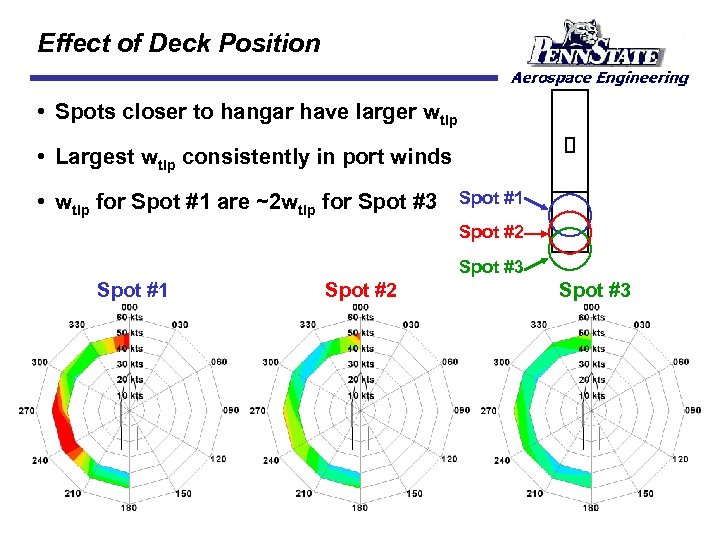 Effect of Deck Position • Spots closer to hangar have larger wtip • Largest wtip consistently in port winds • wtip for Spot #1 are ~2 wtip for Spot #3 Spot #1 Spot #2 Spot #3
 Presentation Outline üIntroduction üPrevious Research üObjectives üApproach • Results Baseline rotor Passive control of H-46 rotor Flap Damping Spoilers Feedback control of gimballed rotor • Conclusions
 Objectives • Develop unique “in-house” analysis code to: Increase physical understanding of engage/disengage behavior Accurately predict safe rotor engage/disengage envelopes Control rotor response to expand engage/disengage envelopes wtip (%R) Safe Region Unsafe Region
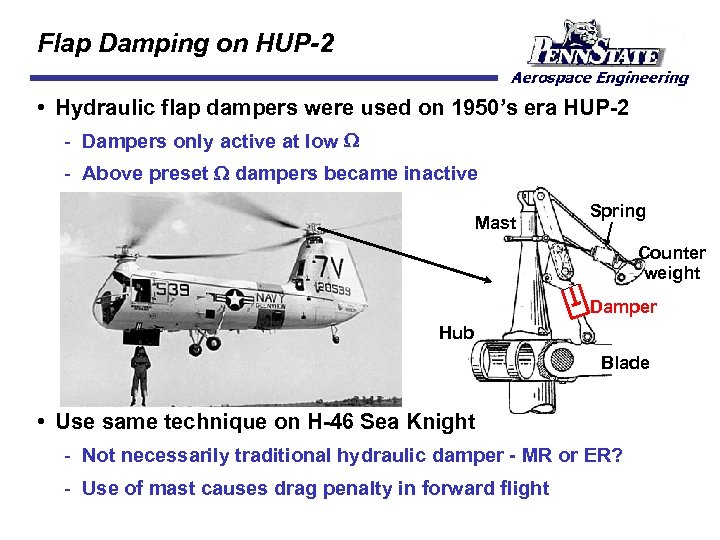 Flap Damping on HUP-2 • Hydraulic flap dampers were used on 1950’s era HUP-2 Dampers only active at low Above preset dampers became inactive Mast Spring Counter weight Damper Hub Blade • Use same technique on H-46 Sea Knight Not necessarily traditional hydraulic damper - MR or ER? Use of mast causes drag penalty in forward flight
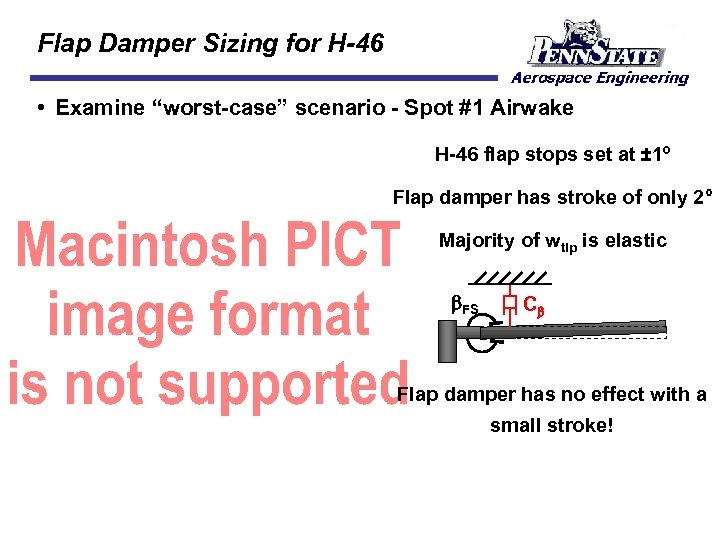 Flap Damper Sizing for H-46 • Examine “worst-case” scenario - Spot #1 Airwake H-46 flap stops set at ± 1º Flap damper has stroke of only 2° Majority of wtip is elastic FS C Flap damper has no effect with a small stroke!
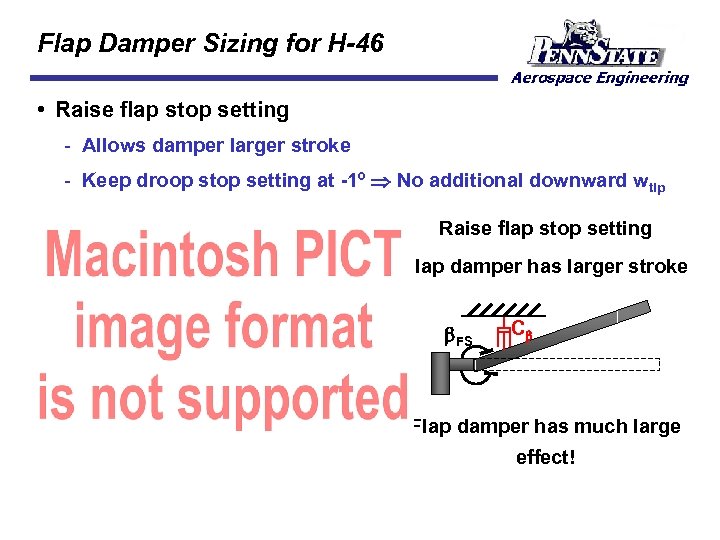 Flap Damper Sizing for H-46 • Raise flap stop setting Allows damper larger stroke Keep droop stop setting at -1º No additional downward wtip Raise flap stop setting Flap damper has larger stroke FS C Flap damper has much large effect!
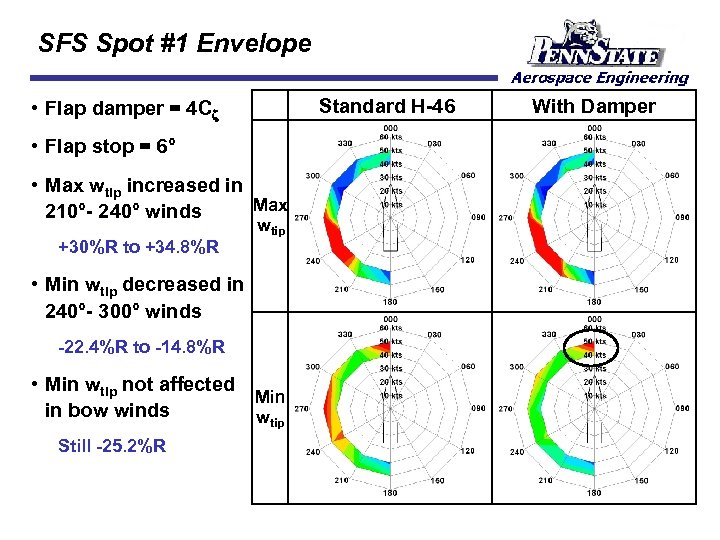 SFS Spot #1 Envelope Standard H-46 • Flap damper = 4 Cz • Flap stop = 6° • Max wtip increased in Max 210°- 240° winds +30%R to +34. 8%R wtip • Min wtip decreased in 240°- 300° winds -22. 4%R to -14. 8%R • Min wtip not affected Min in bow winds w tip Still -25. 2%R With Damper
 Flap Damping in Bow Winds • Blade does not lift off DS until t = 5 sec • Flap damper never has a chance to dissipate energy • Summary: Min wtip decreased in most cases FS must be raised Max wtip increased
 Presentation Outline üIntroduction üPrevious Research üObjectives üApproach • Results Baseline rotor Passive control of H-46 rotor Flap Damping Spoilers Feedback control of gimballed rotor • Conclusions
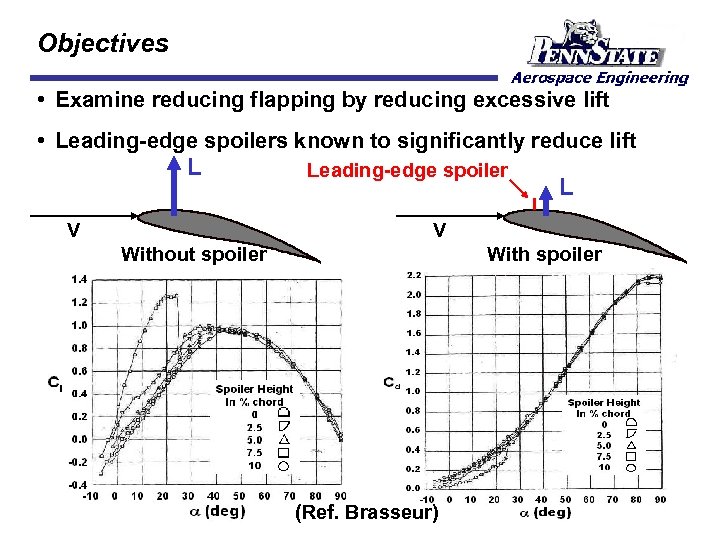 Objectives • Examine reducing flapping by reducing excessive lift • Leading-edge spoilers known to significantly reduce lift L V Leading-edge spoiler L V Without spoiler With spoiler (Ref. Brasseur)
 Objectives • Spoilers are used only along partial-span • Gated spoilers are used on blade upper and lower surfaces • Spoilers only extended at low < 25%NR and retracted into blade section at high > 25%NR • Percentage of radius covered by spoilers? • Will rotor torque increase due to spoiler drag?
 Spoiler Coverage • H-46 engagement with varying amounts of spoiler coverage • Spoilers on outer 15%R (~3½ ft) are enough to reduce wtip H-46 Engagement SFS Spot #1 Airwake VWOD = 40 kts y. WOD = 240°
 Example Engagement SFS Spot #1 Airwake (Worst Case Scenario) VWOD = 40 kts y. WOD = 240° Conclusions: Min and Max wtip reduced Max torque not affected
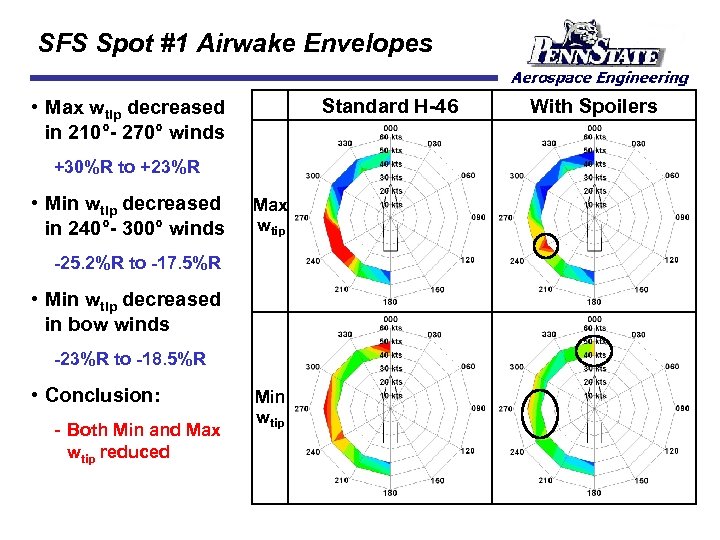 SFS Spot #1 Airwake Envelopes Standard H-46 • Max wtip decreased in 210°- 270° winds +30%R to +23%R • Min wtip decreased in 240°- 300° winds Max wtip -25. 2%R to -17. 5%R • Min wtip decreased in bow winds -23%R to -18. 5%R • Conclusion: Both Min and Max wtip reduced Min wtip With Spoilers
 Presentation Outline üIntroduction üPrevious Research üObjectives üApproach • Results Baseline rotor Passive control of H-46 rotor Flap Damping Spoilers Feedback control of gimballed rotor • Conclusions
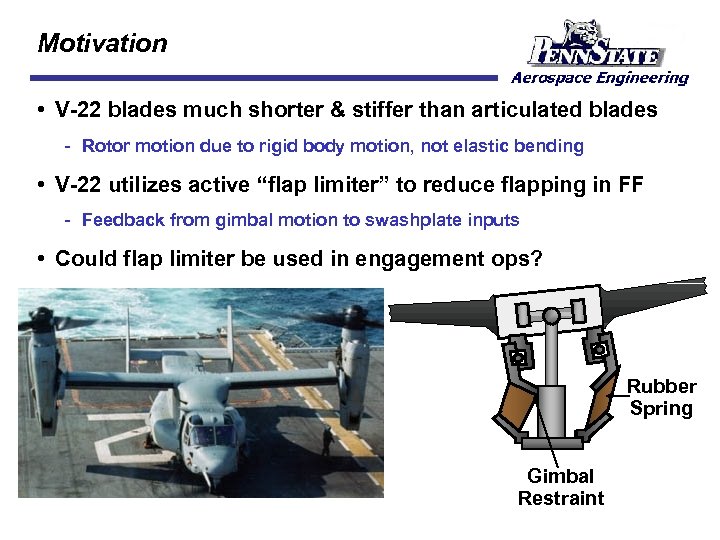 Motivation • V-22 blades much shorter & stiffer than articulated blades Rotor motion due to rigid body motion, not elastic bending • V-22 utilizes active “flap limiter” to reduce flapping in FF Feedback from gimbal motion to swashplate inputs • Could flap limiter be used in engagement ops? Rubber Spring Gimbal Restraint
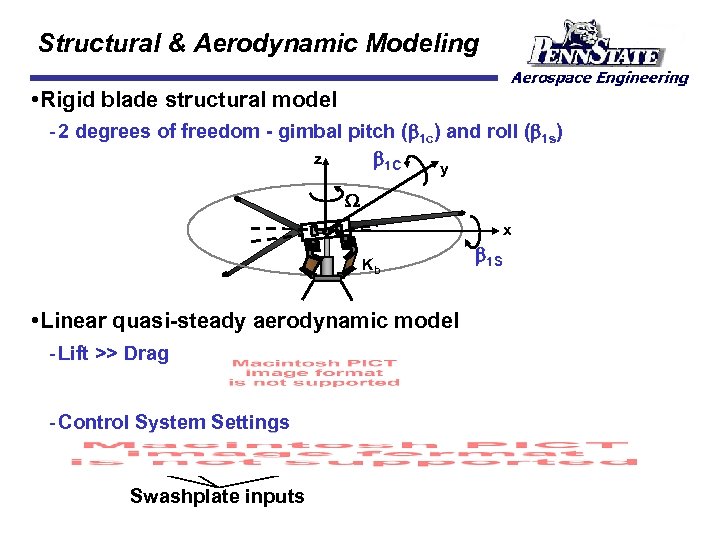 Structural & Aerodynamic Modeling • Rigid blade structural model 2 degrees of freedom - gimbal pitch ( 1 c) and roll ( 1 s) z 1 C y x Kb • Linear quasi-steady aerodynamic model Lift >> Drag Control System Settings Swashplate inputs 1 S
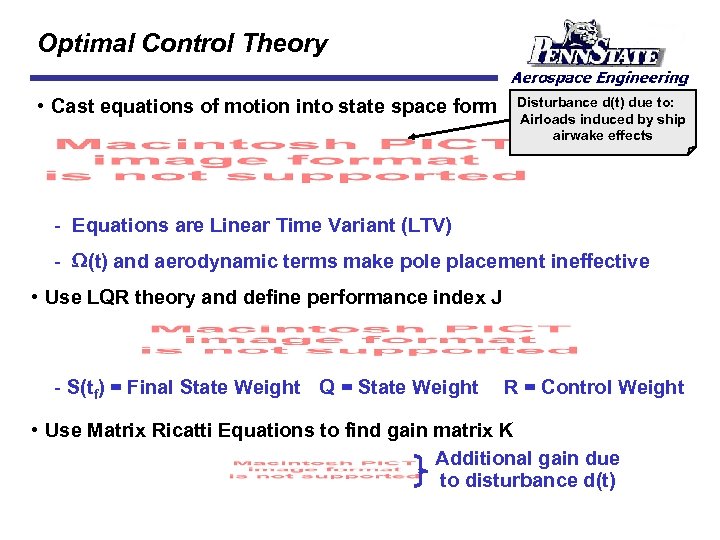 Optimal Control Theory • Cast equations of motion into state space form Disturbance d(t) due to: Airloads induced by ship airwake effects Equations are Linear Time Variant (LTV) (t) and aerodynamic terms make pole placement ineffective • Use LQR theory and define performance index J S(tf) = Final State Weight Q = State Weight R = Control Weight • Use Matrix Ricatti Equations to find gain matrix K Additional gain due to disturbance d(t)
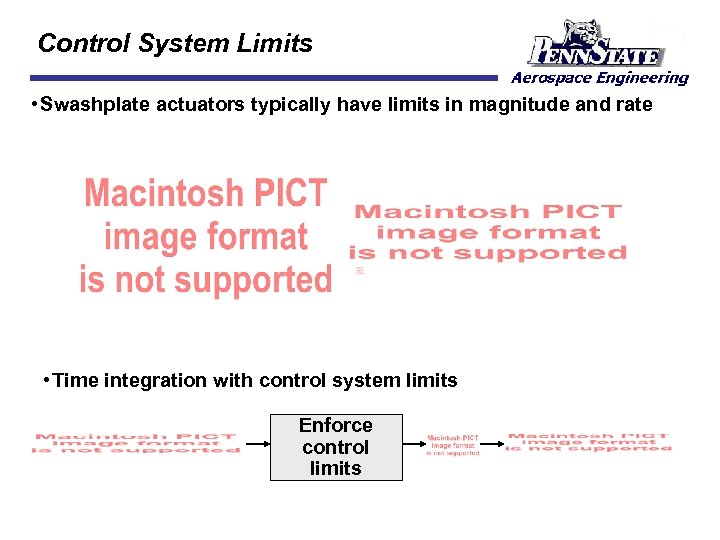 Control System Limits • Swashplate actuators typically have limits in magnitude and rate • Time integration with control system limits Enforce control limits
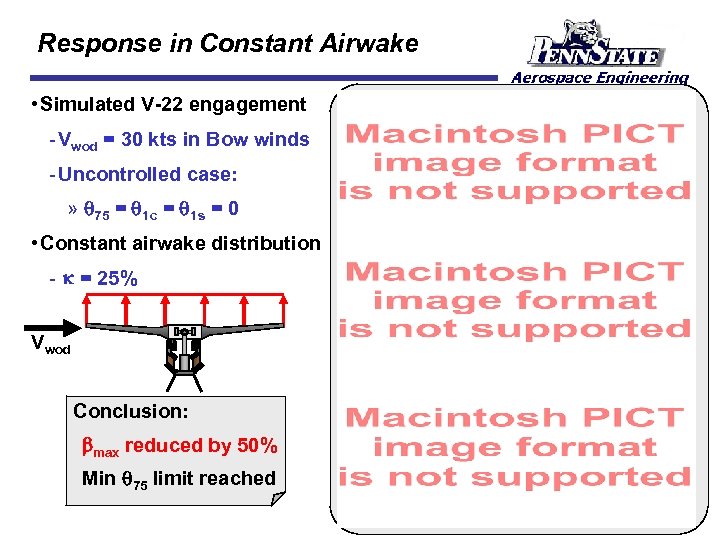 Response in Constant Airwake • Simulated V-22 engagement Vwod = 30 kts in Bow winds Uncontrolled case: » 75 = 1 c = 1 s = 0 • Constant airwake distribution k = 25% Vwod Conclusion: max reduced by 50% Min 75 limit reached
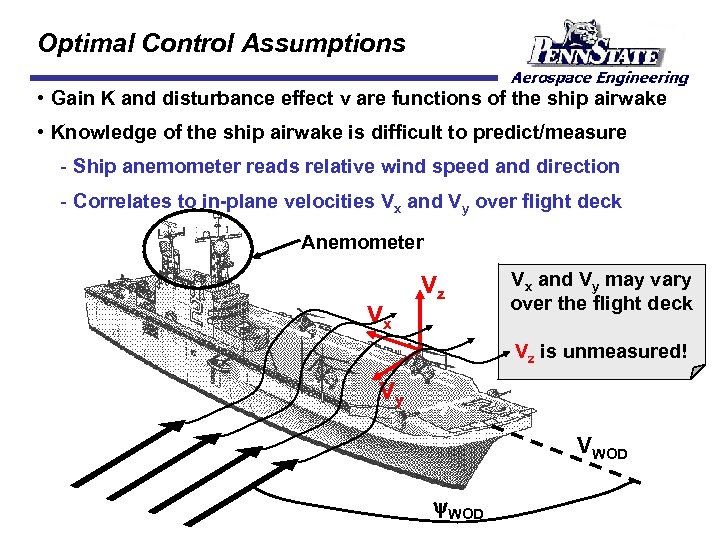 Optimal Control Assumptions • Gain K and disturbance effect v are functions of the ship airwake • Knowledge of the ship airwake is difficult to predict/measure Ship anemometer reads relative wind speed and direction Correlates to in-plane velocities Vx and Vy over flight deck Anemometer Vx Vz Vx and Vy may vary over the flight deck Vz is unmeasured! Vy VWOD y. WOD
 Sub-Optimal Control • V-22 Rotor Engagement Vwod = 30 knots Constant airwake • Sub-Optimal Control Vx and Vy known Vz assumed = 0 • Optimal Control (Best Case) Vx, Vy and Vz known Conclusion: Optimal gains max by 50% Sub-optimal gains max by 35%
 Robustness to Anemometer Error • Anemometer measurement error Error in Wind Velocity Anemometer error • Gains K and v calculated from (incorrect) anemometer meas. • Conclusion: Moderate errors in anemometer reading change response by 10% Error in Wind Direction
 Presentation Outline üIntroduction üPrevious Research üObjectives üApproach üResults • Conclusions
 Conclusions • Developed transient elastic F-L-T analysis for E/D ops Blade structure modeled with FEM » Articulated, hingeless, teetering, or gimballed rotors » Blade weight and acceleration included Aerodynamics simulated with quasi-steady or unsteady models Airwake modeled with simple types or from numerical predictions Rotor motion time-integrated along specified (t) profile • Investigated effect of “frigate-like” ship airwake Blade wtip showed strong dependence on wind direction » Winds off-bow had smallest wtip, winds over-port had largest wtip Spots closer to hangar had larger deflections
 Conclusions • Investigated effect of flap damper for H-46 Raised flap stop setting to allow damper larger stroke » Reduced downward wtip by 30%, but increased upward wtip by 20% » Downward wtip not affected at all in some cases • Investigated effect of leading-edge spoilers for H-46 Spoilers extend ( < 25%NR) and retract into blade ( > 25%NR) Determined spoilers needed only on outer 15%R of blade » Reduced upward and downward wtip by 20% No significant increase in maximum rotor torque in any case
 Conclusions • Investigated control of gimballed rotors w/ LQR Used feedback from gimbal motion to swashplate actuators Resulting equations of motion were Linear Time Variant (LTV) Enforced control system limits (magnitude and rate) • LQR control method successful at reducing flapping max 50% with full knowledge of ship airwake (Vx, Vy and Vz) • Aero forces due to ship airwake contribute to control gains max 35% with partial knowledge of ship airwake (Vx and Vy) • Response insensitive to errors in anemometer reading max changed ± 10% with either ± 10 knot or ± 15° anemometer error
 Acknowledgments • Financial assistance National Rotorcraft Technology Center » Technical Monitor Dr. Yung Yu • Technical Assistance Dynamic Interface Group NAWC/AD Pax River, MD » Mr. William Geyer, Mr. Kurt Long & Mr. Larry Trick Boeing Philadelphia » Mr. David G. Miller